
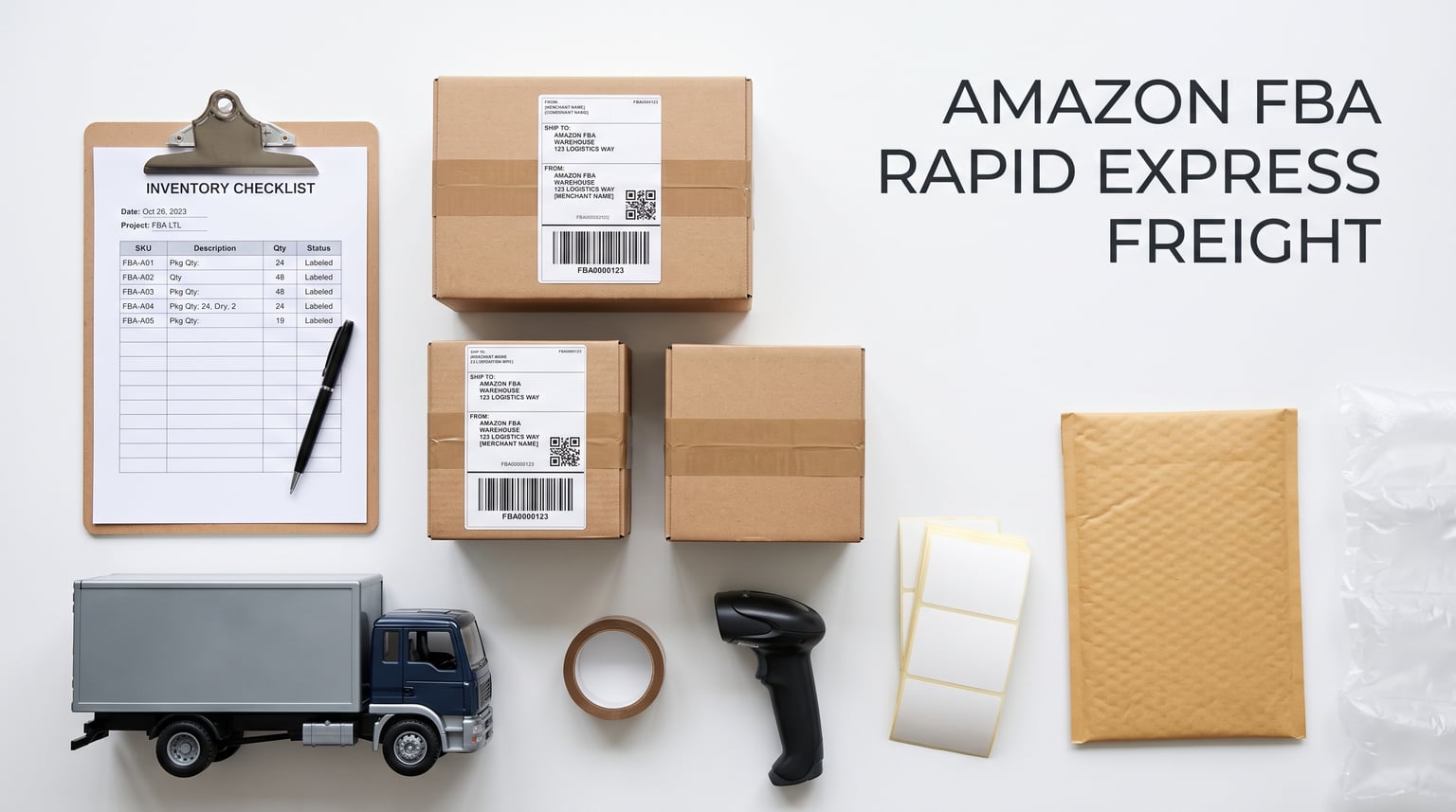
Getting inventory into Amazon fulfillment centers quickly and cost-effectively remains one of the biggest operational challenges for FBA sellers in 2026. Whether you are importing from overseas suppliers, restocking before a product launch, or managing seasonal inventory for Q4, the shipping method you choose directly impacts your profit margins, sales velocity, and Buy Box eligibility. Amazon FBA Rapid Express Freight has emerged as a specialized logistics solution designed to address exactly these pain points.
For sellers who rely on Fulfillment by Amazon, the gap between a supplier’s shipping dock and Amazon’s receiving bay is where many costly delays occur. Stockouts during peak demand windows can mean thousands of dollars in lost revenue, eroded search rankings, and damaged product momentum. Rapid Express Freight bridges that gap by offering expedited, door-to-door freight service that moves inventory from your supplier directly to Amazon fulfillment centers with minimal transit time.
This guide breaks down everything you need to know about Amazon FBA Rapid Express Freight, including how it works, what it costs, how it compares to Amazon’s own Partnered Carrier Program and Amazon Global Logistics, and when it makes financial sense for your business. If you are evaluating fulfillment models more broadly, our comparison of dropshipping vs. Amazon FBA provides additional context on which approach suits your operation.
Here is what this guide covers:
- How Amazon FBA Rapid Express Freight works and who benefits from it
- Current FBA shipping types: Standard, Expedited, International, Small and Light, and MCF
- FBA fee breakdown with 2026 pricing data for profitability planning
- Amazon Partnered Carrier Program vs. third-party freight forwarders
- Amazon SEND and Amazon Global Logistics explained
- International shipping from China to US FBA warehouses
- Common FBA shipping mistakes and how to prevent them
What Is Amazon FBA Rapid Express Freight?
Amazon FBA Rapid Express Freight refers to a fast, door-to-door shipping method that Amazon FBA sellers use to move inventory from a supplier, often located overseas, directly to Amazon fulfillment centers using expedited air express or freight services. The service typically includes supplier pickup, customs clearance coordination, duties management, and final delivery scheduling within Amazon’s receiving windows. Compared to standard ocean freight, Rapid Express Freight is significantly faster but comes at a higher per-unit cost.
Key Characteristics of Rapid Express Freight
- Door-to-door service: Pickup from your supplier’s facility through to delivery at the assigned Amazon fulfillment center
- Customs clearance included: Documentation, duties coordination, and import compliance handled by the freight provider
- Air express priority: Air freight routing for time-sensitive shipments that cannot wait for standard ocean transit
- Amazon-compliant labeling: Shipments prepared to meet Amazon’s FBA labeling requirements and inbound shipment protocols
- Real-time tracking: Shipment visibility from origin through delivery confirmation at the fulfillment center
Who Should Use Rapid Express Freight?
This shipping method serves Amazon FBA sellers who need inventory replenished quickly and cannot afford the standard 30 to 45-day ocean freight timeline. Common use cases include urgent restocks when inventory is running low, new product launches where timing is critical, high-value items where the cost of expedited shipping is justified by margin, and seasonal preparation for Q4 or Prime Day when stockouts would be especially damaging.
Sellers importing from China to US Amazon fulfillment centers are the most common users of Rapid Express Freight. These sellers typically work with a freight forwarder that specializes in FBA shipments and can handle the full customs clearance process, Amazon labeling requirements, and delivery appointment scheduling. Private label sellers, in particular, benefit from this service since their branded products require reliable inventory pipelines to maintain search ranking and Buy Box placement. For more on this audience, see our guide on building an Amazon private label business.
Also Read: Amazon Package Not Delivered? Quick Fix Solutions Here!
How Amazon FBA Rapid Express Freight Works
The shipping process follows a structured workflow that begins with your supplier and ends with Amazon receiving your inventory at a fulfillment center. Understanding each step helps you identify where delays can occur and how to prevent them.
Step-by-Step Shipping Workflow
- 1. Create an inbound shipment in Seller Central: Log into Amazon Seller Central, navigate to Manage Inventory, select the products to ship, and generate your FBA shipment plan. Amazon assigns a destination fulfillment center and provides shipping labels and FBA box content requirements.
- 2. Prepare and label inventory: Ensure products meet Amazon’s FBA labeling requirements, including FNSKU barcodes, suffocation warnings for poly bags, and proper palletizing for freight shipments. Non-compliant inventory can be refused or subject to prep fees at the fulfillment center.
- 3. Book the freight service: Coordinate with your freight forwarder or Rapid Express Freight provider. Provide the Amazon shipment ID, fulfillment center address, pickup location, cargo details, and preferred delivery date.
- 4. Pickup and origin handling: The carrier collects your freight from the supplier’s facility. For international shipments, export documentation is prepared and the cargo is routed to the nearest airport or consolidation facility.
- 5. Customs clearance: For international shipments, the freight provider manages import documentation, duty payments, and customs clearance. This step can cause significant delays if paperwork is incomplete or incorrect.
- 6. Transit and tracking: Your shipment moves via air express or expedited ground freight to the destination region. Real-time tracking lets you monitor progress and anticipate any delivery scheduling changes.
- 7. Delivery to fulfillment center: The carrier delivers to the assigned Amazon fulfillment center within the scheduled delivery window. Amazon receives, scans, and shelves your inventory, typically making it available for sale within 2 to 6 hours of check-in.
Each of these steps involves coordination between multiple parties, including your supplier, the freight forwarder, customs brokers, and Amazon’s receiving team. Working with an experienced FBA-focused freight provider reduces the risk of bottlenecks at any stage.
Key Features and Benefits of Rapid Express Freight
Rapid Express Freight differentiates itself from standard shipping methods through several operational advantages that directly impact an FBA seller’s bottom line. Understanding these benefits helps you evaluate whether the premium cost is justified for your specific situation.
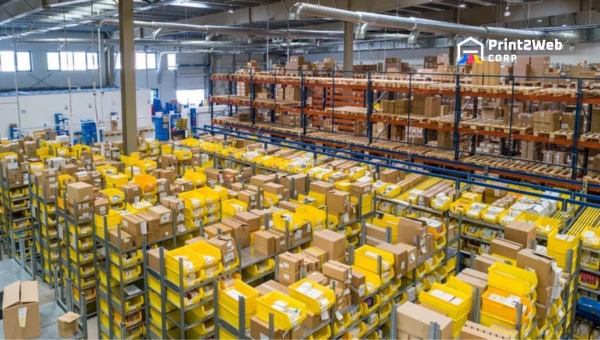
Speed and Inventory Velocity
The primary value proposition of Rapid Express Freight is transit speed. Air express shipping from China to US Amazon fulfillment centers typically takes 5 to 12 business days, compared to 30 to 45 days for standard ocean freight. For a seller facing a stockout, that difference can mean the difference between maintaining page-one search rankings and losing them entirely. Faster inventory turnover also improves your Inventory Performance Index (IPI) score, which Amazon uses to evaluate how efficiently you manage FBA inventory.
Real-Time Shipment Visibility
Rapid Express Freight providers offer tracking systems that provide visibility from origin pickup through fulfillment center delivery. This transparency matters because it allows you to plan your inventory pipeline, communicate accurate restock timelines, and respond quickly if a shipment encounters delays. Sellers on Reddit’s FulfillmentByAmazon community consistently report that shipment visibility is a top trust factor when choosing a freight partner.
Customs and Compliance Management
International FBA shipments require precise customs documentation, including commercial invoices, packing lists, and HTS code classification. Rapid Express Freight providers handle this paperwork as part of their service, reducing the risk of customs holds that can delay delivery by days or weeks. They also coordinate ISF (Importer Security Filing) for ocean shipments and ensure that products meet US import requirements.
Amazon Prime Eligibility and Buy Box Impact
When your inventory reaches Amazon fulfillment centers faster, it becomes available for Prime shipping sooner. Prime eligibility directly influences conversion rates, as Prime-eligible listings consistently outperform non-Prime listings. Additionally, maintaining consistent stock levels supports your Buy Box win rate, since Amazon’s algorithm favors sellers with available inventory over those experiencing stockouts. For sellers comparing FBA to self-fulfilled alternatives, our guide to Amazon FBM (Fulfillment by Merchant) explains the tradeoffs.
Also Read: Original Packaging to Return to Amazon: Essential Tips
Amazon FBA Shipping Types Explained
Amazon offers multiple shipping and fulfillment pathways, each designed for different product types, order volumes, and delivery speed requirements. Understanding the distinctions helps you select the right approach for your product catalog and business model.
FBA Standard Shipping
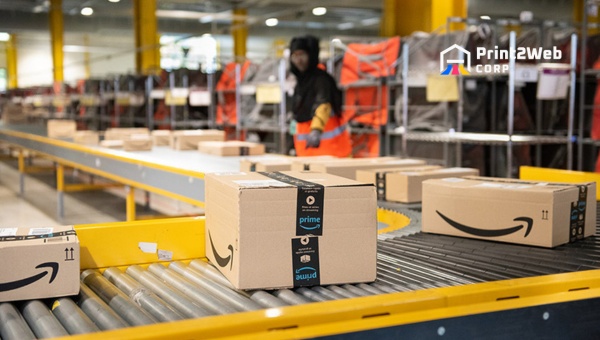
Standard shipping is the default fulfillment option for most FBA products. Amazon handles storage, picking, packing, and shipping with typical delivery times of 1 to 5 business days depending on the customer’s location and Prime status. This option works well for the majority of products that do not require urgent delivery and where cost optimization matters more than speed.
FBA Expedited Shipping
Expedited shipping prioritizes faster delivery for time-sensitive orders. Amazon offers expedited options including Priority Shipping (1-day delivery in eligible regions) and Same-Day Delivery in select metro areas. Sellers do not pay extra for expedited fulfillment, but products must be stocked in fulfillment centers near high-demand regions to qualify for the fastest delivery promises.
FBA International Shipping
Amazon’s Global Selling program enables FBA sellers to list products on international marketplaces including the UK, Germany, Japan, and Canada. International FBA shipping requires sending inventory to fulfillment centers in the target marketplace country, which involves cross-border logistics, customs documentation, and local compliance. Amazon’s Remote Fulfillment with FBA program also allows US-based inventory to fulfill orders in Canada and Mexico without sending inventory to those countries.
FBA Small and Light
The FBA Small and Light program offers reduced fulfillment fees for qualifying small, lightweight products priced below a threshold set by Amazon. Eligible items must meet specific size and weight requirements. This program is particularly valuable for sellers of low-cost accessories, phone cases, and small household items where standard fulfillment fees would consume the entire margin. Note that Amazon has restructured this program over time, so check current eligibility criteria in Seller Central.
Multi-Channel Fulfillment (MCF)
Multi-Channel Fulfillment allows sellers to use FBA inventory to fulfill orders placed on channels outside of Amazon, including your own website, Shopify store, or other marketplaces. MCF charges separate fulfillment fees that are typically higher than standard FBA fees. This option gives sellers the flexibility to leverage Amazon’s logistics network while diversifying their sales channels beyond Amazon’s platform.
FBA Fee Breakdown: Current Pricing for 2026
Understanding Amazon’s fee structure is essential for calculating whether Rapid Express Freight or any FBA shipping method is financially viable for your products. The following breakdown reflects Amazon’s fee categories and approximate ranges based on the most recent publicly available data. Always verify current rates in Seller Central, as Amazon updates pricing periodically.

Seller Account Plans
Amazon offers two seller plan tiers. The Individual plan charges $0.99 per item sold with no monthly subscription fee, suitable for sellers moving fewer than 40 units per month. The Professional plan costs $39.99 per month with no per-item fee, recommended for sellers exceeding 40 monthly units or those who need access to advanced selling features like bulk listing tools and advertising.
Referral Fees
Amazon charges a referral fee on every item sold, calculated as a percentage of the total sales price (including shipping but excluding taxes). Most categories carry a referral fee of approximately 8% to 15%, with some categories having different rates or per-item minimums. This fee applies regardless of whether you use FBA or FBM fulfillment.
FBA Fulfillment Fees
Fulfillment fees cover picking, packing, shipping, and customer service for each unit. Fees are determined by product size tier (standard vs. oversize) and weight. Standard-size items typically incur fulfillment fees ranging from approximately $2.50 to $5.00+ per unit, while larger and heavier items cost significantly more. These fees are charged after the item ships to a customer.
Monthly and Long-Term Storage Fees
Amazon charges monthly inventory storage fees based on the daily average volume your inventory occupies, measured in cubic feet. Rates fluctuate seasonally, with higher charges during Q4 (October through December) peak season. Long-term storage fees apply to inventory stored for more than 181 days, incentivizing sellers to maintain healthy inventory turnover and avoid sending excess stock that may sit unsold.
Inbound Placement Fees
Amazon introduced inbound placement fees to manage how inventory is distributed across its fulfillment network. When you create a shipment, Amazon may split your inventory across multiple fulfillment centers. If you choose to send inventory to a single location, Amazon charges an inbound placement fee per unit. This fee structure means sellers must decide between paying for single-location shipping convenience or managing multi-destination freight logistics.
SIPP (Sender Installed Product Packaging) Discount
The SIPP program offers per-unit fulfillment discounts to sellers who ship products in their own branded packaging that meets Amazon’s prep-free requirements. By eliminating the need for Amazon to apply overboxing or additional packaging, sellers can reduce fulfillment costs. Eligibility requires products to pass Amazon’s certification testing for ship-in-own-container standards.
Removal and Disposal Fees
If you need to remove inventory from Amazon fulfillment centers, whether to correct listing issues, relocate stock, or dispose of unsellable units, Amazon charges removal or disposal fees per unit. These fees vary by product size and weight. Planning inbound shipments carefully helps minimize the need for costly removals down the line.
Using the FBA Revenue Calculator
Amazon provides a free FBA Revenue Calculator in Seller Central that helps you estimate per-unit profitability based on your product’s selling price, cost of goods, inbound shipping costs, and all applicable FBA fees. This tool is essential for evaluating whether Rapid Express Freight costs are absorbable within your margin structure. Enter your product dimensions, weight, and expected selling price to generate a detailed cost breakdown.
Amazon Partnered Carrier Program vs. Third-Party Freight Forwarders
One of the most important decisions for FBA sellers is choosing between Amazon’s Partnered Carrier Program and an independent freight forwarder. Each option has distinct advantages and tradeoffs that affect cost, reliability, and control over your shipping process.
Amazon Partnered Carrier Program
The Partnered Carrier Program allows FBA sellers to book LTL (Less Than Truckload) and Small Parcel Delivery through Amazon’s negotiated rates directly within Seller Central. Amazon partners with carriers and passes negotiated rates to sellers, often at lower prices than you could secure independently. The integrated booking process simplifies shipment creation since carrier selection and rate quotes happen within the Seller Central interface.
However, sellers on Reddit’s FulfillmentByAmazon community frequently report issues with the Partnered Carrier Program. Common complaints include limited carrier selection, as Amazon assigns carriers without seller input. Some partnered carriers, particularly Central Transport, have developed poor reputations for damaged freight and delayed deliveries. Damage claim processes can be difficult to navigate, and sellers often feel they have limited recourse when partnered carriers cause problems.
Third-Party Freight Forwarders
Independent freight forwarders specializing in FBA shipments offer more control over carrier selection and service quality. Specialized FBA forwarders understand Amazon’s labeling requirements, delivery appointment scheduling, and compliance standards. They often provide dedicated account management, more flexible routing options, and the ability to choose carriers with proven track records. Sellers in FBA forums frequently recommend carriers like Estes Express as reliable alternatives to Amazon’s partnered options.
The tradeoff is that independent forwarders may cost more than Amazon’s partnered rates, especially for smaller shipments. You also manage booking outside of Seller Central, which means an additional platform to coordinate. For large shipments of 16 or more pallets, some sellers report that Amazon Freight becomes more cost-effective than partnered LTL, creating a middle ground worth evaluating for high-volume operations.
Who Handles Amazon Freight?
Amazon Freight is Amazon’s own trucking and logistics division, separate from the Partnered Carrier Program. It handles large freight shipments, including FTL (Full Truckload) moves, using Amazon’s own fleet and contracted carriers. Amazon Freight is generally available for larger shipment sizes and integrates with the FBA shipment workflow. Sellers report that Amazon Freight tends to be reliable for large shipments due to tighter integration with Amazon’s own fulfillment network.
Amazon SEND and Amazon Global Logistics
Amazon has expanded its own logistics offerings to compete with third-party freight forwarders. Two programs that FBA sellers should understand are Amazon SEND and Amazon Global Logistics, both of which provide integrated cross-border shipping solutions.
Amazon SEND (Sellers Easy Dispatch)
Amazon SEND is a cross-border ocean freight program designed for sellers shipping inventory from manufacturing countries, primarily China, to Amazon fulfillment centers in the United States and other marketplaces. The program offers door-to-door ocean freight with transparent pricing quoted directly in Seller Central. Amazon SEND handles pickup from the supplier, ocean transit, US customs clearance, and final delivery to the assigned fulfillment center.
Seller experiences with Amazon SEND have been mixed based on forum discussions. Some report competitive pricing and streamlined booking compared to working with independent forwarders. Others note that transit times can be longer than premium air express options and that customer support for shipment issues may be limited. For sellers moving larger volumes where cost optimization matters more than speed, SEND is worth evaluating against traditional freight forwarder quotes.
Amazon Global Logistics (AGL)
Amazon Global Logistics is Amazon’s broader cross-border shipping service that includes both ocean and air freight options for FBA sellers. AGL provides consolidated shipping from China to the US, Europe, and other Amazon marketplaces with online booking through Seller Central. The service includes customs clearance, duty calculation, and delivery appointment scheduling. AGL positions itself as an all-in-one alternative to third-party freight forwarders with the advantage of direct Amazon platform integration.
For sellers deciding between Amazon SEND, AGL, and independent freight forwarders, the right choice depends on shipment volume, urgency, destination, and how much control you want over the carrier selection process. Requesting quotes from multiple providers, including both Amazon programs and independent forwarders, is the most reliable way to identify the best option for each shipment.
International Shipping to Amazon FBA from China
China remains the dominant sourcing country for Amazon FBA sellers, making the China-to-US shipping lane one of the most important logistics decisions a private label seller makes. The choice between air express, air freight, ocean freight (LCL or FCL), and Amazon’s own programs significantly affects both cost and speed.
Shipping Method Comparison
- Air Express (DHL, FedEx, UPS): Fastest option at 3 to 7 business days door-to-door. Highest cost per kilogram, best for urgent restocks, small high-value shipments, and new product samples. No minimum volume requirement.
- Air Freight: 5 to 10 business days including customs clearance. Lower cost than express but requires freight forwarder coordination. Minimum chargeable weight typically starts around 45 kg. Suitable for medium-urgency shipments.
- Ocean Freight LCL (Less than Container Load): 25 to 40 days door-to-door. Lowest cost per unit for smaller volumes. Cargo consolidated with other shipments. Best for non-urgent restocks and initial inventory that has lead time buffer.
- Ocean Freight FCL (Full Container Load): 20 to 35 days door-to-door. Most cost-effective per unit for large volumes. Dedicated container reduces handling damage risk. Typically requires ordering enough inventory to fill a 20-foot or 40-foot container.
- Amazon SEND and AGL: Amazon’s integrated ocean freight programs with booking in Seller Central. Transparent pricing and Amazon-managed customs clearance. Transit times similar to standard ocean freight.
Customs Clearance and Documentation
All international shipments to Amazon FBA require proper customs documentation. A commercial invoice, packing list, and accurate HTS (Harmonized Tariff Schedule) classification are mandatory. Your freight forwarder or Amazon SEND handles the ISF filing for ocean shipments, which must be submitted at least 24 hours before cargo is loaded onto the vessel. Incorrect or incomplete documentation is the most common cause of customs delays, which can add days or weeks to your shipping timeline.
FBA Labeling and Prep for International Shipments
Products shipped from China to Amazon FBA must arrive at the fulfillment center with proper FBA labeling already applied. This includes FNSKU barcodes on each unit, carton labels on master shipping boxes, and pallet labels if shipping on pallets. Many Chinese suppliers offer FBA prep services as an add-on, applying labels and packaging products to Amazon specifications before shipment. Alternatively, you can work with a US-based prep service that receives, labels, and forwards your inventory to Amazon.
LTL vs. FTL Shipping Explained
When shipping freight to Amazon fulfillment centers, you will encounter two primary freight shipping modes: LTL and FTL. Understanding the difference helps you select the most cost-effective option for your shipment size.
LTL (Less Than Truckload) Shipping
LTL shipping consolidates freight from multiple shippers into a single truck. You pay only for the space and weight your shipment occupies, making it the standard choice for FBA shipments of 1 to 6 pallets. LTL transit times are typically 2 to 5 business days depending on distance and carrier routing. The tradeoff is that your freight is handled multiple times at carrier terminals along the route, which increases the risk of damage compared to FTL shipping.
FTL (Full Truckload) Shipping
FTL shipping dedicts an entire truck to your shipment, which is cost-effective when you have enough volume to fill or nearly fill a truck. FTL is typically used for shipments of 10 or more pallets. Transit times are faster than LTL because the truck travels directly from origin to destination without intermediate stops. FTL also reduces handling damage since freight is loaded once and unloaded once at the fulfillment center.
Choosing Between LTL and FTL
The decision depends on your shipment volume, budget, and urgency. For most small to mid-sized FBA sellers, LTL through the Amazon Partnered Carrier Program or a third-party forwarder is the default choice. For larger operations moving 16 or more pallets, Amazon Freight or FTL through an independent carrier may offer better per-pallet economics. Request rate quotes for both options when your shipment size approaches the FTL threshold to ensure you are getting the best value.
Benefits of Expedited FBA Shipping
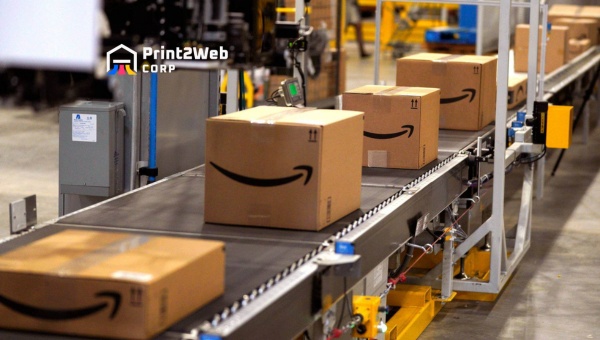
Choosing an expedited shipping approach like Rapid Express Freight provides several measurable business advantages beyond simple delivery speed. These benefits compound over time and can meaningfully affect your Amazon business performance.
Stockout Prevention and Revenue Protection
Every day a product is out of stock on Amazon means lost sales, reduced organic search ranking, and potential loss of Buy Box placement. Expedited freight minimizes the window between inventory depletion and replenishment, protecting your sales velocity during critical periods. For products generating $100 or more per day in revenue, even a week-long stockout can cost $700 or more in lost sales, often exceeding the premium cost of expedited shipping.
Improved IPI Score
Amazon’s Inventory Performance Index measures how efficiently you manage FBA inventory across excess inventory, sell-through rate, stranded inventory, and in-stock rate. Timely inventory replenishment through expedited shipping supports a healthy in-stock rate, which contributes positively to your IPI score. A strong IPI score can mean fewer storage restrictions and better fulfillment center access during peak seasons.
Faster Product Launches and Seasonal Response
For new product launches, getting inventory to Amazon quickly lets you capitalize on launch momentum, early reviews, and advertising spend. Similarly, during seasonal peaks like Q4 or Prime Day, expedited shipping allows you to respond to demand spikes that standard freight timelines cannot serve. Sellers who can restock within days rather than weeks gain a meaningful competitive advantage during high-demand windows.
How to Expedite Your Amazon FBA Shipping
Reducing the time between placing a purchase order with your supplier and having sellable inventory at Amazon requires deliberate planning. The following steps help you compress your shipping timeline and respond quickly when speed matters most.
Steps to Speed Up FBA Shipping
- Maintain buffer stock: Keep 2 to 4 weeks of safety stock at Amazon to absorb supply chain delays without hitting a stockout.
- Pre-negotiate freight terms: Establish relationships with freight forwarders before you need urgent shipping so you can activate expedited service immediately.
- Prepare labeling at the source: Have your supplier apply FNSKU labels and FBA-compliant packaging before shipment to avoid delays at US prep facilities.
- Choose the right shipping mode: Match the shipping method to the urgency level. Use ocean freight for planned restocks and reserve air express for emergency replenishment.
- Monitor shipments actively: Use real-time tracking to identify delays early and communicate with your forwarder to resolve issues before they impact your stock timeline.
- Create shipment plans early: Generate your inbound shipment plan in Seller Central before freight departs so Amazon has the shipment on record and can schedule receiving.
For sellers exploring whether Amazon’s platform is the right fit compared to other marketplaces, our eBay vs Amazon comparison for sellers breaks down the advantages of each platform, including FBA’s role in Amazon’s seller ecosystem.
Common Amazon FBA Shipping Mistakes to Avoid
Even experienced FBA sellers encounter shipping problems that erode margins and delay inventory availability. Learning from the most common mistakes helps you avoid costly errors and maintain a smooth supply chain.
1. Underestimating Transit and Customs Times
Sellers frequently plan restock orders based on optimistic shipping estimates without accounting for customs clearance delays, port congestion, or carrier disruptions. Always build a 25% to 30% time buffer into your shipping timeline. A shipment quoted at 30 days should be planned as if it will take 38 to 40 days, giving you room to absorb unexpected delays without stocking out.
2. Incorrect FBA Labeling and Packaging
Failing to meet Amazon’s FBA labeling requirements is one of the most common reasons shipments are delayed or rejected at fulfillment centers. Missing FNSKU barcodes, incorrect suffocation warnings on poly bags, and non-compliant pallet wrapping all trigger problems. Ensure your supplier or prep service understands Amazon’s current requirements, and verify a sample shipment before committing to a full production run.
3. Choosing the Cheapest Carrier Without Considering Reliability
Optimizing for the lowest freight quote can backfire if the carrier has a poor track record with Amazon deliveries. Damaged freight, missed delivery appointments, and lost shipments all cost more in the long run than the initial savings. Research carrier reputations in FBA seller communities and prioritize providers with demonstrated reliability for Amazon-bound freight.
4. Overordering and Triggering Long-Term Storage Fees
Ordering large quantities to reduce per-unit freight costs can lead to excess inventory that triggers long-term storage fees after 181 days. These fees can consume your margin on slow-moving products. Balance freight cost optimization against inventory turnover expectations, and use the FBA Revenue Calculator to model the impact of different order quantities on total profitability.
5. Ignoring the Inbound Placement Fee Structure
Amazon’s inbound placement fees reward sellers who send inventory to the destinations Amazon assigns. Trying to force single-location shipping can incur significant per-unit fees. Understand how these fees work and factor them into your freight planning, especially when comparing LTL vs. small parcel shipping options.
6. Not Having a Backup Freight Plan
Relying on a single freight forwarder or carrier leaves you vulnerable if that provider experiences disruptions. Maintain relationships with at least two freight providers so you can pivot quickly when your primary option cannot meet a deadline. This is especially important during peak seasons when carrier capacity tightens.
Frequently Asked Questions
What is FBA freight?
FBA freight refers to the transportation of inventory from a supplier or warehouse to Amazon fulfillment centers using freight shipping methods such as LTL, FTL, or small parcel delivery. FBA freight can be handled through Amazon’s Partnered Carrier Program, Amazon Freight, Amazon Global Logistics, or third-party freight forwarders, depending on shipment size and destination.
Is Amazon FBA still profitable in 2026?
Yes, Amazon FBA remains profitable for sellers who manage their fee structure, sourcing costs, and shipping logistics effectively. Success depends on selecting products with healthy margins after accounting for referral fees, fulfillment fees, storage costs, and inbound shipping expenses. Using the FBA Revenue Calculator and maintaining disciplined inventory management are key to sustained profitability.
Can I make $1000 a month selling on Amazon?
Yes, many sellers reach $1000 or more in monthly profit through Amazon FBA. Achieving this typically requires products with $5 to $15 profit margins after all fees, consistent monthly sales volume of 100 to 200 units, and disciplined cost management. Private label products with differentiated positioning tend to offer the best path to consistent monthly profitability.
What are the biggest FBA mistakes to avoid?
The biggest FBA mistakes include underestimating shipping and customs times, ordering too much inventory that triggers long-term storage fees, choosing the cheapest freight without verifying reliability, failing to meet Amazon labeling requirements, not using the FBA Revenue Calculator before launching products, and lacking a backup freight plan for peak seasons.
What is Amazon SEND?
Amazon SEND (Sellers Easy Dispatch) is Amazon’s cross-border ocean freight program for FBA sellers shipping inventory from manufacturing countries like China to Amazon fulfillment centers. SEND offers transparent pricing quoted in Seller Central and handles supplier pickup, ocean transit, customs clearance, and final delivery. It is designed as an integrated alternative to third-party freight forwarders.
Is Amazon freight reliable?
Amazon Freight is generally considered reliable for large shipments, particularly FTL moves of 10 or more pallets, due to its tight integration with Amazon’s own fulfillment network. However, the Amazon Partnered Carrier Program for LTL shipments has received mixed reviews, with some sellers reporting issues with assigned carriers causing freight damage. For critical shipments, compare Amazon Freight with independent carriers that have proven track records.
How can I get expedited shipping on Amazon FBA?
To expedite FBA shipping, use air express services from freight forwarders for international shipments (3 to 7 day delivery), book expedited ground freight for domestic shipments, maintain buffer stock to avoid emergency restocks, pre-negotiate freight relationships before urgent needs arise, and have your supplier apply FBA labeling before shipment to eliminate prep delays. Amazon also offers Priority Shipping and Same-Day Delivery options for customer-facing orders from fulfillment centers.
Who handles Amazon freight?
Amazon freight is handled by Amazon’s own logistics division (Amazon Freight) for large truckload shipments, contracted carriers within the Amazon Partnered Carrier Program for LTL and small parcel deliveries, and third-party freight forwarders for international and specialized shipments. Amazon assigns partnered carriers automatically, while independent forwarders let sellers choose specific carriers.
Is Amazon FBA Rapid Express Freight suitable for all sellers?
Rapid Express Freight is most suitable for sellers who need time-sensitive inventory replenishment, such as those facing stockouts, launching new products, or preparing for seasonal peaks. Sellers with stable inventory levels and long lead time buffers may find standard ocean freight or Amazon’s partnered LTL options more cost-effective. Evaluate the premium cost of expedited shipping against the revenue impact of potential stockouts.
Does product size affect FBA shipping costs?
Yes, both product dimensions and weight directly affect FBA fulfillment fees, storage fees, and inbound freight costs. Standard-size items incur lower fees than oversize items, and dimensional weight is used to calculate shipping charges for lightweight but bulky products. Use Amazon’s FBA Revenue Calculator to estimate the exact fee impact for your specific product dimensions.
Conclusion
Amazon FBA Rapid Express Freight provides a specialized shipping solution for sellers who cannot afford the delays of standard freight timelines. By compressing the gap between supplier and fulfillment center, expedited shipping protects sales velocity, maintains search rankings, and ensures inventory is available during critical demand windows. The key is knowing when the premium cost is justified by the revenue you protect.
For sellers managing steady, predictable inventory flows, standard ocean freight combined with Amazon’s Partnered Carrier Program or Amazon SEND may offer better per-unit economics. For those facing stockouts, launching new products, or preparing for Q4, the speed advantage of Rapid Express Freight or air express shipping often pays for itself. Use the FBA Revenue Calculator to model your specific scenario, and maintain relationships with multiple freight providers so you can pivot when conditions change.
If you are deciding between fulfillment models, our guides on dropshipping vs. Amazon FBA and Amazon FBM provide side-by-side comparisons to help you choose the right approach. For those building a branded product business, the Amazon private label guide covers sourcing and product development fundamentals. Need to adjust a customer-facing delivery after your inventory is live? Learn how to change the delivery date on Amazon to manage customer expectations effectively.
Start by auditing your current shipping process, identify where delays occur most frequently, and evaluate whether Rapid Express Freight or an alternative like Amazon SEND can close those gaps. The right freight strategy keeps your Amazon FBA business stocked, profitable, and positioned for growth in 2026 and beyond.
Leave a Reply