
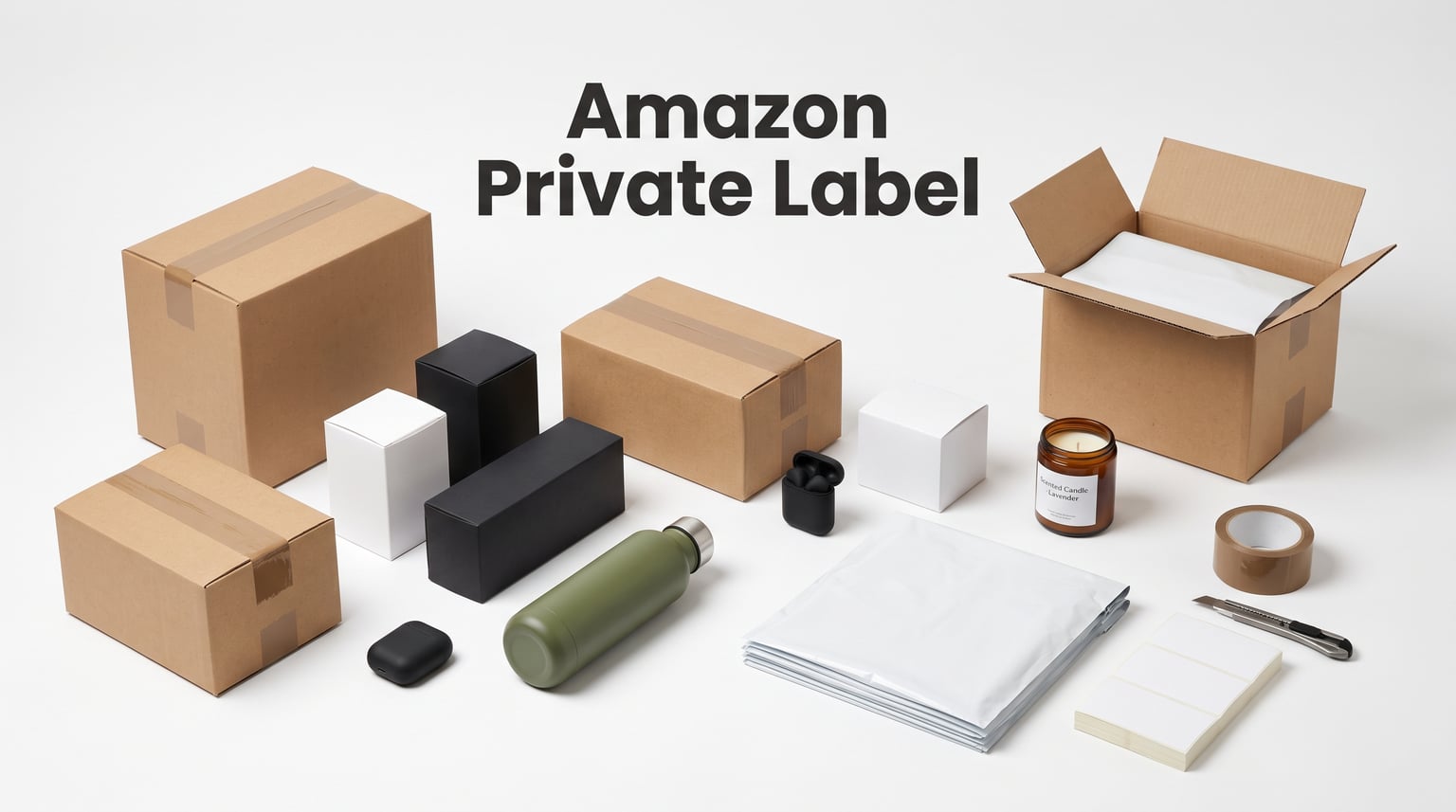
Building a brand on Amazon used to mean reselling someone else’s products and competing for the Buy Box on identical listings. Amazon Private Label flips that model entirely. You source a product from a third-party manufacturer, put your own brand name and logo on it, and sell it as something no one else can replicate. The private label market in the United States reached roughly $271 billion in recent years, and about 54% of Amazon sellers now use this model as their primary selling method. If you have been wondering whether the window has closed, the data suggests it has not.
I have spent years researching and writing about Amazon selling strategies, and private label remains one of the most frequently asked-about topics in seller communities. People want to know what it actually takes, how much money they need, and whether the opportunity is real or just another internet myth. The honest answer is that private label works, but it rewards sellers who do their homework and punishes those who rush in blindly. Roughly 64% of private label sellers started with under $5,000, and 58% report reaching profitability within their first year.
This guide covers everything from product research criteria and supplier vetting to listing optimization, pricing strategy, launch marketing, and hidden costs. Whether you are exploring private label for the first time or looking to refine an existing approach, you will find actionable specifics here. You will also get an honest look at the challenges, including saturation concerns, PPC costs, and supplier quality issues that real sellers discuss every day on Reddit and in seller forums.
What You Will Learn in This Guide:
What Amazon Private Label is and how the business model actually works
A detailed 8-step process for launching your first private label product
How to find and vet manufacturers, including Alibaba sourcing best practices
Product research criteria with specific metrics and recommended tools
Pricing strategy, cost breakdowns, and startup budget planning
Amazon Brand Registry, A+ content, and listing optimization techniques
Launch and marketing strategy including Amazon PPC and the Vine Program
Common mistakes, hidden costs, and realistic timeline expectations
Understanding Amazon Private Label: What It Really Means
Amazon Private Label is a selling model where you partner with a third-party manufacturer to produce a product, then brand it, package it, and sell it under your own label on Amazon. You are not inventing a new product category. Instead, you are finding an existing product with proven demand, improving it or differentiating it in a meaningful way, and putting your brand identity on it so no other seller can list against your ASIN.
Think of brands like Kirkland Signature at Costco or Amazon’s own Amazon Basics line. These are not companies that manufacture their own goods. They source products from factories, apply their branding and quality standards, and sell them exclusively under their label. That is private labeling in a nutshell. On Amazon, you do the same thing at a smaller scale, and because you own the brand, no competitor can share your listing or undercut you on price the way they can with wholesale or arbitrage products.
Private Label vs White Label: What Is the Difference?
People often use these terms interchangeably, but there is a meaningful distinction. White label refers to generic, unbranded products that a manufacturer produces and sells to multiple sellers. You slap your logo on it, but so can dozens of other sellers. There is no exclusivity, and you end up competing on price.
Private label means you work with a manufacturer to create a product specifically for your brand. You can request modifications, custom packaging, proprietary colors, or additional features. The manufacturer agrees not to sell your exact formulation to competitors. This gives you product differentiation and brand ownership, which are the two biggest advantages of this model on Amazon.
How the Amazon Private Label Model Actually Works
The mechanics work like this: you register an Amazon Seller account, typically a Professional account at $39.99 per month. You research a product niche with solid demand and manageable competition. You source that product from a manufacturer, usually through platforms like Alibaba or through direct factory relationships. You apply your branding, create your Amazon listing with optimized content, ship inventory to Amazon FBA warehouses, and launch with PPC advertising to generate initial sales and reviews.
Because you own the brand and the listing, you control the Buy Box entirely. There is no competition from other sellers on your product page. You also gain access to tools that resellers cannot use, including A+ content, Amazon Storefront, Sponsored Brand ads, and the Amazon Vine Program for generating early reviews. These tools are what allow private label sellers to build brand equity and customer loyalty over time.
Does Amazon Have Its Own Private Label Brands?
Yes, and the scale might surprise you. Amazon owns over 100 private label brands operating across dozens of categories, from food and beverage to electronics, clothing, and home goods. Amazon Basics is the most well-known, but the portfolio includes brands like Amazon Elements (supplements), Solimo (household essentials), Mama Bear (baby products), Pinzon (bedding), and Goodbrief (underwear).
Some sellers view Amazon’s private label presence as a threat, and it is worth monitoring which categories Amazon decides to enter. However, Amazon’s own brands tend to focus on commodity products with broad appeal. There are millions of niche product opportunities where Amazon has no presence, and that is where independent private label sellers find their edge. If you want to understand the full scope of Amazon’s brand portfolio, Pattern’s complete guide to Amazon’s private label brands is an excellent resource.
Related Reading: Amazon Package Not Delivered? Quick Fix Solutions Here!
Pros and Cons of Selling Amazon Private Label Products
Every business model has trade-offs, and private label is no exception. Before committing your time and money, it helps to understand both sides clearly. Here is an honest breakdown based on what successful sellers report in forums and what the data shows.
Advantages of the Private Label Model
Higher profit margins: Private label products typically generate 20-50% margins, compared to 10-15% for wholesale or arbitrage. Since you control pricing and there is no direct listing competition, you can price based on perceived brand value rather than a race to the bottom.
Brand ownership and asset value: You are building a brand that has intrinsic value. Many private label brands get acquired by aggregators or other buyers. Your brand, customer reviews, and listing rankings become assets you can eventually sell.
Buy Box control: Because you are the only seller on your listing, you always win the Buy Box. Resellers constantly fight for Buy Box position, but private label sellers never have to worry about this.
Creative control: You decide the product design, packaging quality, branding, listing content, and marketing strategy. This level of control is impossible with reselling models.
Access to premium Amazon tools: Brand Registry unlocks A+ content, Sponsored Brands ads, Amazon Stores, brand analytics, and enhanced brand protection features that resellers cannot access.
Customer loyalty: A strong brand creates repeat customers. Buyers who trust your product will search for your brand name directly, reducing your reliance on PPC over time.
Challenges and Downsides to Consider
Significant upfront investment: Unlike dropshipping or arbitrage, private label requires buying inventory in bulk. Most sellers spend $2,500-$5,000 on their first inventory order alone, plus samples, branding, photography, and PPC budget.
Longer time to launch: From product research to your first sale, expect 2-4 months of work before revenue starts. Product research, sample testing, manufacturing lead times, and shipping all take time.
PPC costs during launch: New products have no sales history or reviews, so organic ranking is nonexistent. You will rely heavily on Amazon PPC to generate initial visibility, and costs can eat into margins for the first 3-6 months.
Inventory risk: If the product does not sell, you are stuck with inventory sitting in Amazon warehouses, racking up long-term storage fees. One Reddit user shared that they lost $2,300 on their first product due to inadequate research.
Supplier quality issues: Working with overseas manufacturers means you have less control over quality. Product defects, specification changes, or shipping delays can derail a launch. Quality control inspections are non-negotiable for experienced sellers.
Competition and saturation: Popular niches attract copycats. If your product succeeds, competitors will launch similar products and may try to differentiate more aggressively. Continuous product improvement is part of the game.
Amazon Private Label Requirements: What You Need to Get Started
Before diving into product research, make sure you meet the basic requirements for selling private label on Amazon. These are not optional, and missing any of them can delay your launch or result in account suspension.
Account and Legal Requirements
Amazon Seller Central account: You need a Professional selling plan ($39.99/month). The Individual plan ($0.99 per item sold) does not support the tools and features private label sellers need.
Business entity: You do not legally need an LLC or corporation to start, but it is strongly recommended. A business entity protects your personal assets and is required for Brand Registry enrollment. Most sellers form an LLC before launching.
UPC or EAN barcode: Every product needs a unique product identifier. You can purchase these through GS1, the official global standard. Amazon requires GS1-registered barcodes for Brand Registry approval.
Trademark for Brand Registry: To unlock A+ content, Sponsored Brands, and brand protection, you need an active registered trademark in the country where you sell. US trademarks typically take 8-12 months to process, though you can start selling before Brand Registry and enroll later.
Compliance documentation: Certain categories require safety certifications, FDA compliance (for supplements and cosmetics), or hazmat review. Check category-specific requirements before finalizing your product choice.
Bank account and tax information: Amazon requires a valid bank account for deposits and tax identification (SSN or EIN) for reporting purposes.
Also Read: Has Amazon Sent Wrong Item? Here’s What To Do
How to Start an Amazon Private Label Business: A Step-by-Step Guide
This is where most guides go wrong. They give you a vague list and send you on your way. I am going to walk you through the entire process in detail, covering every step from initial product research through launch and beyond. This is the same framework that experienced sellers use, and it reflects what top competitors like Helium 10, Feedvisor, and BigCommerce recommend.
Step 1: Conduct Thorough Product Research
Product research is the single most important step in this entire process. The product you choose will determine whether your business succeeds or fails. Many sellers skip this step, rush into a product they feel good about, and lose thousands. Do not be that seller.
Use tools like Helium 10 (specifically the Black Box tool) or Jungle Scout to find products that meet specific criteria. The goal is to find a product with strong, consistent demand but relatively low competition. Here are the criteria that experienced private label sellers look for:
Price range: $20 to $70. Below $20, margins are too thin after Amazon fees. Above $70, the upfront inventory investment becomes substantial.
Monthly sales volume: At least 300 units per month for the top 10 competing products. This indicates healthy demand.
Review count: Fewer than 500 reviews on the top competing listings. If the top sellers have thousands of reviews, it will be extremely difficult to rank.
Star ratings: Competing products averaging below 4.0 or 4.2 stars. This signals an opportunity to win market share with a higher-quality product.
Product size: Small and lightweight (under 2 pounds, fitting in a shoebox). This keeps FBA fulfillment fees low and shipping costs from the manufacturer manageable.
Seasonality: Avoid highly seasonal products unless you have experience managing inventory cycles. Year-round demand keeps cash flow predictable.
No gated categories: Avoid categories that require special approval (like supplements, groceries, or health products) for your first product. The compliance requirements add complexity.
Spend at least a week on this step. Browse Amazon bestseller lists, study the top 10 products in any niche you consider, and read their negative reviews. Those negative reviews are gold. They tell you exactly what customers want that existing products are not delivering. Your job is to source a product that fixes those problems.
Step 2: Find and Vet a Manufacturer
Once you have identified your product, the next step is finding a reliable manufacturer to produce it. For most new private label sellers, this means using Alibaba, the largest B2B sourcing platform connecting buyers with factories, primarily in China. Alibaba is where the vast majority of Amazon private label products are sourced.
Search for your product on Alibaba and you will find dozens or hundreds of suppliers. Do not just pick the cheapest one. Here is how experienced sellers vet manufacturers:
Look for verified suppliers: Alibaba offers a Verified Supplier designation, which means a third party has inspected the factory. This is a baseline requirement, not a guarantee of quality.
Check years in business and transaction history: A supplier with 5+ years on the platform and hundreds of transactions is lower risk than a new supplier with no track record.
Request and compare samples: Order samples from at least 3 different suppliers before making a decision. This costs $100-$300 total but can save you thousands in defective inventory. Test the samples yourself for quality, durability, and consistency.
Negotiate the minimum order quantity (MOQ): Most suppliers quote an MOQ of 500-1,000 units. For your first order, negotiate down to 200-300 units. Explain that you are testing the market and will place a larger reorder if successful. Many suppliers will agree.
Communicate clearly about specifications: Document every detail of your product in writing. Materials, dimensions, colors, packaging requirements, and labeling specifications should all be spelled out in the purchase agreement.
Arrange quality control inspections: Before your bulk order ships, hire a third-party inspection service (such as QIMA or Inspectorius) to inspect the goods at the factory. This costs $200-$400 and is considered non-negotiable by experienced sellers.
Always have a backup supplier: What happens if your primary supplier raises prices, goes out of business, or delivers defective goods? Having a vetted backup supplier is essential risk management. Many sellers maintain relationships with 2-3 factories for every product.
Step 3: Develop Your Brand Identity
Your brand is what separates you from generic sellers. A strong brand name, clean logo, and professional packaging build trust with buyers and justify premium pricing. This step is often rushed by new sellers, but it pays dividends over the lifetime of your business.
Choose a brand name that is short, memorable, and easy to spell. Avoid names that limit you to one product category if you plan to expand. Check that the name is available as a trademark (search the USPTO database), a matching domain name, and social media handles. Consistency across all platforms builds credibility.
For logo and packaging design, you can use freelance platforms like Upwork, 99designs, or Fiverr. Expect to spend $50-$300 for a professional logo and $100-$500 for packaging design. Your packaging should protect the product during shipping and look polished on the outside. Amazon customers unbox products, and premium packaging elevates the perceived value of your brand.
Step 4: Order Samples and Test Product Quality
I mentioned samples in the supplier vetting step, but this deserves its own emphasis because it is where so many sellers go wrong. Ordering one sample is not enough. You need to test the product the way a customer would use it over time.
Use the product yourself for at least a week. Give samples to friends or family and ask for honest feedback. Test durability, functionality, and any claims the manufacturer makes. If you are selling a kitchen gadget, run it through dozens of use cycles. If you are selling a wearable product, check for comfort and fit across different body types.
Once you are satisfied with the sample quality, place your bulk order. Manufacturing typically takes 15-30 days, and shipping adds another 15-30 days by sea freight (air freight is faster but significantly more expensive). Plan your timeline accordingly.
Step 5: Choose Your Fulfillment Strategy
Most private label sellers use Fulfillment by Amazon (FBA), and for good reason. When you send inventory to Amazon’s warehouses, Amazon handles storage, picking, packing, shipping, customer service, and returns. Your products qualify for Prime shipping, which dramatically increases conversion rates. For a deeper look at FBA logistics and shipping options, check out our complete guide to leveraging Amazon FBA for fulfillment.
The alternative is Fulfillment by Merchant (FBM), where you handle storage and shipping yourself. Some sellers use FBM to avoid FBA fees on large or heavy products. Seller Fulfilled Prime is an option for established sellers, but the requirements are stringent. For your first private label product, FBA is almost always the right choice. The Prime badge alone can double your conversion rate compared to FBM listings.
Step 6: Create Your Amazon Product Listing
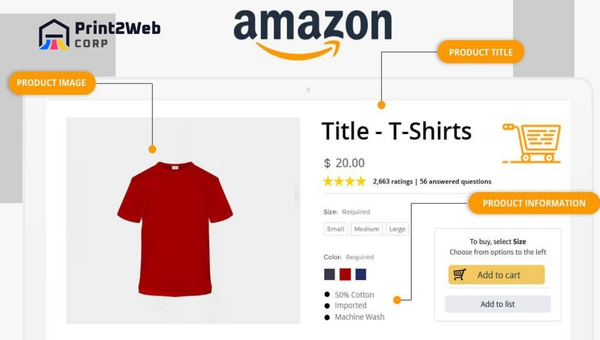
Your product listing is your storefront, your salesperson, and your brand’s first impression all in one. A poorly optimized listing will fail no matter how good your product is. This is where listing optimization, keyword research, and conversion-focused copywriting come together.
Start with keyword research. Use tools like Helium 10’s Cerebro or Magnet to identify the search terms customers use to find products in your niche. Your primary keyword should appear in your title, and secondary keywords should be distributed throughout your bullet points, description, and backend search terms. For discovering what customers are actually searching for, using the Amazon Search Terms Report is invaluable.
Your listing title is the most important element for both Amazon’s A9 search algorithm and shopper click-through rates. Include your brand name, primary keyword, key features, and a benefit statement. Keep it under 200 characters and make it readable, not just a keyword dump.
Amazon allows 5 bullet points, and each one should follow a feature-benefit format. Lead with a capital letter, state the feature, and explain how it benefits the customer. For writing product descriptions that convert, our guide to writing product descriptions that sell breaks down the formula in detail.
Product photography can make or break your listing. Amazon requires a pure white background for the main image, but your secondary images should show the product in use, highlight key features, and include infographics that communicate specifications. Budget $200-$600 for professional product photography. This is not the place to cut corners.
Once you have Brand Registry, invest in A+ content (also called Enhanced Brand Content). This lets you add rich images, comparison charts, and brand stories to your listing. A+ content typically increases conversion rates by 5-15% and helps differentiate your brand from competitors.
Step 7: Enroll in Amazon Brand Registry
Amazon Brand Registry is a free program that gives brand owners enhanced tools and protections. Once you have an active registered trademark, enroll immediately. The benefits include A+ content, Amazon Storefront creation, Sponsored Brands advertising, brand analytics (which show exactly what search terms shoppers use to find your products), and automated brand protection that scans Amazon for copycats and counterfeiters using your trademark.
Brand Registry enrollment takes 1-2 weeks after submission. You will need your trademark registration number, product images showing your logo on the packaging, and a list of product categories. This step is what transforms you from a product seller into a brand owner on Amazon.
Step 8: Launch with PPC and the Amazon Vine Program
A new listing has zero sales history and zero reviews, which means Amazon’s algorithm has no reason to rank it organically. You need to jumpstart sales and reviews, and that requires a deliberate launch strategy.
Amazon PPC (Pay-Per-Click advertising) is the primary tool. Start with Sponsored Products campaigns targeting both exact match keywords (high-intent search terms) and auto campaigns (which let Amazon find relevant placements). Budget $500-$1,500 for your first 30 days of PPC. Your goal during launch is not profitability but visibility and sales velocity, which signals to Amazon’s algorithm that your product deserves organic ranking. To track your advertising efficiency, understanding your ACoS metric is absolutely essential.
Amazon Vine is a program where Amazon connects your product with trusted reviewers. You provide up to 30 units for free, and Vine reviewers publish honest reviews. These reviews carry a Vine badge that builds trust with shoppers. Vine is one of the only compliant ways to get reviews for a new product, and it is available exclusively to Brand Registry enrolled sellers.
Combine PPC, Vine, and a well-optimized listing, and you have the foundation for a successful launch. Most sellers report seeing their first organic sales within 2-4 weeks of launching if these elements are executed properly. Reaching consistent daily sales typically takes 3-6 months of ongoing optimization.
Pricing Strategy: How to Price Private Label Products on Amazon
Pricing is one of the most misunderstood aspects of private label selling. Set your price too low and you erode your margins. Set it too high and you lose sales to competitors. The goal is to find the sweet spot where you remain competitive while maintaining healthy profit margins.
Start by understanding your full cost structure. Your cost of goods sold (CoGS) includes the manufacturing cost, packaging, labeling, shipping from the factory to Amazon warehouses, customs duties, and inspection fees. Then add Amazon’s fees: referral fees (typically 15% of the sale price) and FBA fulfillment fees (which vary by product size and weight).
Here is a simplified pricing formula that experienced sellers use. Take your total landed cost per unit (CoGS plus shipping and duties, divided by units ordered). Add Amazon referral fees and FBA fees. Add your desired PPC cost per unit during launch. The sum of all costs should represent no more than 60-70% of your selling price, leaving a 30-40% gross margin target.
Position your price within 20% of the top competing products in your niche. If the market average is $30, pricing between $24 and $36 is reasonable. If you have genuinely differentiated your product with better materials, improved design, or superior packaging, you can justify pricing at the higher end. If your product is similar to existing options, stay close to the market average until you build reviews and brand recognition.
Use dynamic pricing to your advantage. Many sellers launch with a temporary discount or coupon to boost conversion rates, then gradually increase the price as reviews accumulate. Monitor your competitors’ prices regularly and adjust when needed, but avoid constant price changes that confuse the Amazon algorithm. For managing returns and packaging costs that affect your bottom line, see our tips on original packaging for Amazon returns.
Hidden Costs and Startup Budget Planning
One of the biggest mistakes new sellers make is underestimating how much money they need. The product itself is just one line item. Here is a realistic breakdown of what it costs to launch a private label product on Amazon.
Sample Startup Budget Breakdown
Product samples: $100-$300 (ordering from 2-3 suppliers for comparison)
First inventory order: $2,500-$4,000 (200-500 units depending on product and MOQ)
Shipping and customs duties: $600-$1,000 (sea freight from China to US warehouses)
Logo and brand design: $50-$300
Packaging design: $100-$500
Product photography: $200-$600
UPC barcode (GS1): $30 (initial) to $250 (annual depending on plan)
Quality control inspection: $200-$400
PPC advertising budget (first 30 days): $500-$1,500
Amazon Vine enrollment: Free (but 30 units of inventory provided at your cost)
Amazon Seller account: $39.99/month (Professional plan)
LLC formation (optional but recommended): $50-$500 depending on state
Trademark filing (optional but needed for Brand Registry): $250-$350 (USPTO filing fee)
The total realistic range for a first product launch falls between $4,350 and $8,500. This aligns with data showing that 64% of sellers started with under $5,000, though many reinvest profits to launch additional products. Keep a 20% contingency fund for unexpected costs, because there will be unexpected costs. Shipping delays, additional PPC spend, extra samples, or packaging revisions all add up.
Real Private Label Product Examples
Examples make this tangible. Here are a few product categories where private label sellers have found success, along with what makes them work.
Coofandy Men’s Blazers
Coofandy started as a private label men’s apparel brand on Amazon and grew into a multi-million dollar business. They focused on affordable, well-fitted blazers and casual menswear, addressing complaints about fit and sizing that dominated negative reviews of competing products. Their success demonstrates how addressing specific customer pain points through product differentiation can build a dominant brand in a competitive category.
Flexzilla Garden Hose
Flexzilla differentiated a commodity product (garden hoses) by focusing on a flexible, lightweight, kink-resistant design. They solved a universal frustration that traditional hoses were heavy, tangled easily, and cracked in cold weather. This is a classic example of finding a high-demand niche with a well-known quality problem and engineering a better solution.
Modvel Knee Brace
Modvel built a private label brand around knee braces and supports, targeting an aging population and active athletes. They differentiated through breathable, lightweight materials and a range of sizes for proper fit. The knee brace category has consistent year-round demand, which makes it attractive for private label sellers, though competition is significant.
Product Ideas for 2026
For sellers looking at current opportunities, consider these categories with strong demand and differentiation potential: resistance bands and home fitness accessories, eco-friendly reusable food storage bags, copper measuring cups and barware, homeschool planners and educational materials, and novelty hats for specific hobbies or professions. Each of these can be differentiated through materials, design, or branding.
Common Mistakes to Avoid
After analyzing hundreds of seller discussions on Reddit and in private forums, certain mistakes appear over and over. Learning from these can save you thousands of dollars and months of frustration.
Rushing product research: The #1 mistake. Sellers fall in love with a product idea without validating demand, analyzing competition, or reading negative reviews. One Reddit user lost $2,300 on their first product because they skipped proper research. Spend at least a week on research before committing any money.
Underestimating total costs: Sellers budget for inventory and forget about samples, photography, branding, PPC, and inspection fees. Always add a 20% contingency to your budget.
Choosing the cheapest supplier: Price shopping without quality testing leads to defective products and negative reviews. Pay slightly more for a proven, vetted manufacturer with a track record.
Skip quality control inspections: A $300 inspection can prevent a $4,000 loss from defective inventory. Never skip this step, even with a supplier you trust.
Poor listing optimization: A great product with a weak listing will not sell. Invest in professional photography, thorough keyword research, and compelling copywriting. Your listing is your salesperson.
Running PPC without understanding ACoS: Many sellers burn through their PPC budget without tracking their Advertising Cost of Sale. If your ACoS exceeds your profit margin, you are losing money on every sale.
Stocking out of inventory: Running out of stock kills your Amazon ranking and erases months of PPC investment. Use inventory forecasting tools like SoStocked or Sellerboard to predict reorder timing.
No backup supplier: If your sole supplier has a problem, your business stops. Always have a vetted backup ready.
Ignoring negative feedback: Negative reviews are free market research. If customers complain about the same issue repeatedly, fix it in your next production run.
Is Amazon Private Label Still Profitable in 2026?
This is the question that dominates Reddit discussions and seller forums. You will see posts declaring that private label is dead, saturated, or no longer worth the effort. The reality is more nuanced.
Is it harder than it was five years ago? Yes. Competition has increased, PPC costs have risen, and Amazon has raised certain fees. The days of slapping a label on a generic Alibaba product and watching sales roll in are gone. What works now is genuine product differentiation, strong branding, and disciplined execution of the process outlined in this guide.
Is it still profitable? Absolutely. Data from 2026 shows that the private label market continues to grow. Roughly 54% of Amazon sellers use the private label model, and 58% report reaching profitability within their first year. Sellers on Reddit report generating $3,000-$5,000 per month from established listings, and some have scaled to six and seven figures. One seller who launched in April reported reaching $600,000 in sales through FBA private label within months.
The key is managing expectations. This is not a get-rich-quick scheme. It is a business that requires capital, research, and patience. Sellers who approach it with a long-term mindset, realistic budget, and willingness to learn from mistakes are the ones who succeed. The opportunity is real, but it rewards preparation over enthusiasm.
FAQs
What exactly is Amazon Private Label?
Amazon Private Label is a selling model where you source a product from a third-party manufacturer, brand it with your own logo and packaging, and sell it exclusively on Amazon. Because you own the brand and the listing, no other seller can list against your product. This gives you full control over pricing, branding, and the Buy Box. The model is similar to how store brands like Kirkland Signature or Amazon Basics work.
How do I get into Amazon private label?
Start by registering a Professional Amazon Seller account. Conduct thorough product research using tools like Helium 10 or Jungle Scout, looking for products priced $20-$70 with 300+ monthly sales and fewer than 500 competing reviews. Source your product through Alibaba or a direct manufacturer relationship, order samples from multiple suppliers, and test quality before placing a bulk order. Create your brand identity, list your product with optimized content, enroll in Brand Registry, and launch with Amazon PPC and the Vine Program. The entire process typically takes 2-4 months from research to first sale.
Is Amazon private label still profitable?
Yes, Amazon private label remains profitable in 2026. Approximately 54% of Amazon sellers use this model, and 58% report reaching profitability within their first year. Typical profit margins range from 20-50%, depending on the product category and pricing strategy. However, profitability requires genuine product differentiation, disciplined cost management, and a well-executed launch strategy. Sellers who rush into saturated niches or skip product research are the ones who struggle. The opportunity is real but rewards preparation and execution over hype.
Does Amazon have a private label?
Yes, Amazon operates over 100 private label brands across dozens of categories. Amazon Basics is the most recognizable, but the portfolio includes Amazon Elements (supplements), Solimo (household essentials), Mama Bear (baby products), Pinzon (bedding), and many others. Amazon’s private label brands primarily focus on commodity products with broad appeal, which means there are still millions of niche product opportunities where independent sellers can compete. Monitoring which categories Amazon enters is smart, but it should not discourage you from pursuing differentiated niche products.
How much does it cost to start Amazon private label?
A realistic startup budget for your first private label product ranges from $4,350 to $8,500. This includes product samples ($100-$300), first inventory order ($2,500-$4,000), shipping and duties ($600-$1,000), branding and packaging design ($150-$800), product photography ($200-$600), quality control inspection ($200-$400), UPC barcodes ($30-$250), and initial PPC budget ($500-$1,500). About 64% of sellers started with under $5,000, and many reinvest early profits to launch additional products. Always keep a 20% contingency fund for unexpected costs.
Do I need my own company for an Amazon Private Label?
You can technically start selling without a registered business entity, but forming an LLC is strongly recommended before launching. A business entity protects your personal assets from liability and is required for Amazon Brand Registry enrollment. Brand Registry unlocks critical features like A+ content, Sponsored Brands advertising, and brand protection tools. You will also need a registered trademark to qualify. Most successful private label sellers form an LLC and file a trademark before or shortly after launching their first product.
How long does it take to make money with Amazon private label?
From the start of product research to your first sale, expect a 2-4 month timeline. Manufacturing and shipping alone account for 30-60 days. After launch, most sellers report seeing their first organic sales within 2-4 weeks, assuming proper PPC investment and listing optimization. Reaching consistent daily sales typically takes 3-6 months. Profitability depends on your PPC efficiency, pricing strategy, and how quickly you accumulate reviews. Some sellers reach profitability within 60 days, while others take 6-12 months to break even on their initial investment.
Also Read: Target Circle Secrets – Unlock Hidden Shopping Perks Now!
Conclusion
Amazon Private Label offers a genuine path to building a profitable e-commerce brand, but it is not a shortcut. Success requires disciplined product research, careful supplier vetting, strategic pricing, and a well-executed launch. The sellers who treat this as a real business, with proper budgets and realistic timelines, are the ones who build brands that generate consistent income for years.
If you are just starting out, focus on mastering one step at a time. Begin with product research and resist the urge to rush. The criteria in this guide, including the $20-$70 price range, 300+ monthly sales threshold, and fewer than 500 competing reviews, exist because they work. Use them. Once you have identified a solid product opportunity, the rest of the process, from sourcing to branding to launch, follows a proven framework.
If you already have an Amazon private label product and want to improve your results, revisit your pricing strategy, invest in A+ content through Brand Registry, and tighten your PPC management using ACoS tracking. Small improvements in conversion rate, review velocity, and ad efficiency compound into significant revenue gains over time. For more Amazon selling insights, explore our guides on ACoS optimization, Amazon FBA logistics, and writing product descriptions that convert.
The Amazon private label opportunity is alive in 2026. The question is whether you are willing to do the work required to capture it. Start with research, build with intention, and let the data guide your decisions.
Leave a Reply