
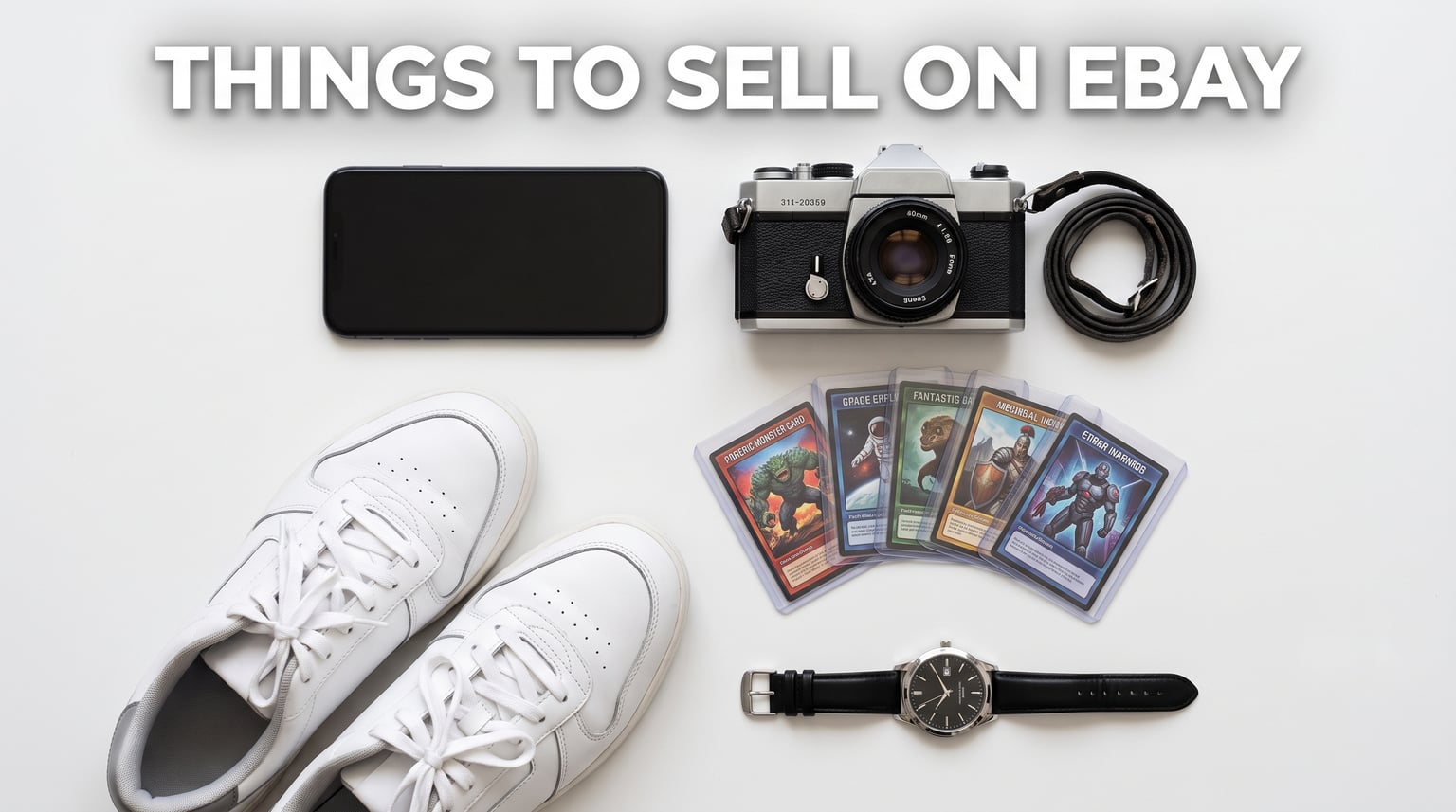
Selling on eBay has changed dramatically over the past few years. With over 133 million active buyers browsing the platform and resale markets hitting record growth, the opportunity to turn everyday items into steady income has never been bigger. Whether you are clearing out closets or building a full-time reselling business, knowing exactly what things to sell on eBay makes the difference between slow weeks and consistent profit.
I have spent years testing different eBay categories, tracking what sells fast, and learning from mistakes that cost time and money. This guide pulls together everything I have learned about the best things to sell on eBay in 2026, covering product categories, fee structures, listing optimization, sourcing methods, shipping strategies, and seasonal timing. The goal is to help you skip the trial-and-error phase and start listing items that actually move.
Real sellers on forums like Reddit’s r/Ebay and r/eBaySellers consistently share the same advice: pick a niche you understand, price using the Sold Items filter, and list consistently. One seller reported generating over $1,000 per month just reselling Honda small engine parts and vintage tractor components. Another built a $125,000 annual business from open-box merchandise. The common thread is not luck but strategy. This guide gives you that strategic foundation.
What you will learn in this guide:
Which product categories generate the most consistent sales on eBay
How eBay fees work and how to price items for real profit margins
How the Cassini search algorithm ranks listings and what you can do about it
Where to source inventory at prices that leave room for profit
Shipping strategies that protect your margins on small and large items
A seasonal calendar so you list the right products at the right time
Tips to Sell on eBay for Increased Profit
Profitable eBay selling comes down to three pillars: setting up your store correctly, optimizing every listing for search visibility, and understanding the fee structure before you price anything. Skip any of these and you will leave money on the table or, worse, lose money on items you thought were winners.
Establishing Your eBay Business the Right Way
Setting up an eBay seller account takes minutes, but setting it up well takes planning. Start with a personal account to learn the ropes, then upgrade to an eBay Store subscription once you have more than 50 active listings. Store subscribers pay a monthly fee but receive insertions at no extra cost and access to Promoted Listings Lite, which can dramatically increase visibility.
Choose your seller name carefully because it becomes your brand. Avoid random strings of numbers. Instead, pick something that reflects what you sell or sounds professional enough to build buyer trust. Fill out your profile completely, including a photo and a short bio that tells buyers why they should purchase from you.
eBay uses a seller performance system that tracks your defect rate, shipping time consistency, and tracking upload habits. Maintaining Top Rated Seller status requires keeping your defect rate below 0.5 percent and shipping within your stated handling time. Top Rated sellers receive a 10 percent final value fee discount on eligible items, which adds up quickly as your volume grows. If you are serious about building an eBay business rather than just casual selling, exploring private label strategies alongside your eBay store can diversify your income streams.
Listing Optimization: Making Buyers Find and Choose Your Items
An optimized listing does two jobs at once. It satisfies eBay’s Cassini search algorithm so your item appears in results, and it convinces the buyer to click your listing over the competition. Both jobs require attention to titles, photos, descriptions, and item specifics.
Titles carry the most SEO weight on eBay. You get 80 characters, and you should use as many as possible without keyword stuffing. Lead with the most important words: brand, model, size, color, and condition. A title like “Apple iPhone 13 Pro 128GB Graphite Unlocked Good Condition” will outperform “Nice iPhone for sale works great.” Think about what a buyer types into the search bar and mirror that language exactly.
Photos sell the product. Use bright, natural lighting and a clean background. Take at least six photos covering every angle, plus close-ups of any defects. Buyers trust sellers who are transparent about condition. If you want to sharpen your listing copy further, our guide to writing product descriptions that sell breaks down the psychology behind what makes buyers click Buy It Now.
Item specifics are the structured fields eBay asks you to fill out, such as brand, color, material, and size. These fields feed directly into the search filters buyers use to narrow results. Leaving them blank means your listing disappears from filtered searches. Fill out every applicable field, even optional ones, to maximize your visibility.
Setting Realistic Prices Using Sold Data
One of the biggest mistakes new sellers make is pricing based on active listings. Active listings show what sellers are asking, not what buyers are paying. Instead, use the Sold Items filter in eBay’s advanced search to see actual transaction prices. This gives you realistic market data and prevents you from overpricing or leaving money on the table.
Check completed sales for the same item in similar condition over the past 30 to 90 days. Note the average selling price and the spread between the highest and lowest sales. If most copies sell between $40 and $55, pricing yours at $49 positions you in the sweet spot. You can also review your own eBay purchase history to track what you originally paid and calculate your actual return on investment.
eBay Fees and Pricing Structure: What Every Seller Must Know
Before listing anything, you need to understand exactly how much eBay charges per sale. Fees are the number one reason sellers see smaller profits than expected. Pricing without factoring in fees is like running a restaurant without knowing your food costs.
Insertion Fees: The Cost of Listing
eBay gives every seller 250 free listings per month. These can be auction-style or fixed-price listings. Once you exceed 250, each additional listing costs $0.35. eBay Store subscribers receive different allowances depending on their plan tier. Starter Store subscribers get 250 free listings, Basic Store subscribers get 1,000, Premium Store subscribers get 10,000, and Anchor Store subscribers get 25,000 free listings per month.
Listings in certain categories, such as motors vehicles and real estate, carry different fee structures entirely. Always check the specific category fee page before listing items in specialized categories.
Final Value Fees: The Percentage eBay Takes
The final value fee is where eBay makes its money. This fee is charged on the total amount of the sale, including the item price and shipping cost. For most categories, the final value fee is approximately 13.25 percent. Some categories carry different rates, typically ranging from 12 percent to 15 percent.
Here is how the math works on a $100 sale. At the standard 13.25 percent rate, eBay takes $13.25. If the buyer paid $10 for shipping, the fee applies to $110, meaning eBay takes $14.58. This is why many sellers are surprised at how much eBay actually deducts. Always calculate fees on the total amount, not just the item price.
Optional Fees: Promoted Listings and Upgrades
Promoted Listings Standard lets you set an ad rate between 2 percent and 30 percent of the final sale price. You only pay the ad fee if the item sells through a promoted placement. This is a powerful tool for moving items that have been sitting unsold or for competitive categories where organic ranking is difficult.
Listing upgrades such as Bold title, Gallery Plus, and subtitle carry additional fees. These can help on high-value items but eat into margins on lower-priced goods. Use them sparingly and only when the upgrade directly increases sale probability. Understanding marketplace advertising costs across platforms helps you benchmark whether eBay’s ad fees are competitive.
Selling Limits and the 5,000 Rule
eBay imposes selling limits on new accounts to prevent fraud and build trust gradually. New sellers typically start with limits of 10 items or $500 per month. As you build positive feedback and maintain good seller metrics, eBay raises these limits automatically.
The widely discussed 5,000 rule refers to the threshold where eBay may require additional verification. If your account reaches 5,000 active listings or $50,000 in monthly sales, eBay reviews your account to verify identity and business legitimacy. This is not a penalty but a compliance checkpoint. Plan for it by keeping your business documentation organized.
Best Things to Sell on eBay: Top Product Categories
Now for the heart of this guide. The categories below represent the most consistently profitable things to sell on eBay based on platform data, competitor analysis, and real seller reports from reselling communities. Each category includes what sells best within it, who the buyers are, and practical tips for success.
Mobile Phones and Accessories
Mobile phones remain one of eBay’s highest-volume categories. Buyers range from budget-conscious shoppers looking for older models to tech enthusiasts hunting for specific configurations. iPhones, Samsung Galaxy devices, and Google Pixel phones in good or fair condition sell consistently well.
Accessories can be just as profitable as the phones themselves. Cases, charging cables, screen protectors, and power banks have low sourcing costs and sell in high volume. Bundling a phone with its original box, charger, and earbuds can increase the final sale price by 10 to 20 percent.
Be honest about cosmetic condition and battery health. iPhone buyers frequently ask about battery percentage, so include it in your listing. Phones with cracked screens still sell but should be priced accordingly. Never list a phone as unlocked unless you have verified it through a carrier check.
Video Games and Consoles
Video games are a perennial eBay favorite. Modern releases for PlayStation, Xbox, and Nintendo Switch sell steadily, but retro games are where collectors spend serious money. Sealed copies of classic titles can fetch hundreds or even thousands of dollars. Nintendo 64 cartridges, original PlayStation RPGs, and Sega Genesis games have dedicated buyer bases.
Consoles themselves sell well, especially during the holiday shopping season. Limited edition consoles, such as special color variants or bundle exclusives, appreciate over time. Always test consoles before listing and include photos of the unit powering on and reading a disc.
Bundling games with similar genres or from the same franchise moves inventory faster. A lot of five Pokemon games will sell quicker than five individual listings, and the combined price often exceeds what you would earn selling separately.
Consumer Electronics: Cameras, Computers, and Tablets
Cameras, lenses, laptops, and tablets represent some of the highest-ticket items on eBay. DSLR and mirrorless cameras from Canon, Nikon, Sony, and Fujifilm have strong resale markets. Vintage film cameras have seen a resurgence, with models like the Canon AE-1 and Pentax K1000 consistently selling above expectations.
Laptops from Apple, Dell, and Lenovo maintain value well, particularly business-grade ThinkPads and MacBooks. Include the processor, RAM, storage capacity, and battery condition in your listing. Tablets follow the same pattern. iPads in good condition with original chargers sell within days if priced using Sold Items data.
Computer components like graphics cards, RAM modules, and SSDs are sought after by builders and upgraders. Include benchmark data or model numbers prominently in your title so buyers searching for specific specs find your listing first.
Jewelry and Watches
Jewelry and watches are among the most profitable eBay categories, but they require knowledge and caution. Brand-name watches from Rolex, Omega, Seiko, and Casio have global collector markets. A single vintage Seiko diver can sell for several hundred dollars if it is authentic and well-photographed.
Fine jewelry including gold chains, diamond rings, and sterling silver pieces sell based on material weight and current precious metal prices. Costume jewelry from brands like Trifari, Coro, and Sarah Coventry has a dedicated vintage following that actively searches eBay daily.
Authenticity is everything in this category. eBay has partnered with authentication services for sneakers, watches, and handbags over a certain value. If you sell counterfeit goods, even unknowingly, you risk account suspension. When in doubt, have items professionally appraised before listing.
Collectibles and Trading Cards
Collectibles are eBay’s bread and butter. The platform built its reputation on hard-to-find items, and collectors still search eBay first for rare pieces. Trading cards have exploded in popularity, with Pokemon cards, Magic: The Gathering, and sports cards leading the charge.
Professional grading dramatically increases value. A raw Pokemon card worth $20 can sell for $200 or more after PSA grading assigns a high score. Forum sellers report 20x returns on graded cards in mint condition. Funko Pop figures, action figures, comic books, and die-cast models also maintain strong demand.
Coins and currency represent another massive collectible segment. Silver coins trade based on melt value plus numismatic premium. Paper currency from defunct countries or with rare serial numbers attracts specialist buyers willing to pay premium prices.
Clothing, Shoes, and Fashion
Clothing is a top-selling eBay category year-round. Branded sneakers from Nike, Jordan, Adidas, and New Balance have some of the highest resale margins on the platform. Limited releases and collaboration drops can double or triple in value within weeks.
Vintage clothing from the 1980s and 1990s has a strong following. Band t-shirts, denim jackets, and leather goods from recognizable brands consistently outperform generic apparel. Designer handbags, wallets, and accessories from Coach, Michael Kors, and luxury houses like Louis Vuitton attract international buyers.
Athleisure from brands like Lululemon and Alo Yoga resells exceptionally well, particularly in popular sizes and colors. Measure all garments and include those measurements in the listing. Buyers cannot try items on, so detailed sizing information reduces returns and builds trust.
Automotive Parts and Accessories
Auto parts are one of eBay’s most profitable yet overlooked categories. Forum sellers report consistent monthly income from Honda small engine parts, vintage tractor components, and OEM replacement parts for popular vehicle models. Buyers include DIY mechanics, restoration hobbyists, and small repair shops.
Performance parts, wheels, and tires have strong markets. Car audio equipment including head units, amplifiers, and subwoofers sells steadily. Motorcycle parts and accessories follow the same pattern, with Harley-Davidson and Honda parts in particular demand.
Large parts require careful shipping planning. Many sellers use freight services or local pickup options for bumpers, hoods, and engines. Always include the part number in your listing title so buyers searching for exact replacements find your item immediately.
Home and Garden
Home and garden products sell steadily throughout the year with seasonal spikes. Small kitchen appliances, cookware sets, and branded dinnerware from names like Le Creuset, Pyrex, and Corelle have dedicated collector communities. Vintage Pyrex patterns in particular can command surprisingly high prices.
Home decor items including framed art, mirrors, and lighting fixtures appeal to buyers furnishing new spaces. Garden tools, planters, and outdoor furniture see increased demand in spring and early summer. Power tools from brands like DeWalt, Milwaukee, and Makita sell quickly, especially battery-powered models.
Computers and Networking Components
Beyond complete laptops and desktops, individual computer components have robust markets. Graphics cards, processors, motherboards, and RAM modules from current and previous generations sell to builders and upgraders. Enterprise networking equipment from Cisco, Ubiquiti, and Netgear attracts IT professionals and small businesses.
Printer ink and toner cartridges are consumable items with repeat purchase potential. Genuine cartridges from HP, Canon, and Brother sell quickly when priced below retail. Include expiration dates and packaging photos to reassure buyers of authenticity.
Sell Health-Related Goods on eBay
Health, beauty, and fitness products represent one of the largest consumer markets globally. The supplement industry alone is projected to surpass $350 billion, and a meaningful share of that demand flows through eBay. Buyers trust the platform for competitive pricing on brands they use daily.
Health and Beauty Items
Skincare products from brands like The Ordinary, CeraVe, and Olay sell consistently. Buyers look for sealed, unopened products with clearly marked expiration dates. Vitamins and supplements from recognized brands such as Optimum Nutrition, Garden of Life, and Nature Made move steadily, particularly in multi-pack configurations.
Makeup and cosmetics from MAC, NARS, and Charlotte Tilbury attract buyers seeking discontinued shades or better prices than retail. Never list used cosmetics. All beauty products must be new, sealed, and authentic. Counterfeit detection is strict in this category, and eBay will remove listings that violate its policy.
Hair care tools including flat irons, curling wands, and clippers from professional brands like GHD, Dyson, and Wahl have strong resale value. Include the original accessories and packaging whenever possible. Buyers pay more for complete sets.
Fitness Equipment and Sporting Goods
Home fitness equipment sells in waves, with major spikes around January and late summer. Adjustable dumbbells, resistance bands, and compact cardio machines are perennial favorites. Brands like Bowflex, Peloton, and NordicTrack have dedicated buyer bases searching for used equipment at a discount.
Sporting goods including golf clubs, bicycles, and fishing gear have year-round demand. Golf clubs require special shipping boxes, which you can often get free from local golf shops. One forum seller noted that clubs are profitable but only if you solve the shipping challenge. Bikes from Trek, Specialized, and Giant sell well when sized correctly in the listing.
Athletic apparel and footwear crossover with the fashion category. Running shoes from Brooks, Hoka, and Asics in popular sizes sell fast. Compression gear and athletic apparel from Under Armour and Nike move steadily when priced competitively against retail.
Selling Everyday Essentials and Specialty Products on eBay
Everyday essentials and specialty products may not have the glamour of electronics or collectibles, but they generate consistent, repeat sales. Pet supplies, baby gear, and niche hobby items keep buyers coming back. These categories reward sellers who build trust through accurate descriptions and reliable shipping.
Pet Supplies
Pet ownership has grown significantly, with approximately 94 million households owning pets as of recent data. That translates to massive demand for pet products on eBay. Food and treats, particularly premium and grain-free options, sell steadily when priced below retail.
Toys, beds, grooming tools, and training accessories move well in bundles. Aquarium supplies including filters, heaters, and decorations have a dedicated niche following. Reptile and bird supplies, while smaller markets, have less competition and dedicated buyers who search eBay specifically.
Always check expiration dates on pet food and treats. Never list recalled products. Be transparent about packaging condition, especially for items that may have damaged boxes but intact contents.
Baby Gear and Children’s Items
Parents turn to eBay for affordable baby gear because children outgrow items so quickly. Strollers from brands like Bugaboo, UPPAbaby, and Baby Jogger hold their value well. Car seats from Britax and Chicco sell, but you must check expiration dates. Most car seats expire six to ten years after manufacture due to material degradation.
Never sell an expired car seat. It is unsafe and against eBay policy. Educational toys, board books, and developmental play mats from Fisher-Price, Melissa and Doug, and VTech sell steadily. Name-brand baby clothing in lots, particularly from Carter’s, Gap, and Nike Kids, move faster as bundles than as individual pieces.
Vinyl Records and Music Equipment
Vinyl records have experienced 18 consecutive years of growth. First pressings, rare pressings, and sealed records from iconic artists command premium prices. Beatles, Pink Floyd, and Led Zeppelin original pressings regularly sell for hundreds of dollars.
Music equipment including guitars, amplifiers, pedals, and synthesizers from brands like Fender, Gibson, Boss, and Moog have global markets. Musicians are passionate buyers who search eBay daily for specific models. Include detailed condition descriptions and play-test videos when possible.
eBay SEO: How the Cassini Search Algorithm Works
eBay’s search engine is called Cassini. Understanding how it ranks listings is the difference between your items appearing on page one or page fifty. Cassini evaluates dozens of signals to determine which listings best match a buyer’s search query. Unlike Google, Cassini prioritizes sales data and seller performance heavily.
Title Optimization: Use All 80 Characters
Your title is the single most important SEO element on eBay. Use all 80 characters wisely. Start with the brand and model, then add key descriptors like size, color, condition, and relevant keywords. Avoid filler words like “amazing” or “rare” because Cassini does not weight them and they waste character space.
Research what terms buyers actually use by typing your product into the eBay search bar and noting the autocomplete suggestions. These suggestions reflect real buyer search behavior. Incorporating those exact phrases into your title dramatically improves visibility.
Item Specifics: Feed the Filters
Item specifics are structured data fields that Cassini uses to match listings with filtered searches. When a buyer filters by brand, size, color, or material, only listings with those specifics completed appear. Leaving fields blank removes your listing from filtered results, cutting your potential audience significantly.
Fill out every applicable specific, even ones marked optional. The more complete your item specifics, the more search scenarios your listing qualifies for. This is one of the easiest SEO improvements you can make, yet many sellers skip it entirely.
Seller Performance: Cassini Rewards Trust
Cassini factors in your seller metrics when ranking listings. Top Rated Sellers receive a visibility boost over sellers with poor performance records. Ship on time, upload tracking promptly, maintain low defect rates, and respond to buyer messages quickly. These behaviors signal trustworthiness to both Cassini and buyers.
Listings that sell well rank higher because Cassini interprets sales velocity as a quality signal. This creates a positive feedback loop. Items that sell get more visibility, which leads to more sales. New listings get an initial visibility boost, so pricing competitively from the start helps trigger that first sale and kickstart the cycle. For deeper keyword research, learning from marketplace search term analysis gives you transferable skills for eBay title optimization.
Mobile Optimization: Most Buyers Shop on Phones
Over 60 percent of eBay traffic comes from mobile devices. Your listings must look good on small screens. Large, clear photos and scannable descriptions outperform dense blocks of text. Keep descriptions concise, use bullet points for key information, and make sure your photos load quickly.
Sourcing Strategies: Where to Find Profitable Inventory
Finding inventory at the right price is the foundation of profitable eBay selling. Your profit margin is locked in the moment you buy, not when you sell. Pay too much at sourcing and no amount of listing optimization can save your margins. Here are the most reliable sourcing methods successful sellers use.
Thrift Stores and Garage Sales
Thrift stores are the classic sourcing method for eBay flippers. The key is visiting regularly and developing an eye for brands and items that sell online for significantly more than the thrift price. Look for name-brand clothing, vintage housewares, electronics, and collectibles. Garage and estate sales can yield even better deals because sellers are motivated to clear out inventory.
Retail Arbitrage and Clearance Flipping
Retail arbitrage involves buying discounted items at retail stores and reselling them on eBay at market price. Clearance sections at Target, Walmart, and department stores can yield items at 50 to 75 percent off retail. One seller built a $125,000 annual business primarily from open-box and clearance merchandise. The strategy works best with branded items that have established eBay demand.
Wholesale Suppliers and Liquidation
Once you outgrow individual item sourcing, wholesale suppliers offer consistent inventory at predictable margins. Look for wholesalers specializing in your niche. Liquidation pallets from major retailers offer bulk inventory at per-unit costs well below retail, but quality varies and you accept some risk of unsellable items.
Estate sales are particularly valuable for sourcing jewelry, antiques, and vintage collectibles. Arrive early on the first day for the best selection or late on the final day when prices drop dramatically. Building relationships with estate sale companies can give you early access to inventory before public sales begin.
Profit Margins and Pricing Strategy
Successful eBay sellers aim for profit margins between 20 percent and 40 percent after all costs. Lower margins can work with high volume, but anything below 15 percent rarely justifies the time investment. Here is how to calculate margins correctly.
The Profit Formula Every Seller Should Use
Your net profit equals the sale price minus sourcing cost, eBay fees, PayPal or payment processing fees, shipping cost, and packaging materials. For example, if you buy an item for $10, sell it for $50, pay $6.63 in eBay final value fees, $5 in shipping, and $1 in packaging, your net profit is $27.37, a margin of approximately 55 percent.
Always run this calculation before purchasing inventory. If the numbers do not work at your expected selling price, walk away. Dead inventory ties up capital and storage space. Many sellers track profit per hour spent sourcing, listing, and shipping to evaluate whether a category is worth their time.
Pricing Psychology for Buy It Now vs Auction
Buy It Now listings work best for common items with established market prices. Set your price slightly above the average sold price to leave room for best-offer negotiations. Auctions work well for rare items where market value is uncertain or when you want to create urgency among competing buyers.
Start auctions at a price you are comfortable accepting. Many sellers start at $0.99 to attract bids, but this is risky for high-value items. Use reserves if you need protection. For most sellers, Buy It Now with best offer enabled generates the steadiest income.
eBay Shipping Strategies That Protect Your Margins
Shipping is where many sellers lose money. eBay calculates final value fees on the total sale amount including shipping, so high shipping costs increase your fees too. Choosing the right shipping strategy depends on item size, weight, and destination.
Flat-Rate vs Calculated Shipping
Flat-rate shipping simplifies the buyer experience. You charge one price regardless of destination. This works well for lightweight items under one pound, where USPS Ground Advantage keeps costs predictable. For heavier items, calculated shipping ensures you never overpay or undercharge based on buyer location.
USPS Priority Mail flat-rate boxes are free from the post office and work well for dense items. If it fits in the box and weighs under 70 pounds, the shipping cost is the same regardless of destination. Many sellers use these for automotive parts, books, and small electronics.
Global Shipping Program and International Sales
eBay’s Global Shipping Program opens your listings to international buyers without the complexity of customs forms and international shipping logistics. You ship to a domestic eBay warehouse, and eBay handles international forwarding. This dramatically expands your buyer pool.
Be aware that international buyers may face import duties and taxes that eBay collects at checkout. Some categories sell significantly better internationally, particularly US brands that are hard to find abroad. For sellers comparing cross-platform fulfillment options, understanding how Amazon FBA handles shipping provides useful context for your logistics strategy.
Packaging That Protects Items and Profits
Damage during transit leads to returns, refunds, and negative feedback. Use sturdy corrugated boxes for fragile items. Wrap glassware individually in bubble wrap and fill empty space with packing peanuts or paper. For electronics, use anti-static bags. Keep packaging costs low by sourcing free boxes from local stores or using USPS-supplied options.
Photograph your packing process for expensive or fragile items. This documentation protects you if a buyer claims the item arrived damaged. Building a reputation for careful packaging generates repeat customers and positive feedback that boosts your seller metrics.
Product Photography Tips for eBay Listings
Photos are the most important visual element of your listing. Buyers cannot touch or hold the item, so your photos must do all the selling. Good photography does not require expensive equipment, but it does require attention to detail and consistency.
Lighting and Background Setup
Natural daylight is the best light source for product photography. Photograph near a window during daytime hours. Avoid direct sunlight which creates harsh shadows. If natural light is not available, use two diffused LED lights positioned at 45-degree angles to the product. A clean white or light gray background keeps focus on the item and looks professional.
Angles, Close-Ups, and Defect Documentation
Take at least six photos per listing. Front, back, sides, top, bottom, and any defects or distinguishing features. Buyers appreciate seeing the actual condition, including scratches or wear. Hiding flaws leads to returns and negative feedback. Showing them builds trust and sets accurate expectations.
For small items like jewelry or trading cards, use macro mode or a close-up lens. Include a ruler or coin in scale photos so buyers understand the actual size. For clothing, flat lay photography on a clean surface or use of a mannequin produces consistent, professional results.
Seasonal Selling Calendar: When to List What
Timing matters on eBay. Listing seasonal items at the right time maximizes visibility and sale price. Here is a month-by-month breakdown of what sells best throughout the year.
January Through March
Post-holiday clearance is prime sourcing time. Fitness equipment and athleisure peak as people pursue New Year resolutions. Valentine’s Day drives jewelry and gift sales. Tax refund season starting in late January increases buyer spending across all categories.
April Through June
Spring cleaning drives demand for home organization products and garden tools. Outdoor furniture, grills, and sporting goods pick up. Mother’s Day and Father’s Day create gift-buying surges. Graduation season boosts demand for electronics, watches, and gift items.
July Through September
Back-to-school shopping peaks in August. Laptops, tablets, calculators, and dorm essentials sell quickly. Summer sporting goods, camping gear, and outdoor equipment move steadily. Start listing Halloween costumes and fall decor by mid-September.
October Through December
The holiday shopping season is eBay’s biggest revenue period. Video games, electronics, toys, and gift items see massive demand increases. Start listing holiday inventory by late October. Black Friday and Cyber Monday create intense competition but also the highest traffic of the year. November and December also drive jewelry and watch sales for holiday gifting.
Making the Most Out of eBay: Final Tips for Success
Beyond choosing the right products and pricing them correctly, your day-to-day selling habits determine long-term success. eBay rewards sellers who treat their store like a business, not a hobby.
Customer Service Excellence
Fast, professional communication builds buyer trust. Respond to messages within 24 hours, ideally sooner. Ship items the same or next business day whenever possible. Upload tracking numbers immediately so buyers can follow their package. These habits protect your seller metrics and generate positive feedback.
Handle disputes gracefully. If a buyer claims an item did not arrive or arrived damaged, respond professionally and work toward resolution. eBay’s Money Back Guarantee protects buyers, but sellers who communicate well and provide evidence of proper shipping rarely lose cases. Building trust through reviews and feedback is essential on any marketplace, and you can learn review best practices that apply directly to eBay seller reputation management.
Return Policies That Encourage Sales
Offering 30-day returns increases buyer confidence and often boosts conversion rates enough to offset occasional return costs. eBay rewards sellers who accept returns with higher search visibility. For expensive items, consider restocking fees to discourage frivolous returns while still appearing buyer-friendly.
Consistent Listing and Store Management
The most successful eBay sellers list new items daily or weekly. Fresh listings signal to Cassini that your store is active, which boosts overall visibility. Use eBay Seller Hub to manage inventory, track sales data, and identify trends. Set aside dedicated time for sourcing, photographing, listing, and shipping so your operation runs efficiently.
Promoted Listings can give stagnant inventory a second life. Set a modest ad rate of 2 to 5 percent on items that have not sold in 30 days. The fee only applies if the item sells through the promoted placement, so there is no upfront cost. Experiment with different ad rates and monitor which items respond best.
Items to Avoid Selling on eBay
Not every item belongs on eBay. Avoid expired car seats, counterfeit goods of any kind, items subject to safety recalls, and weapons or hazardous materials prohibited by eBay policy. Used cosmetics and open personal care products cannot be sold. Research restricted items in your category before listing to avoid account penalties.
Heavy, low-value items like cheap furniture or large appliances often cost more to ship than they are worth. Unless you offer local pickup, skip items where shipping eats your entire margin. Focus on items with a high value-to-weight ratio for the best return on your time and effort.
Frequently Asked Questions
What items sell most on eBay?
The highest-selling categories on eBay are electronics (phones, laptops, cameras), clothing and sneakers, video games and consoles, collectibles like trading cards and Funko Pops, automotive parts, and jewelry or watches. Within these categories, branded items from Apple, Nike, Sony, and Nintendo consistently rank among the most sold products. Using eBay’s Sold Items filter shows you exactly what is moving in each category right now, helping you identify trending inventory before you invest.
Can I make $1000 a month on eBay?
Yes, many sellers earn $1,000 or more per month on eBay. Realistic income depends on your niche, sourcing costs, and time commitment. Forum sellers report hitting four-figure monthly profits through categories like auto parts, open-box electronics, vintage clothing, and trading cards. The key is sourcing inventory at 20 to 30 percent of resale value, listing consistently, and maintaining strong seller metrics to maximize visibility through Cassini rankings.
How much will eBay take from a $100 sale?
eBay charges a final value fee of approximately 13.25 percent on most categories, meaning a $100 sale incurs a $13.25 fee. This fee applies to the total sale amount including shipping, so if shipping costs $10, the fee applies to $110, totaling $14.58. New sellers also receive 250 free insertion fees per month, with additional listings costing $0.35 each. Promoted Listings fees apply separately if you use them.
What is the 5,000 rule on eBay?
The 5,000 rule refers to the threshold where eBay conducts additional account verification. When your account reaches 5,000 active listings or $50,000 in monthly sales volume, eBay reviews your account to verify business legitimacy and compliance. This is not a selling cap or penalty. It is a standard security checkpoint for high-volume sellers. Keep your business documentation, tax information, and identity verification organized so the review process goes smoothly.
What are the best things to sell on eBay for beginners?
Beginners should start with items they already own, particularly clothing, shoes, and small electronics from their own closets. These items have zero sourcing cost, letting you learn listing and shipping without financial risk. Once comfortable, expand to thrift store finds, clearance items, and a single product niche you understand well. Focus on items with high value-to-weight ratios under two pounds, since USPS Ground Advantage keeps shipping simple and affordable for new sellers.
How do I find trending items on eBay?
Use three tools to identify trending products. First, check the eBay Trending page for categories with surging demand. Second, use the Sold Items filter in advanced search to see what has actually sold recently and at what price. Third, cross-reference with Google Trends to spot rising search interest in specific products or brands. Combining these data sources helps you spot trends before they peak, giving you a head start on inventory sourcing.
Conclusion
Finding the right things to sell on eBay in 2026 is less about chasing fads and more about understanding what buyers consistently search for, sourcing inventory at the right price, and presenting your listings in a way that both Cassini and buyers love. The most profitable sellers combine category knowledge with disciplined pricing, careful shipping, and relentless listing consistency.
If you are just starting, begin with items from your own closet or garage. Learn the listing process, understand the fee structure, and build your feedback score. Then scale into a niche that matches your interests and expertise, whether that is vintage clothing, automotive parts, trading cards, or consumer electronics. The sellers who succeed are the ones who treat eBay as a real business, not a get-rich-quick scheme.
The opportunity on eBay is real. With over 133 million active buyers, a global shipping infrastructure, and tools like Seller Hub and Promoted Listings, the platform provides everything you need to build a profitable reselling business. Pick your category, optimize your listings, price using real sold data, and start listing today. Your first sale is closer than you think.
Leave a Reply