
Last Updated: July 2026
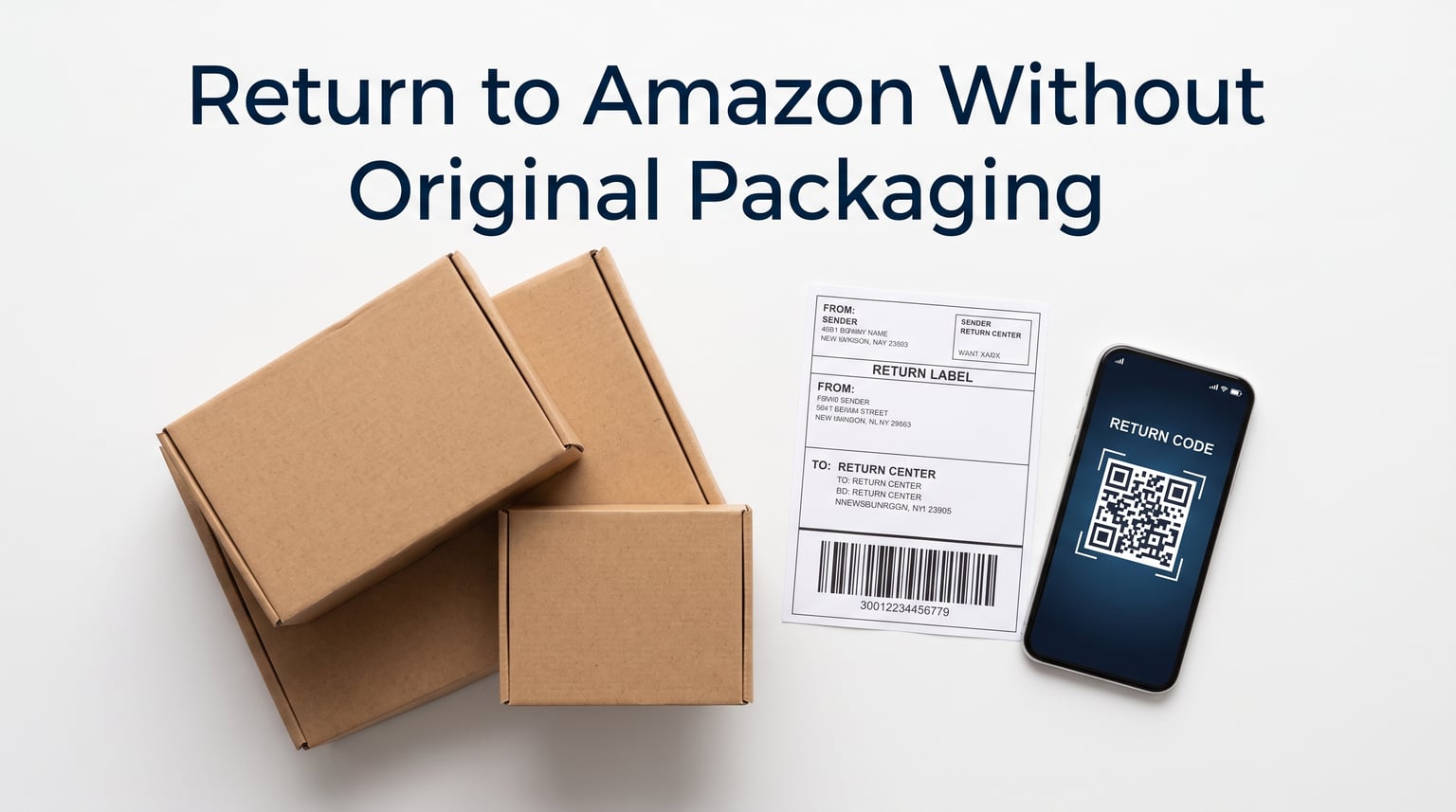
Amazon does not require original packaging for most returns. Items must be returned in original or unused condition with tags attached, hygiene seals intact, and all manufacturer packaging components included (accessories, manuals, certificates of authenticity). Most modern Amazon returns can be completed boxless and label-free using a QR code at drop-off partners like Kohl’s, Whole Foods, UPS, and Amazon Hub Lockers.
Whether you tossed the box, recycled the mailer, or simply cannot locate the manufacturer packaging, you can still complete a return to Amazon without losing your refund. Amazon’s return infrastructure has evolved significantly since 2026, with boxless returns, QR code drop-offs, and instant refunds now standard at thousands of partner locations. This guide breaks down exactly what Amazon requires, what it does not, and how to handle every return scenario in 2026.
If you are also dealing with delivery problems, our guide on what to do when your Amazon package was not delivered covers a separate but related process.
What “original packaging” actually means under Amazon’s 2026 policy
How to return items without a box, label, or printer
Which drop-off partners accept boxless returns and which charge fees
Refund timelines by payment method, including instant refunds
The 2026 policy changes affecting return fees and seller-fulfilled refunds
Complete list of non-returnable item categories
Understanding Amazon’s Return Policy in 2026
Amazon’s return policy centers on one core principle: items must come back in resalable condition unless they arrived damaged or defective. The official policy language states that returns must include the product in “original or unused condition with tags attached and hygiene seals and liners intact,” along with “original manufacturer packaging including tags, components, accessories, manuals, certificates of authenticity, and other inserts.”
That language sounds strict, but Amazon applies it with significant flexibility in practice. The most important shift in recent years is Amazon’s explicit statement that “most returns do not need to be boxed or labeled.” This means the shipping box and printed return label are no longer mandatory for the majority of items. A QR code displayed on your phone is sufficient at participating drop-off locations.
The standard return window is 30 days from the delivery date. However, Amazon has layered several exceptions on top of this baseline. Baby items and Amazon Renewed products carry a 90-day return window. Holiday purchases made between November 1 and December 31 qualify for returns through January 31 of the following year. Apple-branded products purchased during the holiday window have a special return deadline of January 15. Understanding which window applies to your order is the first step in any successful return.
For related Amazon problem-solving, see our guide on what to do when Amazon sent the wrong item.
Importance of Original Packaging in a Return to Amazon
Original packaging matters, but it is not a hard requirement for most returns. Amazon distinguishes between two types of packaging: the Amazon shipping box or mailer, and the manufacturer’s product packaging. The shipping box is irrelevant for boxless returns. The manufacturer packaging matters more, but Amazon will still process your return without it.
Original manufacturer packaging serves three purposes: it protects the item during transit back to Amazon’s warehouse, it speeds up processing because fulfillment workers can verify contents quickly, and it serves as supplementary proof of purchase. For high-value electronics, collectible items, and products with certificates of authenticity, having the manufacturer box noticeably reduces the risk of a partial refund or restocking fee deduction.
Forum users on Reddit consistently confirm that Amazon accepts returns in alternative packaging without affecting the refund amount. One user reported: “I had a chat with Amazon support and they said it was fine and to just put it in any box, it won’t affect my refund.” Another advised: “You don’t need the original packaging. I just usually stick stuff like that in a gallon ziplock and do the free UPS or Whole Foods return.”
Condition Requirements for Making a Return to Amazon
Item condition matters far more than packaging condition. Amazon expects returned items to be in the same state they were delivered, with a few important exceptions. If the item arrived damaged, defective, or materially different from what was ordered, Amazon accepts the return regardless of condition or packaging.
For buyer’s remorse returns (you changed your mind), the item should be unused with all tags, hygiene seals, and original accessories intact. Opened software, movies, music, and video games cannot be returned unless they are defective. Personal care items with broken hygiene seals are non-returnable. Wearable items like underwear and swimwear must have hygiene liners in place.
Return windows vary by product category. The standard 30-day window applies to most items. Baby products and Amazon Renewed certified refurbished items get a 90-day window. Holiday purchases between November 1 and December 31 return through January 31. Some third-party sellers set their own windows, which may be shorter or longer than Amazon’s default.
Also Read: Unlock Profit Potential: Vending Machine Business Strategies
Items That You Cannot Return to Amazon
Amazon maintains a comprehensive non-returnable list that has expanded in 2026. Knowing which items are ineligible before you start the return process saves time and frustration. The categories below cannot be returned under standard policy, though damaged or defective versions may qualify for replacement in some cases.
Non-Returnable Product Categories
Digital downloads: Kindle content, Prime Video purchases, digital music, apps, and software downloads are non-returnable once downloaded.
Amazon Pharmacy and pet medications: Prescription items cannot be returned for health and safety reasons.
Amazon Autos: Vehicle purchases follow a separate process and are not part of the standard return system.
Personal care and hygiene items: Products with broken hygiene seals, used cosmetics, and intimate wear without liners are non-returnable.
Hazardous materials: Items containing flammable, corrosive, or otherwise dangerous materials cannot be shipped back through standard return channels.
Personalized and custom-made items: Products customized specifically for you cannot be restocked and are non-returnable unless defective.
Gift cards: All gift card purchases are final.
Collectible coins and trading cards: These are sold with a clear no-return policy due to market value fluctuations.
Items marked “Final Sale”: Some deals and clearance items carry a Final Sale designation that eliminates return eligibility.
Amazon Haul items under $3: Low-cost items from the Haul storefront are non-returnable due to processing costs.
Opened software, movies, and video games: These cannot be returned once the seal is broken unless the product is defective.
Live plants and perishables: Amazon Fresh groceries and similar items are not returnable, though refunds may be issued for spoilage.
Always check the return eligibility indicator on the product page or in Your Orders before initiating a return. Some items that appear non-returnable may still qualify for a refund if they arrived damaged or significantly different from the listing.
Return Window Variations Beyond the Standard 30 Days
The “30-day return policy” is a baseline, not a universal rule. Amazon operates multiple return windows depending on product type, purchase timing, and seller. Standard items follow the 30-day window from delivery. Baby products and gear extend to 90 days. Amazon Renewed certified refurbished items carry a 90-day satisfaction guarantee.
During the holiday season, Amazon extends its return window significantly. Items purchased between November 1 and December 31 can typically be returned through January 31 of the following year. Apple-branded products purchased during this window have a separate deadline of January 15. Third-party sellers may establish their own windows, which appear during the return initiation process.
How To Begin Your Amazon Return Process
The return process in 2026 offers three distinct paths: traditional boxed return with printed label, QR code return without a printer, and boxless return without any packaging at all. Which path you take depends on your item, your preferred drop-off location, and whether the option appears during return initiation.
Step-by-Step: Initiating a Return With or Without Original Packaging
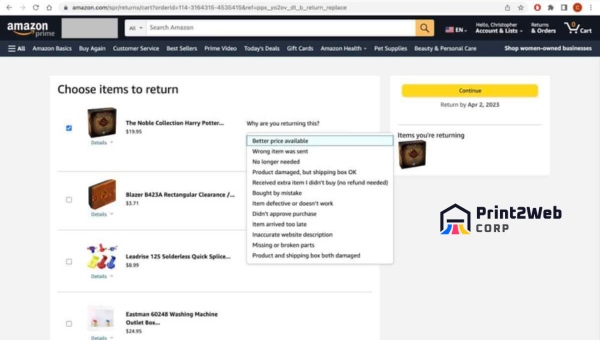
All three return paths begin the same way. Log in to your Amazon account and navigate to Your Orders. Locate the item you want to return and select “Return or Replace Items.” Choose your return reason from the dropdown menu. Amazon then presents available return methods based on the item, your location, and current partner availability.
Path 1: Traditional Boxed Return — If you have the original packaging or a sturdy alternative box, select a UPS drop-off or scheduled pickup. Print the prepaid return label, secure it to the package, and drop it off. Use packing tape in an H-pattern across all seams for security. Include all accessories, manuals, and components inside.
Path 2: QR Code Return (No Printer Needed) — Select a participating drop-off location such as Whole Foods, Kohl’s, UPS Store, or Amazon Hub Locker. Amazon generates a QR code instead of a shipping label. Show the code at the counter; the store provides packaging and ships the item for you. This eliminates the need for a printer and any box.
Path 3: Boxless, Label-Free Return — For eligible items at certain drop-off partners, Amazon offers a fully boxless return. Bring the item as-is to a participating Whole Foods, Kohl’s, or Amazon Fresh location. The store associate scans your QR code, packages the item, and processes the return. Amazon explicitly states that “most returns do not need to be boxed or labeled” for this option.
Regardless of path, include every component that shipped with the product: cables, chargers, manuals, remote controls, certificates of authenticity, and any promotional inserts. Missing components can trigger partial refunds or restocking fee deductions, particularly on electronics and high-value items.
Checking Third-Party Sellers’ Return Policy and Process
Third-party seller returns operate differently from Amazon-fulfilled returns. When a third-party seller fulfills their own inventory (seller-fulfilled rather than Fulfilled by Amazon), the return may go directly to the seller rather than an Amazon warehouse. The seller’s return policy, processing time, and packaging requirements may differ from Amazon’s standard terms.
Check who sold and shipped the item on the Your Orders page. If a third-party seller is involved, look for their specific return policy on their seller profile. Some sellers require items sent directly to their address with their own labels. Others participate in Amazon’s return system and accept returns at Amazon drop-off locations.
A significant policy change took effect January 26, 2026, affecting seller-fulfilled refunds. Under the updated policy, Amazon now auto-authorizes refunds for seller-fulfilled items after a set period, reducing the window during which sellers can dispute returns. This means buyers receive refunds faster on seller-fulfilled orders than under the previous policy. Understanding whether you bought from an Amazon private label brand or an independent third-party seller affects which return process applies.
Also Read: Uncover Your eBay Purchase History in Simple Steps
Returning Without a Printer: QR Code and Return Code Method
The QR code return method is one of the most significant improvements to Amazon’s return infrastructure. It eliminates two common barriers: the need for a printer and the need for packaging materials. When you select a QR-eligible drop-off location during return initiation, Amazon generates a scannable code linked to your order.
Present the QR code on your phone at the drop-off counter. The store associate scans it, confirms the item, and handles all packaging and labeling on their end. No box, no tape, no printer, and no printed label required. This option is available at Whole Foods Market, Kohl’s, participating UPS Store locations, and Amazon Hub Lockers.
For Amazon Hub Locker returns, the process works slightly differently. You receive a pickup code rather than a QR code. Some Hub Lockers accommodate packaged returns if the item fits, while others require a separate drop-off location. Check the locker size during return initiation if you are returning a larger item.
Reddit users consistently recommend this method. One user noted: “I just show the QR code at Whole Foods and they take care of everything. No box, no label, takes about 30 seconds.” This is now the default return method Amazon recommends for most standard-sized, non-fragile items.
Amazon Return Drop-Off Partners: Where to Take Your Return
Amazon operates one of the largest return networks of any retailer, with multiple drop-off partners. Each partner has different capabilities regarding boxless returns, instant refunds, and hours of operation. Knowing which partner to choose can save time and get your refund faster.
Whole Foods Market: Accepts boxless QR code returns for eligible items. No packaging required. Many locations offer instant refunds for Prime members. Open during store hours.
Kohl’s: One of the most popular Amazon return partners. Accepts boxless returns with QR code. No packaging needed. Returns are processed at the customer service desk. Available at nearly all Kohl’s locations nationwide.
UPS Store: Accepts both boxed returns with printed labels and QR code returns. Some items may incur a return fee if they do not qualify for free returns. Packaged items must be properly sealed.
Amazon Hub Lockers: Self-service return option for pre-packaged items. Requires a return code. Not all lockers accept returns, and size limitations apply. Available 24/7 at many locations.
Amazon Fresh stores: Accept boxless QR code returns similar to Whole Foods. Amazon Fresh locations also offer grocery returns processing for damaged or spoiled items.
Amazon Go and Amazon Books: Limited locations, but accept QR code returns without packaging where available.
USPS: Available for some returns via prepaid label. Requires your own packaging. Less convenient than partner locations but widely available.
Forum users report that Kohl’s and Whole Foods are the most reliable for boxless returns. However, some users have noted that Amazon has restricted certain items to Hub Locker returns only, with a potential UPS fee of around $8 if you choose UPS instead. Always review the available options Amazon presents during return initiation before heading to a drop-off location.
Amazon Refund Methods and Timelines
Refund speed depends on both the payment method and the drop-off location. Amazon processes the refund after the returned item is received and inspected, but several options can accelerate this timeline significantly. Understanding the expected timeline for your situation prevents unnecessary anxiety.
Amazon gift card balance: Fastest option, typically processed within 2 to 3 hours after Amazon receives the return. Choosing gift card balance as your refund method often speeds up the entire process.
Credit card: 3 to 5 business days after Amazon processes the return. The timing depends partly on your card issuer’s posting schedule.
Debit card: Up to 10 business days, depending on your bank’s processing time.
Instant refund at drop-off: Available at Whole Foods, Kohl’s, and Amazon Fresh for eligible items and Prime members. The refund initiates immediately when the associate scans your QR code, before the item even reaches Amazon’s warehouse.
Checking account (ACH): Up to 10 business days, similar to debit card timelines.
Choosing a gift card refund at the time you initiate the return is the single fastest way to get your money back. Instant refunds at participating drop-off locations are the second fastest, though eligibility depends on item type, your account standing, and Prime membership status.
2026 Amazon Return Policy Changes You Need to Know
Amazon has implemented several significant return policy changes between 2024 and 2026 that affect how returns work, what they cost, and how quickly refunds process. If you are relying on older information, these updates may change your return strategy.
Return fees for certain drop-off choices: Amazon now charges a fee (commonly reported at around $8) when customers choose a UPS Store return for an item that Amazon has designated for a closer free return location such as a Hub Locker or Whole Foods. The fee applies only when you select a paid option over a free one. If your nearest free option is inconvenient, you can still choose UPS, but the fee will be deducted from your refund.
Seller-fulfilled refund policy change (January 26, 2026): Amazon updated the seller-fulfilled refund process to auto-authorize refunds after a shorter dispute window. Sellers now have less time to contest returns before Amazon issues the refund automatically. This change benefits buyers by reducing wait times on seller-fulfilled orders.
High-return-rate ASIN fees: Amazon introduced additional fees for sellers whose products have abnormally high return rates. While this is a seller-side fee, it has led some third-party sellers to tighten their return policies or pass costs along. Check seller-specific return terms during purchase.
Plastic air pillow discontinuation: Amazon discontinued single-use plastic air pillows globally in its fulfillment network during 2024. Returns now use recycled paper padding instead. This change means if you are repackaging a return, you do not need to replicate the old air pillow packaging, recycled paper cushioning is fully acceptable.
Climate Pledge Friendly and Frustration-Free Packaging: Amazon continues to expand these sustainability programs. Products with these designations often use minimal, recyclable packaging that is easier to reuse for returns. The frustration-free packaging program specifically designs boxes that are simple to open and reseal.
Packaging Materials and Specifications for Returns
If you are packaging your own return rather than using a boxless option, the materials you choose matter. Amazon does not enforce strict packaging specifications for customer returns, but following best practices prevents transit damage that could reduce your refund.
For standard items, use a corrugated cardboard box rated at least 200 lb/in² burst strength (32 ECT rating). Most Amazon shipping boxes meet this specification and can be reused. For items over 10 pounds, choose a double-wall corrugated box for added structural integrity. Poly mailer bags work for soft goods like clothing, and bubble mailer envelopes suit small, lightweight items that need minor protection.
Inside the box, maintain at least a 2-inch gap between the item and the box walls, filled with cushioning material. Bubble wrap, recycled paper, or foam inserts are all acceptable. Amazon prohibits packing peanuts in its own fulfillment centers and discourages their use in returns because they create mess and waste during processing. Use an H-pattern taping method, applying tape across all box seams in an H shape, for maximum security during transit.
If you are reusing an Amazon box from a previous order, remove or fully cover any old shipping labels to prevent routing errors. The box should be intact without crushed corners or torn seams. A compromised box increases the risk of damage claims that could delay your refund.
The Role of the Packing Slip in Returns
The packing slip is the document included inside your Amazon shipment that lists the order contents, order number, and seller information. Historically, it served as the primary proof of purchase and helped fulfillment centers verify returned items. In 2026, its importance has diminished significantly due to QR code returns and digital order tracking.
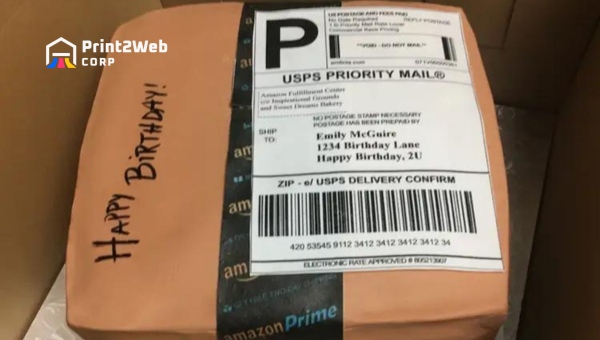
When you use a QR code return at a drop-off partner, no packing slip is needed. The QR code links directly to your order in Amazon’s system, providing all the information the return partner requires. When using a traditional boxed return with a printed label, including the packing slip is helpful but not mandatory. The printed return label itself contains the order reference Amazon needs to process the refund.
What If I Lost the Packing Slip?
Losing the packing slip does not prevent a return. Amazon’s system tracks every order digitally, so the physical slip is supplementary rather than essential. To return without a packing slip, sign in to your Amazon account and go to Your Orders. Find the order, select “Return or Replace Items,” and follow the prompts.
If you are using a QR code return, the slip is irrelevant. If you are using a printed label return, you can print a new return authorization from the return confirmation page. This printed page serves the same function as a packing slip inside the box. If neither option works, contact Amazon customer service through the Help section of the website or app, and they will provide alternative return instructions.
For a comparison with other retailers’ return processes, see our guides on the DSW return policy and the Cat and Jack return policy at Target.
FAQs
Can I return something to Amazon without original packaging?
Yes. Amazon does not require original packaging for most returns. Items must be in original or unused condition with all accessories and components included. You can use any sturdy box or take advantage of boxless QR code returns at Kohl’s, Whole Foods, and UPS locations.
Is Amazon charging for returns in 2026?
Amazon charges a fee (typically around $8) only when you choose a UPS Store return for an item that qualifies for a free return at a closer location like a Hub Locker or Whole Foods. If you select the designated free return option, there is no fee. Most returns remain free when you choose the recommended drop-off location.
What is the new return policy for Amazon in 2026?
Key changes include return fees for selecting non-preferred drop-off locations, the January 26, 2026 seller-fulfilled refund auto-authorization policy, and expanded boxless and QR code returns. The standard 30-day window remains, with 90-day windows for baby items and Amazon Renewed products, and extended holiday returns through January 31.
What items will Amazon not let you return?
Non-returnable items include digital downloads, Amazon Pharmacy prescriptions, Amazon Autos, personal care items with broken seals, hazardous materials, personalized products, gift cards, collectible coins, trading cards, Final Sale items, Amazon Haul items under $3, opened software and media, and live perishables.
How do I return to Amazon without a printer?
Select a QR code return option during the return process. Choose a participating drop-off location like Whole Foods, Kohl’s, or a UPS Store. Amazon generates a QR code on your phone. Show the code at the counter and the store handles all packaging and labeling. No printer or box required.
How long do Amazon refunds take?
Refund timelines depend on the method: gift card balance processes in 2 to 3 hours, credit card in 3 to 5 business days, debit card up to 10 business days. Instant refunds are available at Whole Foods, Kohl’s, and Amazon Fresh for eligible Prime members, initiating the refund before the item reaches Amazon.
Where can I return Amazon packages for free?
Free return locations include Whole Foods Market, Kohl’s, participating UPS Stores, Amazon Hub Lockers, Amazon Fresh stores, and USPS for label-based returns. Use the QR code option at Whole Foods or Kohl’s for the fastest boxless, label-free return experience.
Can I change the details of my Amazon order once a return has been initiated?
You cannot edit a return after initiating it, but you can cancel the return and start a new one if the window has not closed. Go to Your Orders, find the return, and select Cancel Return if the option appears. If cancellation is unavailable, contact Amazon customer service for assistance.
Also Read: Private-Label Credit Card Secrets: Unlock Shopping Benefits!
Conclusion
Returning an item to Amazon in 2026 is more flexible than ever. Original packaging is preferred but not required for most items. Boxless, label-free QR code returns at Whole Foods, Kohl’s, and Amazon Fresh have eliminated the need for boxes, tape, and printers for standard items. The 30-day return window covers most purchases, with 90-day windows for baby products and Amazon Renewed items, and extended holiday returns through January 31.
If you value speed, choose a gift card refund for the fastest processing or use an instant refund location as a Prime member. If you want the simplest process, select a QR code return at Whole Foods or Kohl’s and skip packaging entirely. If you are returning high-value electronics, include all manufacturer packaging and accessories to avoid restocking fee deductions. And if you have lost the packing slip, do not worry, Amazon’s digital order tracking makes it unnecessary in nearly all cases.
The key policy changes to remember for 2026: Amazon may charge a fee if you choose UPS over a designated free drop-off location, the January 26 seller-fulfilled refund change means faster auto-refunds on third-party orders, and boxless returns continue to expand. For more Amazon shopping guidance, see our Amazon reviews best practices guide. For other retailer policies, compare with our DSW return policy and Cat and Jack return policy guides.
Leave a Reply