
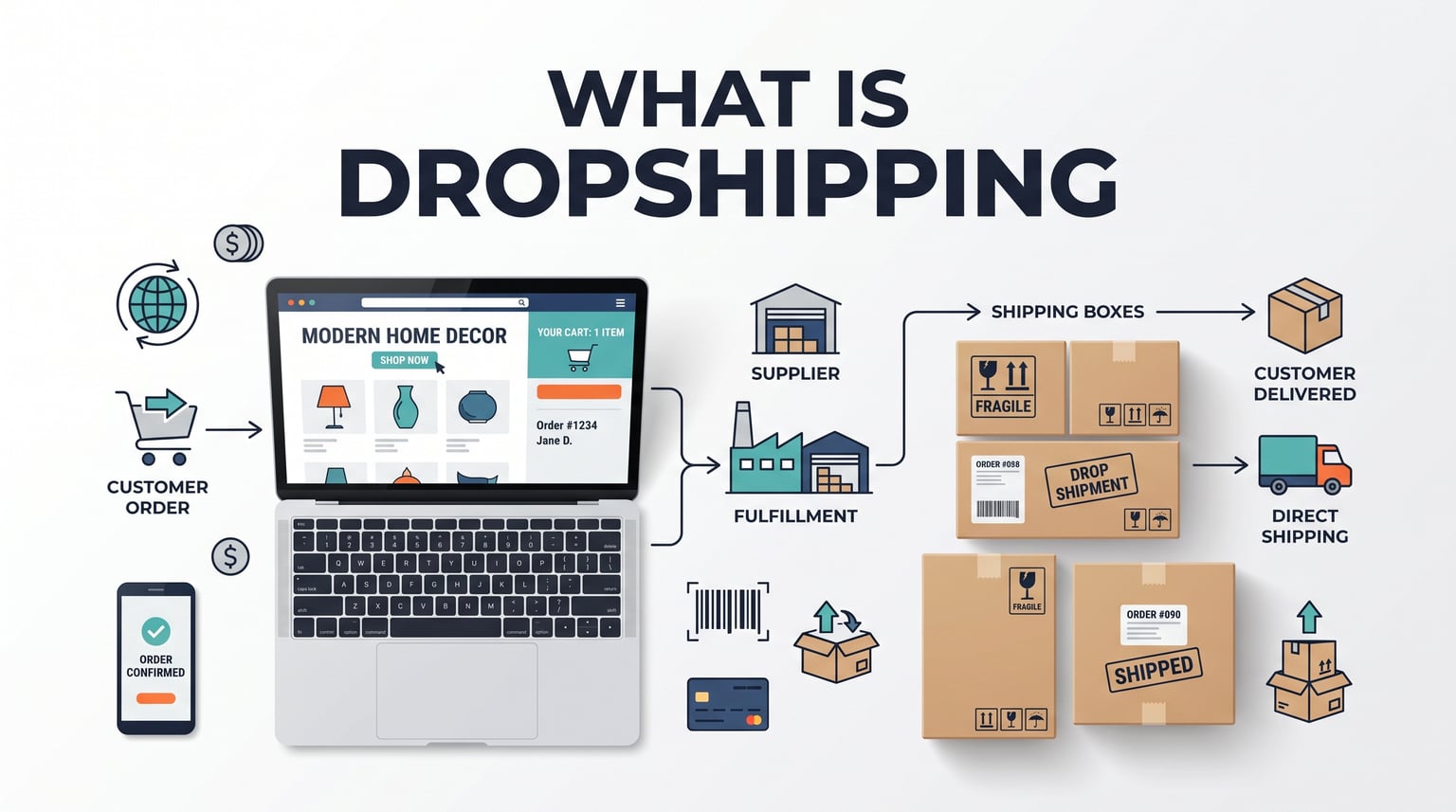
Dropshipping has grown into a massive global industry, with the market valued at roughly $476 billion in 2026 and projected to surpass $1.2 trillion by 2030. That kind of growth does not happen by accident. Entrepreneurs keep flocking to this retail fulfillment method because it removes the biggest barrier to starting an online store: the cost of inventory. Instead of buying products upfront and storing them in a warehouse, you list items on your site, and a third-party supplier ships each order directly to your customer.
If you have spent any time researching e-commerce business models, you have probably seen conflicting opinions. Some call dropshipping a low-risk way to test products and build a brand. Others warn about thin profit margins and supplier headaches. Having studied how this model plays out in practice, I can tell you that both perspectives have merit. The reality sits somewhere in the middle, and understanding the mechanics is what separates stores that last from those that fizzle out.
So what is dropshipping, exactly? At its core, it is a retail fulfillment method where you, the seller of record, accept customer orders without keeping stock on hand. When someone buys from your store, you forward the order to a dropshipping supplier who packages and ships the product under your brand name. You never touch the inventory. This guide breaks down how the model works, where the money comes from, which tools are relevant in 2026, and whether dropshipping makes sense for your situation.
Here is what you can discover below:
- Understanding the fundamentals of dropshipping and how orders flow
- Pros and cons laid out in a clear, structured format
- A step-by-step startup guide for launching your first store
- How to evaluate profitability and realistic margins
- Which tools and platforms are relevant in 2026
- Dropshipping versus print-on-demand, retail arbitrage, and Amazon FBA
- FAQ answers to the questions buyers and sellers ask most
Understanding Dropshipping: What Is It, and How Does It Work?
Dropshipping is an e-commerce fulfillment model where your store sells products without ever holding them in inventory. You act as the seller of record, meaning the customer buys from you, trusts your brand, and contacts you with any issues. Behind the scenes, a third-party supplier handles storage, packaging, and shipping. You set the retail price, the supplier charges you a wholesale rate, and the difference between those two numbers is your gross profit.
How Dropshipping Works: Step by Step
Three parties are involved in every dropshipping transaction: the customer, the retailer (you), and the supplier. The process follows a predictable sequence that repeats for every order. Understanding this flow is essential before you invest a dollar into products or ads. Here is exactly what happens when a customer hits the buy button on your store.
- Customer places an order on your online store and pays the retail price you set. The funds land in your payment processor, minus transaction fees.
- You forward the order to your dropshipping supplier either manually or through an automated app. You pay the supplier the wholesale price for the product.
- The supplier picks, packs, and ships the product directly to your customer. The package typically includes your brand name on the shipping label or packing slip if the supplier supports branded dropshipping.
- You keep the difference between what the customer paid and what the supplier charged you. That spread is your gross margin before advertising and operating costs.
- The customer receives the product and reaches out to you (not the supplier) with any questions, returns, or complaints. You manage the entire customer experience.
Let me walk through a concrete example. Say you run an online store selling fitness accessories. A customer buys a resistance band set from your site for $45. You forward the order to your supplier, who charges you $25 including shipping. The supplier ships the product directly to the customer in branded packaging. Your gross profit on that single order is $20, which you then use to cover advertising, platform fees, and other overhead before arriving at net profit.
Key Takeaways on the Dropshipping Model
Now that the mechanics are clear, here are the core principles that define how this business model behaves in practice:
- Low capital requirements: You purchase inventory only after a customer pays you, which means you are not tying up cash in products that might not sell.
- Supplier dependency: Your reputation depends on a partner you do not fully control. If they ship late or send a defective item, the customer blames you.
- Flexible catalog: You can list hundreds of products from multiple suppliers without worrying about warehouse space or stockouts in your own facility.
- Margin compression: Because you are not buying in bulk, wholesale prices are higher than traditional retail, which squeezes your profit percentage.
Every advantage in this list comes paired with a trade-off. That is the nature of dropshipping. The sellers who succeed are the ones who plan around these trade-offs rather than pretending they do not exist. For a broader comparison of fulfillment models, check out our deep dive on dropshipping vs Amazon FBA to see which approach fits your goals.
Also Read: Lawn Care Business Startup Guide: Tips for Success
Benefits of Choosing the Dropshipping Model
People are drawn to dropshipping for understandable reasons. The model solves several real problems that stop would-be entrepreneurs from ever launching a store. Here is an honest look at where dropshipping genuinely shines and why it remains a popular entry point into e-commerce in 2026.
- Low startup costs: You skip the largest expense in traditional retail, which is inventory. Many dropshippers launch with a few hundred dollars covering a store subscription, domain, and initial ad spend.
- No warehouse needed: Storage, packing materials, and fulfillment staff are the supplier’s problem. You can run the entire operation from a laptop.
- Location independence: Because you are not physically handling products, you can manage your store from anywhere with an internet connection. This makes dropshipping attractive to digital nomads and side-hustlers.
- Wide product selection: Without inventory constraints, you can test dozens of products across different niches. If something does not sell, you simply remove the listing. No dead stock sitting on a shelf.
- Easy to test products: Want to validate demand before committing to a bulk order? Dropshipping lets you gauge customer interest with minimal financial exposure.
- Simpler to scale: When orders surge, the supplier absorbs the extra fulfillment workload. You do not need to hire warehouse staff or lease larger facilities overnight.
- No product development costs: You are selling existing products manufactured by others, so there is no need to invest in design, prototyping, or production runs.
These advantages explain why dropshipping remains a popular starting point for new e-commerce entrepreneurs. But no business model is one-sided, and the benefits only tell half the story. To make an informed decision, you need to weigh them against the drawbacks honestly.
Drawbacks and Risks: The Honest Truth About Dropshipping
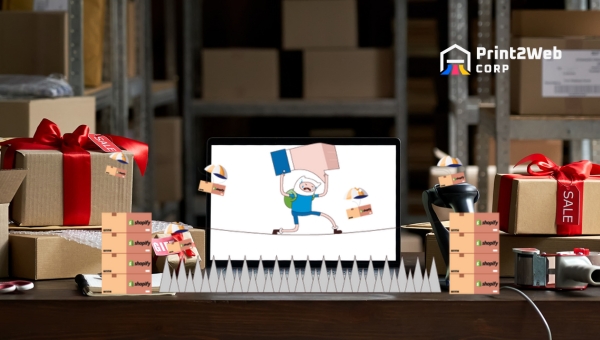
Every dropshipping guide owes you an honest assessment of what can go wrong. The forums on Reddit are filled with stories from sellers who learned these lessons the hard way. Here are the challenges you should expect if you go down this road.
- Thin profit margins: Because you buy at per-unit wholesale rates rather than bulk pricing, your cost of goods is higher. After paying for ads, transaction fees, and shipping, net margins often land between 10% and 20%.
- Inventory volatility: Your supplier might run out of stock without warning. If a product goes viral and you cannot fulfill orders, you face chargebacks and damaged credibility.
- Limited quality control: You never inspect the products before they reach your customers. If a supplier ships a defective or wrong item, you are the one who hears about it.
- Shipping complexity: Cross-border shipping from international suppliers can take one to three weeks. Customers accustomed to two-day delivery may leave negative reviews if expectations are not set clearly.
- Customer service burden: When a supplier drops the ball, you become the middleman fielding complaints. This means dealing with returns, refunds, and angry messages for problems you did not directly cause.
- High competition: The low barrier to entry means many sellers list identical products from the same suppliers. Standing out requires strong branding, compelling product pages, and smart marketing.
- Brand building challenges: When you do not control the packaging or unboxing experience, creating a memorable brand identity is harder than with traditional retail.
Reddit users in communities like r/dropshipping frequently note that tracking issues, slow supplier responses, and constant small operational problems can pile up faster than expected. One seller described it well: at first, they thought more sales would make things easier, but the operational complexity actually grew with volume. This is why supplier vetting is widely considered the single most important factor in whether a dropshipping store succeeds or fails.
Is Dropshipping Profitable in 2026?
This is one of the most searched questions on the topic, and the honest answer is: yes, it can be profitable, but not the way get-rich-quick influencers describe it. Typical dropshipping profit margins range from 15% to 45% depending on the niche, product price point, and how efficiently you manage ad spend. A store doing $20,000 in monthly revenue at a 20% net margin generates $4,000 in monthly profit. That is a solid business, but it requires consistent traffic, tested products, and disciplined advertising.
The sellers who earn real money tend to share a few habits. They focus on a specific niche rather than selling random products. They invest time in building a brand with custom product photography, detailed descriptions, and a cohesive store design. They track metrics like average order value, conversion rate, and customer acquisition cost relentlessly. And they reinvest profits into better suppliers, faster shipping options, and higher-quality ad creative rather than pocketing every dollar early on.
Profitability also depends heavily on your traffic source. Paid ads on Facebook and Instagram have become more expensive in recent years, pushing many sellers toward TikTok organic content, influencer collaborations, and search engine optimization. If you can crack organic traffic, your margins improve dramatically because you are not paying for every click.
Finding Reliable Suppliers For Your Product Range
Supplier selection is where most dropshipping stores win or lose. A good supplier ships on time, maintains consistent quality, communicates proactively, and integrates smoothly with your e-commerce platform. A bad supplier does the opposite of all those things, and they will drag your store’s reputation down with them.
Here is a practical vetting process you can follow when evaluating suppliers:
- Check their reputation: Look for reviews on platforms like AliExpress, Trustpilot, or supplier directories. Pay attention to patterns in negative feedback, not just isolated complaints.
- Order product samples: Before listing anything, buy the product yourself. Inspect the quality, time the delivery, and evaluate the packaging. If the sample disappoints you, it will disappoint your customers.
- Test their communication: Send a message with a specific question and measure how long they take to respond. Suppliers who take days to reply before you are even a customer will be worse when problems arise.
- Verify shipping times: Ask which countries they ship to and what delivery windows they guarantee. Cross-border shipping from China typically takes 7 to 21 days unless the supplier has local warehouses.
- Watch for red flags: Vague business addresses, no return policy, prices that seem too good to be true, and stock-only product photos are all warning signs of unreliable suppliers.
Popular supplier platforms in 2026 include DSers (which integrates with Shopify and sources from AliExpress), Spocket (focused on US and EU suppliers with faster shipping), AutoDS (an all-in-one platform with automation features), Syncee (a global B2B supplier marketplace), and SaleHoo (a vetted wholesale and dropship directory). Each has different strengths, so test a few before committing.
Also Read: Amazon A10 Algorithm: Unlock Sales & Boost Rankings
How to Start a Dropshipping Business: Step-by-Step Guide
Launching a dropshipping store involves a series of decisions that shape everything downstream. Getting the early steps right saves you from costly mistakes later. Here is a proven five-step framework that mirrors what successful dropshippers actually do.
Step 1: Choose a Dropshipping Niche
Your niche defines your entire store, from product selection to marketing strategy. The best niches balance sufficient demand with manageable competition. Use tools like Google Trends, Exploding Topics, and Amazon Best Sellers to identify product categories gaining traction. Avoid oversaturated markets like generic phone cases unless you have a compelling angle that differentiates your store.
A strong niche has passionate buyers, a healthy price range between $20 and $100, and products that are not easily found in local big-box stores. Think hobby supplies, home office accessories, pet products, or wellness items. The more specific you can get, the easier it becomes to target your marketing and build a loyal audience.
Step 2: Find and Vet Suppliers
Once you have a niche, research suppliers who carry products in that category. Use the vetting checklist above to evaluate each candidate. Order samples from your top two or three choices and compare quality, shipping speed, and communication side by side. This step takes patience, but it prevents the vast majority of operational problems that plague new stores.
Step 3: Build Your E-Commerce Store
Choose an e-commerce platform and set up your store. Shopify is the most popular choice for dropshippers thanks to its app ecosystem and seamless integrations with supplier tools. WooCommerce (built on WordPress) offers more customization and lower monthly fees if you are comfortable with some technical setup. BigCommerce is another solid option with built features that scale well.
Design matters. Use a clean theme, write original product descriptions (do not copy supplier listings), invest in quality product photography, and make sure your site loads quickly on mobile devices. If you are wondering whether you need an LLC for your dropshipping business, most experts recommend forming a legal entity once your store starts generating consistent revenue.
Step 4: Price Your Products Strategically
Pricing in dropshipping is not just about marking up the wholesale cost. You need to account for advertising spend, transaction fees, shipping costs, and returns. A common approach is to multiply the supplier cost by 2.5 to 3 times to arrive at your retail price, then adjust based on competitor pricing and perceived value.
Tools like a profit margin calculator can help you model different pricing scenarios. Remember that higher average order values improve your margins because fixed costs like transaction fees represent a smaller percentage of each sale. Consider offering product bundles, free shipping thresholds, or quantity discounts to encourage customers to spend more per visit.
Step 5: Market Your Store and Drive Traffic
A beautiful store with no traffic generates zero sales. You need a marketing strategy from day one. The main traffic sources for dropshipping stores in 2026 include paid social ads (Facebook, Instagram, TikTok), organic social media content (especially short-form video), search engine optimization, influencer partnerships, and email marketing.
Many successful dropshippers start with a single channel, master it, and then expand. TikTok organic content has become especially powerful because it costs nothing to produce and can reach enormous audiences if a video gains traction. Tools like Klaviyo or Omnisend help you build email flows for abandoned cart recovery, welcome sequences, and post-purchase follow-ups. For a detailed comparison of the two biggest marketplaces, read our eBay vs Amazon showdown to decide where to list your products.
When Does Dropshipping Make Sense for Your Business?
Dropshipping is not the right fit for every entrepreneur or every product category. The model works best under specific conditions, and understanding those conditions helps you decide whether to commit. Let me break down the scenarios where dropshipping shines and the ones where you should consider alternatives.
Considerations Regarding Control Over Product Quality
In traditional retail, you inspect products before they reach customers. In dropshipping, you hand that control to a supplier you may never meet in person. This trade-off is the single biggest source of customer complaints in the model. You can mitigate it by ordering samples, choosing suppliers with quality guarantees, and monitoring customer reviews closely. But you cannot eliminate it entirely.
If your brand promise depends on premium quality, dropshipping introduces real risk. Products arriving damaged or looking different from your listing photos will generate refund requests and negative reviews. Some suppliers offer branded packaging and custom inserts, which help, but the fundamental quality gap remains unless you switch to private label or bulk inventory models.
Mapping Out Where You Will Sell Your Products
Choosing your sales channel affects everything from brand visibility to profit margins. Each option involves trade-offs that you should weigh carefully.
- Your own online store (Shopify, WooCommerce): Full control over branding, customer data, and pricing. You are responsible for driving your own traffic, which means investing in marketing.
- Online marketplaces (Amazon, eBay, Etsy): Massive built-in traffic and buyer trust, but you pay platform fees and compete directly with other sellers on the same page.
- Social media platforms (TikTok Shop, Instagram Shopping, Facebook Marketplace): Growing rapidly as commerce channels, especially for impulse-buy products and trend-driven niches.
Many dropshippers start on their own store to build a brand, then expand to marketplaces once they have proven product-market fit. Each channel requires different strategies for pricing, customer service, and fulfillment expectations.
Distinguishing Your Store In The Competitive Market
Because dropshipping has low barriers to entry, many stores sell identical products from the same suppliers. Differentiation is what prevents your store from becoming a commodity. Here are proven ways to stand out:
- Curated product selection: Instead of listing everything a supplier offers, choose a focused collection that tells a coherent story to a specific audience.
- Custom product photography: Order samples and shoot your own photos. This single step separates professional stores from amateur ones.
- Original product descriptions: Write descriptions that address real customer questions and objections. Avoid the generic text that every other dropshipper copies from the supplier listing.
- Exceptional customer service: Fast responses, generous return policies, and proactive communication build trust that competitors cannot easily replicate.
- SEO and content marketing: Publishing helpful guides and optimizing product pages for search engines drives free, targeted traffic over time.
Ensuring a Positive Delivery Experience for Your Customers
Shipping is where dropshipping stores lose the most customers. Long delivery times from cross-border suppliers, missing tracking information, and packages arriving in generic packaging all erode trust. Here is how to manage the delivery experience proactively:
- Set clear shipping expectations on every product page. If delivery takes 10 to 15 days, say so plainly. Surprises generate complaints; transparency builds trust.
- Provide tracking numbers promptly and send automated shipping confirmation emails so customers can monitor their orders.
- Choose suppliers with local warehouses when possible. US and EU-based suppliers on platforms like Spocket typically deliver in 3 to 7 days, far faster than direct-from-China shipping.
- Handle delays gracefully. When a shipment runs late, contact the customer before they complain. Offer partial refunds or discounts on future orders when appropriate.
If you are weighing dropshipping against other fulfillment options, our comparison of dropshipping vs Amazon FBA walks through the key differences in cost, control, and scalability.
Also Read: Do you need an LLC to Sell on Amazon: Seller Guide Revealed!
Dropshipping vs Alternatives: Which Model Fits You?
Dropshipping is one of several ways to sell online, and it helps to understand how it compares to the alternatives. Each model has different requirements for capital, time, and operational involvement.
Dropshipping vs Print-on-Demand
Print-on-demand is a specialized form of dropshipping where products are custom-printed only after an order is placed. The main difference is customization. With standard dropshipping, you sell existing products from a supplier’s catalog. With print-on-demand, you design custom graphics for apparel, mugs, phone cases, or home goods, and a printing partner produces and ships each item.
Print-on-demand works well for creators, influencers, and brands with a visual identity their audience wants to wear. Standard dropshipping works better when you want to sell functional products without design overhead. Many sellers combine both models in a single store.
Dropshipping vs Retail Arbitrage
Retail arbitrage involves buying discounted products from physical stores and reselling them at a higher price online. Unlike dropshipping, you purchase and hold inventory, which means upfront costs and storage space. The advantage is that you control quality and shipping speed. The disadvantage is that scaling requires more capital and labor.
Dropshipping vs Affiliate Marketing
Affiliate marketing involves promoting other companies’ products and earning a commission on sales, without ever running a store or processing transactions. Dropshipping requires more operational work but gives you full control over pricing, branding, and customer relationships. Affiliate marketing is simpler but offers smaller margins and no customer data ownership.
The Role of Technology in Dropshipping
Technology is the backbone of any modern dropshipping operation. The right stack of tools automates tedious tasks, syncs inventory in real time, and gives you data to make smarter decisions. The landscape has shifted significantly in recent years, with older tools disappearing and new platforms emerging to take their place.
E-Commerce Platforms
Your store platform is the foundation of everything. Shopify remains the dominant choice for dropshippers thanks to its ease of use, extensive app store, and built-in integrations with major supplier platforms. WooCommerce (a WordPress plugin) appeals to sellers who want full control over their site and lower monthly costs. BigCommerce offers strong built-in features and handles high-volume stores well.
Each platform has trade-offs. Shopify charges transaction fees unless you use their payment processor. WooCommerce requires more technical maintenance but eliminates monthly platform fees beyond hosting. BigCommerce offers robust features out of the box but has fewer third-party integrations than Shopify.
Supplier and Order Management Tools
Connecting your store to suppliers used to require manual order entry. Today, dedicated apps automate the entire process. DSers is the most popular AliExpress integration for Shopify, letting you import products, auto-fulfill orders, and track shipments in one dashboard. Spocket focuses on US and EU suppliers with faster shipping times, making it ideal for stores targeting North American customers. AutoDS provides an all-in-one solution with automated pricing, stock monitoring, and order fulfillment across multiple supplier networks.
Syncee operates as a global B2B marketplace connecting stores with vetted suppliers worldwide. Shopify Collective lets Shopify merchants source products from other Shopify brands, opening up curated, higher-quality inventory. These tools have largely replaced the old Oberlo ecosystem, which shut down in 2024 after years as the go-to dropshipping app.
Inventory Management and Analytics
Real-time inventory tracking prevents the dreaded oversell scenario where a customer orders a product that your supplier has already run out of. Tools like Zoho Inventory (formerly TradeGecko) sync stock levels across multiple suppliers and sales channels. They also generate reports on best-selling products, helping you focus your marketing budget where it performs best.
For analytics, Google Analytics 4 and Microsoft Clarity give you free, detailed insight into how visitors behave on your store. Heatmaps show where users click, scroll, and abandon. Pair these with A/B testing tools to continuously improve your product pages, checkout flow, and ad landing pages.
AI Tools and Automation
Artificial intelligence has changed the dropshipping landscape in tangible ways. ChatGPT and similar AI tools help sellers write product descriptions, generate ad copy, and brainstorm marketing angles in minutes. AI image generators create lifestyle mockups and ad creative without expensive photo shoots. Customer service chatbots handle common questions around the clock, reducing response times and freeing you to focus on strategy.
Machine learning algorithms built into ad platforms now optimize targeting and bidding automatically. This has leveled the playing field for solo dropshippers who previously could not compete with agencies running complex ad operations. The sellers who embrace these tools gain a meaningful efficiency advantage over those who stick to manual workflows.
Marketing and Email Tools
Email marketing remains one of the highest-ROI channels for dropshipping stores. Klaviyo and Omnisend are the leading platforms, offering pre-built flows for welcome sequences, abandoned cart recovery, and post-purchase follow-ups. A well-configured abandoned cart flow alone can recover 10% to 15% of lost sales.
For SEO and keyword research, tools like Ubersuggest and Ahrefs help you identify search terms your target customers use. Optimizing product pages for these keywords drives free organic traffic over time, reducing your dependence on paid ads and improving long-term profitability.
Dropshipping FAQs
How does dropshipping make money?
Dropshipping makes money through the price spread between what a customer pays and what a supplier charges. You list products at a retail price on your store. When a customer orders, you pay the supplier a lower wholesale rate and keep the difference as gross profit. After deducting advertising, platform fees, and operating costs, what remains is your net profit.
How does dropshipping work for beginners?
For beginners, dropshipping involves choosing a niche, finding a reliable supplier through platforms like DSers or Spocket, building a store on Shopify or WooCommerce, listing products, and driving traffic through social media or paid ads. Suppliers handle inventory and shipping, so beginners can focus on marketing and customer service without managing physical products.
Is dropshipping still worth doing in 2026?
Yes, dropshipping remains viable in 2026. The global market is valued at roughly $476 billion and is projected to exceed $1.2 trillion by 2030. While competition has increased, sellers who focus on niche products, strong branding, and organic traffic channels like TikTok and SEO continue to build profitable stores. The model has evolved but is far from dead.
Why do 90% of dropshippers fail?
The high failure rate stems from several common mistakes: choosing oversaturated niches with no differentiation, selecting unreliable suppliers without vetting, underpricing products to compete on price alone, overspending on ads without tracking return on investment, ignoring customer service, and giving up too early before finding winning products. Success requires patience, data-driven decisions, and continuous optimization.
Is $100 enough to start dropshipping?
Technically you can create a store with $100, but experienced sellers on Reddit recommend a realistic startup budget of $1,500 to $3,000. This covers your e-commerce platform subscription, domain name, initial product samples, essential apps, and a modest advertising budget for testing products. Starting with too little capital forces you to cut corners on supplier vetting and product testing, which often leads to failure.
Is dropshipping legal?
Yes, dropshipping is a completely legal business model. You act as the seller of record, and the transaction between you and your customer is a standard retail sale. However, you must comply with consumer protection laws, tax regulations in your jurisdiction, and the policies of any marketplace or platform you sell on. Obtaining a business license and registering your business is recommended once you generate consistent sales.
What is an example of dropshipping?
A common example is running an online pet supply store. You list dog beds, leashes, and toys from a supplier on your Shopify store. When a customer buys a dog bed for $50, you place the order with your supplier for $30. The supplier ships the bed directly to the customer in packaging with your brand name. You earn $20 in gross profit without ever touching the product.
How much do dropshippers make in 2026?
Income varies widely. According to ZipRecruiter data, the average dropshipper earns around $19.70 per hour, but successful store owners can generate thousands to tens of thousands in monthly revenue. Net profit typically ranges from 15% to 45% of gross revenue. A store doing $30,000 in monthly sales at a 20% margin earns about $6,000 in monthly profit before taxes.
What are the best things to dropship in 2026?
Trending product categories include home office accessories, wellness and self-care items, pet products, eco-friendly goods, smart home devices, and hobby supplies. Use tools like Google Trends, Exploding Topics, and TikTok trending products to identify items gaining momentum. The best products solve a specific problem for a well-defined audience and are not easily found in local retail stores.
Also Read: Approval to Sell Toys on Amazon: Ultimate Success Guide
Conclusion
Dropshipping in 2026 is neither a shortcut to wealth nor a dying business model. It is a retail fulfillment method that removes inventory costs and warehouse logistics from the equation, making it one of the most accessible ways to start selling online. With the global market projected to reach $1.2 trillion by 2030, the opportunity is real. But capturing it requires the same things any business demands: a clear niche, reliable suppliers, disciplined marketing, and a genuine focus on customer satisfaction.
If you prioritize low startup costs and product flexibility, dropshipping is a strong starting point. If you need full control over quality and fulfillment, you may eventually want to transition toward bulk inventory or private label models. Many successful e-commerce brands began with dropshipping to test products and validate demand before committing to larger investments.
The tools have evolved, the market has matured, and the strategies that worked five years ago need updating. But the core principle remains the same: solve a real problem for a specific audience, partner with suppliers you trust, and treat your customers well. Do that consistently, and dropshipping can be the foundation of a profitable online business. Already leaning toward Amazon as your fulfillment channel? Our dropshipping vs Amazon FBA guide breaks down the key differences so you can choose with confidence.
Leave a Reply