
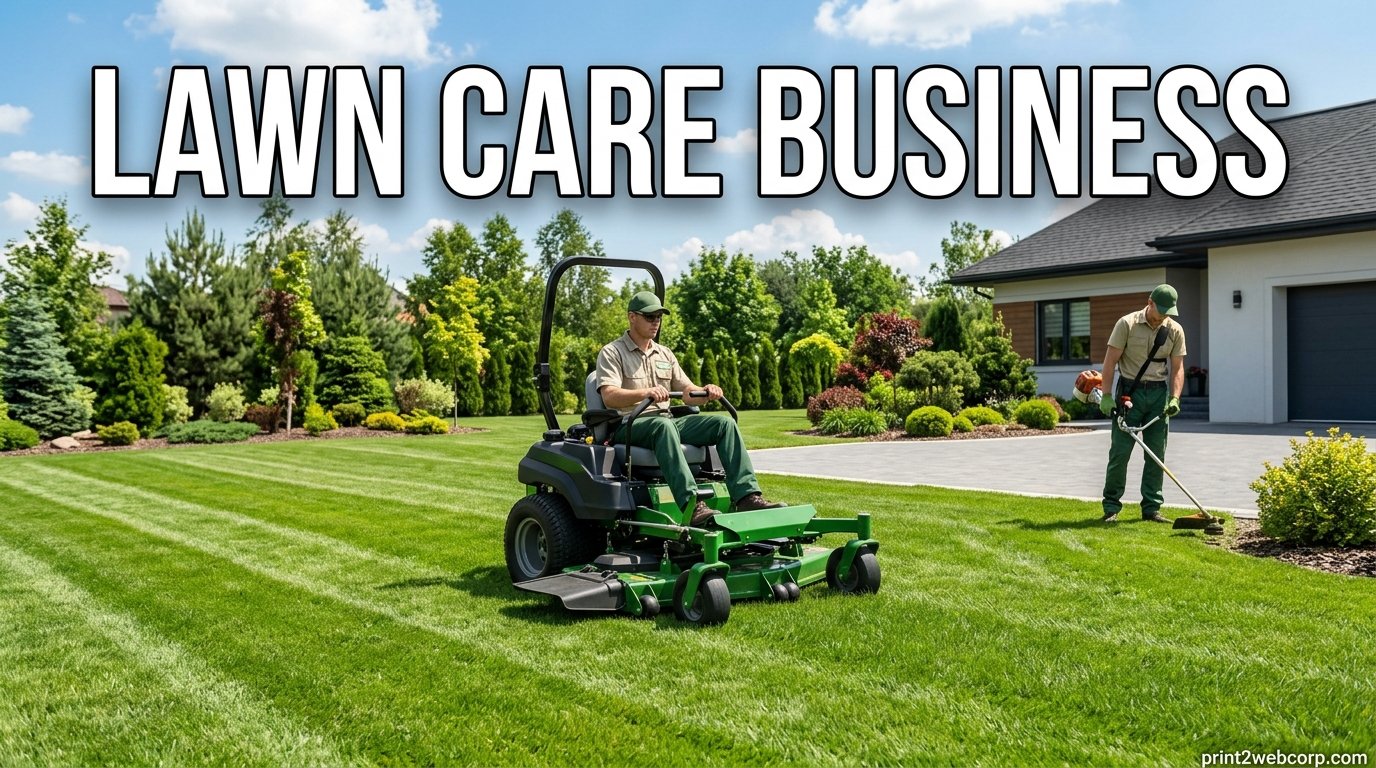
The green industry has experienced remarkable growth over the past several years, with the U.S. landscaping services market reaching an estimated $176 billion in revenue as of 2026. For entrepreneurs seeking a low-barrier entry into business ownership, starting a lawn care business represents one of the most accessible and potentially lucrative paths available today. Demand continues to rise as homeowners increasingly invest in professional property maintenance, creating steady opportunities for new operators across nearly every market in the country.
Building a successful lawn care business requires far more than simply purchasing a mower and knocking on doors. It demands careful planning around legal structure, a realistic understanding of startup costs, strategic equipment investments, effective pricing models, and a marketing approach that generates consistent lead flow. This guide breaks down each of these components step by step, providing actionable advice that draws on industry data, expert insights, and real-world experiences from operators who have built profitable companies from the ground up.
Whether the goal is launching a part-time side hustle for supplemental income or building a full-service operation generating hundreds of thousands in annual revenue, the foundational decisions made during the first months will shape long-term outcomes. From selecting the right business entity to choosing between gas and battery-powered equipment, every choice carries financial and operational implications worth understanding before launch day arrives.
What This Guide Covers
Industry overview, market size data, and revenue potential for 2026
Lawn care versus lawn mowing distinction and what it means for service offerings
Detailed startup cost breakdowns across five business types
Legal structure comparison, licensing requirements, and insurance guidance
Equipment recommendations with specific price ranges
Pricing strategy frameworks including per-service, hourly, and package models
Customer acquisition techniques from grassroots to advanced digital marketing
Seasonal management, common challenges, and growth planning
Understanding the Lawn Care Business in 2026
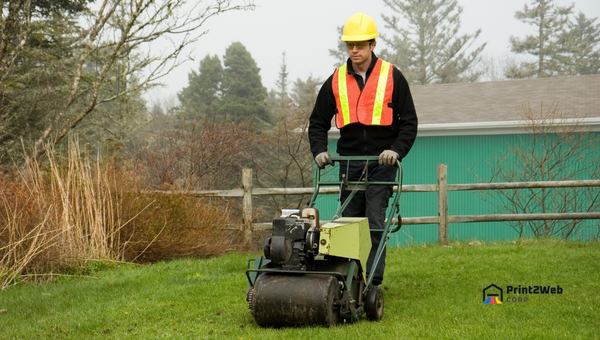
The lawn care industry has evolved significantly since the pandemic-era surge in home improvement spending. According to recent IBISWorld data, approximately 634,000 landscaping and lawn care companies now operate in the United States, servicing an estimated 85 million residential and commercial lawns. The industry employs over 1.2 million people and continues to grow at an annualized rate of roughly 5.2 percent, outpacing many traditional service sectors.
Several factors drive this sustained demand. Homeowners increasingly view professional lawn maintenance not as a luxury but as a practical necessity for preserving property values. Real estate data consistently shows that well-maintained landscapes can increase home values by 5 to 12 percent. Additionally, the aging U.S. population means fewer homeowners physically able to handle their own yard work, while younger generations often lack the time, tools, or inclination for regular property upkeep.
Revenue potential varies dramatically depending on business scale. A solo operator working part-time might generate $15,000 to $30,000 in the first year, while a well-run full-time operation with a small crew can reach $100,000 to $250,000 annually within three to five years. Full-service companies with multiple crews routinely exceed $500,000 in yearly revenue. Forum discussions on Reddit and LawnSite reveal that operators who invest in professional practices, strategic pricing, and consistent marketing consistently outperform those who treat the venture casually.
Lawn Care vs Lawn Mowing: Understanding the Difference
A common source of confusion for new entrepreneurs involves the distinction between a lawn mowing business and a full lawn care business. While the terms are often used interchangeably, they represent different service scopes, revenue models, and operational requirements.
A lawn mowing business focuses primarily on grass cutting. Services typically include mowing, string trimming along edges and obstacles, and blowing clippings from hard surfaces. This model offers lower startup costs, simpler operations, and faster route density potential. However, revenue per customer remains relatively low, and the service becomes easily commoditized by competitors willing to undercut prices.
A lawn care business encompasses mowing plus a broader suite of services such as fertilization programs, weed control, aeration and overseeding, pest management, tree and shrub care, seasonal cleanups, mulching, and irrigation system maintenance. This expanded service model generates higher revenue per customer, creates year-round income opportunities through seasonal services, and builds deeper customer loyalty since clients depend on the provider for comprehensive property care.
Many successful operators begin with basic mowing services and gradually expand into full-service offerings as they gain experience, acquire specialized equipment, and obtain necessary certifications such as pesticide licenses. This progression allows operators to increase average ticket sizes and cross-sell additional services to existing customers rather than constantly chasing new leads.
Choosing Your Lawn Care Business Type
Before diving into setup logistics, prospective owners should identify which type of lawn care operation they intend to build. Business scope directly influences startup costs, equipment needs, time commitment, and revenue projections. The following classification framework helps clarify the options available.
Micro Operation. A solo individual serving a handful of neighbors or friends, typically using personal or borrowed equipment. Revenue generally falls between $2,000 and $10,000 annually with minimal overhead. This model works well for teenagers, college students, or anyone testing whether they enjoy the work before committing further.
Part-Time Business. A structured side hustle serving 10 to 25 regular customers with owned equipment and basic business registration. Annual revenue typically ranges from $15,000 to $35,000. Operators usually work evenings and weekends while maintaining other employment.
Full-Time Solo Operation. A registered business with 30 to 60 weekly customers, professional equipment, insurance, and dedicated scheduling systems. Revenue commonly reaches $40,000 to $80,000 per year. This represents the threshold where lawn care becomes a primary income source.
Multi-Crew Operation. A growing company with one to three employees, a truck and trailer setup, and 80 to 150 customers. Annual revenue typically falls between $100,000 and $300,000. The owner shifts from doing all fieldwork to managing operations, scheduling, and customer relationships.
Full-Service Company. A comprehensive operation offering mowing, fertilization, landscaping, and seasonal services with multiple crews and trucks. Revenue can exceed $500,000 annually. This model requires significant management capability, sophisticated systems, and substantial investment in equipment and personnel.
Setting Up Legal Foundations for Your Lawn Care Business

Establishing proper legal structure ranks among the most important early decisions for any lawn care business. The chosen entity type affects personal liability exposure, tax obligations, credibility with clients, and the ability to secure contracts or financing down the road. Taking time to understand the options prevents costly restructuring later.
Selecting a Business Entity Type
Four primary business structures apply to lawn care operations, each with distinct advantages and trade-offs:
Sole Proprietorship represents the simplest option, requiring no formal registration beyond a possible DBA (doing business as) filing. The owner reports business income on personal tax returns. While setup costs remain minimal, the owner assumes unlimited personal liability for business debts, accidents, or lawsuits. This structure works for testing the waters but carries significant risk as the business grows.
Partnership applies when two or more individuals share ownership. Partnerships file an informational return but pass profits through to partners’ personal returns. Like sole proprietorships, general partnerships expose owners to personal liability. A written partnership agreement specifying roles, profit splits, and dispute resolution remains absolutely essential.
Limited Liability Company (LLC) has become the preferred structure for most lawn care businesses. An LLC separates personal assets from business liabilities, meaning that if the business faces a lawsuit or debt collection, the owner’s home, savings, and personal property generally remain protected. LLCs also offer flexible tax treatment and enhanced credibility with commercial clients. Formation costs vary by state, typically ranging from $50 to $500 in filing fees.
Corporation structures (S-Corp or C-Corp) provide the strongest liability protection and potential tax advantages for larger operations. However, corporations involve more complex record-keeping, filing requirements, and administrative costs. Most lawn care businesses do not need this structure until revenue exceeds several hundred thousand dollars annually.
Licensing, Permits, and Regulatory Compliance
Beyond entity formation, lawn care businesses must obtain appropriate licenses and permits. Requirements vary significantly by state, county, and municipality. A general business license from the local city or county government represents the minimum requirement nearly everywhere. Some states mandate specific contractor or landscaping licenses for businesses offering services beyond basic mowing.
Operators planning to apply fertilizers, herbicides, or pesticides typically need a pesticide applicator license issued by the state department of agriculture. These licenses require passing an examination and maintaining continuing education credits. Applying restricted-use chemicals without proper licensing carries substantial fines and legal exposure.
An important recent regulatory development involves the Corporate Transparency Act, which took effect in 2024. Under this federal law, most small businesses including LLCs must file a Beneficial Ownership Information report with the Financial Crimes Enforcement Network (FinCEN). Filing is free but mandatory, and non-compliance penalties are severe. New businesses must file within 90 days of formation. This requirement applies to the vast majority of newly formed lawn care companies operating as LLCs or corporations.
After registering the business entity, owners should obtain an Employer Identification Number (EIN) from the IRS at no cost. An EIN functions like a Social Security Number for the business and is necessary for opening business bank accounts, filing taxes, hiring employees, and establishing credit.
Insurance Coverage for Lawn Care Operations
Proper insurance protects both the business owner and clients from the inherent risks of operating power equipment on other people’s property. Several coverage types merit consideration:
General liability insurance covers claims for bodily injury or property damage caused during service operations. For example, if a mower throws a rock through a client’s window, liability coverage pays for the repair. Industry estimates place typical monthly premiums between $40 and $100 for solo operators, increasing with crew size and revenue.
Commercial property or inland marine insurance covers damage to or theft of equipment, tools, and materials. Given that a professional mower and trailer can represent $10,000 or more in value, this coverage proves essential. Many operators also add coverage for equipment stored on trucks and trailers overnight.
Workers’ compensation insurance becomes legally required in most states once the business hires employees. This coverage pays for medical costs and lost wages when workers suffer job-related injuries. Premiums vary by state and payroll size but typically run $150 to $400 per month per employee in the landscaping category.
Commercial auto insurance covers business vehicles used for transporting equipment and traveling between job sites. Personal auto policies generally exclude business use, making separate commercial coverage necessary once operations extend beyond occasional trips.
Considering Lawn Care Startup Costs: A Detailed Breakdown
One of the most common questions prospective owners ask involves the actual cost to start a lawn care business. Industry research and operator surveys reveal a wide cost spectrum ranging from essentially nothing when using borrowed equipment to over $50,000 for a fully equipped multi-crew operation. Understanding where a planned business falls on this spectrum helps with budgeting and financing decisions.
Lean Startup: Under $1,000
Starting a lawn care business with minimal capital is entirely possible, particularly for those who already own a vehicle and basic lawn equipment. This approach works best for a micro or part-time operation testing market demand. Typical expenses include business registration ($50 to $150), basic liability insurance deposit ($100 to $200), marketing materials like door hangers and flyers ($50 to $100), and fuel for the first few weeks ($50 to $150).
The key constraint involves equipment. Operators starting lean typically use a personal push mower, a borrowed string trimmer, and basic hand tools. This approach limits the number and size of lawns servable per day, but it generates revenue that can fund equipment upgrades without taking on debt.
Part-Time Business: $2,000 to $8,000
A more structured part-time operation requires dedicated professional equipment. This budget tier covers a commercial-grade walk-behind mower ($1,500 to $4,000), a quality string trimmer ($200 to $400), a backpack leaf blower ($200 to $500), basic hand tools and safety gear ($150 to $300), a small equipment trailer ($500 to $2,000), and initial insurance payments. LawnLove estimates total costs of $5,000 to $8,000 at this level, excluding the truck itself.
Full-Time Professional Operation: $10,000 to $30,000
Transitioning to full-time demands commercial-grade equipment built for daily use. This budget tier typically includes a zero-turn mower ($3,000 to $12,000), professional trimmer and edger combination ($400 to $800), commercial backpack blower ($400 to $700), enclosed equipment trailer ($2,000 to $6,000), a dedicated work truck ($5,000 to $20,000, often financed), full season insurance premiums ($1,000 to $2,000), business registration and licensing ($300 to $800), marketing budget for the first quarter ($500 to $1,500), and lawn care software subscriptions ($200 to $600 annually).
Multi-Crew Operation: $30,000 to $70,000+
Scaling beyond a solo operator requires duplicating equipment, adding crew vehicles, and investing in management systems. Costs escalate quickly with additional mowers, trimmers, blowers, a second trailer, another truck, employee onboarding expenses, and upgraded insurance coverage. GorillaDesk research indicates that full-service operations with multiple crews can require $50,000 to $70,000 or more in total startup investment.
Hidden and Ongoing Costs to Anticipate
Beyond the initial equipment outlay, several recurring costs catch new operators by surprise. Fuel represents a significant ongoing expense, particularly for gas-powered equipment and daily vehicle travel. Routine maintenance including blade sharpening, oil changes, and small engine repairs can consume 5 to 10 percent of gross revenue annually. Equipment replacement reserves should factor into pricing calculations, as commercial mowers typically last 1,500 to 2,500 operating hours before requiring major overhaul or replacement.
Additional recurring expenses include bookkeeping or accounting software ($30 to $70 per month), payment processing fees (2.5 to 3.5 percent of card transactions), cell phone and data plans for business use, uniform and branding expenses, and continuing education or license renewal fees. Building these costs into pricing from day one prevents the common trap of working hard while losing money on each job.
Investing in Quality Equipment for Your Lawn Care Business
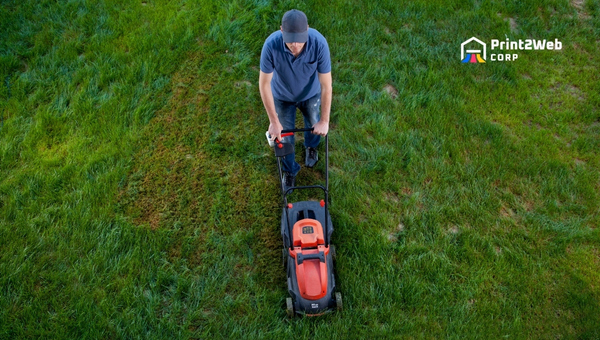
Equipment selection directly impacts productivity, service quality, and ultimately profitability. Professional operators consistently advise investing in commercial-grade equipment from the start rather than cycling through cheaper consumer models that fail under daily use. The right tools allow an operator to service more lawns per day with less physical strain, improving both revenue potential and sustainability of the operation.
Essential Equipment for Every Lawn Care Business
Regardless of business scale, certain tools form the core of any lawn care operation:
Mowers. The mower represents the single largest equipment investment. Walk-behind push mowers ($300 to $800) work for small residential lawns, while self-propelled models ($500 to $1,200) reduce operator fatigue on medium properties. Commercial walk-behind mowers ($1,500 to $4,000) handle demanding routes efficiently. For properties over half an acre, zero-turn mowers ($3,000 to $12,000) dramatically cut mowing time. For specific recommendations, see the guide to best commercial zero-turn mowers for detailed reviews and comparisons.
String Trimmers. Also called weed eaters or weed whackers, these tools handle edges, fence lines, and obstacles that mowers cannot reach. Quality gas-powered models ($200 to $500) provide the power and runtime needed for professional use. Battery-powered options ($150 to $400) continue improving but may not yet match gas performance for full-day commercial routes.
Leaf Blowers. Backpack blowers ($200 to $700) clear grass clippings, leaves, and debris far more efficiently than handheld models. This tool saves considerable time per job and contributes to the clean, professional finish that keeps customers satisfied. Budget-friendly options appear seasonally, so checking current leaf blower deals can reduce initial equipment costs.
Edgers. A dedicated edger ($150 to $400) creates crisp, defined lines along sidewalks, driveways, and landscape beds. While some operators use trimmers for edging, a dedicated tool produces consistently superior results that justify the additional investment.
Safety Equipment. Hearing protection, safety glasses, gloves, and sturdy boots are non-negotiable. Long-term hearing damage from daily equipment use represents a serious occupational risk that proper protection easily prevents. Budget $100 to $250 for quality personal protective equipment.
Equipment for Expanded Service Offerings
Operators offering services beyond basic mowing need additional specialized tools:
Broadcast spreader ($80 to $300): For applying fertilizer, grass seed, and ice melt products evenly across lawns.
Sprayer ($50 to $500): Backpack or tow-behind sprayers for liquid fertilizer, herbicide, and pest control applications. Professional-grade sprayers offer better calibration and durability.
Lawn aerator ($300 to $2,000): Core aerators relieve soil compaction and improve root health. Many operators rent aerators initially rather than purchasing.
Hedge trimmer ($150 to $500): For shaping shrubs and maintaining landscape beds.
Chainsaw ($200 to $600): For tree trimming and removal of larger branches.
Trailer ($500 to $6,000): Enclosed trailers protect equipment from weather and theft while open trailers cost less and are easier to load.
Gas vs Battery Equipment Debate
The shift toward battery-powered equipment represents the most significant change in the lawn care industry over the past decade. Battery tools offer quieter operation, zero emissions, reduced maintenance, and no fuel costs. These advantages particularly benefit operators working in noise-restricted communities or near environmentally sensitive areas.
However, professional operators on forums including Reddit and LawnSite consistently report that battery technology has not yet matched gas equipment for full-day commercial use. Battery runtime limitations mean carrying multiple backup batteries, and recharge cycles can take hours. Most professionals recommend a hybrid approach: battery-powered trimmers and blowers for their lower noise and reduced maintenance, paired with gas-powered mowers for sustained cutting power throughout the day. As battery technology improves, this calculus may shift, but for 2026, gas remains the default for primary mowing equipment on commercial routes.
How to Price Your Lawn Care Services
Pricing strategy ranks among the most critical determinants of business success, yet many new operators set rates arbitrarily based on what competitors charge or what feels reasonable. A systematic approach to pricing ensures that every job contributes meaningfully to overhead, equipment costs, and personal income goals. Underpricing leads to burnout and financial stress, while overpricing drives away customers and stalls growth.
Pricing Models and Approaches
Per-Service Pricing. The most common model charges a flat rate per mowing visit based on lawn size. Industry averages range from $30 to $80 per residential lawn, with larger properties commanding $80 to $200 or more. This model offers simplicity for both the operator and customer, making budgeting predictable. The key involves accurately assessing lawn size, terrain complexity, gate access, and any obstacles that increase service time.
Hourly Pricing. Some operators charge by the hour, typically $40 to $75 per hour for residential work and $60 to $120 per hour for commercial properties. While transparent, hourly pricing penalizes efficiency. As operators become faster through experience and better equipment, their effective hourly earnings should increase, not decrease. For this reason, most experienced professionals migrate to flat-rate pricing after gaining confidence.
Per-Square-Foot Pricing. More sophisticated operators calculate rates based on lot size, typically charging $0.01 to $0.03 per square foot for mowing. This approach scales fairly across different property sizes and ensures profitability on larger jobs. Measuring tools and property appraisal data make square-foot calculations straightforward.
Package Deals and Service Contracts. Offering bundled pricing for weekly mowing combined with seasonal services creates predictable revenue and improves customer retention. A common structure includes weekly mowing from April through October (approximately 28 to 32 cuts) plus spring cleanup, fall leaf removal, and a fertilization program, packaged at a monthly rate of $150 to $400 depending on property size. Customers appreciate predictable monthly payments, and operators benefit from guaranteed seasonal income.
Factors That Affect Pricing
Several variables beyond lawn size influence appropriate pricing. Properties with steep slopes, extensive landscaping features, numerous trees, or restricted access require more time and carry higher risk of equipment damage. Gate width limits may force the use of smaller, slower equipment. Properties requiring trimming along long fence lines or extensive blowing of debris from walkways and patios take considerably longer than open turf areas.
Local market rates also play a significant role. Prices in affluent suburban markets typically run 30 to 50 percent higher than in rural or lower-income areas. Researching what established competitors charge provides a baseline, but competing solely on price creates a race to the bottom that undermines the entire market. Forum wisdom consistently advises charging premium rates and delivering superior service rather than undercutting competitors.
A profitable pricing model must account for all costs: equipment depreciation, fuel, insurance, maintenance, marketing, software subscriptions, taxes, and the owner’s desired income. Many operators use a target of $60 to $80 per hour of actual fieldwork to ensure these costs are covered while generating a reasonable profit margin.
How to Get Your First Lawn Care Customers
Acquiring the first customers represents the steepest challenge for any new lawn care business. Without an established reputation or portfolio, operators must rely on proactive outreach and grassroots marketing. The strategies below progress from immediate, no-cost techniques to more sophisticated approaches suitable for sustained growth.
Grassroots Marketing: Getting Started Fast
Door Hangers and Flyers. Distributing door hangers in target neighborhoods remains one of the most effective customer acquisition methods for new operators. A well-designed door hanger with services offered, pricing, and contact information placed on 100 to 200 doors typically generates 5 to 15 new customers. Focusing on neighborhoods with lawns that clearly need attention improves conversion rates significantly.
Neighborhood Networking. Personal conversations with neighbors, friends, and family often produce the first paying customers. Asking satisfied early clients for referrals and offering a discount on future services for each successful referral creates a compounding effect. Word-of-mouth marketing carries inherent trust that advertising cannot replicate.
Community Boards and Local Groups. Posting on community bulletin boards, local Facebook groups, and Nextdoor introduces the business to nearby residents at no cost. Many neighborhoods maintain active social media groups where service recommendations are actively sought and shared.
Digital Marketing for Sustained Growth
Google Business Profile. Creating and optimizing a free Google Business Profile ranks among the highest-impact marketing steps for any local service business. When potential customers search “lawn care near me” or “lawn mowing service [city name],” a complete and active profile increases visibility in local search results and Google Maps. Adding service descriptions, business hours, service areas, and high-quality photos of completed work significantly improves profile performance.
Online Reviews. Positive reviews on Google and Facebook serve as powerful social proof that converts prospects into customers. Actively requesting reviews from every satisfied client builds a review portfolio that differentiates the business from competitors. Responding professionally to all reviews, including negative ones, demonstrates commitment to customer satisfaction.
Local SEO. Beyond the Google Business Profile, a simple website optimized for local search terms (“lawn care [city],” “lawn mowing service [neighborhood]”) captures organic traffic from homeowners searching online. Including before-and-after photos, service descriptions, pricing transparency, and an easy contact form improves conversion of website visitors into leads.
Social Media Marketing. Facebook and Instagram accounts showcasing completed work, seasonal tips, and behind-the-scenes content build brand awareness in the local community. Facebook Ads targeting specific zip codes with special offers for new customers can generate leads at $10 to $30 per acquisition, depending on market competitiveness.
Strategic Partnerships. Building relationships with local real estate agents, property managers, and homeowners associations can generate consistent contract work. Real estate professionals often need lawn care for vacant or pre-listing properties, and HOAs frequently require reliable vendors for common area maintenance.
Creating a Practical Business Plan
A business plan transforms a vague intention into a structured roadmap with measurable milestones. While lawn care businesses can launch without a formal plan, operators who take the time to document their strategy consistently outperform those who improvise. A practical plan does not need to be elaborate; it needs to be specific, realistic, and actionable.
Key Components of a Lawn Care Business Plan
Services and Target Market. Define exactly which services the business will offer and to whom. Specifying the ideal customer profile (residential versus commercial, geographic radius, property size range, income level) focuses marketing efforts and prevents wasted time chasing unsuitable leads.
Competitive Analysis. Research existing lawn care businesses in the service area. Note their pricing, service offerings, customer reviews, and apparent strengths and weaknesses. Identifying gaps in the market (underserved neighborhoods, services competitors do not offer, quality deficiencies) reveals opportunities for differentiation.
Financial Projections. Project monthly revenue based on target customer count and average service price. Calculate all expenses including fuel, insurance, equipment payments, marketing, and labor. Determine the break-even point where monthly revenue covers all costs. Conservative projections that assume slower-than-hoped growth prevent premature expansion or overspending.
Marketing Strategy. Outline specific customer acquisition methods and allocate budget to each. Track the cost per customer acquisition for every marketing channel to identify which methods deliver the best return on investment. Reallocate spending toward high-performing channels as data accumulates.
Growth Plan. Define triggers for expansion: at what customer count does hiring the first employee make sense? When does purchasing a second truck and trailer become justified? Having predetermined growth milestones prevents both premature scaling and stagnation.
Building Systems and Processes
Systematic processes transform a chaotic operation into a manageable business. Standardized procedures for how lawns are serviced, how customers are onboarded, how equipment is maintained, and how billing is handled create consistency that customers notice and appreciate.
Lawn care software dramatically simplifies operations as the customer base grows. Field service platforms handle scheduling and route optimization, automated invoicing and payment processing, customer relationship management, and service history tracking. Popular options include Jobber, ServiceAutopilot, GorillaDesk, and RealGreen. Monthly subscriptions typically range from $30 to $150 depending on features and user count. Many operators report that route optimization alone saves 30 to 60 minutes of driving per day, effectively paying for the software cost many times over.
Standardized service procedures ensure every customer receives the same quality regardless of who performs the work. Documenting the specific steps for mowing a property (entry point, mowing pattern, trimming sequence, blowing routes) reduces training time for new employees and maintains consistency across the customer base. Checklists for equipment maintenance prevent costly breakdowns and extend tool lifespan.
Customer communication systems build trust and reduce disputes. Sending service notifications when crews arrive or complete work, providing digital invoices with payment links, and following up after the first service to confirm satisfaction all contribute to professional perception and customer retention.
Hiring Employees and Scaling the Operation
Solo operators eventually reach a capacity ceiling where adding more customers becomes impossible without sacrificing quality or personal health. Recognizing when to hire and selecting the right people determines whether the business scales successfully or collapses under mismanagement.
Recognizing the Right Time to Hire
Several indicators signal that hiring has become necessary rather than optional. When the operator consistently turns away new work because existing customers already fill every available hour, revenue growth has stalled not from lack of demand but from lack of capacity. When service quality begins slipping as the operator rushes through jobs, the business risks losing its best customers. When the owner spends evenings and weekends doing administrative work that takes time away from family or rest, burnout looms.
A general industry benchmark suggests that solo operators plateau around 30 to 45 weekly residential customers. Beyond that point, adding an employee to handle fieldwork while the owner focuses on sales, customer service, and route management typically generates greater total revenue even after accounting for labor costs.
Who to Hire First
The first hire for most lawn care businesses is a field worker who can handle mowing and basic maintenance tasks. Prioritizing reliability over experience proves wise; an employee who shows up consistently and follows instructions can be trained, while an experienced but unreliable worker disrupts the entire operation. Look for candidates with transportation, physical fitness for outdoor labor, willingness to work in various weather conditions, and a positive attitude toward customer interaction.
As the team grows, consider adding a dedicated crew leader who manages quality control and customer communication on-site, freeing the owner to focus on business development. Many operators find that promoting a reliable first employee to a leadership role as the second crew member joins creates a natural management structure.
Seasonal Business Management
Lawn care operates as a seasonal business in most regions of the United States, with peak demand from spring through fall and reduced activity during winter months. Managing these seasonal fluctuations effectively separates businesses that maintain year-round stability from those that struggle through winter cash crunches.
Spring and Summer Operations
Spring represents the busiest season as lawns emerge from dormancy and homeowners seek to clean up winter damage. Offering spring cleanup services (removing debris, dethatching, first mowing, mulching, fertilization) provides a revenue surge before weekly mowing routes reach full capacity. Summer demands consistent weekly service, and operators should use peak season to build cash reserves for slower months.
Fall Services
Fall leaf removal generates substantial additional revenue for operators positioned to capture it. Many customers who do not use weekly mowing services still need leaves removed from lawns, landscape beds, and gutters. Fall aeration and overseeding represent premium services that command higher per-job pricing. Closing out the season with winterization of irrigation systems and final mowing at appropriate heights extends the service window.
Winter Income Strategies
In northern climates where grass goes dormant, operators face three to four months of minimal lawn care revenue. Successful businesses address this gap through several approaches. Snow removal represents the most common winter service, leveraging existing equipment and customer relationships. Plowing driveways, salting walkways, and shoveling commercial properties can generate $50 to $200 per event per customer.
Holiday lighting installation has emerged as a popular winter service that requires minimal equipment investment and commands premium pricing. Firewood delivery, gutter cleaning, and tree pruning during dormancy also provide winter income. Some operators pursue tree spraying contracts, with forum reports of operators earning $2,000 to $3,000 per day during winter months servicing commercial properties.
In southern and western states where grass grows year-round, seasonal considerations differ but still exist. Cool-season grasses may require reduced mowing frequency, allowing operators to focus on weed control, irrigation adjustments, and landscape projects deferred during peak season.
Common Challenges and How to Overcome Them
Every lawn care business encounters obstacles that test the owner’s commitment and problem-solving ability. Understanding common challenges in advance allows operators to prepare strategies rather than reacting in crisis mode.
Intense Local Competition
Low barriers to entry mean new competitors constantly enter the market, often undercutting established pricing to win customers. Competing on price alone leads to diminishing margins and burnout. Instead, differentiate through superior service quality, reliability, communication, and professional presentation. Customers who value these qualities will pay premium rates, and operators who deliver consistently will retain them even when cheaper alternatives appear.
Weather Dependency
Rain, drought, and extreme heat all disrupt lawn care operations. A week of rain can delay an entire route and eliminate expected revenue. Drought conditions slow grass growth and prompt customers to pause service. Building weather buffers into pricing and maintaining emergency funds prevents weather events from creating financial crises. Communicating proactively with customers about schedule adjustments maintains trust during disruptions.
Equipment Failures
Equipment breakdowns mid-route cost time, money, and customer goodwill. Preventive maintenance including regular oil changes, blade sharpening, air filter replacement, and belt inspections significantly reduces failure rates. Maintaining backup equipment for critical tools (particularly a backup trimmer and blower) prevents a single failure from halting the entire day’s work. Establishing a relationship with a reliable small engine repair shop ensures quick turnaround when major repairs are needed.
Customer Payment Issues
Late payments, disputed charges, and occasional non-payment represent persistent challenges. Requiring payment at time of service or implementing automatic recurring billing through lawn care software dramatically reduces collection problems. Clearly stated payment policies communicated upfront set expectations. For consistently problematic accounts, the difficult but necessary decision to terminate service protects overall business health.
Pros and Cons of Starting a Lawn Care Business
Before committing to this venture, prospective owners should weigh the genuine advantages and challenges honestly. The lawn care business offers real opportunities but also carries inherent difficulties that catch unprepared operators off guard.
Advantages
Low startup barrier: Can begin with minimal investment using existing equipment, making it accessible to nearly anyone willing to work hard.
Strong and growing demand: 85 million U.S. lawns and rising homeowner investment in property maintenance create a large and expanding market.
Scalable business model: Start solo and grow at a comfortable pace into a multi-crew operation generating substantial revenue.
Recurring revenue: Weekly and bi-weekly mowing contracts create predictable income rather than constantly chasing one-time jobs.
Physical activity: The work provides consistent exercise and outdoor time rather than sedentary desk work.
Entrepreneurial skill development: Running the business builds transferable skills in marketing, finance, customer service, and operations management.
Challenges
Seasonal income fluctuations: Revenue drops significantly in winter for most regions, requiring advance planning and alternative service offerings.
Physical demands: The work takes a toll on the body over time, particularly the back, knees, and shoulders, making eventual hiring or exit planning necessary.
Weather dependency: Rain, drought, and extreme temperatures can disrupt schedules and reduce income unpredictably.
High competition: Low barriers to entry mean many competitors, including informal operators who undercut professional pricing.
Equipment investment and maintenance: Professional equipment requires significant upfront and ongoing investment, plus repairs can halt operations.
Customer management challenges: Some customers consistently complain about pricing, refuse to pay on time, or have unrealistic expectations about results.
Frequently Asked Questions
How much does it cost to start a lawn care business?
Startup costs range from under $1,000 for a lean operation using existing equipment to $50,000 or more for a fully equipped multi-crew company. A typical part-time business requires $2,000 to $8,000 for professional equipment, insurance, and registration, while a full-time solo operation needs $10,000 to $30,000 including a dedicated work truck.
Is owning a lawn care business profitable?
Yes, lawn care can be highly profitable with proper pricing and cost management. Profit margins typically range from 5 to 20 percent depending on efficiency and service mix. Solo operators commonly earn $40,000 to $80,000 annually, while multi-crew operations can generate $100,000 to $500,000 or more in yearly revenue.
Do I need an LLC to start a lawn care business?
An LLC is not legally required to start, as a sole proprietorship is sufficient for operations. However, forming an LLC is strongly recommended because it protects personal assets from business liabilities, enhances credibility with commercial clients, and offers flexible tax treatment. Formation costs range from $50 to $500 depending on the state.
What is the profit margin for a lawn care business?
Lawn care business profit margins typically range from 5 to 20 percent, though well-optimized operations can achieve higher margins. Profitability depends on factors including pricing strategy, equipment efficiency, labor costs, fuel expenses, and service mix. Offering higher-margin services like fertilization and seasonal cleanups alongside mowing improves overall profitability.
How do I get my first lawn care customers?
The most effective methods for acquiring first customers include distributing door hangers in target neighborhoods, leveraging personal networks and referrals, posting in local community groups and on Nextdoor, creating a free Google Business Profile for local search visibility, and partnering with local real estate agents or property managers who need reliable lawn care services.
Can I start a lawn care business with no money?
Starting with zero capital is possible if you already own basic equipment like a mower and transportation. Begin by serving friends, family, and neighbors, then reinvest early revenue into professional equipment and business registration. Keep initial costs minimal by using free marketing channels like community groups and word-of-mouth referrals rather than paid advertising.
What equipment do I need to start a lawn care business?
Essential startup equipment includes a lawn mower appropriate for property sizes (push mower to zero-turn), a string trimmer, a leaf blower, basic hand tools, safety gear including hearing and eye protection, and transportation such as a truck with an equipment trailer. For expanded services, add a broadcast spreader, sprayer, and lawn aerator as demand grows.
When is the best time to start a lawn care business?
Early spring represents the optimal launch window, allowing operators to capture spring cleanup demand and build customer relationships before peak summer mowing season. Starting in early fall also works well, as leaf removal and fall cleanup services generate immediate revenue. Avoid launching in peak summer when customers have already established seasonal contracts with competitors.
Conclusion
Starting a lawn care business in 2026 offers genuine opportunity for entrepreneurs willing to approach the venture with strategic planning and disciplined execution. The industry’s continued growth, low entry barriers, and scalable business model create a pathway from modest side hustle to substantial enterprise. Success depends not on having the most equipment or the lowest prices, but on making sound decisions at each stage: choosing the right business structure, investing in quality equipment that matches the service scope, setting profitable prices from day one, and building marketing systems that generate consistent lead flow.
For those prioritizing minimal risk, a lean startup approach using existing equipment and organic marketing provides a safe way to test market demand. Operators seeking faster growth should plan for $10,000 to $30,000 in initial investment to launch with professional equipment and proper business infrastructure. Those aiming to build a full-service company generating $250,000 or more in annual revenue should expect to invest $50,000 or more and commit to systematic growth over three to five years.
The most consistent theme across successful operators is this: treat the lawn care business as a real business from the very beginning. Register properly, obtain appropriate insurance, set prices that cover all costs, maintain professional communication, and reinvest profits strategically. The operators who follow these principles consistently outearn those who treat lawn care as an informal cash venture. With the green industry projected to continue growing well beyond 2026, there has rarely been a better time to turn lawn care expertise into a thriving enterprise. For those seeking additional income streams while building the business, lawn care ranks among the most rewarding side hustles that pay weekly available today.
Leave a Reply