
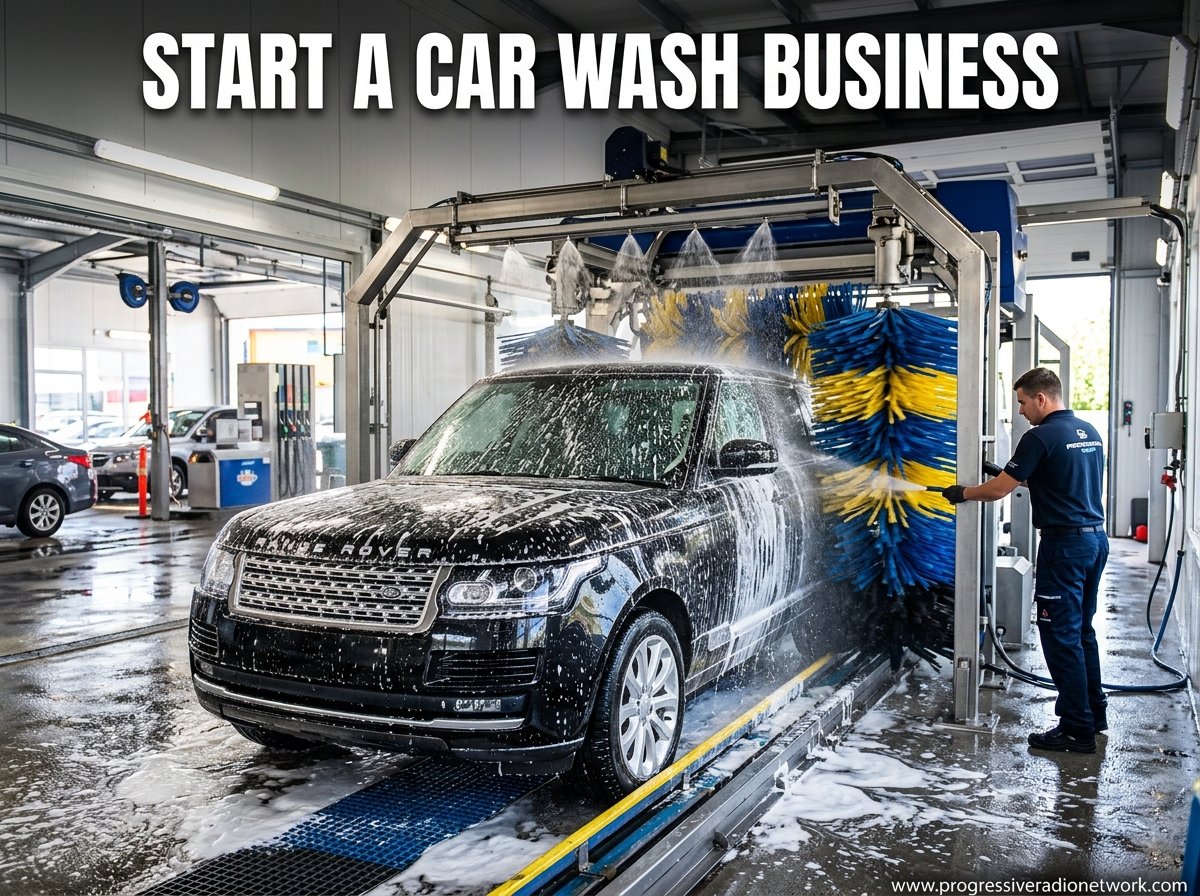
The car wash industry has experienced remarkable growth since 2020, with revenue reaching an estimated $15 billion annually in the United States alone. For aspiring entrepreneurs searching for how to start a car wash business, the appeal is clear: recurring revenue, scalable operations, and the potential for semi-passive income depending on the model chosen. Industry data shows that approximately 66% of vehicle owners wash their cars one to two times per month, creating consistent demand across nearly every market in the country.
Launching a car wash business requires significantly more than a good location and a few pressure washers. Success depends on selecting the right operating model, securing adequate financing, navigating environmental regulations, and implementing technology that keeps customers coming back. Startup costs range from roughly $100,000 for a basic self-serve operation to over $3 million for a full-scale tunnel conveyor system. Understanding these financial realities before breaking ground separates profitable operations from costly mistakes.
This comprehensive 10-step guide walks through every phase of building a car wash business in 2026. From choosing between self-service, in-bay automatic, tunnel, and full-service models to securing SBA financing, selecting a point-of-sale system, and designing membership programs that drive recurring revenue, each section provides actionable guidance grounded in current industry data.
What This Guide Covers:
- Car wash types, startup costs, revenue potential, and ROI timelines compared side by side
- Location selection with specific traffic count and demographic benchmarks
- Financing options including SBA 7(a), SBA 504, conventional loans, and seller financing
- POS system selection, unlimited wash membership programs, and modern marketing strategies
- Water reclamation, eco-friendly practices, safety measures, and customer retention tactics
Understanding the Car Wash Business
The car wash industry has transformed significantly over the past decade. Subscription-based unlimited wash programs, license plate recognition technology, mobile payment systems, and water reclamation have reshaped how operators generate revenue and manage costs. Post-COVID demand surges pushed many markets toward record volumes, and operators who adopted membership models saw predictable monthly recurring revenue that insulated them from seasonal weather fluctuations.
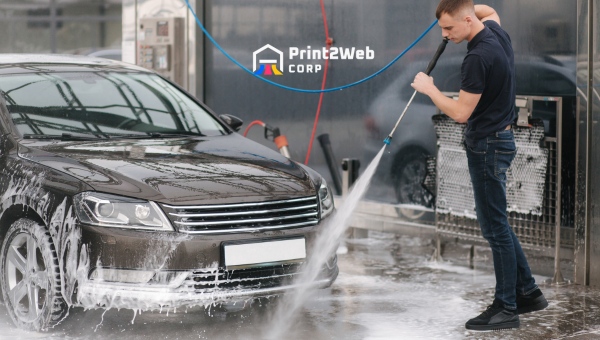
Industry profitability remains attractive when operations are managed efficiently. The average profit margin across car wash types hovers around 29%, meaning a standard $15 wash generates approximately $4.35 in profit per vehicle. Tunnel conveyor washes can generate $500,000 or more in annual profit at mature locations, while in-bay automatic washes average around $86,000 per year and self-serve operations typically produce $41,000 annually per bay. These figures vary widely based on location, volume, pricing strategy, and operating costs.
Understanding these numbers early in the planning process helps prospective owners set realistic expectations and choose the operating model that aligns with their available capital, desired involvement level, and target market. Whether building from the ground up or purchasing an existing operation, the fundamentals remain the same: location quality, equipment reliability, pricing strategy, and customer loyalty determine long-term success.
Choosing a Type of Car Wash Business: Self-Service, In-Bay Automatic, Tunnel, Full-Service, or Franchise
Selecting the right car wash format is the single most consequential decision an aspiring owner will make. Each model carries distinct startup costs, labor requirements, revenue potential, and operational complexity. The five primary formats are self-service, in-bay automatic, express exterior (tunnel conveyor), flex-serve, and full-service. A sixth path involves purchasing a franchise, which can apply to several of these formats.
Self-service car washes allow customers to wash their own vehicles using coin-operated or card-activated bays equipped with high-pressure wands, foam brushes, and vacuum stations. Startup costs typically range from $100,000 to $250,000 depending on the number of bays and equipment quality. Labor requirements are minimal, making this an attractive option for owners seeking semi-passive income. However, per-bay revenue averages around $41,000 annually, so profitability depends on volume and keeping operating expenses low. Reddit users report realistic self-serve startup costs between $140,000 and $260,000 with standard wash pricing of $12 to $22.
In-bay automatic car washes use a drive-in bay where an automated system (either roll-over or conveyor) cleans the vehicle while the driver waits. These systems cost between $250,000 and $700,000 to install and generate an average of $86,000 in annual revenue per bay. They require more mechanical maintenance than self-serve bays but deliver higher per-transaction revenue and can operate with minimal staffing.
Tunnel conveyor car washes (also called express exterior) pull vehicles through a long washing tunnel on a conveyor belt. These represent the highest-volume, highest-revenue model, with startup costs from $1 million to $3 million or more for a fully equipped facility. Mature tunnel locations can generate $500,000 or more in annual profit. However, they require significant staffing, higher utility consumption, and ongoing equipment maintenance.
Flex-serve car washes combine an express exterior tunnel with optional interior cleaning services offered separately. Customers choose between a fast exterior-only wash or adding interior detailing for an additional fee. This hybrid model maximizes revenue per visit while maintaining throughput speed.
Full-service car washes provide complete interior and exterior cleaning. These operations require the largest staff, highest labor costs, and typically command the highest per-vehicle prices. They offer the most comprehensive customer experience but carry the greatest operational complexity.
Franchise car washes offer brand recognition, proven operational systems, training programs, and sometimes financing assistance. In exchange, franchisees pay initial franchise fees and ongoing royalties that reduce profit margins. Franchising can reduce the learning curve for first-time owners but limits operational autonomy. Weighing a car wash franchise against an independent operation depends on available capital, industry experience, and willingness to follow corporate guidelines.
Comparing Startup Costs, Revenue, and ROI by Car Wash Type
The table below summarizes the key financial metrics for each car wash format. These industry averages provide a baseline for comparison, though actual results depend heavily on location, management quality, and market conditions. Anyone evaluating a specific site should commission a professional proforma before committing capital.
- Self-serve: Startup $100K to $250K | Revenue ~$41K/year per bay | ROI timeline 3 to 5 years
- In-bay automatic: Startup $250K to $700K | Revenue ~$86K/year per bay | ROI timeline 4 to 6 years
- Tunnel conveyor (express exterior): Startup $1M to $3M+ | Revenue $500K+/year | ROI timeline 5 to 7 years
- Flex-serve: Startup $1.5M to $3.5M+ | Revenue varies | ROI timeline 5 to 7 years
- Full-service: Startup $2M to $4M+ | Revenue varies widely | ROI timeline 5 to 8 years
Renovation and upgrade costs for existing facilities typically add 10% to 30% on top of the base purchase price. Equipment modernization, POS system upgrades, and water reclamation retrofits can significantly extend the ROI timeline if not properly budgeted during the acquisition phase.
Checking Out the Competition and Doing Market Research
Before committing to any location, a thorough competitive analysis is essential. Start by identifying every car wash within a three- to five-mile radius of the proposed site. Visit each one at different times of day and different days of the week to observe traffic patterns, wait times, service quality, and pricing. Note which washes are busy and which sit empty, then try to understand why.
Pay attention to the services competitors offer, their pricing tiers, and whether they promote unlimited wash memberships. Subscription-based competitors with established member bases represent a different competitive threat than pay-per-wash operations. A market saturated with membership programs may require a similar offering to compete effectively.
Demographic research is equally important. Industry experts recommend targeting areas with at least 10,000 people within a one-mile radius and a daily traffic count of 25,000 or more vehicles passing the site. Households with two or more vehicles, median income levels above the regional average, and proximity to retail centers, grocery stores, and commuter routes all contribute to stronger demand.
Touring 20 to 30 car washes before starting construction is a practice recommended by experienced operators. This hands-on research reveals layout efficiencies, equipment preferences, traffic flow designs, and customer experience details that cannot be learned from a business plan template alone.
Finding the Right Location for Your Car Wash Business
Location quality is the primary determinant of a car wash’s long-term success. A well-equipped wash with excellent service will struggle in a poorly chosen location, while a mediocre operation can thrive on a high-traffic corridor. Several quantifiable factors should guide site selection.
Traffic count is the starting metric. Industry benchmarks call for a minimum of 25,000 vehicles per day passing the site, with higher counts preferred for tunnel and express exterior models. The speed limit matters too: vehicles traveling at 35 to 45 mph are more likely to make an impulse stop than those on a 65 mph highway. Visibility from the road, clear sight lines to the wash entrance, and easy ingress and egress all affect conversion rates.
Demographics should support the chosen format. Look for at least 10,000 residents within a one-mile radius for express and full-service washes. Self-serve operations can succeed with lower nearby population density if the traffic count is strong. Household income levels, vehicle ownership rates, and commute patterns all influence wash frequency.
Proximity to retail creates natural synergy. Locations near grocery stores, shopping centers, gas stations, and restaurants benefit from existing traffic patterns. Drivers running errands represent the ideal impulse car wash customer. Corner lots with dual street frontage offer maximum visibility and multiple access points.
Utility access is a practical necessity. Car washes require substantial water supply, sewer capacity, and three-phase electrical power. Confirm municipal water pressure, sewer connection capacity, and electrical service availability before purchasing land. Environmental regulations governing water discharge and chemical disposal vary by municipality and can affect site feasibility.
Zoning and permitting can make or break a location. Schedule a meeting with the local city planner early in the site evaluation process to discuss zoning classification, setback requirements, signage restrictions, and any special use permits needed for a car wash. Some municipalities impose moratoriums on new car wash construction or require extensive environmental impact studies.
When evaluating any site, confirm the following: high daily traffic count with appropriate speed limits, strong visibility from the roadway, easy entry and exit for vehicles, adequate lot size for stacking and vacuum areas, reliable water and sewer infrastructure, three-phase electrical availability, favorable zoning classification, and reasonable distance from direct competitors.
Related Resource: Unlock Profit Potential: Vending Machine Business Strategies
Preparing to Launch Your Car Wash Business
Once the car wash format and general location strategy are defined, the preparation phase begins. This stage involves detailed cost calculation, business plan development, and defining what will set the operation apart from competitors. Thorough preparation at this stage prevents costly mistakes during construction and launch.
Calculating Costs: Licenses, Infrastructure, Equipment, Labor, and Marketing
Accurate cost estimation separates realistic business plans from wishful thinking. Startup costs for a car wash business fall into several categories, each with significant variability depending on format, location, and equipment choices.
Land acquisition often represents the largest single expense. A high-visibility corner lot on a 25,000-plus vehicle-per-day road in a growing suburban market can cost anywhere from $300,000 to $1.5 million depending on the region. Some operators lease land to reduce initial capital requirements, though ground leases typically run 15 to 25 years to justify the investment in permanent improvements.
Site development and infrastructure includes grading, paving, plumbing, electrical, water lines, sewer connections, and drainage systems. For a tunnel wash, site work alone can run $200,000 to $500,000. Self-serve operations require less extensive site preparation but still need proper drainage, water recovery systems, and electrical infrastructure for multiple bays.
Equipment and installation varies dramatically by format. Self-serve bay equipment (high-pressure pumps, wands, meter boxes, vacuum systems) costs $15,000 to $40,000 per bay. An in-bay automatic system runs $80,000 to $200,000 installed. Tunnel conveyor systems with all associated equipment (mitters, side washers, high-pressure arches, dryers, conveyor) typically cost $500,000 to $1.5 million or more. Water reclamation systems add $30,000 to $100,000 but reduce water bills substantially over time.
Building construction for an enclosed tunnel wash or full-service facility ranges from $150 to $300 per square foot. A 3,500-square-foot tunnel building at $225 per square foot equals roughly $787,500 in construction costs alone. Self-serve bays with canopies are significantly less expensive per square foot.
Licenses and permits include business licenses, water usage permits, environmental discharge permits, sign permits, and building permits. Costs vary by municipality but typically range from $2,000 to $15,000 total. Environmental permits may require submitting a stormwater management plan or installing oil-water separators.
Labor costs depend on the operating model. Self-serve operations may need only a part-time attendant for maintenance and cleaning. In-bay automatics typically require one to two attendants. Tunnel washes need three to eight employees per shift depending on volume and service level. Full-service operations with detailing can require 10 or more staff members per shift. Budget for wages, payroll taxes, workers compensation insurance, and benefits when projecting operating expenses.
Marketing and grand opening budgets deserve serious attention. Industry experts recommend allocating approximately $15,000 for a grand opening campaign, working out to roughly $1 per car during the launch phase, then settling to about $0.10 per car for ongoing marketing. Digital advertising, signage, direct mail, and community promotions all play roles in the launch strategy.
Working capital reserves are frequently overlooked. Plan to hold three to six months of operating expenses in reserve to cover utilities, payroll, loan payments, and supplies during the ramp-up period before the wash reaches break-even volume.
Crafting Your Car Wash Business Plan: Target Market, Goals, and Financial Projections
A detailed business plan serves multiple purposes: it forces thorough thinking about every aspect of the operation, provides a roadmap for execution, and is essential for securing financing from banks or investors. A comprehensive car wash business plan should include the following components.
Company description: Define the business entity, ownership structure, mission statement, and the specific car wash format selected. Explain why this format suits the target market and location.
Market analysis: Present demographic data, traffic counts, competitor analysis, and market saturation assessment. Include the number of competing washes within the trade area and identify underserved customer segments.
Marketing and sales strategy: Detail pricing tiers, membership program design, promotional plans, digital marketing approach, and customer acquisition targets. Specify the grand opening budget and ongoing marketing allocation.
Operations plan: Outline staffing requirements, shift schedules, equipment maintenance protocols, supply chain for chemicals and consumables, and daily operating procedures. Include hours of operation and seasonal adjustments.
Equipment and technology: List all major equipment with costs, specify the POS system and payment processing setup, and describe any license plate recognition, mobile app, or e-commerce capabilities planned.
Financial projections: Include a proforma with three-year revenue forecasts, monthly cash flow projections, break-even analysis, and ROI calculations. A professional proforma prepared by a car wash industry consultant carries significant weight with lenders. Define target market segments, set measurable goals for daily car counts, monthly membership enrollment, and revenue milestones, and outline contingency plans for weather-related downturns.
Unique Selling Proposition of Your Car Wash Business
In a competitive market, a clear unique selling proposition (USP) differentiates one car wash from the dozens of alternatives a driver passes each week. The USP should address a specific customer pain point or desire that competitors in the area are not meeting effectively.
Common USPs in the car wash industry include speed of service (under three minutes for express exterior), eco-friendly operations with water reclamation and biodegradable chemicals, premium quality with hand-finishing details, exceptional customer service with complimentary amenities, subscription pricing that offers outstanding value for frequent washers, and technology-forward experiences with mobile app scheduling and contactless payment. Industry data shows that 77% of consumers are willing to pay more for eco-friendly services, making environmental responsibility a compelling USP in many markets.
The most effective USPs are grounded in what the local market actually lacks. If every nearby competitor focuses on low prices, a premium quality positioning can capture underserved customers willing to pay more for superior results. If competitors lack membership programs, launching an unlimited wash subscription can quickly build a loyal customer base.
Legally Setting Up Your Car Wash Business
Before construction begins, the legal foundation of the business must be properly established. This involves selecting a business name, choosing a legal structure, and securing all required licenses and permits. Taking shortcuts at this stage can lead to fines, construction delays, or forced closure.
Registering Your Car Wash Business: Name Selection and Business Structure
Choosing a business name requires balancing memorability, brand fit, and legal availability. The name should be distinctive, easy to spell and pronounce, and suggestive of the service provided. Before settling on a name, verify that it is available in the state’s business registry, that a matching domain name is available for the website, and that it does not infringe on any existing trademarks. Conducting a USPTO trademark search and a state fictitious name database check prevents future legal complications.
Selecting a business structure affects liability protection, taxation, and operational flexibility. The most common structures for car wash businesses are sole proprietorship, partnership, Limited Liability Company (LLC), S corporation, and C corporation. Most car wash operators choose an LLC because it provides personal liability protection (shielding personal assets like a home or savings from business liabilities) while offering flexible tax treatment. An S corporation election can further optimize self-employment taxes for profitable operations.
For franchise operations, the franchisor typically dictates the business structure requirements. Consulting with a certified public accountant or business attorney before finalizing the structure ensures that tax implications and liability considerations are fully evaluated for the specific situation.
Securing Necessary Licenses and Permits
Car wash businesses require multiple permits and licenses at the local, state, and sometimes federal level. The specific requirements vary by jurisdiction, so contacting the local city planner and county clerk early in the process is essential.
- General business license: Required by virtually every city or county. Application is typically filed at city hall or the county business license office.
- Water usage and discharge permits: Car washes consume significant water and generate wastewater containing chemicals, oils, and dirt. Most municipalities require water usage permits, sewer discharge permits, and installation of oil-water interceptors or sand traps to pretreat wastewater before it enters the municipal sewer system.
- Environmental permits: State environmental agencies may require additional permits related to stormwater runoff, chemical storage, and groundwater protection. The Environmental Protection Agency (EPA) sets baseline standards that states implement and enforce.
- Building and construction permits: Required for site development, building construction, plumbing, electrical, and signage. The permit process typically involves submitting engineered plans for review and scheduling inspections at various construction milestones.
- Health and safety compliance: Occupational Safety and Health Administration (OSHA) requirements apply to employee safety, chemical handling, and equipment operation. Workers compensation insurance is mandatory in most states for businesses with employees.
- Sign permits: Municipalities regulate sign size, height, illumination, and placement. A well-designed pylon or monument sign visible from the roadway is critical for attracting impulse traffic, so confirm sign allowance before purchasing property.
Related Resource: Original Packaging to Return to Amazon: Essential Tips
Financial Planning for Your Car Wash Business
Few businesses require as much upfront capital as a car wash, making financial planning the difference between a successful launch and a stalled project. This phase involves setting up banking infrastructure, evaluating financing options, and establishing financial controls that will serve the business throughout its lifecycle.
Setting Up Business Banking and Credit Infrastructure
Separating personal and business finances is a legal requirement for LLCs and corporations and a best practice for sole proprietors. Open a dedicated business checking account at a bank experienced with small business operations. Compare business banking options for transaction fees, minimum balance requirements, cash deposit limits, and integration with accounting software. A business savings account should hold the working capital reserve identified during the cost calculation phase.
A business credit card helps manage cash flow for equipment purchases, supply orders, and travel expenses while building business credit history. Choose a card with rewards aligned to the business’s spending patterns: cashback on fuel and utilities, travel points for industry conference attendance, or statement credits for office supplies. Maintain discipline by paying the balance in full each month to avoid interest charges that erode profitability.
Establish bookkeeping procedures from day one. Accounting software like QuickBooks or Xero, integrated with the POS system and bank feeds, provides real-time visibility into revenue, expenses, and cash flow. Many car wash operators hire a part-time bookkeeper or outsource payroll processing to ensure accuracy and compliance with tax filing requirements.
Financing Options: SBA Loans, Conventional Loans, and Seller Financing
Few car wash entrepreneurs fund a multi-million dollar project entirely from personal savings. Understanding the available financing pathways and their requirements is essential for getting a project from concept to construction.
SBA 7(a) loans are the most common financing vehicle for car wash acquisitions and new construction. The Small Business Administration guarantees up to 85% of the loan, reducing lender risk and enabling longer repayment terms (up to 25 years for real estate). Loan amounts can reach $5 million. Borrowers typically need a credit score of 680 or higher, a 10% to 20% down payment, industry experience or a qualified management team, and a business plan with detailed financial projections. The SBA 7(a) program is particularly valuable for first-time operators because the government guarantee makes lenders more willing to approve loans.
SBA 504 loans are designed specifically for major fixed-asset purchases like real estate and equipment. The structure involves two loans: a bank loan for 50% of the project cost and a CDC (Certified Development Company) loan for 40%, with the borrower contributing 10% as a down payment. SBA 504 loans offer below-market fixed interest rates on the CDC portion and are ideal for purchasing land and constructing a car wash facility.
Conventional bank loans do not carry government guarantees but can close faster than SBA loans and have less paperwork. They typically require 20% to 30% down and shorter repayment terms (10 to 15 years for real estate). Conventional loans are a strong option for experienced operators with established business credit or those purchasing an existing car wash with a documented operating history.
Seller financing is common when purchasing an existing car wash. The seller carries a portion of the purchase price as a note, often for three to seven years, reducing the amount of bank financing needed. Seller financing signals confidence in the business’s viability and can bridge gaps when bank financing alone is insufficient. Negotiate interest rates, amortization schedules, and balloon payment terms carefully.
Equipment financing covers the purchase of wash equipment, POS systems, and other tangible assets. The equipment itself serves as collateral, keeping down payments low (often 10% or less). Equipment loans typically run five to ten years and can supplement SBA or conventional financing for the real estate and building components.
When evaluating any financing package, calculate the debt service coverage ratio (DSCR). Lenders typically require a DSCR of 1.25 or higher, meaning the business’s net operating income must exceed debt payments by at least 25%. A professional proforma should demonstrate this margin with conservative revenue assumptions to ensure loan approval and sustainable operations.
Due Diligence and ROI Analysis
Whether building new or buying an existing car wash, due diligence and ROI analysis protect against overpaying or underestimating costs. For acquisitions, request at least three years of tax returns, POS reports, utility bills, maintenance records, and employee payroll data. Verify reported revenue against bank deposits and tax filings. Inspect all equipment age and condition with a qualified car wash equipment technician.
ROI timelines vary by format. Self-serve operations typically reach payback in three to five years, in-bay automatics in four to six years, and tunnel conveyor washes in five to seven years. Full-service operations may take five to eight years depending on labor cost management and volume growth. Capitalization rates (cap rates) for car wash investments typically range from 8% to 12%, with lower cap rates reflecting premium locations and higher rates indicating more risk.
Stress-test projections with conservative scenarios: what happens if volume is 20% below forecast? Can the business service its debt during a three-month weather downturn? Building these contingencies into the financial model before signing loan documents prevents unpleasant surprises later.
Related Resource: Uncover Your eBay Purchase History in Simple Steps
Building Your Team and Operating Systems
A car wash is only as good as the people running it. Even highly automated operations require staffing for customer service, equipment maintenance, and management. Building the right team and implementing proper safety and technology systems creates the operational backbone for long-term profitability.
Hiring Staff for Different Roles
Staffing requirements depend heavily on the car wash format. Self-serve operations may need only a part-time maintenance attendant who cleans bays, restocks supplies, and performs minor equipment repairs. In-bay automatics typically need one or two attendants to guide customers, process payments, and handle basic maintenance. Tunnel conveyor washes require a team of three to eight employees per shift: greeters, prep workers, tunnel attendants, dryers, and a manager.
Full-service operations demand the largest workforce, including wash attendants, detailers, interior cleaners, customer service representatives, and shift managers. One Reddit user observed a busy full-service car wash operating with 21 workers and an average ticket of $28, highlighting the labor intensity and margin pressure of this model. High turnover and wage competition are ongoing challenges, so budget for competitive wages, training time, and recruitment costs.
Key roles to fill include a site manager or general manager who oversees daily operations and staff scheduling, customer service representatives who greet customers and process transactions, wash attendants who prep and guide vehicles through the wash, maintenance technicians who handle equipment upkeep and repairs, and an accountant or bookkeeper who manages payroll, accounts payable, and financial reporting. Prioritize reliability, attention to detail, and customer service aptitude when evaluating candidates.
Safety Measures and Technology Systems
Safety and technology are intertwined in a modern car wash operation. Protecting employees, customers, and equipment requires both physical safety protocols and digital systems that monitor operations, process payments, and manage customer relationships. Cutting corners in either area leads to accidents, liability, and lost revenue.
Workplace Safety and Site Security
Car wash environments present specific hazards: high-pressure water, moving conveyor equipment, chemical exposure, wet and slippery surfaces, and vehicle traffic. Implement written safety protocols, conduct regular employee training, and provide appropriate personal protective equipment (PPE) including slip-resistant footwear, eye protection, and chemical-resistant gloves.
Install security cameras covering all wash bays, payment kiosks, vacuum areas, and the entrance and exit. Camera systems deter vandalism and theft (a particular concern for unattended self-serve locations), provide evidence for damage claims, and allow remote monitoring by management. Modern camera systems with cloud storage and mobile app access let owners check on operations from anywhere.
For self-serve and unattended locations, install adequate lighting throughout the property, clearly posted operating rules, emergency shut-off switches accessible to customers, and regular patrol visits by staff or a security service. Weather monitoring systems help anticipate severe weather that could affect operations or customer safety.
Choosing a Car Wash POS System and Technology Stack
The point-of-sale (POS) system is the technological heart of a modern car wash. Far more than a cash register, a car wash POS system manages payment processing, tracks revenue by service type, administers membership programs, controls equipment activation, integrates with marketing tools, and provides operational reporting that drives business decisions.
When evaluating POS systems, look for these capabilities: payment processing for credit cards, contactless payments (Apple Pay, Google Pay), mobile wallets, and traditional cash; unlimited wash program management for recurring monthly billing, membership tiers, and automatic payment processing; license plate recognition (LPR) that identifies member vehicles as they enter, eliminating the need for RFID stickers or manual verification; self-pay kiosks and payment terminals that allow unattended operation for express and self-serve formats; fleet account management for commercial customers with multiple vehicles; marketing integration with email platforms, text message campaigns, and customer loyalty tracking; and reporting and analytics showing daily car counts, revenue by service, membership growth, and peak-hour patterns.
Leading car wash POS providers include DRB, Washify, ICS, Suds Creative, and Micrologic, among others. Each offers different feature sets, pricing models, and equipment compatibility. Request demonstrations, speak with current operators using each system, and confirm compatibility with the chosen wash equipment before committing. The POS system represents a long-term technology investment that affects every transaction the business processes.
Contactless payment and mobile payment options are no longer optional luxuries. Customers expect to pay with their phones, and younger demographics increasingly avoid carrying cash. Mobile apps that allow customers to purchase washes, manage memberships, and receive promotional offers directly on their devices are becoming standard at competitive operations.
Related Resource: Private-Label Credit Card Secrets: Unlock Shopping Benefits!
Pricing Strategy and Unlimited Wash Programs
Pricing strategy directly determines revenue and profitability. The right approach balances competitive positioning, cost recovery, perceived value, and customer retention. In 2026, the car wash industry’s pricing landscape has been transformed by subscription-based unlimited wash programs that generate predictable monthly recurring revenue.
Price Setting Strategies
Effective car wash pricing starts with understanding costs. Calculate the per-vehicle cost of chemicals, water, electricity, labor, and equipment wear. The industry average profit margin is approximately 29%, meaning a $15 wash should generate about $4.35 in profit. If margins fall below 20%, operational efficiency or pricing adjustments are needed.
Research local competitor pricing across all service tiers. Position the wash within the market: premium pricing signals quality and attracts customers willing to pay for superior results, while value pricing captures price-sensitive customers through volume. Most successful operators offer tiered pricing with three to four levels (basic, standard, premium, detailing) to capture different customer segments.
Writing compelling service descriptions for each tier helps customers understand the value of upgrading. Clear, benefit-driven language that describes what each package includes increases average ticket size and reduces confusion at the point of sale.
Related Resource: Write Product Descriptions that Sell: Ultimate Secrets
Unlimited Wash Membership Programs
Unlimited wash programs have become the single most important revenue driver for modern car washes. These subscription-based memberships allow customers to wash their vehicles as many times as they want for a fixed monthly fee, typically ranging from $20 to $50 per month depending on the wash type and service level.
The economics are compelling for both the business and the customer. For the wash operator, memberships create predictable monthly recurring revenue that smooths out weather-related fluctuations. Industry data shows that active members wash their cars two to three times more frequently than pay-per-wash customers, increasing chemical and water costs but dramatically improving revenue per customer. Break-even analysis typically shows that a member who visits twice per month generates equivalent revenue to a non-member, so any additional visits beyond that threshold represent pure incremental profit (minus variable costs).
For customers, the value proposition is straightforward: anyone who normally washes twice or more per month saves money with a membership. License plate recognition technology makes the experience seamless, as members simply drive up, get recognized by the system, and proceed through the wash without stopping to pay.
Design membership tiers that match the service ladder. A common structure offers three tiers: a basic unlimited exterior wash at $19.99 to $24.99, a premium unlimited with undercarriage wash and protectant at $29.99 to $34.99, and a top-tier unlimited including all premium features and seasonal protectants at $39.99 to $49.99. Family plans, multi-vehicle discounts, and annual prepay options (offering one or two months free) increase enrollment and retention.
Market the membership program aggressively during the first six months of operation. Offer the first month free or at a deep discount to build enrollment quickly, since acquired members tend to stay for an average of 18 to 36 months. Integrate membership signup into the POS workflow so every customer is offered enrollment after their wash.
Marketing Your Car Wash Business
A great car wash with no customers is a failed investment. Marketing drives trial, builds membership, and establishes the brand in the local community. The most successful operators combine traditional local marketing with a strong digital presence that captures search traffic and builds online reviews.
Strategies to Market Your Car Wash Business
Claim and optimize your Google Business Profile. This free listing appears in local search results, Google Maps, and the local pack that dominates mobile searches for car washes near me. Complete every section: business hours, services, photos (interior, exterior, equipment, clean vehicles), pricing, and contact information. Encourage every satisfied customer to leave a Google review, as review count and rating strongly influence local search rankings and customer choice.
Invest in local SEO and a professional website. A mobile-optimized website that loads quickly, displays clearly on phones, and includes clear service menus, pricing, membership information, and location details captures customers researching online before visiting. Use location-based keywords (city names, neighborhood names, near me phrases) throughout the site content.
Run targeted digital advertising. Google Ads targeting local search queries (car wash near me, auto detailing [city name]) captures high-intent customers at the moment they are looking for a wash. Facebook and Instagram ads with geographic targeting and special offer promotions build awareness among nearby residents. Budget approximately $1 per car for opening marketing and $0.10 per car for ongoing digital marketing.
Build a strong social media presence. Post before-and-after photos, customer testimonials, behind-the-scenes content, weather-related wash reminders, and promotional offers on Facebook, Instagram, and other platforms where local customers spend time. Social media for business success requires consistency, visual appeal, and community engagement.
Related Resource: Unlocking Social Media for Business Success: Essential Guide
Execute a strong grand opening campaign. Allocate a dedicated grand opening budget (approximately $15,000 for a mid-size operation) covering a direct mail campaign to all addresses within a three-mile radius, radio or streaming audio ads on local stations, digital ads targeting the surrounding zip codes, on-site promotions like free wash days or discounted memberships, and partnerships with local businesses for cross-promotion. The goal of the grand opening is twofold: generate immediate trial and enroll as many founding members as possible into the unlimited wash program.
Leverage email and text message marketing. Collect customer email addresses and phone numbers through the POS system. Send monthly newsletters with seasonal promotions (salt removal in winter, pollen removal in spring, bug removal in summer), membership upgrade offers, and referral incentives. Text message campaigns with limited-time offers drive immediate traffic during slow periods.
Implement referral and corporate programs. Offer existing members a free wash or account credit for each friend they refer who signs up for a membership. Reach out to local businesses with vehicle fleets (delivery services, real estate offices, construction companies) to establish corporate fleet accounts with discounted pricing in exchange for volume commitment.
Customer Retention and Loyalty
Acquiring a new customer costs five to seven times more than retaining an existing one. For car wash businesses, where recurring revenue drives profitability, customer retention is the single most important metric after daily car count. A well-designed retention strategy combines membership programs, loyalty rewards, service quality, and customer experience.
Customer Loyalty Programs and Membership Retention
The unlimited wash membership program discussed earlier is the most powerful retention tool available, but it should be supplemented with additional loyalty mechanics. For pay-per-wash customers who are not ready to commit to a membership, a point-based loyalty program (earn one point per dollar spent, redeem points for free washes or upgrades) keeps them coming back.
Retention also depends on service quality. A customer who receives an inconsistent wash experience will cancel a membership or switch to a competitor regardless of loyalty program incentives. Train staff on consistent wash quality protocols, inspect every vehicle post-wash, and address customer complaints immediately with free re-washes or account credits. A reputation for standing behind the service builds trust that no marketing campaign can replicate.
Small touches create outsized loyalty impact. Offering complimentary dashboard wipes, air fresheners, or vacuum tokens with premium washes makes customers feel valued. Clean, well-maintained waiting areas (for full-service operations) with free coffee, Wi-Fi, and comfortable seating transform a transactional visit into an experience worth returning for. Happy customers become brand advocates who refer friends and post positive reviews, creating organic growth that requires zero advertising spend.
Monitor membership churn rates monthly. Industry benchmarks suggest healthy operations maintain monthly churn below 5%. If churn exceeds 8%, investigate root causes: wash quality issues, billing problems, competitive offers, or customer service failures. Addressing these issues promptly protects the recurring revenue base that sustains the business through seasonal downturns.
Related Resource: Private-Label Credit Card Secrets: Unlock Shopping Benefits!
Eco-Friendly Practices and Water Reclamation
Environmental responsibility is no longer just good citizenship; it is a competitive advantage. Research indicates that 77% of consumers are willing to pay more for eco-friendly services, and water conservation regulations are tightening in drought-prone regions. Implementing green practices reduces operating costs, appeals to environmentally conscious customers, and future-proofs the business against regulatory changes.
Water reclamation systems capture, filter, and reuse wash water, reducing fresh water consumption by 50% to 80%. A typical reclamation system collects used wash water, routes it through settling tanks and filtration to remove dirt, oil, and chemicals, and returns the treated water for reuse in the initial wash stages. Fresh water is reserved for the final rinse. These systems cost $30,000 to $100,000 to install but can reduce monthly water bills by thousands of dollars, paying for themselves within two to four years at high-volume locations.
Reverse osmosis (RO) systems produce spot-free rinse water by removing dissolved minerals that cause water spots when water evaporates. RO systems improve wash quality and customer satisfaction while reducing the need for hand drying. Biodegradable and pH-neutral chemicals reduce environmental impact and are gentler on vehicle surfaces. Major chemical suppliers now offer eco-friendly product lines that perform comparably to traditional formulations.
Solar panels on the wash building or canopy can offset electricity costs, particularly for tunnel operations with significant power demands. Many states offer tax credits or rebates for commercial solar installations that reduce the effective payback period. LED lighting throughout the facility reduces energy consumption and provides brighter, more attractive illumination.
Promote eco-friendly initiatives in marketing materials. Customers who choose a green car wash over a conventional one often become loyal advocates, and the environmental messaging differentiates the business from competitors that ignore sustainability.
Scaling Up Operations
Once a car wash location is profitable and running smoothly, expansion becomes the next growth opportunity. Scaling a car wash business follows several proven pathways, each with different capital requirements and risk profiles.
Growth Strategies and Service Excellence
The most straightforward expansion path is opening additional locations. A proven operating model, trained management team, and established POS and marketing systems make the second location faster and less risky to launch than the first. Multi-unit operators benefit from economies of scale in chemical purchasing, equipment maintenance contracts, marketing spend, and administrative overhead. Membership programs that work across all locations increase customer stickiness and lifetime value.
Adding service tiers at an existing location increases revenue per visit without the capital cost of a new site. Adding detailing services, ceramic coating applications, headlight restoration, or odor removal treatments captures premium customers willing to pay $50 to $200 for specialized services. Like a vending machine business, car washes benefit from add-on revenue streams that require minimal additional labor.
Fleet and commercial accounts represent a scalable revenue channel. Local businesses with vehicle fleets (delivery companies, plumbing and HVAC services, real estate agencies, rental car companies) need regular washing. Negotiate monthly contracts with volume-based pricing that fills capacity during off-peak hours. Fleet accounts provide predictable revenue and often require less marketing investment than retail customers.
Technology upgrades at existing locations can boost throughput, improve customer experience, and increase membership enrollment. Adding license plate recognition to a wash that previously used RFID stickers, upgrading payment kiosks to accept mobile wallets, or launching a branded mobile app are all investments that pay dividends through increased efficiency and customer satisfaction.
The common thread across all scaling strategies is service excellence. Customers return to locations that consistently deliver clean vehicles, friendly service, and a smooth experience. Investing in staff training, equipment maintenance, and quality control at every location preserves the brand reputation that enables sustainable growth.
Frequently Asked Questions
Is a car wash a profitable business?
Yes, car washes can be highly profitable. The industry average profit margin is approximately 29%, meaning a standard $15 wash generates about $4.35 in profit per vehicle. Tunnel conveyor washes can earn $500,000 or more in annual profit at mature locations, in-bay automatics average around $86,000 per year, and self-serve operations typically generate $41,000 annually per bay. Profitability depends on location quality, volume, pricing strategy, and cost management.
How much money does it take to start a car wash business?
Startup costs vary significantly by car wash type. A self-service car wash costs approximately $100,000 to $250,000 to build. An in-bay automatic ranges from $250,000 to $700,000. A tunnel conveyor car wash costs $1 million to $3 million or more. Full-service operations can exceed $4 million. Additional costs include land acquisition, site development, permits, equipment installation, and working capital reserves of three to six months of operating expenses.
What are the disadvantages of a car wash business?
The main disadvantages include high startup costs ranging from $100,000 to over $3 million, weather dependency that makes revenue seasonal in many regions, ongoing equipment maintenance expenses, staffing challenges with high turnover rates, complex environmental regulations and water usage permitting requirements, vulnerability to vandalism and theft at unattended locations, competition from established chains with subscription models, and difficulty securing financing without prior industry experience.
How long does it take to see ROI on a car wash?
ROI timelines vary by car wash type. Self-service operations typically reach payback in three to five years. In-bay automatic washes take four to six years. Tunnel conveyor car washes generally require five to seven years to recoup the initial investment. Full-service operations may take five to eight years depending on labor cost management and volume growth. These timelines assume efficient operations and adequate volume from a well-selected location.
What type of car wash is most profitable?
Tunnel conveyor car washes (express exterior) generate the highest absolute profit, with mature locations earning $500,000 or more annually. However, they also require the largest capital investment at $1 million to $3 million plus. In terms of return on investment relative to startup cost, in-bay automatics often offer the best balance, generating approximately $86,000 per year on a $250,000 to $700,000 investment. The most profitable choice depends on available capital, location, and market demand.
What are the ongoing expenses to run a car wash?
Ongoing operating expenses include utilities (water, electricity, sewer), chemicals and cleaning supplies, equipment maintenance and repairs, employee wages and payroll taxes, insurance (liability, property, workers compensation), marketing and advertising, credit card processing fees, software and POS system subscriptions, property taxes, and permit renewal fees. Self-serve operations have lower ongoing costs, while full-service operations carry significantly higher labor and utility expenses.
How can I attract customers to my car wash?
Attract customers by claiming and optimizing your Google Business Profile, investing in local SEO and a professional mobile-friendly website, running targeted Google and social media ads, launching an unlimited wash membership program, executing a strong grand opening campaign with approximately $15,000 in marketing budget, encouraging online reviews from satisfied customers, implementing referral programs, and establishing corporate fleet accounts. Budget roughly $1 per car for opening marketing and $0.10 per car for ongoing marketing.
How much should I charge for a car wash?
Pricing depends on location, service level, and competitor rates. Industry averages show a standard exterior wash around $15 with an approximate 29% profit margin. Typical pricing tiers range from $7 to $12 for a basic wash, $15 to $25 for a premium exterior, $25 to $40 for a full-service wash, and $50 or more for detailing services. Unlimited membership programs typically range from $20 to $50 per month. Research local competitors and calculate per-vehicle costs to set profitable prices.
Should I buy a car wash franchise or start independent?
Buying a franchise offers brand recognition, proven systems, training, and sometimes financing assistance, but requires paying franchise fees and ongoing royalties that reduce profit margins. Starting independent provides full operational control and keeps all profits but requires building brand awareness and systems from scratch. First-time operators often benefit from franchise support, while experienced entrepreneurs may prefer the flexibility of independence. The decision depends on available capital, industry experience, and willingness to follow corporate guidelines.
Do I need a license to start a car wash?
Yes, car washes require multiple licenses and permits including a general business license, water usage and discharge permits, environmental permits for wastewater management, building and construction permits, sign permits, and health and safety compliance. Specific requirements vary by municipality and state. Contact the local city planner and county clerk early in the planning process to identify all required permits for your location.
Conclusion
Starting a car wash business in 2026 requires substantial capital, careful planning, and disciplined execution, but the rewards can be significant for operators who choose the right location, implement modern technology, and build a loyal customer base through membership programs and service excellence. Whether investing $100,000 in a self-serve operation or $3 million in a tunnel conveyor system, the fundamentals remain the same: thorough market research, accurate financial projections, reliable equipment, competitive pricing, and effective marketing.
For entrepreneurs seeking a semi-passive income stream, self-serve or in-bay automatic formats offer lower startup costs and minimal staffing requirements. Those pursuing maximum revenue potential will find tunnel conveyor and flex-serve models rewarding despite the higher capital investment and operational complexity. Regardless of format, adopting unlimited wash membership programs, investing in a capable POS system, and prioritizing customer retention are the strategies that separate thriving operations from struggling ones.
Starting any business requires dedication and careful planning, whether it is a car wash, an Amazon private label brand, or another entrepreneurial venture. The car wash industry’s combination of recurring revenue, scalable operations, and proven demand makes it one of the most attractive opportunities for investors willing to do the work. Take the first step by researching local market conditions, consulting with industry professionals, and building a detailed business plan that will guide every decision from site selection through grand opening and beyond.
Leave a Reply