
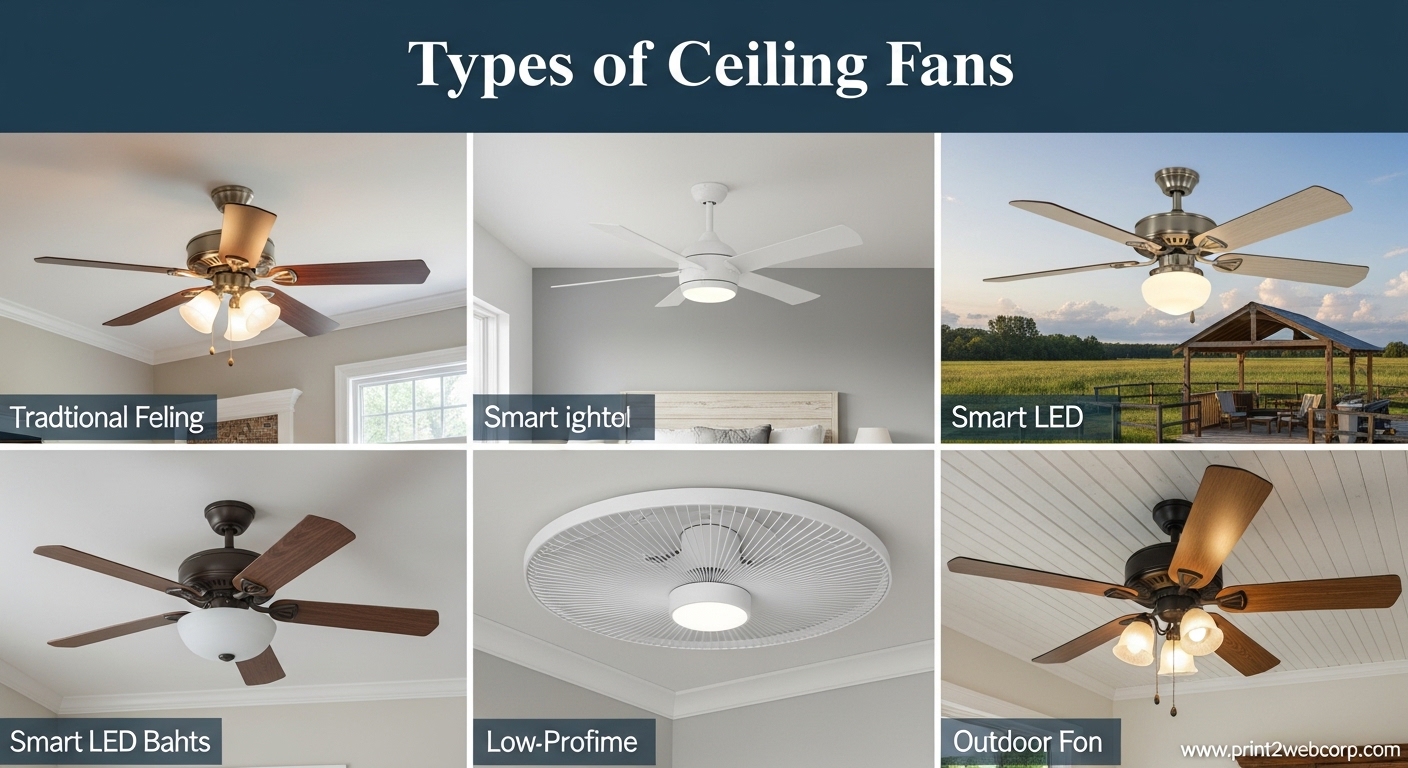
Ceiling fans have been a home staple for over a century, and for good reason. These fixtures provide year-round comfort while reducing energy costs by up to 40% when used alongside your thermostat. The right ceiling fan can transform any room’s comfort level, but choosing from the many types of ceiling fans available today can feel overwhelming.
Understanding the different types of ceiling fans helps you make an informed decision that matches your space, ceiling height, and lifestyle needs. From standard downrod models perfect for high ceilings to low-profile options designed for tighter spaces, each type serves a specific purpose.
In this comprehensive guide, we’ll break down every type of ceiling fan available in 2026, explain the key differences between AC and DC motors, and help you determine exactly which type will work best in your home.
Types of Ceiling Fans: The Complete Overview
Ceiling fans generally fall into categories based on how they mount, where they’re designed to be used, and what type of motor powers them. Here are the main types you’ll encounter:
- Standard Downrod Ceiling Fans – The traditional design with a hanging rod for high ceilings
- Low-Profile/Flush Mount Fans – Also called hugger fans, these mount directly to the ceiling
- Damp-Rated Outdoor Fans – For covered outdoor areas with humidity exposure
- Wet-Rated Outdoor Fans – For direct rain and snow exposure
- DC Motor Fans – Energy-efficient models with advanced motor technology
- Smart Ceiling Fans – Wi-Fi enabled with app and voice control
- Energy Star Certified Fans – Meeting strict efficiency guidelines
- Commercial Ceiling Fans – Large-scale models for big spaces
Standard Downrod Ceiling Fans
Standard downrod ceiling fans represent the most traditional and common type. These models feature a rod (called a downrod) that suspends the fan motor from a ceiling mount bracket. The downrod puts distance between the fan blades and the ceiling, which allows for optimal airflow circulation.
The ideal ceiling height for standard downrod fans is 9 feet or higher. The fan blades should hang approximately 8-9 feet from the floor for maximum comfort and safety. Downrods come in various lengths, typically ranging from 3 inches to 72 inches, allowing you to position the fan at the perfect height based on your ceiling.
Downrod fans excel at air circulation because the distance from the ceiling allows air to flow freely around the entire fan housing. This design creates a cone-shaped airflow pattern that effectively circulates air throughout a room. Standard fans work exceptionally well in living rooms, great rooms, bedrooms with high ceilings, and commercial spaces.
When to Choose a Downrod Fan
Downrod ceiling fans are your best choice when you have ceiling heights of 9 feet or more. The extra space allows the fan to operate efficiently without compromising headroom. If you have vaulted or angled ceilings, a downrod fan with an angled ceiling mount kit becomes essential for proper operation.
These fans also offer aesthetic advantages. The hanging design creates visual interest and can complement various interior styles, from traditional to contemporary. Many homeowners prefer the classic look of a suspended fan, especially in rooms with tall ceilings that would look empty with a flush-mount option.
Low-Profile, Flush Mount, and Hugger Ceiling Fans
Low-profile ceiling fans go by several names: flush mount fans, hugger fans, and close-to-ceiling fans. These types mount directly against the ceiling without any downrod or hanging rod. The motor housing attaches flush to the mounting bracket, minimizing the distance between the blades and ceiling.
Hugger fans are specifically designed for rooms with lower ceilings, typically 8 feet or less. Building codes require fan blades to be at least 7 feet from the floor, and flush mount fans make this possible in tighter spaces. Without a downrod, these fans typically hang just 10-12 inches from the ceiling surface.
The trade-off with hugger fans is airflow efficiency. Because the fan sits closer to the ceiling, air circulation is slightly restricted compared to downrod models. The reduced clearance can create turbulence that diminishes airflow performance. However, modern low-profile fans have improved significantly and can still provide adequate cooling for most residential rooms.
Best Applications for Hugger Fans
Low-profile ceiling fans excel in bedrooms, particularly in older homes with standard 8-foot ceilings. Many homeowners prefer flush mount fans in bedrooms for safety and peace of mind, especially in rooms where bunk beds or loft beds might bring sleepers closer to the ceiling. These fans also work well in hallways, laundry rooms, and any room where ceiling height is limited.
When choosing a hugger fan, look for models with aerodynamic blade designs that help compensate for the reduced clearance. Some manufacturers offer low-profile fans with specially shaped blades that redirect airflow more effectively than traditional flat blades.
Outdoor Ceiling Fans: Damp-Rated vs. Wet-Rated
Outdoor ceiling fans require specific construction to withstand moisture, temperature fluctuations, and exposure to the elements. Not all outdoor fans are created equal, and understanding the difference between damp-rated and wet-rated options prevents premature failure and ensures safety.
Indoor ceiling fans should never be installed outdoors. Standard fan motors and components will corrode quickly when exposed to humidity or direct moisture, leading to electrical hazards and complete fan failure. Always choose a fan rated for your specific outdoor conditions.
Damp-Rated Ceiling Fans
Damp-rated ceiling fans are designed for covered outdoor areas where the fan won’t be directly exposed to rain or snow. These locations include screened porches, covered patios, lanais, and enclosed sunrooms. Damp-rated fans can handle high humidity, temperature changes, and occasional moisture splashing, but they cannot withstand direct water contact.
The construction of damp-rated fans includes moisture-resistant finishes, sealed motor housings, and blades that won’t warp or degrade in humid conditions. These fans typically feature rust-resistant hardware and weather-resistant coatings that protect against corrosion in coastal or humid environments.
Wet-Rated Ceiling Fans
Wet-rated ceiling fans are built for direct exposure to rain, snow, and sprinkler systems. These heavy-duty fans can be installed in completely open areas like uncovered patios, pergolas, gazebos, and outdoor seating areas. Wet-rated fans feature fully sealed motors, waterproof components, and all-weather construction that won’t fail when water directly contacts the fan.
The difference in construction between damp and wet ratings is significant. Wet-rated fans use marine-grade materials, stainless steel hardware, and specially designed motor casings that prevent water intrusion even in driving rain. The blades on wet-rated fans are typically made from synthetic materials that won’t crack, warp, or fade under sun exposure and repeated wetting.
Outdoor Fan Installation Considerations
When installing outdoor ceiling fans, always use mounting hardware and electrical components rated for outdoor use. Outdoor-rated electrical boxes and corrosion-resistant fasteners are essential for safety and longevity. Consider the fan’s location carefully, even for wet-rated models, as prolonged exposure to harsh conditions may still affect the fan’s lifespan compared to protected installations.
Ceiling Fan Motor Types: AC vs DC Motors
The motor inside your ceiling fan determines performance, energy efficiency, noise level, and operating cost. Understanding the difference between AC (alternating current) and DC (direct current) motors helps you choose the right type for your needs and budget.
AC motors have been the standard in ceiling fans for decades. These motors run directly on household AC power and use more electricity to operate. DC motors represent newer technology that converts AC power to DC before reaching the motor, resulting in superior efficiency and performance.
| Feature | AC Motor Fans | DC Motor Fans |
|---|---|---|
| Energy Consumption | 60-100 watts typical | 15-35 watts typical |
| Annual Operating Cost | $15-25 per fan | $4-8 per fan |
| Noise Level | Noticeable motor hum | Nearly silent operation |
| Speed Options | 3-5 speeds typically | 6-9 speeds typically |
| Initial Cost | $80-250 typical | $150-500 typical |
| Motor Lifespan | 10-15 years | 15-20+ years |
AC Motor Ceiling Fans
AC motor ceiling fans remain popular due to their affordability and proven reliability. These motors use more electricity but cost significantly less upfront, making them attractive for budget-conscious installations. Modern AC motors have improved efficiency compared to older models, but still consume more power than DC alternatives.
The main drawbacks of AC motors include higher energy consumption and more noticeable operating noise. AC motors typically produce an audible hum, especially at lower speeds. This motor noise becomes particularly noticeable in quiet environments like bedrooms, where the constant sound can disturb light sleepers.
AC motors typically offer 3 to 5 speed settings controlled by a capacitor system. The speed change happens in steps rather than continuously, which some users find limiting when trying to find the perfect airflow level. However, AC motors are powerful and can move significant air in larger rooms.
DC Motor Ceiling Fans
DC motor ceiling fans represent the premium option in terms of technology and performance. These motors use up to 70% less electricity than comparable AC motors, resulting in substantial energy savings over the fan’s lifetime. The annual savings of $30-50 per fan means a DC motor can pay for its higher initial cost within 5-7 years through reduced electricity bills alone.
The most noticeable difference with DC motors is the near-silent operation. These motors run so quietly that you often can’t hear them at all, even on high speed. The silent operation makes DC motor fans ideal for bedrooms, home offices, nurseries, and any space where noise matters.
DC motors typically offer 6 to 9 speed settings with more precise control between speeds. The motor provides consistent torque across all speeds, maintaining good airflow even at the lowest settings. Many DC motors also offer reverse direction without a separate switch, simplifying operation for year-round use.
Smart Ceiling Fans and Technology Features
Smart ceiling fans integrate with home automation systems and offer advanced control options beyond traditional pull chains and wall switches. These fans connect to your home’s Wi-Fi network, allowing control through smartphone apps, voice commands, and automated schedules.
The integration capabilities of smart fans extend to popular platforms like Amazon Alexa, Google Assistant, Apple HomeKit, and SmartThings. This connectivity allows you to control fan speed, direction, and lighting (if equipped) using voice commands or automated routines. You can create scenes that adjust your fan based on time of day, temperature, or occupancy.
Smart Control Options
Smart ceiling fans typically offer multiple control methods. Wall controls replace traditional switches and provide manual control when your phone isn’t handy. Remote controls offer convenience from across the room, while smartphone apps provide full control from anywhere with an internet connection. Voice control through smart speakers adds hands-free operation.
Advanced smart fans include features like occupancy sensing, automatic temperature response, and learning algorithms that adjust settings based on your habits. Some models integrate with smart thermostats to optimize comfort and energy savings automatically. The fan can increase speed when the room warms and decrease when cooling kicks in, creating a balanced comfort system.
Energy Monitoring and Scheduling
Many smart ceiling fans include energy monitoring features that track electricity consumption and operating time. This data helps you understand usage patterns and optimize schedules for maximum efficiency. Scheduling features allow you to set the fan to turn on before you arrive home and turn off after bedtime, saving energy without sacrificing comfort.
The ability to control fans remotely means you never leave a fan running accidentally. Forgot to turn off the bedroom fan? A quick tap in the app handles it. Want to cool down the living room before you get home from work? Schedule the fan to start 30 minutes before arrival.
Ceiling Fan Size Guide by Room
Choosing the right size ceiling fan for your room is critical for effective air circulation and comfort. A fan that’s too small won’t move enough air to make a difference, while an oversized fan can create excessive airflow and may overwhelm the space visually.
Ceiling fan sizing is based on blade span, which is the diameter from blade tip to blade tip. The general rule is to match the blade span to your room’s square footage for optimal performance.
| Room Size (Square Feet) | Recommended Blade Span | Ideal Room Type |
|---|---|---|
| Up to 75 sq ft | 29-36 inches | Bathrooms, walk-in closets, hallways |
| 75-144 sq ft | 36-44 inches | Small bedrooms, home offices, dens |
| 144-225 sq ft | 44-54 inches | Medium bedrooms, dining rooms, kitchens |
| 225-400 sq ft | 50-62 inches | Large bedrooms, living rooms, great rooms |
| Over 400 sq ft | 62+ inches or multiple fans | Great rooms, open concept areas, commercial spaces |
Understanding CFM Ratings
CFM (cubic feet per minute) measures the volume of air a fan moves and is a more accurate indicator of performance than blade span alone. Higher CFM means more air movement and better cooling effect. When comparing fans, look for the CFM rating along with blade span to assess true performance.
Efficiency is calculated by dividing CFM by watts used. This efficiency rating tells you how much airflow you get per watt of electricity consumed. ENERGY STAR certified fans must meet minimum efficiency standards, typically moving at least 75 CFM per watt. DC motor fans often exceed this significantly, reaching 100+ CFM per watt in some models.
Ceiling Height Requirements
Beyond room size, ceiling height determines mounting style and downrod length. Building codes require fan blades to be at least 7 feet from the floor for safety. For optimal performance, aim for 8-9 feet of clearance between the floor and blades.
For ceilings 9 feet or higher, use a downrod fan with a downrod length that positions the blades 8-9 feet from the floor. Calculate the required downrod length by subtracting the fan’s mounting height plus desired blade height from your ceiling height. Example: A 12-foot ceiling with a fan that mounts 12 inches down would need a 24-inch downrod to achieve 9 feet of blade height.
Blade Design Variations
Ceiling fan blades come in various configurations that affect both performance and aesthetics. The number of blades, blade material, blade pitch, and blade shape all influence airflow efficiency and the fan’s appearance in your space.
Blade Count: 3 vs 5 Blades
The debate between 3-blade and 5-blade fans is common, but the difference in performance is minimal. Fewer blades with a steep pitch can move as much air as more blades with a shallower pitch. The motor power and blade pitch matter more than blade count alone.
Three-blade fans often appear more modern and contemporary, while five-blade fans tend to look more traditional. From a performance standpoint, well-designed 3-blade and 5-blade fans can produce equivalent airflow when powered by similar motors. The choice comes down to aesthetic preference rather than performance differences.
Fan blade counts beyond five (6, 8, or even more blades) are typically chosen for their decorative appearance rather than performance. These multi-blade designs can actually reduce efficiency because each blade creates turbulence that affects the next blade’s ability to move air effectively.
Blade Pitch and Airflow
Blade pitch refers to the angle of the blades relative to horizontal. This angle determines how much air the fan can move. Standard blade pitch ranges from 12 to 15 degrees, while high-performance fans may feature pitches of 14 degrees or more.
Higher blade pitch moves more air but requires a more powerful motor to maintain speed. Inexpensive fans with high blade pitch but weak motors often slow down under load, reducing actual airflow. Quality fans pair appropriate motor strength with blade pitch for consistent performance.
Blade Materials
Ceiling fan blades come in various materials, each with different characteristics. Wood blades offer traditional beauty and can be stained or painted to match decor. MDF (medium-density fiberboard) provides a consistent appearance at lower cost but is more susceptible to moisture damage.
Metal blades create a modern or industrial appearance and are very durable. Plastic and ABS resin blades resist moisture and work well in outdoor applications. Some high-end fans use real wood veneers over composite cores, combining the appearance of solid wood with improved stability and resistance to warping.
How to Choose the Right Types of Ceiling Fans in 2026?
Selecting the perfect ceiling fan means matching the fan type to your specific situation. Consider these key factors to narrow down the options and find the ideal fan for each room in your home.
Assess Your Ceiling Height
Ceiling height is the primary factor in determining mounting type. For ceilings 9 feet or higher, a standard downrod fan provides optimal airflow. For 8-foot ceilings, choose a low-profile or hugger fan. For vaulted or angled ceilings, look for models with angled mounting capabilities and use a longer downrod to position the blades properly.
Measure from the ceiling to the floor at multiple points if your ceiling is sloped. Use the lowest point to ensure adequate clearance. Remember that building codes require at least 7 feet of clearance, but 8-9 feet provides better comfort and safety.
Indoor vs. Outdoor Installation
Determine where the fan will be installed and choose the appropriate rating. Indoor locations work with standard ceiling fans. Covered outdoor spaces like screened porches require damp-rated fans. Uncovered areas exposed to rain and snow need wet-rated fans.
Never install an indoor-rated fan outdoors, even in a covered area. The humidity and temperature fluctuations will cause premature failure. The initial investment in a properly rated outdoor fan pays off in longevity and safe operation.
Match Fan Size to Room Dimensions
Measure your room’s square footage by multiplying length by width. Use the sizing guide to select the appropriate blade span. When in doubt between two sizes, choose the larger fan for better air movement. Larger rooms may benefit from multiple smaller fans rather than one oversized fan.
Consider furniture placement when sizing fans. A fan should be centered in the room for optimal circulation, but ensure the blades won’t hit any tall furniture or obstructions. Leave at least 18-24 inches of clearance between blade tips and walls or furniture.
Consider Motor Type and Energy Efficiency
DC motor fans cost more upfront but save money over time through reduced energy consumption. If you plan to run the fan frequently, especially in warm climates, the energy savings of a DC motor quickly offset the higher purchase price. For occasional use or guest rooms, an AC motor fan may provide sufficient performance at lower initial cost.
Look for ENERGY STAR certification when shopping. These certified fans meet strict efficiency guidelines and often qualify for utility rebates. The certification ensures you’re getting a fan that delivers maximum airflow for minimum energy consumption.
Evaluate Noise Requirements
Consider how noise-sensitive the installation location is. Bedrooms, home offices, nurseries, and media rooms benefit most from the near-silent operation of DC motor fans. Living rooms, dining areas, and kitchens can typically accommodate the slight hum of AC motors without issue.
If possible, listen to a fan operating before purchasing. Some stores have display models running, or you can research specific models for noise reviews. Forum discussions consistently highlight motor noise as a major factor in long-term satisfaction, especially for bedroom installations.
Smart Features vs. Traditional Control
Decide if smart features add value for your lifestyle. Tech-savvy homeowners who already use smart home devices will appreciate the integration and automation possibilities. Those who prefer simple operation may find traditional wall controls sufficient.
Smart fans cost more but add convenience features like scheduling, remote control, and voice commands. For hard-to-reach fans in rooms with high ceilings, smart controls eliminate the need for pull chains or adding extra wall switches. The ability to turn off forgotten fans remotely also saves energy.
Aesthetic Considerations
The ceiling fan becomes a permanent fixture in your room, so choose a style that complements your decor. Traditional homes benefit from classic designs with wood blades and bronze or brass finishes. Modern spaces look great with sleek minimalist fans in chrome, matte black, or white finishes.
Consider whether the fan includes a light kit. Many models offer integrated LED lighting, which can replace a central light fixture while providing both illumination and air circulation. Some fans allow you to install or remove the light kit as needed, providing flexibility for different locations.
FAQ’s
What are the types of ceiling fans?
The main types of ceiling fans include standard downrod fans for high ceilings, low-profile (flush mount or hugger) fans for low ceilings, damp-rated outdoor fans for covered outdoor areas, wet-rated outdoor fans for direct rain exposure, DC motor fans for energy efficiency, AC motor fans for traditional operation, smart fans with home automation features, and commercial fans for large spaces.
What are the three types of fans?
Ceiling fans are commonly categorized into three main types by mounting style: standard downrod fans that hang from a rod, low-profile (flush mount) fans that attach directly to the ceiling, and outdoor fans which include damp-rated for covered areas and wet-rated for exposed locations.
Is an AC or DC fan better?
DC motors are better for energy efficiency, noise level, and performance. DC motor ceiling fans use up to 70% less electricity than AC motors, operate nearly silently, offer more speed options, and typically last 15-20 years compared to 10-15 years for AC motors. However, DC motors cost more upfront while AC motors provide adequate performance at lower initial cost.
Which is better: downrod or hugger ceiling fan?
Downrod ceiling fans are better for rooms with 9+ foot ceilings because they provide optimal airflow circulation. Hugger (flush mount) fans are better for rooms with 8-foot ceilings or lower where headroom is limited. Downrod fans circulate air more efficiently, but hugger fans are necessary when ceiling height prevents proper clearance for a hanging fan.
How many blades on a ceiling fan is best?
The best blade count depends on design rather than a specific number. Well-designed 3-blade and 5-blade fans produce equivalent airflow when powered by similar motors. Three-blade fans often appear more modern, while 5-blade fans look more traditional. Blade pitch and motor power matter more than blade count for actual performance.
Final Recommendations
Understanding the different types of ceiling fans available in 2026 helps you make the right choice for each room in your home. Standard downrod fans work best in rooms with high ceilings, while low-profile hugger fans solve the challenge of lower ceiling heights. Outdoor spaces require properly rated damp or wet models to ensure longevity and safety.
DC motor fans represent the premium choice with superior efficiency and near-silent operation, making them ideal for bedrooms and frequently used spaces. AC motor fans provide reliable performance at lower initial costs, suitable for occasional use and budget-conscious installations. Smart fans add convenience and automation capabilities that integrate with modern home systems.
The best ceiling fan for your space balances ceiling height, room size, location (indoor vs. outdoor), energy efficiency goals, and aesthetic preferences. Use the size guide to select appropriate blade span, match the mounting type to your ceiling height, and choose the motor technology that fits your budget and usage patterns.
Invest in quality ceiling fans from reputable brands, and you’ll enjoy 15-20 years of reliable comfort. The right fan reduces your reliance on air conditioning, lowers energy bills, and keeps your home comfortable year-round with the simple flip of a switch or voice command.
Leave a Reply