
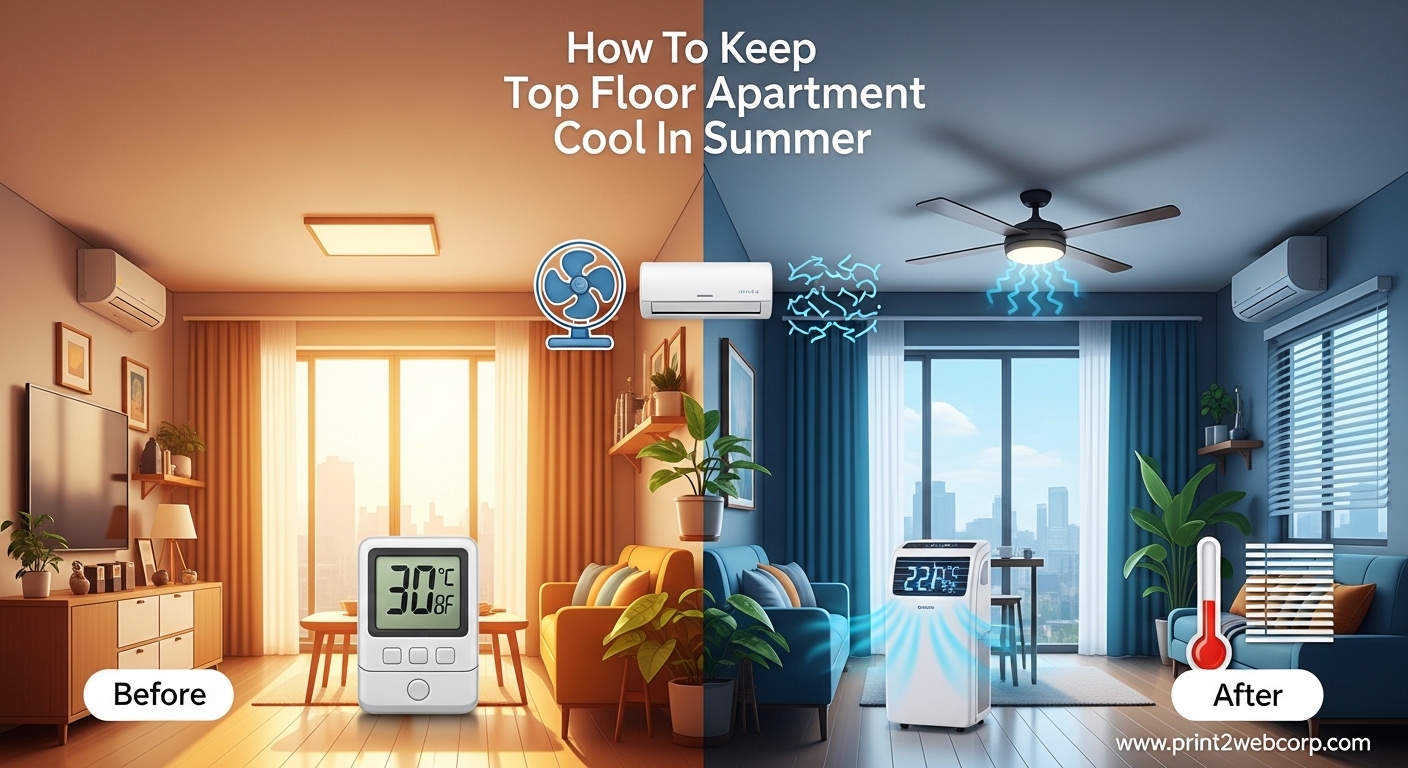
Living on the top floor has its perks. Better views, more privacy, and no noisy neighbors overhead. But when summer temperatures climb, that penthouse advantage becomes a serious disadvantage. I spent three years in a sweltering top-floor unit before learning the strategies that actually work to keep top floor apartment cool during the hottest months.
The science is straightforward. Heat rises naturally through your building, collecting in upper-level units like yours. Your roof absorbs direct sunlight all day, transferring that heat downward through the ceiling. Meanwhile, windows on multiple sides let in radiant heat from the sun’s angle. These factors combine to make top-floor apartments consistently 5-15 degrees warmer than lower floors.
After testing dozens of cooling methods through multiple heat waves, I’ve identified the strategies that make a real difference. Some cost nothing but a change in habits. Others require small investments that pay off quickly in comfort and energy savings. Here’s what actually works to keep top floor apartment cool in summer.
How To Keep Top Floor Apartment Cool in Summer
The most effective approach combines blocking heat from entering during the day and removing accumulated heat at night. This two-part strategy addresses both heat gain and heat retention. Based on my experience and recommendations from HVAC professionals, here’s the foundation of an effective cooling plan.
Block Sun and Heat (Daytime)
From 10 AM to 6 PM, keep windows closed and covered. Sunlight through windows accounts for up to 40% of unwanted heat gain in apartments. Blackout curtains with thermal backing can reduce indoor temperatures by 5-10 degrees compared to bare windows. Reflective window film applied to south and west-facing windows blocks heat while letting in light.
Close curtains on the sun-facing side of your apartment as soon as direct sunlight hits. If you’re home during the day, track the sun’s path and adjust coverage accordingly. Every hour of blocked direct sunlight prevents measurable heat buildup in your living space.
Improve Airflow and Cooling
Ceiling fans should spin counter-clockwise in summer, pushing air down to create a cooling breeze effect. This makes rooms feel 4-6 degrees cooler through wind chill alone. For maximum efficiency, run ceiling fans only in rooms you’re actually occupying. Fans cool people, not rooms, so there’s no benefit to running them in empty spaces.
Box fans placed in open windows work best at night. Position them to blow cooler outdoor air inside. During the day, if you must use fans, place them to circulate air within your apartment rather than pulling in hot outdoor air. The goal is creating airflow that helps evaporate sweat from your skin, not heating your space further.
Reduce Internal Heat Sources
Every appliance, light bulb, and electronic device generates heat. In a top-floor apartment, this internal heat accumulates quickly. Switch to LED bulbs throughout your space. They produce 90% less heat than incandescent bulbs while using a fraction of the electricity.
Kitchen heat is a major contributor. Ovens can raise your apartment temperature by several degrees during and after use. Consider low-heat cooking appliances that generate minimal warmth. Microwave cooking, slow cookers, and outdoor grilling keep your kitchen cooler during hot weather. If you must use the oven, do so early in the morning or late at night when temperatures are lower.
Electronics continue generating heat even in standby mode. Unplug devices when not in use, and consider power strips that let you kill power to entertainment centers and computer setups completely. This small change makes a surprising difference in apartment temperature.
Why Top Floor Apartments Get Hot
Understanding why your apartment gets hot helps you choose the right cooling strategies. The primary culprit is the basic physics principle that hot air rises. As air warms throughout your building, it naturally migrates upward, settling in top-floor units like yours. This effect compounds throughout the day, with each floor below contributing rising heat to your space.
Your roof plays a major role too. Unlike lower floors that have another apartment above them providing some insulation, your ceiling directly separates you from the roof surface. Roofs absorb tremendous solar heat during the day, reaching temperatures well above outdoor air temperature. This heat conducts through your ceiling and radiates into your living space long after sunset.
Windows present another heat gain challenge. Top-floor units often have windows on multiple sides, increasing exposure to direct sunlight at different times of day. Each window acts like a magnifying glass, converting solar radiation into indoor heat. The angle of summer sun means upper floors receive more direct light through windows than floors below.
Building materials also contribute. Many apartment buildings have dark roofing materials that absorb rather than reflect sunlight. Without adequate insulation between roof and living space, this heat transfers efficiently into your apartment. Older buildings are particularly susceptible, as insulation standards have improved significantly in recent decades.
Daytime Heat Blocking Strategies
The most effective cooling happens before heat enters your apartment. Blocking daytime heat gain reduces the cooling load significantly compared to trying to remove heat after it accumulates. These strategies work together to create a thermal barrier against outdoor heat.
Window Treatments That Work
Blackout curtains with thermal lining provide the best protection against heat gain through windows. Look for curtains with a white or silver backing facing the window. This reflective surface bounces sunlight back outside before it can convert to heat inside. Layer thermal curtains over cellular shades for even better insulation. The cellular structure traps air between window and living space, creating an effective thermal barrier.
Reflective window film offers a more permanent solution. Applied directly to glass, these films block up to 70% of solar heat while maintaining visibility. Gila and 3M make residential films that install in under an hour. They’re particularly effective on south and west-facing windows that receive the most intense sun exposure.
For a budget-friendly option, use cardboard or foam board cut to window size. Place these in windows during peak sun hours. The reflective insulation often used in garage door kits works exceptionally well and costs less than $20 per window. This approach may not win design awards, but it blocks heat effectively.
Timing Your Window Management
The golden rule for top-floor cooling: keep windows closed during the day. Open windows let hot outdoor air inside, where it gets trapped and accumulates. The only exception is during early morning hours before temperatures rise. If overnight temperatures dropped below 70, open windows briefly to flush out stale air and capture residual coolness. Close everything by 8 AM or as soon as outdoor temperatures start climbing.
Track which windows receive direct sunlight and when. Close curtains on the sunny side of your apartment at least an hour before direct sunlight hits. This preemptive closing prevents the greenhouse effect that occurs when sunlight enters through glass but can’t escape.
Creating Thermal Barriers
Temporary weatherstripping around windows stops hot air from infiltrating through gaps. The same draft stoppers you use in winter work equally well in summer, keeping hot air out instead of warm air in. Focus on windows that don’t seal perfectly and any obvious gaps around window frames.
If your apartment has a balcony or patio, consider outdoor shade solutions. A balcony umbrella or shade cloth prevents sun from hitting your sliding glass door directly. This reduces heat transfer through what’s often the largest window in your apartment. Every degree of heat you prevent outdoors is one less degree you need to remove indoors.
Fan Placement and Air Circulation
Fans don’t lower air temperature. They create evaporative cooling on your skin and help distribute cooler air throughout your space. Proper fan placement makes the difference between barely feeling a breeze and creating genuinely comfortable air movement. The key is strategic positioning that maximizes airflow where you need it most.
Ceiling Fan Optimization
Ceiling fans have a switch that changes blade direction. In summer, this switch should be set so blades spin counter-clockwise when viewed from below. This direction pushes air downward, creating the breeze effect you feel on your skin. Running ceiling fans clockwise in summer pulls air up without creating the cooling breeze you want.
Set ceiling fan speed to medium or high. Low speed doesn’t create enough air movement for effective cooling. Remember that fans cool people, not rooms. There’s no benefit to running ceiling fans in unoccupied rooms. Save electricity by turning them off when you leave the space.
If your ceiling fan has a light fixture, use LED bulbs only. Incandescent or halogen bulbs in ceiling fixtures generate heat that the fan then circulates throughout the room. LED bulbs produce minimal heat while providing the same illumination.
Box Fan and Window Fan Setup
Window fans work best at night when outdoor air is cooler than your apartment. For maximum effectiveness, create cross ventilation by placing fans in windows on opposite sides of your apartment. Set one fan to blow air in and another to blow air out. This setup flushes hot indoor air outside while bringing in cooler outdoor air.
During hot daytime hours, avoid using window fans to blow air in. You’ll simply be circulating hot outdoor air through your apartment. If you must use fans during the day, position them to circulate indoor air without drawing in outdoor heat. Place fans in interior doorways to move air between rooms rather than in windows pulling in hot air.
Box fans work well placed on the floor angled upward. Cooler air settles near the floor while hot air rises. Angling a fan upward helps mix these air layers, creating more even temperature distribution. This is particularly effective in rooms with high ceilings where significant temperature stratification occurs.
Creating Airflow Patterns
Think of your apartment as a system where air needs to flow freely. Keep interior doors open during cooler parts of the day to allow air circulation. Closed doors create hot pockets where heat accumulates. If privacy is needed, use door stops to create small gaps that allow airflow while maintaining separation.
Position portable fans to create a path of airflow through your living space. Rather than pointing fans directly at yourself, aim them to create general air movement in the room. Oscillating fans help distribute air more evenly than stationary models. For sleeping, place a fan near the head of your bed pointed across rather than directly at you. This creates gentle air movement without the drying effect of direct airflow.
Nighttime Cooling Techniques
Nighttime offers your best opportunity to remove accumulated heat from your apartment. Outdoor temperatures typically drop significantly after sunset, especially in areas with clear skies. This natural cooling is free and highly effective if you use it strategically. The goal is to flush out hot indoor air and replace it with cooler outdoor air before morning.
Cross Ventilation Setup
Cross ventilation requires openings on opposite sides of your apartment. When wind blows through one opening, it creates a pressure difference that pulls air in and pushes it out the other side. To maximize this effect, open windows on opposite sides of your apartment as soon as outdoor temperature drops below indoor temperature.
If your apartment layout doesn’t allow true cross ventilation, create a approximation using interior doors and fans. Open windows on one side of your apartment and place fans in windows or interior openings to encourage airflow through the space. The moving air creates evaporative cooling even without true cross ventilation.
For apartments with only one exterior wall, use exhaust fans to create airflow. If you have a bathroom or kitchen exhaust fan, run it at night to pull hot air out of your apartment. This creates negative pressure that draws cooler air in through any available openings, even small gaps around windows and doors.
The Thermal Flush Strategy
The most effective nighttime strategy is a complete air exchange. Once outdoor temperatures drop below indoor temperature, open all windows and create maximum airflow. Use window fans blowing OUT on the warmest side of your apartment and windows open for intake on the cooler side. This setup flushes out all the hot air that accumulated during the day.
Time this flush carefully. Start as soon as outdoor air feels cooler than indoor air. This might be late evening or well after dark depending on your climate. Continue the flush through the night until outdoor temperatures start rising the next morning. Then close everything quickly to trap the cool air inside.
The morning routine is equally important. Close windows and curtains before the day heats up. This traps overnight coolness inside while preventing daytime heat from entering. The early morning air exchange combined with daytime heat blocking creates the maximum temperature difference between your apartment and outdoor conditions.
Advanced Night Cooling
For particularly stubborn heat, try the ice bowl method. Place a large bowl of ice in front of a fan blowing toward your living space. As the fan blows air over the ice, it creates chilled air that can lower room temperature by several degrees. This works best in smaller spaces and provides temporary relief during the hottest parts of the evening.
Some top-floor residents have success with the bed cooling method. Place frozen water bottles in front of a fan aimed at your bed. The chilled air creates a cool zone for sleeping. Alternatively, dampen your sheets slightly and let the fan blow air over them. The evaporative cooling effect can make sleeping much more comfortable without air conditioning.
Reducing Internal Heat Sources
Your apartment generates its own heat from appliances, electronics, lighting, and daily activities. In a top-floor unit, this internal heat has nowhere to go but up, where it accumulates and makes your cooling efforts less effective. Identifying and reducing these internal heat sources is often the missing piece in an effective cooling strategy.
Kitchen Heat Management
Cooking generates significant heat. An oven can raise your kitchen temperature by 5-10 degrees during use, with that heat spreading throughout your apartment. In summer, shift cooking methods to options that produce less heat. Microwave ovens, toaster ovens, and slow cookers all generate substantially less warmth than full-size ovens.
Consider meal timing as well. If you must use the oven, do so early in the morning before your apartment heats up, or late at night after temperatures drop. This gives your apartment time to cool down again before peak heat hours. Cooking outdoors on a grill eliminates indoor heat gain entirely, though this isn’t always practical for apartment dwellers.
Dishwashers, washers, and dryers all generate heat and humidity. Run these appliances during the coolest parts of the day, ideally early morning or late evening. Air-dry dishes instead of using the dishwasher’s heat cycle. Skip the dryer when possible and hang clothes to dry. This reduces both heat and humidity in your living space.
Electronics and Lighting
Modern electronics generate substantial heat, even in standby mode. Televisions, computers, game consoles, and cable boxes all contribute to indoor temperature. Use power strips to completely disconnect electronics when not in use. This eliminates standby heat generation and reduces electricity consumption.
Lighting choices matter more than many people realize. Incandescent bulbs convert 90% of their energy to heat rather than light. Halogen bulbs are even worse, generating significant warmth. LED bulbs operate at much cooler temperatures while using a fraction of the electricity. If you haven’t already switched to LEDs throughout your apartment, this single change makes a noticeable difference in summer heat.
Position electronics strategically. Avoid placing heat-generating devices near your thermostat if you have central air. The thermostat will read the heat from electronics and run longer than necessary. Similarly, keep electronics away from areas where you’re trying to create cool zones for sleeping or relaxing.
Body Heat and Activity
Human bodies generate heat through normal metabolism and activity. Multiple people in a small apartment add significant warmth. During extreme heat, limiting vigorous activity to cooler parts of the day helps. Exercise, cleaning, and other active pursuits are better suited to early morning or evening hours.
Showering with cool water rather than hot provides two benefits. You avoid adding steam and heat to your bathroom, and cool water lowers your body temperature. This personal cooling effect makes your apartment feel more comfortable even if the actual air temperature hasn’t changed.
When to Use AC Efficiently
Sometimes fans and natural cooling aren’t enough. If you have access to air conditioning, using it strategically makes a significant difference in both comfort and energy costs. The key is understanding when and how to run AC for maximum effectiveness in a top-floor apartment.
Set your thermostat to the highest comfortable temperature. Each degree lower increases energy consumption by 3-5%. A setting of 78 degrees provides substantial cooling while keeping energy costs manageable. Use ceiling fans along with AC. The fan creates a cooling effect that lets you set the thermostat a few degrees higher while maintaining the same comfort level.
Run AC during the hottest parts of the day rather than continuously. Turning it on when outdoor temperatures peak and your apartment becomes uncomfortable is more efficient than maintaining a constant cool temperature. Supplement with overnight natural cooling to give your AC a break and reduce overall energy consumption.
If your AC unit struggles to keep up, check for simple issues first. Clean or replace filters monthly during summer. Dirty filters restrict airflow and reduce cooling efficiency by up to 15%. Ensure window units are properly sealed around the edges to prevent cool air from escaping outside. For central AC problems, you might need professional help. Check out this window AC troubleshooting guide if your unit isn’t performing optimally.
Tenant-Friendly Cooling Solutions
Many top-floor residents rent their apartments and can’t make permanent modifications. The good news is that most effective cooling strategies don’t require landlord approval. Window film, curtains, and fans are all temporary installations that you can take with you when you move. Focus on these renter-friendly approaches that work within typical lease restrictions.
If you want to make more substantial changes, consider negotiating with your landlord. Many property owners will agree to improvements that increase property value, especially if you’re willing to share the cost. Improvements like better insulation, reflective roof coating, or even a more efficient AC unit benefit future tenants too. Frame your request in terms of investment rather than personal convenience.
Document the temperature difference between your apartment and lower floors. Most landlords understand that top-floor units are harder to cool but may not realize the extent of the problem. Actual temperature readings provide concrete evidence that helps justify improvements. This approach is particularly effective if you can show that your unit is consistently 10+ degrees warmer than comparable units on lower floors.
Frequently Asked Questions
How to keep a top floor apartment cool in the summer?
Keep windows closed and covered during peak sun hours (10 AM-6 PM) with blackout curtains or reflective film. Open windows at night to flush out hot air when outdoor temperatures drop. Use ceiling fans spinning counter-clockwise to create cooling airflow. Reduce internal heat from cooking, electronics, and lighting by switching to LEDs and avoiding oven use during hot parts of the day.
Are top floor apartments hotter in summer?
Yes, top floor apartments are typically 5-15 degrees warmer than lower floors. Heat rises naturally through buildings, collecting in upper-level units. The roof absorbs direct sunlight all day, transferring heat downward through the ceiling. Top floors also have more window exposure to direct sunlight, creating additional heat gain through radiation.
How to cool a top floor apartment without AC?
Block heat entry during the day with blackout curtains and reflective window film. Keep windows closed from morning until evening. At night, create cross ventilation by opening windows on opposite sides of your apartment and using fans to flush out hot air. Use ceiling fans set to counter-clockwise direction. Reduce internal heat by switching to LED bulbs, cooking with microwaves instead of ovens, and unplugging electronics when not in use.
Why is my upstairs apartment always hot?
Your apartment gets hot through three main mechanisms: heat rising from lower floors collects in upper-level units, radiant heat from the sun-baked roof transfers through your ceiling, and direct sunlight through multiple windows creates greenhouse effect heat gain. Building materials absorb heat throughout the day and release it slowly at night, keeping your apartment warm even after outdoor temperatures drop.
Conclusion
Keeping a top floor apartment cool in summer requires a comprehensive approach. Block heat entry during the day with blackout curtains and window film. Remove accumulated heat at night through cross ventilation and strategic fan use. Reduce internal heat sources by switching to cooler lighting and cooking methods. These strategies work together to create a noticeably cooler living space without relying entirely on air conditioning.
The methods I’ve outlined work for any top-floor apartment, regardless of whether you rent or own. Start with the free approaches like window management and ceiling fan optimization. Add temporary solutions like blackout curtains and window film as your budget allows. Every improvement builds on the others, creating cumulative cooling effects that transform your apartment from unbearable to comfortable.
Consistency matters more than any single technique. Following these guidelines daily throughout summer keeps heat from accumulating to overwhelming levels. Your apartment will still be warmer than lower floors, but it doesn’t have to be miserable. With the right combination of heat blocking, ventilation, and internal heat reduction, you can stay comfortable all summer long.
Leave a Reply