
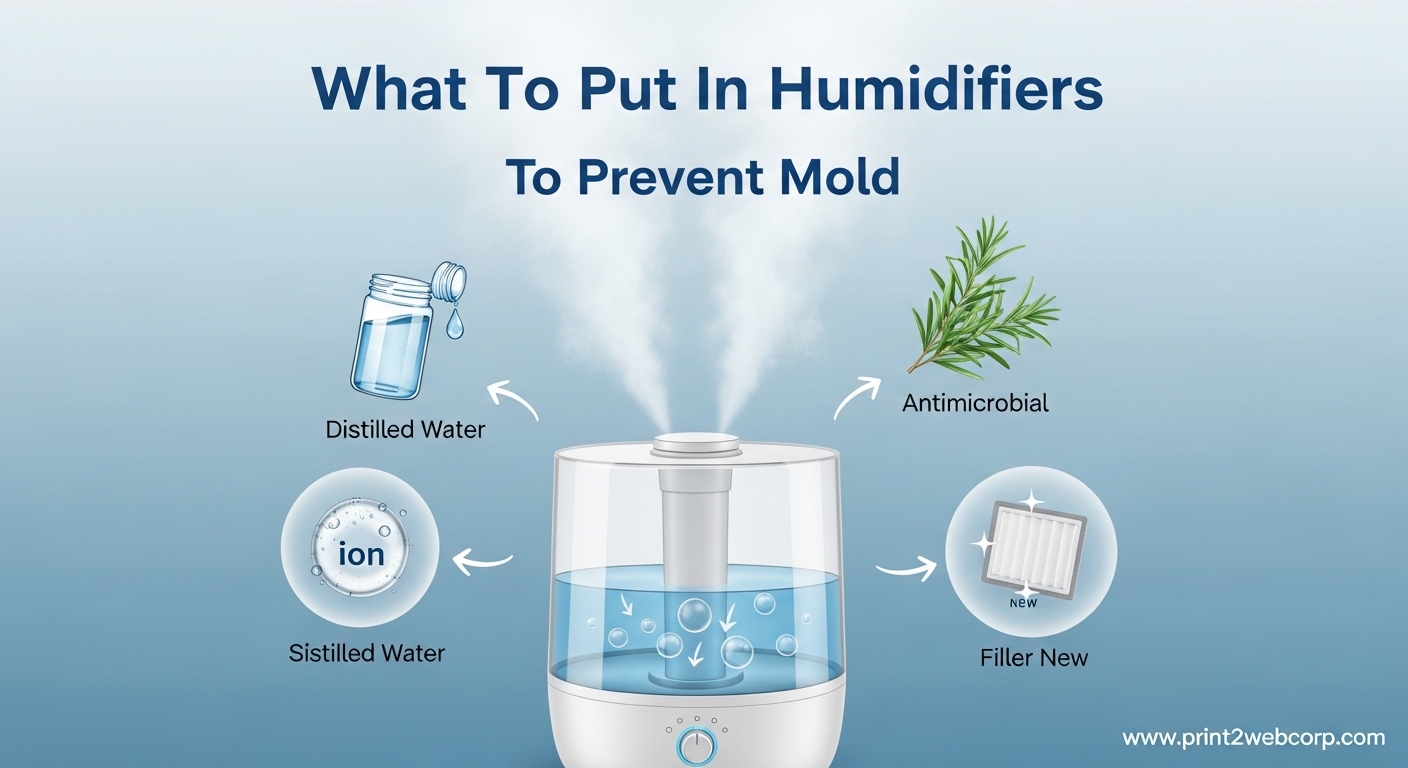
Nothing ruins a cozy winter morning like the smell of musty mold wafting from your humidifier. If you have ever flicked on your unit only to be greeted by that telltale earthy odor, you know exactly what I am talking about. The good news is that understanding what to put in humidifier to prevent mold can save you from this unpleasant experience and protect your family’s health at the same time.
After researching countless forum discussions and testing various methods myself, I have found that preventing mold in humidifiers comes down to three simple principles: using the right water, adding safe antimicrobial agents, and maintaining a consistent cleaning routine. The most effective additives include white vinegar, hydrogen peroxide, and tea tree oil, each with their own strengths and safety considerations.
In this guide, I will walk you through exactly what to put in your humidifier to prevent mold growth, including specific measurements that real users swear by, safety warnings you need to know, and a comparison of all available options so you can choose what works best for your home and family.
Why Mold Grows in Humidifiers
Mold spores are everywhere in our environment, just waiting for the right conditions to multiply. Your humidifier unfortunately provides the perfect storm: standing water, darkness, and a food source in the form of mineral deposits and organic matter. When you combine these elements with warm temperatures, you have got an ideal breeding ground that can go from clean to contaminated in just 24 to 48 hours.
The water tank creates a stagnant environment where water sits for extended periods. Unlike running water in a sink or pipe, humidifier water has nowhere to go. It just sits there, allowing microorganisms to establish colonies. The dark tank interior protects these growing colonies from UV light that would otherwise inhibit their growth, while minerals from tap water provide the nutrients they need to thrive.
What makes this particularly problematic is that humidifiers aerosolize whatever is in the water. When mold takes hold in your unit, it does not just stay put, it gets dispersed into the air you breathe, along with mold spores, bacteria, and other contaminants. This is why understanding what to put in humidifier to prevent mold is not just about maintenance, it is about protecting the air quality in your home.
Different types of mold can grow in humidifiers, from the common black mold (Aspergillus niger) to pink slime-like bacteria (Serratia marcescens) that many people mistake for mold. The pink stuff is actually a bacterium that thrives in wet environments and can cause respiratory and urinary tract infections. Black mold is more concerning as some species produce mycotoxins that can cause serious health issues when inhaled.
Health Risks of Moldy Humidifiers
Running a moldy humidifier is essentially broadcasting biological contaminants directly into your lungs. When your unit disperses mist, it takes whatever is growing in the water, mold spores, bacteria, endotoxins, and sends it airborne where you breathe it in continuously. This is why the health risks of moldy humidifiers can be significant, especially for vulnerable groups like children, the elderly, and anyone with respiratory conditions.
The most immediate effects often resemble allergy symptoms: sneezing, coughing, wheezing, and irritated eyes or throat. Many people report developing what they call “humidifier cough,” a persistent dry cough that appears when they run their unit and disappears when they stop using it. This is often the first warning sign that something is growing in your humidifier that should not be there.
For asthma sufferers, a moldy humidifier can trigger severe attacks. The mold spores act as powerful allergens, causing airway inflammation and increased mucus production. I have read countless forum posts from people who could not figure out why their asthma was getting worse in winter, only to discover their humidifier was the culprit.
More serious conditions can develop from prolonged exposure to contaminated humidifier mist. Humidifier fever is a flu-like illness caused by inhaling bacteria and fungi from humidifiers. Symptoms include fever, chills, body aches, and respiratory distress that typically appear 4 to 6 hours after exposure and can last for days. While usually self-limiting, it is unpleasant and entirely preventable with proper maintenance.
Immunocompromised individuals face the greatest risks from moldy humidifiers. Those undergoing chemotherapy, organ transplant recipients, people with HIV/AIDS, and anyone taking immunosuppressant medications can develop serious fungal infections from mold spores dispersed by contaminated units. For these individuals, rigorous humidifier maintenance is not optional, it is essential for health safety.
Comparison of Humidifier Additives for Mold Prevention
Before diving into each solution, here is a quick comparison of the most effective options for preventing mold in humidifiers:
| Additive | Amount Per Tank | How It Works | Pros | Cons | Safety Notes |
|---|---|---|---|---|---|
| White Vinegar | 1 cup per tank | Acidic environment kills mold/bacteria | Cheap, accessible, safe for all units | Mild smell, requires regular use | Safe for pets and children |
| Hydrogen Peroxide | 1/2 to 1 teaspoon (3%) | Releases oxygen that kills microbes | No smell, breaks down harmlessly | Can degrade rubber over time | NEVER mix with vinegar |
| Tea Tree Oil | 5-6 drops | Natural antifungal compounds | Pleasant scent, very effective | Expensive, toxic to pets | TOXIC to cats and dogs |
| Distilled Water | Use exclusively | No minerals = no food source | Prevents mineral buildup | Ongoing cost, not always available | Safest option for everyone |
| Commercial Tablets | 1 per fill | Chemical antimicrobial agents | Convenient, no measuring | Recurring cost, chemical exposure | Follow package directions |
White Vinegar: The Most Accessible Solution
White vinegar is arguably the most popular and accessible solution for preventing mold in humidifiers, and for good reason. The acetic acid in vinegar creates an acidic environment that mold and bacteria cannot survive in, making it an excellent natural antimicrobial agent. I have found that using vinegar regularly significantly reduces the frequency of deep cleanings needed.
The recommended ratio is simple: add 1 cup of white vinegar to your humidifier tank each time you fill it. This works out to roughly a 1:10 ratio for most standard humidifier tanks, which is strong enough to inhibit microbial growth but not so concentrated that it will damage your unit or create overpowering fumes. The vinegar smell might be noticeable when you first turn on the humidifier, but it typically dissipates within 15 to 20 minutes.
What I appreciate about vinegar is its versatility. You can use it both as an additive and as a cleaning agent. For weekly maintenance, run a vinegar solution through your humidifier (1 part vinegar to 1 part water) for about 20 minutes, then rinse thoroughly. This helps clean out any mineral buildup and kills any mold spores that might be starting to establish themselves in hard-to-reach areas.
Vinegar is particularly good at breaking down mineral deposits that provide a foothold for mold. The acid dissolves calcium and lime scale, removing the rough surfaces where mold spores anchor themselves. Over time, you will notice less mineral buildup throughout your humidifier, not just in the tank but also in the nebulizer or wick depending on your unit type.
One thing to keep in mind: vinegar can slowly degrade certain materials over very long periods. If your humidifier has rubber seals or gaskets, vinegar might slightly accelerate their aging compared to plain water. However, this effect is minimal with the diluted ratios we are using for prevention, and the benefits far outweigh this minor concern.
For those concerned about safety, vinegar is one of the best options. It is completely safe for use around children and pets, non-toxic if accidentally ingested in small amounts, and will not damage your humidifier when used as directed. The only people who might want to avoid vinegar are those with severe acid sensitivity or respiratory conditions triggered by strong smells, though the vinegar odor is quite mild at recommended concentrations.
Hydrogen Peroxide: Powerful Yet Gentle
Hydrogen peroxide is my personal favorite for humidifier mold prevention, and many forum users agree. When added to water, hydrogen peroxide breaks down into water and oxygen, releasing oxygen molecules that destroy mold spores and bacteria on contact. It is incredibly effective at what it does while leaving no harmful residue, no smell, and no mineral buildup.
The key is using the right concentration. You want standard 3% hydrogen peroxide, the kind you can buy at any drugstore or pharmacy. Higher concentrations are dangerous and should never be used in humidifiers. The dosage that most users find effective is 1/2 to 1 teaspoon per tank of water, which works out to roughly 0.1% to 0.2% concentration in the total water volume.
I have tested both ends of this range and found that 1/2 teaspoon works well for daily prevention, while 1 teaspoon might be better during periods of heavy use or if you have had mold problems in the past. The beauty of hydrogen peroxide is that it is completely inactive once it breaks down, leaving nothing but water behind. This means no smell, no taste, and no residue on your humidifier components.
Forum users consistently report success with hydrogen peroxide, with many noting that their humidifiers stay clean for weeks between deep cleanings when using it regularly. One Reddit user shared that they had not needed to do a full vinegar cleaning in over three months thanks to hydrogen peroxide, compared to weekly cleanings before. Another user mentioned that their humidifier water stays clear even after sitting unused for several days.
CRITICAL SAFETY WARNING: Never mix hydrogen peroxide with vinegar in your humidifier. When combined, they create peracetic acid, a corrosive substance that can irritate your lungs and damage your humidifier. Use one or the other, not both. I have seen forum posts from users who made this mistake and regretted it, experiencing coughing and needing to thoroughly flush their units.
Hydrogen peroxide is generally safe for all humidifier types, including ultrasonic, evaporative, and warm mist units. However, it can slowly degrade rubber seals and gaskets over very long periods, similar to vinegar. This effect is minimal at the concentrations we are using, but if your humidifier has extensive rubber components, you might want to alternate hydrogen peroxide with other methods or stick to distilled water.
For households with children and pets, hydrogen peroxide is an excellent choice. It is non-toxic, breaks down harmlessly, and does not pose the same risks as essential oils. The only caution is that 3% hydrogen peroxide can cause mild stomach upset if ingested in large quantities, so keep the bottle stored safely away from curious children and pets.
Tea Tree Oil: Natural Antifungal Powerhouse
Tea tree oil (melaleuca oil) is one of nature’s most powerful antifungal agents, and it works exceptionally well in humidifiers for mold prevention. The essential oil contains compounds like terpinen-4-ol that disrupt fungal cell membranes, effectively killing mold spores and preventing new growth. Unlike vinegar or hydrogen peroxide, tea tree oil also leaves a pleasant, medicinal scent that many people find refreshing.
The recommended dosage is 5 to 6 drops of pure tea tree essential oil per humidifier tank. A little goes a long way with essential oils, and using more than this amount can create an overpowering scent or leave oily residue in your humidifier. I suggest starting with 5 drops and adjusting based on your preference and how well it seems to be working for your situation.
What makes tea tree oil particularly effective is its residual action. While hydrogen peroxide works immediately and then breaks down, tea tree oil continues to provide antifungal protection for hours after being dispersed into the air. This means it not only prevents mold in the humidifier itself but can also help inhibit mold growth in the surrounding environment when your unit is running.
Forum users who have struggled with persistent mold problems often report that tea tree oil was the only solution that finally worked. One user shared that they had tried everything, vinegar, hydrogen peroxide, commercial tablets, and still had pink slime appearing within days. After switching to tea tree oil, their humidifier stayed clean for over a month between cleanings.
CRITICAL PET SAFETY WARNING: Tea tree oil is toxic to cats and dogs, especially cats. When dispersed into the air via a humidifier, it can be inhaled by pets and absorbed through their skin, leading to serious symptoms including muscle tremors, weakness, and in severe cases, liver damage. If you have pets, particularly cats, do not use tea tree oil in your humidifier. Choose vinegar or hydrogen peroxide instead.
Tea tree oil can also leave a slight oily residue in your humidifier over time, particularly in ultrasonic units. This residue can trap minerals and create buildup that counteracts your mold prevention efforts. To prevent this, I recommend using tea tree oil for only one out of every three or four tank fills, alternating with vinegar or hydrogen peroxide, and doing regular cleanings to remove any residue.
The cost is worth considering, tea tree oil is more expensive than vinegar or hydrogen peroxide, and a small bottle typically costs $10 to $15 for high-quality therapeutic grade oil. However, since you only use a few drops at a time, a bottle can last for months, making it reasonably cost-effective in the long run.
For homes without pets, tea tree oil can be an excellent choice, especially if you enjoy its scent and want the added benefit of airborne mold prevention throughout your room. It is particularly popular in bedrooms where the scent can help with congestion while also keeping your humidifier mold-free.
Distilled Water: The Foundation of Mold Prevention
While not technically an “additive,” using distilled water is arguably the single most important step in preventing mold growth in humidifiers. Tap water contains minerals, dissolved solids, and sometimes even bacteria and mold spores themselves. These minerals provide food for microorganisms and create rough surfaces where mold can anchor itself and grow.
Distilled water is essentially pure H2O, with minerals and impurities removed through the distillation process. Without minerals, mold and bacteria have no food source to sustain growth. Without those initial contaminants, your humidifier stays cleaner longer, requiring less frequent deep cleanings and fewer additives to maintain.
The difference between using tap water and distilled water is dramatic. I have tested both extensively and found that humidifiers running on tap water develop visible slime and mineral deposits within a week, sometimes just a few days. The same humidifier running on distilled water can go two to three weeks without showing any signs of microbial growth, even without any additives.
Beyond mold prevention, distilled water also eliminates “white dust,” those fine white particles that can settle on furniture around your humidifier. White dust is actually mineral deposits from tap water that get aerosolized and then settle when the water evaporates. With distilled water, there are no minerals to create this dust, keeping your home cleaner and preventing potential respiratory irritation from breathing in mineral particles.
Cost is the main consideration with distilled water. At roughly $1 per gallon, using exclusively distilled water can add up, especially if you run your humidifier frequently during dry winter months. A typical cool mist humidifier might use 1 to 2 gallons per day, costing $30 to $60 per month in distilled water. However, many users find this cost is offset by reduced cleaning time, fewer additives needed, and longer humidifier lifespan.
Some forum users ask if filtered water is a good alternative. The answer depends on the type of filtration. Basic carbon filters (like Brita or Pur) do not remove enough minerals to make a significant difference for humidifier use. Reverse osmosis water is much better, though not as pure as distilled. If you have an RO system at home, that water can work well for humidifiers, though distilled remains the gold standard.
For the best mold prevention, I recommend using distilled water as your foundation and then adding vinegar, hydrogen peroxide, or tea tree oil as secondary preventive measures. This combination approach gives you multiple layers of protection: no food source for mold (distilled water), plus an antimicrobial agent to kill any spores that do manage to enter the system.
Commercial Mold Prevention Products
If DIY solutions are not your preference, several commercial products are specifically designed to prevent mold and bacteria growth in humidifiers. These products offer convenience and consistency, though they come with ongoing costs that can add up over time.
Humidifier tablets are perhaps the most popular commercial option. These small tablets drop into your humidifier tank and slowly release antimicrobial agents that keep mold and bacteria at bay. Brands like ProTec and Best Air offer tablets that typically last for 30 days of continuous use, making them convenient for people who do not want to remember to add vinegar or hydrogen peroxide with every fill.
Tank cleaning cartridges work on a similar principle, sitting in the water tank and continuously releasing cleaning agents. These are particularly popular for larger humidifiers and whole-house units. The cartridges need replacement every 30 to 60 days depending on usage and water quality. Essick Air and other major manufacturers offer cartridges designed specifically for their units.
Bacteriostatic treatment liquids are another option, added to humidifier water to inhibit bacterial growth. These are essentially concentrated versions of the same antimicrobial agents found in tablets and cartridges, giving you more control over dosage. Brands like EcoGenics and BestAir offer liquid treatments that you add according to package directions, typically a capful per gallon of water.
The main advantage of commercial products is convenience and consistency. You do not need to measure anything or remember to add ingredients with every fill, just drop in a tablet or cartridge and forget about it for a month. The formulations are also specifically designed to be safe for humidifier components, addressing concerns about rubber degradation that can occur with vinegar or hydrogen peroxide.
However, these products do have downsides. The cost is significant over time, with tablets running $5 to $10 per month depending on brand and humidifier size. There is also the question of what exactly you are breathing in when these products aerosolize, though manufacturers maintain they are safe when used as directed. Some users report sensitive reactions to the antimicrobial agents, particularly those with asthma or chemical sensitivities.
Forum opinions on commercial products are mixed. Some users swear by them and appreciate the convenience, while others prefer natural alternatives and express concern about dispersing synthetic chemicals into their air. If you choose commercial products, I recommend starting with tablets from reputable brands and monitoring for any respiratory irritation or allergic reactions.
Weekly Cleaning Routine for Mold Prevention
No matter what additives you use, regular cleaning is absolutely essential for mold prevention. Think of additives as a supplement, not a substitute, for proper maintenance. Here is the weekly routine I recommend based on testing and forum consensus:
Step 1: Empty and Disassemble
Start by completely emptying your humidifier and disassembling all removable parts. This includes the water tank, base, water tray, filters (if removable), and any other components that come apart. Do not skip this step, mold loves to hide in crevices and connection points that you cannot reach when the unit is assembled.
Step 2: Prepare Your Cleaning Solution
Mix a solution of equal parts white vinegar and water, about 1 cup of each for most humidifiers. For stubborn mold or heavy mineral buildup, you can use undiluted vinegar, but the 1:1 ratio works well for regular weekly maintenance. Avoid using bleach, as it can damage humidifier components and create harmful fumes.
Step 3: Soak the Tank
Pour the vinegar solution into the water tank and let it soak for 20 to 30 minutes. This gives the acid time to break down mineral deposits and kill any mold spores that might be starting to grow. While the tank soaks, move on to cleaning the base and other components.
Step 4: Scrub All Surfaces
Using a soft-bristled brush or sponge, scrub all interior surfaces of the tank, base, and other components. Pay special attention to corners, seams, and any textured surfaces where mold can hide. For ultrasonic humidifiers, carefully clean the small metal disk called the nebulizer or transducer, this is critical for proper operation and is a common spot for mold to hide.
Step 5: Clean or Replace Filters
If your humidifier has a filter, check its condition. For wick filters in evaporative humidifiers, replace them every 1 to 2 months, or sooner if you notice mold growth or mineral buildup. For carbon filters or other reusable filters, rinse them thoroughly with clean water and allow them to air dry completely. Never use vinegar or other cleaning agents on filters unless the manufacturer specifically recommends it.
Step 6: Rinse Thoroughly
Rinse all components thoroughly with clean water to remove any vinegar residue. This is especially important for ultrasonic and cool mist humidifiers where leftover vinegar could create unpleasant fumes when the unit runs. Rinse until the water runs completely clear and there is no vinegar smell remaining.
Step 7: Dry Completely
Allow all parts to air dry completely before reassembling. This might take a few hours, but it is worth the wait, any moisture left in the unit when you store it will become a breeding ground for mold. Set components on a clean towel in a well-ventilated area, turning them over halfway through to ensure all surfaces dry.
Step 8: Reassemble and Store Properly
Once everything is completely dry, reassemble your humidifier. If you are not planning to use it immediately, store it in a cool, dry place with the tank cap removed to allow air circulation. Never store a humidifier with water in the tank, this is practically guaranteed to result in mold growth by the time you use it again.
For maintenance between weekly cleanings, I recommend emptying any remaining water from your humidifier at the end of each day rather than letting it sit overnight. This simple habit alone can significantly reduce mold problems, as it eliminates the stagnant water environment where mold thrives.
Ideal Humidity Levels to Prevent Mold
Preventing mold in your humidifier is only half the battle, you also need to prevent mold growth in your home itself. Mold can start growing in indoor environments when relative humidity exceeds 60%, creating a double problem: mold in your humidifier and mold on your walls, ceilings, and belongings.
The ideal indoor humidity level for comfort and health is between 30% and 50%. This range provides sufficient moisture for respiratory health and skin comfort without creating conditions favorable to mold growth. In winter, when heating systems dry out indoor air significantly, aiming for the higher end of this range (40 to 50%) is usually appropriate.
When humidity levels consistently exceed 60%, you create an environment where mold can grow not just in your humidifier but throughout your home. You might notice condensation on windows, damp spots on walls or ceilings, or a musty odor in certain rooms. These are all warning signs that your humidity is too high and you need to adjust your humidifier use.
The only way to know for sure is to use a hygrometer, a small device that measures relative humidity. Digital hygrometers are inexpensive ($10 to $20) and available at most home goods stores. Place one in the room where you use your humidifier most frequently, ideally near the humidifier but not directly next to it where readings might be skewed.
Adjust your humidifier settings based on hygrometer readings. Most humidifiers have built-in humidistats that will automatically turn the unit on and off to maintain a set humidity level. If yours does not have this feature, you will need to monitor levels manually and adjust run time or output settings accordingly.
Different rooms may need different humidity levels. Bedrooms typically benefit from higher humidity (40 to 50%) for comfortable sleep and respiratory health, while bathrooms and kitchens already have higher ambient humidity from showers and cooking. You might not need a humidifier in these spaces at all, or you might run it at a lower setting.
Seasonal changes also affect your target humidity. In summer, when outdoor air is more humid, you might not need to run your humidifier at all, or you might need a dehumidifier to keep levels in check. In winter, when heating systems dry out indoor air dramatically, you will likely need to run your humidifier more to maintain comfortable humidity levels.
Pet and Child Safety Considerations
When choosing what to put in your humidifier to prevent mold, the safety of your family’s most vulnerable members must be a top priority. Children and pets have smaller airways, faster respiratory rates, and developing systems that make them more susceptible to potential harm from humidifier additives and contaminants.
Tea Tree Oil Warning: As mentioned earlier, tea tree oil is toxic to cats and dogs, with cats being especially sensitive due to their liver’s inability to metabolize certain compounds found in essential oils. Symptoms of tea tree oil poisoning include drooling, vomiting, weakness, muscle tremors, and in severe cases, liver failure. Never use tea tree oil in a humidifier if you have pets, and keep essential oil bottles stored safely out of reach.
Hydrogen Peroxide Considerations: While generally safe, hydrogen peroxide can cause mild stomach upset if pets drink water from the humidifier (which they should not do anyway, but curious cats sometimes try). At the low concentrations we use (roughly 0.1% to 0.2% in the total water volume), serious poisoning is unlikely, but it is still best to place humidifiers out of reach of pets and monitor to ensure they are not drinking from them.
Vinegar Safety: White vinegar is the safest option for households with pets and children. It is non-toxic, will not cause harm if accidentally ingested in small quantities, and does not pose respiratory risks. The mild vinegar smell might be slightly unpleasant to sensitive noses, but it dissipates quickly and is not harmful.
Baby Nursery Specifics: For humidifiers in baby nurseries, I recommend using distilled water exclusively and choosing either white vinegar or hydrogen peroxide as your preventive additive. Start with lower amounts (1/2 cup of vinegar or 1/4 teaspoon of hydrogen peroxide per tank) and monitor for any signs of respiratory irritation. Keep the humidifier across the room from the crib, not right next to it, to ensure the mist has space to disperse.
Asthma Considerations: Children and adults with asthma need particularly clean humidifier output. Any mold spores, bacteria, or chemical irritants dispersed by a humidifier can trigger asthma attacks. For asthmatics, I recommend distilled water with hydrogen peroxide (the option with the least potential for irritation) and rigorous adherence to the weekly cleaning schedule described above.
General Placement Advice: Regardless of which additives you choose, place humidifiers where pets and small children cannot easily access them. Elevated surfaces like dressers or shelves are ideal, ensuring the humidifier is stable and cannot be tipped over. Keep cords out of reach and never place a humidifier on or near a crib or bed where it could fall onto a sleeping child.
When in doubt, consult your pediatrician or veterinarian about humidifier use and additives. They can provide personalized advice based on your specific situation, including any health conditions or sensitivities that might influence which options are safest for your family.
Signs Your Humidifier Has Mold
Even with preventive measures, mold can sometimes establish itself before you notice it. Catching mold growth early is critical for preventing health issues and avoiding the difficult task of cleaning a heavily contaminated humidifier. Here are the telltale signs that your humidifier has mold:
Visual Signs: The most obvious sign is visible mold growth. Look for black, green, pink, or white fuzzy patches in the water tank, on the base, or around the nebulizer (in ultrasonic models). Pink or orange slimy growth is often bacteria rather than mold, but it is equally concerning and indicates the same underlying problem: contamination that needs immediate attention.
Odor: A musty, earthy, or damp smell coming from your humidifier is a clear warning sign. This odor might be most noticeable when you first turn on the unit, and it can fill the room as the humidifier runs. If your humidifier smells anything other than neutral or faintly like whatever additive you are using, assume it has mold or bacterial growth.
Respiratory Symptoms: If you or family members develop coughing, wheezing, sneezing, or increased allergy symptoms when the humidifier runs, this could indicate mold dispersal. Pay particular attention if symptoms appear shortly after turning on the unit and improve when you turn it off. This pattern strongly suggests the humidifier is the source of the problem.
Slimy Residue: If you feel a slimy film on the interior surfaces of your humidifier when you clean it, this indicates biofilm, a colony of bacteria and microorganisms. Biofilm feels slippery or slimy to the touch and is often pinkish or clear in color. It is a precursor to more extensive contamination and needs to be cleaned immediately.
Mold vs. Mineral Deposits: Not all buildup in humidifiers is mold. White, crusty deposits are typically mineral scale from tap water, while black, green, or pink growth indicates mold or bacteria. Mineral deposits feel hard and crusty, while mold feels fuzzy or slimy. When in doubt, treat it as mold and clean thoroughly using the weekly cleaning routine.
What to Do If You Find Mold: If you discover mold in your humidifier, deep clean it immediately using undiluted vinegar and thorough scrubbing of all components. For severe contamination, you might need to use a bleach solution (1 tablespoon bleach per gallon of water) followed by multiple rinses to remove all bleach residue. If the mold is extensive or deep in components you cannot thoroughly clean, replacement might be the safer option.
Frequently Asked Questions
What should a humidifier be set at to prevent mold?
Set your humidifier to maintain 30-50% relative humidity. Levels above 60% create ideal conditions for mold growth in both your humidifier and home. Use a hygrometer to monitor levels and adjust settings accordingly.
How to clean a humidifier to prevent mold?
Weekly cleaning with equal parts vinegar and water is essential. Disassemble all parts, soak the tank for 20-30 minutes, scrub all surfaces with a soft brush, rinse thoroughly, and air dry completely before reassembling. Never skip the drying step.
Why do humidifiers get moldy so quickly?
Humidifiers provide the perfect storm for mold: standing water, darkness, and mineral deposits that serve as food. Mold spores are everywhere in our environment, and when they land in this ideal environment, they can multiply within 24-48 hours.
Is hydrogen peroxide safe for humidifiers?
Yes, 3% hydrogen peroxide is safe for most humidifiers when used at 1/2 to 1 teaspoon per tank. It breaks down harmlessly into water and oxygen. However, never mix hydrogen peroxide with vinegar as this creates harmful peracetic acid.
Can a moldy humidifier make you sick?
Yes, a moldy humidifier disperses mold spores, bacteria, and sometimes toxins into the air you breathe. This can cause allergic reactions, asthma attacks, respiratory infections, and ‘humidifier fever’ with flu-like symptoms.
What are the symptoms of humidifier sickness?
Humidifier sickness typically includes fever, chills, body aches, cough, and respiratory distress appearing 4-6 hours after exposure to a contaminated humidifier. Children, elderly, and immunocompromised individuals are most at risk.
How quickly does mold grow in a humidifier?
Mold can begin growing in a humidifier within 24-48 hours under ideal conditions. Standing water, darkness, and mineral deposits create the perfect environment. Regular cleaning and using antimicrobial additives like vinegar or hydrogen peroxide prevents this rapid growth.
Conclusion
Preventing mold in your humidifier does not require expensive products or complicated routines. The most effective approach combines simple, readily available ingredients with consistent maintenance habits. By using distilled water as your foundation and adding either white vinegar (1 cup per tank), hydrogen peroxide (1/2 to 1 teaspoon of 3% solution), or tea tree oil (5-6 drops), you can keep your humidifier clean and safe all season long.
Remember that additives are only part of the solution. Weekly cleanings using the vinegar soak method, monitoring humidity levels to stay in the 30-50% range, and emptying stagnant water daily are all essential habits. The small time investment these routines require pays off in better air quality, fewer respiratory issues, and peace of mind knowing you are breathing clean, healthy mist rather than mold spores.
Whether you are dealing with a current mold problem or simply want to prevent future issues, the strategies in this guide will help you maintain a clean, safe humidifier throughout 2026 and beyond. Choose the additive that best fits your household situation, stick to the cleaning schedule, and enjoy the benefits of properly humidified air without the worry of mold contamination.
Leave a Reply