
Nothing kills a summer afternoon faster than your AC shutting down and water pooling around your indoor unit. I’ve been there, and it’s usually a clogged condensate drain line causing all the trouble. Learning how to unclog an AC drain line yourself can save you a service call and prevent thousands in water damage.
Your air conditioner pulls moisture from the air as it cools your home. This water collects in a drain pan and flows out through a PVC pipe called the condensate drain line. Over time, algae, mold, and sludge build up inside this narrow pipe until water backs up into your home.
The good news is that most AC drain clogs are DIY-friendly projects you can tackle in under an hour with basic tools. I’ll walk you through exactly how to unclog an AC drain line, what causes these clogs in the first place, and how to keep them from coming back.
What Is an AC Drain Line and Why Does It Clog?
An AC drain line is a PVC pipe that carries condensation away from your air conditioning system. Every time your AC runs, it pulls humidity from the air which creates water droplets on the cold evaporator coil. This water drips into a collection pan and flows out through the drain line to the outside of your home.
In humid climates, this system moves gallons of water daily. All that moisture combined with dark PVC piping creates the perfect environment for algae and mold growth. The slimy buildup accumulates slowly over months until the narrow pipe becomes completely blocked.
Debris like dust, pollen, and insulation particles can also enter the line and contribute to clogs. I’ve even seen insect nests partially blocking drain openings on exterior walls. The combination of biological growth and physical debris is why most drain line problems develop gradually during the cooling season.
How Do I Tell If My AC Drain Line Is Clogged?
A clogged drain line gives you several warning signs before causing major problems. The most obvious indicator is water pooling around your indoor air handler or furnace. You might notice water stains on ceilings or walls near where your AC unit is located.
Many modern AC systems have a float switch that shuts down the unit when water backs up. If your AC suddenly stops cooling and won’t turn back on, a clogged drain line could be the culprit. This safety feature prevents overflow but leaves you without cooling until the problem is fixed.
Musty odors coming from your vents often signal mold growth in the drain line or standing water in the drain pan. You might also notice increased humidity inside your home since your AC can’t properly remove moisture when the drain is blocked.
Water dripping from the secondary drain line (usually located near an exterior eave) is another red flag. This backup system activates when the primary line clogs, and seeing water here means your main drain needs immediate attention.
Safety First: Before You Begin
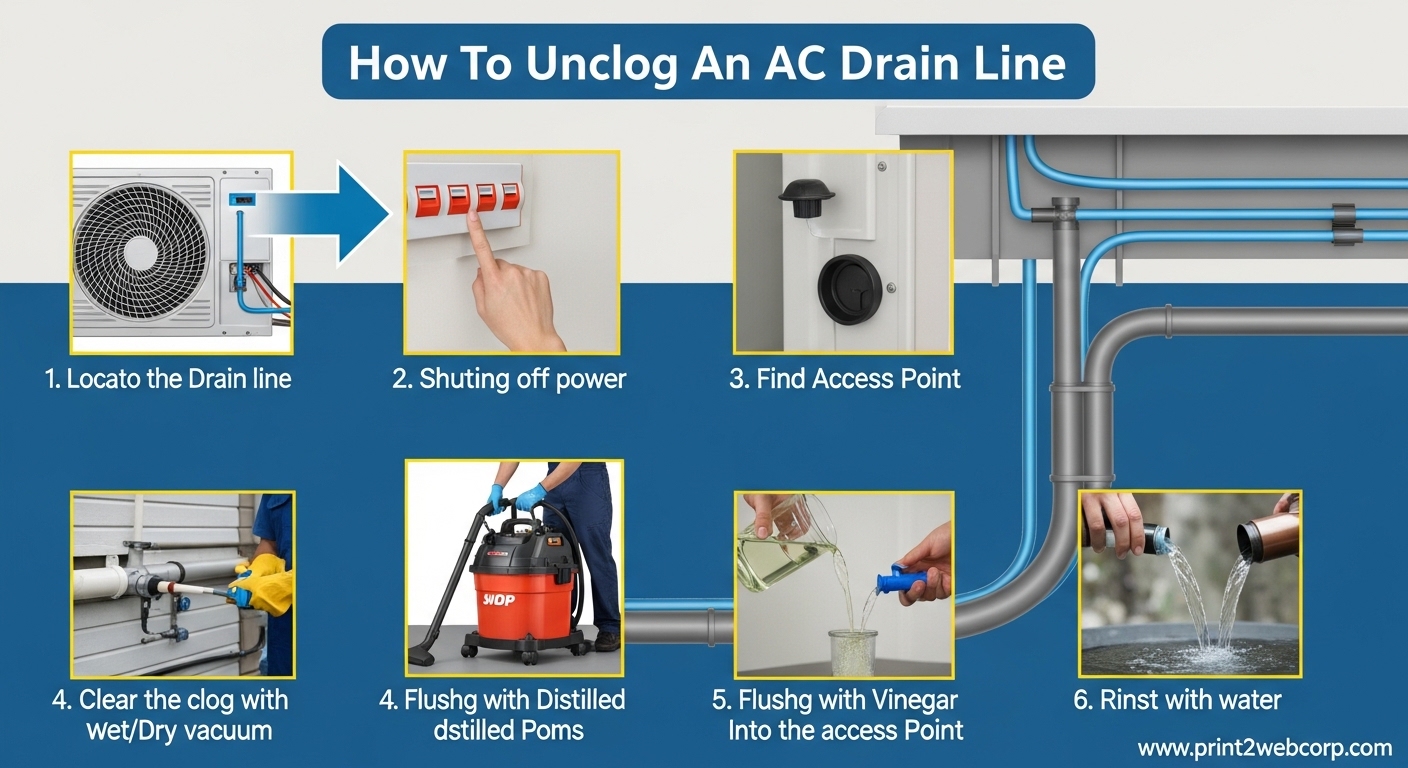
Before attempting any AC maintenance, you need to turn off power to your system completely. Start at your thermostat by switching it from “cool” to “off.” Then locate your breaker panel and flip the breaker that controls your air handler or furnace unit.
Working on electrical components with power active is dangerous and can damage your system. I always double-check that the outdoor condenser unit isn’t running before proceeding. This safety step takes seconds but prevents serious injury and equipment damage.
Gather all your tools and supplies before starting so you don’t need to stop mid-project. You’ll need access to both the indoor drain line connection (usually near your air handler or furnace) and the outdoor exit point where the line drains outside your home.
Tools and Supplies You’ll Need
A wet/dry vacuum (often called a shop vac) is the most effective tool for clearing AC drain clogs. The suction power removes blockages that chemical cleaners alone can’t handle. If you don’t own one, they’re available for rent at most hardware stores.
You’ll also need hot water, white vinegar, or bleach for flushing the line after clearing the clog. A funnel helps pour cleaning solutions into small access openings. Keep rags or towels handy for inevitable water spills during the process.
Optional tools that can help with stubborn clogs include a drain snake or a specialized AC drain brush. These flexible tools can break up tough blockages when vacuum suction alone isn’t enough. Duct tape comes in handy for creating a better seal between your vacuum hose and the drain line opening.
Method 1: Using a Wet/Dry Vacuum (Most Effective)
The vacuum method works for about 90% of AC drain clogs and is the approach I recommend trying first. Start by locating the outdoor drain line exit. This is typically a PVC pipe protruding through an exterior wall near your AC unit’s indoor component.
Attach your wet/dry vacuum hose directly to the outdoor drain opening. Creating an airtight seal is crucial for effective suction. I wrap the connection with duct tape or hold a rag around the gap to prevent air from escaping. Turn on the vacuum and let it run for 2-3 minutes to suction out the clog.
You’ll likely see dark sludge, algae, and dirty water being pulled into the vacuum tank. This is completely normal and confirms the clog is being removed. Once the vacuum starts pulling only clear water, the blockage is cleared.
Remove the vacuum and flush the line from the inside access point with hot water. Pour about a gallon of hot water through the line to wash away remaining debris. The water should flow freely out the exterior opening if the clog is completely cleared.
For stubborn clogs, repeat the vacuum process a second time before flushing. Sometimes multiple suction attempts are needed to completely clear a well-established blockage.
Method 2: Flushing with Vinegar or Bleach Solution
Chemical flushing works best as a follow-up to mechanical removal or for minor clogs that haven’t completely blocked the line. This method kills remaining algae and mold to help prevent quick re-clogging.
Mix a solution of one cup white vinegar with one gallon of hot water. Pour this slowly into the indoor drain line access point using a funnel. Let the solution sit in the line for 30 minutes to break down organic buildup. Vinegar is effective against mold and algae while being safe for your PVC pipes.
Alternatively, you can use a bleach solution of one cup bleach mixed with one gallon of water. Follow the same process of pouring, waiting, and flushing. Bleach is stronger than vinegar but can be harsher on your pipes and surrounding surfaces.
CRITICAL WARNING: Never mix bleach and vinegar together. This creates toxic chlorine gas that can cause serious respiratory problems. Choose one method or the other, never both at the same time.
After the waiting period, flush the line with clean hot water. You should see water flowing freely from the outdoor drain opening. This confirms the line is clear and the chemical treatment has done its job.
How to Unclog an AC Drain Line with Stubborn Blockages
Sometimes a clog is too stubborn for vacuum suction alone. These tough blockages often consist of compressed sludge or solid debris that has hardened inside the pipe. When basic methods fail, it’s time to break out more aggressive tools.
A flexible drain snake can physically break up blockages that vacuum suction can’t remove. Feed the snake into the drain line from the outdoor access point and rotate it as you push forward. The twisting action breaks apart the clog so it can be flushed out.
Specialized AC drain brushes are designed specifically for this application. These long, flexible brushes scrub the interior walls of the drain pipe while breaking up buildup. They’re especially effective for removing algae that has attached to the pipe walls.
For extremely stubborn clogs, try accessing from both ends. Use the vacuum on the outdoor opening while simultaneously flushing from the indoor access point. This dual approach applies pressure from both directions and can dislodge even the most persistent blockages.
If you’ve tried vacuuming, snaking, and chemical flushing without success, the clog might be located in an inaccessible section of the line. At this point, calling a professional with specialized equipment is often more cost-effective than continued DIY attempts.
Special Considerations: Attic, Basement, and Garage Units
AC units located in attics present unique challenges for drain line maintenance. The primary concern is water damage to your ceiling if the drain pan overflows. Most attic installations include a secondary drain pan with a separate drain line and a float switch that shuts down the system.
When working on attic units, place towels or a shallow pan under your work area to catch spills. The cramped space makes maneuvering difficult, so clear the area around your unit before starting. If you’re not comfortable working in an attic environment, this might be a job best left to professionals.
Basement installations often use a condensate pump to move water upward to an exterior drain. If your system uses a pump, check that it’s receiving power and actually running when water is present. A failed pump mimics a clogged drain line symptoms.
Garage units typically have easier access than attic installations but may have longer drain runs to reach the exterior. Follow the PVC piping to identify all joints and access points. Longer drain lines have more opportunities for clogs to form, so inspect the entire run when troubleshooting.
How to Prevent AC Drain Line Clogs in 2026
Preventing clogs is much easier than clearing them. Monthly maintenance during cooling season keeps your drain line flowing freely. I recommend flushing the line with a cup of white vinegar once a month. The vinegar inhibits algae growth and keeps the pipe clear without damaging your system.
Annual professional inspections catch problems before they become emergencies. An HVAC technician can flush your entire system, check for proper drainage, and identify potential issues. This preventive maintenance typically costs $75-150 but saves you from emergency service calls that can exceed $300.
Keep the area around your outdoor drain line clear of debris, mulch, and vegetation. Airflow helps the water drain properly, and obstructions can create backpressure that contributes to clogs. Trim back any plants growing near the drain exit.
Consider installing drain line treatment tablets in your drain pan. These time-release tablets prevent algae and mold growth throughout the cooling season. They’re inexpensive insurance against recurring clogs and require no ongoing maintenance beyond replacement.
Replace your air filters regularly. Dirty filters allow more dust and debris into your system, which eventually ends up in the drain line. Clean filters improve airflow and reduce the particulate matter that contributes to clogs.
When to Call a Professional HVAC Technician
Sometimes DIY methods aren’t enough, and professional help is the safest choice. If you’ve attempted vacuuming and chemical flushing without results, a technician has specialized equipment like high-pressure jetters that can clear any blockage.
Water damage is already present, call a professional immediately. They can assess the extent of the damage, make necessary repairs, and ensure your system is properly draining. Continuing DIY attempts when water damage exists risks making the problem worse.
Access limitations are another reason to hire help. If your AC unit is in a difficult-to-reach location or you’re not comfortable working at heights, a professional has the training and equipment to work safely. Attic installations especially often warrant professional service.
Older systems with corroded pipes or multiple previous repairs may have underlying issues causing recurring clogs. A technician can evaluate whether pipe replacement or system modifications would provide a permanent solution. Expect to pay $100-200 for professional drain cleaning, depending on your location and the severity of the clog.
If your AC system is over 10-15 years old and experiencing frequent drain problems, consider whether replacement might be more cost-effective than continued repairs. Newer systems have improved drainage designs that are less prone to clogging.
Frequently Asked Questions
How do you dissolve gunk in an AC drain line?
The most effective way to dissolve gunk is using a wet/dry vacuum to physically remove the blockage, followed by flushing with hot water and a vinegar solution. The vinegar breaks down organic matter and kills algae. For stubborn buildup, let the vinegar sit in the line for 30 minutes before flushing. Chemical drain cleaners are not recommended as they can damage PVC pipes.
What unclogs the AC drain line?
A wet/dry vacuum is the most reliable tool for unclogging AC drain lines. The suction power removes sludge, algae, and debris that chemical cleaners alone can’t handle. After vacuuming, flush the line with hot water followed by a vinegar or bleach solution to kill remaining bacteria and prevent quick re-clogging.
Can I pour Drano down an AC drain?
No, you should never use commercial drain cleaners like Drano in your AC drain line. These harsh chemicals can damage the PVC piping, the evaporator coil, and other components of your air conditioning system. The aluminum components in AC systems are particularly vulnerable to corrosive chemicals. Stick to vinegar or mild bleach solutions that are safe for HVAC equipment.
How often should I clean my AC drain line?
Clean your AC drain line at least once per year before the cooling season begins. For optimal performance, flush the line monthly with vinegar during months when your AC runs frequently. Homes in humid climates or with older AC systems may benefit from more frequent maintenance. Regular preventive maintenance is much easier than dealing with a complete clog.
What causes AC drain lines to clog?
The primary cause of AC drain clogs is algae and mold growth inside the dark, moist PVC pipe. The combination of condensation and warm temperatures creates an ideal environment for biological growth. Dust, pollen, and debris can also contribute to blockages. In some cases, insect nests or improper pipe installation can lead to recurring drainage issues.
Final Thoughts
Learning how to unclog an AC drain line is a valuable DIY skill that saves money and prevents water damage. The vacuum method works for most clogs and takes less than an hour to complete. Combine mechanical clearing with vinegar treatments to kill algae and prevent quick recurrence.
Monthly preventive maintenance during cooling season keeps your system running efficiently and avoids emergency shutdowns. The small investment of time pays off in reliable cooling and avoided repair bills. If you’re dealing with window AC units instead of central air, check out our window AC leaking water troubleshooting guide for specific guidance.
Most importantly, know when to call a professional. Persistent clogs, water damage, or access limitations warrant expert help. Your AC system is too important to risk with inexperienced DIY attempts in difficult situations.
Leave a Reply