
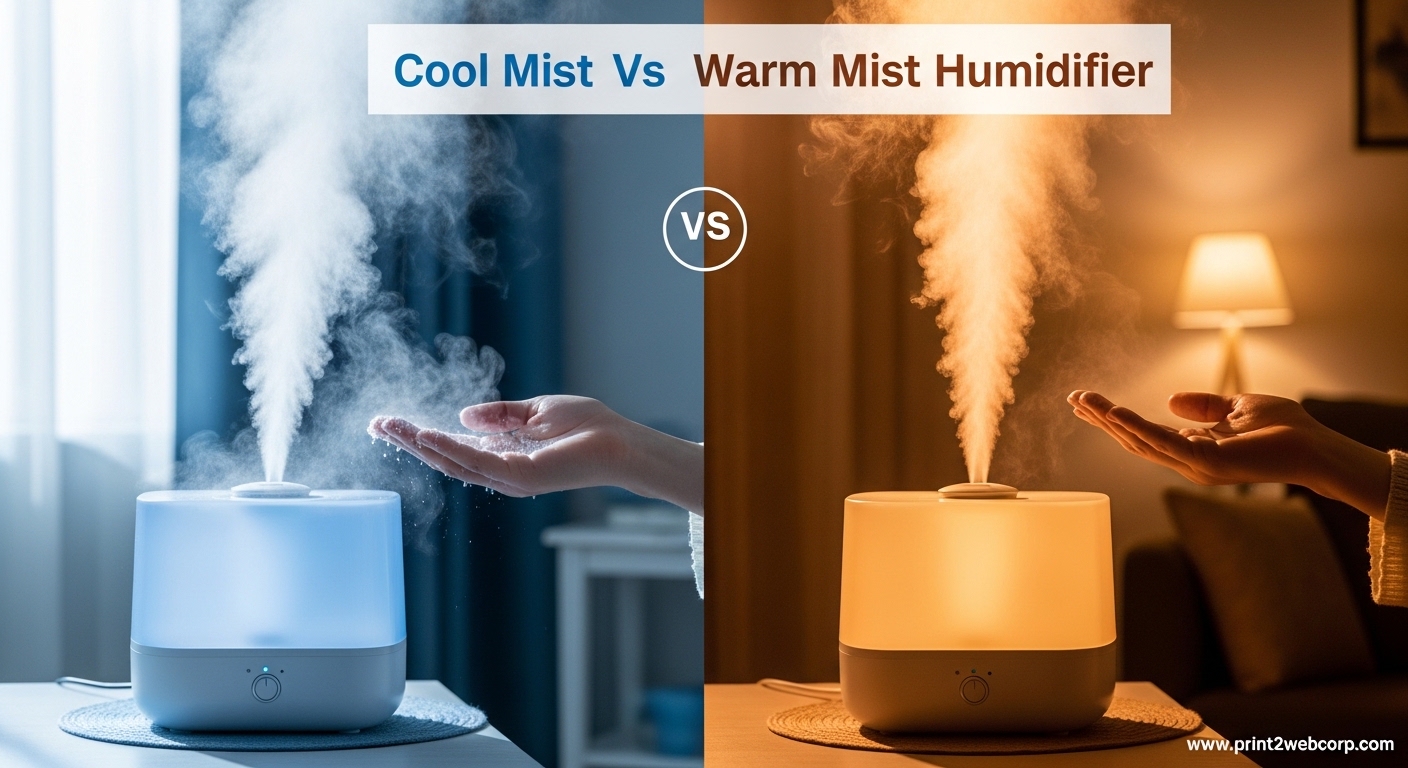
Choosing between a cool mist and warm mist humidifier comes down to one critical factor first and foremost: safety. For homes with children or pets, cool mist humidifiers are the only safe choice because warm mist units can cause serious burns. For adults without children in the home, the decision becomes more nuanced based on your specific needs for noise level, energy efficiency, and the type of relief you’re seeking.
This Cool Mist Vs Warm Mist Humidifier comparison breaks down exactly how each type works, their key differences, and which situations call for which approach. After researching humidifier technology for 2026 and analyzing real user experiences across multiple communities, I can tell you that both types effectively add moisture to the air—but they go about it in very different ways with distinct advantages and drawbacks.
The core difference is simple: cool mist humidifiers disperse room-temperature moisture using either ultrasonic vibrations or an evaporative fan, while warm mist humidifiers boil water to create steam that releases as a comforting warm mist. Understanding this fundamental distinction helps explain why each type excels in different scenarios.
How Cool Mist Humidifiers Work
Cool mist humidifiers add moisture to your air without heating the water first. There are two main technologies that accomplish this, and understanding the difference matters because each has unique pros and cons that affect your daily experience.
Evaporative cool mist humidifiers use a wick filter that absorbs water from the tank. A fan blows air through this saturated filter, causing the water to evaporate into the air as invisible moisture. This natural evaporation process actually cools the air slightly—similar to how sweating cools your skin—which is why these units can make a room feel a bit fresher in summer. The wick filter also traps minerals and impurities, preventing them from being dispersed into your room.
Ultrasonic cool mist humidifiers work completely differently. They use a high-frequency metal diaphragm that vibrates at ultrasonic speeds, breaking water into tiny microscopic droplets that form a visible cool mist. This mist is then silently pushed out of the unit by a gentle airflow. Because there’s no fan or heating element, ultrasonic models are incredibly quiet—often nearly silent—which makes them popular for bedrooms. However, this technology doesn’t remove minerals from the water, which can lead to the white dust issue many users complain about.
Both cool mist types distribute moisture effectively throughout larger spaces compared to warm mist units. The absence of heating elements means they consume less energy and pose no burn risk, making them the safer choice for children’s rooms and areas accessible to pets.
How Warm Mist Humidifiers Work
Warm mist humidifiers use a much simpler and more straightforward approach: they boil water. An internal heating element brings the water to a boil, creating steam that is then cooled slightly before being released into the room as a warm mist. This process is essentially the same technology used in steam vaporizers that have been around for generations.
The boiling process does something important—it kills virtually all bacteria, mold, and other microorganisms that might be present in the water. This is a significant advantage if you’re concerned about respiratory health or if you don’t always maintain your humidifier as diligently as you should. The heat also causes minerals to precipitate out of the water and remain in the tank rather than being dispersed into your air as white dust.
The warm mist itself can feel more comforting, especially during cold and flu season. The warmth can help soothe irritated sinuses and reduce the feeling of congestion, though the actual humidity added is the same regardless of temperature. Many users report that warm mist feels more pleasant when breathing is difficult, which is why these units are often preferred during illness.
Warm mist humidifiers operate very quietly since they don’t use fans—only the gentle sound of boiling water, which many find soothing. However, the heating element requires more energy than cool mist alternatives, and the boiling water poses a serious burn risk if the unit tips over or if a curious child touches it.
Head-to-Head Comparison
Here’s a direct comparison of the key differences between cool mist and warm mist humidifiers to help you see the trade-offs at a glance:
| Factor | Cool Mist | Warm Mist |
|---|---|---|
| Safety | No burn risk; safe for children and pets | Boiling water poses burn risk; not recommended for children’s rooms |
| Coverage Area | Better for large rooms and open spaces | Best for smaller bedrooms and enclosed spaces |
| Energy Use | Lower energy consumption (no heating) | Higher energy use (boiling water requires electricity) |
| Noise Level | Ultrasonic: nearly silent; Evaporative: fan noise | Generally quiet (gentle boiling sound) |
| Maintenance | Evaporative: filter replacements; Ultrasonic: regular cleaning | Simpler cleaning but requires descaling |
| White Dust | Ultrasonic prone to white dust; Evaporative traps minerals | Minerals stay in tank; no white dust issue |
| Bacteria Risk | Standing water can harbor bacteria if not cleaned | Boiling kills bacteria and mold |
| Room Temperature | May make room feel slightly cooler | Can make room feel slightly warmer |
| Best For | Children’s rooms, large spaces, year-round use | Adult bedrooms, congestion relief, winter use |
Safety Considerations: The Critical Factor
Safety is the most important consideration when choosing between cool mist and warm mist humidifiers, and it’s not even close. The Mayo Clinic and American Academy of Pediatrics both recommend cool mist humidifiers for children’s rooms exclusively. Warm mist units pose a significant burn hazard because they boil water—the internal temperature reaches 212°F (100°C), and a tipping accident or curious touch can cause serious injury.
I’ve read countless stories from parents who narrowly avoided accidents with warm mist humidifiers in their children’s rooms. One Reddit user shared how their toddler pulled a warm mist unit off the nightstand, spilling boiling water across the carpet and barely missing the child’s legs. Another described their cat tipping over a warm mist humidifier, creating both a burn hazard and a water damage situation. These aren’t isolated incidents—they’re predictable risks when you combine boiling water with curious children or active pets.
For adults without children or pets in the home, warm mist humidifiers are perfectly safe when used with basic precautions. Place them on stable, elevated surfaces away from edges where they could be knocked over. Never place them on bedside tables where you might knock them over while half-asleep. But if there’s any chance a child could access the room, cool mist is the only responsible choice.
Beyond burn risk, consider that cool mist humidifiers are also safer for use around electronics and furniture. The cool moisture won’t warp wood or damage electronics the way steam can if improperly directed. This makes cool mist units more versatile for placement options throughout your home.
Coverage Area and Distribution
Cool mist humidifiers generally provide better coverage for larger spaces compared to warm mist units. The evaporative and ultrasonic technologies are designed to distribute moisture efficiently across wider areas, with many models rated for rooms up to 500-600 square feet or more. This makes cool mist the better choice for open-concept living areas, master bedrooms, or any space where you need broad humidity coverage.
Warm mist humidifiers typically work best in smaller, enclosed spaces like a standard bedroom or home office. The steam they release tends to concentrate near the unit and dissipates more quickly across large areas. If you’re trying to humidify a large room with a warm mist unit, you may need to place it strategically or use multiple units to achieve even coverage throughout the space.
The distribution pattern also differs between types. Cool mist from ultrasonic units is often visible as a fine mist that settles on nearby surfaces, while evaporative cool mist releases invisible moisture that mixes more thoroughly with the air. Warm mist rises initially (since heat rises) before cooling and mixing, which can create pockets of higher humidity near the ceiling before it evens out.
For whole-house humidity needs, cool mist is usually the practical choice. Many users with large homes or open floor plans report that cool mist units maintain more consistent humidity levels throughout their space compared to warm mist alternatives, which tend to create localized humidity pockets.
Energy Consumption and Operating Costs
Energy efficiency is a clear win for cool mist humidifiers. Because they don’t heat water, they consume significantly less electricity than warm mist units. Ultrasonic models in particular use very little energy—often just enough to power a small fan or simple electronics. Even evaporative units with fans use less energy than the heating elements required to boil water in warm mist humidifiers.
Warm mist humidifiers must continuously heat water to maintain steam production, which requires more electricity. This energy difference is most noticeable if you run your humidifier continuously through winter months. Over a heating season, a warm mist unit can add noticeably more to your electric bill compared to a cool mist alternative. If you’re energy-conscious or live in an area with high electricity costs, this operating cost difference matters.
Beyond electricity, consider maintenance costs. Evaporative cool mist units require periodic filter replacements (typically every 1-2 months depending on use and water quality), which adds to the long-term cost. Ultrasonic cool mist units don’t need filters but may require demineralization cartridges or more frequent cleaning if you use tap water. Warm mist units have no filter costs but require descaling to remove mineral buildup from the heating element.
When calculating total cost of ownership, factor in both electricity and maintenance over a typical 3-5 year lifespan. For most users, ultrasonic cool mist humidifiers offer the lowest total operating cost when combined with distilled water use to avoid maintenance issues.
Noise Level and Sleep Quality
If you’re a light sleeper or plan to use your humidifier in a bedroom, noise level is an important consideration. The good news is that both types offer quiet options, but they achieve silence differently.
Ultrasonic cool mist humidifiers are the quietest option available. Without fans or heating elements, they produce almost no sound—just the faintest movement of air. Many users report they can’t tell the unit is running except for the visible mist. This makes ultrasonic models ideal for bedrooms, especially if you’re sensitive to noise. The silence is a major reason why ultrasonic humidifiers dominate the bedroom humidifier market.
Evaporative cool mist humidifiers use fans to push air through the wick filter, which creates white noise. The sound level varies by model but is comparable to a running fan—some find it soothing, others find it disruptive. If you already use a fan for white noise while sleeping, an evaporative humidifier might blend right in. But if you prefer absolute silence, the fan noise could be bothersome.
Warm mist humidifiers are generally quiet but produce a gentle bubbling or gurgling sound as water boils. Most users find this sound soothing or easily ignored—it’s similar to the sound of a simmering pot. There’s no fan whine, just the soft sound of water being heated. For many, this is actually a positive feature that adds to the comforting feeling of warm mist during illness.
White Dust and Mineral Issues
The white dust problem is one of the most common complaints about humidifiers, and it specifically affects ultrasonic cool mist units. Here’s what happens: hard water contains dissolved minerals like calcium and magnesium. When an ultrasonic humidifier breaks this water into microscopic droplets, those minerals get dispersed into the air along with the water. As the water evaporates, the minerals settle as a fine white dust on furniture, electronics, and surfaces throughout the room.
This white dust isn’t harmful to most people, but it’s annoying. It settles on everything and requires more frequent dusting and cleaning. I’ve seen posts from users who thought they had a construction problem until they realized their humidifier was coating everything in fine mineral dust. For electronics especially, this mineral dust can be problematic if it accumulates inside devices.
The solution is simple but adds cost: use distilled water instead of tap water. Distilled water has had minerals removed, so it produces no white dust. This eliminates the problem entirely but increases operating costs since you’ll need to buy distilled water regularly. Alternatively, some ultrasonic units include demineralization cartridges that help reduce mineral dispersion, though they don’t eliminate it completely.
Evaporative cool mist humidifiers don’t have this issue—the wick filter traps minerals before they can be dispersed. Warm mist humidifiers also avoid white dust because minerals remain in the tank as water boils away. For these types, tap water works fine, though you’ll still need to descale warm mist units periodically to remove mineral buildup on the heating element.
Bacteria, Mold, and Hygiene
Every humidifier creates a warm, moist environment that bacteria and mold love, but different types handle this risk differently. Standing water in any humidifier tank can become a breeding ground for microorganisms if not properly maintained, which is why regular cleaning is non-negotiable regardless of which type you choose.
Warm mist humidifiers have a natural advantage here: the boiling process kills bacteria, mold, and other microorganisms. As long as the water reaches boiling temperature before being dispersed, the steam released is essentially sterile. This doesn’t eliminate the need for cleaning—mineral buildup and scale can still occur—but it does reduce the risk of dispersing harmful microorganisms into your air.
Cool mist humidifiers don’t have this sterilization advantage, so proper cleaning is even more critical. Both evaporative and ultrasonic units require regular tank cleaning to prevent bacterial and mold growth. The Mayo Clinic recommends cleaning humidifiers every three days at minimum, though many users find weekly cleaning more practical. Use white vinegar or a hydrogen peroxide solution to disinfect the tank and any components that contact water.
Evaporative units add another consideration: the wick filter itself can harbor mold if not replaced regularly. A damp filter sitting in a tank is the perfect environment for mold growth. Follow manufacturer recommendations for filter replacement intervals, and replace more frequently if you notice any musty odor or visible mold.
Which Humidifier Type is Better for Your Situation
For Baby Rooms and Children’s Bedrooms
There’s no debate here: cool mist humidifiers are the only safe choice for babies and young children. The American Academy of Pediatrics specifically recommends cool mist for children’s rooms because of burn risk from warm mist units. Even if you think a warm mist unit is out of reach, curious toddlers and climbing children can access nightstands and dressers. The risk simply isn’t worth it when cool mist units work just as well for adding moisture.
For nurseries, ultrasonic cool mist humidifiers are ideal because they’re silent and won’t disturb sleep. The white dust issue can be avoided by using distilled water, which is recommended anyway for babies to minimize any potential irritants. Many pediatricians specifically recommend distilled water in humidifiers for infants regardless of humidifier type.
For Adult Bedrooms and Sleep Quality
Adults have more flexibility and can choose based on personal preference. If you want absolute silence, ultrasonic cool mist is your best bet—there’s simply no quieter option. The cool moisture works perfectly fine for maintaining humidity and alleviating dry skin or congestion while you sleep.
If you prefer the comforting feeling of warm mist and don’t mind the gentle bubbling sound, warm mist humidifiers can enhance sleep quality, especially during cold and flu season. The warmth can feel soothing when you’re congested, and the quiet operation won’t disturb sleep. Many adults find warm mist more luxurious and spa-like, making bedtime feel more relaxing.
For Congestion, Colds, and Sinus Relief
Both humidifier types help with congestion by adding moisture to dry air, which thins mucus and soothes irritated airways. However, warm mist has an edge for comfort when you’re actively sick. The warm steam feels more soothing to breathe in when your sinuses are painful or your throat is raw. Many users swear by warm mist during illness and report faster relief from congestion and coughing.
That said, cool mist works just as well for the actual humidification—your sinuses won’t know the difference once the moisture is in the air. If you’re concerned about energy use or have children in the home, cool mist is perfectly effective for cold relief. The Mayo Clinic confirms that both types are equally effective for humidifying air and relieving congestion symptoms.
For Allergies and Asthma
For allergy and asthma sufferers, maintaining proper humidity (30-50% according to the EPA) is crucial because overly dry air irritates respiratory passages while overly humid air encourages dust mites and mold. Both humidifier types can help maintain ideal humidity levels, but cool mist is often preferred for year-round allergy control because it won’t make a room feel uncomfortably warm in summer.
One consideration for allergy sufferers: evaporative cool mist units with wick filters can actually filter some allergens from the air as moisture passes through the filter. This minor air-cleaning effect isn’t a replacement for an air purifier, but it’s a small bonus. Ultrasonic and warm mist units don’t offer this benefit.
Crucially, all humidifier types require diligent cleaning to prevent mold and bacteria growth, which would worsen allergy and asthma symptoms. For respiratory conditions, proper maintenance matters more than humidifier type.
For Large Spaces and Open Floor Plans
Cool mist humidifiers, particularly evaporative models with powerful fans, are better suited for large spaces and open floor plans. The fan-assisted distribution helps moisture travel further from the unit, and many models are specifically rated for larger square footage. If you’re trying to humidify a living room, dining area, and kitchen combination, a single cool mist unit will likely be more effective than a warm mist alternative.
For very large homes, consider multiple smaller humidifiers placed strategically rather than one large unit. This ensures even humidity distribution throughout the space. In these multi-unit setups, cool mist units are more practical because they cost less to operate and can be placed more liberally throughout the home without safety concerns.
For Winter Use and Cold Climates
In cold climates or during winter months, warm mist humidifiers offer a dual benefit: they add humidity while also providing slight warmth to the room. This isn’t enough to replace heating, but it can make a bedroom feel cozier and may slightly reduce heating costs in the immediate area. The warm mist feels more comfortable when outdoor temperatures are frigid, and the steam can help take the chill out of the air.
However, if you live in an extremely cold climate, be aware that warm mist can cause condensation on cold windows, which can lead to moisture damage or mold if not addressed. Cool mist produces less condensation on cold surfaces because the moisture isn’t heated. If you notice window condensation with your humidifier, reduce the runtime or move the unit away from windows.
For Plants and Indoor Gardens
Indoor plant enthusiasts generally prefer cool mist humidifiers. The plant community on Reddit and other forums consistently recommends cool mist because warm mist can actually damage delicate foliage if placed too close to plants. Tropical plants love humidity, but they don’t love hot steam directly on their leaves—this can cause burns or stress to sensitive plants.
Cool mist provides the humidity plants need without the heat risk. Many plant owners set up humidifiers near their humidity-loving calatheas, ferns, and orchids with excellent results using cool mist ultrasonic units. The visible mist from ultrasonic humidifiers can also create a nice aesthetic for plant displays.
Ideal Indoor Humidity Level
Regardless of which humidifier type you choose, the goal is the same: maintain indoor relative humidity between 30% and 50%, as recommended by the EPA. Below 30%, air is too dry and causes problems like dry skin, irritated sinuses, static electricity, and damage to wood furniture and musical instruments. Above 50%, air becomes too humid and encourages dust mites, mold growth, and increased allergens.
Most modern humidifiers include built-in hygrometers to measure current humidity levels and maintain your target range automatically. If your humidifier doesn’t have this feature, consider buying a separate hygrometer to monitor levels. You might be surprised how dry your home gets in winter—many homes drop to 15-20% humidity without supplemental moisture.
Signs your humidity is too low: dry skin, chapped lips, frequent static shocks, cracking wood furniture, respiratory irritation, and increased susceptibility to colds. Signs your humidity is too high: condensation on windows, musty odors, visible mold, increased allergy symptoms, and that heavy, muggy feeling even indoors.
Frequently Asked Questions
Which is better for you, a warm mist or cool mist humidifier?
Cool mist humidifiers are better for homes with children or pets due to burn safety, while warm mist humidifiers are better for adults seeking quiet operation and comforting warmth during illness. For safety with kids, choose cool mist. For adult bedrooms without children, warm mist provides more comfort during colds and congestion.
Is a cool mist or warm mist humidifier better for sinuses?
Both types are equally effective for sinus relief because they add the same moisture to the air. However, warm mist can feel more soothing when you’re actively congested because the warmth provides comfort to painful sinuses. The Mayo Clinic confirms both types work equally well for humidification and congestion relief.
Is cool mist or warm mist better for sleeping?
Ultrasonic cool mist humidifiers are the quietest option for sleep since they have no fan or heating element. Warm mist humidifiers are also quiet, producing only a gentle bubbling sound that many find soothing. Evaporative cool mist units create fan noise which may disturb light sleepers but can act as white noise for others.
Do warm mist humidifiers kill bacteria?
Yes, warm mist humidifiers kill bacteria and mold because the boiling process heats water to 212°F (100°C), which sterilizes the steam before it’s released. This doesn’t eliminate the need for cleaning (mineral buildup still occurs), but it does reduce the risk of dispersing harmful microorganisms into your air compared to cool mist units.
Should I use distilled water in my humidifier?
Use distilled water in ultrasonic cool mist humidifiers to prevent white dust from settling on furniture and surfaces. For evaporative cool mist and warm mist humidifiers, tap water works fine but may require more frequent descaling or filter changes. The Mayo Clinic recommends distilled water for all humidifiers used in babies’ rooms to minimize potential irritants.
What humidity level should I keep my house at?
Maintain indoor relative humidity between 30-50% according to EPA guidelines. Below 30% causes dry skin, respiratory irritation, and wood damage. Above 50% encourages dust mites, mold, and increased allergens. Most humidifiers with built-in hygrometers can automatically maintain this ideal range.
Which humidifier type is better for allergies?
Cool mist humidifiers are generally better for year-round allergy management because they won’t make rooms feel uncomfortably warm in summer. Evaporative cool mist units with wick filters can also trap some allergens as air passes through. However, proper cleaning is more important than humidifier type for allergy sufferers since mold and bacteria growth in any unit can worsen symptoms.
Final Verdict
When it comes to Cool Mist Vs Warm Mist Humidifier, the decision starts with safety and ends with personal preference. If you have children or pets in your home, cool mist is the only responsible choice—the burn risk from warm mist units simply isn’t worth it. For adults without children, both types work equally well for adding moisture, so choose based on what matters most to you: absolute silence (ultrasonic cool mist), comforting warmth during illness (warm mist), or year-round versatility (cool mist).
After analyzing real user experiences and expert recommendations, my guidance is simple: start with cool mist for safety and versatility. Ultrasonic models offer the best combination of silence, effectiveness, and energy efficiency for most households. If you’re an adult without children who specifically wants the comforting warmth of steam during cold and flu season, warm mist is a legitimate alternative—but never in a child’s room.
Regardless of which type you choose, proper maintenance matters more than the technology. Clean your humidifier regularly, use distilled water when recommended, and monitor your humidity levels to stay in that ideal 30-50% range. With the right care, either cool mist or warm mist will effectively improve your indoor air quality and provide relief from dry air discomfort.
Leave a Reply