
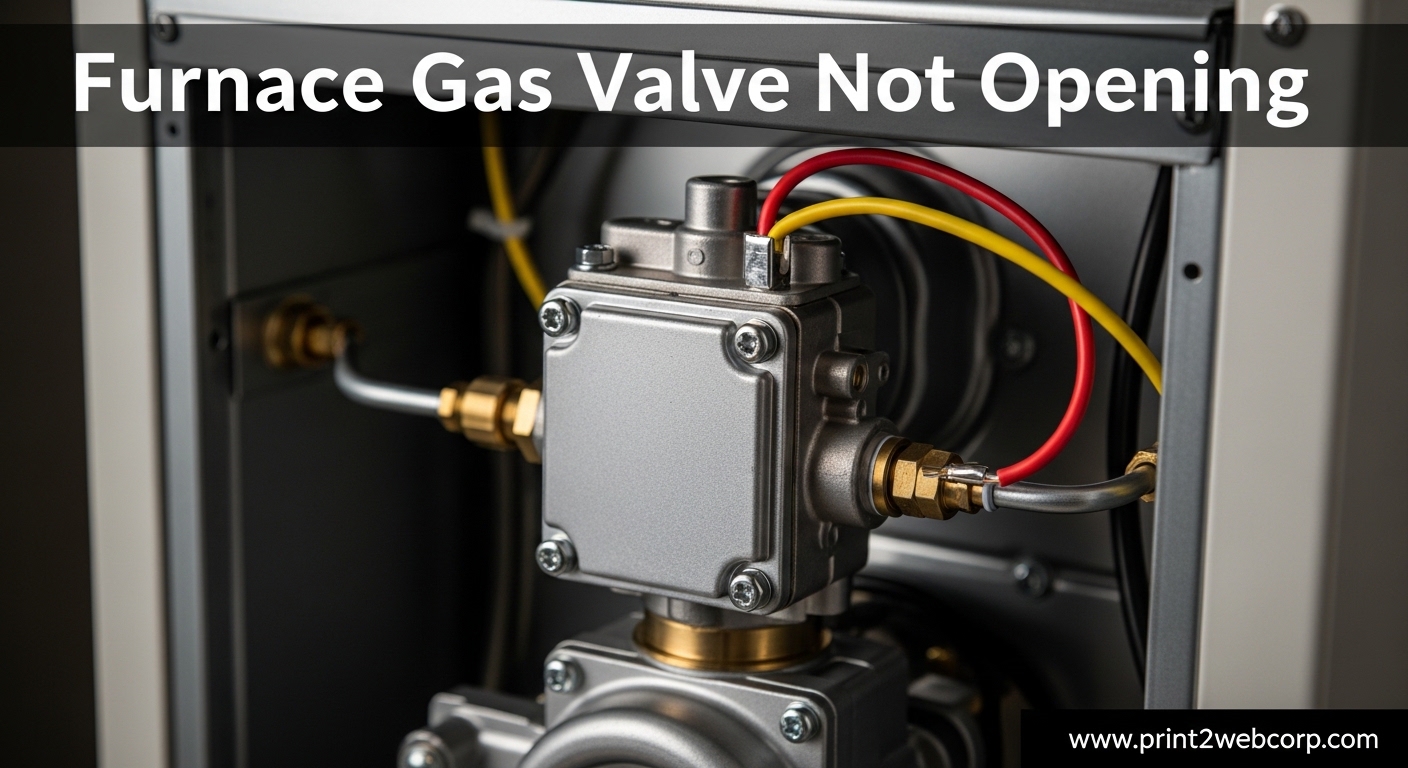
It’s the middle of winter and your furnace won’t ignite. You hear the inducer motor running, see the ignitor glowing bright orange, but there’s no flame. The problem? Your furnace gas valve isn’t opening. This is one of the most frustrating heating issues homeowners face because it leaves you in the cold while the furnace seems to be trying to work.
After working with HVAC systems for over 15 years, I’ve seen this scenario hundreds of times. The furnace gas valve not opening is usually solvable, but you need to know where to look. In this guide, I’ll walk you through exactly why gas valves fail, how to diagnose the problem safely, and what you can fix yourself versus when you need to call a professional.
How a Furnace Gas Valve Works
Understanding how your furnace gas valve operates helps you diagnose problems. The gas valve is the gatekeeper between your home’s gas supply and the burners. It won’t allow gas to flow unless specific safety conditions are met.
Modern furnaces use electronic gas valves controlled by the control board. When your thermostat calls for heat, the control board starts the ignition sequence. The inducer motor runs to create draft, the pressure switch confirms proper airflow, and the ignitor heats up. Only then does the control board send 24 volts to the gas valve solenoid.
This 24V signal energizes the solenoid coil, which pulls open the valve mechanism and allows gas to flow to the burners. If the solenoid doesn’t receive voltage, or if the coil is weak, or if the valve mechanism is stuck, you’ll have a furnace gas valve not opening situation.
Top 7 Reasons Your Furnace Gas Valve Won’t Open
Based on my experience and HVAC forum discussions, here are the most common causes:
1. Faulty Gas Valve Solenoid Coil
The solenoid coil is the electromagnet that opens the valve when energized. Over time, these coils can weaken or fail completely. When the coil goes bad, it can’t generate enough magnetic force to pull the valve open, even with full 24V applied.
2. Low Voltage to the Gas Valve
Your gas valve needs 24 volts to open. I’ve seen cases where a failing transformer only produces 22V, which isn’t enough to activate the solenoid. Loose connections, corroded terminals, or a bad control board can also cause voltage drops that prevent the valve from opening.
3. Stuck or Corroded Valve Mechanism
Older gas valves can accumulate debris, corrosion, or rust inside the valve body. This mechanical resistance prevents the valve from opening smoothly. Some homeowners report their gas valve works intermittently when it’s stuck this way.
4. Bad Control Board
The control board is the brain of your furnace. If it fails to send the 24V signal to the gas valve, the valve won’t open. I’ve seen cases where technicians replaced both the board and gas valve, only to discover a loose wire connection was the real culprit.
5. Failed Pressure Switch
The pressure switch is a safety device that verifies the inducer motor is running properly. If the switch doesn’t close, the control board never sends power to the gas valve. This is actually a safety feature, not a valve failure.
6. Gas Supply Issues
External factors can cause furnace gas valve not opening problems. The manual gas shut-off valve might be closed, the gas line could be blocked, or there could be low gas pressure from the utility company. Always verify gas is available before blaming the valve.
7. Limit Switch Tripping
If your furnace is overheating, the high-limit switch will cut power to the gas valve as a safety measure. This causes the furnace to short cycle and the gas valve won’t open consistently until the underlying problem is fixed.
Signs of a Faulty Furnace Gas Valve
Before diving into troubleshooting, check for these symptoms:
The most obvious sign is no heat despite the furnace running through its startup sequence. You’ll hear the inducer motor, see the ignitor glow, but no flame appears. The furnace may cycle through this sequence three times before locking out.
Listen for clicking sounds. A working gas valve makes a distinct click when it opens. If you hear the click but get no flame, the valve might be receiving power but failing mechanically. No click at all suggests an electrical issue.
Check your furnace’s error code. Most modern units have LED lights that blink in patterns indicating specific problems. A gas valve issue often shows as a code related to ignition failure or valve circuit problems.
Intermittent heating is another red flag. If your furnace works sometimes but not others, especially on colder days, the gas valve solenoid may be failing when under strain.
Furnace Gas Valve Not Opening: Step-by-Step Troubleshooting
Follow this troubleshooting sequence to identify the problem safely:
Step 1: Verify the Manual Gas Valve is Open
Locate the manual gas shut-off valve near your furnace. The handle should be parallel to the gas pipe when open. If it’s perpendicular, turn it to the open position. This simple step solves more problems than you’d expect.
Step 2: Check the Furnace Error Code
Look through the viewing window on your furnace’s blower door. Count the LED flashes and reference the error code chart on the door. This tells you what the control board thinks is wrong.
Step 3: Listen for the Gas Valve Click
Stand near the furnace while it attempts to ignite. You should hear a clear click from the gas valve when the control board sends power. No click means no power is reaching the valve.
Step 4: Test for 24 Volts at the Gas Valve
Using a multimeter set to AC volts, test the gas valve terminals during the ignition sequence. Place one probe on each terminal going to the gas valve. You should read 24V when the valve is supposed to open.
If you measure 24V but the valve doesn’t click or open, the gas valve itself is likely bad. If you measure 0V or very low voltage, the problem is upstream in the control circuit.
Step 5: Check the Gas Valve Resistance
With power off, disconnect the gas valve wires and test resistance across the solenoid terminals. A working solenoid typically reads between 20-60 ohms. An open circuit (OL reading) indicates a failed coil. A very low reading suggests a shorted coil.
Step 6: Inspect the Pressure Switch
Test the pressure switch by manually activating it during the ignition sequence. If the furnace fires when you bypass the switch, the pressure switch or its tubing is the problem, not the gas valve.
Step 7: Examine Control Board Connections
Look for loose, corroded, or burnt wires on the control board. I’ve seen many cases where reseating a loose connection fixed the problem without any parts replacement.
Safety Warnings: What NOT to Do
Gas valves control flammable fuel, so safety is critical. Never attempt to disassemble a gas valve or tap on it with a hammer to “loosen” it. This can damage the valve and create a dangerous gas leak.
Don’t bypass safety switches to force the gas valve to open. These switches protect you from carbon monoxide and fires. A furnace gas valve not opening is often the symptom of a real safety problem that bypassing will only make worse.
Avoid using makeshift tools or improper replacement parts. Generic gas valves may not have the correct pressure ratings for your furnace. Always use manufacturer-recommended replacements.
When to Call a Professional HVAC Technician
Some gas valve problems require professional expertise. If you’ve confirmed 24V is reaching the valve but it won’t open, the valve needs replacement. This requires proper gas line handling and pressure testing that most homeowners shouldn’t attempt themselves.
Professional replacement typically costs between $300-600 for parts and labor. The gas valve itself runs $150-400 depending on your furnace brand. While expensive, a properly installed valve ensures safe operation.
Call a technician if you smell gas at any point. This indicates a leak that requires immediate professional attention. Evacuate your home and call your gas company’s emergency line from outside.
Also seek professional help if multiple components are failing. Replacing just the gas valve when the control board is also bad wastes money. A qualified technician can diagnose the complete system.
Preventive Maintenance Tips
Regular maintenance prevents many furnace gas valve not opening issues. Change your air filter every 1-3 months to prevent overheating that stresses components. Schedule annual professional inspections to catch developing problems early.
Keep the area around your furnace clean and unobstructed. Dust buildup can affect the pressure switch operation and cause the gas valve to not receive the open signal.
Consider installing a surge protector to shield your furnace’s electronic components from electrical damage. Many gas valve and control board failures stem from power surges.
Gas valves typically last 15-20 years with proper maintenance. If yours is approaching this age and showing symptoms, proactive replacement during the off-season can save you from an emergency repair in freezing weather.
Frequently Asked Questions
Why is my furnace gas valve not opening?
The most common causes include a faulty solenoid coil, low voltage from the control board, a stuck valve mechanism, or a failed pressure switch. The valve needs 24V to open, and any interruption in this circuit will prevent operation.
Can a furnace gas valve get stuck closed?
Yes, older gas valves can accumulate debris, corrosion, or rust that mechanically prevents the valve from opening. This causes intermittent operation where the valve sometimes opens and sometimes doesn’t, especially in colder weather when metal contracts.
How do I know if my furnace gas valve is bad?
Test for 24V at the valve terminals during ignition. If you have voltage but no click or no flame, the valve is likely bad. You can also test solenoid resistance with a multimeter – readings outside 20-60 ohms indicate a failed coil.
What tells the gas valve to open?
The furnace control board sends a 24V signal to the gas valve solenoid only after confirming that the inducer motor is running and the pressure switch is closed. This safety sequence ensures gas only flows when proper draft is established.
How often do gas valves go bad on furnaces?
Gas valves typically last 15-20 years with proper maintenance. Premature failure is often caused by moisture, electrical surges, or debris in the gas line. If your valve is over 15 years old and showing symptoms, replacement is often more cost-effective than repeated repairs.
Conclusion
A furnace gas valve not opening is a frustrating but diagnosable problem. Start with the basics: check the manual gas valve, listen for the click, and verify 24V is reaching the solenoid. Many issues turn out to be loose connections or simple electrical problems rather than a failed valve.
Remember that gas work carries real risks. If you’re not comfortable testing electrical components or smell any gas, call a licensed HVAC technician. The cost of professional service is far less than the risk of a gas leak or carbon monoxide problem.
With proper troubleshooting, you can determine whether you need a simple repair, a valve replacement, or a different fix entirely. Don’t spend money replacing parts until you’ve confirmed what’s actually wrong. Your furnace will be back to keeping you warm before you know it.
Leave a Reply