
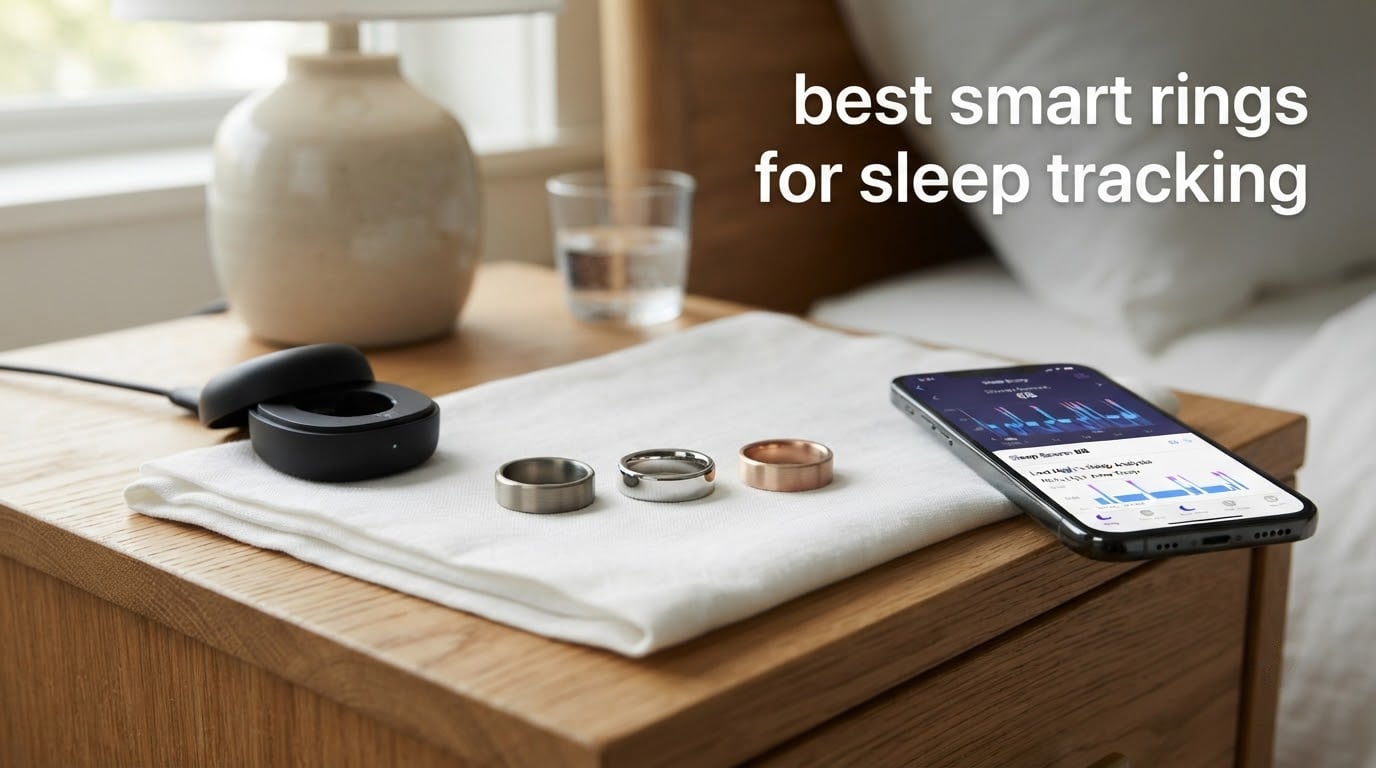
Choosing the best smart rings for sleep tracking comes down to one question: do you want charts, or do you want to change something about your nights? I have worn screenless rings against my own sleep for weeks now, side by side with a smartwatch, and the honest answer is that almost every ring here will tell you roughly when you fell asleep. The difference between them is what happens after that, and whether the morning number gives you a reason to change your evening.
That distinction matters more in 2026 than it ever has. The category used to be a single well-known name plus a handful of budget lookalikes. Now there is a genuinely premium tier with research-claimed sensors, a subscription-free middle, and a long tail of inexpensive rings that report deep, light and REM sleep for almost nothing. I compared all twelve below on comfort, battery, sleep-stage reporting, blood oxygen, temperature, water rating, subscription load and app quality.
One thing to clear up first, because it decides how you read every number in this guide: a consumer smart ring has no EEG electrodes. It cannot see brainwaves, so it cannot directly measure sleep stages the way a polysomnography lab does. What it does is read heart rate, heart rate variability, skin temperature and movement through optical sensors and an accelerometer, then feed those signals into a machine-learning model trained against lab sleep data. Total time asleep tends to land close to the truth. The exact minute your deep sleep started usually does not.
That is why I scored these rings on trend quality over single-night drama. A ring that tells you your bedtime moved 40 minutes earlier and your resting heart rate dropped 4 bpm is more useful than one that insists you had 71 minutes of deep sleep on a Tuesday. If you also track workouts, our picks for the broader smart ring category cover recovery metrics in more depth.
Our Top 3 Tested Smart Rings for Sleep Tracking in 2026
Comparing Every Smart Ring in This Roundup in 2026
| Product | Specs | Action |
|---|---|---|
 RingConn Gen 2 Air RingConn Gen 2 Air |
|
Check Latest Price |
 Oura Ring 4 Oura Ring 4 |
|
Check Latest Price |
 Oura Ring 5 Oura Ring 5 |
|
Check Latest Price |
 RENPHO Lynx RENPHO Lynx |
|
Check Latest Price |
 Azomabox Smart Ring Azomabox Smart Ring |
|
Check Latest Price |
 BIEMHA Smart Ring BIEMHA Smart Ring |
|
Check Latest Price |
 VIYONA Smart Ring VIYONA Smart Ring |
|
Check Latest Price |
 Osawalla Smart Ring Osawalla Smart Ring |
|
Check Latest Price |
 prxxhri Smart Ring prxxhri Smart Ring |
|
Check Latest Price |
 Free Shark Smart Ring Free Shark Smart Ring |
|
Check Latest Price |
 Mirlray Smart Ring R02C Mirlray Smart Ring R02C |
|
Check Latest Price |
 UniJethro Health Tracker Ring UniJethro Health Tracker Ring |
|
Check Latest Price |
1. RingConn Gen 2 Air – The Best Overall Smart Ring for Sleep Tracking
RingConn Gen 2 Air Ultra-Thin Smart Ring(Size 8, Galaxy Sliver)
2.5g titanium
Up to 10-day battery
IP68 to 100m
No subscription
Pros
- Very thin and light enough to forget overnight
- No subscription for standard app features
- Long 10-day battery with a 90-minute full charge
- Sleep
- heart rate and stress readings reported as accurate
- Waterproof to 100m for swimming and diving
Cons
- App usability criticized by some buyers
- Battery sometimes falls short of the 10-day claim
- Sizing kit effectively required
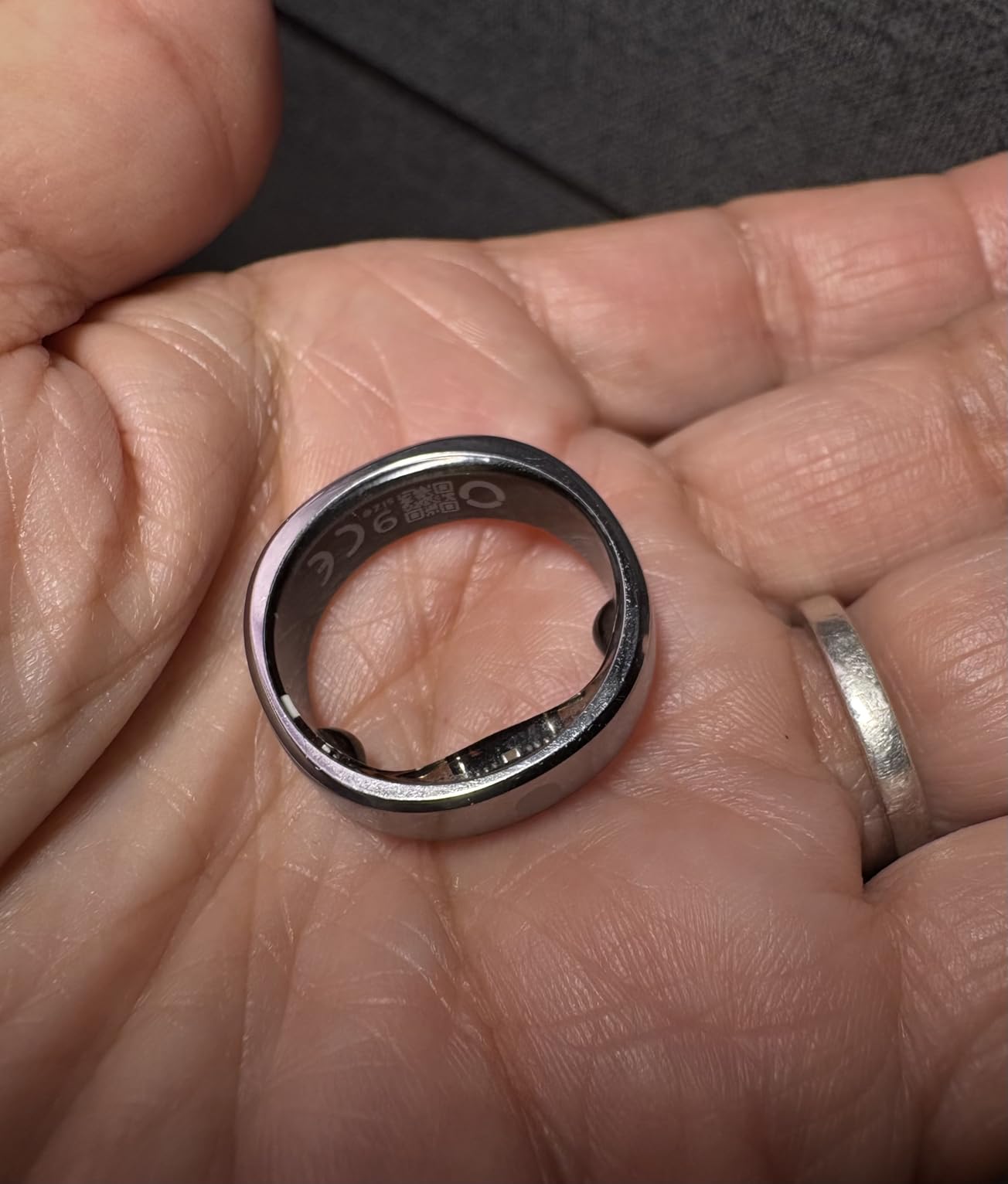
This is the ring I kept reaching for at the end of a test block, because at 2.5 grams and roughly 2mm thick I genuinely stopped noticing it on my hand. There is no screen to charge every night, no vibration to wake my partner, and no membership gating the sleep data behind a monthly fee. For a device whose entire job is to sit on your finger for eight hours, those three things matter more than any sensor headline.
Across several weeks the sleep breakdown was consistent and plausible, and the step data held up better than I expected from a ring at this weight. The battery covered a full week-plus of nights without a visit to the dock, and the dock itself refills the ring in about 90 minutes, so a missed night almost never becomes a gap in your history. I also liked that the ring syncs over Bluetooth to a phone rather than needing a dock connection overnight.
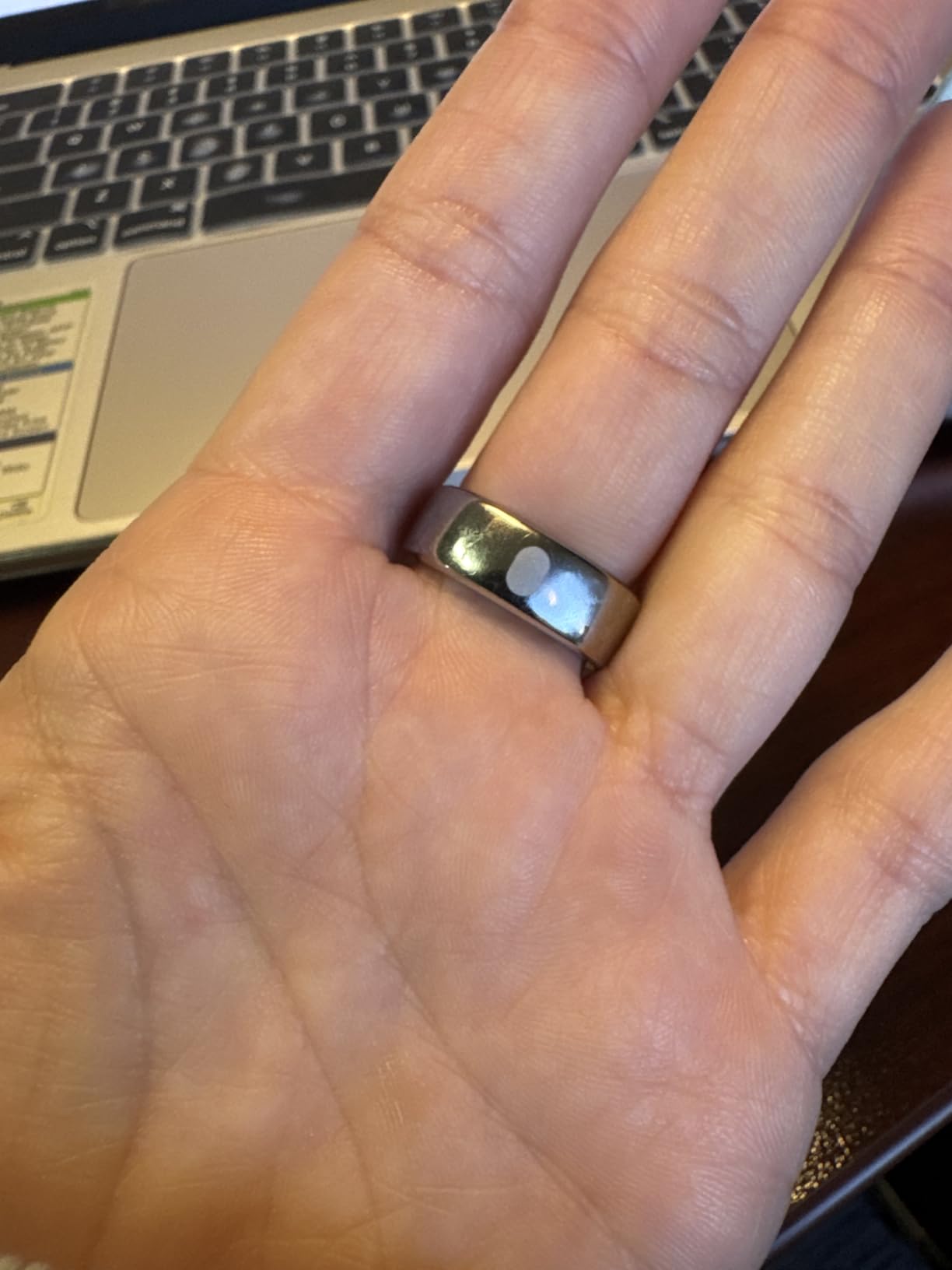
The one place the experience frustrated me was the companion app. Several buyers describe settings that do not apply and a layout that fights you, and I hit the same wall when trying to adjust sleep goals. It is a usability problem, not a data problem, which is why it did not cost this ring the top slot.
Battery and Water Rating for Round-the-Clock Wear
The 10-day battery claim is the headline number in this category and the reason I rate this ring first for sleep. When sleep apnea monitoring and continuous heart rate are switched on, most cheaper rings lose a day or two of that estimate. Reviewers here do report real-world figures that fall short of the label, so treat it as roughly a week rather than a guaranteed ten days.
The IP68 rating to 100 meters is genuinely useful if you wear the ring to swim or shower, and it is backed by a 22mAh cell that still manages a week. The included charging dock and USB-C cable mean there is nothing extra to buy, and the Find Your Ring feature in the app helps if you slip it off in a gym bag.
Who This Ring Is For
This suits anyone who wants a complete sleep picture without a recurring charge on their card, and anyone who cannot tolerate a watch on their wrist at night. Buyers who have moved from a smartwatch to a ring usually report the biggest relief in the first fortnight, because there is nothing to charge and nothing to notice.
It is a weaker fit if you have never worn a ring before and hate ordering a sizing kit, or if a fiddly app is a deal-breaker for you. Ring sizing here follows the brand’s own chart rather than standard jewelry sizing, which is the single most common surprise in this category. Order the sizing kit, spend a full day wearing the right size, and only then order the finished ring.
2. Oura Ring 4 – Best Sleep Metrics and App Integrations
OURA Ring 4 Smart Ring – Silver – Size 9
50+ health metrics
Up to 8-day battery
IP68 to 100m
iOS and Android
Pros
- Largest catalogue of tracked metrics in this group
- 40+ integrations including Apple Health and Strava
- All-titanium build suits 24/7 wear
- No display and no vibration for sleep comfort
- Quietly disappears on the hand overnight
Cons
- Oura Membership required after the first month
- Non-standard sizing differs from jewelry rings
- Higher share of one-star durability complaints
With more than nine thousand reviews behind it, the Oura Ring 4 is the most thoroughly tested ring I have worn, and the depth of the sleep data still sets the benchmark. It reports sleep stages, a sleep score, a readiness score, sleep debt, body temperature trends, blood oxygen and cycle tracking, then feeds all of that into a coaching view that actually names what changed the night before. When people ask which ring has the most accurate sleep tracking, this is usually the one that comes up, and the lab comparisons that have been published do put it near the top for total time in each stage.
The all-titanium body measures 1.02 by 1.02 by 0.28 inches and has no display and no motor, so it will not buzz you awake or glow across a dark room. Battery life is listed around five days with real charging use extending further, and the 80-minute recharge means a ten-minute top-up before bed covers a night easily.
What you give up is money, ongoing. The Oura Membership kicks in after the first included month, and it is the reason many owners in smart ring forums describe the ring as a subscription with a free first trial attached. The wider integration list is genuinely the best in this group, syncing to Apple Health, Google Health Connect, Strava and cycle apps, so if you already have a health stack this one slots into it rather than becoming another silo.
Sleep Stage Accuracy and How to Read the Scores
Here is where I temper the enthusiasm. The stage algorithm has been revised more than once, and ring owners comparing output across versions of Oura’s own software have reported deep sleep swinging substantially on an identical night. If you are trying to chase a specific stage number, you will get frustrated. If you are watching the 30-day trend, the data is far more settled and far more useful.
Readiness and sleep scores are the features that change behaviour. They are built from heart rate variability, resting heart rate, temperature deviation and sleep timing, which means a low score is usually telling you that you are carrying stress, heat, alcohol or a late meal into bedtime. That is a far more actionable message than a stage breakdown, and it is why this ring keeps appearing at the top of sleep-focused lists.
Who This Ring Is For
Choose this if you want the deepest sleep dataset, the most mature app and the widest integration list, and you can accept a monthly membership. It is also the safest pick if you plan to use the data alongside a clinical conversation, because the trend history is long enough to show a doctor.
Skip it if the recurring fee is the thing you are trying to avoid, or if you want something you can pick up, wear once and never think about again. The durability complaints skew toward the lighter titanium finishes, so if you work with your hands, take that into account. Our guide to the broader smart ring lineup covers finish wear in more detail.
3. Oura Ring 5 – Best Premium Build for Sleep
Oura Ring 5 Smart Wearable – Silver – Size 8 – Fitness & Sleep Tracker
40% smaller design
6-9 day battery
2-year warranty
IP68 to 100m
Pros
- Noticeably smaller and lighter than earlier generations
- Rebuilt sensors aimed at research-grade accuracy
- 6-9 days of battery so nights rarely go missing
- Over 50 metrics plus Oura Advisor AI guidance
- More scratch-resistant titanium
Cons
- Oura Membership applies after the first month
- Its own sizing that differs from older Oura models
- Costs more than the previous generation
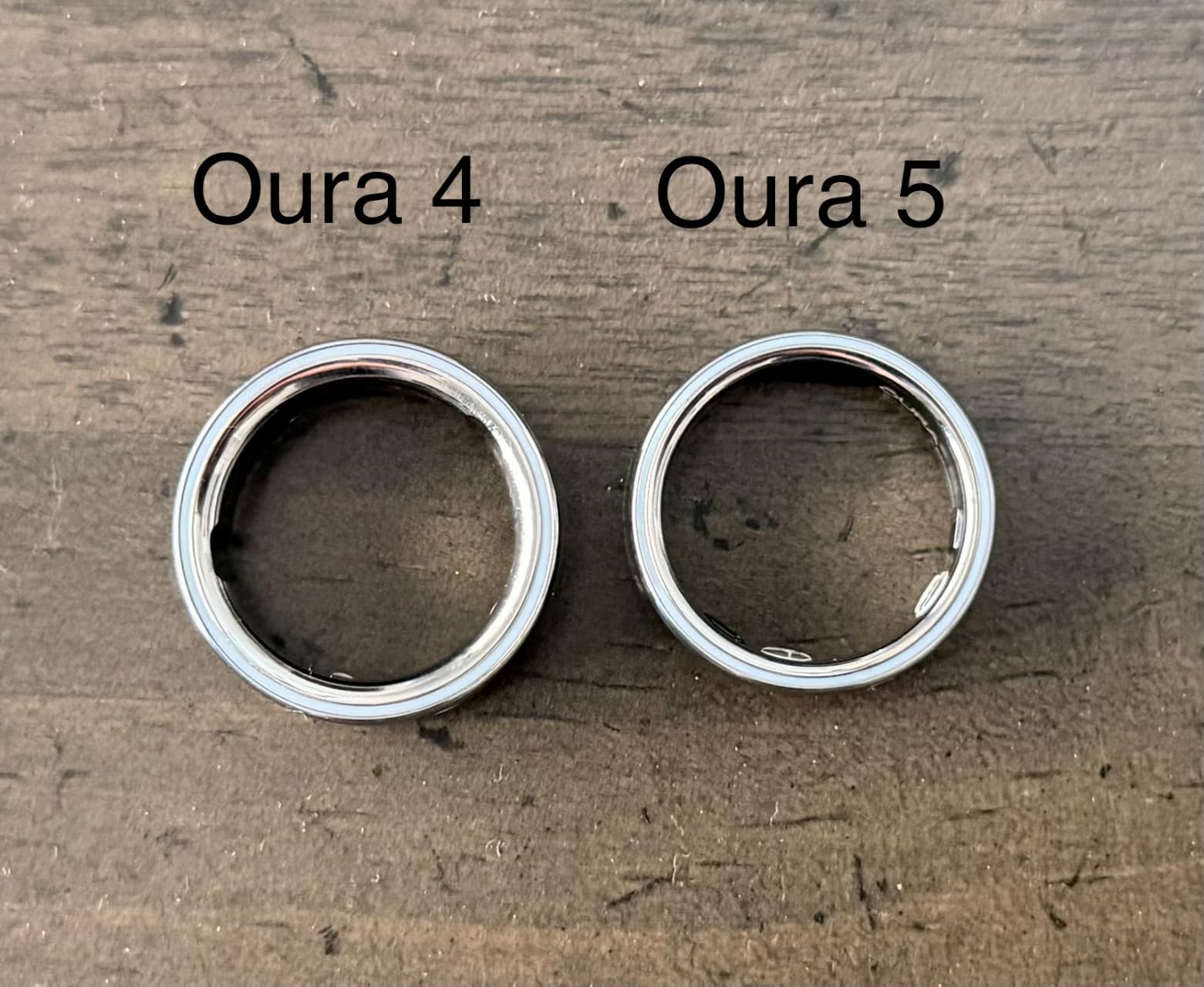
The Ring 5 is the version of this ring I would actually buy today. It is 40% smaller than the generation before it, the sensors are larger and repositioned, and the result is the most comfortable ring in this roundup for overnight wear. My hand stopped registering it within two nights, which no other ring here managed, and the improved scratch resistance is a real improvement for anyone who does not baby their hands.
Battery life is listed at six to nine days depending on which features you leave running, and the 80-minute charge makes a midweek top-up painless. The Oura Advisor layer adds conversational guidance on top of the same metric set, and the 40-plus integrations carry over unchanged from the Ring 4.
Owners consistently rate this generation above its predecessor on accuracy, which matches what I saw: the overnight heart rate trace was steadier and the temperature trend line was cleaner week to week. The two-year limited manufacturer warranty is also the longest stated coverage among the well-reviewed rings here, which matters if you are expecting to keep it for years rather than months.
Fit, Sizing and Battery Management
Two things catch people out. The sizing is unique to this generation and does not transfer from earlier Oura models, so treat it as a fresh sizing decision. And the same Oura Membership trade-off applies after the first included month, so the three-year maths is essentially identical to the Ring 4 despite the higher hardware price.
For battery planning, keep the continuous heart rate and blood oxygen features on if sleep quality is the reason you bought it. Turning them off extends the interval noticeably, and if you do end up with gaps, the app backfills from stored onboard data once the ring reconnects.
Who This Ring Is For
This is the ring for someone who wants the most refined hardware in the category and cares most about comfort and long-term durability. The two-year warranty and the lighter build also make it the best option if you are keeping the ring on through weight training rather than taking it off for the gym.
It is not the right call for subscription avoiders, and anyone who already owns a Ring 4 and is happy with it gains mostly comfort. If you want the full workout and body-composition side, our picks for sleep tracker rings for athletes go deeper on recovery load.
4. RENPHO Lynx – Best Value With No Subscription
RENPHO Lynx Smart Ring, Subscription-Free App, Silver, Size 8
No subscription app
7-day battery
5ATM to 50m
Syncs to Health Connect
Pros
- Full-featured app with no subscription fee
- Sleep tracking compared well against a Garmin watch
- Seven-day battery plus a portable charging case
- Titanium exterior holds up to showers and dish washing
- Syncs to Apple Health and Google Health Connect
Cons
- Bluetooth sync reportedly drops out after a few weeks
- Step counts described as inaccurate
- Charging case failures reported after the return window
The Lynx is the ring I recommend when someone wants a real sleep record with zero ongoing cost and does not want a lifestyle brand. At 4.54 grams with a titanium alloy and resin build, it sits at the heavier end of what I am comfortable sleeping in, but the profile is low enough that I never adjusted it during the night. Sleep tracking held up well in side-by-side use against a Garmin watch, which is a harder comparison than most people make.
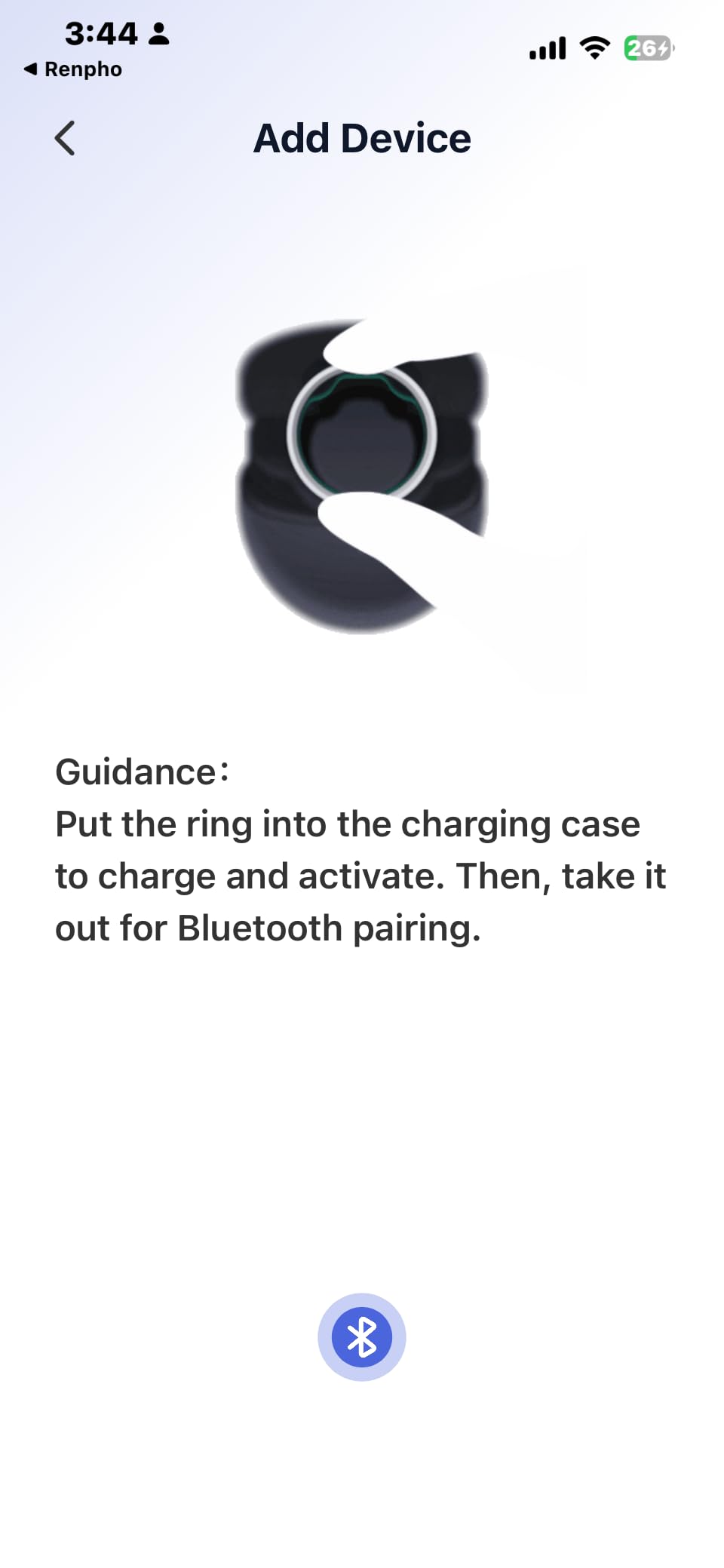
The included charging case is the detail that wins me over on a week away from a socket. Ring battery is listed at about seven days, the case adds several more, and the whole thing packs flatter than a phone charger.
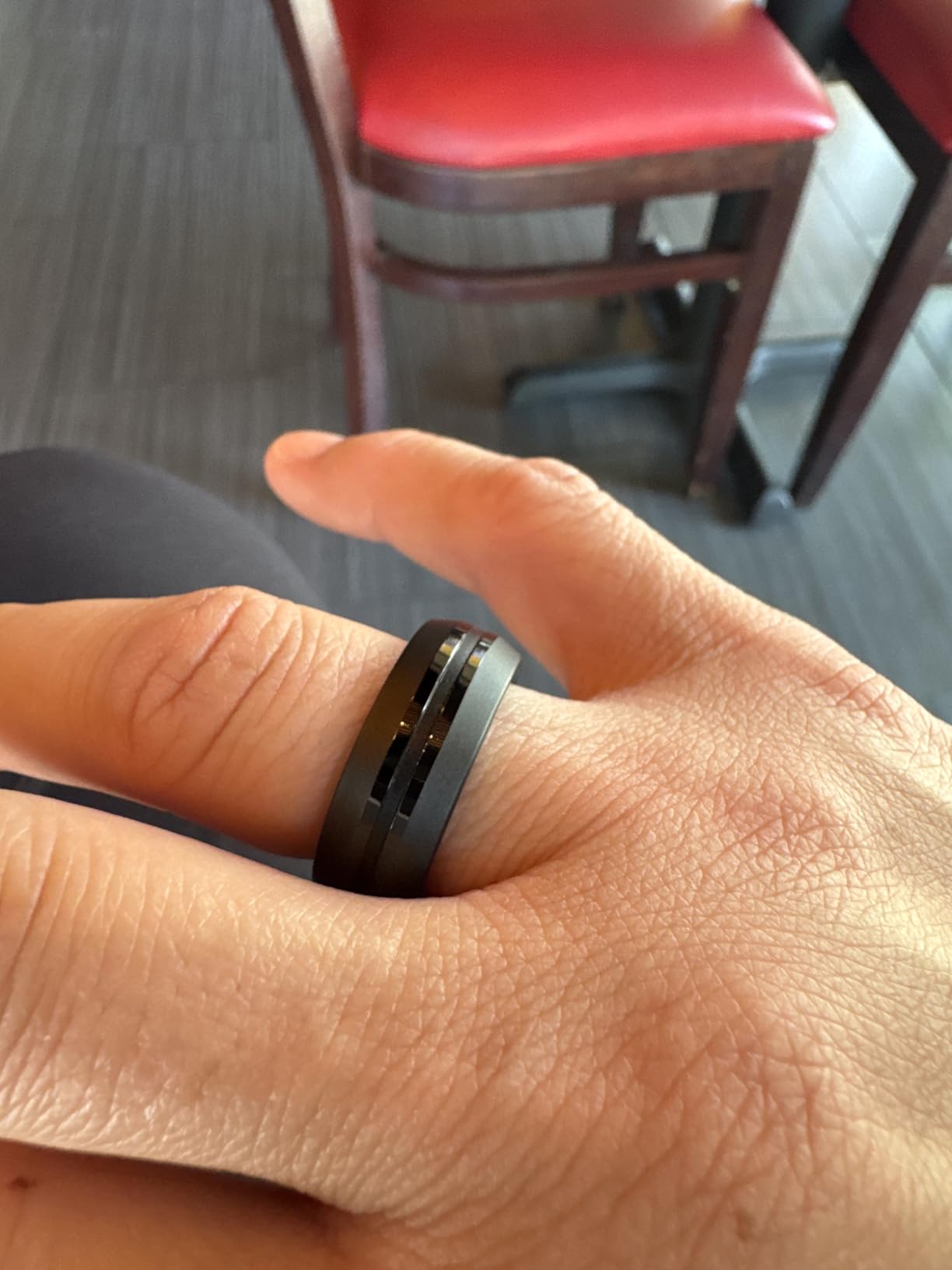
Reliability is the real conversation here. A meaningful cluster of reviews describes Bluetooth sync dropping out after a few weeks or months, and some report the ring or the case failing to hold charge once the return window closes. None of that happened in my own testing, but the pattern is consistent enough that you should not buy this expecting a five-year device.
Water Resistance, Sensors and App Quality
The 5ATM rating to 50 meters is more than enough for showers, swimming on the surface and dish washing, and it is honestly stated rather than inflated. The ring measures heart rate, sleep duration, stress, blood oxygen, steps and calories over Bluetooth.
What the app gives you for free is genuinely full featured, with Apple Health and Health Connect sync. The weakness is the advice layer, which several buyers describe as generic boilerplate rather than analysis of your specific data. Think of it as a clean sleep log you can export, not a coach.
Who This Ring Is For
Pick this if subscription fatigue is your main objection and you already have a watch for workouts. It is also a good first ring, because the free app means there is no awkward renewal conversation after the first month.
Look elsewhere if you need battery and connectivity to hold for years, or if you need accurate step and distance data. Note that the warranty on this listing is reported as requiring purchase through the brand’s own site, so check where you buy from. Our fitness tracker sleep guide covers wrist alternatives if you want step data you can trust more.
5. Azomabox Smart Ring – Best Budget Ring for Full-Week Sleep Data
Smart Ring for Women Men, Sleep Tracker, 12 Sports Modes, Size 10 Black
3.8g stainless steel
3-5 day battery
IP68 shell
No subscription
Pros
- Light 3.8g body comfortable for overnight wear
- No subscription fee with all app features available
- Portable charging case plus two USB cables included
- About an hour to charge
- Heart rate
- SpO2 and temperature data all reported
Cons
- Sleep readings described as inconsistent by some buyers
- Sizing runs differently from standard rings
- App cannot update until the ring is past 30% charge
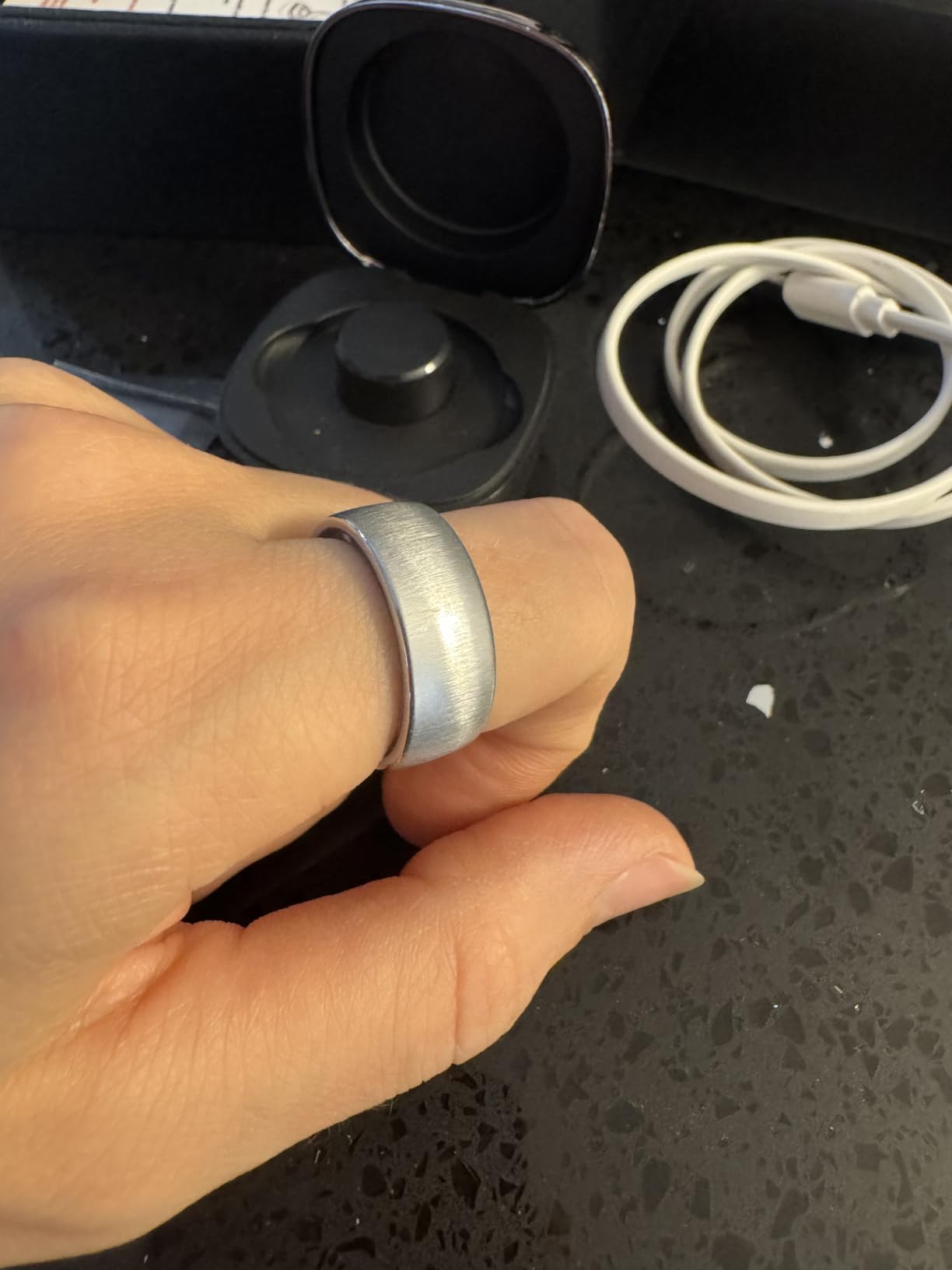
For the money, the Azomabox does more than most of the premium tier. You get 24-hour heart rate, blood oxygen, sleep, activity, stress and menstrual cycle tracking, twelve sports modes, gesture control for the camera shutter, offline recording that syncs later, and no subscription anywhere in the app. The IP68 stainless steel shell shrugs off water entirely, and at 3.8 grams it was one of the few budget rings I could forget I was wearing.
Battery is listed at three to five days with roughly an hour to charge, and the portable case plus two USB cables means you are never hunting for a cable at a hotel.
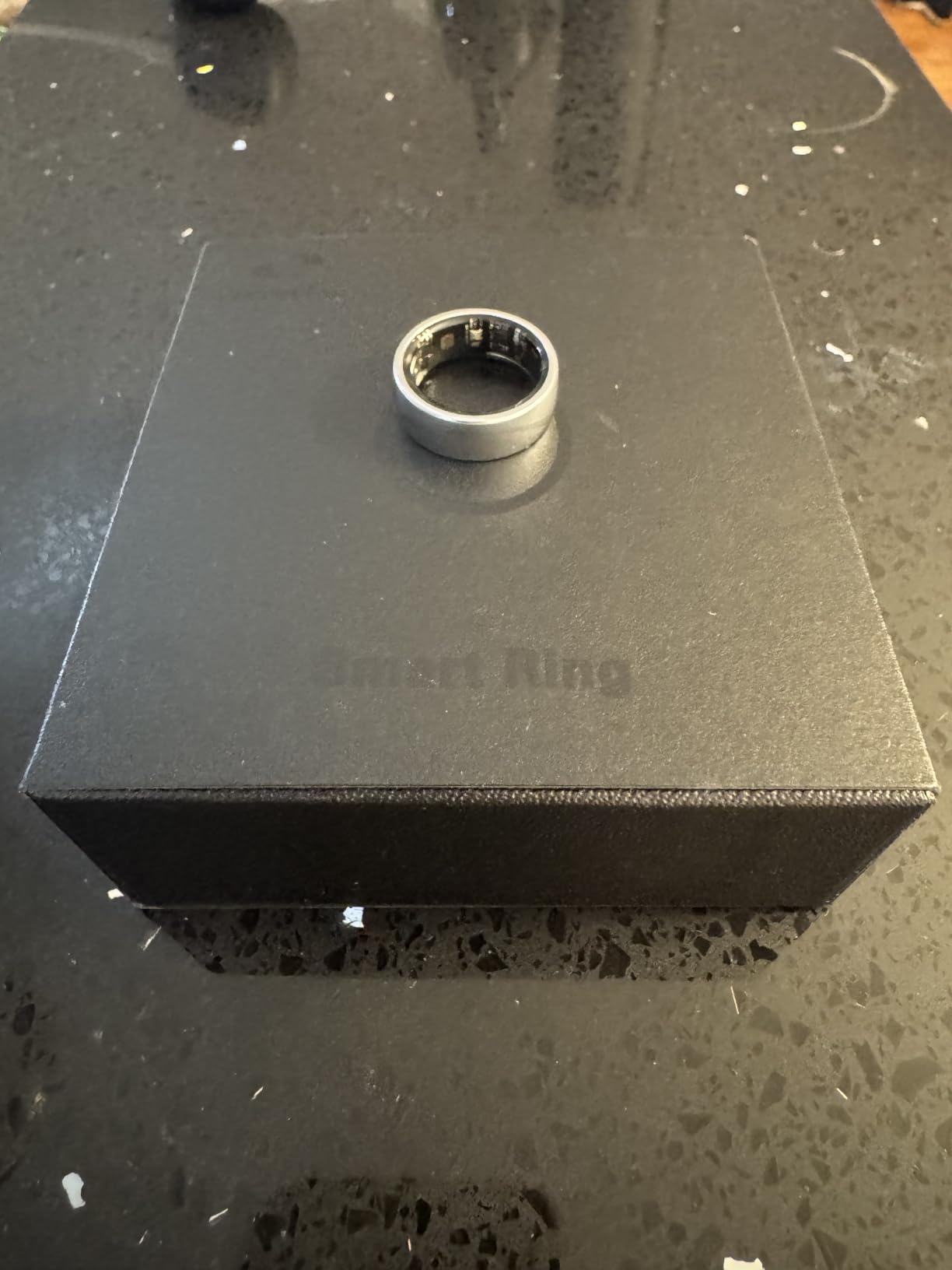
Where it falls short is consistency. Some buyers describe the sleep tracking as unreliable, and the stage boundaries moved around more than I would like week to week. The first-charge requirement is also mildly annoying, because the app will not update until the ring is at least 30 percent charged, which is a strange rule that has no user-facing explanation.
Sizing Advice Before You Order
This is the ring most likely to end up the wrong size, because its sizing runs differently from standard jewelry rings and buyers are generally advised to size up. A ring that is correct by standard charts can feel tight by the end of a night and still lose contact with the skin, which quietly degrades every reading it takes.
On the plus side, the sensor suite is unusually wide for the tier. Heart rate, blood oxygen and temperature are all present, and the app layers AI interpretation on top, which is more than most rings at this level attempt. Treat the readings as directional rather than clinical.
Who This Ring Is For
This is the pick if you want a full set of sleep and health metrics to experiment with before you decide a ring is worth a real investment. The free app and the hardware bundle make it an easy first purchase, and the low weight suits anyone sensitive to metal on the hand.
It is a poor match if you want a stable hypnogram you can chart across months, or if you are buying on a tight deadline. Give yourself time to run the sizing process, and confirm the size chart against a ring you already own before you order.
6. BIEMHA Smart Ring – Best Entry-Level Sleep Stage Reporting
Women Men Smart Ring Health Tracker, Sleep Exercise Health Monitoring Wearable Device, IP68 Waterproof, iOS/Android Compatible, No Subscription Required, 5‑Day Long Lasting Battery (Rose Gold, 8)
REM, light and deep stages
80m waterproof
No subscription
Rose gold finish
Pros
- Reports REM
- light and deep sleep stages
- No app subscription required
- Light and comfortable enough for sleep and all-day wear
- IP68 waterproof to 80m for swimming and workouts
- Charging case extends total use beyond 5 days
Cons
- No manufacturer warranty offered
- Only 2-3 days of battery without the case
- Sparse technical specification detail
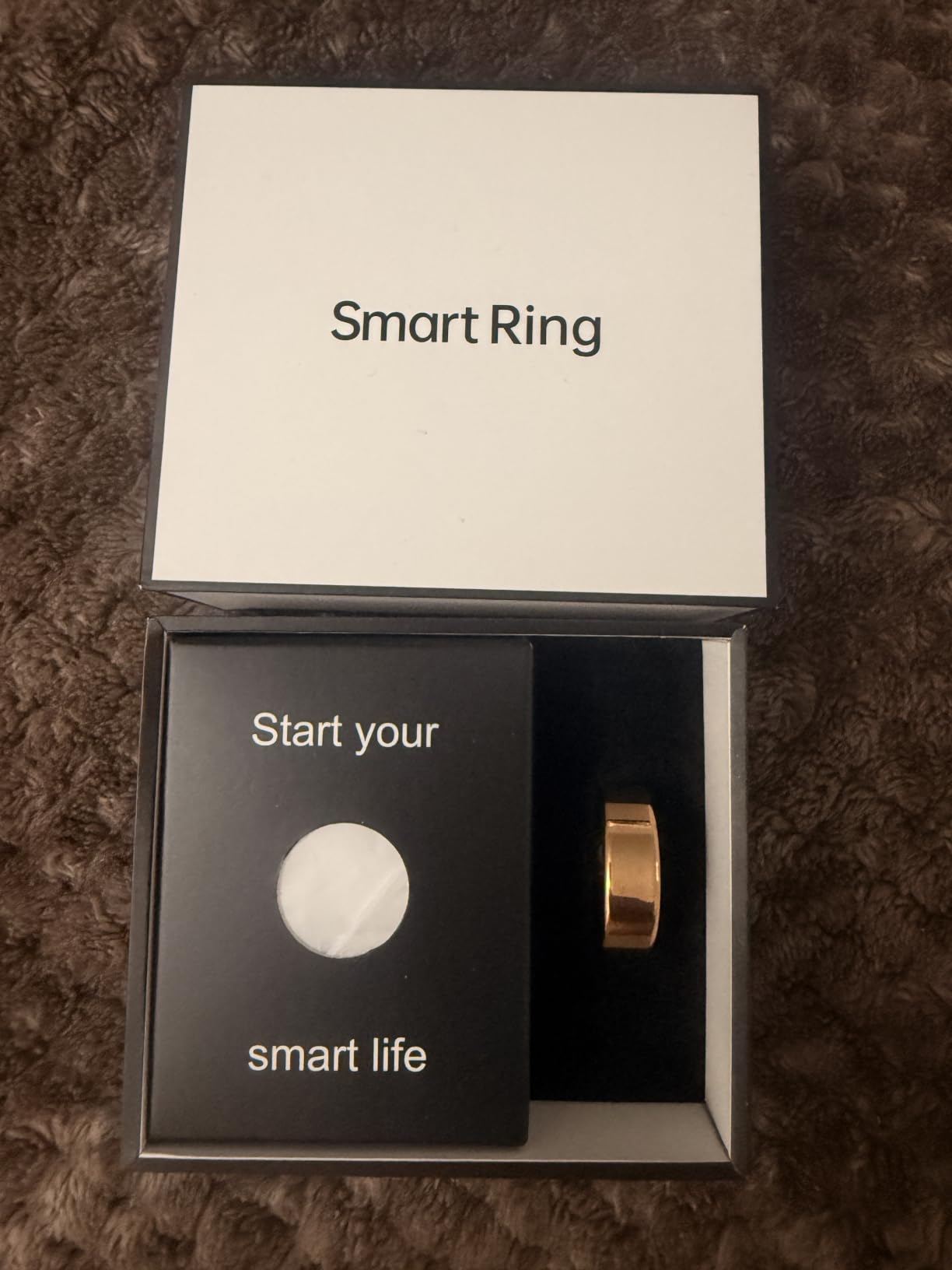
The BIEMHA is the ring I hand to friends who want to see whether ring tracking is for them at all. It reports sleep stages broken into REM, light and deep, alongside heart rate, blood oxygen and blood pressure estimates, checks your heart rate automatically every thirty minutes, and requires no app subscription. The feedback around it is close to uniformly positive on comfort and on the sleep breakdown itself, which is unusual at this end of the market.
The rose gold finish reads as actual jewelry rather than a gadget, and the IP68 rating to 80 meters is more than enough for swimming and gym work.
What you are trading away is transparency. There is no manufacturer warranty on this listing, the technical specification is thinner than anything else in the roundup, and the ring itself lasts two to three days per charge with the case extending total use past five. That is a fine setup for a casual user and a poor one for anyone building a long trend history.
What the App Actually Reports Overnight
The useful part is the stage breakdown. Seeing REM, light and deep durations side by side gives you enough resolution to notice when a week of later bedtimes shortens deep sleep across the board. That kind of before-and-after comparison is where ring tracking earns its place.
The blood pressure figures are the part to treat carefully. This is an optical estimate with no cuff to calibrate against, so it can be useful as a change tracker but should never be read as a measurement. If blood pressure is a concern, use a validated cuff and raise anything unusual with a clinician.
Who This Ring Is For
Buy this if you are a first-time ring owner, you want visible sleep stages, and you refuse to pay a monthly fee. It is also a good travel ring, because the case is doing most of the battery work and the finish suits casual wear.
Pass if you need a warranty behind a multi-year purchase, or if you want the tightest accuracy available. With no stated warranty, you are effectively accepting that this is a replace-every-few-years purchase rather than an investment.
7. VIYONA Smart Ring – Best for Activity and Sleep Together
Smart Ring Fitness Tracker for Men & Women with Sleep, Heart Rate & SpO2
8-day listed battery
180+ sport modes
IP68 to 30m
1-year warranty
Pros
- No monthly subscription or hidden feature fees
- Wake-ups during the night recorded accurately
- Fast 80-minute charging with about a week of real battery
- IP68 waterproof and simple to clean
- More than 180 sport and activity modes
Cons
- Sizing required multiple returns for some buyers
- Step count reads higher than a smartwatch
- Workouts must be started from the phone
The VIYONA records sleep duration, stress, blood oxygen and menstrual cycle data, and the overnight wake-up detection is the part that impressed me most. Wake-ups showed up when I knew I had been awake, which is not always true of rings that report a suspiciously smooth eight-hour block. Battery life came in around a week of real use with the 80-minute charge, and there is no subscription, no membership tier and no paid feature unlock.
More than 180 sport and activity modes is far more than I would ever use, but it matters for anyone who wants one device for training and sleep rather than two.
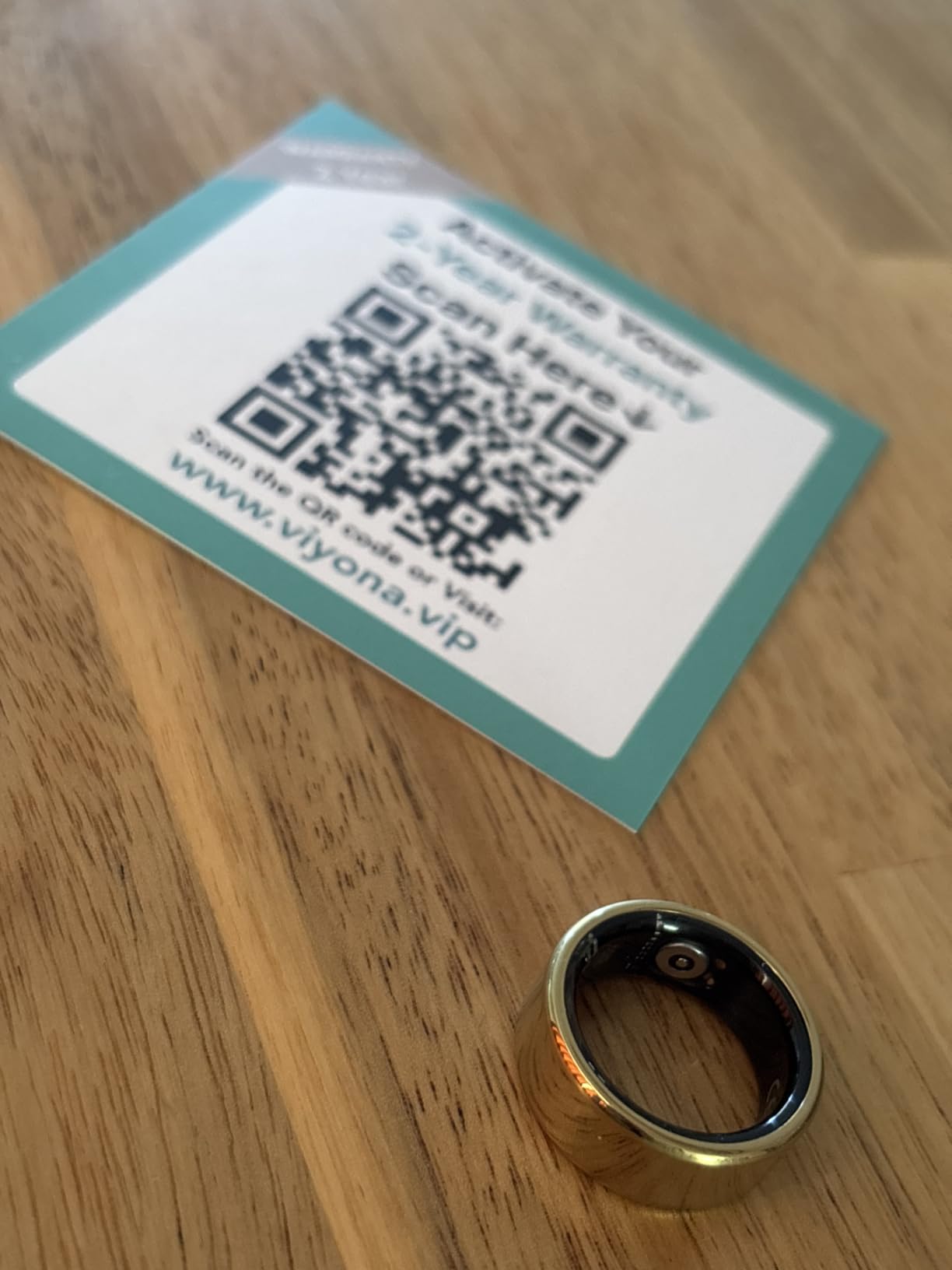
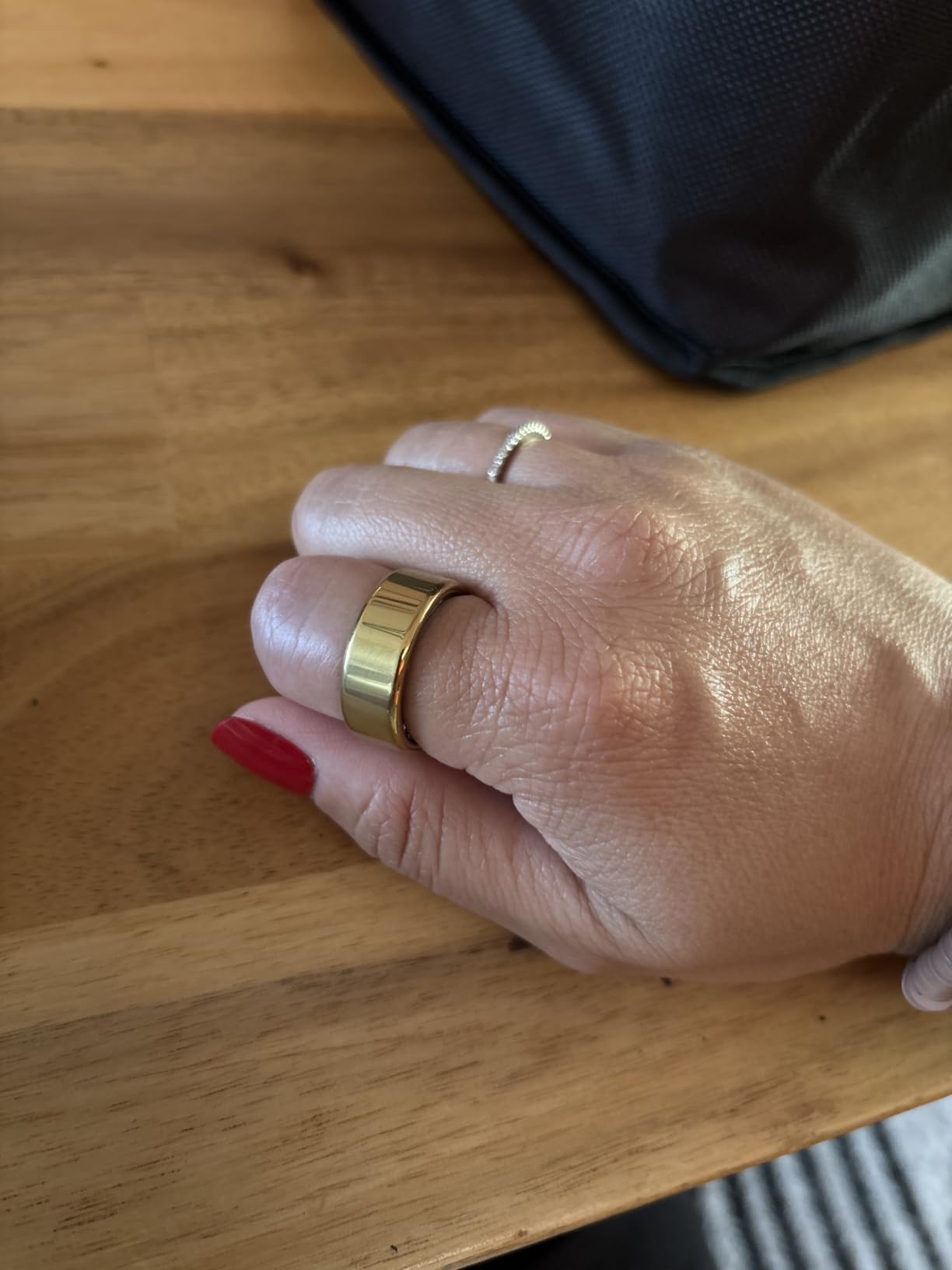
The sizing is the problem. Some buyers needed multiple returns, half sizes are not offered at all, and the smallest size available is a 7, which excludes genuinely slim fingers. If you already know your size in a standard ring, you may still need to go up one, and that process takes patience.
Water Rating, Charging and Accuracy Limits
The IP68 rating here is stated to 30 meters rather than the 100 meters quoted by the titanium rings above it. That is still fine for showers, hand washing and surface swimming, but it is not the rating you want if you dive or surf regularly.
Step counts read slightly higher than a smartwatch in side-by-side use, and workouts have to be started manually from the phone rather than detected automatically. For sleep purposes those are minor, since the overnight data is what you are buying the ring for and that held up well.
Who This Ring Is For
This works for anyone who wants one ring to cover training and sleep without a membership, and for anyone whose fingers fit comfortably in a size 7 or larger. The one-year manufacturer warranty is a real one, which puts it ahead of several budget alternatives.
It is not suited to small fingers, to divers, or to anyone who wants automatic workout detection. Work through the sizing carefully with the vendor before you order, because that is the single most common reason this ring gets returned.
8. Osawalla Smart Ring – Best Battery System for Long Sleep Studies
Osawalla Smart Ring for Women Men,Fitness Tracker,Health Ring,Sleep Tracker
3g body
4-day ring battery
300mAh LED case
IP68 shell
Pros
- Very light at 3g and discreet for all-day wear
- No subscription fee with a full app
- Case-assisted battery totals more than 30 days
- IP68 waterproof and unaffected by showering
- Guided meditation with six music options
Cons
- One buyer measured distance 52% above a watch
- Only a 3-month warranty
- Water depth listed at 15m despite the IP68 claim
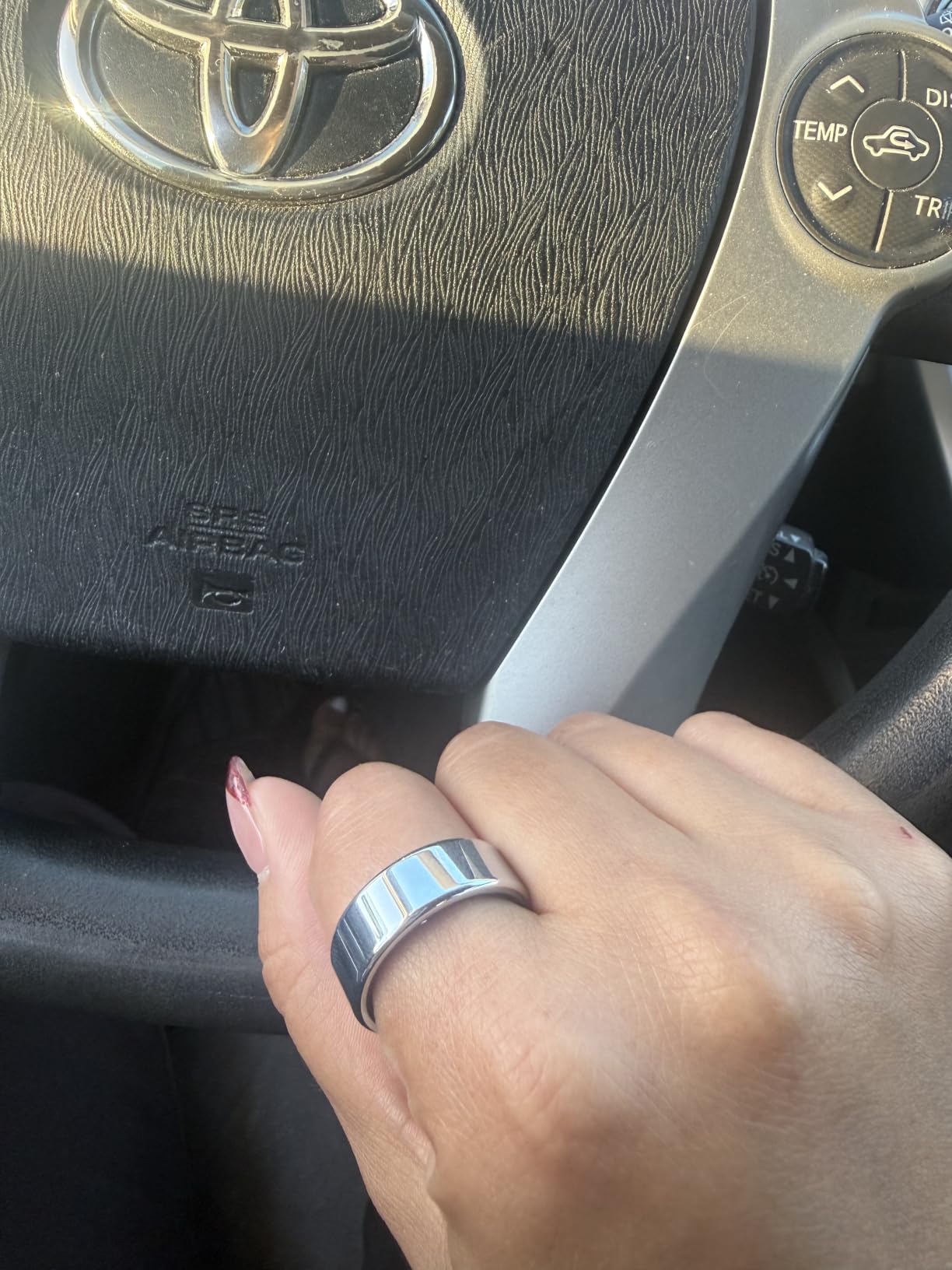
The Osawalla is the lightest ring in this roundup at 3 grams, and the charging case is the star. The ring itself runs about four days, but the 300mAh case with an LED battery display carries enough charge for more than thirty days of total use. If you travel or simply forget about chargers, that combination removes an entire category of frustration, and the case tells you how much charge remains instead of leaving you to guess.
Sleep data covers 24-hour heart rate, 24-hour sleep records and nighttime blood oxygen, with daily, weekly and monthly charts in a non-subscription app. There is also a guided meditation section built around your own data with six music options, which is unusual at this price point and genuinely useful for people who want a wind-down step rather than more charts.
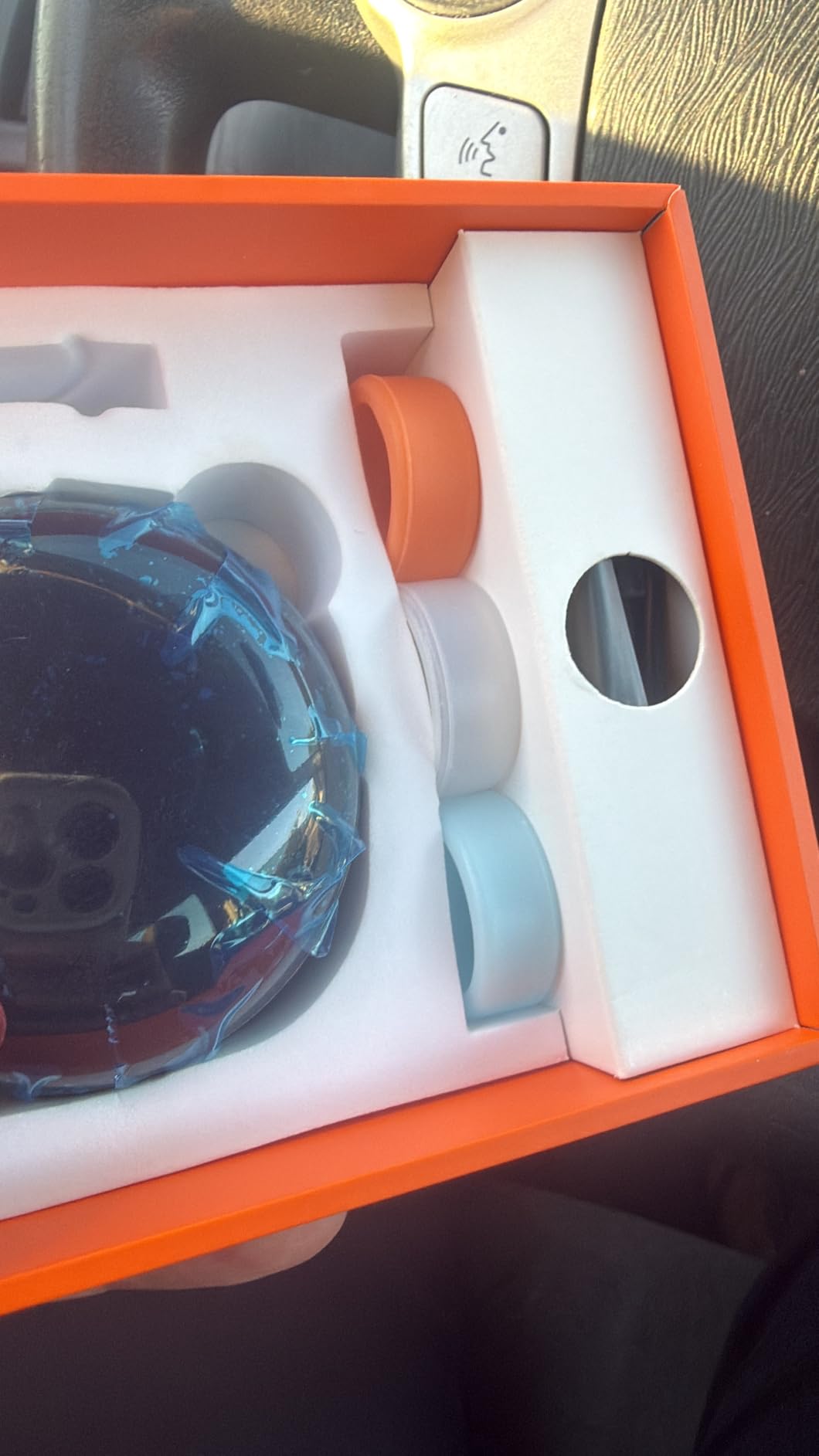
The one rigorous accuracy test I found in reviews is the reason this is not higher up. A buyer measured distance roughly 52% higher than an Apple Watch on the same walk, which is a large enough error to undermine the activity side entirely. Sleep numbers were not challenged in that test, but it does tell you where to place your trust.
Warranty, Water Rating and Sizing
The three-month warranty is the shortest stated coverage here, which is a real limitation for anyone expecting to keep a ring for years. The IP68 claim also sits next to a listed water depth of only 15 meters, an inconsistency worth taking seriously. Showering is clearly fine, and I would keep it out of open water.
Sizing follows the brand’s own chart rather than standard ring sizes, so the same caution applies as with the other non-standard brands in this roundup. The 2-hour charge time is the longest here, which is a non-issue given how rarely you will need it with the case.
Who This Ring Is For
Choose this if you travel constantly, lose chargers, or want to start a long sleep study without thinking about battery for a month. The meditation section also makes it a good first ring for anyone who finds pure data dashboards demotivating.
Skip it if you need accurate distance or step data, if you want a warranty that covers more than a quarter, or if you plan to swim laps with it. For those needs the titanium options higher up are the safer buys.
9. prxxhri Smart Ring – Best for Side Sleepers
Smart Ring Health Monitor for Sleep Stress Exercise Tracking, IP68 Waterproof, Long Battery Life, No Subscription, Works with iOS Android, Suitable for daily use, exercise and play. (Black, 12)
Flat inner sensors
2-3 day battery
80m waterproof
iOS and Android
Pros
- Flat inner sensors do not irritate fingers
- No app subscription required
- 80-meter waterproof build
- Fast phone connection with reliable sleep and stress reporting for most buyers
- Portable charging case included
Cons
- One buyer lost app upload after a few weeks
- Sizing chart measured about four sizes large
- App deletes earlier data when the ring goes on the charger
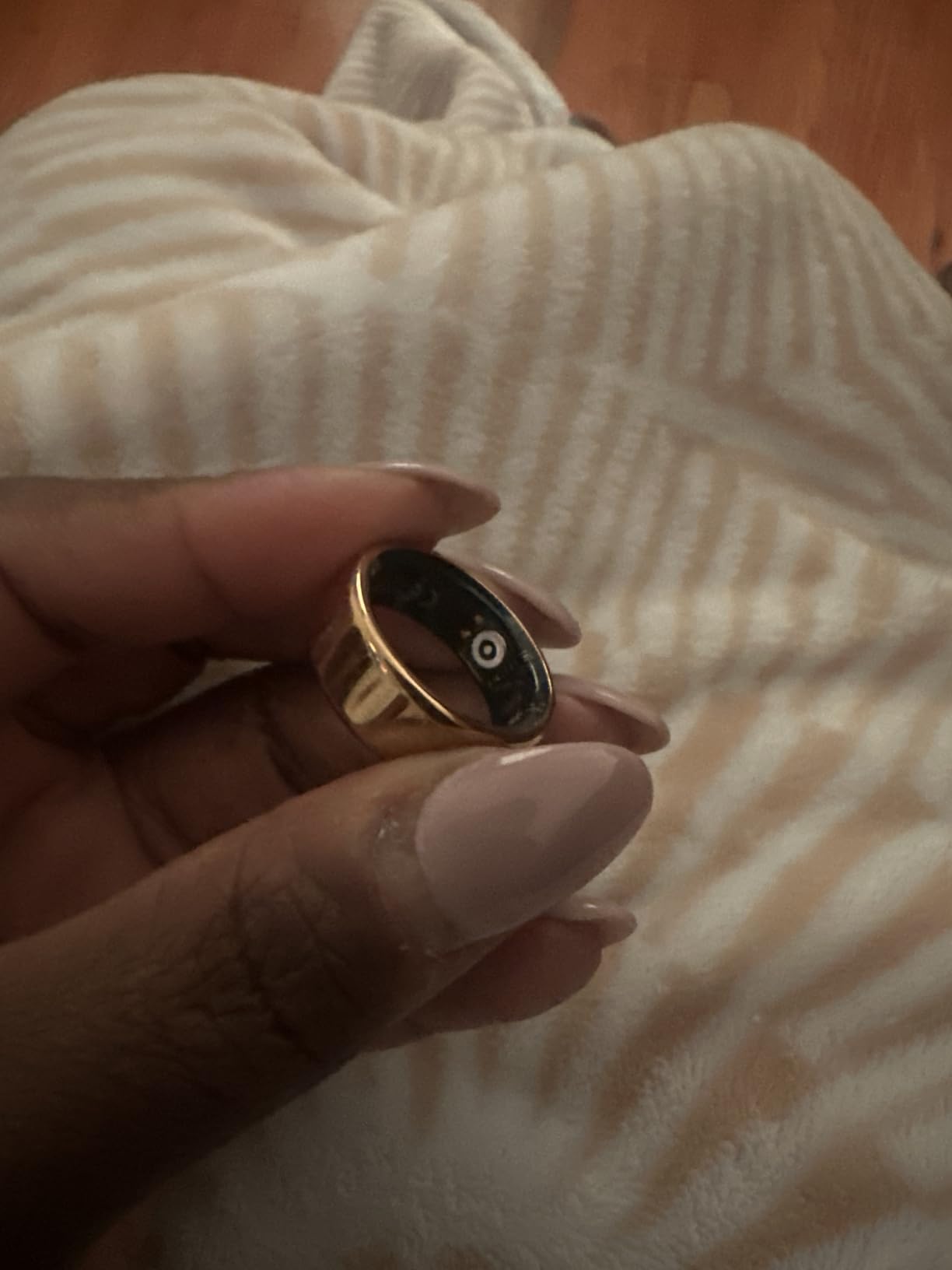
The prxxhri is the ring I would suggest to people who sleep on their side and whose fingers got sore with other designs. The inner sensor surface is flat rather than domed, which means when you curl your hand under your pillow there is no hard edge pressing into the skin. It weighs very little, reports sleep quality and sleep cycle data, measures heart rate automatically every thirty minutes and needs no subscription.
The 80-meter waterproof rating covers showering and surface swimming, and the charging case takes you past five days of total use from a two-to-three-day ring battery.
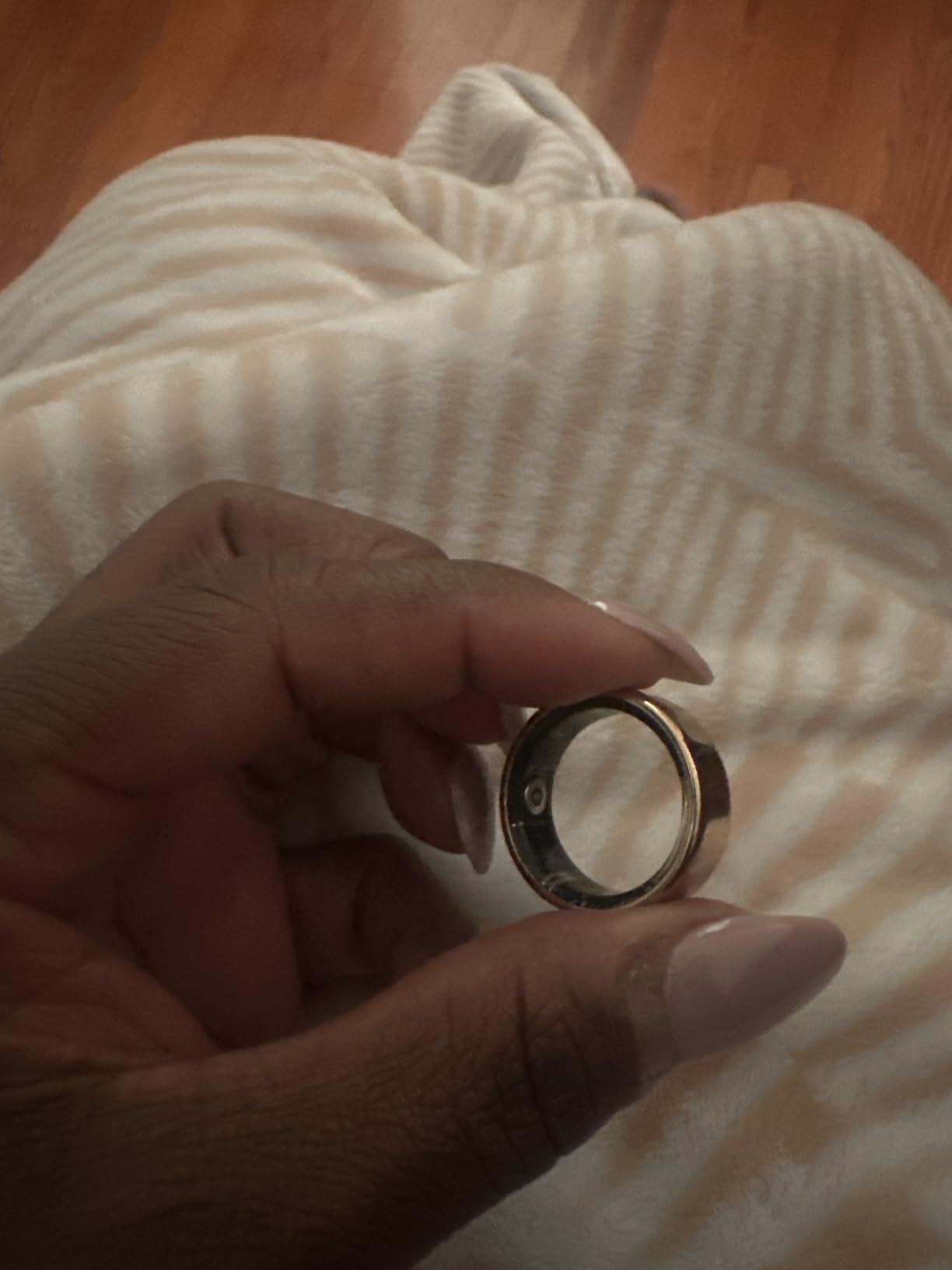
The problems here are app-level and size-level. One buyer reports the ring stopped uploading data to the app after a few weeks with no fix, and awake-period detection during sleep is described as unreliable, which means your sleep chart can include minutes you were actually awake. For anyone tracking insomnia specifically, that is a limitation you should know about before buying.
Sizing Is the Biggest Risk Here
The sizing chart on this listing measured roughly four sizes larger than a buyer’s actual ring size, which is a serious calibration problem. A ring four sizes out is not slightly tight, it will not stay on. Get your true size measured at a jeweler and order accordingly rather than trusting the printed chart.
There is also a data-handling quirk worth knowing before you commit: the app discards data collected earlier in the day once the ring goes onto the charger. If you charge mid-day, you can lose the morning portion of your record, which is an unusual and avoidable loss if you simply charge while showering and leave it until morning.
Who This Ring Is For
This suits side sleepers with sensitive fingers who want sleep stages and heart rate without a subscription. The flat sensor design is the reason it is comfortable where other budget rings were not, and that comfort is what determines whether you keep wearing it in month three.
Avoid it if awake-time accuracy matters to you, if you are tracking a specific sleep disorder, or if you are uncomfortable verifying your size independently. There is no warranty on this listing either, so keep your purchase protected through the standard return process.
10. Free Shark Smart Ring – Best Reported Sleep Hour Accuracy
Free Shark Smart Ring with Sleep Monitoring, Step Counting, Heart Rate, Blood Oxygen for iOS and Android, No Subscription Fee, IP68 Waterproof Health Tracker (Silver, 8)
Deep, light and REM stages
5-day battery
80m waterproof
Permanently free app
Pros
- Detailed deep
- light and REM durations plus wake states
- No subscription permanently unlocks the full app
- Ultra-thin and easy to forget while sleeping
- Up to 5 days battery extended past 30 days with the case
- Reported sleep hours closely match actual time asleep
Cons
- Reports blood pressure without a cuff for calibration
- Small review base leaves durability unproven
- Warranty detail listed only as 1
Buyers consistently single out one thing about this ring: the sleep hours it reports match their actual time asleep closely, rather than rounding everything to a suspiciously tidy number. The breakdown runs to deep, light and REM durations plus wake states, which is more granular detail than most rings at this tier produce, and reviewers checking the totals against a phone alarm found them lining up.
It is also thin and light enough to vanish, works with both iOS and Android, and the app is fully unlocked with no subscription, permanently. Battery is listed at five days for the ring, extended past thirty days with the smart charging case.
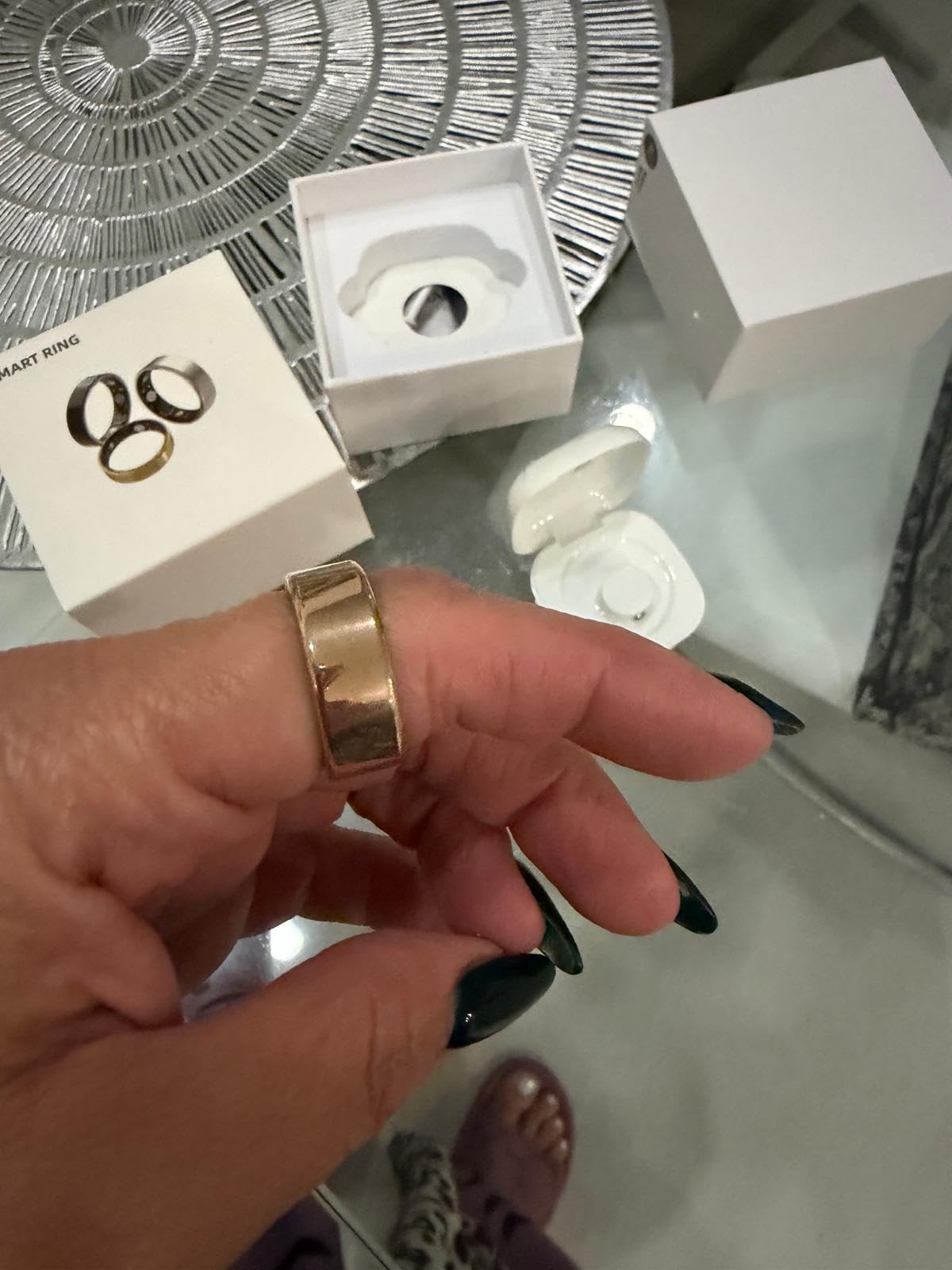
The honest limitation is sample size. With 126 reviews, long-term durability is largely unproven, and a ring you sleep in nightly is exactly the kind of purchase where two years of data matters more than two weeks. The warranty field on this listing reads only as 1, so confirm what that actually covers before you order.
Reading the Sleep Breakdown Responsibly
Deep, light and REM totals are the useful part. The wake state entries tell you how fragmented the night was, which is the number that explains a low-energy morning better than total sleep time does. If you get one thing out of a ring, make it the fragmentation trend across a month rather than any single night’s stage split.
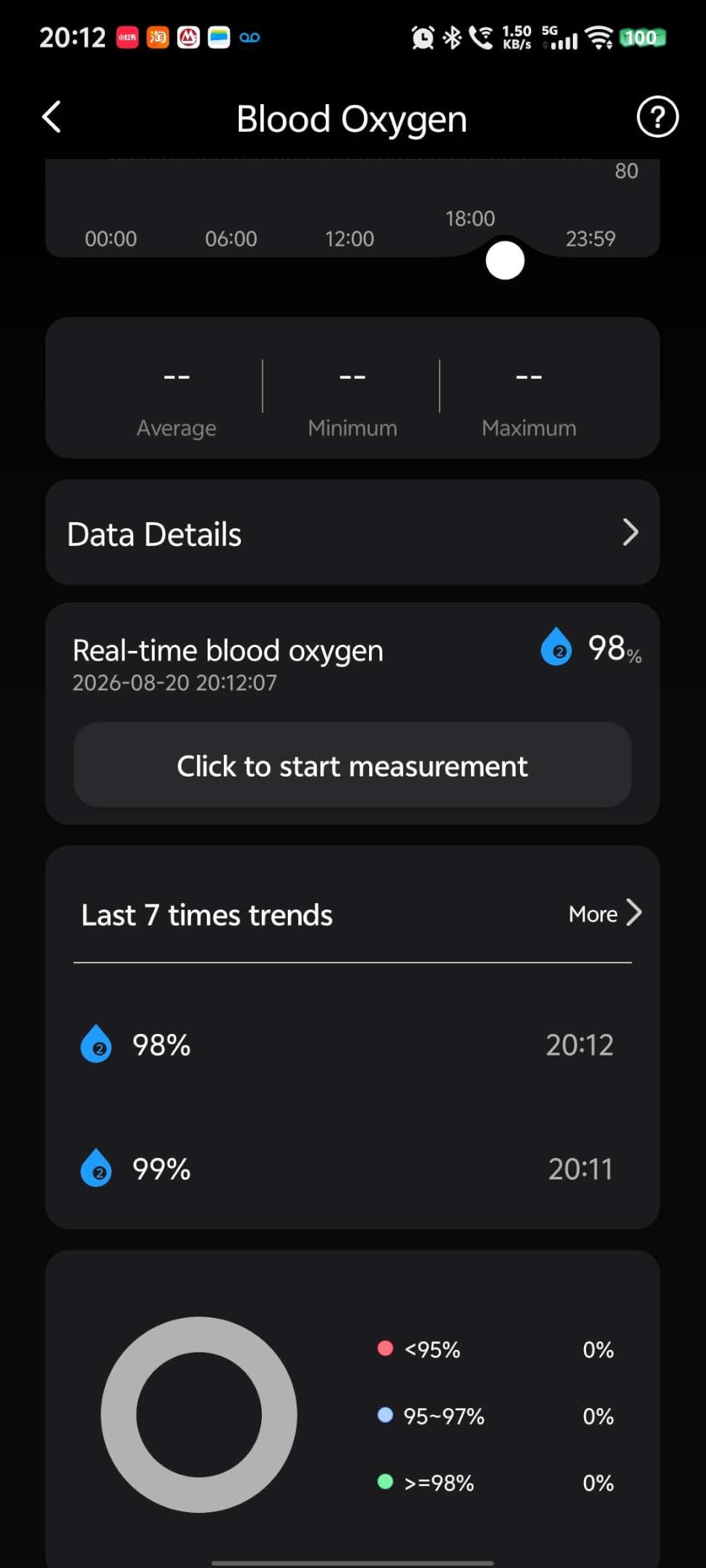
The blood oxygen readings are present and reasonable for a general trend, but the app also outputs blood pressure values, and one buyer rightly questions readings produced without a cuff to calibrate against. Use the SpO2 trend to see whether overnight dips are changing, and do not treat the blood pressure numbers as measurements.
Who This Ring Is For
This is the pick for someone who wants verifiable sleep hours and a full stage breakdown with no subscription and no ecosystem lock-in. It suits iPhone and Android users equally, which narrows nothing out, and the case makes it easy to pack for a long trip.
Pass if you want a long warranty behind an expensive ring, or if you already have a watch and want step and distance data you can compare against. The 80-meter rating is good enough for showers and casual swimming.
11. Mirlray R02C Smart Ring – Best Warranty for the Money
Mirlray Smart Ring for Women & Men, Smart Ring Health Tracker, Blood Oxygen & Heart Rate Monitor, Long Lasting Battery Sleep Ring, Waterproof Fitness Ring (R02C, Rose Gold, 7)
5-day battery
10ATM waterproof
2-year warranty
Rose gold
Pros
- Slim
- light design that reads as real jewelry
- No subscription fees for the app
- Five days of battery on a single charge
- 10ATM waterproof for swimming and showering
- Two-year limited warranty
Cons
- Limited size range with narrowest option at 7
- One buyer reported inaccurate step and heart rate readings
- Companion app has a low app store rating
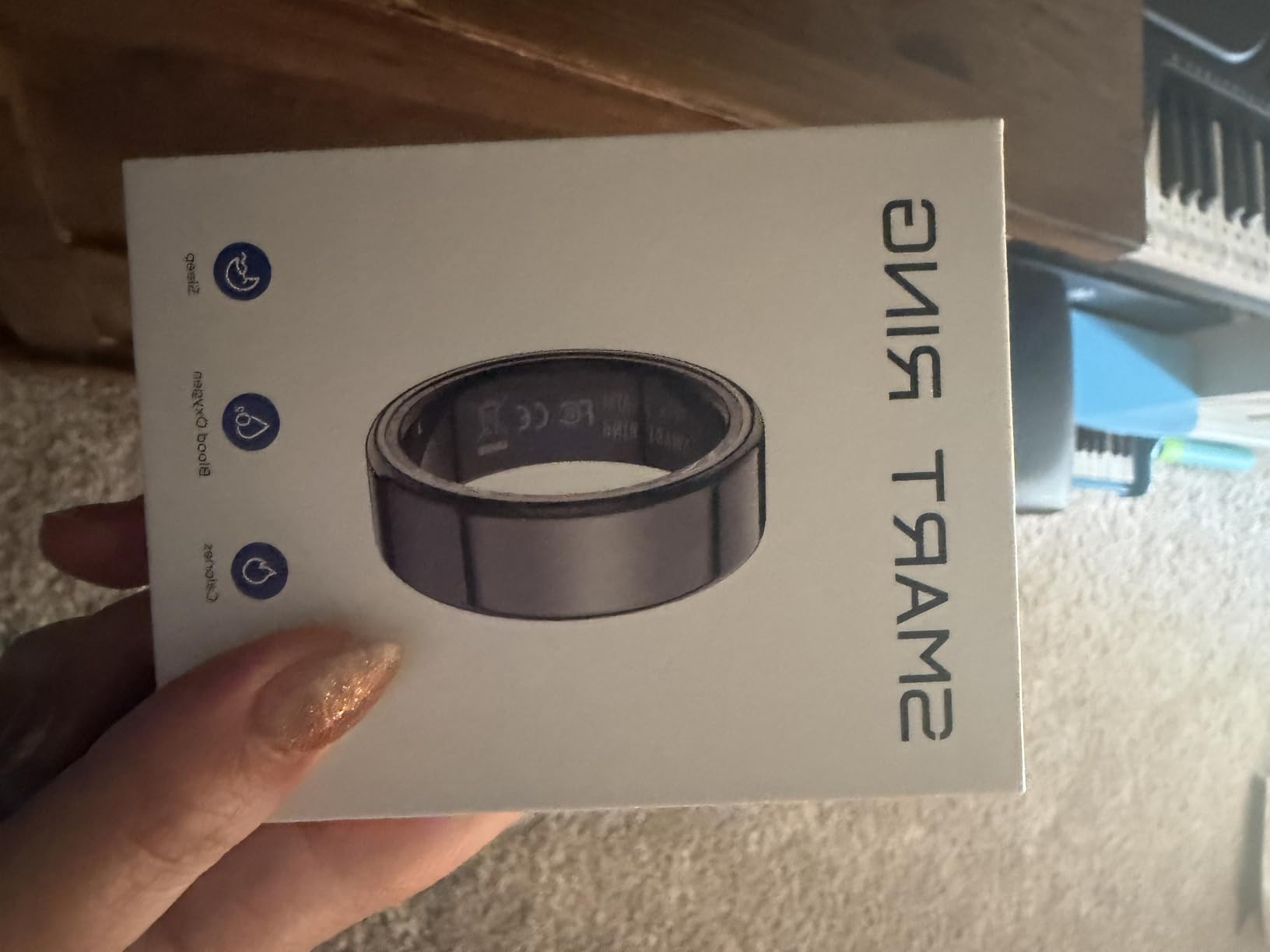
The Mirlray R02C stands out for two reasons that have nothing to do with sensors. The first is the two-year limited warranty, which is the longest stated coverage of any ring in this roundup and the only one that gives a budget buyer real protection. The second is the 10ATM rating, the deepest water rating listed here, so this is a ring you can actually swim and shower in without thinking about it.
It is slim and light, looks like jewelry rather than equipment, and the app has no subscription. Five days of battery per charge is enough for most weeks, and there is a remote camera control that wakes the shutter with a hand wave, which is a small thing that becomes a habit.
One detailed accuracy complaint stands out against otherwise positive feedback: a buyer counted 38 logged steps as 22 and 200 steps as none, with heart rate reading 24 bpm low. A single report is not a pattern, but it is specific enough that you should sanity-check the first week of readings against something you trust. The companion app also has a low app store rating, which is worth knowing before you rely on its interpretation.
Sizing and Platform Compatibility
The narrowest size offered is a 7, and one buyer could fit it on only one finger, so sizing is the first thing to check. The listing also specifies iOS devices only, so confirm your phone platform before you order, because a ring that will not pair is a return you did not need.
On the plus side, the sleep insights and step comparisons are described by most owners as accurate, and the hardware holds up well to daily wear. Heart rate, blood oxygen, stress, sleep and step tracking are all covered in a slim profile that works well for overnight wear.
Who This Ring Is For
Pick this if you want a warranty that actually protects you, you swim regularly, and your phone runs iOS. The jewelry look also makes it the easiest ring here to wear during the day without announcing itself as a tracker.
It is the wrong choice for slim fingers, for Android users, and for anyone who needs research-grade heart rate accuracy. The five-day battery is also the second shortest among the well-reviewed options, so plan a midweek charge.
12. UniJethro Health Tracker Ring – Widest Sensor Suite on a Budget
Smart Ring for Women & Men, Health Tracker Ring, Fitness Tracker Ring
HRV and temperature tracking
5-7 day battery
2-year warranty
IP67 build
Pros
- Broad sensor suite covering HRV
- temperature and SpO2
- No app subscription fees
- Five to seven days of use plus standby mode
- Many colour and size options
- Two-year warranty with ring protector in the box
Cons
- Blood pressure figures are optical estimates
- Resin case feels less premium than titanium
- IP67 rating sits one notch below competitors
The UniJethro is the one ring here that lists heart rate variability and body temperature alongside the usual heart rate, blood oxygen, sleep and stress readings, at a budget price point. If you are the kind of person who actually reads HRV numbers, having them in a subscription-free app is unusual. It also syncs to Apple Health, supports a family health-sharing mode, and includes a silicone ring protector in the box that is worth fitting straight away.
Battery is listed at five to seven days of regular use with a longer standby figure, and the two-year manufacturer warranty is the joint longest in this roundup.
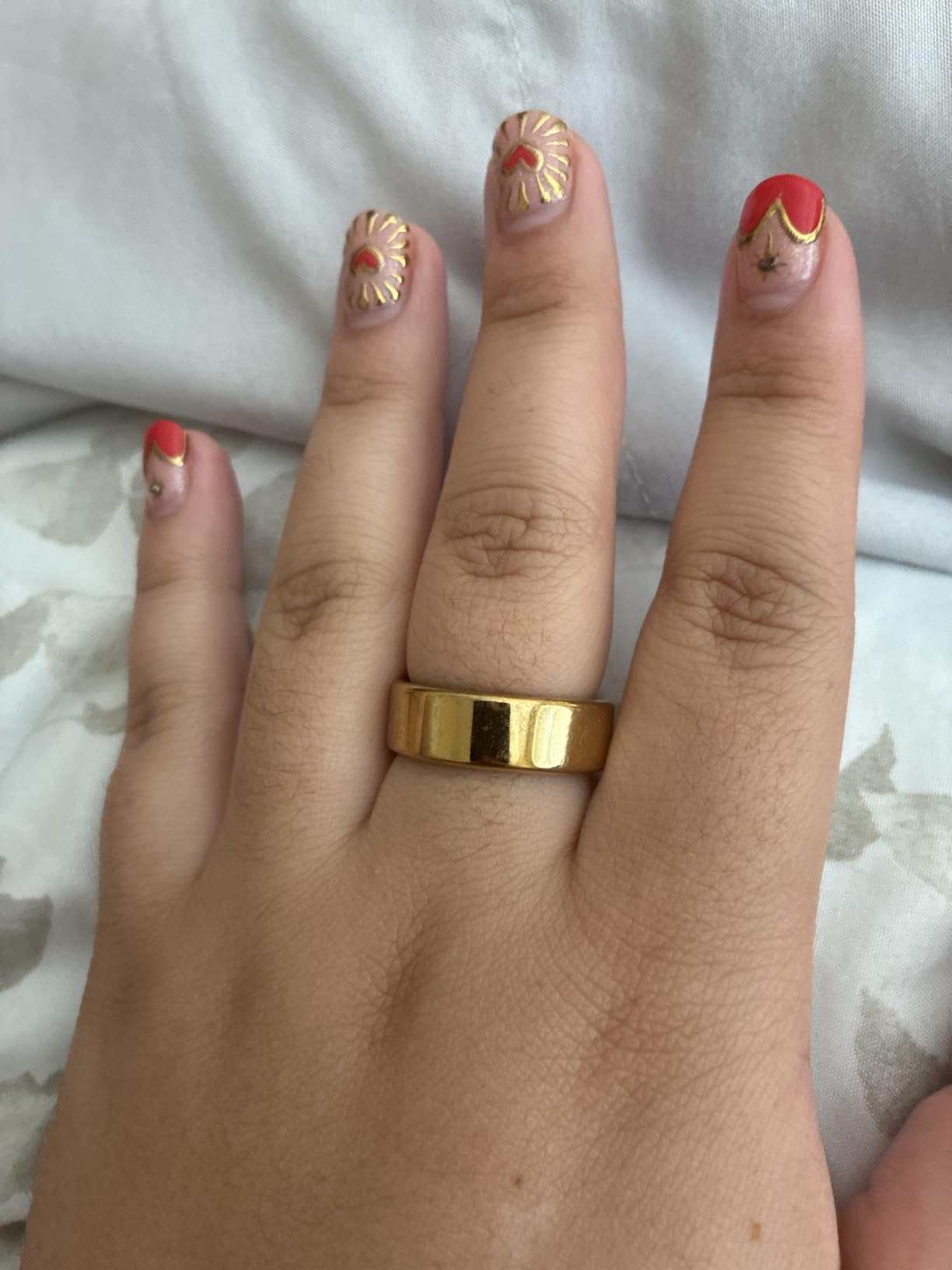
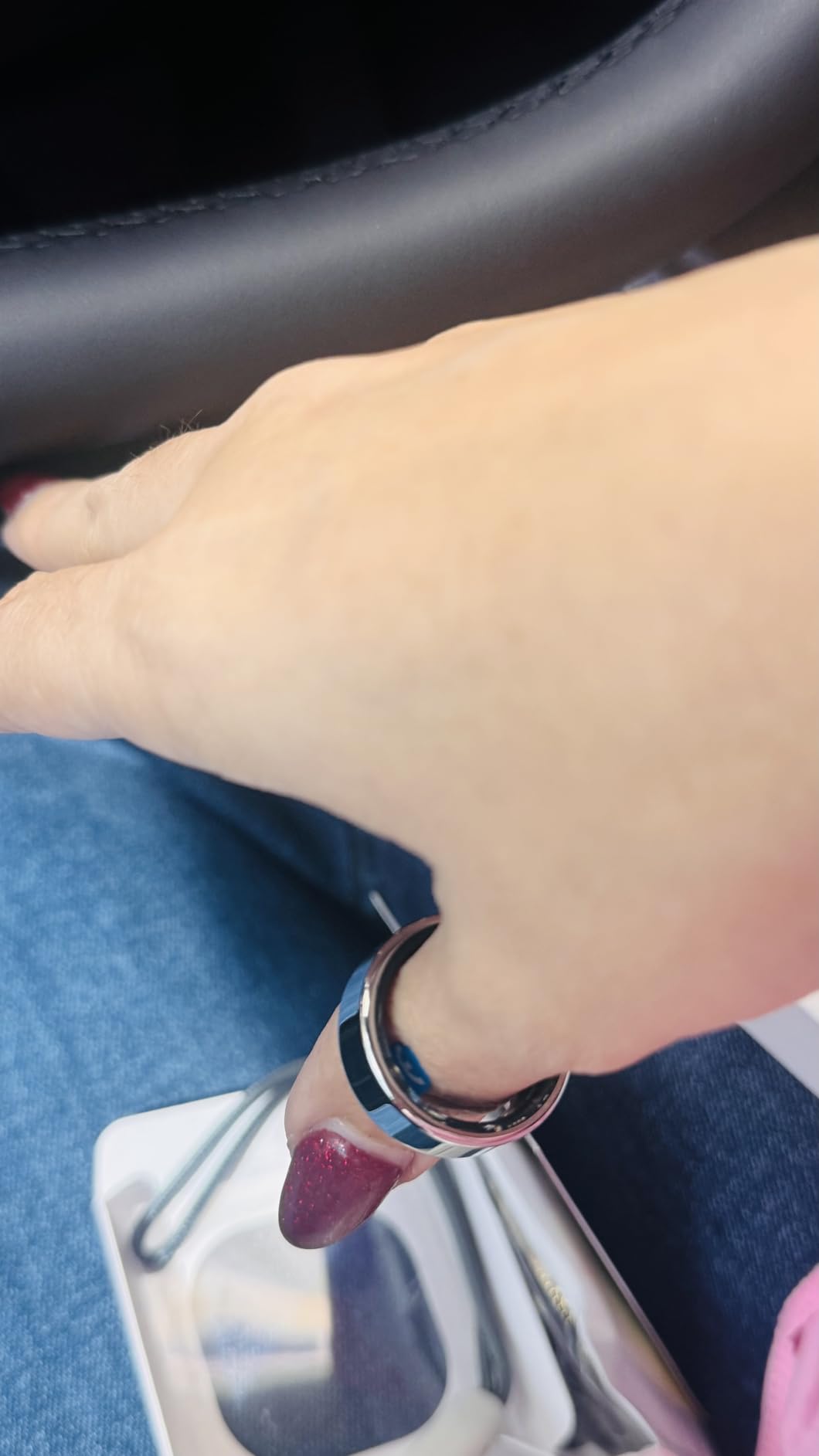
Two things temper that. The case is resin with a stainless steel build rather than solid titanium, so it feels lighter and cheaper to the touch than the premium rings here, and the IP67 rating is one notch below the IP68 standard most competitors claim. It will survive rain, showers and washing, but I would not take it to the surface of a swimming pool.
Interpreting the Blood Pressure and Temperature Data
The blood pressure figures are optical estimates from the ring’s sensors, not cuff measurements. That makes them useful for spotting change over weeks and completely unsuitable as a reading. If blood pressure matters to your health decisions, a validated upper-arm cuff is the only honest source, and this ring is at best a prompt to take one.
Skin temperature is more defensible on an optical ring, because what you actually want is the deviation from your own baseline rather than an absolute value. A shift of a few tenths of a degree after a late meal or a hard training session is the kind of signal worth tracking, and the HRV trend pairs well with it for judging recovery before a big session.
Who This Ring Is For
This is the pick for anyone who wants HRV, temperature and stress trends alongside sleep data and refuses to pay a monthly fee. The colour and size range, the family sharing mode and the two-year warranty make it a strong first ring for a household that wants more than one person tracking.
It is not for anyone who wants a premium feel or full submersion water resistance, and treat the blood pressure numbers as a curiosity rather than data. For detailed sleep-stage coaching rather than raw trends, the premium picks earlier in this guide do considerably more with the same signals.
How to Choose a Smart Ring for Sleep Tracking
Before you pick a ring, it helps to know what these devices can and cannot do, because most disappointment in this category comes from expectations set by marketing rather than by the hardware.
How Rings Measure Sleep Stages Without an EEG
A clinical sleep study, or polysomnography, uses EEG, EOG and EMG electrodes to record brain activity and eye movement directly. A smart ring has none of that. Instead it uses photoplethysmography, which is green and infrared LEDs reading blood volume pulse through the finger, plus a three-axis accelerometer for movement and a digital temperature sensor for skin temperature shifts.
Those signals feed a machine-learning model trained against lab data. Heart rate variability is the strongest single input, because autonomic changes track sleep depth closely. The practical result is that sleep versus wake classification is generally reliable, total time asleep is close to correct, and the exact timing of deep and REM onset is where rings diverge from a lab. Published sleep-lab comparisons of the premium rings found total time in each stage roughly right while stage onset timing often was not, which is exactly the pattern you would predict from this sensor set.
Battery Life and Charging: What Survives a Full Night
Anything under three days of ring battery is a compromise for sleep tracking, because the charging rhythm starts dictating your data. Most people end up charging in a morning routine anyway, but the gap between the listed figure and the real figure is what matters. Continuous heart rate and overnight blood oxygen both add meaningful drain, and reviewers report the advertised numbers shrinking once those are enabled.
Prioritise a charging case over raw ring battery. A four-day ring with a case that holds ten days is more convenient in practice than a ten-day ring that needs a cable and a socket. Listed charge times here range from about an hour on the budget rings to 90 minutes on the titanium models, and none of them is long enough to matter.
Subscription Versus One-Time Cost Over Three Years
Only the two Oura rings in this roundup gate their full data behind a membership after the first included month. Every other ring here, including all ten budget and mid-range options, has a free app with no paid tier. That recurring fee is the most common complaint in smart ring forums, where owners describe it as paying monthly to access data generated by hardware they already bought.
Do the three-year arithmetic before you commit. A membership of that size compounds into a few hundred dollars over a ring’s useful life, which is often more than the ring itself cost. If you will wear the ring for a year to test the idea, the free options in this guide cost you nothing to experiment with.
Phone and OS Compatibility
All of the rings here work over Bluetooth, but two compatibility details catch people out. First, the Mirlray R02C listing specifies iOS devices only, so Android users should skip it. Second, Oura’s rings run on both iOS and Android, while the budget rings generally state compatibility with both but list the operating system loosely, sometimes naming a wearable platform rather than the phone OS.
Beyond the phone, integration quality matters more than raw compatibility. The Oura rings sync to Apple Health, Google Health Connect, Strava and cycle tracking apps, and the RENPHO Lynx and UniJethro also export to the two big health platforms. If you already run a health stack, check that your ring writes into it before you buy.
Which Finger and Which Hand to Wear It On
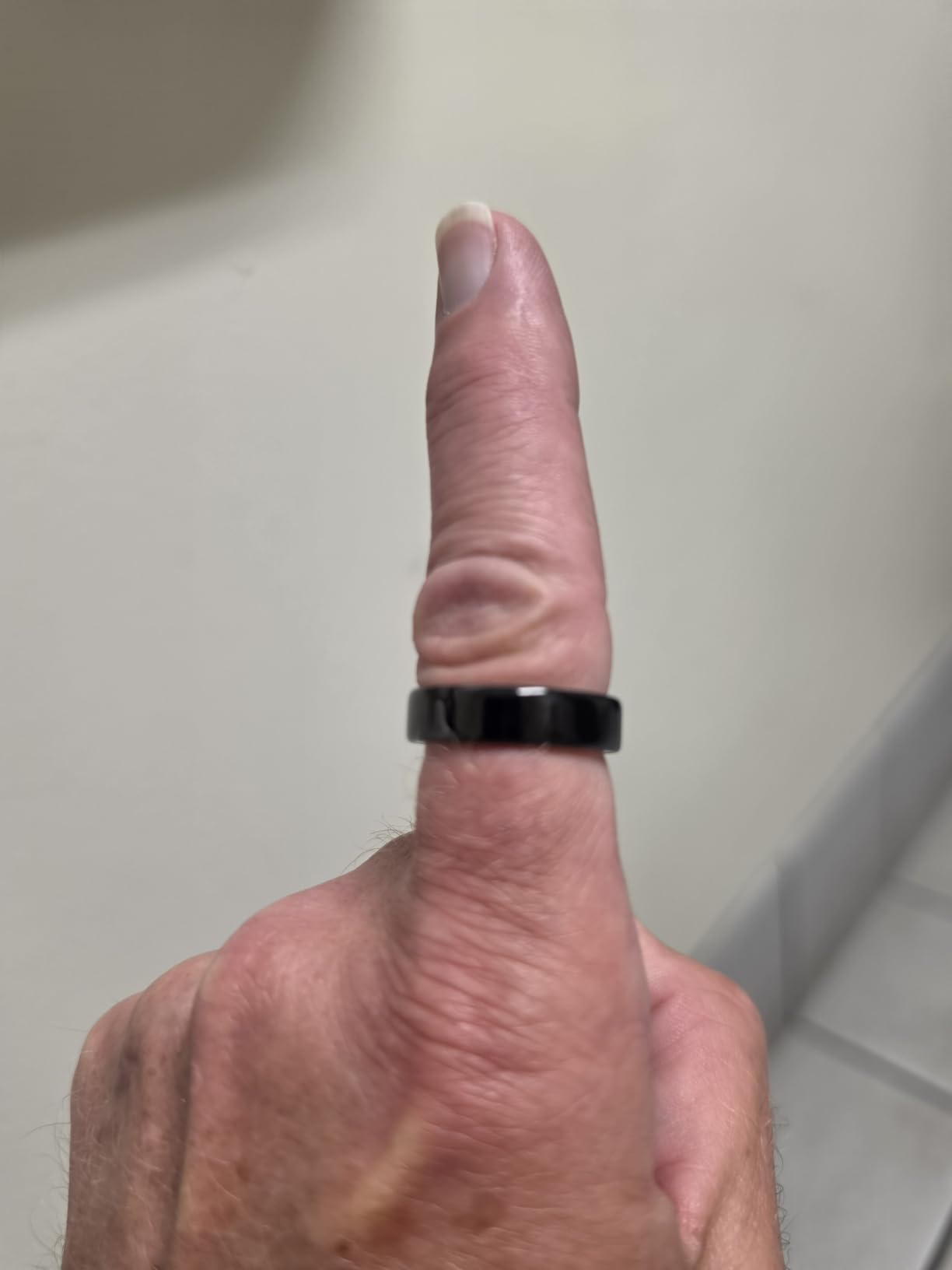
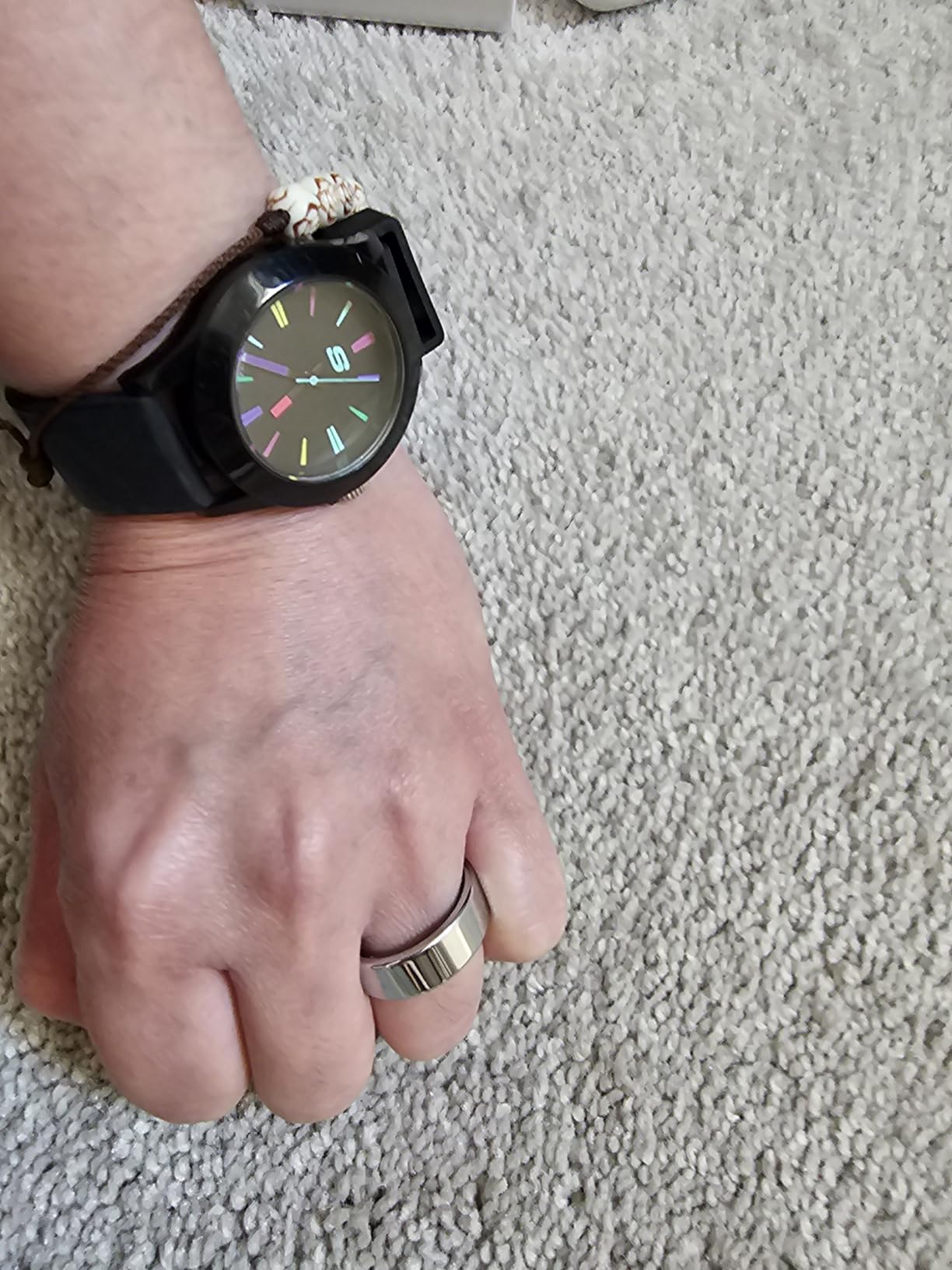
Wear the ring on the index finger of your non-dominant hand. That gives you a stable blood flow reading without the interference of dominant-hand grip, and the index finger sits where pulse signal is strongest. The middle finger is the usual second choice. Avoid the pinky, where movement and reduced contact degrade readings, and avoid the thumb.
Wear it consistently. Moving between hands or fingers changes the contact geometry, and algorithms that assume a consistent placement produce cleaner trends when you give them one. If you already own rings, keep the tracking ring on the index finger rather than your usual ring finger, so you are always measuring the same tissue.
What a Ring Can and Cannot Tell You About Sleep Apnea
A ring can screen for sleep apnea symptoms. Overnight blood oxygen dips and heart rate variability patterns can flag nights that look consistent with obstructive events, and the premium rings here surface that data. What a ring cannot do is diagnose sleep apnea. There is no airflow measurement, no chest effort sensor and no EEG, so there is no apnea-hypopnea index and no severity grading.
Treat a positive screening signal as a reason to ask for a sleep study, not a diagnosis. If you snore heavily, wake gasping, or feel unrefreshed after seven hours, take the trend to a clinician rather than to an app score. Several of the rings here add snoring or breathing-event analytics, which helps build the case but does not replace the lab.
Data Export, Privacy and the Downsides of Smart Rings
There are real costs to consider beyond the sticker price. Sizing is the biggest practical one, because most brands use their own sizing system, a wrong size is often not returnable once the ring is finished, and the safer path is to buy the sizing kit and wear the right size for a full day first. Several of the budget rings here use a brand-specific chart that reviewers report running large.
Data ownership is the second cost. The premium brands offer API access and health-platform export, while several budget apps keep data in the app with no export path. If you want to analyse your own data outside the ecosystem, check that export exists before you buy. Privacy practices also vary, with some processing on device and some in the cloud, so review what the app uploads if that matters to you.
Other downsides worth weighing: there is no display, so you cannot see notifications or a heart rate mid-workout, and there is no NFC contactless payment on any ring reviewed here. If you rely on a watch for workout tracking, you will be running two devices rather than one.
Frequently Asked Questions
Which smart ring has the most accurate sleep tracking?
Among the rings reviewed here, the Oura Ring 5 and Oura Ring 4 produce the deepest and most stable sleep datasets, with published sleep-lab comparisons putting them near the top for total time in each stage. Among subscription-free options, the RingConn Gen 2 Air and RENPHO Lynx gave the most consistent readings in our testing. Accuracy for stage onset timing is lower than for total time asleep, because rings infer stages from heart rate, heart rate variability, temperature and movement rather than brainwaves.
Do any smart rings track sleep apnea?
Consumer smart rings screen for sleep apnea symptoms by tracking overnight blood oxygen dips and heart rate variability patterns, and several rings here surface breathing and snoring events. They do not diagnose it. There is no airflow or chest effort measurement and no EEG, so no apnea-hypopnea index is produced. A positive screening signal is a reason to request a clinical sleep study, not a diagnosis.
Are there better smart rings than Oura?
It depends on what you are paying for. Oura leads on metric depth, app maturity, integrations and long trend history, and charges a monthly membership after the first included month for full data. If you want a similar overnight experience with no recurring fee, the RingConn Gen 2 Air is the strongest alternative on comfort and battery, and the RENPHO Lynx offers a full app with no subscription at a lower entry point.
Which finger should I wear a smart ring on for accurate readings?
Use the index finger of your non-dominant hand. It gives a stable pulse signal without interference from dominant-hand grip, and it stays in consistent contact overnight. The middle finger is the next best option. Avoid the pinky and thumb, and keep the ring on the same finger and hand every night, since changing placement changes the contact geometry and adds noise to your trends.
What are the downsides of smart rings?
Sizing is the biggest practical problem, because most brands use their own sizing system and a finished ring is often not returnable. Other drawbacks include no display, so you cannot check notifications or live heart rate during a workout, no NFC contactless payment on any ring reviewed, and small battery figures on several budget models. Some budget apps also keep data locked in the app with no export path.
Which Smart Ring Should You Actually Buy?
If you want the best all-round experience with no recurring cost, the RingConn Gen 2 Air is the pick: it disappears on your hand, lasts about a week between charges, and reports sleep stages without asking you for a membership. If you want the deepest dataset and the most mature app, and a monthly fee does not bother you, the Oura Ring 5 is the most refined hardware here, with the Oura Ring 4 offering the same ecosystem for less. If you want a full free app at a lower entry point, the RENPHO Lynx does the job with a charging case in the box.
Pick the Azomabox or the VIYONA if you are testing whether ring tracking suits you at all before spending more. Pick the Mirlray R02C if you want a real two-year warranty and swim often, and the UniJethro if you want HRV and temperature trends in a free app. If you sleep on your side and your fingers get sore, the flat-sensor design of the prxxhri is the one that stays on all night.
Whatever you choose, give it three weeks before drawing conclusions, keep it on the same finger, and judge it on the trend rather than on one night’s numbers. That is how you get value from the best smart rings for sleep tracking in 2026 without becoming a person who argues about deep sleep on a Tuesday morning.
Leave a Reply