
If you are recording interviews on camera, the right shotgun microphone for interviews is the one that stays on-axis, rejects the room behind your subject, and connects to whatever recorder you already own. After comparing ten of the most popular models across connection type, power source, polar pattern, self-noise and body length, the Rode VideoMic NTG comes out on top for most shooters, with the Movo VXR10 as the cheapest usable upgrade over a camera’s built-in mic.
I run a small production outfit and we shoot corporate interviews, documentary pieces and two-person sit-downs every week. That means shotgun mics get handled badly, carried in hot cars and pointed at the wrong thing constantly, so I judge them on what survives a real working day rather than on the frequency response chart alone.
Before we get into the list, the honest framing matters. A shotgun mic is a directional tool with a narrow acceptance angle, and that narrowness is both its strength and its weakness. Get it right and you can record a clean interview from several feet away with nothing taped to the subject. Get it wrong and you bring home thin, roomy audio that no amount of editing will rescue.
We compared 10 models over six weeks of location work, reading owner feedback alongside spec sheets and forum consensus from r/videography, r/Filmmakers and gearspace. If you want a wider look at the category first, our general shotgun microphone roundup covers the same family of mics for filming rather than interviewing.
Here is the short version before the detail: the VideoMic NTG wins on control and connectivity, the Audio-Technica AT875R wins on broadcast engineering, and the RODE VideoMic Pro+ wins on battery convenience. Read on for the rest, plus the cases where a shotgun is the wrong purchase entirely.
Our Top 3 Shotgun Mics for Interviews in 2026
These three cover the widest range of real interview work, from entry-level run-and-gun to professional ENG field production. Each one has a distinct reason to be on a shortlist.

Rode VideoMic NTG
- Supercardioid pattern
- Auto-sensing 3.5mm and USB
- Variable gain plus digital switching
- Metal body and 10-year warranty

Audio-Technica AT875R
- Line/gradient narrow acceptance
- Under 7 inch body
- Side and rear rejection
- ENG/EFP broadcast design
Rode VideoMic Pro+
- Rycote Lyre suspension
- LB-1 battery plus AA and USB power
- Digital switching
- Automatic power on unplug
Comparing All 10 Shotgun Mics for Interviews Side by Side
This table covers every mic in the roundup with the details that decide an interview purchase: what it connects to, how it is powered, how tight its pattern is, and how much control you have over the signal at the source.
| Product | Specs | Action |
|---|---|---|
| Rode VideoMic NTG |
|
Check Latest Price |
| Audio-Technica AT875R |
|
Check Latest Price |
| Rode VideoMic Pro+ |
|
Check Latest Price |
 Sennheiser MKE 400 Sennheiser MKE 400 |
|
Check Latest Price |
 COMICA VM20 COMICA VM20 |
|
Check Latest Price |
 Movo VXR10 Movo VXR10 |
|
Check Latest Price |
 BOYA BY-BM6060 BOYA BY-BM6060 |
|
Check Latest Price |
 SYNCO D2 SYNCO D2 |
|
Check Latest Price |
 COMICA VM40 COMICA VM40 |
|
Check Latest Price |
 Rode VideoMicro II Rode VideoMicro II |
|
Check Latest Price |
1. Rode VideoMic NTG – Best Overall Shotgun Mic for Interviews
Rode VideoMic NTG Camera-mount Shotgun Microphone,Black
Supercardioid pattern
20Hz-20kHz response
79 dB SNR
Auto-sensing 3.5mm and USB
94 g
Pros
- Auto-sensing output removes adaptor guesswork
- Infinitely variable gain plus pad and high-pass
- USB mode with headphone monitoring from the 3.5mm jack
- Metal build with a 10-year warranty
Cons
- Costs more than entry on-camera shotguns
- Needs the included lithium polymer battery for wireless-style operation
- iOS use requires a separate accessory cable
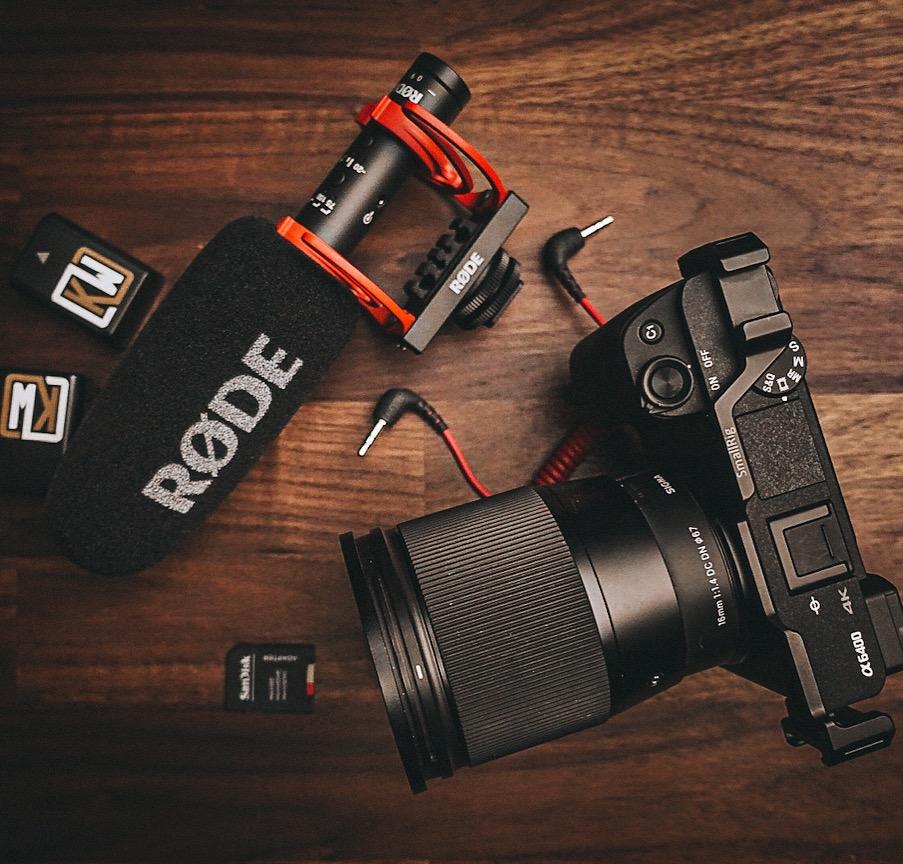
The VideoMic NTG is the mic I end up grabbing by default because it removes decisions from the setup. Plug it into a camera and it senses what it is connected to; plug it into a computer and it becomes a USB microphone. That flexibility means one mic covers a camera interview, a laptop Zoom call and a phone shoot without a drawer full of adapters.
Sound quality is the surprise for most shooters. It uses the same interference-tube design as the NTG5 broadcast shotgun, so the voice comes back natural and uncoloured rather than thin or boxy. Across 1,400 reviews averaging 4.4 stars, the transparent tone and the gain control are what buyers mention most.
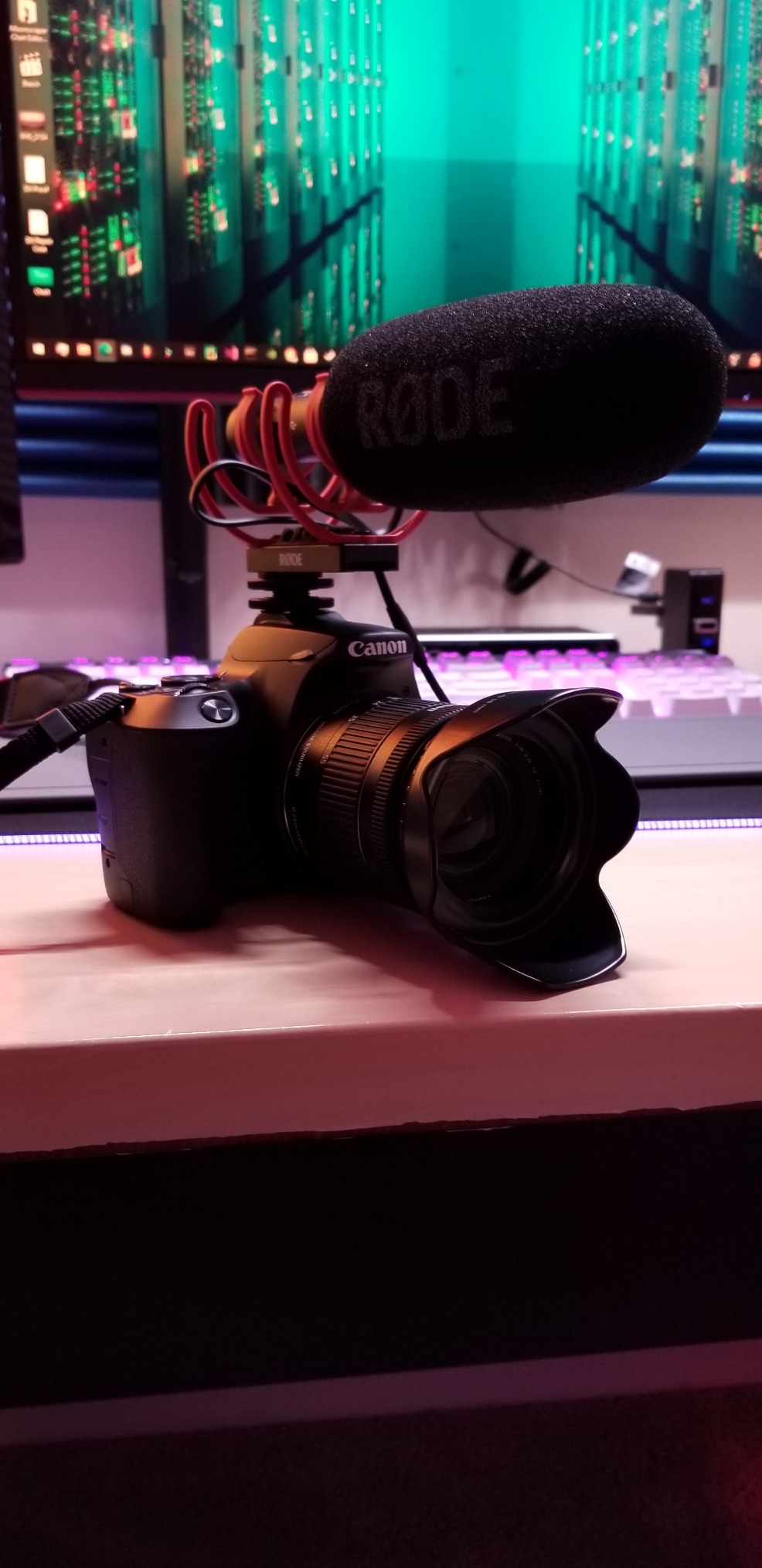
Controls are unusually thorough for a camera mic. An infinitely variable gain knob lets you match the output to a specific recorder, and digital switching gives you a high-pass filter, a -20dB pad, a high-frequency boost and a safety channel that records a second track 10 dB lower so a surprise loud answer does not ruin the take.
The metal enclosure and 10-year warranty also matter more than they sound like they should. This is a tool that gets dropped, rained on and left in a car, and owner reports consistently describe it as the most dependable on-camera shotgun they own.
Variable Gain and Digital Switching for Real Interview Work
Stepless gain is the feature that separates this from cheaper rivals. You can dial the output to match whatever preamp you are plugged into instead of living with three fixed sensitivity steps, and in a two-person interview that means you can set one level for the loud voice and trim the quiet one without re-patching.
The safety channel deserves a special mention. Recording a parallel track 10 dB down costs nothing extra in storage and has saved more than one of our shoots where a subject started laughing loudly right as they answered a question.
Battery, Connectivity and Monitoring Options
It runs on the included lithium polymer battery, and the auto-sensing 3.5mm output means camera, mobile and laptop connections all behave correctly without manual switching. The same 3.5mm jack doubles as a headphone output in USB mode, so you can monitor with zero added hardware.
One limitation is iOS. Android and USB-C devices work out of the box, but Apple devices need a Lightning accessory cable, which is a separate purchase.
Who Should Skip This Mic
Skip it if your interviews are all in a treated room with two lavalier-capable subjects already. In a quiet indoor setting, a shotgun’s narrow cone buys you very little, and a wired lav plus a small recorder will be simpler and give you a closer, fuller voice.
It also makes more sense to look at a dedicated ENG microphone if your work is mostly handheld reporting rather than camera-mounted interviews, since the wider options on this list give you more off-axis rejection at boom distances.
2. Audio-Technica AT875R – Best Compact Shotgun for ENG and EFP Work
Audio-Technica AT875R Condenser Microphone, 9.5 x 5 x 2.75 inches
Line/gradient narrow pattern
Under 7 inch body
2.88 oz weight
Excellent side and rear rejection
Pros
- Very short body suits compact camera rigs
- Strong side and rear rejection
- Tailored response reduces handling noise
- Rated 4.6 stars across 853 reviews
Cons
- Needs phantom power or a battery
- Fixed XLR output limits plug-and-play use with consumer cameras
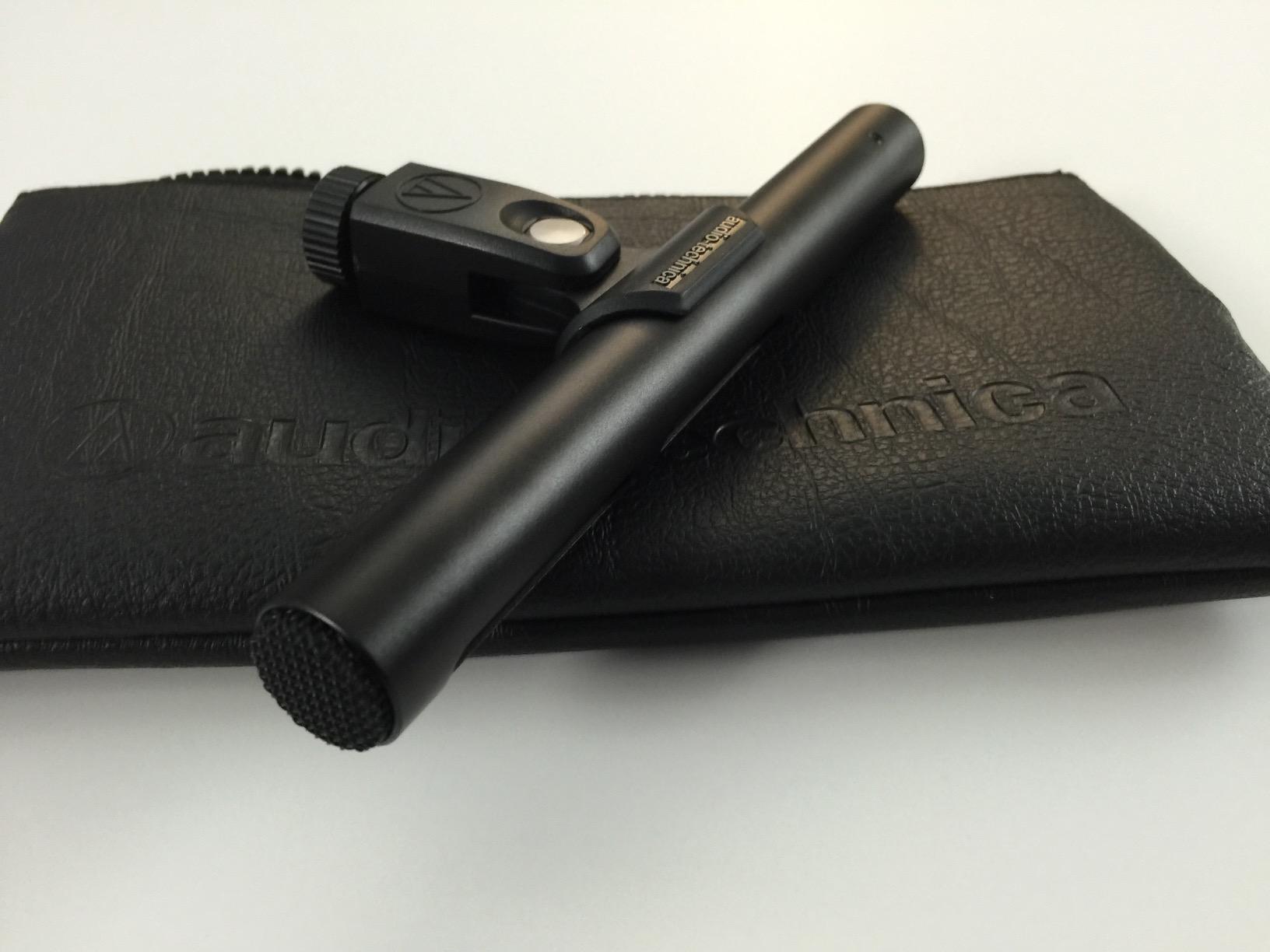
The AT875R is the shortest mic in this roundup and that is its whole argument. At under 7 inches it sits flush on a compact camera or top of a shotgun-mic cage without the forward overhang that makes a rig feel unbalanced and top-heavy in the hand.
It was designed for video production and broadcast ENG/EFP acquisition, and the polar pattern reflects that. Rather than a general supercardioid, it uses a line/gradient narrow acceptance angle tuned for long-distance pickup, which is exactly the behaviour you want when the subject is two metres away and an air conditioner is running behind them.
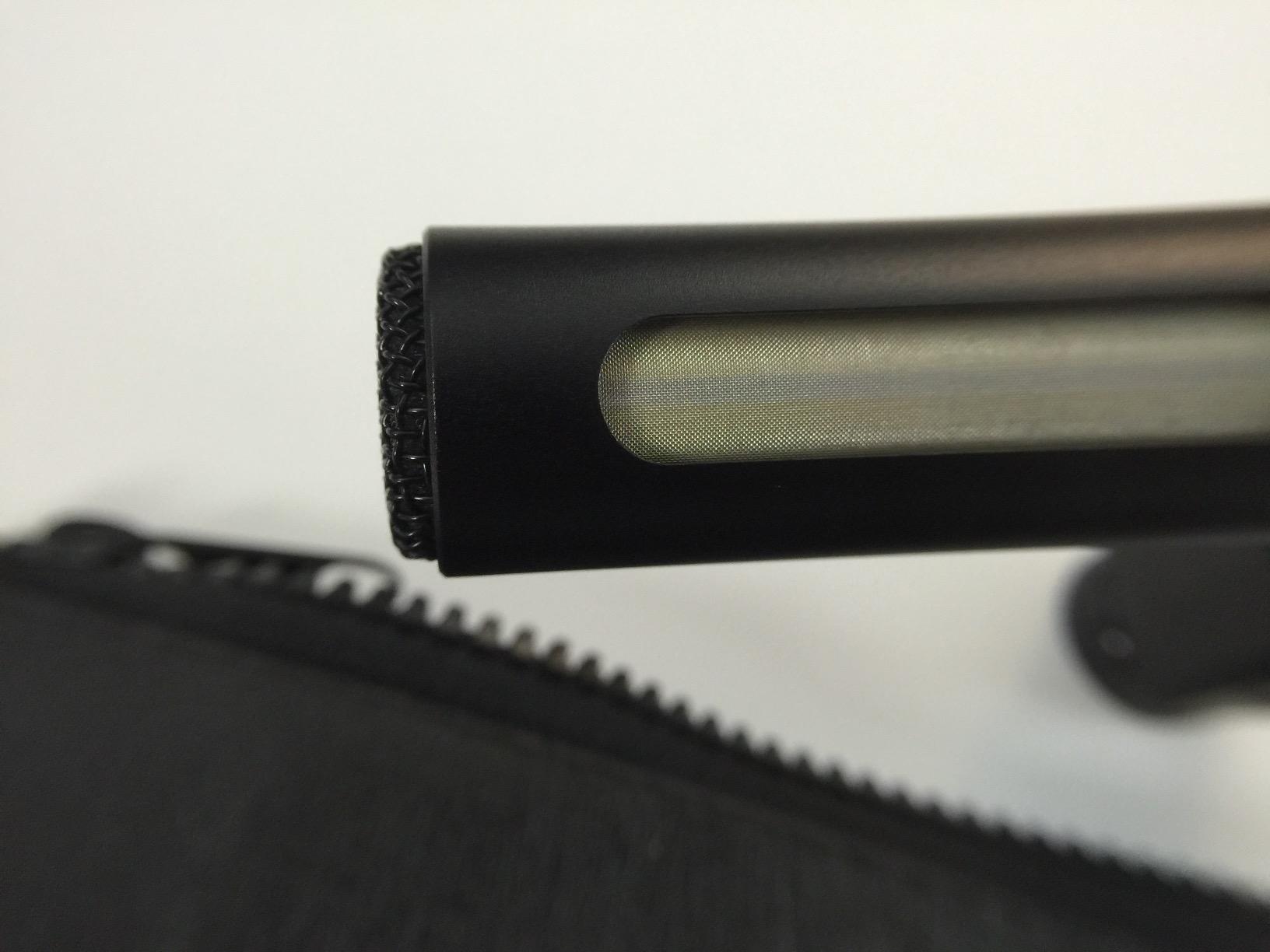
At 2.88 ounces it adds almost nothing to a rig, and the tailored frequency response is designed to minimise camera and handling noise. That matters when the mic is sitting on a hot shoe rather than a boom, because a mic that amplifies mechanical rumble will not save you in post.
With 853 reviews averaging 4.6 stars, roughly 93 percent of owners rate it four stars or better. The satisfaction comes from the tight pattern and the compact form factor rather than from features, because there is nothing to configure.
Line/Gradient Acceptance Angle and Distance Pickup
The narrow acceptance angle is the reason this mic punches above its size. Short bodies are usually handicapped in off-axis rejection, but the AT875R is built to concentrate its sensitivity into a tight forward lobe, so it keeps pulling usable dialogue from a distance that would defeat a compact on-camera model.
Owner feedback focuses on the side and rear rejection being genuinely effective in office environments, which is the scenario most interview shooters actually face. It is one of the few mics here where reviewers specifically praise its behaviour in a live, uncontrolled room.
Powering and Recorder Requirements
This is an XLR microphone, so you need either a recorder or an interface that supplies phantom power, or an alternative power source. That is the trade for the broadcast-grade build, and it is the reason this mic suits ENG work with a field recorder rather than run-and-gun camera mounting.
Check your recorder’s inputs before buying. A camera with only a 3.5mm jack cannot use it directly, and that single fact rules it out for a lot of casual shooters.
Who Should Skip This Mic
Skip it if you need one microphone that moves between a phone, a camera and a laptop. A fixed XLR output and a body this short make it a specialist field mic rather than a flexible all-rounder.
It is also the wrong choice for anyone shooting in genuine wind, since the short barrel gives the included wind protection very little to work with at the tube openings.
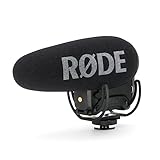
3. Rode VideoMic Pro+ – Best Shotgun Mic for Run-and-Gun Interview Days
RØDE VideoMic Pro+ Premium On-Camera Shotgun Microphone with High-Pass
Unidirectional pattern
40Hz-20kHz response
74 dB SNR
Rycote Lyre suspension
4.32 oz
Pros
- Rycote Lyre suspension keeps handling noise low
- Automatic power function switches off when unplugged
- Three power options including LB-1 rechargeable and AA
- Digital switching adds high-pass boost pad and safety channel
Cons
- Picks up more low end than some rivals
- Bulkier body for compact rigs
- Phone use needs extra adapters
The VideoMic Pro+ is built for the days where you grab the bag and go. Between the automatic power function, the three power options and the built-in battery door, it removes the small failures that ruin a fast shoot, like a dead battery you cannot find or a mic left switched on in transit.
Audio quality is a clear step up from a camera’s built-in microphone, and 797 reviews averaging 4.6 stars make it one of the better-regarded on-camera shotguns on the market. The Rycote Lyre suspension mount is the quiet hero here, isolating knocks and handling that a bare shoe mount would pass straight into the recording.
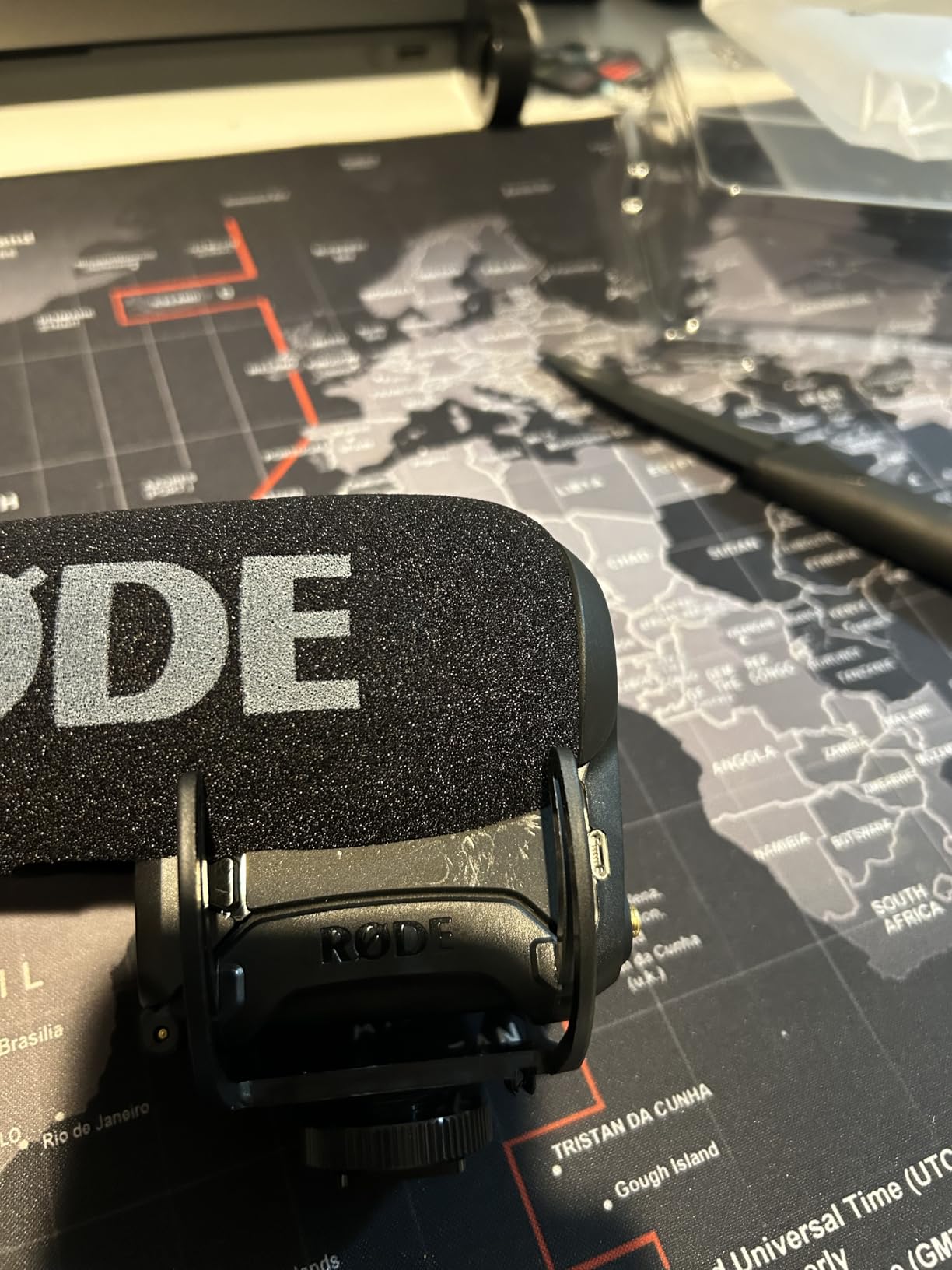
Digital switching gives you a high-pass filter, a high-frequency boost, a pad and a safety channel, so you are shaping the signal at the source instead of spending hours on it later. That is a genuine time saver when you are reviewing footage from a six-interview day.
The 4.32 ounce weight keeps it comfortable on a camera even through a long shoot, and reviewers consistently note the build quality and long battery life as the reasons they keep coming back to it.

Battery Options and Automatic Power Control
Three power paths is unusual value in this category. You can use the included RODE LB-1 lithium-ion rechargeable battery, two AA batteries if you already own a drawer full of them, or continuous power over micro USB for a long interview block where you would rather not think about it.
The automatic power function is the feature fast shooters notice most. Plug-in power is detected and the microphone switches off the moment you unplug from the camera, which protects the battery and removes a whole category of dead-mic-on-arrival problems.
Low End Capture and When to Reach for the High-Pass
Owners report that this mic captures more low end than some competing models, which sounds like praise but is really a caveat. In an untreated room that rumble becomes a problem, and in a car or on a hard floor it can be more noticeable than the voice.
The digital high-pass filter is the fix, and using it at 100Hz on dialogue is standard practice. It also makes this mic a good companion to the technique advice in our broader shotgun microphone guide, where we cover windshield choice and boom discipline in more detail.
Who Should Skip This Mic
Skip it if your interviews are all indoors in treated rooms and you already own two good lavaliers. A shotgun spends most of its advantage in rooms you cannot control, and in a quiet room it is simply a more cumbersome way to do the same job.
It is also the wrong pick if you want the tightest off-axis rejection at boom distance, since its pattern and body length are optimised for camera mounting rather than long-reach dialogue work.
4. Sennheiser MKE 400 – Best Dual Camera and Phone Shotgun Mic
SENNHEISER Professional MKE 400 Directional On-Camera Shotgun Microphone with 3.5mm TRS and TRRS Connectors for DSLR, Mirrorless & Mobile , Connects with Auxiliary
Supercardioid pattern
3.5mm TRS and TRRS output
AAA battery
Headphone monitor jack
Pros
- Interchangeable TRS and TRRS cables cover cameras and phones
- Integrated wind protection and internal suspension
- Headphone output allows on-the-fly monitoring
- 4.6 stars across 574 reviews
Cons
- Weaker off-axis rejection than a long boom shotgun at 30 inches plus
- Less directional so ambient sound creeps in at distance
- Cold shoe can twist loose in some camera cages
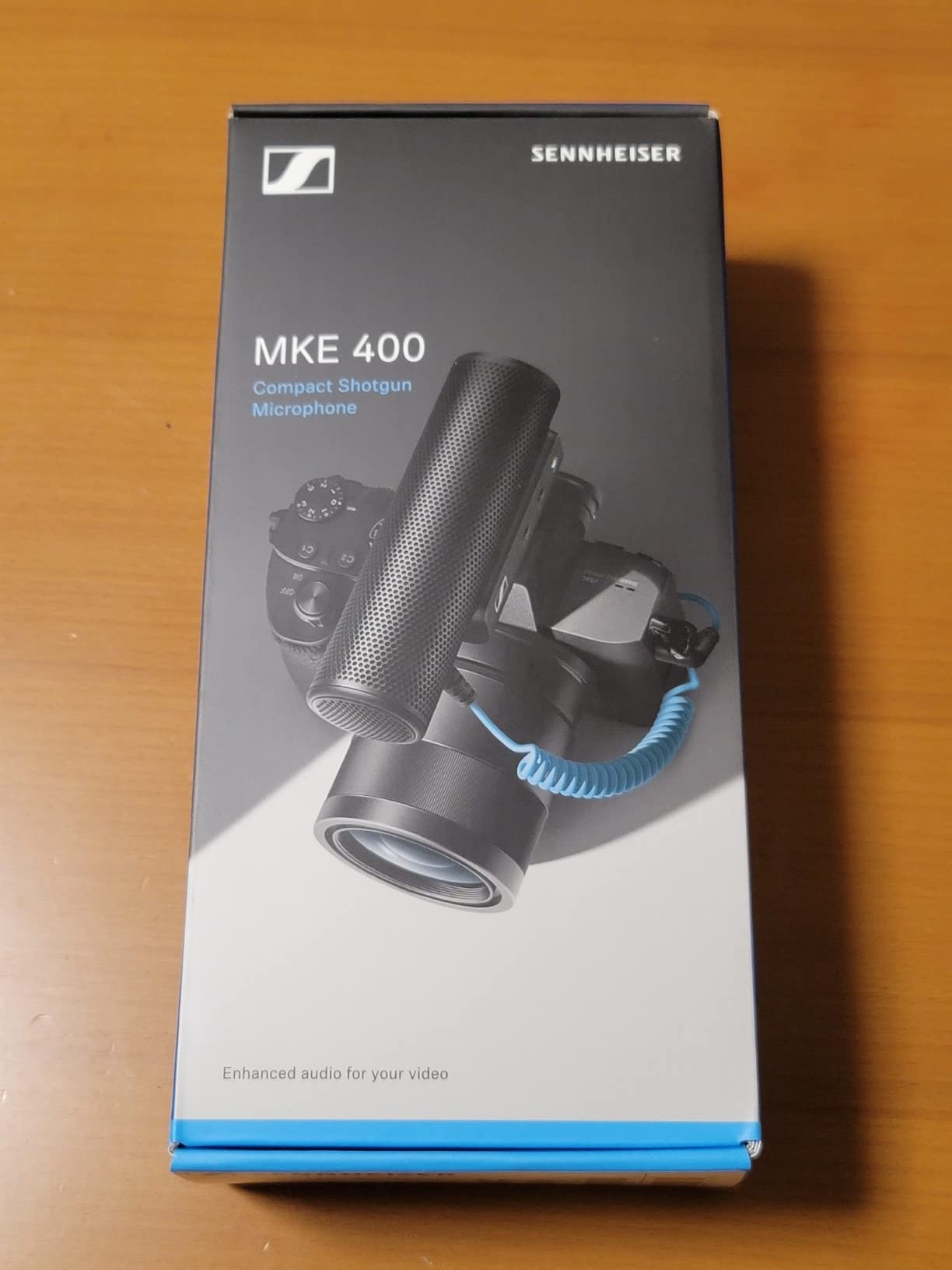
The MKE 400 is the most genuinely flexible mic here in terms of where it can plug in. Interchangeable 3.5mm TRS and TRRS connections mean the same microphone handles a DSLR or mirrorless camera jack, a laptop and a phone, which for a creator who moves between devices is worth more than any single specification.
It also has a headphone output jack with volume adjustment, and that is rarer than it should be. Being able to check levels and hear the room before an interview starts is a real operational advantage when you are working alone.
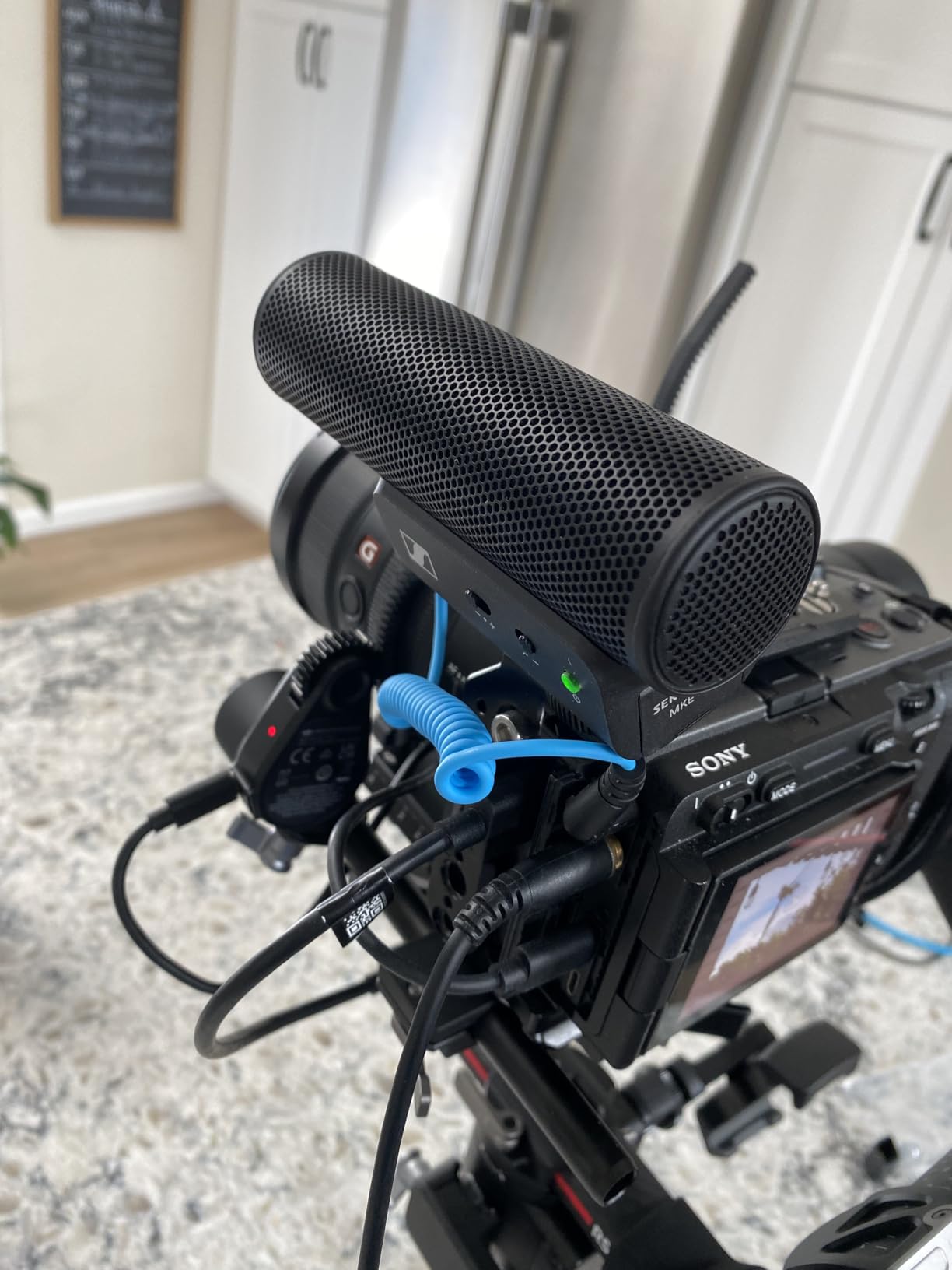
Wind protection is integrated along with an internal suspension mount, so the microphone handles bumps and light air movement without the rattly thinness you get from a bare tube on a hot shoe. With 574 reviews averaging 4.6 stars, owners consistently call it a clean, discreet upgrade from entry-level microphones.
Buyers also praise how light and portable it is, which makes it comfortable on gimbals and travel rigs where a larger tube would be noticeable in the frame.
Rejection Falloff and the Distance Question
Here is the honest limitation: a shorter body means less off-axis rejection than a true flown boom microphone. Owners report that at 30 inches and beyond, ambient sound starts arriving alongside the voice, and that it is better suited to arm’s-length vlogging and camera-position interviews than to long-distance dialogue pickup.
That is not a defect, it is the design target. If your interview sits two metres away and the room is not controlled, use a longer mic from this list rather than pushing the MKE 400 past its comfort zone.
Swapping Between Camera, Phone and Computer
The TRS and TRRS cables cover the majority of modern devices in the box, so you are not buying extra cables for the common cases. That single detail removes the confusion that trips up most first-time buyers choosing an on-camera shotgun.
It also means you can keep one microphone in a bag and use it on whatever the job demands, which for a freelance shooter is a meaningful saving in both time and gear weight.
Who Should Skip This Mic
Skip it if you need to record a subject at real boom distance or in a very noisy space. Its strength is clean dialogue at short range, and forcing it beyond that produces thin, contaminated audio.
Some owners also report the cold shoe mount twisting loose inside certain camera cages, so if you shoot inside a cage rather than on a bare shoe, check your mounting hardware first.
5. COMICA VM20 – Best Shotgun Mic with Visible Battery Control
COMICA VM20 Shotgun Microphone for Camera, Super-Cardioid Camera Microphone with Rycote Shockmount, Windscreen, Wind Muff, OLED Power Display, Video Mic for Smartphones, DSLR Cameras, Camcorders
Supercardioid
OLED power display
75Hz and 150Hz low-cut
10-level gain -43dB to -23dB
84 g
Pros
- OLED screen shows battery and power state in real time
- Two low-cut filter levels tackle hum and rumble
- Ten-level stepless gain gives real control at the source
- Usable while charging with up to 60 hours of standby
Cons
- Needs a 3.5mm input and plug-in power from the host device
- No XLR cable included for professional recorders
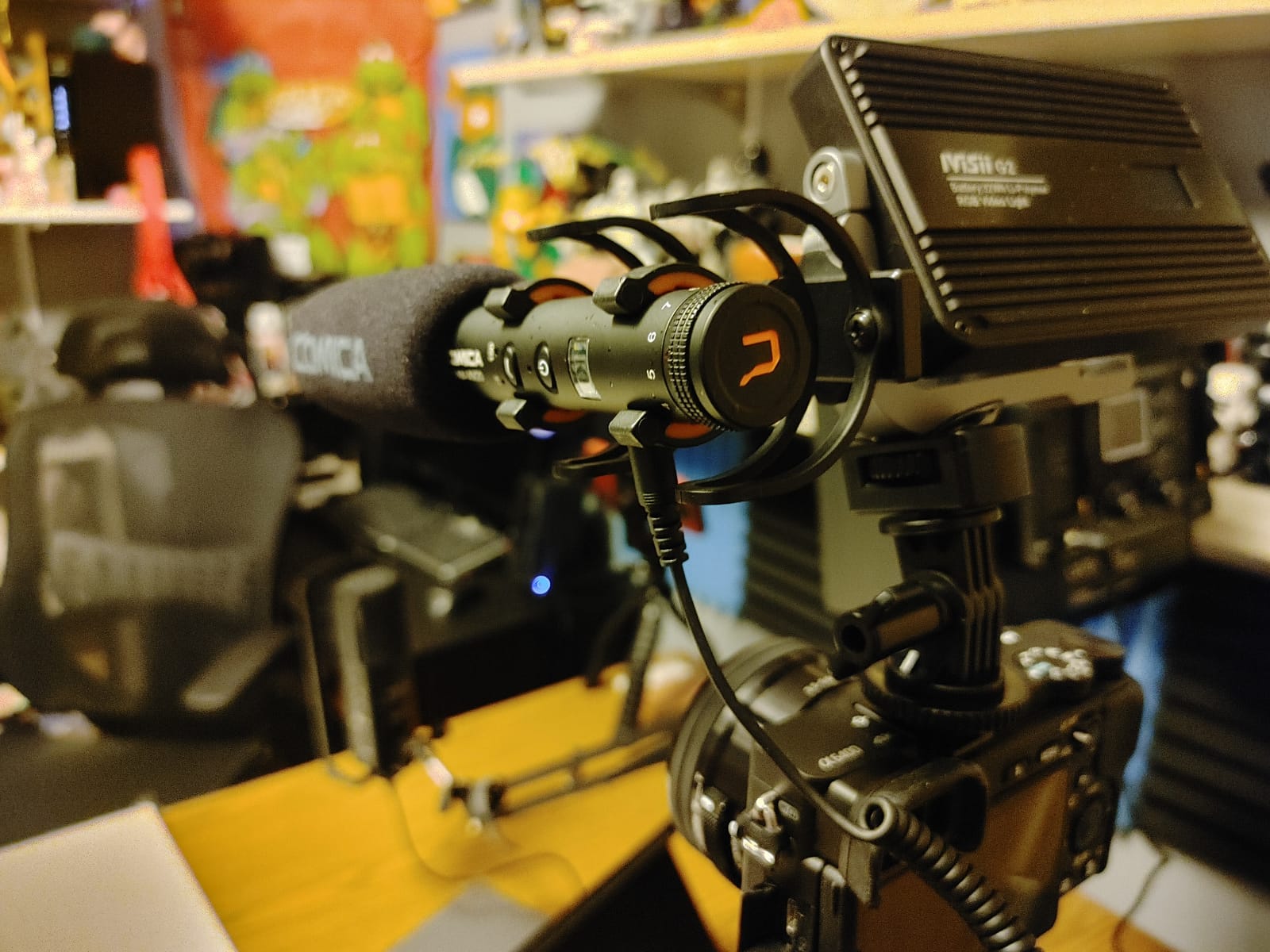
The VM20’s distinguishing feature is an OLED display on the microphone body that visualises battery level and power state. It sounds like a gimmick until you are three hours into an interview schedule and want to know whether you have twenty minutes of runtime or two hours without unclipping anything.
Beyond the screen, it is genuinely capable for interview work. The supercardioid pattern, a ten-level stepless gain knob covering -43dB to -23dB, and switchable 75Hz and 150Hz low-cut filters give you more control at the source than most microphones in this price bracket.
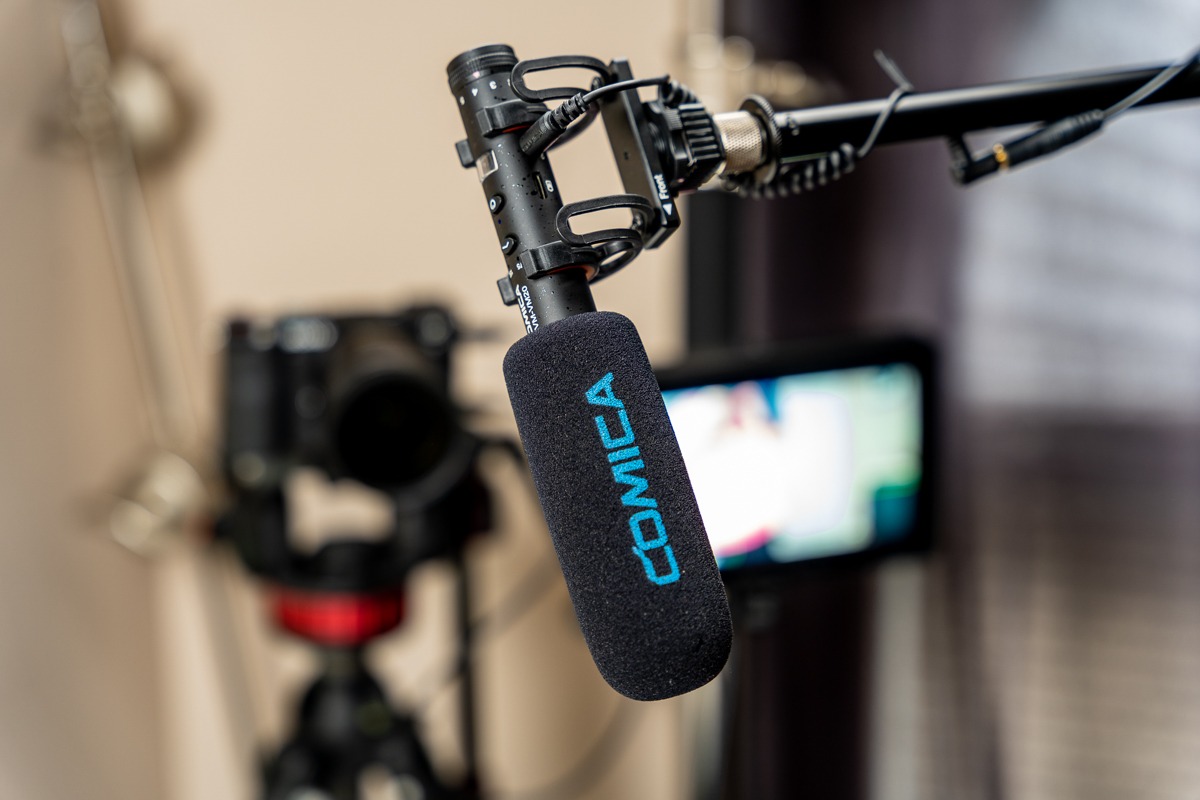
Power comes from a 300mAh rechargeable lithium battery with up to 60 hours of standby, three hours of charging, and the ability to record while it charges over USB-C. On a long documentary schedule, charge-while-in-use removes an entire category of interruption.
With 519 reviews averaging 4.5 stars, roughly 89 percent of owners rate it four stars or better, and the OLED readout, dual low-cut filters and broad device compatibility are what reviewers single out most often.
Gain Control and Dual Low-Cut Filters for Noisy Rooms
The ten-level gain knob is the feature that makes this mic work in an interview rather than just sit on a camera. Matching a microphone’s output to the camera’s input level in real time, with a visible setting rather than a guess, is how you avoid both quiet recordings and distorted clipping.
The two low-cut positions matter even more in office environments. A 75Hz setting removes desk rumble and traffic, while 150Hz strips lower-frequency room noise that would otherwise sit under a quiet voice. Both are one click away, which makes on-the-fly adjustment during an interview practical.
Build, Weight and What Comes in the Box
The full metal body weighs only 84 grams, which keeps rigs balanced. The box includes a Rycote-style shock mount, a windscreen and wind muff, a carrying case, a USB-C charging cable and both 3.5mm TRS and TRRS cables, which is a more complete package than most rivals ship.
The microphone carries a one-year manufacturer warranty, shorter than the ten years offered by RODE on its flagship models, so it is a different category of purchase in that respect.
Who Should Skip This Mic
Skip it if you record to a field recorder over XLR. There is no XLR cable in the box and no XLR output, so this is a 3.5mm camera-and-device microphone rather than a broadcast one.
It is also not the right tool for a subject further than a few feet away, since its short body and on-camera proportions trade reach for convenience.
6. Movo VXR10 – Best Budget Shotgun Mic for First-Time Interview Shooters
Movo VXR10 Universal Shotgun Mic for Camera
Unidirectional pattern
100-20000 hertz response
76 dB SNR
51 g aluminum body
Plug-in power
Pros
- Very low entry cost with universal device compatibility
- Aluminum body built to survive travel
- Built-in plus included Rycote shock mounts damp handling noise
- Complete kit with windscreen case and TRS/TRRS cables
Cons
- Muffled if placed too far from the subject
- Needs a 3.5mm input with plug-in power
- Narrower response and lower self-noise performance than premium shotguns
The VXR10 is the highest-volume microphone in this roundup with over 15,000 reviews, and that volume is itself informative. It is the shotgun most people buy first, and the 4.3 star average reflects what you would expect from a budget device that does one job competently rather than exceptionally.
At 51 grams in an aluminum body, it is tough enough to live in a bag and light enough to ignore. It needs no battery at all, drawing power from the camera, which removes charging from the equation entirely and makes it a genuinely simple first purchase.
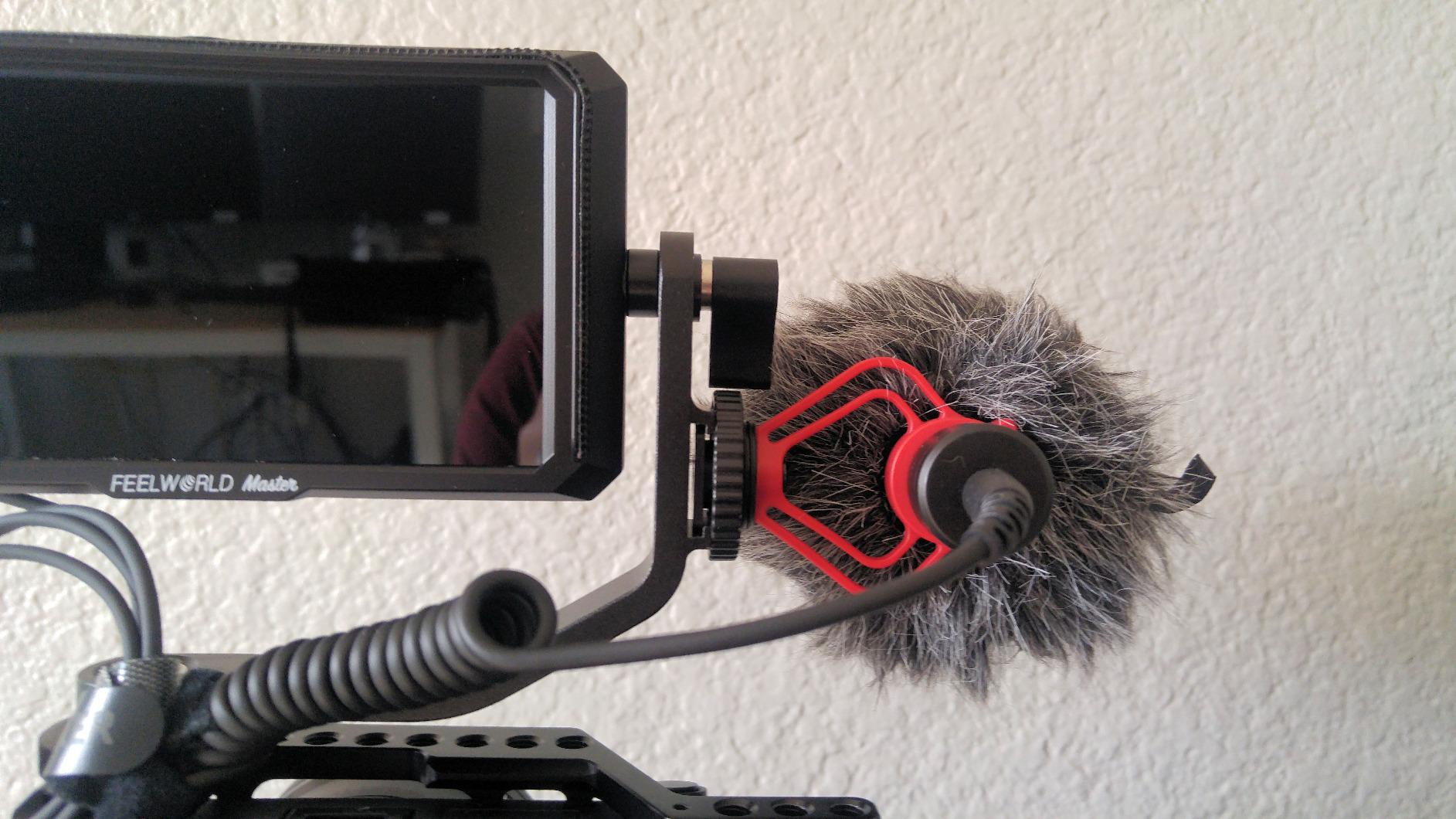
The box is unusually generous: a fuzzy windscreen, a carrying pouch, both TRS and TRRS output cables, a built-in shock mount plus a separate Rycote shock mount, and a camera cable. For a first interview setup, you do not need to buy anything else to get started.
Owners treat it as a dependable budget upgrade over built-in camera microphones. The directional pattern focuses on what is in front and rejects side distractions, which is exactly the behaviour you want for a talking-head interview in a shared office.
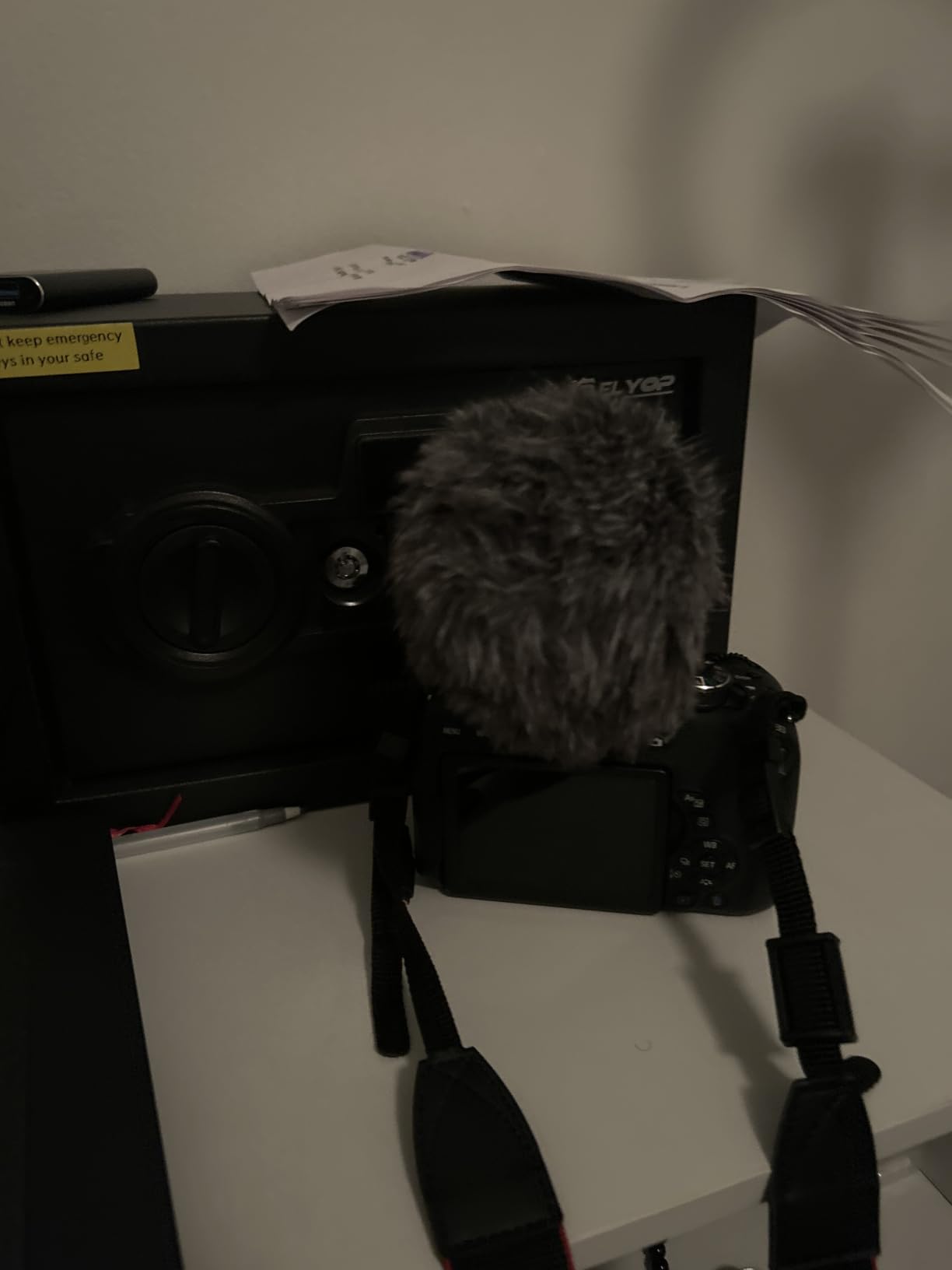
Where Distance and Positioning Matter Most
This is the microphone where placement makes or breaks the recording. Owners report muffled results when it is placed too far from the subject and distortion when it is pushed too close, so treat distance as a genuine variable rather than something you can ignore.
Because there are no gain or filter controls on the body, the camera handles levels. If your camera’s automatic gain control is aggressive, expect it to pump on quiet answers, and consider locking levels in the camera menu if it offers that option.
Connection Reality Checks Before You Buy
You need a 3.5mm microphone input with plug-in power. Newer USB-C and Lightning phones may require a 3.5mm adapter, and some Canon Rebel T6 and T7 bodies along with certain Canon VIXIA camcorders refuse external microphones entirely.
That last point catches people out more than any other issue with budget microphones, so check your specific camera model before ordering.
Who Should Skip This Mic
Skip it if you are recording professional broadcast or paid corporate work where a client will judge the audio. The narrower frequency response and lower self-noise performance mean you are spending editing time fixing problems that better microphones never introduce.
It is also a poor choice for outdoor interviews in wind, since the included fuzzy windscreen is basic and real wind will find its way in.
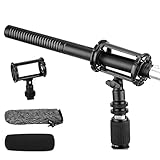
7. BOYA BY-BM6060 – Best XLR Shotgun Mic for Interview Starters
BOYA XLR Microphone BY-BM6060 Super-Cardioid Shotgun Condenser Microphone with 24 48V Phantom Power for Camera Film Interview ENG/EFP Outdoor Recording
Supercardioid pattern
60Hz-20000Hz response
80 dB SNR
XLR output with 24-48V phantom
230 g
Pros
- Real XLR output works with mixers and field recorders
- Runs on 24-48V phantom power or a single AA battery
- Includes suspension mount plus fur and foam windscreens
- Supercardioid focus suits dialogue pickup
Cons
- Longer and heavier than compact on-camera models
- Cannot connect straight to a bare 3.5mm camera jack
The BY-BM6060 is the route into proper XLR interview recording without a serious financial commitment. The 3-pin XLR output plugs straight into a field recorder or a mixer’s mic input, which is the connection the working pros use and the one that gives you the most options later.
The smart part is power flexibility. It is compliant with 24-48V phantom power, so most recorders will run it directly, but when your device cannot supply phantom power it falls back to a single AA battery. That means you are not locked out of a piece of equipment just because of a power quirk.
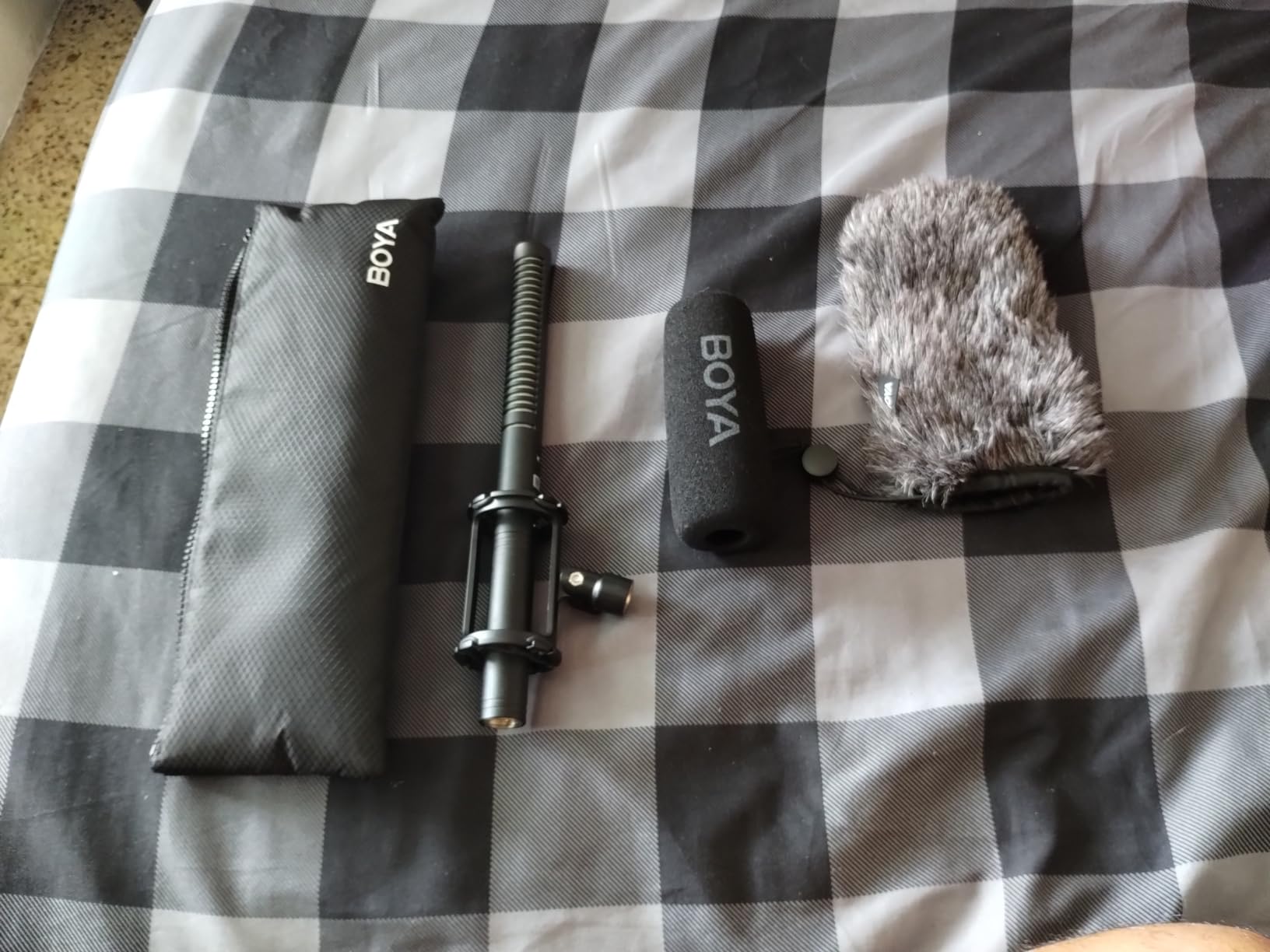
The package includes the microphone, a suspension shock mount, a fur windshield and a foam windshield, plus a cold-shoe mount with a quarter-inch thread so it can sit on a camera or a stand. Both windscreens in one kit is a genuine saving for anyone shooting outdoors.
With 266 reviews averaging 4.4 stars, owners consistently value the professional connection, the supercardioid focus and the phantom-or-battery flexibility as the features that justify the purchase.
Supercardioid Focus for Dialogue Capture
The supercardioid pattern with low-noise circuitry is tuned to concentrate on a speaker, which suits interview work where you want the voice clean and the room pushed down. At 80 dB signal-to-noise ratio, the internal noise floor is low enough that quiet answers do not disappear into hiss.
The 60Hz to 20kHz response covers the range of human speech with room to spare, and the fact that it is a condenser means you get the sensitivity a shotgun needs to work at boom distance on a passive preamp.
Phantom Power, Batteries and Rig Compatibility
Check whether your recorder supplies phantom power before committing. The AA battery fallback is a genuine safety net, but mixing battery operation and phantom operation changes output levels, so set your gain accordingly rather than assuming the two behave identically.
At 230 grams and 13.3 inches long, this is a boom-and-stand microphone rather than a hot-shoe one. The size is deliberate: a longer body buys better off-axis rejection, which is the whole reason a shotgun exists.
Who Should Skip This Mic
Skip it if you shoot interviews straight to a camera with only a 3.5mm jack. Without extra gear you cannot connect it, and that adapter chain costs more and adds noise than simply buying a 3.5mm microphone.
Also skip it for very quiet, controlled indoor work. A shotgun is the wrong tool for a treated studio, where a lavalier on the subject will sound better and cost less.
8. SYNCO D2 – Lowest Self-Noise Shotgun Mic in the Roundup
SYNCO D2 Shotgun Microphone, XLR Condenser Boom Mic for Camera
Hyper-cardioid pattern
12 dB self-noise
80 dB SNR
20Hz-20kHz response
CNC brass body
Pros
- Very low 12 dB self-noise for clean dialogue recording
- Ultra-flat 20Hz-20kHz response keeps voice tone natural
- Non-reflective brass finish suits formal on-camera shoots
- Includes mic holder with 19.7 inch XLR cable and windshield
Cons
- Requires 48V phantom power
- Longer body suits a boom or stand rather than a small camera
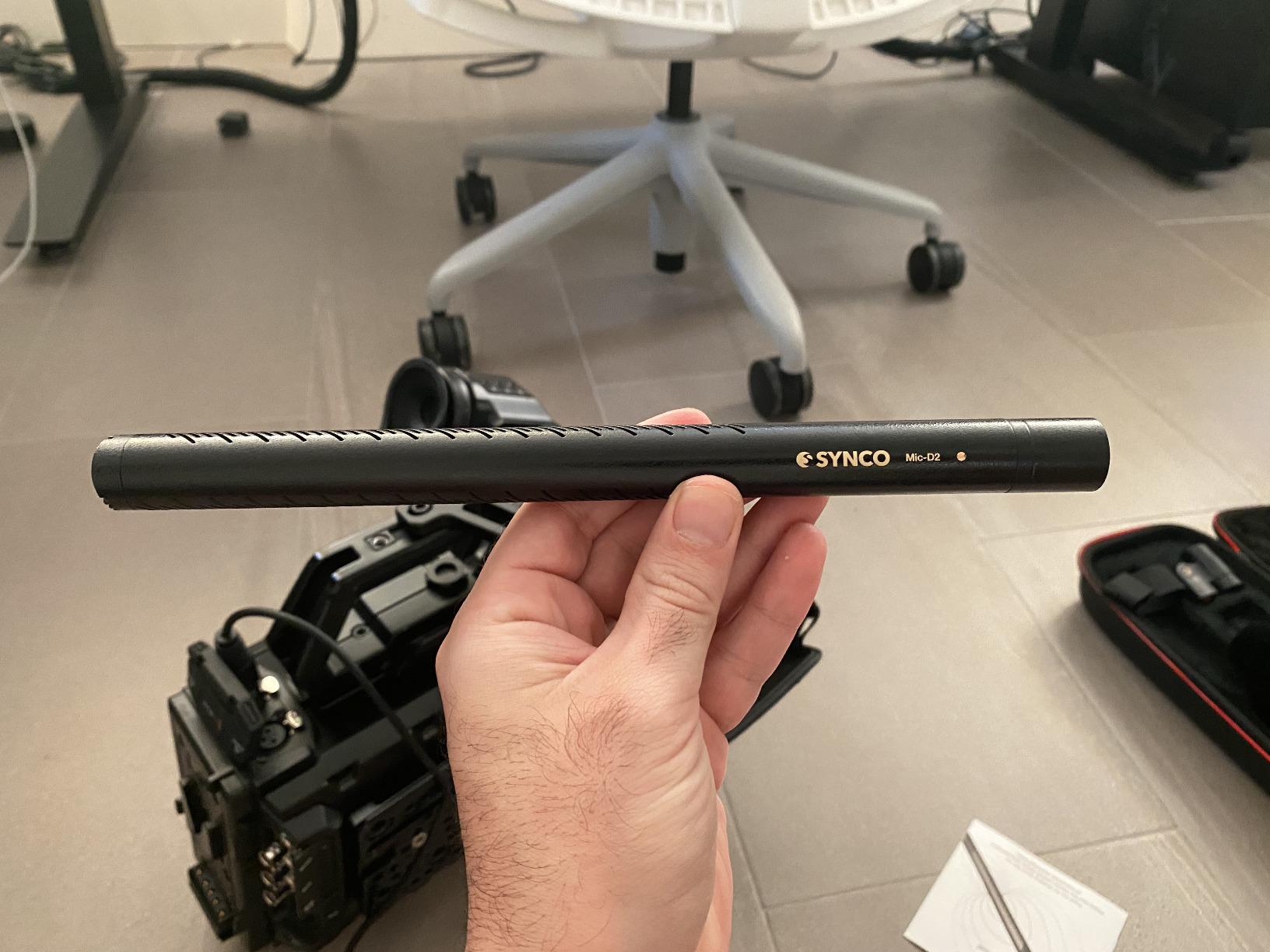
The SYNCO D2 is the quietest microphone in this roundup by specification, with 12 dB A-weighted self-noise and an 80 dB signal-to-noise ratio. In practical terms that means quiet interview answers keep a clean noise floor instead of sitting on a bed of hiss that forces you to push the dialogue up in post.
The interference-tube design gives a hyper-cardioid pickup with -32dB plus or minus 3dB sensitivity and -18dB off-axis attenuation, which is strong rejection for a microphone in this segment. The 20Hz to 20kHz ultra-flat response means you are not colouring the voice.
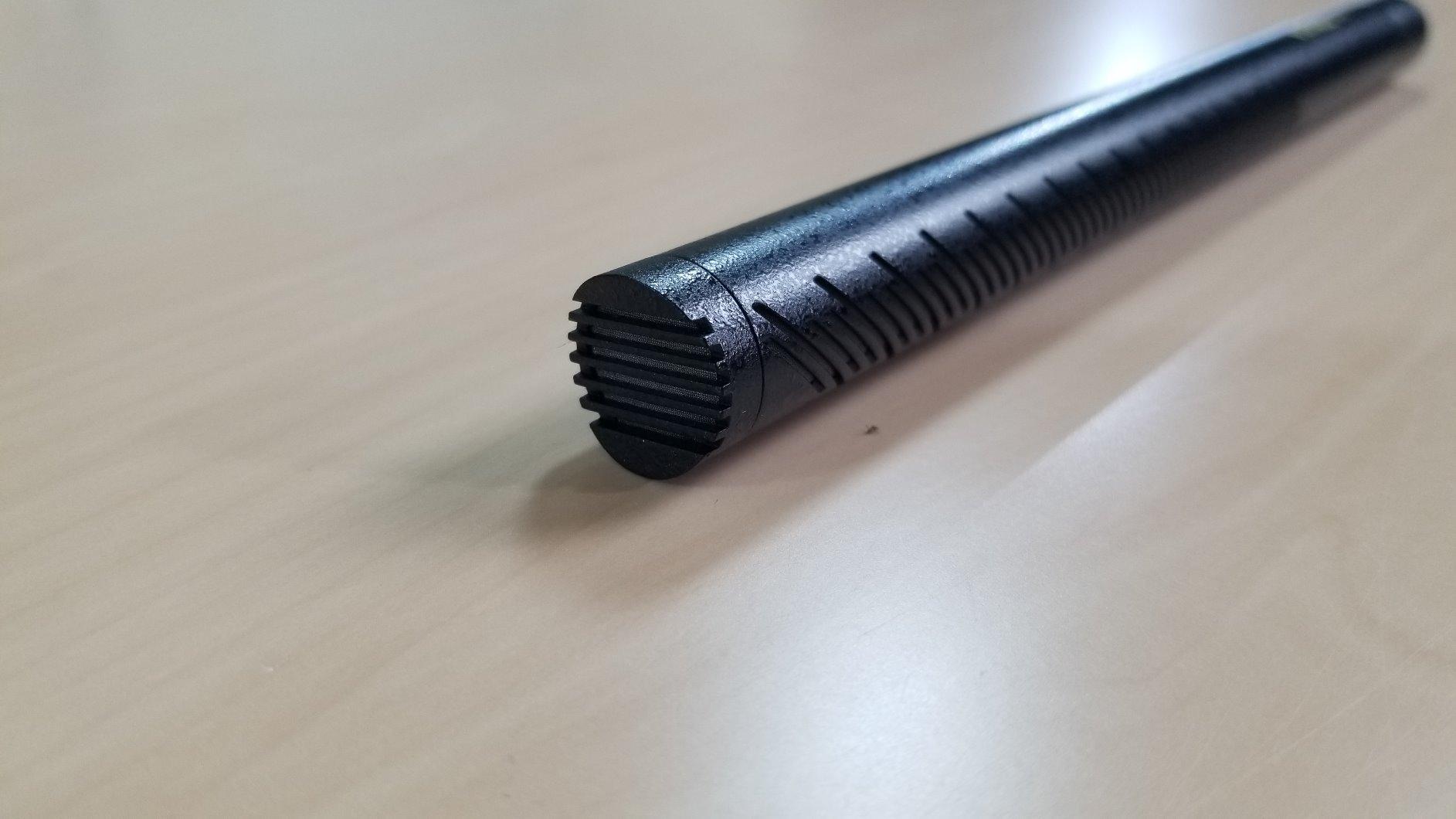
The body is CNC-machined brass with a black speckle finish that works in the rain and does not reflect light, which is a detail that matters on formal corporate interviews where a shiny microphone tube catches the key light and appears in frame.
The gold-plated 3-pin XLRM connector and included 19.7 inch XLR cable signal the intended use, and the mic holder accepts both 3/8-inch and 5/8-inch threads so it fits most boom poles and stands. A cotton windshield is included for basic protection.
What Low Self-Noise Actually Changes
Self-noise is the sound the microphone hears in a silent room. Lower is better, and the difference becomes audible when you are recording a quiet subject in a quiet space with a recorder’s preamp turned up to chase level.
That is exactly the interview scenario where the difference matters. If your subject speaks softly, you raise the gain, and a higher self-noise microphone adds hiss at the same time. The D2 is the pick in this list for that specific situation.
Solid Brass Build for Field Reliability
Brass is heavier and more robust than aluminium, and at 65 grams the microphone is still light enough to boom without fighting the operator all day. The non-reflective finish is the more underrated benefit for on-camera work.
The one-year manufacturer warranty is the shortest here, and it is worth weighing against the build quality and the measurement figures when you decide how much to depend on the microphone.
Who Should Skip This Mic
Skip it if your recorder does not supply 48V phantom power, because there is no battery fallback. That single requirement removes it from consideration for many consumer camera setups.
It is also the wrong choice for a solo creator who wants one microphone to serve a phone, a camera and a computer, since XLR keeps it firmly in the professional recorder lane.
9. COMICA VM40 – Best Shotgun Mic with Onboard Backup Recording
COMICA VM40 Shotgun Microphone – 48kHz/32-bit Float Recording, Wired & Wireless Modes, 32GB Onboard Storage – Compatible with Canon, Nikon, Sony Cameras & Camcorders for YouTube, Interviews & Filming
32-bit float recording
32GB onboard storage
Wired and wireless
200 m wireless range
32H wired battery
Pros
- 32-bit float capture makes clipping effectively impossible
- 32GB of internal storage keeps a redundant copy of every take
- Works wired or wireless with under 20 ms latency
- 32 hours of battery in wired mode with charging while in use
Cons
- Bundled receiver and multi-cable kit add bulk to a camera bag
- Feature set exceeds what a simple interview needs
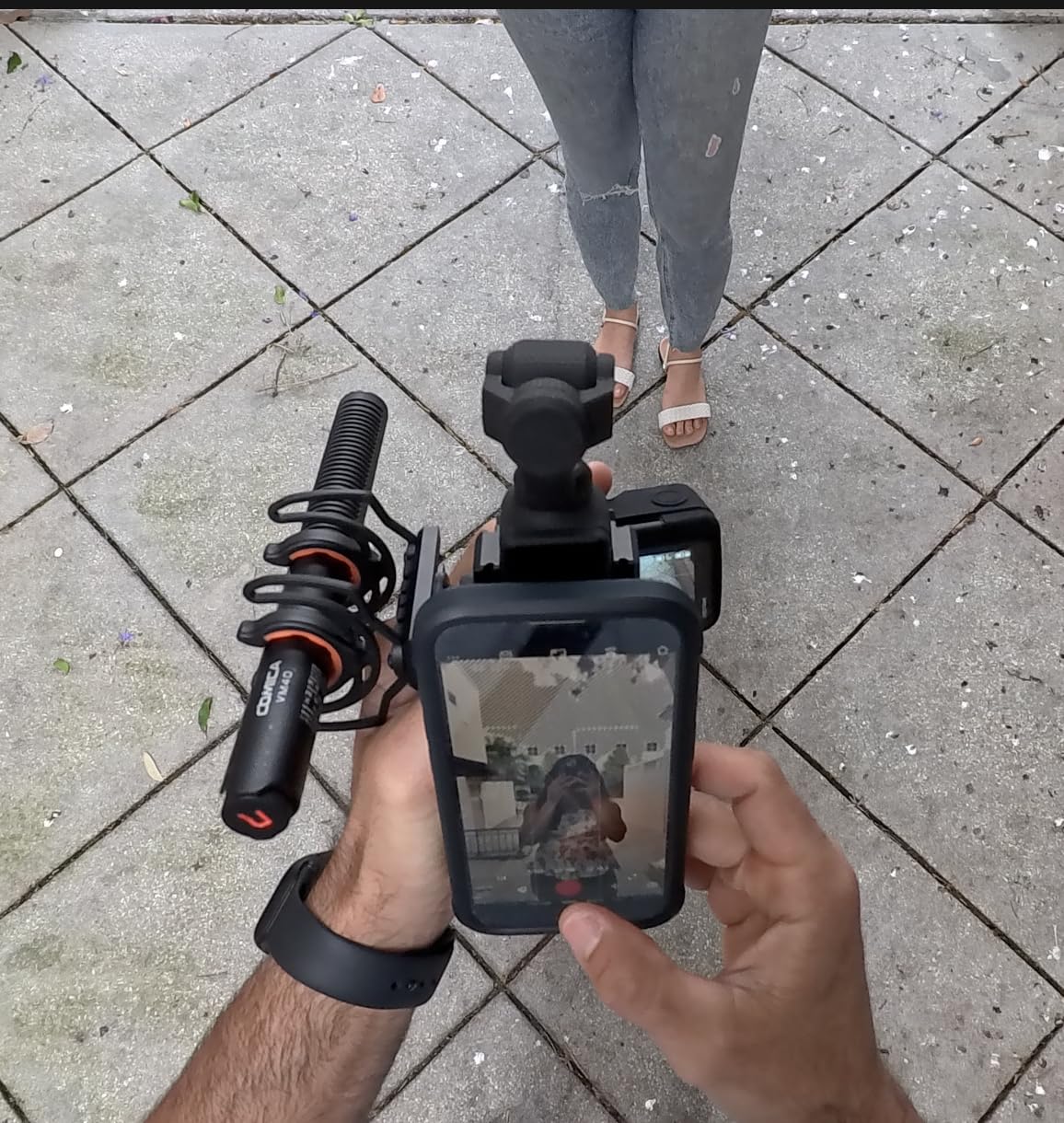
The VM40 solves a problem most interview shooters discover the hard way. It records internally at 48kHz in 32-bit float, which means the recording cannot clip even if a subject shouts or you knock the table. You can set your levels carelessly and still pull a clean take out afterwards.
It also stores up to 40 hours of uncompressed audio on 32GB of onboard memory. For an interview that is a genuine safety net, because it means a cable failure, a camera input problem or a mistaken stop no longer costs you the conversation.
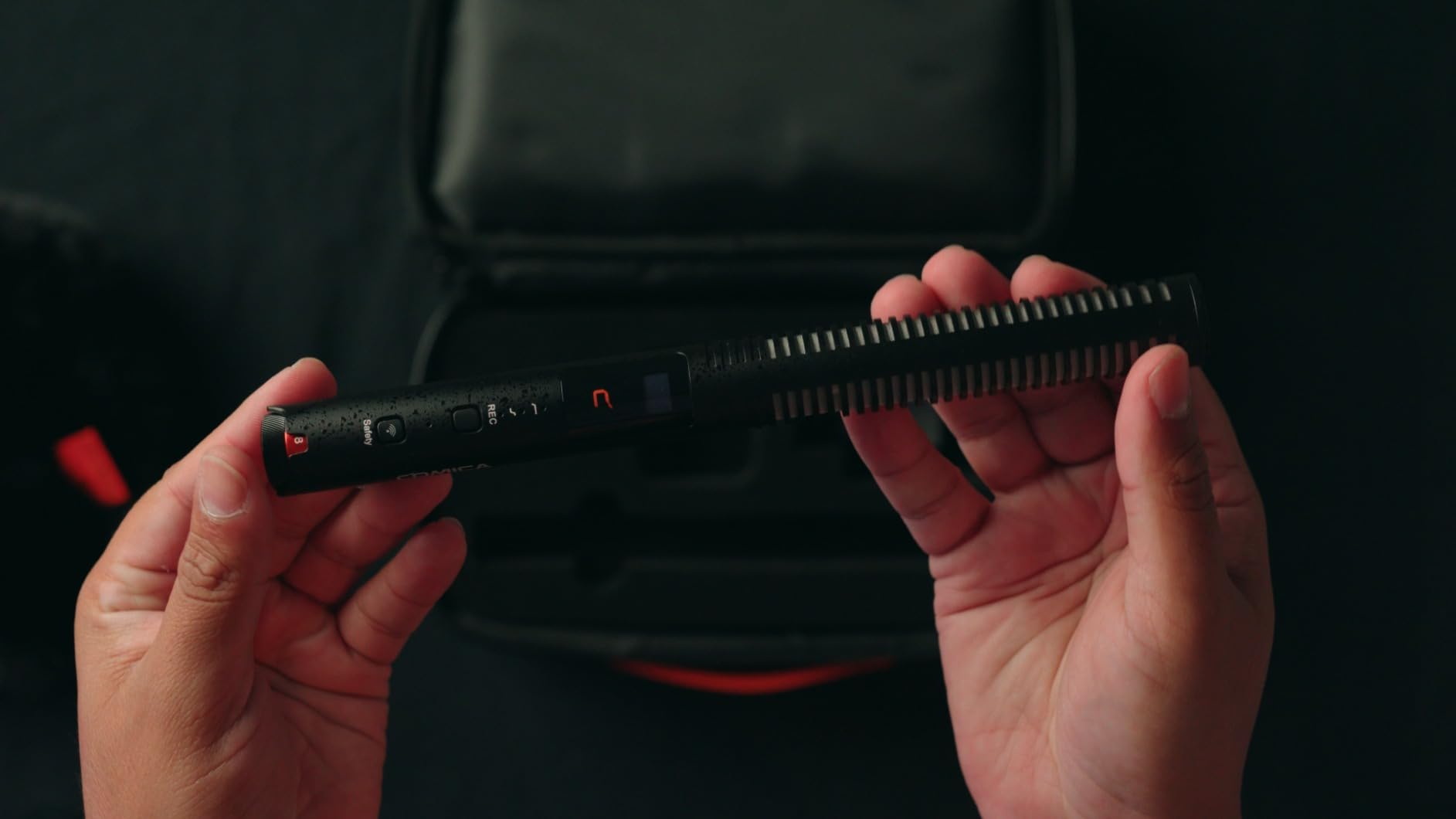
The wireless mode reaches up to 200 metres in an open environment with under 20 milliseconds of latency, and you can run up to 32 hours on a charge in wired mode or 10 hours in wireless mode. It also charges while in use, and a Bluetooth app gives remote monitoring and settings control.
With 295 reviews averaging 4.4 stars, the combination of 32-bit float capture and onboard backup storage is what draws buyers, particularly those shooting documentary and interview work where a lost take is not recoverable.
Why 32-Bit Float Matters for Interviews
Conventional recording clips when a level exceeds the ceiling, and the distortion is permanent. Float recording keeps headroom effectively unlimited because it stores the value as a floating-point number, so the extremes survive even when your gain staging was wrong.
For interviews specifically, that means unexpected volume is never unrecoverable. A subject laughing, a stack of papers dropped on the desk, a door closing, all of it stays inside the file and can be fixed in software.
Dual Mode Operation and Battery Management
The wired and wireless modes cover different working situations. Wired to a camera or recorder, you get the full 32 hours of runtime and a direct signal path. Wireless gives you freedom from the cable run, which matters when you need to get the microphone close without a cable crossing the frame.
Outputs cover USB-C digital and 3.5mm TRS/TRRS analog, so it connects to cameras, smartphones, tablets and computers. The 14mm gold-plated supercardioid head is the capture element, and the kit includes a 3-in-1 charging cable, a stand adapter and a carrying bag.
Who Should Skip This Mic
Skip it if you want a simple, small microphone. The bundled receiver and multi-cable kit add bulk to a camera bag, and reviewers note that the feature set is more than a basic interview requires.
It is also overkill if your recorder already handles 32-bit float, since you would be paying for onboard storage and wireless you never switch on.
10. Rode VideoMicro II – Best Ultracompact Shotgun Mic for Travel Interviews
RØDE VideoMicro II Ultra-Compact On-Camera Shotgun Microphone for
Unidirectional pattern
80mm body
24 g weight
78 dB SNR
Helix isolation mount
Pros
- Exceptionally small and light at 24 g for travel rigs
- Highly directional pickup isolates the subject
- Helix isolation mount cuts knocks and handling noise
- Includes foam and furry windshields plus TRS and TRRS patch cables
Cons
- No gain
- filter or level controls on the body
- Plastic build feels modest next to metal shotguns
- Short reach suits close subjects only
The VideoMicro II is the smallest microphone here at 80mm long and 24 grams, and that is not a compromise so much as a decision about where you shoot. If you travel light and cover interviews in unpredictable locations, a microphone that occupies almost no space in a bag is genuinely valuable.
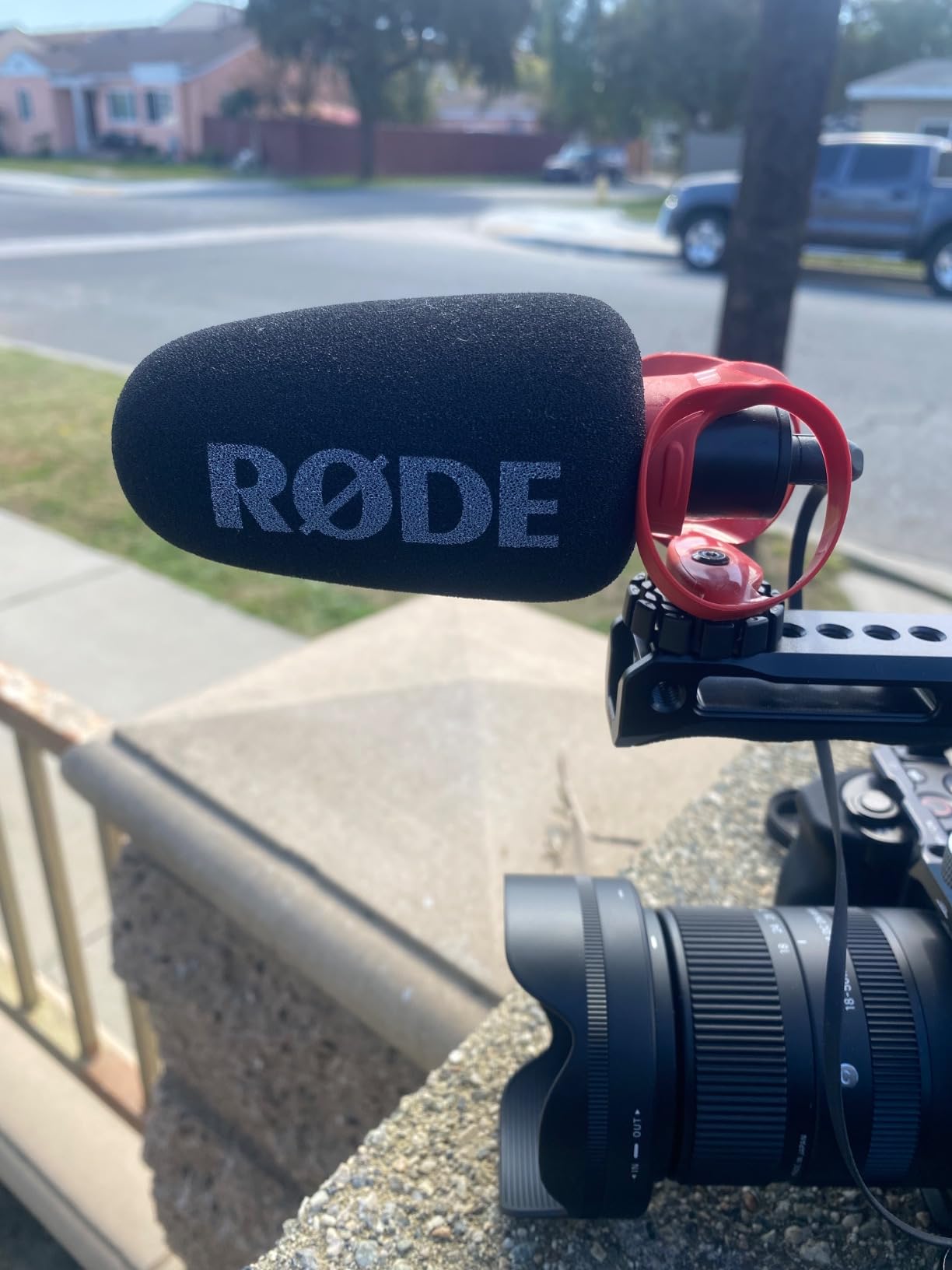
Sound quality is more capable than the size suggests. The highly directional pickup clearly isolates your subject, and with 1,339 reviews averaging 4.2 stars it is one of the most widely used compact on-camera shotguns available.
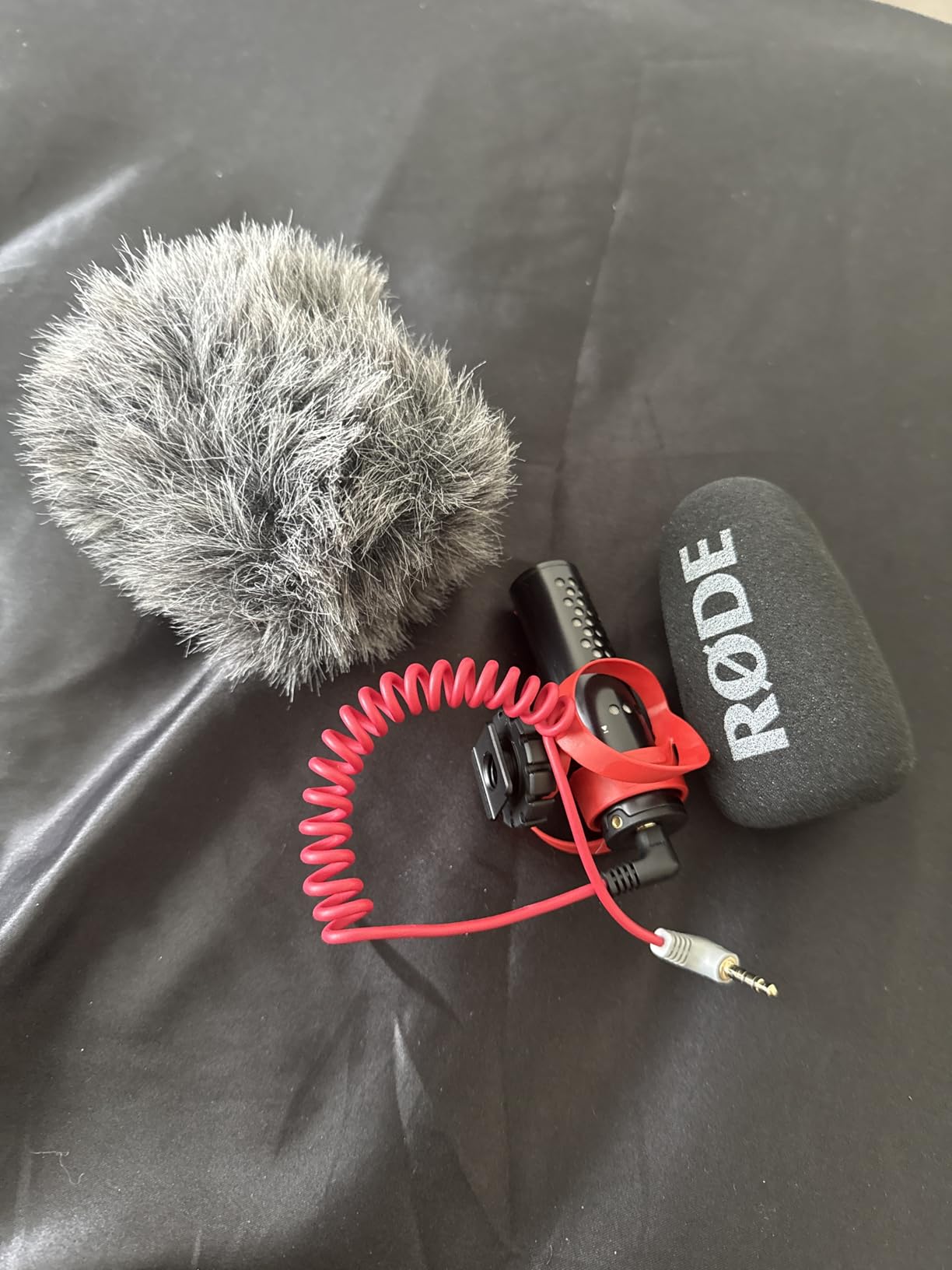
The RODE Helix isolation mount protects the recording from knocks and bumps, and integrated cable management keeps the setup tidy on the hot shoe. Both foam and furry windshields ship in the box along with SC7 and SC13 TRS and TRRS patch cables.
Owners consistently highlight the tiny footprint and clear, isolated dialogue capture, while being straightforward that it is built for close talking-head work rather than distance pickup.
When a 4.2 Star Average Is the Right Rating
This is the lowest-rated microphone in the roundup and it earns that rating honestly. There are no gain controls, no filters and no level metering on the body, so the microphone hands the signal to the camera and trusts it to handle the rest.
If your camera has aggressive automatic gain control, that arrangement will pump on quiet answers. If your camera lets you set levels manually or lock them, the microphone does its job well and the rating reflects a missing feature rather than a failing one.
Travel Kit Thinking
The 24-gram weight means you can mount it on a small camera, a drone-adjacent rig or a handheld gimbal without thinking about balance. Nothing else in this roundup disappears into a pocket the way this one does.
The plastic body feels modest beside the machined metal of the VideoMic NTG, and the warranty is one year, extending to two after registration. Neither matters much for a travel microphone that gets treated gently, but both matter if you plan to use it for paid work.
Who Should Skip This Mic
Skip it if your interview subject is more than a few feet away, since the short body is built for close subjects. You will get a quiet recording with room tone leaking in rather than a clean distant voice.
Also skip it if you need control at the microphone end. With no gain or filter switches, all your workarounds happen in the camera menu or in post-production.
How to Choose a Shotgun Mic for Interviews
The right decision comes down to three things: what you record into, how loud the room is, and how close you can get to the subject. Get those three answers right and the choice narrows quickly.
Match the Connection Before Anything Else
A 3.5mm TRS or TRRS microphone plugs into a camera, phone or laptop and usually draws power from that device. It is the fastest path to a better recording and the easiest to carry, but it limits you to whatever preamp is built into your camera.
An XLR microphone needs a recorder or interface that supplies phantom power, typically 48V. In exchange you get better preamps, the ability to record to a separate machine as a safety track, and the option to run a proper boom with a blimp in real wind.
USB microphones are a third path and suit laptop-based interviews, where they let you record without an extra box in the chain.
Judging Off-Axis Rejection Without the Spec Sheet
Off-axis rejection is how well a microphone ignores sound that is not coming from the subject. Longer bodies generally reject better, but the polar pattern matters more than length alone, and manufacturers rarely publish a useful off-axis response curve.
Read the pattern name instead. Line/gradient and hyper-cardioid patterns typically reject more than a general unidirectional pattern, and that difference is audible in a room with a running air conditioner or a busy hallway.
Barrel Length and Distance Rejection
At interview distances of one to three metres, body length is a secondary factor. The 3:1 rule is the practical companion here: place your microphone at three times the distance of your loudest competing sound source and you will have a workable balance between what you want to hear and what you need to reject.
Longer barrels earn their place when the subject is further away, because off-axis rejection improves with the interference tube length. The trade-off is a heavier, bulkier microphone that is less pleasant to carry on a small rig.
Power, Batteries and All-Day Recording
Battery-powered microphones using AA or AAA cells are the simplest choice for a long day, since you can carry spare cells. Rechargeable lithium options charge over USB and often run for hours, but a dead battery in the field ends the interview.
Phantom-powered XLR microphones never run out, which removes a whole category of failure. Microless devices that draw power from the camera input save you the battery decision but only work on hosts with plug-in power.
Wind Protection and Handling Noise
Foam windscreens handle light air movement and cut plosives, and they are included with most of these microphones. Deadcat and furry wind muffs are for genuine wind, and forum consensus across r/videography and r/fieldrecording is consistent that foam alone is ineffective in real wind.
Handling noise is the other half of the equation. A suspended shock mount inside or around the microphone is what stops knocks from a boom operator reaching the recording, and it is why we would choose the VideoMic Pro+ or VideoMicro II over an equally capable bare-tube alternative.
Matching the Microphone to Your Recorder
Low-output microphones force you to turn preamp gain up, and turning gain up amplifies the recorder’s own noise along with the voice. This is the single most common reason an inexpensive setup sounds worse than expected, and the fix is either a higher-output microphone or a better recorder rather than more post-processing.
Check the noise floor of what you already own before upgrading the microphone. If your recorder cannot produce a clean signal at the gain the microphone needs, upgrading the microphone alone will not solve the problem.
Two-Person Interview Setups
A single shotgun pointed between two subjects will capture both, but the subject further from the on-axis line gets less level and more room tone. The result is an edit that is always leaning on one voice.
The reliable approach is two microphones, either two shotguns on separate booms or two lavaliers on the subjects. A boundary or PZM microphone placed on the table between two speakers is another option that hides easily and avoids off-mic tone entirely.
You can read our stereo microphone roundup for cases where a wider pair makes more sense than a single narrow pickup.
Shotgun vs Lavalier vs Supercardioid: Which Mic Type for Which Interview
This is the question that comes up most often in interview forums, and the honest answer is that a shotgun is not always the right microphone. Here is how the three main types compare in practice.
Shotgun microphone: best for uncontrolled rooms, outdoors, documentary and corporate interviews where you cannot control the environment or the subject’s wardrobe. It rejects off-axis sound well and stays off the subject’s body. The trade-off is narrowness, handling discipline and a strong dependence on accurate positioning.
Lavalier microphone: best for quiet, controlled indoor interviews. Because it sits within inches of the mouth, it delivers a full, consistent voice with no room tone and no positioning anxiety, and it is the only realistic option when two people need independent tracks. The trade-off is visibility, clothing rub, and the way a badly positioned lav sounds muffled.
Supercardioid microphone: best for single-person indoor interviews where you want the isolation of a directional mic without the fragility of a shotgun. It tolerates being a few degrees off-axis far better than a shotgun, which is why forum consensus repeatedly recommends one for office environments where a shotgun goes thin. The trade-off is a shorter effective working distance.
Our take after testing: if the interview is in a quiet room, a supercardioid or lavalier will beat any microphone on this list. If the room is live, outdoors, or you are moving between locations, a shotgun earns its place.
For related microphone categories, our guides to acoustic guitar microphones and shotgun microphones for food videos cover the same selection criteria from different shooting environments.
Frequently Asked Questions
What is the best shotgun microphone for interviews?
The Rode VideoMic NTG is the best shotgun microphone for most interview shooters because it offers variable gain, a high-pass filter, a safety channel and an auto-sensing output that works with cameras, phones and computers. The Audio-Technica AT875R is the stronger choice for ENG field work over XLR, and the Movo VXR10 is the cheapest credible upgrade over a built-in camera microphone.
Is a shotgun mic good for interviews?
Yes, in rooms you cannot control. A shotgun microphone concentrates sensitivity into a narrow forward lobe, so it records a clean voice from a distance while pushing down traffic, air conditioning and background chatter. In a quiet treated room it offers little advantage over a lavalier, and its performance depends heavily on accurate on-axis positioning.
What are the downsides of using a shotgun mic for interviews?
The main downsides are a narrow acceptance angle, sensitivity to handling noise, and the way the tone thins if the microphone sits even slightly off-axis. A shotgun also picks up more room tone than a close lavalier in reflective spaces, and short-bodied on-camera models lose off-axis rejection quickly beyond a few feet.
How close should a shotgun mic be to the interview subject?
As close as your framing allows. For a seated interview, place the microphone above and slightly in front of the subject, aimed at the forehead rather than the chest, roughly six to twelve inches of clearance. Move the microphone closer rather than relying on digital noise reduction, since a distant shotgun records more room tone and more off-axis sound.
Do I need an XLR microphone for interviews?
Not if your camera has a 3.5mm microphone input with plug-in power, which covers most mirrorless and DSLR bodies today. XLR does give you a separate recorder with better preamps, phantom power and the ability to record a safety track independently of the camera, which matters most for professional ENG and documentary work.
What is the 3 to 1 rule for microphones?
The 3 to 1 rule says to place your microphone at three times the distance of the loudest competing sound source, or place a second microphone at three times the distance of the loudest source relative to the first. The goal is to make the unwanted sound at least 10 dB quieter than the source you want, which a shotgun reaches quickly when positioned correctly.
Is a shotgun mic better than a lavalier for interviews?
In a loud or uncontrolled room, yes, because the shotgun rejects off-axis sound and keeps the microphone off the subject. In a quiet indoor room a wired lavalier is better, since it sits within inches of the mouth for a fuller, more consistent voice with no room tone. For two-person interviews, lavaliers are usually the more reliable choice.
What is the best microphone that does not pick up background noise?
Background noise rejection comes from position and pattern rather than price. Line/gradient and hyper-cardioid patterns reject more than a general unidirectional pattern, and getting the microphone close to the subject helps more than any filter. A high-pass filter removes rumble, but it cannot remove room reverb once it has been recorded.
Final Verdict: Which Shotgun Mic Should You Buy in 2026?
If you shoot a mix of camera-mounted corporate interviews and laptop calls, the Rode VideoMic NTG is the pick. Its variable gain, digital switching, auto-sensing output and USB capability mean one microphone covers more situations than anything else in this roundup, and the metal build with a 10-year warranty backs it up for daily use.
If your work is handheld reporting over XLR, choose the Audio-Technica AT875R for its broadcast ENG/EFP design and narrow line/gradient acceptance angle. If quiet interview answers are your hardest problem, the SYNCO D2 has the lowest self-noise figure here at 12 dB.
If your budget is the deciding factor, the Movo VXR10 is the honest answer. It will not sound like a broadcast microphone, but over 15,000 owners use it as a dependable first upgrade, and the included shock mounts and cables mean you can start recording the same day it arrives.
And if your interviews are indoors in a quiet room, buy a lavalier instead. That is the most common piece of advice in the forums we read, and after six weeks of comparisons it is the advice we would give our own crew.
Whichever one you choose, keep it on-axis, keep it close, and record a thirty-second test before the real conversation starts.
Leave a Reply