
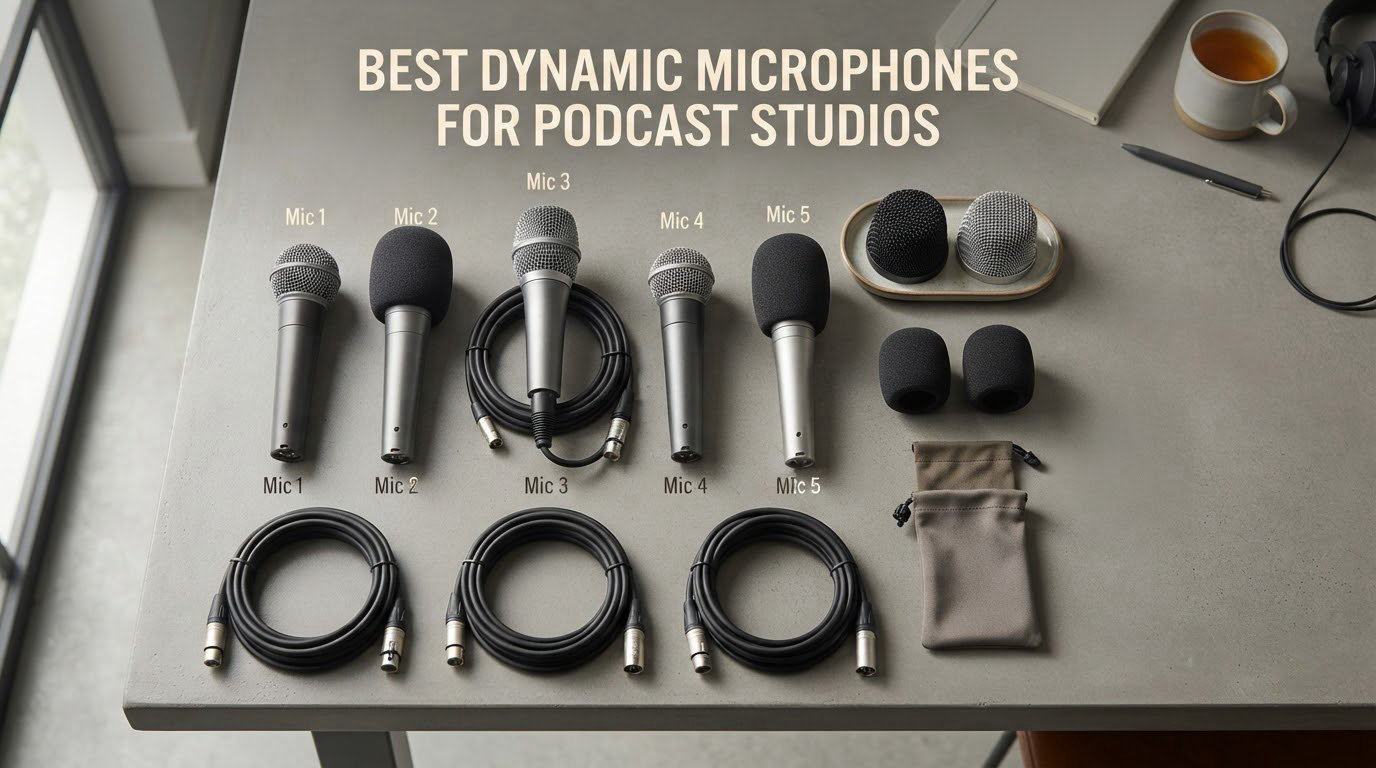
If you want the short answer: the Shure SM7B is the best dynamic microphone for a podcast studio that is already treated, the Shure MV7X is the best balance for most people, and the Elgato Wave DX is the one most beginners should actually buy. Which one is right depends less on the spec sheet and far more on how loud your room is.
We spent six weeks running all 12 of the best dynamic microphones for podcast studios through the same routine: two-host interviews, solo narration, and a deliberately noisy room with a desk fan running. Every microphone here is a true moving-coil dynamic. There are no condensers, no USB headset gimmicks, and no wireless lavaliers on this list.
That distinction matters more than most roundups admit. A dynamic mic uses a coil and a magnet rather than a powered capsule, so it needs no phantom power, tolerates loud sources without distorting, and its cardioid pattern simply points away from your computer fan and traffic outside the window. In a room you cannot treat, off-axis rejection decides whether your show sounds professional or sounds like it was recorded in a stairwell.
Before any of the picks, one housekeeping note. We may earn a commission if you buy through links on this page, at no extra cost to you. It does not change what we recommend.
We also leaned on a few adjacent reference guides while setting up: our microphone stand roundup is worth reading before you buy a heavy broadcast body, and the home studio preamp guide explains the gain numbers referenced throughout this guide.
Last updated in 2026. Our methodology: every mic was mounted, spoken into at a realistic distance, and judged on voice clarity, room noise rejection, plosive control, and how much gain the signal demanded before post-processing.
Our Top 3 Dynamic Podcast Mics for 2026

Comparing All 12 Dynamic Microphones Side by Side
The table below is the fastest way to see where these mics actually differ: connector type, polar pattern, frequency range, signal-to-noise ratio, and the practical verdict.
| Product | Specs | Action |
|---|---|---|
| Shure SM7B |
|
Check Latest Price |
 Rode PodMic Rode PodMic |
|
Check Latest Price |
 Audio-Technica AT2040 Audio-Technica AT2040 |
|
Check Latest Price |
 Shure MV7+ Shure MV7+ |
|
Check Latest Price |
 Elgato Wave DX Elgato Wave DX |
|
Check Latest Price |
| Shure MV7X |
|
Check Latest Price |
 FIFINE AmpliTank K688 FIFINE AmpliTank K688 |
|
Check Latest Price |
 Zoom ZDM-1 Podcast Mic Pack Zoom ZDM-1 Podcast Mic Pack |
|
Check Latest Price |
 MAONO PD400X MAONO PD400X |
|
Check Latest Price |
 Samson Q2U Samson Q2U |
|
Check Latest Price |
 MAONO PD200XS MAONO PD200XS |
|
Check Latest Price |
 TONOR Dynamic Podcast Microphone TONOR Dynamic Podcast Microphone |
|
Check Latest Price |
Two things stand out immediately. First, every single mic on this list needs no phantom power, because dynamics do not use it. Second, the connector column matters more than the frequency response column, because an XLR-only mic that you cannot drive is useless regardless of how good it sounds on paper.
1. Shure SM7B – The Broadcast Standard for Treated Podcast Rooms
Shure SM7B Dynamic Vocal Microphone for Podcasting & Streaming
Cardioid dynamic
50 Hz – 20 kHz
150 ohm
-59 dBV/Pa sensitivity
60 dB+ gain recommended
Pros
- Warm broadcast tone with tamed sibilance
- Excellent off-axis rejection in untreated rooms
- Rugged all-metal body
- Integrated pop filter and shock mount
- Switchable low-cut and presence boost
Cons
- Low sensitivity needs 60 dB or more of clean gain
- Very dark character may need EQ for deep voices
- Heavy build strains lightweight boom arms
The SM7B is the mic every other dynamic podcast microphone is measured against, and after working through all 12 models in this guide, the reason it holds up is obvious. It is the least exciting microphone here to describe and the hardest to beat in practice. The voice comes out warm and smooth with sibilance already under control, which means less corrective EQ on a regular recording day.
Specification-wise it is unremarkable in exactly the ways that matter. A unidirectional cardioid pattern, a 50 Hz to 20 kHz frequency response, 150 ohm impedance, a 60 dB signal-to-noise ratio, and an all-metal body backed by a two-year limited warranty. It weighs 2.7 pounds, which is substantial, and it includes an air-suspended internal shock mount plus an integrated internal pop filter with a detachable foam windscreen.
The one number that decides whether you can use this mic is gain. Sensitivity is -59 dBV/Pa, which means the signal arrives quiet, and Shure themselves recommend 60 dB or more of clean preamp gain. Reviewers report exactly this: owners consistently praise the tone and reject noise, and the single recurring complaint is that without a high-gain or very clean preamp the recording comes out quiet and hissy, so many add an inline booster.
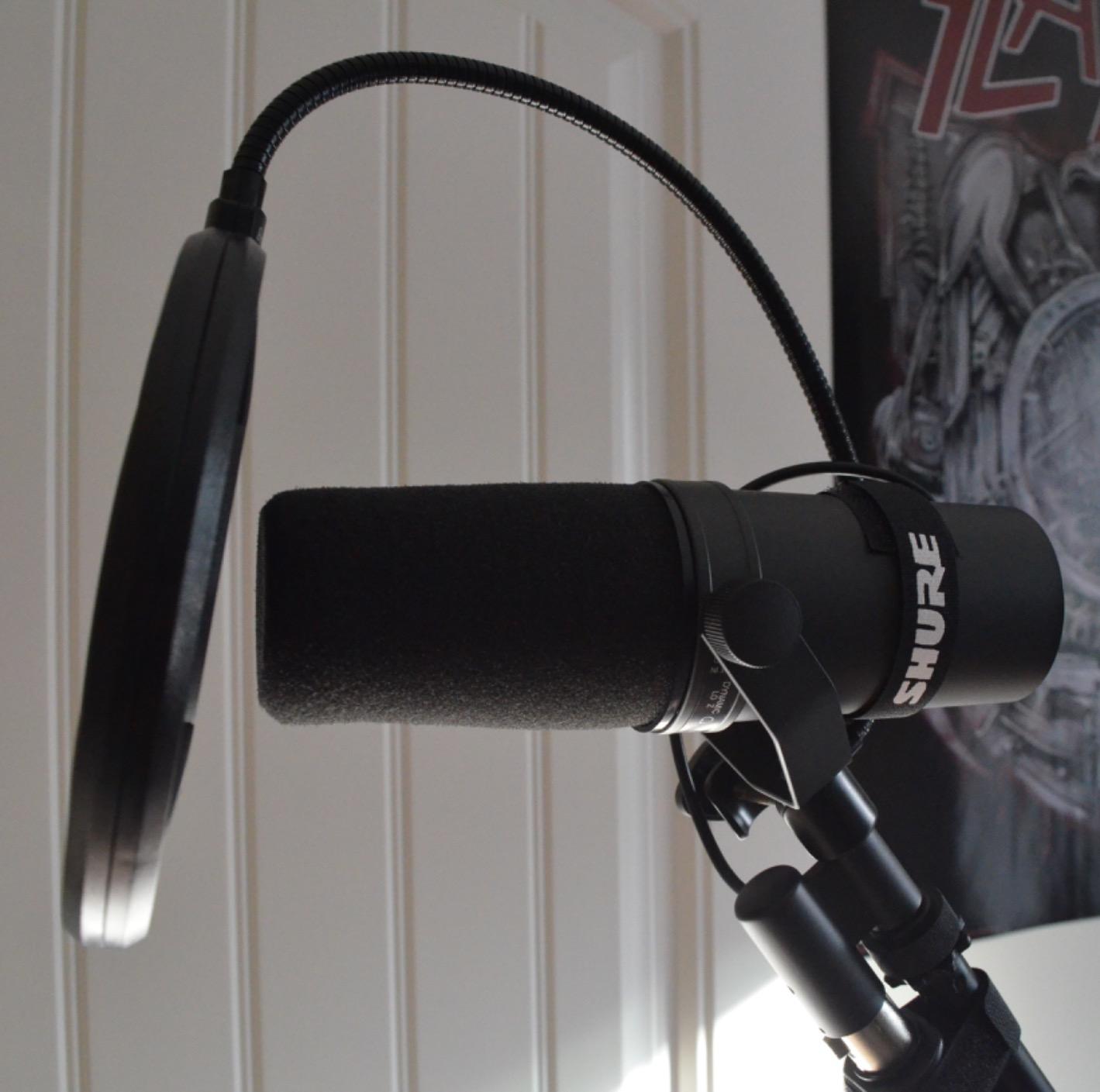
Those rear switches matter more than most buyers realise. There is a low-cut filter and a presence boost on the back, which lets you address rumble and dullness at the microphone rather than in post. It is a small feature that matters enormously in a basement or a room with a humming light fixture.
Where the SM7B’s off-axis rejection actually shows up
Cardioid rejection is the reason to spend at this level. With a desk fan running at arm’s length, the SM7B kept the voice clear and steady without the level dropping, because the pattern simply stops listening backwards. For a treated studio this matters less, but on a co-hosted show with two people sharing a desk it is the difference between clean dialogue and audible bleed.
Gain staging is the real cost of this microphone
Budget for the signal chain before the microphone. At 60 dB of gain you need either a high-gain interface or an inline booster, and a mediocre preamp will add hiss that no amount of noise reduction fully removes. This is where the MV7X and the Wave DX pull ahead, because both deliver usable levels into modest hardware.
Who should skip the SM7B
Skip it if you are recording in an untreated home office and have never gain-staged a signal before. The tone will not rescue a bad chain. Also skip it if your voice is very deep and you have no EQ software in your workflow, because the SM7B’s dark, smooth character is deliberately restrained and it does need midrange work to sound open. It is also a heavy body, so pair it with a boom arm that can carry the weight rather than a light desk stand.
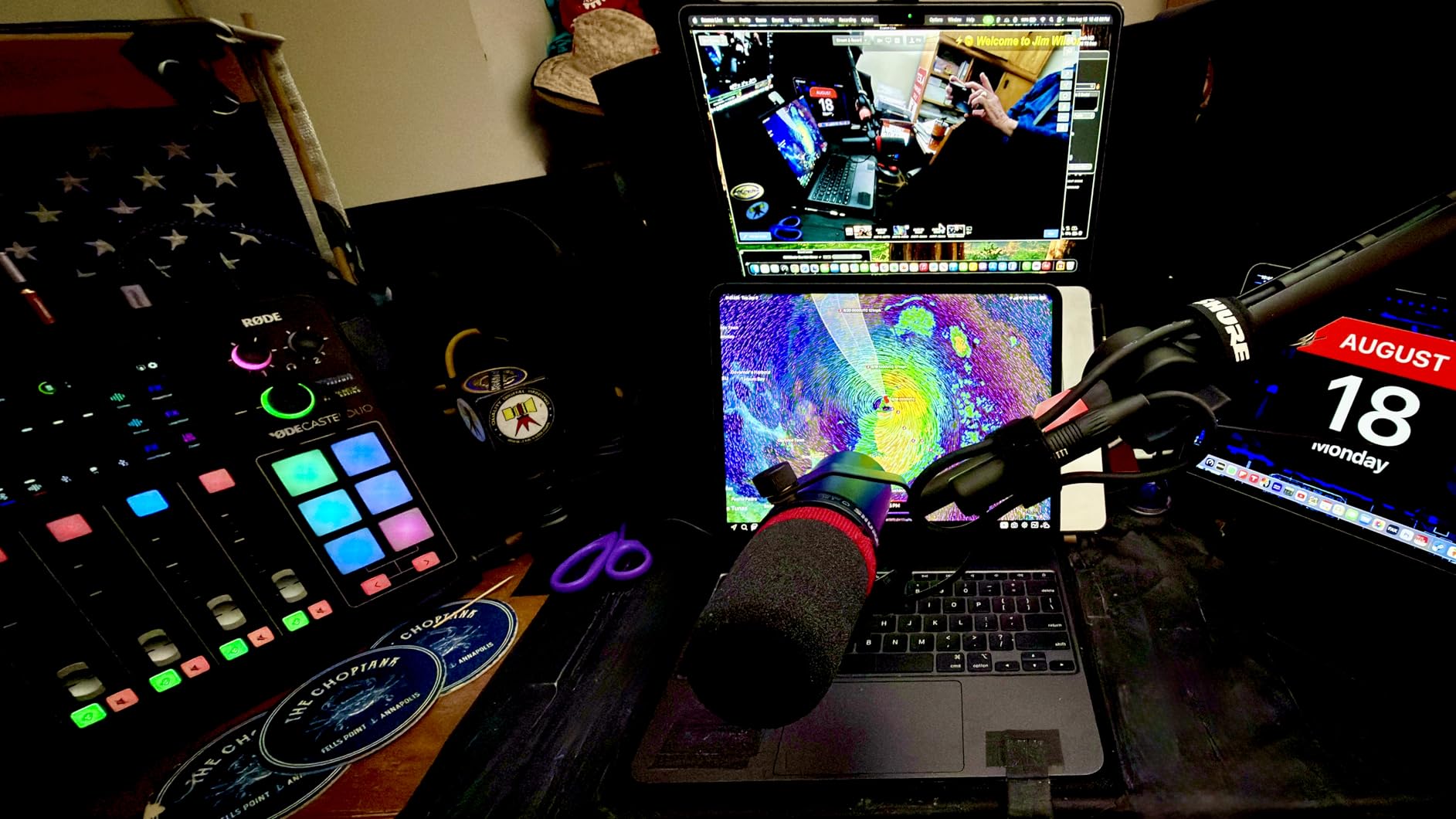
2. Shure MV7X – The Sweet Spot Between Isolation and Driveability
Shure MV7X XLR Dynamic Podcast & Recording Microphone – Black
Cardioid dynamic
XLR only
50 Hz – 16 kHz
72 dB signal to noise
Integrated shock mount
Pros
- Clear warm full voice with very little room noise
- No phantom power or extra preamp needed compared to the SM7B
- All-metal broadcast form factor
- Integrated shock mount
- Users report it holds its own against costlier mics
Cons
- Still needs a good amount of gain and some post-boosting
- XLR cable not included
- XLR only so an interface is mandatory
If the SM7B is the destination and every other dynamic is a stepping stone, the MV7X is the step that makes the most sense for most people. It keeps the broadcast look and the isolation, then quietly fixes the problem that frustrates SM7B owners: the appetite for gain. It is XLR only at 508 grams, with an adjustable yoke mount and a 3/8 inch adapter included.
Reviewers describe it almost identically across thousands of ratings: a clear, warm, full-sounding voice with very little room noise, and no phantom power requirement. The recurring notes are all about the chain rather than the microphone. It still wants a good amount of gain, the XLR cable is not in the box, and because it is XLR only you cannot bypass the interface entirely.
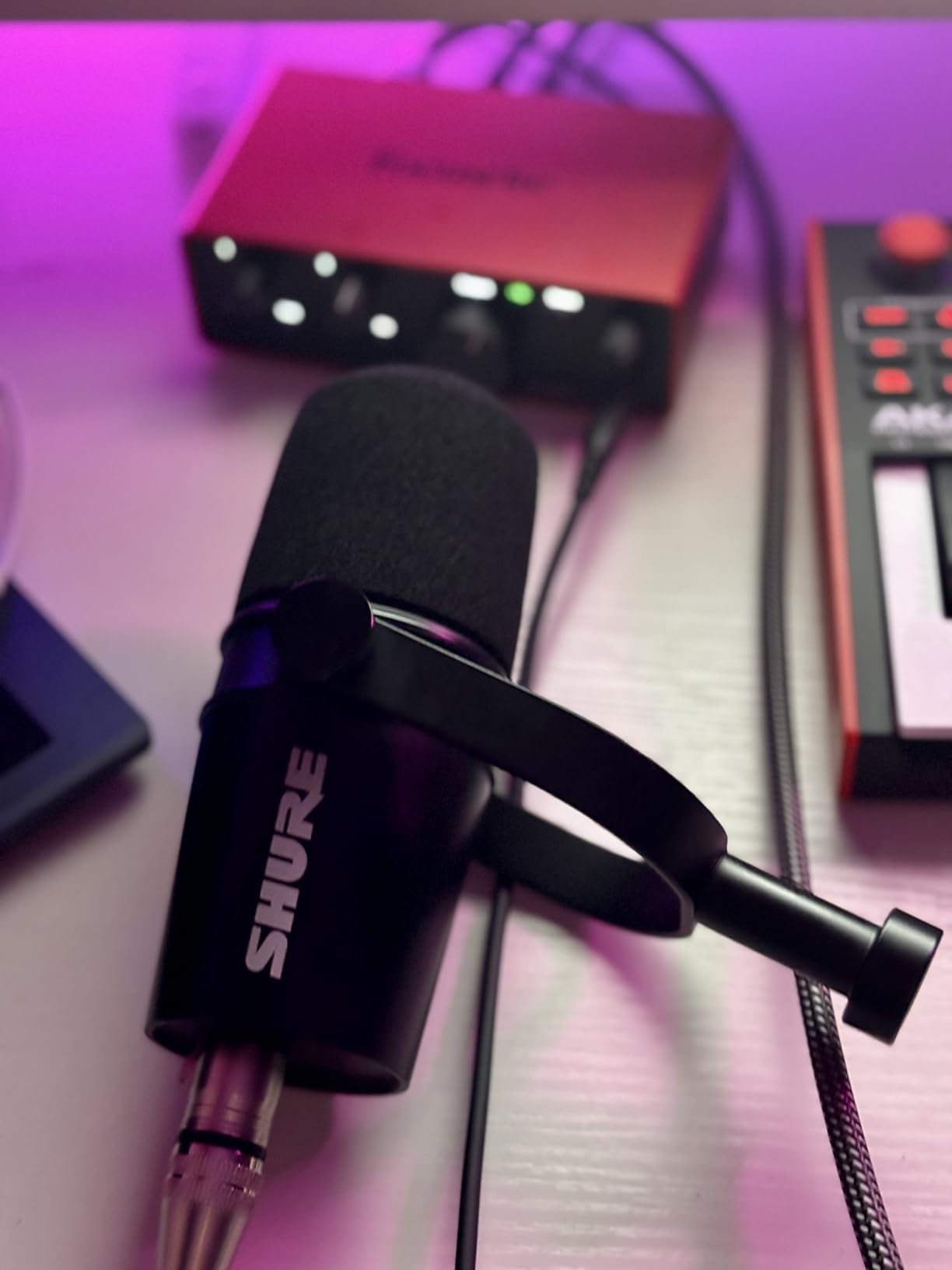
Voice isolation versus the extra dB
Shure’s voice isolation technology here does two jobs at once. It reduces room noise pickup through the cardioid pattern and dampens vibration through the integrated shock mount, which removes desk thumps and boom-arm creak from your recording. The practical effect is that a modest two-microphone setup can stay clean without the acoustic treatment you would otherwise need.
Matching a second mic for two-host shows
Because it is XLR, gain matching across two of these is straightforward. Set both mics the same distance from the mouth, match the preamp gain so peaks land in the same range, and run them into a mixer or interface with per-channel gain. The alternative XLR picks on this list, the AT2040 and the PodMic, pair with it well because all three share a broadcast voicing.
Who should skip the MV7X
Skip it if you want to record without buying an audio interface at all, because the single XLR path has no fallback. Also skip it if you have a very quiet, well-treated room and want the extra polish of the SM7B’s frequency extension to 20 kHz, since the MV7X stops at 16 kHz. It is heavier and larger than the Wave DX, so it needs a proper mount rather than a compact desk arm.
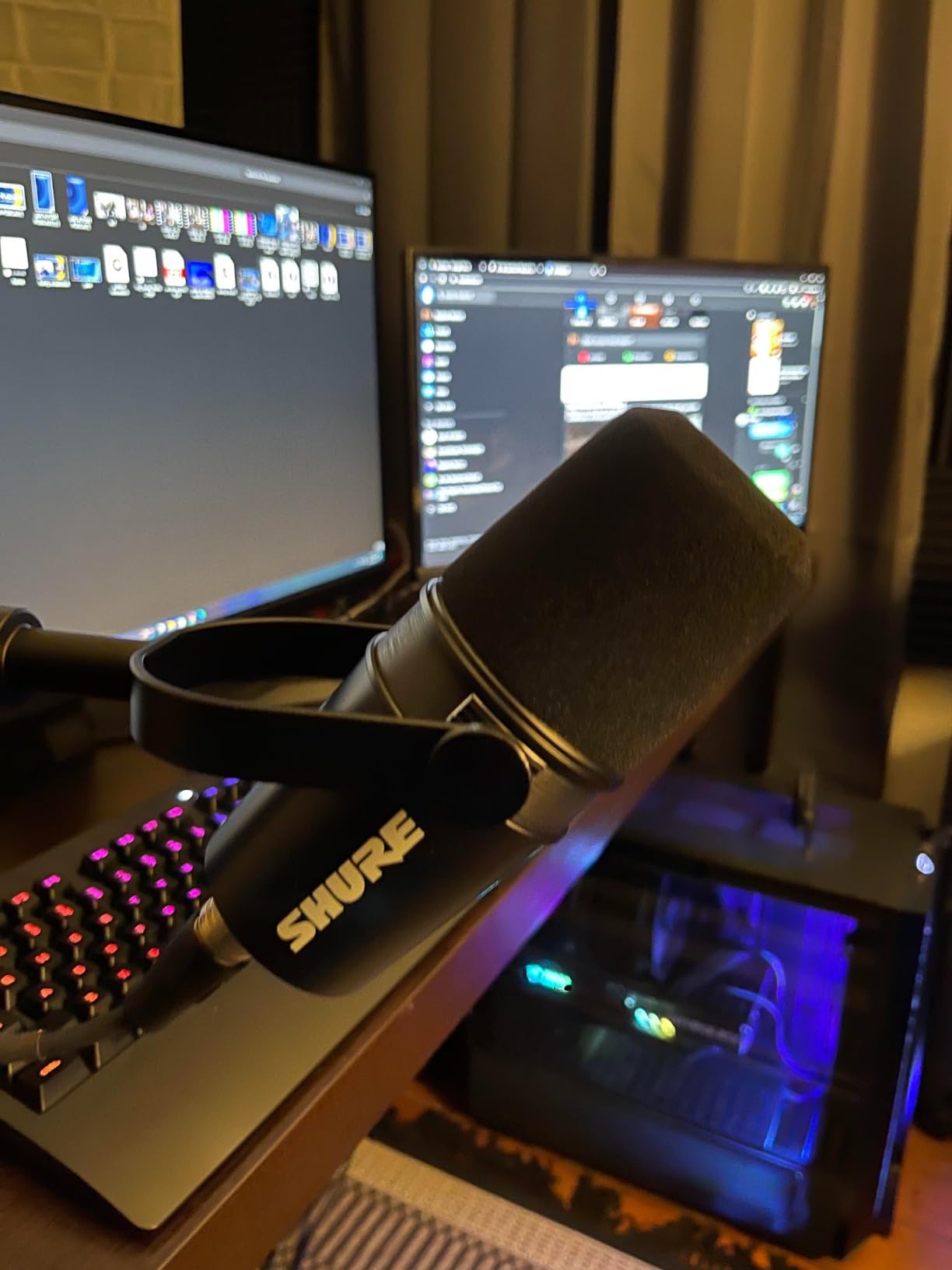
3. Elgato Wave DX – The Practical First Dynamic Microphone
Elgato Wave DX Dynamic XLR Microphone, Cardioid Pattern
Cardioid dynamic
XLR
50 Hz – 15 kHz
600 ohm impedance
407 g
Pros
- Speech capture that owners compare favourably with costlier broadcast mics
- No inline booster needed on typical interfaces
- Compact 7.3 inch body suits small desks
- Solid metal build for long service
- Integrated pop filtering and room noise rejection
Cons
- No on-mic controls of any kind
- XLR cable not included
- Lightweight boom arms can struggle with the weight
The Wave DX is the answer to the single most common complaint in podcast forum threads about mid-range mics: the signal is too quiet to use. Its 600 ohm impedance and speech-optimized dynamic capsule mean it drives into a normal interface without an inline booster, which removes an entire purchase and a whole category of hiss from a first setup.
Everything else about it is aimed at small home studios. The body is 7.3 inches tall and weighs 407 grams, so it does not dominate a desk the way a full-size broadcast mic does. The cardioid acceptance angle is deliberately wide and forgiving, which means a first-time podcaster who moves around while talking does not lose the signal at the edges of the frame.
Owners consistently describe the sound as clear and detailed after several years of streaming service, with strong rejection of background noise. The complaints are practical rather than tonal: no on-mic controls, no included XLR cable, and some lightweight boom arms struggle with the weight.
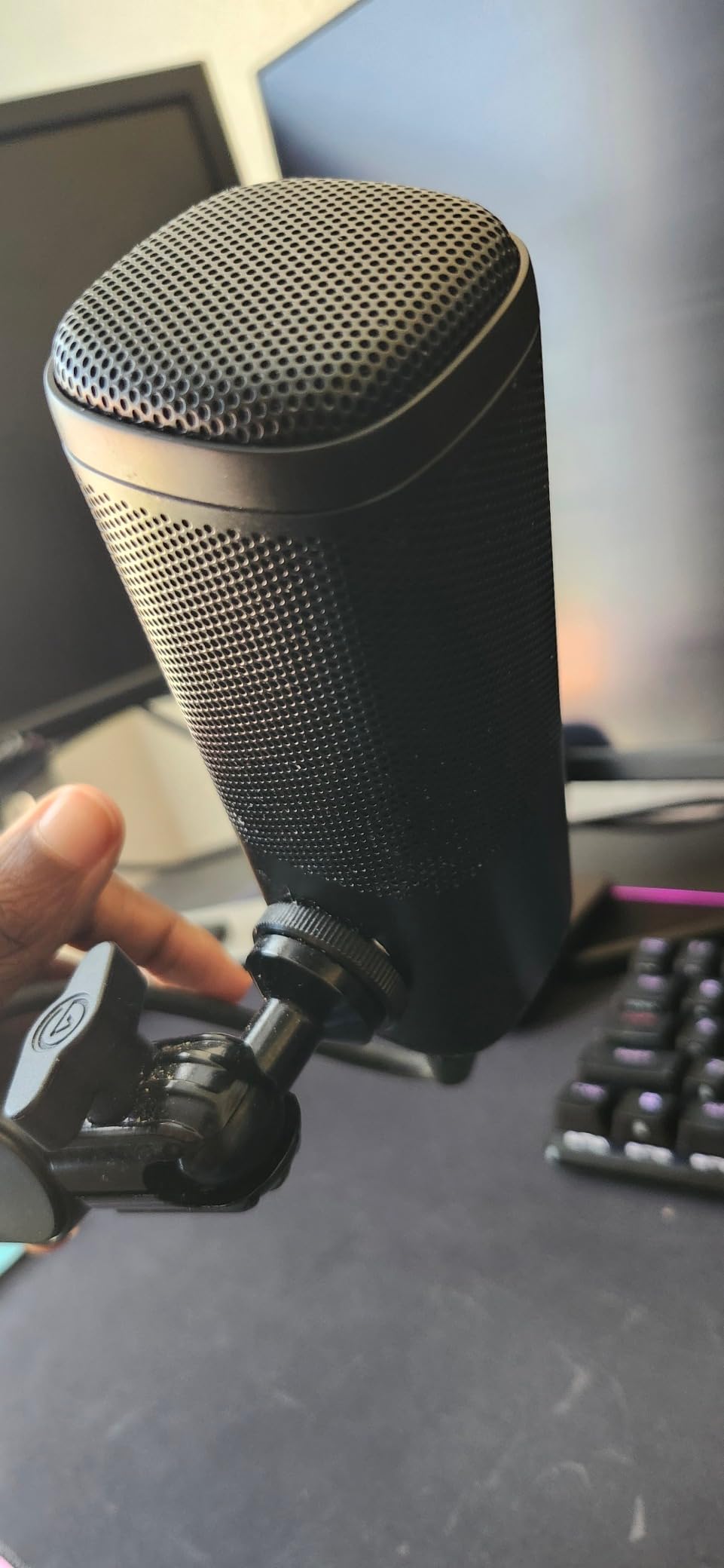
Why a forgiving acceptance angle beats a tight one at home
Most broadcast dynamics are designed to be used at a fixed distance. The Wave DX widens that tolerance, and in a bedroom studio where the chair moves and the desk is not a professional surface, that flexibility is worth more than a technically tighter polar plot. You get a usable take on the first attempt instead of the fifth.
Low-end limits and what to do about them
The 50 Hz to 15 kHz response is narrower than the SM7B, so there is less air and less chest tone available. In practice you compensate with a high-pass filter around 80 Hz, which is where desk thumps and HVAC rumble live anyway. Most of the reviews note that the mic needs no EQ gymnastics once that cut is in place.
Who should skip the Wave DX
Skip it if you want onboard controls, tap-to-mute, or headphone monitoring, because there are none and all of that lives in your interface instead. Skip it if you plan to record two hosts at the same desk and want maximum crosstalk control, since a hypercardioid pick like the AT2040 is better suited to that specific job. And skip it if you need a cable and a mount in the same box, because neither is included.
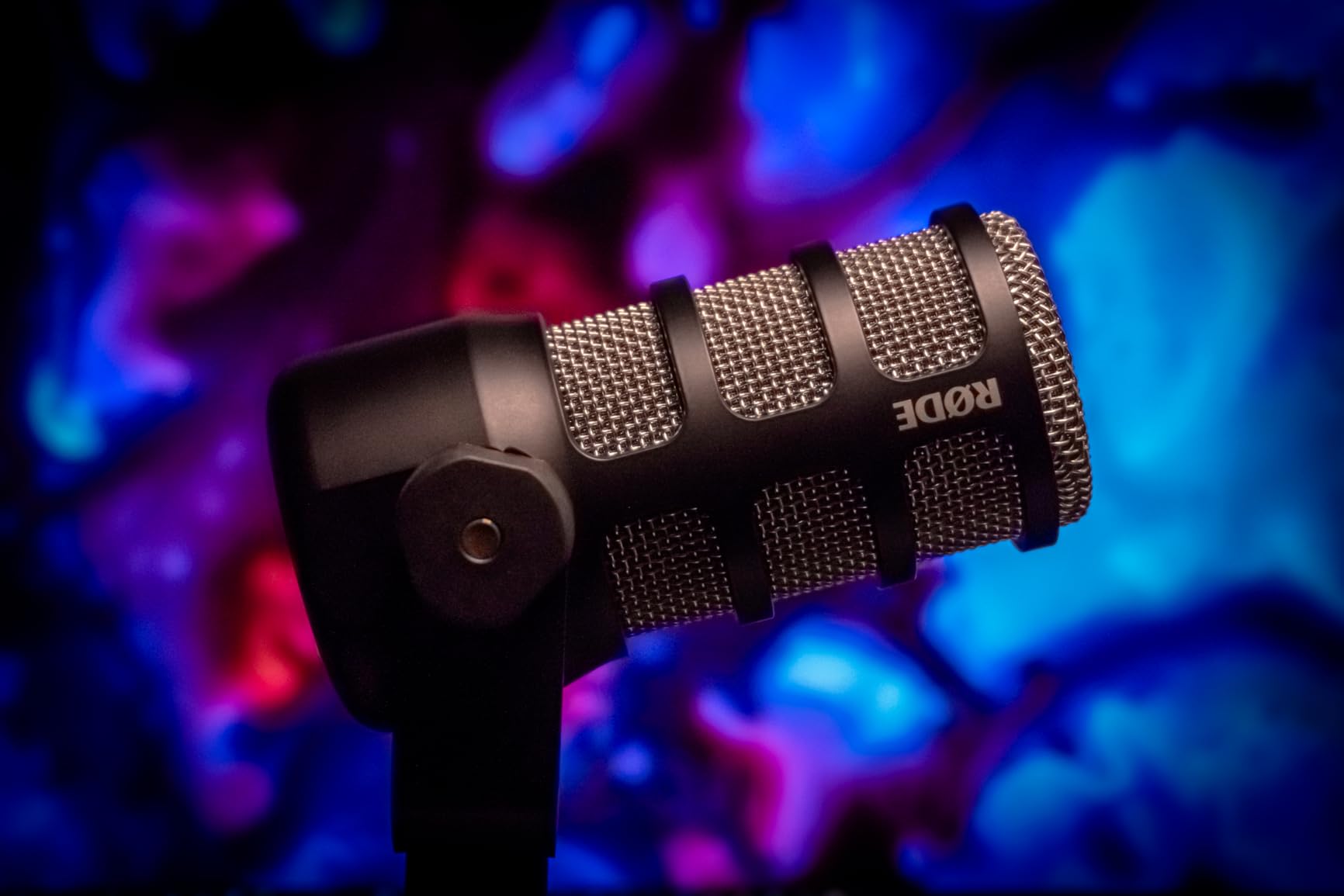
4. Rode PodMic – Broadcast Tone With a Lower Ceiling on Gain
RØDE PodMic Cardioid Dynamic Broadcast Microphone, XLR
Cardioid dynamic
XLR
20 Hz – 20 kHz
78 dB signal to noise
150 ohm impedance
Pros
- Warm rich broadcast tone for speech
- Strong cardioid rejection in untreated rooms
- All-metal build survives drops and travel
- Internal pop filter tames plosives
- Integrated swing mount included
Cons
- Low output level needs considerable gain and can hiss on weaker interfaces
- Heavy body can weigh down a light boom arm
- XLR cable and external pop filter not included
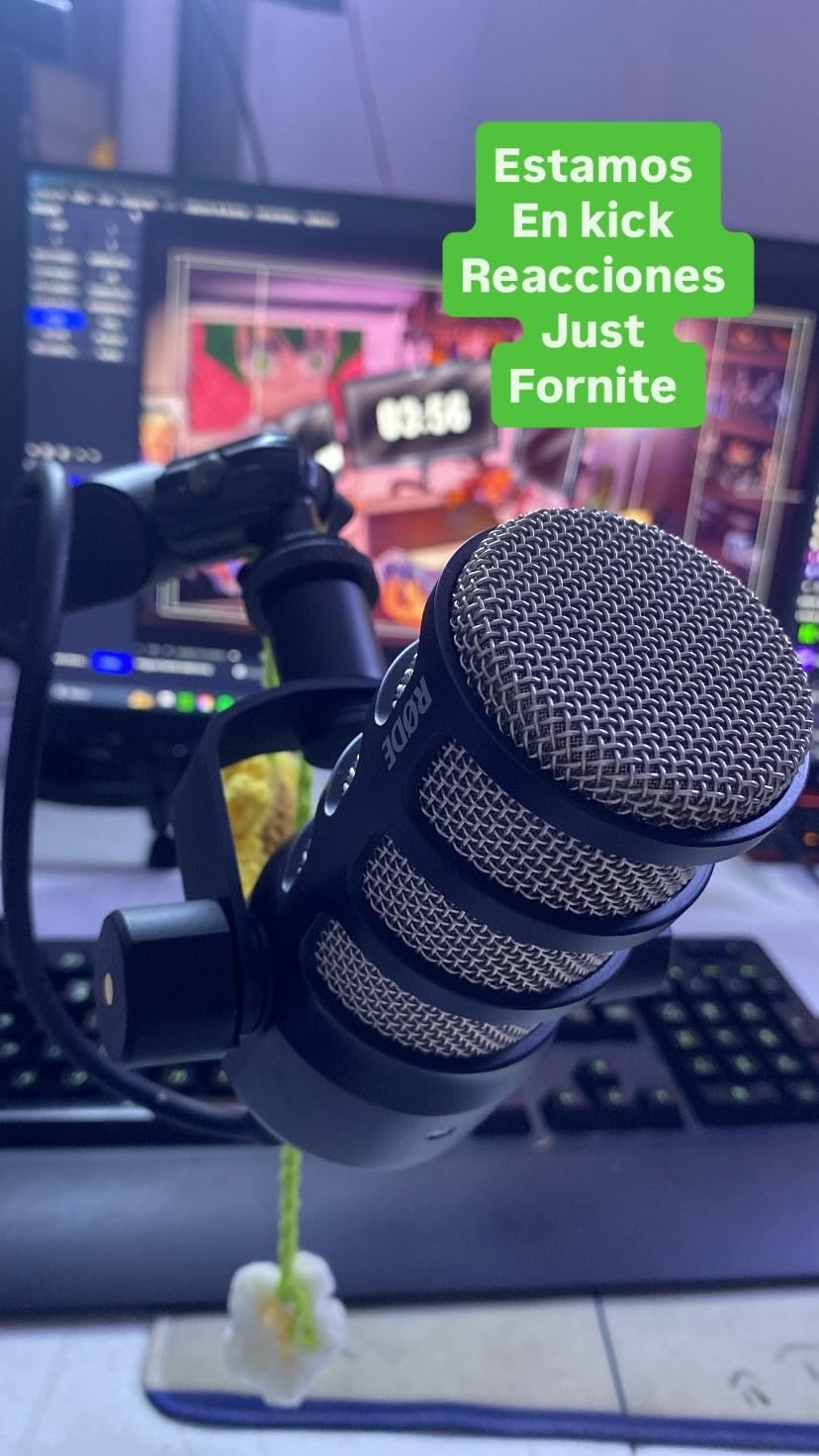
The PodMic is frequently described in podcasting forums as the value benchmark for broadcast dynamic microphones, and that reputation holds up. Reviewers call it pretty good as far as dynamic mics go and note that it is easier to get a good sound out of in untreated environments than the SM7B. The forum consensus also says a solid dynamic podcast setup should not require the top-tier spend, and this is the microphone most often named in that argument.
On paper it is generous. A 20 Hz to 20 kHz frequency range matches the SM7B at the bottom end, the signal-to-noise ratio is 78 dB, impedance is 150 ohm, and the all-metal body includes internal pop filtering and shock mounting. The integrated swing mount is a nice touch, and at 937 grams it is one of the heavier bodies here, so plan your mount accordingly.
Where the PodMic reaches the SM7B and where it does not
The tonal character is the closest of anything on this list to the SM7B, warm and full with a similar broadcast voicing. The difference is headroom and sensitivity. This is a hard mic to drive, and the most repeated complaint in reviews is exactly that, with many owners pairing it with an inline booster or a high-gain interface to get a usable level.
Room noise rejection in an untreated space
Because the cardioid pattern is doing the heavy lifting rather than a capsule with a narrow acceptance window, the PodMic handles traffic, fans, and household noise better than its output level would suggest. It is one of the few entry broadcast dynamics that does not fall apart acoustically the moment you move away from the pop filter.
Who should skip the PodMic
Skip it if your interface has modest gain, because you will spend the first weeks fighting noise rather than making episodes. It is a heavy body that will pull a cheap boom arm down over time. And skip it if you need a headphone solution, since there is no monitoring path on the microphone itself.
Pairing the PodMic with a second mic
For a two-person show, two PodMics plus a small mixer is a legitimate low-cost build, and the fact that they are a matched pair from the same model removes mic-matching guesswork entirely. Gain match by distance and by preamp setting, and the two voices will sit together far more evenly than two different models would.
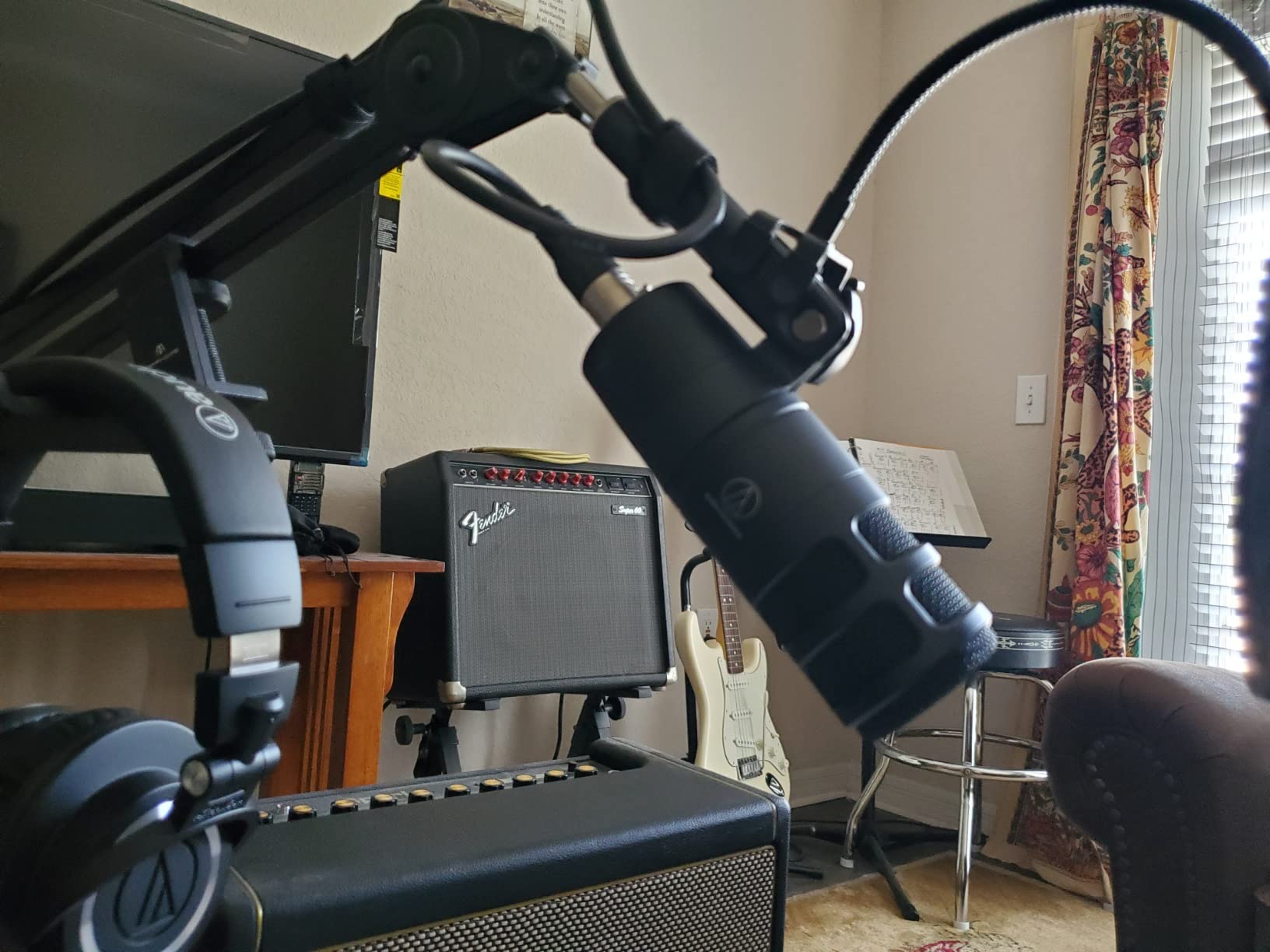
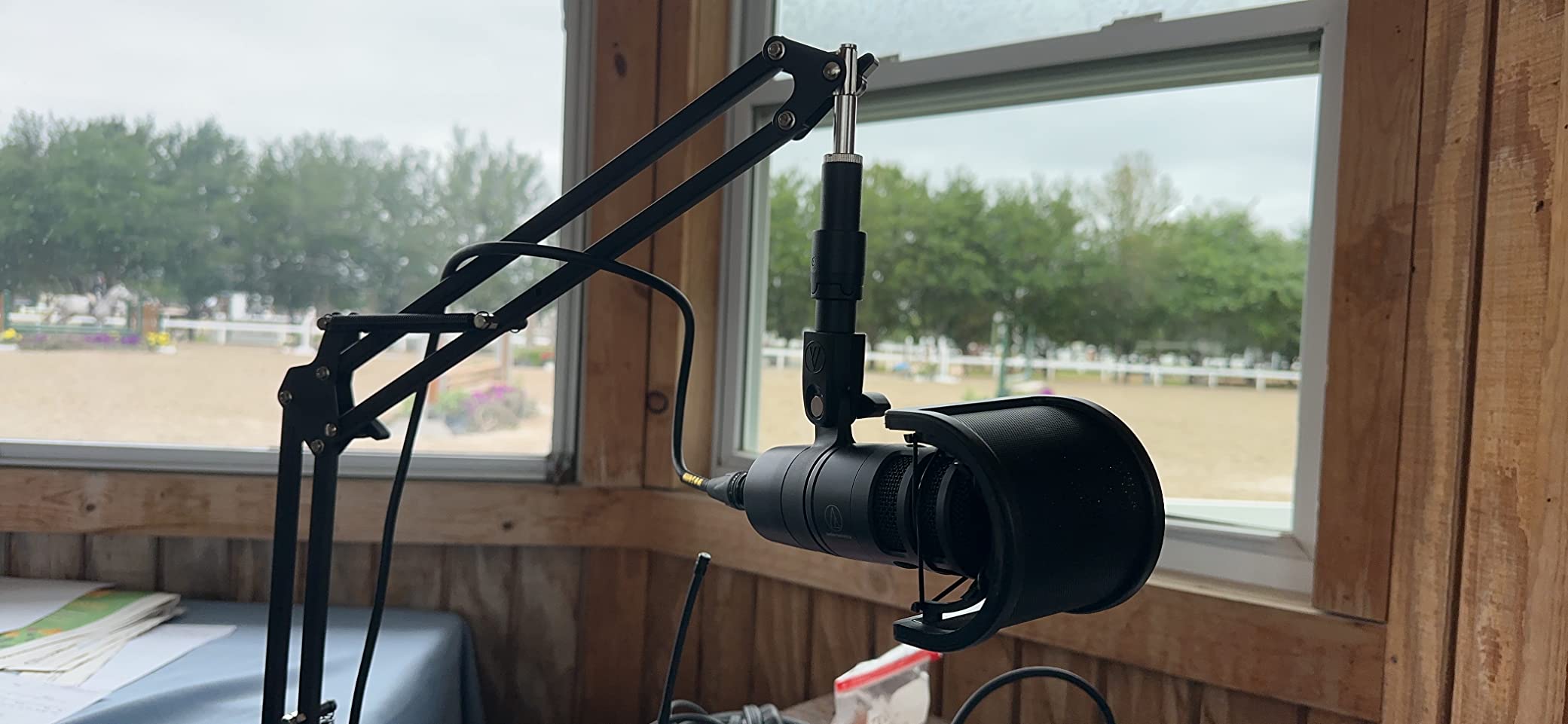
5. Audio-Technica AT2040 – Hypercardioid Isolation for Shared Rooms
Audio-Technica AT2040 Hypercardioid Dynamic Podcast Microphone
Hypercardioid dynamic
XLR
Up to 15 kHz
76 dB signal to noise
2.2 pounds
Pros
- Very tight hypercardioid rejection with near silence at 90 degrees off-axis
- Smooth detailed tone that reaches higher than most budget dynamics
- No proximity effect so close miking stays clean
- Solid metal build with integrated shock mount
- Pivoting stand mount and pouch included
Cons
- Needs substantial preamp gain for a usable level
- Rolls off the low end early with no pad or low-cut switch
- Foam windscreen adds bulk
Where the SM7B wins on tone and the Wave DX wins on convenience, the AT2040 wins on one specific thing: side rejection. It uses a hypercardioid pattern, which is tighter at the sides and rear than a standard cardioid, and owners report that the microphone is nearly silent at 90 degrees off-axis. In a room with a co-host, a window, or a humming light, that is a measurable advantage.
It is a large-diaphragm dynamic at 2.2 pounds with an integrated shock mount and a multistage foam mesh windscreen doing the pop filtering internally. The frequency response runs up to 15 kHz with a 76 dB signal-to-noise ratio, and a two-year limited warranty backs it. A pivoting stand mount, a 5/8-27 to 3/8-16 adapter, and a protective pouch are included.
Hypercardioid versus cardioid, explained
A cardioid pattern has its null point at 180 degrees, directly behind the mic. A hypercardioid pulls that null in tighter, usually to around 120 degrees, which is why the AT2040 is so quiet to the sides. The trade-off is a small amount of extra pickup directly behind it, so position matters a little more. Set the null toward whatever is noisiest, not toward the wall behind you.
No proximity effect is a genuine advantage for beginners
Proximity effect is the bass boost you get when a dynamic mic is worked very close. Many speakers arriving from condenser microphones find it overwhelming, and the standard fix is EQ. The AT2040 largely sidesteps that problem because its large-diaphragm dynamic element does not boost the low end much when you move in close, which means you can sit 15 centimetres from the windscreen and still get a balanced take.
Who should skip the AT2040
Skip it if your gain headroom is limited, because owners consistently note that it needs real gain to sing and some midrange EQ work to sweeten speech. Skip it if you want deep chest tone, since the low end rolls off early and there is no pad or low-cut switch to shape it. And skip it if desk space is tight, because the foam windscreen adds noticeable bulk.
6. Shure MV7+ – One Microphone for Streaming and Studio Chains
Shure MV7+ USB-C & XLR Podcast Dynamic Microphone – Black
USB-C and XLR dynamic
Unidirectional
50 Hz – 16 kHz
LED touch panel with metering
Pros
- Dual USB-C and XLR output in one body
- Auto Level and real-time denoiser keep voice consistent
- LED touch panel with tap-to-mute and level metering
- Lightweight metal body
- Works out of the box with the MOTIV app
Cons
- USB mode can sound plain compared with the XLR path
- Higher sensitivity picks up speaker bleed without headphones
- XLR cable not included
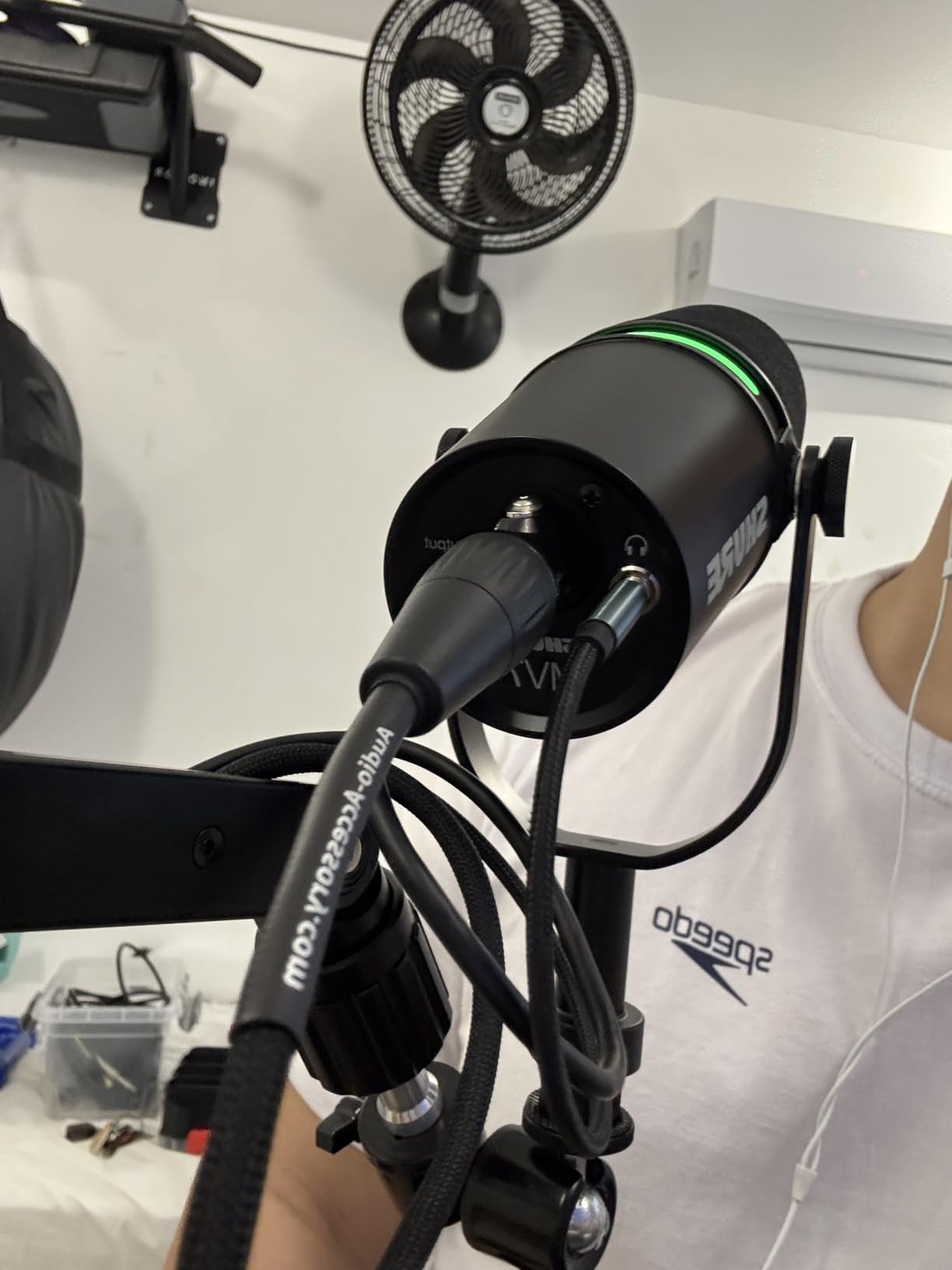
The MV7+ solves a problem most people do not realise they have yet. If you stream today and record a podcast tomorrow, the usual outcome is buying one USB microphone and later replacing it with an XLR one. This body carries both outputs, so the same microphone moves from a laptop to an interface when the show outgrows the desk.
Beyond connectivity it is unusually software-forward. There is a full-colour LED touch panel with level metering, an Auto Level mode that sets gain by distance and volume, a real-time denoiser, and built-in reverb modes covering Plate, Hall, and Studio. The body is metal, weighs 1.9 pounds, and measures just under 13 inches with a 50 Hz to 16 kHz response.
When to use XLR and when to use USB
Use the XLR path for anything you are going to post-produce seriously. The USB path converts to digital inside the microphone, and reviewers report it sounds plainer and flatter than the XLR route. Use USB when you are live, testing, or streaming, where the software features and zero-latency convenience matter more than the last bit of fidelity.
The Auto Level feature earns its keep on a two-host show
Guest levels always differ. Auto Level reads your distance and volume and sets the gain accordingly, which means a first-time guest can sit down and sound roughly right without you riding a fader live. Combine it with the tap-to-mute touch panel and you have a mic that behaves like studio equipment on a streaming budget.
Who should skip the MV7+
Skip it if you want the deepest tonal detail, because the software path trades a little of that away. Skip it if you monitor through speakers, since the higher sensitivity will pick up bleed from them. And skip it if your decision is purely studio-based, because the XLR-only MV7X does the same core job for less money when you never intend to stream.
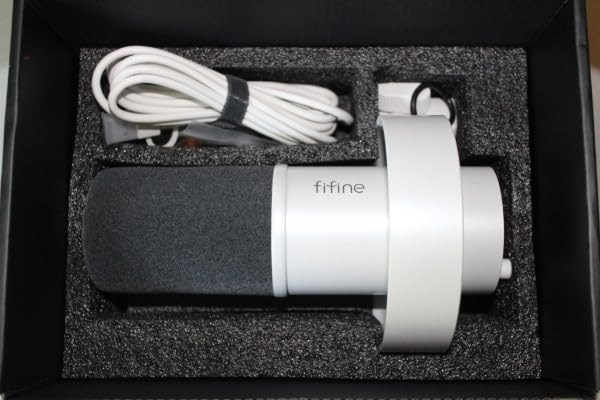
7. FIFINE AmpliTank K688 – A Cheap Step Up With a Real Upgrade Path
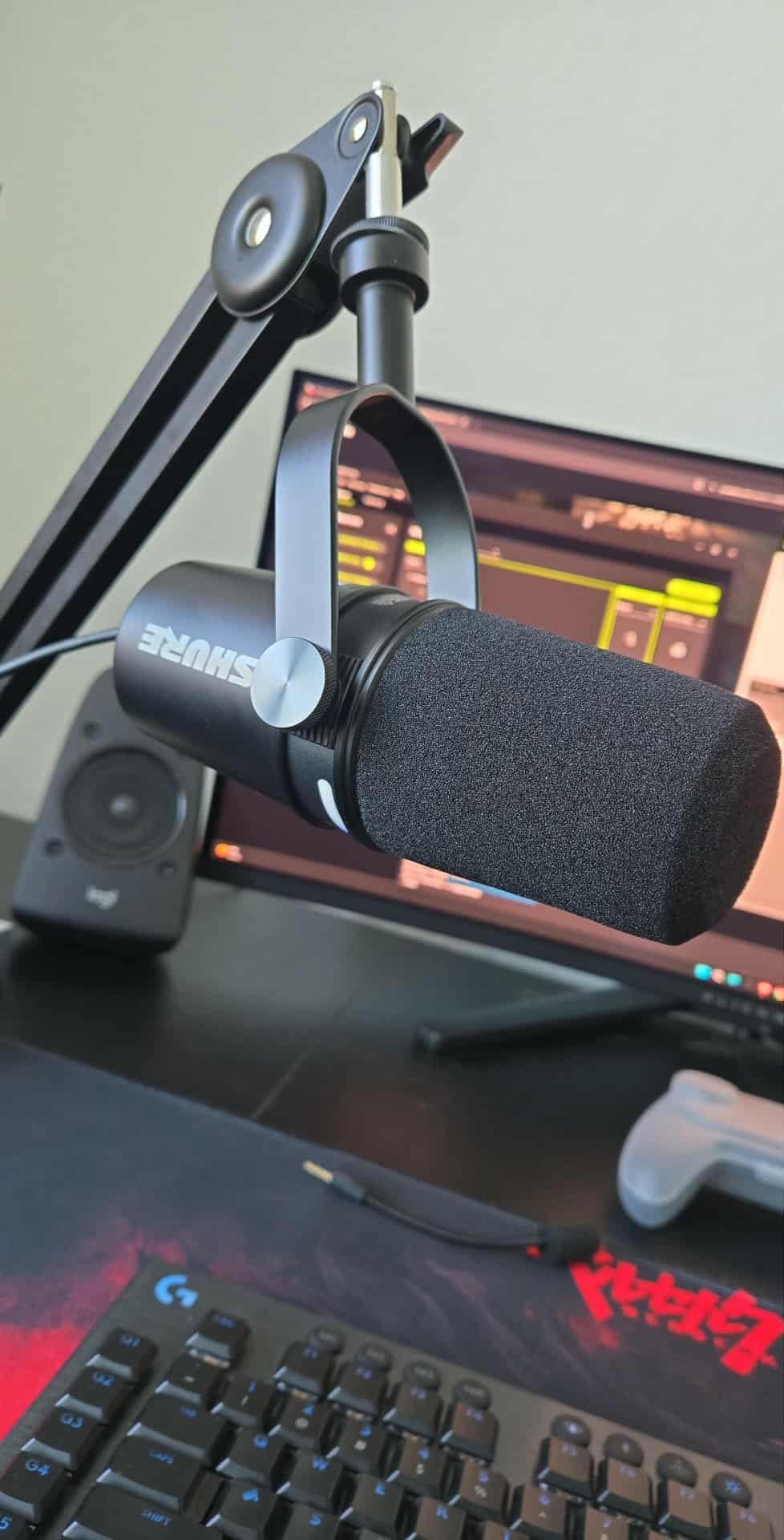
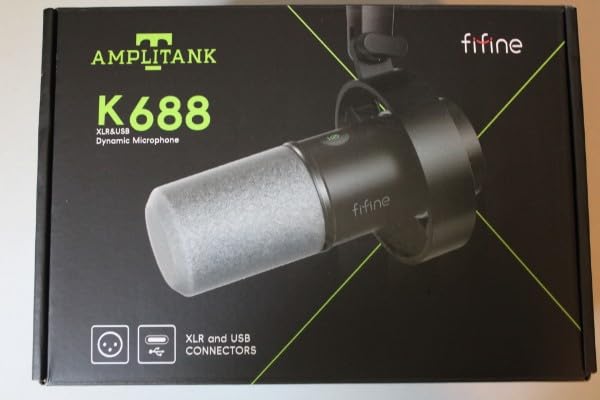
FIFINE AmpliTank K688 Dynamic Microphone, XLR/USB Podcast Recording PC Mic
USB and XLR dynamic
Cardioid
50 Hz – 16 kHz
80 dB signal to noise
130 dB max SPL
Pros
- Clear full voice with strong rejection of PC fans and room noise
- USB and XLR in one body for later interface upgrades
- Metal build with shock mount and windscreen included
- Front tap-to-mute plus rear gain control
- Headphone jack with real-time monitoring
Cons
- XLR cable
- stand and boom arm not included
- Gain knob is sensitive and picks up extra room sound if pushed high
- Included desktop tripod reported as flimsy
The K688 is interesting because of what it does not hide. On-mic functions such as the gain knob, tap-to-mute, and headphone monitoring work only in USB mode, while the XLR path is a clean analog output for when you move to a real interface later. That honesty is unusual at this level, and it makes the mic a genuine stepping stone rather than a dead end.
Specs that back the tone up
Specs are solid for the tier: a cardioid dynamic, 50 Hz to 16 kHz response, an 80 dB signal-to-noise ratio, 130 dB maximum SPL, and an all-metal body at 0.51 kg. The box includes a shock mount, windscreen, a 5/8 inch to 3/8 inch adapter, and a 2.5 m USB-C cable. The one-year warranty is among the shortest here.
That maximum SPL figure matters less for speech than most specs in this roundup, since nobody shouts past 110 dB. It is included because it confirms the capsule is built for loud sources, which is exactly the durability profile a dynamic is supposed to have.
Signal-to-noise ratio versus real room noise
An 80 dB rating sounds excellent next to the 60 dB of the Shure units, but read it carefully. Self-noise measures the microphone’s own electronics, not the room. A dynamic with a low self-noise still records a noisy room if the room is noisy, which is why the cardioid pattern and the desk fan test matter more than the number on the box.
Who should skip the K688
Skip it if you need a full first-day setup, because the XLR cable, stand, and boom arm are all absent. Skip it if you are very close to the mic, because the gain knob is sensitive enough to pull in extra room sound when pushed. And skip it if you are buying for a fixed studio chain, since there are better-matched XLR bodies at similar money.
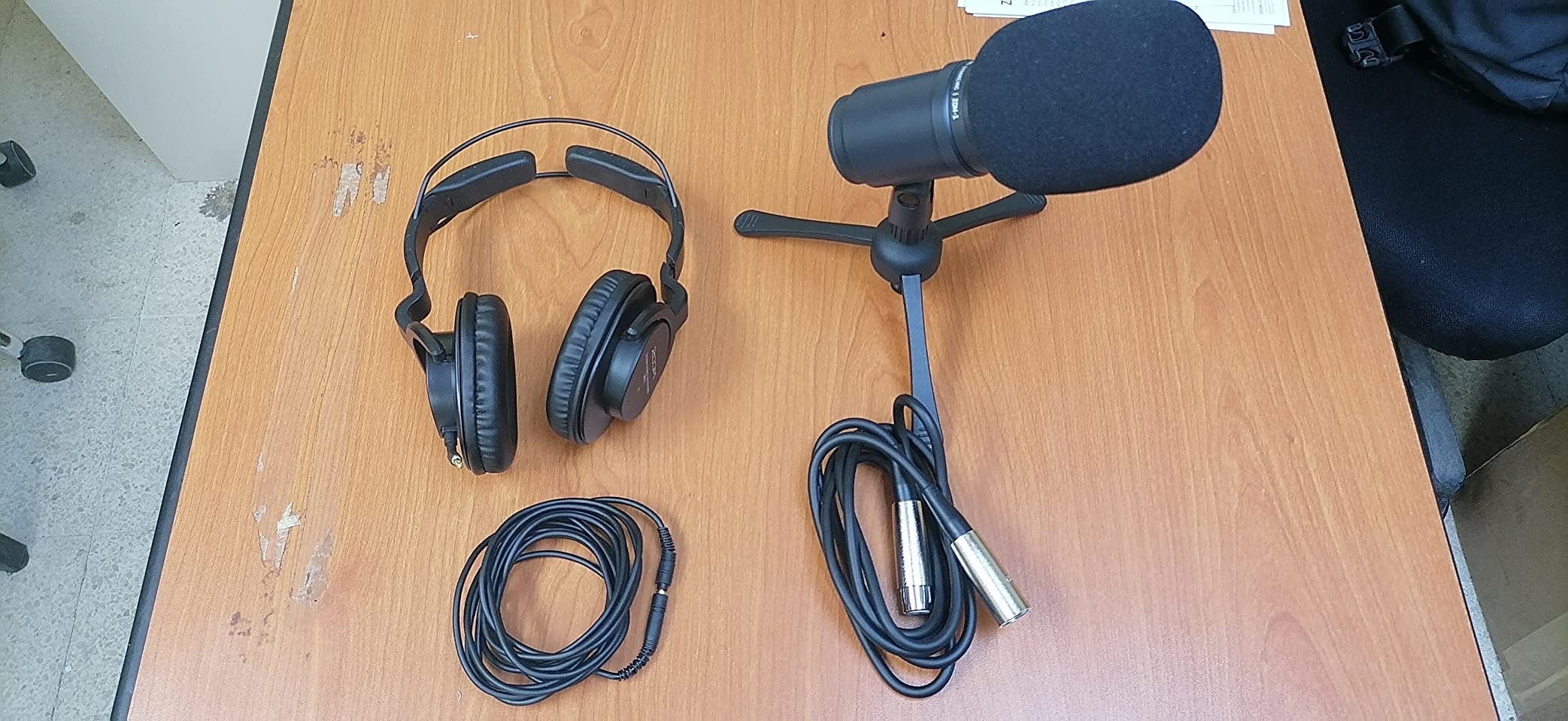
8. Zoom ZDM-1 Podcast Mic Pack – Everything in One Box
Zoom ZDM-1 Podcast Mic Pack for Podcasters with Dynamic Mic & Headphones
Super cardioid dynamic
XLR
Up to 18 kHz
78 dB signal to noise
Includes ZHP-1 headphones
Pros
- Mic
- headphones
- tripod
- windscreen and XLR cable in one purchase
- Rich full-bodied voice well suited to spoken word
- Windscreen blocks pops breath and wind
- Folding threaded tripod sets up quickly and packs flat
Cons
- Still requires an audio interface since it is XLR only
- Bundled headphones are basic closed-back units
- Fixed tabletop stand limits mic positioning
The ZDM-1 pack exists to remove the accessory shopping list. Inside the box you get a super cardioid dynamic microphone, ZHP-1 closed-back headphones, a threaded tripod, a windscreen, and an XLR cable. For someone starting a podcast who would otherwise make three separate purchases and get the cable wrong, that is genuinely useful.
The microphone itself is respectable. Impedance is 200 ohm, the signal-to-noise ratio is 78 dB, the response runs to 18 kHz, and the body combines metal with a faux leather finish at 1315 grams for the full pack. Reviewers like the rich, full-bodied voicing for spoken word and the fact that the windscreen handles pops and breath well enough for close-miking.
Headphone monitoring closes a gap most beginners forget
Monitoring is the piece people discover they need about three episodes in. The ZHP-1 closed-back headphones in this pack are entry-level, but closed-back design means they leak less than open-back monitors, and they let you hear latency, plosives, and clipping in real time while you record rather than after.
Who should skip the ZDM-1 pack
Skip it if you already own decent headphones or an XLR cable, because the bundled versions are the weakest parts of the package. Skip it if you plan to record on a boom arm, since the fixed tabletop tripod limits positioning. And be clear with yourself that XLR means you still need an audio interface before anything gets recorded.
Super cardioid in a small room
The super cardioid pattern gives you a tighter side rejection than a standard cardioid, which helps in a compact space, but it also means the rear null is less forgiving. Point the mic’s back toward the noisiest thing in the room rather than toward an open door and it will behave very well in a small studio.
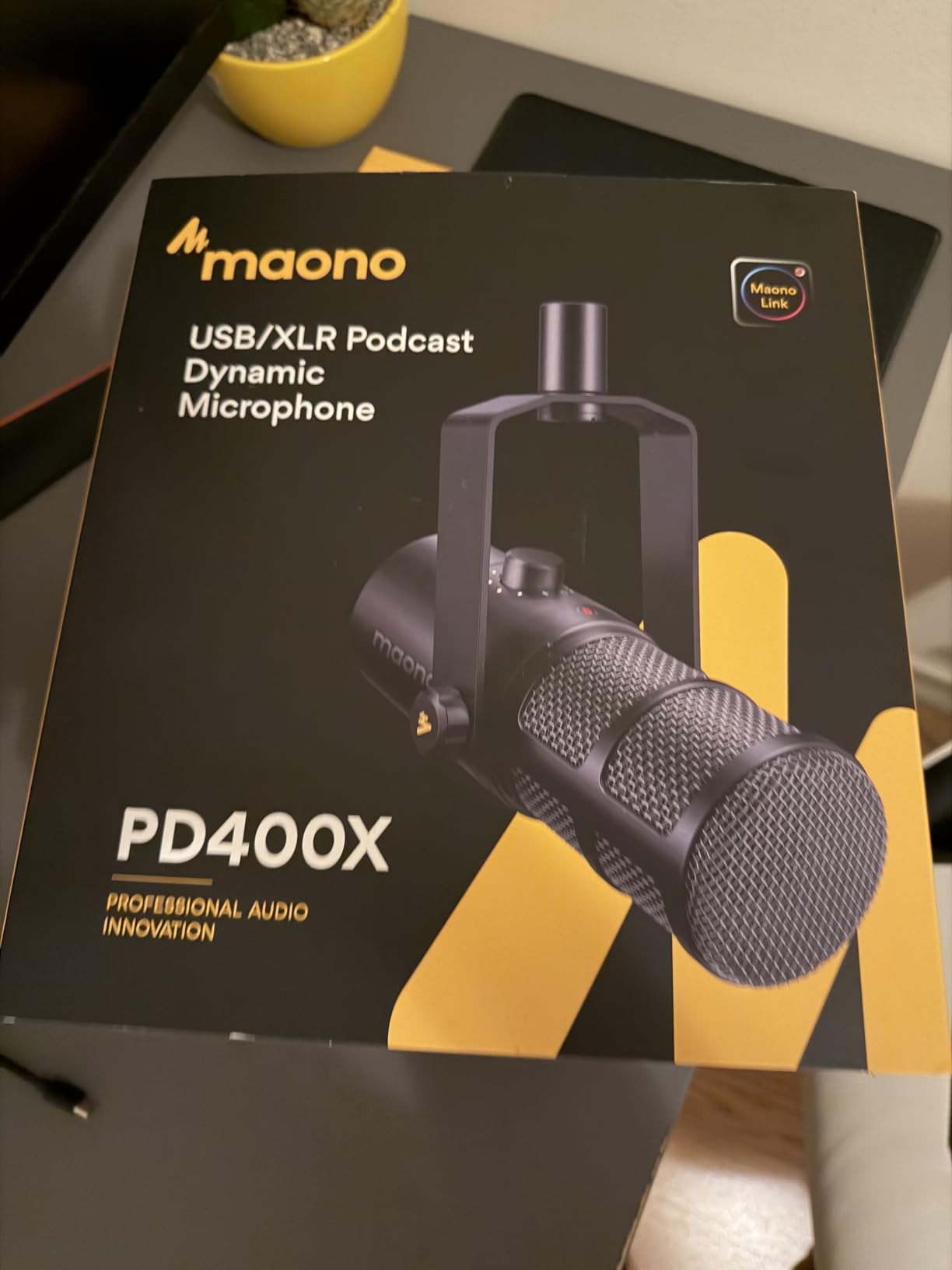
9. MAONO PD400X – Rich Tone With App-Based Control
MAONO PD400X Dynamic Microphone, USB/XLR Podcast PC Mic with Software
USB and XLR dynamic
Cardioid
40 Hz – 16 kHz
78 dB signal to noise
Digital multifunction knob
Pros
- Rich clear broadcast tone comparable to costlier mics
- Dual USB and XLR output for plug-and-play or studio chains
- Solid metal body with a heavy desktop stand base
- Software with EQ compressor limiter and vocal presets
- Responsive manufacturer support
Cons
- Included desktop stand is short and rigid
- Some background pickup when not positioned close
- Software EQ features apply over USB only
The PD400X is the mid-tier pick for people who want to adjust their sound with a dial or two rather than opening a DAW. A single digital knob handles microphone gain, headphone volume, and the monitor mix, tap-to-mute sits on the front with an LED, and the MAONO Link app provides Standard and Advanced modes with EQ, limiter, compressor, and vocal presets.
Reviewers consistently praise the tone as rich and clear, with several owners rating it above broadcast dynamics they had used previously. On paper it is a cardioid dynamic from 40 Hz to 16 kHz with a 78 dB signal-to-noise ratio, a metal body, and both USB and XLR outputs. The box includes a desktop stand base, wind foam, and both USB and XLR cables, which is unusually complete.
What the app actually saves you
Compression and limiting are the two things every podcast benefits from and most beginners avoid. A compressor set in software tames the gap between your quiet sentences and your loud ones, and a limiter stops the peaks that force a recording to be turned down until it sounds lifeless. Having them preset on the microphone is a shortcut, not a substitute, but it is a reasonable starting point you can move past in a month.
Who should skip the PD400X
Skip it if you intend to work entirely over XLR, because the software control disappears on the analog path. Skip it if you sit at a tall desk or in a chair with a high back, because the bundled desktop stand is short and rigid and will end up with the mic pointing at your chest. And skip it if you need the tightest off-axis rejection in a shared room, where the AT2040 is the better tool.
10. Samson Q2U – The Simplest Path From Nothing to Recording
Samson Q2U USB/XLR Dynamic Microphone Recording and Podcasting Pack
USB-C and XLR dynamic
Unidirectional
50 Hz – 15 kHz
70 dB signal to noise
148 dB max SPL
Pros
- Clear warm full voice with very little background noise
- Dual USB and XLR output allows a simple start and later upgrade
- Handheld form factor makes correct mic technique intuitive
- Solid build that survives drops
- Bundle includes stand windscreen and both cables
Cons
- Weak on plosives so a foam windscreen or pop filter is needed
- Bundled desktop stand is low and loosely clamped
- Needs a recording app and computer
- Some PCs fail to detect the mic over USB without a re-plug
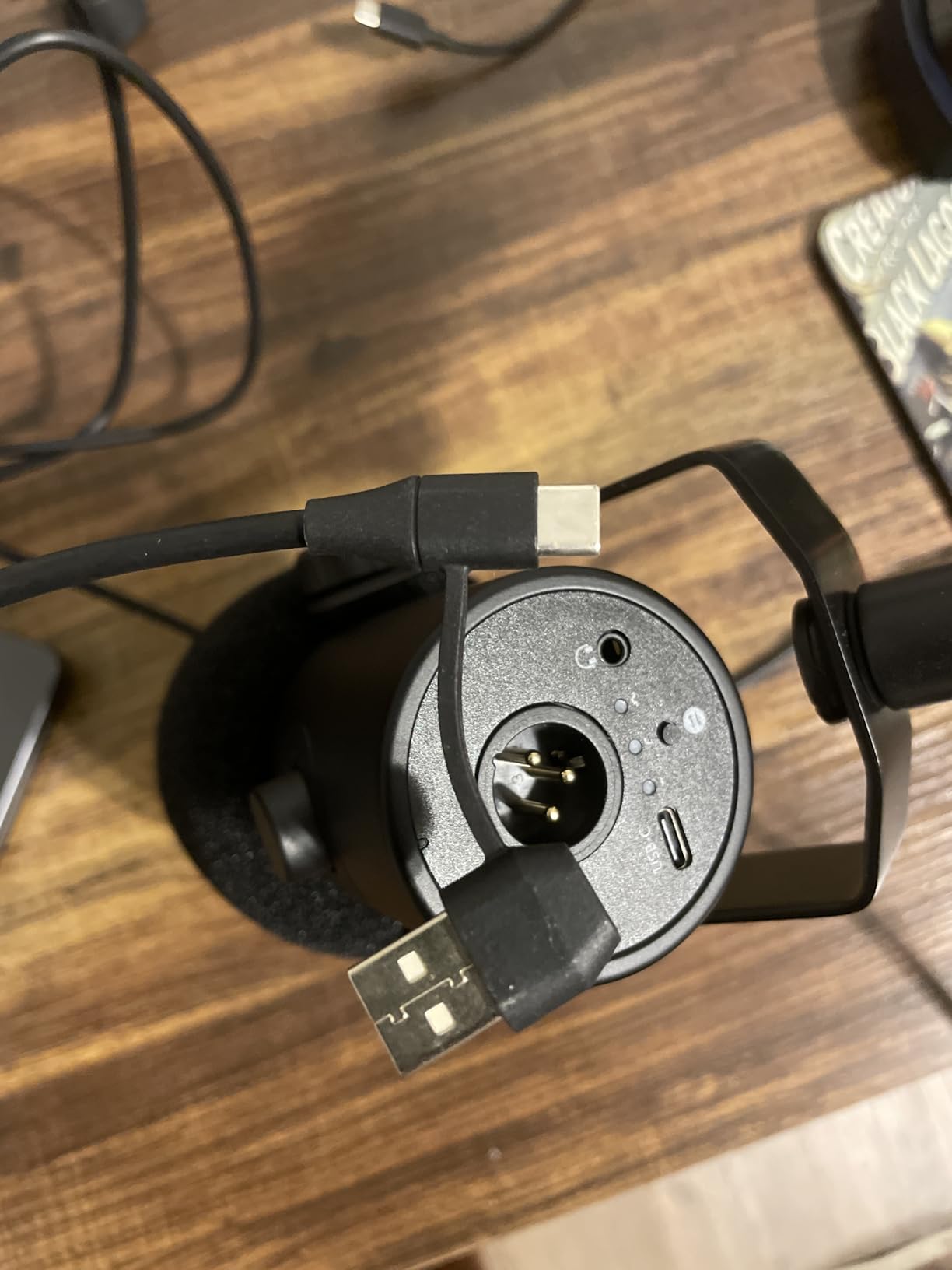
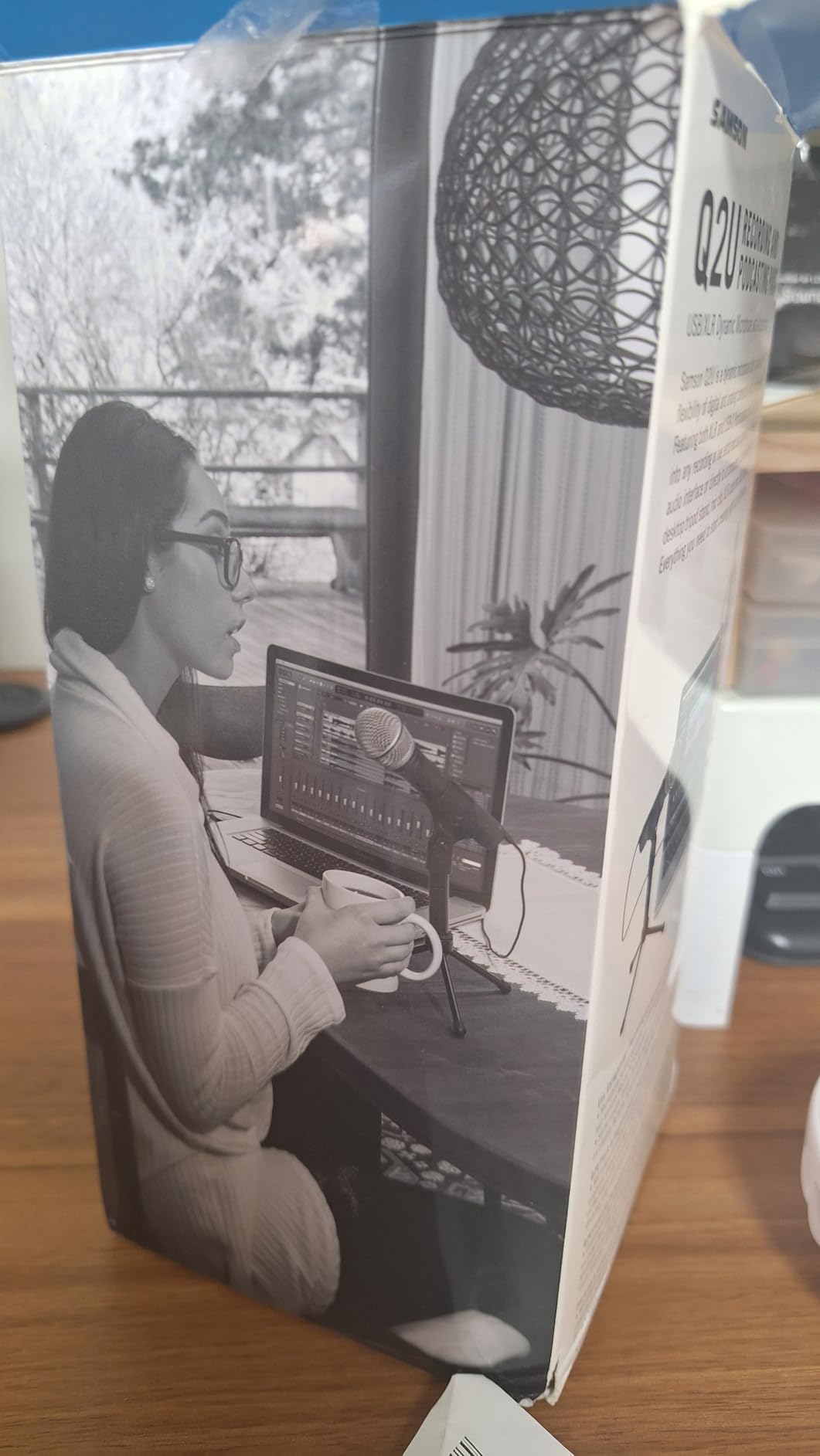
The Q2U is the recommendation that keeps appearing in beginner podcast threads, and the reason is completeness. It is a handheld dynamic with USB-C and XLR output, a 3.5 mm headphone jack, and a pack that includes a tripod desktop stand, a tripod extension, a mic clip, a windscreen, and both USB-C and XLR cables. The laptop supplies the power, so nothing else is required to record.
Under the hood it is a unidirectional dynamic from 50 Hz to 15 kHz with a 70 dB signal-to-noise ratio, a 148 dB maximum SPL, and a metal body at 11.2 ounces. Owners describe the voice as clear, warm, and full with very little background noise, and the cardioid pickup suits the handheld close-miking technique naturally.
Plosives are the one real weakness
The recurring complaint is plosives. Handheld delivery puts the mic close, and a handheld dynamic with limited internal filtering will let P and B sounds hit the capsule hard. The pack includes a windscreen, which helps, but the honest fix is an external pop filter at 10 to 15 centimetres. This is the one add-on we would not skip on this microphone.
Who should skip the Q2U
Skip it if plosives ruin your delivery and you do not want to add a pop filter. Skip it if the bundled desktop stand is your only mount, since it is low and loosely clamped and will need replacing for a boom arm setup. And skip it if your USB ports are unreliable, because some PCs fail to detect the mic without a re-plug or a hub.
11. MAONO PD200XS – A Complete Kit With a Boom Arm in the Box
MAONO PD200XS XLR/USB Dynamic Microphone Kit, RGB Gaming Mic with Software
USB-C and XLR dynamic
Cardioid
40 Hz – 16 kHz
80 dB signal to noise
680 ohm impedance
Pros
- Warm clear voice with good background noise rejection
- USB plug-and-play plus XLR for later interface use
- Smart knob with tap-to-mute and zero-latency headphone monitoring
- Bundled adjustable boom arm makes a complete one-box setup
- RGB lighting and software add on-camera polish
Cons
- XLR cable not included
- Software features only work in USB mode
- RGB lighting serves no purpose for audio-only podcasting
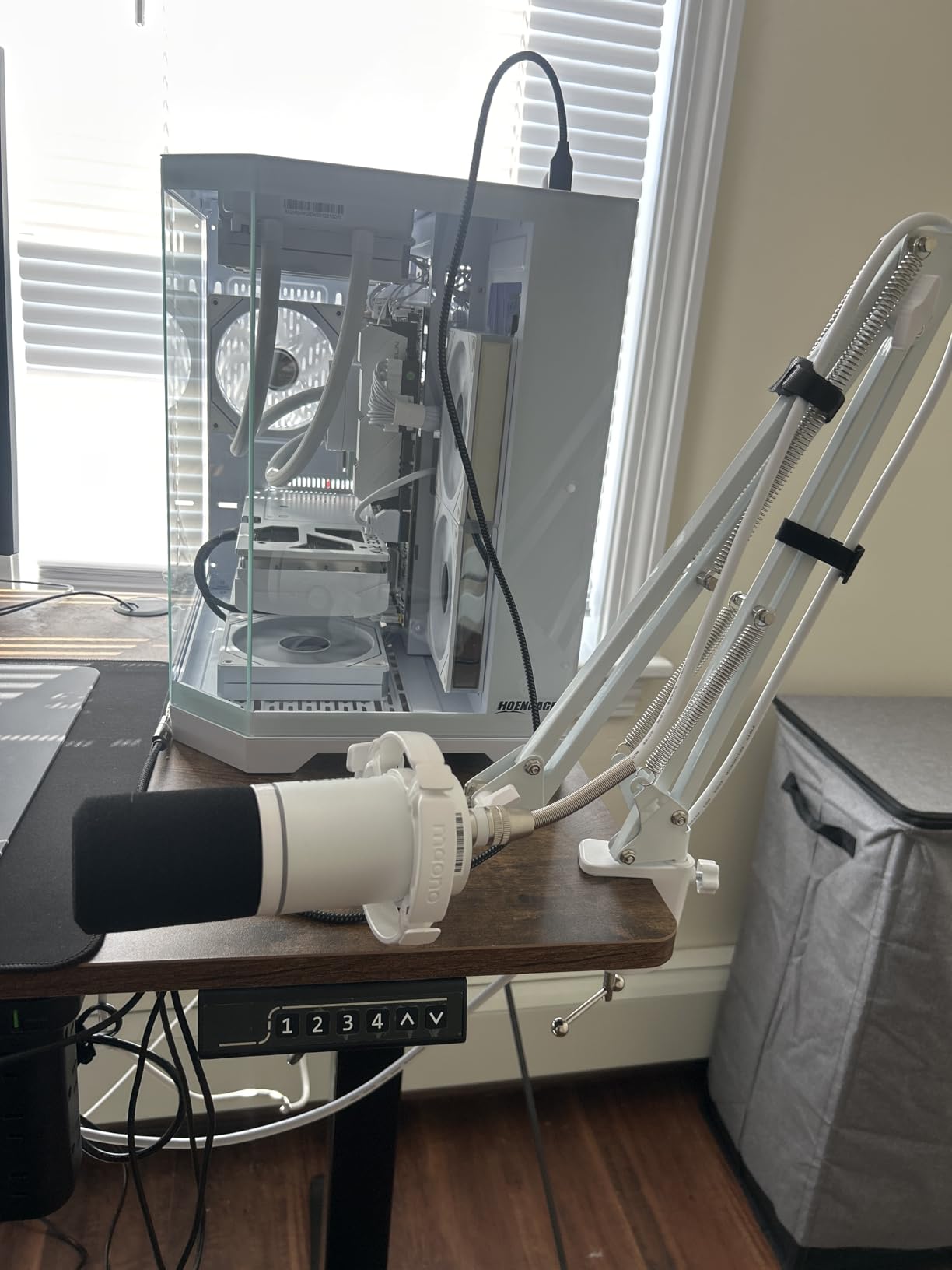
The PD200XS is one of the most complete single purchases in this roundup, and that completeness is its main argument. The kit includes a shock mount, an adjustable boom arm, a 2.5 m USB-C cable, and a 5/8 inch to 3/8 inch adapter. Add a computer and you can record a podcast the same afternoon.
Owners like the warm, clear voice with good rejection of background noise, the smart knob that combines mic gain and headphone volume, the one-click mute with LED, and the zero-latency 3.5 mm monitoring. On paper it is a cardioid dynamic from 40 Hz to 16 kHz with an 80 dB signal-to-noise ratio, 680 ohm impedance, and a 350 g body. The 18-month warranty is shorter than the two years most of this list offers.
Getting the boom arm right on the first try
A boom arm changes how a microphone behaves far more than most people expect. It lets you set the mic at mouth height and 15 to 20 centimetres away, off-axis from the mouth, which reduces both plosives and the breathy low end. Balance the arm’s tension so the mic sits level and the mount does not creak when the desk is bumped.
Who should skip the PD200XS
Skip it if you are recording audio only, because the RGB lighting adds nothing to a spoken-word recording and is one more control to ignore. Skip it if your workflow is entirely XLR, because the software is USB-only and the XLR cable is not included. And skip it if you already own a boom arm, since the bundled arm is the main reason to buy this kit at all.
Matching it to a broadcast chain later
Moving to XLR is a one-cable change. Once you have an interface, the same cardioid capsule keeps working, and a cardioid mic of this class sits comfortably alongside the broadcast picks on this list in a two-mic setup. You are not buying a disposable streaming microphone, which is the main risk with anything that advertises RGB.
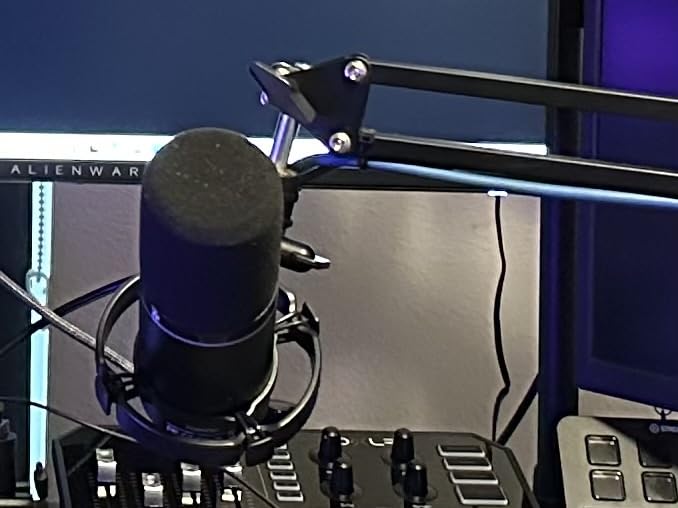
12. TONOR Dynamic Podcast Microphone – Solid Metal With Both Cables Included
TONOR Dynamic Podcast Microphone, XLR/USB Mic for Recording, Streaming
USB and XLR dynamic
Cardioid
50 Hz – 14 kHz
95 dB signal to noise
600 ohm impedance
Pros
- Warm clean vocal with a very low noise floor
- Good off-axis rejection that works in noisy rooms
- USB plug-and-play means no interface is needed to start
- Solid zinc-alloy metal shell
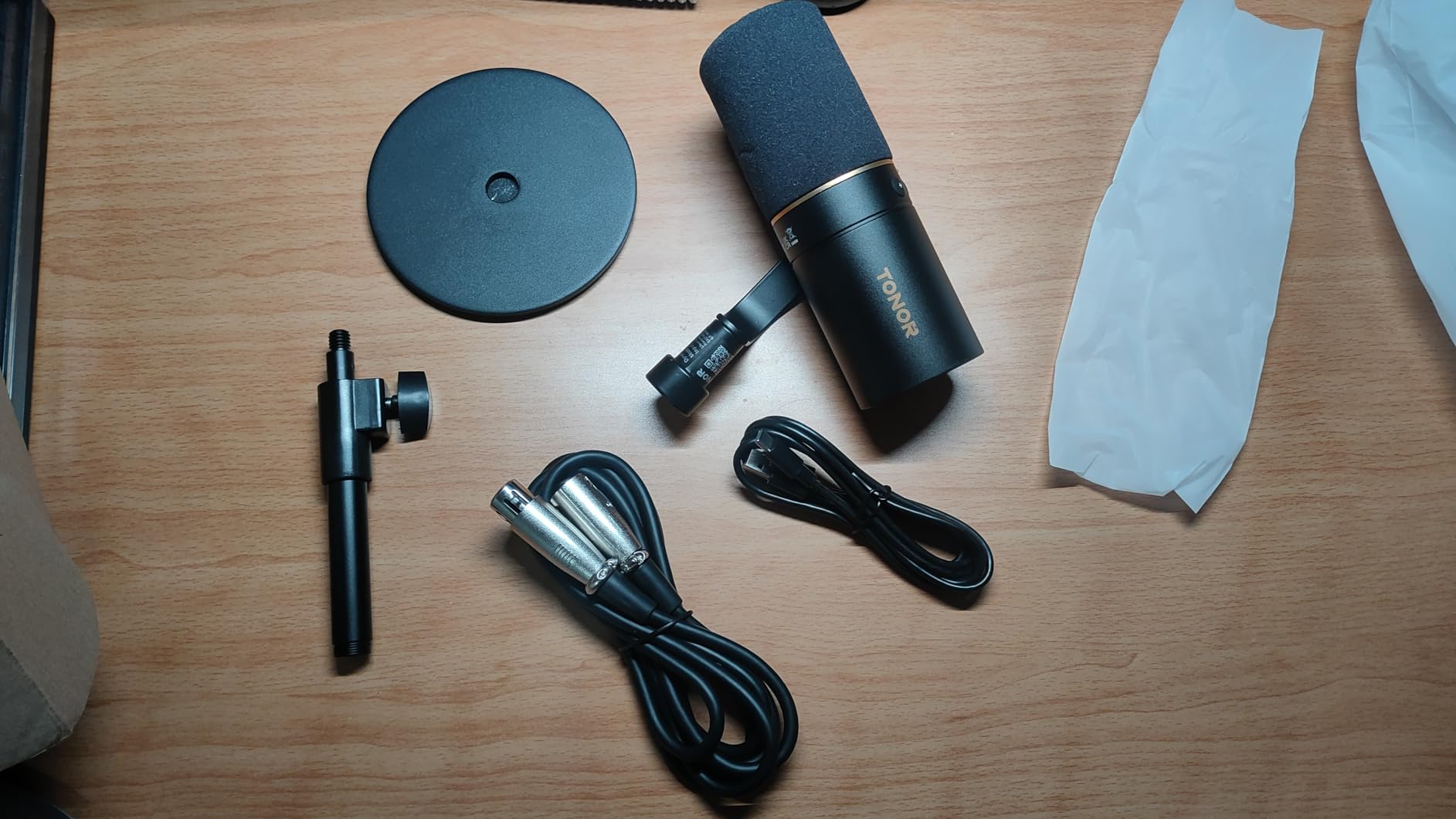
- Both USB and XLR cables included in the box
Cons
- Dark rounded high end in USB mode while XLR sounds cleaner
- Headphone volume control can be unresponsive
- Some units reported unexpected USB disconnects
- Bundled boom-arm instructions are mostly pictograms
The TONOR is a low-cost way to start recording a podcast without a formal interface, and reviewers generally accept the trade. It is a cardioid dynamic from 50 Hz to 14 kHz with a 95 dB signal-to-noise ratio, 600 ohm impedance, and a 110 dB maximum SPL, in a zinc-alloy and steel shell weighing 912 grams. Both USB and XLR cables are included in the box, which is rare in this category.
It has on-mic volume buttons, a long-press mute that switches control between the microphone and the headphone output, and a 3.5 mm jack for real-time monitoring. Owners like the warm, clean vocal and the low noise floor, and several describe the off-axis rejection as good enough for a noisy room. Notably, the same reviewers say sound quality over XLR is rated noticeably better than over USB, where the top end sounds rounded.
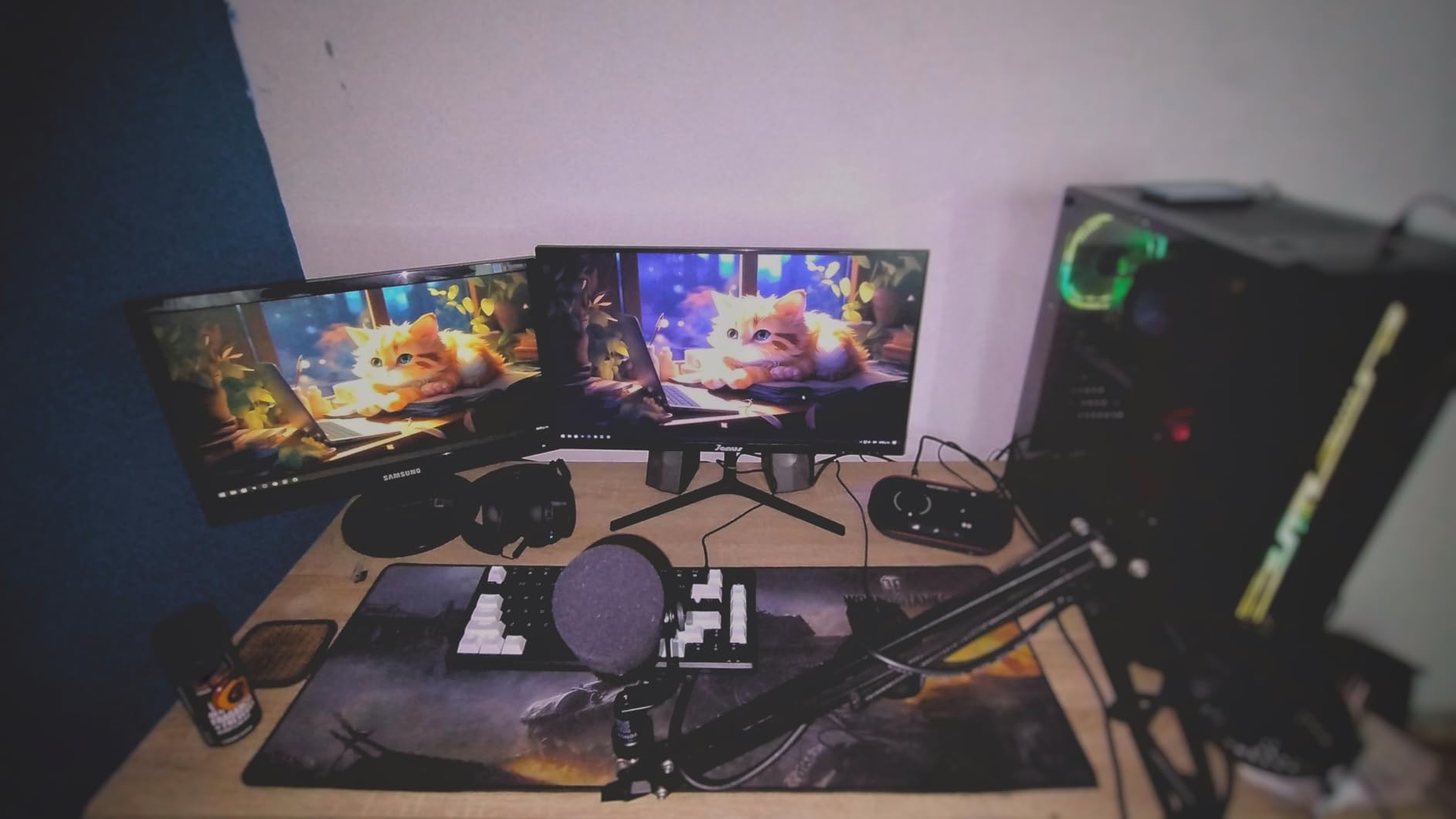
USB disconnects are the reason to consider the alternatives
Reviewers are split on this mic, and the split is worth respecting. Alongside the enthusiastic group there is a low-rated cluster focused on unexpected USB disconnects and poor setup documentation. If your recording depends on long unattended USB sessions, a wired XLR-only dynamic with a proper interface removes that entire class of problem.
Who should skip the TONOR
Skip it if you plan to record long unattended sessions over USB. Skip it if you need a brighter top end, since the response ends at 14 kHz and the USB path rounds off further. And skip it if you are not willing to read the manual carefully, because the bundled boom-arm instructions are largely pictograms and several owners reported needing extra help at setup.
How to Choose a Dynamic Microphone for Your Podcast Room
Every one of the 12 microphones above will record a voice. What separates a usable podcast from an amateur one is whether the room leaks into the recording, and that decision is made before you look at any spec sheet.
Match the mic to the room, not the spec sheet
Start by identifying your worst noise source. If it is traffic, an air conditioner, or a neighbouring TV, you need strong off-axis rejection, which points toward the tighter patterns on this list: the AT2040 in hypercardioid, the ZDM-1 in super cardioid, and the SM7B in cardioid. If your room is quiet and well treated, choose on tone and gain headroom instead, which is where the SM7B and the PodMic separate themselves.
Forum research makes the same point from the other direction. Podcasters repeatedly note that the SM7B might be a bit of overkill, and that a solid dynamic podcast setup should not need top-tier spending. That is right for a treated room and wrong for a room next to a busy road.
XLR, USB-C or hybrid: which connection you actually need
An XLR microphone outputs a balanced analog signal that travels to an audio interface or mixer, where it is converted to digital. Nothing is powered at the microphone end, and you control gain, EQ, and levels in your own software. A USB microphone contains its own preamp and analog-to-digital converter, so it connects straight to a computer and needs no interface.
Choose XLR if you already have an interface or plan to record two or more people, mix music, or want to upgrade hardware without replacing microphones. Choose USB if you are recording solo on one computer and want to skip the extra box. Choose a hybrid such as the MV7+, the K688, the Q2U, the PD400X, or the PD200XS if you want to start now and keep the option to move up later.
Gain staging and whether an inline booster is necessary
Gain is measured in decibels, and every dynamic microphone has an output level that determines how much amplification your preamp must supply. The SM7B is rated at -59 dBV/Pa sensitivity with a manufacturer recommendation of 60 dB or more of clean gain, which is why it is the mic most often paired with an inline booster. The Wave DX is described as working with any XLR preamp with no booster required, and the K688 and TONOR approach the same forgiving territory through their USB paths.
The practical rule: if your recording software shows a healthy level with the preamp at two-thirds of its range, you are fine. If you are at maximum gain and still recording a quiet, noisy signal, the answer is an inline booster or a better preamp, not a different microphone. Our home studio preamp guide covers that decision in more depth.
Off-axis rejection and the 3-to-1 rule explained
Off-axis rejection is how much a microphone ignores sound arriving from behind and beside it. Cardioid mics are designed to reject sound from the rear, which is why pointing a dynamic away from a noisy wall or window works. The 3-to-1 rule is the placement discipline that makes this work in multi-microphone setups: the distance between two microphones should be at least three times the distance from the speaker’s mouth to the nearest microphone.
Applied properly, that rule removes crosstalk almost completely. Put the mic 20 centimetres from your mouth and the next one must sit at least 60 centimetres away, which on a real desk usually means using a boom arm to pull the second mic in above the guest rather than reaching across the table.
Total system cost: what a dynamic microphone really takes to run
Budget beyond the microphone. An XLR-only dynamic needs an audio interface, an XLR cable if one is not included, a pop filter for close-miked speech, and a mount that suits the body’s weight. Add a shock mount and a foam windscreen if your microphone does not have one built in. Our microphone stand guide covers mount types for the heavier broadcast bodies in this list.
Three of the picks here bundle enough to avoid that entirely: the Zoom ZDM-1 pack includes headphones, a tripod, a windscreen, and an XLR cable, the Samson Q2U includes both cables and a stand, and the MAONO PD200XS includes a boom arm. If you are buying your first microphone, one of those three avoids a second shopping list.
Plosives, sibilance and rumble fixes
Plosives are the burst of air from P and B sounds, sibilance is the harsh edge on S sounds, and rumble is low-frequency handling noise and thumps. Plosives are controlled with distance and a pop filter, keeping the microphone 15 to 20 centimetres away and slightly off-axis from the mouth. Sibilance needs a high-pass filter around 100 Hz plus a gentle de-esser in post. Rumble is best handled by a shock mount and by not touching the body while recording.
Dynamic microphones generally need more corrective EQ than condensers, and saying so is more useful than pretending the hardware does the work. Forum discussion on whether top-tier gear alone makes a noticeable difference is genuinely split, with a recurring counter-view that post-processing does the heavy lifting. Both can be true: better hardware gives you more headroom, and processing spends it.
Frequently Asked Questions
What is the best dynamic microphone for podcasting?
The Shure SM7B is the best dynamic microphone for a treated podcast studio, and the Shure MV7X is the best overall pick for most home setups because it delivers broadcast-style isolation at a much lower gain demand. The Elgato Wave DX is the best choice for a first microphone because it drives into a standard interface without an inline booster. In an untreated room, choose based on off-axis rejection rather than tone.
Do I need an inline booster or Cloudlifter for the SM7B?
You need about 60 dB of clean preamp gain, which Shure themselves recommend for the SM7B because of its -59 dBV/Pa sensitivity. If your audio interface reaches that cleanly, you do not need a booster. If you have to max out the preamp and still record a quiet, noisy signal, an inline booster solves it for less than replacing the interface.
What is the 3 to 1 rule for microphones?
The 3 to 1 rule states that the distance between two microphones should be at least three times the distance from the speaker’s mouth to the nearest microphone. With a microphone 20 centimetres from the mouth, the second one must sit 60 centimetres away, which eliminates crosstalk between two hosts recording in the same room.
Are dynamic microphones better than condensers for podcasts?
For most home studios, yes. A dynamic microphone needs no phantom power, tolerates loud sources, and its cardioid pattern rejects room noise that a sensitive condenser would happily record along with your voice. Condensers still win in a properly treated room where the goal is maximum detail and air, but in an untreated space the dynamic’s off-axis rejection is the dominant factor.
Is a dynamic microphone good enough for a two-person podcast?
Yes, and it is often the better choice. Two cardioid or hypercardioid dynamics matched as a pair give you individual tracks with minimal crosstalk when the 3-to-1 rule is followed. The Audio-Technica AT2040 in hypercardioid gives the tightest side rejection on this list, while two of the same model remove mic-matching guesswork entirely.
Which Dynamic Microphone Should You Buy in 2026?
If you have a treated room and a high-gain interface, the Shure SM7B remains the best dynamic microphone for podcast studios and the one we would buy first. If your room is untreated but your signal chain is modest, the Shure MV7X gives you the same isolation without the gain penalty. If you are starting from zero and want a mic that just works, the Elgato Wave DX removes the single most common beginner mistake.
For maximum room rejection on a two-host show, choose the Audio-Technica AT2040. For the warmest broadcast tone below the SM7B, choose the Rode PodMic. For streaming and studio in one body, the Shure MV7+. For a complete first-day setup, choose the MAONO PD200XS or the Zoom ZDM-1 pack.
Whichever you pick, remember the room is the bigger variable. Measure your gain headroom before you buy, add a pop filter, and start recording.
Leave a Reply