
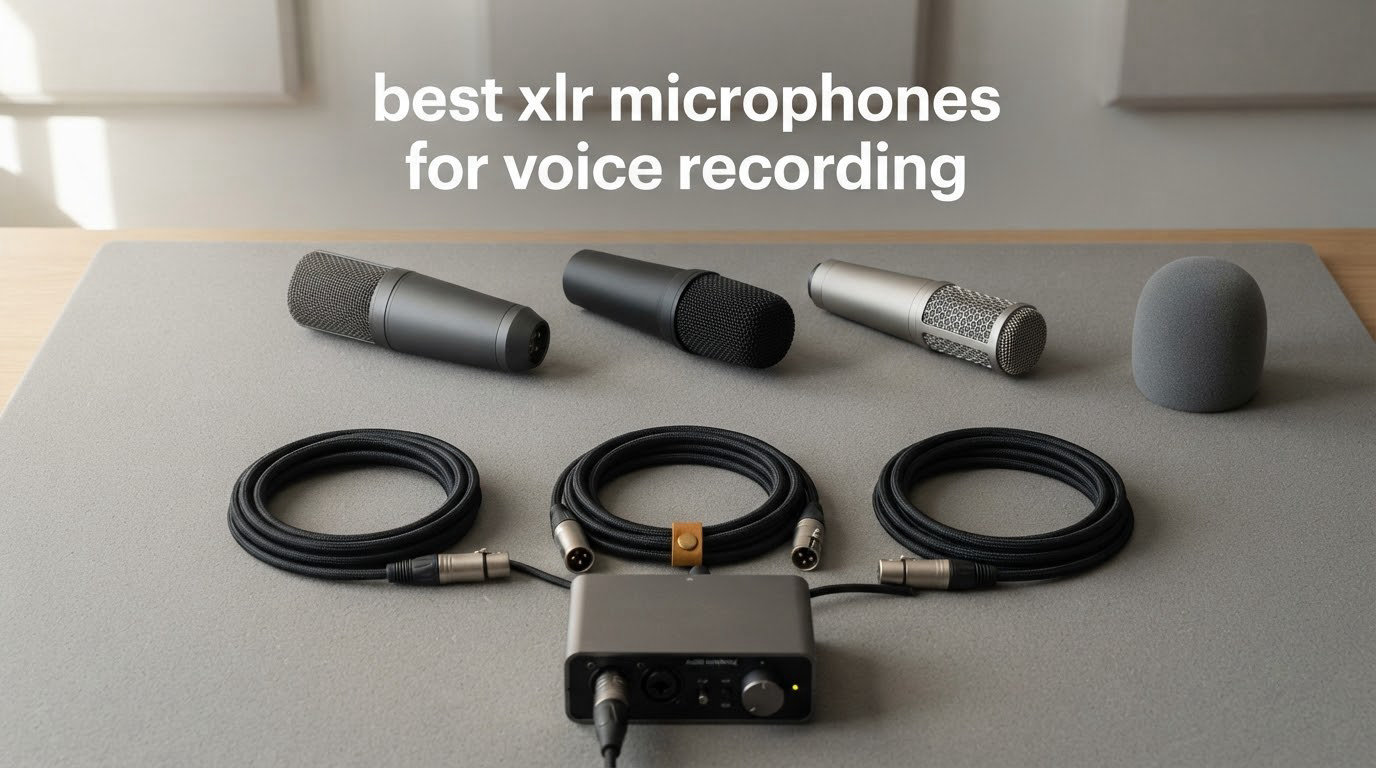
Short answer: for most people reading this, the Audio-Technica AT2020 is the best XLR microphone for voice recording, the Shure SM7B is the pick when your room is noisy, and the Shure SM58 is the safest choice if you have never recorded a word. That ranking only holds if you match the capsule type to your room, which is the decision most guides get wrong.
I have moved microphones between untreated bedrooms, a treated project room and a live room for years, and the pattern never changes. A dynamic microphone in a bad room sounds fine. A condenser microphone in that same room records every car, every fridge and every reflection, and no amount of editing rescues it. Voice recording is an environment problem with a microphone bolted to the front of it.
So the rule I use is simple: untreated room, choose a dynamic; treated room, choose a condenser. Everything below, from phantom power to polar patterns, hangs off that one call. I compared these 12 XLR microphones on the specifications that move the needle for spoken word, and I list the real drawbacks for each one, because a microphone that cannot handle your voice or your room is a wasted purchase.
If you are still assembling a first setup, our guide to the best vocal recording microphones covers the USB and XLR mix, and our voice over microphone picks go deeper on narration work.
Our Top 3 Picks: The Short List Worth Your Time
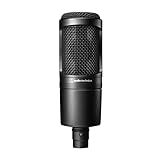
Audio-Technica AT2020
- Cardioid condenser
- 20 dBA self noise
- 74 dB signal to noise
- 48V phantom power
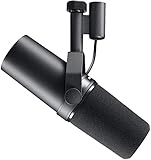
Shure SM7B
- Cardioid dynamic
- 50 Hz to 20 kHz
- built-in shock mount and pop filter
- no phantom power

These three cover the realistic decision space. The AT2020 is the default for a treated or semi-treated space, the SM7B is the answer when the room fights you, and the SM58 is the answer when you want one microphone that cannot be defeated by a noisy floor or a modest interface.
All 12 XLR Microphones Compared Side by Side in 2026
| Product | Specs | Action |
|---|---|---|
| Audio-Technica AT2020 |
|
Check Latest Price |
| Shure SM58 |
|
Check Latest Price |
| Shure SM7B |
|
Check Latest Price |
 FIFINE AmpliGame AM8 FIFINE AmpliGame AM8 |
|
Check Latest Price |
 Rode PodMic Rode PodMic |
|
Check Latest Price |
 Samson Q2U Samson Q2U |
|
Check Latest Price |
 FIFINE AmpliTank K688 FIFINE AmpliTank K688 |
|
Check Latest Price |
 TONOR TC20 TONOR TC20 |
|
Check Latest Price |
 Audio-Technica AT2035 Audio-Technica AT2035 |
|
Check Latest Price |
 Shure MV7X Shure MV7X |
|
Check Latest Price |
 Rode NT1 Signature Rode NT1 Signature |
|
Check Latest Price |
 MAONO A04 Gen2 MAONO A04 Gen2 |
|
Check Latest Price |
Two columns do most of the work here. Self noise tells you how quiet the recording floor will be, and the gain appetite implied by the capsule type tells you what your interface has to deliver. A 4 dBA condenser records a treated room cleanly; a dynamic that wants 60 dB of gain will amplify whatever a cheap preamp does not like.
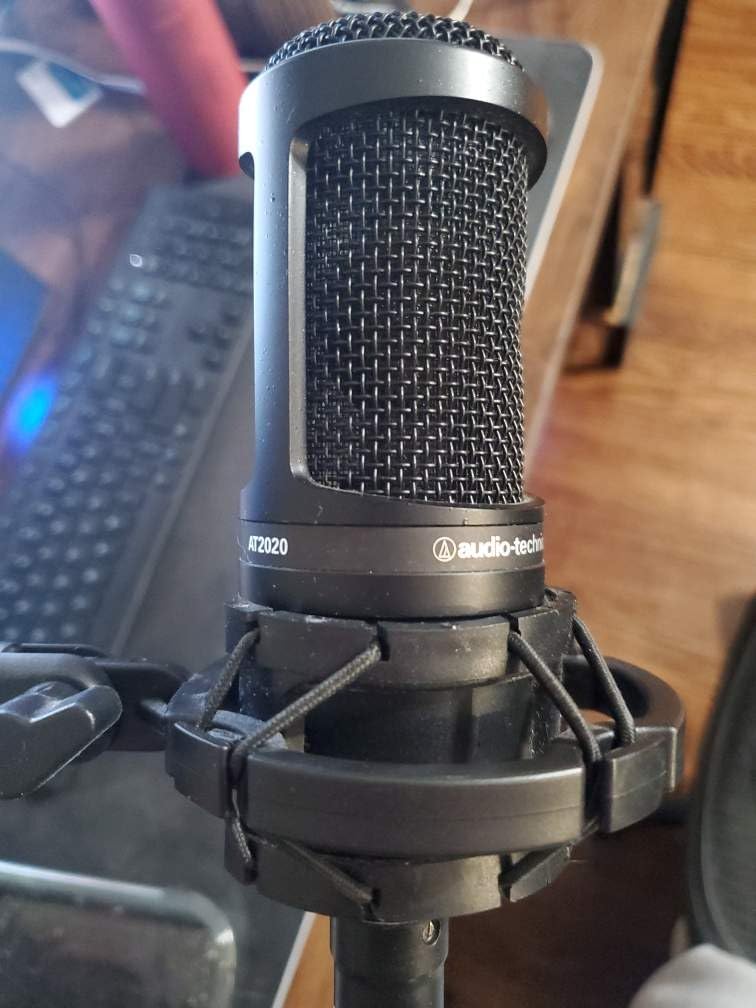
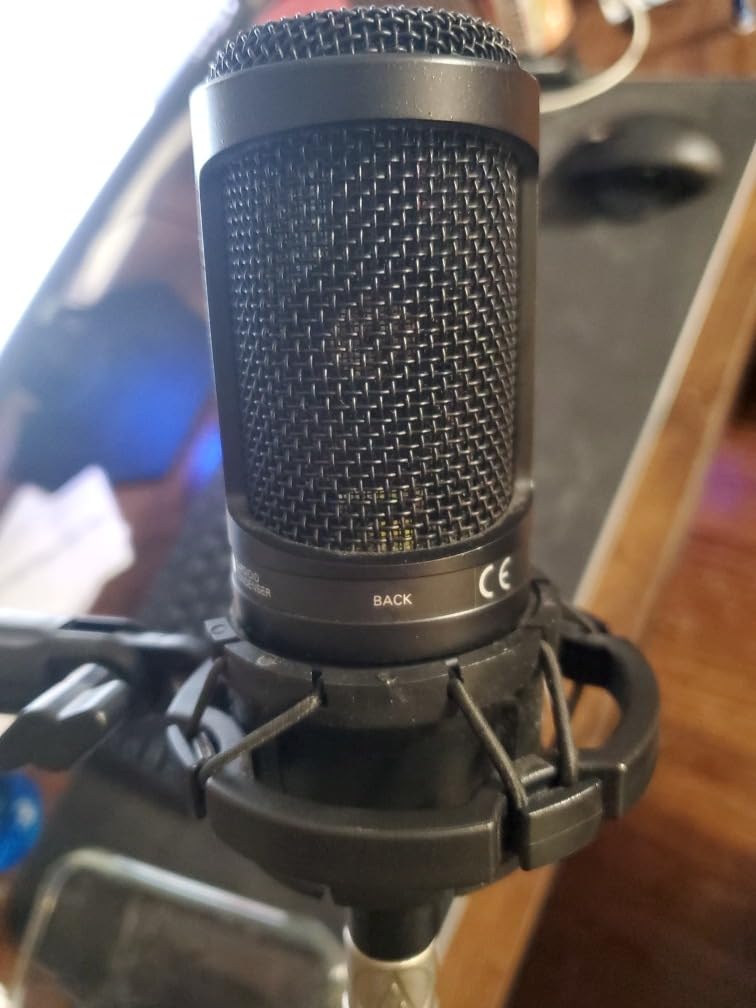
1. Audio-Technica AT2020 – The Default Answer for a Treated Room
Audio-Technica AT2020 Cardioid Condenser Studio XLR Microphone, Ideal for Project/Home Studio Applications, Black
Cardioid condenser
48V phantom power
20 dBA self noise
74 dB signal to noise
200 ohm
Pros
- Consistent clear vocal capture that holds up for years
- Cardioid pattern rejects side and rear room sound
- Handles loud sources without clipping
- Metal body built for heavy use
Cons
- Needs 48V phantom power and a preamp
- 20 dBA self noise is high for a studio condenser
- Plosive sensitive so a pop filter is advisable
This is the microphone I hand people who have decided to take voice recording seriously but have not yet built a room. Owners describe it the same way I use it, as the default first serious XLR microphone, and the long ownership histories are telling. People buy the AT2020, record for a decade and never check a spec sheet again.
Self noise and why 20 dBA is fine for speech
Twenty dBA sounds alarming next to a 4 dBA condenser, and for instruments recorded quietly it would be. Spoken word sits far higher in the signal chain than that. Breath, mouth noise and narration-booth rumble are loud enough that this noise floor stays buried under the voice.
Voice character and the cardioid null
The tone is honest and slightly forward. It will not flatter a thin voice but it does not smear one either, which for narration is a feature. The cardioid pattern separates you from a reflective wall behind you, and the 74 dB signal-to-noise ratio with 200 ohm impedance drives happily through a modest preamp.
What you need alongside it
Phantom power at 48V, an interface with a real preamp, a pop filter and a shock mount or good boom arm. The XLR cable is not in the box, which surprises people who assume one ships with any XLR microphone. If you cannot treat the room, skip to a dynamic further down this list. Our broader XLR microphone guide covers mounting options in more depth.
2. Shure SM58 – The Microphone That Works on Any Preamp
Shure SM58 Pro XLR Dynamic Vocal Microphone
Cardioid dynamic
50 Hz to 15 kHz
78 dB signal to noise
310 g
2 year warranty
Pros
- Warm articulate tone with a subtle midrange lift
- Tight cardioid rejects room noise and keyboard clatter
- Built-in pop protection
- Metal build that survives drops and touring
Cons
- Wants substantial preamp gain
- Dynamic capsule misses fine low-level detail
- Cable may not be included depending on package
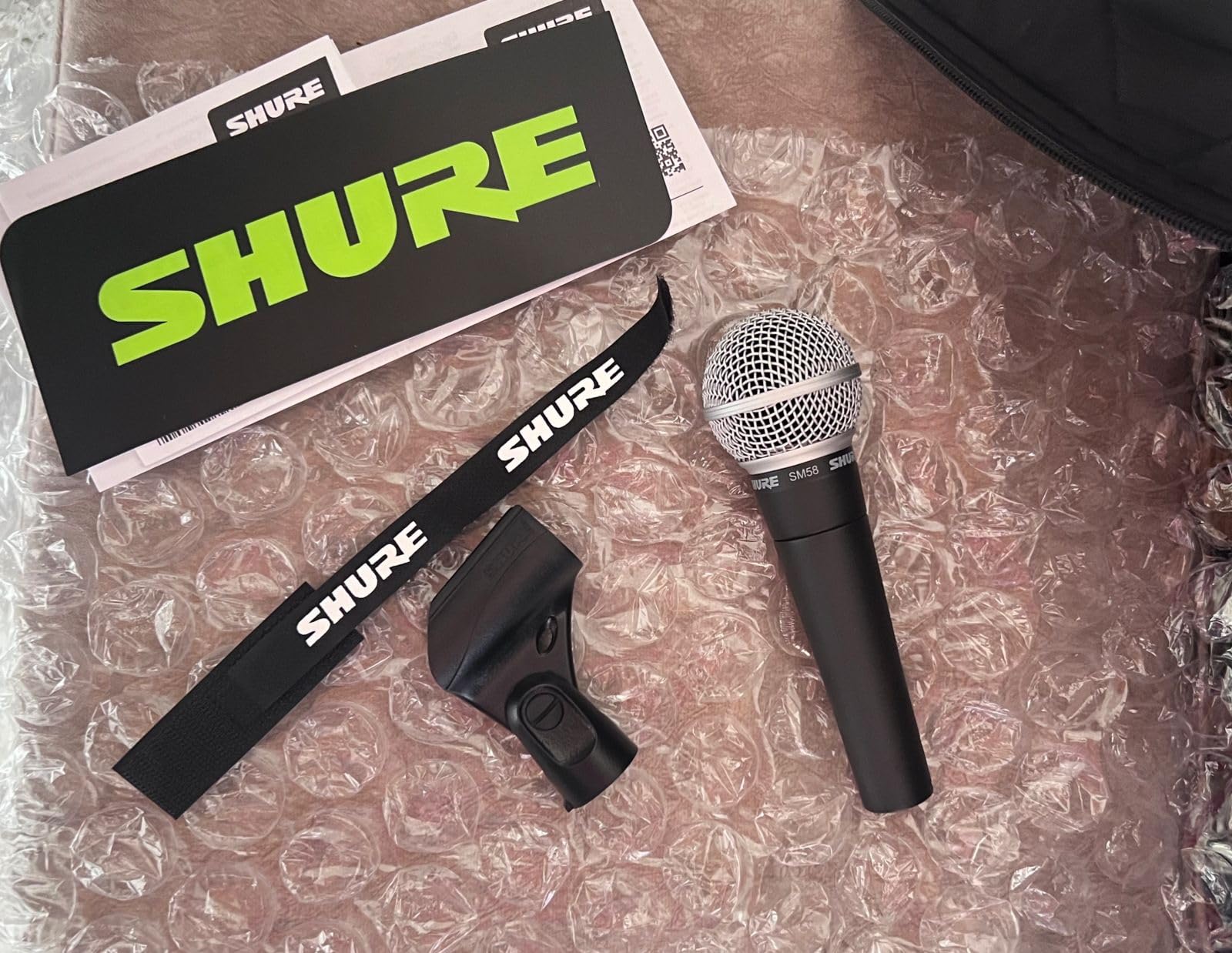
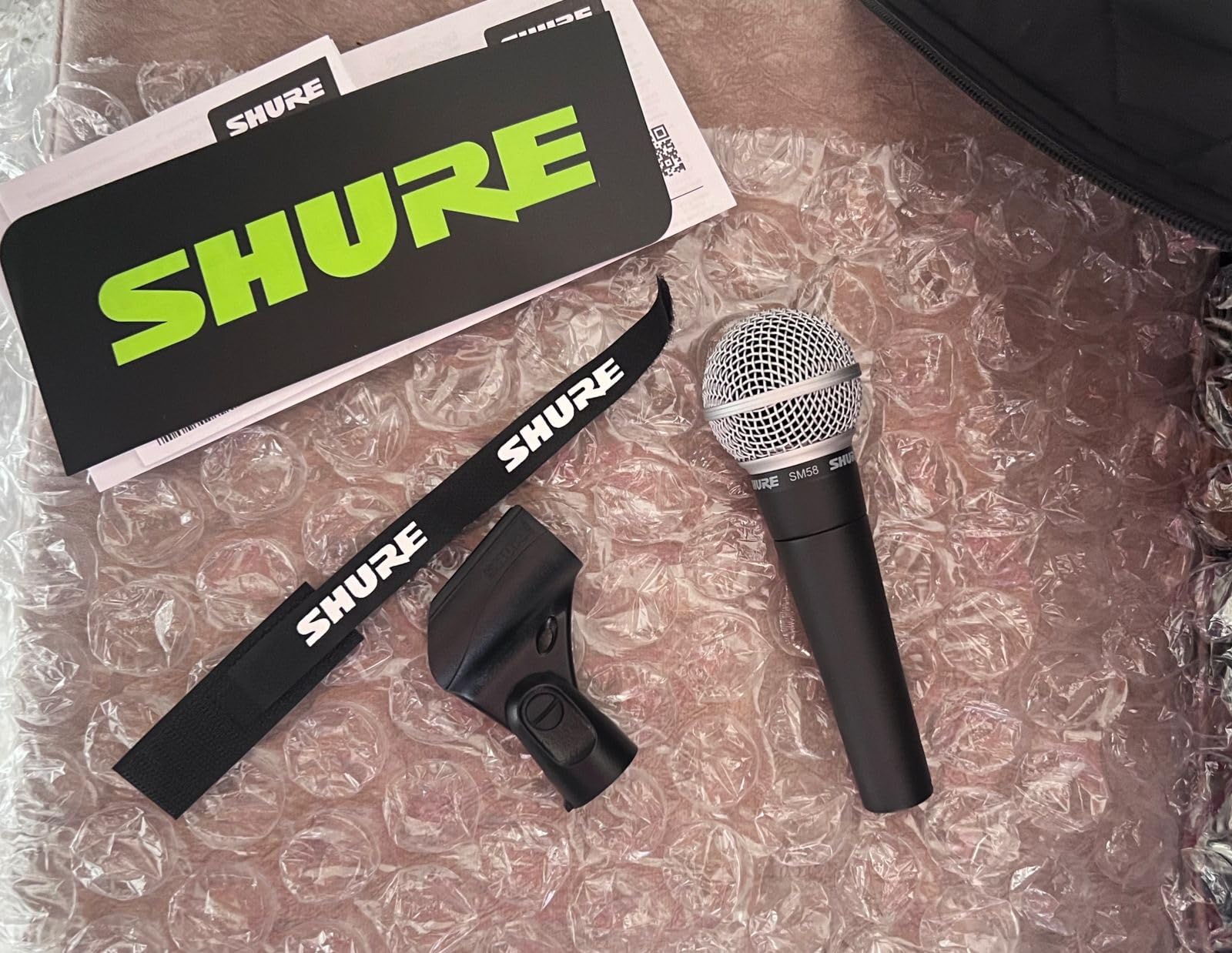
The SM58 has been the default stage vocal microphone for decades, and as a voice recording microphone it behaves like a large, friendly blunt instrument. It is forgiving of bad technique, bad rooms and mediocre preamps in a way no condenser on this list is. It is also the only microphone here I would happily hand to someone recording in a wardrobe with a computer fan running behind them, because a dynamic capsule does not hear the low-frequency room energy that wrecks a condenser take.
Frequency range and the midrange lift
Response spans 50 Hz to 15 kHz with a 78 dB signal-to-noise ratio, a clean signal for a dynamic. The subtle midrange lift is why it cuts through a mix without sounding harsh, and why it is a poor choice for a singer who wants to hear their own tone accurately. For narration and podcasting that lift is an advantage.
Built-in pop protection and build
The spherical grille doubles as pop protection, which is unusual at this level and saves you buying a filter for the letter B. The package includes an A25D swivel stand adapter and a storage bag, and at 310 g it is light enough for a budget boom arm without complaint.
Where it falls short
Sensitivity is the issue. A quiet room and a modest interface can produce audible hiss, because the capsule asks you to push gain to reach a normal level. It is also less detailed than a condenser, so a very soft, breathy read loses some air. Neither matters if you narrate at a normal volume a few inches from the grille.
3. Shure SM7B – Broadcast Clarity That Ignores a Noisy Room
Shure SM7B Dynamic Vocal Microphone for Podcasting & Streaming
Cardioid dynamic
50 Hz to 20 kHz
60 dB signal to noise
150 ohm
Aims for 60 dB of gain
Pros
- Warm broadcast tone that softens harsh consonants
- Excellent off-axis rejection of fans and room echo
- Integrated pop filter and internal shock mount
- Rear low-cut and presence boost switches
Cons
- Very low output sensitivity demands high-gain preamps
- Often needs an inline booster
- Dark voicing can weigh down a deep voice
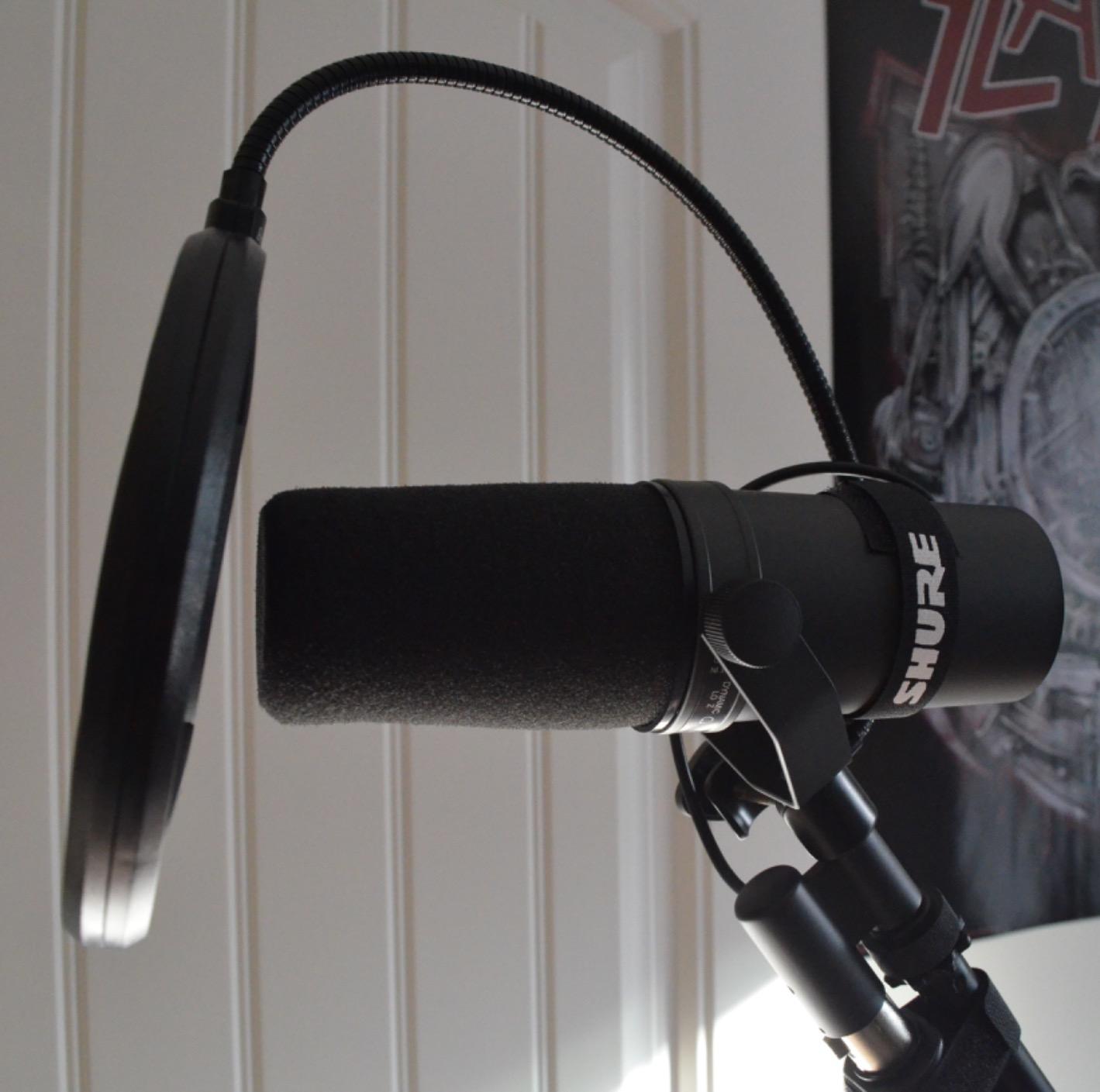
The SM7B is why so many podcast and voice over rooms sound the way they do, and why so many first-time buyers get frustrated. It is genuinely excellent at rejecting a room, genuinely warm, and genuinely difficult to drive. If your interface cannot deliver roughly 60 dB of clean gain, you will hear the preamp instead of the microphone.
Tone and off-axis rejection
Frequency response runs 50 Hz to 20 kHz with a 60 dB signal-to-noise ratio and 150 ohm impedance, which is a wide-open top end for a broadcast dynamic. The voice sits warm and smooth, and the cardioid pattern ignores a fan or a neighbour that a condenser would record in full. Owners across audio forums stress that the near-universal caveat is gain, not sound.
The built-in protection and rear switches
An internal air-suspension shock mount means desk thumps never reach the capsule, and a built-in pop filter plus detachable windscreen handle the plosives that make condenser users buy a filter. Two rear switches do quick tone shaping: a low-cut that clears rumble from a handled desk, and a presence boost that adds air to a dull voice.
Who should skip it
Buy it if you record in an untreated room or stream from a noisy setup. Skip it if you are starting from nothing, because the microphone alone is not a system, and note that the dark character can weigh down an already deep voice without EQ. If you want broadcast isolation without the gain bill, the cabling and gain chain matter as much as the microphone.
4. FIFINE AmpliGame AM8 – The Streaming First-Step Mic with an XLR Exit
FIFINE AmpliGame AM8 USB/XLR Dynamic Microphone for Gaming Streaming
USB and XLR dynamic
50 Hz to 16 kHz
80 dB signal to noise
Cardioid
600 g
Pros
- Clear natural voice that upgrades a headset immediately
- Dual USB and XLR gives a path to an interface
- Cardioid dynamic rejects keyboard and fan noise
- Tap-to-mute gain knob and headphone jack on USB
Cons
- RGB ring is dim and can switch off when jostled
- Buttons are inactive in XLR mode
- ABS plastic body collects dust
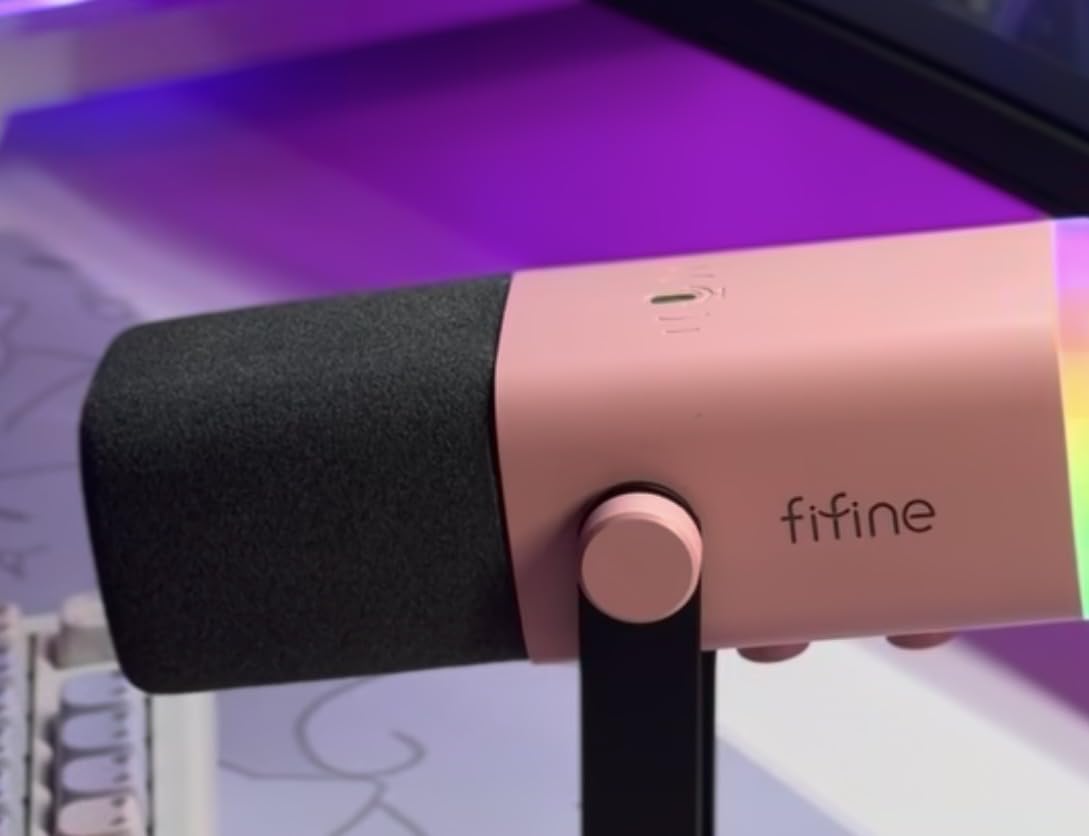
The AM8 exists because a lot of people start streaming with a headset mic and outgrow it within a month. It gives you a real dynamic capsule, a real cardioid pattern and an XLR output, plus a USB path so you can record tonight without buying an interface. That makes it a genuine first step rather than a compromise, because when you are ready the XLR side drops into an interface with no new microphone required.
What USB mode gives you and what it does not
In USB mode you get tap-to-mute with an LED reminder, a gain knob, a headphone monitoring jack and a controllable RGB ring. The 80 dB signal-to-noise ratio keeps the floor clean at desktop levels. None of those controls work on the XLR side, where gain and mute live on your preamp and software instead, which surprises people who bought the mic for its buttons.
Rejection, distance and the physical build
Response runs 50 Hz to 16 kHz with a suggested working distance of 2 to 6 inches. That close placement is where a dynamic earns its keep, because the proximity effect focuses the capsule on your mouth and the rear rejection handles the PC fan. Built-in 3/8 and 5/8 inch threads fit standard stands, and a windscreen and USB-C cable are included. The XLR cable is not, and the ABS plastic body will not last a decade the way the metal ones will.
5. Rode PodMic – The Broadcast Voice Mic Tuned for Speech
RØDE PodMic Cardioid Dynamic Broadcast Microphone, XLR
Cardioid dynamic
20 Hz to 20 kHz
78 dB signal to noise
150 ohm
937 g
Pros
- Rich warm tone tuned specifically for speech
- Strong cardioid rejection in untreated rooms
- Internal pop filter and shock mounting
- All-metal body with integrated swing mount
Cons
- Low output level can introduce hiss on modest interfaces
- No USB option and no headphone jack
- Heavier than expected
- Stand and cable not included
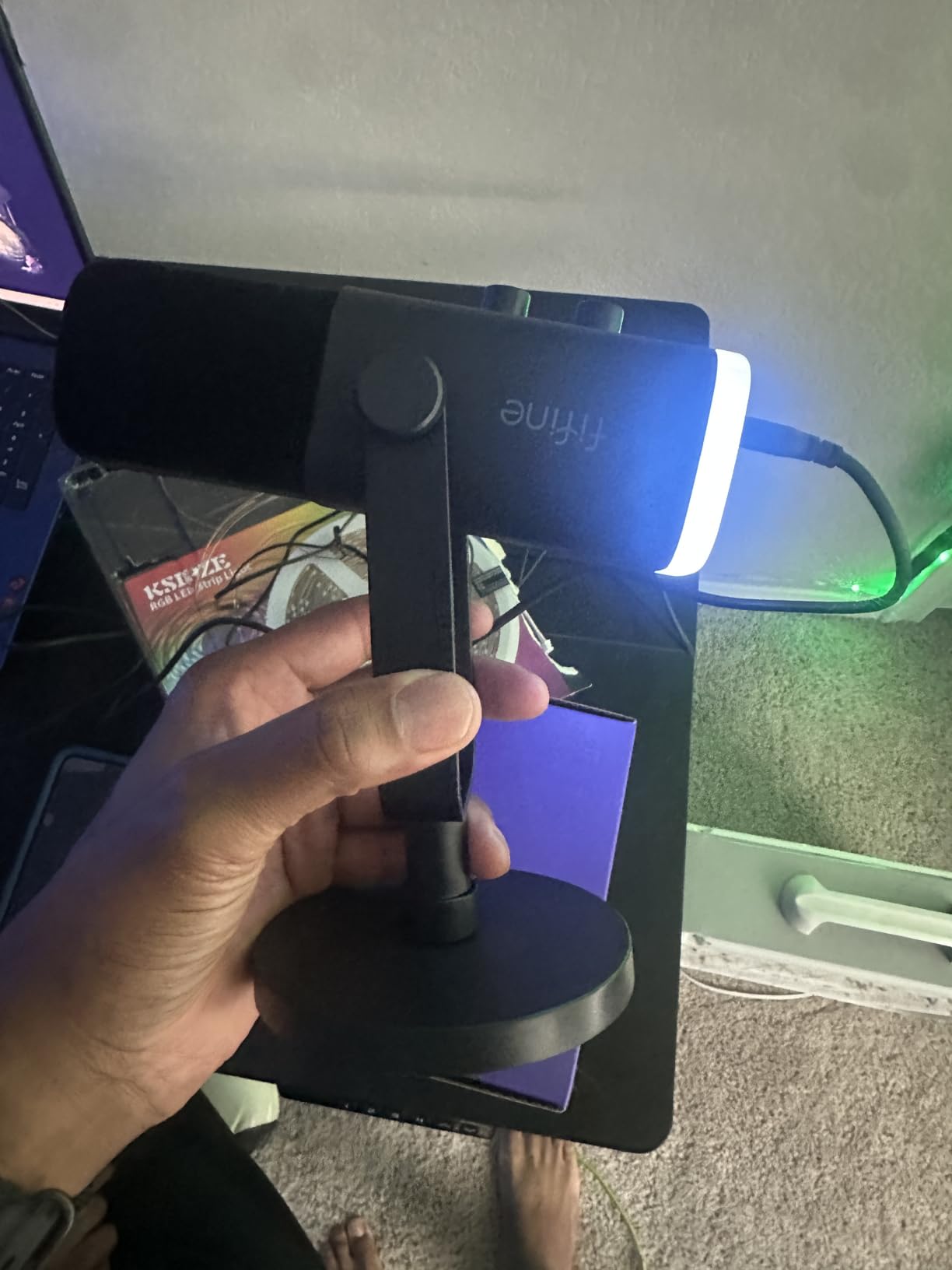
The PodMic is the microphone Rode built for people who talk for a living, and the voicing reflects that. It is warmer and fuller than the SM58, with a response reaching all the way down to 20 Hz, so chest resonance survives. For audiobook narration and long-form voice over, that bottom end is the whole point. Forum users repeatedly name it as the best-value entry into a broadcast-style XLR chain, and the recurring advice is to pair it with a higher-gain interface or a small inline booster.
Built-in pop protection and shock mounting
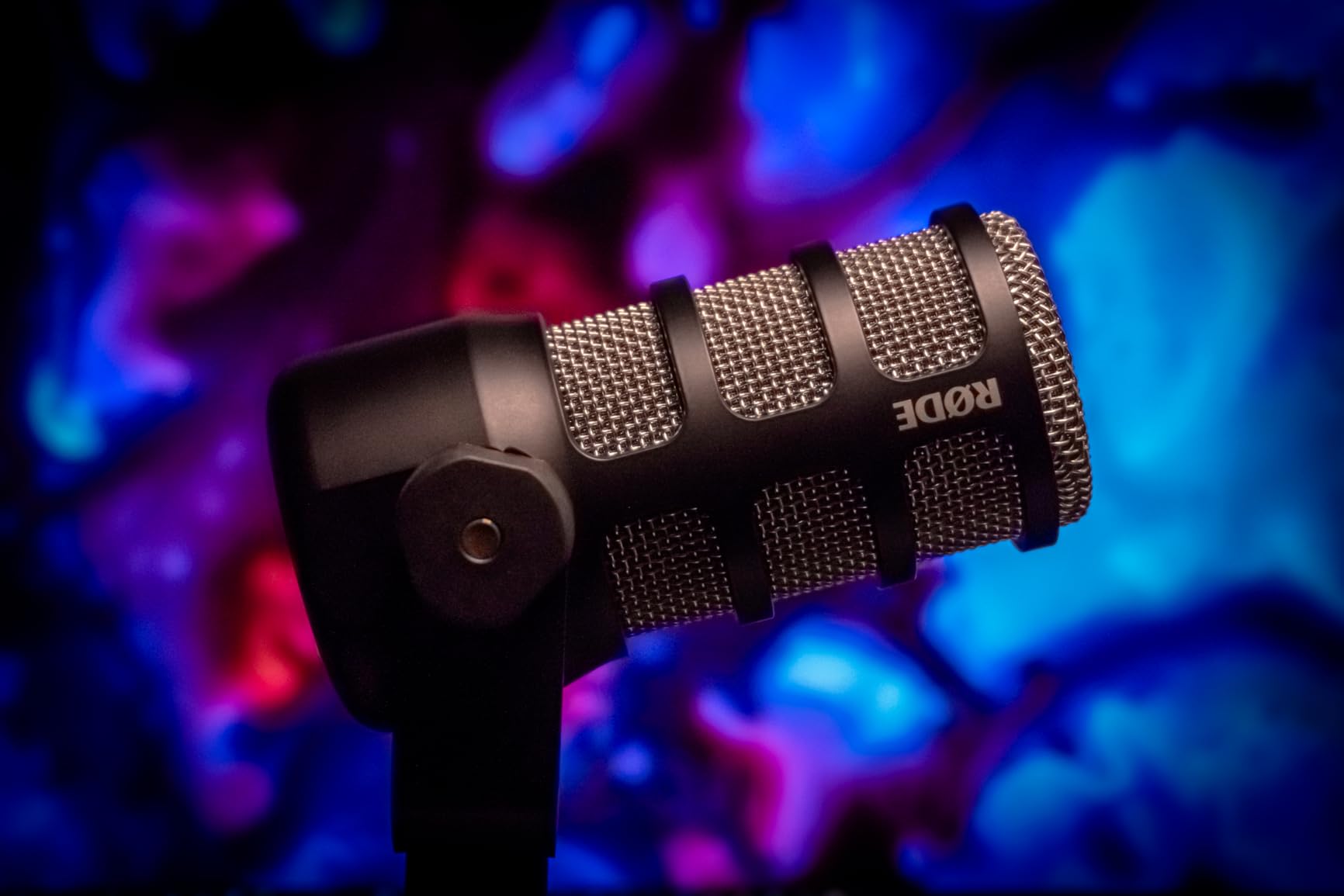
Unlike most broadcast dynamics, the PodMic carries an internal pop filter and internal shock mounting. That is a real convenience for a beginner, because the two accessories every voice recordist forgets to buy are already handled, and desk knocks simply do not register. The cardioid pattern still wants a wall behind you rather than an open doorway.
The swing mount and the weight problem
The integrated swing mount lets the mic sit on a desk or boom arm with no adapter, which is why the box lists only the microphone. At 937 g it is far heavier than the SM58, so a lightweight boom arm will drift or sag and you should budget for a real stand. The metal chassis and 2 year warranty are built for a home studio that moves between rooms.
Voice character and best fit
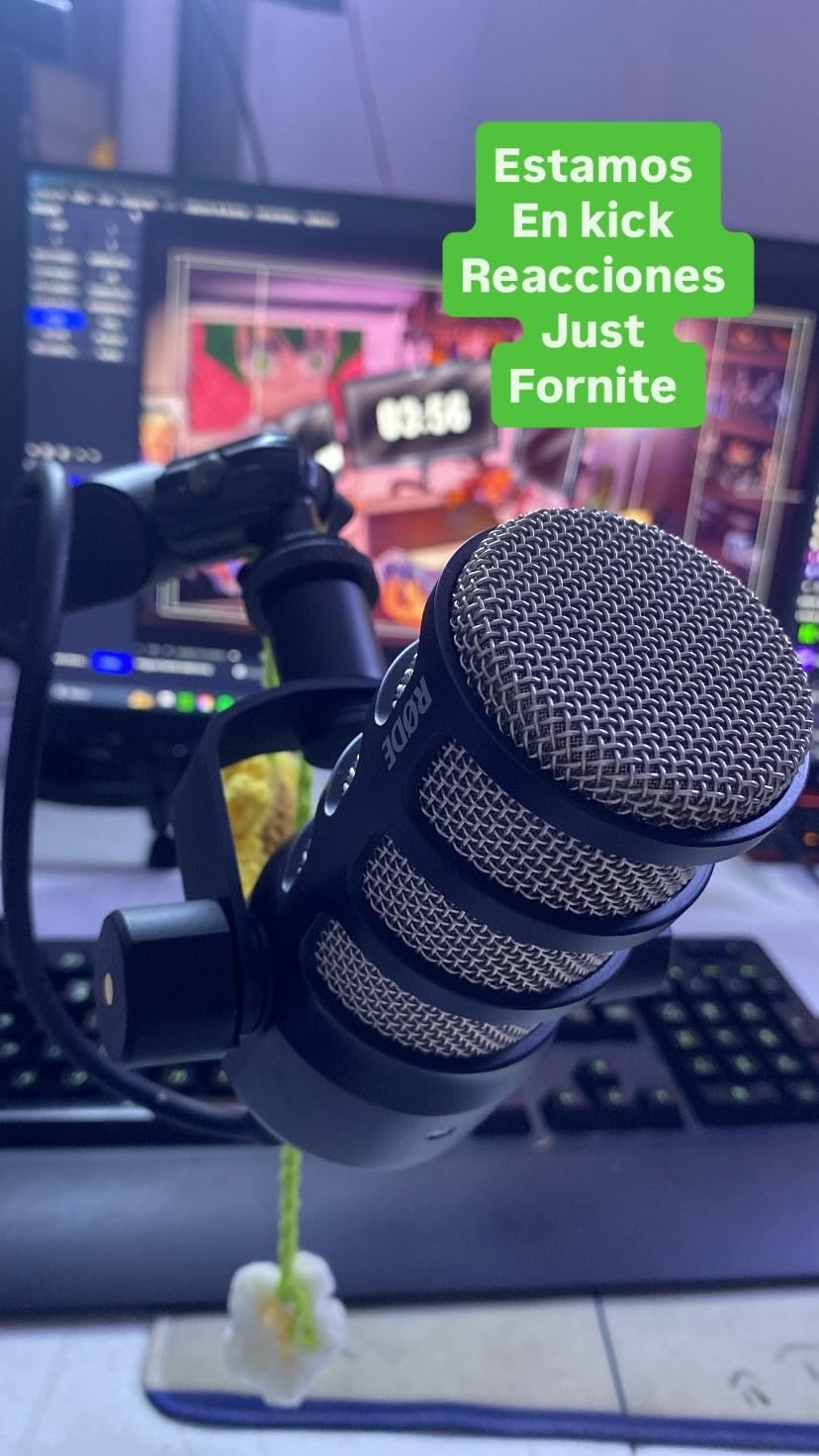
Warm, slightly forward, excellent for speech, with a 78 dB signal-to-noise ratio and 150 ohm impedance. If your voice is very deep and you are layering narration, a high-pass filter around 80 Hz keeps the extra low end controlled. It is XLR only with no USB fallback, so an audio interface is a hard requirement rather than an upgrade.
6. Samson Q2U – The Kit That Includes Everything to Start
Samson Q2U USB/XLR Dynamic Microphone Recording and Podcasting Pack
USB-C and XLR dynamic
50 Hz to 15 kHz
70 dB signal to noise
148 dB max SPL
3.5 mm monitoring
Pros
- Clear warm voice that beats similarly priced USB condensers
- USB-C and XLR give simplicity plus an upgrade path
- Handheld format is forgiving to aim
- Stand clip windscreen and both cables in the box
Cons
- Bundled desktop stand is flimsy and droops
- Plosives need the windscreen or a pop filter
- Not a standalone recorder
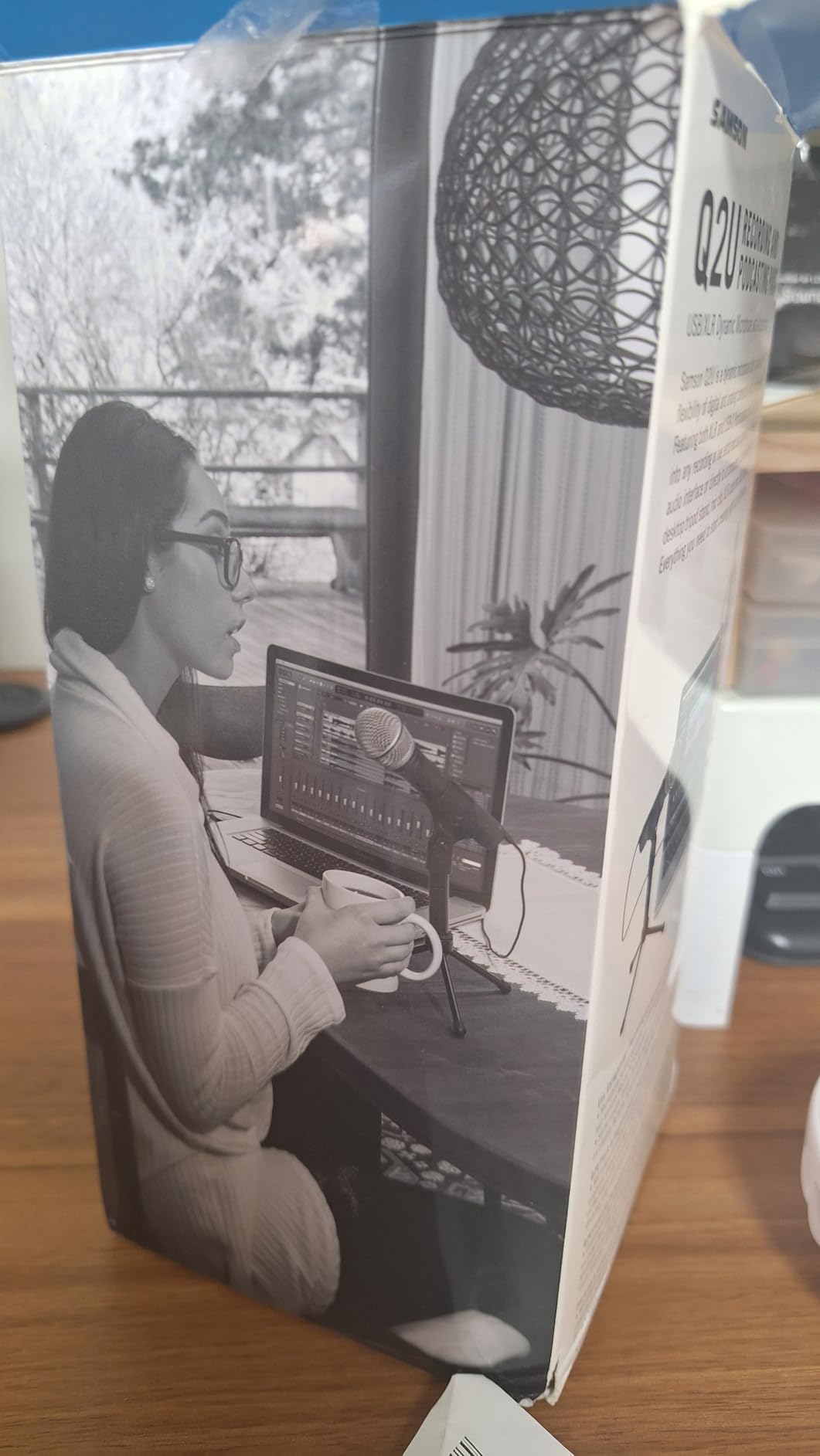
The Q2U is the least glamorous microphone here and possibly the best starter purchase. It is a dynamic, so it works in a bad room, and the box contains a desktop stand, an extension, a mic clip, a windscreen, a USB-C cable and an XLR cable. There is nothing else to buy to get a first recording made tonight, and long-term owners including working radio engineers treat it as the best beginner podcast microphone in this category.
Plosives are the one thing to plan for
The handheld cardioid format is forgiving to aim and the 148 dB maximum SPL means it will not break on a loud source. But the capsule is not designed for close speech, so P and B consonants need the included foam windscreen, or better, a proper pop filter on a separate mount. Response runs 50 Hz to 15 kHz with a 70 dB signal-to-noise ratio, and owners report the XLR path is somewhat better in practice than the USB path.
The stand is the weak link
The bundled tripod desktop stand droops and wobbles after a few months, and it is the accessory we replace first. The 3.5 mm headphone output on the body gives zero-latency monitoring, which is genuinely useful with a budget interface. It needs a computer and recording software rather than running standalone, so if you want something portable and self-contained, look at our portable voice recorder picks.
7. FIFINE AmpliTank K688 – The Metal-Bodied Desk Performer
FIFINE AmpliTank K688 Dynamic Microphone, XLR/USB Podcast Recording PC Mic
USB and XLR dynamic
50 Hz to 16 kHz
80 dB signal to noise
130 dB max SPL
0.51 kg
Pros
- Crisp clear voice that handles loud sources without distortion
- Cardioid pattern rejects PC fans and hard drives in untreated rooms
- USB and XLR give an upgrade path
- Metal build with shock mount and windscreen included
Cons
- Gain is very sensitive so keep it low and close
- Included mini tripod is flimsy and sags
- XLR cable stand and boom arm not included
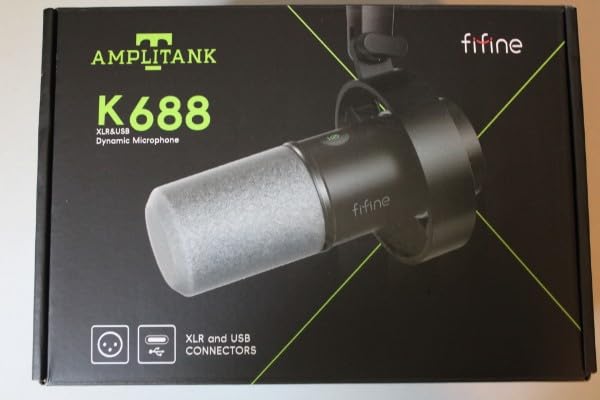
The K688 is a step up in feel from the cheaper desktop dynamics, and the metal body is the first thing you notice. Signal-to-noise above 80 dB and a 130 dB maximum SPL mean it captures a loud, close voice cleanly and rejects the mechanical noise of a desktop. We like it for a small desk in a shared home where an open room is not an option.
Gain staging on a sensitive dynamic
This is the detail that catches people out. The K688 is very sensitive, so at high gain it picks up too much room and you end up processing noise you created yourself. Keep the gain moderate, work at a fist’s distance, and the cardioid pattern handles the rest. In USB mode you also get tap-to-mute, a gain knob and 3.5 mm monitoring, none of which carries over to XLR.
What is and is not in the box
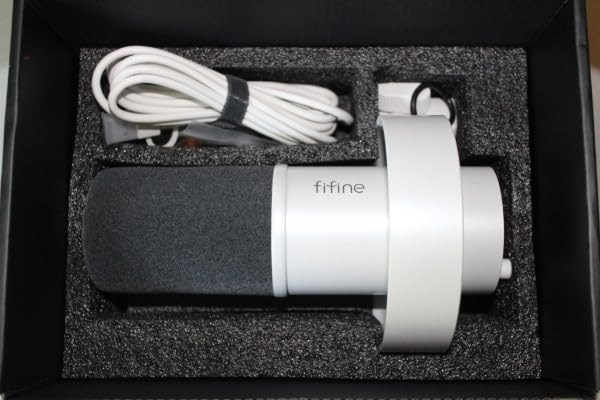
A shock mount, a windscreen, a 5/8 to 3/8 inch adapter and an 8.2 foot USB-C cable are included. The XLR cable, a mic stand and a boom arm are not, so budget for those. The included mini tripod sags after a few months, which is a pattern across this whole category rather than a fault unique to this model. The 0.51 kg body and 1 year warranty make it a good deal for a streaming desk and a poor foundation for a treated studio.
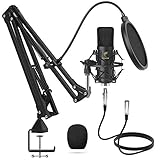
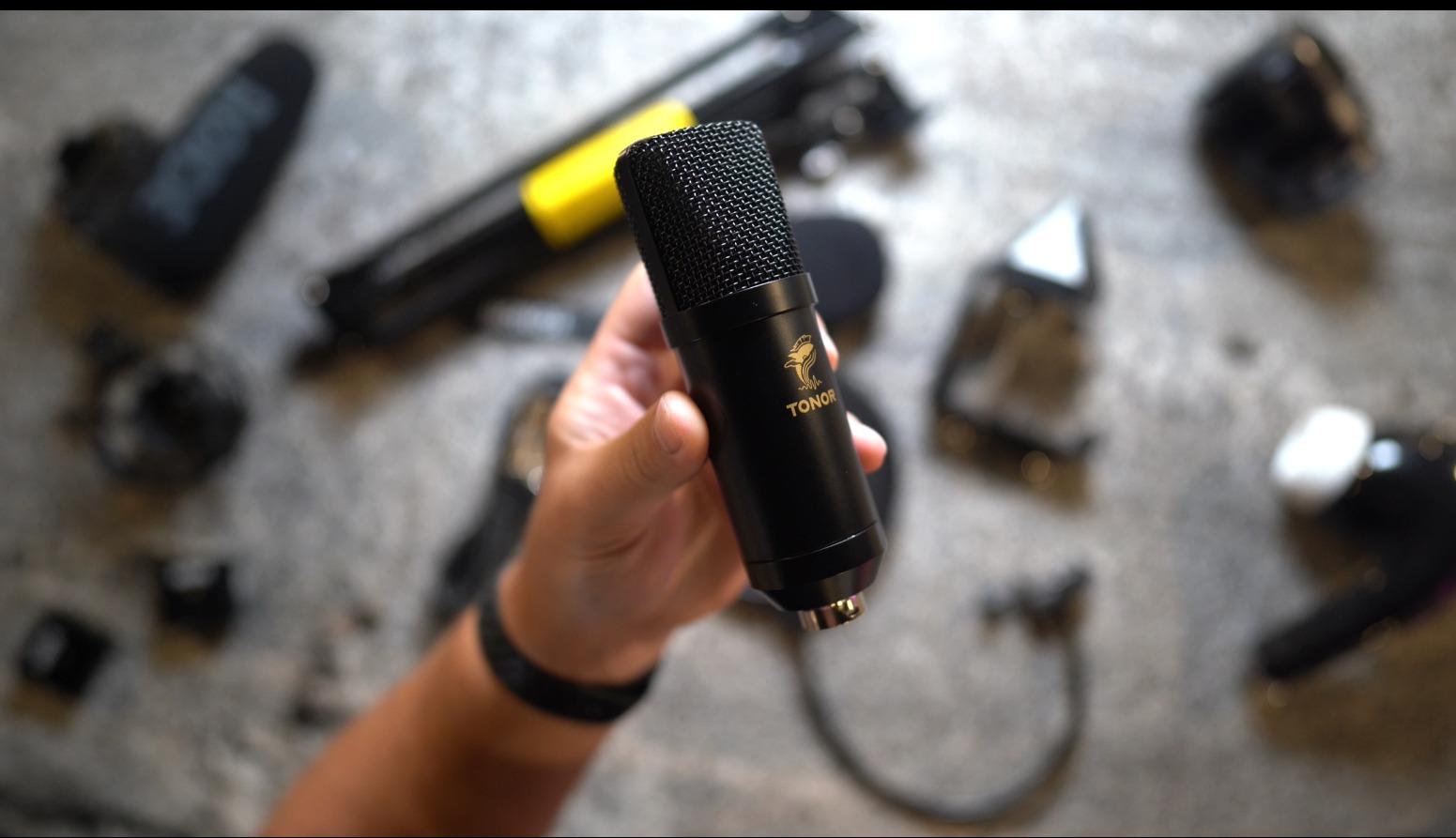
8. TONOR TC20 – The Complete Condenser Kit With a Boom Arm
TONOR XLR Condenser Microphone, Professional Cardioid Studio Mic Kit with T20 Boom Arm, Shock Mount, Pop Filter for Recording, Podcasting, Voice Over, Streaming, Home Studio, YouTube (TC20)
Cardioid condenser
48V phantom power
78 dB signal to noise
Alloy steel build
18 kHz response
Pros
- Complete kit with boom arm shock mount pop filter and 2 m XLR cable
- Cardioid pattern reduces side and rear pickup
- Warm natural sound for podcasting and voice over
- Steel boom arm with a wide desk clamp sets up quickly
Cons
- Requires 48V phantom power and an external interface
- Very sensitive and over-modulates at loud levels
- Boom arm base swings and the clamp does not fit every desk
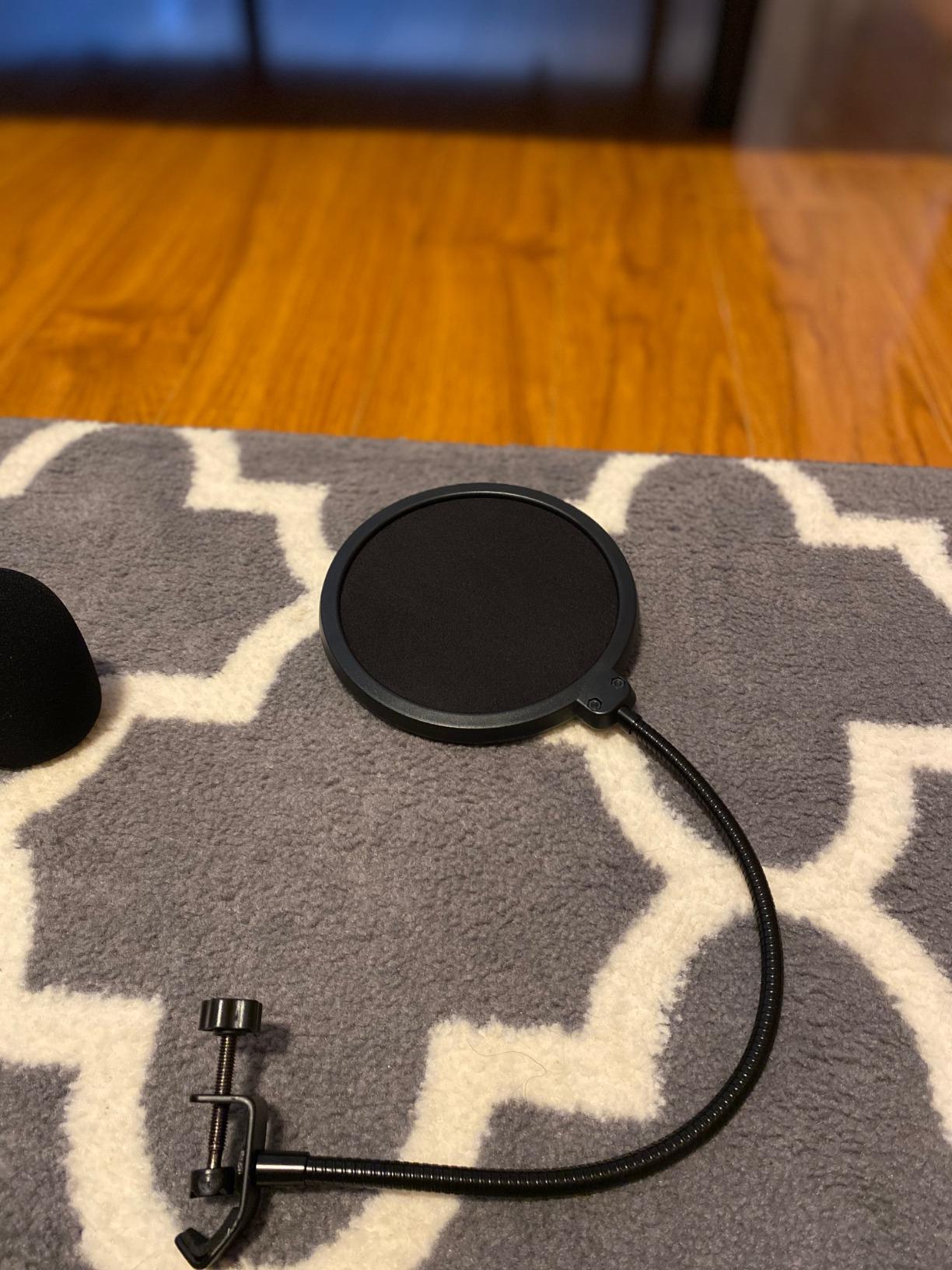
The TC20 is the most complete single purchase in this guide. Condenser microphone, steel boom arm with desk clamp, metal shock mount, pop filter, mic cover, cable ties and a 2 m XLR cable, in one box, under a two year warranty. For a beginner who would otherwise assemble five accessories, that is genuinely efficient, and owners frequently remark that the accessories alone represent most of the value.
Sensitivity is the trade-off for the bundle
This is a high-sensitivity microphone. A low-noise FET preamplifier and high SPL handling sit behind an 18 kHz response, and 78 dB signal-to-noise at 2200 ohm impedance is decent, but the practical effect is that it records the room and your desk as clearly as it records you. Speak loudly and it distorts, so keep a hand on the gain and stay a normal distance from the capsule.
The boom arm is part of the product
The T20 arm clamps to desks up to 2.4 inches thick, which covers most desks and excludes most thick butcher blocks. The base has low resistance, so the arm swings toward the monitor when you move the mouse and a counterweight or a firm desk edge is often needed. If your plan is long-form narration in a fixed position, buy the microphone and a proper stand separately.
9. Audio-Technica AT2035 – The Flexible Studio Condenser with Switches
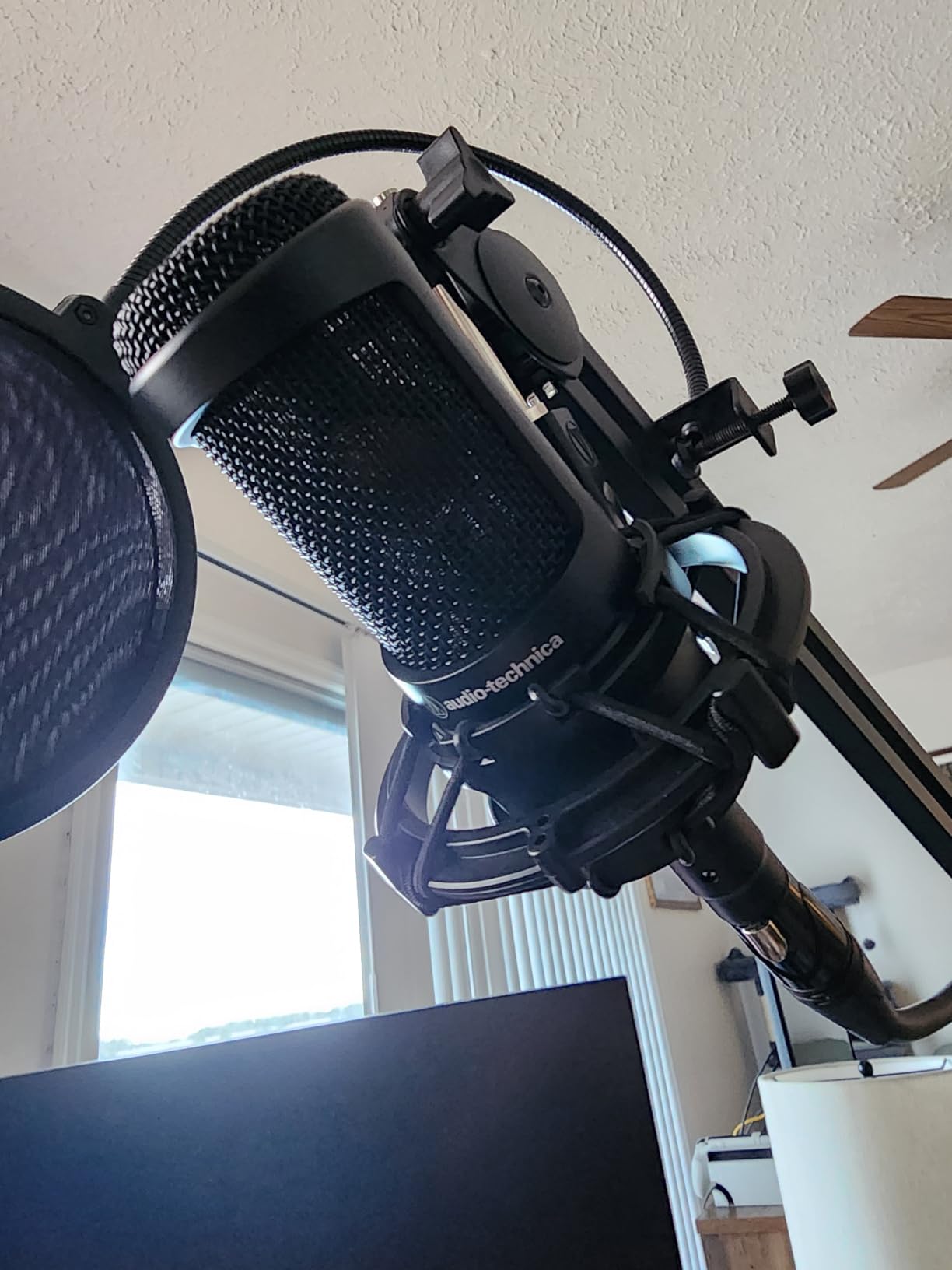
Audio-Technica AT2035 Cardioid Condenser Microphone, Perfect for Studio, Podcasting & Streaming, XLR Output, Includes Custom Shock Mount
Cardioid large diaphragm
10 dB audible noise
70 dB signal to noise
80 Hz high-pass filter
10 dB pad
Pros
- Smooth natural sound with low self noise
- Switchable high-pass filter and pad handle loud sources
- Custom shock mount included
- Consistent build from a long-standing studio brand
Cons
- Needs 48V phantom power and a preamp
- Condenser sensitivity picks up room and keyboard noise
- XLR cable not included
The AT2035 is the AT2020 with more control. It adds a switchable 80 Hz high-pass filter and a 10 dB pad, and it drops the audible noise figure to 10 dB with a 70 dB signal-to-noise ratio. For a voice recordist that means one microphone covers a narration session and a loud acoustic source without a second purchase, and the included custom shock mount beats most aftermarket ones at this tier.
The two switches that earn their place
The high-pass filter is the one you will leave on. It removes desk rumble, traffic transmitted through the floor and handling noise below 80 Hz, which is exactly the energy that makes a home condenser recording sound boomy. The 10 dB pad stops an enthusiastic narrator close to a sensitive capsule from clipping the preamp, which matters more for voice work than most buyers expect.
Room behaviour and limitations
Cardioid pickup reduces side and rear pickup, but a condenser still hears what is in the room. In an untreated space, keyboard clatter and reflections arrive at the capsule at normal gain. The XLR cable is not included and the microphone will not work at all without phantom power, so budget for an interface with a real preamp.
10. Shure MV7X – A Friendlier Path to Broadcast Isolation
Shure MV7X XLR Dynamic Podcast & Recording Microphone – Black
Cardioid dynamic
50 Hz to 16000 Hz
72 dB signal to noise
Integrated shock mount
508 g
Pros
- Clear warm full voice that needs little processing
- Strong isolation
- users report fans barely audible
- Integrated shock mount cuts desk vibration
- No phantom power needed
Cons
- Still asks for a good amount of gain
- XLR only with no USB or headphone monitoring
- XLR cable not included
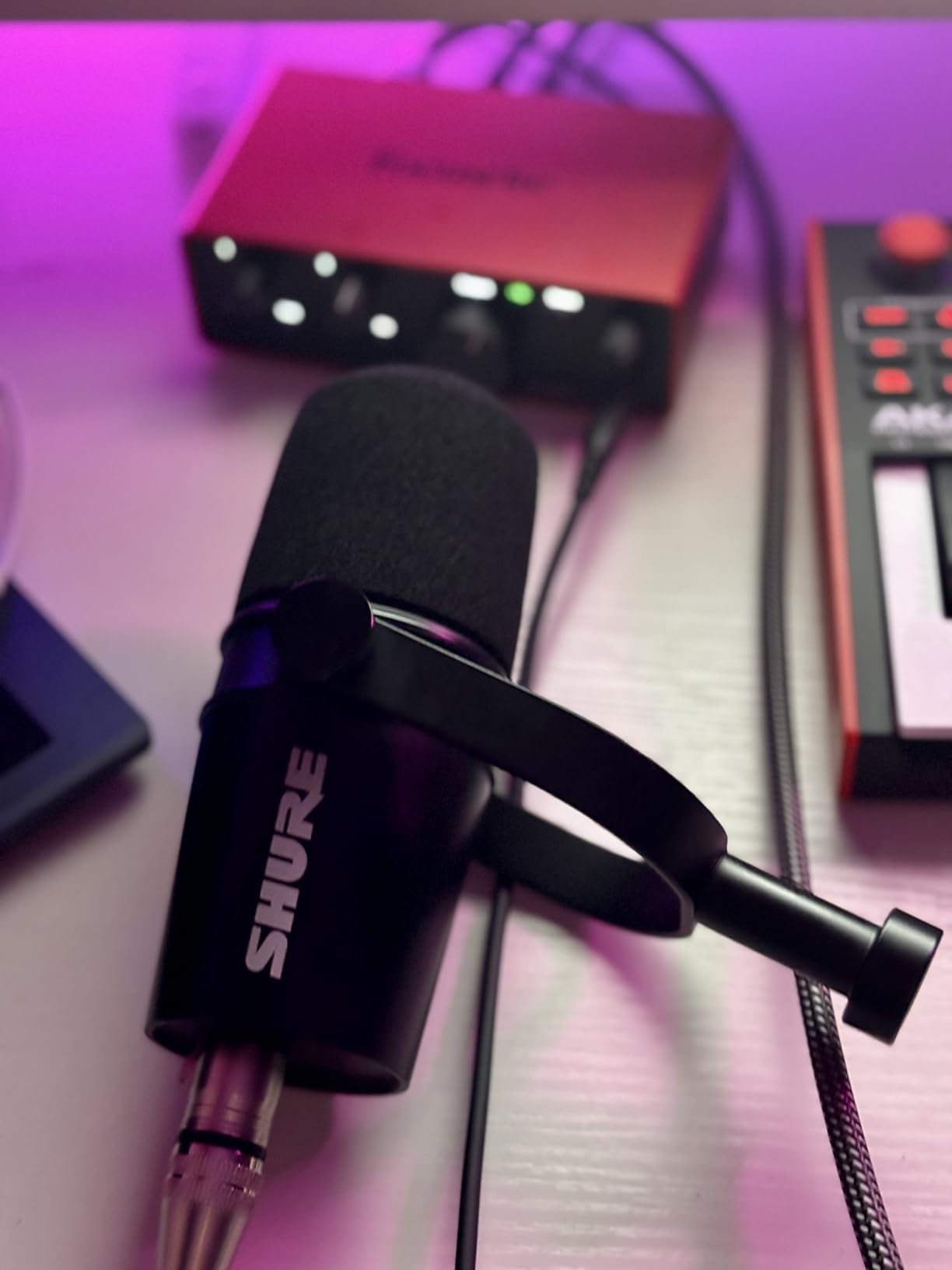
If the SM7B is the destination and the gain requirement is the roadblock, the MV7X is the shortcut. Same isolation philosophy, same cardioid dynamic approach, considerably more sensitivity. Audio forums consistently recommend it to people moving up from an entry-level condenser who want a warmer, room-proof voice without buying a booster, and it is what we suggest to narrators who already own an interface and dislike how much room their condenser picks up.
Isolation behaviour and the shock mount
Isolation is the headline. Owners report that a running computer fan is barely audible, which is a low bar in a bedroom and a high bar in a podcast. The integrated shock mount handles the desk thump and stand creak that would otherwise arrive as a thud on every pass of your hand.
Signal and what you give up
Response runs 50 Hz to 16000 Hz with a 72 dB signal-to-noise ratio and 38 dB sensitivity, and it does not require phantom power, so it drives through most entry interfaces without the extra gain stage the SM7B demands. There is no USB output or headphone jack, monitoring comes from your interface, and the cable is sold separately. At 508 g with a yoke mount and 3/8 inch adapter included, it mounts on almost any stand.
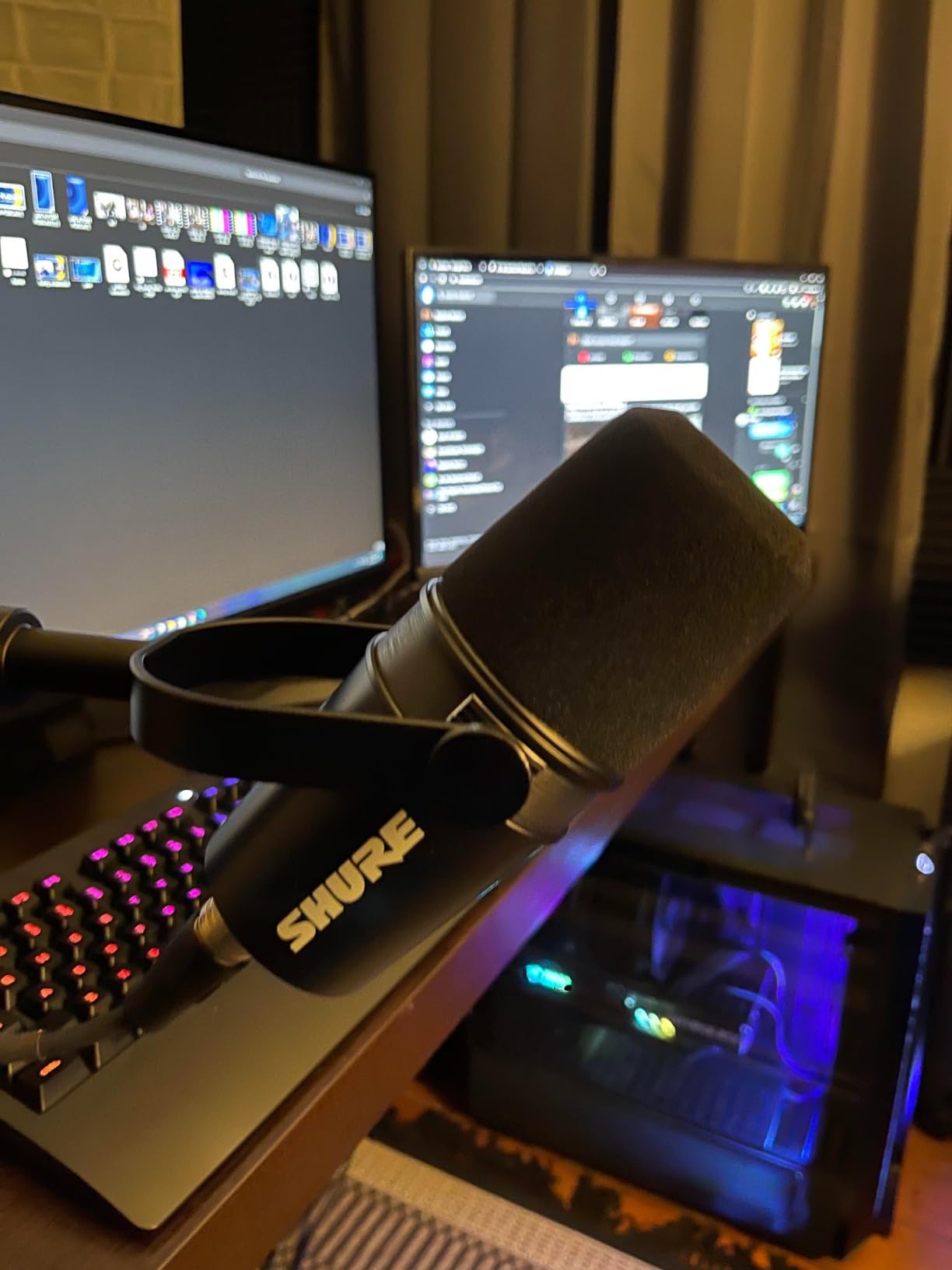
We reach for it when a client wants the SM7B sound and the budget will not cover an SM7B signal chain. Close placement, a high-pass filter at 80 Hz and light compression give a very close match to broadcast reference tracks.
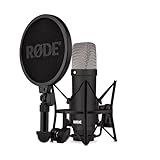
11. Rode NT1 Signature – The Quietest Floor for Narration Work
RØDE NT1 Signature Series Studio Condenser Microphone, Black
Cardioid large diaphragm
4 dBA self noise
78 dB signal to noise
48V phantom power
313 g
Pros
- Exceptionally low self noise keeps the recording floor clean
- Classic rich large-diaphragm voicing
- Tight cardioid focus
- Shock mount pop filter and XLR cable all included
Cons
- Requires 48V phantom power and an interface
- Sensitive to room noise and desk sound
- Premium pricing against entry condensers
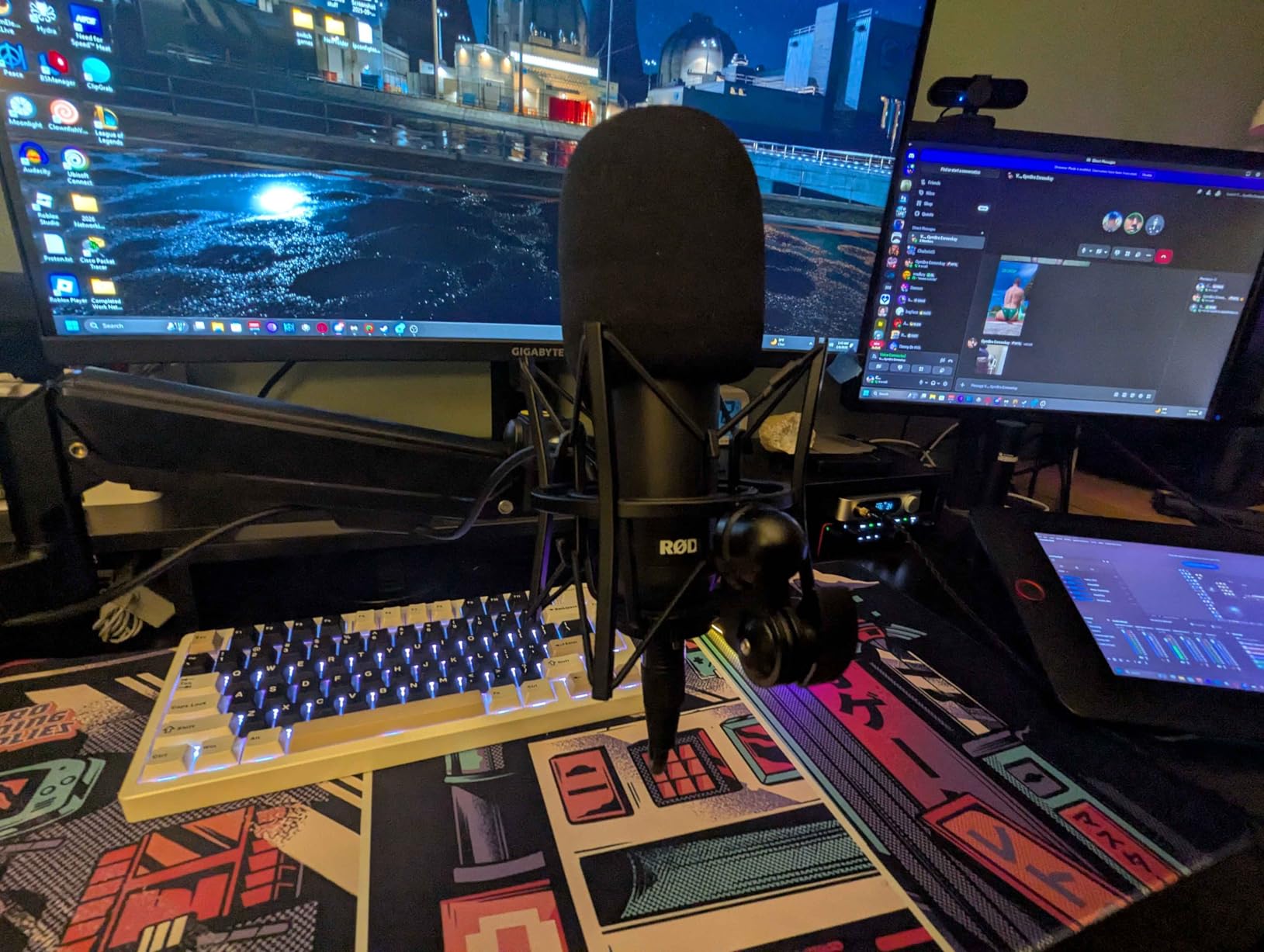
Four dBA of self noise is the headline number, and for audiobook narration it is a real one. Record a chapter in a booth and then discover a faint hum in the low end, and that difference is the difference between a clean master and an afternoon with a noise reducer. Unlike most of this list, the box is genuinely complete: shock mount with an integrated pop filter, an XLR cable and a dust cover are all included, so you still only need an interface and 48V power.
Self noise, and why it matters more than sensitivity
Self noise is the electrical hiss the capsule itself contributes. Four dBA is among the lowest ever measured on a condenser, meaning the recording floor sits far below your whisper. If you narrate quietly in a treated space, this is the microphone that stops you reaching for a noise reduction plugin at all. The 78 dB signal-to-noise ratio supports that claim.
Voice character and the sensitivity trade
The voicing is rich and balanced rather than dark or bright, a safe match across a wide range of narrators. It will not add presence to a flat voice, nor exaggerate the sibilance of a sharp one. Consistency across takes is the real selling point for a narrator recording chapters over weeks. The trade is sensitivity: a large-diaphragm condenser hears the room, the desk and the traffic, and response reaching down to 20 Hz means a high-pass filter at 80 Hz is standard practice for us.
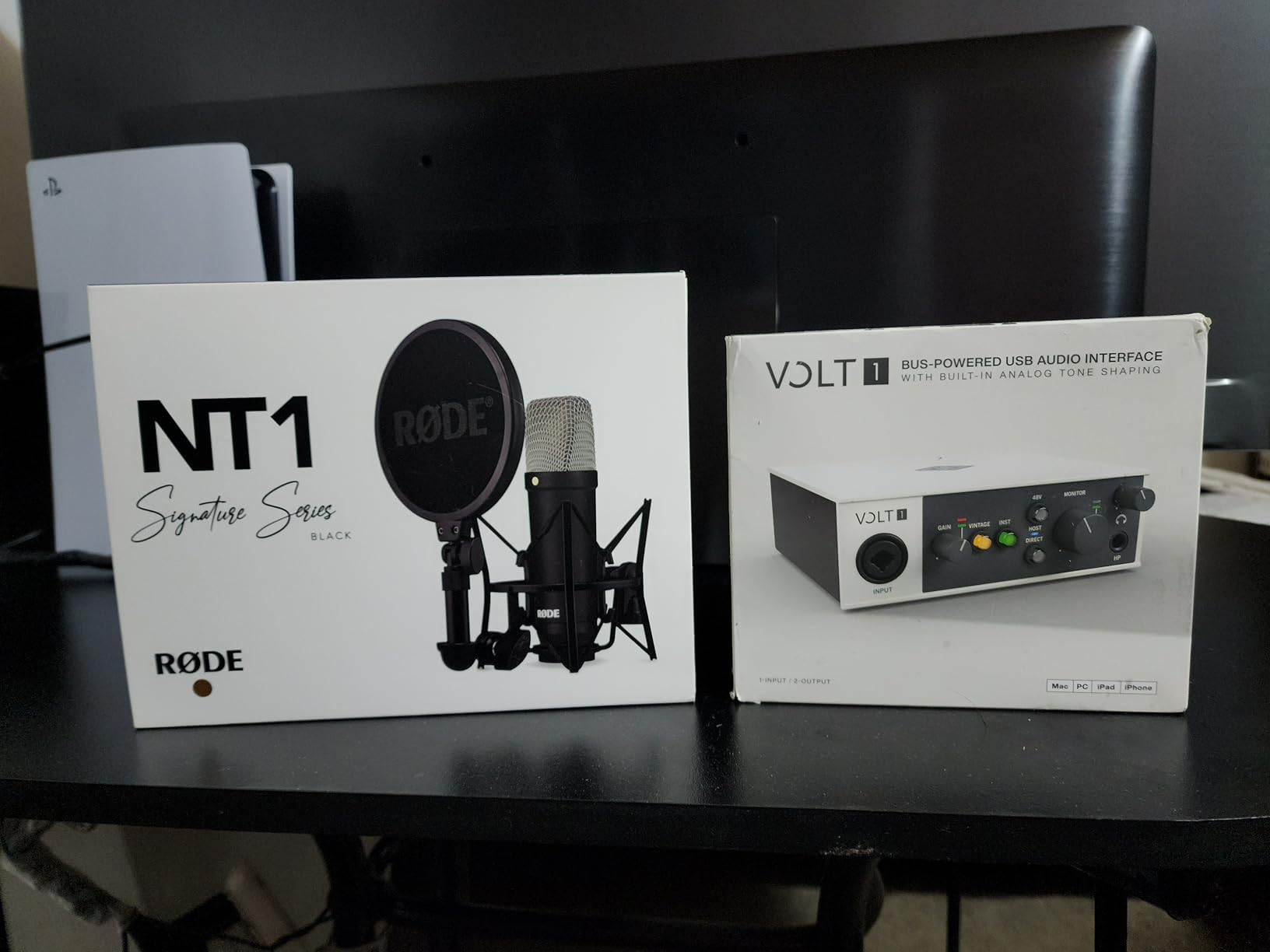
The registered 10 year warranty is the longest in this roundup and the 313 g body fits any boom arm. If your room is not genuinely under control, the dynamics earlier in this list will serve you better.
12. MAONO A04 Gen2 – The Hybrid Kit With Software Control
MAONO A04 Gen2 XLR/USB Condenser Microphone Kit for PC Podcast Recording
XLR and USB cardioid condenser
30 Hz to 16 kHz
70 dB signal to noise
192 kHz and 24-bit on USB
16 mm capsule
Pros
- Works plug-and-play over USB or into an interface over XLR
- Full kit with arm stand shock mount pop filter and windscreen
- Cardioid plus software noise reduction
- 192 kHz and 24-bit USB capture with scene EQ presets
Cons
- XLR cable not included
- Software gain and noise control only work in USB mode
- Scissor arm stand is bulky
- Not compatible with Xbox consoles
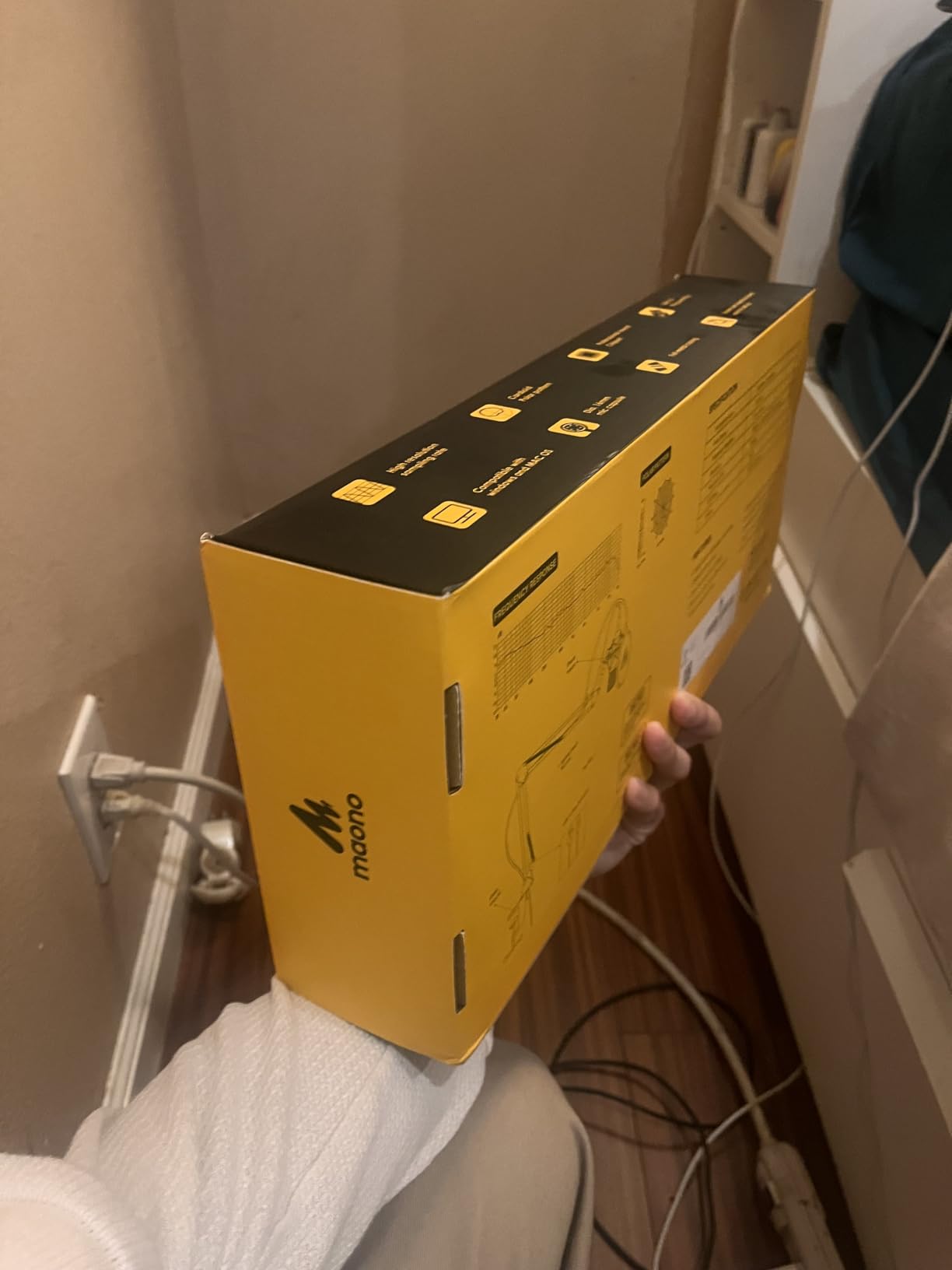
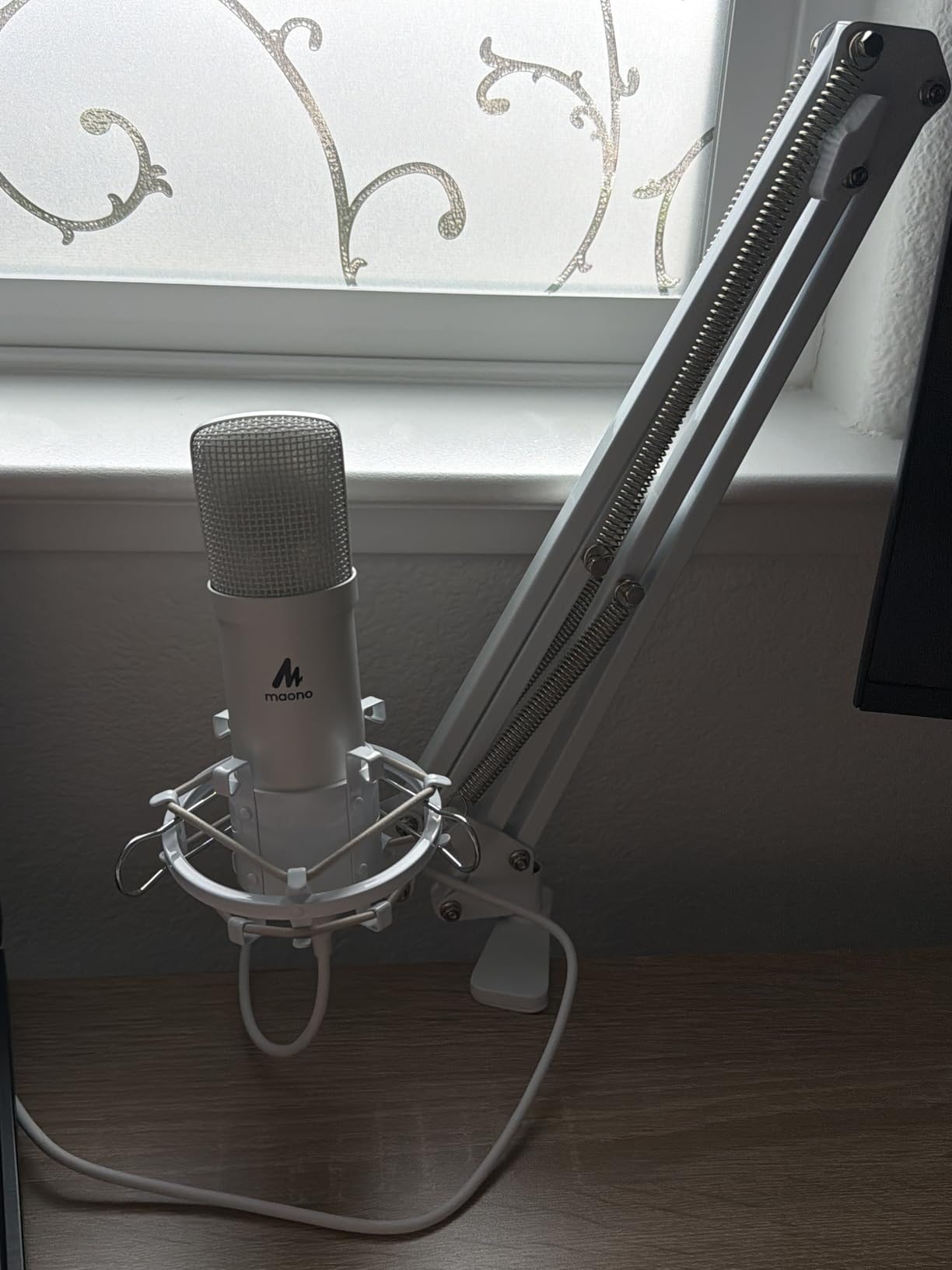
With close to 20,000 reviews, the A04 Gen2 is one of the highest-volume XLR products in this roundup, and the reason is the box. An adjustable scissor arm stand, shock mount, pop filter, foam windscreen, boom base and USB cable ship together, which removes the accessory arithmetic for a first setup. In a treated or semi-treated space the 30 Hz to 16 kHz response and 16 mm electret capsule give a warm, silky voice suited to home recording and voice over.
USB mode is where the feature set lives
Over USB it captures at 192 kHz and 24-bit and runs companion software with gain control, noise reduction, scene EQ presets, a compressor and a limiter. The suggested working distance is 2 to 6 inches and the software noise reduction genuinely helps a home room. Over XLR it is a plain microphone: the software controls disappear, it needs 48V phantom power, and the XLR cable is not in the box.
Who it suits and who should look elsewhere
It suits a creator who wants to start this week with one purchase and still have an XLR path open. It does not suit a narrator chasing the quietest floor, because 70 dB signal-to-noise and 200 ohm impedance are unremarkable next to the NT1 Signature. Console compatibility is another limit: it will not work with an Xbox, and the 12 month warranty is the shortest here.
How to Choose an XLR Microphone for Voice Recording
Everything above reduces to a handful of decisions. Work through them in order and the microphone nearly picks itself, which is faster than comparing frequency charts.
Dynamic or condenser: let the room decide
A dynamic capsule produces its signal from a coil and a magnet, so it needs less gain and hears far less of the room. A condenser capsule measures a change in capacitance, so it is dramatically more sensitive and far more revealing of reflections, traffic and air handling. Untreated room means dynamic; treated room means condenser. This is the rule experienced engineers repeat more than any other, and it is why we open every recommendation with the room rather than the budget.
Polar patterns and what cardioid does not do
Every microphone here is unidirectional and nearly all are cardioid, meaning sensitivity falls off to the sides and rear. That helps, but it does not mean no background noise. A cardioid has a null directly behind the capsule and reduced but real pickup everywhere else, so a noisy computer fan to your side is still heard. The fix is placement, not shopping: rotate the microphone until the loudest noise sits in the null behind it.
Self noise, max SPL and why both matter
Self noise is the hiss the microphone contributes, measured in dBA, and for quiet narration in a treated room lower is better, which is where the NT1 Signature’s 4 dBA earns its place. Maximum SPL is the loudest level the capsule handles before distorting, which matters for singers and drum overheads more than for speech. Read both figures only in the context of how loudly and how close you speak.
Phantom power and gain staging
Condenser microphones need 48V phantom power from the interface. Dynamics do not, which is one reason a dynamic is the safer first purchase. Phantom power confusion is a common early problem: plug in a condenser, leave the switch off, and you get silence or a thin signal that looks like a faulty microphone. Gain staging means using just enough gain to reach a healthy level and no more, and our guide to balanced XLR cables covers the connection side of that chain.
The full setup, not just the microphone
A microphone is roughly half the cost of a working chain. The rest is an audio interface with a preamp and phantom power, a balanced XLR cable, a pop filter, a shock mount or integrated isolation, and a stable stand. Budget holders underestimate this most often, and a modest microphone on a good interface usually sounds better than an expensive microphone on a noisy one.
XLR versus USB and when a hybrid makes sense
XLR gives you a balanced analog signal, a real preamp, interchangeable cables and upgrade paths. USB gives you one cable and a built-in converter, and it is the right answer if you will never touch an interface. A hybrid microphone such as the AM8, Q2U, K688 or A04 Gen2 is a sensible bridge, because you can start on USB and move to XLR later with the same microphone. Know that the on-mic gain knobs and monitoring jacks on those models usually only work over USB.
Frequently Asked Questions
Which XLR microphone is best for voice recording?
For most home recordists the Audio-Technica AT2020 is the best balance of price, build and reliability, provided your room is treated or semi-treated. In an untreated room with fans, traffic or a computer tower, the Shure SM7B or Shure MV7X will isolate far better, while the Shure SM58 is the most forgiving first purchase. The room matters more than the model.
Do XLR microphones need phantom power?
Condenser microphones need 48V phantom power, supplied by most audio interfaces. Dynamic microphones do not need it at all, which makes them the simpler first choice. If a condenser produces silence or a very thin signal, check that the interface phantom power switch is on before assuming the microphone is faulty.
Do I need an audio interface for an XLR microphone?
Yes. An XLR microphone outputs a low-level balanced analog signal that must be amplified by a preamp and converted to digital, and an audio interface does both. A USB microphone contains its own converter and preamp, which is why it works alone. Your interface also has to supply enough clean gain for a low-output dynamic such as the SM7B.
Should a beginner buy a condenser or a dynamic microphone?
A dynamic, unless your room is already treated. A condenser in an untreated bedroom records reflections, traffic and air handling along with your voice, and the result usually needs heavy editing. Beginners most often regret buying an expensive condenser first, because the room, not the microphone, was the real problem.
What is the holy grail of microphones?
There is no single holy grail, because a microphone only captures the sound that reaches it. The same capsule in a treated booth and in an untreated bedroom will produce completely different results. The practical equivalent is a large-diaphragm condenser in an acoustically controlled space, paired with a quiet preamp and correct gain staging.
How close should I be to an XLR microphone?
For a dynamic such as the SM58, PodMic or SM7B, work roughly a fist to a hand width away, which gives presence without excessive low-end build-up. For a condenser such as the AT2020 or NT1 Signature, back off slightly and add a pop filter, because the sensitivity that gives you detail also gives you every plosive.
How do I reduce echo when recording voice at home?
Treat the reflection points first. Hang thick duvets and heavy curtains, record in a wardrobe full of clothes, or put a thick blanket behind and above the microphone to break up reflections. Add a pop filter for P and B sounds, decouple the stand from the desk, and set gain as low as you can while still reaching a healthy level.
Which XLR Microphone Should You Buy in 2026?
If you want one answer, start with the Audio-Technica AT2020. It has the largest owner base of any condenser here, a build that lasts a decade and a voice that stays neutral across reads. Pair it with a modest interface, a pop filter and whatever soft material you can put behind you, and it will serve voice over, narration and home studio work for years.
If the room is loud, choose the Shure SM7B and budget for an interface with real headroom, or the Shure MV7X if that headroom is out of reach. If you want speech with warmth and a broadcast character, the Rode PodMic is what most narrators settle on. If you are starting with no accessories and no certainty, the Samson Q2U gets you recording the same evening.
Whichever you pick, treat your room as the first piece of equipment. The cheapest possible upgrade to your voice recording in 2026 is a thick duvet on the wall behind you.
Leave a Reply