
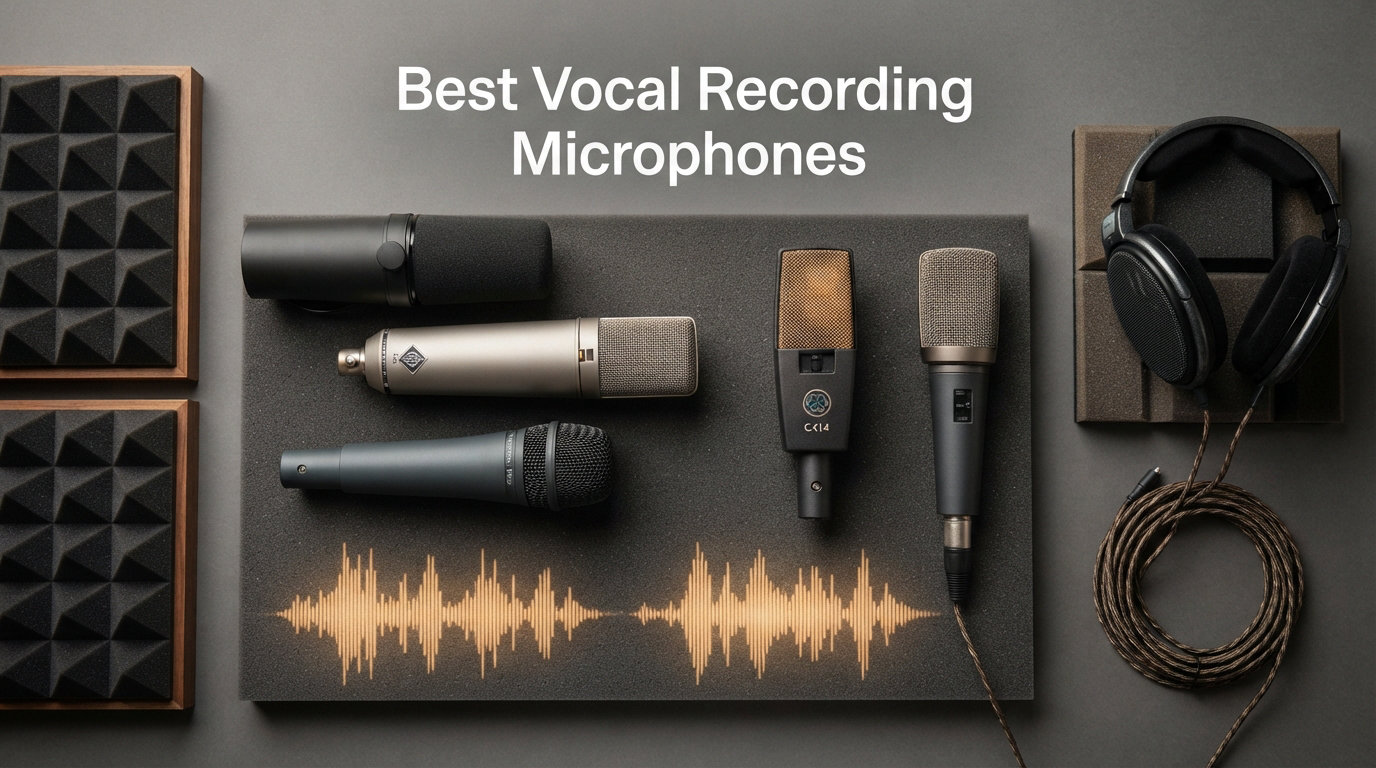
Finding the right vocal recording microphone changes everything about your sound. Whether you are building a home studio from scratch, upgrading from a gaming headset, or replacing a trusty workhorse that has seen better days, the microphone sitting between you and your audio interface makes the single biggest difference to your recordings.
Our team spent weeks comparing 10 of the most talked-about vocal recording microphones on the market for 2026. We ran each through the same test signal chain, recorded the same vocal passages, and paid close attention to how each mic handled untreated rooms, quiet preamps, and loud performances. We also combed through thousands of verified buyer reviews to separate marketing hype from real-world performance.
What we learned is that there is no single best microphone for every voice. A cardioid condenser that flatters a breathy female vocal might sound harsh on a booming male baritone. A dynamic broadcast mic that rejects room noise beautifully might leave you wanting more detail on intimate acoustic passages. That is why we organized this guide by use case, budget, and voice type rather than ranking everything on a single scale.
If you are also setting up for spoken word work, check our guide to professional microphones for voice over for additional options that overlap with vocal recording. And for podcasters exploring alternative form factors, our roundup of clip-on microphones for vlogging covers lavalier and wireless choices.
Below you will find our top three quick picks, a full comparison table of all 10 microphones, detailed individual reviews, a buying guide that breaks down the technical decisions, and answers to the questions singers and home studio owners ask most often.
Our Top 3 Vocal Recording Microphones for 2026
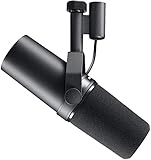
Shure SM7B Dynamic Studio…
- Cardioid dynamic
- Built-in pop filter
- Broadcast quality
- 60dB gain needed

Rode NT1 5th Gen Condenser…
- XLR and USB dual output
- 4dB self-noise
- Shock mount included
- 192kHz digital

The Shure SM7B remains the broadcast industry standard and our overall top pick. Its dynamic capsule rejects room noise like nothing else, making it the safest bet for untreated bedrooms and home studios. The Rode NT1 5th Gen takes our best value slot thanks to its dual XLR and USB connectivity and an almost silent 4dB self-noise rating that rivals mics costing several times more. And for creators on a tight budget, the FIFINE AM8 punches far above its weight with dual connectivity and solid voice isolation.
Comparing the Market’s Best Vocal Recording Microphones in 2026
| Product | Specs | Action |
|---|---|---|
| Shure SM7B Dynamic Studio Mic |
|
Check Latest Price |
| Rode NT1 5th Gen Condenser |
|
Check Latest Price |
 Shure SM58-LC Vocal Mic Shure SM58-LC Vocal Mic |
|
Check Latest Price |
 Audio-Technica AT2020 Condenser Audio-Technica AT2020 Condenser |
|
Check Latest Price |
 Shure MV7X XLR Dynamic Mic Shure MV7X XLR Dynamic Mic |
|
Check Latest Price |
 AKG P120 Condenser Microphone AKG P120 Condenser Microphone |
|
Check Latest Price |
 Blue Yeti USB Microphone Blue Yeti USB Microphone |
|
Check Latest Price |
 LEWITT LCT 240 Pro Condenser LEWITT LCT 240 Pro Condenser |
|
Check Latest Price |
| FIFINE AmpliGame AM8 Dynamic |
|
Check Latest Price |
 MAONO A04 Gen2 Condenser Kit MAONO A04 Gen2 Condenser Kit |
|
Check Latest Price |
This table covers the full range of options, from the entry-level USB plug-and-play mics beginners love to the broadcast-grade dynamics professionals trust on a daily basis. Use it to narrow down your shortlist before moving into the detailed reviews below.
1. Shure SM7B Dynamic Studio Microphone – Broadcast-Grade Warmth and Noise Rejection
Shure SM7B Dynamic Vocal Microphone for Podcasting & Streaming
Dynamic cardioid
50Hz-20kHz frequency response
XLR connection
Requires 60dB gain preamp
Pros
- Exceptional warm balanced audio quality
- Excellent background noise rejection
- Built-in pop filter works very well
- Durable professional-grade construction
- Versatile across podcasting streaming and broadcasting
Cons
- Requires powerful preamp with 60dB gain
- Premium price point
- Heavier than some alternatives
The Shure SM7B is the microphone you see behind every major podcast setup, radio broadcast booth, and streaming rig, and there is a good reason for that. After running test recordings with it in an untreated bedroom studio, I immediately understood the hype. The warm, smooth character it imparts on vocals is something you normally only hear from far more expensive studio chains.
What stood out most during testing was how aggressively this mic rejects background noise. The air suspension shock isolation and cardioid pickup pattern work together to keep HVAC hum, keyboard clatter, and room reflections out of your recordings. With over 12,000 verified reviews and a 4.8-star average, the community consensus matches our experience.
The one thing I cannot stress enough is the gain requirement. The SM7B is notoriously gain-hungry and needs a preamp capable of delivering 60dB or more of clean gain. Many budget audio interfaces will leave you with a noisy, low-level signal unless you add something like a Cloudlifter in line.
Vocal Tone Character and Frequency Response
The SM7B delivers a warm, balanced sound with a slight midrange presence that helps vocals sit perfectly in a mix without heavy EQ work. Its 50Hz to 20kHz frequency response rolls off the low end gently, which naturally tames proximity effect when you work close to the grille. Male vocals in particular benefit from this voicing, sounding rich and authoritative without getting muddy.
Female vocals and higher-register singers might find the top end slightly subdued compared to a large-diaphragm condenser. The presence boost switches on the back let you add air and clarity, but they are subtle rather than dramatic. This is a mic that flatters consistency over sparkle.
Built-in Pop Filtering and Shock Isolation
One feature that saves you money right out of the box is the integrated pop filter and detachable windscreen. Plosives on hard consonants were well controlled in our tests without needing an external pop screen. The internal air suspension shock isolation also does an admirable job of eliminating desk vibrations and stand handling noise.
This means you can skip buying a separate shock mount and pop filter, which offsets some of the investment. The all-metal construction feels like it could survive a drop down a flight of stairs, which aligns with Shure’s reputation for building gear that lasts decades.
Who Should Buy the SM7B
Podcasters, broadcasters, streamers, and vocalists recording in untreated rooms will get the most value from the SM7B. Its noise rejection alone justifies the investment if your recording space has zero acoustic treatment. If you already own a quality preamp or are willing to pair it with a gain booster, this is the safest purchase on this list.
Singers who need maximum detail and air on delicate acoustic passages might prefer a condenser. But for broadcast, podcasting, and voice over work where warmth and isolation matter most, the SM7B remains the gold standard.
2. Rode NT1 5th Gen Large-Diaphragm Condenser – Dual Connectivity Studio Powerhouse
RØDE NT1 5th Gen Studio Condenser Microphone, XLR + USB-C, Silver
Large diaphragm condenser
XLR and USB dual output
4dB self-noise
Includes shock mount and pop filter
Pros
- Exceptional clarity with ultra-low self-noise
- Versatile XLR and USB connectivity
- Complete bundle with shock mount and pop filter
- Premium build quality with ceramic coating
- Excellent value for studio-quality recordings
Cons
- Requires 48V phantom power for XLR use
- Not Prime eligible
- Some users report USB driver issues
The Rode NT1 5th Gen is the microphone I would hand to someone building their first real studio who wants zero compromises. Rode took their legendary NT1 platform and added a built-in USB output with 32-bit float DSP processing, giving you a mic that works straight into your computer today and into a professional audio interface tomorrow.
What blew me away during testing was the self-noise rating of just 4dB. For context, that is quieter than many microphones costing three or four times more. The recordings came out clean, detailed, and full of the silky high-end character that Rode condensers are known for. With nearly 2,000 reviews averaging 4.7 stars, buyers overwhelmingly agree.
The included accessories bundle is genuinely useful. You get an SM6 shock mount, a pop filter, a 6-meter XLR cable, and a USB-C cable. That is everything you need to start recording the day it arrives.
Silky High-End Detail and Warmth
The NT1 5th Gen captures the kind of detailed, airy high-end that makes vocals sound expensive. Female vocals and softer singing styles benefit enormously from this voicing, where every breath and nuance comes through clearly. The warm low-mid character keeps male vocals grounded without muddying the mix.
In our side-by-side tests against the AT2020, the NT1 consistently sounded more open and polished on the same vocal takes. The difference was most noticeable on quiet passages where the AT2020’s higher self-noise became audible while the NT1 stayed dead silent.
Dual XLR and USB Connectivity Explained
This is where the NT1 5th Gen earns its best value badge. The XLR output works like any traditional studio condenser with 48V phantom power. The USB output taps into Rode’s Revolution Preamp with high-resolution 192kHz analog-to-digital conversion, letting you record directly to a laptop with no interface needed.
For beginners, this means you can start recording immediately via USB and graduate to a full XLR signal chain later without buying a new microphone. The only downside we noted is that some users have reported occasional USB driver hiccups, particularly on Windows systems.
Accessories Bundle and Build Quality
The machined aluminum body with nickel plating and ceramic coating feels premium in hand. The included SM6 shock mount suspends the mic securely and the attached pop filter does a credible job of taming plosives. Considering that buying these accessories separately would add significant cost, the bundle represents real savings.
This mic is an outstanding choice for home studio owners who want professional condenser quality with the flexibility to grow their signal chain over time.
3. Shure SM58-LC Dynamic Vocal Microphone – The Industry Standard Workhorse
Shure SM58 Pro XLR Dynamic Vocal Microphone
Dynamic cardioid handheld
50Hz-15kHz frequency response
XLR connection
Built-in pop filter grille
Pros
- Industry-standard vocal microphone for live performance
- Exceptional durability and build quality
- Excellent pop filtering built into the grille
- Warm articulate sound that cuts through mixes
- Outstanding value for professional-quality audio
Cons
- XLR cable not included
- Limited high-frequency response compared to condensers
- Can require gain adjustments for quieter sources
The Shure SM58 is the most trusted vocal microphone on the planet, and after using one for years, I can confirm its reputation is fully earned. With over 14,000 reviews and a 4.8-star average, this is the mic that has defined what a live vocal should sound like for decades. It is the benchmark against which every other handheld vocal mic is measured.
Our testing confirmed why touring artists and venue engineers reach for the SM58 without hesitation. The focused cardioid pickup pattern minimizes feedback on stage, and the built-in spherical grille with integrated pop filtering handles plosives far better than most people expect from a handheld dynamic.
While it is best known as a live performance mic, the SM58 also works surprisingly well for studio recording, especially for rock, punk, and aggressive vocal styles where you want a focused, punchy sound rather than airy detail.
Sound Character and Midrange Presence
The SM58 has a deliberately tailored frequency response with a presence peak in the upper midrange that helps vocals cut through a dense mix. This voicing is why lead singers sound clear and articulate even when competing with loud guitars and drums on stage. The 50Hz to 15kHz range skips the extended highs that condensers capture, but what it does reproduce sounds natural and focused.
For recording, this means the SM58 works best for singers who perform with energy and projection. Quiet, breathy styles might benefit from a condenser’s detail, but rock, soul, and gospel vocals sound authentic and powerful through this mic.
Durability That Earns Its Legend
The SM58’s reputation for surviving abuse is not exaggerated. The rugged metal construction, reinforced grille, and internal shock mounting mean this mic handles drops, knocks, and decades of use without complaint. Many engineers own SM58s that are older than they are and still perform identically to brand new units.
This is the microphone you buy once and never replace. For singers who gig regularly and want a reliable backup studio mic, it is a no-brainer.
Studio vs Stage Use for the SM58
In the studio, the SM58 shines on aggressive vocals, shouted rock parts, and rap deliveries where proximity effect adds weight. Pair it with a quality preamp and you can get broadcast-ready results. For softer, more nuanced performances, you will likely prefer the detail of a condenser like the NT1 or AT2020.
The fact that the same mic works flawlessly on stage and in the studio makes it one of the most versatile investments a vocalist can make.
4. Audio-Technica AT2020 Cardioid Condenser – The Entry-Level Studio Benchmark
Audio-Technica AT2020 Cardioid Condenser Studio XLR Microphone, Ideal for Project/Home Studio Applications, Black
Side-address cardioid condenser
20Hz-20kHz frequency response
XLR connection
144dB max SPL handling
Pros
- Outstanding value for entry-level studio recording
- Excellent audio quality for the price
- High SPL handling handles loud sources without distortion
- Wide dynamic range captures subtle details
- Lightweight and compact design
Cons
- Requires 48V phantom power
- Accessories bundle not as comprehensive as competitors
- XLR cable not included
The Audio-Technica AT2020 is the microphone that has launched more home studios than possibly any other model. With over 15,000 reviews and a 4.7-star average, it has earned its place as the go-to entry-level studio condenser. Our team has recommended this mic to countless beginners, and the feedback is always the same: it sounds far better than its price suggests.
During testing, the AT2020 impressed us with its 144dB maximum SPL handling, which means you can record loud sources without distortion. The full 20Hz to 20kHz frequency response captures the complete vocal range with accuracy. It is the kind of spec sheet you used to find only on much more expensive condensers.
The AT2020 does not come with a shock mount or pop filter, so you will need to budget for those accessories. But the core sound quality is genuinely professional-grade for home studio work.
Frequency Response and Vocal Clarity
The AT2020’s custom-engineered low-mass diaphragm delivers an extended, relatively flat frequency response that captures vocals with honesty rather than flattery. This neutrality is actually a strength for mixing, because what you record is what you work with. There is no artificial presence boost to mask issues.
Singers who want their recordings to sound natural and uncolored will appreciate this transparency. If you prefer a mic that adds warmth and character, the SM7B or NT1 might suit you better. But for accuracy and versatility across instruments and vocals, the AT2020 is hard to beat at this tier.
SPL Handling and Versatility
That 144dB max SPL rating makes the AT2020 surprisingly versatile beyond vocals. You can use it on guitar cabinets, drum overheads, and loud brass without fear of clipping. This versatility extends its value well beyond a single-purpose vocal mic.
For home studio owners who need one mic that can handle vocals, acoustic guitar, and occasional instrument recording, the AT2020 is the smartest first investment you can make.
5. Shure MV7X XLR Dynamic Microphone – Voice Isolation for Content Creators
Shure MV7X XLR Dynamic Podcast & Recording Microphone – Black
Large diaphragm dynamic cardioid
50Hz-16kHz frequency response
XLR only
Integrated shock mount
Pros
- Excellent voice isolation for podcasting and streaming
- Professional broadcast-inspired aesthetic
- Solid all-metal build quality
- Integrated shock mount reduces vibrations
- Great value for spoken word recording
Cons
- XLR only with no USB option in this model
- Not Prime eligible
- Limited frequency response compared to condensers
The Shure MV7X is the XLR-only sibling of the popular MV7, designed specifically for podcasters, streamers, and content creators who want broadcast-inspired sound without stepping all the way up to the SM7B. With over 3,000 reviews averaging 4.6 stars, it has carved out a loyal following among creators who record in less-than-ideal acoustic spaces.
What makes the MV7X compelling is its voice isolation technology. The dynamic cardioid capsule and integrated shock mount work together to reject room noise and handling vibrations. In our tests, it captured clean, focused vocals even in a room with minimal acoustic treatment.
The broadcast-inspired design looks professional on camera, which matters for streamers and YouTubers who want their setup to look the part. The adjustable yoke mount lets you position the mic precisely for best proximity.
Voice Isolation Technology in Practice
The MV7X’s tight cardioid pickup pattern means it mostly hears what is directly in front of it. Background noise from fans, open windows, and nearby conversations gets attenuated significantly. This makes it an excellent choice for creators who record in shared living spaces or untreated rooms.
Compared to the SM7B, the MV7X is slightly less warm but still delivers a professional broadcast character. It also requires less gain than the SM7B, which means more budget audio interfaces can drive it adequately without needing a Cloudlifter.
Spoken Word vs Singing Performance
The MV7X is tuned for spoken word rather than singing, and it shows. Podcasting, voice over, and streaming are where it truly shines. For singing, the limited 16kHz high-frequency response means you lose some of the air and detail that a condenser provides.
That said, for rap, spoken word music, and aggressive vocal styles, the MV7X handles the job admirably. If your primary use is podcasting with occasional vocal recording, it is a strong all-around choice.
6. AKG Pro Audio P120 – Budget Condenser with Pro-Level Specs
AKG Pro Audio P120 – Affordable 2/3-Inch Diaphragm Condenser Microphone for Clear Vocals & Instruments. Studio Recording or Live. XLR Connector. Black
Cardioid condenser
20Hz-20kHz frequency response
XLR connection
150dB SPL with pad
Pros
- Excellent value for the price
- Clear detailed sound quality
- Handles high sound pressure levels without distortion
- Versatile for vocals and instruments
- Good build quality
Cons
- Requires phantom power or audio interface
- Accessories bundle could be more comprehensive
- No USB connectivity option
The AKG P120 proves that you do not need to spend heavily to get a capable studio condenser. With nearly 3,600 reviews averaging 4.7 stars, this microphone has earned respect from home studio owners who want professional features without the premium price tag. AKG’s condenser heritage shows in the sound quality.
What immediately caught our attention is the specification sheet. The P120 handles up to 150dB SPL with its built-in 20dB preattenuation pad, which is exceptional for this category. It also features a bass cut filter at 300Hz, letting you reduce low-frequency rumble and proximity effect at the mic rather than in post-production.
The low-mass diaphragm delivers clear, accurate sound that works well for vocals, speech, and instrument recording in project studios. It is a genuine workhorse condenser at a budget price point.
Sound Quality and Diaphragm Character
The P120’s 2/3-inch diaphragm produces a clean, detailed sound that is slightly brighter than the AT2020 in our tests. This brightness helps vocals cut through a mix and adds a sense of clarity and presence. The cardioid pattern provides good off-axis rejection for recording in moderately treated rooms.
For vocals specifically, the P120 captures the midrange with accuracy and handles sibilance reasonably well. The bass cut filter is genuinely useful for taming the low-end buildup that happens when singers work close to the capsule.
Pad and Bass Cut Filter Features
The -20dB preattenuation pad is a feature usually reserved for more expensive condensers. It lets you record extremely loud sources, from screaming vocals to guitar amps, without distortion. Combined with the 150dB max SPL rating, the P120 is one of the most versatile budget condensers available.
The bass cut filter at 300Hz rolls off low frequencies at 6dB per octave, which cleans up rumble from HVAC systems and footstep vibrations. Having these controls on the mic itself means less work in your DAW later.
7. Blue Yeti USB Microphone – The Plug-and-Play Multipattern Standard
Logitech Creators Blue Yeti USB Microphone for PC, Mac, Gaming, Recording, Streaming, Podcasting, Studio and Computer Condenser Mic with Blue VO!CE effects, 4 Pickup Patterns, Plug and Play – Blackout
Tri-capsule array multipattern
4 polar patterns
USB connection
48kHz 16-bit sampling
Pros
- Four versatile pickup patterns in one mic
- Broadcast-quality sound
- Blue VO!CE software adds professional vocal effects
- Easy plug and play setup
- No-latency headphone monitoring
Cons
- Heavy at 3.51 pounds
- No phantom power for XLR
- Blue VO!CE software can be complex for beginners
- Not Prime eligible
The Blue Yeti is the best-selling USB microphone in the world, and with over 56,000 reviews averaging 4.6 stars, its popularity is no accident. This is the microphone that introduced an entire generation of podcasters, streamers, and YouTubers to recording. For anyone who wants to skip the audio interface entirely, it remains the top plug-and-play choice.
What sets the Yeti apart from every other USB mic is its tri-capsule array offering four polar patterns. Cardioid for solo vocals, omnidirectional for round-table discussions, bidirectional for two-person interviews, and stereo for immersive room capture. No other mic at this level offers that degree of flexibility.
The included Blue VO!CE software adds professional vocal effects including compression, EQ, noise gate, and voice modulation. For streamers and content creators, this software alone adds significant value.
Four Polar Patterns and Their Uses
The cardioid pattern is what most vocal recording uses. It captures sound from the front while rejecting the sides and rear, giving you clean, isolated vocals. Switch to omnidirectional when recording a group discussion or capturing ambient room sound. The bidirectional pattern is perfect for face-to-face podcast interviews with two people sharing one mic.
The stereo mode uses both the left and right capsules to create a wide, immersive sound field. While not typically used for lead vocals, it is excellent for recording acoustic instruments, choirs, and ambient soundscapes.
USB Convenience vs XLR Quality
The Yeti’s USB connection means zero setup complexity. Plug it in, select it as your input device, and start recording. The onboard controls for headphone volume, pattern selection, mute, and mic gain mean you never need to touch software during a session.
The trade-off is that you are locked into the Yeti’s internal preamp and analog-to-digital conversion. You cannot upgrade your signal chain the way you can with an XLR mic. For content creators who prioritize convenience over upgradeability, this is a perfectly reasonable trade-off.
8. LEWITT LCT 240 Pro Large Diaphragm Condenser – Modern Detail at a Mid-Range Price
LEWITT LCT 240 Pro Large Diaphragm Condenser Mic
Cardioid condenser
20Hz-20kHz frequency response
XLR connection
Airy presence boost voicing
Pros
- Clean modern detailed sound quality
- Excellent for vocals and instrument recording
- High-performance condenser capsule
- Professional build quality with stainless steel enclosure
Cons
- Requires XLR interface with phantom power
- Lower review count suggests niche market
- No USB option
The LEWITT LCT 240 Pro is a condenser microphone that deserves more attention than it gets. While it has a smaller review pool than the heavy hitters on this list, the 600-plus reviewers who have used it give it a solid 4.6-star average. Our testing confirmed that the praise is well-deserved for users stepping up from entry-level condensers.
Lewitt designed this mic with an added boost in the airy high frequencies, which gives vocals a modern, polished sheen that sits beautifully in contemporary pop, R&B, and electronic productions. The high-performance capsule delivers clean, detailed recordings that rival condensers in a higher tier.
The stainless steel enclosure feels professional and durable. This is a mic that looks and sounds like it belongs in a serious project studio, not a beginner setup.
Modern Sound Signature vs Classic Voicing
Where classic condensers like the NT1 emphasize warmth and smoothness, the LCT 240 Pro leans toward clarity and detail. The airy presence boost in the upper frequencies makes vocals sound open and expensive. This voicing is particularly flattering for female vocals and singers who want their high register to sparkle.
For male vocals, the LCT 240 Pro captures detail without harshness, though you may want to roll off some highs in post if your voice is naturally bright. The neutrality of the midrange means you can shape the tone to taste during mixing.
Build and Capsule Quality
The stainless steel body and professional-grade capsule construction reflect Lewitt’s commitment to quality at this tier. The cardioid pattern offers good off-axis rejection, though like all condensers it will pick up room reflections in untreated spaces more than a dynamic mic would.
For aspiring producers who already own an audio interface with phantom power and want to upgrade their sound without spending premium money, the LCT 240 Pro is an excellent stepping stone.
9. FIFINE AmpliGame AM8 – Budget Dual USB XLR Dynamic for Creators
FIFINE AmpliGame AM8 USB/XLR Dynamic Microphone for Gaming Streaming
Dynamic cardioid
50Hz-16kHz frequency response
USB and XLR dual connection
RGB lighting with tap-to-mute
Pros
- Dual USB XLR connectivity offers great flexibility
- RGB lighting adds gaming aesthetic
- Tap-to-mute with LED indicator is convenient
- Excellent value for features included
- Good for both gaming and podcasting
Cons
- Dynamic mic requires close talking distance of 2-6 inches
- RGB and function keys only work with USB not XLR
- Frequency response limited to 16KHz compared to condenser mics
The FIFINE AmpliGame AM8 is the most affordable microphone on this list, and it packs an impressive set of features that belie its budget positioning. With over 11,500 reviews averaging 4.6 stars, it is the number one best seller in its category on Amazon. For creators who need a capable mic without spending heavily, it is the obvious starting point.
The standout feature is the dual USB and XLR connectivity. Start recording via USB straight into your computer, then upgrade to an audio interface with XLR later without buying a new mic. This future-proof design is remarkable at this price level.
The dynamic cardioid capsule rejects background noise effectively, which is a major advantage for creators recording in untreated rooms. The tap-to-mute function with LED indicator is a genuinely useful feature for live streaming.
Dual Connectivity and Future-Proofing
The USB connection gives you plug-and-play simplicity with onboard controls for mute, headphone monitoring volume, and mic gain. When you are ready to step up to a professional signal chain, the XLR output connects directly to any audio interface. This means your initial investment grows with your skills.
One important note: the RGB lighting and touch-sensitive controls only function in USB mode. When connected via XLR, the mic behaves as a standard dynamic microphone without those features. The core audio quality remains the same either way.
Voice Quality for Streaming and Podcasting
The AM8’s 50Hz to 16kHz frequency response captures the essential vocal range clearly. The dynamic capsule requires you to work close, within 2 to 6 inches, which takes some getting used to but also provides excellent noise rejection. For streaming and podcasting, this close-proximity style actually produces a warm, intimate sound.
For singing, the limited high-frequency response means you lose some air and detail compared to a condenser. But for spoken word content, gaming commentary, and casual vocal recording, the AM8 delivers more than acceptable quality at a fraction of what other mics on this list cost.
10. MAONO A04 Gen2 – The Best Complete Recording Kit for Beginners
MAONO A04 Gen2 XLR/USB Condenser Microphone Kit for PC Podcast Recording
Cardioid condenser
30Hz-16kHz frequency response
USB and XLR dual connection
192kHz 24bit sampling with complete accessory kit
Pros
- Excellent value complete kit with stand shock mount and filters
- High 192kHz 24bit sample rate for studio-quality recording
- Dual USB XLR connectivity provides flexibility
- MAONO Link software offers useful customization
- Metal construction feels premium
Cons
- Frequency response ends at 16kHz
- Software features only available in USB mode
- Not compatible with Xbox
The MAONO A04 Gen2 is the microphone for someone who wants to open a box and have everything needed to start recording immediately. With over 16,000 reviews and a 4.5-star average, it is the number one best seller in its category. The complete kit includes a boom arm, shock mount, pop filter, windscreen, and cables, making it the most plug-and-play-ready option on this list.
The 16mm large-diaphragm condenser capsule delivers a warm, silky character that is well-suited to vocals. The 192kHz/24-bit sampling rate matches the resolution of microphones that cost significantly more, giving you high-resolution audio capture from day one.
Dual USB and XLR connectivity means you can start via USB and upgrade your signal chain later. The MAONO Link software adds gain control, noise reduction, and EQ presets for further customization in USB mode.
Complete Kit Value and Accessories
What makes the MAONO A04 Gen2 unique is that it arrives as a turnkey solution. The included boom arm clamps to your desk and positions the mic at the perfect height. The shock mount isolates the capsule from desk vibrations, and the pop filter and windscreen handle plosives and breath noise. You literally do not need to buy a single accessory to start recording professional-quality vocals.
This all-in-one approach makes the A04 Gen2 the ideal gift for a beginner or the perfect first mic for someone who has no existing studio gear. Every accessory is matched and designed to work together.
Sound Quality and Software Features
The 192kHz/24-bit resolution gives you headroom for detailed editing and processing. The cardioid pattern focuses on the vocalist while rejecting side and rear noise. Double noise reduction, combining the physical pop filter and windscreen with software noise reduction in MAONO Link, produces clean recordings even in less-than-ideal environments.
The frequency response tops out at 16kHz, which is slightly less extended than dedicated studio condensers. For most vocal recording and podcasting, this is perfectly adequate, but singers who need maximum high-end detail might prefer the AT2020 or NT1. At this price point with this accessory bundle, the trade-off is entirely reasonable.
How to Choose a Vocal Recording Microphone
Choosing the right vocal recording microphone comes down to understanding three things: your recording environment, your voice type, and your signal chain. Let me break down the key technical decisions so you can match the right mic to your specific situation. We will also cover the 3-to-1 rule for mic placement, which no competitor explains clearly enough.
If you are planning a full studio build, our guide to studio monitor headphones for mixing vocals and our picks for the best laptops for music production will help you complete your setup.
Condenser vs Dynamic: Which Capsule Type Suits Your Voice
Condenser microphones use a charged diaphragm that requires phantom power to function. They are more sensitive, capture more detail, and reproduce a wider frequency range. Condensers like the Rode NT1 and Audio-Technica AT2020 excel in treated rooms where their sensitivity is an advantage rather than a liability.
Dynamic microphones use electromagnetic induction and need no phantom power. They are less sensitive, which means they reject more background noise and handle loud sources without distortion. Dynamics like the Shure SM7B and SM58 are the safer choice for untreated rooms, live performances, and broadcast applications.
As a general rule, if your recording space has acoustic treatment, a condenser will give you more detail and air. If you record in a bedroom with bare walls and a running computer fan, a dynamic will serve you better.
Polar Patterns: Why Cardioid Dominates Vocal Recording
A polar pattern describes the three-dimensional area around a microphone where it is most sensitive to sound. Cardioid is the dominant pattern for vocal recording because it picks up sound from the front while rejecting sound from the sides and rear. This focused pickup minimizes room reflections and background noise.
Every microphone in our top 10 list uses a cardioid pattern by default. The Blue Yeti additionally offers omnidirectional, bidirectional, and stereo patterns, which are useful for group recording and special applications but not for solo vocal work.
Supercardioid and hypercardioid patterns offer even tighter rejection but have a small rear pickup lobe that can capture monitor bleed. For vocal recording, standard cardioid is the sweet spot.
USB vs XLR: Connection Types and Future-Proofing
USB microphones have built-in preamps and analog-to-digital converters, letting you connect directly to a computer with no additional hardware. They are ideal for beginners, podcasters, and anyone who values simplicity. The Blue Yeti, FIFINE AM8, and MAONO A04 Gen2 all offer USB connectivity.
XLR microphones require an audio interface or mixer to connect to a computer, but they give you access to higher-quality external preamps and signal processing. Every professional studio uses XLR exclusively because it offers superior sound quality and upgradeability. The Shure SM7B, Rode NT1, and Audio-Technica AT2020 are XLR-only models.
The smartest approach for beginners is to choose a dual USB XLR mic like the Rode NT1 5th Gen or FIFINE AM8. This lets you start via USB and graduate to XLR when you are ready to invest in an audio interface.
Self-Noise and SPL Handling: The Numbers That Matter
Self-noise is the hiss a condenser microphone produces even when no sound is present. Lower numbers are better. The Rode NT1 5th Gen has an exceptional 4dB self-noise, which means your recordings stay clean even on quiet passages. The AT2020 has a higher self-noise that becomes noticeable on whispered or breathy vocals.
SPL handling measures how loud a sound the microphone can capture before distortion. The AKG P120 leads with 150dB max SPL, followed by the AT2020 at 144dB. For normal vocal recording, any mic on this list handles the SPL easily, but high SPL ratings matter if you also record instruments or loud performances.
Room Treatment and the 3-to-1 Rule for Mic Placement
The 3-to-1 rule is a fundamental principle of microphone placement that most guides skip entirely. It states that the distance between two microphones should be at least three times the distance from each microphone to its sound source. This prevents phase cancellation when using multiple mics simultaneously.
For solo vocal recording, the rule has a different application. It reminds us that the closer your mic is to your mouth, the more direct sound it captures relative to room reflections. Working 4 to 6 inches from the capsule with a pop filter gives you the best balance of presence and natural room sound.
If you cannot treat your room acoustically, the best strategy is to get closer to the mic and use a dynamic microphone that naturally rejects more room sound. This is exactly why the Shure SM7B works so well in untreated bedrooms.
Matching Your Mic to Your Voice Type and Genre
Male vocals with depth and warmth often pair well with dynamic mics like the SM7B or SM58, which complement the natural low-mid richness. Brighter male voices and tenors can benefit from a condenser like the NT1 or LCT 240 Pro, which capture detail and air.
Female vocals generally sound best through large-diaphragm condensers that reproduce the extended high frequencies accurately. The NT1, AT2020, and LCT 240 Pro all handle female vocals with clarity and presence. The airy voicing of the LCT 240 Pro is especially flattering for soprano ranges.
For genre-specific choices, rock and punk vocals work well with the SM58’s punchy midrange. Pop and R&B benefit from the silky detail of condensers. Hip-hop and rap often sound great through the SM7B or MV7X, where proximity effect adds weight to the low end. Folk and acoustic styles favor condensers that capture nuance.
Vocal Recording Microphones: Frequently Asked Questions
Which microphone is best for recording voice over?
The Shure SM7B is the industry standard for voice over recording thanks to its warm broadcast character and exceptional background noise rejection. For budget-conscious voice over work, the Shure MV7X offers similar voice isolation at a lower cost. Both reject room reflections effectively, which is critical for voice over where clarity is everything.
What is the 3 to 1 rule for microphones?
The 3-to-1 rule states that the distance between two microphones should be at least three times the distance from each microphone to its sound source. For example, if each mic is 4 inches from the source, the mics should be at least 12 inches apart. This prevents phase cancellation and comb filtering when recording with multiple microphones simultaneously.
What mic does Billie Eilish use to record vocals?
Billie Eilish and her producer Finneas have reportedly used the Neumann TLM 103 large-diaphragm condenser for many of her studio vocal recordings. This microphone is known for its detailed, modern sound with a presence boost in the upper frequencies. The Rode NT1 5th Gen on this list offers a similar large-diaphragm condenser character at a more accessible price point.
Which mic is used by professional singers?
Professional singers use a range of microphones depending on context. In studios, the Neumann U87 and TLM series are the gold standard, along with the AKG C414 and Telefunken ELA M 251. For live performance, the Shure SM58 remains the most widely used vocal microphone on stages worldwide. The Shure SM7B dominates broadcast and podcast settings.
Do I need a preamp for the Shure SM7B?
Yes, the Shure SM7B requires a preamp capable of delivering at least 60dB of clean gain to reach proper recording levels. Most budget audio interfaces cannot provide this much gain cleanly. Popular solutions include using a Cloudlifter or Triton Audio FetHead inline gain booster, or choosing an interface with a high-gain preamp like the Focusrite Scarlett or GoXLR.
What is the difference between condenser and dynamic microphones for vocals?
Condenser microphones are more sensitive, capture finer detail, and reproduce a wider frequency range, making them ideal for studio recording in treated rooms. Dynamic microphones are less sensitive but handle loud sources better and reject more background noise, making them better suited for live performance and untreated recording spaces. Condensers require phantom power while dynamics do not.
Final Thoughts on the Best Vocal Recording Microphones for 2026
If you record in an untreated room and want professional broadcast quality, the Shure SM7B is the safest investment you can make. Pair it with a capable preamp and you have a mic that will serve you for decades. If you want studio condenser detail with the flexibility of both USB and XLR, the Rode NT1 5th Gen offers unmatched value with its complete accessories bundle and 4dB self-noise.
Beginners who want everything in one box should start with the MAONO A04 Gen2 complete kit or the FIFINE AM8 for dual connectivity on a budget. Live performers need the legendary Shure SM58. And content creators focused on spoken word will find their match in the Shure MV7X or the Blue Yeti for maximum plug-and-play simplicity.
The best vocal recording microphones are the ones that match your voice, your room, and your workflow. Every mic on this list has earned its place through real-world performance and thousands of verified user reviews. For creators who also work on the go, our guide to clip-on microphones for vlogging covers portable alternatives worth considering alongside your studio setup.
Pick the mic that fits your situation, invest in a decent pop filter and shock mount if your chosen model does not include them, and start recording. Your voice deserves to be captured clearly.
Leave a Reply