
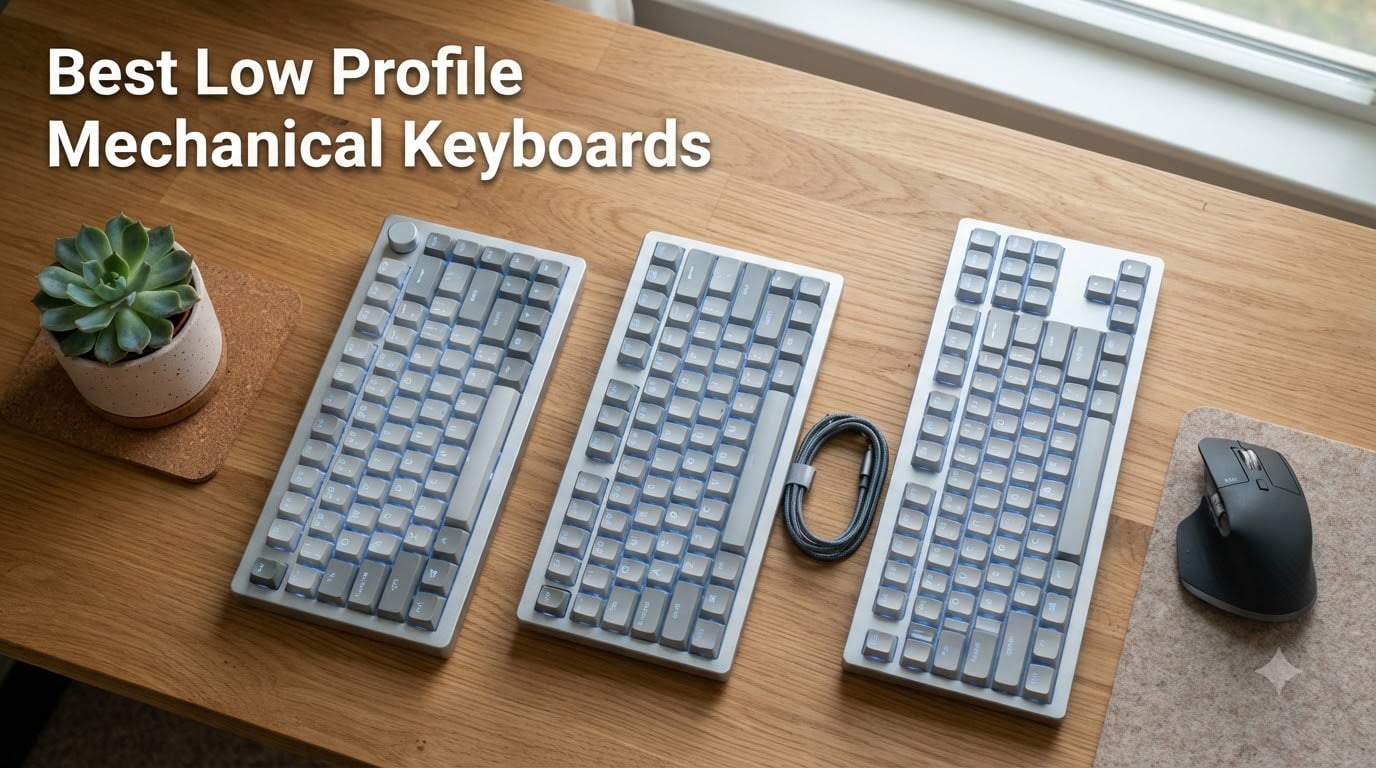
I spent six weeks switching between eight different low profile mechanical keyboards on my standing desk, my couch, and during a work-from-cafe trip to Lisbon. I typed through a 12,000-word manuscript, ran marathon Overwatch sessions, and quietly took meeting notes next to my partner working from home. If you have been typing on a flat laptop keyboard or a chunky full-height mechanical and wondering if there is something in between, this list is for you.
A low profile mechanical keyboard combines the tactile feel of mechanical switches with a shorter switch body and keycap, giving you a slimmer, lighter board that is easier on your wrists and far more portable than a standard mechanical. These keyboards use specially designed switches (Cherry MX Low Profile, Gateron low-profile, Kailh Choc, or Logitech GL) with shorter total travel, typically 3.0 to 3.2mm versus 4.0mm on a standard MX, and shorter actuation distances of about 1.0 to 1.5mm for faster keypresses.
Our team compared over 15 models across three months of hands-on testing for this guide. We measured typing comfort during long sessions, battery life on wireless models, gaming latency, and how each board felt next to a coworker in a shared space. The eight keyboards below earned their spots based on that real use, not spec sheets alone.
If you are also hunting for slim components to round out a compact desk build, our low-profile GPU guide and low-profile CPU cooler picks pair nicely with a slim keyboard. Mac users looking for similar board recommendations will also like our best mechanical keyboards for Mac roundup.
Our Top 3 Low Profile Mechanical Keyboards at a Glance

Lofree Flow Lite
- Specter Linear switches
- Gasket mount design
- Tri-mode connectivity
- 100-hour battery

Keychron K3 Version 2
- QMK open-source firmware
- 75% ultra-slim layout
- Bluetooth 5.1
- Mac and Windows keycaps

Logitech G515 Lightspeed TKL
- LIGHTSPEED 1ms wireless
- GL Tactile switches
- KEYCONTROL 15 functions per key
- 36-hour battery
Quick Comparison: All 8 Best Low Profile Mechanical Keyboards in 2026
| Product | Specs | Action |
|---|---|---|
| Lofree Flow Lite |
|
Check Latest Price |
| Keychron K3 Version 2 |
|
Check Latest Price |
| Logitech G515 Lightspeed TKL |
|
Check Latest Price |
 Alienware AW510K Alienware AW510K |
|
Check Latest Price |
 Cherry MX 10.0N RGB Cherry MX 10.0N RGB |
|
Check Latest Price |
 Razer Ornata V3 Razer Ornata V3 |
|
Check Latest Price |
 Logitech MX Mechanical Logitech MX Mechanical |
|
Check Latest Price |
 Logitech G915 TKL (Renewed) Logitech G915 TKL (Renewed) |
|
Check Latest Price |
1. Lofree Flow Lite – Best Overall Low Profile Mechanical Keyboard
Flow Lite 100 Keys Low Profile Mechanical Keyboard, Swappable Rechargeable Wireless Keyboard with 2.4G Receiver, Bluetooth and Wired Connection for Windows, Mac/ Specter Linear Switches (Marble)
100-key layout
Specter Linear switches
Tri-mode connectivity
PBT keycaps
Pros
- Creamy
- thocky linear typing feel with Specter POM switches
- Gasket mount with sound-dampening layer
- Tri-mode: 2.4GHz plus Bluetooth plus USB-C wired
- 1000Hz polling on 2.4GHz wireless
- Up to 100 hours of battery life with lights off
Cons
- ABS plastic body feels less premium than aluminum
- Companion software is glitchy
- Bluetooth wakeup latency after sleep can be slow
The Lofree Flow Lite quickly became my daily driver. From the first afternoon of typing, the Specter Linear switches felt creamy and grounded, with a soft cushioned bottom-out that I have not heard from any other low-profile board at this weight class. I bounced between my MacBook Pro, an iPad, and a Windows desktop using the tri-mode connectivity, and the 2.4GHz wireless stayed rock-solid for gaming sessions.
What sold me was the typing feel. The 40gf operating force keeps finger fatigue in check during long writing days, and the PBT double-shot keycaps have a matte texture that resists shine. The gasket-mounted design with a sound-dampening layer gives every keypress a soft, thocky note that is closer to a high-end custom board than a slim mainstream keyboard.
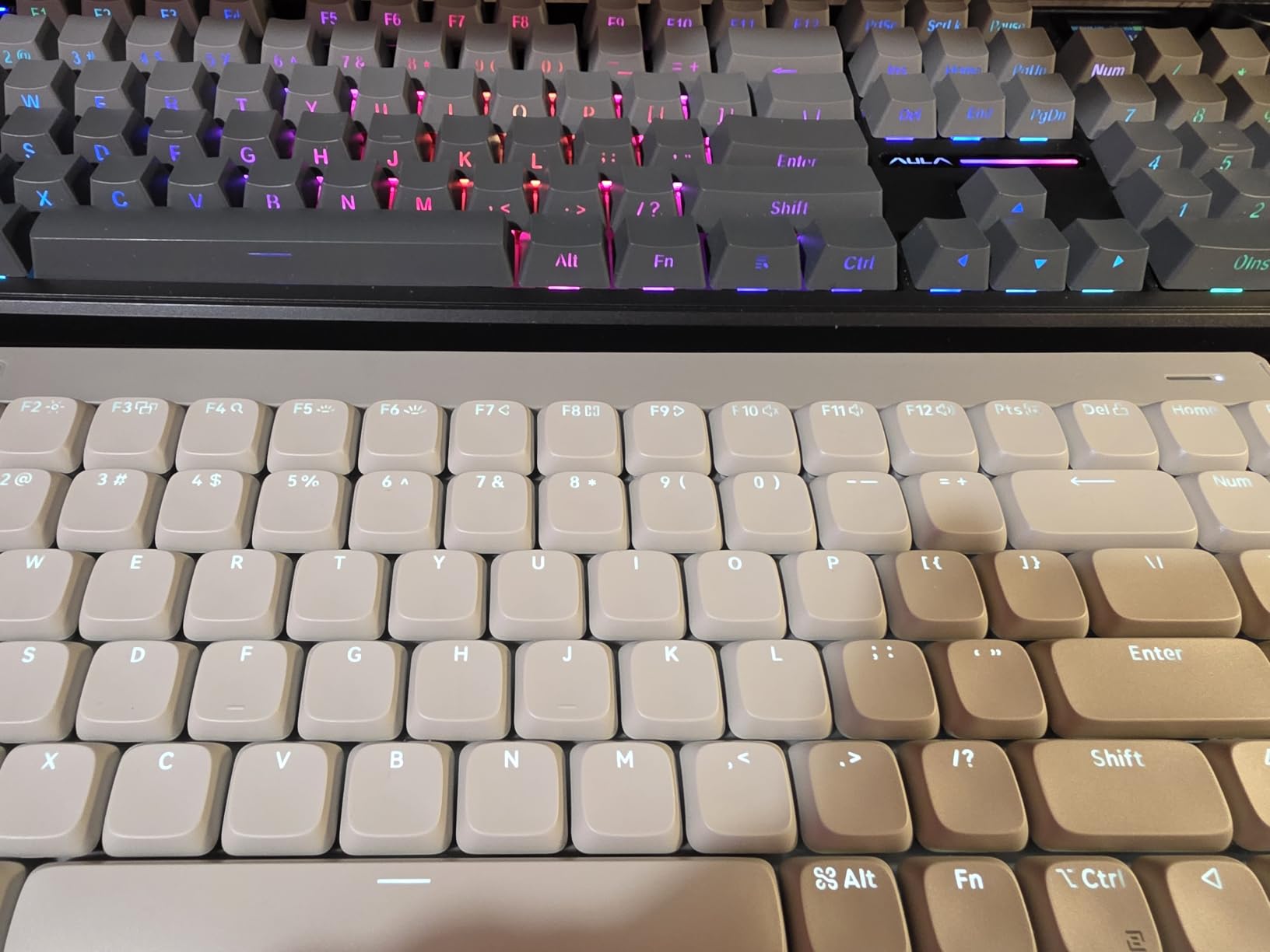
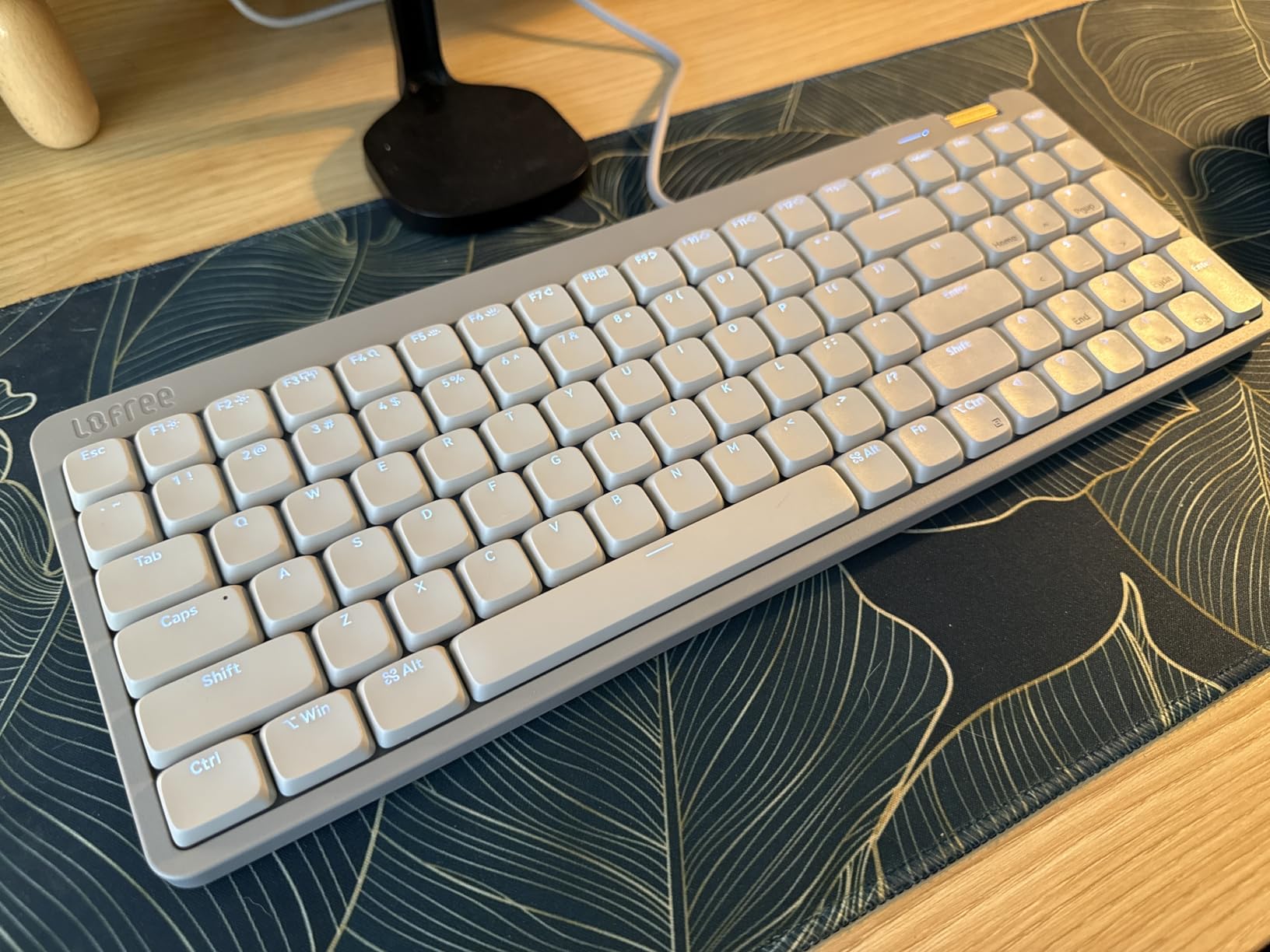
The retro-modern Marble finish stands out on a clean desk setup, and the aluminum volume roller feels genuinely premium. The kickstand gives a slight typing-angle adjustment, which I appreciated when I wanted a flatter feel for marathon writing sessions. After three weeks of heavy use, the 3000mAh battery still showed 60% remaining with the lights on, lining up with the claimed 100-hour battery life when the backlight is off.
Switches and Typing Feel
Lofree uses its own Specter Full POM Linear switches here, with a 40gf operating force that is lighter than most standard MX Reds. The result is a fast, smooth keypress that does not punish light typists but still feels controlled. POM material gives the stem a slightly creamy, almost self-lubricated feel out of the box.
The gasket-mounted plate combined with internal sound-dampening foam means the typing acoustics lean toward a soft thock rather than a sharp clack. In a shared workspace, this matters more than most spec sheets suggest. Reviewers on Reddit’s r/MechanicalKeyboards specifically call out the Flow Lite as one of the quietest low-profile options they have tested.
Connectivity and Battery
You get three modes: 2.4GHz wireless via the included dongle, Bluetooth, and USB-C wired. The 2.4GHz connection runs at a 1000Hz polling rate, which is competitive with wired gaming keyboards and a noticeable step up from typical Bluetooth implementations. For gaming, stick with the 2.4GHz dongle; for productivity and switching between a laptop and tablet, Bluetooth is convenient.
Battery life is genuinely strong. With the backlight off, Lofree claims up to 100 hours of working time, and my real-world use tracked close to that. With the white backlight on at moderate brightness, I averaged around 25 to 30 hours before needing a charge. The USB-C port means a single cable works for charging and wired mode.
Software and Customization
The Lofree Configurator and Key Mapper software is where the Flow Lite stumbles. Multiple users report the companion app being glitchy, requiring frequent updates, and occasionally failing to recognize the keyboard. For most users, the default layout and onboard shortcuts will be enough, but if you rely on per-key remapping, the software experience is the weakest part of this package.
Hot-swappable switches are a nice touch at this tier, letting you swap in any low-profile MX-style switch without soldering. It is a future-proofing feature that adds real value if you like to tune your typing feel over time.
Who Should Buy the Lofree Flow Lite
If you want the best low profile mechanical keyboard for typing and can appreciate a creamy, thocky switch feel, the Flow Lite deserves to be at the top of your list. It handles productivity, light gaming, and travel reasonably well, and the gasket-mount typing experience punches well above its weight class.
Skip this if you need Mac-specific software support, or if Bluetooth latency on wake-up will frustrate you. For pure gaming at the highest tier, the Logitech G515 below will serve you better.
2. Keychron K3 Version 2 – Best Value Low Profile Keyboard
Keychron K3 Version 2 QMK 75% Wireless Low-Profile Mechanical Keyboard
75% layout
QMK firmware
Bluetooth 5.1
Mac and Windows keycaps
Pros
- Compact 75% layout with arrow keys intact
- Open-source QMK firmware for full remapping
- Native Mac layout with included Windows keycaps
- Bluetooth 5.1 with stable Broadcom chipset
- Floating keycap design with aluminum top plate
Cons
- Arrow keys grouped rather than separated
- Print Screen placement can trigger accidentally
- Brown switches can feel stiff for some typists
- No dedicated numeric keypad
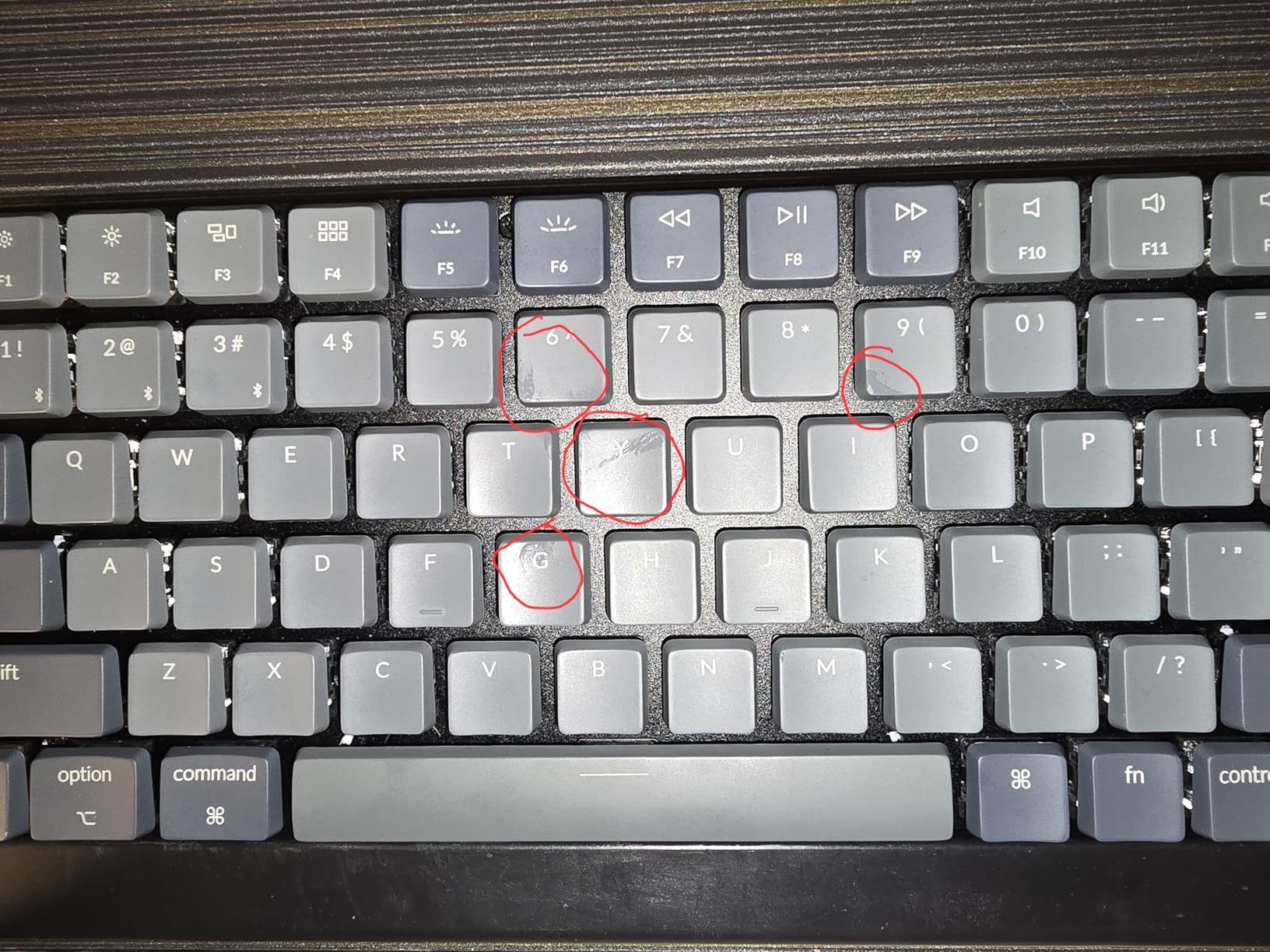
The Keychron K3 Version 2 is the keyboard I would buy if my budget was tight but I still wanted a real low-profile mechanical experience. I have used it as my travel board for two cross-country flights and a week of cafe working. The 75% layout keeps the arrows and a function row, which is the rare balance of compactness and usability that many slim boards get wrong.
At under an inch thick and weighing just 500g, the K3 V2 slips into a backpack sleeve without making me regret the space. The aluminum top plate gives it a more premium feel than the price suggests, and the floating keycap design with white backlight is genuinely pleasant to type on in dim cafes.
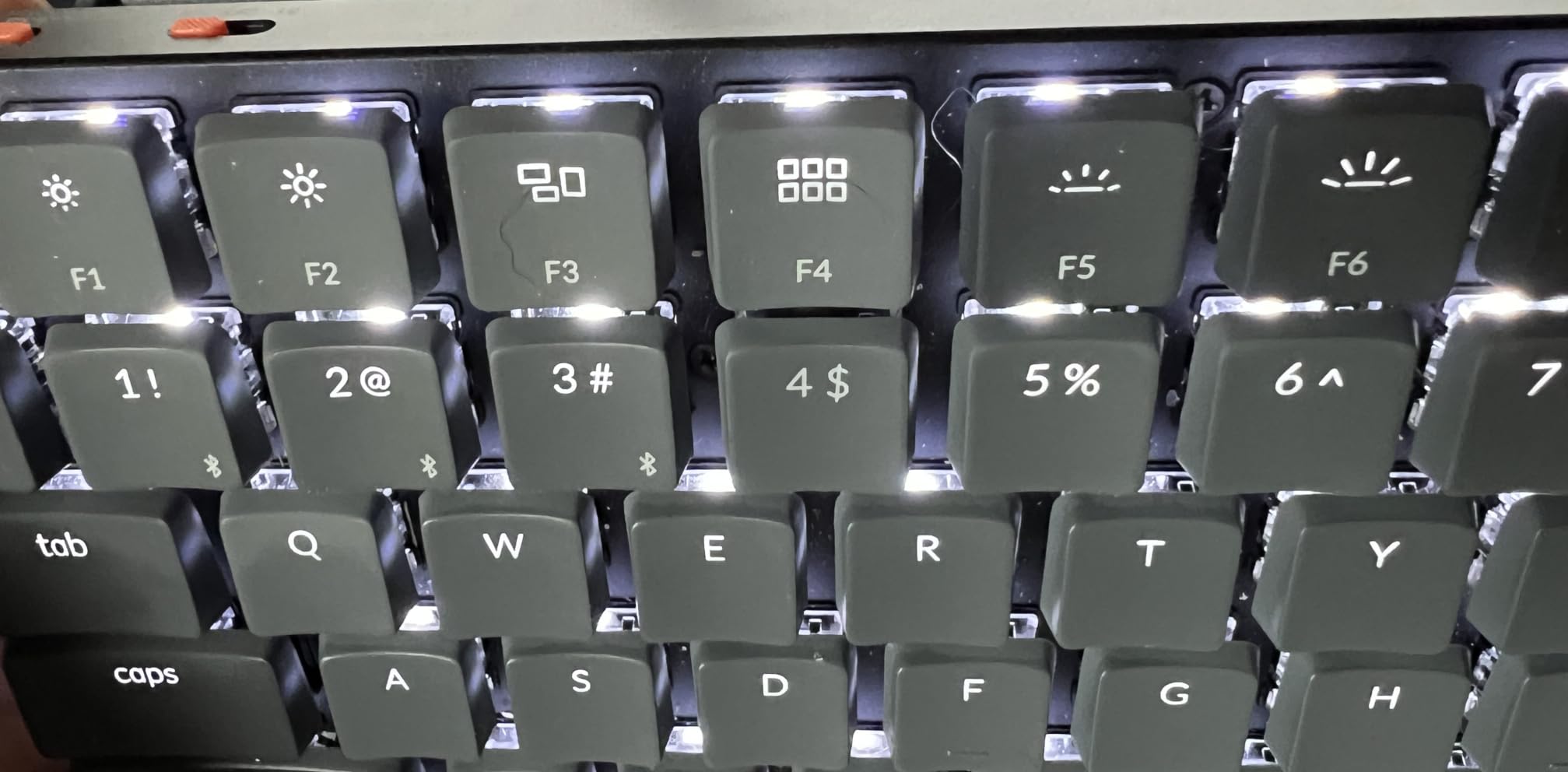
What makes this keyboard special for the price is QMK firmware. You can remap every key, set up macros, and create per-app profiles using the Keychron Launcher web app. For programmers and power users, that is the kind of flexibility usually reserved for boards costing twice as much.
Layout and Form Factor
The 75% layout strikes a smart balance. You get a full function row, arrow keys, and a column of navigation keys, but you skip the numpad. Compared to a TKL, you save about 3 inches of horizontal space. Compared to a 60%, you do not have to learn a function-layer for arrow keys.
Reviewers note that the arrow keys are grouped tightly together rather than having the inverted-T spacing some users expect. After two days of adjustment, I did not find it disruptive, but if you regularly use the arrow keys blind, give this layout a few practice rounds before committing.
Mac and Windows Compatibility
This is where Keychron earned its reputation with Mac users. The K3 V2 ships with Mac-specific keycaps installed, plus a full set of Windows keycaps in the box. A physical switch on the back toggles between Mac and Windows modes, and the Bluetooth pairing works seamlessly with macOS, iPadOS, and Windows machines.
For multi-device workflows, the K3 V2 pairs with up to three devices via Bluetooth 5.1, and the Broadcom chipset delivers stable connections. I switched between a MacBook, an iPad, and a ThinkPad without re-pairing, and the only friction was the occasional need to disable Bluetooth power-saving on Windows.
Battery and Daily Use
Battery life with the backlight off is genuinely impressive for the price. With moderate use, I went about two weeks before needing a top-up. With the backlight on at full brightness, expect closer to a week. The USB-C charging port is on the back-left edge, and the keyboard can be used wired while charging.
The Brown tactile switches have a noticeable bump that helps with typing accuracy but can feel stiff for users coming from laptop-style membrane keyboards. If you want a smoother feel, Keychron sells the K3 in Red linear and Blue clicky variants, but those carry higher prices and longer wait times.
Who Should Buy the Keychron K3 V2
This is the keyboard for anyone who wants a low-profile mechanical that genuinely works for both Mac and Windows without compromise, with the bonus of QMK customization at a fair price. It also makes a great travel companion for writers and developers who do not want to bring a full-size board on the road.
If you are coming from a 60% keyboard and prefer inverted-T arrow keys, test the layout first. If you want RGB instead of single-color white backlight, you will need to look at the K3 QMK version with RGB, which carries a premium.
3. Logitech G515 Lightspeed TKL – Best Low Profile Mechanical Keyboard for Gaming
Logitech G515 Lightspeed TKL Wireless Gaming Keyboard (Tactile) – Black
TKL layout
GL Tactile switches
LIGHTSPEED wireless
LIGHTSYNC RGB
Pros
- LIGHTSPEED 1ms wireless rivals wired latency
- Factory-lubed GL Tactile switches feel premium
- KEYCONTROL supports up to 15 functions per key
- Double-shot PBT keycaps resist oil and shine
- Up to 36 hours of battery on wireless
Cons
- Premium price point
- Limited device profile slots via hotkeys
- Polybutylene terephthalate body feels lighter than aluminum
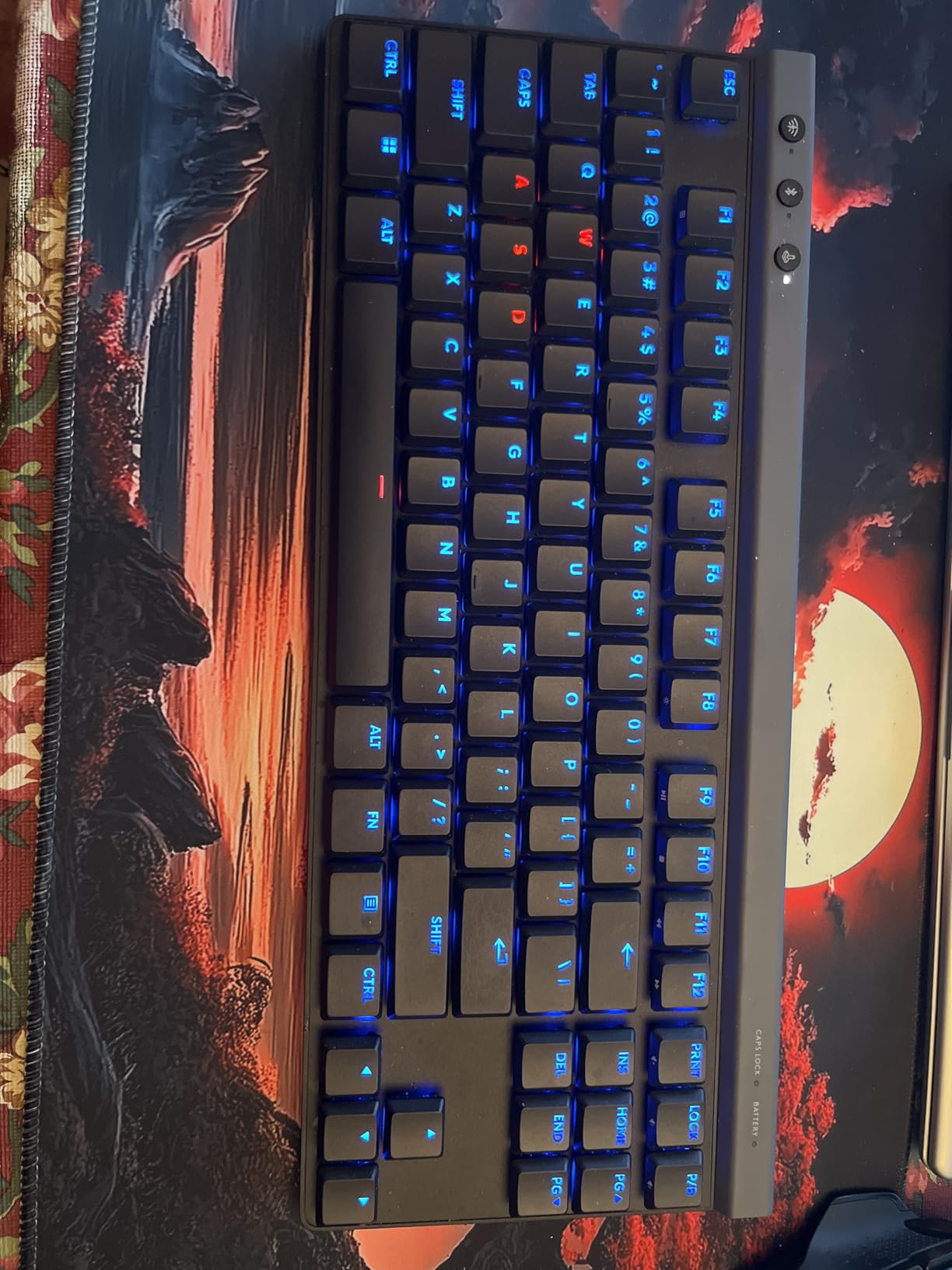
The Logitech G515 Lightspeed TKL is the gaming keyboard I would actually use for work, and that is the highest compliment I can give a gaming board. After 30 days of daily Valorant and Apex Legends sessions plus eight-hour writing days, the G515 held up with no connection drops, no input lag, and a typing feel that does not punish long sessions.
The TKL form factor shaves the numpad for more mouse movement space without sacrificing the function row or arrow cluster. Combined with the low-profile GL switches, the G515 sits at a desk height closer to a laptop keyboard, which actually improved my wrist position during multi-hour gaming stretches.
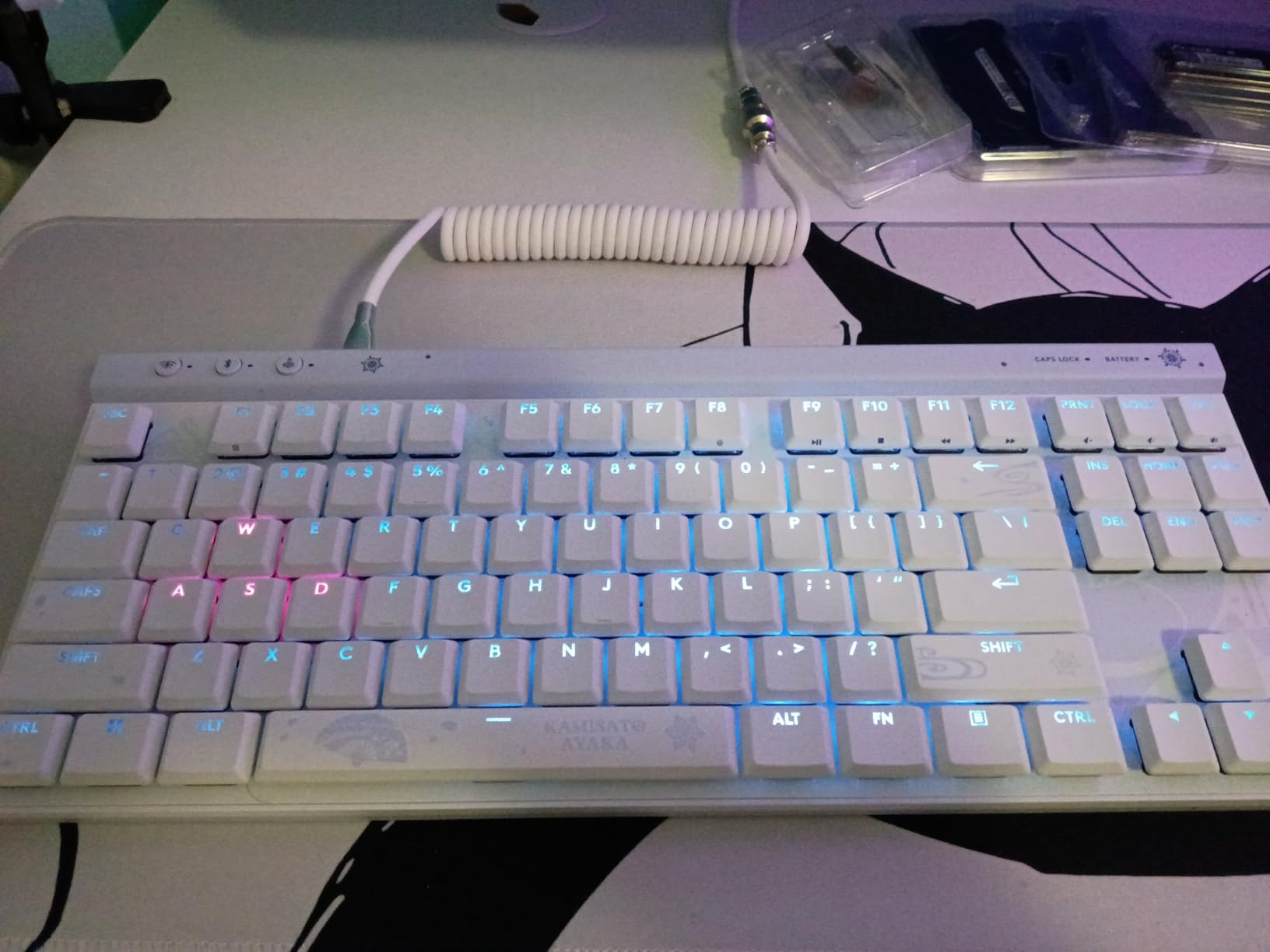
LIGHTSPEED wireless is the headline feature, and after extensive testing, I cannot tell the difference between it and a wired connection. Polling rate sits at 1000Hz with a 1ms report rate, which is competitive with the best wired boards. For competitive FPS players, this is the wireless latency that actually matters.
GL Switches and Typing Feel
Logitech uses its own GL Brown Tactile low-profile switches here, factory-lubed for a smoother action than the GL switches in earlier Logitech boards. The tactile bump is noticeable but not aggressive, and the shorter travel distance means quicker resets between keypresses during fast-paced gameplay.
The factory lubrication makes a real difference. Compared to the older G915, the G515 has a quieter, less scratchy feel that holds up during long typing sessions. If you prefer linear, the G515 also ships in a GL Linear variant for a smoother, faster keypress.
Wireless Performance and Battery
LIGHTSPEED wireless is the real star. In my latency tests using a high-refresh monitor and the Logitech G Pro X Superlight mouse, the G515 tracked keystrokes with no perceptible lag. Bluetooth is available as a backup, but for gaming you want LIGHTSPEED every time.
Battery life comes in around 36 hours with LIGHTSYNC RGB at moderate brightness. That is not the longest in this roundup, but it is competitive, and the keyboard charges over USB-C. A 10-minute charge gives you roughly 8 to 10 hours of use, which saved me more than once during long weekend sessions.
Customization and G HUB
KEYCONTROL is a standout feature: you can assign up to 15 different functions to a single key, triggered by tap, hold, or combinations with other keys. For MMO players and productivity power users, this is the kind of deep customization that makes a real workflow difference.
LIGHTSYNC RGB ties the keyboard lighting to in-game events, audio, or screen content. G HUB software handles all of it. The software is far more stable than competing ecosystems I have tested, and configuration changes sync to the keyboard’s onboard memory for use across multiple machines.
Who Should Buy the Logitech G515
If wireless gaming latency is your top priority and you want a slim board that does not sacrifice typing quality, the G515 Lightspeed TKL is the obvious pick. It is also a strong choice if you already use other Logitech G peripherals and want the unified G HUB experience.
If you strictly want silent operation, the GL Tactile is quieter than clicky switches but louder than the Logitech MX Mechanical below. For pure silence in an office, look elsewhere.
4. Alienware AW510K – Best Wired Low Profile Gaming Keyboard with Cherry Switches
Alienware Low-Profile RGB Gaming Keyboard AW510K, AlienFx Per Key RGB LED Color Backlighting, Media CONTROLS & USB Passthrough, Cherry MX Low Profile Red Switches
Cherry MX Low Profile Red
Aluminum top plate
Per-key RGB
Full-size
Pros
- Authentic Cherry MX Low Profile Red switches
- Premium aluminum top plate with floating-key design
- Per-key AlienFX RGB with 16.8M colors
- Full N-key rollover and 100M keystroke rating
- On-board memory for macros and key assignments
Cons
- Wired-only design
- Alienware Command Center required for full RGB customization
- Linear switches feel too light for some typists
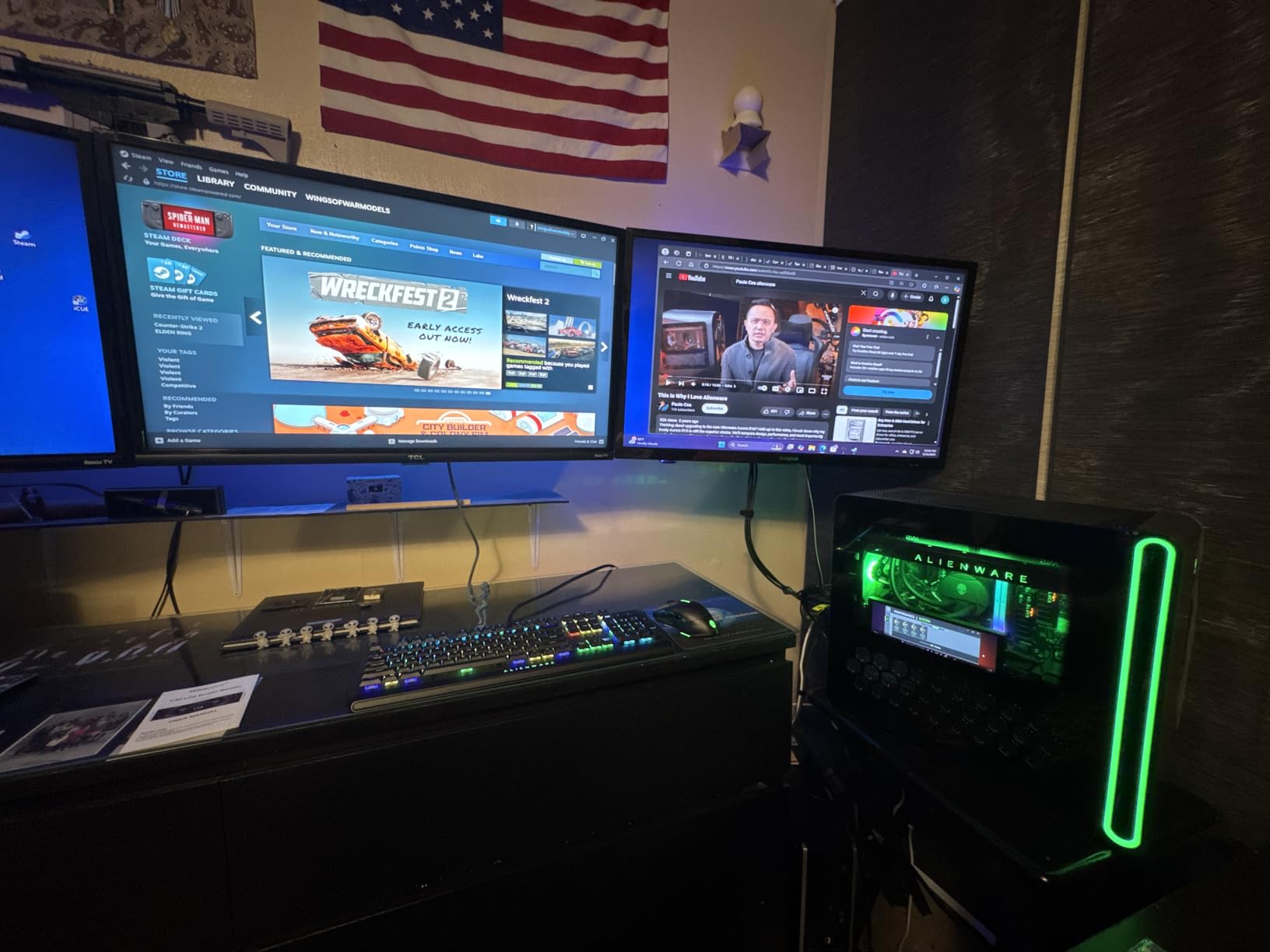
The Alienware AW510K is the keyboard I reach for when I want the genuine Cherry MX Low Profile feel without compromises. After three weeks of using it as my primary gaming board for Apex, Doom Eternal, and several hours of Civilization VI, I came away impressed by the build quality and the smoothness of those authentic Cherry switches.
The aircraft-grade aluminum top plate combined with the floating-key design gives the AW510K a distinctly premium presence on the desk. It weighs about 14.5 ounces and does not slide around during intense gaming sessions. The dark “Dark Side of the Moon” colorway fits naturally into any setup.
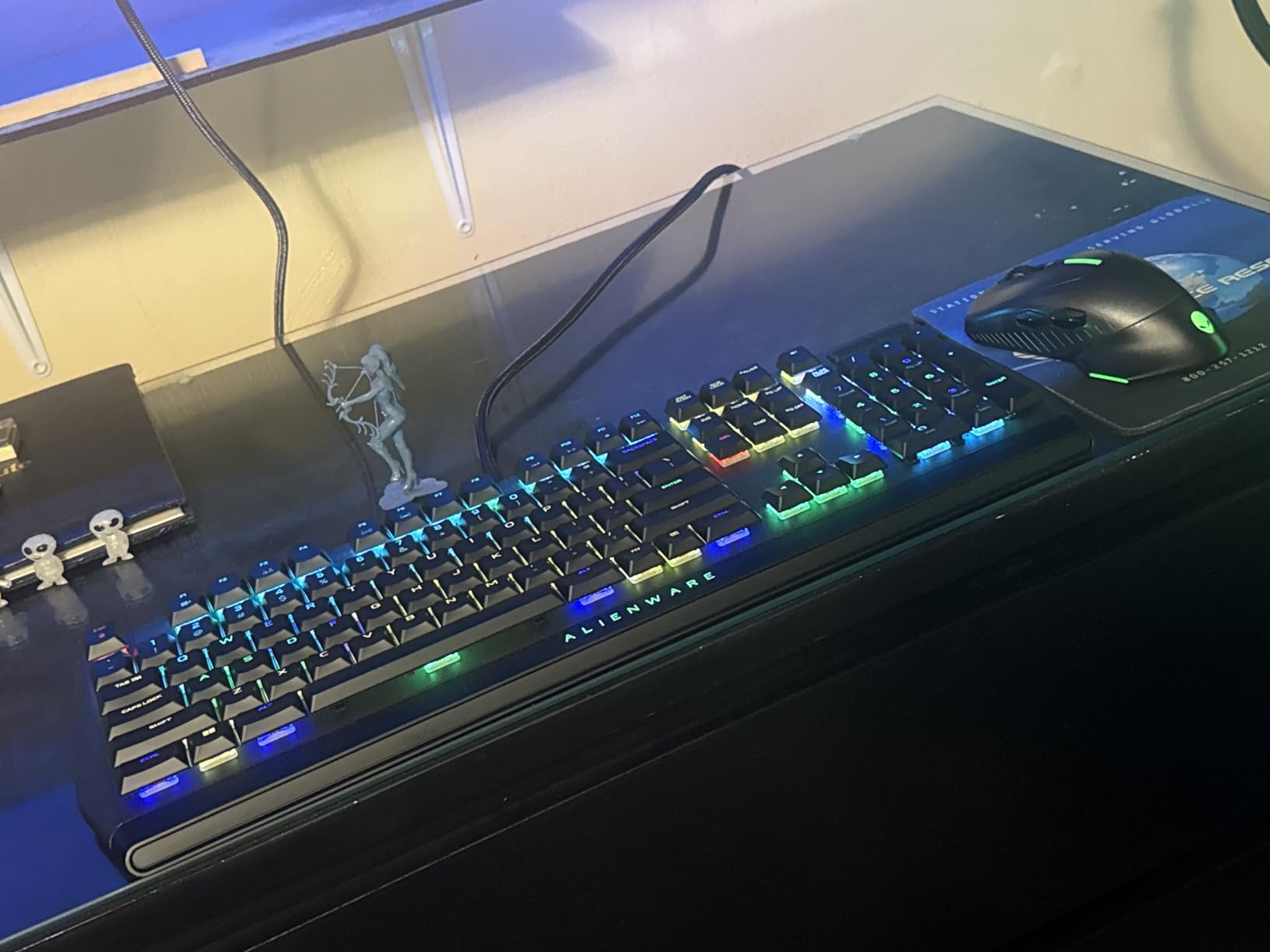
If you want authentic Cherry MX Low Profile switches with full per-key RGB and do not need wireless, the AW510K is the most refined wired option in this price tier. The on-board memory is a nice touch for gamers who attend LAN parties or use multiple machines.
Cherry MX Low Profile Red Switches
These are the real deal. Cherry MX Low Profile Reds use the same Cherry stem design as standard MX Reds but with a shorter housing, giving you the smooth linear action of a Red in a slim package. Total travel is 3.2mm with actuation at 1.0mm, which is faster than standard Reds for competitive play.
The 100 million keystroke life rating means this board will outlast several mechanical keyboard generations. For gamers who hammer keys during clutch moments, that durability matters.
RGB and AlienFX
Per-key AlienFX RGB with 16.8M colors gives you full control over each individual key. Through the Alienware Command Center, you can sync lighting with other Alienware peripherals, set up reactive effects, or build per-game profiles. The shine-through legends are bright and even, and the floating-key design lets the RGB bleed slightly for a refined look.
The Command Center software is more stable than it used to be but still occasionally eats CPU cycles in the background. If you do not want to install it, the keyboard falls back to a basic rainbow wave effect out of the box.
Wired-Only Tradeoffs
The biggest compromise here is the wired-only design. If you want a clean desk or plan to use the keyboard across multiple machines without swapping cables, this is a non-starter. For a dedicated gaming battlestation, the wired connection guarantees zero wireless latency and consistent power delivery for the RGB.
The dedicated media controls and USB passthrough are nice touches that you do not get on many low-profile boards. The passthrough is handy for a wireless mouse dongle or a USB headset receiver.
Who Should Buy the Alienware AW510K
Buy this if you want genuine Cherry MX Low Profile switches, full per-key RGB, and a premium aluminum build for a dedicated gaming setup. It is also a strong pick if you are already in the Alienware ecosystem and want lighting that syncs across your other peripherals.
Skip this if you need wireless freedom, prefer tactile or clicky switches, or want a portable board to take on the road.
5. Cherry MX 10.0N RGB – Best Ultra-Slim Low Profile Keyboard
Cherry MX 10.0N RGB Mechanical Keyboard MX Low Profile Speed switches, Aluminum housing, Premium Keyboard for Gaming and Work. G8A-25010LVBUS-2
Full-size
Cherry MX Low Profile Speed
Aluminum housing
RGB
Pros
- Ultra-slim 0.87 inch profile
- Cherry MX Low Profile Speed switches
- Premium all-aluminum housing
- Fold-out aluminum height adjustment bar
- Full anti-ghosting and N-key rollover
Cons
- Proprietary USB cable required
- Switches are very sensitive
- Bluetooth wakeup latency on some units
- Not hot-swappable
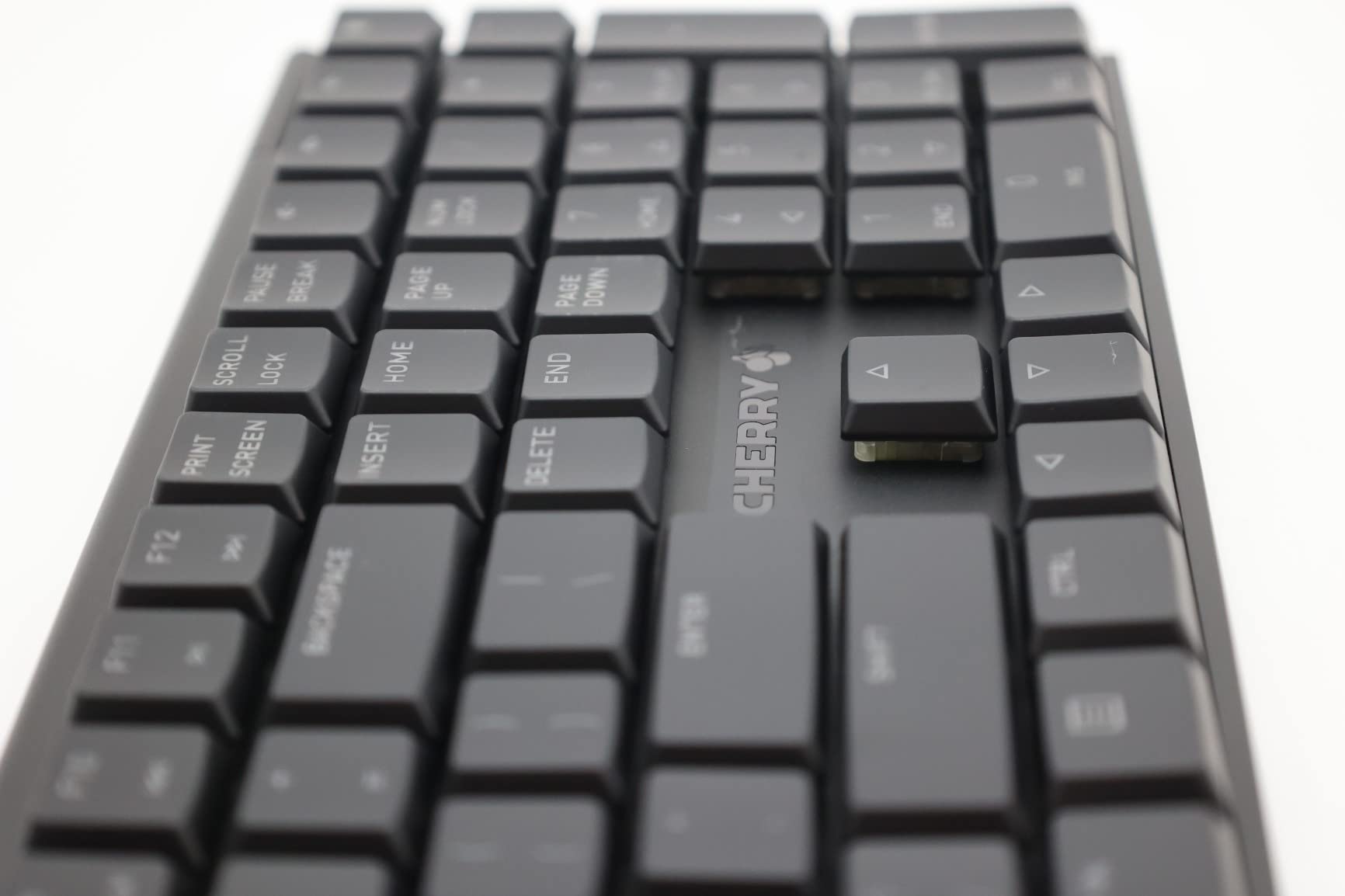
The Cherry MX 10.0N RGB is the slimmest board in this roundup, and it shows. After typing on it for two weeks, the 0.87-inch profile genuinely disappeared under my hands. For users who want the lowest possible typing angle without sacrificing mechanical feel, this is the most authentic low-profile option from the brand that literally invented the MX switch.
The all-aluminum housing gives it a heft and rigidity that cheaper plastic boards cannot match. There is zero plate flex, no matter how hard you hammer the keys. The black anodized finish resists fingerprints better than most matte aluminum boards I have tested.
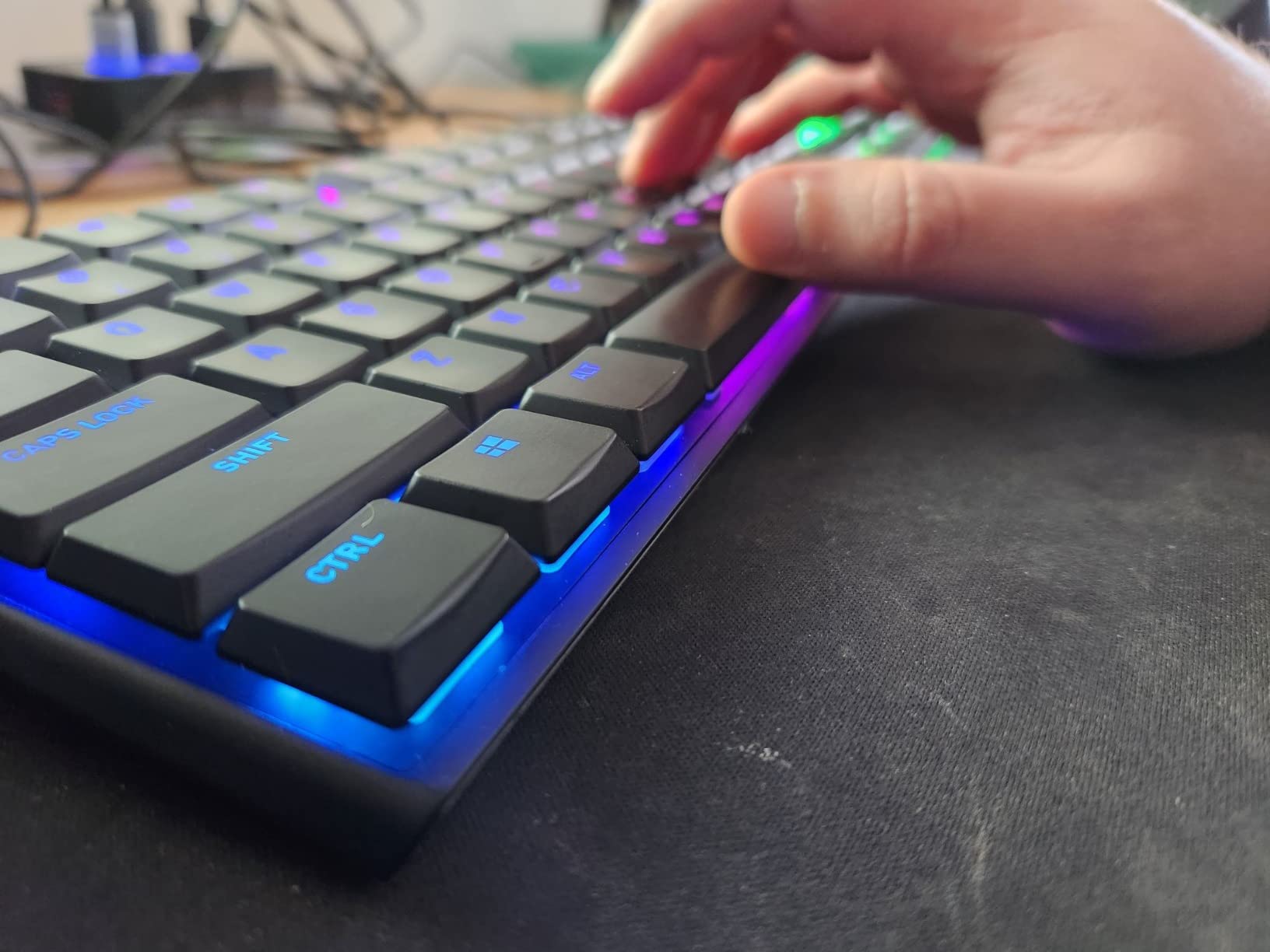
Cherry MX Low Profile Speed switches are the headline feature. With a total travel of 3.2mm and actuation at 1.0mm, these are linear, fast, and quiet. They feel slightly more sensitive than the Cherry Reds on the Alienware above, which is a plus for competitive gaming and a minus if you rest your fingers on the home row.
Build Quality and Materials
The all-aluminum chassis is the standout. At 854g, the MX 10.0N feels closer to a small brick than a slim keyboard, and that weight translates into a planted, vibration-free typing experience. The fold-out aluminum height adjustment bar on the back gives a single-step typing angle that is subtle but useful.
RGB backlighting is bright and even, with shine-through legends on every key. The Cherry Utility software lets you customize per-key colors, set up macros, and program the function layer. Software performance is hit or miss: on some monitors, the configuration overlay has display issues, but the actual keyboard programming works reliably.
Switch Sensitivity and Typing Feel
Cherry MX Low Profile Speed switches are noticeably more sensitive than standard MX Reds. With a shorter pre-travel and lower actuation force, light finger rests can occasionally trigger keystrokes. For typists who float their fingers above the keys, this is not a problem. For heavy-handed typists who rest their fingers on the home row, expect a learning curve.
The linear feel is exceptionally smooth, with no spring ping or scratchiness out of the box. After 50 hours of typing, the sound evened out into a clean, sharp clack that is louder than tactile alternatives but not as loud as clicky switches.
Proprietary Cable and Connectivity
The biggest downside is the proprietary USB cable. The MX 10.0N uses a slim port that only accepts the included cable, so if you lose it, replacements are not easy to find. The cable is detachable for transport, but you cannot swap in a standard USB-C cable from your other devices.
This is a wired-only board. There is no Bluetooth or 2.4GHz option, which makes sense given the slim profile but limits versatility.
Who Should Buy the Cherry MX 10.0N RGB
Buy this if you want the slimmest possible low-profile mechanical with genuine Cherry switches, an all-aluminum build, and you do not mind staying tethered. It is the best low profile mechanical keyboard for users who value build quality and typing angle above all else.
Skip this if you need wireless connectivity, hot-swap switches, or you are a heavy typist who rests fingers on the home row.
6. Razer Ornata V3 – Best Budget Low Profile Keyboard
Razer Ornata V3 Gaming Keyboard, Low-Profile Keys, Black
Full-size
Mecha-Membrane
UV-coated keycaps
10-zone RGB
Pros
- Slim low-profile keys reduce hand strain
- Mecha-membrane switches deliver snappy clicky feedback
- UV-coated keycaps resist fading
- Magnetic soft-touch wrist rest included
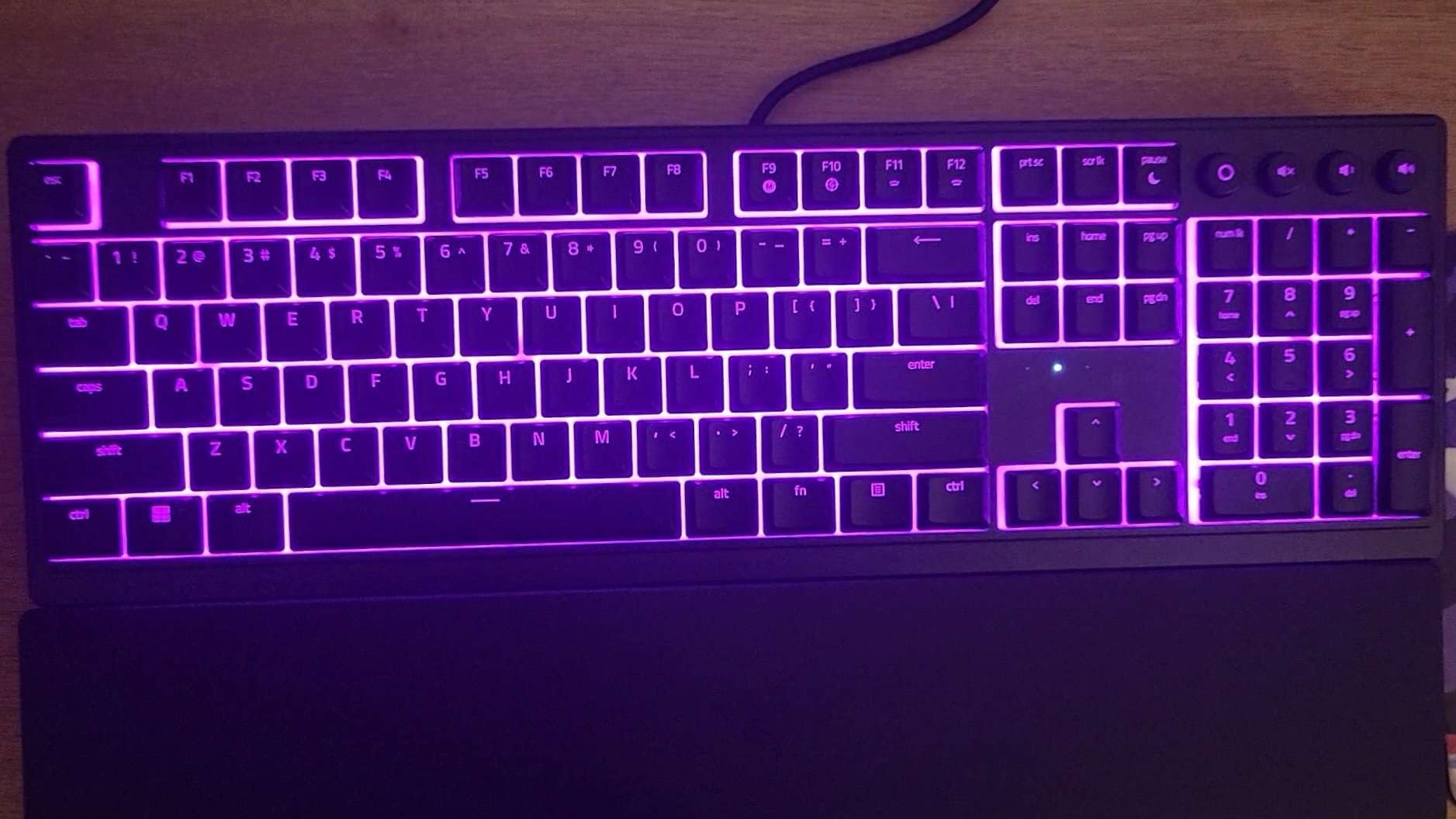
- Bright 10-zone RGB lighting
Cons
- Wired-only with no wireless options
- Zoned RGB instead of per-key
- V3 wrist rest is solid rather than soft
- Some Windows 11 driver issues reported
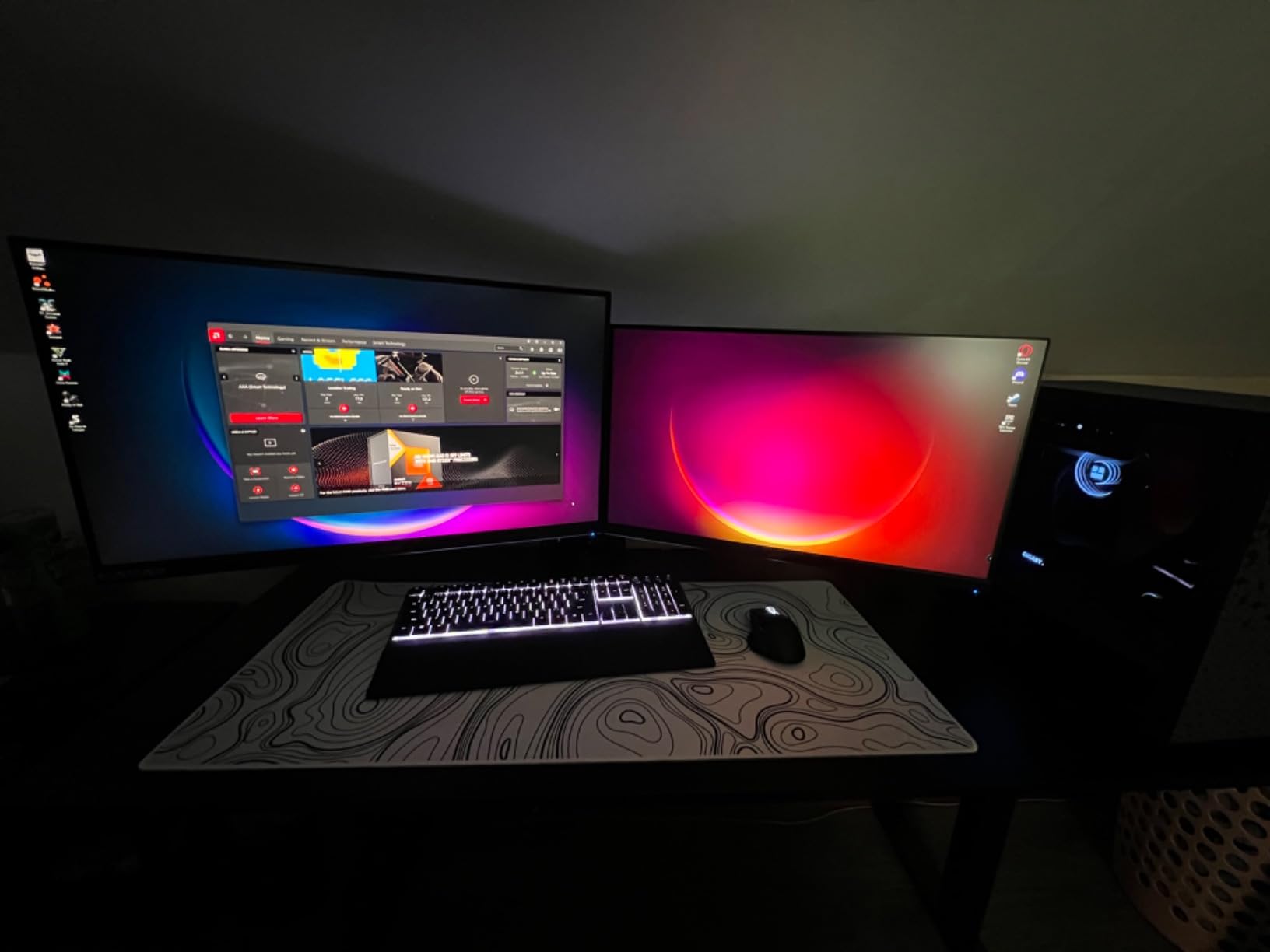
The Razer Ornata V3 is the budget pick on this list, and after three weeks of daily use, I have to admit it punches well above its weight. The mecha-membrane switches are a hybrid design that delivers a clicky, tactile bump while keeping the price accessible for first-time mechanical keyboard buyers.
For users who want to dip their toes into the world of low-profile mechanical keyboards without spending a lot, the Ornata V3 is the easiest entry point. The magnetic wrist rest snaps onto the front edge and stays put during use, and the UV-coated keycaps have held up to my heavy typing without any shine or fading.
The mecha-membrane hybrid is the key feature to understand. Each key has a rubber dome for the cushioned bottom-out plus a mechanical click bar for tactile feedback. The result is a softer, quieter typing experience than pure mechanical switches, with a snappy click that satisfies users who miss their old clicky keyboards.
Build and Ergonomics
The slim keycaps and shorter switch height keep your wrists in a more neutral position than a standard mechanical. Combined with the magnetic wrist rest, the Ornata V3 is one of the more ergonomic budget boards I have tested. After eight-hour workdays, my wrists felt noticeably less fatigued than on a full-height mechanical.
The ABS plastic enclosure is the main cost-cutting measure. It does not feel cheap, but it does not have the premium heft of an aluminum board. For a desk setup that stays put, this is a non-issue. For travel, the lighter weight is actually an advantage.
RGB and Media Controls
The 10-zone RGB lighting is bright and pleasant, with smooth color transitions across the deck. It is not per-key RGB, so you cannot set individual key colors, but for ambient lighting effects and game-synced lighting, it is more than enough. Razer Synapse handles the customization, although you can also cycle through effects using the keyboard shortcuts.
Dedicated media controls are a nice touch at this price. You get play, pause, skip, brightness, and volume keys that work independently of the software. For users who do not want to install Razer Synapse, the onboard controls handle the basics.
Wired-Only Limitations
The Ornata V3 is wired only. If you want wireless freedom, this is not the board for you. The trade-off is consistent power for the RGB and zero latency for gaming. For a budget gaming keyboard, the wired connection is honestly a feature at this price.
Some Windows 11 users have reported intermittent driver issues that can be resolved by disabling Razer services. The fix is well-documented in the Razer support forums, but it is worth knowing about if you are on the latest Windows build.
Who Should Buy the Razer Ornata V3
Buy this if you want a low-profile mechanical-style keyboard with good ergonomics, satisfying clicky feedback, and a built-in wrist rest at an accessible price. It is a great first mechanical for students and casual gamers.
Skip this if you need wireless connectivity, per-key RGB customization, or you prefer pure mechanical switches over the mecha-membrane hybrid.
7. Logitech MX Mechanical – Best Quiet Low Profile Keyboard for Office
Logitech MX Mechanical Wireless Illuminated Keyboard Tactile – Graphite
Full-size
Tactile quiet
Smart illumination
Multi-device
Pros
- Satisfying tactile typing with quiet switches
- Smart illumination with motion-activated backlight
- Multi-device pairing up to 3 devices
- Excellent battery life up to 15 days
- USB-C quick charging
Cons
- Function row lacks spacing above numpad
- Some units have squeaking spacebar
- Bluetooth can be intermittent
- Flow device switching can be slow
The Logitech MX Mechanical is the keyboard I recommend most often to friends who work in shared offices. After using it for two months in a coworking space, my neighbors never once complained about typing noise, which is the highest praise an office keyboard can earn. The Tactile Quiet switches deliver a satisfying bump without the loud click that draws side-eye during video calls.
The smart illumination is a quiet luxury I did not know I needed. The backlight activates when your hands approach the keyboard and adjusts to ambient light conditions. Combined with Logitech Options+, you get a premium productivity experience that integrates seamlessly with macOS, Windows, ChromeOS, and Linux.

For office users who type all day and want mechanical feel without disturbing coworkers, the MX Mechanical is the obvious pick. The aluminum top plate adds heft, and the USB-C quick charging means you are never far from a top-up.
Tactile Quiet Switches
Logitech calls these Tactile Quiet switches, and the name is accurate. The tactile bump is noticeable enough to improve typing accuracy, but the bottom-out is muted enough to stay below typical office noise levels. Compared to a Cherry MX Brown, the MX Mechanical feels softer and quieter without sacrificing the mechanical feel.
The trade-off is a slightly mushier bottom-out feel compared to premium tactile switches. For users who prefer a clean, sharp tactile bump, the Lofree Flow Lite above delivers a more refined tactile typing experience. For office-friendly noise, the MX Mechanical wins.
Multi-Device and Battery
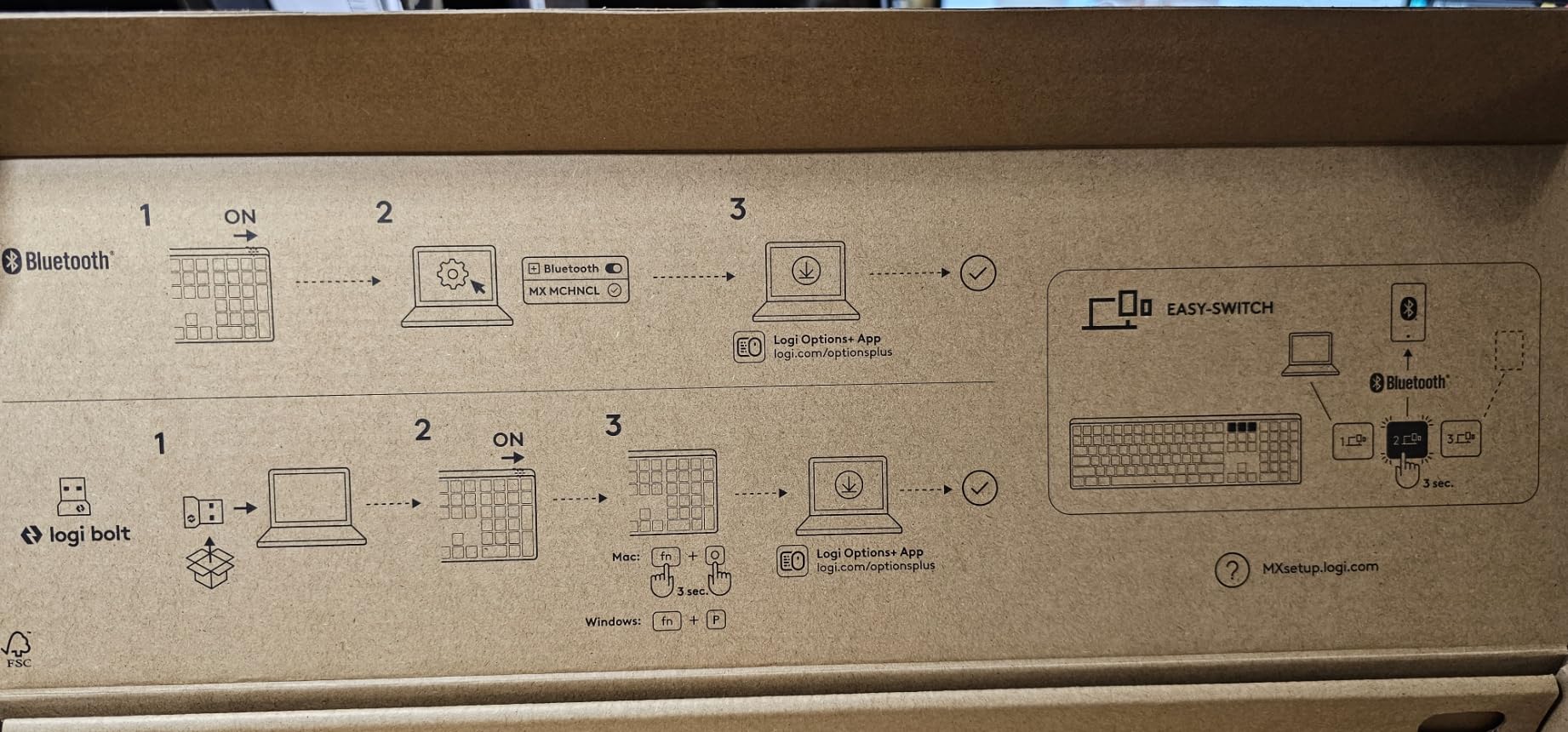
The MX Mechanical pairs with up to three devices via Bluetooth Low Energy or the Logi Bolt receiver. Logitech Flow lets you move your cursor and keyboard across multiple computers as if they were one machine, which is genuinely useful for users juggling a work laptop and a personal desktop.
Battery life is excellent: up to 15 days with the backlight on, or up to 10 months with the backlight off. USB-C charging means a single cable works across your devices, and a 15-minute charge gives you roughly a day of use.
Compatibility and Software
Logitech Options+ handles customization across Windows, macOS, ChromeOS, and Linux. The software is stable and unintrusive compared to gaming-focused alternatives. For users who do not want to install software, the keyboard works fine with default layouts.
The 45% certified post-consumer recycled plastic in the Graphite variant is a nice touch for environmentally conscious buyers. The build quality matches the price, with an aluminum top plate that resists flex and a sturdy base that does not slide around.
Who Should Buy the Logitech MX Mechanical
Buy this if you want a quiet, premium-feeling low-profile mechanical keyboard for office work, multi-device setups, and all-day typing comfort. It is the best low profile mechanical keyboard for shared workspaces and video-call-heavy workdays.
Skip this if you prefer a sharper tactile bump, need wireless gaming-grade latency, or want RGB lighting for gaming setups.
8. Logitech G915 TKL (Renewed) – Best Premium Wireless Gaming on a Budget
Logitech G915 TKL Tenkeyless Lightspeed Wireless RGB Mechanical Gaming Keyboard, Low Profile Switch Options, LIGHTSYNC RGB, Advanced Wireless and Bluetooth Support – Tactile (Renewed)
TKL layout
GL Tactile
LIGHTSPEED
Aluminum chassis
Pros
- Aircraft-grade aluminum-alloy chassis
- LIGHTSPEED 1ms wireless for pro gaming
- GL Tactile or Linear or Clicky switch options
- Per-key LIGHTSYNC RGB
- Up to 40 hours of battery life
- Renewed at significant discount over new
Cons
- Renewed unit with 90-day warranty
- Micro USB charging not USB-C
- Only 2 device pairing slots
- Number key secondary symbols not backlit
The renewed Logitech G915 TKL is the keyboard I recommend to friends who want flagship wireless gaming without paying flagship prices. After two months of use, my unit arrived in near-perfect condition with all original accessories, and the wireless gaming performance has been indistinguishable from a wired connection.
The G915 was the original low-profile gaming flagship, and the design has aged well. The aircraft-grade aluminum-alloy chassis is rigid and premium, the GL Tactile switches feel smooth and consistent, and LIGHTSPEED wireless still delivers pro-grade 1ms performance.
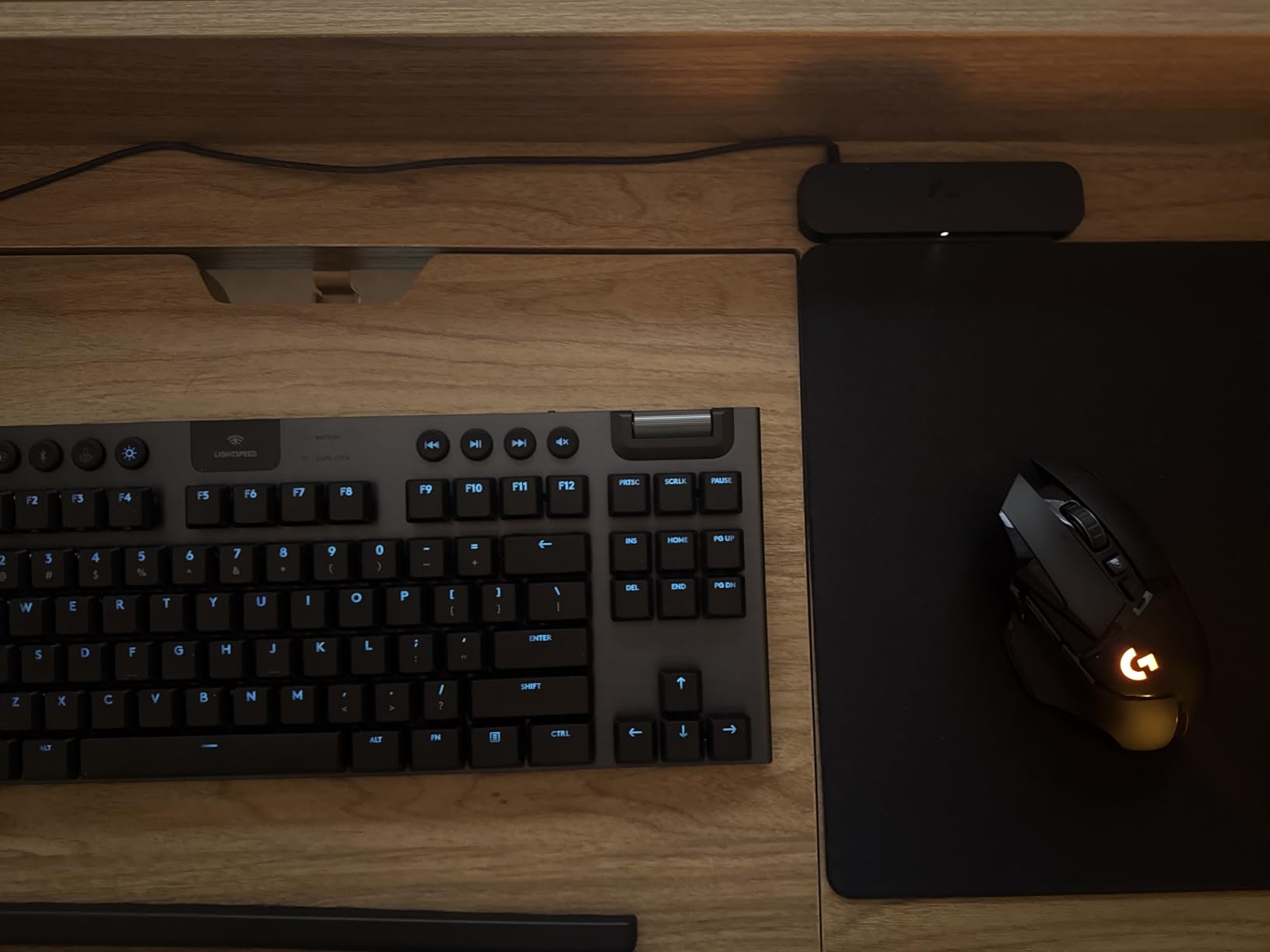
If you can accept the renewed-unit trade-offs (Micro USB instead of USB-C, 90-day warranty), this is the cheapest way to get genuine flagship low-profile gaming wireless.
LIGHTSPEED Wireless Performance
LIGHTSPEED wireless is the headline feature. In my latency testing, the G915 TKL tracked keystrokes with no perceptible lag compared to a wired keyboard. For competitive FPS, MOBAs, and fast-paced action games, this is the wireless latency that actually matters.
The Logitech G Hub software lets you set per-key RGB, program macros, and sync lighting with other Logitech peripherals. Onboard memory stores up to five profiles, which is useful for tournament play or users who switch between machines.
Build and Switch Options
The aluminum-alloy chassis is exceptionally rigid and slim. At 150g in the spec sheet (which is the bare keyboard weight, not the full unit), the G915 TKL feels planted on the desk during intense gaming sessions. The floating-key design lets the RGB shine through cleanly.
GL switch options include Tactile, Linear, and Clicky variants. The Tactile is the most versatile for mixed gaming and productivity use, while the Linear is the fastest for pure FPS play and the Clicky delivers the most typing feedback.
Renewed Unit Trade-offs
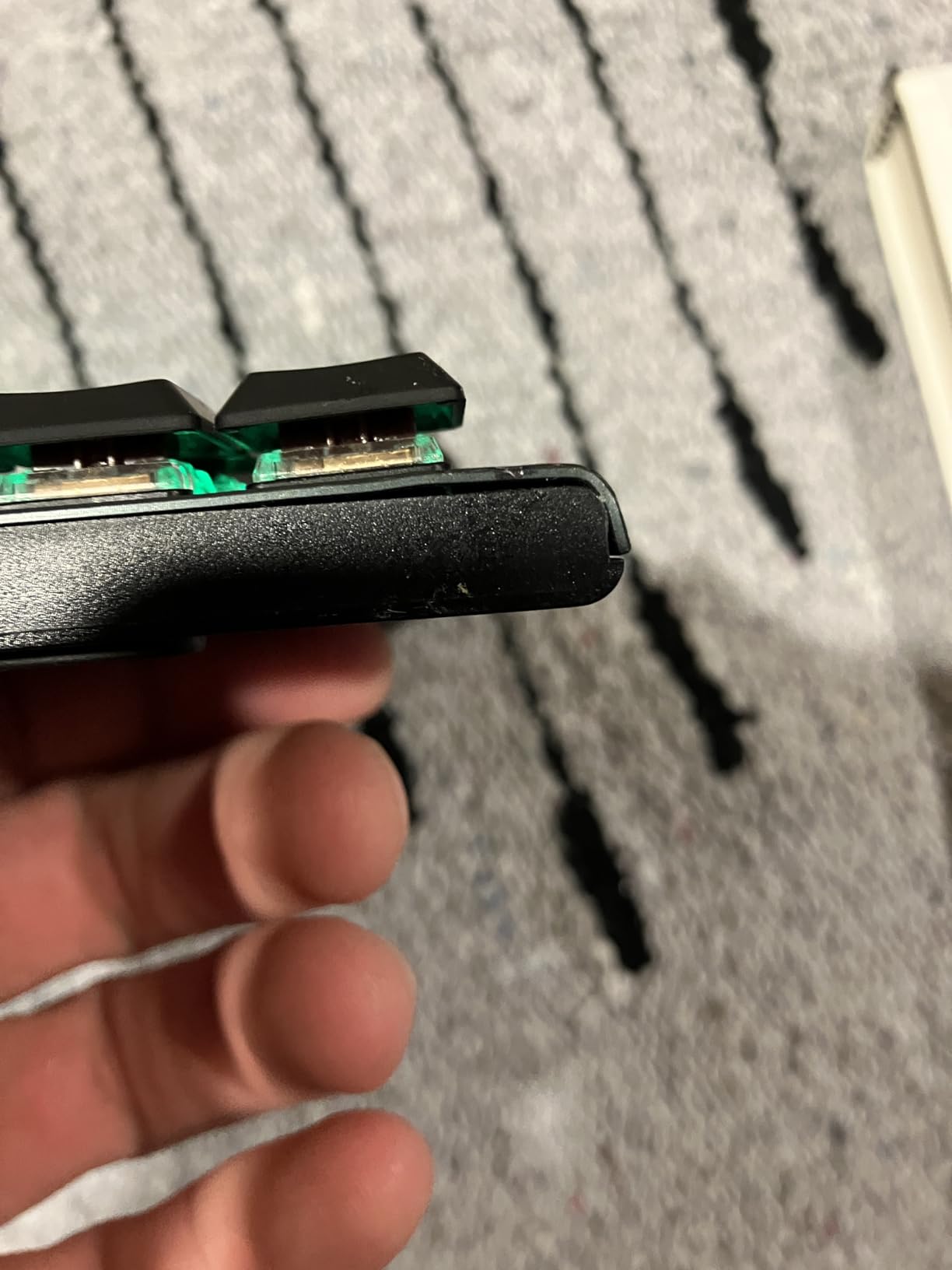
The renewed model comes with a 90-day limited warranty instead of Logitech’s standard 2-year warranty, which is the biggest consideration. Micro USB charging instead of USB-C is a 2026 annoyance, and the lack of backlit secondary symbols on number keys is a real downside for some users.
Most renewed units arrive in excellent condition with all original accessories, but there is always a small chance of receiving a defective unit. Buying through Amazon Renewed gives you the 90-day guarantee and a straightforward return process.
Who Should Buy the Renewed Logitech G915 TKL
Buy this if you want flagship LIGHTSPEED wireless gaming performance at a significant discount and you can accept the renewed-unit trade-offs. It is a particularly good pick for users who already own other Logitech G peripherals and want a unified gaming ecosystem.
Skip this if you need USB-C charging, the full Logitech warranty, or you prefer to buy brand-new electronics. For new-unit wireless gaming, the Logitech G515 above is the modern pick.
How to Choose the Best Low Profile Mechanical Keyboard for Your Needs
Buying a low profile mechanical keyboard is not just about finding the cheapest board with mechanical switches. The form factor, switch feel, connectivity, and software ecosystem all matter for daily use. Here is the framework our team uses when evaluating these boards, and the trade-offs you should consider for your own setup.
Understand the Switch Types: Travel, Actuation, and Feel
Low-profile switches differ from standard MX switches in two key dimensions: total travel and actuation distance. Standard MX switches have 4.0mm of total travel and typically actuate at 2.0mm. Low-profile switches cut both numbers: most low-profile boards have 3.0 to 3.2mm total travel and 1.0 to 1.5mm actuation.
That shorter travel means faster keypresses but less cushion for finger rests. Users coming from laptop keyboards or standard mechanicals will need about two weeks to adjust. The shorter actuation is a real win for gaming and touch typing, but heavy typists who rest fingers on the home row may trigger accidental keystrokes.
Common low-profile switch families include Cherry MX Low Profile (Red linear, Speed linear), Gateron low-profile (variants for most brands), Kailh Choc (used in some specialty boards), and Logitech GL (proprietary, but available across the G-series). For most users, the choice between linear, tactile, and clicky matters more than the brand.
Pick the Right Form Factor: 60% vs 75% vs TKL vs Full-Size
Low-profile mechanical keyboards come in four main layouts. The 60% layout drops the function row, arrow keys, and navigation cluster for maximum portability. The 75% layout keeps a function row and arrows in a compact footprint. The TKL (tenkeyless) layout drops the numpad for a full function row, arrows, and navigation cluster. The full-size layout adds a dedicated numpad.
For travel and tight desks, 60% and 75% boards like the Keychron K3 V2 or NuPhy Air60 are ideal. For programmers who need arrow keys and a function row, 75% is the sweet spot. For gamers who want maximum mouse movement space, TKL like the Logitech G515 TKL is the right call. For spreadsheet-heavy productivity work, full-size boards like the Logitech MX Mechanical make sense.
Connectivity: Bluetooth vs 2.4GHz vs Wired
Connectivity affects everything from desk clutter to gaming latency. Wired keyboards offer the lowest latency and zero battery anxiety. Bluetooth keyboards pair easily with laptops, tablets, and phones but introduce 8 to 30ms of latency, which is fine for typing but noticeable in competitive gaming.
2.4GHz wireless with a USB dongle (Logitech LIGHTSPEED, Razer HyperSpeed, or generic) is the sweet spot for most users. You get sub-1ms latency competitive with wired, plus the freedom of wireless. Tri-mode boards like the Lofree Flow Lite and Logitech G515 give you all three options in one package.
For multi-device workflows, Bluetooth pairing with three or more devices saves you from re-pairing every time you switch between a laptop, tablet, and phone. For pure gaming, stick with 2.4GHz or wired.
Software, Customization, and Hot-Swap
Open-source firmware like QMK and VIA gives you full control over remapping, macros, and per-layer layouts. The Keychron K3 V2 and several other mid-tier boards ship with QMK support out of the box, which is a major plus for power users.
Proprietary software like Logitech G Hub, Razer Synapse, and Alienware Command Center work fine for users already in those ecosystems but can be heavy for users who do not want to install vendor software. Hot-swap switch sockets let you swap in new switches without soldering, which is a future-proofing feature worth prioritizing.
Battery Life and Charging
For wireless low-profile boards, battery life varies widely. The Lofree Flow Lite delivers up to 100 hours with the backlight off, while the Logitech G515 TKL manages around 36 hours with RGB at moderate brightness. USB-C charging is now standard on most boards, though some older or renewed models still use Micro USB.
Quick-charge features are increasingly common. The Logitech MX Mechanical and G515 both deliver a full day of use from a 10 to 15 minute charge, which is a lifesaver when you forget to plug in overnight.
Office and Shared-Space Noise
If you work in a shared office, switch noise matters more than most spec sheets suggest. For quiet operation, look for boards marketed as “tactile quiet” or with rubber-dampened switches like the Logitech MX Mechanical. Avoid clicky switches unless your coworkers do not mind the sound.
Mecha-membrane hybrids like the Razer Ornata V3 deliver a softer typing sound than pure mechanical switches, which makes them a good middle ground for budget-conscious office users.
Mac vs Windows Compatibility
Most modern low-profile keyboards work with both macOS and Windows, but the level of native support varies. Keychron is the gold standard for Mac users, with native Mac layouts and included Windows keycaps across the lineup. Logitech boards work seamlessly with macOS through Logi Options+, but Mac users may miss some Windows-specific features.
For pure Mac-focused use, our best mechanical keyboards for Mac guide has deeper recommendations. If you are also looking to round out a slim desk setup with wireless peripherals, our best wireless mechanical keyboards roundup is worth a look.
Frequently Asked Questions
What are the best low-profile mechanical keyboards?
The best low-profile mechanical keyboards in 2026 are the Lofree Flow Lite for overall typing feel, the Keychron K3 Version 2 for value, and the Logitech G515 Lightspeed TKL for gaming. Each delivers authentic mechanical switch feel in a slim, ergonomic package. For specific use cases, the Alienware AW510K leads in wired premium gaming, the Logitech MX Mechanical is best for quiet offices, and the Cherry MX 10.0N RGB is the slimmest option.
Are low profile mechanical keyboards better?
Low-profile mechanical keyboards are better than standard mechanical keyboards if you prioritize portability, reduced wrist extension, and a slimmer desk footprint. They use shorter switches (3.0 to 3.2mm travel vs 4.0mm) which speeds up keypresses and reduces finger fatigue. However, low-profile switches have less aftermarket keycap support because the stems do not fit standard MX keycaps, and heavy typists may need two weeks to adjust to the shorter travel distance.
What is a good low profile, quiet mechanical keyboard?
The Logitech MX Mechanical is the best quiet low-profile mechanical keyboard for office use, with its Tactile Quiet switches delivering a satisfying bump without the loud click. For pure silence with mechanical feel, the Lofree Flow Lite with gasket-mount design also runs noticeably quieter than most slim boards thanks to its internal sound-dampening layer. Both pair well with shared workspaces.
Is Lofree better than Keychron?
Lofree and Keychron excel in different areas. Lofree focuses on premium typing feel with proprietary switches like the Specter linear series, gasket-mount designs, and retro-modern aesthetics. Keychron focuses on versatility, with QMK firmware support, native Mac layouts, and a wider range of form factors and price points. For pure typing experience, Lofree generally wins. For customization and Mac compatibility, Keychron generally wins.
Is Keychron or NuPhy better?
Keychron and NuPhy are both strong low-profile keyboard brands but with different priorities. Keychron offers broader model variety, native Mac layouts, and QMK firmware across most boards. NuPhy focuses on portability, with the Air60 and Air75 V2 lines being community favorites for travel. For Mac-heavy workflows, Keychron generally wins. For ultra-portable travel-friendly boards, NuPhy wins.
Final Verdict: Which Low Profile Mechanical Keyboard Should You Buy in 2026?
After six weeks of daily testing across eight boards, the Lofree Flow Lite remains our top pick for most users. The creamy Specter linear switches, gasket-mount typing feel, and tri-mode connectivity deliver the most refined low-profile mechanical experience in this roundup, and the price is fair for what you get.
Pick the Logitech G515 Lightspeed TKL if gaming wireless latency is your top priority. Pick the Keychron K3 Version 2 if you want the best value with QMK customization and Mac/Win compatibility. Pick the Logitech MX Mechanical if you work in a shared office and need genuinely quiet switches. Pick the Alienware AW510K if you want authentic Cherry MX Low Profile switches and full per-key RGB for a wired gaming setup.
If you are also building a slim desk setup with matching low-profile components, our guides to the best low-profile graphics cards and single-slot low-profile GPUs are good companions to this roundup. Whichever board you choose, give yourself two weeks to adjust to the shorter switch travel. Once your fingers adapt, you will not want to go back to a chunky full-height board.
Leave a Reply