
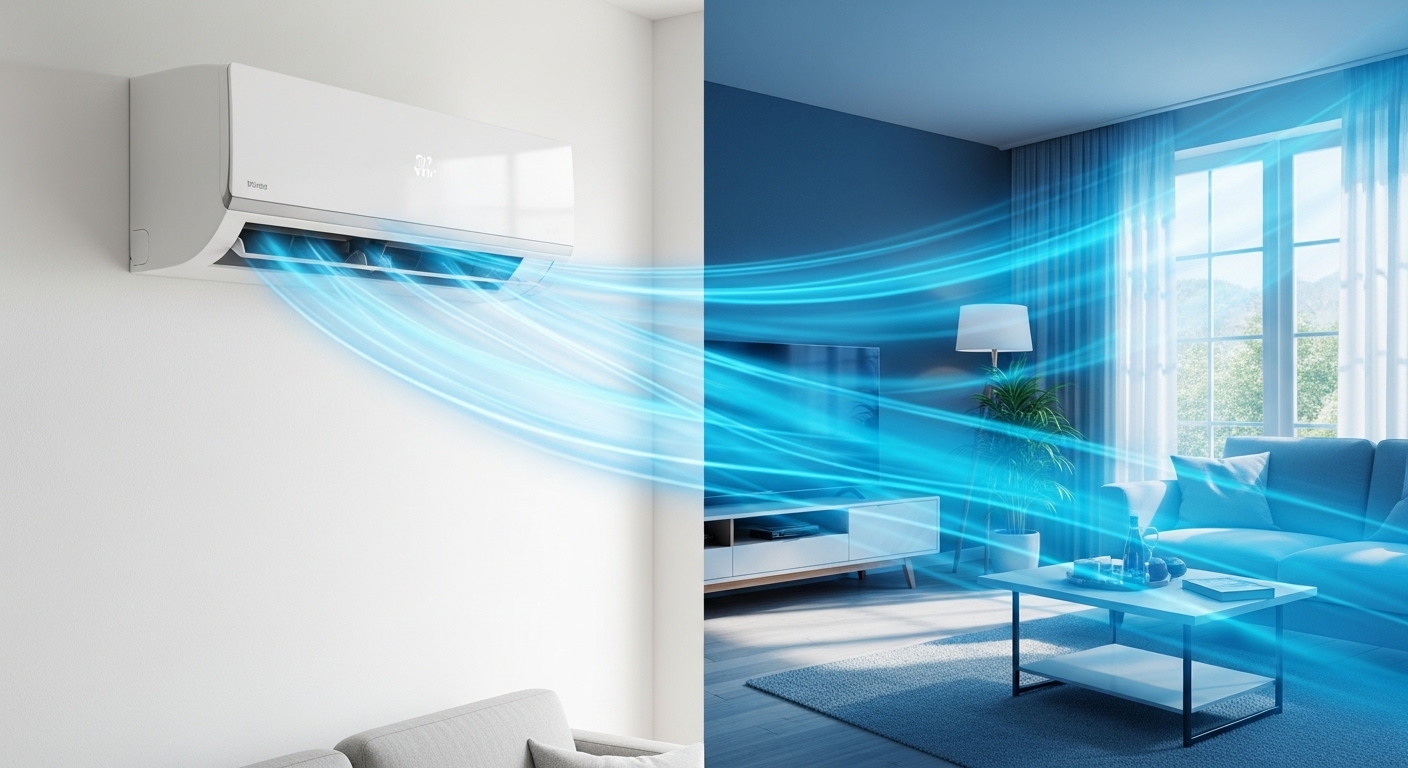
Have you ever wondered what happens when you flip that thermostat switch and cool air starts flowing? Understanding how does an air conditioner work can help you maintain your system better and even save money on energy bills. Here’s something most people get wrong: air conditioners don’t create cold air. They remove heat.
This fundamental misconception changes everything about how we think about cooling. An air conditioner is essentially a heat transfer machine that moves warm air from inside your home to the outside. The same technology that keeps your refrigerator cold is working on a much larger scale to cool your entire living space. Ready to understand the magic behind the comfort?
Check out our air conditioner guides and reviews for more information on different types of systems and maintenance tips.
How Does An Air Conditioner Work in Simple Terms?
Think of your air conditioner as a refrigerator for your entire house. Just like your fridge removes heat from its interior to keep food cold, an AC pulls heat from indoor air and dumps it outside. The key difference is scale. Your fridge cools a few cubic feet, while your home AC handles thousands of cubic feet of air.
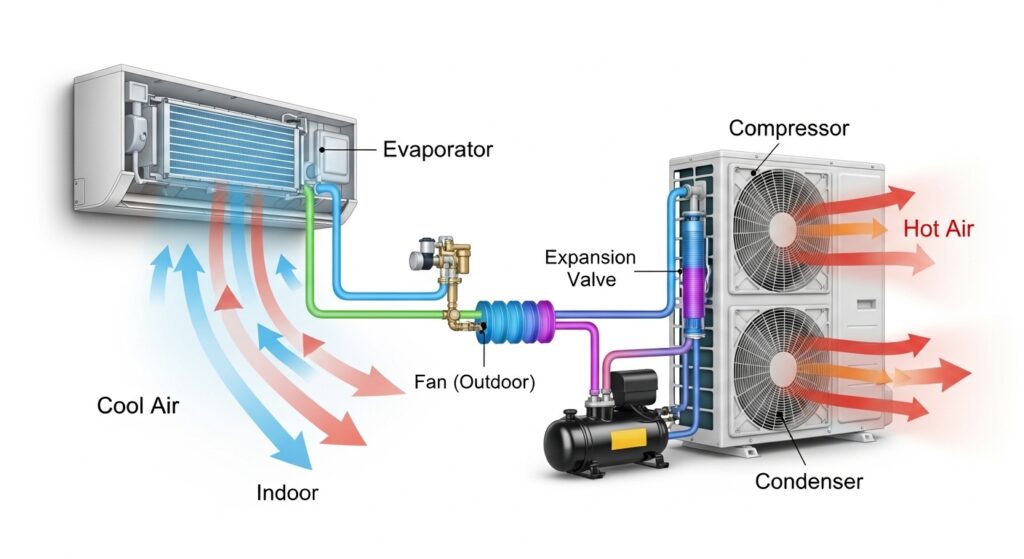
The process works through a continuous cycle of refrigerant circulating between indoor and outdoor units. This refrigerant is special because it changes easily from liquid to gas and back again. Each phase change absorbs or releases heat, which is the secret to how cooling actually happens. The refrigerant never gets used up. It just keeps cycling through the system, moving heat like a conveyor belt.
Hot air from your home gets pulled into the system, passes over cold coils, and releases its heat to the refrigerant inside those coils. The now-cool air gets pushed back into your room while the refrigerant carries the heat outside. This cycle repeats until your thermostat detects the temperature you set. Pretty clever for something most of us take for granted.
The Refrigeration Cycle: The Heart of Air Conditioning
The refrigeration cycle is the continuous loop that makes cooling possible. It’s the same scientific principle that powers your refrigerator, freezer, and even car AC systems. The cycle works because of one simple fact: when a liquid turns into a gas, it absorbs heat. When a gas turns back into a liquid, it releases that heat.
Your AC exploits this physics principle through four distinct phases. In the first phase, refrigerant enters your home as a cold, low-pressure liquid. As warm indoor air blows across the coils containing this liquid, the refrigerant absorbs heat and evaporates into a gas. This phase conversion is what actually cools your air. The refrigerant doesn’t get cold. It steals heat from your air.
Once the refrigerant has absorbed as much heat as it can carry, it travels outside to the compressor. This is where the magic happens. The compressor squeezes the refrigerant gas into a tiny space, which dramatically increases its pressure and temperature. Now the refrigerant is a hot, high-pressure gas carrying all the heat it absorbed from inside your home.
The hot gas then flows through the condenser coils in your outdoor unit. A fan blows outdoor air across these coils, and because the refrigerant is now hotter than the outside air, it releases its heat to the outdoors. As it releases heat, the refrigerant condenses back into a liquid. Finally, the liquid passes through an expansion valve that drops its pressure and temperature, ready to start the cycle all over again.
5 Key Components That Make Air Conditioning Possible
The refrigeration cycle depends on five critical parts working together in perfect harmony. Each component has a specific job, and if any one fails, the whole system stops cooling. Understanding these parts helps you troubleshoot problems and communicate with HVAC technicians when something goes wrong.
Refrigerant: The Heat Transfer Medium
Refrigerant is the working fluid that makes everything possible. This special chemical compound has properties that allow it to change phase easily at useful temperatures. Modern AC systems use newer refrigerants that are more environmentally friendly than older types. The refrigerant circulates continuously through the system, never being consumed or used up. It simply carries heat from inside to outside, changing from liquid to gas and back again in the process.
Compressor: The Heart of the System
The compressor is essentially a pump that pressurizes the refrigerant. Located in your outdoor unit, it’s the hardest-working component in your entire AC system. When refrigerant arrives from indoors as a cool gas, the compressor squeezes it into a fraction of its original volume. This compression dramatically increases both pressure and temperature, preparing the refrigerant to release its heat outdoors. Without the compressor, there would be no pressure difference to drive refrigerant through the system.
Condenser Coil: Releasing Heat Outside
The condenser coil is where your AC dumps the heat it collected from inside your home. This network of tubing is located in the outdoor unit, where a fan constantly blows air across it. The hot, high-pressure refrigerant from the compressor flows through these coils. Because the refrigerant is much hotter than the outdoor air, heat transfers from the refrigerant to the outside. As the refrigerant releases heat, it condenses from a gas back into a liquid.
Expansion Valve: Controlling the Flow
The expansion valve is the gatekeeper that regulates refrigerant flow into the evaporator coil. This small but crucial component creates a pressure drop that transforms the refrigerant into a cold, low-pressure mist. When high-pressure liquid refrigerant passes through the tiny opening in the expansion valve, its pressure drops dramatically. This pressure drop causes the refrigerant to become extremely cold, ready to absorb heat from indoor air.
Evaporator Coil: Absorbing Indoor Heat
The evaporator coil is where the actual cooling happens. Located in your indoor unit or air handler, this coil contains the cold refrigerant that just passed through the expansion valve. When warm air from your home blows across the cold coils, heat transfers from the air to the refrigerant. The refrigerant absorbs this heat and evaporates into a gas, which is why it’s called the evaporator coil. The air that leaves the coil is now cooler and ready to circulate back into your living space.
How Does An Air Conditioner Work Step by Step?
Now that we understand the components, let’s trace the complete cooling process from start to finish. This step-by-step breakdown shows exactly what happens when your AC kicks on.
Step 1: Thermostat Signals for Cooling
Everything starts when your thermostat detects that indoor temperature is higher than your setting. The thermostat sends a signal to your AC system to begin the cooling cycle. This signal activates both the indoor and outdoor units, starting the compressor and the indoor blower fan.
Step 2: Warm Air Gets Pulled In
The indoor blower fan pulls warm air from your home through return ducts. This air passes through a filter that removes dust and debris, then flows across the cold evaporator coils. As the air passes over the coils, heat transfers from the air to the cold refrigerant inside. The air temperature drops significantly, sometimes by 15-20 degrees in a single pass.
Step 3: Refrigerant Absorbs Heat
As indoor air releases its heat to the coils, the refrigerant inside absorbs that energy and evaporates from a liquid to a gas. This phase change is the key to the entire cooling process. The refrigerant is now a cool gas carrying all the heat it absorbed from your indoor air. It travels through copper tubing to the outdoor unit.
Step 4: Compression Prepares Heat Release
The cool gas arrives at the compressor, which squeezes it into a tiny space. This compression concentrates all the heat energy into a smaller volume, raising both pressure and temperature dramatically. The refrigerant is now a hot, high-pressure gas ready to release its accumulated heat to the outdoors.
Step 5: Heat Releases Outside
The hot, pressurized gas flows through the condenser coils in your outdoor unit. A large fan pulls outdoor air across these coils, and because the refrigerant is much hotter than the outside air, heat transfers from the refrigerant to the outdoors. As the refrigerant releases heat, it condenses back into a liquid. The liquid then passes through the expansion valve, which drops its pressure and temperature, and the cycle begins again.
Types of Air Conditioning Systems
The basic cooling principle remains the same across all AC systems, but different configurations work better for different homes and situations. Understanding these types helps you choose the right system for your needs.
Central Air Conditioning
Central AC is the most common whole-home cooling solution in America. It uses a split-system design with an outdoor unit containing the compressor and condenser, plus an indoor unit with the evaporator coil. Ductwork distributes cooled air throughout your home. Central AC is quiet, efficient, and provides consistent cooling to every room. It’s ideal for homes with existing ductwork.
Split-System Air Conditioner
Split-system AC is the technical name for what most people call central air. The system is split between indoor and outdoor components connected by refrigerant lines. The outdoor unit houses the compressor and condenser coil, while the indoor unit contains the evaporator coil. This design keeps the noisy components outside and allows for easier maintenance. Split systems are highly efficient and can achieve SEER ratings above 20.
Ductless Mini-Split Systems
Ductless systems work like split-system AC but without ductwork. Each room gets its own indoor unit mounted on a wall or ceiling, connected to an outdoor compressor. This zoned approach lets you cool only the rooms you’re using, potentially saving energy. Mini-splits are perfect for older homes without ductwork, room additions, or situations where extending ductwork isn’t practical. Each zone has its own thermostat for precise temperature control.
Window Air Conditioners
Window units are self-contained systems with all components in a single box. They sit in windows or through-wall sleeves, with the portion outside the house releasing heat and the inside portion cooling the room. Window ACs are affordable and easy to install, making them popular for apartments and single rooms. They’re less efficient than central systems but perfect for cooling small spaces without existing ductwork.
Packaged Terminal Air Conditioners
PTAC units are common in hotels and apartments. These self-contained systems sit through an exterior wall, with controls inside and the exhaust mechanism outside. PTACs combine heating and cooling in one unit, often with electric resistance heat. They’re designed for individual room control in multi-unit buildings and offer the convenience of independent temperature settings for each space.
How AC Removes Humidity Along With Heat?
Removing humidity is a crucial but often overlooked function of air conditioning. Warm air can hold more moisture than cool air. When your AC cools indoor air, it also reduces that air’s capacity to hold water vapor. Excess moisture condenses on the cold evaporator coils, just like water droplets form on a cold soda can.
This condensed water drips off the coils into a drain pan, then flows through a condensate drain line to the outside. A properly functioning AC can remove 5-20 gallons of water from your home’s air each day, depending on humidity levels. This dehumidification is essential for comfort because humid air feels warmer than dry air at the same temperature. By removing humidity, your AC makes you feel cooler even at higher thermostat settings, which can save energy.
The humidity removal also prevents mold growth and protects your home’s structure from moisture damage. In very humid climates, some homes need supplemental dehumidifiers because the AC might run too briefly to adequately dehumidify the air. This is why oversized air conditioners often fail to control humidity effectively—they cool the air quickly but cycle off before removing enough moisture.
Keeping Your AC Running Efficiently
Understanding how your system works makes maintenance easier. Regular care prevents breakdowns and keeps your AC running at peak efficiency. A neglected system can lose up to 5% efficiency each year, while a well-maintained unit can last 15-20 years.
Monthly Filter Changes
Dirty filters restrict airflow and force your system to work harder. Check your filter monthly and change it when you can’t see light through it. This simple task can reduce energy consumption by 5-15% and prevent costly repairs. A clean filter also improves indoor air quality by trapping dust, pollen, and other airborne particles.
Seasonal Professional Maintenance
Annual tune-ups catch small problems before they become expensive repairs. A technician will clean coils, check refrigerant levels, inspect electrical connections, and ensure all components are working properly. This service typically pays for itself in energy savings alone. Spring maintenance prepares your system for summer demand, while fall checkups address any wear from the cooling season.
Keep Coils Clean
Both indoor and outdoor coils need to stay clean for efficient heat transfer. Outdoor coils can accumulate dirt, leaves, and debris, which prevents proper heat release. Indoor coils can become dirty if filters are neglected or if ductwork is contaminated. Clean coils improve efficiency and prevent system strain. Gently hose down outdoor coils annually, but avoid using a pressure washer which can damage the delicate fins.
Monitor for Warning Signs
Strange sounds, weak airflow, warm air from vents, or unusual energy bills all signal potential problems. Addressing these signs early prevents complete system failures. If your AC is cycling on and off frequently, making grinding noises, or failing to keep up with demand, it’s time to call a professional. Small repairs now can prevent expensive replacements later. Learn about troubleshooting window air conditioner leaks and other common issues to catch problems early.
Consider Surge Protection
Power surges can damage your AC’s sensitive electronics. A dedicated surge protector for your HVAC system prevents expensive electrical damage. Lightning strikes, grid switching, and even large appliances cycling on can create voltage spikes that harm your compressor and control boards. Check out our guide to AC surge protection to find the right protection for your system.
Frequently Asked Questions
How does an air conditioner work in simple terms?
An air conditioner works like a refrigerator for your whole house. It doesn’t create cold air but instead removes heat from indoor air and transfers it outside. Special fluid called refrigerant circulates through the system, absorbing heat from inside your home and releasing it outdoors. This continuous cycle of heat transfer keeps your indoor space cool and comfortable.
What is the 3 minute rule for air conditioners?
The 3 minute rule recommends waiting at least 3 minutes before restarting your air conditioner after it shuts off. This waiting period allows pressure in the system to equalize, preventing compressor damage. Rapid cycling can cause the compressor to overheat and fail prematurely. Many modern AC systems have built-in delay timers to enforce this rule automatically.
Is AC good for BP patients?
Air conditioning can be beneficial for blood pressure patients because extreme heat can elevate blood pressure and increase cardiovascular strain. AC provides a comfortable environment that helps prevent heat-related stress. However, very cold temperatures can cause blood vessels to constrict, so BP patients should maintain moderate temperatures around 72-76 degrees and avoid direct cold air blowing on them while sleeping.
Does AC dry out your sinuses?
Yes, air conditioning can dry out your sinuses because it removes moisture from the air along with heat. Dry air can irritate nasal passages and throat, especially if you’re already congested. Using a humidifier alongside your AC can maintain healthy humidity levels between 30-50%. Staying hydrated and not setting the temperature too low also helps prevent sinus discomfort from dry air.
How does a split system air conditioner work?
A split system AC separates components between indoor and outdoor units connected by refrigerant lines. The outdoor unit houses the compressor and condenser coil that release heat outside. The indoor unit contains the evaporator coil that absorbs heat from indoor air. A fan blows warm air across the indoor coil, cooling it before distributing it through ductwork. The two units work together continuously to move heat from inside to outside.
Understanding Your AC Helps It Work Better
Now that you understand how does an air conditioner work, you’re better equipped to maintain your system and recognize when something’s wrong. Your AC is a sophisticated heat transfer machine that relies on precise pressure, refrigerant flow, and component coordination. When each part does its job, you get reliable, efficient cooling all summer long.
The key takeaway is that air conditioning is about moving heat, not creating cold. This understanding helps you make smarter decisions about maintenance, repairs, and even when to replace your system. A well-maintained AC can provide 15-20 years of reliable comfort while keeping energy bills in check. Small investments in regular maintenance pay off in lower operating costs and fewer emergency repairs.
Whether you’re troubleshooting problems, planning an upgrade, or just curious about the technology cooling your home, this knowledge puts you in control. Your air conditioner works hard to keep you comfortable. Understanding its operation helps you return the favor with proper care and maintenance.
Leave a Reply