
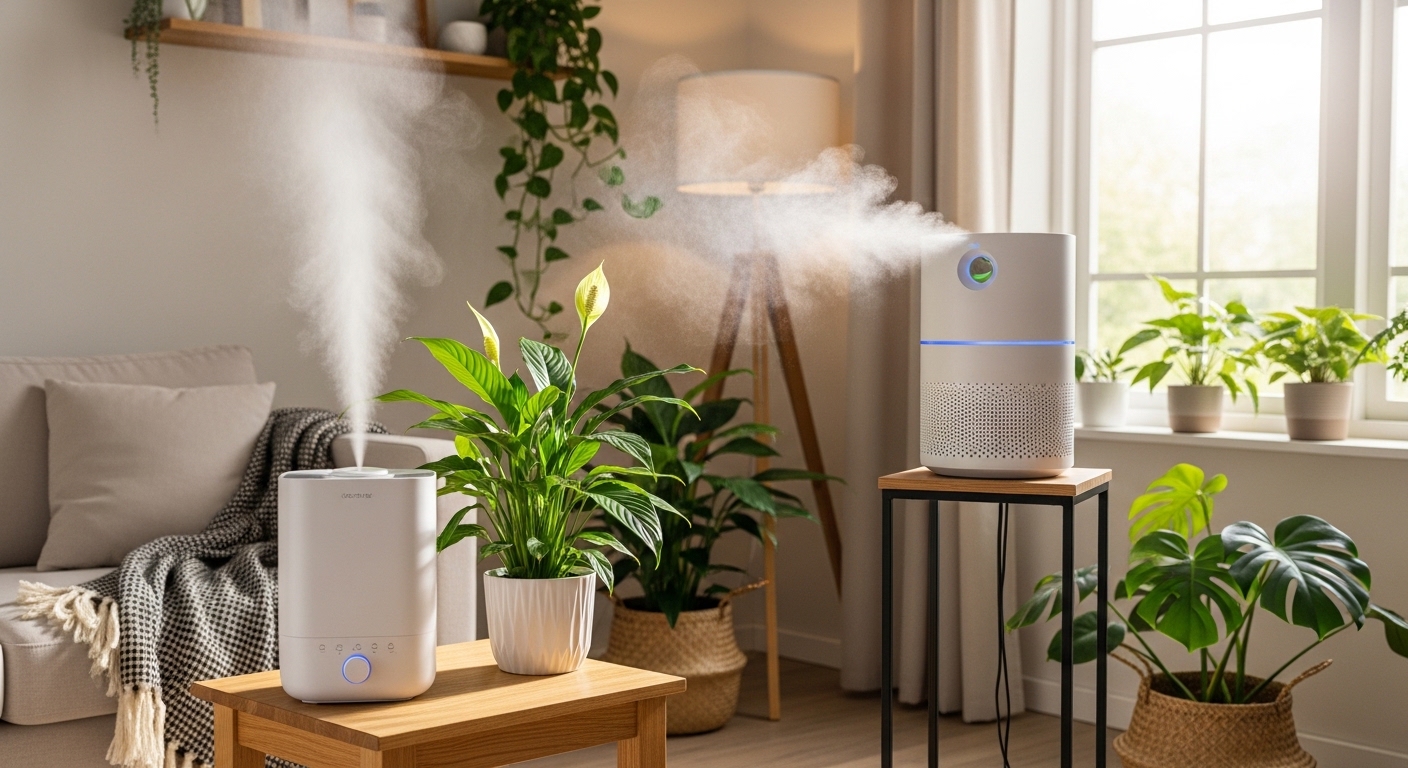
Standing in the home appliance aisle, I’ve watched countless people stare confusedly at two very different devices. The humidifier vs air purifier dilemma is one of the most common questions I hear from readers. These devices look somewhat similar, they both hum quietly in the corner of a room, and they both promise to improve your home environment. But that’s where the similarities end.
After testing both devices extensively in various home setups over several years, I’ve learned that choosing the wrong one means wasting money on a device that won’t solve your actual problem. The difference comes down to one simple distinction: air purifiers clean your air, while humidifiers add moisture to it. Understanding this fundamental difference is the key to making the right choice for your home and health.
In this guide, I’ll break down exactly how each device works, what problems they solve, and help you determine which one (or both) you actually need.
What is the Difference Between Humidifiers and Air Purifiers?
The core difference is straightforward: an air purifier removes harmful particles from your air, while a humidifier adds water vapor to increase moisture levels. Think of it this way: an air purifier is like a vacuum cleaner for invisible airborne pollutants, while a humidifier is like a fountain that releases gentle mist into the air.
Air purifiers use filtration systems to capture and trap contaminants such as dust, pollen, pet dander, mold spores, smoke particles, and even some bacteria and viruses. The air passes through filters (typically HEPA filters), gets cleaned, and is circulated back into your room significantly cleaner than before.
Humidifiers do something entirely different. They take water from a tank and release it as vapor or mist into the air. This increases the humidity levels in your home, which is particularly helpful during winter months when heating systems can make indoor air extremely dry. Neither device is “better” universally—they solve completely different problems.
How Do Air Purifiers Work?
Air purifiers work by pulling air from your room through a series of filters, capturing airborne particles, and then pushing clean air back out. The most effective air purifiers use True HEPA (High-Efficiency Particulate Air) filters, which can capture 99.97% of particles as small as 0.3 microns. To put that in perspective, a human hair is about 70 microns wide, so HEPA filters capture particles about 230 times smaller than a hair.
The filtration process typically works in stages. First, a pre-filter catches larger particles like pet hair and dust. Then the HEPA filter captures smaller allergens and pollutants. Many quality air purifiers also include activated carbon filters, which are excellent at removing odors, volatile organic compounds (VOCs), and gases that HEPA filters can’t catch.
Some advanced models include additional technologies like UV-C light to kill germs, ionizers that charge particles to make them easier to capture, or PECO technology that destroys pollutants at the molecular level. However, the foundation of any good air purifier remains the HEPA filter—it’s the gold standard for air purification.
How Do Humidifiers Work?
Humidifiers work by converting water from a reservoir into moisture that’s released into the air as invisible vapor or visible mist. The goal is to maintain indoor humidity levels between 30% and 50%, which is the range recommended by health experts for comfort and health. Anything below 30% is considered uncomfortably dry, while anything above 60% can encourage mold and dust mite growth.
There are several main types of humidifiers. Evaporative humidifiers use a fan to blow air through a wet wick or filter, causing water to evaporate naturally into the air. Ultrasonic models use high-frequency vibrations to break water into tiny droplets that create a cool mist. Steam vaporizers heat water to create steam, which then cools slightly before being released.
Each type has pros and cons. Ultrasonic models are quiet but can leave white dust from mineral content in your water. Evaporative units are self-regulating (they naturally humidify less when humidity is already high) but can be noisier due to the fan. Steam vaporizers are effective at killing bacteria through boiling but use more energy and pose burn risks if tipped over.
Health Benefits: Air Purifier vs Humidifier
The health benefits of these devices target completely different issues. Air purifiers are essential for anyone who suffers from allergies or asthma. By removing triggers like pollen, pet dander, dust mites, and mold spores from the air, they can significantly reduce symptoms such as sneezing, congestion, itchy eyes, and breathing difficulties. I’ve heard from dozens of readers who finally found relief from chronic allergy symptoms after adding an air purifier to their bedroom.
For asthma sufferers, clean air is particularly crucial. Air purifiers can also help protect against wildfire smoke, cooking fumes, and outdoor pollution that makes its way inside. Some models even capture viruses and bacteria, which can be beneficial during cold and flu season or for those with compromised immune systems.
Humidifiers, on the other hand, provide relief from the discomforts of dry air. This includes dry, itchy skin, chapped lips, nosebleeds, and scratchy throats. Proper humidity levels help your body’s natural defenses—the moist mucous membranes in your nose and throat trap viruses and bacteria more effectively when they’re not dried out. Many people find relief from sinus congestion and morning sore throats when using a humidifier during winter months.
For babies and young children, humidifiers are often recommended by pediatricians to ease congestion from colds and to create a more comfortable sleep environment. However, it’s worth noting that cool mist humidifiers are preferred for children’s rooms due to burn risks from steam models.
Humidifiers Vs Air Purifiers: When to Choose Which?
5 Signs You Need an Air Purifier
You notice dust settling quickly on surfaces even after cleaning, or you can see dust particles floating in beams of sunlight. Your allergies or asthma symptoms worsen when you’re indoors, especially in certain rooms. You have pets in your home and experience allergic reactions. You live near busy roads, in an urban area, or somewhere affected by wildfire smoke. You frequently smell cooking odors, musty smells, or chemical fumes in your home.
5 Signs You Need a Humidifier
You wake up with dry throat, congestion, or nosebleeds, especially during winter. Your skin feels tight, itchy, or flaky, particularly on hands and face. You notice static electricity shocks when touching doorknobs or other people. Your wooden furniture, musical instruments, or hardwood floors show signs of cracking or warping. You experience frequent respiratory infections or your home feels cooler than the thermostat setting due to dry air.
The key is identifying your primary problem. If your issue is airborne particles causing allergic reactions, you need an air purifier. If your issue is physical discomfort from dry air, you need a humidifier. Many homes benefit from both, especially in different seasons.
Can You Use Both a Humidifier and Air Purifier Together?
Yes, you can absolutely use both devices together, and in many cases, this combination provides the best of both worlds. Using them simultaneously won’t cause any problems—in fact, they complement each other nicely. The humidifier adds moisture while the air purifier keeps the air clean of allergens and pollutants.
However, there’s one important consideration: placement matters. You should position the devices at opposite ends of the room or at least several feet apart. This prevents the humidifier’s moisture from potentially affecting the air purifier’s filters over time. Some users worry that excess humidity might encourage mold growth in air purifier filters, but this is rarely an issue if you maintain proper humidity levels (30-50%) and keep the devices separated.
From an energy standpoint, running both devices does increase electricity usage. Most air purifiers consume between 30-100 watts depending on the model and fan speed, while humidifiers typically use 25-150 watts. Running both 24/7 could add $15-30 to your monthly electric bill, so some people choose to run the air purifier continuously but only use the humidifier when needed, such as during sleeping hours or winter months.
Special Considerations
For Babies and Children
Pediatricians frequently recommend cool mist humidifiers for baby nurseries to ease congestion and create comfortable sleeping conditions. Air purifiers are also excellent for children’s rooms, especially for babies with developing respiratory systems or families with pets. The key is choosing models with safety features like tip-over protection and avoiding steam vaporizers in children’s rooms due to burn risks.
Seasonal Usage Patterns
Your needs may change throughout the year. Air purifiers are useful year-round but especially valuable during allergy season (spring and fall) and wildfire season (summer and fall). Humidifiers are most needed during winter months when heating systems dry out indoor air. Some people find they need their humidifier less in summer when natural humidity is higher.
Geographic Factors
Where you live significantly influences which device you need. Dry climates like the desert Southwest almost always benefit from humidifiers. Humid climates like the Southeast may rarely need added moisture but could benefit greatly from air purifiers to combat mold spores and pollen. Urban areas with high pollution levels prioritize air purification, while rural areas might focus more on humidity control.
Frequently Asked Questions
What is better, an air purifier or a humidifier?
Neither is universally better because they serve different purposes. Choose an air purifier if you struggle with allergies, asthma, or airborne pollutants like dust and smoke. Choose a humidifier if you suffer from dry skin, sinus congestion, or live in a dry climate. Many homes benefit from both devices to address different needs.
Can an air purifier help with a dry throat?
Air purifiers don’t add moisture to the air, so they won’t directly relieve dry throat caused by low humidity. However, if your dry throat is caused by allergies to airborne particles like pollen or dust, an air purifier might help by removing those irritants. For true dryness from low humidity, a humidifier is the better choice.
Does a humidifier help with smoke?
No, humidifiers do not remove smoke particles from the air. In fact, adding moisture to smoky air can sometimes make the smoke feel heavier and more irritating. For wildfire smoke, tobacco smoke, or cooking odors, you need an air purifier with a HEPA filter and ideally an activated carbon filter. Humidifiers address dry air, not air pollution.
What are the negatives of a humidifier?
The main drawbacks include maintenance requirements—tanks must be cleaned regularly to prevent mold and bacteria growth. Hard water can create white dust settling on furniture. Excessive humidity (above 50-60%) can encourage dust mites and mold. Some models are noisy, and steam vaporizers pose burn risks. They also require regular refilling and can increase your energy bills.
Conclusion
When it comes to humidifiers vs air purifiers, the right choice depends entirely on what problem you’re trying to solve. Air purifiers clean your air of harmful particles, making them ideal for allergy and asthma sufferers, pet owners, and anyone concerned about indoor air pollution. Humidifiers add moisture to dry air, providing relief from dry skin, sinus congestion, and the discomforts of winter heating.
Many households benefit from both devices, using them in different seasons or even simultaneously to create the healthiest indoor environment possible. The key is understanding your specific needs—whether that’s removing allergens, adding moisture, or both—and choosing accordingly. With the right device (or devices) in place, you can breathe easier and feel more comfortable in your home year-round.
Leave a Reply