
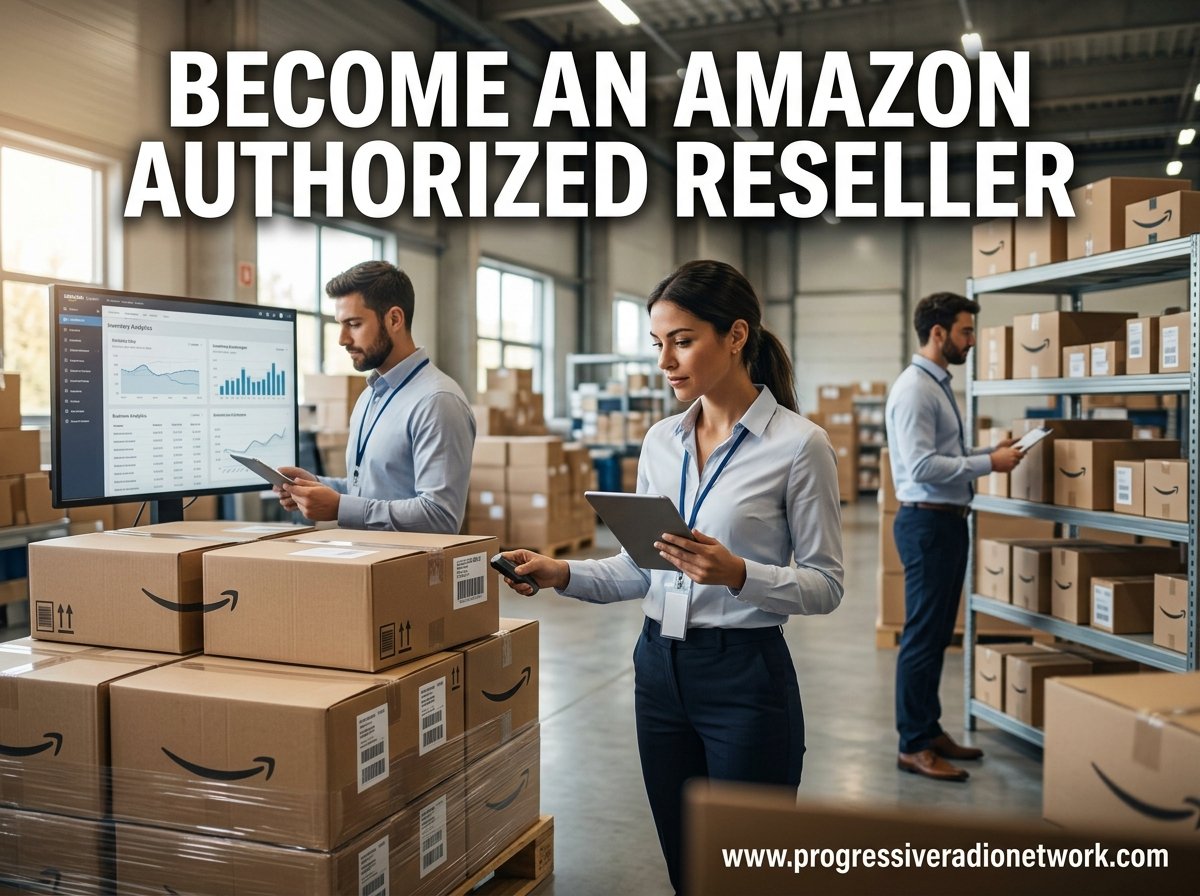
Becoming an authorized reseller on Amazon in 2026 represents one of the most accessible entry points into e-commerce for entrepreneurs who want to sell established brands without manufacturing their own products. The model is straightforward in principle: you purchase inventory from legitimate sources, list those products on Amazon’s marketplace, and earn a margin on each sale. However, executing it profitably requires understanding Amazon’s seller ecosystem, fee structures, brand authorization requirements, and fulfillment options.
An authorized reseller is a seller who has obtained formal permission from a brand owner, manufacturer, or authorized distributor to sell that brand’s products on Amazon. This authorization distinguishes legitimate sellers from unauthorized ones and protects both the reseller and the consumer. Amazon’s marketplace rewards sellers who can document their supply chain, maintain strong performance metrics, and comply with the platform’s Anti-Counterfeiting Policy.
This guide walks through every stage of the process, from choosing a business structure and registering your Amazon Seller Central account to sourcing products, navigating brand gating, selecting a fulfillment strategy, and optimizing your listings for the Buy Box. Whether you are starting with a modest budget or planning a wholesale operation, the information below covers what you need to know to launch and scale as an authorized reseller.
Here’s What This Guide Covers:
- What an authorized reseller is and how the Amazon reselling model works
- Step-by-step process for creating your Seller Central account
- Sourcing strategies: retail arbitrage, online arbitrage, wholesale, and manufacturer-direct
- FBA versus FBM fulfillment and how each affects your costs and Buy Box eligibility
- Brand Registry, brand gating, and how to get approval for restricted brands
- Cost breakdown, legal requirements, and realistic income expectations
How To Become An Authorized Reseller on Amazon?
Operating as an authorized reseller on Amazon gives you access to one of the largest customer bases in global e-commerce. The platform processes billions of transactions annually, and third-party sellers account for the majority of those unit sales. To participate as an authorized reseller, you need to register through Amazon Seller Central, verify your business identity, source legitimate inventory, and comply with all applicable brand and category requirements.
What is an Amazon Reseller?
An Amazon reseller is an independent seller who purchases products from suppliers, distributors, or manufacturers and then lists those products for sale on Amazon’s marketplace. Resellers do not own the brands they sell. Instead, they act as intermediaries, connecting buyers with products while earning a profit margin on each transaction. Some resellers specialize in a single product category, while others maintain diversified catalogs spanning multiple niches.
The reselling model differs from private label selling, where a seller creates and brands their own product. Resellers focus on sourcing existing branded products at wholesale prices and competing on factors like price, fulfillment speed, listing quality, and seller reputation. Profitability depends on securing favorable supplier pricing, managing Amazon fees, and maintaining competitive positioning in the Buy Box.
Process Of Becoming An Authorized Reseller on Amazon
Setting up your seller account is the first technical step. Amazon has streamlined the registration process through Seller Central, and most applicants can complete it in under an hour if they have the required documentation ready. Here is the current registration process:
- Navigate to sellercentral.amazon.com and click “Sign Up” to begin the registration wizard.
- Enter your business name, business address, and contact information exactly as they appear on your registered documents.
- Choose between the Individual seller plan (a per-item fee applies to each sale) and the Professional seller plan (a flat monthly subscription that waives per-item fees).
- Provide your tax identification number, which may be an EIN (Employer Identification Number) for registered businesses or an SSN for sole proprietors.
- Enter a valid credit card and a bank account where Amazon will deposit your seller disbursements.
- Complete the identity verification step, which may include a phone call or document upload, then activate your account.
Once your account is active, the next step toward becoming an authorized reseller for specific brands is to establish relationships with manufacturers or authorized distributors. You will need to request written authorization, typically in the form of a distributor agreement or a letter of authorization from the brand owner. This documentation serves as proof of your supply chain legitimacy and is essential if a brand files a complaint or if Amazon requests invoice verification during an account review.
Also Read: Amazon Package Not Delivered? Quick Fix Solutions Here!
Understanding Amazon Seller Types
Amazon’s marketplace includes several categories of sellers, and understanding the distinctions between them is essential for operating compliantly and profitably. The most important distinction for anyone pursuing the authorized reseller path is the difference between authorized and unauthorized sellers, since Amazon’s enforcement mechanisms increasingly favor sellers who can prove their authorization status.
Authorized Seller Versus Unauthorized Seller
The difference between an authorized seller and an unauthorized seller has significant implications for account health, customer trust, and long-term viability on Amazon. The comparison below outlines the key distinctions:
| Authorized Seller | Unauthorized Seller | |
|---|---|---|
| Warranty | Yes | No |
| Trust & Reliability | High | Low |
| Original Products | Yes | Not guaranteed |
| After Sales Support | Available | May not be available |
| Product Knowledge | Strong | May lack knowledge |
| Protective Consumer Laws | Apply | May not apply |
| Pricing | Sometimes higher | May appear cheaper but carries risk |
Unauthorized sellers face growing enforcement on Amazon. Through Brand Registry, brand owners can report unauthorized sellers, request listing removals, and trigger account holds. Sellers without documented authorization are increasingly vulnerable to inauthentic complaints, which can result in suspended listings or full account suspension. Maintaining authorization letters and supply chain invoices is the most effective protection against these risks.
Differentiating Online Arbitrage from Retail Arbitrage
Online arbitrage involves purchasing products at a discount from one online retailer and reselling them on Amazon at a higher price. Sellers use price comparison tools, deal trackers, and cashback platforms to identify products with sufficient margin after Amazon fees. This method requires no physical travel and can be operated entirely from a computer, but it demands careful attention to profit margin calculations since Amazon’s referral fees and fulfillment costs can erode thin margins quickly.
Retail arbitrage involves visiting brick-and-mortar stores, identifying clearance or discounted products, and reselling them on Amazon. Sellers typically use scanning apps like the Amazon Seller app to check current Amazon prices, sales rank, and fee estimates before purchasing. This method requires physical effort and time investment, but it allows sellers to inspect product condition firsthand and often yields higher per-unit margins than online arbitrage.
Both arbitrage methods carry an important caveat regarding brand authorization. Products purchased through retail or online arbitrage may not come with a supply chain trail that satisfies Amazon’s invoice verification requirements. Brand owners can still file inauthentic complaints against arbitrage sellers, and without authorization documentation, resellers risk losing their listings. For long-term stability, many resellers transition from arbitrage to wholesale sourcing as their business grows.
The Pros and Cons of Buying in Bulk from Wholesalers or Distributors
Wholesale sourcing is the most common path for authorized resellers. By purchasing inventory in bulk from authorized distributors or wholesalers, resellers build a defensible supply chain that satisfies Amazon’s documentation requirements. However, this model comes with specific trade-offs that every reseller should understand before committing capital.
| Advantages | Disadvantages |
|---|---|
| Lower per-unit cost through volume discounts and tiered pricing | Requires significant upfront capital for minimum order quantities |
| Verifiable supply chain with invoices that satisfy Amazon’s authenticity checks | Inventory storage requirements increase as order volumes grow |
| Access to established brand catalogs with proven demand | Some distributors bundle slow-moving products with high-demand items |
| Opportunity to negotiate exclusive reseller agreements for specific ASINs or territories | Wholesale margins are typically thinner than arbitrage or private label |
When evaluating wholesale suppliers, resellers should verify the distributor’s authorization status directly with the brand owner. Many companies claim to be authorized distributors but lack formal relationships with the brands they sell. Forums such as r/AmazonSeller and r/FulfillmentByAmazon consistently report that verifying distributor legitimacy is the single most challenging aspect of wholesale sourcing. Requesting distributor authorization letters, checking references, and attending trade shows like ASD Market Week or the Canton Fair are effective vetting strategies.
Most wholesalers also enforce minimum order quantities (MOQs), which can range from a few hundred to several thousand dollars depending on the brand. Beginners should look for distributors with low MOQs and high reorder rates. Indicators of a reliable distributor include reorder rates above 30 percent, response times under three hours, and a track record of consistent product availability.
The Advantages of Direct Purchasing from Manufacturers
Sourcing directly from manufacturers offers the lowest possible per-unit cost since it eliminates intermediary markups. This approach is particularly relevant for resellers who want to develop private label products or negotiate original equipment manufacturer (OEM) arrangements. Platforms like Alibaba and Global Sources connect sellers with manufacturers, primarily in Asia, while domestic trade shows provide opportunities to build in-person supplier relationships.
Manufacturer-direct sourcing also enables customization. Resellers can request branded packaging, modified product specifications, or exclusive product variations that differentiate their listings from competitors. This is the foundation of the private label model, where a seller applies their own brand name to a manufacturer’s product and registers that brand through Amazon Brand Registry.
The trade-offs include longer lead times for international shipping, customs and import duties, and higher MOQs than domestic distributors typically require. Resellers should also conduct thorough supplier verification, including requesting business licenses, reviewing factory audits, and ordering product samples before committing to a production run. The Alibaba Verified Supplier badge is a useful starting signal but should not replace independent due diligence.
Also Read: Etsy Order Tracking Guide: Simple Steps to Follow
How to Start Your Journey as an Authorized Reseller on Amazon?
Building a sustainable reselling business requires deliberate planning before you list your first product. The most successful Amazon resellers treat their operation as a legitimate business from day one, with proper registration, accounting systems, and sourcing strategies. The following sections cover the specific steps to launch your account and configure it for long-term performance.

Creating Your Account in the Amazon Seller Central Portal
Your Amazon Seller Central account is the command center for your entire reselling operation. To create it, go to sellercentral.amazon.com and click “Sign Up.” Amazon requires the following documents and information to complete registration: a government-issued ID, a chargeable credit card, a bank account for deposits, tax identification information (EIN or SSN), and a verified phone number.
During registration, accuracy is critical. Every detail you enter, including your legal business name, address, and tax ID, must match the information on your official business documents. Discrepancies can trigger additional verification steps that delay account activation. Amazon’s verification process may include a video call where you present your identification documents, so have them ready before you begin.
Focus on How to Set Up Properly for Success
After your account is approved, configure your seller settings before listing any products. Enter your tax information in the tax settings section, confirm your bank deposit details, and set up your shipping templates if you plan to use Fulfilled by Merchant. Review your notification preferences so you receive alerts for orders, customer messages, and performance warnings.
Choose your fulfillment strategy early. If you plan to use Fulfillment by Amazon (FBA), you will need to create a shipping plan in Seller Central, send inventory to Amazon’s fulfillment centers, and let Amazon handle storage, packing, shipping, and customer service. If you choose Fulfilled by Merchant (FBM), you handle all logistics yourself. Many new resellers start with FBA because it qualifies products for Prime shipping and significantly improves Buy Box win rates.
Choosing the Right Products to Sell
Product selection determines your profitability more than any other decision you will make. The goal is to identify products with consistent demand, manageable competition, and sufficient margin to cover Amazon fees while leaving a profit. Avoid products dominated by Amazon’s first-party retail presence, since competing directly with Amazon on price is rarely viable for third-party resellers.
Focus on Demand, Competition, and Profit Margins
Evaluate demand by reviewing a product’s Best Sellers Rank (BSR), review count, and search volume. Tools like Helium 10 and Jungle Scout provide estimated sales data, keyword search volumes, and competitor analysis that help you assess whether a product has enough demand to sustain consistent sales. A product with a BSR in the top 5,000 of its category typically indicates healthy demand.
Assess competition by examining the number of sellers on a given ASIN, their fulfillment methods, and their pricing. If multiple FBA sellers are competing aggressively on price, margins will be compressed. Finally, calculate your profit margin using an Amazon FBA fee calculator or a profit margin calculator tool. Account for the product cost, Amazon referral fees (typically 8 to 15 percent of the sale price), FBA fulfillment fees, and any storage or advertising costs. Aim for a minimum net margin of 15 to 20 percent after all fees.
Fulfillment by Amazon (FBA) vs Fulfilled by Merchant (FBM)
Choosing between FBA and FBM is one of the most consequential decisions a reseller makes. Each fulfillment method affects your costs, operational workload, Buy Box eligibility, and customer experience differently. Understanding the trade-offs helps you select the right approach for your business model and product catalog.
Fulfillment by Amazon (FBA) involves sending your inventory to Amazon’s fulfillment centers, where Amazon stores it, picks and packs orders, ships to customers, and handles returns and customer service. FBA products earn the Prime badge, which significantly increases conversion rates and Buy Box win rates. The trade-off is that FBA charges fulfillment fees based on product size and weight, plus monthly storage fees. During Q4 peak season, storage fees increase substantially, so inventory planning is essential.
Fulfilled by Merchant (FBM) means you store, pack, and ship products directly to customers. FBM eliminates Amazon’s fulfillment and storage fees, which can improve margins on large, heavy, or slow-moving products. However, FBM sellers must handle customer service, manage returns, and meet Amazon’s shipping performance requirements. Without Prime shipping, FBM listings typically convert at lower rates and may struggle to win the Buy Box against FBA competitors.
For new authorized resellers, FBA is generally the recommended starting point. The Prime badge and Amazon-handled logistics provide an immediate competitive advantage, especially when you are building your initial seller rating and performance history. If you are interested in a deeper comparison of fulfillment models, you can read our guide comparing dropshipping vs Amazon FBA for a detailed analysis of how these approaches stack up.
Winning the Amazon Buy Box
The Buy Box is the white “Add to Cart” and “Buy Now” box that appears on a product detail page. When multiple sellers offer the same ASIN, Amazon’s algorithm determines which seller wins the Buy Box. Winning the Buy Box is critical because the vast majority of sales on Amazon go through it, and sellers without Buy Box placement see dramatically lower conversion rates.
Amazon’s Buy Box algorithm, sometimes referred to as the A10 algorithm, evaluates several factors to determine the winning seller. The most heavily weighted factors include fulfillment method (FBA sellers have a significant advantage), landed price (the product price plus shipping), seller rating (a composite score based on customer feedback, Order Defect Rate, Late Shipment Rate, and other metrics), and inventory depth (sellers with consistent stock availability are favored).
To win and maintain the Buy Box as an authorized reseller, prioritize FBA fulfillment for competitive ASINs, keep your pricing within a reasonable range of competing offers, maintain an Order Defect Rate below 1 percent, and ensure your Late Shipment Rate stays under 4 percent. Monitoring your Buy Box percentage through Seller Central’s business reports helps you identify when pricing or performance adjustments are needed.
Amazon Seller Rating and Performance Metrics
Amazon tracks a set of seller performance metrics that directly influence Buy Box eligibility, account health, and the ability to continue selling on the platform. Understanding these metrics and actively managing them is essential for any authorized reseller who wants to maintain a healthy account.
The Order Defect Rate (ODR) measures the percentage of orders that result in a negative feedback, an A-to-Z Guarantee claim, or a chargeback. Amazon requires sellers to maintain an ODR below 1 percent. The Late Shipment Rate tracks the percentage of orders shipped after the expected ship date, with a target of under 4 percent. The Cancellation Rate measures self-cancelled orders and should remain below 2.5 percent.
Your seller rating is a composite score on a 0 to 100 scale that reflects your overall performance. Factors include customer feedback ratings, order cancellation rates, return rates, and response times to customer messages. A seller rating above 90 is generally considered healthy, and higher ratings improve Buy Box competitiveness. Responding to customer messages within 24 hours, addressing complaints proactively, and maintaining accurate product descriptions all contribute to a strong rating.
Steps to Selling Your First Product as An Authorized Reseller on Amazon

Once your account is configured and your first inventory order arrives, the next step is creating your product listing and generating your initial sales. For existing ASINs (products already in Amazon’s catalog), you can match your offer to the existing listing rather than creating a new one. For new products not yet in the catalog, you will create a full listing with title, bullet points, description, images, and product attributes.
When matching an existing ASIN, set your price competitively based on current offers and your calculated margin floor. If you are using FBA, create a shipping plan in Seller Central, print your FBA product labels and shipping labels, and send your inventory to the assigned fulfillment center. Once your units are received and marked as active, your offer becomes visible to customers and eligible for the Buy Box.
Strategies to Maximize Sales From Day One
Launching successfully requires more than just listing a product. The following strategies help you generate initial sales velocity and build a foundation for sustained growth:
- Optimize for Amazon SEO: Research keywords using tools like Helium 10 or Jungle Scout, then incorporate high-volume search terms into your product title, bullet points, and backend keywords. The A10 algorithm rewards relevance, so accurate keyword placement directly impacts visibility.
- Use High-Quality Images: Include multiple images that show the product from different angles, in use, and with size references. Main images must have a pure white background per Amazon’s guidelines.
- Price Competitively: Monitor competing offers daily during your launch period. If you are an FBA seller, you can often win the Buy Box even at a slightly higher price than FBM competitors because customers trust Prime delivery.
- Provide Excellent Customer Service: Respond to all buyer messages within 24 hours, address complaints professionally, and resolve issues before they escalate to claims or negative feedback.
- Encourage Reviews Ethically: Use Amazon’s “Request a Review” button in Seller Central to ask for feedback on eligible orders. Avoid incentivized reviews, which violate Amazon’s policies and can result in account suspension.
- Run Targeted Advertising: Amazon PPC campaigns (Sponsored Products) can place your listing at the top of search results, generating initial visibility and sales velocity that improve your organic ranking over time.
By combining listing optimization, competitive pricing, FBA fulfillment, and proactive customer service, you create the conditions for consistent sales growth. Your first product launch is a learning opportunity, so track your metrics, adjust your strategy based on performance data, and reinvest profits into expanding your product catalog.
Also Read: Original Packaging to Return to Amazon: Essential Tips
Legal Boundaries in Becoming An Authorized Reseller on Amazon
Operating as an authorized reseller involves navigating legal requirements at three levels: Amazon’s platform policies, brand owner agreements, and applicable federal and state laws. Understanding these frameworks protects your account from suspension and shields your business from legal liability.
Is It Legal to Work As a Seller?
Yes, reselling products on Amazon is legal under the first sale doctrine, a principle of US copyright and trademark law that allows the owner of a legitimately acquired product to resell it without the original manufacturer’s permission. However, the first sale doctrine has limitations. It does not override Amazon’s platform policies, and it does not protect sellers from brand owners who use Brand Registry to restrict their distribution channels on Amazon.
In practice, even though reselling is legal, Amazon’s Anti-Counterfeiting Policy and brand gating mechanisms can restrict your ability to sell certain products without authorization documentation. A brand owner can file a complaint that removes your listing, regardless of the first sale doctrine, and appealing that complaint typically requires supplying invoices from authorized distributors. This is why building a documented, authorized supply chain is not just a best practice but a defensive necessity.
Breaking Down Guidelines by Product Category – New, Used, Counterfeit
Amazon classifies products into categories with distinct rules. New products must be authentic, unused, and in original retail packaging. Used products must be accurately graded (Used – Like New, Used – Very Good, Used – Good, Used – Acceptable) and clearly described. Selling counterfeit products is strictly prohibited and is a direct violation of Amazon’s Anti-Counterfeiting Policy, which can result in immediate account suspension, inventory destruction, and legal action.
Certain product categories require approval before you can list in them. These gated categories include Health and Personal Care, Beauty, Grocery and Gourmet Food, Dietary Supplements, and others. Approval typically requires submitting supply chain documentation, paying an ungating fee in some cases, and meeting specific performance criteria. The current list of gated categories and their requirements is available in Seller Central under the Help section.
Decoding Brand Restrictions and Brand Registry
Brand Registry is Amazon’s system that allows brand owners to register their trademarks and gain enhanced control over their product listings. Through Brand Registry, a brand can restrict who sells its products on Amazon, report unauthorized sellers, and request listing removals. This system is the primary mechanism through which brand authorization is enforced on the platform.
Many well-known brands restrict third-party sellers. Common examples include electronics brands like Samsung and Panasonic, tool brands like Black and Decker, eyewear brands like Ray-Ban, entertainment properties like Disney, and beauty brands like L’Oreal. These brands require sellers to provide authorization letters or approved distributor invoices before listings go live. Attempting to sell restricted brand products without approval typically results in listing suppression within hours.
To check whether a brand requires approval, search for the brand or ASIN in Seller Central’s “Add a Product” tool. If the product shows an “Apply to Sell” button or a lock icon, the brand is gated. Click the button to review the approval requirements, which may include authorization letters, invoices from authorized distributors, or a letter from the brand owner directly. Maintaining organized records of all authorization documents is essential, as Amazon may request them at any time during an account review.
LLC and Business Structure Requirements
Amazon does not require sellers to form an LLC to open a Seller Central account. You can register as a sole proprietorship using your personal SSN. However, forming an LLC before you start selling offers significant advantages that make it the preferred structure for most serious resellers.
An LLC provides personal liability protection, meaning your personal assets are shielded from business-related lawsuits or debts. It also adds credibility when approaching brands and distributors for authorization, since many established brands prefer to work with registered businesses rather than individuals. Additionally, an LLC with an EIN simplifies tax filing and allows you to open a business bank account, which keeps your personal and business finances cleanly separated.
Regardless of your business structure, you should obtain any business licenses required by your state or municipality, register for state sales tax collection where applicable, and consult a tax professional to understand your obligations. Amazon now collects and remits sales tax on behalf of sellers in many states, but local tax requirements vary and remain the seller’s responsibility to monitor.
Cost Breakdown: How Much Does It Cost to Start Reselling on Amazon?
Understanding your startup costs and ongoing fees before you begin prevents cash flow surprises and helps you set realistic profitability targets. The total investment varies significantly depending on your sourcing strategy and fulfillment method.
Amazon seller plan fees: The Individual plan charges a per-item fee for each product sold, while the Professional plan charges a flat monthly subscription with no per-item fee. The Professional plan becomes cost-effective once you sell more than approximately 40 units per month. Most committed resellers switch to the Professional plan within their first few months.
Inventory costs: Your initial product investment depends on your sourcing method. Retail arbitrage can start with as little as a few hundred dollars. Wholesale sourcing typically requires an initial inventory investment ranging from $500 to $2,000 or more, depending on distributor MOQs. Manufacturer-direct sourcing for private label products often requires $1,000 to $5,000 or more for an initial production run.
Amazon referral fees: Amazon charges a referral fee on every sale, typically ranging from 8 to 15 percent of the total sale price, depending on the product category. This fee is deducted automatically from your disbursement.
FBA fees: If you use Fulfillment by Amazon, you pay fulfillment fees (based on product size and weight tiers) and monthly storage fees. Long-term storage fees apply to inventory that sits in fulfillment centers for extended periods. Use the Amazon FBA Revenue Calculator in Seller Central to estimate these costs for specific products before you commit to inventory purchases.
Additional costs: Budget for software subscriptions (Helium 10, Jungle Scout, or similar tools), shipping supplies if you use FBM, PPC advertising spend, and LLC formation fees if you choose that structure. A realistic total startup budget ranges from $500 for a minimal arbitrage operation to $5,000 or more for a wholesale-focused launch.
Income Potential and Realistic Expectations
A common question from new resellers is whether Amazon reselling can generate meaningful income. The answer depends on your product selection, capital investment, and operational efficiency. Resellers earning $1,000 per month in profit typically maintain an active catalog of 10 to 30 products with consistent demand and healthy margins. Reaching this level usually takes three to six months of active selling and reinvestment.
Earning $100 per day (approximately $3,000 per month) requires scaling your catalog, optimizing your Buy Box win rates, and managing your fee structure carefully. Successful resellers at this level often reinvest 50 to 70 percent of their profits into new inventory during their first year to accelerate growth. Income scales with catalog size, so consistent product research and supplier relationship building are the primary growth levers.
It is important to set realistic expectations. Most new resellers do not generate significant profit in their first 60 days, as initial capital goes toward inventory, supplies, and software. Profitability typically emerges in months three through six as you refine your sourcing, optimize your listings, and build sales history. Resellers who approach the business with patience, data-driven decision-making, and disciplined reinvestment are the ones who achieve sustainable income.
Frequently Asked Questions
Can anyone become an Authorized Reseller on Amazon?
Yes, anyone with the required documentation can register for an Amazon Seller Central account. However, selling specific branded products requires authorization from the brand owner or proof of purchase from an authorized distributor. Brand Registry allows brands to restrict who can sell their products, so not every brand will be available to every seller.
Do I need a business license to sell on Amazon?
Amazon does not require a business license to open a seller account, but your state or municipality may require one depending on your location and product category. Forming an LLC is recommended for liability protection and credibility with brands, though sole proprietors can also sell on the platform.
Do I need an LLC to resell on Amazon?
No, you can sell as a sole proprietor using your personal tax ID. However, an LLC provides personal liability protection, improves your credibility when applying for brand authorization, and simplifies tax management. Most serious resellers form an LLC within their first few months of selling.
How much money do you need to start reselling on Amazon?
Startup costs vary by sourcing method. Retail arbitrage can begin with a few hundred dollars. Wholesale sourcing typically requires $500 to $2,000 for initial inventory. Private label or manufacturer-direct sourcing may require $1,000 to $5,000 or more. Factor in your seller plan fees, Amazon referral fees, and software subscriptions when budgeting.
Can I sell products from any brand as an Authorized Reseller?
No. Many brands use Brand Registry to restrict who can sell their products. Brands like Samsung, Disney, Ray-Ban, and L’Oreal require authorization letters or approved distributor invoices. You can check whether a brand is gated by searching for the ASIN in Seller Central’s Add a Product tool.
Are there any categories I cannot sell in as a new reseller?
Yes. Amazon gates certain categories including Health and Personal Care, Beauty, Grocery, and Dietary Supplements. Approval typically requires supply chain documentation and sometimes performance history. The current list of gated categories and their requirements is available in Seller Central.
Can I make $1000 a month selling on Amazon?
Yes, many resellers earn $1,000 or more in monthly profit, typically with a catalog of 10 to 30 well-chosen products. Reaching this level usually takes three to six months of active selling, consistent product research, and disciplined reinvestment of early profits into new inventory.
What is the difference between FBA and FBM?
FBA (Fulfillment by Amazon) means Amazon stores, packs, ships, and handles customer service for your products in exchange for fulfillment and storage fees. FBM (Fulfilled by Merchant) means you handle all logistics yourself. FBA provides a competitive advantage for winning the Buy Box and earning the Prime badge, while FBM offers more control and can improve margins on large or slow-moving products.
How do I know if a product is allowed by Amazon?
Check Seller Central’s restricted products policy in the Help section for category-specific rules. For brand-level restrictions, use the Add a Product tool to see if an ASIN requires approval. Always verify that your supply chain documentation is current, as Amazon may request invoices at any time to confirm product authenticity.
Conclusion
Becoming a successful authorized reseller on Amazon in 2026 requires more than just registering an account. It demands a clear understanding of Amazon’s seller ecosystem, a documented and legitimate supply chain, strategic decisions about fulfillment methods, and ongoing attention to performance metrics. The sellers who thrive are those who treat reselling as a professional business, with proper legal structuring, data-driven product research, and disciplined financial management.
If you prioritize brand authorization and supply chain documentation, you protect your account from suspension and build a defensible business. If you need the fastest path to Buy Box eligibility, Fulfillment by Amazon is the strongest choice for new resellers. And if your goal is long-term growth, reinvesting early profits into a diversified product catalog and deeper supplier relationships will compound your results over time.
Start by registering at sellercentral.amazon.com, choose your sourcing strategy, secure your first brand authorization, and launch your initial product with optimized listings and competitive pricing. The path to becoming a profitable authorized reseller is well-defined, and with consistent effort and informed decision-making, you can build a sustainable e-commerce business on Amazon’s marketplace.
Leave a Reply