
Every person carries a story worth telling, yet most of us never sit down to put it into words. Whether you have lived through extraordinary circumstances or simply want to preserve family history for the next generation, learning how to write an autobiography gives you the tools to transform scattered memories into a narrative that resonates. The process can feel intimidating at first, especially when you are staring at a blank page with decades of experiences to sort through. But here is the truth: you do not need to be a professional writer to craft a compelling life story. You just need a clear roadmap and the willingness to be honest about your journey.
Over the years, I have guided numerous writers through the autobiographical writing process, and I have noticed that everyone struggles with the same hurdles. People worry their life is not interesting enough. They freeze when trying to figure out what to include and what to leave out. They get overwhelmed by the sheer scope of covering an entire lifetime in a single book. This guide breaks the process into manageable, actionable steps so you can move from brainstorming all the way to a finished manuscript without losing momentum.
By the time you finish reading, you will understand the difference between an autobiography and a memoir, know how to create a life timeline and outline, have a set of writing prompts to get your memories flowing, and feel confident about editing and publishing your work. Whether you are writing for family, for a school assignment, or with dreams of commercial publication, this start-to-finish guide covers everything you need to know about how to write an autobiography in 2026.
What You Will Learn in This Guide:
What an autobiography is and how it differs from a memoir
The key elements that make a life story worth reading
A step-by-step writing process from brainstorming to final draft
How to build a life timeline and autobiography outline
Famous autobiography examples and what makes them work
Editing, revising, and publishing options for your finished book
Writing prompts and common mistakes to avoid
What Is an Autobiography?
An autobiography is a self-written account of your life, told from your own perspective. The word comes from Greek roots: auto meaning self, bios meaning life, and graphia meaning writing. When you write one, you are quite literally writing about yourself, for an audience that wants to understand who you are and how you became the person you are today. Unlike a biography written by someone else, the autobiographical format gives you complete control over which stories you share and how you frame them.
Most autobiographies follow a chronological structure, beginning with the author’s birth or early childhood and moving forward through significant life events. This timeline approach helps readers see your personal growth unfold naturally. You might cover your family background, education, career milestones, relationships, hardships, and transformative moments. The goal is not to list every single thing that ever happened to you but to choose the experiences that best illustrate who you are and what your life has meant.
People write autobiographies for all sorts of reasons. Some want to leave a legacy for their children and grandchildren. Others have overcome adversity and want to inspire readers facing similar challenges. Public figures like politicians, athletes, and business leaders often write them to shape the historical record. Students may be assigned autobiographical essays to practice personal narrative writing. No matter your motivation, the autobiography format rewards honesty, specificity, and a willingness to reflect on what your experiences have taught you.
Different Types of Autobiography
Before you start writing, it helps to understand the different forms an autobiography can take. The format you choose shapes everything from your chapter structure to your narrative voice, so think carefully about which type fits your purpose best.
Traditional Autobiography: This is the classic full-life narrative that begins with your birth or early years and moves forward chronologically. It covers the full arc of your existence, touching on childhood, education, career, family, and major milestones. Traditional autobiographies tend to run long, often exceeding 50,000 words, because they aim to tell the complete story. This format works well if you want to create a thorough historical record or have lived through enough significant events to fill an entire book.
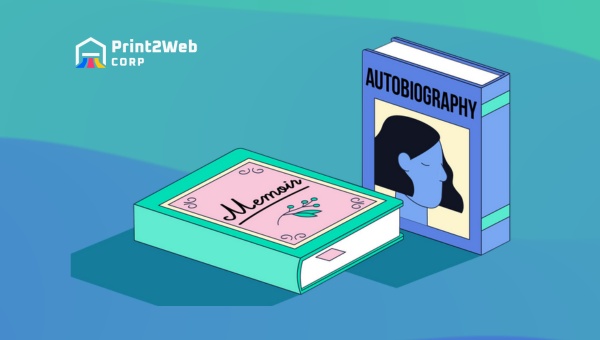
Memoir: A memoir is a close cousin of the autobiography, but with a crucial difference. Rather than covering your entire life, a memoir zooms in on a specific period, theme, or aspect of your experience. You might write a memoir about your time in the military, your journey through a serious illness, or your childhood growing up in a particular place. Memoirs tend to be more emotionally focused and scene-driven than traditional autobiographies. We will explore the memoir vs autobiography distinction in more detail shortly.
Personal Essay or Autobiographical Essay: This shorter format typically runs between 500 and 2,500 words and focuses on a single significant experience or theme. Teachers frequently assign autobiographical essays in school settings because they help students practice narrative writing skills. The essay format forces you to be selective, choosing one story and telling it with depth rather than attempting to cover your whole life.
Graphic Autobiography: Some authors tell their life stories through a combination of illustrations and text. These visual narratives follow the format of comic books or graphic novels, using sequential art to bring memories to life. Graphic autobiographies can be especially powerful for conveying childhood experiences or emotionally complex events.
Spiritual and Confessional Autobiographies: A spiritual autobiography centers on your religious or spiritual journey, tracing how your faith evolved over time. Confessional autobiographies take a more raw, candid approach, openly sharing secrets, struggles, and experiences that many people keep private. Both formats prioritize emotional truth over polished storytelling.
The type you choose depends on what story you need to tell and who you are telling it for. Some writers prefer the comprehensive approach of a traditional autobiography, while others find that focusing on a specific era or theme through a memoir produces a more powerful narrative. There is no wrong answer, only the format that best serves your material and your readers.
Memoir vs Autobiography: Understanding the Key Differences
The memoir vs autobiography question comes up constantly, and it is easy to see why people get confused. Both are first-person narratives about your own life, both require you to draw on personal memories, and both aim to connect with readers on an emotional level. But once you understand the core differences, the distinction becomes clear and helps you choose the right path for your project.
Scope: An autobiography covers your entire life from beginning to the present moment. A memoir covers a slice of your life, a specific period, relationship, or theme. Think of an autobiography as a panoramic photograph and a memoir as a close-up shot. Both are valid, but they serve different storytelling purposes.
Structure: Autobiographies almost always follow chronological order, starting with birth or childhood and moving forward through time. Memoirs are frequently organized thematically rather than chronologically, jumping between time periods to explore a central idea or emotional thread.
Purpose: An autobiography aims to document and preserve the facts of your life. A memoir aims to explore the emotional truth of a particular experience. Autobiographies tell you what happened. Memoirs tell you how it felt.
Readership: Autobiographies are often written for a broad audience and can serve as historical records. Memoirs tend to attract readers who are interested in a specific subject matter, whether that is grief, addiction recovery, coming of age, or professional life.
If you are just starting out and feeling overwhelmed by the prospect of covering your whole life, consider beginning with a memoir. You can always expand into a full autobiography later. Many published authors started with focused memoirs before tackling broader autobiographical projects.
The Key Elements of a Compelling Autobiography
When writers ask me what separates a memorable autobiography from a forgettable one, I always point to the same handful of elements. These are the building blocks that turn a list of life events into a story readers cannot put down.

Your Origin Story and Family Background
Every life story needs a starting point, and that usually means exploring where you came from. Your hometown, your family dynamics, the values your parents instilled in you, the culture you grew up in, all of these factors shaped the person you became. Readers want to understand your roots because it gives context for everything that follows.
Be specific here. Do not just say you grew up in a small town. Describe the streets you rode your bike down, the smells from your neighbor’s kitchen, the sound of the church bells on Sunday morning. Sensory details transport readers into your world and make your story feel lived-in rather than recounted.
Significant Life Events and Turning Points
Every autobiography needs those hinge moments where your life shifted direction. These might be triumphs, like getting accepted into your dream school or landing a career-defining job. They might be losses, like the death of a loved one or the end of a marriage. What matters is that you explore not just what happened but how the experience changed you.
Reddit writers frequently recommend asking yourself a powerful question: what sets your life apart from the average person? The answer often lies in these turning points. Maybe you survived a natural disaster, started a business that failed spectacularly, or raised children as a single parent. These autobiographical beats give your story its unique shape and rhythm.
Vignettes and Small Moments
The big events get readers interested, but it is the small moments that make them fall in love with your story. Vignettes are short, self-contained scenes that capture a single memory in vivid detail. A conversation with a stranger on a train. The feeling of holding your newborn child for the first time. A quiet evening fishing with your grandfather.
These slice-of-life scenes give texture and warmth to your narrative. They show readers who you are in the everyday moments between the headlines. When you are outlining your autobiography, leave room for these small stories alongside the major milestones. The combination is what creates a rich, three-dimensional portrait of a life.
Honest Reflection and Emotional Truth
The most powerful autobiographies are not the ones that paint a flattering self-portrait. They are the ones where the author tells the truth, even when it is unflattering. Readers crave authenticity. They want to see your mistakes, your doubts, your moments of weakness, because that is what makes you human. Writing community discussions consistently show that readers value raw, genuine voice over polished literary prose.
This does not mean you should confess every secret or settle old scores. But when you write about your failures, your regrets, and your hardest moments, approach them with honesty and reflection. Show readers what you learned. That vulnerability creates the emotional connection that keeps people reading.
Writing About Failure: A Personal Example
I want to share a personal story to illustrate how to write about a difficult experience in a way that serves your narrative rather than derailing it. Years ago, I poured everything I had into launching a small business. I spent months planning, invested my savings, and worked long hours trying to make it succeed. But the market was not there, the timing was wrong, and despite my best efforts, the business folded within its first year.

The failure hit me hard because I had tied my identity to the venture. When it collapsed, I felt like I had collapsed with it. I spent weeks questioning my judgment and my abilities. But gradually, I began to see the experience differently. That failure taught me resilience, humility, and the difference between a good idea and a viable business. It forced me to pivot in a new direction that ultimately led to more fulfilling work.
I share this story as a teaching example because it demonstrates three principles of autobiographical writing about hardship. First, be honest about how the experience felt in the moment. Second, show the passage of time and how your perspective shifted. Third, extract the lesson without delivering it as a neat, packaged moral. Let readers draw their own conclusions from the raw material of your experience.
How to Write an Autobiography: Step-by-Step Process
Now let us walk through the actual writing process. I have broken this into a series of steps that take you from a blank page to a completed manuscript. Follow them in order, and do not be tempted to skip ahead. Each step builds on the one before it.

Step 1: Brainstorm Your Life Events
Before you write a single sentence of your autobiography, spend time brainstorming. Get a large notebook or open a blank document and write down every significant life event you can remember. Do not censor yourself at this stage. Write down the big milestones and the small moments. Include achievements, failures, relationships, moves, jobs, illnesses, travels, and anything else that shaped you. The goal is to generate raw material, not to organize it yet.
Many writing coaches recommend a technique called freewriting for this stage. Set a timer for 20 minutes and write continuously about your life without stopping to edit or judge what comes out. When the timer goes off, review what you wrote and highlight the events that resonate most strongly. These are the seeds of your autobiography.
Step 2: Create a Life Timeline
Once you have a list of life events, the next step is organizing them into a timeline. This is where the autobiography structure starts to take shape. Draw a horizontal line across a large piece of paper or use a digital timeline tool. Mark your birth at one end and the present at the other. Then plot your significant events along the line in chronological order.
This visual exercise does several things at once. It helps you see the overall arc of your life, identifies gaps where you might need to do more remembering or research, and reveals natural chapter breaks for your book. You might notice clusters of activity around certain periods, which can help you decide which parts of your life deserve the most page space. The timeline becomes the backbone of your autobiography outline.
Step 3: Build Your Autobiography Outline
With your timeline in hand, you can now create a detailed outline. An autobiography outline typically follows a chapter-by-chapter structure. Start by grouping your timeline events into natural chapters based on life phases: early childhood, school years, young adulthood, career, family life, and so on. Under each chapter heading, list the specific events, vignettes, and reflections you plan to include.
Think of your outline as a living document that will evolve as you write. You do not need to nail down every detail before you start drafting. But having a clear structure prevents you from getting lost halfway through and gives you a roadmap to follow when motivation wavers. An autobiography template might look like this: Chapter 1 covers your family background and birth. Chapter 2 focuses on early childhood memories. Chapter 3 explores your school years, and so on through the present day.
Step 4: Choose Your Narrative Voice
Autobiographies are almost always written in the first person, meaning you use I, me, and my throughout. This first-person narrative voice creates intimacy and immediacy, making readers feel as though you are sitting across the table telling them your story directly. It also lets your personality shine through in a way that third-person narration cannot match.
Within the first-person framework, you still have choices to make about tone. Will your narrative voice be conversational and warm, or more formal and measured? Will you use humor, or keep things serious? The answers depend on your personality and your subject matter. Whatever voice you choose, aim for consistency. Readers should feel like the same person is talking to them from the first page to the last.
Step 5: Write a Compelling Introduction
Your introduction is the gateway to your life story, and it needs to grab readers immediately. Avoid starting with I was born on, which is the most generic opening imaginable. Instead, begin with a scene, a provocative statement, or a moment of tension that makes readers want to know more. For example, you might open with the day everything changed for you, then circle back to provide context about your earlier life.
A strong title matters just as much as a strong opening. Instead of calling your book My Autobiography, try something evocative that hints at the themes of your story. Think of titles like Becoming by Michelle Obama or Long Walk to Freedom by Nelson Mandela. These titles capture something essential about the author’s journey without spelling out every detail.
Step 6: Draft the Body Chapters
This is where the bulk of the work happens. Working from your outline, draft each chapter one at a time. Focus on getting words on the page rather than making them perfect. Many experienced writers recommend writing your first draft as quickly as possible, without stopping to revise or second-guess yourself. The goal of a first draft is simply to exist. You will refine it later during the editing process.
As you draft, use specific sensory details to bring your memories to life. Describe what things looked like, sounded like, smelled like, and felt like. Incorporate dialogue where you can, reconstructing conversations as faithfully as possible. Each chapter should focus on a particular phase or theme of your life, with a clear beginning, middle, and end.
If you get stuck on one chapter, move to another. There is no rule that says you must write in order. Some writers prefer to tackle the easiest chapters first to build momentum, then circle back to the harder ones. Others write the chapters out of sequence, following their emotional energy wherever it leads. Find the writing routine that works for you and stick with it.
Step 7: Write a Meaningful Conclusion
Your conclusion should tie together the threads of your story and leave readers with something to think about. Reflect on the lessons your life has taught you, but avoid preaching or wrapping things up too neatly. The best conclusions acknowledge that life is ongoing and that your story is still being written, even as the book comes to an end.
You might end with a scene from the present day, a look toward the future, or a meditation on what your journey has meant. Whatever approach you take, make sure the conclusion feels earned by everything that came before it. Do not introduce new information or unresolved storylines at this stage. Give readers the satisfaction of a story well told.
Famous Autobiography Examples to Learn From
One of the best ways to improve your own writing is to study the masters. The following autobiographies represent some of the finest work in the genre, and each one offers lessons you can apply to your own project.
The Diary of a Young Girl by Anne Frank remains one of the most read autobiographical works in history. Written while Frank hid from Nazi occupation, it demonstrates the power of an authentic first-person voice and proves that ordinary daily observations, when honestly rendered, can carry extraordinary emotional weight.
Long Walk to Freedom by Nelson Mandela covers his journey from rural childhood to revolutionary leader to president of South Africa. Mandela’s chronological structure is masterful, and his willingness to examine his own flaws and growth makes the book deeply human despite its epic scope.
Becoming by Michelle Obama demonstrates how to weave personal and public life together seamlessly. Obama moves fluidly between intimate family moments and historic political events, showing that the two are always interconnected. Her warm, conversational narrative voice makes even the most extraordinary experiences feel relatable.
I Am Malala by Malala Yousafzai tells the story of the young Pakistani activist who survived an assassination attempt by the Taliban. Yousafzai’s autobiography is a model for how to write about traumatic experiences with both honesty and hope, balancing the horror of what happened with the determination that followed.
As you read these and other autobiography examples, pay attention to structure, voice, pacing, and how the authors handle difficult material. Take notes on what works and what does not. Then apply those lessons to your own writing.
Editing and Revising Your Autobiography
Writing your first draft is only half the battle. The real shaping of your autobiography happens during the editing process, and most professional writers spend as much time revising as they do writing the initial draft. Editing an autobiography involves several distinct stages, each focusing on a different level of the text.
Structural Editing
Start with the big picture. Read through your entire first draft and ask yourself whether the overall structure works. Does the chronological order make sense, or would certain chapters work better moved elsewhere? Are there gaps where readers might feel lost? Are there sections that drag or feel irrelevant? This structural editing pass is where you may need to cut entire chapters, merge sections, or reorder material for better narrative flow.
Be ruthless during this stage. If a section does not serve the larger story, no matter how well written it is, cut it. The editing process is about shaping raw material into a coherent narrative, and that often means letting go of passages you love. Save deleted material in a separate file in case you want to use it later, but do not let it clutter your main manuscript.
Line Editing and Proofreading
Once the structure is solid, move to the sentence level. Line editing focuses on word choice, sentence rhythm, paragraph flow, and clarity. Read your work aloud during this stage, as awkward phrasing and repetitive patterns are easier to hear than to see. Look for places where you can strengthen weak verbs, eliminate redundancy, and sharpen your descriptions.
Finally, proofread for grammar, spelling, punctuation, and formatting errors. This is detail work, and it helps to take breaks between proofreading sessions so you see the text with fresh eyes. Consider using proofreading software or hiring a professional editor if your budget allows. A polished, error-free manuscript signals to readers and publishers that you take your work seriously.
Getting Feedback from Others
Writing can be a lonely pursuit, but editing should not be. Sharing your work with trusted readers gives you valuable perspective on what is working and what needs improvement. Consider joining a writing group where members exchange feedback on each other’s work. Writing communities on Reddit and other forums consistently report that accountability partners and critique groups dramatically improve completion rates and quality.
Choose your readers carefully. You want people who will be honest but constructive, not family members who will either praise everything uncritically or be hurt by what you have written. If you are writing about family members or sensitive topics, consider whether you need to share those sections with the people involved before publication. This is both a courtesy and a practical step to avoid damaging relationships.
Publishing Your Autobiography
Once your manuscript is polished and ready, you face a critical decision: how to publish it. The publishing landscape has changed dramatically in recent years, and you now have more options than ever before. Each path has its own advantages and trade-offs, so consider your goals carefully before committing.
Self-Publishing
Self-publishing has become the most popular route for first-time autobiography authors. Platforms like Amazon Kindle Direct Publishing allow you to publish both ebook and print-on-demand paperback editions with no upfront cost. You retain full creative control, keep a larger share of royalties, and can get your book to market in a matter of weeks rather than years.
The trade-off is that you are responsible for everything a traditional publisher would handle: cover design, professional editing, formatting, marketing, and distribution. Self-published books live or die based on how much effort the author puts into these supporting elements. Budget for professional cover design and at least one round of professional editing, as these are the areas where self-published books most often fall short.
Traditional Publishing
If your goal is wide distribution, professional marketing support, and the credibility of a traditional publisher, this path may appeal to you. However, traditional publishing is highly competitive, especially for first-time authors without a public platform. You will typically need to secure a literary agent, who then pitches your manuscript to publishers. The process can take months or years, and rejection is common.
For autobiographies, traditional publishers tend to be most interested in authors with name recognition, a compelling hook, or a story tied to current events. If you are an ordinary person with an extraordinary story, make sure your query letter clearly communicates what makes your autobiography stand out from the thousands of submissions publishers receive each year.
Printing for Family and Friends
Not every autobiography needs to be a commercial product. Many people write their life stories purely as legacy documents for their families. If that is your goal, you do not need a publisher at all. You can format your manuscript yourself and use a service to print a small run of hardcover or paperback copies to give as gifts. Photo sections, family trees, and reproductions of old documents can make these personal editions especially meaningful.
Considering a Ghostwriter
If you have a story to tell but lack the time, confidence, or writing skills to tell it yourself, hiring a ghostwriter is a legitimate option. A professional ghostwriter interviews you extensively, organizes your material, and drafts the manuscript in your voice. You retain authorship credit and control over the final product. Ghostwriting services vary widely in cost, so research thoroughly and ask for writing samples before committing.
Writing Prompts to Get You Started
Sometimes the hardest part of writing an autobiography is simply getting started. The following writing prompts and questions can help you unlock memories and generate material for your book. Pick one that resonates and spend fifteen minutes writing whatever comes to mind.
What is your earliest memory? Describe it in as much sensory detail as you can.
Who was the most influential person in your childhood, and why?
What is the biggest risk you ever took, and what happened as a result?
Describe a moment when your life changed direction completely.
What is the hardest thing you have ever had to do?
What do you know now that you wish you had known at twenty?
Write about a time you failed at something important. What did the experience teach you?
What family traditions shaped your sense of identity?
Describe the place that feels most like home to you.
What do you want people to remember most about your life?
These prompts also work well as self-interview questions. Record yourself answering them out loud, then transcribe the recordings. Many writers find that speaking their stories aloud produces more natural, vivid prose than sitting at a keyboard trying to compose sentences.
Common Mistakes to Avoid When Writing an Autobiography
Knowing what not to include in an autobiography is just as important as knowing what to include. The following mistakes trip up first-time autobiographers repeatedly, and avoiding them will save you hours of revision later.
Treating your autobiography like a resume: Listing every job, award, and achievement without exploring what those experiences meant to you produces a dry, forgettable read. Focus on significance, not completeness.
Trying to cover absolutely everything: Not every memory deserves a page. Be selective. Choose the events that best illustrate your character and your growth, and leave out the rest.
Avoiding difficult truths: If you only share your successes and portray yourself as flawless, readers will not trust you. Honest accounts of failure, doubt, and regret are what make autobiographies compelling.
Settling scores with people who wronged you: Autobiography is not the place for petty revenge. If you write about conflicts, do so with fairness and reflection, not bitterness.
Forgetting to include enough sensory detail: Without specific images, sounds, smells, and textures, your story will feel abstract and distant. Ground every scene in physical reality.
Neglecting the narrative arc: Your life story should have a shape, with rising action, turning points, and resolution. A flat chronicle of events with no emotional progression will lose readers.
Writing without an outline: Jumping straight into drafting without a roadmap almost always leads to getting stuck, running out of steam, or producing a disorganized manuscript.
Skipping the editing process: No first draft is publication-ready. Budget time for multiple rounds of structural editing, line editing, and proofreading.
FAQs
How do I start an autobiography about myself?
Start by brainstorming your most significant life events, then create a visual timeline to organize them chronologically. Write a few practice opening paragraphs using different approaches, such as starting with a vivid scene, a surprising statement, or a pivotal moment. The best openings hook readers immediately and establish your narrative voice before settling into the chronological story.
What are the key steps in writing an autobiography?
The core steps are brainstorming life events, creating a timeline, building a detailed outline, choosing your first-person narrative voice, writing a compelling introduction, drafting the body chapters, writing a reflective conclusion, and then editing through multiple revision passes. Most autobiographies follow chronological order and run between 40,000 and 80,000 words.
What should I not include in an autobiography?
Avoid treating the book like a resume by listing every minor achievement. Skip mundane details that do not reveal character or advance the narrative. Do not use the book to settle personal scores or attack others. Leave out events you cannot remember clearly rather than fabricating specifics. Most importantly, do not exclude your failures and struggles, as these are often the most compelling and relatable parts of a life story.
What is a good example of an autobiography?
Excellent autobiography examples include Becoming by Michelle Obama for its warm narrative voice, Long Walk to Freedom by Nelson Mandela for its epic chronological scope, The Diary of a Young Girl by Anne Frank for its emotional authenticity, and I Am Malala by Malala Yousafzai for its powerful handling of traumatic experiences. Reading several examples in different styles will help you find the approach that best fits your own story.
How long should an autobiography be?
A full-length autobiography typically runs between 40,000 and 80,000 words, which translates to roughly 150 to 300 pages. For a family-only legacy document, 100 to 200 pages is perfectly acceptable. Autobiographical essays for school assignments usually run between 500 and 2,500 words. Focus on telling your story well rather than hitting a specific word count.
Conclusion
Learning how to write an autobiography is ultimately an act of self-discovery as much as storytelling. The process asks you to revisit memories you may not have thought about in years, to sit with difficult emotions, and to find patterns and meaning in the events that shaped you. That work can be challenging, but it is also deeply rewarding. By the time you type the final period, you will understand yourself in ways you never did before.
Whether you are writing for a commercial audience or simply to preserve your story for your grandchildren, the same principles apply. Be honest about your experiences. Choose the moments that best reveal who you are. Structure your story with care. Revise your drafts with patience. And above all, keep writing. The only autobiography that fails is the one that never gets finished.
If you have been waiting for the right moment to start writing your life story, this is it. Open a blank document, pick one of the writing prompts above, and let your memories flow. The world needs more authentic stories, and yours is waiting to be told. With the tools, steps, and examples in this guide, you have everything you need to write an autobiography that captures the fullness of your life in 2026 and beyond.
Leave a Reply