
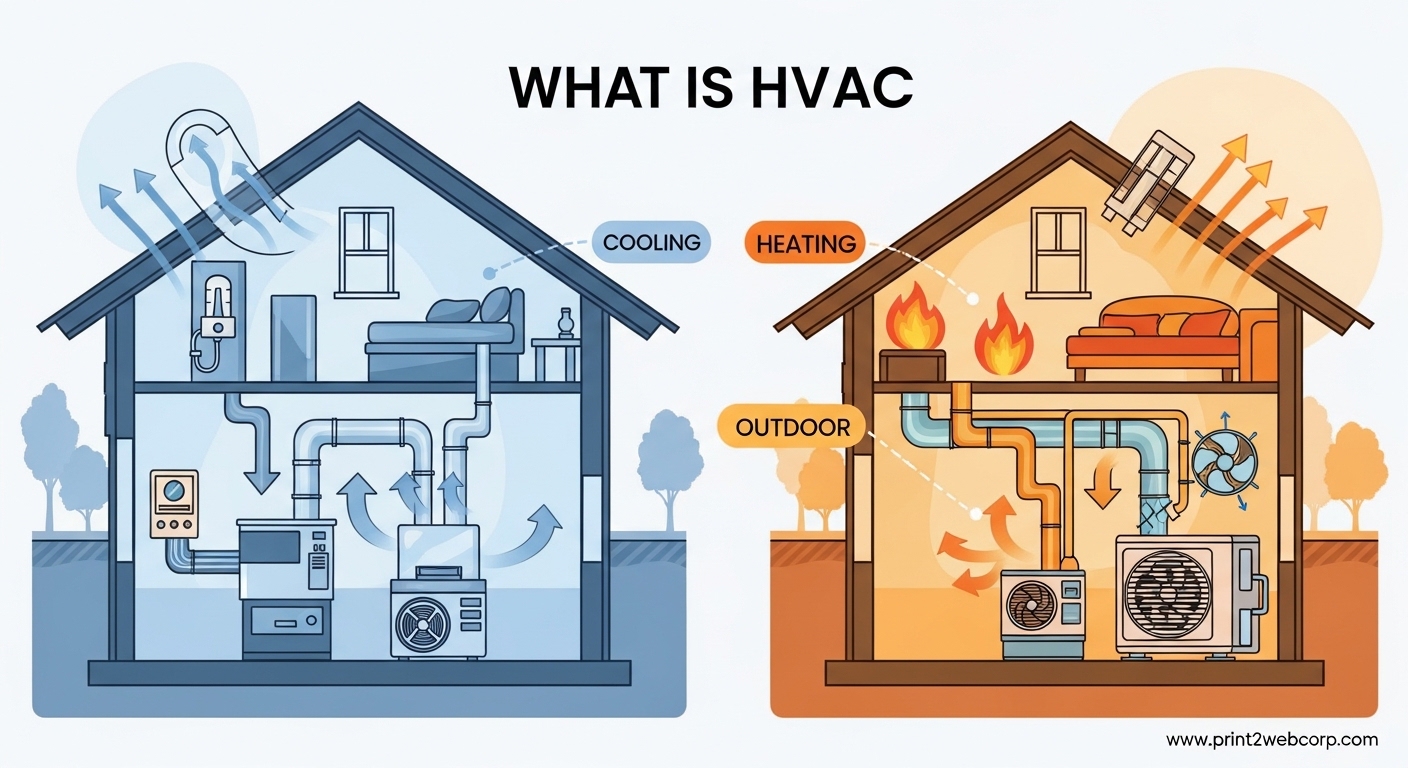
HVAC stands for Heating, Ventilation, and Air Conditioning. It refers to the complete system that keeps your home comfortable throughout the year. Whether you need warmth during winter, cooling in summer, or fresh air circulation, HVAC systems handle it all. In this guide, I’ll explain exactly what HVAC means, how these systems work, and why understanding your home’s HVAC setup matters for comfort and energy costs. You might also want to consider surge protectors for HVAC systems to protect your equipment.
Many people use terms like AC, furnace, and heating system interchangeably. This causes confusion. HVAC is the umbrella term that encompasses all your home comfort equipment. Let’s break down each component and function so you can make informed decisions about your home climate control.
What Is HVAC?
HVAC is an acronym that represents three distinct functions working together. Each letter stands for a specific part of home comfort management. The H stands for Heating, which warms your living spaces during cold months. The V represents Ventilation, the process of exchanging indoor air with fresh outdoor air to maintain air quality. Finally, AC means Air Conditioning, which cools your home when temperatures rise.
What makes HVAC unique is how these three systems integrate into one cohesive unit. Your home doesn’t just need heating or cooling separately. It needs balanced temperature control, humidity management, and fresh air circulation year-round. HVAC systems accomplish this through a network of equipment working in harmony.
The term HVAC originated in the early 20th century as homes began incorporating central heating and cooling. Before then, heating and ventilation were separate systems managed independently. Modern HVAC technology combines everything into efficient, automated systems that maintain consistent comfort with minimal homeowner intervention.
Every residential building needs some form of HVAC. Even homes without central air conditioning have heating and ventilation components. Understanding your HVAC system helps you maintain it properly, recognize when something’s wrong, and make smart upgrade decisions when the time comes.
What Is the Difference Between HVAC and AC?
This is one of the most common questions homeowners ask. The confusion makes sense because people often use these terms interchangeably. However, there’s a clear distinction between them.
AC refers specifically to air conditioning. It’s the cooling component only. When someone says they need AC service, they’re talking about their air conditioner. This might be a window unit, a central air system, or a heat pump in cooling mode.
HVAC is the complete picture. It includes the AC unit but also encompasses heating equipment and ventilation systems. When you schedule HVAC service, the technician can address your furnace, air conditioner, ductwork, thermostat, and air quality components.
Think of it this way. AC is to HVAC like your car’s engine is to the entire vehicle. The engine is crucial, but it’s just one part. Similarly, air conditioning is essential for summer comfort, but it’s only one piece of your complete home comfort system.
The terminology matters when you’re communicating with professionals. If you tell an HVAC company you have an AC problem, they might only check your cooling unit. But describing the symptom accurately helps them diagnose whether the issue involves your complete HVAC system.
Main Components of an HVAC System
Your HVAC system consists of several key components working together. Understanding each part helps you recognize problems and communicate effectively with technicians. Let’s break down the essential equipment.
Heating Components
The heating portion typically starts with a furnace or boiler. Furnaces heat air and distribute it through ducts using a blower fan. Boilers heat water and distribute warmth through radiators or under-floor tubing. Both systems rely on a heat source, which might be natural gas, propane, oil, or electricity.
Heat pumps offer another heating option. These units transfer heat from outside air into your home. They work like air conditioners in reverse. Modern heat pumps can efficiently heat homes even in cold climates, making them an increasingly popular choice.
Cooling Components
Central air conditioners consist of an outdoor unit and indoor coil. The outdoor unit contains the compressor and condenser coil. The indoor coil sits inside your ductwork, usually near the furnace. Refrigerant circulates between these components, absorbing heat indoors and releasing it outside.
Heat pumps also provide cooling. In cooling mode, they work exactly like air conditioners. This dual capability makes heat pumps versatile year-round solutions.
Ductwork and Ventilation
Ducts are the highways that deliver conditioned air throughout your home. Supply ducts carry heated or cooled air from your equipment to living spaces. Return ducts pull air back to the equipment for reconditioning. Properly sealed and insulated ducts are essential for efficiency.
Ventilation might happen through your ductwork or dedicated systems. Some homes use exhaust fans in kitchens and bathrooms. Others incorporate heat recovery ventilators that exchange stale indoor air with fresh outdoor air while preserving energy.
Thermostat and Controls
The thermostat acts as your HVAC system’s brain. It senses indoor temperature and signals your heating or cooling equipment to turn on or off. Modern programmable and smart thermostats can create schedules, learn your preferences, and even optimize energy use automatically.
Your system also includes various safety controls. These limit switches, pressure sensors, and overload protectors prevent equipment damage and ensure safe operation. Homeowners rarely interact with these components directly, but they’re essential for reliable operation.
Air Quality Components
Many HVAC systems include air filtration equipment. Basic filters catch large particles. Advanced systems might use electronic air cleaners, UV lights, or whole-home humidifiers and dehumidifiers. These accessories improve indoor air quality beyond basic temperature control.
How HVAC Systems Work
Understanding how your HVAC system operates helps you recognize problems and use it efficiently. The process differs slightly between heating and cooling modes, but the basic principles are straightforward.
The Heating Cycle
When your thermostat calls for heat, the heating source activates. In a gas furnace, this means igniting burners. In a heat pump, the outdoor unit begins extracting heat from outside air. The system warms air passing over the heat exchanger or indoor coil.
The blower fan then pushes this heated air through supply ducts into your living spaces. As warm air enters rooms, cooler air returns through return ducts to the equipment. This continuous circulation gradually raises your home’s temperature to the thermostat setting.
Once the thermostat senses the desired temperature, it signals the heating system to shut off. The blower might run briefly longer to distribute remaining conditioned air. Then everything rests until the temperature drops again.
The Cooling Cycle
Cooling works on similar principles but in reverse. The thermostat signals the air conditioner or heat pump to start. The compressor pumps refrigerant between indoor and outdoor coils.
Indoors, the cold refrigerant absorbs heat from air passing over the coil. This cools and dehumidifies the air. The blower distributes this conditioned air through your ductwork. Meanwhile, the hot refrigerant travels outside, where the compressor and condenser coil release the collected heat.
As your home reaches the set temperature, the thermostat signals the system to cycle off. Well-designed systems run in cycles of 10-15 minutes rather than continuously. This cycling is normal and actually indicates proper sizing.
Ventilation Integration
While heating and cooling cycles are active, your HVAC system also manages air exchange. Some air constantly leaks out of homes through gaps and is replaced through natural infiltration. Mechanical ventilation systems actively control this exchange.
Bath fans and range hoods remove moisture and pollutants when needed. Balanced ventilation systems bring in fresh air while exhausting stale air. This continuous exchange prevents indoor air quality problems while maintaining comfort.
Types of HVAC Systems
Not all HVAC systems look the same. Different homes and climates require different approaches. Here are the most common system types you’ll encounter.
1. Split Systems
Split systems are the most common residential HVAC setup. They have separate indoor and outdoor units connected by refrigerant lines. The indoor unit typically contains the evaporator coil and connects to your furnace or air handler. The outdoor unit houses the compressor and condenser coil.
Split systems offer flexibility in sizing and configuration. They’re reliable, efficient, and relatively easy to service. Most homes with central air conditioning and a separate furnace use this configuration.
2. Heat Pump Systems
Heat pumps provide both heating and cooling from one unit. In summer, they extract heat from your home. In winter, they reverse operation to bring heat inside. Modern cold-climate heat pumps work effectively even in freezing temperatures.
Heat pumps are extremely efficient because they move heat rather than creating it. They’re ideal for moderate climates but increasingly viable in colder regions too. Some systems include backup electric resistance heat for extreme cold.
3. Packaged Systems
Packaged systems contain all components in one cabinet. This unit typically sits outside or on the roof. All heating, cooling, and ventilation equipment is housed together. Ductwork connects to the package unit from inside.
Packaged systems work well for homes without indoor space for separate equipment. They’re common in mobile homes, small houses, and commercial buildings. Maintenance is convenient since everything is accessible in one location.
4. Ductless Mini-Split Systems
Ductless systems consist of an outdoor compressor connected to multiple indoor air handlers. Each indoor unit serves a specific zone or room. Refrigerant and wiring connect the components without requiring ductwork.
These systems excel for homes without existing ducts or for additions where extending ductwork is impractical. They offer zoned control since each unit operates independently. Installation is less invasive than adding ducts.
5. Geothermal Systems
Geothermal heat pumps use the earth’s stable underground temperature for heating and cooling. Underground loops circulate refrigerant or water, exchanging heat with the ground. These systems are incredibly efficient but require significant upfront investment.
Geothermal systems work anywhere but offer the biggest advantages in extreme climates. They’re quiet, long-lasting, and can reduce energy costs substantially despite higher installation costs.
Understanding Energy Efficiency Ratings
HVAC equipment comes with various efficiency ratings. Understanding these numbers helps you compare systems and predict operating costs. Higher efficiency usually means higher purchase price but lower monthly bills.
SEER Rating
SEER stands for Seasonal Energy Efficiency Ratio. It measures cooling efficiency over a typical cooling season. Higher SEER numbers indicate better efficiency. As of 2026, minimum SEER ratings are 14-15 depending on region. High-efficiency systems reach SEER 20 or above.
SEER calculates total cooling output divided by total electric energy input. Think of it like miles per gallon for your car’s air conditioning. A SEER 16 unit is roughly 20% more efficient than a SEER 13 unit.
AFUE Rating
AFUE means Annual Fuel Utilization Efficiency. It applies to furnaces and boilers, measuring how effectively the equipment converts fuel to heat. AFUE is expressed as a percentage. An AFUE of 90 means 90% of fuel becomes heat while 10% is wasted.
Modern furnaces typically achieve 90-98% AFUE. Older units might operate at 70-80% efficiency. Upgrading from an 80% furnace to a 96% model can significantly reduce fuel consumption.
HSPF Rating
HSPF stands for Heating Seasonal Performance Factor. It measures heat pump heating efficiency. Like SEER, higher numbers indicate better performance. Minimum HSPF is currently 7-8, while efficient models reach 10 or above.
HSPF is particularly important for heat pumps in cold climates. A high HSPF rating means the heat pump operates efficiently even when extracting heat from cold outdoor air.
Why These Numbers Matter
Efficiency ratings directly affect your energy bills. In extreme climates, the difference between standard and high-efficiency equipment can amount to hundreds of dollars annually. However, efficiency isn’t the only factor.
Proper sizing matters more than maximum efficiency. An oversized high-efficiency system won’t perform as well as a properly sized standard unit. Professional load calculations should guide equipment selection rather than efficiency alone.
HVAC Maintenance Basics
Your HVAC system needs regular attention to operate efficiently and reliably. Some maintenance tasks are DIY-friendly. Others require professional service. Following a maintenance schedule prevents breakdowns and extends equipment life.
Filter Replacement
Replace or clean your air filter every 1-3 months. Dirty filters restrict airflow, forcing your system to work harder. This reduces efficiency and can cause equipment damage. Mark your calendar or set phone reminders to stay on schedule.
The right filter depends on your needs. Basic fiberglass filters catch large particles and need frequent replacement. Pleated filters offer better filtration but cost more. HEPA filters provide the best air quality but may restrict airflow in some systems.
Annual Professional Maintenance
Schedule professional service annually. Ideally, have your heating system checked in fall and cooling system in spring. Technicians will clean components, check refrigerant levels, inspect electrical connections, and identify potential problems.
Professional maintenance typically costs $100-200 but prevents expensive repairs. Many companies offer service agreements that include annual inspections plus priority scheduling and repair discounts.
Simple Homeowner Tasks
Keep outdoor units clear of debris. Leaves, grass clippings, and other materials restrict airflow and reduce efficiency. Maintain at least two feet of clearance around the unit.
Ensure all supply and return vents are unblocked. Furniture, curtains, and rugs shouldn’t cover registers. Closed doors in forced-air systems can disrupt airflow and create pressure imbalances.
Warning Signs of Problems
Watch for unusual sounds, weak airflow, inconsistent temperatures, or higher energy bills. These symptoms indicate developing problems. Addressing issues early prevents complete system failures during extreme weather.
If you notice problems, check your thermostat settings and replace the filter first. Simple troubleshooting resolves many minor issues. For persistent problems, contact a qualified technician rather than attempting DIY repairs on complex equipment.
Frequently Asked Questions
Do HVAC technicians make good money?
HVAC technicians can earn solid incomes, especially as they gain experience and specialized certifications. Entry-level positions typically start around $40,000 annually, while experienced technicians with NATE certification often earn $60,000-80,000 or more. Those who specialize in commercial systems or start their own businesses can exceed $100,000 annually. The trade offers strong job security and advancement opportunities, particularly for technicians willing to work on-call hours during peak seasons.
Is HVAC hard to learn?
HVAC isn’t terribly difficult, but it’s not easy either. The field requires understanding of electrical systems, refrigeration principles, and mechanical components. Most technicians complete 6-24 months of training through trade schools or apprenticeship programs. The learning curve is manageable for anyone with basic mechanical aptitude. However, troubleshooting complex systems and keeping up with evolving technology requires ongoing education throughout your career.
What is the difference between HVAC and AC?
AC refers specifically to air conditioning equipment that cools your home. HVAC is the broader term that includes heating, ventilation, and air conditioning combined. Think of AC as one component of the complete HVAC system. When you need AC service, a technician addresses your cooling equipment. HVAC service covers your entire home comfort system including furnace, air conditioner, ductwork, and ventilation.
What HVAC systems are best for allergies?
For allergy sufferers, look for HVAC systems with advanced air filtration. High-efficiency particulate air (HEPA) filters capture 99.97% of particles including pollen, dust mites, and pet dander. Systems with variable-speed fans run longer at lower speeds, providing more continuous filtration. Adding a whole-home air cleaner or UV light system further reduces allergens. Proper humidity control also helps, as maintaining 30-50% relative humidity reduces dust mite and mold growth.
Conclusion
HVAC systems are essential for comfortable, healthy homes. Understanding what HVAC means and how your system works empowers you to make better decisions about maintenance, upgrades, and repairs. Remember that your HVAC system works year-round to maintain comfort and air quality.
Whether you’re building a new home, replacing old equipment, or simply trying to understand your current setup, knowledge is your best tool. Use this guide to communicate effectively with professionals and recognize when your system needs attention. For specific issues like troubleshooting window air conditioner problems, consult detailed guides or professional technicians.
Investing in your HVAC system through proper maintenance and smart upgrades pays dividends in comfort, energy savings, and equipment longevity. Your home comfort system works hard for you. Return the favor with regular care and informed decision-making.
Leave a Reply