
If you have ever pulled an old binder from the closet and wondered how much your Pokemon cards are worth, you are far from alone. The trading card market has experienced massive shifts since its pandemic-era boom, and card values in 2026 reflect a collecting landscape that looks very different than it did even two years ago. Some cards that once traded for hundreds have settled, while certain modern pulls from sets like Prismatic Evolutions now command eye-popping prices.
Whether you inherited a childhood collection, rediscovered a shoebox of holographic favorites, or just pulled something shiny from a fresh booster pack, knowing how to value your cards is the first step toward making smart collecting decisions. This guide walks you through the exact process of checking card values, understanding grading standards, spotting fakes, and getting the best price if you decide to sell.
Here is what we will cover:
What actually drives Pokemon card value
How to check card prices online using free tools and apps
Price ranges for common card types so you know what to expect
How to identify fake cards before buying or selling
Current market trends shaping card values in 2026
Practical steps for selling your collection profitably
How Much Are Pokemon Cards Worth?
The short answer is that Pokemon card values range from a few cents to over five million dollars. The vast majority of cards from common sets are worth well under a dollar, while a tiny fraction of rare, graded, and historically significant cards command serious money. The price of any individual card depends on a combination of rarity, condition, age, character popularity, and current market demand.
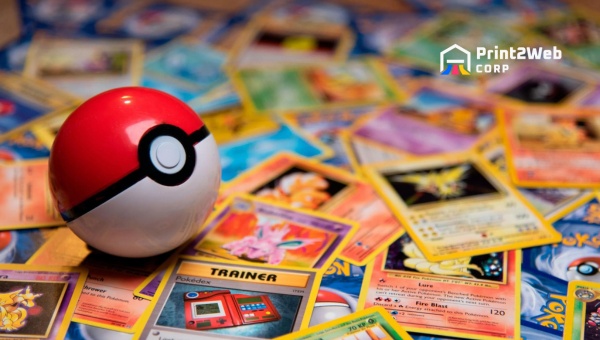
One common misconception is that any old card must be valuable simply because it has been around for a while. Age alone does not determine worth. A well-worn common card from 1999 might sell for ten cents, while a pristine alternate art rare from a recent Scarlet and Violet set could fetch several hundred dollars. What matters is the intersection of scarcity, desirability, and condition.
Understanding Market Value
Market value simply means the price a willing buyer will actually pay for your card today. This number shifts based on real sales data, not wishful thinking. When a character becomes popular through a new video game, anime storyline, or competitive tournament success, demand for that card rises and prices follow.
The most reliable way to gauge market value is by checking sold listings on platforms like eBay and TCGPlayer. Active listings tell you what sellers are asking, but sold listings tell you what buyers are actually paying. That distinction matters enormously, because some sellers list cards at inflated prices that never move.
Community spaces like Reddit’s r/PokemonCardValue and r/pokemoncardcollectors are also excellent for getting quick, realistic appraisals from experienced collectors. Many users post photos of their collections and receive informed feedback within hours. Just remember that community opinions should supplement, not replace, actual sales data from established marketplaces.
Recognizing High-Value Cards
Certain categories of cards consistently hold higher value than others. First Edition Holofoils and Shadowless prints from the original Base Set are the classic examples, along with early promotional cards and tournament prizes. These cards had small print runs and high collector demand, which drives prices upward.
Modern sets have their own valuable tiers. Alternate art cards, illustration rares, special illustration rares, and rainbow rare variants from recent expansions can carry significant value, especially for popular Pokemon like Charizard, Umbreon, and the Eeveelutions. A well-centered, ungraded Umbreon VMAX Alternate Art from the Evolving Skies set can sell for several hundred dollars.
Error cards and misprints represent another category worth watching. Cards with printing mistakes, miscut borders, or incorrect text can be worth more than their corrected counterparts because they are genuinely scarce. If you notice something unusual about a card, research it before assuming it is worthless.
Most Expensive Pokemon Cards Ever Sold
Record-setting Pokemon card sales continue to make headlines, and the top prices have climbed significantly since the early 2020s. While these ultra-rare cards represent a tiny fraction of the market, they illustrate how valuable this hobby can become at its highest levels. Here are some of the most expensive Pokemon cards ever sold, with updated context for 2026.
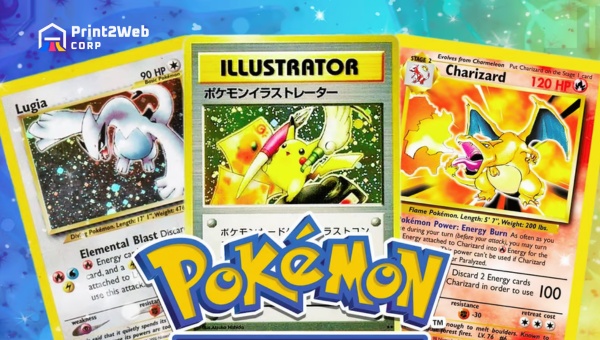
Pikachu Illustrator: The most famous and expensive Pokemon card in existence. Originally awarded as a prize to winners of a CoroCoro Comic illustration contest in Japan, fewer than 40 copies are believed to exist. A PSA 10 copy sold in 2022 for approximately $5.275 million in a private sale brokered by Goldin Auctions, and it remains the record holder heading into 2026.
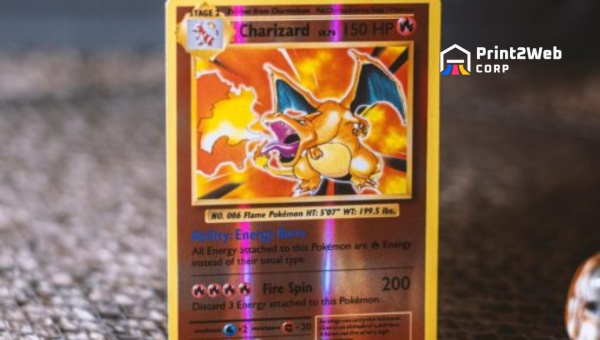
1st Edition Shadowless Holographic Charizard (Base Set): The card every collector dreams about. PSA 10 Gem Mint copies have sold for over $420,000 at auction, with the record sale occurring in 2022. Even ungraded copies in Near Mint condition regularly trade for $3,000 to $8,000 depending on condition.
1999 Super Secret Battle No. 1 Trainer Promo: Only seven copies of this tournament card were ever produced, awarded to finalists of the Secret Super Battle event in Tokyo. Recent sales have pushed the price above $300,000 for graded copies, and the card continues to appreciate as vintage promos become scarcer.
1998 Kangaskhan Family Event Trophy Card: Awarded to parent-child teams at a 1998 mega battle tournament in Japan, this card has fewer than 50 known copies. A PSA 10 copy sold for roughly $210,000 in recent years, making it one of the priciest trophy cards in existence.
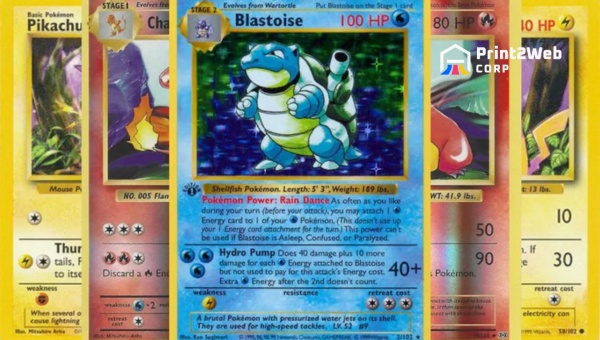
1999 1st Edition Shadowless Holographic Blastoise: While not as famous as Charizard, the Blastoise counterpart from the same set has seen its PSA 10 value climb past $50,000 at auction. Strong collector demand for the complete Base Set starter trio keeps prices high.
These figures represent the absolute ceiling of the Pokemon card market. For context, the vast majority of cards, even rare ones, will never approach these numbers. But they demonstrate that when scarcity, condition, and cultural significance converge, Pokemon cards can rival traditional collectibles like comic books and sports cards in value.
What Makes Pokemon Cards Valuable?
Several factors combine to determine what a Pokemon card is worth. No single attribute guarantees value on its own; it is the interaction between rarity, condition, demand, and special features that sets the price.
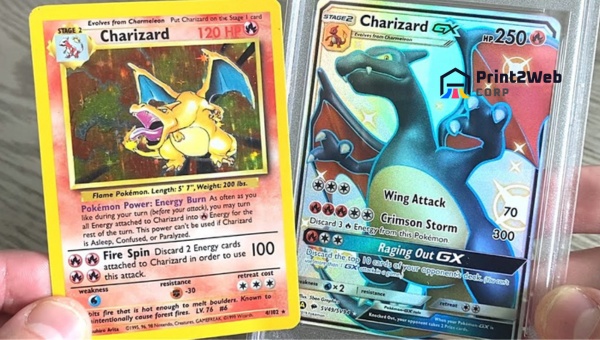
Rarity: First edition prints, limited promotional releases, and cards from early sets have smaller populations in circulation. Scarcity drives demand among collectors who want cards that few others own.
Condition: A card graded Gem Mint by PSA or BGS can be worth many times more than the same card in played condition. Sharp corners, perfect centering, and clean surfaces are what graders look for.
Character Popularity: Charizard, Pikachu, Umbreon, Mewtwo, and the Eeveelutions consistently command premium prices. These characters have decades of fan attachment behind them, and demand for their cards rarely drops for long.
Competitive Playability: When a card becomes dominant in the tournament scene, competitive players drive up demand. This is especially true for Trainer and Special Energy cards that see heavy tournament use.
Special Features: Holographic foil, reverse holo treatments, full art designs, alternate artwork, rainbow rare finishes, and cards with printing errors all add collectible appeal and market value.
Understanding how these factors interact is essential whether you are buying, selling, or simply trying to figure out if that old binder holds anything special. If you want to turn your collection into cash after evaluating it, our guide on how to sell Pokemon cards for maximum value walks through the selling process step by step.
Grading Standard Terminology of Pokemon Cards
Professional grading gives collectors a shared language for describing card condition. Third-party grading services like PSA, Beckett (BGS), and CGC evaluate cards on a numeric scale and encapsulate them in tamper-evident holders. A high grade can dramatically increase a card’s market value, so knowing the terminology matters.
Here are the standard condition grades used by professional services:
Gem Mint (Grade 10): A virtually flawless card with no visible imperfections under magnification. Four perfectly sharp corners, flawless surface, and excellent centering. This is the grade collectors dream about and the one that commands top dollar.
Mint (Grade 9): A near-perfect card with only the slightest imperfection, such as minor off-centering or a tiny printing irregularity. Still highly desirable and valuable, typically worth significantly less than a 10 but far more than lower grades.
Near Mint to Excellent (Grades 7-8): Minor wear is present, perhaps a slight edge nick or faint surface scratch. The card still looks clean to the naked eye and retains strong collector appeal.
Very Good to Fine (Grades 5-6): Moderate wear including corner rounding, light creasing, or visible surface scuffing. These cards are usually worth grading only if they are very rare.
Good to Poor (Grades 1-4): Significant damage such as heavy creases, rounded corners, stains, or tears. Unless the card is extraordinarily rare, grades in this range generally mean the card is worth little to nothing.
PSA vs Beckett vs CGC: Which Grader Should You Use?
PSA (Professional Sports Authenticator) is the most widely recognized grading company for Pokemon cards and tends to command the highest resale premiums. Beckett Grading Services (BGS) is known for its detailed sub-grades that break down centering, corners, edges, and surface separately. CGC (Certified Guaranty Company) entered the trading card market more recently and offers competitive pricing with quick turnaround times.
For maximum resale value, PSA is generally the preferred choice among collectors. However, grading costs typically start around $20 to $40 per card and can take months, so it only makes financial sense for cards you expect to grade 7 or higher. If you want to know where to find fresh packs to chase, check out our guide on when Walmart restocks Pokemon cards and other retail inventory.
Determining Pokemon Card’s Rarity
Rarity symbols are printed directly on every Pokemon card, making it straightforward to sort your collection by potential value. Knowing how to read these symbols lets you quickly separate cards worth researching from those that are genuinely common.
Circle (Common): A black circle in the bottom right corner means the card is common. These are the most frequently pulled cards in any pack and are typically worth very little unless they are from an early set in top condition.
Diamond (Uncommon): A black diamond indicates an uncommon card. These are slightly harder to pull than commons but still widely available and usually low in value.
Star (Rare): A black star marks a standard rare card. These have lower pull rates and often feature holographic artwork, making them more desirable.
Star H or Colored Symbols (Ultra Rare and Above): White or silver stars, prism star symbols, and other distinctive icons signal ultra rares, secret rares, and beyond. These include Full Art cards, GX, V, VMAX, ex, and special illustration rares that can carry substantial value.
Secret Rare Numbering: Secret rares have a collector number exceeding the total set count, such as 115 out of 114. These are the hardest cards to pull from a set and are frequently the most valuable standard releases.
By learning to recognize these symbols at a glance, you can sort through hundreds of cards quickly and focus your research on the ones most likely to have real value.
How to Check Pokemon Card Values Online
This is the single most important skill for any collector or seller. Fortunately, several free and reliable tools make checking Pokemon card values straightforward. The key is using more than one source to get a complete picture of what your card is actually worth.
TCGPlayer
TCGPlayer is the most widely trusted price source in the Pokemon community. The site aggregates actual marketplace sales data to produce a market price for nearly every card ever printed. Search by card name, set, or collector number, and TCGPlayer shows you the current market price along with recent sales history. Community consensus on Reddit and elsewhere consistently points to TCGPlayer as the baseline for realistic pricing.
PriceCharting
PriceCharting tracks both graded and ungraded prices with historical charts that show how values have changed over time. It is especially useful for vintage cards from the Base Set through the early 2000s. If you want to see whether a card’s value is trending up or down over months and years, PriceCharting’s graphs make that easy to read at a glance.
eBay Sold Listings
eBay sold listings give you real-world transaction prices, not estimates. Search for your card, then filter by “Sold Items” to see what buyers actually paid recently. This method works especially well for cards that sell frequently. For cards with very few sales, the sample size may be too small to draw firm conclusions, so cross-reference with TCGPlayer.
Card Scanner Apps
Mobile apps like Collectr, PokeScope, and Rare Candy let you scan cards with your phone camera for instant identification and pricing. These apps pull data from TCGPlayer and other sources, making them convenient for valuing large collections quickly. Collectr is especially popular on Reddit for its binder tracking feature and market value graphs. Just be aware that scanner apps occasionally misidentify cards, so double-check results for anything that looks unusually valuable.
For the most accurate valuation, combine at least two of these methods. Check TCGPlayer for the baseline market price, confirm with eBay sold listings, and use a scanner app for speed when sorting through dozens or hundreds of cards at once.
Pokemon Card Price Ranges: What to Expect
Having realistic expectations saves time and prevents disappointment. Here is a general reference for what different categories of Pokemon cards tend to sell for in 2026. Keep in mind that condition, grading, and market timing all affect actual prices.
Common and Uncommon cards (modern sets): Typically $0.05 to $0.25 each. Bulk lots sell by the thousand for very low per-card prices.
Standard Rares and Reverse Holos (modern sets): Usually $0.50 to $5. Popular characters may push toward the higher end.
Ultra Rares and Full Arts (modern sets): Generally $5 to $50, with alternate art cards from sets like Evolving Skies reaching $100 to $400 for sought-after Pokemon like Umbreon VMAX.
Vintage Base Set commons and uncommons (ungraded): $1 to $10 depending on condition and whether they are Shadowless or First Edition.
Base Set Charizard (ungraded, Near Mint): $300 to $800 for Unlimited versions; $1,500 to $5,000+ for Shadowless; $3,000 to $8,000+ for First Edition.
PSA 10 graded vintage holos: Varies widely, but a PSA 10 1st Edition Shadowless Charizard can exceed $400,000, while lesser-known PSA 10 holos from early sets may sell for $500 to $5,000.
How to Spot Fake Pokemon Cards
Counterfeit Pokemon cards flood online marketplaces, and falling for a fake can be an expensive mistake. Whether you are buying singles online or sorting through a collection someone gave you, knowing how to identify genuine cards protects your wallet. Here are the most reliable ways to spot fakes.
Check the Card Back: Genuine Pokemon cards have a specific blue and yellow design with the Pokeball logo. Fakes often have muted colors, incorrect proportions, or a slightly off-center logo. Hold a card you know is real next to a suspect card and compare them side by side.
Feel the Cardstock: Authentic Pokemon cards use a specific weight and texture of cardboard. Fakes frequently feel flimsy, overly glossy, or waxy. If the card bends too easily or has an unusual sheen, investigate further.
Examine the Foil Pattern: Real holographic foil has a distinct, intricate pattern that catches light evenly. Counterfeit holos often look grainy, overly sparkly, or have a rainbow tint that genuine cards do not share.
Look at Text and Font: Fake cards frequently have blurry text, incorrect fonts, or spelling errors. Pay close attention to the Pokemon name, HP number, and attack text. Official cards use precise, clean typography.
Verify the Set Symbol and Number: Cross-reference the card’s set symbol and collector number against a database like Bulbapedia or TCGPlayer. If the symbol does not match any known set or the numbering is impossible, the card is almost certainly fake.
Perform the Light Test: Genuine Pokemon cards are slightly translucent when held up to a bright light, revealing a consistent layering. Many fakes are either completely opaque or let too much light through unevenly.
Reddit users frequently report being scammed by counterfeit cards purchased from third-party sellers on major marketplaces. If a deal looks too good to be true, it probably is. Buy from reputable sellers, and when in doubt, consult a community like r/PokemonCardValue for a second opinion.
Current Pokemon Card Market Trends in 2026
The Pokemon TCG market in 2026 is shaped by a mix of vintage collector demand and explosive interest in modern sets. Understanding these trends helps you make smarter decisions about what to buy, grade, hold, or sell.
Modern sets like Prismatic Evolutions, Destined Rivals, and the broader Scarlet and Violet era have driven significant collecting activity. Prismatic Evolutions in particular generated enormous hype due to its pull rates for special illustration rares and the popularity of Eevee and its evolutions. Singles from these sets, especially alternate arts and SAR cards, can command premium prices right out of the pack.
Vintage cards from the Base Set through the Neo era remain the backbone of high-value collecting. PSA 10 graded vintage holos continue to appreciate as the population of high-grade copies stabilizes and demand from serious collectors persists. The market has cooled from its pandemic peak, but rare vintage cards in top condition have proven remarkably resilient.
One notable trend is the growing popularity of Japanese-language cards among Western collectors. Japanese sets often release earlier, feature different pull rates, and include exclusive promotional cards that never appear in English. This has created a secondary market where Japanese sealed product and singles command their own pricing dynamics.
For collectors looking to buy fresh product at retail, knowing when major retailers restock Pokemon cards can give you a head start on hunting new sets at standard retail prices before they hit the secondary market.
How to Sell Your Pokemon Cards
Once you have identified your valuable cards and checked their prices, the next question is where and how to sell. Different platforms offer different tradeoffs between speed, fees, and final sale price.
eBay: The largest marketplace for Pokemon cards, offering access to millions of buyers. Fees run around 13 percent plus payment processing, but you can set your own prices or run auctions. Always check sold listings before pricing your cards.
TCGPlayer: Ideal for selling individual cards to collectors and players. The platform charges selling fees but provides built-in shipping tools and a large customer base. TCGPlayer buylists also let you sell directly to stores for store credit or cash.
Facebook Marketplace and Local Card Shops: Good for selling bulk collections or individual cards without shipping hassles. Local shops typically pay 40 to 60 percent of retail value, so expect lower returns for the convenience of an immediate sale.
Reddit Communities: Subreddits like r/pkmntcgtrades offer a community-driven marketplace with feedback systems. Best for collectors comfortable with peer-to-peer transactions and shipping.
Auction Houses: For high-value graded cards, auction houses like Goldin, Heritage, and PWCC handle the process professionally. They charge seller commissions but can achieve premium prices for the right cards.
If you want a complete walkthrough of the selling process, from grading decisions to shipping safely, our Pokemon card selling guide covers everything you need to know to maximize your returns.
A few selling tips worth noting: ship cards in sleeves and top-loaders or magnetic holders, photograph both sides clearly with good lighting, and be honest about condition. Misrepresenting a card’s condition leads to returns and damaged seller reputation. For valuable cards, insurance and tracking on shipments are well worth the cost.
FAQs
How do I know if my Pokemon cards are worth money?
Check the rarity symbol in the bottom right corner of the card. A circle means common, a diamond means uncommon, and a star means rare or higher. Cards with holographic foil, first edition stamps, secret rare numbering, or alternate artwork are worth researching. Cross-reference the card on TCGPlayer and eBay sold listings to confirm current market value.
What Pokemon card is worth $1,000,000?
The Pikachu Illustrator card is the only Pokemon card to sell for over $1 million. A PSA 10 copy sold in 2022 for approximately $5.275 million in a private sale, making it the most expensive Pokemon card ever sold. No other card has come close to that figure.
Are Pokemon cards from 1999 worth anything?
Many 1999 Pokemon cards do have value, especially First Edition and Shadowless prints from the Base Set. A 1st Edition Shadowless Holographic Charizard in PSA 10 condition has sold for over $400,000. However, common and uncommon cards from 1999 in played condition are usually worth only a few dollars or less.
Where can I check Pokemon card values online for free?
TCGPlayer, PriceCharting, and eBay sold listings are the best free resources for checking Pokemon card values. Mobile apps like Collectr and PokeScope offer free card scanning and price tracking. For community opinions, Reddit forums like r/PokemonCardValue provide quick appraisals from experienced collectors.
Is it worth getting Pokemon cards graded?
Grading is generally worth it only for cards you expect to receive a grade of 7 or higher from PSA, Beckett, or CGC. Grading costs typically start at $20 to $40 per card and can take several months. High-grade vintage holos and rare modern alternate arts benefit most from professional grading.
Conclusion
Figuring out how much your Pokemon cards are worth does not have to be overwhelming. The process comes down to identifying the card, assessing its condition, checking real sales data on TCGPlayer and eBay, and deciding whether professional grading makes sense. Most cards in any given collection are worth less than a dollar, but that small percentage of rare, well-preserved cards can carry surprising value.
If you are sitting on vintage Base Set holos, modern alternate art rares from sets like Prismatic Evolutions, or anything with a first edition stamp, take the time to research it properly. Use the free tools we covered, cross-reference multiple sources, and do not rely on active listing prices alone. The Pokemon card market in 2026 rewards informed collectors who do their homework.
Once you know what you have, the next step is deciding whether to hold, grade, or sell. If selling is on your mind, our guide to selling Pokemon cards walks you through the entire process for maximum returns. Your collection might be worth more than you think, and now you have the tools to find out.
Leave a Reply