
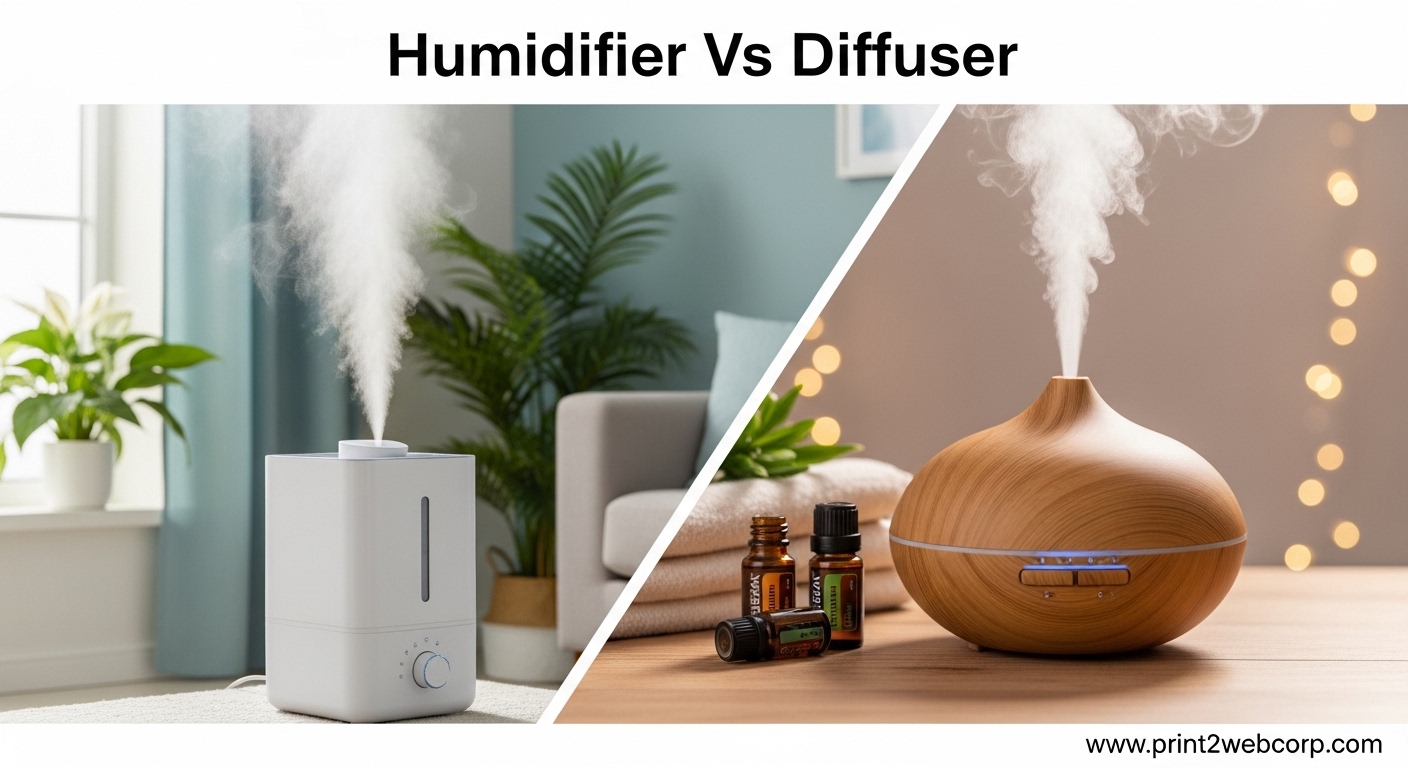
If you have been shopping for home wellness devices, you have probably found yourself confused about the difference between humidifiers and diffusers. I spent weeks researching these devices before realizing they serve completely different purposes. The short answer is this: humidifiers add moisture to dry air to relieve physical discomforts, while diffusers disperse essential oils for aromatherapy and fragrance. Understanding this fundamental difference will save you from buying the wrong device for your needs.
Humidifier Vs Diffuser: The Key Difference
The main difference between these devices comes down to their output and purpose. A humidifier emits water vapor into the air to increase humidity levels in a room. A diffuser emits essential oil particles into the air for aromatherapy benefits and scent distribution. While some diffusers use water to disperse oils, they cannot effectively humidify a room the way a dedicated humidifier can.
| Feature | Humidifier | Diffuser |
|---|---|---|
| Purpose | Add moisture to dry air | Disperse essential oils for scent |
| Method | Releases water vapor via evaporation, ultrasonic vibrations, or steam | Breaks up essential oils using vibrations, heat, or air |
| Primary Benefit | Relieves dry skin, sinus congestion, sore throat | Aromatherapy, mood enhancement, home fragrance |
| Tank Size | Large (1-6 gallons for room humidifiers) | Small (100-500ml typical) |
| Best For | Dry climates, winter months, baby rooms, sinus relief | Relaxation, sleep improvement, natural home scenting |
What Is a Humidifier?
A humidifier is a device designed to increase moisture levels in the air of a room or entire home. When air gets too dry, typically below 30-40% humidity, it can cause various discomforts including dry skin, irritated sinuses, sore throats, and increased static electricity. Humidifiers address these problems by releasing water vapor into the air through different methods depending on the type.
Most room humidifiers use one of three technologies. Ultrasonic humidifiers use high-frequency vibrations to break water into a fine cool mist. Evaporative humidifiers use a fan to blow air through a wet wicking filter, naturally evaporating water into the air. Steam vaporizers boil water and release warm steam into the room. Each type has its advantages, but they all share the same goal: adding measurable moisture to dry indoor air.
The size and capacity of humidifiers vary significantly. Small room humidifiers typically hold 1-2 liters of water and run for 12-24 hours. Larger console units can hold 3-6 gallons and humidify multiple rooms or an entire floor. The tank size directly correlates with how much area the device can effectively humidify and how often you will need to refill it.
What Is a Diffuser?
A diffuser is a device designed to disperse essential oils into the air for aromatherapy benefits and home fragrance. Unlike humidifiers, which focus on adding moisture, diffusers focus on breaking down essential oils into microscopic particles and distributing them throughout a space. The goal is not to change the humidity level but to fill the room with therapeutic scents.
Diffusers work through several methods. Ultrasonic diffusers use water and essential oils together, using vibrations to create a fine mist that carries the oil particles into the air. Nebulizing diffusers use pressurized air to break oils into particles without water or heat. Heat diffusers warm the oils to help them evaporate faster. Each method has different benefits, but all serve the same aromatherapy purpose.
Most diffusers have small water tanks, typically 100-500ml, because they are not designed to add significant humidity to a room. They are meant to run for shorter periods, usually 4-8 hours, to provide scent during specific activities like sleep, work, or relaxation. The focus is on dispersing fragrance effectively, not changing the moisture content of the air.
Humidifier Benefits: When Moisture Matters
Humidifiers provide real health and comfort benefits when indoor air becomes too dry. During winter months when heating systems run constantly, humidity levels can drop below 20%, causing significant discomfort. I have personally experienced relief from dry, itchy skin within days of using a humidifier in my bedroom. The added moisture helps your skin retain its natural hydration instead of losing it to dry air.
Sinus congestion and respiratory issues respond well to increased humidity. Moist air helps thin mucus and soothe irritated nasal passages, making it easier to breathe when you are congested. Many healthcare providers recommend cool mist humidifiers for children and adults dealing with colds, allergies, or sinus infections. The difference in morning congestion levels is noticeable when you sleep with a humidifier running.
Your home also benefits from proper humidity levels. Hardwood floors and wooden furniture can crack and warp in extremely dry conditions. Houseplants thrive in the 40-60% humidity range that many tropical species need. Static electricity shocks become less frequent when humidity is adequate. These practical benefits make humidifiers valuable beyond just personal comfort.
Diffuser Benefits: Aromatherapy and Atmosphere
Diffusers excel at creating atmosphere and providing aromatherapy benefits. Lavender diffusion at bedtime can help signal your brain that it is time to sleep, potentially improving sleep quality and duration. I have found that using a diffuser with calming scents like chamomile or sandalwood creates a relaxing environment that helps me unwind after stressful days.
Mood enhancement is another significant benefit of diffusers. Citrus oils like lemon or orange can create an energizing environment perfect for morning routines or work sessions. Peppermint and eucalyptus can help with focus and mental clarity during study or work. The ability to change your environment’s mood with just a few drops of essential oil makes diffusers versatile wellness tools.
For those who prefer natural home fragrance over synthetic candles or plug-ins, diffusers provide an excellent alternative. You can create custom scent blends, avoid artificial ingredients, and enjoy the benefits of pure essential oils. The scent distribution is typically more subtle and natural than room sprays, creating a pleasant background atmosphere rather than an overwhelming fragrance.
Can You Use a Diffuser as a Humidifier?
This is one of the most common questions people ask, and the answer deserves a clear explanation. While ultrasonic diffusers do release some water vapor along with essential oil particles, they cannot effectively humidify a room. The tank size is simply too small and the output too limited to make any meaningful difference in humidity levels.
A typical diffuser holds 100-200ml of water and might run for 4-6 hours. Even if all that water were released into the air, it would only add a tiny amount of moisture to a standard bedroom. Compare this to a room humidifier with a 2-3 liter tank that runs for 24 hours and is specifically designed to output enough moisture to change humidity levels. The difference in capacity is ten times or more.
Users who try to use diffusers as humidifiers typically report disappointment. The small amount of moisture released might make a difference of only a few square feet around the device, but this effect is negligible and temporary. If you genuinely need to add humidity to a room, investing in a proper humidifier is the only effective solution. The $30-50 more you might spend on a real humidifier versus a diffuser makes a significant difference in actual humidity control.
Essential Oils Safety: What You Need to Know
A common question is whether you can add essential oils to a humidifier to get both benefits at once. The answer depends entirely on the specific humidifier model. Most humidifiers are NOT designed to handle essential oils and can be damaged by them. Oils can clog the internal mechanisms, degrade plastic parts, and void your warranty. Always check your manual before adding anything other than water to your humidifier.
Regarding lung safety, diffusers are generally safe when used properly with high-quality essential oils and adequate ventilation. However, some people with asthma or respiratory sensitivities may find certain essential oils irritating. It is always wise to start with short diffusion periods and pay attention to how your body responds. Pets, especially cats, can be sensitive to certain essential oils, so research pet safety before diffusing around animals.
The safest approach is using devices designed for their intended purpose. If you want both humidity and aromatherapy, look for combination humidifiers with dedicated essential oil trays, rather than improvising with devices not built for dual use.
Combination Units: Best of Both Worlds?
If you want both humidity and aromatherapy, combination units do exist. These humidifiers feature built-in essential oil trays or compartments designed specifically for adding scents without damaging the device. The aromatherapy function is separate from the humidification mechanism, protecting the internal components while allowing you to enjoy both benefits.
These 2-in-1 devices can be convenient if you have limited space or want to simplify your routine. However, keep in mind that the aromatherapy feature may not be as powerful or customizable as a dedicated diffuser. The scent distribution might be more subtle, and you typically have less control over diffusion intensity compared to a standalone diffuser.
For most people, starting with a quality humidifier and adding a separate diffuser later gives you the best of both worlds with more flexibility. Each device can be placed where it is most effective, and you can use them independently rather than always running both functions together.
Humidifier Vs Diffuser: Which Should You Choose?
The decision comes down to what problem you are trying to solve. Choose a humidifier if you are experiencing physical discomforts from dry air. This includes dry, itchy skin, frequent nosebleeds, morning sinus congestion, sore throat upon waking, or excessive static electricity in your home. If your humidity levels consistently fall below 30%, a humidifier is the right choice.
Choose a diffuser if your primary goal is aromatherapy, home fragrance, or mood enhancement. If you want to improve sleep with lavender scents, create an energizing workspace with citrus oils, or simply enjoy natural home fragrance without the health concerns of synthetic air fresheners, a diffuser is what you need. Diffusers are also more affordable and require less maintenance than humidifiers.
Consider getting both if you have the budget and space. Many households benefit from having a humidifier in the bedroom for sleep comfort and a diffuser in living areas for atmosphere. The devices serve different purposes and can complement each other nicely in a comprehensive home wellness setup.
Frequently Asked Questions
Is a humidifier or diffuser better?
Neither device is inherently better – they serve different purposes. A humidifier is better if you need to add moisture to dry air for health and comfort. A diffuser is better if you want aromatherapy benefits and home fragrance. Many households benefit from having both devices for different needs.
Are diffusers ok for lungs?
Diffusers are generally safe for lungs when used properly with high-quality essential oils and adequate ventilation. However, people with asthma or respiratory sensitivities may find certain oils irritating. Start with short diffusion periods and stop if you experience any breathing discomfort. Always ensure proper room ventilation when diffusing.
What kind of humidifier is best for RSV?
Cool mist humidifiers are typically recommended for RSV and other respiratory illnesses in children. Warm steam humidifiers can pose burn risks and are generally avoided for young children. The added moisture helps thin mucus and soothe irritated airways, making breathing easier during recovery. Always follow your healthcare provider’s recommendations.
Can you put frankincense in a humidifier?
Only if your humidifier is specifically designed for essential oils with a dedicated aromatherapy tray or compartment. Most standard humidifiers can be damaged by essential oils, which can clog internal parts and degrade plastic components. Adding oils to a non-compatible humidifier will likely void your warranty and may permanently damage the device.
Can a humidifier help with snoring?
Yes, humidifiers can help reduce snoring caused by dry air. When nasal passages and throat tissues are dry, they are more likely to vibrate and cause snoring. Adding moisture to the air keeps these tissues lubricated and can reduce snoring intensity. However, humidifiers will not help with snoring caused by other factors like sleep apnea or obesity.
Conclusion
Understanding the difference between humidifiers and diffusers is essential for choosing the right device for your needs. Humidifiers add moisture to dry air to relieve physical discomforts, while diffusers provide aromatherapy benefits and home fragrance. Neither device is better – they simply serve different purposes in a home wellness routine. If you are dealing with dry air discomforts, start with a humidifier. If you want aromatherapy benefits, choose a diffuser. Many households find value in having both devices to address different needs throughout their home.
Leave a Reply