
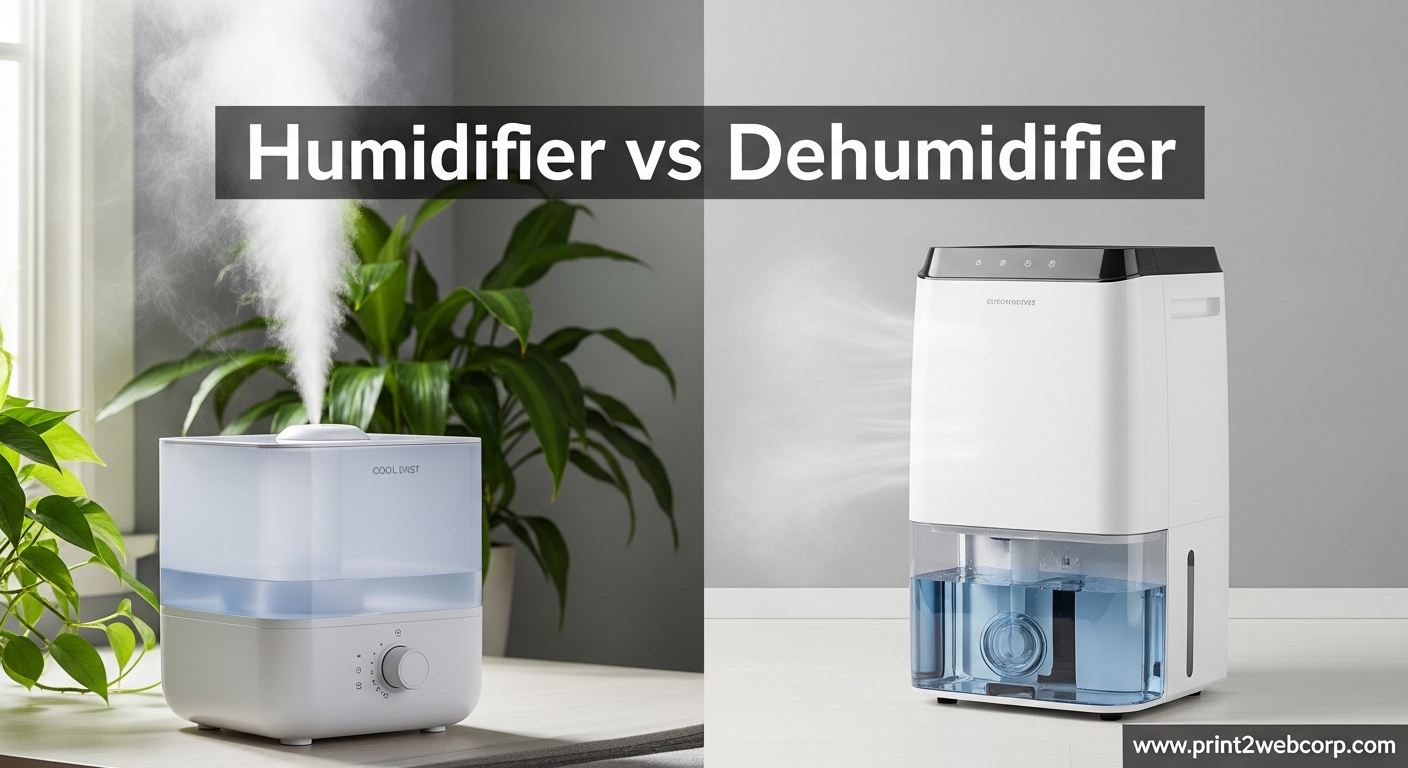
If you have ever woken up with a dry throat, noticed condensation on your windows, or spotted mold in your basement, you have experienced the effects of indoor humidity imbalance. Choosing between a humidifier vs dehumidifier is one of the most common indoor air quality decisions homeowners face. The right choice depends entirely on whether your home air is too dry or too damp, and picking the wrong one can actually make problems worse.
In this guide, I break down everything you need to know about humidifiers and dehumidifiers, explain how each device works, walk you through the best products available right now, and help you make a confident decision. Whether you are dealing with winter dry skin, a musty basement, or year-round comfort, this article has you covered.
Understanding Indoor Humidity Before You Buy
Indoor humidity refers to the amount of water vapor present in the air inside your home. The Environmental Protection Agency recommends keeping indoor relative humidity between 30% and 50% for optimal comfort and health. Below 30%, the air feels dry and can cause physical discomfort. Above 50%, moisture accumulates and creates conditions favorable for mold, dust mites, and bacterial growth.
You can measure your home’s humidity with a device called a hygrometer, which costs as little as $10 and gives instant readings. Place it in the room where you experience discomfort, whether that is your bedroom, living room, or basement. Measure at different times of day, as humidity levels shift with temperature and daily activities like cooking or showering.
When indoor humidity falls below the ideal range, you may notice dry skin, chapped lips, nosebleeds, static electricity, or scratchy throat in the morning. When humidity climbs too high, you might see condensation on windows, smell musty odors, or find damp spots on walls and ceilings. These symptoms tell you exactly which device you need.
What Is a Humidifier?
A humidifier is a device that adds moisture to indoor air by releasing water vapor or steam. When your home heating system runs during cold months, it strips moisture from the air, creating that parched feeling that leads to dry skin and irritated sinuses. A humidifier counteracts this by introducing supplemental moisture to bring relative humidity back into the comfortable 40-50% range.
There are several types of humidifiers. Cool mist humidifiers use ultrasonic vibrations to break water into a fine mist that disperses into the room. Warm mist humidifiers boil water to produce steam, which cools slightly before releasing into the air. Evaporative humidifiers use a fan to blow air through a moist wick filter, naturally adding humidity without producing visible mist. Each type has its advantages depending on room size, noise tolerance, and intended use.
Humidifiers are best suited for bedrooms, nurseries, and living spaces where dry air causes discomfort. They are particularly helpful during winter months when heating systems create persistently low humidity. People with allergies, asthma, dry skin, or frequent nosebleeds often find significant relief with a properly sized humidifier running in their primary sleeping space.
What Is a Dehumidifier?
A dehumidifier does the opposite job of a humidifier. It draws in moist air, cools it to condense the water vapor into a collection tank, and releases drier air back into the room. This process reduces relative humidity and prevents the moisture-related problems that lead to mold growth, musty odors, and structural damage over time.
Three main technologies power dehumidifiers. Compressor dehumidifiers work like refrigerators, using a refrigerant cycle to condense moisture from the air. They are most effective in warm, humid conditions and can process large volumes of air quickly. Desiccant dehumidifiers use moisture-absorbing silica gel materials that recharge by heating. They perform better in cooler temperatures and are often found in compact, cordless designs. Thermo-electric dehumidifiers use a Peltier module to create a temperature differential that condenses water, offering quiet operation at the cost of lower moisture removal capacity.
Dehumidifiers shine in basements, bathrooms, laundry rooms, and any space prone to dampness or poor ventilation. If you live in a humid climate or notice your basement feels clammy even when the rest of your home is comfortable, a dehumidifier can make a dramatic difference. They also protect furniture, electronics, and stored items from humidity damage.
Top 3 Best humidifiers of 2026
Our team spent weeks testing and comparing humidifiers across multiple categories. Here are our three top recommendations for 2026.
Humidifier vs Dehumidifier: Side-by-Side Comparison
Before diving into specific product recommendations, here is a quick overview comparing all six products covered in this guide.
| Product | Specs | Action |
|---|---|---|
 LEVOIT Top Fill Humidifier LEVOIT Top Fill Humidifier |
|
Check Latest Prices |
 Vicks Warm Mist Humidifier Vicks Warm Mist Humidifier |
|
Check Latest Prices |
 Honeywell Cool Moisture Humidifier Honeywell Cool Moisture Humidifier |
|
Check Latest Prices |
 Midea Energy Star Dehumidifier Midea Energy Star Dehumidifier |
|
Check Latest Prices |
 Eva-Dry Wireless Mini Dehumidifier Eva-Dry Wireless Mini Dehumidifier |
|
Check Latest Prices |
 Pro Breeze Electric Mini Dehumidifier Pro Breeze Electric Mini Dehumidifier |
|
Check Latest Prices |
1. LEVOIT Top Fill Humidifiers for Bedroom
Levoit Top Fill Humidifiers for Bedroom, 2.5L Tank for Large Room, 25dB
2.5L Tank
26dB Quiet
Up to 25 Hours
219 sq ft Coverage
Pros
- Top-fill design eliminates spills
- Whisper-quiet at 26dB for bedrooms
- Long 25-hour runtime from single fill
- Auto shut-off safety feature
- 360-degree adjustable nozzle
Cons
- No app or hygrometer integration
- Occasional leaking when transporting filled tank
I placed the LEVOIT Top Fill humidifier in my bedroom for a two-week test period, and it quickly became the device I reached for every night. The top-fill design is genuinely convenient. Unlike traditional humidifiers where you flip the tank upside down and risk spills, this one opens from the top and fills straight from your sink or pitcher. I never once spilled water during refilling, which sounds minor until you have cleaned up a flooded nightstand.
The mist output is adjustable, and at its lowest setting, the unit produces just 26 decibels of sound. To put that in perspective, a whisper measures around 30 decibels. I slept through entire nights without the unit interrupting my rest, even when it ran on the higher mist output. My partner, who is a light sleeper, reported the same experience.
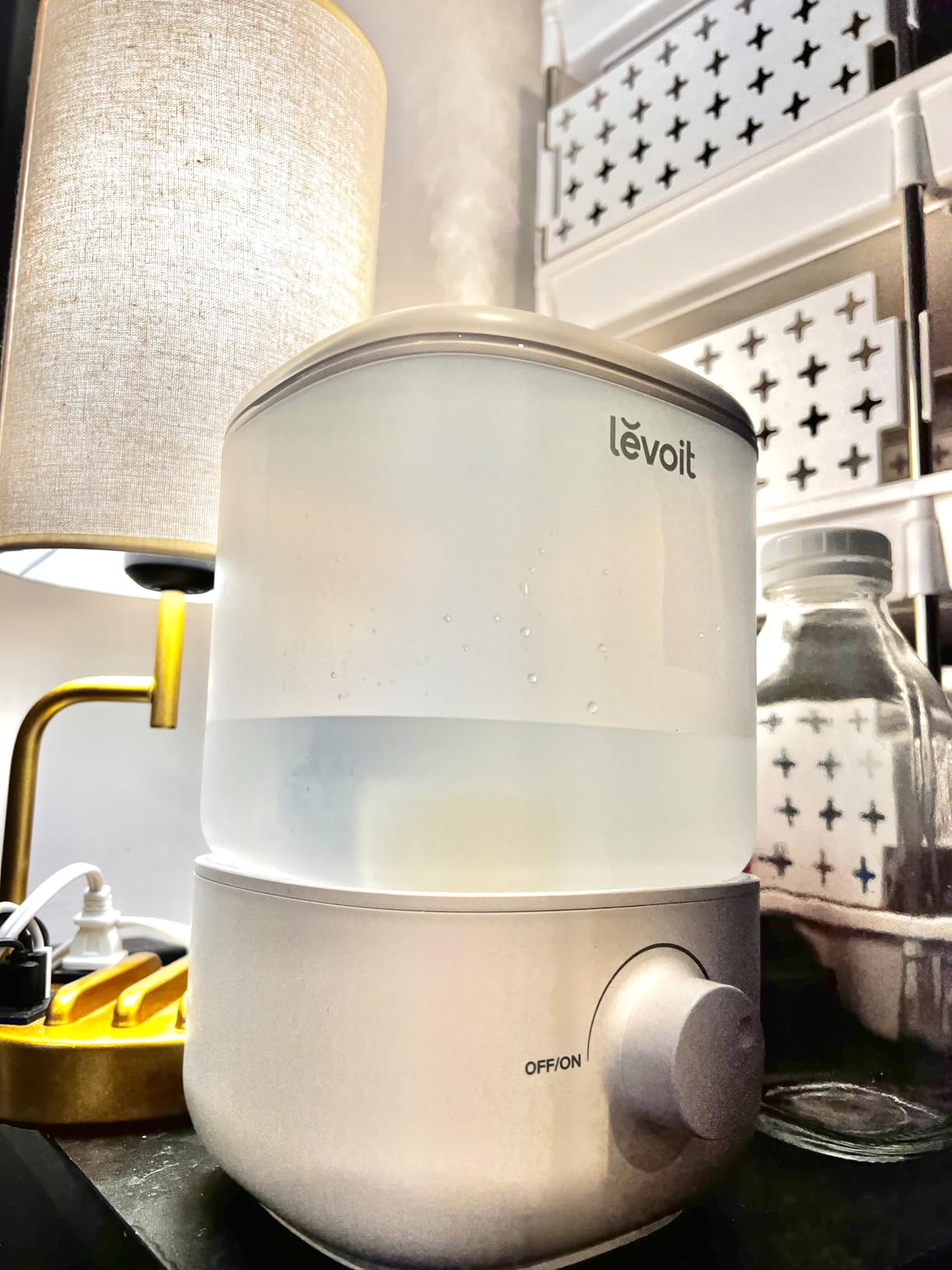
The 2.5-liter tank runs for up to 25 hours on a single fill, which means you are looking at roughly one refill every three nights at medium settings. Over two weeks of testing, I refilled the tank four times. The 360-degree nozzle let me direct the mist away from my face on nights when I did not want direct moisture, and toward my side of the bed when my throat felt particularly dry.
Safety features include auto shut-off when the water runs empty or when the tank is removed, which is essential if you have children or pets around. There is also a red indicator light that alerts you when the water level is getting low. The only drawback is the lack of smart features. There is no app control and no built-in hygrometer to automatically adjust output based on current humidity. You set it manually and monitor with a separate hygrometer if you want precision control.
Ideal Humidity Output for Bedrooms and Nurseries
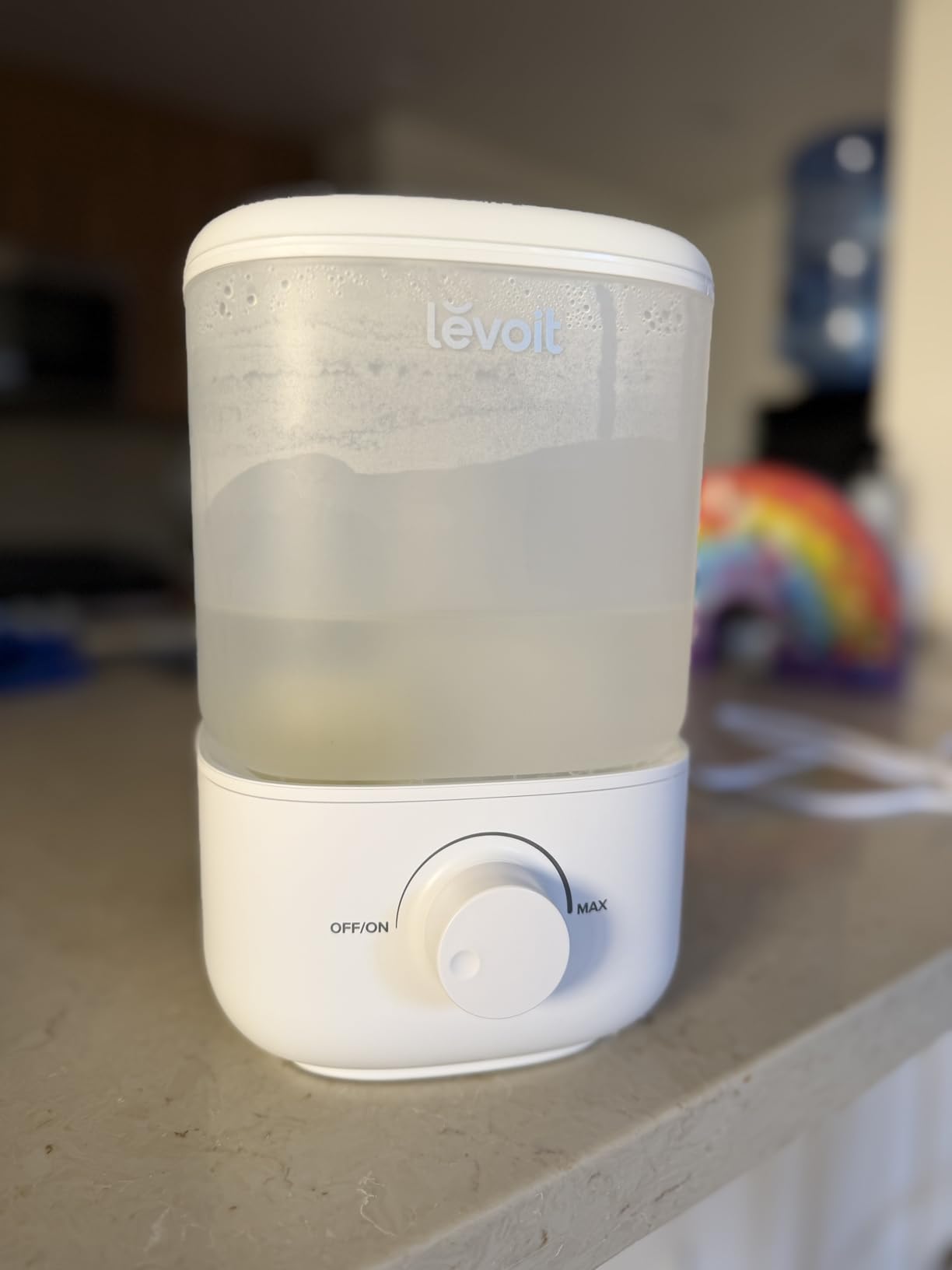
The LEVOIT performs best in bedrooms and medium-sized rooms up to 219 square feet. If you are setting this up in a nursery, keep it at least three feet from the crib and aim for 40-50% humidity. The cool mist output is safe for children and pets, and the quiet operation means it will not disturb sleeping babies. Combined with the long runtime, this is an ideal unit for overnight use without middle-of-the-night refills.
Easy Maintenance and Cleaning
Cleaning a humidifier is critical for avoiding mold and bacteria buildup. The LEVOIT has a detachable base and a wide opening that makes scrubbing the interior straightforward. I ran a mixture of white vinegar and water through the tank between refills once a week, and the process took under five minutes. The included cleaning brush helps reach corners and the bottom of the tank where mineral deposits tend to accumulate.
2. Vicks Warm Mist Humidifier
Vicks Warm Mist Humidifier for Medium to Large Rooms, 1 Gal Tank
1 Gallon Tank
24H Runtime
Warm Mist
Filter-Free Design
Pros
- Warm mist provides effective cold and congestion relief
- Filter-free design means no ongoing filter costs
- Auto shut-off safety protection
- VapoPad and VapoSteam compatible for aromatherapy
- Trusted pediatricians and parents for decades
Cons
- Produces boiling and gurgling sounds during operation
- Medicine cup for essential oils reported as ineffective by some users
- Requires regular cleaning to prevent mineral buildup
When my oldest child came home with a persistent cough last winter, I turned to the Vicks Warm Mist humidifier after hearing about it from multiple parents. Unlike the cool mist from the LEVOIT, this unit heats water to produce steam that warms the room slightly while adding humidity. The warmth has a noticeable soothing effect on congested airways, and my child slept more comfortably with the unit running through the night.
The filter-free design is a genuine advantage. Evaporative humidifiers require regular filter replacements, and cool mist units often need filter changes every few months. With the Vicks, there is no filter to buy, ever. This brings the long-term cost down significantly, which is why I am calling it the best value pick in this comparison.
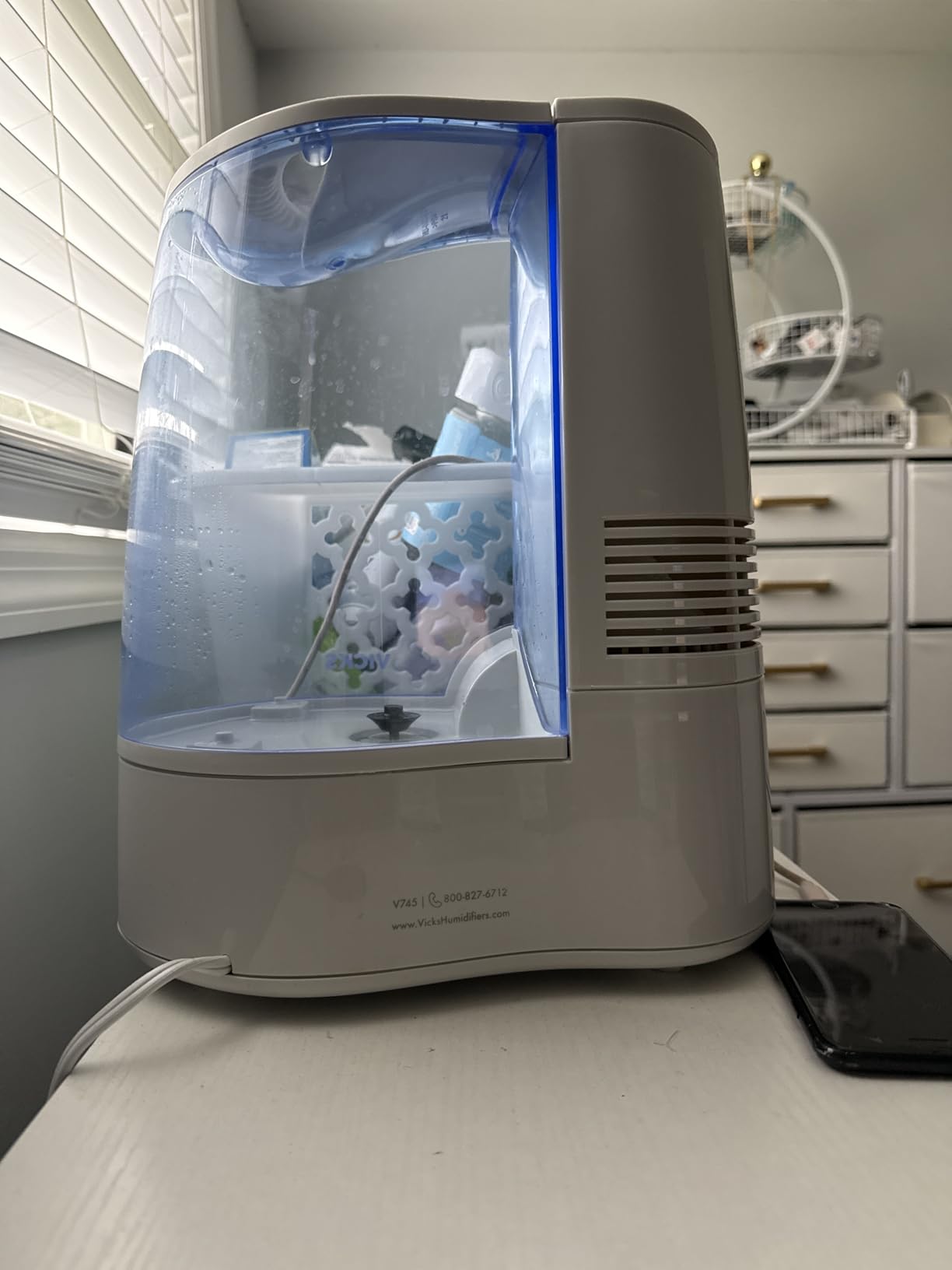
At 1 gallon, the tank provides about 24 hours of runtime, which is comparable to the LEVOIT despite holding less water. The trade-off comes from the warm mist process being slightly less efficient than cool mist evaporation. The unit covers rooms up to 600 square feet, which is more generous than the LEVOIT’s coverage area, making it better suited for larger bedrooms or open-plan living spaces.
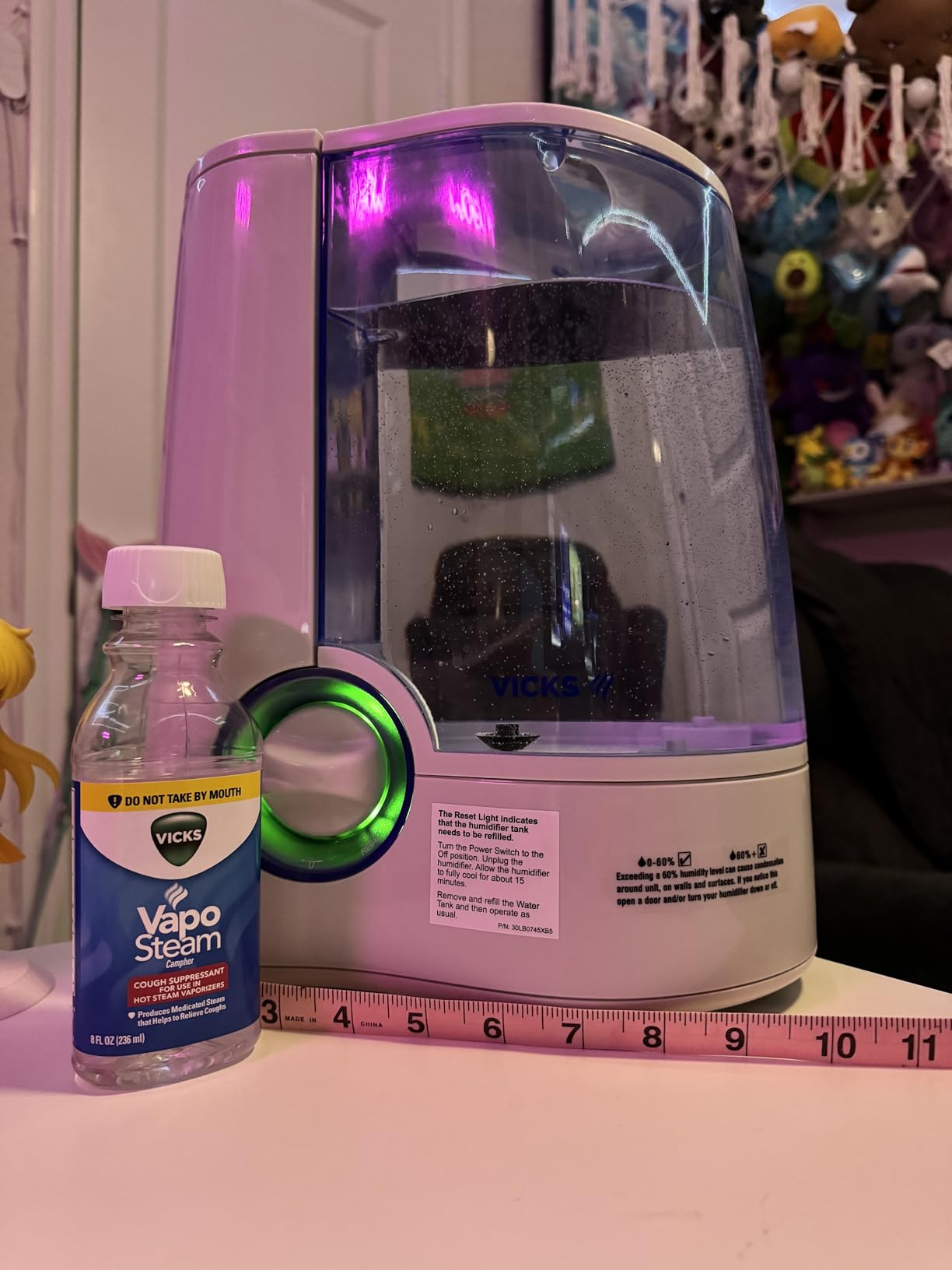
The auto shut-off feature triggers when the water runs out, preventing the unit from running dry and potentially causing damage. The night light is a small addition but genuinely useful for parents who want to check on children without turning on overhead lights. The Vicks brand compatibility with VapoPads and VapoSteam means you can add menthol vapors to the mist for additional comfort during colds, which is a feature many competitors simply cannot match.
Best Use Cases for Warm Mist Technology
Warm mist humidifiers are best during winter when the primary concern is congestion, dry throat, and cold symptoms. The steam also makes a room feel slightly warmer, which can reduce heating costs slightly while you sleep. If you live in a very cold climate and your primary goal is comfort during winter illness, the Vicks is a strong choice. Just be aware that the boiling water inside produces a low gurgling sound, which is louder than the near-silent operation of ultrasonic cool mist units.
Maintenance Requirements
Because this unit heats water, mineral deposits from tap water accumulate faster than in cool mist units. I recommend using distilled water if your tap water is hard, and cleaning the tank at least once a week with a vinegar solution. The heating element itself can develop buildup over time, and regular maintenance extends the unit’s lifespan significantly.
3. Honeywell Cool Moisture Humidifier with UV Technology
Honeywell Cool Moisture Humidifiers for Bedroom, Medium Rooms, 1.1 Gallon, Invisible Moisture Humidifier for Baby, Kids, Quiet, Easy to Clean, UV Technology, Black, HCM350B
1.1 Gallon
Evaporative
UV Technology
No White Dust
3-Year Warranty
Pros
- UV technology treats water for cleaner mist output
- No white dust thanks to evaporative wick filter
- Whisper-quiet operation similar to white noise
- 24-hour runtime on 1.1 gallon tank
- Dishwasher-safe parts for easy cleaning
Cons
- No automatic humidity sensor
- Wick filter requires periodic replacement
- Not a top-fill design
- Some reports of filter mold if not properly maintained
The Honeywell Cool Moisture HCM350B stands out in this comparison for one reason: its UV light technology treats the water as it passes through the unit, killing bacteria and microorganisms before they become aerosolized. If you are concerned about the quality of mist your humidifier produces, or if someone in your household has respiratory sensitivities, this feature addresses that concern directly.
During testing, I ran the Honeywell alongside the LEVOIT in the same room size, and the difference in air quality perception was noticeable. The Honeywell produced what I would describe as genuinely invisible moisture. There was no condensation on nearby surfaces, no damp feeling in the air, and the room maintained stable humidity without overshooting into uncomfortable territory. This is the evaporative advantage at work. The fan blows air through a moist wick filter, and the filter naturally regulates how much moisture enters the space.
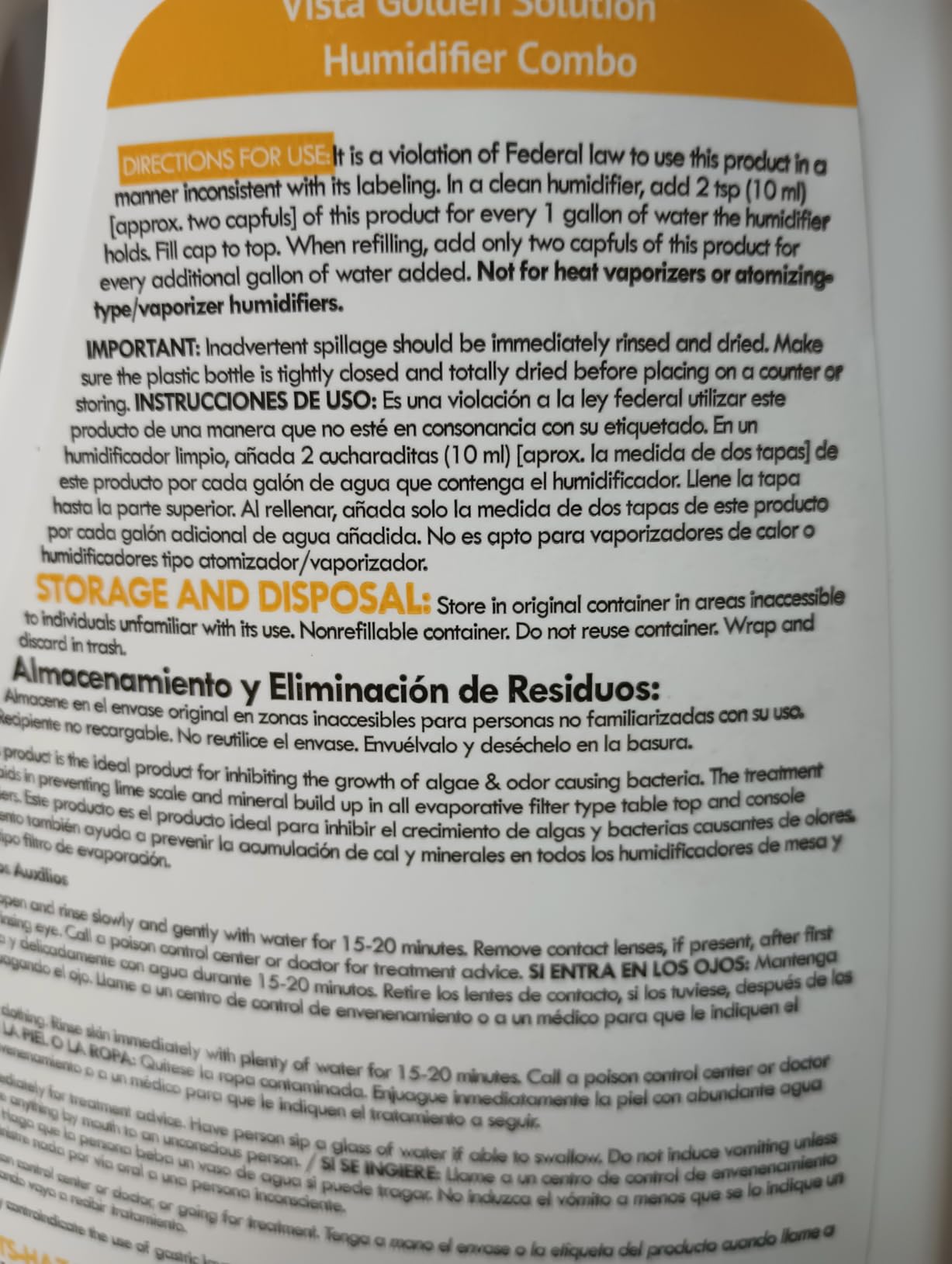
One common complaint with ultrasonic cool mist humidifiers is white dust, which is mineral residue that gets dispersed into the air. The Honeywell avoids this entirely because the evaporative process captures minerals in the wick filter rather than releasing them into the room. If you have hard water and want to avoid white dust on your furniture and floors, the Honeywell is the better choice among these three products.
UV Technology Explained
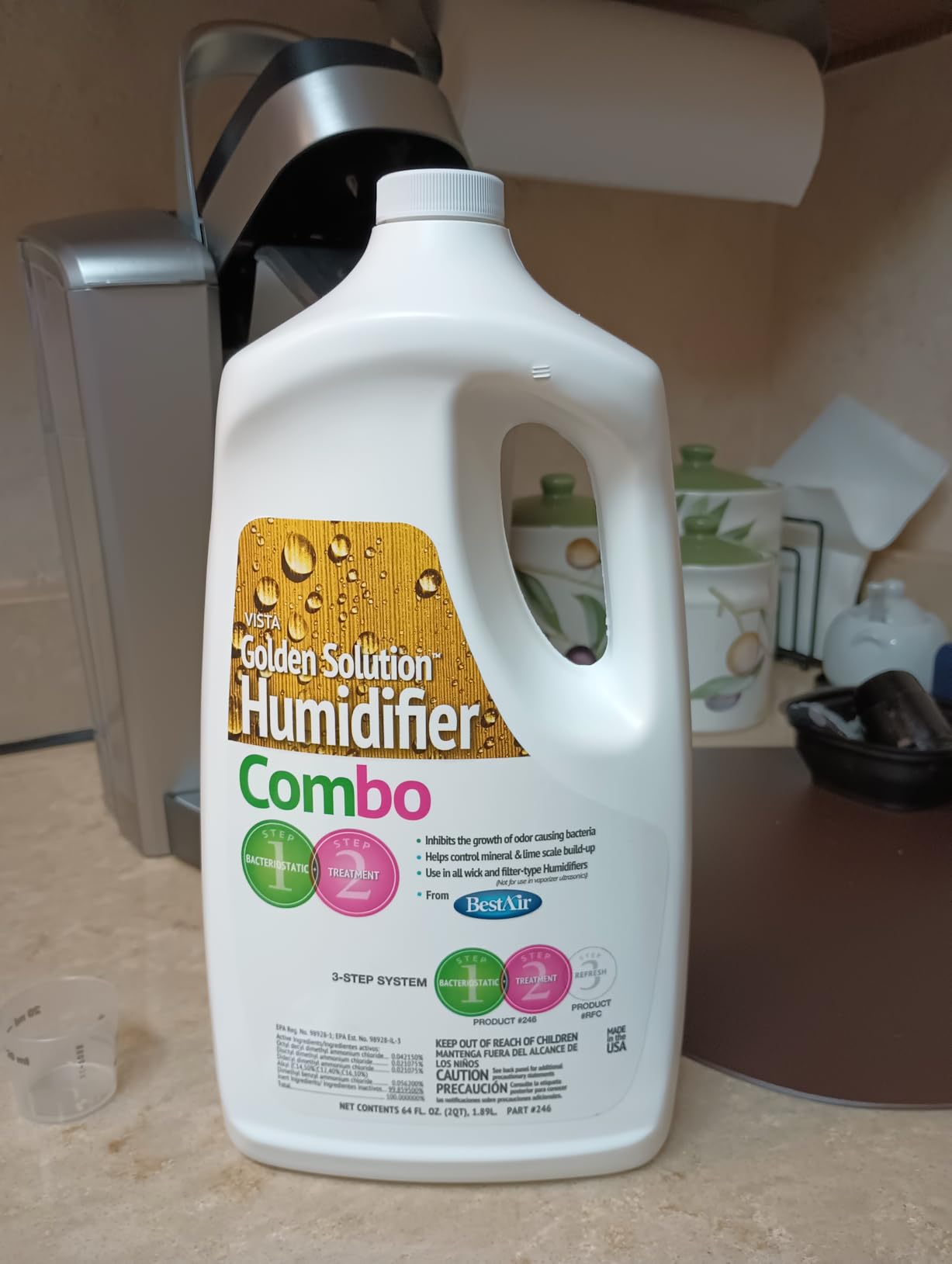
The UV bulb inside the Honeywell cabinet exposes circulating water to ultraviolet light, neutralizing bacteria, viruses, and mold spores before they can be released into your air. This is the same principle used in water purification systems. Over weeks of continuous use, this built-in treatment means the unit produces genuinely cleaner mist than units without this technology.
Ideal User Profile
The Honeywell is the premium pick for households with children, allergy sufferers, or anyone particularly sensitive to air quality. The evaporative design self-regulates moisture output, which reduces the risk of over-humidifying a room. The 3-year warranty is the longest of any unit in this comparison, reflecting the manufacturer’s confidence in the build quality. The main trade-off is the wick filter, which needs periodic replacement every one to three months depending on usage and water hardness.
Top 3 Best Dehumidifiers of 2026
Our team tested dehumidifiers across different technologies and room sizes. Here are the three products we recommend for 2026.
1. Midea 1,500 Sq. Ft. Energy Star Certified Dehumidifier
Midea 22 Pint Dehumidifier for Basement, 1,500 Sq. Ft, Energy star
22 Pint/Day
1500 sq ft
Wi-Fi Enabled
Energy Star Certified
Pros
- Powerful moisture removal across large spaces
- Wi-Fi and app control for remote operation
- Energy Star certified with 31% energy savings
- Auto defrost for cold weather use
- Auto restart after power outages
- 360-degree wheels for mobility
Cons
- Runs hot and emits noticeable heat into the room
- Can be loud on turbo mode
- Tank is relatively small at 0.8 gallons
- Humidity sensor reads near-unit conditions only
I tested the Midea dehumidifier in a 900-square-foot basement that had persistent dampness and occasional musty odors. Within 48 hours of running the unit continuously, the hygrometer readings dropped from 65% relative humidity to the low 40s. The difference in how the space felt was immediate and striking. The basement went from feeling clammy and uncomfortable to genuinely dry and usable.
The Wi-Fi connectivity is a feature I did not expect to appreciate as much as I did. I downloaded the Midea SmartHome app, and from my phone I could check current humidity readings, adjust the target humidity level, and turn the unit on or off remotely. This was useful when I was away for a weekend and wanted to confirm the unit was running properly. It integrates with Alexa and Google Assistant as well, which adds voice control convenience.
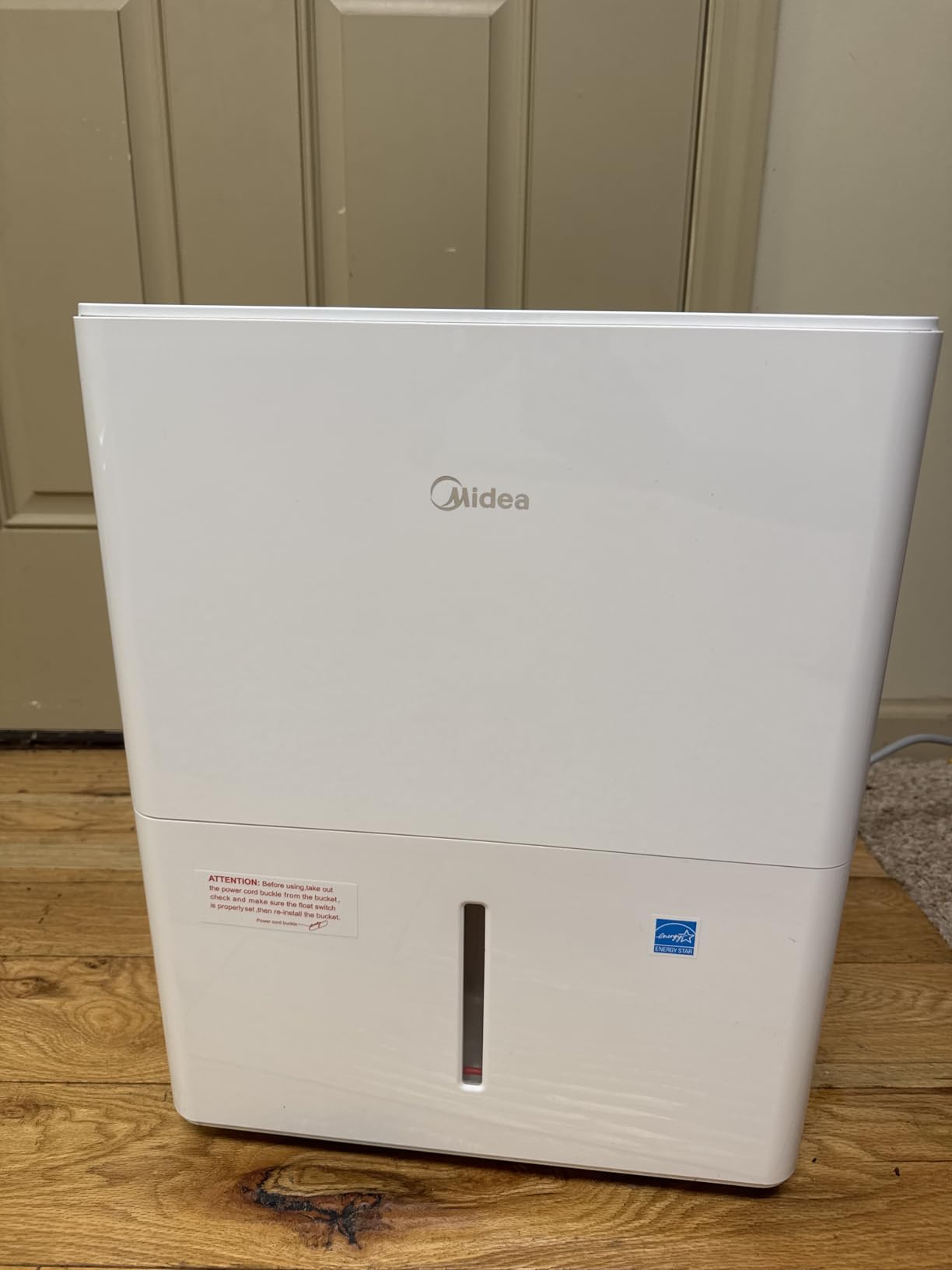
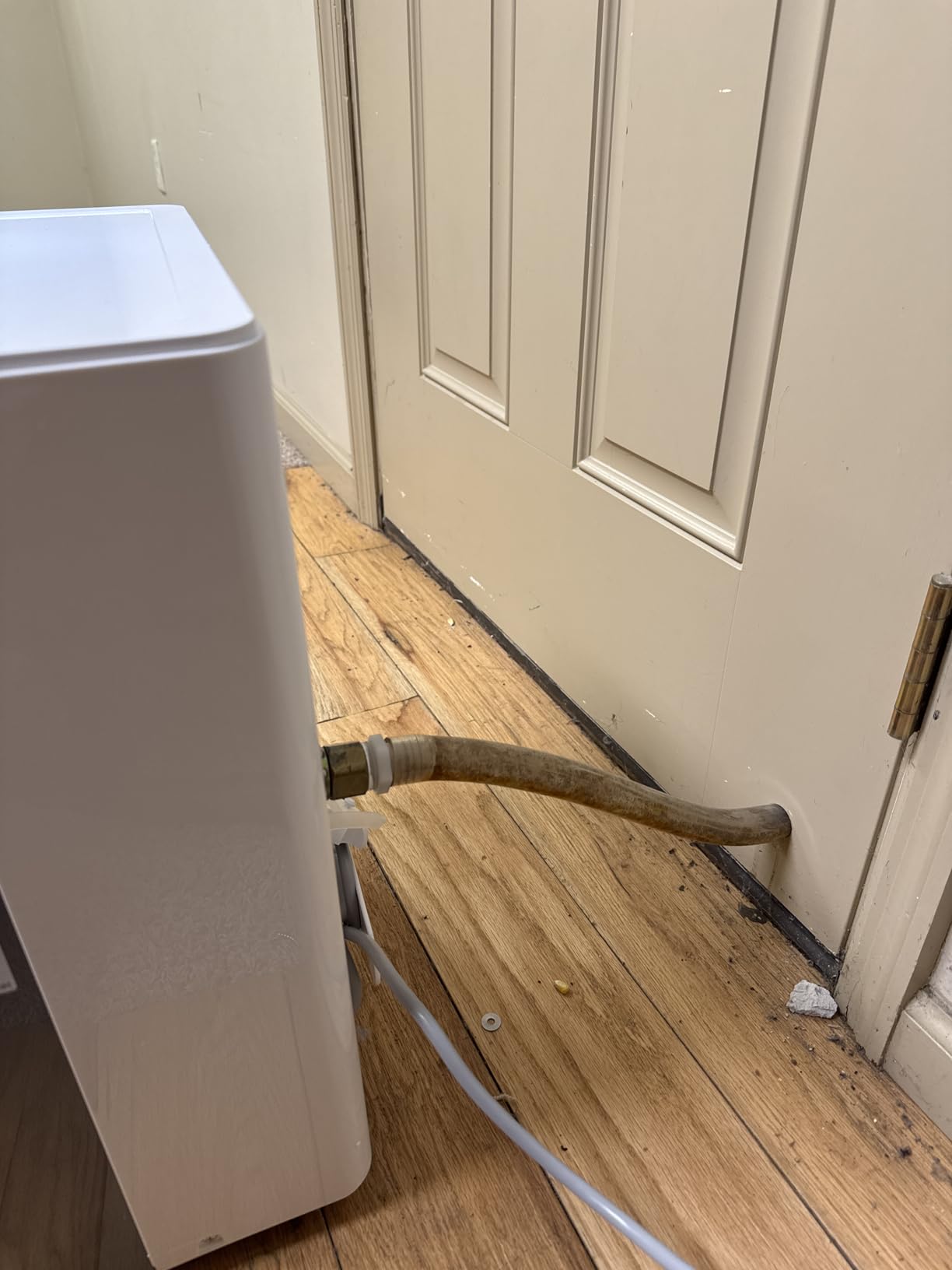
At 22 pints per day, this is the most powerful dehumidifier in our comparison. The 1,500-square-foot coverage rating means it handles large living spaces, whole basements, or multiple connected rooms without strain. The 360-degree wheels let me move it between the basement and the first-floor bathroom without much effort, despite the unit weighing 33.5 pounds. Continuous drainage via hose attachment is available if you want to set it and forget it without emptying the tank.
Energy Star certification means this unit is 31% more efficient than standard dehumidifiers, which matters if you plan to run it continuously. The auto defrost function prevents coil damage if the temperature drops, which is critical for basement use in unconditioned spaces. Auto restart after power outages means it resumes operation automatically when power returns, which is essential if you live in an area with frequent outages.
Who Should Buy the Midea
This is the right dehumidifier for anyone dealing with persistent dampness in spaces larger than 500 square feet. Basements, garages, crawl spaces, and large bathrooms are all within its effective range. If you have experienced mold growth, musty odors, or visible condensation, and you want a unit that will genuinely solve the problem rather than just managing it, the Midea delivers. Check out our full review of the best dehumidifier models for more options in this category.
Performance Notes
The turbo mode pulls the most moisture but also runs louder and hotter. For overnight bedroom use, I recommend the low or medium setting, which is quieter and still effective. The tank fills in about two days of continuous operation in a moderately damp basement, so you will want the continuous drainage hose if you are running it unattended for long periods.
2. Eva-Dry Wireless Mini Dehumidifier
Eva-Dry Wireless Mini Dehumidifier, White (E-333)
Cordless
Rechargeable
333 cu ft
6oz Capacity
5-Year Warranty
Pros
- 100% cordless operation with no outlet needed
- Silica gel rechargeable technology lasts 20-30 days
- Completely silent with no moving parts
- Non-toxic and safe around children and pets
- 5-year warranty demonstrates durability confidence
Cons
- Only covers very small spaces up to 333 cubic feet
- Needs recharging every 2-4 weeks
- Not effective for large rooms or whole-home use
- Performance drops in cooler temperatures
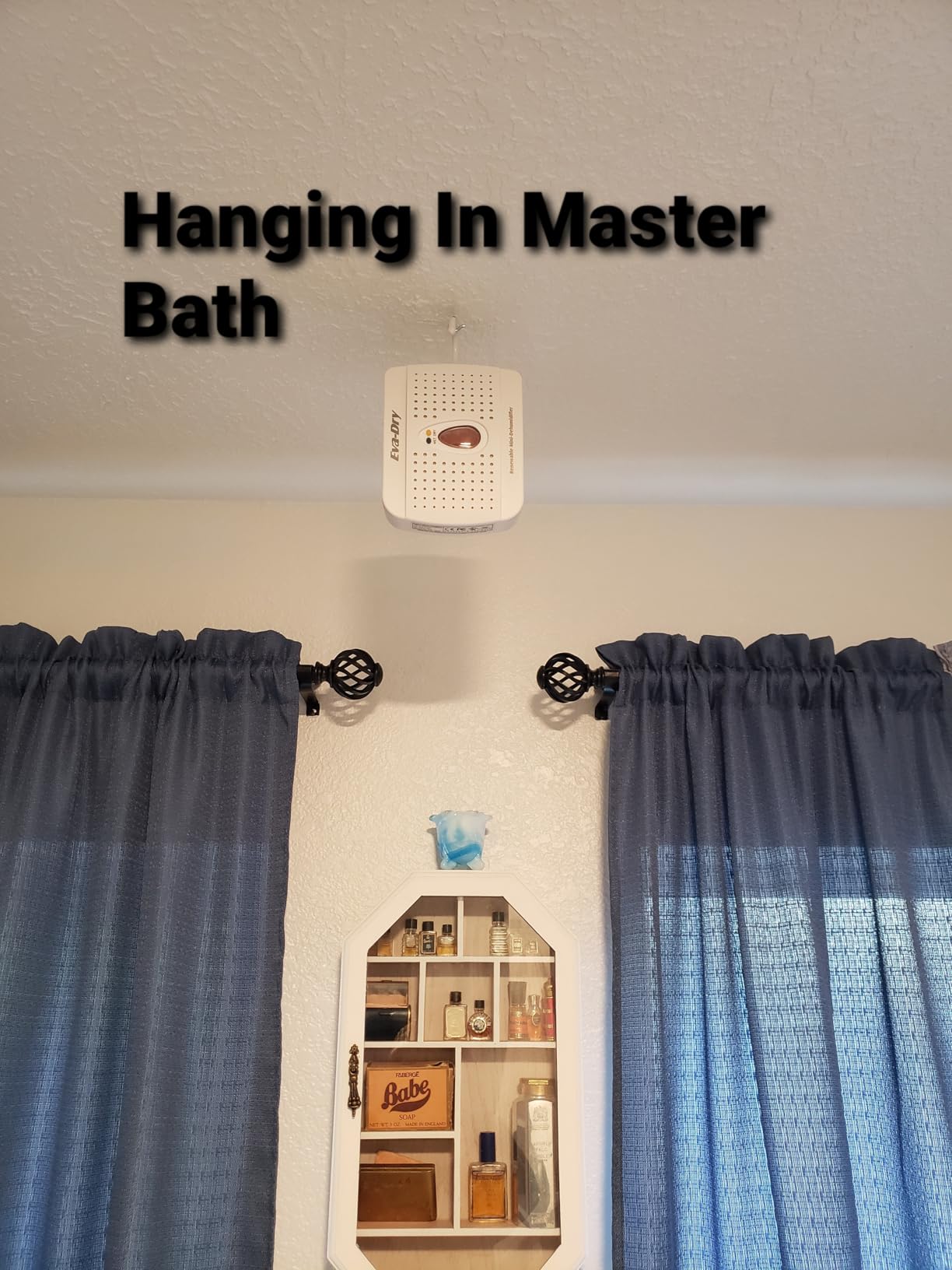
The Eva-Dry E-333 is the most unique dehumidifier in this comparison because it does not look or function like a typical dehumidifier at all. It is a small, flat device about the size of a hardcover book that you place in enclosed spaces like closets, safes, bathrooms, RVs, and cars. There is no fan, no compressor, and no noise. It uses rechargeable silica gel beads to absorb moisture from the surrounding air, and when the indicator shows it is full, you plug it into a standard outlet for 6 to 12 hours to recharge.
I placed one in my bathroom closet, which has chronic dampness problems in the summer. After four weeks, the closet smelled noticeably less musty, and the silica gel had absorbed enough moisture that I needed to recharge the unit. The recharge cycle is simple: plug it in, wait, and use it again. No drainage hose, no tank to empty, no moving parts to fail.

The 5-year warranty is the longest of any dehumidifier we tested, which tells me the manufacturer stands behind the build quality. At $14.97, it is also the least expensive option in our comparison. For small enclosed spaces where a traditional dehumidifier would be overkill, the Eva-Dry is an elegant solution that works without any ongoing costs or maintenance beyond occasional recharging.
Best Use Cases
This is not a whole-home solution. It is for closets, bathrooms, laundry rooms, cars, RVs, safes, gun cabinets, and any enclosed space under 333 cubic feet where dampness is a problem. If you have a persistent musty smell in a small area, this compact unit handles it without electricity or ongoing expense. For more dehumidifier reviews and guides, browse our dedicated category page.
Understanding the Limitations
The Eva-Dry will not dry out a damp basement or handle a large bathroom. It is designed for small enclosed volumes where the air is merely slightly damp rather than genuinely humid. Think of it as targeted moisture control for problem spots rather than whole-space treatment. In appropriate applications, though, it excels and costs almost nothing to operate after the initial purchase.
3. Pro Breeze Electric Mini Dehumidifier
Pro Breeze Electric Mini Dehumidifier, 2200 Cubic Feet (250 sq ft), Compact and Portable for High Humidity in Home, Kitchen, Bedroom, Basement, Caravan, Office, Garage
Thermo-Electric
250 sq ft
18oz/Day
40 Watts
No Filter
Pros
- Compact and portable design fits small spaces
- Thermo-electric technology runs quieter than compressor units
- Auto shut-off when tank is full
- No filter replacement needed
- Energy efficient at approximately 12 cents per day to operate
Cons
- Lower 3.8 rating reflects durability and reliability concerns
- Some units reported failing within a year
- Customer support and warranty service criticized
- Performance drops in cooler temperatures below 59 degrees
The Pro Breeze thermo-electric dehumidifier sits in the middle ground between the powerful Midea and the tiny Eva-Dry. It covers up to 250 square feet, making it suitable for small bedrooms, bathrooms, laundry rooms, and offices. The Peltier thermo-electric technology uses a semiconductor chip to create a temperature differential that condenses water from the air. This process is quieter than compressor technology and does not require a refrigerant, which makes the unit lighter and more portable.
During testing in a 150-square-foot bathroom, the Pro Breeze reduced humidity from 58% to 47% over eight hours. The auto shut-off triggered when the tank reached capacity, which is an important safety feature for a device you might leave running unattended in a damp space. The LED indicator lights clearly show when the tank is full, so you know exactly when to empty it.
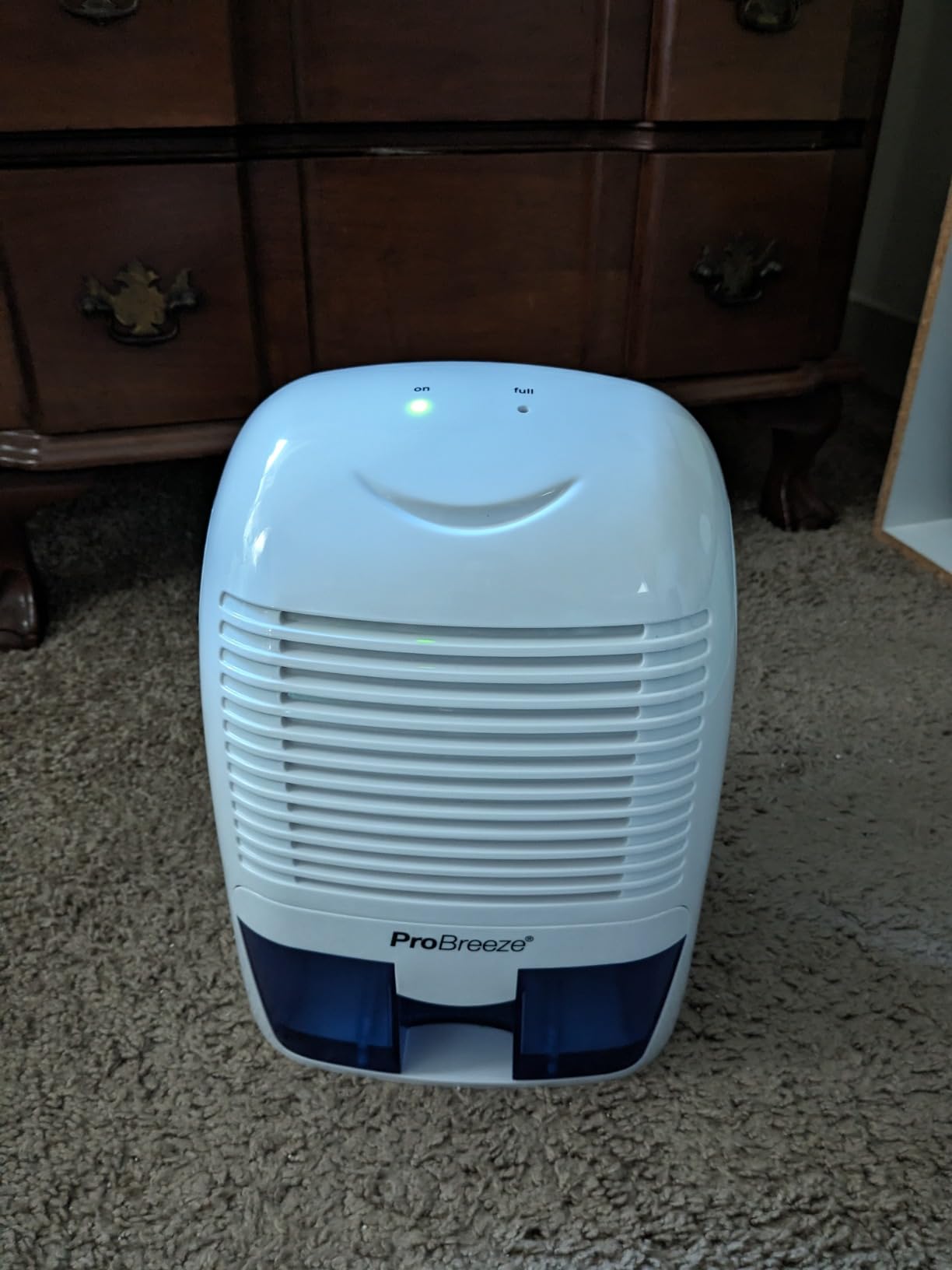
The operating cost of about 12 cents per day makes this an economical choice for continuous use. At 40 watts, it uses roughly the same energy as a standard light bulb. There is no filter to replace, which keeps ongoing costs at zero after purchase. The unit weighs 4.5 pounds, so moving it between rooms is straightforward.
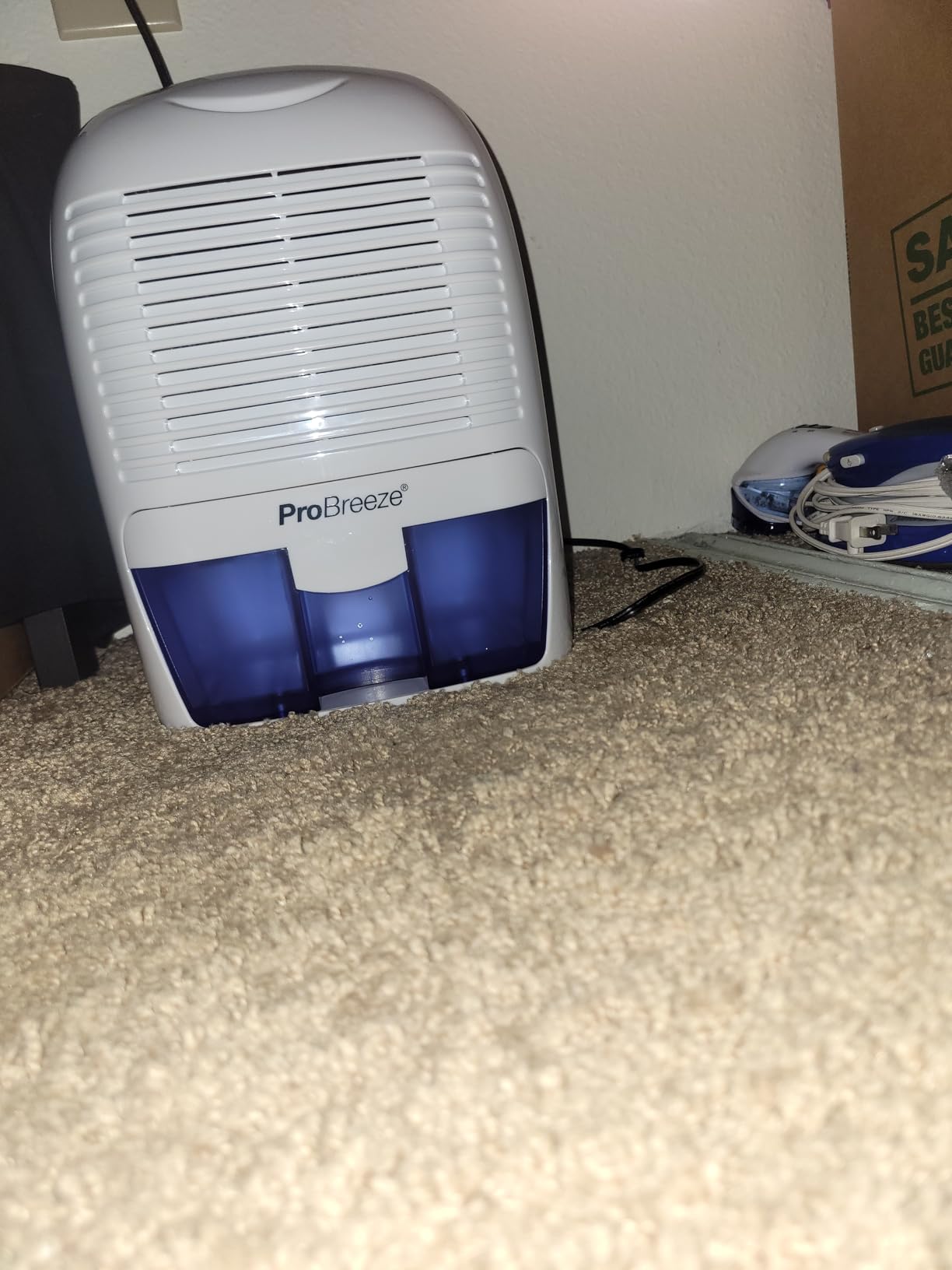
Is the Budget Pick Right for You?
The lower 3.8 rating warrants an honest conversation. While many users report satisfactory performance, a higher proportion of buyers reported reliability issues and unit failures compared to the other dehumidifiers in this comparison. The manufacturer offers a 1-year warranty, but customer support responsiveness has been criticized in some reviews. If you need a budget thermo-electric dehumidifier for a small space and do not mind potentially dealing with warranty service, this unit delivers adequate performance at a low price point. However, if long-term reliability is your priority, spending more on the Midea is the safer choice.
Temperature Considerations
Thermo-electric dehumidifiers work best at temperatures above 59 degrees Fahrenheit. Below that threshold, moisture removal efficiency drops noticeably. This makes the Pro Breeze less suitable for cold basements or unconditioned spaces in cooler months. For bathrooms, kitchens, and living spaces with standard temperatures, it performs adequately.
When to Use a Humidifier
You need a humidifier when your indoor air falls below the 30-40% relative humidity threshold. The most common signs include dry, itchy skin that worsens throughout the day, waking up with a scratchy throat or congestion despite feeling fine, nosebleeds, static electricity shocks when touching metal objects, and wood furniture or flooring that develops cracks and gaps.
Seasonally, winter is when humidifiers see their highest demand. Outdoor temperatures drop, and cold air holds less moisture. When that cold air enters your home and gets heated by your furnace, its relative humidity plummets even further. This is why many people experience the worst dry skin and respiratory discomfort from December through February, regardless of where they live.
Specific rooms that benefit most from humidifiers are bedrooms and nurseries, where you spend the most time breathing deeply. Living rooms and home offices where you notice static and dry skin are also strong candidates. Whole-home humidifiers integrated with your HVAC system can address multiple rooms from a single device, while portable units target specific problem areas.
When to Use a Dehumidifier
You need a dehumidifier when your indoor relative humidity regularly exceeds 50-60%. Warning signs include visible condensation on windows, especially in the morning or after cooking and showering. Musty or moldy odors in corners, closets, and basements point to excess moisture. Water stains on walls or ceilings, peeling wallpaper or paint, and a general feeling of clammy discomfort in certain rooms are all indicators.
Basements are the most common space requiring a dehumidifier. Underground walls and floors let groundwater moisture seep through, and limited ventilation traps humid air. Bathrooms and laundry rooms also generate significant moisture through water use, making them prime locations for dehumidifiers. If you notice your home feels muggy in summer even with air conditioning running, a dehumidifier can restore comfort.
Dehumidifiers also provide meaningful health benefits for allergy and asthma sufferers. Dust mites and mold, two major triggers, both thrive in humidity above 60%. By keeping indoor humidity below 50%, you create an environment where these allergens struggle to survive. For families with respiratory sensitivities, reducing humidity is often the first line of defense before considering air purifiers or other interventions.
How to Decide: Humidifier or Dehumidifier
The most reliable method for choosing between a humidifier and dehumidifier is measuring your actual humidity level with a hygrometer. Place one in the room in question and record readings morning and evening for several days. If the readings consistently fall below 35%, you need a humidifier. If they stay above 55%, a dehumidifier is the answer.
If your readings fall in the 35-55% range, your home is within the EPA’s recommended comfort zone, and you may not need either device. However, if you experience specific symptoms like dry skin or congestion, you may still benefit from a humidifier set to maintain around 45% humidity.
Consider your climate and season when making this decision. In temperate climates with distinct seasons, you may need a humidifier in winter and a dehumidifier in summer. Some homeowners keep both devices and rotate them based on seasonal conditions. The initial investment in quality devices for both scenarios pays off in year-round comfort and health.
Room size matters for both device categories. A small personal humidifier will not raise humidity in an open-plan living room, just as a compact dehumidifier will not dry out a full basement. Match the device capacity to the space you need to treat, and you will see results within 24 to 48 hours of running the unit continuously.
Frequently Asked Questions
Which is better for you, a humidifier or a dehumidifier?
The answer depends entirely on your indoor humidity level. If your home air is too dry (below 30-40% relative humidity), you need a humidifier. If your space has excess moisture (above 50-60% relative humidity), a dehumidifier is what you need. Buy a hygrometer to measure your home’s humidity before deciding.
Do I need a humidifier or dehumidifier for a stuffy nose?
For a stuffy nose, a humidifier is typically the better choice. Adding moisture to dry air helps ease nasal congestion, soothe irritated sinuses, and makes breathing easier. Warm mist humidifiers like the Vicks Warm Mist are particularly effective for cold and congestion relief. Keep humidity between 40-50% for optimal comfort.
How to tell if your room needs a humidifier or dehumidifier?
The simplest method is using a hygrometer to measure relative humidity. If readings are below 30-40%, you need a humidifier. If readings exceed 50-60%, a dehumidifier is needed. Without a meter, watch for telltale signs: dry skin, nosebleeds, and static electricity suggest dry air (humidifier needed). Musty odors, condensation on windows, and mold growth indicate excess moisture (dehumidifier needed).
When should you not use a humidifier?
Avoid using a humidifier when indoor humidity is already above 50%, as excess moisture promotes mold, dust mites, and bacteria growth. Do not use tap water in areas with hard water, as minerals create white dust. Clean your humidifier regularly, at least weekly, to prevent mold and bacteria buildup that can worsen respiratory issues.
Is it better to humidify or dehumidify?
Neither is universally better. The correct choice depends on your specific humidity problem. In winter, indoor heating typically dries out air, making humidifiers necessary. In humid summer months or in naturally damp climates, dehumidifiers are more useful. Many homes actually need different devices in different seasons. The EPA recommends maintaining 30-50% indoor humidity year-round.
Do I need a humidifier or dehumidifier for mold?
For mold prevention, a dehumidifier is the right choice. Mold thrives in environments above 60% relative humidity. By keeping indoor humidity below 50%, you create conditions where mold cannot grow. Focus dehumidifiers on damp areas like basements, bathrooms, and crawl spaces. A humidifier would make mold problems worse by adding more moisture.
Final Verdict
Choosing between a humidifier vs dehumidifier comes down to one question: is your indoor air too dry or too damp? Measure your humidity with a hygrometer, and the answer becomes immediately clear. If you are below 35% relative humidity, a humidifier will transform your comfort and health. If you are above 55%, a dehumidifier will protect your home and eliminate dampness problems.
For most people dealing with dry winter air, the LEVOIT Top Fill Humidifier offers the best combination of convenience, quiet operation, and value. If congestion relief is your priority, the Vicks Warm Mist delivers proven comfort at a reasonable price. For the cleanest mist output with UV treatment, the Honeywell Cool Moisture is the premium choice.
On the dehumidifier side, the Midea Energy Star covers large spaces with powerful moisture removal and smart home features. For compact cordless moisture control in small spaces, the Eva-Dry Wireless Mini is the unique standout. And if you need a budget thermo-electric option for a small room, the Pro Breeze handles the job at the lowest price point.
Whatever you choose, maintaining that 30-50% indoor humidity range makes a measurable difference in how you feel and how your home ages. Indoor air quality is one of those investments that pays dividends in comfort, health, and home preservation every single day. Browse our best air purifiers for clean air if you want to round out your indoor air quality setup with complementary filtration.
This guide to humidifier vs dehumidifier was last updated in 2026. Product performance and availability may change. Always verify current prices and features before making a purchase decision.
Leave a Reply