
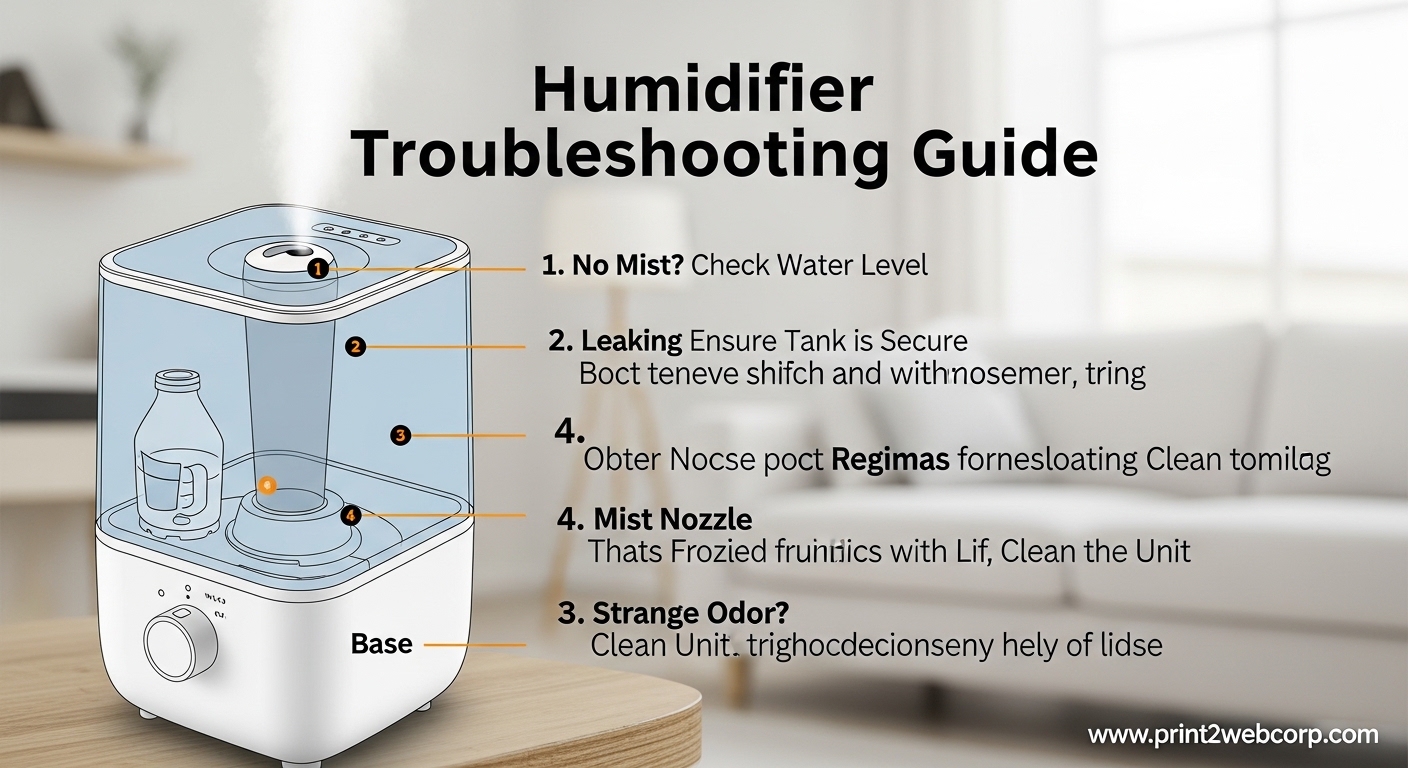
Waking up to dry, scratchy throat or static shocks every time you touch a doorknob means your humidifier isn’t doing its job. I’ve spent years helping homeowners diagnose and fix humidifier issues, and most problems have simple solutions you can handle in under 30 minutes. This humidifier troubleshooting guide covers the most common problems, why they happen, and exactly how to fix them.
Whether you have a portable ultrasonic unit on your nightstand or a whole-house system connected to your furnace, understanding the basics of humidifier troubleshooting saves you money on service calls and prevents unnecessary replacements. Let’s work through the issues together.
Understanding Your Humidifier Type
Before diving into specific problems, knowing your humidifier type helps pinpoint which troubleshooting steps apply to your situation. Different humidifiers work in different ways, and each has its own common failure points.
Ultrasonic humidifiers use a vibrating metal diaphragm to create cool mist through high-frequency vibration. These are quiet and energy-efficient but prone to mineral buildup on the ultrasonic plate.
Steam vaporizers boil water to produce warm mist, which kills bacteria but uses more electricity. Common issues involve heating element failure and scale buildup from hard water.
Evaporative humidifiers blow air through a wet wick or filter pad. They’re self-regulating but the wick needs regular replacement and can develop mold if neglected.
Whole-house humidifiers connect to your furnace and water supply. These involve solenoid valves, water panels, and humidistats – more components that can malfunction but handle much larger spaces.
Humidifier Not Turning On – Power Issues
The most frustrating problem is pressing the power button and getting absolutely nothing. Before assuming your humidifier is dead, work through these power-related checks in order.
First, verify the outlet works by plugging in a lamp or phone charger. It sounds basic, but I’ve seen countless “broken” humidifiers that were simply plugged into a dead outlet controlled by a wall switch.
Check your home’s circuit breaker panel. A tripped breaker cuts power to the outlet entirely. Reset any tripped breakers and test the humidifier again.
Many humidifiers have safety features that prevent operation when water tanks are empty or improperly seated. Remove the water tank, refill it, and ensure it clicks firmly into place. The float mechanism inside the tank must move freely to trigger the power-on state.
For whole-house humidifiers, verify the furnace is actually running and the humidistat is set above the current room humidity. These units only activate when the furnace blower is on and humidity levels drop below your set point.
Humidifier Not Misting – No Output
Your humidifier powers on but produces no visible mist. This is the most common complaint I see, and the causes vary by humidifier type.
For ultrasonic models, check the water tank placement first. If the tank isn’t seated correctly, water won’t reach the ultrasonic plate. Remove and reseat the tank, listening for the click that indicates proper connection.
Mineral buildup on the ultrasonic plate is the top culprit for no-mist issues. Hard water leaves scale deposits that prevent the diaphragm from vibrating properly. Clean the plate with white vinegar and a soft brush – never use abrasive cleaners that can damage the surface.
Evaporative humidifiers need airflow through a wet wick. If the fan runs but humidity doesn’t rise, check if the wick is dried out or clogged with mineral deposits. A stiff wick can’t absorb water properly and needs replacement.
Steam humidifiers that don’t produce mist often have a failed heating element. Test the element with a multimeter if you’re comfortable working with electricity, or call a professional for this repair.
Whole-house units require water flow to the water panel. Check that the saddle valve on your water line is fully open – partially closed valves restrict flow enough to prevent humidification. The solenoid valve should click when the humidifier activates; no click means electrical or valve problems.
What Does the Red Light Mean?
A red light on your humidifier isn’t just decoration – it’s a specific warning signal. Understanding what your red light indicator means helps you respond correctly to the problem.
Most humidifiers use red lights to signal low water levels. If refilling the tank doesn’t clear the light, check the water sensor. Mineral deposits on sensor probes can trick the unit into thinking the tank is empty. Clean the probes with vinegar and a soft cloth.
Filter replacement warnings also appear as red lights on many models. These reminders activate after a set runtime, usually 1-3 months depending on usage. Even if the filter looks okay, replace it when prompted – a clogged filter restricts airflow and can harbor mold.
Some brands use specific red light patterns to indicate different problems. Levoit models flash rapidly when the water tank is removed, while Pure Enrichment units show solid red for filter replacement and blinking red for low water. Check your manual for pattern meanings specific to your model.
Continuous red lights that won’t clear after addressing the obvious issues often indicate internal sensor failure. At this point, contact manufacturer support before attempting deeper repairs.
Humidifier Leaking Water
Water pooling around your humidifier creates immediate problems – floor damage and electrical hazards. Leaking issues stem from a few predictable causes.
Overfilling the water tank is the simplest explanation. Most tanks have a fill line that’s easy to exceed when rushing. Water expands slightly and can spill through overflow vents when the unit runs. Never fill past the marked line.
Improper tank seating causes leaks at the connection point. Remove the tank and inspect the gasket or O-ring for damage or debris. Even a small hair or mineral deposit can break the seal. Clean the connection area and reseat firmly.
Cracks in the tank develop over time, especially in older units. Inspect the tank carefully by holding it up to light – hairline cracks are often invisible until water is inside. Replacement tanks are available for most major brands.
Whole-house humidifiers leak when the drain line clogs or the water panel overflows. Check that the drain hose isn’t kinked and that water flows freely through it. Mineral deposits in the drain line restrict flow and cause backup.
Water pressure above 125 psi can cause whole-house units to leak. Install a pressure regulator if your home’s pressure is excessive – this protects not just your humidifier but all plumbing fixtures.
Strange Noises and Bad Odors
Your humidifier shouldn’t announce its presence with sounds or smells. Both issues indicate specific problems that need attention.
Clicking or buzzing sounds often come from debris in the fan or fan motor issues. Unplug the unit and carefully clean the fan blades with compressed air. If the noise persists after cleaning, the motor bearings may be failing.
Gurgling or bubbling is normal in ultrasonic humidifiers as water moves through the system, but loud gurgling can indicate air in the water lines (whole-house units) or improper water level.
Musty or moldy smells mean your humidifier has become a biological hazard. Mold grows quickly in standing water and on damp wicks. Deep clean the entire unit with a vinegar solution, replace any filters or wicks, and establish a weekly cleaning routine.
Burning smells indicate electrical problems or overheating. Unplug immediately and don’t use the unit until inspected by a professional. This smell can precede a fire and should never be ignored.
White Dust Problem
White powder coating your furniture near the humidifier is a common complaint with ultrasonic units. This white dust consists of mineral particles dispersed into the air along with water mist.
The problem comes from hard water containing calcium and magnesium. Ultrasonic vibration breaks these minerals into fine particles that settle as dust on surfaces throughout the room.
Switching to distilled water eliminates white dust completely. It costs more but prevents mineral buildup in your humidifier and dust on your belongings.
If distilled water isn’t practical, use demineralization cartridges or filters designed for your humidifier model. These filters trap minerals before they become airborne but need regular replacement.
Weekly cleaning with vinegar dissolves mineral deposits before they become problematic. Run a cleaning cycle with vinegar and water solution, then rinse thoroughly before normal use.
DIY vs Professional Repair
Knowing when to tackle repairs yourself and when to call a professional saves time and prevents safety hazards. Use this decision framework for humidifier troubleshooting.
DIY-friendly repairs: Cleaning mineral buildup, replacing filters and wicks, reseating water tanks, clearing drain clogs, and checking power connections are all homeowner-friendly tasks. These require basic tools and minimal technical knowledge.
Call a professional when: You encounter electrical issues beyond checking outlets, the solenoid valve needs replacement on whole-house units, internal sensors fail, or you’re uncomfortable working with water line connections. HVAC technicians have the tools and expertise for these repairs safely.
Cost consideration: Basic humidifiers under $50 often aren’t worth professional repair – replacement makes more sense. Whole-house systems costing $500+ justify professional service, and many components are replaceable rather than requiring full unit replacement.
Safety first: Any repair involving electrical wiring or water supply lines carries risk. If you’re unsure about any step, call a professional. Water and electricity are a dangerous combination for inexperienced DIYers.
FAQ’s
Why isn’t mist coming out of my humidifier?
The most common cause is mineral buildup on the ultrasonic plate or evaporative wick. Clean the plate with vinegar or replace the wick. Also check that the water tank is properly seated and filled. For steam humidifiers, a failed heating element prevents mist production.
What are common problems with humidifiers?
No mist output, water leaks, strange noises, bad odors, red light indicators, and units not turning on are the most common issues. Most stem from mineral buildup, clogged filters, improper tank seating, or power supply problems. Regular maintenance prevents 80% of these problems.
What is the lifespan of a humidifier?
Portable humidifiers typically last 3-5 years with proper maintenance. Whole-house humidifiers can last 10-15 years when serviced annually. Hard water reduces lifespan by accelerating mineral buildup. Using distilled water extends life significantly.
How do I know if my humidifier solenoid valve is bad?
Test the valve by manually activating it or checking for voltage at the terminals when the humidifier should run. No voltage indicates a thermostat or wiring problem. Voltage present but no water flow means the valve is stuck closed and needs replacement.
Can I use tap water in my humidifier?
Tap water works but causes mineral buildup and white dust. Hard water accelerates these problems. Distilled water prevents mineral deposits and extends humidifier life. If using tap water, clean the unit weekly and expect more frequent filter replacements.
Conclusion
Most humidifier problems stem from a handful of causes: mineral buildup, clogged filters, improper tank seating, or power supply issues. Working through this humidifier troubleshooting guide systematically helps you identify and fix the majority of issues without professional help.
Preventative maintenance makes the biggest difference. Clean your humidifier weekly, replace filters on schedule, use distilled water when possible, and inspect components regularly. These simple habits extend your humidifier’s life and prevent most problems before they start.
When DIY troubleshooting reaches its limit, don’t force repairs beyond your comfort level. Electrical work and whole-house system repairs are worth the professional service call. Your safety and the longevity of your humidifier depend on knowing when to call for help.
Leave a Reply