
Propane heaters are some of the most reliable heating solutions for garages, patios, campsites, and indoor spaces. I’ve used propane heaters for over 15 years across different seasons and applications, and while they’re incredibly convenient, the first time you try to light one can be intimidating.
Whether you’re dealing with a new heater or one that hasn’t been used in months, knowing how to light a propane heater properly is essential for both safety and performance. In this guide, I’ll walk you through everything you need to know to get your heater running safely and efficiently.
We’ll cover the quick-start method, detailed step-by-step instructions for different heater types, essential safety precautions, and troubleshooting tips for when things don’t go as planned.
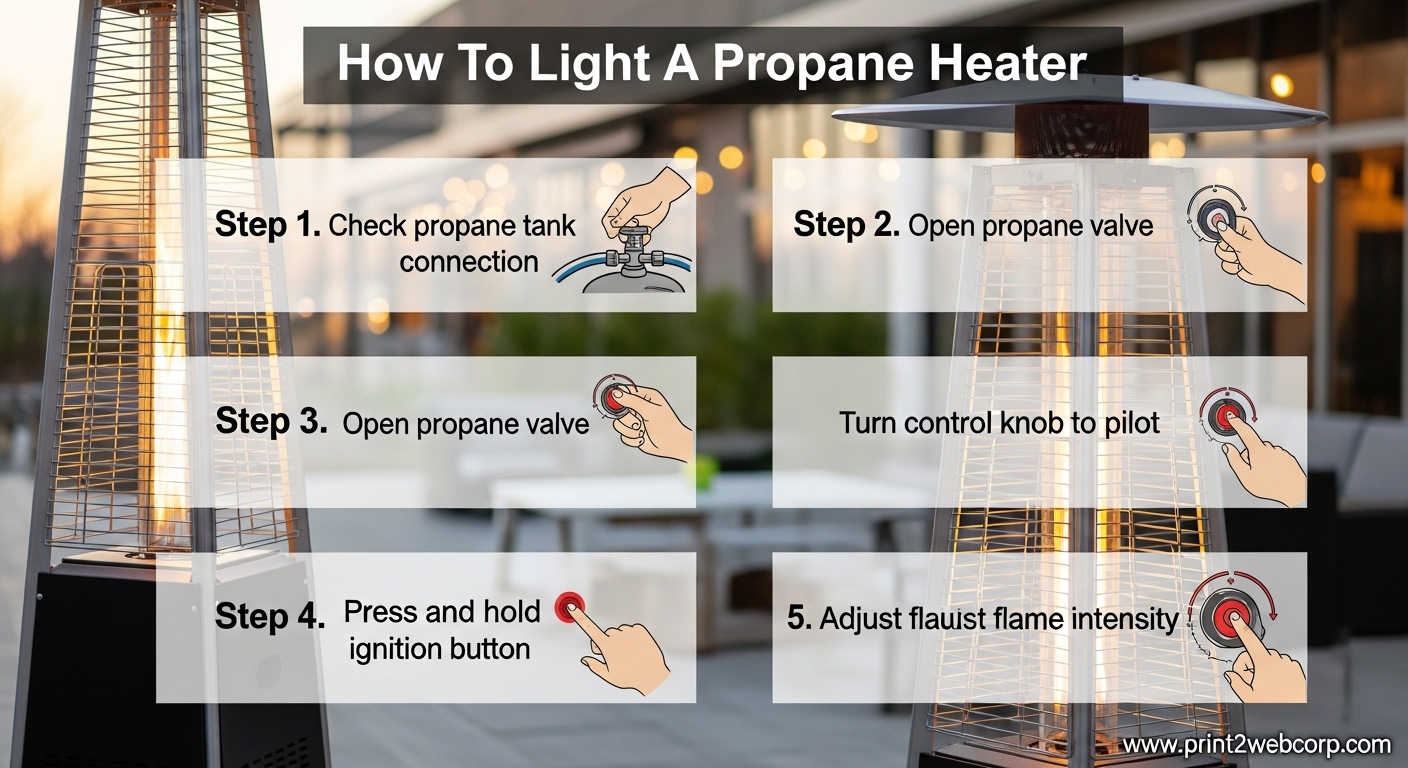
Quick Answer: How to Light a Propane Heater in 5 Steps
If you’re in a hurry, here’s the fastest way to get your propane heater running:
1. Connect the propane tank securely and open the valve slowly by turning counterclockwise
2. Locate the control knob and press it in while turning to the “Pilot” position
3. Press and hold the igniter button (or use a long lighter) for 30-60 seconds until the pilot lights
4. Continue holding the control knob for another 30 seconds after the pilot ignites
5. Turn the control knob to your desired heat setting and release
This basic process works for most standard propane heaters, but the exact steps can vary depending on whether you have a self-ignition model or one that requires manual lighting. Let me break down the complete process in detail.
Essential Safety Precautions Before Lighting
Before you even think about lighting your propane heater, you need to ensure your safety. Propane is a safe fuel when handled correctly, but it deserves respect. I’ve seen too many people skip these basic precautions and end up with dangerous situations.
First, always check your ventilation. Propane heaters consume oxygen and release carbon monoxide as a byproduct of combustion. You need adequate airflow – either from open windows, vents, or specifically designed ventilation systems. Never use an outdoor propane heater indoors without proper ventilation, and never use any propane heater in a completely enclosed space.
Second, inspect your propane tank and connections before each use. Look for cracks, damage, or wear on the hose and regulator. Perform a simple leak test by mixing dish soap with water and brushing it onto the connections – if you see bubbles forming, you have a leak that needs to be addressed before lighting.
Third, clear the area around your heater. Keep flammable materials at least three feet away from the heater in all directions. This includes curtains, furniture, paper products, and especially other fuel sources. I once saw someone nearly set their camping gear on fire because they stored it too close to their heater.
Finally, make sure you have a working carbon monoxide detector in the same room as your propane heater. This is non-negotiable for indoor use. Carbon monoxide is odorless and colorless, and early detection can literally save your life.
Know Your Heater Type: Self-Ignition vs Manual
Not all propane heaters are created equal, and knowing which type you have will determine the lighting procedure. The two main categories are self-ignition heaters (also called piezo ignition) and manual ignition heaters.
Self-ignition heaters have a built-in piezo electric igniter button that creates a spark when pressed. You’ll usually find this button near the control knob, often labeled with a spark or flame icon. These are the most convenient type – you simply press the button and the pilot lights automatically. Most modern portable propane heaters use this system.
Manual ignition heaters require you to manually introduce a flame to the pilot light. You’ll need a long-reach lighter or long matches to light these models. The control knob will have a “Pilot” position, but there’s no igniter button. Older heaters and some heavy-duty industrial models still use this method.
Some heaters, particularly newer indoor models, may have electronic ignition systems that use batteries or an electrical connection. These typically have a simple push-button or switch operation similar to a gas stove. Check your owner’s manual if you’re unsure which system your heater uses.
For both types, you’ll need to understand the control knob positions. Most propane heaters have three main settings: “Off,” “Pilot,” and then various heat settings (often numbered 1-5 or labeled Low, Medium, High). The pilot position is where you’ll start the ignition process.
How to Light a Propane Heater: Complete Step-by-Step Guide
Step 1: Check Your Propane Supply
Before attempting to light your heater, ensure you have adequate propane. Connect your propane tank to the heater following the manufacturer’s instructions, making sure all connections are hand-tight and secure. Open the propane tank valve slowly by turning it counterclockwise – opening it too quickly can sometimes trigger the tank’s excess flow safety device.
If you’ve recently changed tanks or haven’t used the heater in a while, you may need to “burp” the tank. This simply means opening the valve slightly for a few seconds to release any air that may have entered the line, then closing it and reopening slowly. This prevents air pockets that can make ignition difficult.
Listen for the sound of propane flowing through the regulator – you should hear a slight hissing sound when the valve is open. If you don’t hear anything, check that the tank isn’t empty and that the valve is fully open.
Step 2: Prepare the Heater
Position your heater in its intended location on a stable, level surface. Make sure it’s at the recommended distance from walls and objects – usually at least three feet in all directions. If your heater has an Oxygen Depletion System (ODS) sensor, make sure it’s not blocked or covered.
Locate the control knob on your heater. It should have multiple positions including “Off,” “Pilot,” and heat settings. Turn the knob to the “Off” position first and wait at least 5 minutes if the heater was recently running. This allows any accumulated gas to dissipate and is a crucial safety step.
If you’re using a heater with a built-in fan or blower, make sure it’s plugged in if required. Some models have battery-powered ignition systems that need fresh batteries to function properly.
Step 3: Light the Pilot Light
For self-ignition heaters: Turn the control knob to the “Pilot” position. You’ll usually need to press the knob in or hold a separate button while doing this. Press and hold the igniter button repeatedly while continuing to hold the control knob in the pilot position.
Look through the small viewing window or inspection port to see if the pilot has lit. You should see a small blue flame. If it doesn’t light after 5-10 attempts, wait 5 minutes and try again. Continuous attempts without success can flood the area with unburned propane.
For manual ignition heaters: Turn the control knob to the “Pilot” position and press it in. Using a long-reach lighter or long match, carefully insert the flame near the pilot assembly (usually a small tube or opening near the burner). You may need to hold the flame there for 10-15 seconds before the pilot catches.
The key here is patience. The pilot needs time for the gas to reach it and for the flame to establish itself. Rushing this step often leads to failed ignition attempts.
Step 4: Hold and Verify
Once the pilot is lit, continue holding the control knob in for 30-60 seconds. This is a critical step that many people skip, leading to frustration. The reason you need to hold it is that the thermocouple – a safety device that senses whether the pilot is lit – needs time to heat up.
The thermocouple is a small metal probe that sits in the pilot flame. When heated, it generates a tiny electrical current that tells the gas valve it’s safe to stay open. If you release the knob too quickly, the thermocouple cools down and the valve closes, cutting off the gas.
While holding the knob, watch the pilot flame through the viewing port. It should be a steady blue flame, not flickering or yellow. A yellow or orange flame can indicate dirty components or improper combustion.
Step 5: Activate the Main Burner
After holding the control knob for the recommended time, slowly release it. The pilot should remain lit. If it goes out when you release the knob, either you didn’t hold it long enough, or the thermocouple may need cleaning or replacement.
With the pilot still burning, turn the control knob from “Pilot” to your desired heat setting. You should hear the main burner ignite with a whooshing sound. The burner flame should be blue and even across the burner surface.
Adjust the heat setting as needed for your comfort. Most heaters have multiple settings that control the flame height and heat output. Start with a lower setting and gradually increase until you reach the desired temperature.
How to Light a Propane Heater With a Lighter (When Igniter Fails)
Piezo igniters can fail over time, especially on heaters that get heavy use. If your igniter button isn’t creating sparks anymore, you can still light your heater manually – you just need the right technique and some extra precautions.
First, you’ll need a long-reach butane lighter or long fireplace matches. Regular lighters won’t give you enough distance from the flame, which can be dangerous. Barbecue lighters with the extended nozzle work perfectly for this purpose.
Follow the same steps as above, but when you reach the pilot lighting stage, carefully insert your lighter flame near the pilot assembly instead of pressing the igniter button. You may need to hold the flame there slightly longer than you would with an electronic igniter – 15-20 seconds is typical.
Be especially careful with manual lighting. Make sure your face and hands are well clear of the heater opening in case of delayed ignition. This can happen when gas accumulates before the flame reaches it, causing a small puff or flare when it finally ignites.
Always light the heater as soon as you turn the control knob to pilot. Don’t let gas flow for an extended period before introducing the flame. This creates a hazardous situation that could result in a larger flare-up when ignition finally occurs.
How to Turn Off Your Propane Heater Safely
Turning off your propane heater properly is just as important as lighting it correctly. Never just turn off the propane tank and leave the control knob on – this can leave gas trapped in the line.
The correct sequence is: First, turn the control knob to the “Off” position. This shuts off the gas at the heater itself. Wait for the burner and pilot to extinguish completely – you’ll hear the flame go out and the heater will start to cool.
Next, close the propane tank valve by turning it clockwise until it’s fully closed. You don’t need to crank it tight – just snug is sufficient. This prevents any residual gas from flowing through the regulator.
Finally, allow the heater to cool completely before moving or storing it. Propane heaters get very hot during operation, and touching them too soon can result in burns. Most heaters need 15-30 minutes to cool down to a safe handling temperature.
If you’re storing the heater for an extended period, disconnect the propane tank and store both separately in a cool, dry location. Cover the heater to protect it from dust and debris.
Troubleshooting: Why Won’t My Propane Heater Light?
Sometimes, despite following all the steps correctly, your propane heater just won’t cooperate. Here are the most common issues I’ve encountered and how to solve them.
If your pilot lights but won’t stay lit when you release the control knob, the thermocouple is the most likely culprit. This safety device may be dirty, misaligned, or failing. Try cleaning it with a soft cloth or compressed air. If that doesn’t work, the thermocouple may need replacement – a relatively simple repair for most heaters.
If you’ve recently changed propane tanks and the heater won’t light, you probably have air in the line. This is especially common with new tanks or tanks that have been sitting empty. The solution is to “burp” the tank by slightly opening the valve for 2-3 seconds to release the trapped air, then closing it completely before reopening slowly and attempting to light the heater again.
If you see a spark but no flame when using the igniter, check that propane is actually reaching the heater. Listen for the hissing sound when the tank valve is open. No sound could mean an empty tank, a closed valve, or a blocked regulator. Try a different tank if available to isolate the problem.
If the heater sparks and has gas flow but still won’t light, the pilot orifice may be clogged with debris or spider webs (surprisingly common in heaters that sit unused). A quick burst of compressed air can clear this obstruction. In severe cases, you may need professional cleaning.
Many people wonder why their propane tank gets cold and sometimes develops frost during use. This is normal physics – as liquid propane converts to gas, it absorbs heat from the surrounding tank, causing cooling. It’s not a problem unless the tank becomes extremely cold or frost-covered, which can reduce pressure. In this case, let the tank rest or warm slightly in a safe location (not near any heat source).
Brand-Specific Lighting Tips
While the basic principles apply to all propane heaters, some popular brands have unique characteristics worth noting. Mr. Heater products, including the popular Buddy and Big Buddy series, have a slightly different control layout than many other brands.
On Mr. Heater models, the control knob often has a separate piezo igniter button located above or beside it. The key with these heaters is to press and hold the control knob IN while simultaneously pressing the igniter button. Many users make the mistake of not pressing the knob in far enough, which prevents gas from reaching the pilot.
Dyna-Glo heaters typically have a more traditional layout with the igniter button integrated into the control knob itself. These models require a firm, deliberate press of the knob to activate the igniter – a light touch often won’t generate enough spark.
If you’re working with a tank-top heater (the style that sits directly on top of a propane cylinder), the process is slightly different. These usually have a simple dial that you turn to “Light” while holding a lit match near the burner. There’s no pilot light – the main burner ignites directly. Always light these immediately after turning the dial – never let gas flow before introducing the flame.
Frequently Asked Questions
Why can’t I get my propane heater to light?
The most common reasons include a empty propane tank, air trapped in the gas line after a tank change, a dirty or misaligned thermocouple, or a clogged pilot orifice. Try burping the tank to release air, clean the thermocouple, or use compressed air to clear the pilot opening.
How do I burp my propane tank?
To burp a propane tank, slightly open the tank valve for 2-3 seconds to release trapped air from the line, then close it completely. Wait 10 seconds, then reopen the valve slowly and attempt to light your heater. This is especially helpful after changing tanks or if the heater hasn’t been used for several months.
Can propane heaters cause headaches?
Yes, propane heaters can cause headaches if they’re not properly ventilated. Incomplete combustion produces carbon monoxide, which can cause headaches, dizziness, nausea, and fatigue. Always ensure adequate ventilation when using propane heaters, and never use them in enclosed spaces without proper airflow. A carbon monoxide detector is essential for indoor use.
How to ignite a Big Buddy heater?
For Mr. Heater Big Buddy models: First, connect the propane supply and open the tank valve slowly. Press and hold the control knob IN while turning it to the pilot position. Continue holding the knob in while repeatedly pressing the red piezo igniter button. Once the pilot lights, continue holding the knob for 30 seconds before releasing. Then turn to your desired heat setting.
Can I light a propane heater with a lighter?
Yes, you can manually light a propane heater using a long-reach butane lighter if the built-in igniter fails. Turn the control knob to pilot, press it in, and carefully introduce the lighter flame near the pilot assembly. Hold the flame there for 15-20 seconds until the pilot lights, then continue holding the control knob for 30 seconds before releasing. Never use a standard lighter – you need the extended reach for safety.
Why does my propane tank get so cold when hooked to a propane heater?
Propane tanks get cold during use because liquid propane must absorb heat to convert into gas. This phase change pulls thermal energy from the tank itself, causing cooling and sometimes frost formation. It’s normal physics and not dangerous unless the tank becomes extremely cold, which can reduce pressure. If this happens, let the tank rest or warm slightly in a safe location away from the heater and any open flames.
Final Thoughts
Learning how to light a propane heater properly is an essential skill for anyone who relies on these versatile heating devices. The process may seem complicated at first, but with a little practice, it becomes second nature. Remember to always prioritize safety – proper ventilation, leak checks, and patience with the ignition process will keep you safe and warm.
The most important thing to remember is that if something doesn’t seem right, stop and investigate. A strange smell, unusual sounds, or erratic flames are all signs that something is wrong. Never force a heater to operate when it’s showing signs of trouble.
Whether you’re heating a garage workshop, warming up a patio for entertaining, or staying cozy during a camping trip, your propane heater will serve you well for years when you understand how to light and maintain it properly. Now that you know how to light a propane heater correctly, you can enjoy reliable warmth with confidence.
Leave a Reply