
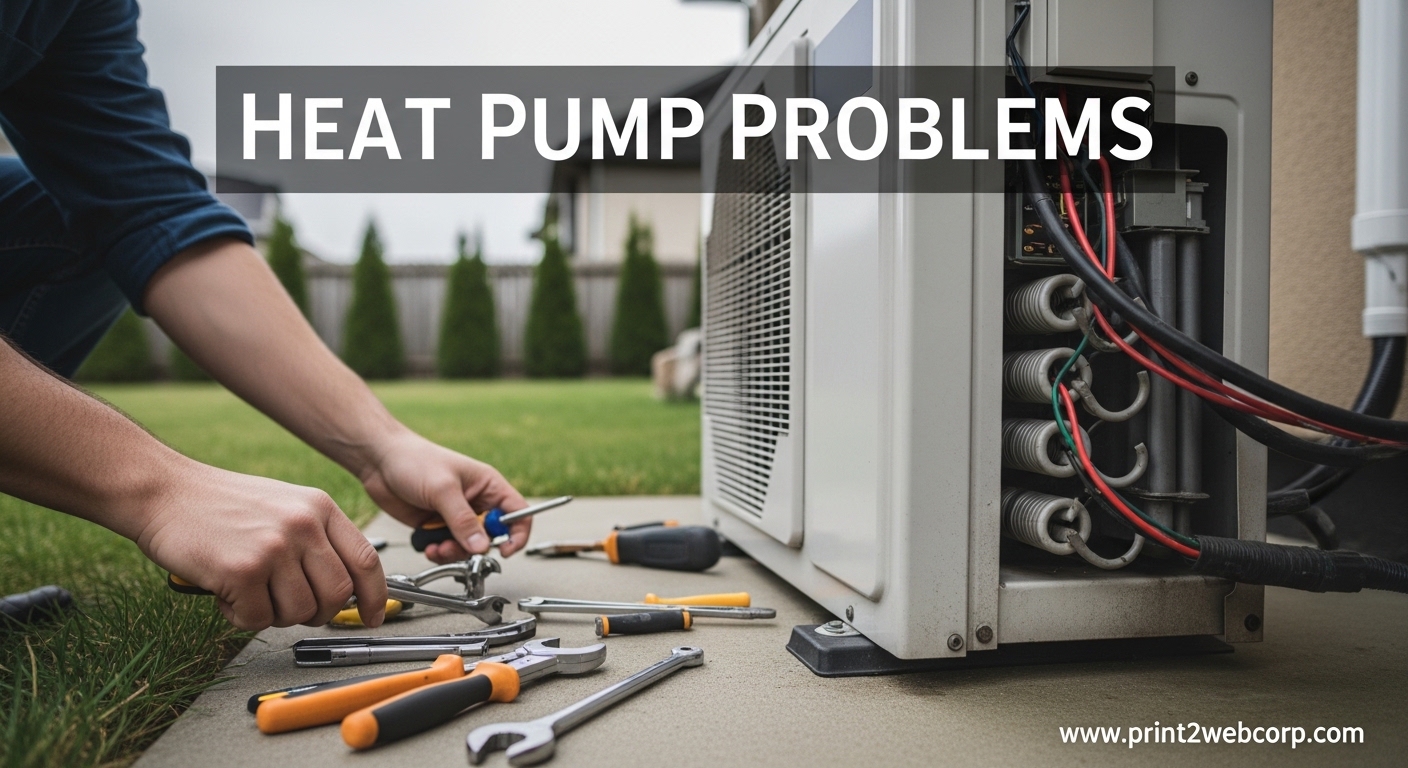
It’s 5 AM and your house is freezing. You check the thermostat and it’s set to 68 degrees, but the actual temperature is showing 54. You walk to the window and see your heat pump outside doing something strange. Maybe it’s making a noise you’ve never heard before. Maybe it’s covered in ice. Maybe it’s not running at all. We’ve all been there, and that sinking feeling in your stomach is completely justified.
Heat pump problems catch homeowners off guard, usually at the worst possible time. But here’s the good news: most heat pump issues have clear symptoms, straightforward causes, and in many cases, simple fixes you can handle yourself. This guide will walk you through the most common heat pump problems, what causes them, and exactly what to do about each one.
After researching heat pump troubleshooting across forums, manufacturer guides, and real homeowner experiences, I’ve compiled the problems that actually happen in real homes. Not just theoretical issues from textbooks, but the stuff that leaves people searching for answers at 2 AM.
How a Heat Pump Works (The Short Version)
Understanding the basics helps you troubleshoot smarter. A heat pump doesn’t create heat like a furnace. It moves heat from one place to another using refrigerant. In winter, it extracts heat from outdoor air and moves it inside. In summer, it reverses and pulls heat out of your home.
The system has two main units: the outdoor unit (which houses the compressor and condenser coil) and the indoor unit (which contains the evaporator coil and blower). The reversing valve is what switches between heating and cooling modes. When any of these components have issues, you’ll notice it right away.
Here’s what this means for troubleshooting: sometimes your heat pump is working fine, but it’s struggling against physics. Very cold temperatures, blocked airflow, or wrong thermostat settings can mimic serious problems. That’s why understanding normal operation helps you identify real heat pump problems.
10 Common Heat Pump Problems
1. Heat Pump Blowing Cold Air in Heat Mode
This is the most alarming heat pump problem for homeowners. You expect warm air, but you’re getting cold air from your vents. Before you panic, know this: heat pumps sometimes blow cooler air than furnaces. It’s normal for the air to feel lukewarm rather than hot.
However, if the air is genuinely cold (room temperature or colder), something is wrong. The most common cause is a refrigerant leak. When refrigerant levels drop, your system can’t absorb heat effectively. This requires a professional because refrigerant handling is regulated and requires special equipment.
Another cause is a bad reversing valve. This valve switches your system between heating and cooling. If it gets stuck in cooling mode, your heat pump will blow cold air even when set to heat. The fix typically requires replacing the valve, which is a professional job.
2. Heat Pump Running Constantly
Heat pumps run longer than traditional furnaces. That’s normal. In cold weather, your heat pump might run for hours at a time. But if it never seems to shut off and your home still isn’t reaching the set temperature, there’s a problem.
First check your air filter. A clogged filter restricts airflow and makes your system work harder for less result. This is an easy fix – just replace the filter if it’s dirty. You should do this every 1-3 months anyway.
If the filter is fine, your system might be undersized for your home or the current weather conditions. Heat pumps lose efficiency as temperatures drop below freezing. In very cold climates, backup heat (auxiliary heat) should kick in. If it’s not activating, that’s a thermostat or electrical issue requiring professional diagnosis.
3. Outdoor Unit Frozen or Iced Over
Some frost on your outdoor unit is normal. Heat pumps have a defrost cycle that melts this frost periodically. You might even see steam rising from your unit during defrost mode – this is completely normal.
But if your outdoor unit looks like a block of ice and the defrost cycle never seems to clear it, you have a problem. This could be caused by low refrigerant, a faulty defrost control, or a bad defrost sensor. When ice builds up, airflow gets blocked and your system can’t absorb heat from the air.
Try gently clearing away snow and debris around the unit. Don’t chip away ice directly – you can damage the fins. If the problem persists, you need a technician to check the defrost components and refrigerant charge.
4. Heat Pump Won’t Turn On
You adjust the thermostat and nothing happens. No outdoor unit sound, no indoor fan, nothing. Start with the basics: check your thermostat batteries and make sure it’s actually set to heat mode with a temperature above the current room temperature.
Next, check your circuit breakers. Heat pumps have two breakers – one for the outdoor unit and one for the indoor unit. If either has tripped, reset it. If it trips again immediately, don’t keep resetting it. This indicates an electrical problem that needs professional attention.
Your outdoor unit has an emergency shut-off switch, usually on the wall nearby. Make sure it hasn’t been turned off accidentally. If all these check out and your system still won’t start, you may have a failed capacitor, bad motor, or control board issue – all professional repairs.
5. Strange Noises: Grinding, Squealing, or Clicking
Heat pumps make some noise during normal operation. You’ll hear the compressor hum and the fan run. But grinding, squealing, loud clicking, or banging sounds are warning signs.
Grinding or metal-on-metal sounds often indicate bearing problems in the fan motor or compressor. This typically requires replacing the affected component. Squealing usually points to a bad belt (in older models) or a failing motor.
Loud clicking when the system starts or stops is normal relay operation. But constant rapid clicking suggests a relay or electrical component failing. Rattling could be loose panels or debris in the outdoor unit. If you hear any unusual noise, it’s worth investigating before it leads to bigger problems.
6. Short Cycling (Turning On and Off Frequently)
Short cycling means your heat pump turns on, runs for just a few minutes, then shuts off, only to repeat this cycle over and over. This is hard on your system and wastes energy.
The most common cause is an oversized system. If your heat pump is too powerful for your home, it heats the space quickly then shuts off before completing a proper cycle. Unfortunately, this is an installation problem that’s expensive to fix.
Other causes include a malfunctioning thermostat, low refrigerant, or a blocked airflow from dirty filters or closed vents. Check your air filter first, then ensure all vents are open and unobstructed. If the problem continues, a technician can diagnose whether it’s a refrigerant issue, thermostat problem, or something else.
7. Refrigerant Leaks
Refrigerant leaks are one of the most serious heat pump problems. Your system shouldn’t consume refrigerant like a car consumes oil – if the level is low, there’s a leak. Common signs include reduced heating or cooling performance, ice on the refrigerant lines, or a hissing sound.
Refrigerant leaks require professional repair. Technicians must locate the leak, repair it, then recharge the system with the correct amount of refrigerant. This isn’t a DIY job because refrigerants are regulated substances, and the equipment needed is specialized.
Ignoring a refrigerant leak will eventually destroy your compressor. Running a system low on refrigerant causes the compressor to overheat and fail. Since the compressor is the most expensive component, it’s often more cost-effective to address leaks promptly.
8. Thermostat Issues
Sometimes the problem isn’t your heat pump at all – it’s the thermostat. If your heat pump seems to run erratically, won’t reach the set temperature, or turns on at odd times, your thermostat might be the culprit.
Start by checking the batteries. Dead batteries cause all sorts of weird behavior. Next, check your settings. Make sure it’s set to heat mode, not cool or off. Verify the temperature is actually set higher than the current room temperature.
Older mechanical thermostats can lose accuracy over time. If your thermostat is more than 10-15 years old, consider upgrading to a programmable or smart thermostat. Not only will this solve potential accuracy issues, but it can also improve your energy efficiency.
9. Reversing Valve Problems
The reversing valve is what allows your heat pump to both heat and cool. When it fails, your system might get stuck in one mode or struggle to switch between modes. If your heat pump is blowing cold air in winter or not cooling in summer, the reversing valve could be the issue.
Reversing valve failures often produce a loud hissing or banging sound when the system tries to switch modes. You might notice the system never properly switches from cooling to heating, or vice versa.
Unfortunately, reversing valve replacement is a major repair. It involves recovering the refrigerant, replacing the valve, then recharging the system. This is definitely a job for a qualified technician.
10. Poor Airflow From Vents
Weak airflow from your vents makes your whole system inefficient. Your heat pump might be working perfectly, but if the air can’t circulate, you won’t feel comfortable. The most common cause is a dirty air filter – something you should check first.
If the filter is clean, check your vents. Make sure none are blocked by furniture, curtains, or rugs. Closed vents in unused rooms might seem like a good idea, but they can actually increase pressure in your ductwork and reduce overall efficiency.
Other causes include a failing blower motor, dirty evaporator coil, or ductwork problems. If your airflow is weak throughout the house, it’s likely the blower or coil. If it’s just one area, you might have a duct problem or blocked vent.
DIY Troubleshooting Guide
Before calling a professional, try these safe DIY troubleshooting steps. They solve a surprising number of heat pump problems.
Check Your Thermostat
It sounds simple, but thermostat issues cause many service calls. Verify it’s set to heat mode. Check that the temperature setting is at least 3-5 degrees above room temperature. Replace the batteries if it’s been more than a year. For programmable thermostats, check the schedule – someone might have programmed it incorrectly.
Inspect and Replace Your Air Filter
A dirty air filter is the number one cause of heat pump problems. Pull out your filter and hold it up to light. If you can’t see through it, replace it. Write the replacement date on the filter frame so you know when to check it again. Most homes need filter changes every 1-3 months.
Check Your Circuit Breakers
Heat pumps have dedicated circuits. Find the breakers labeled “heat pump,” “HVAC,” or “air handler.” If any are tripped (in the middle position), flip them fully off, then back on. If they trip again immediately, stop and call a professional – this indicates an electrical problem.
Clear Around Your Outdoor Unit
Your outdoor unit needs proper airflow to work efficiently. Clear away leaves, grass clippings, and other debris within two feet of the unit. Trim back any shrubs or plants growing close to it. In winter, clear snow away from the base but don’t cover the top.
Check Your Vents
Walk through your home and make sure all supply and return vents are open and unobstructed. Move furniture, rugs, or curtains that might be blocking airflow. Never close more than 10-20% of your vents, as this can damage your system.
When to Call a Professional
Some heat pump problems require professional expertise. Here’s when to put down the tools and pick up the phone.
Any issue involving refrigerant requires a licensed technician. Refrigerant handling is regulated by the EPA, and DIY repairs are illegal without proper certification. If you suspect a refrigerant leak (ice on lines, hissing sounds, poor performance), call a professional.
Electrical problems should be handled by professionals. If you smell burning, see sparks, or experience repeated breaker trips, don’t attempt repairs yourself. HVAC electrical systems can be dangerous even when powered off.
Compressor and reversing valve issues are major repairs. While these problems are expensive to fix, attempting them yourself will likely cost more in the long run. These components require specialized tools and knowledge to service correctly.
If your heat pump is more than 10-15 years old and experiencing multiple problems, replacement might make more sense than repeated repairs. A qualified technician can assess your system and give you an honest recommendation.
Repair vs Replace: The $5000 Rule
Homeowners facing an expensive heat pump repair often wonder if they should replace the entire system instead. The $5000 rule is a simple guideline that can help with this decision.
Here’s how it works: multiply the age of your heat pump by the cost of the repair. If the result is less than $5000, repair usually makes sense. If it’s more than $5000, replacement is often the better financial choice.
For example, a 12-year-old heat pump needing a $800 repair would be $9600 on this scale (12 x $800 = $9600). This exceeds the $5000 threshold, suggesting replacement might be smarter. But a 5-year-old system needing the same $800 repair would only be $4000 (5 x $800 = $4000), making repair the logical choice.
This rule accounts for the remaining lifespan of your equipment and the efficiency improvements available with newer models. Heat pumps typically last 15-20 years, so age is a major factor in repair versus replace decisions.
Maintenance Tips to Prevent Future Problems
Most heat pump problems are preventable with proper maintenance. A little attention goes a long way toward reliable operation.
Replace your air filter every 1-3 months. Mark your calendar or set a phone reminder. This single habit prevents the majority of service calls. A clean filter protects your system, improves efficiency, and maintains good indoor air quality.
Keep your outdoor unit clean and clear. Remove debris regularly, especially during fall when leaves accumulate. In winter, gently brush off heavy snow but don’t chip at ice. Maintain at least two feet of clearance around the unit for proper airflow.
Schedule annual professional maintenance. A technician will clean coils, check refrigerant levels, inspect electrical connections, lubricate moving parts, and identify potential problems before they become emergencies. This typically costs $100-200 but can prevent much more expensive repairs.
Consider a surge protector for your HVAC system. Heat pumps have sensitive electronic components that can be damaged by power surges. A quality surge protector is inexpensive insurance against costly electrical damage.
Understanding Heat Pump Problems in Cold Weather
Heat pumps work harder in cold temperatures, and some performance changes are normal. As outdoor temperatures drop, your heat pump will run longer cycles. Below 30-40 degrees, the air from your vents might feel cooler than you expect. This doesn’t necessarily indicate a problem.
Most heat pumps have backup or auxiliary heat that activates when temperatures drop too low for efficient operation. You might see “aux heat” or “emergency heat” on your thermostat. This uses electric resistance heating and is much more expensive to run than normal heat pump mode. It should only activate when necessary.
If your heat pump seems to struggle in very cold weather (below 20 degrees), this might be normal depending on your system and climate. Cold-climate heat pumps are designed to work efficiently in lower temperatures, but standard models lose efficiency as it gets colder. Understanding your system’s capabilities helps set realistic expectations.
Signs Your Heat Pump Is Failing
Recognizing the signs of a failing heat pump helps you plan before an emergency. Pay attention to these warning signals.
Rising energy bills without increased usage often indicate declining efficiency. As components wear, your system works harder and uses more energy to achieve the same results. If your electric bills keep climbing despite normal usage patterns, your heat pump might be failing.
Frequent repairs are another red flag. Occasional repairs are normal, but if you’re calling for service multiple times per year, replacement might be more economical. Keep track of repair costs – they add up quickly.
Uneven heating or cooling throughout your home can signal declining performance. If some rooms are comfortable while others aren’t, and this wasn’t a problem before, your system might be struggling. This could indicate ductwork issues, but combined with other symptoms, it suggests overall system decline.
Age matters too. Most heat pumps last 15-20 years with proper maintenance. If yours is approaching 15 years and experiencing problems, replacement is probably in your near future. Planning ahead beats an emergency replacement in the middle of winter.
Frequently Asked Questions
What is the most common problem with heat pumps?
Dirty air filters are the most common heat pump problem. A clogged filter restricts airflow, reduces efficiency, and can cause the system to overheat. Fortunately, this is also the easiest problem to fix – simply replace your filter every 1-3 months to prevent most performance issues.
What is the $5000 rule for HVAC?
The $5000 rule helps decide between repairing or replacing your heat pump. Multiply the age of your system by the cost of the repair. If the result is less than $5000, repair usually makes sense. If it exceeds $5000, replacement is typically more cost-effective. For example, a 10-year-old system needing a $600 repair equals $6000, suggesting replacement might be smarter.
What is the average lifespan of a heat pump?
The average heat pump lasts 15-20 years with proper maintenance. Factors affecting lifespan include climate, usage patterns, maintenance quality, and installation quality. Systems in moderate climates typically last longer than those in extreme climates. Regular maintenance can extend lifespan by several years, while neglect can significantly shorten it.
How many hours a day should a heat pump run in winter?
Heat pumps typically run 8-16 hours per day in winter, sometimes longer in very cold weather. Unlike furnaces that cycle on and off frequently, heat pumps run longer cycles at lower intensity. This normal operation is more efficient than short cycling. However, if your system runs continuously and never reaches the set temperature, that indicates a problem.
How to tell if a heat pump is going bad?
Warning signs of a failing heat pump include rising energy bills, frequent repairs, uneven heating or cooling, strange noises, and reduced comfort. Systems over 15 years old experiencing multiple problems are likely nearing end of life. If repair costs exceed half the cost of replacement, or if your system uses R22 refrigerant (which is phased out), replacement is usually the better choice.
Why is my heat pump blowing cold air?
Heat pumps may blow cooler air than furnaces – this is normal. But if air is genuinely cold, causes include low refrigerant, a bad reversing valve stuck in cooling mode, or a failed defrost cycle. First check your thermostat and air filter. If those are fine and the problem persists, you likely have a refrigerant leak or component failure requiring professional service.
Conclusion
Heat pump problems feel overwhelming when they happen, but most have clear causes and solutions. Start with the basics: check your thermostat, replace your air filter, and ensure your outdoor unit has proper clearance. These simple steps solve a surprising number of issues.
Know your limits. Some problems – especially anything involving refrigerant, electrical components, or major system failures – require professional expertise. Understanding the difference between DIY-friendly issues and professional repairs saves money and prevents dangerous situations.
Regular maintenance prevents most problems before they start. That annual service call, regular filter changes, and keeping your outdoor unit clean are small investments that pay off in reliable comfort and lower energy bills. When problems do arise, use the $5000 rule to make smart repair versus replace decisions.
Heat pumps are complex systems, but you don’t need to be an expert to keep yours running smoothly. Pay attention to warning signs, address problems early, and don’t hesitate to call a professional when needed. Your heat pump will thank you with years of reliable, efficient comfort.
Leave a Reply