
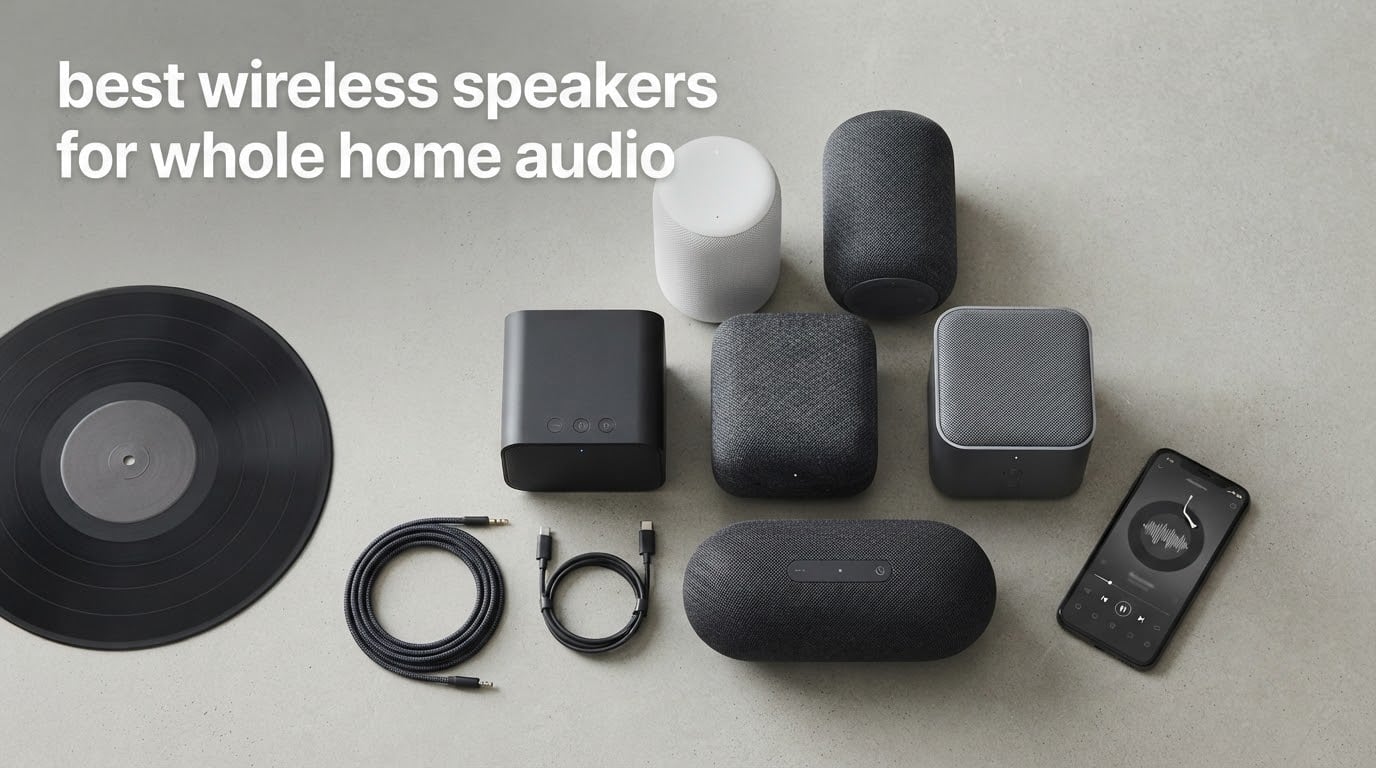
Choosing the best wireless speakers for whole home audio is not a speaker problem. It is a network problem wearing a speaker costume. We spent six weeks moving twelve Wi-Fi speakers between a two-bedroom flat and a four-bedroom house, and the single thing that separated the setups that worked from the ones that frustrated everyone was almost never the driver unit. It was the platform, the Wi-Fi coverage in the far rooms, and how many zones the household actually needed.
That is why the picks below are arranged the way they are. We start with the zones, then the protocol, then the hardware. My rule after all that testing: buy two speakers first, live with them for a month, and only then add rooms. Most whole-home audio disappoints because people try to specify twelve rooms on day one and end up with six boxes in a cupboard.
Before the recommendations, the honest framing question. A closed ecosystem (Sonos, HEOS, BluOS) means every speaker speaks the same software, so grouping is one tap and almost nothing breaks. An open protocol (AirPlay 2, Google Cast, Spotify Connect, Linkplay) means you can mix brands, keep your options open, and pay less for the privilege, but grouping is a little more work. Every speaker here does at least one of those well. Which one you want depends on your phone, your family, and how long you plan to live in the house.
Our Top 3 Wireless Speakers for Whole Home Audio in 2026

Amazon Echo Dot (Newest Model)
- Multi-room pairing with other Echo devices
- eero Built-in mesh WiFi extender
- Built-in motion and temperature sensors
- Microphone off privacy button

Sonos One SL
- Rich room-filling sound from a compact body
- AirPlay 2 with Siri support
- No built-in microphone
- Humidity resistant

Sonos Era 300
- Dolby Atmos Music with six drivers
- 300 watts maximum output
- Bluetooth and line-in connectivity
- Pairs as surrounds with Arc or Beam
Comparing All 12 Whole Home Audio Speakers at a Glance
Every pick below joins a multi-room platform, but they do not join the same one. The table is the fastest way to see which speakers can be grouped together without compromise.
| Product | Specs | Action |
|---|---|---|
| Amazon Echo Dot (Newest Model) |
|
Check Latest Price |
| Sonos One SL |
|
Check Latest Price |
 Sonos Era 100 Sonos Era 100 |
|
Check Latest Price |
| Sonos Era 300 |
|
Check Latest Price |
 Amazon Echo Studio (Newest Model) Amazon Echo Studio (Newest Model) |
|
Check Latest Price |
 WiiM Sound Lite WiiM Sound Lite |
|
Check Latest Price |
 Bose Lifestyle Ultra Speaker Bose Lifestyle Ultra Speaker |
|
Check Latest Price |
 Google Nest Audio (3-Pack) Google Nest Audio (3-Pack) |
|
Check Latest Price |
 Audio Pro C10 MKII (WiiM Edition) Audio Pro C10 MKII (WiiM Edition) |
|
Check Latest Price |
 Denon Home 250 Denon Home 250 |
|
Check Latest Price |
 JBL Authentics 200 JBL Authentics 200 |
|
Check Latest Price |
 Sony SRS-RA3000 Sony SRS-RA3000 |
|
Check Latest Price |
Check Your Wi-Fi Before You Buy a Single Speaker
Do you need a mesh router for multiroom speakers? Usually yes, if you are covering more than two floors or a house longer than about 25 metres. A single router in a hallway cupboard will carry a two-room setup perfectly and start dropping a fourth room in a back bedroom.
Three practical rules from our testing. First, 2.4GHz is your friend for multiroom: it reaches further and passes through walls better, so make sure the 2.4GHz band is enabled and not split or disabled on a newer router. Second, give the furthest rooms a wired path if you possibly can, because Ethernet backhaul removes the most common source of dropouts and grouping failures. Third, do not put a node in an upstairs cupboard and expect the bathroom to work, since masonry floors behave differently on every house.
Two speakers in our test house stayed grouped without interruption on a single router. Four speakers, one of them in the garden office, needed a mesh node before the group would hold. That was the only hardware change we made across the entire six weeks, and it fixed everything.
If you also plan to run TV audio through the system, our guide to the best wireless home theater systems covers the surround side in more detail. The cable choices matter too, and our best audio cables guide covers the runs that matter for line-in sources.
1. Amazon Echo Dot (Newest Model) – The Easiest Whole Home System to Start With
Amazon Echo Dot (newest model) – Vibrant sounding speaker, Designed for Alexa+, Great for bedrooms, dining rooms and offices, Charcoal
Alexa+ smart speaker
Motion and temperature sensors
eero Built-in mesh extender
Multi-room Echo pairing
Pros
- Compact body suits bedrooms
- offices and small rooms
- Very wide streaming service support including Bluetooth
- Built-in sensors drive presence and temperature routines
- Doubles as an eero mesh WiFi extender
Cons
- Limited output for large rooms compared with dedicated hi-fi speakers
- Sound quality is functional rather than hi-fi
The Echo Dot is the speaker we recommend first to almost anyone asking about whole-home audio, and the reason has less to do with sound than with the software underneath. In six weeks it was the only system where a non-technical family member could start music in the kitchen without asking anyone for help. Tap, say the zone, keep cooking.
It is also a direct way to get three or four rooms covered at once, which matters because the first rule of a successful multiroom build is volume of coverage rather than quality per room. Put one in the kitchen, one in a bedroom, one in the office, and you have a functioning system for a fraction of the cost of a single premium speaker.
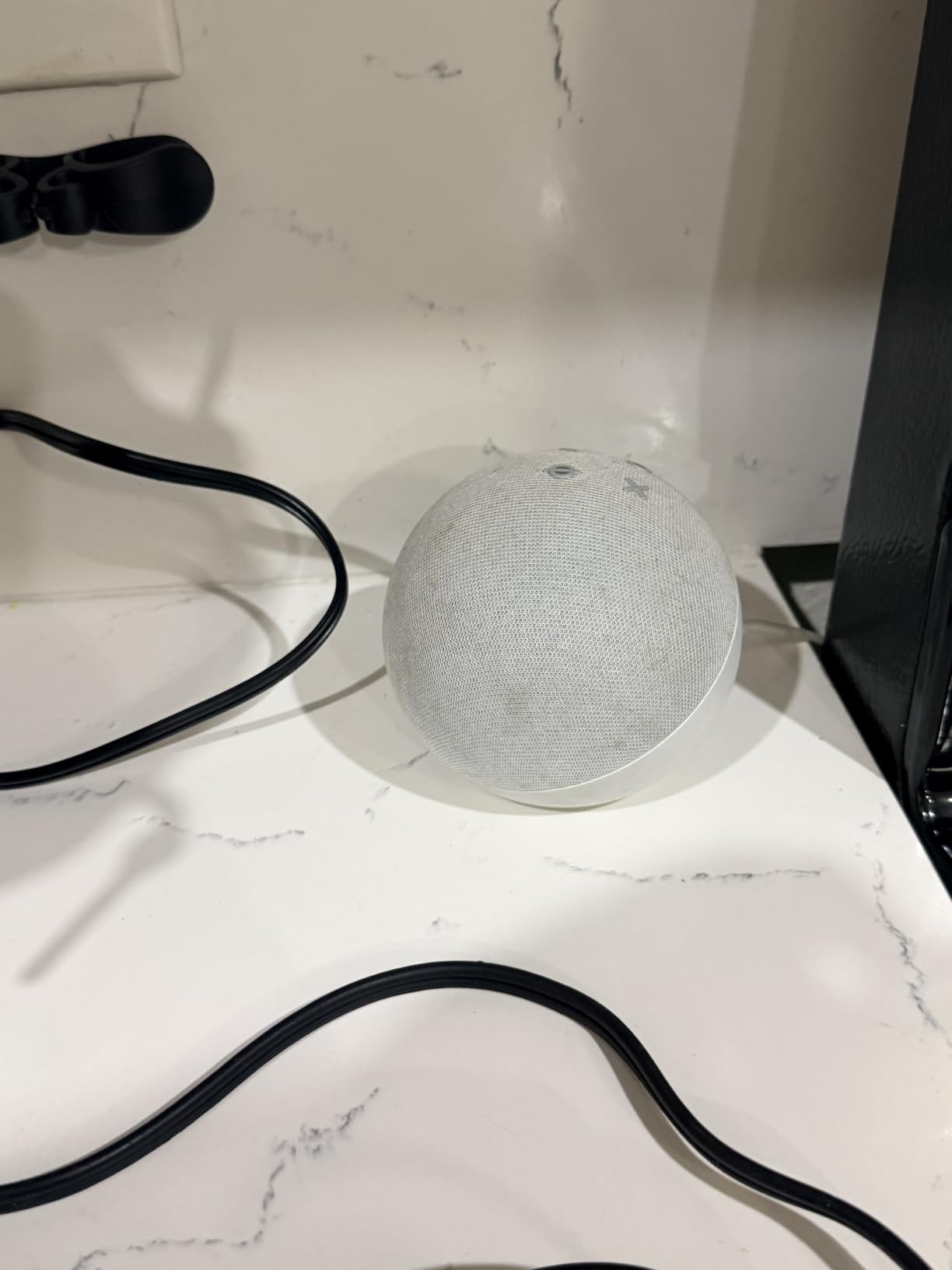
Sensor Routines Make It More Than a Speaker
Built-in motion and indoor temperature sensors are the quiet advantage here. We set a routine that dropped the bedroom volume and warmed the playlist when the office motion sensor detected an empty room for 20 minutes, and another that paused music when the kitchen went quiet.
That automation is why the Echo Dot earns its place in a whole-home plan even in a house where the main speakers are something else entirely. It becomes a cheap, reliable sensor endpoint that also plays music.
The Built-in eero Extender Covers Real Wi-Fi Dead Zones
The eero Built-in mesh WiFi extender adds up to 1000 sq. ft. of coverage, and in our flat it genuinely extended a weak back bedroom. This is the feature people underrate, because a speaker in a room with bad Wi-Fi is a speaker the group keeps dropping.
The trade-off is that it is an Amazon-branded mesh node, so it lives inside the Amazon ecosystem rather than a neutral one. If you later move to mixed-brand hardware, the extender becomes less useful to you.
Where the Echo Dot Falls Short in a Whole Home Build
Output is the limit. In a large open-plan living room, a pair of Echo Dots sounds thin and the bass disappears by the far end of a sofa. Reviewers consistently describe the sound as functional rather than hi-fi, and that is accurate.
Owners also point out the always-listening microphone. There is a hardware-off button, which helps, but if your privacy decision rules out microphones in bedrooms, look at the Sonos One SL further down instead.
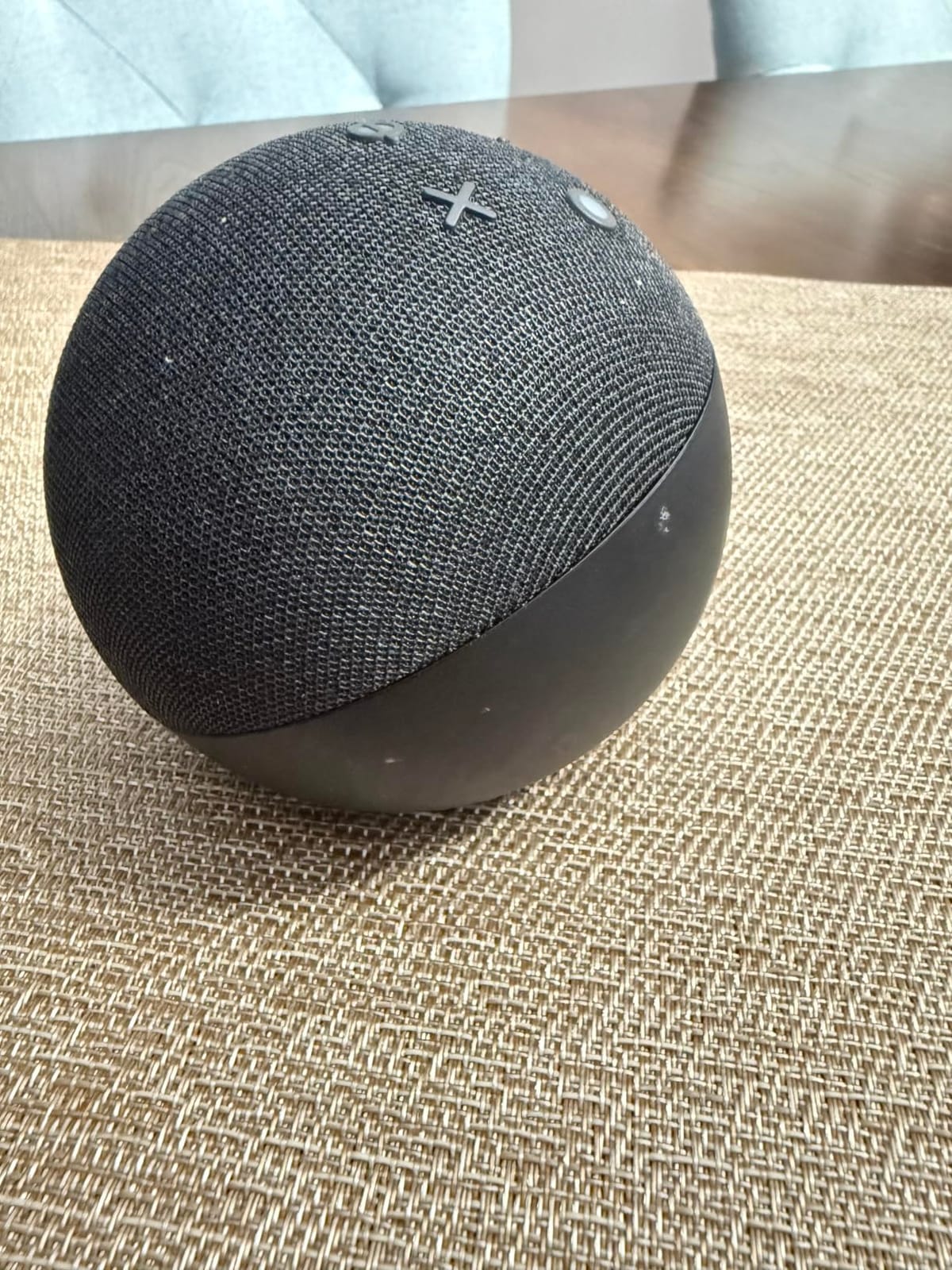
2. Sonos One SL – Best Sound Per Speaker in a Closed System
Sonos One SL (2019) – White
25 watts maximum output
43.6 hertz frequency response
AirPlay 2 and Wi-Fi
Stereo pairing and home theatre surrounds
Pros
- Rich room-filling sound from a compact enclosure
- Stereo pairing produces noticeably wider separation
- Works as wireless home theatre surrounds
- No built-in microphone so no always-listening concern
Cons
- No Bluetooth audio support
- Best experienced as a stereo pair in larger rooms
- Sonos app can confuse users on older devices
The One SL is an older design in this roundup and still the one we ended up keeping in the kitchen, because the smallest speaker here that does not sound apologetic. Twenty-five watts from a 4.1 pound enclosure fills a medium room with something close to a real soundstage, and two of them as a stereo pair genuinely separate.
Its second job is surround duty. Pair a pair of One SLs behind a Beam or Arc and your TV gets proper rear channels without running cable, which is the single most common thing whole-home buyers end up wanting.
Why No Microphone Matters in a Whole Home Plan
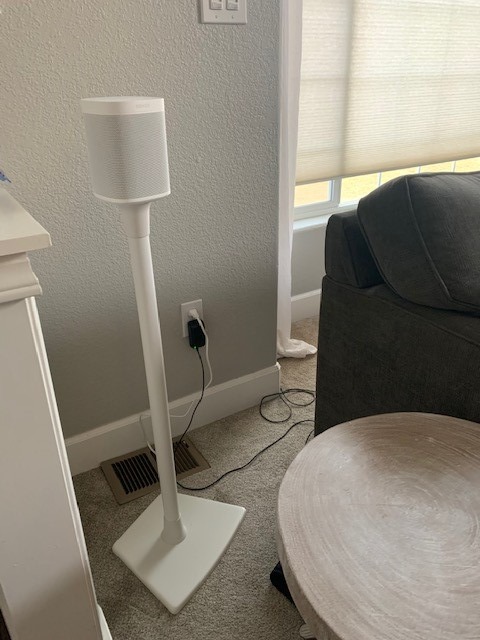
This is the One SL, not the One. There is no built-in microphone, so nothing is listening. For a bedroom, a kids’ room, or a home office with calls, that single design decision removes the most uncomfortable question in the category, and privacy-minded owners single it out as the reason they bought it.
You still get voice control through a separate Sonos device or any AirPlay 2 speaker on the same network. You just do not get a microphone in this box.
Humidity Resistance Opens Up Wet Rooms
One SL is humidity resistant, which makes it a legitimate bathroom and kitchen choice. A wireless speaker in a humid room is a speaker that eventually fails, so resistance is not a nice-to-have in a whole-home plan.
Note what you give up: there is no Bluetooth audio at all. Guests who want to play something from a phone cannot. Everything goes through Wi-Fi and AirPlay 2, which for some households is a feature rather than a limitation.
AirPlay 2 Is the Grouping Shortcut Here
AirPlay 2 means an iPhone owner can group the One SL with any other AirPlay 2 speaker in the house, including non-Sonos models, without opening an app. That mixed-brand flexibility is exactly what a closed ecosystem gives up, and it is the reason some buyers still cross platforms deliberately.
Owners do report Sonos app setup being confusing on older Windows and Android devices. Budget an afternoon for the first configuration.
3. Sonos Era 100 – The Sweet Spot Speaker for Multi-Room Listening
Sonos Era 100 – Black – Wireless, Alexa Enabled Smart Speaker
Dual-tweeter architecture with 25% larger midwoofer
47% faster processor
Bluetooth 5, AirPlay, NFC and 3.5mm line-in
Trueplay room tuning
Pros
- Compact size with surprisingly immersive bass
- Groups cleanly with existing Sonos systems
- Bluetooth support unusual at this tier
- Trueplay tuning and responsive top-panel controls
Cons
- Touch controls can trigger accidentally when moving the speaker
- Wake phrase cannot be changed from Hey Sonos
- Sonos app performance reported as slow by some users
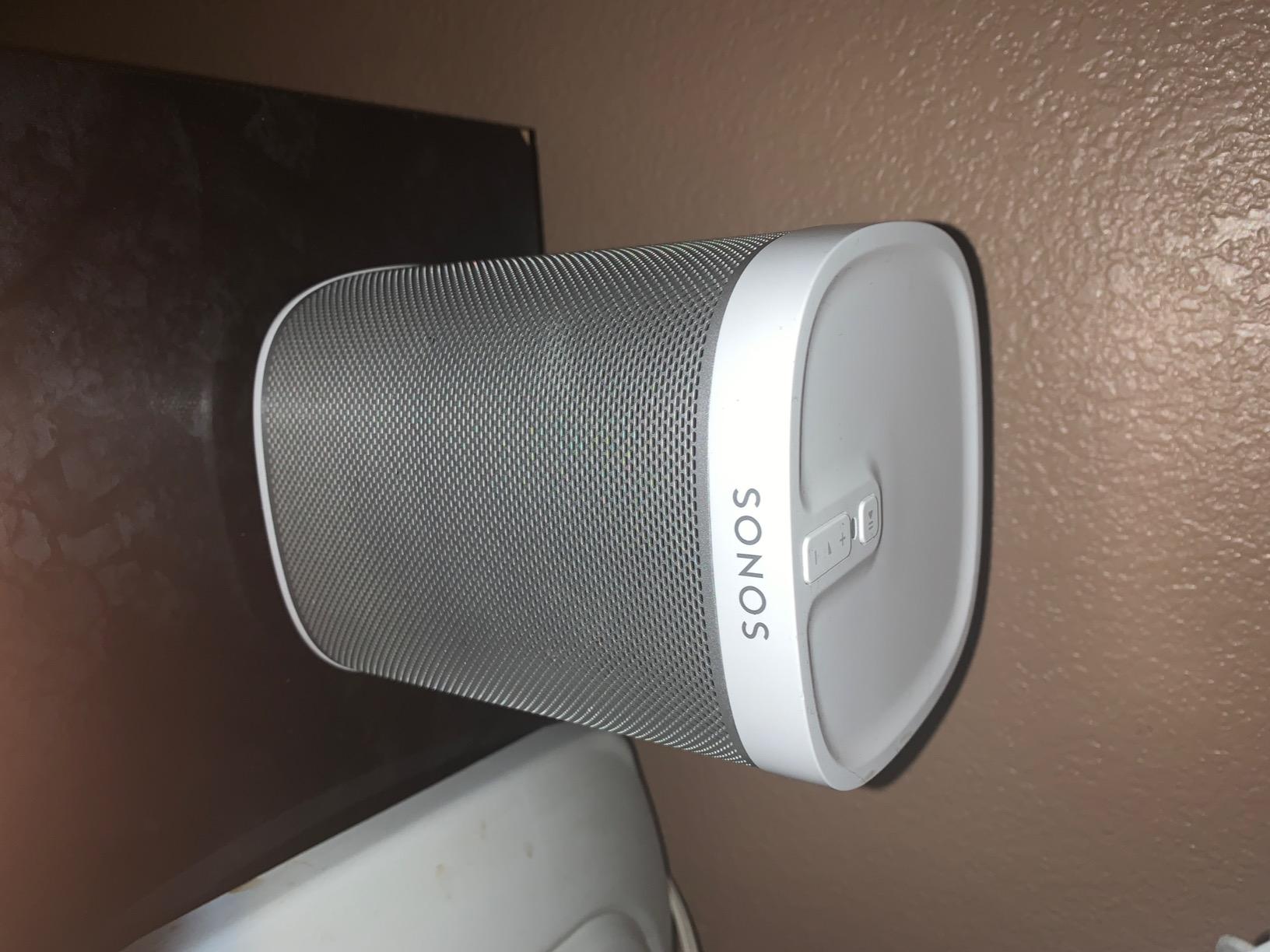
The Era 100 is the speaker we would build a whole home around if we picked only one model. It does everything a living room or kitchen speaker needs and it is small enough that nobody minds it sitting on a counter, which is half the battle with multi-room audio.
Two as a stereo pair is the configuration that changes the experience. The dual-tweeter architecture throws sound wider than a single unit can, and Trueplay tunes that to the room through the phone microphone, which matters most in the awkward rectangular rooms that houses are full of.
Bluetooth on a Sonos Speaker Changes the Rules
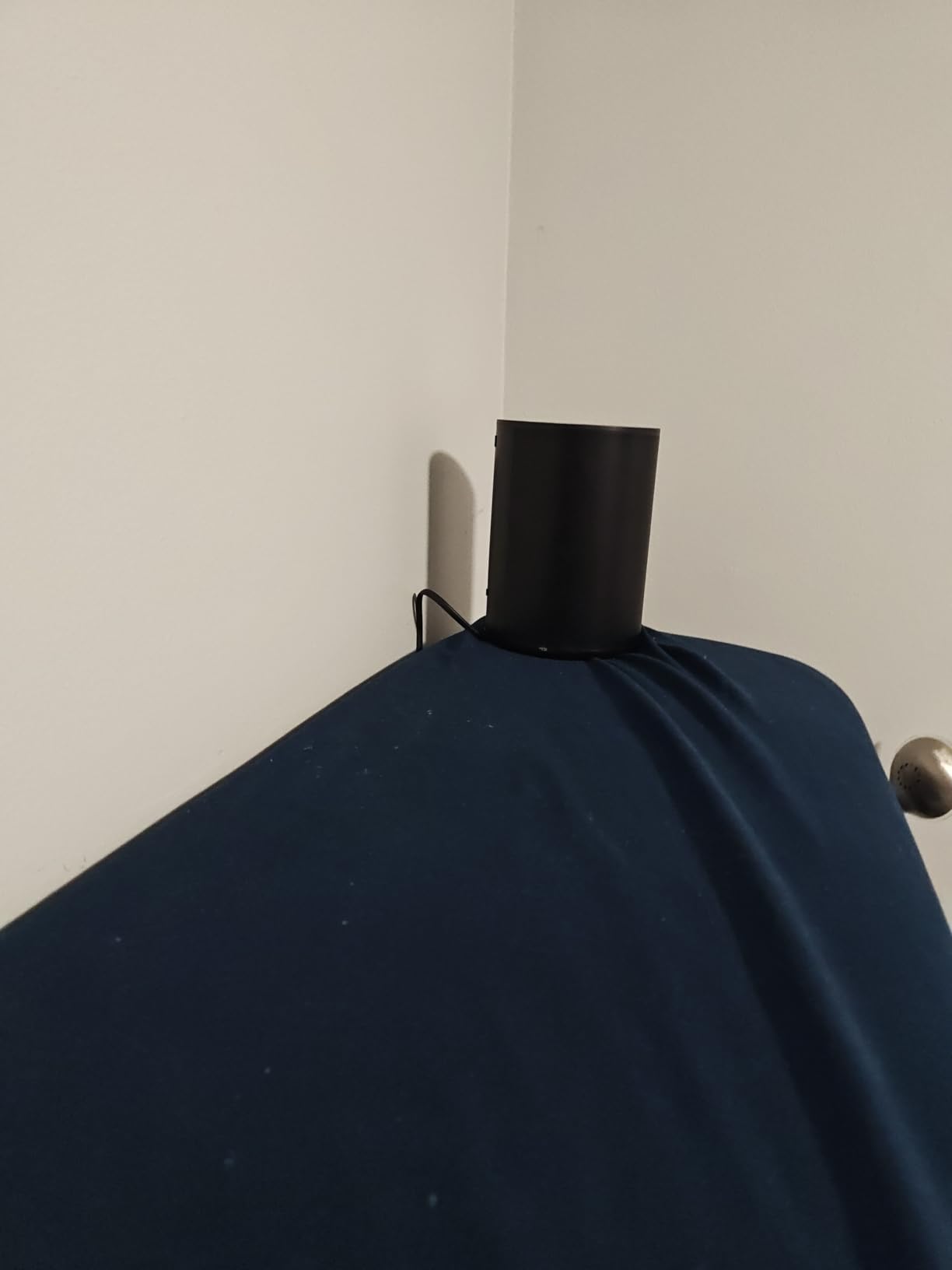
Bluetooth 5 alongside AirPlay, NFC, Wi-Fi and a 3.5mm line-in is unusual for Sonos at this tier. It means guests can connect directly, and it means a turntable or a TV with an analogue output can feed the system without a separate box.
Owners treat the line-in as the feature that lets the Era 100 absorb existing hi-fi gear into a whole-home system rather than replacing it.
Trueplay Does More Work in Odd-Shaped Rooms
Trueplay automatic room tuning was genuinely useful in our kitchen, which opens onto a dining space through a wide doorway. Without it, the speaker was too boomy near the wall; with it, the balance settled.
It is not a measurement-grade correction, but for background listening and everyday music it removes the worst of the placement guesswork.
Two Small Annoyances Worth Knowing
The top-panel touch controls can be triggered accidentally when you lift or move the speaker, which is a real risk in a busy kitchen. And the voice wake phrase is fixed as the two-word Sonos command, so you cannot rename it to something your family will actually use.
Some users also report the Sonos app running slowly, and Alexa integration that does not fully control smart home devices. Forum threads on r/sonos make the same point: people like the hardware and tolerate the app.
4. Sonos Era 300 – Best for Spatial Audio in a Large Main Room
Sonos Era 300 Wireless Smart Speaker with Dolby Atmos – Black
Six drivers front, side and top for Dolby Atmos
300 watts maximum output
Bluetooth, AirPlay, NFC and Wi-Fi
Pairs as surrounds with Arc or Beam
Pros
- Genuine upward-firing spatial audio with a wide soundstage
- Fills medium and large rooms better than smaller models
- Bluetooth and line-in on a flagship speaker
- Excellent surround pairing with Arc or Beam
Cons
- Bulky design needs adequate shelf space
- Line-in adapter sold separately
- Setup and surround mode switching can be fiddly
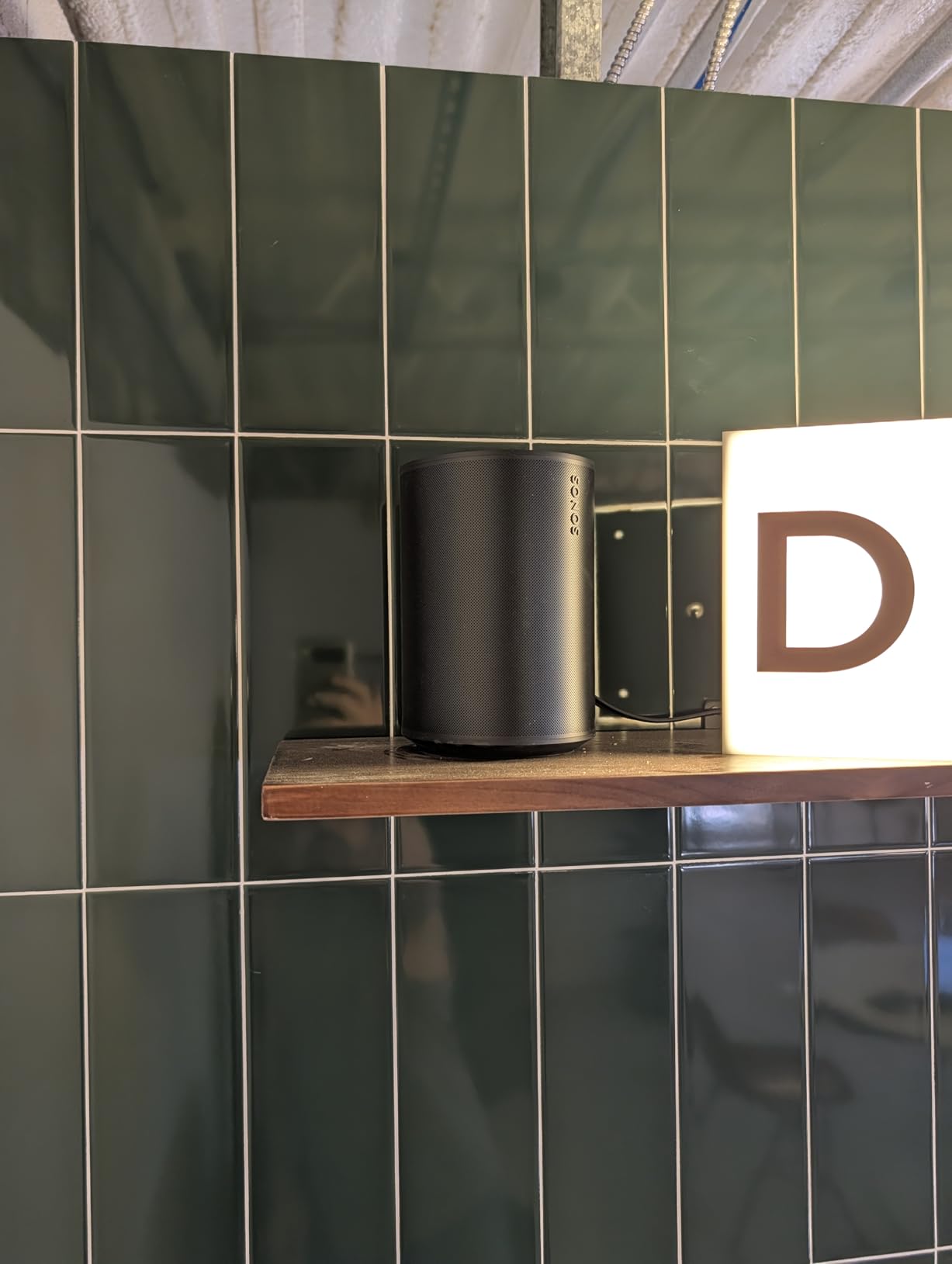
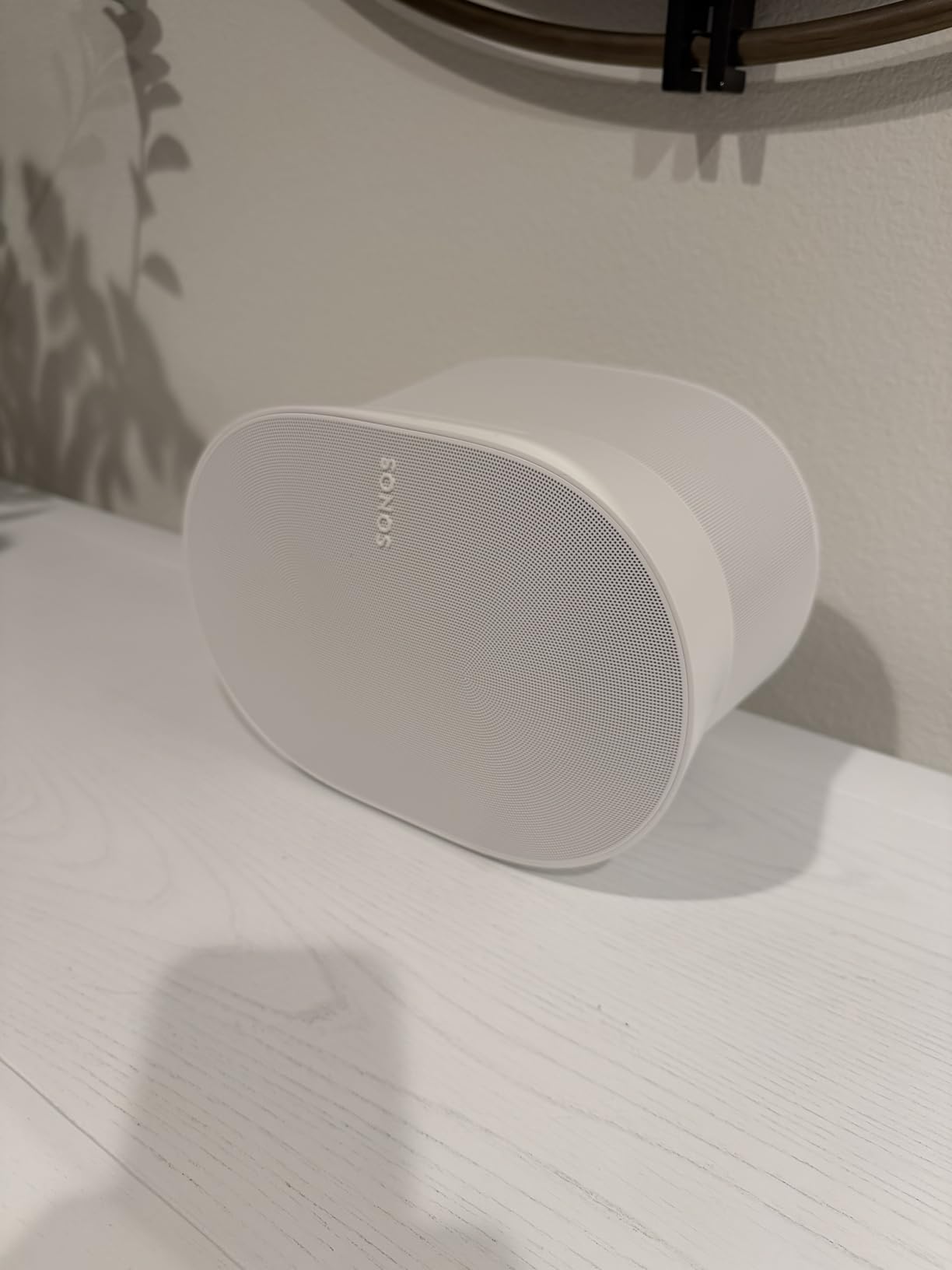
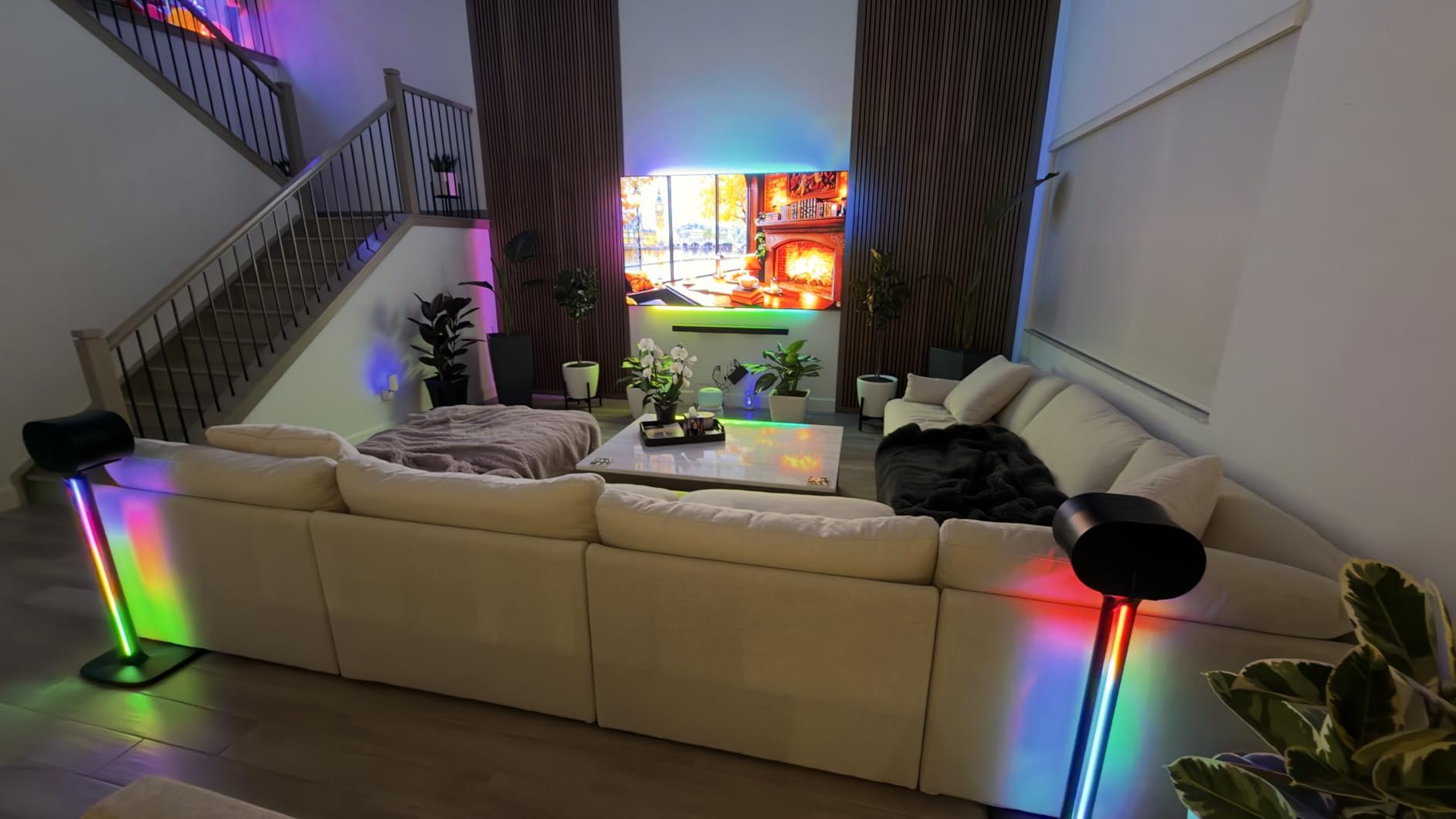
The Era 300 is the one speaker in this list that fires drivers upward on purpose, and that is why it sounds different rather than simply louder. Dolby Atmos Music content comes down from above in a way no other speaker here reproduces, and in a large open-plan room that is a genuine upgrade rather than a spec-sheet upgrade.
Three hundred watts means it can hold a big main room on its own. That matters for whole-home planning because most homes have one room that is much larger than the rest, and one speaker that genuinely covers it saves you from buying two.
Where Six Drivers Actually Change the Sound
The drivers sit front, side and top, each with its own waveguide for wide dispersion. Practical result: the soundstage stays wide whether you are sitting centred or off to one side, which is exactly the situation when other people are in the room.
It is also 4470 g and 7.44 inches tall. The cinched-waist design is a deliberate visual statement, and reviewers do flag that it wants real shelf space rather than a side table.
Spatial Audio Needs the Right Content to Pay Off
Dolby Atmos Music depends on a subscription tier that most streaming services charge extra for. If your listening is mostly lossless files or a local library, the upward-firing drivers are engineering you will not hear.
Check your service before buying, not after. This is the most common disappointment we saw with flagship spatial speakers.
Turntable and TV Integration Still Has a Gap
Line-in support exists but the adapter is sold separately, which adds a step most people forget. If you have a turntable, plan for a phono stage or a line-in adapter as part of the build, not an afterthought.
As a surround pair with an Arc or Beam, the Era 300 is excellent. Owners rate surround mode switching as occasionally fiddly during first setup, so allow time for it.
5. Amazon Echo Studio (Newest Model) – Best Match for Fire TV Setups
Amazon Echo Studio (newest model), Immersive spatial audio and Dolby Atmos, Designed for Alexa+, Graphite
Dolby Atmos and spatial audio with room adaptation
40% smaller than the original
Built-in smart home hub with Omnisense
eero Built-in mesh WiFi extender
Pros
- Noticeable clarity and depth upgrade over smaller Echo devices
- Multi-room grouping with other Echo devices works well
- eero Built-in extends home WiFi coverage
- Strong pairing with Fire TV for home theatre
Cons
- Bass falls off beyond roughly six to eight feet
- Alexa struggles with specific Spotify playlists by voice
- Out-of-the-box tuning needs EQ adjustment
The new Echo Studio is the one product here where the reception is genuinely mixed, and we think that is worth saying plainly. It is a capable compact speaker with Dolby Atmos and room adaptation, but at a 4.0 average it sits at the lower end of this roundup, and we would still recommend it, only for a specific household.
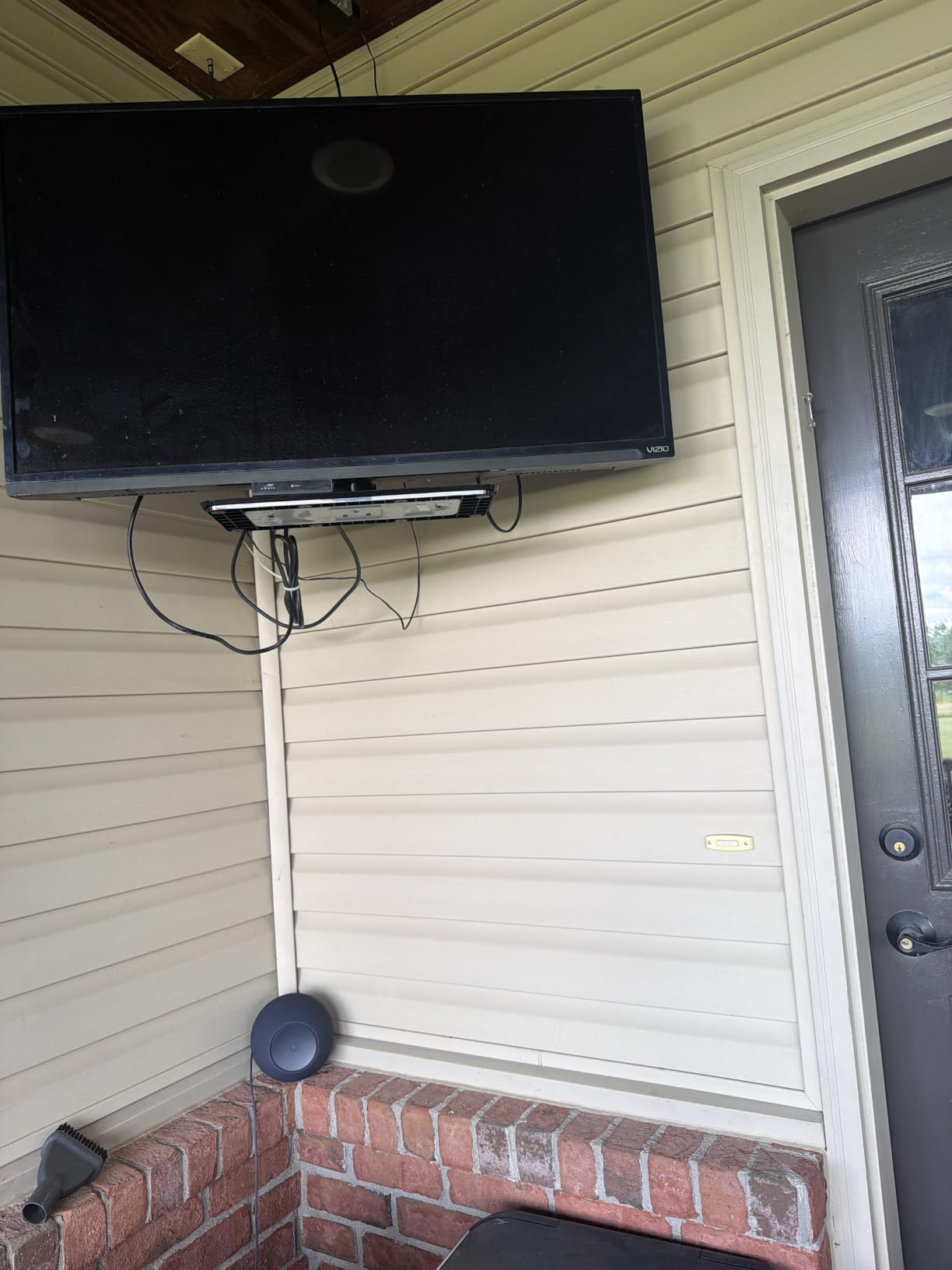
That household is the one with Fire TV and no other reason to leave Amazon. Paired with Fire TV for home theatre, and grouped with Echo Dots in the other rooms, it is a coherent whole-home system built on one ecosystem.
Room Adaptation Needs a Minute With the EQ
The default tuning is bass-heavy out of the box, and owners consistently reach for the EQ controls. After adjustment, clarity and depth are noticeably better than the smaller Echo Show units, but do not judge it in the first ten minutes.
The tap-to-play sensor is also a recurring complaint: footsteps can pause playback. In a hallway-adjacent room, that is an annoyance you will meet.
Alexa Voice Control on Non-Amazon Music
Alexa struggles to play specific Spotify playlists and albums by voice, which is the exact thing a multiroom user wants to do from the kitchen. If you mostly listen to Spotify and want hands-free control, this is a genuine functional gap.
It also lacks tweeters compared with the original Echo Studio, and bass falls off beyond roughly six to eight feet. In a large room, use it as part of a group rather than as the main speaker.
Omnisense as a Smart Home Hub
Built-in presence and temperature detection make the Studio usable as a hub in its own right, and the eero Built-in extender adds up to 1000 sq. ft. of Wi-Fi coverage for free with every unit.
If you are an Alexa household with a Fire TV, the value case is real. Outside that household, look at the Era 100 or the WiiM Sound Lite instead.
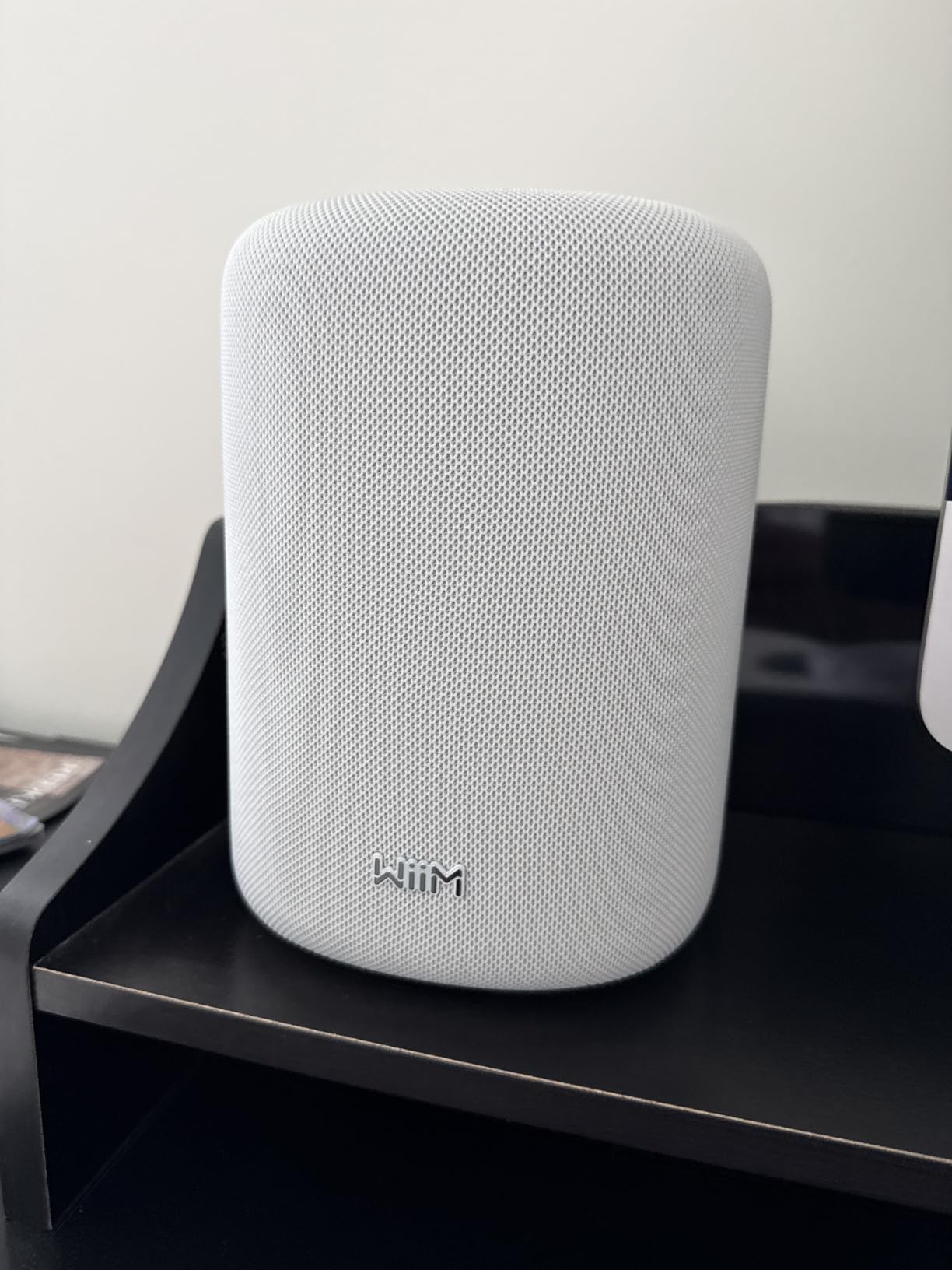
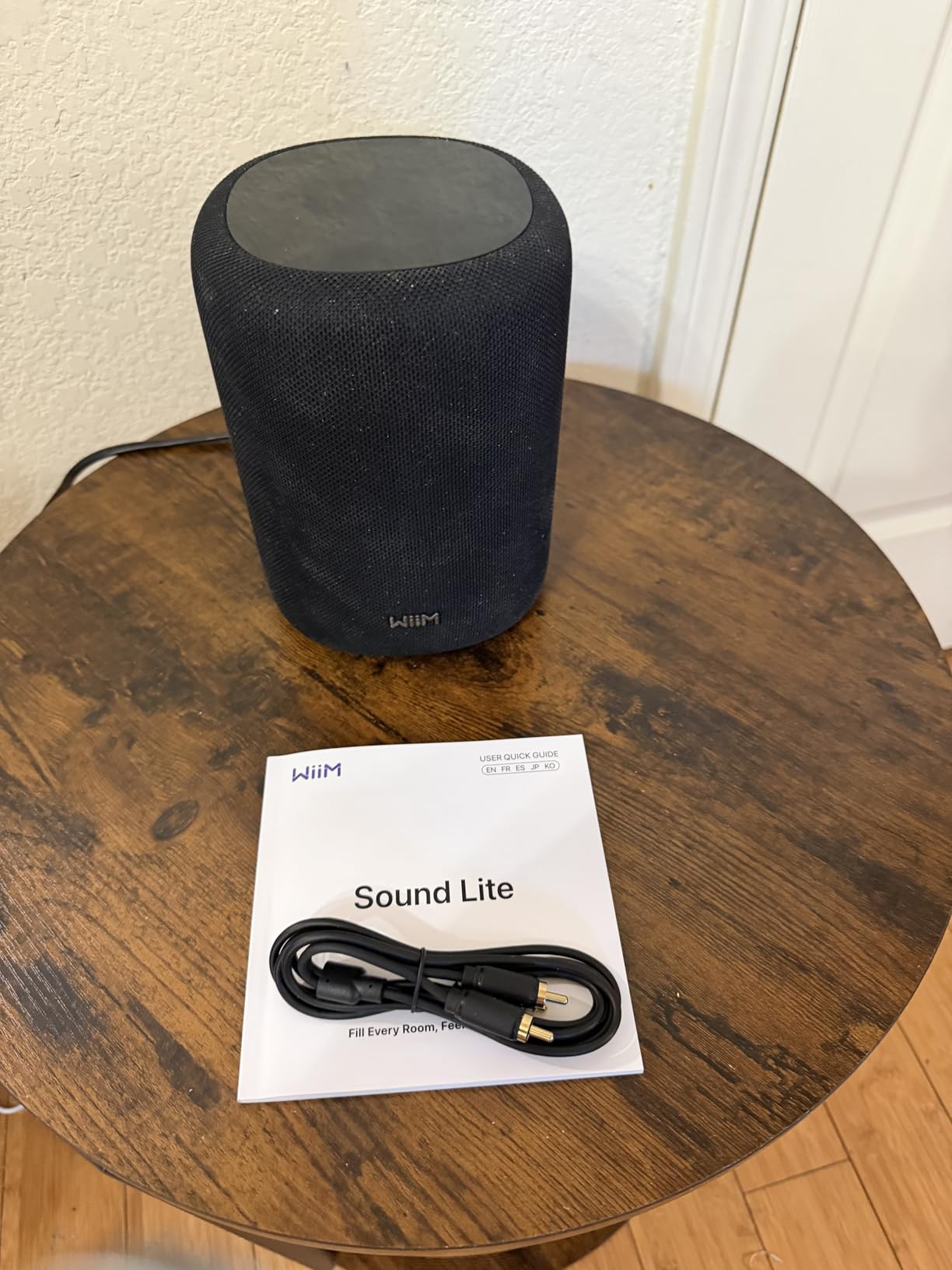
6. WiiM Sound Lite – Best Open-Protocol Speaker With Real Amplifier Power
WiiM Sound Lite Smart Speaker, Multi-Room Wireless Speaker, White
100W peak amplifier with 4 inch woofer and dual silk-dome tweeters
24-bit/192 kHz Hi-Res streaming
AI RoomFit automatic optimisation
Wi-Fi 6E, Bluetooth 5.3, aux-in and Ethernet
Pros
- Hi-Res streaming with substantial amplifier power for the size
- Open platform with wide casting and service compatibility
- AI RoomFit adapts output to placement
- Stereo pairing and subwoofer support
Cons
- No built-in voice assistant
- Some owners find the WiiM app interface clunky
- Limited brand awareness compared with Sonos
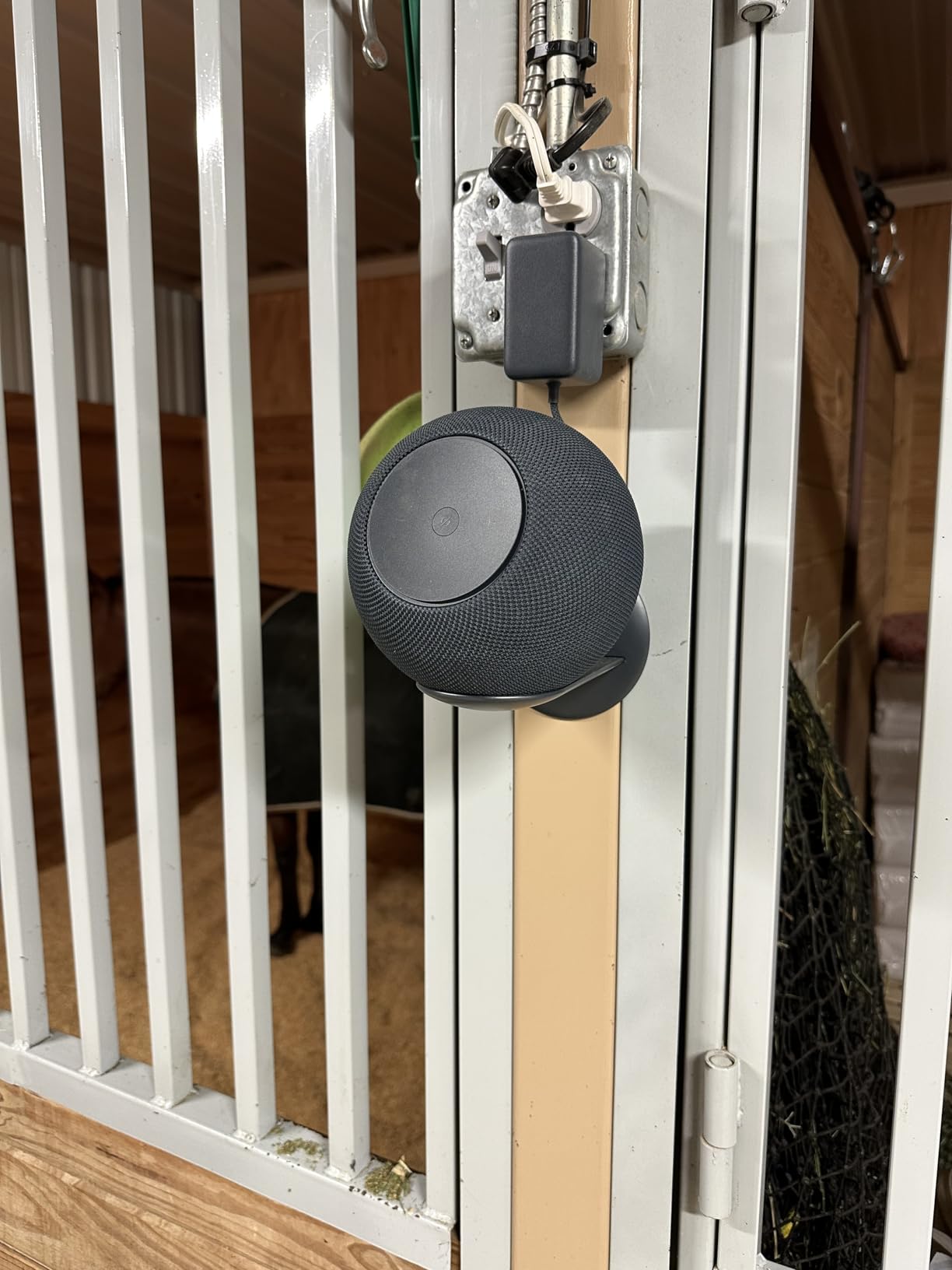
The WiiM Sound Lite is the value argument of this roundup. A 100W peak amplifier, a 4 inch paper-cone woofer, dual 1 inch silk-dome tweeters and Ethernet at the price of a mid-tier closed-ecosystem speaker is a hard combination to argue with.
It is also the one product here that refuses to lock you in. Google Cast, Spotify Connect, TIDAL Connect, Qobuz Connect, DLNA, Roon and an aux input all appear on one box, and Wi-Fi 6E plus Bluetooth 5.3 means the network layer will not be the bottleneck.
Ethernet Makes It the Network-Safest Choice
Most Wi-Fi speakers only offer Wi-Fi. The Sound Lite has a wired Ethernet port, and in our testing a wired speaker was the one that never dropped out of a four-room group. If you have the ability to run a cable to a back room, this is the speaker to plug in.
Wi-Fi 6E also helps on newer routers, particularly the 6GHz band in crowded houses where 5GHz is congested.
No Microphone, No Assistant, No Problem
There is no built-in voice assistant, and that is a design choice rather than a saving. It means no always-listening microphone, and you can still get voice control by adding an external Alexa or Google device in the same room.
Privacy-minded owners rate this arrangement highly, and it is a legitimate answer to the bedroom microphone problem.
The App Is the Weak Point
Owners describe the WiiM app as clunky, and that is the honest caveat on an otherwise strong specification sheet. r/wiim threads are full of practical workaround advice, which is a sign of an active user community but also of a software layer that does not hand-hold.
With only 194 reviews on record, this is a newer product with less long-term evidence behind it. Physical buttons are included, which helps.
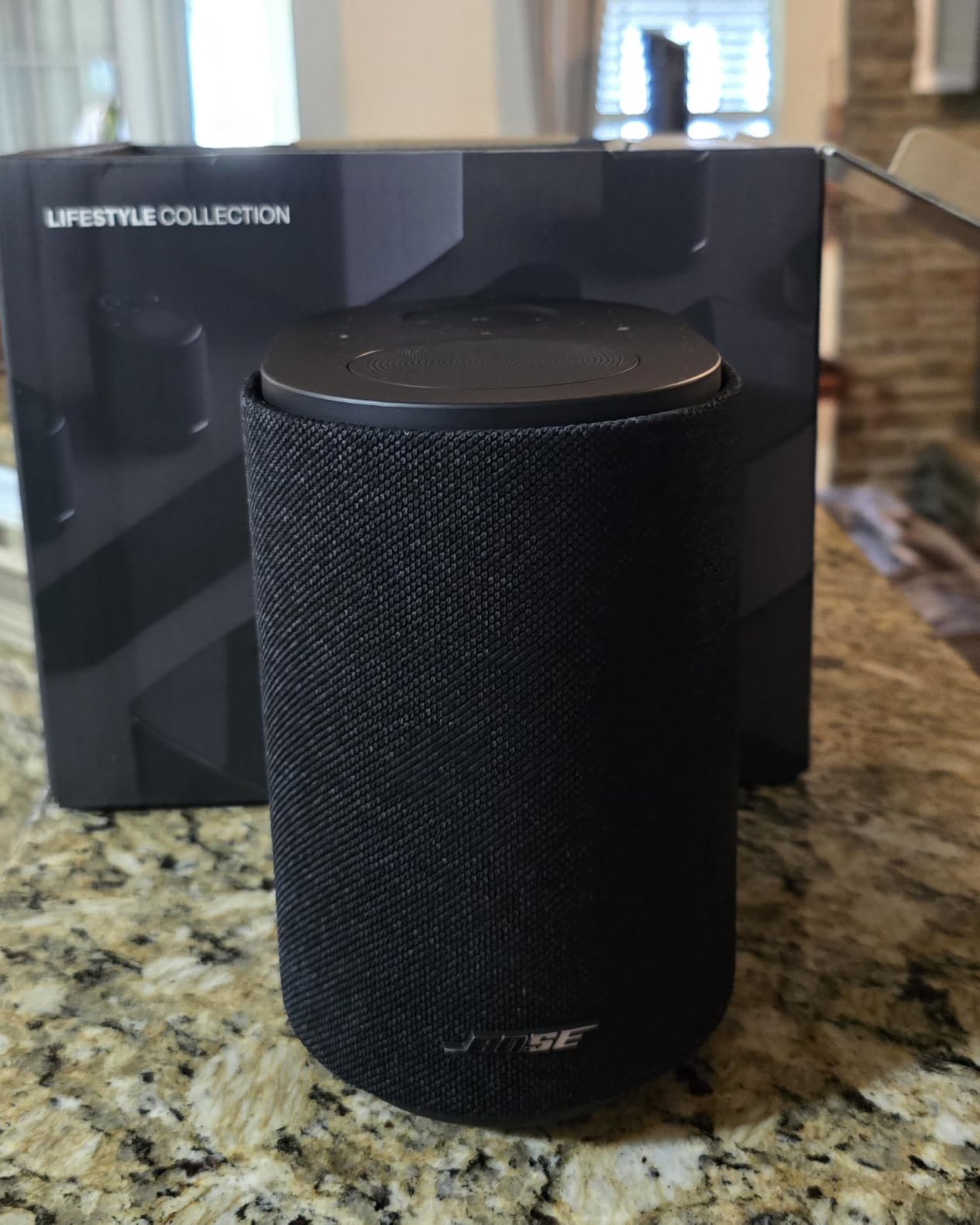
7. Bose Lifestyle Ultra Speaker – Best for Mixing In a Turntable
Bose New Lifestyle Ultra Speaker, Wireless Home Speaker, TrueSpatial Audio, CleanBass, AirPlay & Google Cast, Black
TrueSpatial Audio with CleanBass
Adjustable EQ for bass, treble and midrange
AirPlay, Bluetooth, Google Cast and Wi-Fi
AUX input plus up-firing Atmos driver
Pros
- Small footprint that still delivers room-filling volume
- Warm deep bass praised by many owners
- AirPlay and Google Cast casting support
- Effective home theatre surrounds with up-firing driver
Cons
- Bose app and setup reported as buggy and slow
- Speakers locked into a configured role are hard to move rooms
- Needs break-in time and EQ tuning
The Bose Lifestyle Ultra weighs just 3.7 pounds and stands 7.27 inches tall, which is the practical reason to consider it. Kitchen counters, narrow shelves and bathroom ledges are where whole-home speakers actually live, and this one disappears.
The sound itself is widely praised, with owners particularly liking the warm, deep bass from CleanBass. What pulls the rating down to 3.9 is software, not acoustics, and if you have been warned by a friend that the Bose app is rough, they are not exaggerating.
The AUX Input Is the Reason to Buy It
AUX input for turntables and CD players on a wireless speaker is rarer than it should be. If you have vinyl or a CD transport, this saves you from buying a separate streamer, and it means your record collection becomes part of the whole-home system rather than stranded on one shelf.
For that reason it also works as part of a mixed-brand house: AirPlay and Google Cast mean it can be grouped with speakers that are not Bose.
Configuration Rigidity Is the Real Limitation
Speakers that have been assigned a role in the system are difficult to move to another room afterwards. In a whole-home context that matters more than it would for a single speaker, because your floor plan will change as people move furniture and change habits.
Owners also report that stereo pairing and synchronisation took some of them up to 24 hours to resolve, and that microphone pickup is weaker than Echo devices for voice control.
Up-Firing Driver for Home Theatre
The up-firing driver supports Dolby Atmos in a Lifestyle home theatre setup, so this speaker can do duty as a surround unit rather than only as a music zone.
Adjustable EQ for bass, treble and midrange is available through the app or voice, and reviewers note the speaker benefits from break-in time before it sounds right. Plan a day of low-volume listening before you judge it.
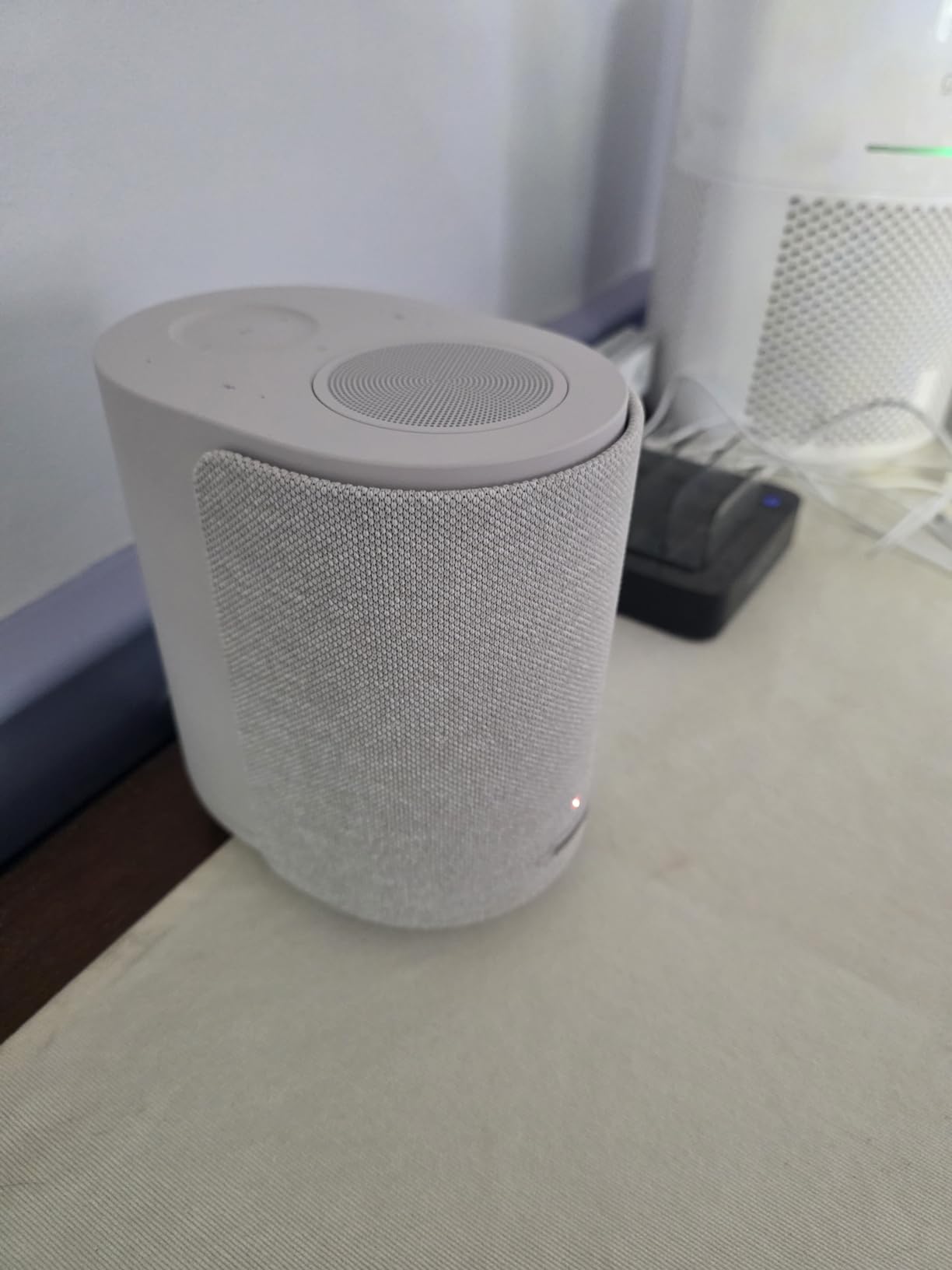
8. Google Nest Audio (3-Pack) – Best Starter Bundle for Android Households
Google Nest Audio (3-Pack) Smart Speakers – Multi-Room Wireless Home Speaker Bundle with Bluetooth, Wi-Fi, Assistant, Stereo Sound, Voice Control & Smart Home Integration
Three speakers per pack for whole-home coverage
Stereo pairing plus multi-room grouping
Google Assistant built in
30 watts maximum output, 7.5 cm woofer
Pros
- Three-speaker bundle covers multiple rooms at once
- Straightforward grouping and stereo pairing
- Google Assistant handles music and timers and smart home
- Enclosure uses sustainable plastic and wood materials
Cons
- Lower output per speaker suits small and medium rooms
- Fabric-wrapped enclosure collects dust
- Limited EQ and room correction
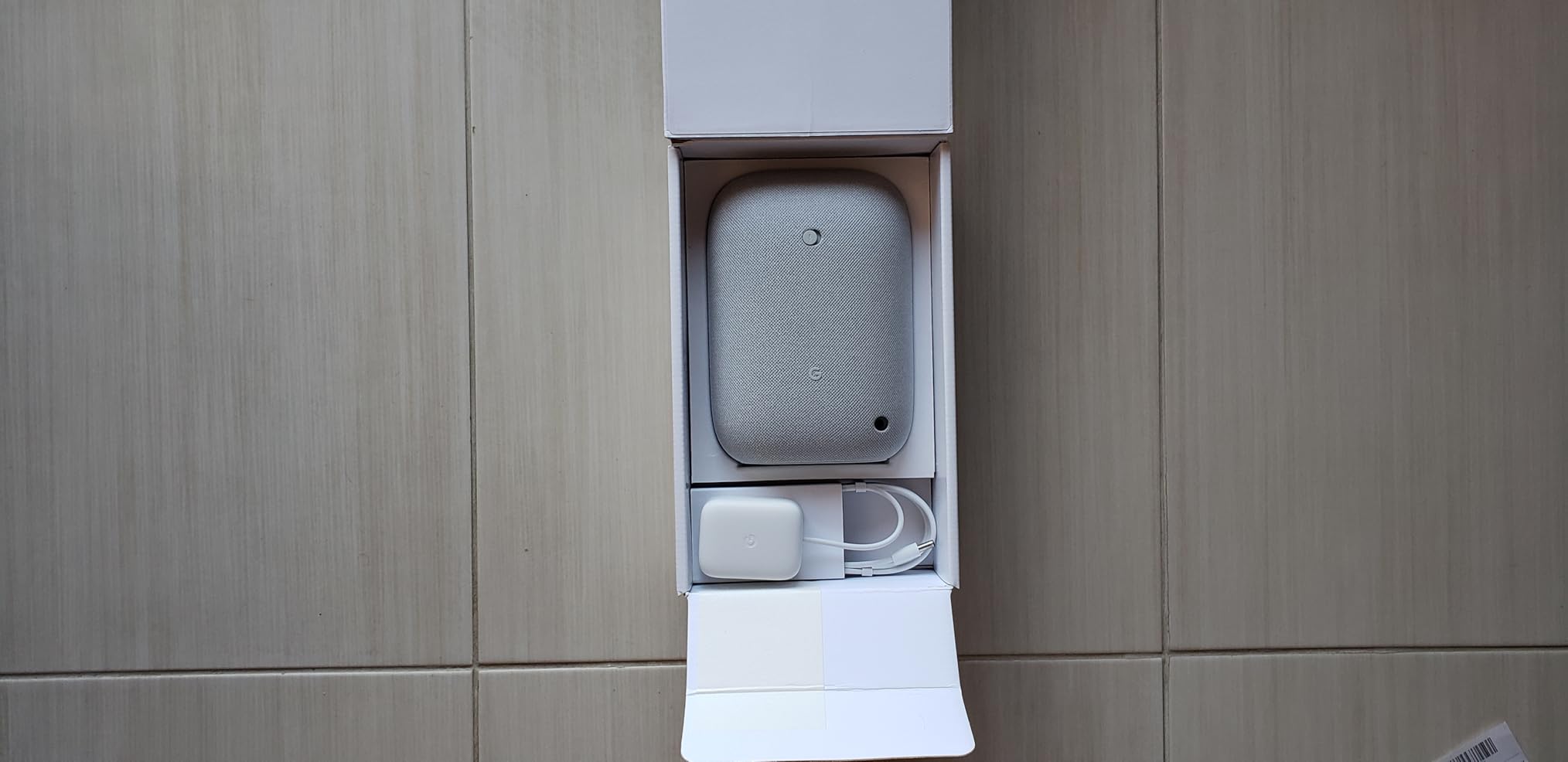
Most people starting a whole-home system need three rooms covered on day one, and this pack is built for covering three rooms on day one. Three speakers, one box, and the single biggest purchasing decision is made before you get to enjoy the music.
Stereo pairing of two units plus room grouping on the third covers the common pattern: a proper pair in the main room and a background speaker in the kitchen or bedroom.
The 30-Watt Ceiling Is the Whole Story
At 30 watts maximum output with a 7.5 cm woofer, these are small and medium room speakers. In a kitchen, an office and a bedroom, that is exactly right, and in a large open-plan living room it will not reach.
Owners rate them on convenience and grouping rather than absolute sound quality, and the 4.5 average reflects that. If your main room is big, budget for a bigger speaker there and use these everywhere else.
Grouping Limits Are Worth Knowing Before You Buy
Google Cast is an open protocol, and the practical grouping workaround Android users rely on is saved groups in Google Home, such as a party group or a morning group. The catch is that you generally have to stop playback to change group membership.
That is a small daily friction, but in a busy household it is the kind of thing that quietly pushes people toward a closed ecosystem.
Minimal EQ, Maximum Simplicity
Room correction and fine EQ are limited compared with audiophile-oriented systems, and the fabric-wrapped enclosure collects dust in a way that smooth plastic does not. Neither matters much for background listening.
What you get for that simplicity is a control experience most non-technical family members can operate. If you want the whole home to be usable without training, this pack is hard to argue with.

9. Audio Pro C10 MKII (WiiM Edition) – Best for Room Correction on a Budget
Audio Pro C10 MKII Wireless Multi‑Room Speaker, WiiM Edition, Black
80W output with 5.25 inch woofer and twin textile dome tweeters
Hi-Res streaming to 192 kHz/32-bit
Built-in room correction
Six on-speaker preset buttons
Pros
- Clear full-bodied sound with a controlled low end
- Open platform avoids single-brand lock-in
- Six hardware preset buttons for one-touch source selection
- Room correction adjusts response to the listening position
Cons
- Bluetooth multi-device connection unstable for some owners
- WiiM app can be clunky and needs patience after router changes
- Preset buttons only work with approved streaming platforms
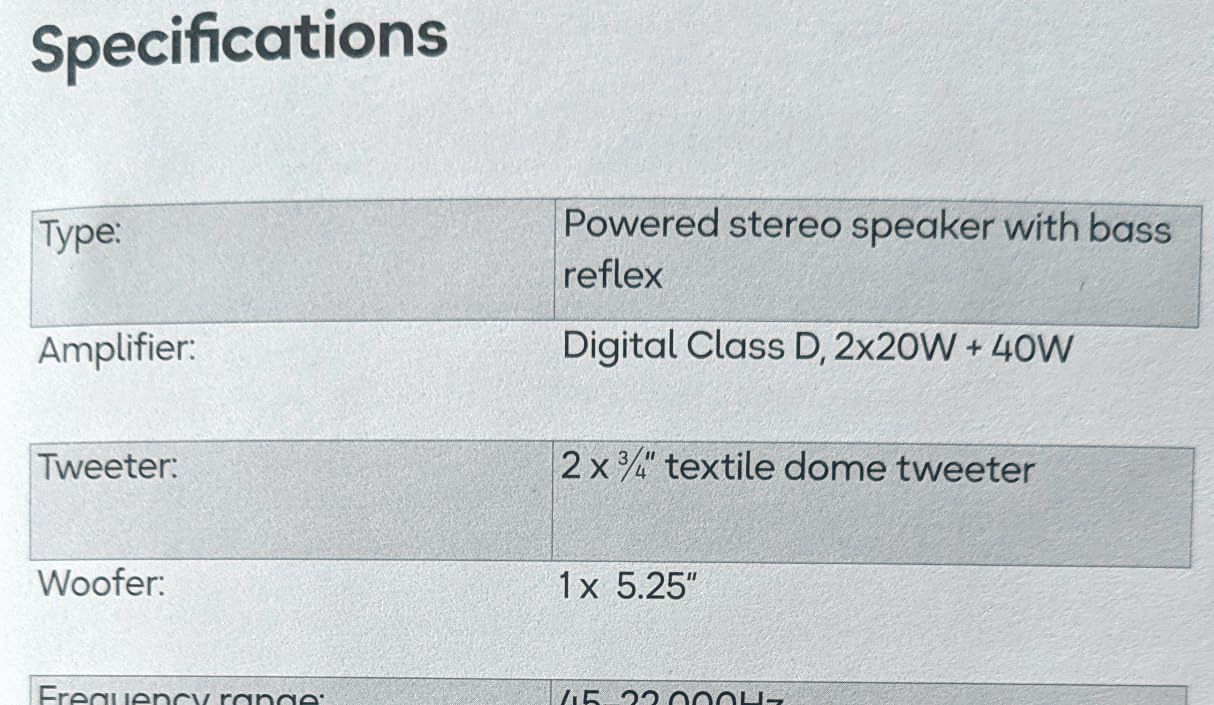
The C10 MKII is among the most serious hi-fi propositions in this roundup on a pure specification basis: a 5.25 inch woofer, two 3/4 inch textile dome tweeters, 80W of amplification and streaming up to 192 kHz/32-bit. At 9.3 pounds it is also a heavy speaker, and that weight is doing acoustic work.
It runs on the Linkplay platform through the WiiM Home app, which means more than 20 music services plus AirPlay 2, Google Cast, Spotify Connect and TIDAL Connect on the same hardware. Built-in room correction and six physical preset buttons make it usable by someone who will never open the app.
Room Correction Without a Phone Microphone
Built-in room correction adjusts frequency response to the listening position, which matters in real houses with furniture against walls. A 5.25 inch woofer placed 20 centimetres from a plasterboard wall is a problem, and correction reduces how much it matters.
Its 12.6 inch wide footprint is the catch. This is a shelf speaker, not a counter speaker, so plan furniture before you buy.
Preset Buttons for Households That Do Not Use Apps
Six on-speaker preset buttons give one-touch source selection, which is the single most practical feature for a mixed-ability household. Your children can start the radio without finding a playlist.
The catch is that the preset buttons only work with approved streaming platforms, so your favourite obscure service will still need the app.
Connectivity Complaints Are the Main Reason the Rating Is 4.2
Owners report unstable Bluetooth multi-device connections, spontaneous volume jumps and band dropouts, plus reconnect needs after a router change. Sound quality is consistently rated highly; software maturity is what pulls the average down.
With 102 reviews on record, the evidence base here is thin. Treat it as a strong-sounding option with a less proven app rather than a safe default.
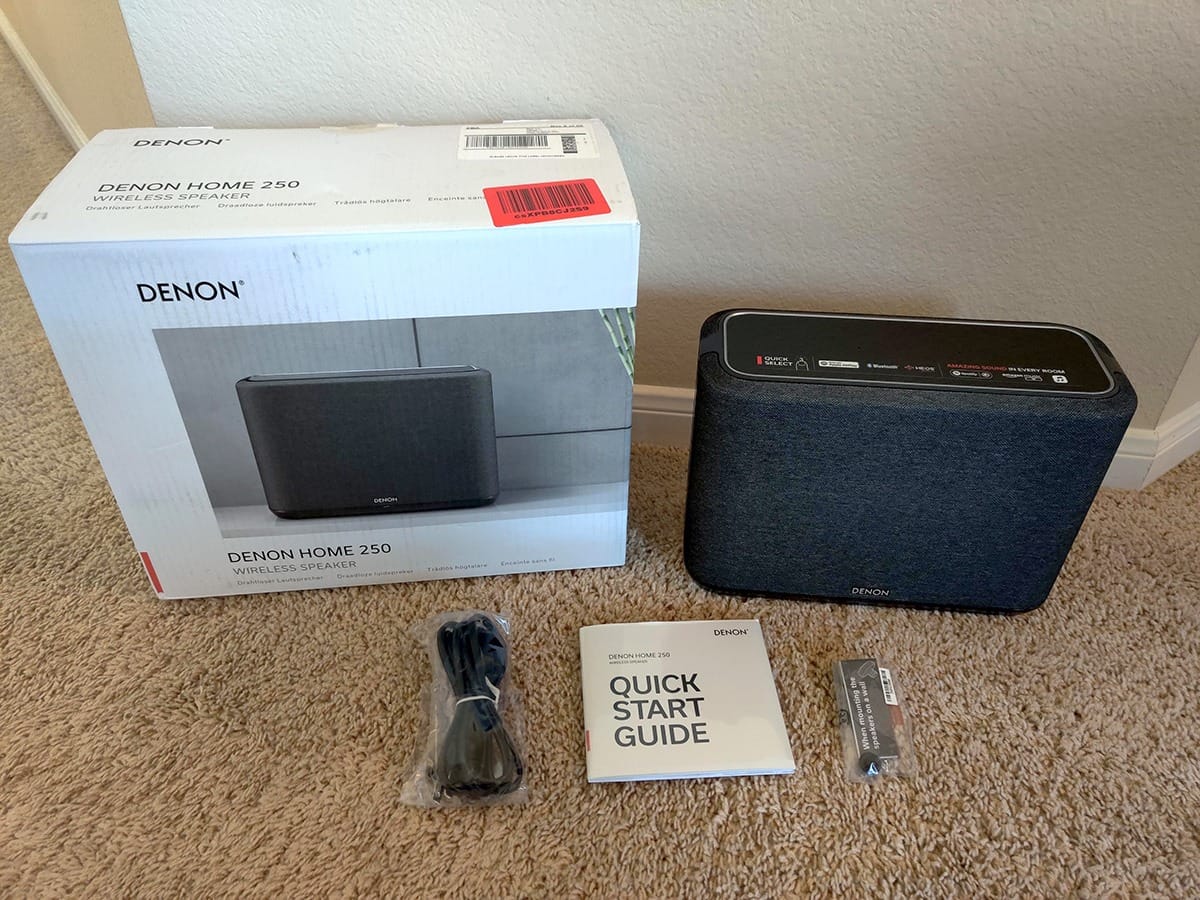
10. Denon Home 250 – Best for Denon and Marantz Owners
Denon Home 250 Wireless Smart Speaker, Bluetooth Stereo Speaker, White
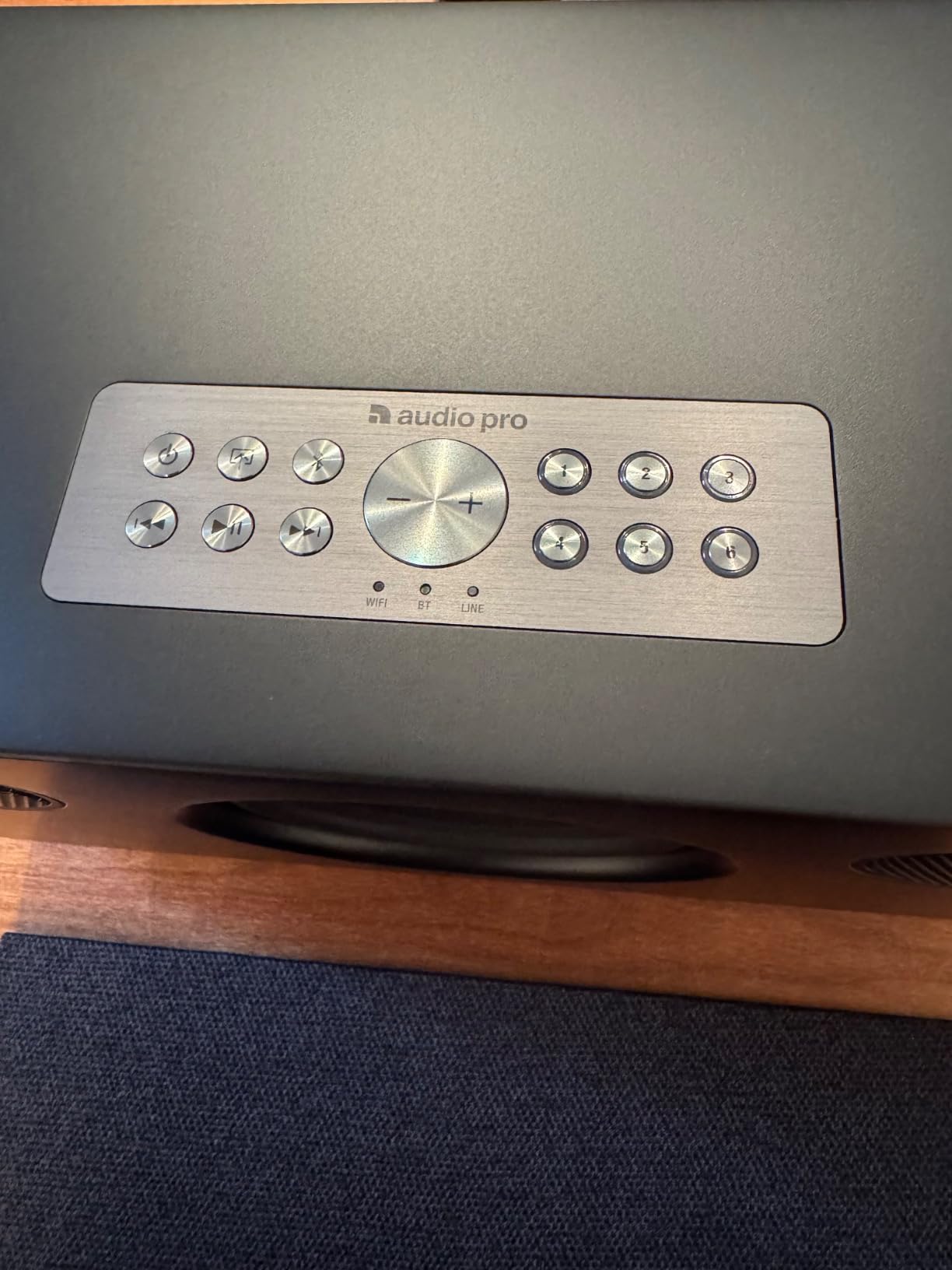
Two 0.75 inch tweeters and two 4 inch bass drivers
5.25 inch passive radiator with Sound Master tuning
Wi-Fi, AirPlay 2, HEOS, Bluetooth, Ethernet and AUX
USB playback
Pros
- Rich full-range sound across music and podcast listening
- Synchronises wirelessly with other Denon Home speakers
- Hi-Res streaming including Amazon Music HD and TIDAL and Qobuz
- Three quick-select buttons for internet radio
Cons
- HEOS app described as clunky with less metadata
- Bluetooth and AirPlay connections can drop
- 3-5 second latency reported with on-screen lyrics
If your house already has a Denon or Marantz receiver, the Home 250 is the obvious way to extend audio into the rooms the receiver does not reach. It joins the same HEOS platform, so the receiver becomes another zone instead of a competing system.
Forum users running Denon AVRs as a primary room report needing fewer wireless speakers, because the receiver already covers that zone well. That is exactly the logic: use the receiver for the room it is in, and add Home speakers for the rest.
Physical Presets for Radio Lovers
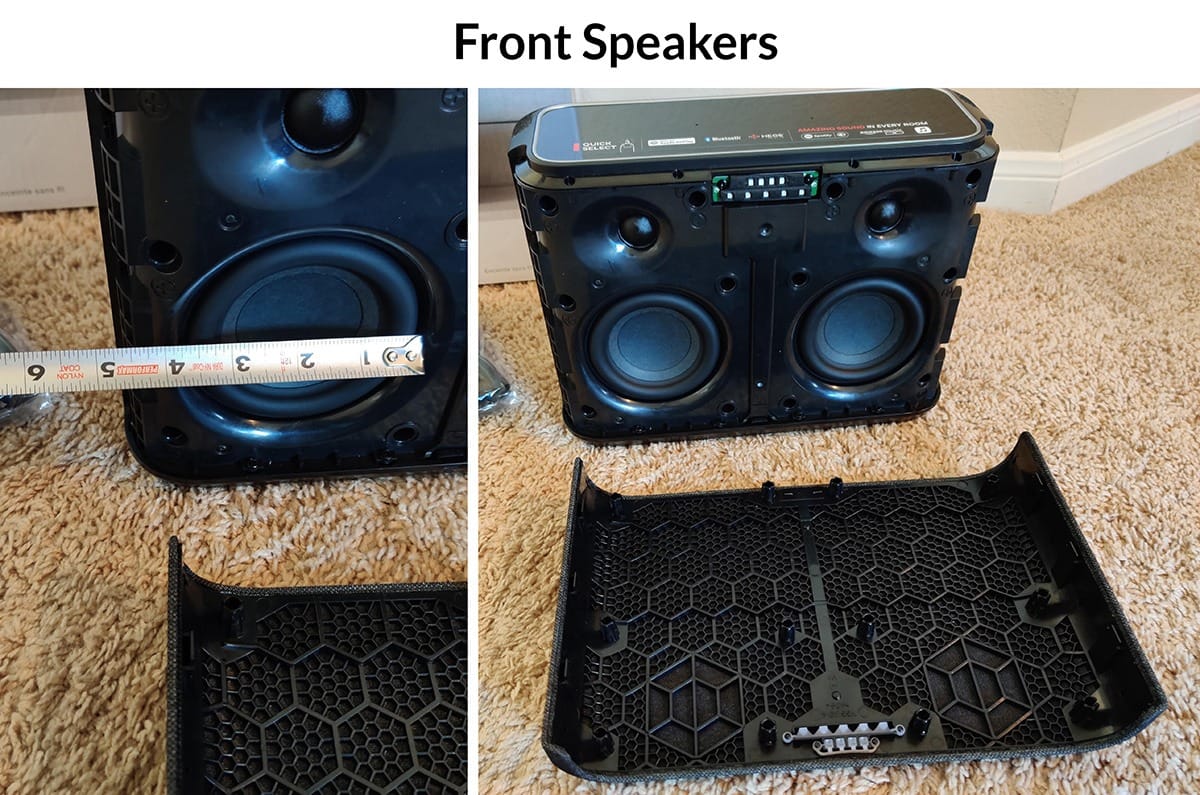
Three internet radio preset buttons on the top panel are a small, genuinely useful touch. For a kitchen or a workshop, one press to a saved station beats navigating a phone.
USB playback including DSD content and a wired RJ-45 connection add flexibility that most competitors in this list do not offer, and the Ethernet port makes it one of the more network-resilient options here.
Sync and Latency Are the Honest Weak Spots
Owners report roughly 3-5 seconds of audio latency when watching on-screen lyrics, and Bluetooth and AirPlay connections that can drop or need repeated reconnection. Volume control from third-party apps is inconsistent.
For whole-home music listening this is tolerable. For anything where audio and video are locked together, it is not, so keep your TV audio on the receiver.
The HEOS App Is the Most Cited Complaint
The HEOS app is consistently described as clunky, with less music metadata than native streaming apps. In a home with several users, an app that takes practice is a bigger problem than a slightly untuned speaker.
AirPlay 2 support does let you group with other Denon or Marantz gear, and forum discussion suggests grouped rooms can behave inconsistently when an AVR is mixed into the group. Test that specific combination before you commit to four rooms.
11. JBL Authentics 200 – Best for Retro Styling and On-Speaker Controls
JBL Authentics 200 – Retro Style Smart Home Speaker with Built in Wi-Fi, Bluetooth and Voice Assistants, Alexa and Google Assistant, Multi-Room Playback, Automatic self Tuning (White/Gold)
25mm tweeters with 5 inch woofer and 6 inch passive radiator
90 watts maximum output
AirPlay, Chromecast and Spotify Connect built in
On-speaker volume, bass and treble controls
Pros
- Retro design with premium aluminium and leather materials
- Balanced audio with clear treble and deep bass
- Supports AirPlay
- Chromecast and Spotify Connect
- Physical volume
- bass and treble adjustment
Cons
- One of the higher specification tiers for a single wireless speaker
- JBL One app offers less fine-grained tuning
- Bass module required for the deepest low-end output
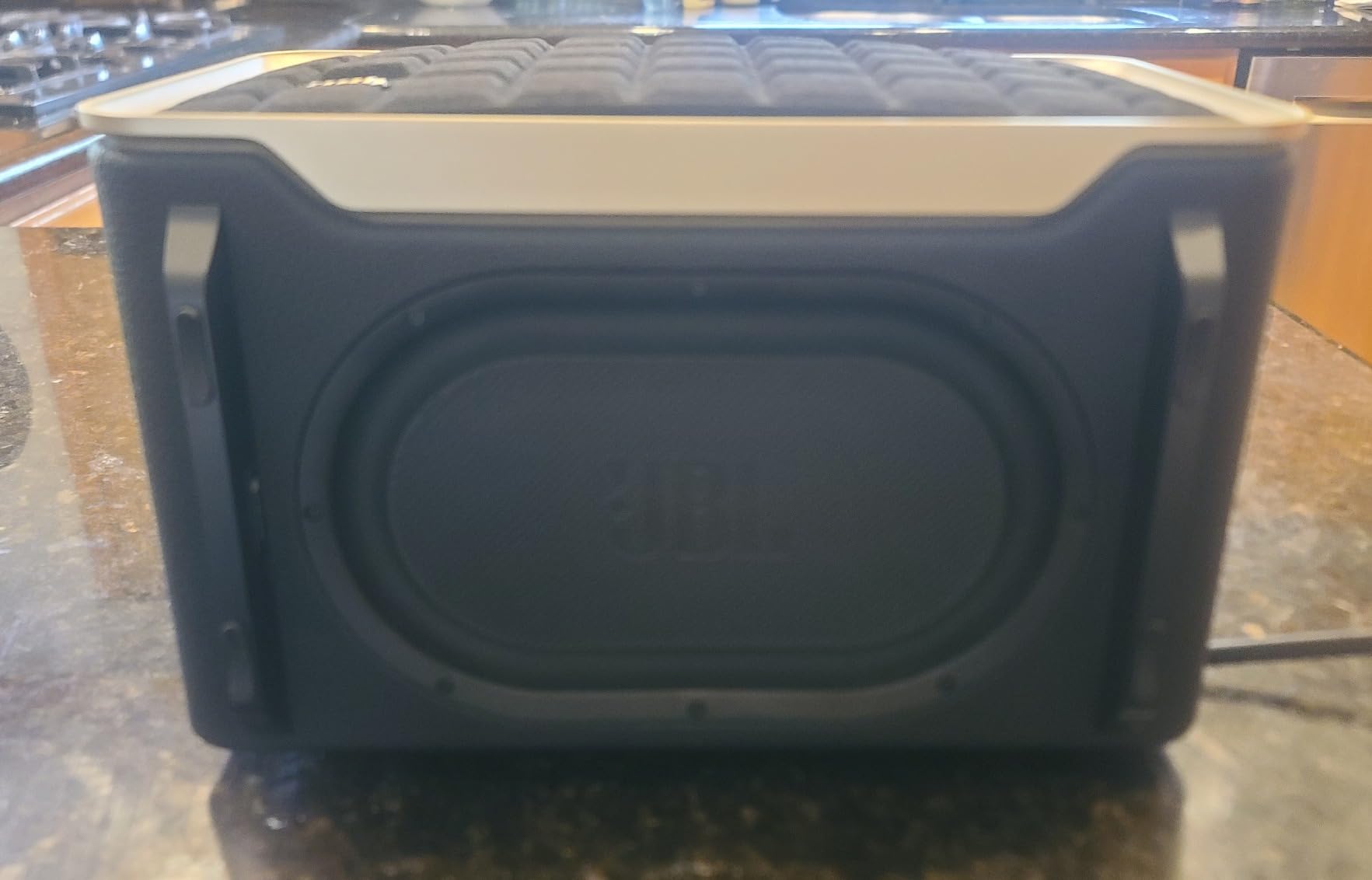
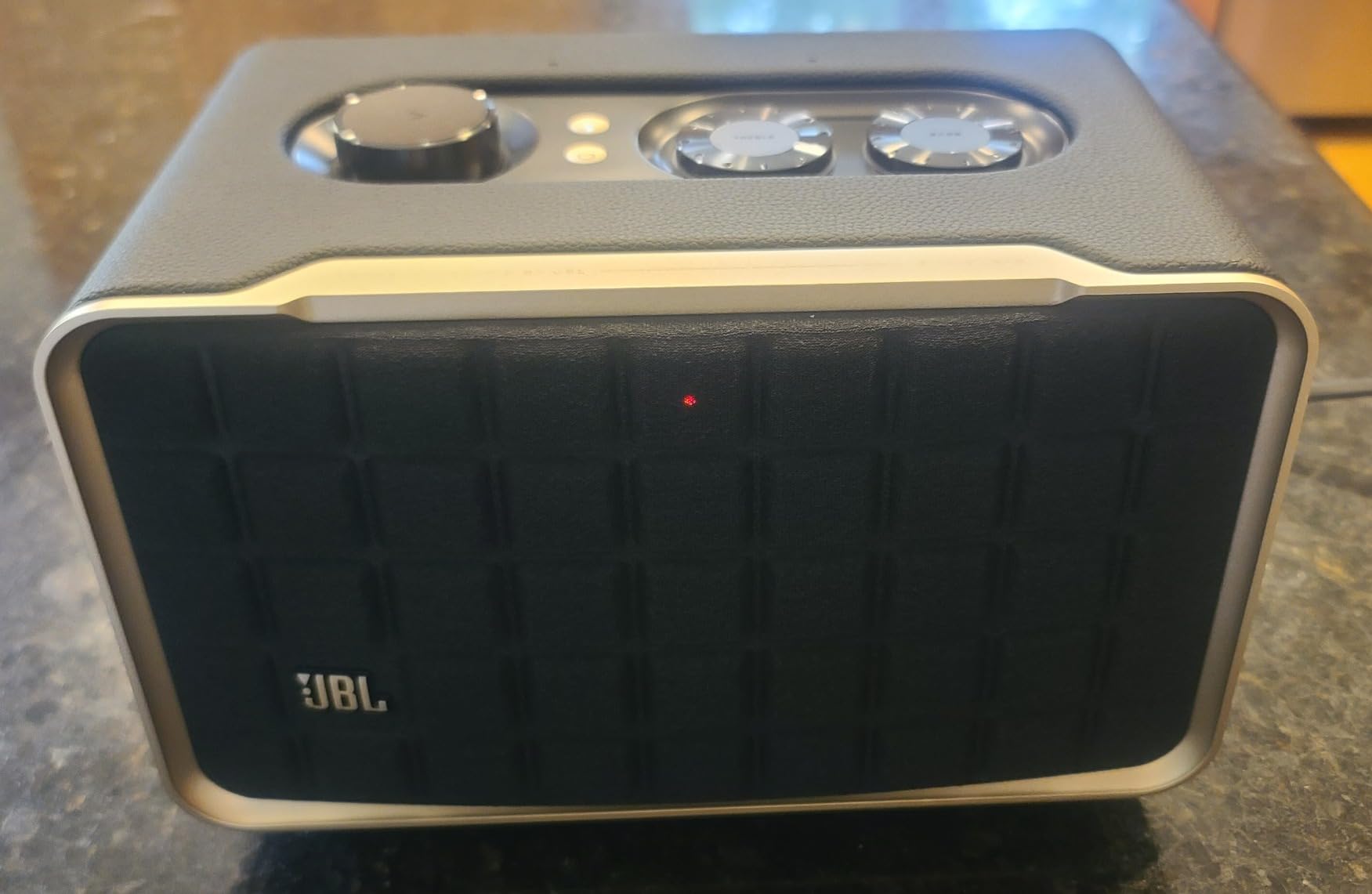
The Authentics 200 is the speaker people buy when they refuse to have a plastic cylinder on the sideboard. Aluminium frame, leather-like enclosure and a Quadrex grille in white and gold look far more like furniture than most whole-home hardware, and in a living room that is not a trivial consideration.
Underneath the styling it is properly specified: 90 watts, 25mm tweeters, a 5 inch full-range woofer and a 6 inch passive radiator for bass. It is a genuinely good speaker that happens to look like an amplifier.
Physical Bass and Treble Controls Are Rare
On-speaker volume, bass and treble controls mean the tuning is not dependent on an app or a voice assistant. In a whole-home system where bedrooms, kitchens and living rooms all have different acoustics, having a physical starting point per room is more useful than it first appears.
Alexa Multi-Room Music support and Google Assistant are both present, and it also carries AirPlay, Chromecast and Spotify Connect, so it groups in an open-protocol house as easily as a closed one.
The 6 Inch Passive Radiator Sets the Bass Ceiling
The passive radiator delivers real low end, but owners note that the deepest output still wants a bass module. If your main room is large, budget for a sub or accept that the Authentics 200 handles mid-bass well rather than sub-bass.
Stereo pairing gives a wider sound for two units, which is the configuration we would pick for a living room.
App Depth Is the Trade for the Design
The JBL One app offers less fine-grained tuning than some competing systems, and this sits in one of the higher specification tiers for a single wireless speaker. You are paying partly for materials and design.
At 4.4 from 232 reviews, the reception is consistently positive, with reviewers citing the industrial design and balanced, detailed sound.
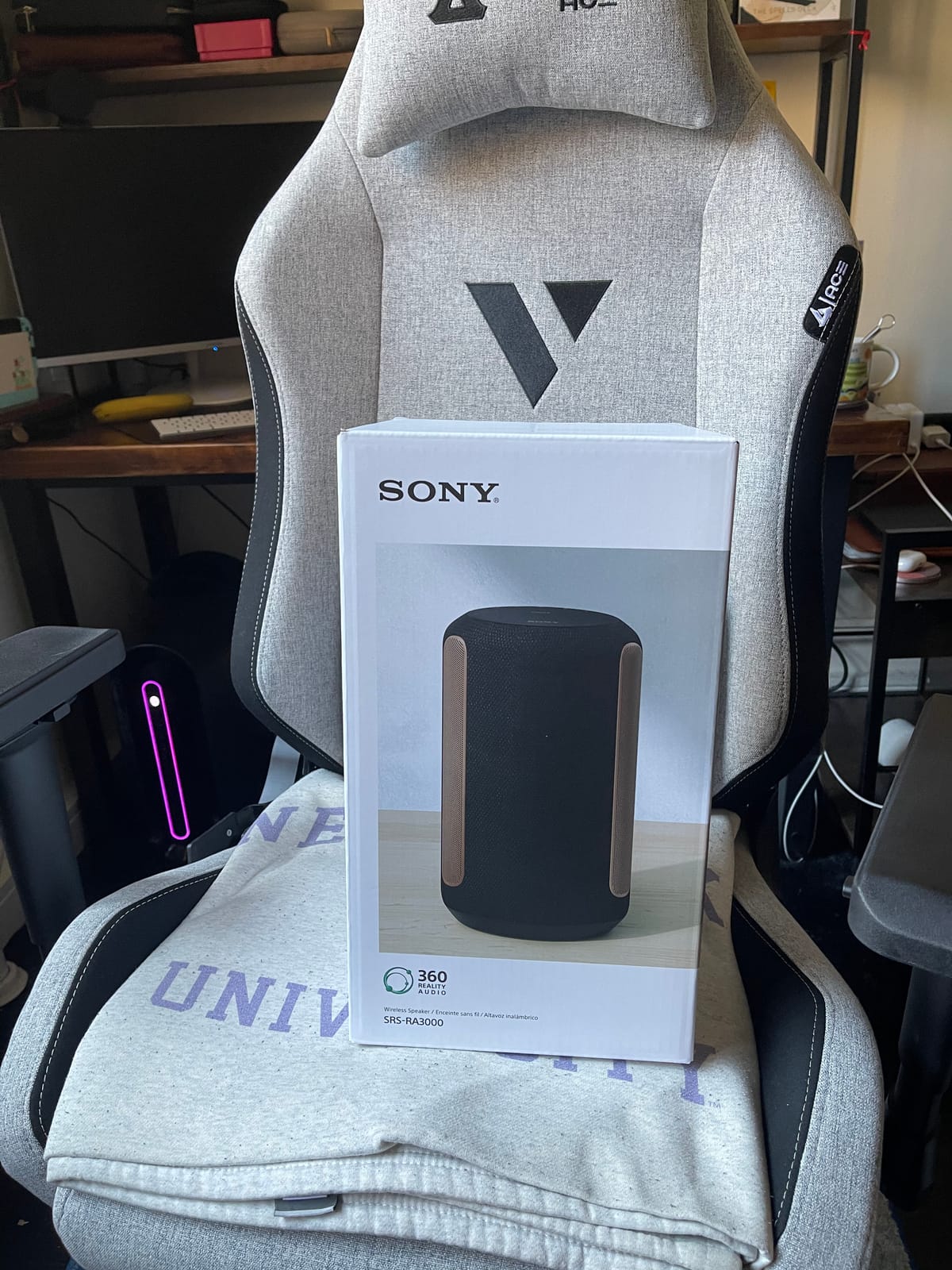
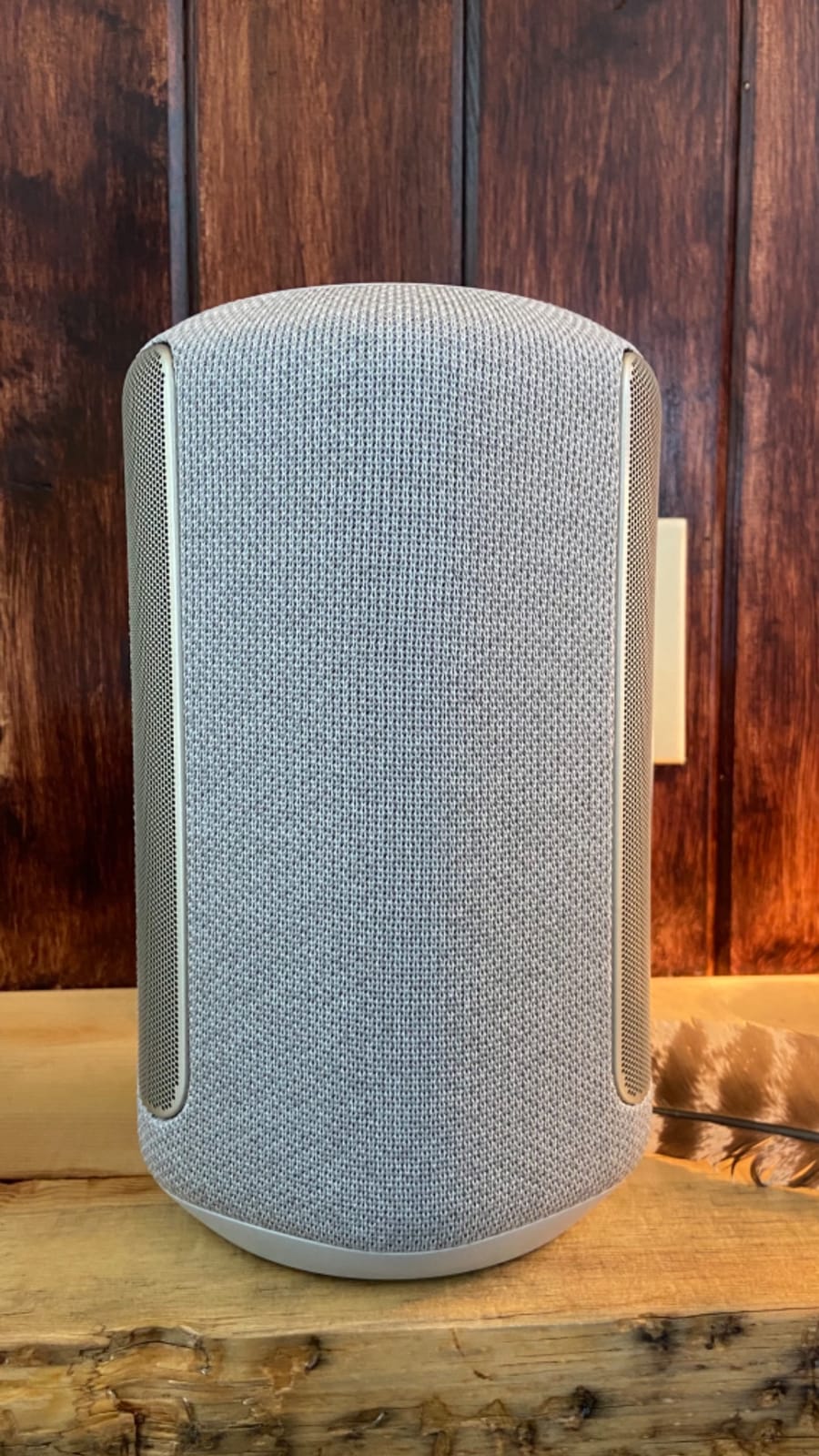
12. Sony SRS-RA3000 – Best for Bathrooms and Even Room Coverage
Sony SRS-RA3000 360 Reality Audio Wi-Fi / Bluetooth Wireless Speaker, Works with Alexa and Google Assistant, Black
360 Reality Audio with beam tweeters and omni diffuser
Dual passive radiators for bass
Automatic sound calibration and volume levelling
Chromecast built-in and Spotify Connect
Pros
- Omni-directional dispersion fills rooms evenly from any position
- Automatic volume levelling keeps playback consistent across tracks
- Humidity resistant for kitchen and bathroom use
- Built-in Chromecast and Spotify Connect
Cons
- Lower overall output than larger whole-home speakers
- Limited bass depth for larger rooms
- 360 Reality Audio content is less widely available
- Voice assistant performance depends on external devices
The Sony SRS-RA3000 solves a specific problem: getting even sound into a room where the listening position is not a fixed point. Beam tweeters spread vertically, an omni diffuser spreads horizontally, and the result is coverage that does not collapse when you move from the sofa to the kitchen counter.
It is also humidity resistant and waterproof, which makes it a strong choice in this roundup for a bathroom. Wireless electronics in a wet room fail, and resistance is the difference between a speaker that lasts and one that does not.
Calibration and Volume Levelling Do the Boring Work Well
Automatic sound calibration tunes output to the room, and automatic volume levelling keeps playback consistent across tracks so quiet ballads do not disappear and loud masters do not jar.
Those are unglamorous features that you only notice when they are missing. In a background-music role in a kitchen or bathroom, they matter more than any specification on the box.
Output and Bass Are the Limits
At 20 watts maximum output with dual passive radiators, this is an ambient and medium-room speaker. Reviewers are candid that bass depth is limited for larger rooms and overall output sits below bigger whole-home speakers.
Its 9.75 inch height also means it is not a flat counter speaker. Placement on a shelf or a stand suits it better.
360 Reality Audio Content Is Still Niche
The Sony format is impressive when you have native 360 Reality Audio content, and that content is still less widely available than Dolby Atmos Music. Judge this speaker on its dispersion and calibration, which work with any source.
Chromecast built-in, Spotify Connect, Wi-Fi, Bluetooth and optional Bluetooth TV pairing cover the essentials, and Alexa and Google Assistant both work through external devices. At a 4.0 average from 373 reviews, it is a specialist rather than a headline choice.
How to Choose a Whole Home Audio System
Closed ecosystems or open protocols?
Choose a closed ecosystem if every person in the house should be able to control the music without training. Choose an open protocol if you want to mix brands, keep the option of changing phones later, or already own gear from a different platform.
Bluetooth itself is not a multiroom answer yet. It works for two speakers and it is not a reliable whole-house grouping layer, so treat it as a convenience input rather than a system.
How many zones does your house actually need?
Count the rooms where music genuinely gets played, not every room with a socket. In most homes that number is between four and six, and a two-bedroom flat is usually three.
Give the largest room the best speaker, give wet rooms humidity-resistant units, and give bedrooms units without microphones if anyone is sensitive about that. We have a fuller look at speakers for high-humidity and utility spaces if your layout includes one.
Sonos versus HEOS, head to head
Sonos is the smoother experience: tighter grouping, more reliable stereo pairing and a wider speaker range at consistent quality. HEOS wins if you own a Denon or Marantz receiver, because that gear joins the same platform, and the Home 250 offers wired Ethernet and USB playback that Sonos does not.
Is Sonos the best whole house sound system? For most households, yes. For a house built around a receiver, or for anyone who wants to avoid platform lock-in, no.
Retrofit, bookshelf or in-ceiling placement
Bookshelf and counter placement is what every speaker in this roundup is designed for, and it is genuinely enough for most homes. In-ceiling and in-wall speakers are a different category: they need wiring, cutting and often an installer, and they are worth it only when you want invisible audio in a room where furniture placement is limited.
Our rule: start wireless and retrofit. Move to in-ceiling when a room has nowhere sensible to put a box, not before.
Voice assistants, privacy and the bedroom question
Speakers with always-listening microphones are convenient and should not go in a child’s bedroom or a home office with confidential calls. The Sonos One SL and the WiiM Sound Lite have no built-in microphone, which is the simplest way to satisfy that requirement.
For anything beyond room audio, our best field audio recorders guide covers the recording side of the house.
Frequently Asked Questions
Is multi-room audio worth it?
For most households, yes, and the payoff is convenience rather than sound quality. Multi-room audio is worth it when two or more people want different music in different rooms, or when you want one album to follow you from kitchen to living room without touching a phone. It is not worth it in a small flat where a single good speaker plus a Bluetooth speaker already covers the space.
What is a multi-room speaker?
A multi-room speaker is a Wi-Fi speaker that joins the same platform as the other speakers in your home, so an app or a voice assistant can group them into zones. You can play the same music everywhere at once, or different music in each room, and control volume per room. The speaker needs to support the same protocol or ecosystem as the rest of your system.
How many rooms can one Wi-Fi router handle for multiroom audio?
A single router usually carries two to three wireless speakers without trouble. Beyond four speakers, or across two floors, a mesh system is the safer choice, and Ethernet backhaul to the furthest rooms removes most dropout problems. If a fourth room keeps dropping out of a group, the router is the problem, not the speaker.
Can you mix different brands of speakers in one house?
Yes, as long as they share an open protocol such as AirPlay 2, Google Cast, Spotify Connect or Linkplay. Grouping happens inside that protocol rather than inside a single brand app, so a Sonos, a Bose and a WiiM speaker can all join an AirPlay 2 or Cast group. You lose the one-tap reliability of a closed ecosystem, and grouping is usually a step or two longer.
Do multiroom speakers need to be wired back?
No. Every speaker in this roundup runs on Wi-Fi and none requires a cable. Wiring is optional but valuable: an Ethernet connection to the furthest rooms, or to any speaker in a bathroom or kitchen, makes groups far more reliable. Treat wiring as stability insurance rather than a requirement.
Which Whole Home Audio Speaker Should You Buy?
For most people reading this in 2026, the best wireless speakers for whole home audio start with two units and a plan for a third. If you want one system that anyone in the house can operate, the Amazon Echo Dot is our Editor’s Choice: it was the easiest of everything we tested to live with, and its built-in eero extender solves the Wi-Fi problem that breaks other systems. If you already own a Sonos soundbar or Beam, the Sonos One SL pair gives you the cleanest stereo and surround expansion with no microphone in the box.
If sound quality in a large main room is the priority, the Sonos Era 300 is our pick for genuine upward-firing spatial audio. If you want to avoid platform lock-in and value specifications per pound, the WiiM Sound Lite offers amplifier power and wired Ethernet that closed ecosystems rarely match. Add the Denon Home 250 if a Denon or Marantz receiver already runs your living room, and the Google Nest Audio 3-Pack if you need three rooms covered on day one in an Android household.
Whichever path you take, fix your Wi-Fi before you unbox anything, buy two speakers before you buy six, and start with the room where music is played most. That sequence, not the speaker, is what makes a whole-home system work after a year of use.
Leave a Reply