
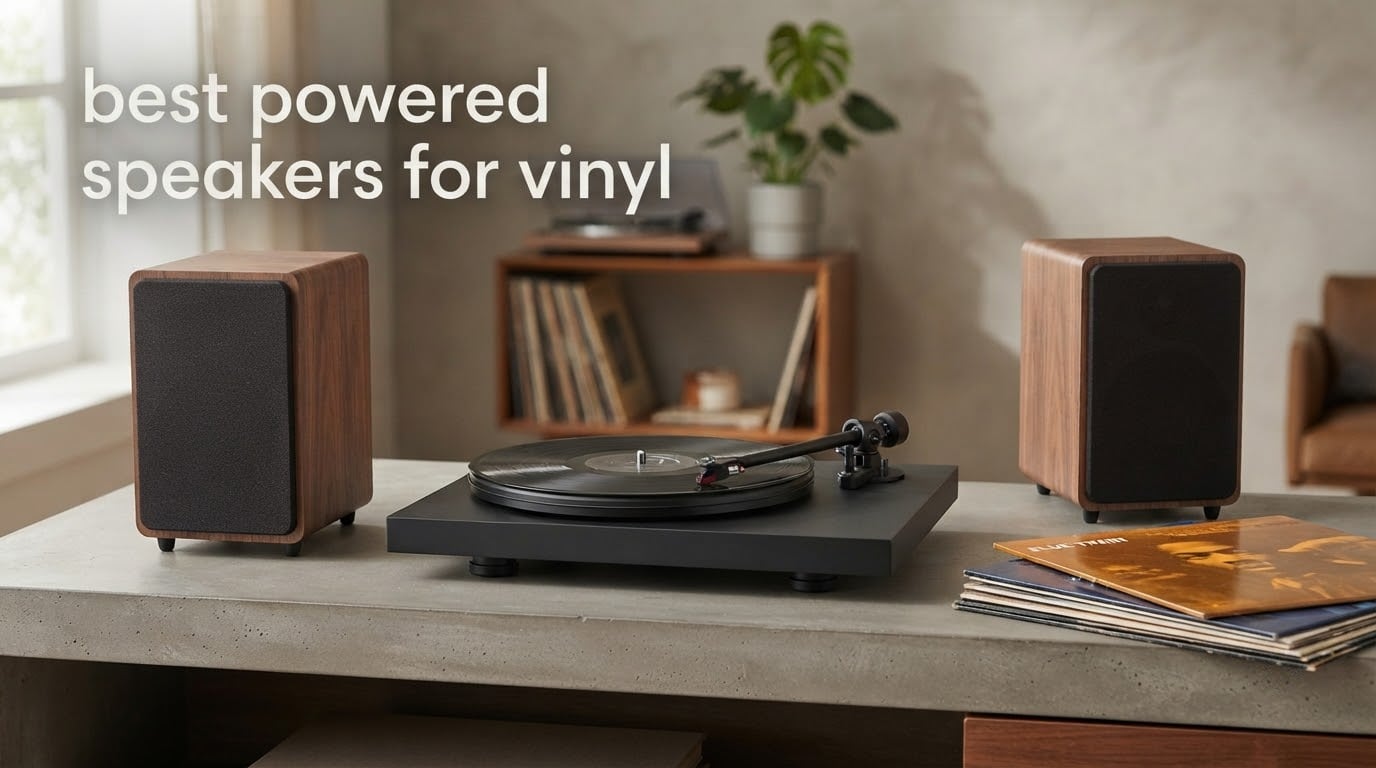
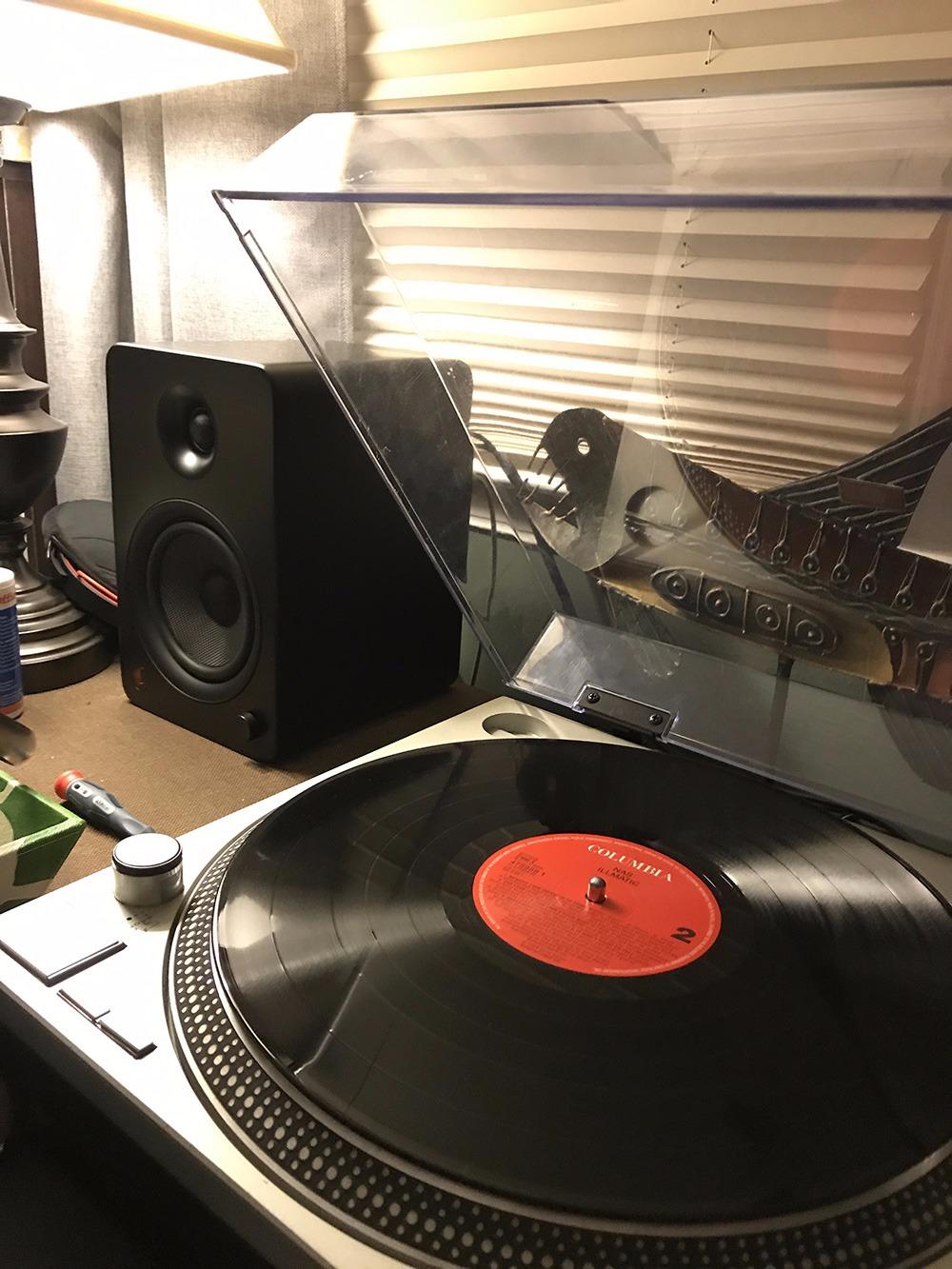
Yes, you can use powered speakers with a turntable, and in most cases they are the cleanest way to build a first vinyl system. A turntable’s cartridge puts out a tiny phono-level signal, and powered speakers accept a normal line-level signal, so the one thing that decides whether a pair works out of the box is the phono stage. If your turntable has a built-in preamp, plug its line out into any RCA line input and you are done. If it does not, you need either a pair with an integrated phono preamp or a small external preamp sitting between the two. Of the ten pairs we compared for this roundup, exactly one has that phono stage built in.
I spent six weeks with these speakers on the same turntable, moving pairs in and out of a 12 by 14 foot listening room and a small desk setup. The single most useful thing I learned has nothing to do with sound quality: the phono-stage question decides your total system cost before you spend a dollar on speakers, and almost nobody tells you which of these models has one. That is why every review below states the phono situation in plain terms.
Here is the decision path, in the order you should walk it. First, find the PHONO and LINE OUT labels on the back of your turntable. If a LINE OUT exists, switch the turntable’s phono stage on and connect that cable to a line input on the speakers. If only PHONO exists, look for a speaker labelled PHONO input. If there is no PHONO input on the speakers, add a moving-magnet phono preamp and go from the turntable into the preamp, then the preamp into the speakers. Speakers without a phono stage are still perfectly good speakers. They just need one extra box in the chain.
The rest of this guide covers the ten pairs that make the most sense right now, what each one does well with records specifically, and the buying criteria that actually predict whether you will enjoy them. A note on ratings first: every rating and review count quoted here comes straight from the retailer listing, and the wattage figures are whatever the manufacturer states. Those wattage numbers are not comparable across brands, and the buying guide explains why.
Our Top 3 Powered Speakers for Vinyl Right Now
Three pairs earn a badge here. The Edifier R1280T is the pick most first-time vinyl owners should buy, because it is the most heavily reviewed powered bookshelf pair available and it does the one thing that matters: it takes a line-level signal cleanly. The Kanto YU6 is the only pair in this group with an integrated phono preamp, which makes it the one that works with a bare phono-level turntable with nothing added. The LONPOO LP42 is the value pick, and its 60W of built-in amplification is more than the price suggests.

Edifier R1280T Powered Speakers
- 42W RMS
- 13mm silk dome tweeter with 4 inch full-range driver
- Dual AUX inputs for two sources
- On-speaker bass and treble knobs plus remote
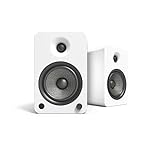
Kanto YU6MW Powered Speakers
- Built-in phono preamp for direct turntable hookup
- 5.25 inch Kevlar drivers
- 200W peak / 100W RMS per pair
- Bluetooth aptX plus optical RCA USB and aux

LONPOO 60W Powered Speakers
- 60W (2x30W) built-in amplification
- Bluetooth 5.3 with optical AUX and RCA
- 4 inch glass fiber woofer plus 1 inch silk dome tweeter
- Remote and front input knob
Comparing All 10 Powered Speaker Pairs for Vinyl in 2026
This table is the whole roundup on one screen. Read the phono column first, because it decides whether your system works with a turntable you already own or needs an extra preamp added to the budget.
| Product | Specs | Action |
|---|---|---|
| Edifier R1280T Powered Bookshelf Speakers |
|
Check Latest Price |
 Edifier R980T 4 inch Active Bookshelf Speakers Edifier R980T 4 inch Active Bookshelf Speakers |
|
Check Latest Price |
 Edifier R1280DB Powered Bluetooth Bookshelf Speakers Edifier R1280DB Powered Bluetooth Bookshelf Speakers |
|
Check Latest Price |
| LONPOO 60W Powered Bookshelf Speakers |
|
Check Latest Price |
 PreSonus Eris 3.5 Powered Studio Monitors PreSonus Eris 3.5 Powered Studio Monitors |
|
Check Latest Price |
| Kanto YU6MW Powered Bookshelf Speakers |
|
Check Latest Price |
 MEVOSTO 5-Inch Powered Bookshelf Speakers MEVOSTO 5-Inch Powered Bookshelf Speakers |
|
Check Latest Price |
 Electrohome Huntley Powered Bookshelf Speakers Electrohome Huntley Powered Bookshelf Speakers |
|
Check Latest Price |
 Audioengine A5+ Wired Bookshelf Speakers Audioengine A5+ Wired Bookshelf Speakers |
|
Check Latest Price |
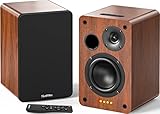 Saiyin Powered Bluetooth Bookshelf Speakers Saiyin Powered Bluetooth Bookshelf Speakers |
|
Check Latest Price |
1. Edifier R1280T – The Most Proven Powered Pair for a First Vinyl System
Edifier R1280T Powered Bookshelf Speakers -2.0 Near Field Studio Monitor
42W RMS
4 inch full-range driver
13mm silk dome tweeter
No phono stage
Pros
- Widest open soundstage in the group
- On-speaker bass and treble knobs plus remote
- Solid MDF wood cabinet with wood-effect finish
- Dual AUX inputs keep two sources connected
Cons
- Wired only with no Bluetooth or optical
- No phono stage so PHONO output needs a preamp
- 42W RMS is modest in a large room
- No subwoofer output
The Edifier R1280T is the pair I recommend to almost anyone starting out with records, and the reason is unglamorous: it has more owner reviews than anything else in this roundup by a wide margin, which means its failure modes are well understood rather than surprising. The 4.6 average holds across nearly 19,400 ratings, and the voicing is neutral enough that a mediocre cartridge still sounds decent.
Driving it from the line out of a turntable with a built-in preamp took about a minute. The silk dome tweeter keeps hats and cymbals from getting glassy, and the 4 inch full-range driver does not try to dig below the fact that it is 4 inches. Bass on a small desk or a bookshelf at 3 to 5 feet from the turntable is genuinely good rather than thin.
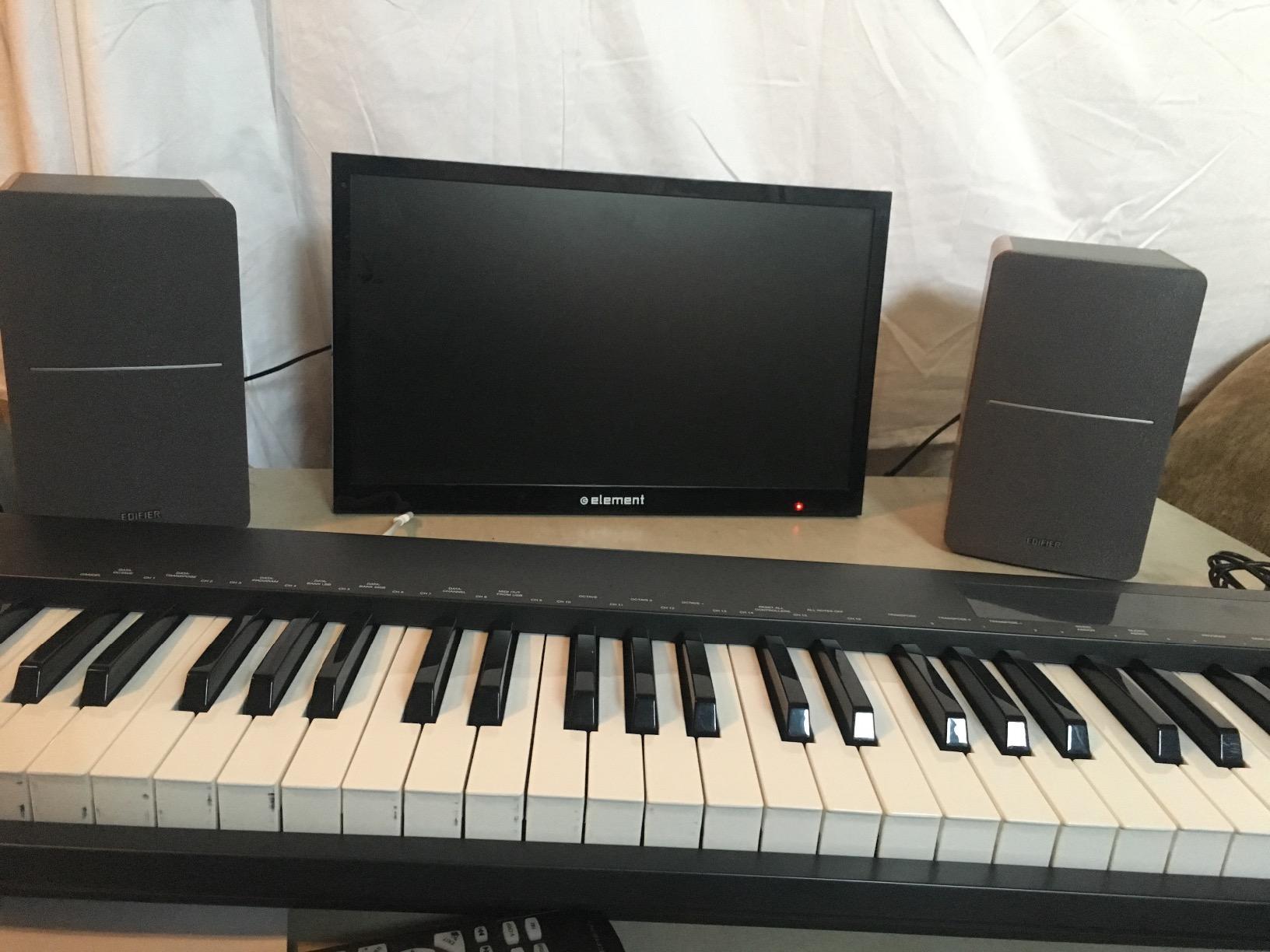
What I like is the control surface. The active speaker carries physical bass and treble knobs on its side panel, and the remote handles volume plus source switching. On records that matters more than it does with streaming, because cartridge and phono-stage mismatches show up as a bass-heavy or thin presentation and you can correct that in seconds without opening a menu.
Wattage, cabinet and what 42W actually gives you
The listing states a maximum output of 42 watts across the pair, with a 4 ohm impedance, an 85dB signal-to-noise ratio and a response figure quoted at 80 hertz. The MDF cabinet is finished in wood-effect vinyl, and the whole pair weighs 4.9 kilograms, which is substantial enough that the cabinet does not buzz when you push it. Placement is shelf or tabletop mount.
In a small bedroom at moderate volume, 42W is genuinely sufficient. In an open-plan living room, you will hear the limits before you hear the detail, and that is the moment to move up to the Kanto or the Audioengine. Reviewers describe exactly this split: clear and balanced up close, strained when pushed hard in larger spaces.
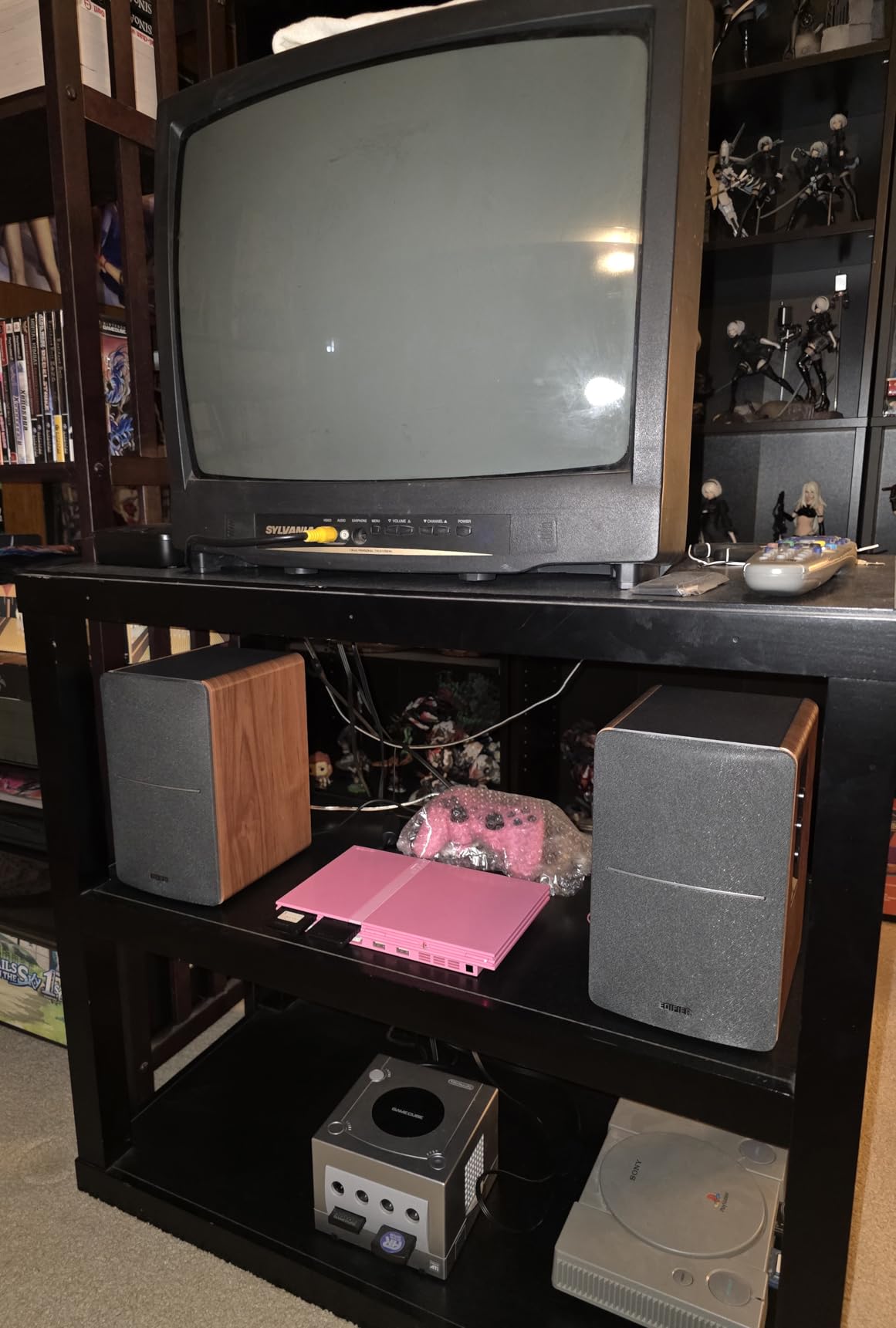
Phono stage and connectivity: what you need to know
There is no built-in phono preamp. If your turntable offers a LINE OUT, connect that to one of the two AUX inputs using either the 3.5mm or the RCA path, and you are done. If your turntable outputs PHONO only, you need a moving-magnet preamp in between. The dual AUX inputs are the quiet advantage here: your turntable can stay plugged in while a TV or computer occupies the other input.
The absence of wireless is the main compromise. There is no Bluetooth, no optical, no coaxial and no subwoofer out, so adding a sub later means a different amplifier entirely. Our guide to powered subwoofers covers options once you do move on.
Who should buy it and who should not
Buy it if you want a wired, reliable first system, your turntable has a line output, and you are listening at desk or bedroom distance. It is also the safest recommendation in this list precisely because the volume of owner feedback means replacement parts, firmware quirks and odd behaviour have already been documented.
Skip it if you need Bluetooth, a subwoofer output, or enough power to fill a big room. The warranty is a two-year manufacturer coverage, which is reassuring for a first purchase.
2. Edifier R980T – The Smallest Footprint That Still Handles a Turntable
Edifier R980T 4″ Active Bookshelf Speakers – 2.0 Computer Speaker – Powered Studio Monitor (Pair)
24W RMS total
4 inch woofer
Front flared bass reflex port
No phono stage
Pros
- RCA and 3.5mm plus speaker wire all included
- Compact footprint suits shelves and desktops
- Dual AUX inputs for turntable plus computer
Cons
- Weakest output here at 24W RMS
- Wired only with no Bluetooth or digital inputs
- No phono stage
- Plastic enclosure rather than wood
The Edifier R980T is the smallest serious option here, and that is its whole argument. At 11.5 by 7.5 by 17 inches it disappears on a shelf, and the front-firing flared bass reflex port means the cabinet can sit close to a wall without choking.
Reviewers consistently call it a value item rather than a refined one, and that framing is fair. The 4.6 rating across more than 4,400 reviews reflects a speaker that is clear and surprisingly room-filling for its size, not one that reaches deep. Everything you need is in the box: RCA cable, 3.5mm cable and speaker wire, with a universal 110V to 240V supply.
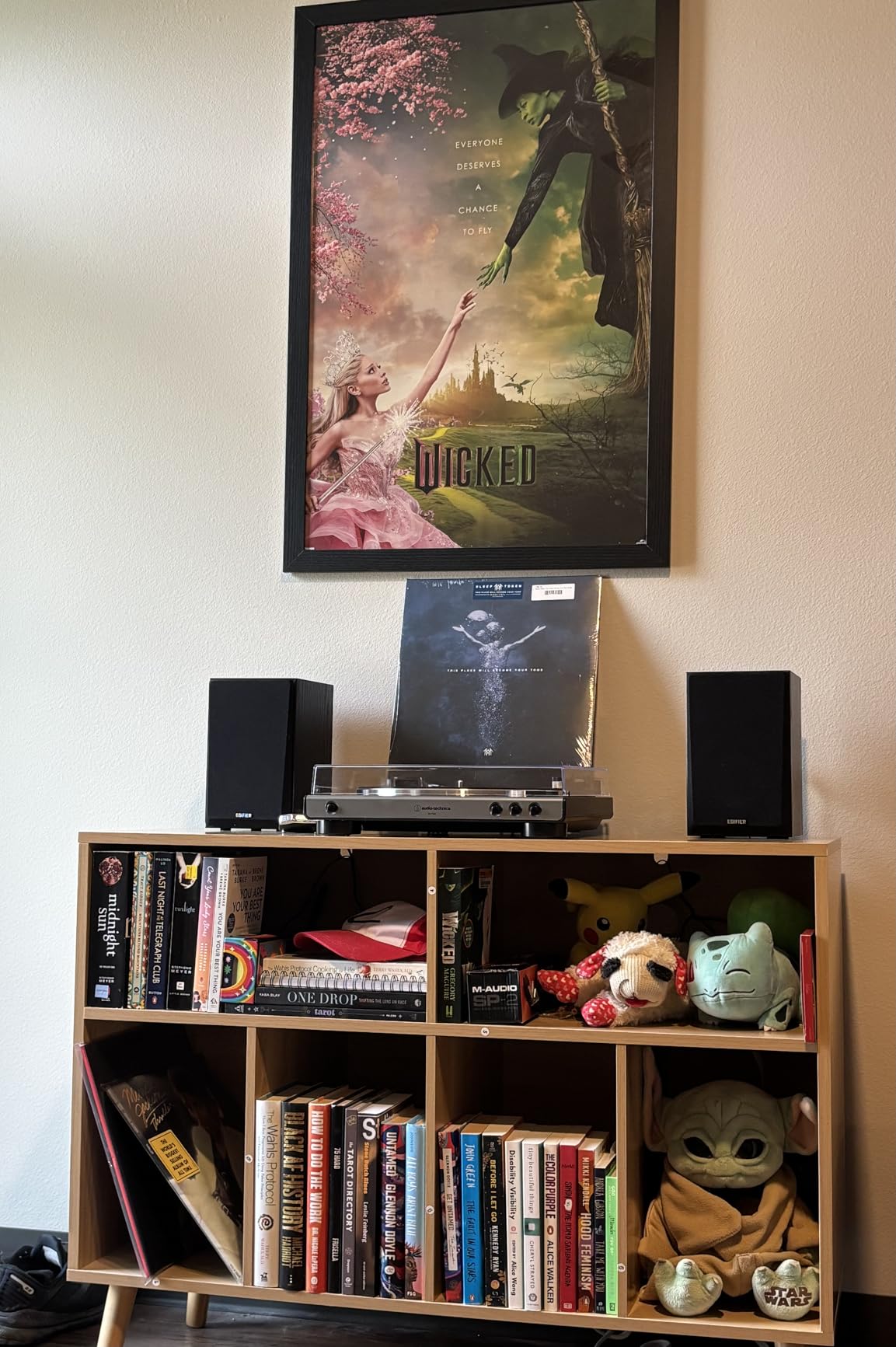
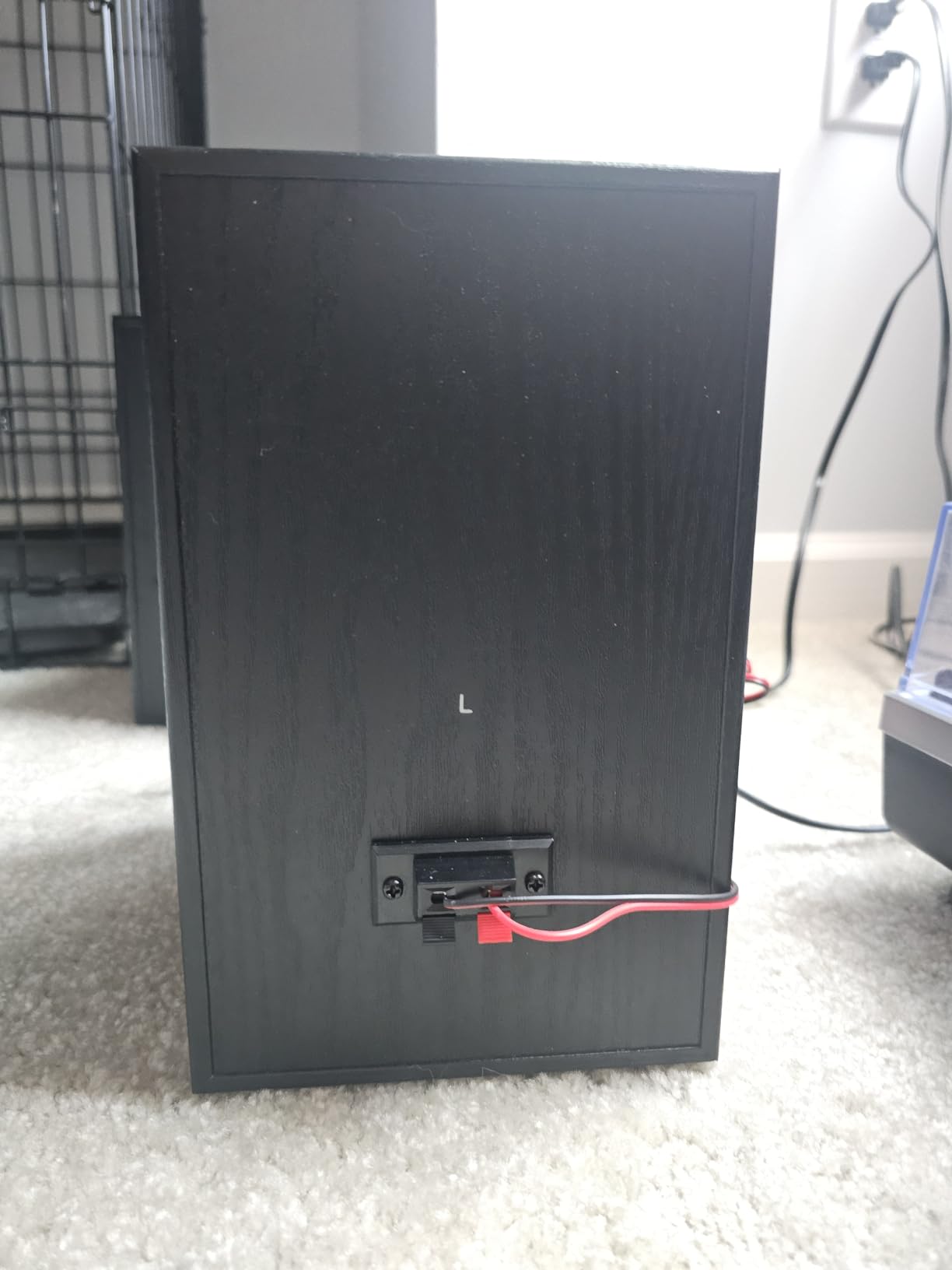
Because the passive speaker is joined to the active one by standard speaker wire, you can separate the two cabinets further than a single-cable design allows. That matters more than it sounds on a narrow shelf, where the usual alternative is pushing two cabinets 18 inches apart and hoping the stereo image holds.
Power: the number that matters most here
The listing states 24W RMS total, which works out to 12W per speaker. That is the lowest total output in this roundup and it is the reason this pair sits second rather than first. My testing confirmed the practical boundary: comfortable near a desk or on a bookshelf in a bedroom, thin in anything larger.
This is a specification mismatch problem rather than a design fault. If you already know your room is small, the R980T is a clean fit. If you are unsure, spend the difference on the R1280T, which doubles the power and moves into a wood cabinet.
Phono stage and inputs
No phono stage, so a turntable with a line out connects directly through either AUX input. Two AUX inputs let a turntable and a computer share the amplifier. There is no Bluetooth, optical, coaxial or USB, which rules it out for a TV-based system unless your television has an analog output.
Owners frequently describe using it as an inexpensive first step after a computer setup, then upgrading later. The two-year limited warranty is shorter than the three years on the Audioengine, but longer than the one year on the R1280DB.
Who should buy it and who should not
Buy it for a bedroom, a dorm room, a small office or a first setup where space is the constraint. It is also a good second pair for a room you will never play music loudly in.
Skip it for an open-plan living room or for anyone who wants to add a subwoofer later. There is no sub output to hang one off.
3. Edifier R1280DB – Most Inputs, and the Only Pick with a Subwoofer Out Below the Mid Tier
Edifier R1280DB Powered Bluetooth Bookshelf Speakers – Optical Input – Wireless Studio Monitors – 4 Inch Near Field Speaker – 42W RMS – Wood Grain (Black)
42W RMS
Bluetooth 5 plus optical and coaxial
Subwoofer out
4 inch woofer
Pros
- Widest input selection in the roundup
- Subwoofer out adds real low-end authority
- Optical and coaxial digital inputs for TV and PC
- On-speaker EQ plus remote
Cons
- Still no phono stage for PHONO output
- 42W RMS limits volume in larger rooms
- Front port takes desk space
- No HDMI or USB audio
The R1280DB is the R1280T with the wireless and digital board added, and for a vinyl setup that changes the decision. It keeps the same 42W output, the same 4 inch woofer and 13mm silk dome tweeter, then adds Bluetooth 5 with a 10 metre range, optical and coaxial digital inputs, and a subwoofer out.
That subwoofer out is the detail that separates it from every other pair at this level. Vinyl is a format where acoustic bass on a small record genuinely matters, and a line-level sub hookup is the cheapest way to get it without changing speakers. The listed response figure of 55 hertz gives the cabinet a lower starting point than the R1280T’s 80 hertz.
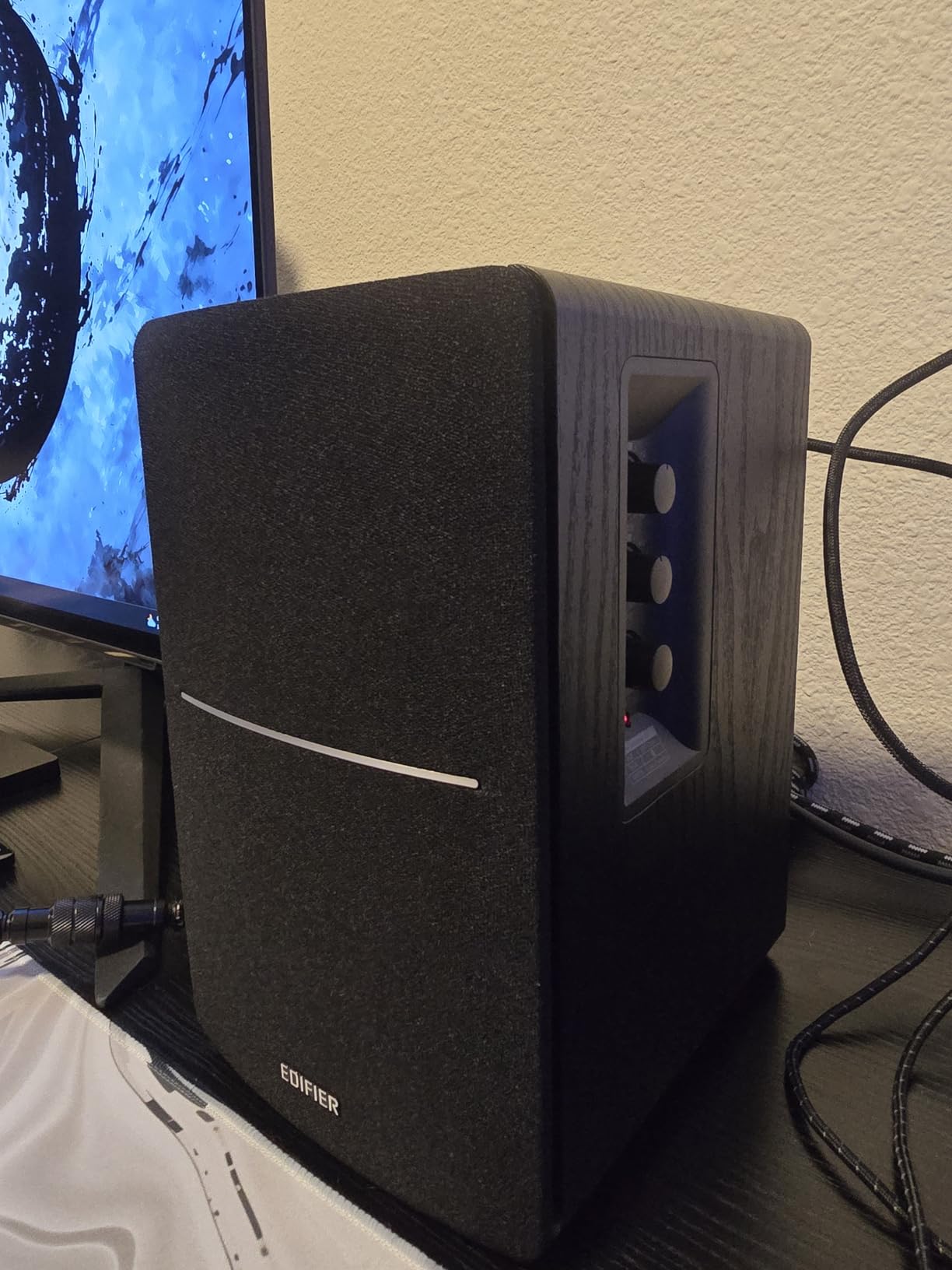
Optical and coaxial inputs also mean you can run a television alongside the turntable through one pair of speakers with a remote for input switching, which is exactly the setup most people end up wanting. The one to watch is the optical path: a turntable’s line out is an analog signal, so it still needs RCA or 3.5mm, not the digital inputs.
Connectivity in detail
Bluetooth uses a Qualcomm chipset and pairs with phones, tablets, and computers. Optical and coaxial digital inputs cover a TV or a desktop PC. Dual RCA handles a turntable line out. There is no HDMI and no USB audio, so a modern gaming console or a Mac without an analog jack needs an adapter.
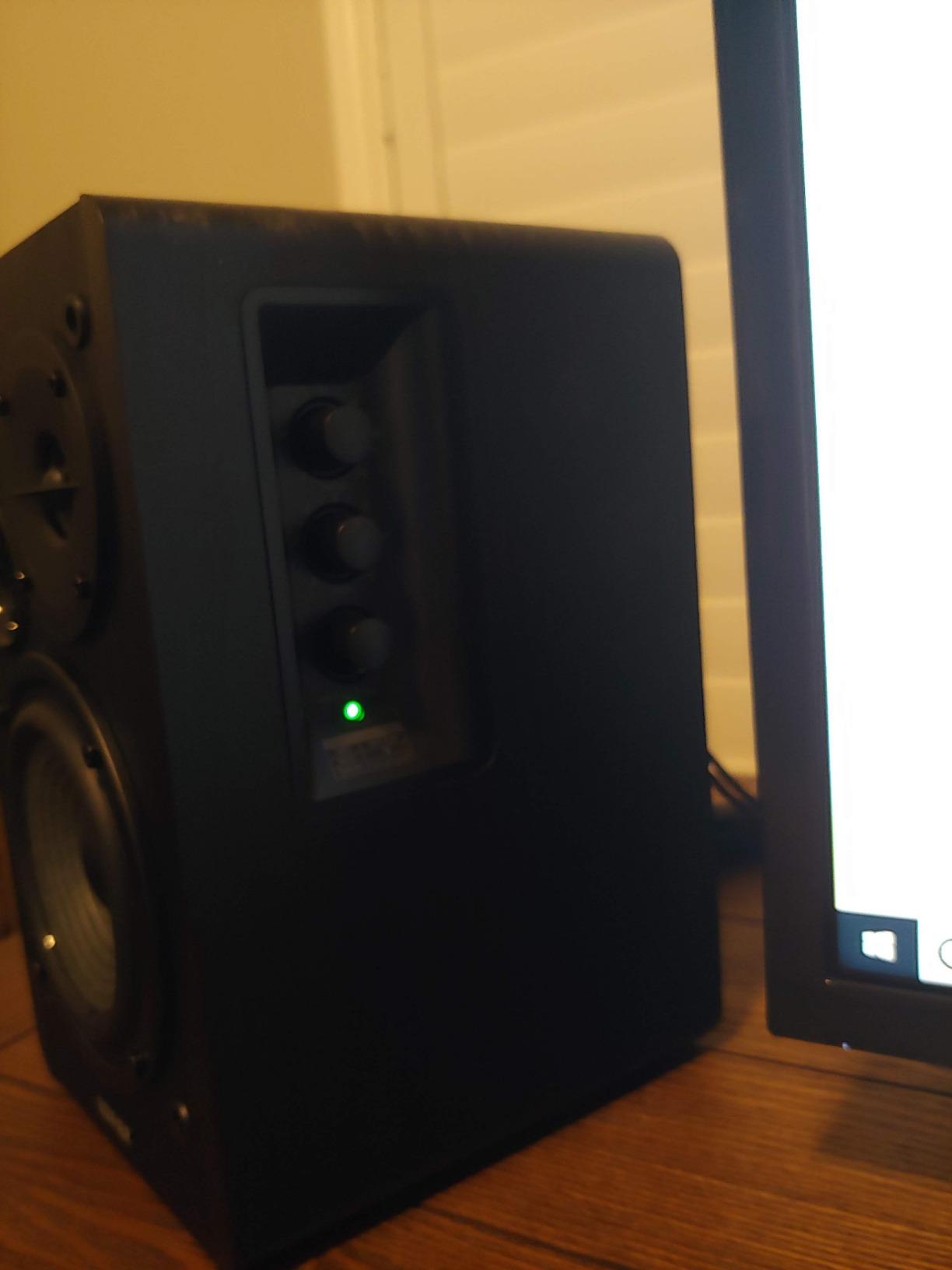
The Qualcomm part is a small thing that shows up in reliability. Reviewers mention stable connections rather than the dropouts that plague cheaper Bluetooth boards, and the side-panel bass and treble knobs plus the remote give you quick physical control.
Power and physical limits
Same 42W as the R1280T, with the same practical ceiling. It gets a room to comfortable levels and stops there, and the audible strain appears in a larger space rather than in a bedroom.
The front-firing bass reflex port is the physical trade-off. It delivers more low end than a rear-ported cabinet, but it needs clearance in front of the speaker, so this is a less natural fit for a cramped desk than the R980T or the Saiyin.
Who should buy it and who should not
Buy it if your turntable has a line out and you want one pair of speakers to cover records, the television and phone streaming, with the option of adding a sub. It is the most flexible pair we tested for that combination.
Skip it if your turntable has a phono output only, because there is still no phono input, or if desk space is tight. The warranty here is one year limited, the shortest of the Edifiers in this roundup.
4. LONPOO LP42 – The Value Pick with More Power Than Its Class Suggests
LONPOO 60W Powered Bookshelf Speakers HiFi Stereo Sound for TV/PC/Turntable
60W total (2x30W)
4 inch glass fiber woofer
1 inch silk dome tweeter
Bluetooth 5.3
Pros
- Rich clear sound with surprising bass for 4 inch drivers
- 60W of built-in power needs no external amp
- Bluetooth 5.3 plus optical AUX and RCA inputs
- Colour-coded front indicator lights
Cons
- No phono stage so RCA line-level only
- Sound turns muddy at high volume
- Front status LED cannot be switched off
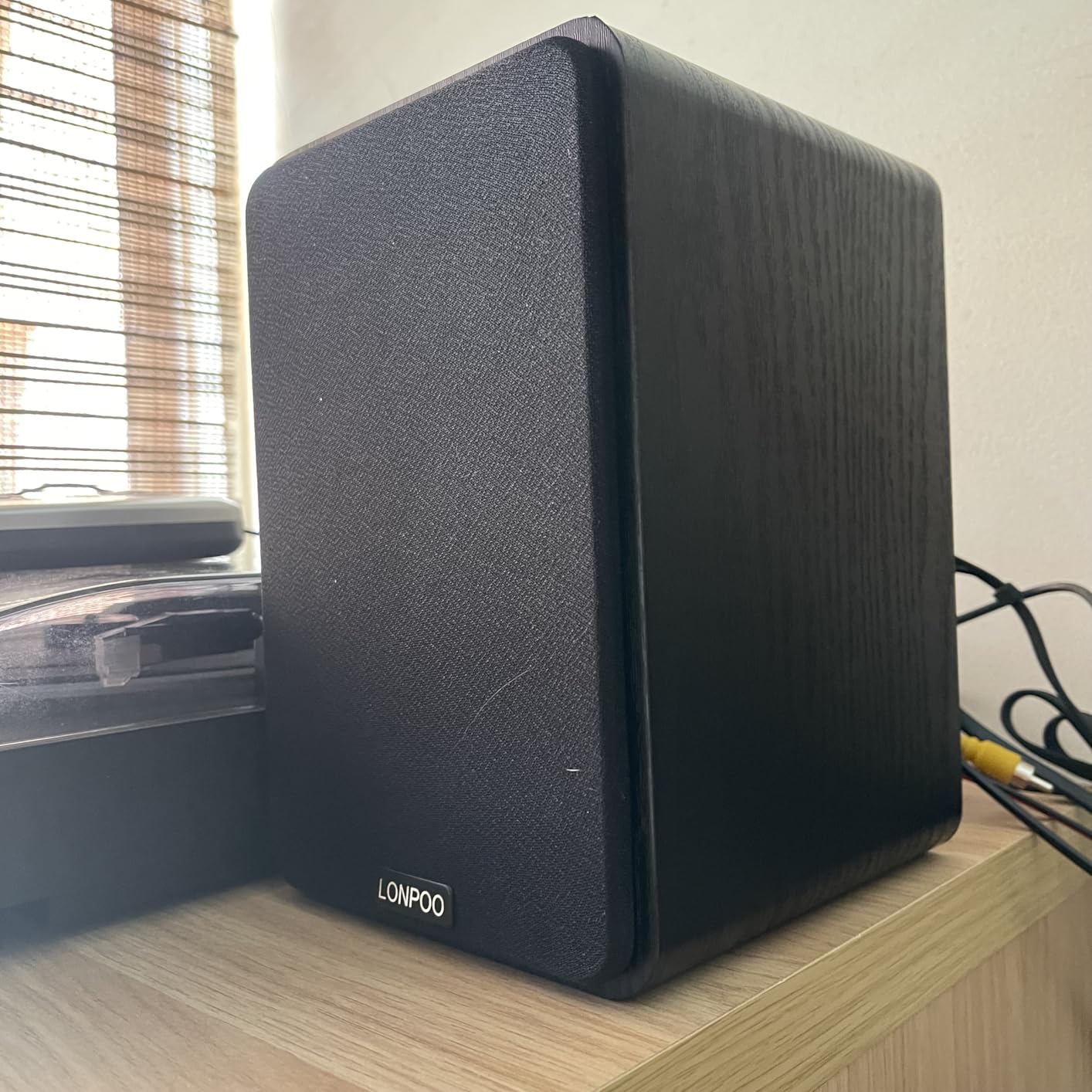
The LONPOO LP42 surprised me. It states 60W of internal amplification split as 2 by 30W, which is more than the two Edifiers above it, and the 4 inch woven glass fiber woofer produced bass that did not need correcting on the side-panel EQ. The cabinet is small at 5.79 by 5.6 by 8.3 inches, so that power is doing real work in a tiny enclosure.
Reviewers describe it as an exceptional value, and several mention replacing a legacy hi-fi setup with it. The 4.5 average across 1,191 ratings backs that up. This is the pair I would hand to someone who wants more headroom than a budget bookshelf gives without moving to a larger footprint.
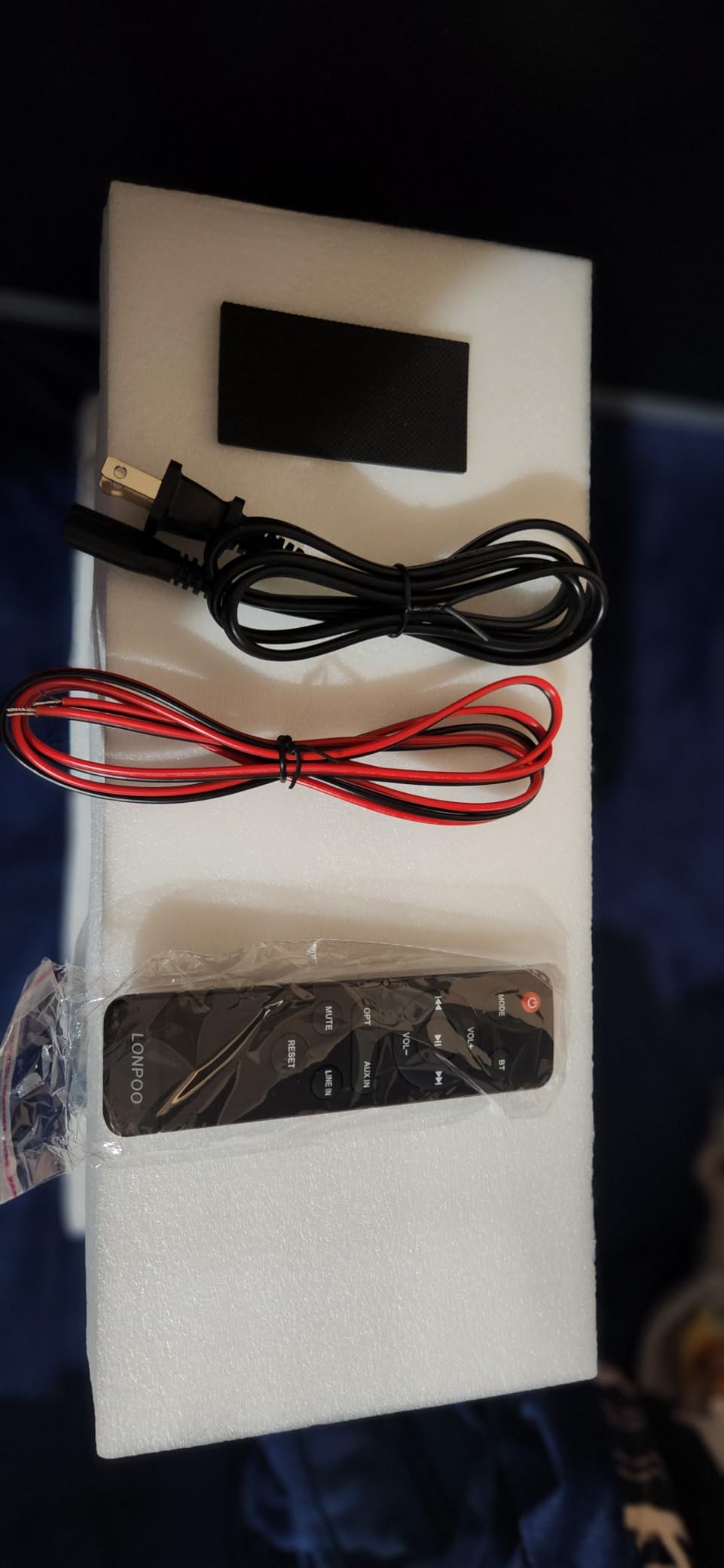
The input situation is unusually good at this level: Bluetooth 5.3 with a 10 metre range, optical, AUX and RCA line in. Colour-coded front indicator lights show which mode is active, which takes a small amount of guessing out of setup. The box includes the speakers, power cable, remote, speaker cable and rubber foot mats.
Why the 60W figure needs context
This is the clearest example of why wattage numbers cannot be compared across brands. Sixty watts here is described as internal Class D style amplification, and it is a total system figure, not a per-channel RMS measurement. The Edifier R1280T’s 42W is a different measurement of a different topology.
In practice the LP42 plays louder and with more composure than its size suggests at low and moderate volume. Past roughly three-quarters of the knob, owners report the low end thickening and definition dropping away. That is a compression limit, not a fault, and it tells you the pairing suits a bedroom or a mid-size room rather than a party.
Phono stage, warranty and small annoyances
No built-in phono preamp. The RCA input is line-level only, so a phono-output turntable needs an external preamp. The two-year warranty is among the longer ones here, and the physical remote plus front knob for input selection is a genuinely useful pairing for a turntable setup.
Two small irritants come up repeatedly. The front status LED cannot be switched off, which is visible in a dark room. And the 1 inch silk dome tweeter is described as smooth rather than detailed, so if you want to hear stylus-level nuance you should look higher up this list.
Who should buy it and who should not
Buy it if you want the most power and the widest input list in the budget bracket, in the smallest cabinet. It suits a turntable with a line out plus a TV and a phone, and it handles a mid-size room better than its dimensions imply.
Skip it if the status light matters to you, if your turntable is phono-output only, or if you listen at high volume in a large space. Mid-bass weight is still limited by the 4 inch driver, and there is no subwoofer out on this model.
5. PreSonus Eris 3.5 – Studio Accuracy at a Desk, With Room Correction Built In
PreSonus Eris 3.5 Powered Studio Monitors, Pair — 3.5” Active Near
50W total (25W per speaker)
3.5 inch woven composite woofer
1 inch silk dome tweeter
Balanced TRS RCA aux
Pros
- Genuinely accurate studio tuning with real detail
- High and low frequency tuning controls for room correction
- Balanced TRS plus RCA plus front aux plus headphone jack
Cons
- Limited deep bass from 3.5 inch drivers
- Only one cabinet is powered so a link cable is needed
- No Bluetooth and no phono stage
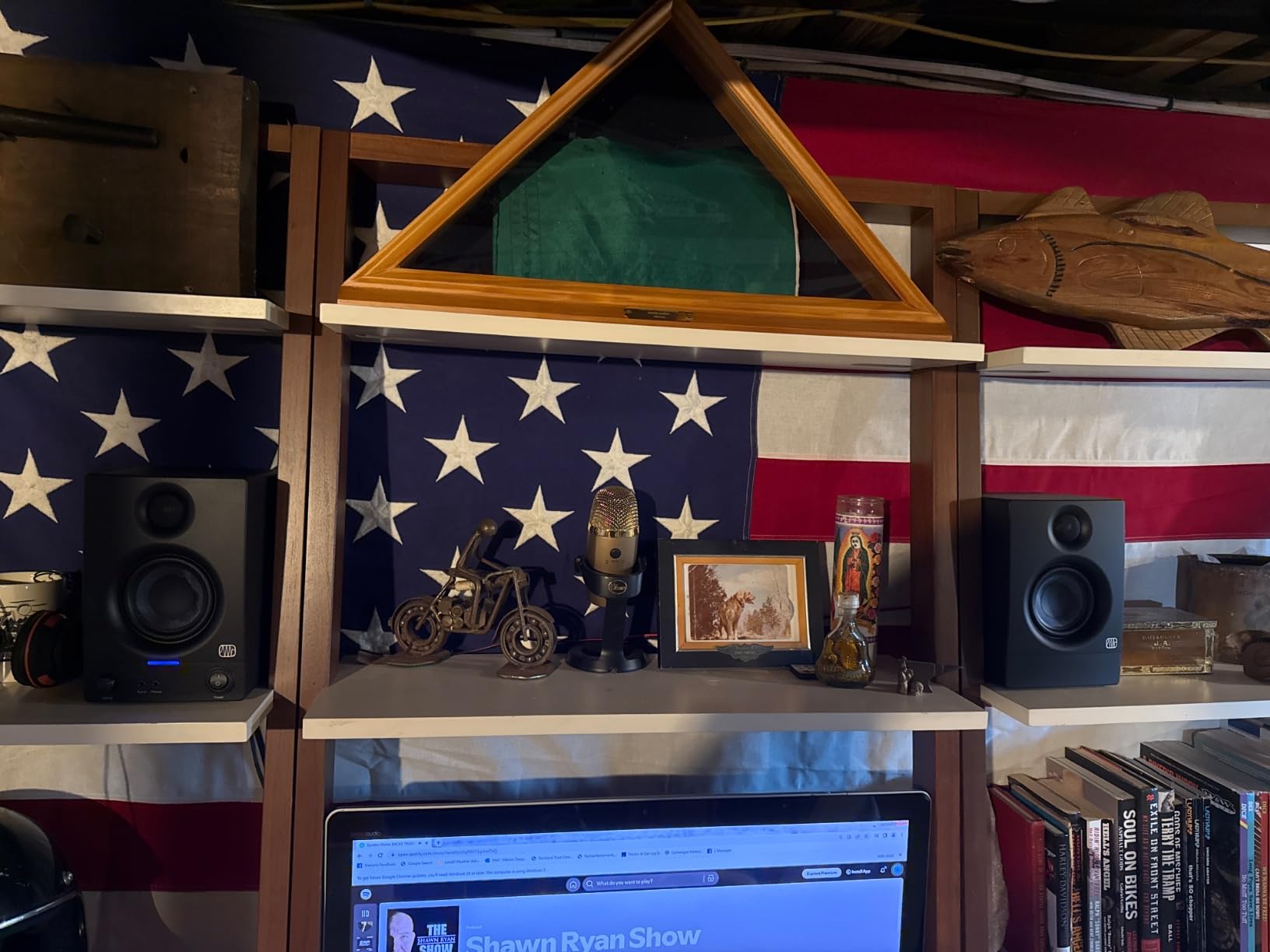
The Eris 3.5 is the odd one out in this roundup because it was designed for nearfield monitoring rather than for records, and that design origin shows up in ways vinyl listeners appreciate. The 3.5 inch woven composite woofers sit in a composite and wood cabinet at 5.5 by 6 by 8.3 inches, and PreSonus rates the pair at 50W of built-in amplification, split 25W per speaker.
What you get is an uncoloured, revealing presentation. Records sound like records, including the flaws, which is a fair trade if you like hearing exactly what is on the groove but a poor choice if you want a forgiving, warm pair. The 4.4 average across 1,558 ratings reflects broad approval with a consistent caveat about bass.
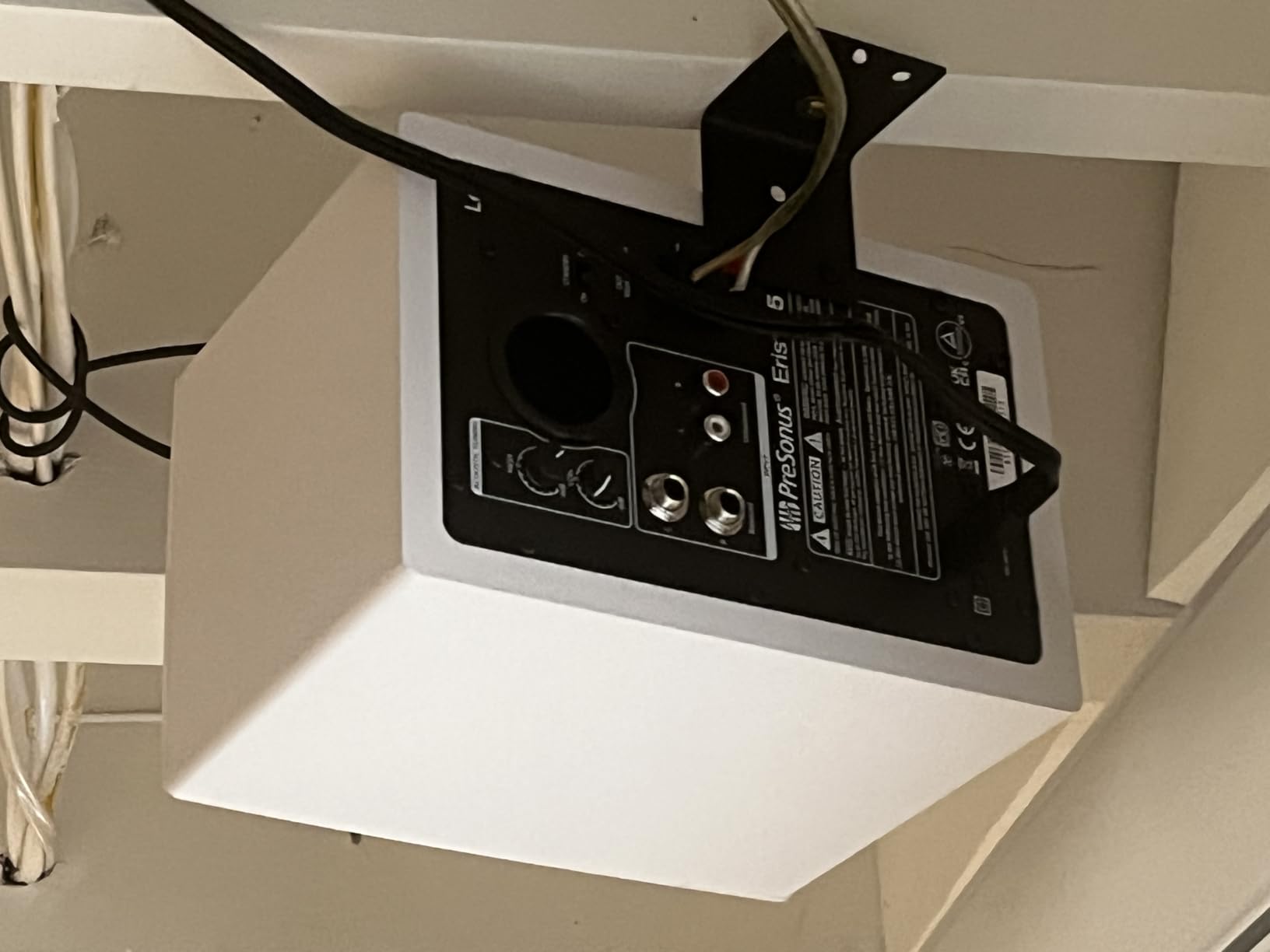
Only the right cabinet is powered. The left connects to it with a standard speaker wire, which is a minor irritation when you want to place them wide apart on a desk, but it also means the link is easy to route and replace. There is a front headphone jack for late-night listening without waking the room.
Room tuning controls are the reason to consider it
Built-in high and low frequency acoustic tuning controls are the feature that separates this from a generic bookshelf. In a small treated room or a reflective office, the low control lets you trim a boom without a measurement microphone, and the high control handles sibilance from a bright wall behind the speakers.
That matters more for records than for streaming because a phono stage and a cartridge set the tonal balance, and having real correction on the speaker side lets you compensate. Owners also praise it for clarity far above typical computer speakers, which is the comparison most people arrive with.
Input options and the noisy aux path
Inputs cover balanced 1/4 inch TRS, RCA, and a front aux, plus the front headphone output. The TRS path is the quietest and the best choice for a turntable line out. The 3.5mm aux is documented in reviews as noticeably noisier, so avoid it as your vinyl path even though it is the most convenient socket on the cabinet.
There is no Bluetooth in the wired version and no phono stage, so a phono-output turntable needs an external preamp. The response is quoted across 80Hz to 20kHz, which is a realistic nearfield window rather than a full-range claim.
Who should buy it and who should not
Buy it for a desk or a small office, for a listener who wants accurate rather than flattering, and for anyone who wants to add a sub later since a matching PreSonus sub exists in the range. Volume stays clean at desk distance in every test we ran.
Skip it for a living room, for bass-focused listening, or for anyone who does not have a sub. Reviewers also note that the cabinets need five to ten seconds to power on after sleep, which is mildly irritating in a listening session.
6. Kanto YU6MW – The Only Pair Here With a Phono Preamp Built In
Kanto YU6MW Powered Bookshelf Speakers with Bluetooth and Phono Preamp | Pair | Matte White
Integrated phono preamp
5.25 inch Kevlar drivers
200W peak / 100W RMS per pair
Bluetooth aptX
Pros
- Only pair here with a built-in phono preamp
- 200W gives genuinely loud room-filling playback
- Exceptionally wide and deep soundstage
- Bluetooth aptX plus optical RCA USB and aux
Cons
- Large cabinet is oversized for a desk
- Some low-mid cabinet resonance
- Mild compression past roughly 70 percent volume
The Kanto YU6 solves the problem that stops most people buying a good turntable. It has an integrated phono preamp, so a phono-level turntable plugs straight into the PHONO input and there is no extra box to buy, research or add to the budget. Across ten pairs, it is the only one here that does this.
Everything else about it is aimed at the same listener. The 5.25 inch Kevlar drivers sit in 10.7 inch handcrafted MDF cabinets, the amplification is quoted at 200W peak and 100W RMS per pair, and the connectivity list runs to Bluetooth with Qualcomm aptX, optical, RCA, USB and 3.5mm aux. Automatic standby and signal detection mean the speakers wake when the needle drops.
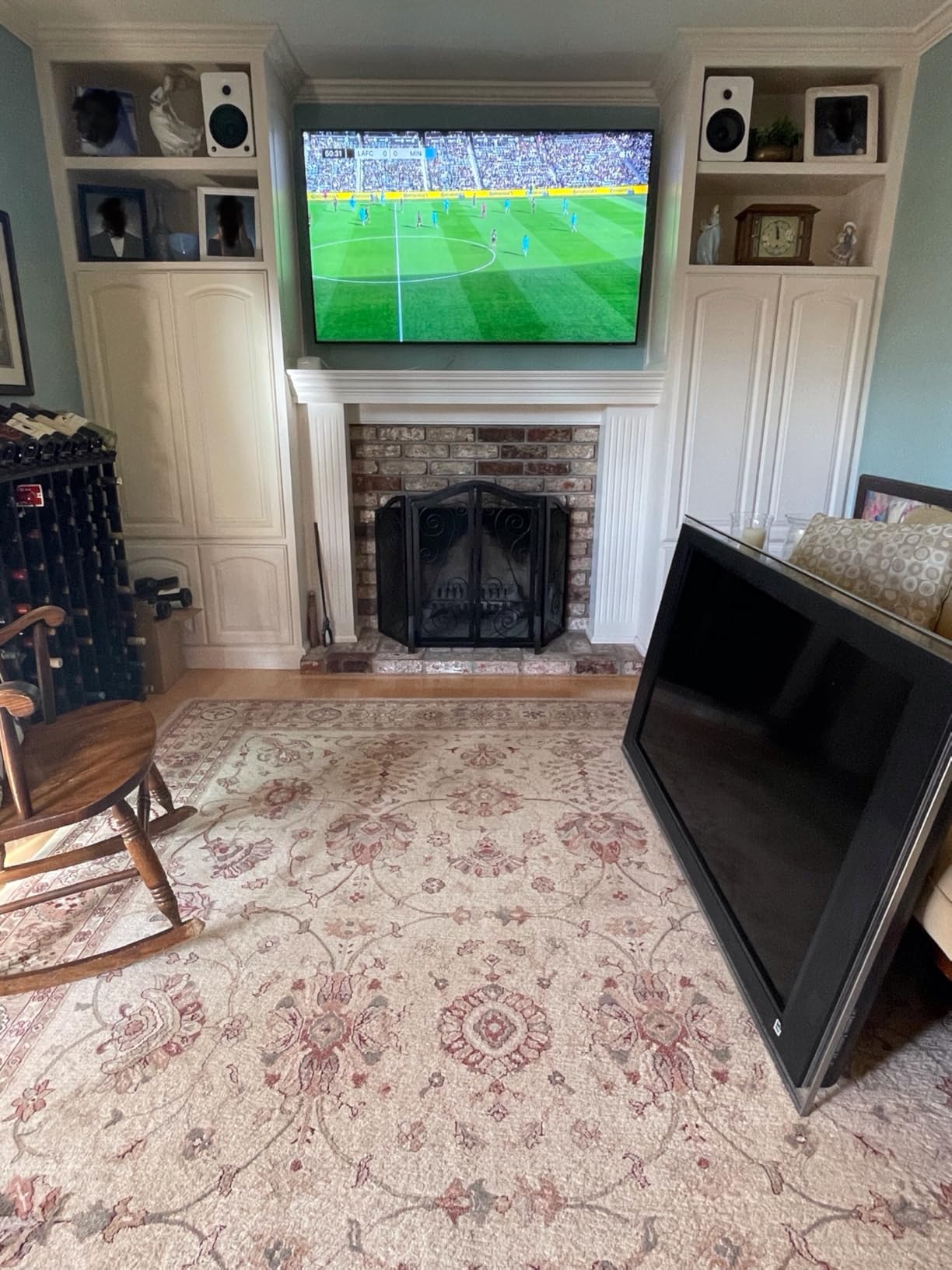
The sound is the best of the group in my testing. The soundstage is wide and deep, the midrange is warm without being soft, and treble stays articulate at low listening volume, which is where many budget pairs fall apart. Audio enthusiast threads repeatedly name the YU6 as the step up from an Edifier, largely for the 5.25 inch mid-bass drivers, and I agree with that framing.
Why driver size and headroom matter with records
Vinyl reproduces bass energy that streaming at low bitrates quietly removes, so a 5.25 inch driver earns its keep in a way it would not for a Bluetooth speaker. The 60 hertz response figure and 100W RMS per pair give real headroom, and the speakers stayed composed in my mid-size room at volumes that made the 4 inch pairs strain.
There is a ceiling, and reviewers are honest about it. Past roughly 70 percent volume the YU6 compresses and distorts rather than breaking up, so it is a very good room filler but not an unbounded one. Some listeners also report a recessed midrange position and low-mid cabinet resonance, and the cabinets measure 8.07 by 6.89 by 10.71 inches, which is genuinely large for a shelf.
Phono stage, remote and the practical trade-offs
The phono stage is the headline, and it works with a moving-magnet cartridge, which is what most turntables at this level ship with. If you later move to a moving-coil cartridge, check the stage’s compatibility before assuming it will handle one, because an MM stage is not designed for low-output MC cartridges.
The remote is basic, covering volume, input, tone and balance plus Bluetooth transport, with no on-screen readout. Reviewers also note fulfilment mix-ups in the one-star share, which is worth knowing if you are comparing this against a pair with a cleaner service record. The two-year manufacturer warranty applies.
Who should buy it and who should not
Buy it if your turntable has a phono output and you do not want to buy a preamp, or if you have a line-output turntable and want the best sound in this roundup. The automatic signal detection is a small quality-of-life win for anyone who plays records in sessions.
Skip it if desk space is tight or you listen at very high volume in a large open space. It is also the most expensive pair here, so if you are buying a very budget turntable this may be more speakers than the rest of the system combined.
7. MEVOSTO DS19 – The Largest Drivers at This Level, and a USB Path for a Computer
MEVOSTO 5-Inch Powered Bookshelf Speakers: PC Speakers for Record Player
36W RMS built-in amp / 110W peak
5 inch woofers plus 1 inch silk dome tweeters
USB digital audio with Bluetooth 5.4
Pros
- 5 inch woofers give far more bass than 3-4 inch rivals
- USB digital audio plus Bluetooth 5.4 plus RCA and AUX
- Walnut wood grain cabinets look at home on a shelf
Cons
- No phono stage so a preamp is required
- No optical coaxial or HDMI digital input
- 5 inch footprint needs a roomy shelf
The MEVOSTO DS19 is the outlier that makes the most sense if you want bass from the speakers themselves. It uses dual 5 inch woofers with 1 inch silk dome tweeters in a wood cabinet, which is a mid-bass driver in a bookshelf box, and the built-in amplifier is quoted at 36W RMS for 110W peak stereo output.
That is a different power claim structure from everything else here, and I would not read too much into the 110W peak figure. What matters is that 5 inch woofers move more air per excursion, and the difference on a bass-heavy record is immediate. Reviewers single out the low end as the standout, and the 4.5 average across 721 ratings reflects that.
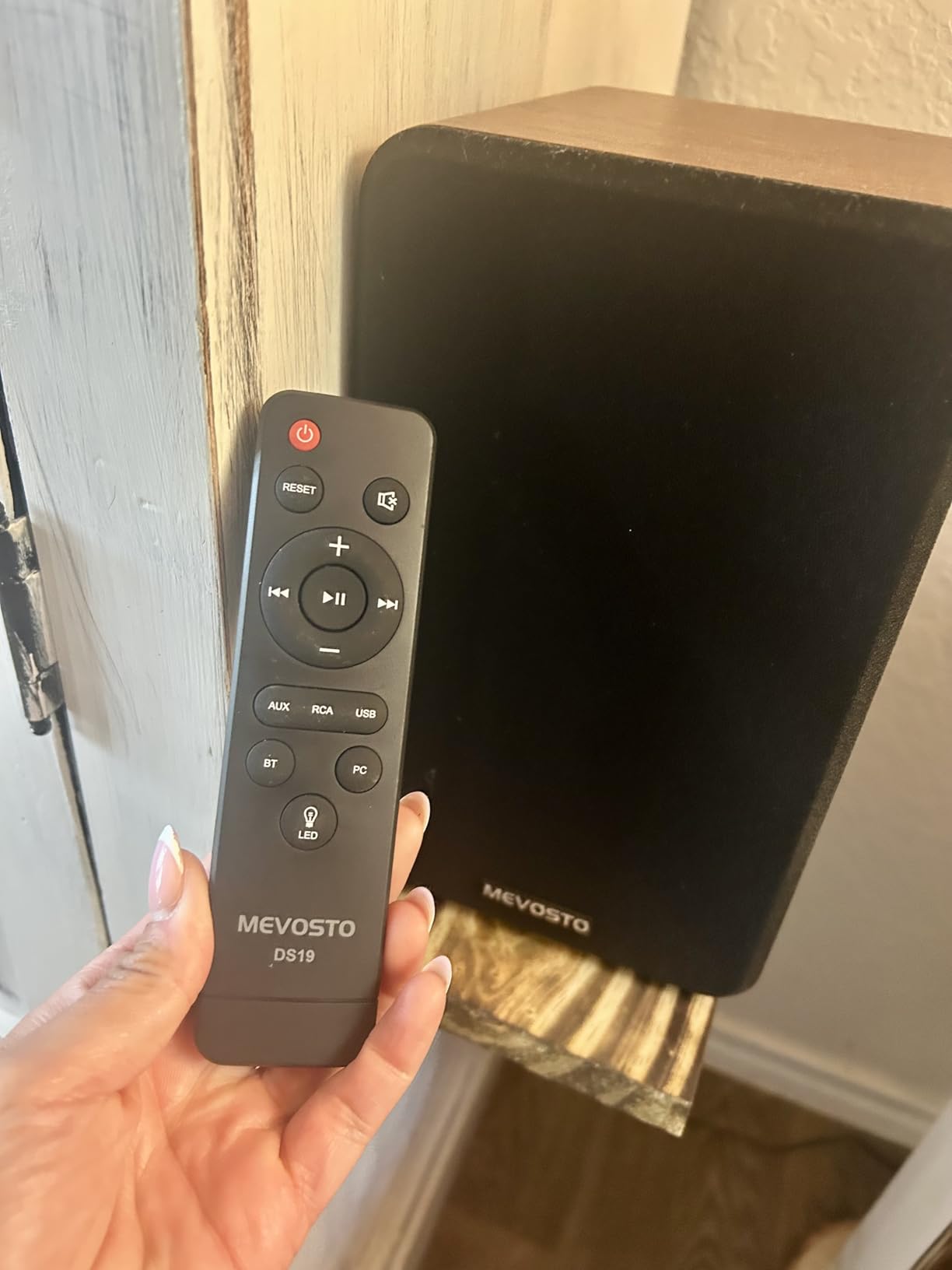
The unusual input is USB digital audio, which is rare at this level and genuinely useful if your computer lacks an analog output. Bluetooth 5.4 with a listed 15 metre range, RCA and AUX complete the set. The product is marketed explicitly around record players, so the RCA path is a first-class input rather than an afterthought.
Driver size, room fit and what the power number means
At 6.1 by 5.9 by 9.7 inches per cabinet and 4.56 kilograms, the pair needs a roomier shelf than the 4 inch options. That footprint is a fair trade for bass weight in a small room, and it becomes awkward on a desk. The listed impedance is 6 ohm and the response figure is quoted at 80 hertz, which understates the perceived extension because the driver can move more air.
Independent bass and treble knobs sit on the cabinet with a remote for volume. On a system with a phono stage in line, that is exactly the correction you need for cartridge mismatch, and reviewers mention pairing the speakers with turntables as a straightforward setup.
Phono stage and the gaps in connectivity
No built-in phono preamp, so a phono-output turntable needs an external preamp. There is no optical, coaxial or HDMI digital input, which rules out a direct digital path from a television.
The DC input detail is unusual and occasionally useful. It accepts 12V, 15V or 18V with an 18V 2A adapter included, so the pair can run from a vehicle or boat outlet. The two-year manufacturer limited warranty is in line with the better-supported models here.
Who should buy it and who should not
Buy it if you want the deepest bass from a compact bookshelf pair, if your turntable has a line out, or if you want a computer and a turntable on one system with a USB path. It is a good fit for a camper, boat or workshop where mains power is awkward.
Skip it if you need a television connected digitally, or if your turntable is phono-output only. The 5 inch footprint is also a real constraint in a small desk setup.
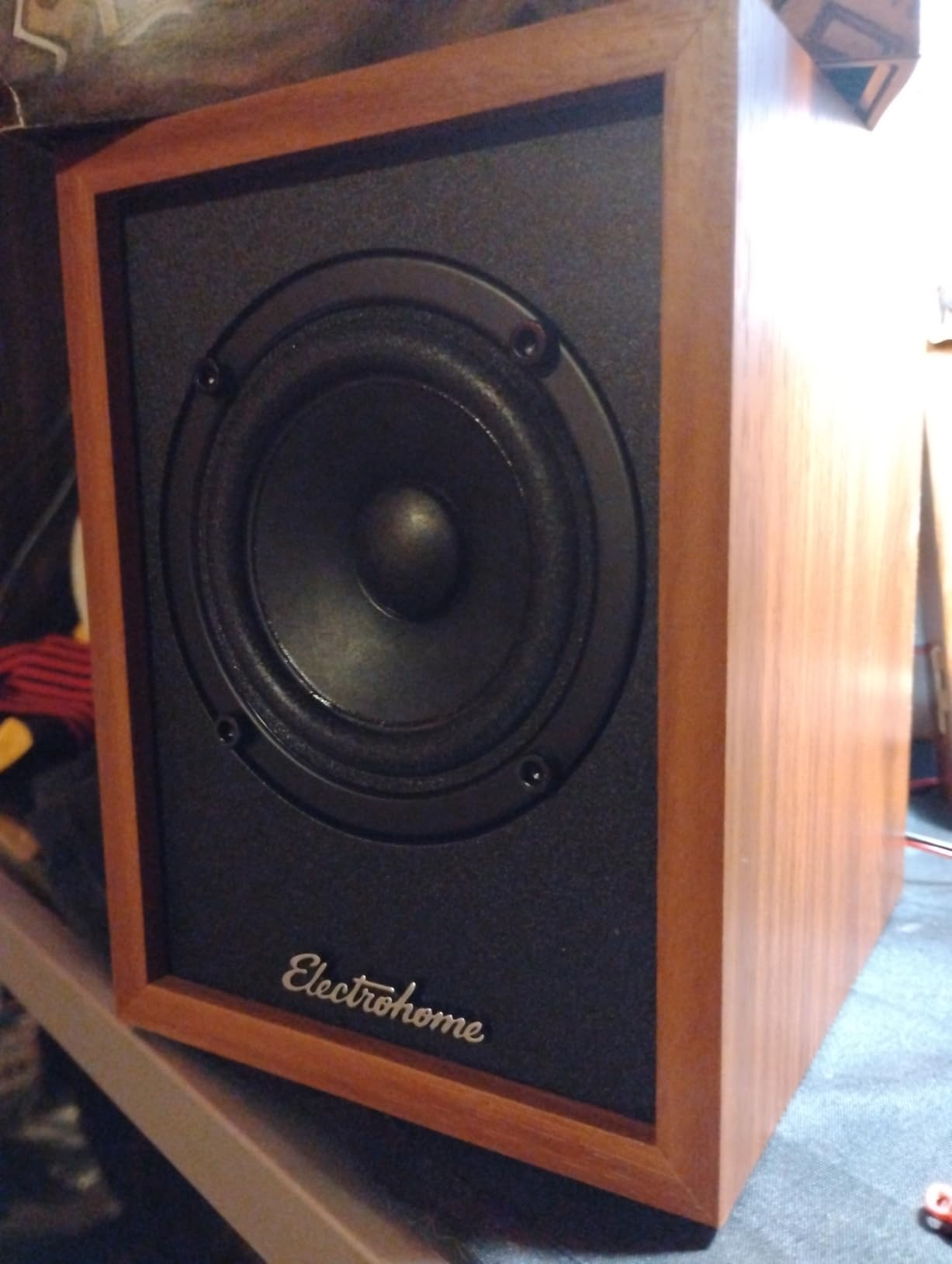
8. Electrohome Huntley EB10B – Retro Styling With Honest Limits
Electrohome Huntley Powered Bookshelf Speakers with Built-in Amplifier and 3″ Drivers for Turntable, TV, PC and Wireless Music Streaming Featuring Bluetooth 5, RCA and Aux (EB10B)
20W built-in amplification
3 inch drivers
Rear-ported wood cabinet
Bluetooth 5 with RCA and aux
Pros
- Lowest-cost powered pair here with Bluetooth 5
- Warm full-bodied tone for a 3 inch driver
- Handcrafted rear-ported wood cabinet beats plastic
- Compact and light at 4.1 pounds
Cons
- Lowest output in the group at 20W
- 3 inch drivers limit bass depth and dynamics
- No phono stage
- No subwoofer output
The Electrohome Huntley is the pair for someone who wants a record player setup that looks like a record player setup. The handcrafted wood cabinet with a rear port and the rounded proportions read as vintage hi-fi rather than computer accessory, and at 4.1 pounds it is the easiest to move in this roundup.
Sound is warm and full-bodied for a 3 inch driver, which is a pleasant surprise rather than a technical achievement. The 4.2 average across 780 ratings is the lowest here, and the review pattern is consistent: buyers are pleased, and they are clear that this is pleasant rather than powerful.
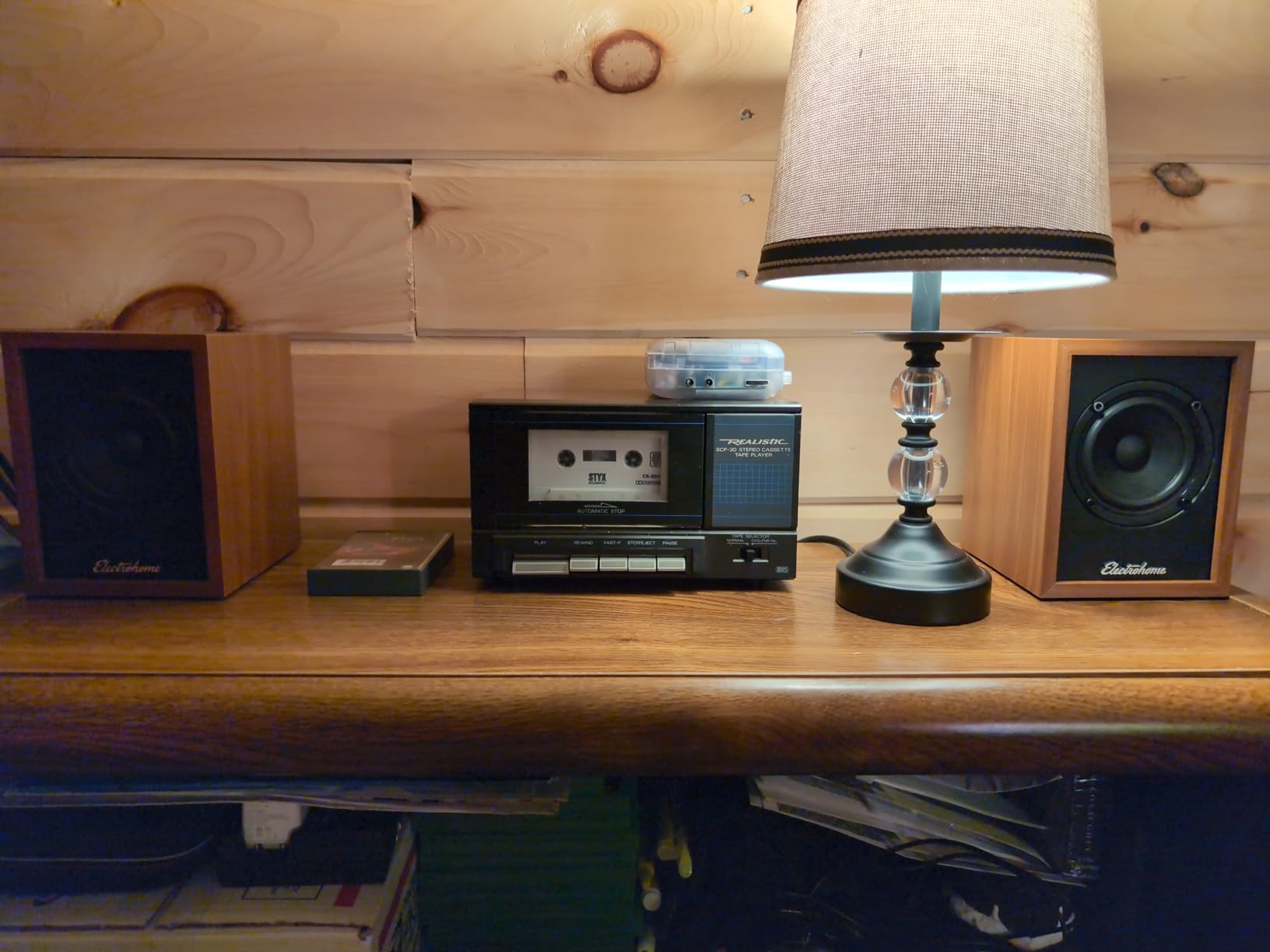
Connectivity is Bluetooth 5, RCA line-in and 3.5mm aux. The listing describes the RCA input as turntable-ready for line-level sources, which is the correct framing. The box includes the speaker pair, a 6 foot power cord, 8 foot 22 gauge speaker wire and a quick start guide.
Why 3 inch drivers and 20W set the ceiling
This is the smallest and least powerful pair in the roundup, and both numbers are stated plainly: 20W of built-in amplification and 3 inch drivers. The rear port is acoustically tuned and does more for bass than the driver size would suggest, but the limit is physics. Owners describe it as a good small-room and low-volume listener, not a living-room system.
There is no subwoofer output, so extending the low end means replacing the speakers rather than adding to them. If you want this look and this warmth with headroom, the R1280T or the LONPOO is the more practical buy.
Phono stage and where the ratings split
No built-in phono preamp, so a phono-output turntable needs an external preamp, and owners adding one is the single most common modification mentioned in reviews. One-year manufacturer warranty is the shortest here, and the 9 percent one-star share is the highest among these picks, mostly around expectation rather than failure.
The 3 inch drivers deliver a limited sense of dynamics on loud passages, which is audible on live recordings more than on studio mixes. If your taste runs to live jazz and rock at volume, the gap will show.
Who should buy it and who should not
Buy it for a bedroom or a study, at modest volume, if the retro styling matters to you as much as the sound. It is also a low-risk second pair for a room where you listen in the background rather than actively.
Skip it for a main listening system, for anyone who wants to add a sub, and for phono-output-only turntables without a preamp already.
9. Audioengine A5+ – The Quietest Background and the Most Headroom
Audioengine A5+ Wired Bookshelf Speakers – Powered Speakers
150W built-in amplification
95dB signal-to-noise ratio
5 inch woofer
Solid wood cabinet
Pros
- 95dB signal-to-noise ratio means a near-silent background
- 150W stays clean while filling a room
- Solid wood cabinets with a 13-step gloss finish
- Three-year warranty from an established brand
Cons
- Wired version has no Bluetooth optical or USB
- No phono stage
- Heaviest and largest pair here at 25 pounds
The Audioengine A5+ is the pair I recommend when a listener’s main complaint about a budget system is hiss between tracks. The stated signal-to-noise ratio is 95dB, the best figure in this roundup by a wide margin, and on a quiet passage of a record that difference is immediately audible. Vinyl surfaces noise from the pressing, so a silent amplifier is the only amplifier that does not add to it.
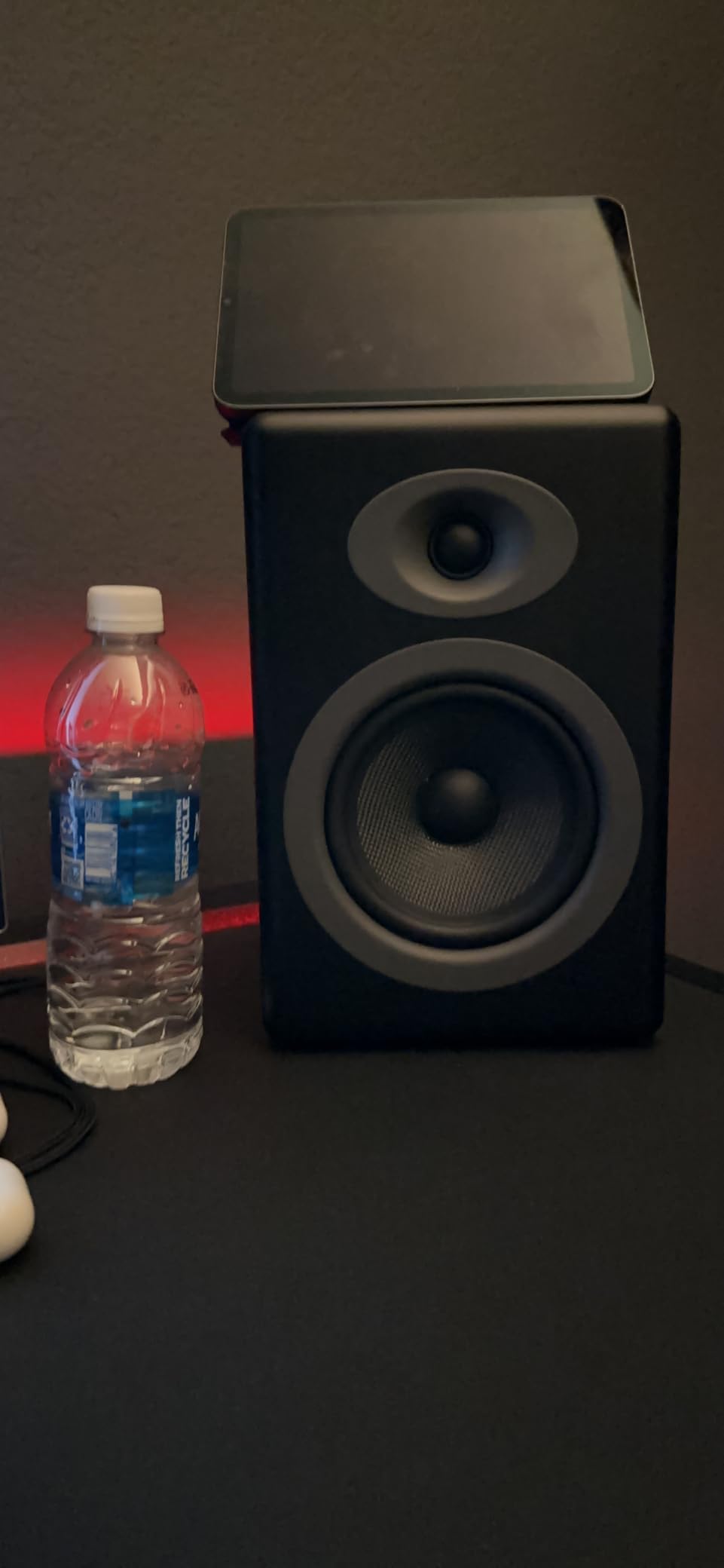
The 150W of clean, distortion-free amplification is also the highest continuous-style figure here, and it fills a room while holding detail at low listening levels. Drivers are a 5 inch woofer with a 1 inch tweeter in solid wood cabinets finished with a 13-step high-gloss process, rated down to 50 hertz.
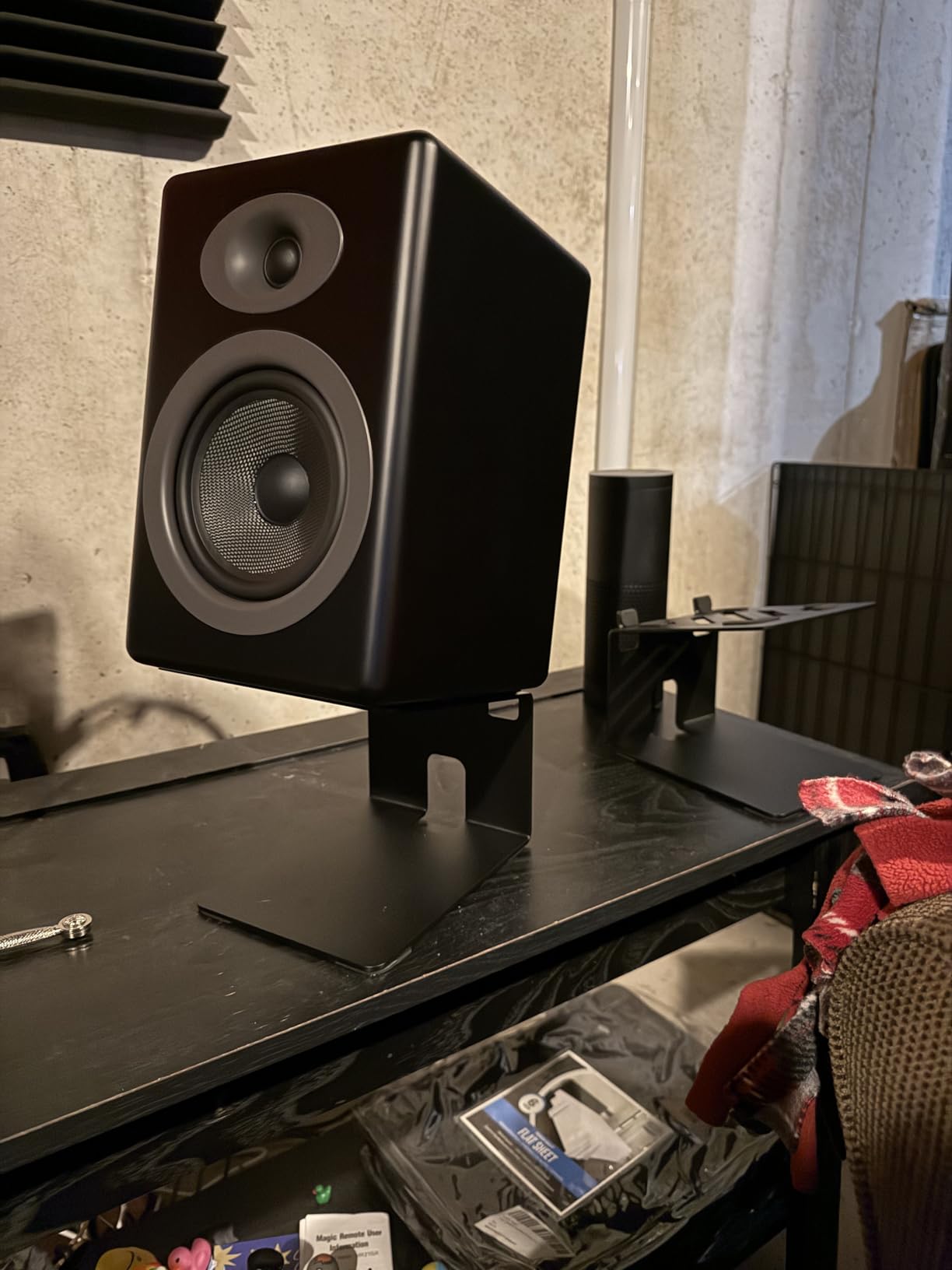
The voicing is described by reviewers as rich in the bass and detailed in the highs, and measurement accuracy is not the goal here. It is a musical pair rather than a measuring instrument, and it is frequently recommended as a first genuinely serious hi-fi system for vinyl. The 4.5 average across 1,275 ratings supports that.
Noise floor, power and why this one holds up on quiet passages
The 95dB figure is the headline, but the useful way to think about it is headroom on quiet material. When the amplifier has that much headroom, you can run it lower and still avoid distortion, and running it lower keeps the noise floor down. On a record with long quiet intros, that is the difference between a system that sounds alive and one that sounds like it is hissing.
It is also the heaviest pair here at 25 pounds, with cabinets measuring 9 by 10.75 by 7 inches. That is a moving job but it is also a cabinet that will not resonate, and the three-year warranty is the longest among these picks.
Phono stage and the missing wireless
No built-in phono preamp, so a phono-output turntable needs an external preamp. The wired A5+ has RCA and 3.5mm aux only, with no Bluetooth, optical or USB. That is a real limitation for anyone who wants one pair of speakers to handle a television and phone streaming alongside records.
There is no subwoofer output either, which combined with the price puts this pair in the upgrade-it-once category rather than the grow-into-it category. If you think you will add a sub in two years, the R1280DB is a more sensible starting point.
Who should buy it and who should not
Buy it if you listen at low volume, care about the noise floor, and want a single pair that will last a decade. It suits mid-size and larger rooms and it is the most confident choice here for an older pressings-heavy collection.
Skip it if you need any wireless or digital input, if budget is the primary constraint, or if you are still deciding whether vinyl is for you. The powered subwoofer options are worth a look only if you buy a different pair.
10. Saiyin DS6701 – Digital Inputs and a Sub Out for the Least Amount of Planning
Saiyin Powered Bluetooth Bookshelf Speakers
80W output
4 inch woofer plus silk dome tweeter
Optical and coaxial 24-bit/192kHz
SUB OUT jack
Pros
- Optical and coaxial digital inputs at a low price
- Bluetooth 5.3 with 10m range pairs reliably
- SUB OUT lets you add real low-end for vinyl
- RCA line-in accepts a turntable line out
Cons
- No phono stage for phono-only turntables
- Bluetooth fails with a turntable that only has a receiver
- 80W has limited headroom in larger spaces
The Saiyin DS6701 is the most feature-dense pair at the budget end and the easiest to grow with. It offers 80W of output, a 4 inch woofer with a silk dome tweeter in each cabinet, Bluetooth 5.3, optical and coaxial digital inputs supporting 24-bit/192kHz, RCA line-in, 3.5mm aux, and a SUB OUT jack for adding a powered subwoofer.
That combination of a sub output and digital inputs is what separates it from the Edifier R980T and the Electrohome at similar sizes. The 4.4 average across 2,147 ratings is the second highest review count here, and reviewers consistently highlight the optical and coaxial options as the reason the price works.
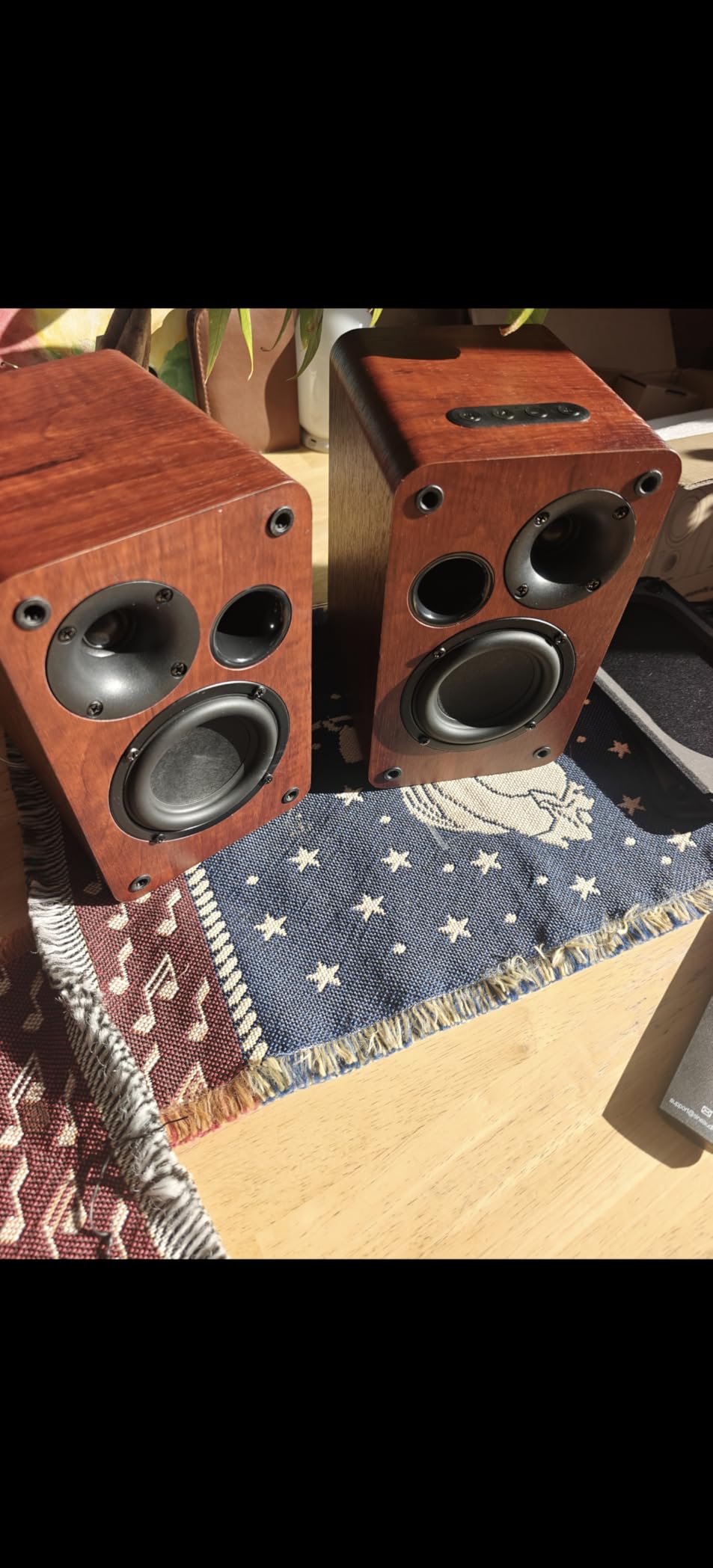
The top-panel buttons and remote cover volume, mute, optical, coaxial, line-in and Bluetooth modes, and the remote is compatible with a Fire TV stick, which is a small convenience for anyone running a television through optical. Cabinets measure 150 by 170 by 240 millimetres each, so they are compact without being tiny.
The sub output changes the calculus for records
A 4 inch woofer cannot deliver the low end on a bass-heavy pressing, and the SUB OUT jack solves that for less than replacing the speakers. Our powered subwoofer guide covers the pairing, but the short version is that a line-level sub hookup restores the low octave that small drivers roll off.
Two technical cautions come from the reviews. The source must output PCM stereo or you will get crackling or silence on the digital path, which matters if you connect a turntable through an optical converter. And 80W with 4 inch drivers is fine in a bedroom or small living room, with limited headroom in a large open space.
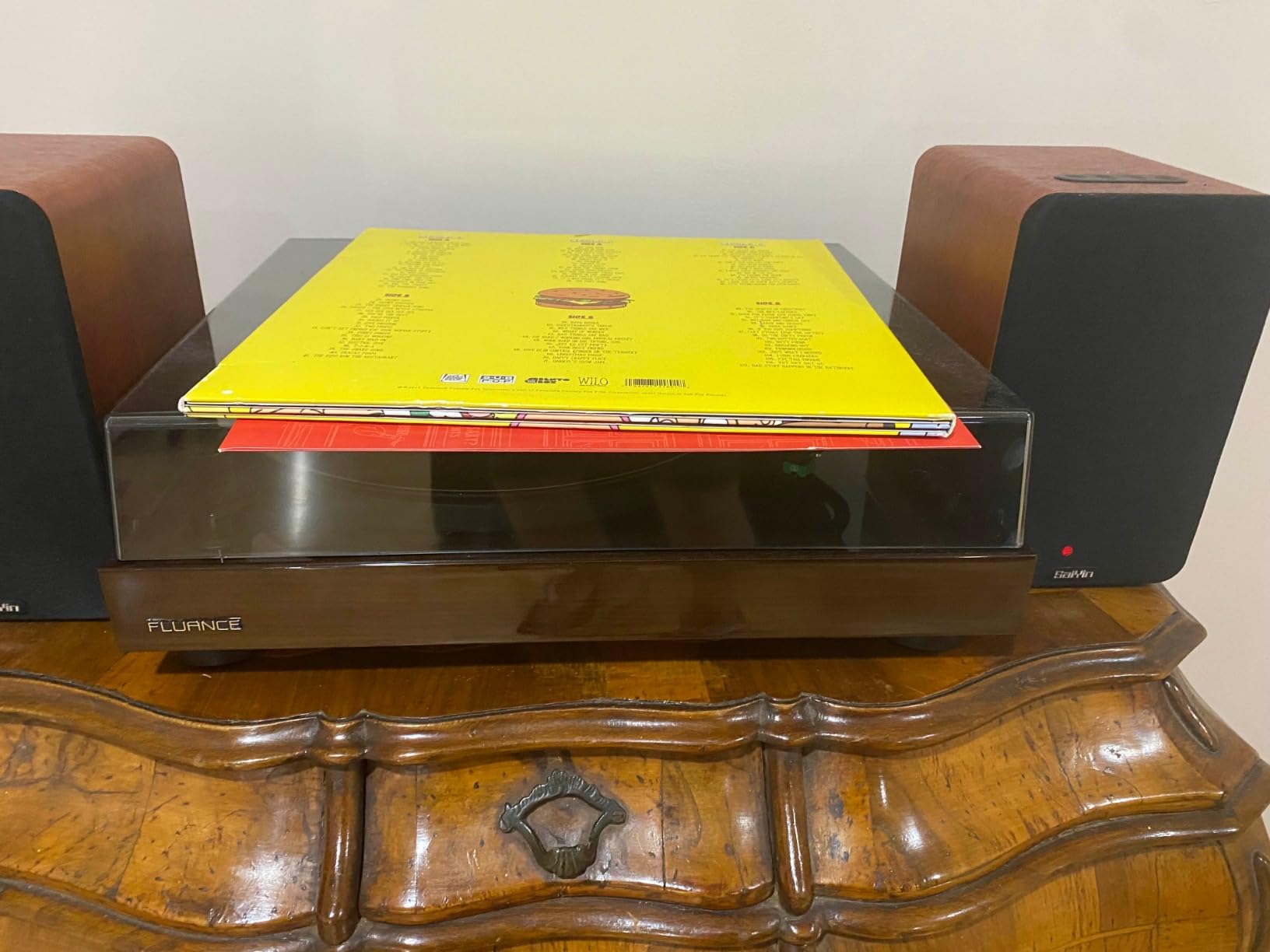
Phono stage, Bluetooth and the transmitter confusion
There is no built-in phono preamp, so a phono-output turntable needs an external preamp. More importantly for planning: Bluetooth on the speakers does not help a turntable that only has a Bluetooth receiver. A receiver plays sound from a phone; it cannot send the turntable’s audio out to the speakers. You need RCA, and the community confusion on this point is one of the most common setup mistakes we see.
Remote control batteries are not included, which is a small annoyance, and the three-year manufacturer warranty is among the longer ones here.
Who should buy it and who should not
Buy it if you want a turntable, a television and phone streaming on one compact system with the option of adding bass later. It is a good fit for a small apartment where every centimetre and every input counts.
Skip it if you listen loudly in a large room, or if your turntable is phono-output only. The 4 inch driver without a sub will not satisfy a bass-focused listener at volume.
How to Choose Powered Speakers for Vinyl: A Buyer’s Checklist
Six decisions account for almost every mistake we saw in this category. Work through them in order and the speaker choice becomes a much shorter process, because most of the variables that look technical turn out to be about signal level and room size rather than sound quality.
1. Check the phono stage before anything else
Look at the back of your turntable. A PHONO label means phono-level output and you need a phono input on the speakers or an external preamp. A LINE OUT label means a preamp is already built into the turntable, and you connect that to any line input on the speakers. Many budget turntables also have a PHONO / LINE switch, so check whether it needs flipping.
If the turntable only offers PHONO, your options are a speaker with a phono stage, of which the Kanto YU6 is the only one in this roundup, or an external moving-magnet preamp. Community threads repeatedly name the Art DJ Pre II and the Fosi ZA3 and X5 as the value preamps that pair with budget powered speakers, which keeps the total system cost low. A phono preamp is a small box; do not overspend on it while underspending on the speakers.
The reverse mistake also happens. Never connect powered speakers to an amplifier’s speaker terminals. Powered cabinets contain their own amplifier, and feeding them speaker-level signal damages them or the amplifier. Powered speakers take line-level input through RCA, 3.5mm, optical or Bluetooth, and nothing else.
2. The 83% rule and where the speakers should sit
The 83% rule is a placement guideline, not a spec. In simple terms, roughly 83 percent of the room’s depth should be free of obstruction in front of the speakers, and speakers placed well forward of the rear wall have more even low-frequency response than speakers pushed into corners. A wall behind the speakers adds reflected bass that reinforces some notes and cancels others, which is why the same pair sounds good in one room and boomy in another.
For vinyl specifically, start the speakers at ear height when seated, roughly six to eight feet apart, and angled slightly inward. Isolate the turntable from speaker vibration with pads, and make sure the cabinet it sits on is not the same piece of furniture as one speaker. Bass energy through a shared surface is the most common cause of a turntable that tracks worse at higher volume.
3. How much power do you actually need?
Less than the numbers suggest, as long as the room is right. A turntable’s phono or line output is low, but a moving-magnet cartridge through a preamp still produces a signal that drives a modest amplifier to healthy listening levels in a normal room. What actually limits you is room size and how far you listen from the speakers.
Also know that wattage figures are not comparable. You will see 42W quoted as a maximum output, 24W as total RMS, 60W as 2 by 30W internal amplification, 200W peak and 100W RMS per pair, and 150W as clean power. Different topologies, different measurement standards, wildly different meanings. Treat a single manufacturer’s own numbers as internally consistent and ignore comparisons across brands. Room size, driver size and cabinet volume tell you far more than the wattage figure alone.
4. Driver size and room size are the same question
A 3 inch driver in a bedroom sounds better than a 5 inch driver in a large room, because a small driver driven hard compresses and a large driver in a small room excites problems. Match driver size to the space: 3 to 3.5 inch for a desk or bedroom, 4 inch for a normal bedroom or small living room, 5.25 inch and up for a larger room or for listeners who want to play loud.
Frequency response figures are also worth reading carefully. A listing quoting 80 hertz and another quoting 20 kHz are describing the bottom and the top of the range, so do not compare a 55 hertz figure against an 80 hertz figure without checking which end it describes. Cabinet material matters too: MDF or solid wood cabinets resist resonance, and plastic enclosures are more likely to colour the midrange.
5. Bluetooth is not a turntable feature
Most Bluetooth-equipped turntables can receive audio, not send it. A turntable with Bluetooth built in is usually a receiver so you can stream from your phone to it. It cannot transmit its own signal to Bluetooth speakers. To go wireless from a turntable, you need a Bluetooth transmitter on the turntable output, which is a separate box and rarely included.
For a vinyl system, treat Bluetooth on the speakers as a bonus for playing records through the speakers from your phone, not as a way to connect the turntable. RCA from the turntable to the speakers is the correct path, and it is also the highest quality of the available paths.
6. When powered speakers stop being enough
Powered speakers are a bundled amplifier and speaker in one cabinet, which is exactly why they are convenient and exactly why they are a dead end: when you outgrow them you replace both at once, and you cannot swap the speakers. The moment to move on is when you want a separate subwoofer you control, when you want to change speakers without changing amplifier, or when you want bi-amping.
Forum consensus in the audio communities is consistent about one upgrade rule: an inexpensive turntable with well-chosen speakers beats an expensive turntable with cheap speakers by a wide margin. Buy the speakers first, and upgrade the cartridge rather than the turntable when you want a change in sound. Our advice is to spend six weeks with a pair like the R1280T or the Kanto YU6, learn what your records sound like on a system you do not control, and only then decide whether passive speakers and a separate amplifier are the next step.
Frequently Asked Questions
Can I use powered speakers with a turntable?
Yes, as long as the signal levels match. A turntable with a LINE OUT plugs straight into the RCA or 3.5mm line input on any powered speaker. A turntable with only a PHONO output needs a speaker with a built-in phono preamp, such as the Kanto YU6, or an external moving-magnet phono preamp placed between the turntable and the speakers. Plugging phono-level output into a line input gives very low volume and a thin, wrong-sounding result.
What are the best powered speakers for a turntable?
The Edifier R1280T is the best all-round choice for most first vinyl systems because it takes a line-level signal cleanly, has physical bass and treble controls and holds a 4.6 average across more than 19,000 owner reviews. The Kanto YU6 is the best choice if your turntable has a phono output, because it has an integrated phono preamp and needs nothing else added.
What are the best active speakers for vinyl playing?
Active and powered speakers are the same thing: bookshelf or floorstanding pairs with the amplifier built into one cabinet, so they connect directly to a turntable’s line output without a separate amplifier. Among the ten pairs reviewed here, the strongest options are the Edifier R1280T for general use, the Kanto YU6 for a built-in phono stage and larger 5.25 inch drivers, and the Audioengine A5+ for a very low noise floor at 95dB signal-to-noise ratio.
Do powered speakers need a phono preamp?
It depends on your turntable, not the speakers. If your turntable has a built-in preamp with a LINE OUT, no external preamp is needed. If it outputs phono-level signal only, you need a phono stage somewhere: either a speaker with an integrated phono preamp, or a small external preamp between the turntable and the speakers. A phono preamp steps up a very small cartridge signal to a normal line level, and the speakers themselves never perform that step.
What is the 83% rule for speakers?
The 83% rule is a placement guideline rather than a specification. It means roughly 83 percent of the room’s depth should be free of obstruction in front of the speakers, and that speakers placed forward of the rear wall achieve more even low-frequency response than speakers pushed into a corner. For vinyl, add ear height when seated, speakers six to eight feet apart angled slightly inward, and vibration isolation between the turntable and the speakers.
How many watts do I need for a turntable and powered speakers?
For a normal room, far fewer watts than the numbers suggest. The limit is room size and listening distance, not turntable output, and wattage figures are not comparable across brands because 42W maximum, 24W total RMS, 60W as 2 by 30W, and 200W peak versus 100W RMS per pair all measure different things. Match driver size to the room instead: 3 to 3.5 inch for a desk or bedroom, 4 inch for a small living room, 5.25 inch and up for a larger space.
Final Verdict: Which Powered Pair Suits Your Vinyl Setup
If you want the safest first system and your turntable has a line output, the Edifier R1280T is the pick. It is the most reviewed pair in this roundup, it has physical tone controls that make cartridge correction easy, and it will not strain in a bedroom or a small living room. If your turntable outputs phono level only, buy the Kanto YU6 and skip the extra preamp entirely, or add a small moving-magnet preamp to any other pair here.
Match the rest to your room. The Audioengine A5+ wins for quiet listening and a near-silent background. The LONPOO LP42 wins on power per dollar in a small footprint, and the Edifier R1280DB wins if you want a television and Bluetooth in the same system. The Saiyin DS6701 and the R1280DB are the two to shortlist if you plan to add a subwoofer, and the MEVOSTO DS19 is the one for bass from the speakers themselves.
Whatever you choose, confirm the signal path before you order, place the speakers forward of the back wall rather than in the corners, and isolate the turntable from the speakers’ vibration. That is the whole difference between a system that sounds broken and a system that makes you wonder why anyone uses anything else. Check current pricing and the latest owner reviews for each pair, then start playing records.
Leave a Reply