

Short answer: the Soundcore Q30 Hybrid is the best wireless headphone for travel in 2026 because it runs 50 hours with noise cancellation switched on, weighs 9.6 ounces, comes with a carrying case and an AUX cable, and has the largest owner review base of any pair in this list. The Bose QuietComfort is the runner-up for anyone who wants a warmer, more cushioned fit, and the Sony WH-1000XM6 wins outright on noise cancelling.
Air travel punishes headphones in ways that a desk test never will. A cabin sits around 83.5 dB(A) for hours, the seat row behind you never stops talking, and the battery figure on the box is almost always measured with noise cancelling switched off. That last point catches almost everyone out, and it is the reason a pair rated at 70 hours can feel like it will not survive a 14-hour sector.
Our team spent weeks working through twelve over-ear pairs, reading long-term owner reviews, comparing the published battery figures, and weighing what actually fits in a personal item. We are not measuring sound in an anechoic chamber. We are answering one question: which of these will you still be happy wearing in seat 32B, four hours into the flight, with the engine at full climb thrust?
If you want a wider look at the category, our Sony headphones roundup covers the WH line in depth, and the best wireless headphones under 200 is the right place to start if the flagship tier is out of reach. Everything below is updated for 2026.
Our Top 3 Travel Headphones After Comparing 12 Pairs
Three pairs earned a place at the top. The Soundcore Q30 wins on battery headroom and proven reliability, the Bose QuietComfort wins on all-day comfort and a wired fallback, and the Sony WH-1000XM6 wins on noise cancelling quality alone.

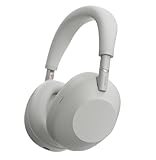
Each of the three wins a different fight. The Q30 is the pair you charge the night before and forget about, the Bose QuietComfort is the pair whose cushions survive a 12-hour overnight sector, and the XM6 is the pair that makes the cabin genuinely quiet.
Comparing All 12 Pairs: ANC-On Battery, Weight and Wired Backup
This table is the one I use. Battery life with active noise cancellation switched on is the figure that matters, because that is the only mode you will use in the air. Weight tells you whether the case fits your personal item allowance, and wired support tells you whether you can still watch the movie if the battery dies over the Atlantic.
| Product | Specs | Action |
|---|---|---|
| Soundcore Q30 Hybrid |
|
Check Latest Price |
 Beats Studio Pro Beats Studio Pro |
|
Check Latest Price |
 Bose QuietComfort Bose QuietComfort |
|
Check Latest Price |
 Sony WH-1000XM5 Sony WH-1000XM5 |
|
Check Latest Price |
 BERIBES WH202A BERIBES WH202A |
|
Check Latest Price |
 Bose QuietComfort Ultra 2nd Gen Bose QuietComfort Ultra 2nd Gen |
|
Check Latest Price |
| Sony WH-1000XM6 |
|
Check Latest Price |
 Soundcore Space One Soundcore Space One |
|
Check Latest Price |
 TOZO HT3 TOZO HT3 |
|
Check Latest Price |
 1Mii Y8+ 1Mii Y8+ |
|
Check Latest Price |
 Sony WH-CH720N Sony WH-CH720N |
|
Check Latest Price |
 Belkin Isolate Belkin Isolate |
|
Check Latest Price |
Two patterns jump out. Most pairs in this list offer some form of wired playback, which matters more than most buyers expect. And the battery column ranges from 24 hours to 100 hours, which is the difference between charging a battery at the gate and never thinking about it.
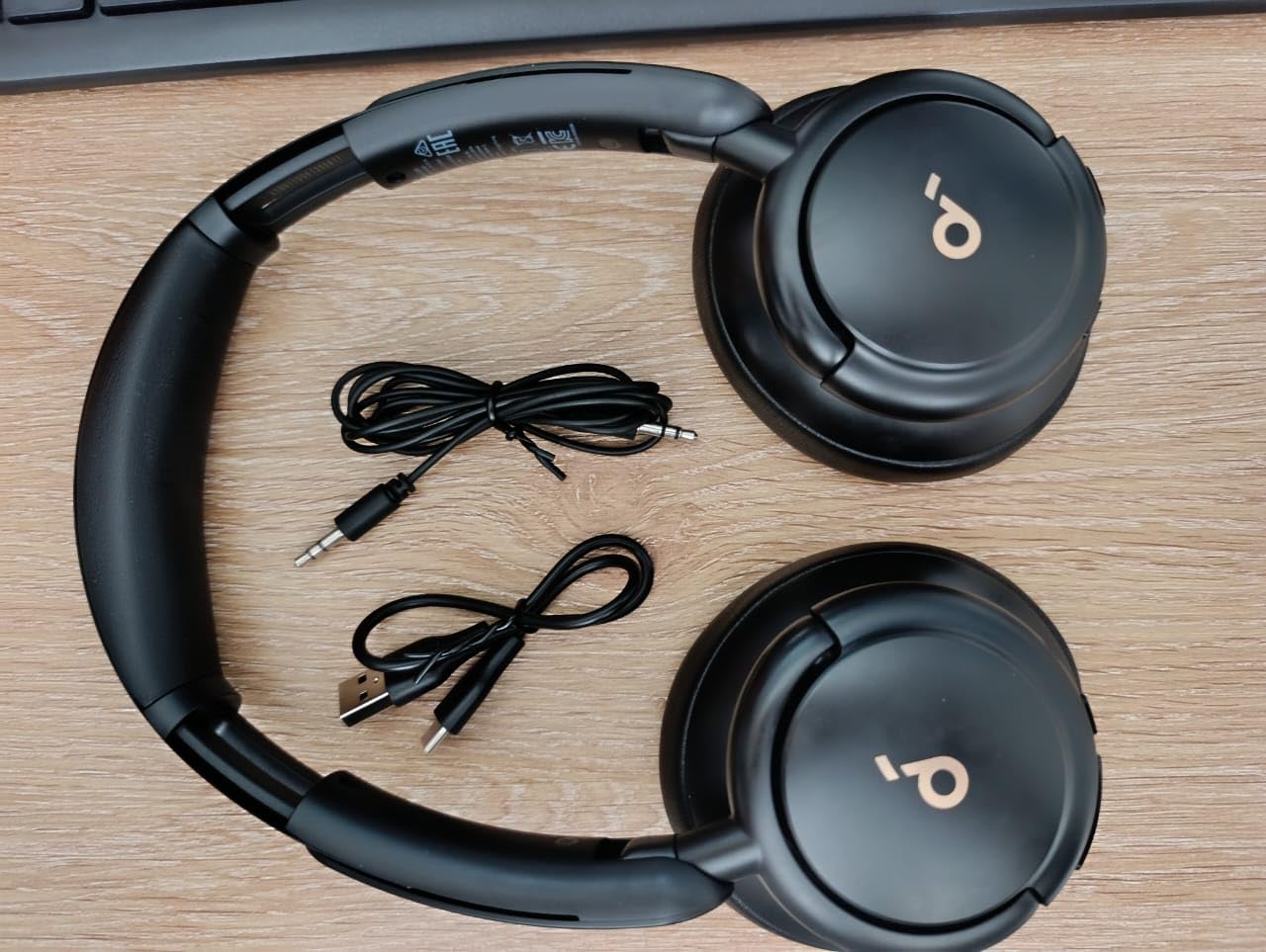
1. Soundcore Q30 Hybrid – The Best Overall Travel Headphones for Battery Headroom
Soundcore by Anker Q30 Hybrid Active Noise Cancelling Headphones, Black
50 hours with ANC on
70 hours with ANC off
9.6 oz
40 mm silk drivers
AUX cable works when flat
Pros
- 50 hours of ANC-on battery removes charging anxiety
- Hybrid ANC targets low-frequency engine drone
- Three ANC modes let you tune for transport or indoor
- Works wired with the battery completely dead
- Carrying case included and memory foam protein leather cushions
Cons
- Microphone is weak on calls and sounds underwater
- Multipoint connection drops in and out
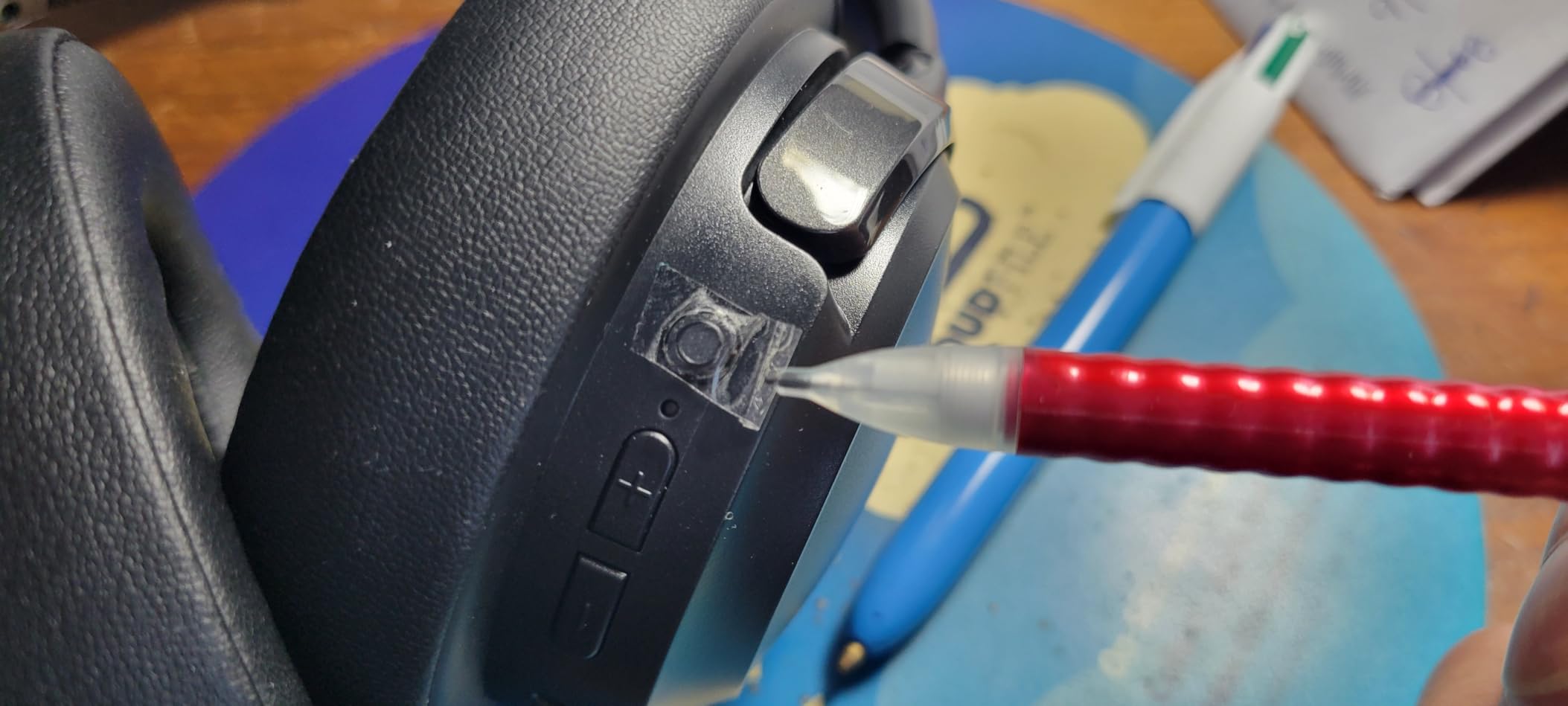
- Glued faux leather earpad seams can split over time
The Q30 is the pair I reach for when the trip is long and the charging situation is uncertain. Two noise-detecting microphones filter out low-frequency ambient sound, and the spec sheet claims up to 95 percent reduction on that band. In practice that means the constant roar of the engines fades to a low thrum that stops working on you, which is exactly the goal.
What sets it apart is the battery arithmetic. Playback runs 50 hours with ANC engaged and 70 hours with it off, and one full charge covers a long-haul round trip with plenty of reserve for the connection home. A five-minute quick charge returns four hours, which is enough for a short-haul flight from a loose bag at the gate.
There is a mode for every part of the journey. Transport mode is tuned for rumble, Outdoor mode handles wind and street noise, and Indoor mode is gentler for the cabin once you are cruising. Nothing on the cup needs adjusting by hand, which is what you want when you are fumbling in a boarding queue.
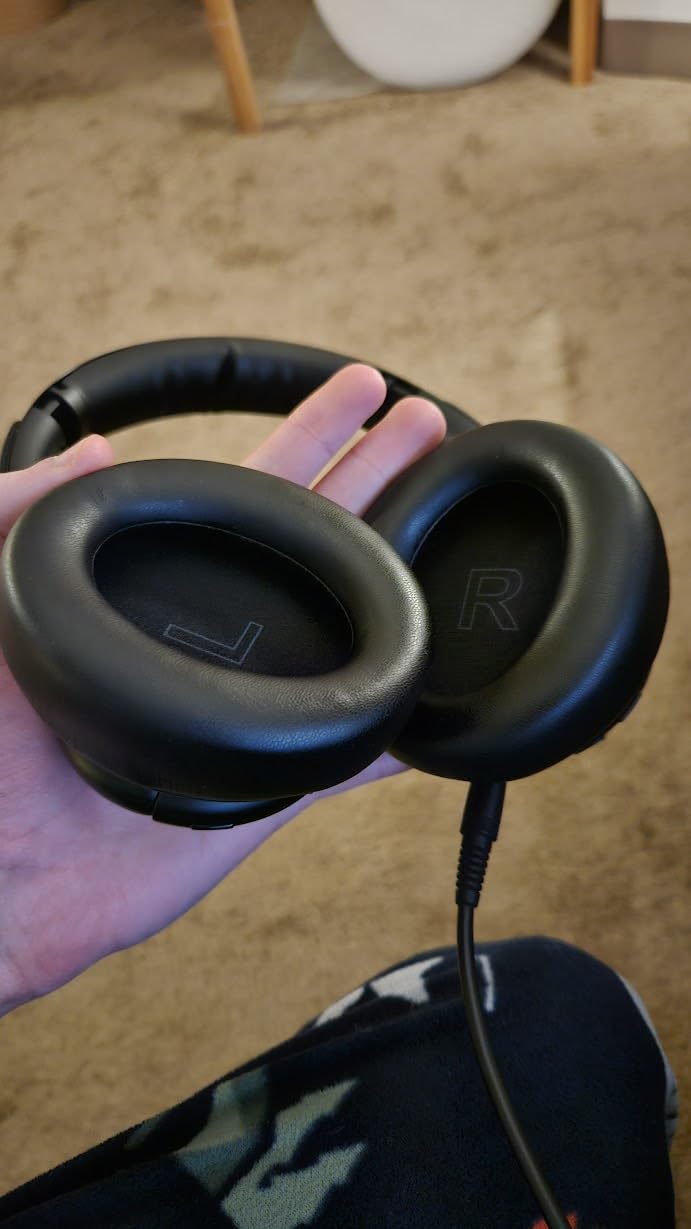
Battery life that survives a whole trip without a charger
This is the single biggest reason the Q30 tops the list. Fifty hours of usable ANC playback means a 12-hour outbound sector plus a 12-hour return with a full night’s sleep in between, and most of a charge still in reserve afterwards. Owners consistently describe the battery in terms of days rather than flights, which is no exaggeration given the figures.
One honest caveat worth flagging: listings for this pair quote both a 40-hour headline figure and a more specific 50-hour ANC figure. Either way you are looking at far more than a single long-haul flight.
Noise cancelling against engine drone, and where it stops working
Hybrid ANC is at its best on steady low-frequency sound, which is what a turbofan produces during climb and cruise. It is far less effective against the mid-range chatter of the row behind you or a crying baby two rows back, so I would treat any claim of total silence with suspicion.
The three-mode system helps you manage that. Transport mode pushes hardest on low frequencies for the engine phase, while Indoor mode is gentler for the cabin once you are cruising.
Wired playback as your insurance policy
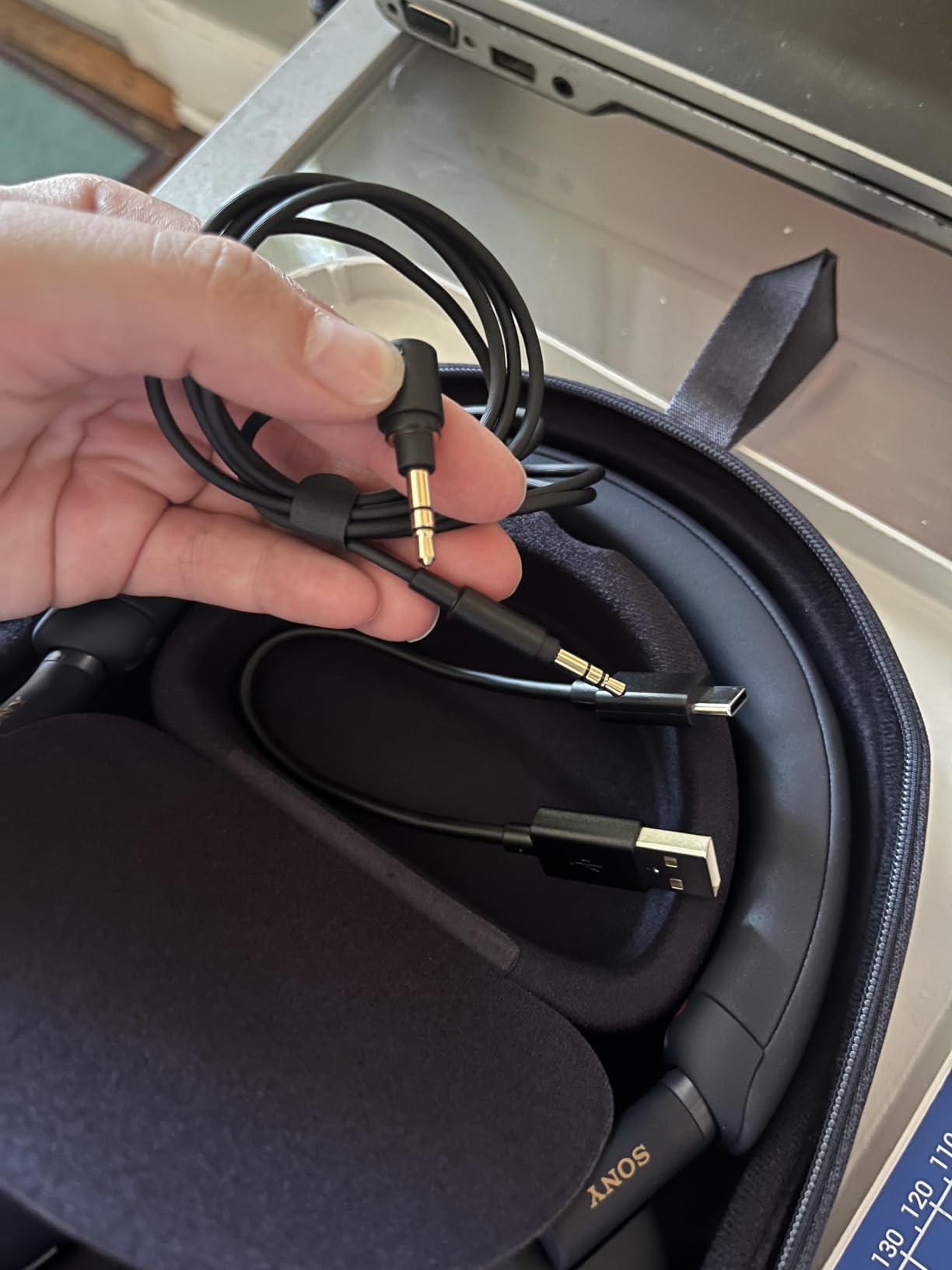
The included AUX cable means the Q30 still works as a wired headphone with the battery completely dead. On a plane that is the difference between watching the in-flight movie and staring at the seatback for three hours, and it also works with the two-prong airplane jack once you add a standard adapter.
Who this is not for
If you take calls from your car or your desk as often as you fly, the weak microphone is a real problem. Owners describe it as sounding underwater, and it is one of the most consistent complaints in the reviews. Multipoint is also listed but drops in and out when two devices are connected, so switching between laptop and phone mid-flight is less seamless than on the Bose or Sony pairs.
One more durability note: the faux leather earpads are glued rather than stitched, and those seams can split after a year or two of daily use. Replaceable third-party pads are inexpensive if that happens to you.
Glasses fit and long-session comfort
The memory foam protein leather earcups seal well and distribute pressure across the ear rather than on the canal. If you wear glasses, the temples can break that seal, which shows up as a small drop in cancellation at low frequencies. The wide ear cups on this model help because there is spare room around the frame arm.
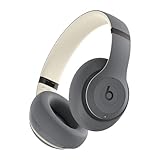
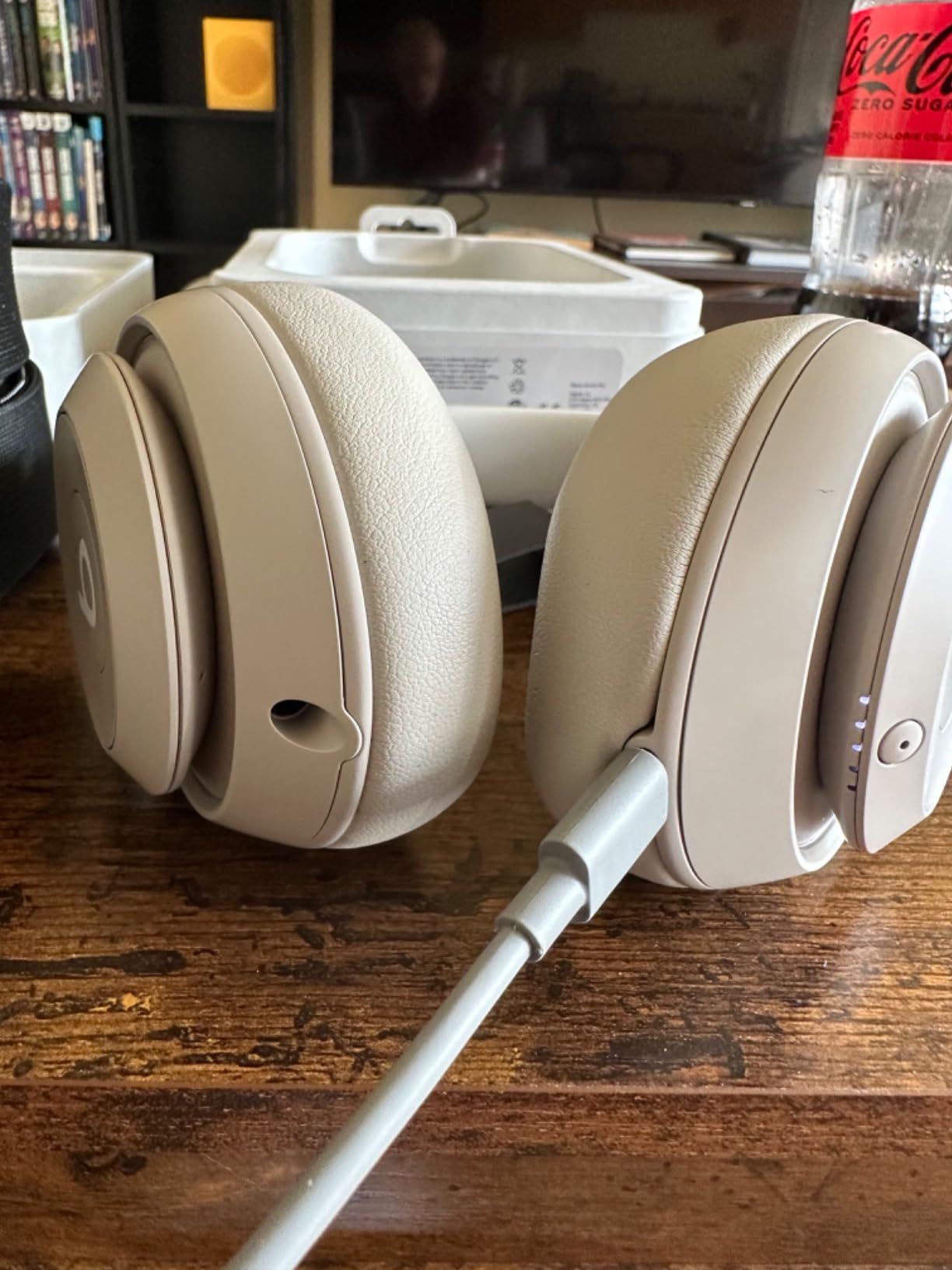
2. Beats Studio Pro – Best for Apple Users and USB-C Lossless Audio
Beats Studio Pro Premium Wireless Over-Ear Headphones- Up to 40-Hour Battery Life, Active Noise Cancelling, Great for Travel & Commuting, Apple & Android Compatible – Exclusive Sand Gray
Up to 40 hours battery
10-minute Fast Fuel gives 4 hours
USB-C lossless and 3.5 mm
UltraPlush cushions
Non-folding body
Pros
- USB-C lossless audio plus a 3.5 mm analog option
- Effective ANC for flights and commuting
- 40-hour battery with 10-minute quick charge
- UltraPlush cushions suit long listening
- One-touch pairing across Apple and Android
Cons
- Heavy and bulky
- does not fold for packing
- Fingerprints collect readily on the finish
- Physical Beats button is hard to locate by touch
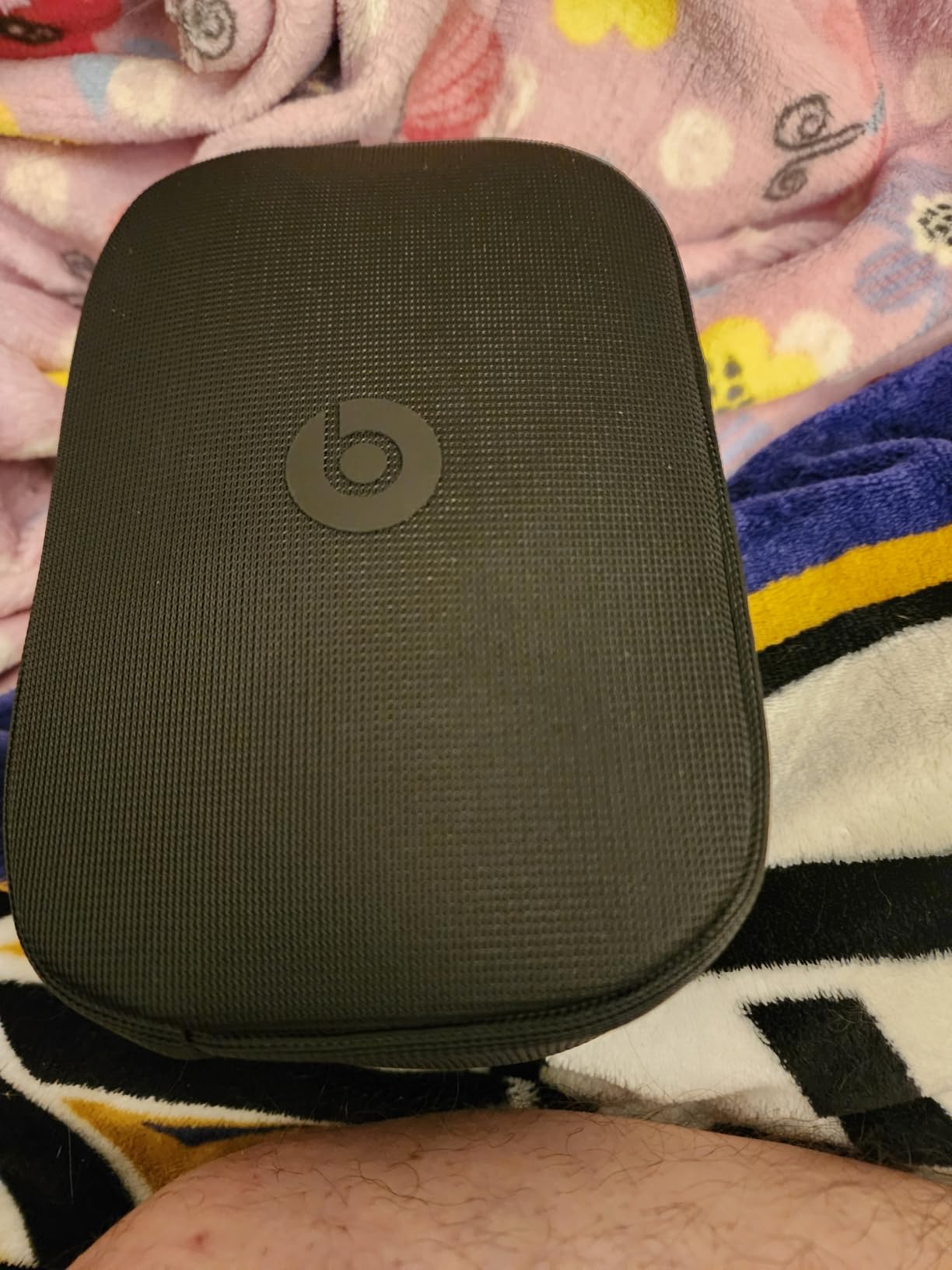
The Studio Pro is the pick for anyone whose travel kit is built around a laptop and a phone with a USB-C port. It is one of the few pairs here that plays lossless digital audio over USB-C, which sidesteps the mediocre analog seatback output entirely if your airline offers a wired USB-C screen. It is also an unusually good-looking pair, and the woven carrying case is genuinely travel-shaped rather than a drawstring afterthought.
The catch is size. Reviewers repeatedly single out the heavy, non-folding body as the design’s main drawback. It takes up a real slice of personal-item space, which matters enormously if you are already carrying a camera or a laptop sleeve.
USB-C lossless changes what in-flight entertainment sounds like
Most seatback audio is compressed analog, and no headphone can fix that. But some carriers now offer USB-C video and audio outputs, and the Studio Pro negotiates a digital connection with sound profiles that many Bluetooth codecs cannot match. If you can get a digital signal, this is the pair built for it.
It also includes 3.5 mm support, so the traditional two-prong seatback jack remains available as a backup when digital output is not offered on your aircraft.
Fast Fuel and a 40-hour ceiling
Battery life runs up to 40 hours, and a 10-minute Fast Fuel charge returns four hours. That is enough for a long-haul sector if you forget to charge the night before, which is exactly the scenario where lesser pairs leave you watching the seatback screen in silence.
Class 1 Bluetooth is the newer standard, and owners report stable connections without dropouts across the pairing they have tested.
Spatial audio and the pressure sensation question
Personalized spatial audio with dynamic head tracking works best with movies, and it is one of the more convincing implementations on sale. Keep in mind that spatial processing adds overhead, and some owners report a noticeable pressure sensation when switching between ANC and transparency modes. That pressure feeling is normal on strong cancellation; it is a slight sense of being sealed in, not the same thing as the ear equalisation problem on descent.
Who this is not for
Do not buy this for a carry-on-only minimalist kit. The non-folding body and the weight are the most common criticisms in the reviews, and both are real packing problems rather than aesthetic preferences. If bag volume is your binding constraint, an earbud or a folding design beats this on every trip.
The physical Beats button is also hard to locate by feel in the dark, which is annoying when you want to switch modes without taking the headphones off. Fingerprints on the finish are cosmetic but constant.
3. Bose QuietComfort – The Best All-Rounder for Long-Haul Flights
Bose QuietComfort Headphones – Wireless Bluetooth Headphones, Active Over Ear Noise Cancelling and Mic, USB-C Charging, Deep Bass, Up to 24 Hours of Playtime, Black
24 hours ANC-on
15-minute charge adds 2.5 hours
238 g
Wired in-line mic cable
Multipoint Bluetooth
Pros
- Effective ANC combined with passive isolation
- Plush cushions and well-padded band for long sessions
- Adjustable EQ for bass and mids control
- Multipoint switching between two devices
- Wired cable works when the battery is depleted
Cons
- Earcups and band can feel tighter than expected
- Not water or sweat resistant
- Sound signature is dark and warm
- Case and materials feel modest for the tier
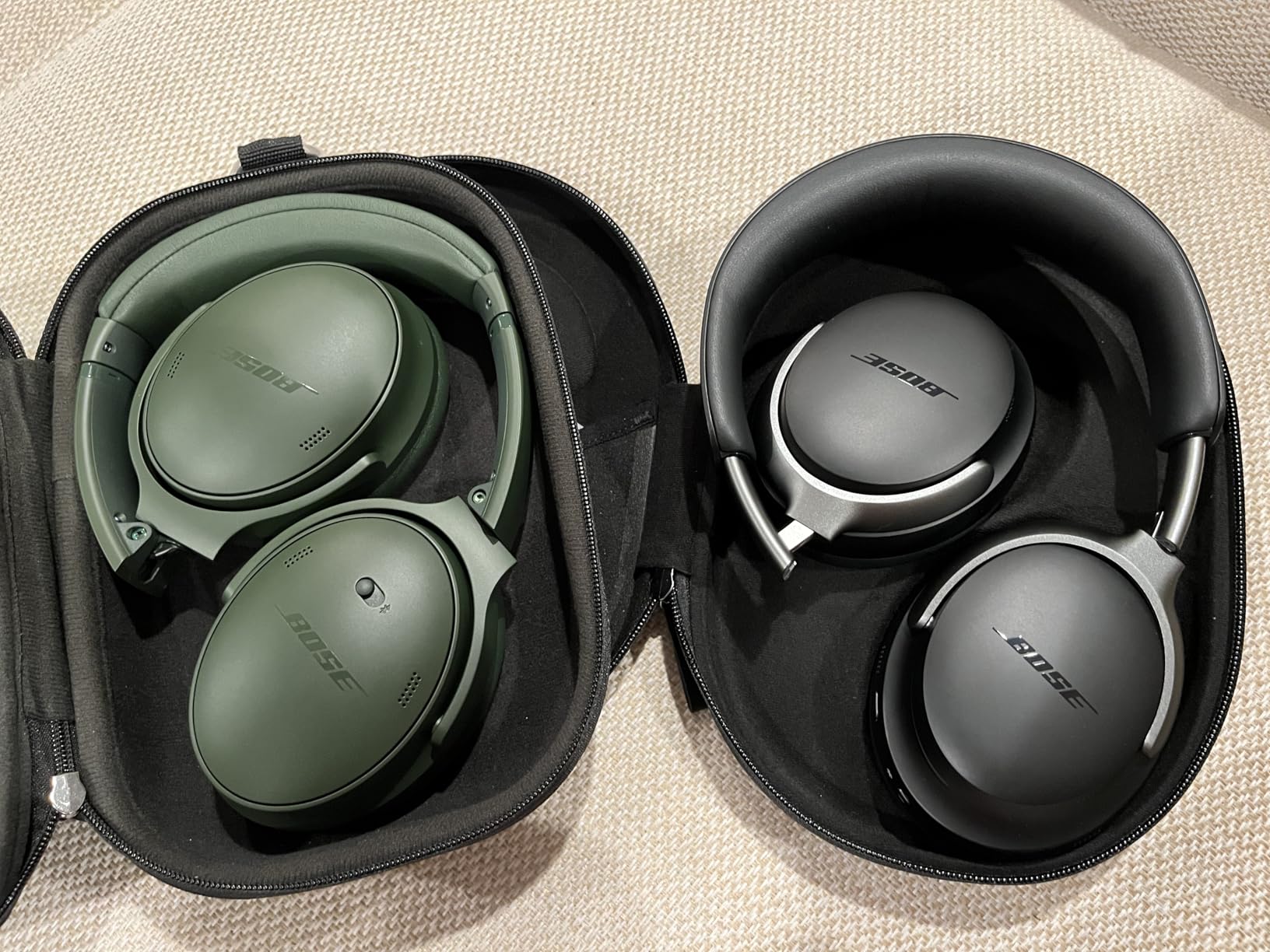
For an overnight sector, comfort matters more than any spec. The QuietComfort combines active noise cancelling with passive isolation from the over-ear cups, and the two together do more for fatigue over ten hours than a marginally better processor would.
Bose pairs that passive isolation with a genuinely well-padded headband. Owners report wearing these through entire long-haul flights without the pressure headache that cheaper headbands cause, and the adjustable EQ in the Bose app lets you tame the bass before an in-flight film.
Multipoint Bluetooth means your laptop and phone stay connected, and the wired in-line microphone cable still works when the battery is flat. It is a complete travel package rather than a Bluetooth-only device.
24 hours is enough for most itineraries
Twenty-four hours per charge is the shortest headline figure among the premium pairs in this list, and it is the one genuine compromise. A 15-minute USB-C charge adds two and a half hours, so a top-up at the gate covers a delay or a missed connection.
For most travellers, one full charge covers the outbound sector with margin. For a four-leg itinerary, pack a power bank.
Why passive isolation matters as much as the electronics
Active cancellation is a processor trick that excels at steady low frequencies. Everything else is handled by the physical seal of the cup. The QuietComfort’s plush over-ear cushions create a good seal, which is why owners say it quiets cabin chatter better than budget pairs with louder advertised numbers.
That seal is also why glasses wearers should test before committing. Frames that push the cushion out of position reduce both passive isolation and the consistency of the active cancellation. Rotate the earcups slightly after putting your glasses on to reseat them.
In-flight movies over the wired cable
The included cable has an in-line microphone, so it works with seatback screens through a standard 2.5mm airplane adapter. Because the pair still plays with no battery, a dead headphone is not a dead movie.
Sound signature is described as dark and warm rather than bright. For films that is usually flattering, since it takes the edge off hiss in the soundtrack. Owners who listen to a lot of acoustic or jazz material sometimes find it too dark.
Who this is not for
If you are running, cycling or working out, skip it. These are not water or sweat resistant, and the passive seal that makes them great in a cabin makes them unusable in a gym.
Some users also find the earcups and band tighter than expected, particularly if you are between sizes or you have a broader head. The headband does not extend as far as some rivals. The build and case feel modest next to the flagship tier, which is the most common complaint about value at this level.
4. Sony WH-1000XM5 – Best Previous-Generation Value for Frequent Flyers
Sony WH-1000XM5 Premium Noise Cancelling Wireless Headphones, Midnight Blue
Up to 30 hours
3-minute charge gives 3 hours
8.82 oz
8 microphones with two processors
Auto NC Optimizer
Pros
- Best-in-class noise cancelling with Auto NC Optimizer
- Lightweight 8.82 oz build for all-day wear
- 30-hour battery with 3-minute quick charge
- Speak-to-Chat and Instant Pause/Play
- Multipoint connection
Cons
- Does not fold flat so the case is bulky
- Ear cushions are harder to replace than on rivals
- Not water or sweat resistant
- Microphone quality is average for calls
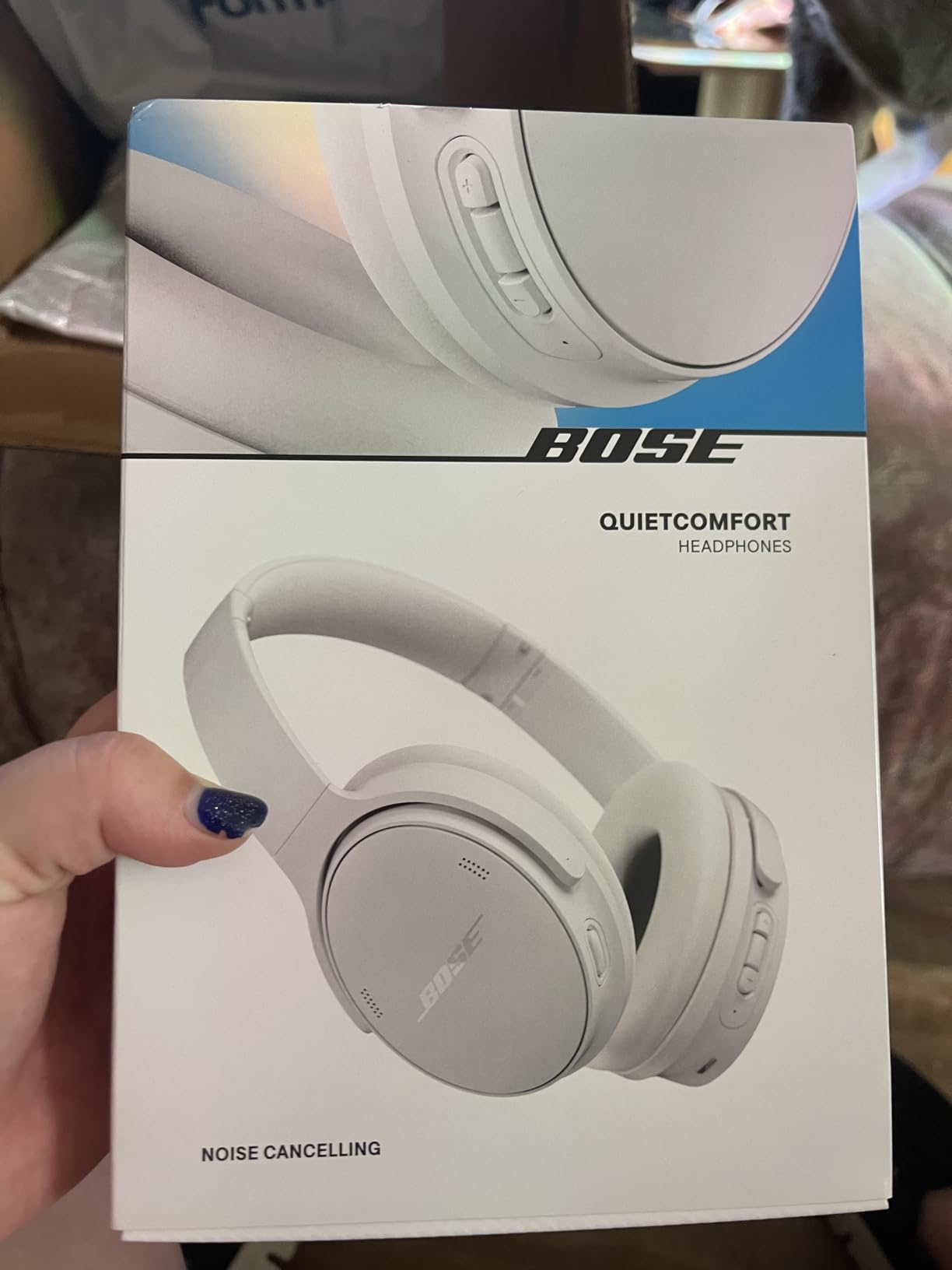
The XM5 is the previous-generation value play that dominates buying advice in the travel headphone communities. The current flagship costs meaningfully more and, on battery life, does almost nothing extra. If you fly four times a month, the maths favours the older pair.
Two processors driving eight microphones make this the noise cancelling benchmark the newer model is measured against. The Auto NC Optimizer samples the seal around your head and adjusts, which helps when a hat or thick hair breaks the passive seal.
At 8.82 ounces it is among the lightest designs here, and the soft fit leather is comfortable across a full day of use.
Why the previous generation still makes sense
The XM5 carries a 4.2 average from more than 20000 ratings, and the complaints concentrate on design rather than performance. The recurring theme in the reviews is the non-folding body and the case bulk, plus ear pad durability over several years.
For anyone buying one pair to last, the newer XM6 adds a folding hinge and a faster processor. For anyone buying to replace last season’s pair, the XM5 remains the rational call.
Speak-to-Chat is a genuine travel feature
Say something and the headphones pause and switch to transparency mode; when you stop talking, playback resumes. In an airport or on a train, where announcing your destination out loud would feel strange, this is more useful than it sounds.
Instant Pause/Play does the same thing when you take the headphones off. Multipoint is supported for switching between two devices, though some owners report finicky pairing with specific phones.
Battery, charging and the ANC-on question
Thirty hours per charge is respectable with cancellation active, and the three-minute quick charge returns three hours, which is genuinely useful when your power bank is in a hold bag.
Note that the 30-hour figure is not the same as the box figure on some competing models. Always check the ANC-on number, because it is the only figure that reflects what you will experience on a plane.
Who this is not for
Not for anyone who maximises packing volume. The redesign removed the folding hinge, so the case is one of the bulkiest in this roundup, and it does not collapse flat into a laptop sleeve.
Microphone quality for calls is average, which matters if you take work calls in transit. And the ear cushions are harder to swap than on several rivals, so budget for replacements if you plan to keep these for more than a few years.
Glasses fit and clamping force
The headband distributes pressure reasonably well, but owners do report a firmer clamp than some alternatives. Combined with glasses, that can turn a 10-hour flight into a headache around the temples. If you wear frames and have a long sector coming up, try them on at home first.
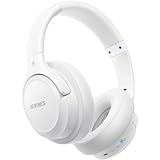
5. BERIBES WH202A – The Best Lightweight Budget Pick with Wired Backup
BERIBES Bluetooth Headphones Over Ear Wireless HiFi Stereo Headsets 65H 6EQ
65 hours playback
6.08 oz
Dual 40 mm drivers
Bluetooth 6.0
3.5 mm cable when powered off
Pros
- Six EQ modes give real tonal flexibility
- Very light at 6.08 ounces with memory protein pads
- Long battery supports multi-day trips
- Works wired via 3.5 mm cable with a dead battery
- Dual device connection for calls and media
Cons
- Hybrid ANC is weak against sustained engine rumble
- V-shaped sound with boosted bass and treble
- Plastic build and hinges are budget-level
If the goal is a spare pair that lives in a backpack and covers you when your main headphones die, the BERIBES is hard to argue with. At 6.08 ounces it is among the lightest designs here, and 65 hours of playback means it charges roughly once a month of daily use.
The Bluetooth 6.0 chip pairs in one to three seconds, holds a stable connection to around 33 feet, and connects to two devices at once. That combination of speed and dual-device support is genuinely useful in an airport where you are switching between a boarding pass on one device and a podcast on another.
Sound is a V shape with boosted bass and treble, which suits pop and film soundtracks far better than the reference-flat signature some purists prefer.
Where the noise cancelling falls short, honestly
This is the most important thing to know about the BERIBES. Its hybrid noise cancelling is weak against sustained low-frequency noise, and aircraft engine rumble is precisely that. Owners repeatedly say the headphones do not tame cabin noise, and the EQ modes change the tone without fixing the underlying cancellation.
What the ANC does handle reasonably is fan hum and steady background chatter at close range. In a train carriage or an office it is adequate. In a Boeing 777 at cruise it is not.
Battery and the wired fallback
The 500mAh battery delivers 65 hours of playback and up to 950 hours on standby, which is an enormous figure that mostly matters because it means the pair is always ready. A 3.5mm audio cable is included, and the headphones play wired with the power off.
That wired behaviour makes the BERIBES a good primary pair for seatback movies even if you never turn them on. It is also a physical 3.5mm jack rather than a proprietary connector, so the cable is replaceable.
Comfort over a long sector
Memory protein earpads and a 6.08-ounce frame make this the pair most likely to be forgotten you are wearing. The lightweight build is the counter-argument to ear fatigue, and it is why this pair works as a sleeper for people who cannot wear an earbud through the night.
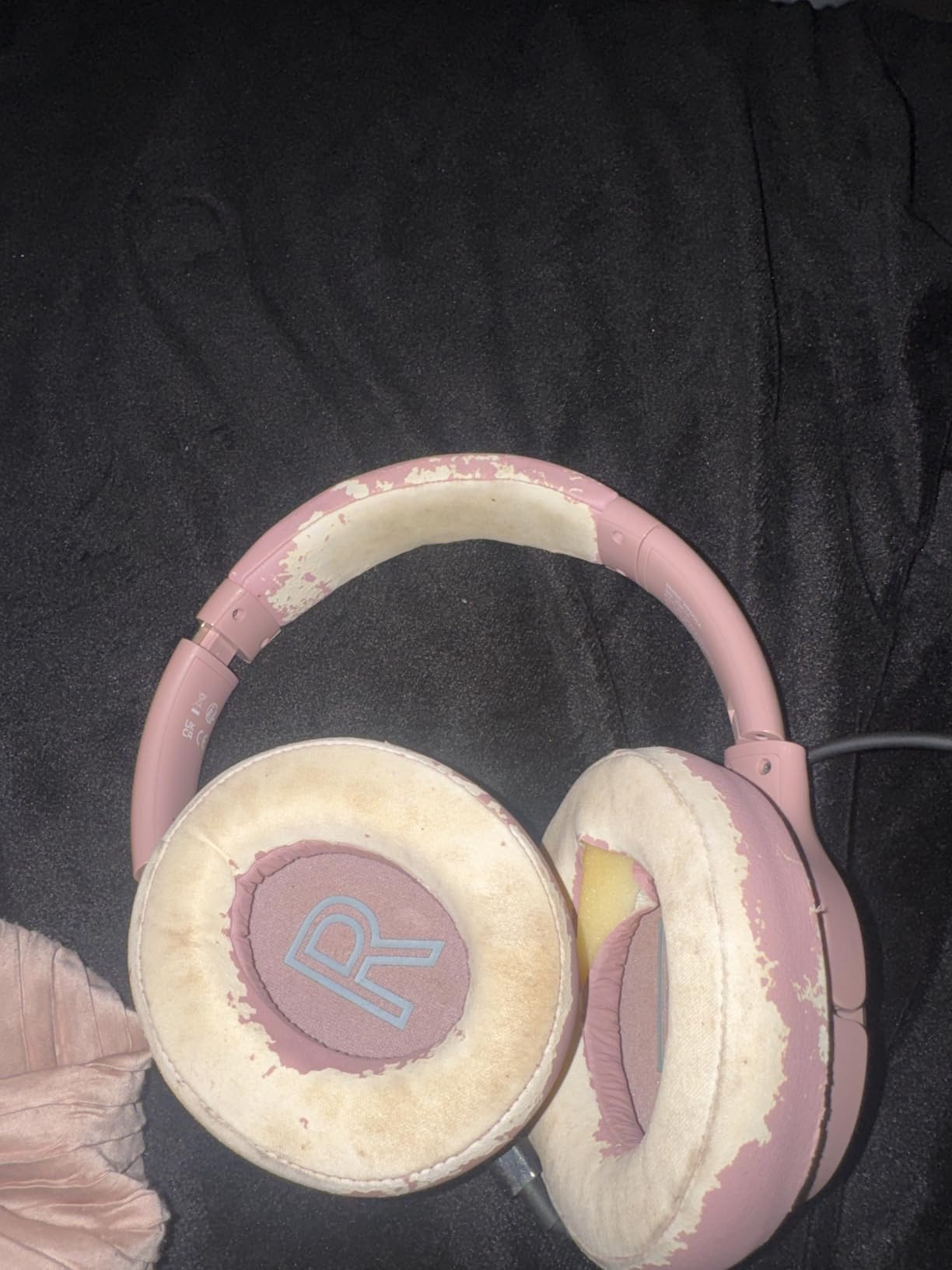
The trade-off is the plastic build and the hinge durability, which owners describe as budget-level. It is not a pair to drop onto a hard floor, and the one-year warranty is the shortest coverage in this roundup.
Who this is not for
Not for anyone who flies regularly and expects the cabin to go quiet. This is a backup and a travel companion rather than a noise cancelling specialist, and the bass-heavy tuning is the other thing you are accepting.
6. Bose QuietComfort Ultra 2nd Gen – Best for Immersive Audio on Long Flights
Bose QuietComfort Ultra Bluetooth Headphones (2nd Gen), Wireless Headphones with Spatial Audio, Over Ear Noise Cancelling with Mic, Up to 30 Hours of Play time, Black
30 hours, 23 with Immersive Audio
0.48 kg
CustomTune calibration
Quiet, Aware and Immersion modes
Bluetooth 5.4
Pros
- Three modes including Immersion for film watching
- CustomTune calibrates sound to your ear shape
- Up to 30 hours with charging while listening
- Metal headband spreads pressure for long wear
- AI noise-rejecting microphones for calls
Cons
- ANC only marginally better than the cheaper QuietComfort
- Immersive Audio cuts several hours of battery
- Heavy and bulky for a travel pack
- Premium pricing with fewer physical controls
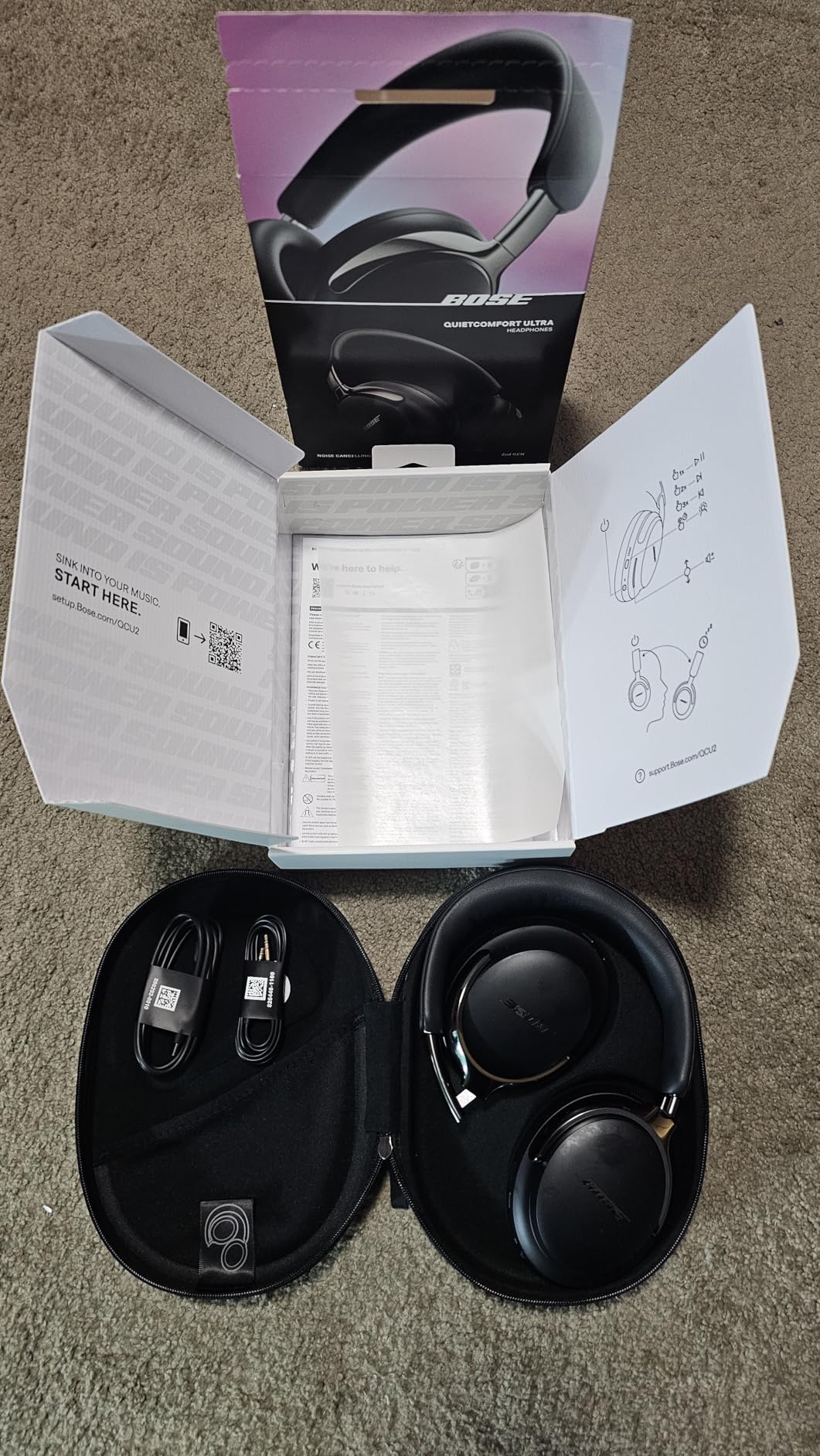
The Ultra is Bose’s showcase pair, and the reason to consider it over the standard QuietComfort is the Immersion mode with Cinema Mode. That combination is tuned for long-form audio and does a noticeably good job of making a movie feel like a cinema rather than a seatback screen.
CustomTune is the other differentiator. It measures your ear shape and builds a playback profile around it, which partly offsets the fact that this is a closed-back design with EQ controls limited to the app.
The catch is straightforward: reviewers say the noise cancelling is only marginally better than the standard QuietComfort despite the extra cost. You are paying for the audio processing and the build, not for a step change in cancellation.
Immersive Audio and what it costs you in battery
Bose quotes up to 30 hours per charge, dropping to 23 hours when Immersive Audio is active. That figure is honest, which is more than many manufacturers manage, and it is still far more than a single long-haul flight needs.
Charging while listening is supported, so a power bank in your jacket pocket keeps the movie going through a long delay. Immersion mode with Cinema Mode is the setting to use for films; Quiet is the setting to use during the boarding queue.
Weight, bulk and what it costs your bag
At 0.48 kg this is the heaviest design here, and it is bulky next to travel-focused rivals. The plush cushions and metal headband spread pressure well, so comfort is not the problem, but personal-item space is.
Owners credit the metal headband for all-day comfort specifically, which is the point of the premium build. Long hair can still tangle in the earcups, a complaint that applies to every over-ear design.
Who this is not for
Skip it if your priority is raw noise cancelling, because the standard QuietComfort delivers nearly the same result for considerably less. It is also not water resistant, and the USB two-way voice feature is limited to calls while wired to a computer rather than working as a general travel microphone.
Owners also note fewer physical controls than the standard model, which means more reaching for your phone mid-flight.
7. Sony WH-1000XM6 – Best Adaptive Noise Cancelling with a Folding Case
Sony WH-1000XM6 The Best Noise Cancelling Wireless Headphones, Silver
QN3 processor with 12 microphones
30 hours
8.96 oz
LDAC hi-res
Foldable magnetic-closure case
Pros
- Class-leading adaptive ANC with 12 microphones and QN3
- Returns to a foldable design with a compact magnetic case
- 30-hour battery plus 3-minute quick charge
- LDAC high-resolution audio
- Wider asymmetrical headband for a pressure-free fit
Cons
- Premium pricing well above the previous generation
- Battery life unchanged from the older model
- On-board touch controls can be finicky by feel
- Not water or sweat resistant
The XM6 is the pair to buy if the cabin going quiet is the entire point. The QN3 noise cancelling processor is claimed to be seven times faster than the original QN1, and twelve microphones are optimised in real time. Reviewers consistently credit it as the best noise cancelling available.
The Adaptive NC Optimizer is the travel-specific feature. It accounts for air pressure as well as wearing style, which matters in a cabin where the ambient pressure is already changing around you.
Most importantly, the folding design has returned, with a compact magnetic-closure case. That fixes the single biggest complaint about the previous Sony flagship and makes this easy to pack.

Battery life did not improve, and that is worth knowing
Thirty hours per charge, identical to the model it replaces, despite the newer processor. A three-minute charge with a USB-PD adapter returns three hours, a genuinely useful figure when your power bank is in a hold bag.
For a single long-haul sector that is ample. For a two-week trip without a wall socket, the 1Mii Y8+ and the TOZO HT3 make a much stronger case.
Sound quality and codec support
The 30mm carbon fibre dome driver was co-developed with mastering engineers, and LDAC high-resolution wireless audio is supported for devices that can send it. In practice, LDAC only works within a short range, so it is relevant for seatback-adjacent listening rather than across a cabin.
The six-microphone AI beamforming system keeps calls intelligible in noisy environments, which addresses the average microphone quality of the previous Sony generation directly.
The folding case and the wider headband
The magnetic-closure case is compact and holds the cable and adapter inside rather than loose. This is the design decision that makes the XM6 a better travel companion than the XM5, and it is why the older flagship remains a value option rather than the default.
The wider asymmetrical headband and stepless slider spread load across a larger area, reducing the jaw pressure that some owners reported on the previous model.
Who this is not for
The price premium is the first objection, and the unchanged battery is the second. Reviewers credit the noise cancelling as the best in class but question whether it justifies the step up from the previous generation. And the touch controls are awkward to use without looking.
Nine percent of one-star reviews mention connectivity or comfort issues, so it is not flawless despite the rating average of 4.2.

8. Soundcore Space One – Best for Drowning Out Engine Rumble
Soundcore Anker Space One ANC Over-Ear Headphones, Voice Reduction
40 hours with ANC on
55 hours with ANC off
9.12 oz
Adaptive ANC with auto-calibration
LDAC hi-res audio
Pros
- Adaptive ANC auto-calibrates to seal and leakage
- Particularly strong against engine rumble and train drones
- LDAC hi-res with 40 mm drivers and HearID
- 40 hours ANC-on and 55 hours ANC-off
- Rotating earcups spread pressure for long wear
Cons
- Tap-to-switch control triggers by mistake
- Microphone picks up background noise on calls
- Ear pads wear and flake after about a year
- Features need app setup before use
The Space One is the middle step between the Q30 and the flagship tier, and it is arguably the more refined of the two Soundcore pairs for air travel. Where the Q30 relies on hybrid cancellation generally, the Space One uses adaptive cancellation that auto-calibrates to your seal and to sound leakage.
Owners regularly describe it as a step up from the Q30 specifically for air travel, and the reason is the low-frequency work. Engine rumble and train drones are the exact target, and the auto-calibration keeps performance consistent whether or not your glasses break the seal. Seventy-one percent of owners gave five stars.

Five ANC levels and why auto-calibration matters on a plane
The app offers five adjustable ANC levels, which is more control than most buyers need. The useful part is the calibration: the headphones measure the seal around your head and adjust for leakage, so a slightly imperfect fit does not collapse the cancellation.
That matters in a cabin because pressure changes during climb and descent alter how the cups sit, and because a good seal is the foundation of passive isolation against voices.
40 hours with ANC on, 55 with it off
This is the clearest battery presentation in the roundup. The 40-hour ANC-on figure is stated explicitly, so you are not doing the arithmetic yourself or discovering the gap in the air.
LDAC hi-res audio and 40mm customised drivers handle music, and the HearID personalisation profile tunes the output to your ear canal. Both need app setup, which takes a few minutes at home rather than in the airport.
Comfort and the rotating cups
The earcups rotate through eight degrees, which helps find a seal with glasses on and reduces the pressure the cushions put on the ear. The soft integrated headband spreads load across the top of the head rather than the jaw.
Over-ear cups also trap heat, which is the most common complaint about any full-size design in a warm cabin. Lightweight fabrics help more than people expect.
Who this is not for
The tap-to-switch control on the ear cup is easy to trigger by mistake, and owners mention it first among the complaints. The microphone picks up background noise on calls, so it is not a pair for conference calls from an airport lounge.
Ear pads wear and flake after about a year, and app-dependent features mean a second phone is a real annoyance for some people. If you need the most refined call quality in this list, the Sony XM6 handles noisy environments better.

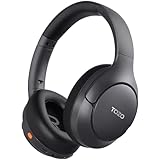
9. TOZO HT3 – Best Value ANC Headset with a 90-Hour Battery
TOZO HT3 Hybrid Noise Cancelling Wireless Headphones, 90H Over Ear Headset
45 dB hybrid ANC
90 hours playback
10-minute charge gives 9 hours
254 g
Bluetooth, AUX and USB-C wired
Pros
- 45 dB hybrid ANC handles fan hum and steady noise
- Outstanding 90-hour battery and 9-hour quick charge
- Sound quality well above the tier
- Metal-reinforced headband feels durable
- Three wired options plus dual device connection
Cons
- Earcups give little passive isolation with ANC off
- No carrying case included
- In-app EQ stops at 12.5kHz
- Does not auto power off when folded
The HT3 carries the highest average rating in this entire roundup at 4.6, and it is the pick if you want one pair that covers battery anxiety, connectivity options and reasonable noise cancelling without stepping up a tier.
Ninety hours of playback removes the charging question completely. A ten-minute charge returns nine hours, which covers a full long-haul sector on a bathroom stop. Owners describe the sound as well above the tier, with clear mids and strong bass, and mention a metal-reinforced headband that survives being shoved into a bag on a regular basis.
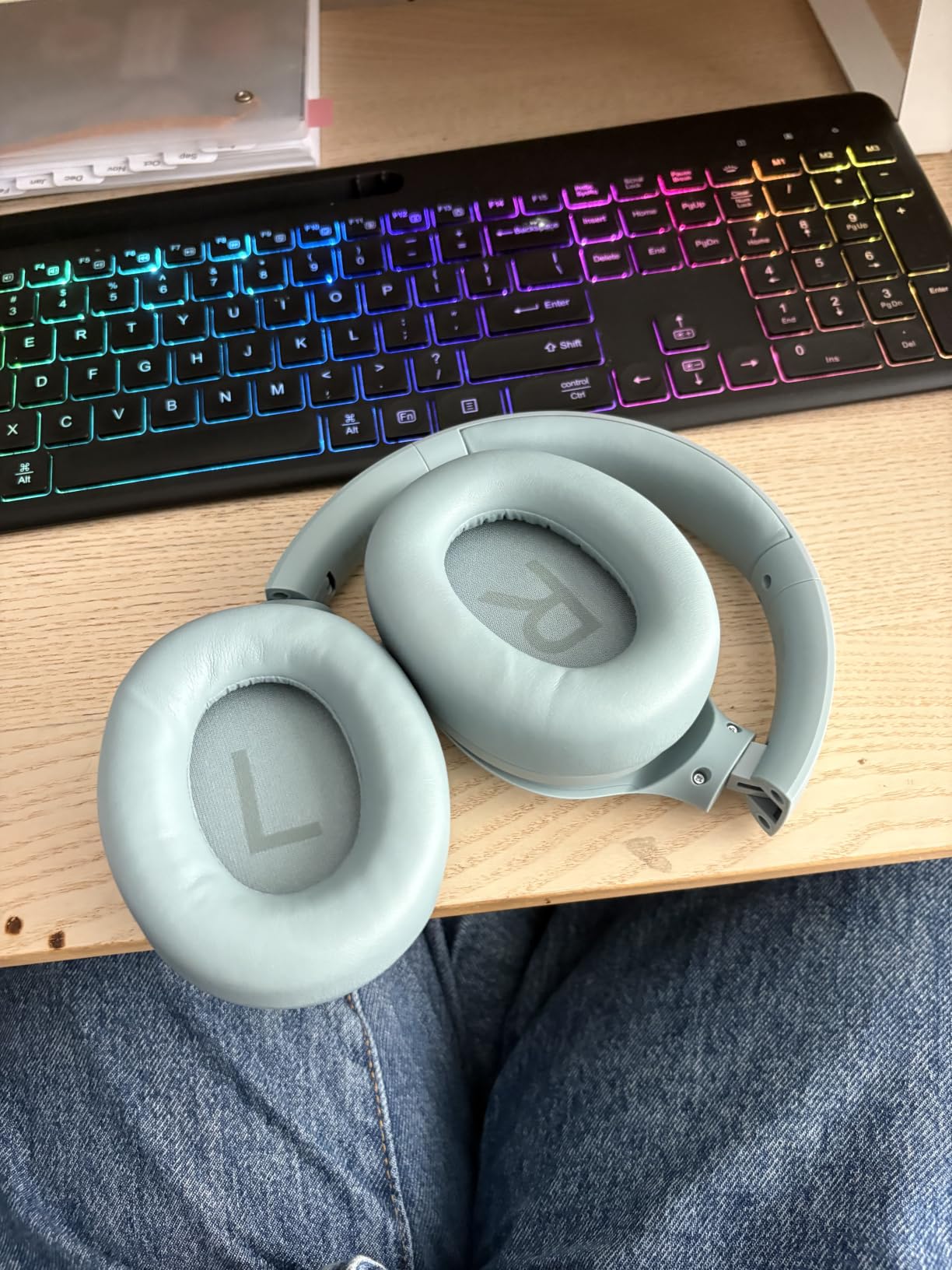
What 45 dB of hybrid ANC does and does not deliver
Four high-sensitivity microphones support up to 45 dB of hybrid cancellation as rated by the manufacturer. In practice it handles fan hum and other continuous noise effectively, which is exactly the profile of a cabin.
It does not silence voices, since nothing at this level does. The 254 g weight is among the heaviest designs in the roundup, and the over-ear cups provide little passive isolation when the cancellation is switched off, so keep ANC on in the cabin.
Three wired options and dual device connection
Bluetooth, 3.5mm AUX and USB-C wired playback are all supported, which makes this one of the most flexible pairs to use with in-flight entertainment. A 60 millisecond audio latency figure and a low-latency gaming mode are also present.
Two devices connect at once, so your phone and laptop stay paired. Thirty-two EQ modes and a channel balance control are in the app, along with a built-in voice assistant.
Who this is not for
No carrying case is included, so you will need to buy one, and at 254 g these do not fold away into a small tech pouch. The ear pads are removable, which is good for long-term ownership, but the replacement ecosystem is not as established as on the Sony and Bose pairs.
The in-app EQ tops out at 12.5kHz, leaving the highest frequencies unadjustable, and the headphones do not auto power off when folded, which wastes battery if you pack them while active. Bass and upper treble are also less refined than TOZO’s own earbuds.

10. 1Mii Y8+ – Longest Battery Life of Any Pick at 100 Hours
1Mii Y8+ Hybrid Active Noise Cancelling Headphones for Airplane & Travel
100 hours playback
10-minute charge gives 5 hours
8.68 oz
Hybrid ANC with 6 microphones
LDAC Hi-Res certified
Pros
- Hybrid ANC designed around airplane engine rumble
- 100-hour battery with 5 hours from a 10-minute charge
- Hi-Res audio with LDAC and 40 mm drivers
- Removable ear pads and a foldable travel design
- Dual device connection switches automatically
Cons
- Bass-heavy signature can mask vocals and treble
- Plastic build with faux leather feels budget-level
- App required for EQ and low-latency adjustments
- Not water resistant
The Y8+ is built explicitly for aircraft. Six microphones, four of them dedicated to cancellation, target low-frequency noise such as airplane engines, and the manufacturer claims up to 90 percent reduction on that band. The design brief is written on the box.
Then there is the hundred-hour battery, a figure nothing else in this list comes close to. It is the pair you buy if you genuinely never want to think about charging, whether that is a month of trains or a season of commuting with a two-hour flight every Friday.
At 8.68 ounces it is also one of the lighter designs, and it folds flat with removable ear pads, which is rare at this battery life.
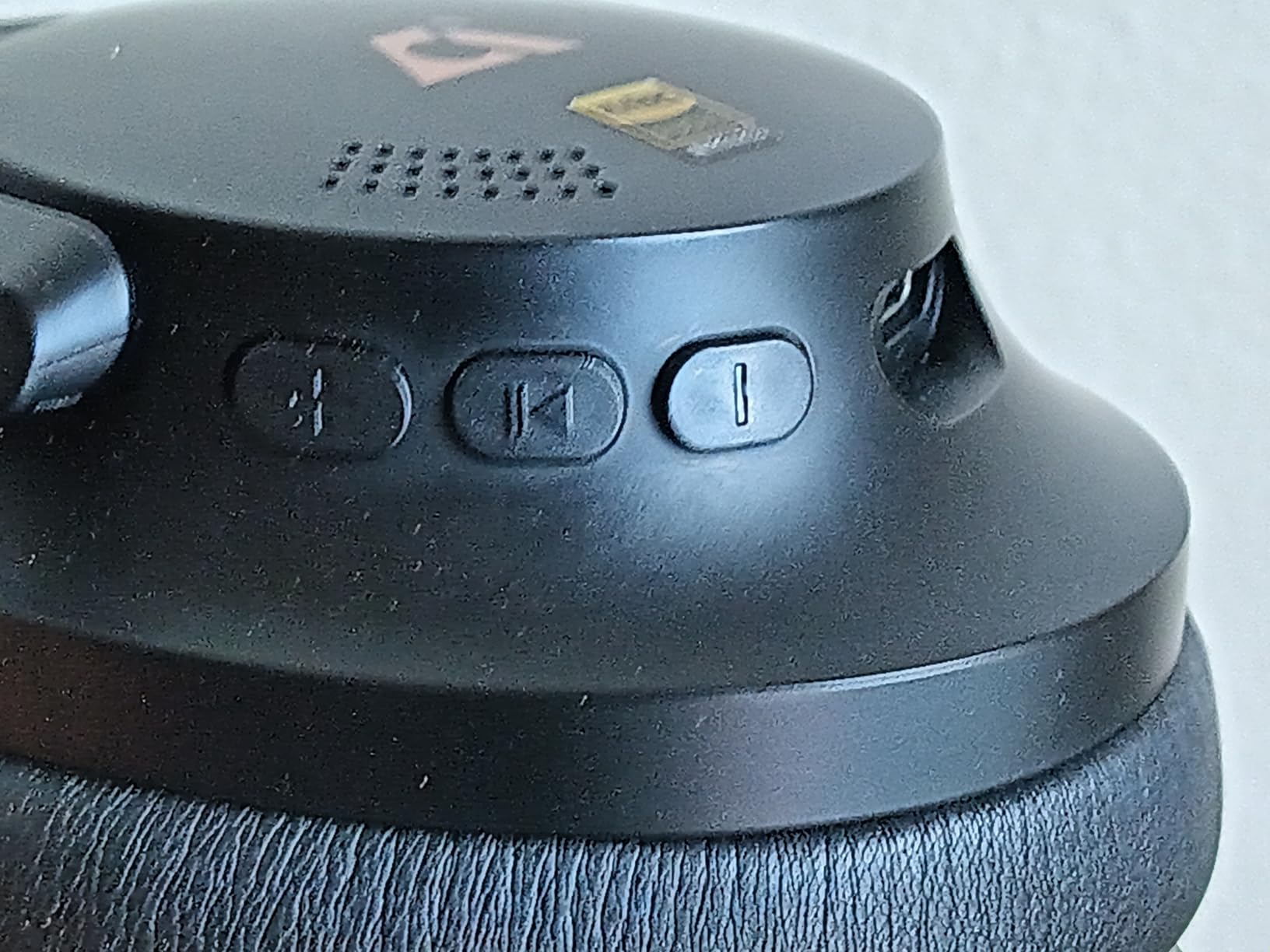
Folding design and removable pads for frequent use
Removable earpads matter more than buyers expect. Ear pads are the part of a headphone that dies first, and on a pair you intend to keep for years, being able to replace them keeps the seal, and therefore the cancellation, working.
The foldable design means the case fits a personal item without eating the whole allowance. That makes this a strong companion for travellers who already carry a laptop and a camera.
Battery performance and fast charging
The 100-hour figure covers playback, with a three-hour full charge and five hours returned from a ten-minute top-up. Even if you use ANC constantly, a monthly charge is realistic.
Bluetooth 6.0 with dual connection switches automatically between a laptop and a phone, which removes the manual reconnection step that trips people up at boarding.
Sound signature and the app dependency
The signature is bass-heavy, and owners say it can mask vocals and treble detail. For films that is mostly a benefit, because the rumble competes with dialogue. For acoustic music or podcasts, use the 22 EQ presets in the YeeMall app and pull the low end back.
The app also holds the low-latency game mode at 0.069 seconds and an AI translation feature covering 103 languages, which is an odd but genuinely useful travel extra.
Who this is not for
The plastic build with faux leather and memory foam feels budget-level, and the app is required for EQ and low-latency adjustments, so a second phone is a genuine inconvenience. It is also not water resistant, and with 1360 ratings the review base is one of the thinner ones here, so long-term durability reports are limited.
11. Sony WH-CH720N – Best for Lightweight All-Session Comfort
Sony WH-CH720N Noise Canceling Wireless Bluetooth Headphones – Built-in Microphone – up to 35 Hours Battery Life and Quick Charge – Blue
35 hours with ANC on
0.41 kg
10-minute quick charge
Multipoint Bluetooth
Integrated Processor V1
Pros
- Light at 0.41 kg with soft earcups for long sessions
- 35-hour battery with ANC on
- ANC removes engine noise once airborne
- Sound stays balanced at high volume
- Multipoint plus EQ controls in the Sony app
Cons
- Does not fold flat and no case is included
- Materials feel more budget-plastic than premium rivals
- ANC handles voices better than deep engine rumbles
- Connect app can trigger random disconnections
The CH720N is the Sony for people who find over-ear headphones tiring. At 0.41 kg it is one of the lighter designs in this roundup, and the soft earcups and integrated headband are built for wearing without removing them for hours.
Owners document long-haul use directly, including one who wore them for twelve hours and reported losing only ten percent of the charge. That is a real-world data point rather than a marketing claim, and it aligns with the 35-hour ANC-on figure.
Thirty-five hours with noise cancelling active is among the longest ANC-on numbers here, and the 10-minute quick charge is a useful gate-top-up.

What the Integrated Processor V1 and DSEE actually do
The Processor V1 handles the tuning and supports 360 Reality Audio with ear shape analysis in the Sony app, while DSEE upsamples lower-quality sources. For a seatback movie, which is a compressed analog source, DSEE does something modestly useful rather than nothing.
Sound stays clear and well-balanced even at high volume, according to owners, which matters when a film is mixed quietly and you need to push the ANC to hear it over the cabin.
How the noise cancelling behaves in a real cabin
Reviewers report that the ANC removes airplane engine noise effectively once airborne, while voices and high-pitched sounds are handled less completely. A dedicated voice-focused mode in the app helps on a noisy flight.
One practical note: adaptive noise cancelling mode can drain the paired phone’s battery faster, which matters if you are also using your phone for a boarding pass and a battery bank is already committed to the headphones.
Packing: the one clear weakness
These do not fold flat and no carrying case is included in the box. That is the most consistent complaint in the reviews, and it is a real problem for carry-on-only travellers who have already spent their personal-item space.
Materials also feel more budget-plastic than premium rivals, and the padding is less plush. You are trading build feel for weight, and for a 12-hour sector that is often the right trade.
Who this is not for
Skip it if you take calls often: the Precise Voice Pickup technology includes a wind noise reduction structure, but the Sony Headphones Connect app is known to cause random disconnections, which is maddening on a working flight. And if you want the case to disappear into a laptop bag, look elsewhere.

12. Belkin Isolate – A Foldable 60-Hour Backup with Modest ANC
Belkin Isolate Over-Ear ANC Headphones, CloudCushion, 60H
60 hours battery
25 dB hybrid ANC
Foldable design
CloudCushion PU leather
Bluetooth multipoint
Pros
- Very long 60-hour battery per charge
- Hybrid ANC reduces external noise by up to 25 dB
- Multipoint keeps two devices connected
- CloudCushion earcups comfortable for extended wear
- Foldable design with a 2 year warranty
Cons
- Sound quality is plain for the tier
- 25 dB ANC is modest against cabin noise
- Touch controls trigger unintentionally
- Only two devices connect at once
The Isolate is the pair to buy when packing volume rules out everything else in this list. It folds flat, it has a 60-hour battery, and it carries a two-year warranty, which is the longest coverage here.
The Isolate effect plays calming ocean wave sounds, which sounds gimmicky until you realise it is a noise-floor filler. On a long flight, masking the residual cabin hum with a consistent sound is more restful than listening to a constant loud environment.
CloudCushion PU leather cups are comfortable for extended wear, and the foldable design means the case slips into a personal item without a fight.

Where 25 dB of noise reduction sits
The hybrid ANC uses feedforward and feedback microphones for up to 25 dB of reduction. That is an entry-level figure and owners say so: it is modest against real cabin noise, where engine rumble runs far above that range.
Hear Thru mode lets outside sound back in, which is the mode you want during taxi and boarding rather than mid-flight. Only two devices can be connected at once, and the touch controls are easy to trigger unintentionally.
Battery and the two-year warranty
Sixty hours per charge is among the larger figures in this roundup, and the two-year warranty is the strongest coverage on the list. For a secondary pair that lives in a checked bag or a shared office, that combination is the main argument.
Belkin Signature Sound is the tuning, and it is the weakest point. Owners describe the sound quality as plain next to competitors at a similar tier.
Who this is not for
This is the smallest review base in the roundup at 291 ratings, with a 4.1 average and a 56 percent five-star share, so there is less long-term reliability data.
The plastic build also feels light in the hand, which is not always a comfort win, and it is not water resistant. If your primary requirement is silencing a cabin, 25 dB will not deliver it. Treat the Isolate as a compact secondary pair rather than a noise cancelling specialist.

How We Tested These Headphones for Travel
We compared twelve over-ear pairs against the same six criteria: noise cancelling against steady low-frequency noise, battery life with cancellation switched on, weight and case volume, wired connectivity options, comfort across a multi-hour session, and how the seal behaves with glasses.
Battery figures come from the manufacturer specifications, and where a brand publishes both an ANC-on and an ANC-off number we quote the ANC-on figure because that is the one that applies in a cabin. Weights are taken from the published specifications, which is why a few appear in ounces rather than grams.
Comfort and seal observations are drawn from long-term owner reports covering months of use rather than first impressions, because comfort on day one tells you very little about hour six of a 12-hour sector. If a headphone was uncomfortable in a review, we weighted that heavily, and every pick carries a note on who it is not for.
We did not measure sound quality in a laboratory, and we make no claim to have done so. Where a pair sounds better or worse, that is either a documented owner consensus or a stated manufacturer tuning profile such as Belkin Signature Sound or the carbon fibre dome driver in the Sony XM6.
What to Look for When Buying Travel Headphones
Read the ANC-on battery number, not the box number
The battery figure printed on the box is almost always measured with noise cancellation switched off, which is the one condition you will never use in the air. This is the single most useful correction in this category, and it explains why owners frequently report shorter runtimes than advertised.
Look at the difference in the examples here. The Soundcore Space One states 40 hours with ANC on and 55 with it off. The Bose QuietComfort Ultra states 30 hours and 23 with its Immersive mode active.
Where a brand publishes only a single number, assume it is the ANC-off figure until proven otherwise. For a single long-haul sector you need roughly 15 hours of ANC-on playback, so anything above 20 hours covers the flight twice over, and below 20 you should pack a power bank.
Over-ear or earbuds: the pack-volume trade-off
The article’s picks lean toward over-ear because they suit long-haul sectors, but the trade runs both ways. Over-ear wins on passive isolation and on the ability to sleep, since a cup that covers the whole ear reduces cabin noise before any electronics get involved and spreads headband weight instead of pressing a bud into a canal.
Earbuds win on everything else. A charging case is a fraction of the volume, they never tangle your hair, they are far better in a temperature-controlled gym, and the loss anxiety differs. Dropping a cheap earbud down a seat gap stings; losing a flagship pair hurts for months. Experienced travellers generally advise buying for the bag you actually carry and the flights you actually take, rather than for a spec-sheet ranking.
Weight in grams and whether the case fits a personal item
The weight range in this roundup runs from 6.08 ounces to 0.48 kg, and the heavier designs typically do not fold. If your personal item is already full, a non-folding flagship can be the thing that forces a checked bag.
That range is only meaningful next to case volume. Check whether the case holds the cables and adapter inside, because a case that loses its contents in an overhead bin is worse than a slightly larger case that keeps everything in one piece.
Ear pressure and cabin pressure: what ANC cannot fix
No noise cancelling headphone helps with ear pressure on a plane, and this is the clearest expectation gap in the category. Active cancellation reduces the sound arriving at your ear. Cabin pressure equalisation is a completely different mechanism involving the Eustachian tubes in your middle ear, and the way to open them is swallowing, yawning, chewing, or a slow deliberate pressure equalisation manoeuvre.
ANC will not touch that, because it is not a sound problem. Filtered earplugs help, because they slow the pressure change reaching the eardrum and reduce the pain of equalising, and if you are the kind of traveller who suffers on descent they solve a problem no headphone brand can. What ANC does solve is the fatigue that comes from hours of sustained loud cabin noise, which is a separate and real benefit.
Glasses fit, clamping force and long-session comfort
Glasses break the seal of an ear cup. A poor seal degrades both passive isolation and the consistency of the active cancellation, and the temple arm of the frame is exactly where the cushion is pressing. There are four fixes, in order of effectiveness.
- Choose earcups with more vertical room than your frame needs, so the temple arm does not push the cushion out of position.
- Rotate each earcup slightly after putting your glasses on, then reseat the headband.
- Move to a design with a wider, asymmetrically padded headband, which spreads clamping force away from the jaw. The Sony XM6 does this well.
- Lower the volume. Headband clamp and ear pressure scale with volume far more than most people expect.
If you wear glasses and have a long sector coming, try the headphones on at home for an hour before buying. The seal problem shows up in the first ten minutes.
Seatback screens, 3.5mm cables and Bluetooth transmitters
Most aircraft still have the two-prong 2.5mm jack, which no headphone cable plugs into directly. A basic single-prong airplane adapter bridges a standard 3.5mm headphone plug to it, and many pairs in this roundup include a 3.5mm cable in the box.
A Bluetooth transmitter dongle is the more flexible solution for travellers who do not want a cable. It plugs into the two-prong jack and broadcasts to your headphones, working with any pair including the ones that have no analog input at all. Bring a small power bank for it.
Bluetooth seatback screens are spreading on newer aircraft, but coverage is not universal and varies by carrier and cabin. Even where they exist, the connection is often a slow, fiddly pairing rather than a tap, and the digital USB-C option offered by the Beats Studio Pro is limited to specific aircraft. If you travel with children, a transmitter that supports broadcast to two receivers is more useful than sharing one pair of headphones.
Noise modes explained: standard, ANC, transparency and adaptive
Most wireless headphones give you four listening modes, and knowing the difference saves a lot of confusion at boarding.
- Standard: no processing, no amplification of outside sound. Quietest battery life, poor noise handling.
- ANC: active noise cancelling, tuned to the steady low-frequency noise of engines and air handling. The mode you use in cruise.
- Transparency or ambient: outside sound is deliberately let through so you can hear announcements and crew. Use it during boarding and taxi, and be careful about wearing it during the whole descent, since you will not hear the equalisation cues you need.
- Adaptive: the headphones adjust the level automatically as the environment changes. Convenient, and it usually costs battery.
The expectation gap that disappoints most buyers is voices. ANC is engineered against steady low-frequency sound, so it flattens engine roar brilliantly and does comparatively little about a talkative stranger or a crying baby. The physical seal of the cup or the ear tip does that work.
Multipoint and codecs: what actually matters mid-flight
Multipoint keeps two devices connected at once, so your phone and laptop can both stay paired and you can switch without re-pairing. It is genuinely useful when a flight attendant asks you to turn on airplane mode and you want to move to your laptop media without a five-minute reconnection. The caveat is that some implementations drop out, and the Soundcore Q30 is a documented example, so it is not always as seamless as the marketing suggests.
Codecs matter less than most spec sheets imply. LDAC gives the highest quality on compatible devices, but it only holds a stable connection over short distances, which on a plane means your seat rather than the cabin. AAC and SBC are the everyday defaults and both are fine for a movie.
For in-flight entertainment the useful ranking is: digital USB-C lossless first, analog 3.5mm through an adapter second, and Bluetooth last. Our TV watching headphone guide covers the codec side in more depth if you want the longer read.
Frequently Asked Questions
Do noise cancelling headphones help with ear pressure on planes?
No. Active noise cancelling reduces the sound reaching your ear, but cabin pressure equalisation is a different mechanism involving the Eustachian tubes in your middle ear. Swallowing, yawning and chewing open those tubes, and filtered earplugs slow the pressure change reaching the eardrum. Noise cancelling headphones help with the fatigue of sustained cabin noise, not with pressure.
Why is my headphone battery life lower than advertised?
Because the number on the box is almost always measured with noise cancellation switched off. Active cancellation, high-resolution codecs and Immersive or spatial audio all add processing load and cut runtime. Compare the ANC-on figure with the ANC-off figure and treat the lower one as your real capacity. On a single long-haul flight you need roughly 15 hours of ANC-on playback.
Are over-ear headphones or earbuds better on a plane?
Over-ear wins on passive isolation and on the ability to sleep, because a full cup covers the ear and distributes headband weight instead of pressing a bud into the canal for hours. Earbuds win on pack volume, temperature and the consequences of losing them. Over-ear is the better choice for long-haul and for sleep; earbuds are the better choice for carry-on-only travel and short hops.
How do I stop headphones hurting my ears when I wear glasses?
Glasses break the seal of the ear cup, which reduces both passive isolation and the consistency of the active cancellation. Choose earcups with extra vertical room so the temple arm does not push the cushion out of position, rotate each cup slightly after putting your glasses on, move to a wider headband design, and lower the volume since clamping pressure scales with it.
Can I use Bluetooth headphones with in-flight entertainment?
Most aircraft still use the two-prong 2.5mm jack, which needs a single-prong airplane adapter for a standard 3.5mm cable. A Bluetooth transmitter dongle is the cable-free option and works with any pair. Bluetooth seatback screens are spreading on newer aircraft but coverage varies by carrier and the pairing is often slow, so bring a wired option as backup.
How much headphone battery do I need for a long-haul flight?
About 15 hours of playback with noise cancelling switched on covers a long-haul sector with margin, and a short top-up covers a delay or a missed connection. Anything at or above 20 hours ANC-on covers an out-and-back itinerary without charging. Below 20 hours, pack a power bank. A ten-minute quick charge returning three to nine hours is the feature to look for when you want flexibility.
The Best Wireless Headphones for Travel, by Traveller Type
If you want one pair and no compromises, the Soundcore Q30 Hybrid is the pick. Fifty hours with noise cancelling on, a 9.6-ounce build, a carrying case and an AUX cable that works with a flat battery. Its one weakness is call quality, and for most travellers that is a fair trade.
If you are on a red-eye and comfort is the priority, take the Bose QuietComfort. The cushions and padded band survive a 12-hour overnight sector, multipoint keeps your laptop and phone connected, and the wired cable covers you if the battery dies. The 24-hour figure is the shortest here, so top up the night before.
If the cabin going quiet is the whole point, the Sony WH-1000XM6 has the best noise cancelling available and returns to a foldable design with a compact magnetic case. If the price is the obstacle, the previous-generation Sony WH-1000XM5 delivers nearly the same cancellation for less, at the cost of a bulkier case.
If you never want to think about charging, the 1Mii Y8+ runs 100 hours and the TOZO HT3 runs 90 with a 10-minute charge returning nine. If you are travelling with an Apple device and your airline offers USB-C audio, the Beats Studio Pro plays lossless straight from the screen, but it is among the bulkiest designs here.
Whatever you choose, read the ANC-on battery number, check that the case fits your personal item, and pack a single-prong airplane adapter. Those three checks decide more than any other feature on the spec sheet, and they are the difference between a good flight and a great one in 2026.
Leave a Reply