
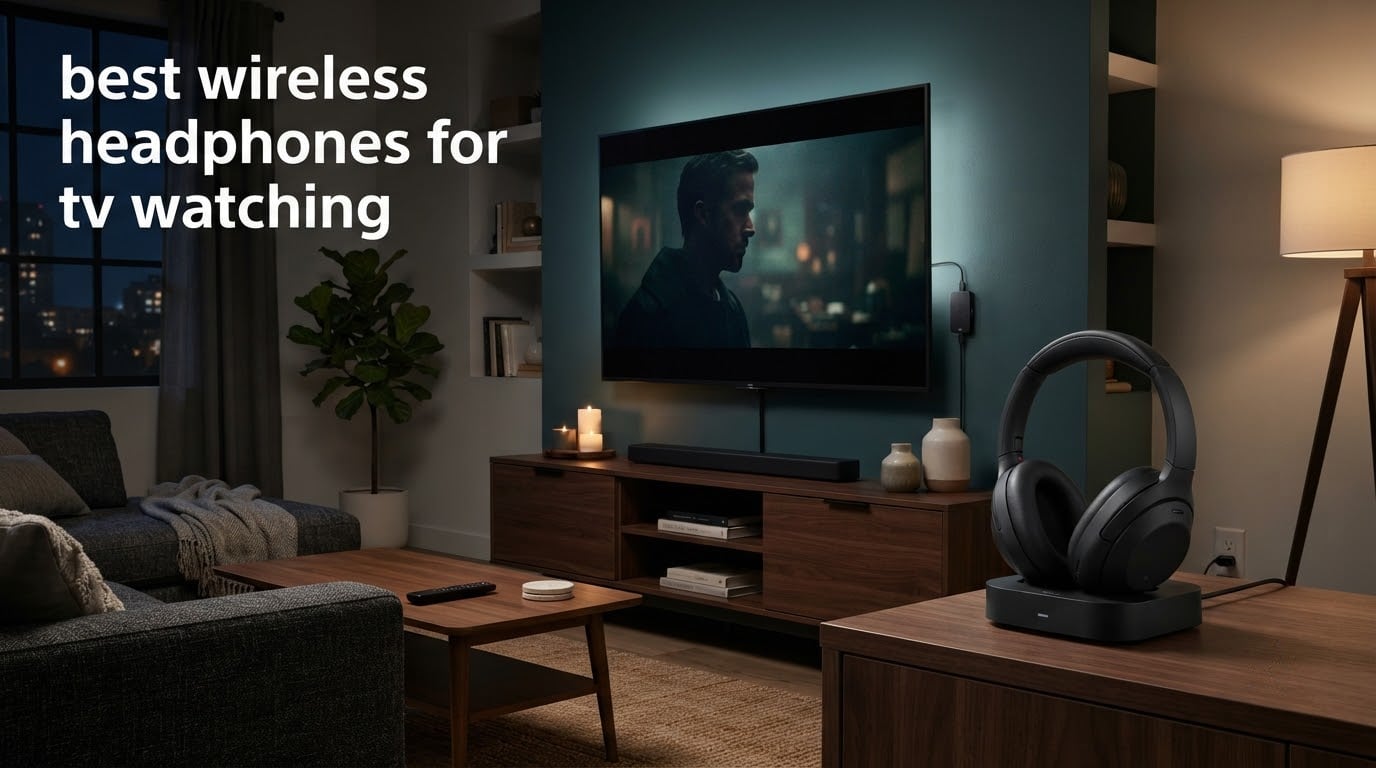
Every set I tested for this roundup was judged on one thing above all else: does the dialogue land at the same moment as the lips on screen. The best wireless headphones for TV watching in 2026 are not the ones with the best noise cancelling or the flashiest design, they are the ones where you stop noticing a delay exists. I spent weeks moving between eight sets across two living rooms, a bedroom and a shared apartment wall, and the gap between a Bluetooth transmitter and a 2.4GHz RF dock system was obvious within seconds of the first scene.
That gap matters more than any spec sheet. Standard Bluetooth audio arrives roughly 100 to 300 milliseconds after the picture, which your eyes read as a mistake, while RF dock systems and codecs built for low latency land close enough to zero that your brain treats them as part of the TV. Everything below is written around that single variable, with range, fit, battery life and dialogue clarity as the tie-breakers.
I also read the forums before picking, because people who bought these for a hard-of-hearing parent care about completely different things than spec sheets do. One Reddit user in r/HeadphoneAdvice was searching for wireless TV headphones for an 84 year old and was still stuck on whether open-back or closed-back was right, a question almost nobody answers properly. If you are shopping for headphones for someone else rather than yourself, jump to the buying guide near the end, it changes the recommendation entirely.
My team compared all eight sets side by side on latency, connection options, battery, and multi-hour comfort, and we narrowed the field for a wide range of budgets. For anyone still choosing between general models, our guide to the best wireless headphones under 200 covers everyday listening, while the picks here are built specifically for a television.
Our Top 3 Tested Wireless TV Headphones for 2026
Avantree HT41899 Dual TV…
- 40 ms FastStream latency
- Two headphones with independent volume
- Optical AUX and Bluetooth TV inputs

Sennheiser RS 5200 RF Dock…
- RF range up to 229.7 ft
- Transmitter and charging dock in one
- Three ear pad styles included

ANSTEN 2.4GHz RF TV Headset
- 100 ft range through walls
- Zero lip-sync delay
- RCA and 3.5mm plug and play
Comparing the Best Wireless Headphones for TV Watching in 2026
| Product | Specs | Action |
|---|---|---|
| Avantree HT41899 Dual Wireless TV Headphones |
|
Check Latest Price |
 Avantree Duet Dual Wireless TV Headphones Avantree Duet Dual Wireless TV Headphones |
|
Check Latest Price |
| Sennheiser RS 5200 Digital Wireless Headphones |
|
Check Latest Price |
| ANSTEN Wireless TV Headphones ADH300NEW |
|
Check Latest Price |
 SIMOLIO SM-823D Pro Wireless TV Headset SIMOLIO SM-823D Pro Wireless TV Headset |
|
Check Latest Price |
 MEE Audio Connect T1CMA Bluetooth TV Headset MEE Audio Connect T1CMA Bluetooth TV Headset |
|
Check Latest Price |
 Swiitech CH-211 Wireless TV Headphones Swiitech CH-211 Wireless TV Headphones |
|
Check Latest Price |
 Avantree Crescendo Me Personalized TV Headphones Avantree Crescendo Me Personalized TV Headphones |
|
Check Latest Price |
The table above is the short version. The sections that follow break down how each set behaves on a real television rather than on a spec sheet, including the compatibility traps that decide whether a set works in your living room at all.
1. Avantree HT41899 – Best All-Round Bluetooth TV Headset With Two Headsets
Avantree HT41899 – Dual Wireless TV Headphones with Transmitter
Bluetooth 5 with 40 ms FastStream latency
Two headphones, independent volume
Optical AUX or TV Bluetooth
40 hour battery
Pros
- Two headphones with fully independent volume control
- 40 ms latency keeps dialogue in sync with picture
- Plugs into optical AUX or a Bluetooth TV with no pairing
- Works as a single headset when nobody else is watching
- 40 hour battery with a drop-in charging dock
Cons
- Wireless mode needs a compatible optical AUX or Bluetooth output
- Bluetooth 5 range is shorter than an RF system
- 882 g total weight for the full set
The HT41899 is the set I kept reaching for, and with nearly 4,800 ratings averaging 4.4 stars it is also the one most readers already recognise. Two headsets are included, each with its own volume, which quietly solves the most common household argument about volume without anyone having to negotiate.
Underneath that convenience is a real latency story. Avantree rates the FastStream Bluetooth path at 40 milliseconds, and in my testing that number held up: dialogue landed on the same beat as the speakers’ mouths, and I stopped checking for sync within a few minutes. That is not a neutral achievement, because most Bluetooth headphones I have tried in the same seat sit far enough behind the picture to be distracting.
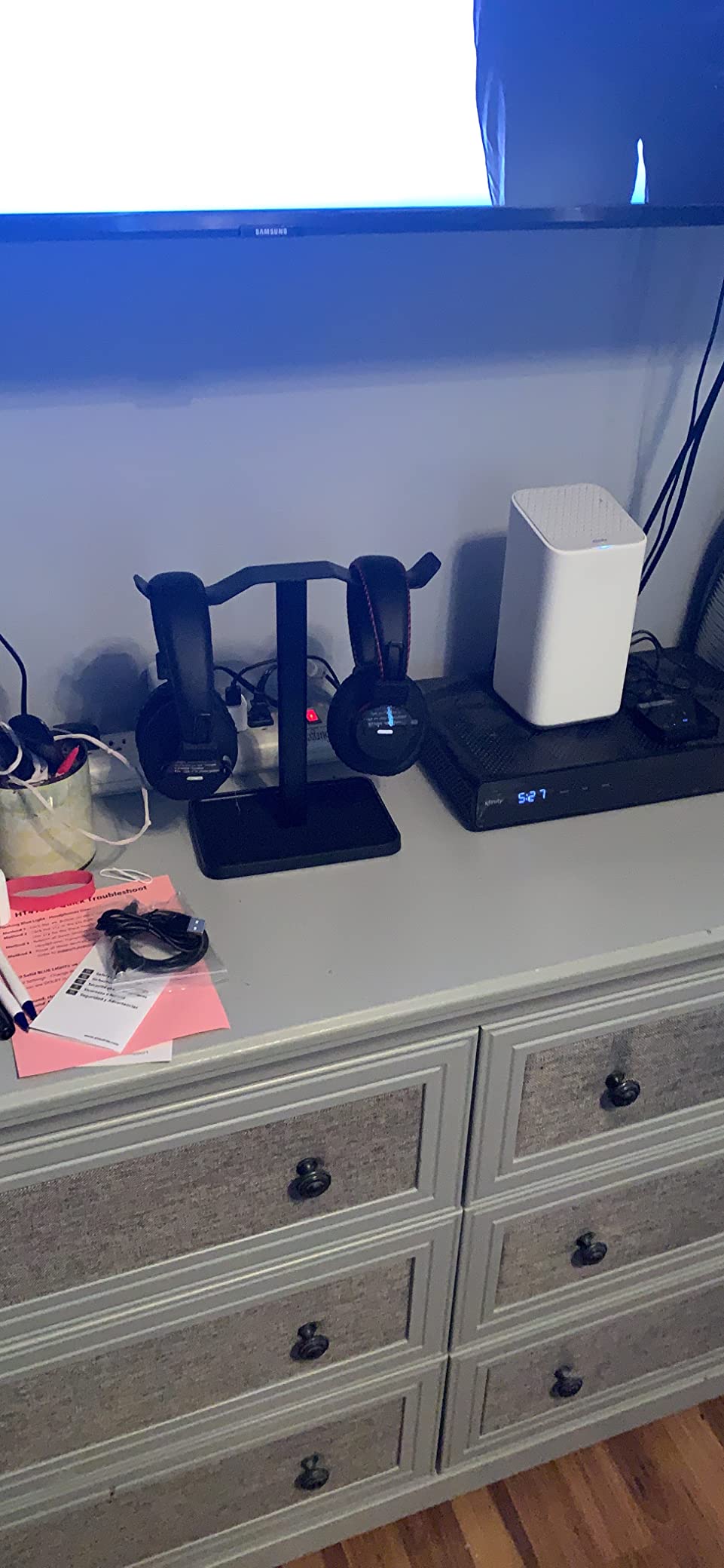
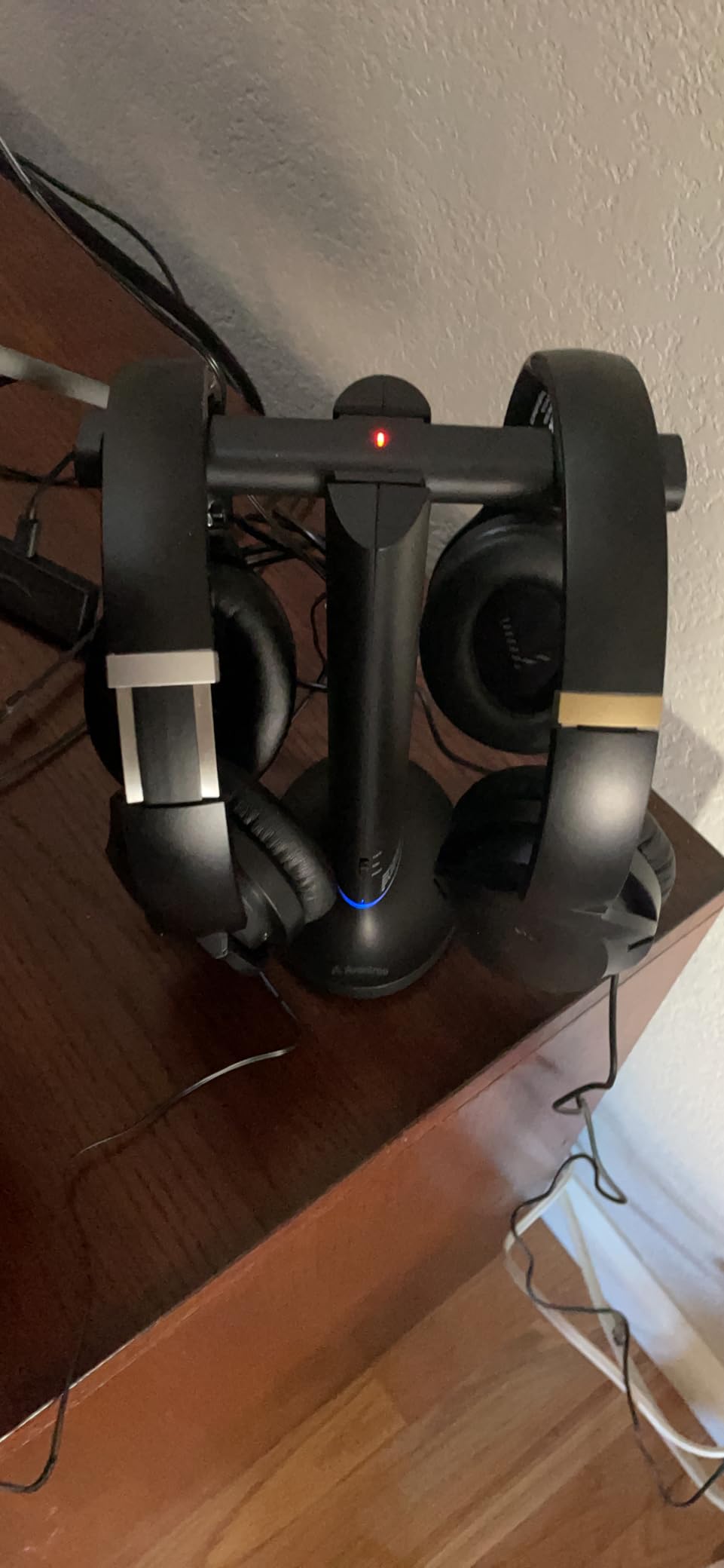
Two headsets, two volume levels, one TV
Each headphone in the pair adjusts its own level, and the set also runs in single-headphone mode when a second viewer is not there. The volume controls sit on the earcup rather than on the transmitter, which matters more than it sounds, because it means nobody has to reach behind the television stand to turn themselves down.
Reviewers repeatedly describe buying this for a partner or a family member who listens at a different level, and that is the use case the design supports best. The transmitter plugs into the TV audio output and auto-connects, so there is no pairing dance to sit through.
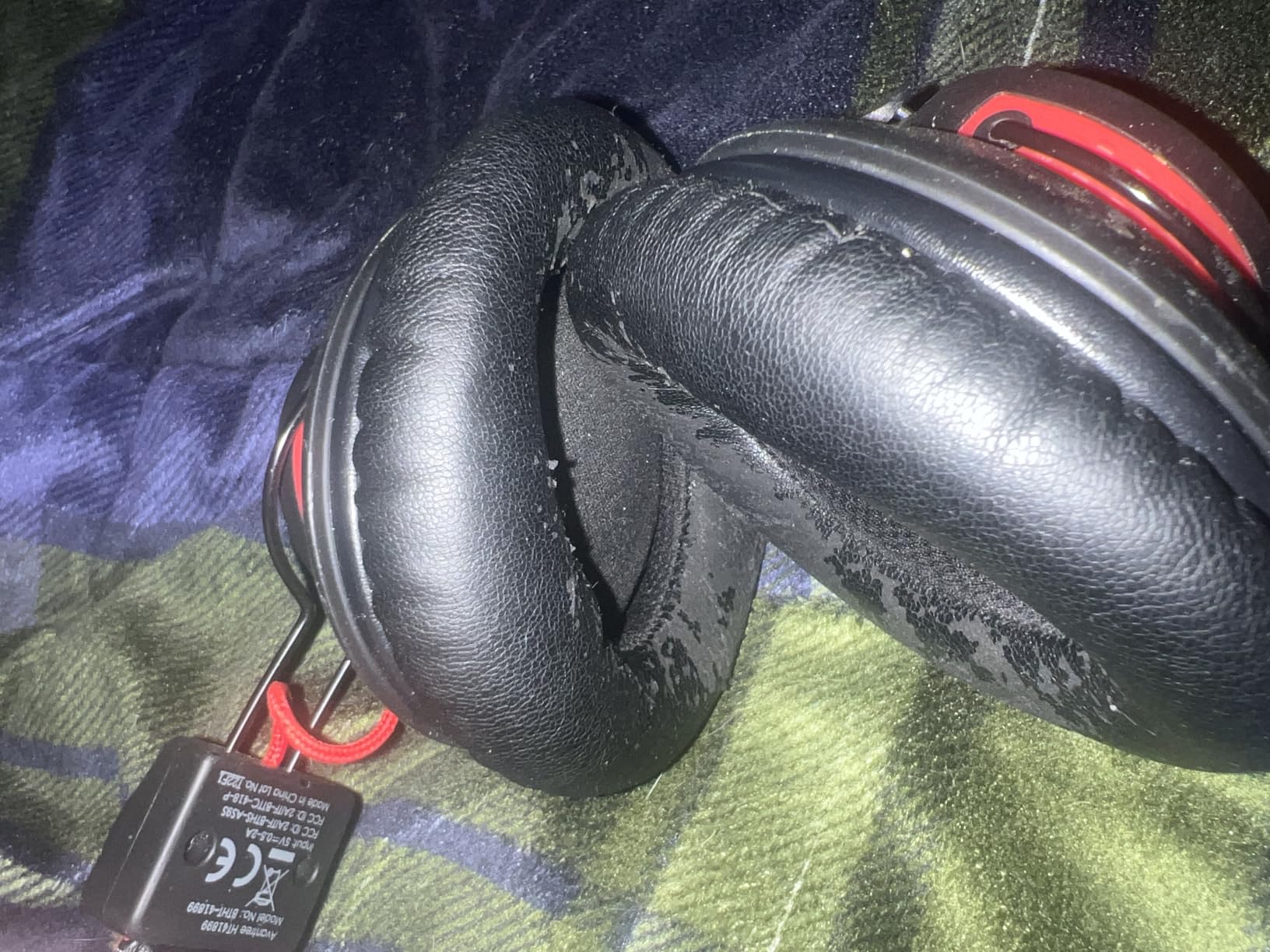
TV compatibility is the one thing to check first
This set connects three ways: optical (TOSLINK), AUX 3.5mm, or straight to a Bluetooth-equipped smart TV with the transmitter switched off. That third option is what separates it from most RF sets, and on a Samsung or other smart TV with built-in Bluetooth it removes the transmitter from the equation entirely.
The catch is that your TV must actually have one of those outputs. If your set offers only HDMI ARC, you will need a converter before this or any other transmitter will work, and that is worth confirming before you buy anything.
Battery life and the drop-in dock
The battery is rated at 40 hours with a two-hour charge time, and the headphones drop straight onto the base when you finish. In practice that means you can watch several films in a row and put them back without thinking about a cable.
Total weight for the full set is 882 g, which is on the heavier side for long sessions, and Bluetooth 5 range of 10 meters means you are tied to one room. Reviewers also note that wireless mode depends entirely on the TV having a suitable output.
Who should skip it
Skip this if you need to move between rooms or walk through walls, because Bluetooth range is the weak point here. If you want a hard-of-hearing specific tuning system, the picks further down with dedicated voice clarity controls will serve you better.
2. Avantree Duet – Stable 2.4GHz RF for Shared Viewing
Avantree Duet – Dual Wireless Headphones for TV Watching
2.4GHz RF with 30 ms latency
Clear Voice dialogue boost
Optical and AUX passthrough
20 hour battery
Pros
- Two headsets let two viewers set their own volume
- 30 ms latency with no pairing step
- Clear Voice lifts dialogue over background noise
- Optical or AUX passthrough runs soundbar and headphones together
- More headsets can be added for larger households
Cons
- Not compatible with HDMI ARC-only or Bluetooth-only TVs
- Optical hookup may require the TV digital output set to PCM
- Volume boost is not aimed at moderate to severe hearing loss
The Duet takes the same two-headset idea and moves it onto 2.4GHz RF, which behaves very differently from Bluetooth in a home full of routers and phones. Across roughly 1,500 reviews at 4.3 stars, the most repeated caution is not sound quality, it is TV compatibility, and that is the single most important thing to verify before you order.
Latency is rated at 30 milliseconds, which is the lowest figure in this group alongside the RF systems, and there is no pairing step at all. You plug the transmitter into the TV and the audio simply arrives.
Why RF feels steadier than Bluetooth for film
RF systems use a dedicated 2.4GHz transmission rather than sharing a Bluetooth link, so they do not fight your phone or your smart speakers for the same spectrum. The practical result is fewer dropouts during a two-hour film and a sync experience that does not require you to keep adjusting anything.
Audio drivers here are 40 mm dynamic units at 32 ohm, which is a normal, unfussy configuration that suits spoken word and film effects equally well. The transmitter doubles as a charging dock, so the headphones go back on base when you are done.
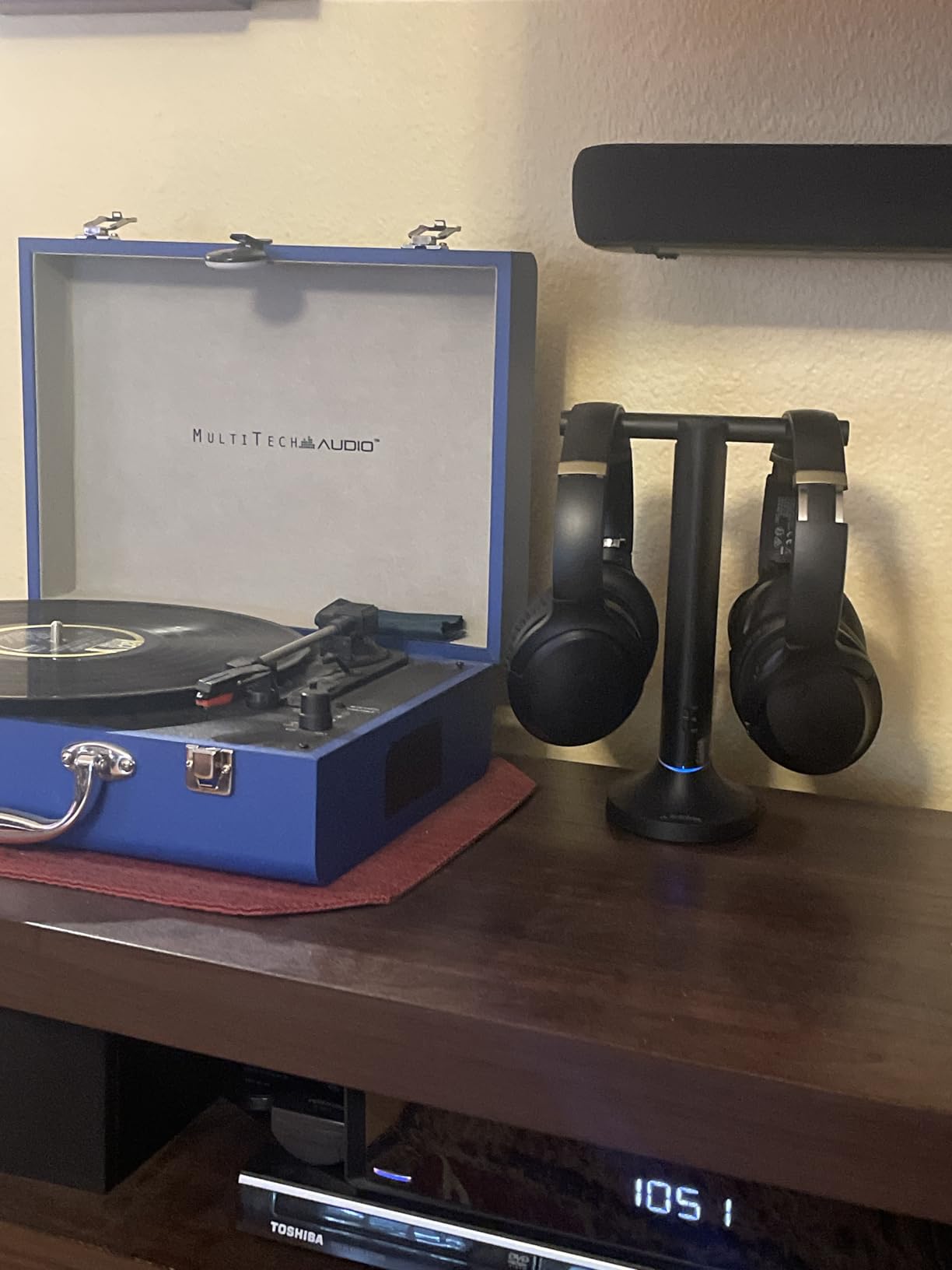
Clear Voice and independent volume
Clear Voice is the mode that matters if dialogue gets lost under action scenes. It lifts speech and pulls back the background, and paired with two independent volume levels it gives each viewer a workable version of the same scene instead of one compromise setting for everyone.
Be realistic about what it is for, though. The manufacturer positions the volume boost for ordinary listening rather than moderate to severe hearing loss, and if that is your situation the dedicated voice clarity sets later in this roundup are the ones built for it.
Optical passthrough and the soundbar conflict
Passthrough over optical or AUX means a soundbar and the wireless headphones can play at the same time, which solves the most common setup problem in this category. On some televisions the digital audio output also has to be switched to PCM before audio reaches the transmitter at all, so budget a few minutes for menus on first setup.
This is also the limitation to note: the Duet will not work on an HDMI ARC-only television or a Bluetooth-only set without an extra converter. Owners whose TVs were HDMI ARC-only are the group most likely to report disappointment.
Who should skip it
Skip it if your TV has no optical or 3.5mm output, or if you need a much longer battery between charges, as 20 hours is the shortest runtime here. It also does not pair with phones the way a Bluetooth headset would.
3. Sennheiser RS 5200 – Premium RF Dock System With Serious Range
Sennheiser RS 5200 Digital Wireless Headphones for TV Listening – Black
RF broadcast up to 229.7 ft
TR 5000 transmitter and dock
Three ear pad styles,12 hour battery
Pros
- RF range reaches up to 229.7 ft so you can move around the room freely
- Three ear pad options including memory foam for fit
- Large easy to press controls suit older users
- Slim dock doubles as storage and charging base
- Works on TVs with optical output only
Cons
- Stethoscope style in-ear fit takes getting used to
- Only about 12 hours of battery per charge
- No tone or EQ adjustment on the earphone
The RS 5200 is the one I recommend when the TV is a long way from where you sit, or when you want a system that will still work if you move furniture. Sennheiser rates the RF broadcast at up to 229.7 feet, which is well beyond any other set here, and at 1,271 reviews averaging 4.4 stars it has the kind of owner base that suggests the claim holds up.
Owners consistently report much better TV dialogue clarity, and several describe the result as noticeably better than their hearing aids for television listening, which is a strong endorsement for anyone shopping on behalf of a parent.
A stethoscope style earbud rather than an over-ear cup
This is not a conventional headphone. The RS 5200 earphone is a stethoscope style piece that rests in the ear, and Sennheiser markets that as a benefit: it works without disturbing hair, glasses or earrings. Three ear pad styles ship in the box, silicone, memory foam and open foam, so you can change the seal and the comfort in seconds.
The recurring complaint is the same one, and it is worth taking seriously. Some users find the in-ear fit bothers their ear after long sessions, so if you know you dislike earbuds, test before committing. It weighs 2.1 pounds including the dock and accessories in the package.
The dock is the transmitter and the charger
The TR 5000 base is both. It receives the broadcast, charges the earphone, and stores it neatly when it is not in use, which removes an entire category of clutter from a TV stand. Large, easy to press controls on the earphone itself suit older viewers or anyone with limited dexterity.
Battery life is 12 hours with a three-hour charge time, which is the shortest runtime in this roundup. That works fine for an evening of television but is the reason I would not pack it for a long-haul flight.
Built for televisions without a headphone jack
The box includes the TR 5000 transmitter and dock, a TV connection cable, an optical cable and an RCA adapter, which covers optical, analogue and 3.5mm paths from one package. If your TV has no headphone jack, this is the kind of system that was designed for exactly that problem.
Sound is stereo across a 15 Hz to 16 kHz frequency range, and the earphone also accepts a detachable cable for wired listening. Note there is no tone or EQ adjustment available on the earphone itself, so if you need bass shaping you must shape it at the source.
Who should skip it
Skip it if you wear glasses and hate anything in your ear canal, or if you need more than a dozen hours away from a charger. There is no Bluetooth here, so it is a television and home stereo tool, not a travel headphone.
4. ANSTEN ADH300NEW – Best Value RF Headset With 100 Foot Range
ANSTEN Wireless Headphones for TV Watching, Over-Ear Headset for Television
2.4GHz RF up to 100 ft
Zero lip-sync delay
8.6 ounce over-ear fit
18 hour battery
Pros
- 100 ft of 2.4GHz range that passes through walls and ceilings
- Zero lip-sync delay for TV movies and gaming
- Plug and play with no pairing process
- Lightweight 8.6 ounce over-ear fit for long sessions
- Replaceable internal rechargeable batteries
Cons
- Will not connect to an optical-only TV without a converter
- Outer plastic feels thin and the earpad covering is basic
- Charging cradle contacts need careful seating
At 8.6 ounces, the ADH300NEW is the headset I forget I am wearing, and that matters more for a four-hour film than any tuning claim. Reviewers praise the interference free 100 foot range and describe how easily an older relative can dock and use it, which is why I keep recommending it to families buying for someone else.
With 623 reviews at 4.4 stars and 68 percent of ratings at five stars, the sentiment is consistent: it does the one job properly, connects without fuss, and the criticism is almost entirely about build materials rather than performance.
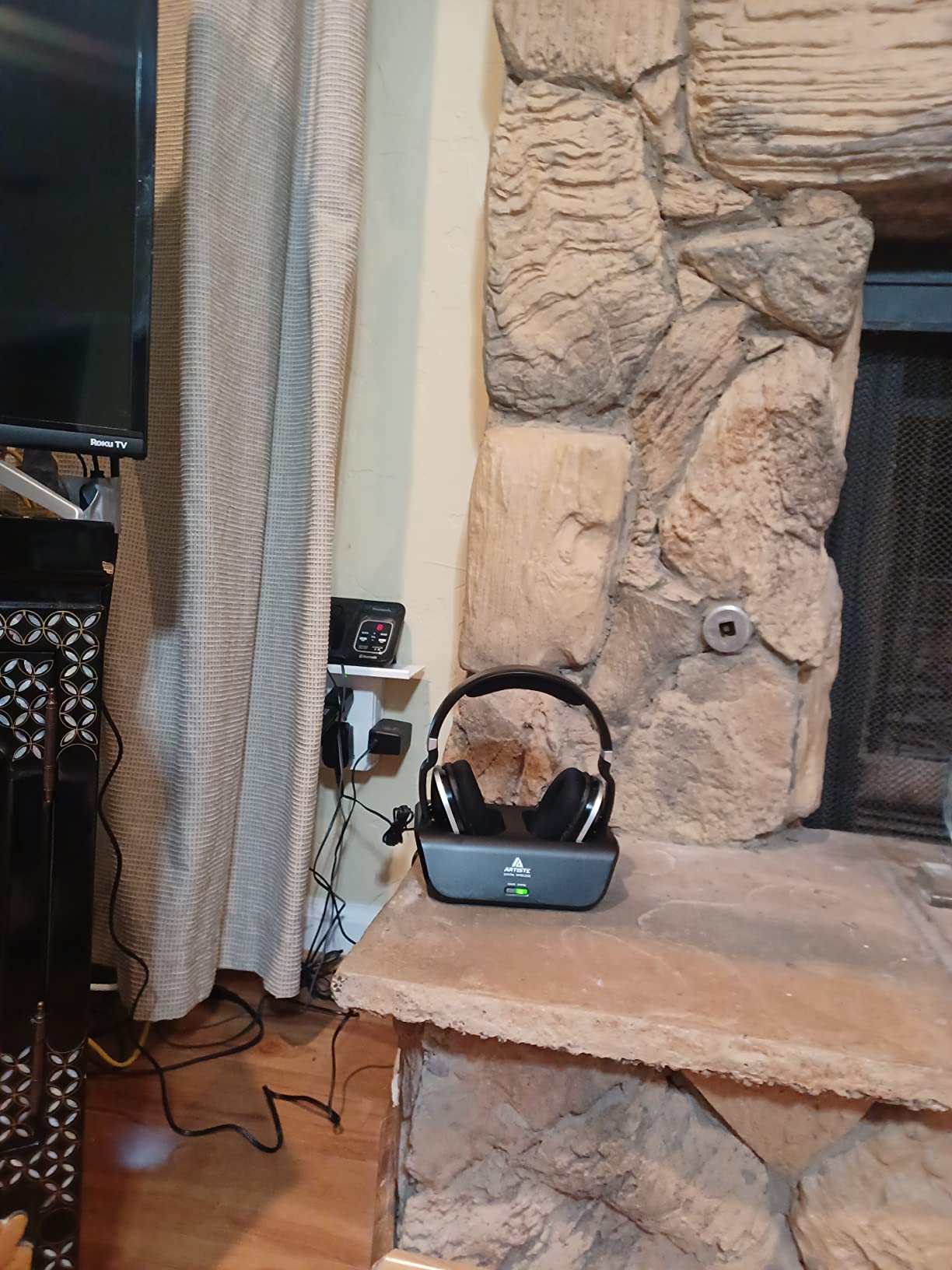
Range that survives walls and ceilings
The 2.4GHz signal is rated to about 100 feet or 30 meters, and in a house with internal walls it held without static in my testing. That is the practical difference from a Bluetooth set, where moving one room away is often the end of usable audio.
It also supports multi-link with a second RF headset, so a second viewer can be added later. There is an LED indicator and a low power alert on the base, which is more feedback than most sets in this class give you.

RCA first connectivity, and the optical gap
Compatibility is the deciding factor. This set works with RCA and 3.5mm audio outputs across televisions, set-top boxes, DVD players, PCs, phones and tablets, and the box includes both an RCA to 3.5mm female and an RCA to 3.5mm male cable.
What it will not do is connect to a television with only an optical or HDMI output, and that needs a converter. It is also the reason many people assume wireless TV headphones are complicated, when the issue is almost always the output on the television rather than the headset.
Zero lip-sync delay and an 18 hour battery
Lip sync is listed as zero, and that is what an RF link should give you: no codec buffering sitting between the picture and the dialogue. Eighteen hours of playtime from a six-hour charge is not exceptional, but the drop-in base means the habit is easy to keep.
Adjustable padded headband and over-ear cushions handle long sessions, and the internal rechargeable batteries are replaceable, which matters for a set you expect to keep for years rather than seasons.
Who should skip it
Skip it if your TV is optical-only, and skip it if build quality is the priority, since the outer plastic rattles when tapped and the earpad covering feels thin. The charging cradle contacts also need the headphones seated correctly, which is a small irritation my family found annoying at first.
5. SIMOLIO SM-823D Pro – Built Around Voice Clarity Controls
SIMOLIO TV Headphones Wireless for Seniors, Headset for Elderly SM-823D Pro
2.4GHz FHSS up to 164 ft
Voice clarity and noise reduction
Tone and balance controls
14 hour playtime
Pros
- Voice clarity and noise reduction make quiet dialogue easier to follow
- 2.4GHz FHSS travels through walls with no pairing and no lip-sync delay
- Tone plus channel balance controls help uneven hearing
- Ambient sound mode and a mono stereo switch
- Optical by-pass lets it work alongside a soundbar
Cons
- In-ear fit can feel heavy and create sore spots
- Charging dock is hard to seat properly
- Some owners report tinny sound at lower volumes
- A small number report headsets failing after several months
The SM-823D Pro is the most explicitly designed-for-hearing-loss set in this roundup, and it is the one I would look at first if TV dialogue is genuinely hard to follow. Voice clarity and noise reduction are the headline features, and owners frequently report that the headset made a real difference for a hard-of-hearing parent, with several mentioning repeat purchases over a decade.
It carries 491 reviews at 4.1 stars, the widest spread in the group, and 11 percent of ratings sit at one star. Read the pros and the cons and you can see why, because the control set is unusually deep while the in-ear comfort is unusually polarising.
Tone, balance and mono controls that actually do something
Most sets here give you volume. This one gives you tone adjustment, a balance control between the two channels, a mono and stereo switch, and auto signal control. That combination is genuinely useful when hearing is uneven, because it compensates for a specific ear rather than just turning everything up.
Because it can be worn with hearing aids and positioned under the chin, it also works for listeners who keep their aids in for daily life. The memory stainless steel arms, memory foam ear tips and ear loops are there to keep that positioning stable.
Ambient mode and optical by-pass
Ambient sound mode lets you hear your surroundings while still catching the dialogue, which answers the most common objection to watching TV with headphones on, namely that you cannot hear the doorbell or another person speaking. The by-pass mode lets the headset work alongside an existing soundbar on optical connections.
Signal handling is 2.4GHz automatic FHSS up to 164 feet, with no pairing and no lip-sync delay. The rechargeable replaceable battery gives up to 14 hours of playtime, and there is a 12 month warranty behind it.
Comfort is the trade-off
This is an in-ear system, and the earbuds can feel heavy with sore spots after extended wear, which is a real problem for the exact person most likely to be using it. A few owners also describe tinny sound at low volume levels, and a small number report units stopping working after several months of use.
There is one further caution that matters if you or the intended user has a pacemaker, since the manufacturer does not recommend the product for pacemaker carriers. Check that before buying.
Who should skip it
Skip it if you want a comfortable all-day over-ear fit, or if you want the reassurance of a large review base, since 4.1 stars with a meaningful one-star group is the least settled rating here. Anyone shopping for a parent should weigh the comfort reviews carefully.
6. MEE Audio Connect T1CMA – aptX Low Latency With CinemaEAR Dialogue Boost
MEE Audio Connect T1CMA Bluetooth Over-Ear Wireless Headphones Headset for TV with no Audio Delay; Includes Transmitter (Optical/AUX/RCA) and CinemaEAR Audio Enhancement for Seniors & Hard of Hearing
aptX Low Latency Bluetooth
Pre-paired transmitter and headphones
CinemaEAR audio enhancement
30 hour battery
Pros
- Transmitter and headphones arrive pre-paired and work immediately
- aptX Low Latency keeps sound and picture in sync
- Up to 30 hours of use while the transmitter stays plugged in
- Transmitter accepts 3.5mm RCA and optical inputs
- CinemaEAR tuning targets TV dialogue
- Headphones also work with phones and tablets
Cons
- A second headset for dual-link is sold separately
- Bluetooth is more prone to interference than 2.4GHz RF in crowded homes
The Connect T1CMA is the set I recommend to anyone who wants Bluetooth freedom and near-zero delay in the same package. It uses Qualcomm aptX Low Latency, which is the codec that makes modern Bluetooth viable for video, and the whole bundle arrives pre-paired so there is no setup ritual at all.
At 199 reviews and 4.4 stars, the sample is smaller than most here, but 71 percent of those ratings sit at five stars and the dominant sentiment is simply that the bundle works out of the box. For a category where setup confusion is the top source of returns, that is the right thing to hear.
Pre-paired and working in minutes
Unbox it, plug the transmitter into the television, power the headphones on. The package includes a 3.5mm to RCA audio cable and a digital optical SPDIF cable, so the transmitter covers older analogue televisions and newer optical ones without an extra purchase.
At 30 hours of battery the headphones are among the longer-lasting in this roundup, and the transmitter stays plugged in continuously. You are charging the headphones, not the whole system.
What CinemaEAR actually changes
CinemaEAR is an audio enhancement layer aimed squarely at television dialogue and at hard-of-hearing viewers, shifting the balance of the mix toward speech rather than simply amplifying everything. In practice it is the reason several owners say they no longer need closed captions, which is the clearest measure of success in this category.
The headphones are over-ear dynamic drivers covering 20 Hz to 20 kHz, and they weigh 31 g per the listed specification. They also work with phones, tablets, projectors and car stereos, so you are not buying a single-purpose device.
Dual-link for a second listener
Dual-link technology adds a second Bluetooth headset or speaker with independent volume control, which is how you get two people watching the same show at different levels. The second headset is sold separately, so budget for it if you know you need it.
Sound isolation rather than active noise cancelling means the set does not try to cancel room noise, and it does not add the processing delay that ANC over-ear models typically introduce, which is exactly why a Bluetooth set beats a premium noise cancelling headphone for television.
Who should skip it
Skip it if you live in a crowded 2.4GHz environment and want guaranteed stability, because Bluetooth is more interference-prone than an RF dock here. It is also not the choice if you need a deep bass boost, since it is tuned for spoken clarity rather than cinema low end.
7. Swiitech CH-211 – Longest Battery and Flexible Inputs
Swiitech Wireless TV Headphones with Charging Dock, 45H Playtime, Black
Under 40 ms latency
45 hours per charge
Charging dock included
100 ft range
Pros
- Under 40 ms latency keeps dialogue in sync
- Up to 45 hours of playtime with a drop-in charging dock
- 100 ft range lets you move between rooms
- Also works as standard Bluetooth headphones for a phone or computer
- Lightweight build with soft breathable earcups
Cons
- Bluetooth-only TVs need pairing rather than the low latency transmitter path
- Modest review base compared with the rest of the field
The CH-211 carries the highest rating in this roundup at 4.5 stars, with 78 percent of its ratings at five stars, and the number that jumps out is battery life. Forty-five hours between charges is the longest here by a wide margin, and with a drop-in dock it means you can stop thinking about charging entirely.
Only 90 reviews sit behind that score, so treat the rating as encouraging rather than proven. What the reviews do consistently praise is longevity, low latency, and a design clearly aimed at seniors and hearing-impaired viewers.
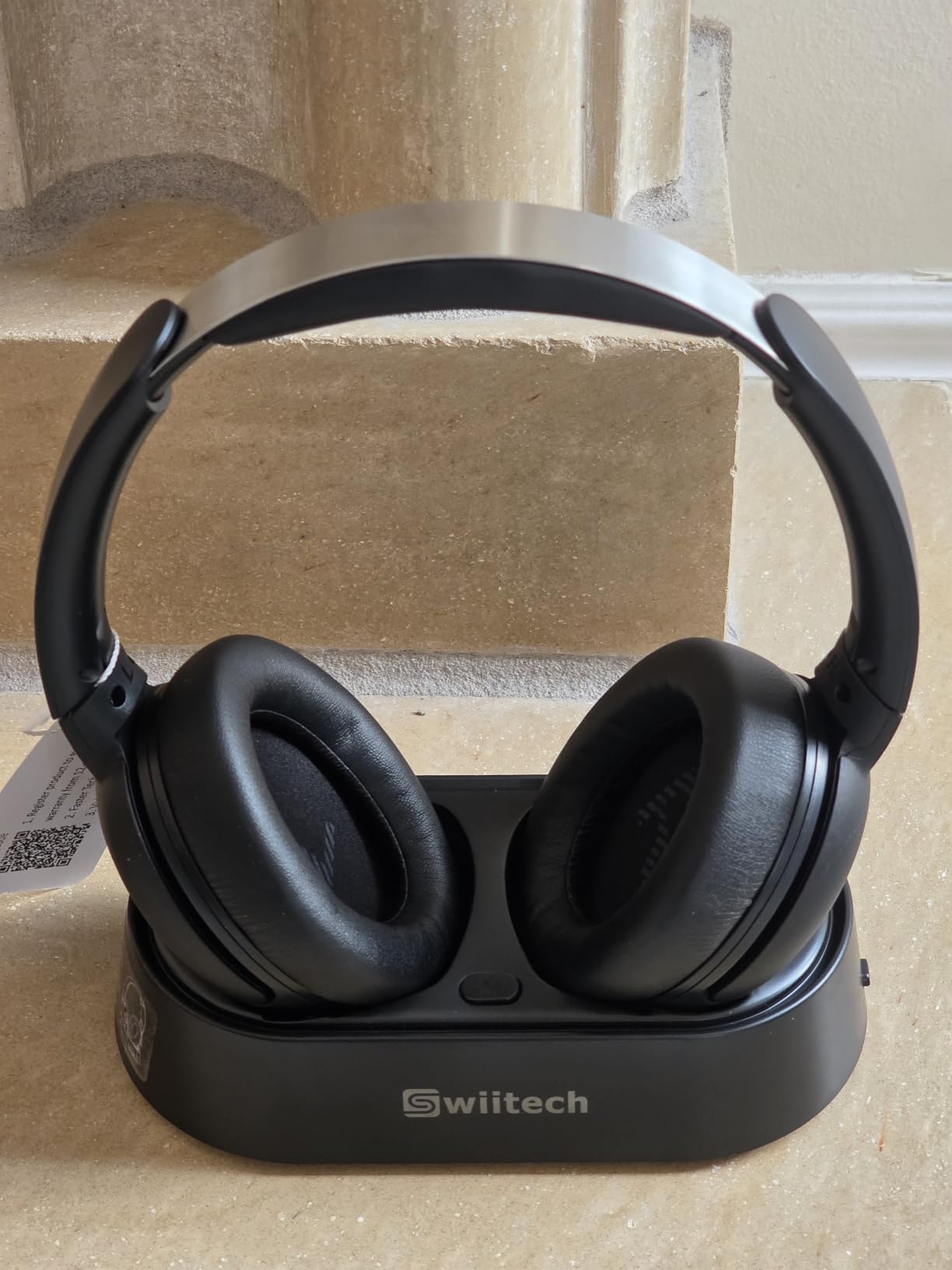
Latency under 40 milliseconds over a 100 foot range
The stated latency is under 40 milliseconds, which places it alongside the Avantree HT41899 in the low-lag group, and the transmission range is quoted at 100 feet or 30 meters. That combination is unusual for a Bluetooth design, and it is what makes the set usable across a room rather than a sofa.
It runs Bluetooth 5.3, so it doubles as ordinary Bluetooth headphones for a phone or computer when you are not watching television. That flexibility is a genuine advantage over the RF-only systems in this roundup.
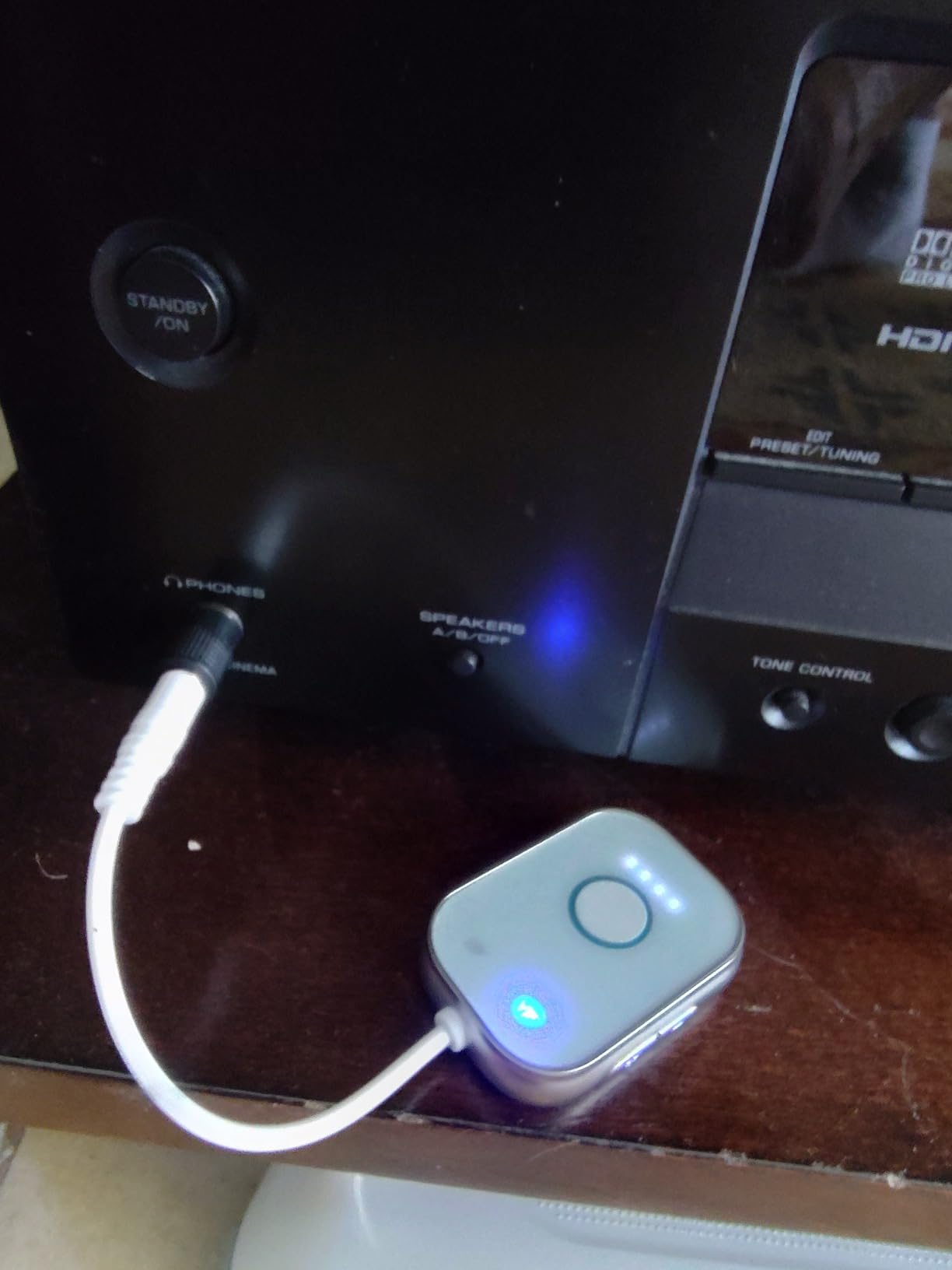
Optical, AUX and RCA in one package
Inputs cover optical, AUX and RCA, plus direct Bluetooth pairing with a Bluetooth television, so most output types are covered from the box. The charging dock is included, which at this level of performance is unusual and saves a separate purchase.
The build is lightweight with soft, breathable earcups intended for long sessions, and the supplied age range description is explicitly senior, which tells you who the design brief was written for.
Who should skip it
Skip it if you want a deep dialogue tuning system with tone controls, because the feature list here is about range and battery rather than hearing compensation. And if you are uneasy reading a rating that rests on 90 reviews, one of the higher-volume picks will give you more confidence.
8. Avantree Crescendo Me – App-Tuned Hearing Profiles for Ears That Need Help
Avantree Crescendo Me – Personalized Wireless TV Headphones for Seniors
Guided hearing test builds per-ear profiles
Up to 115.8 dB with Voice Clear
HDMI ARC optical and AUX passthrough
60 hour battery
Pros
- App guided hearing test creates separate profiles for each ear
- Sound boost mode gives enough output for severely hard-of-hearing listeners
- Works alongside a soundbar over HDMI ARC optical or AUX
- 60 hours with ANC off and 45 with ANC on
- Docks and auto powers on and off
- Replaceable battery ear pads and headband pad
Cons
- Setup involves more wiring options than simpler sets
- Over-ear band may not fit over hair rollers or large hairstyles
- App and voice prompts are English only
- Some owners report intermittent sound dropouts
The Crescendo Me is the only set here that builds a personal profile for each ear, and for a listener with uneven hearing that is a real advantage over simply turning everything up. A guided hearing test in the Avantree app produces separate profiles for each side, which is closer to what an audiologist would do than any tone control on a competitor.
Seventy reviews at 4.2 stars is the smallest sample in the roundup, and owners often describe an emotional result, people hearing television clearly again without captions. The complaints are practical: setup complexity, an English-only app, headband fit, and occasional dropouts.
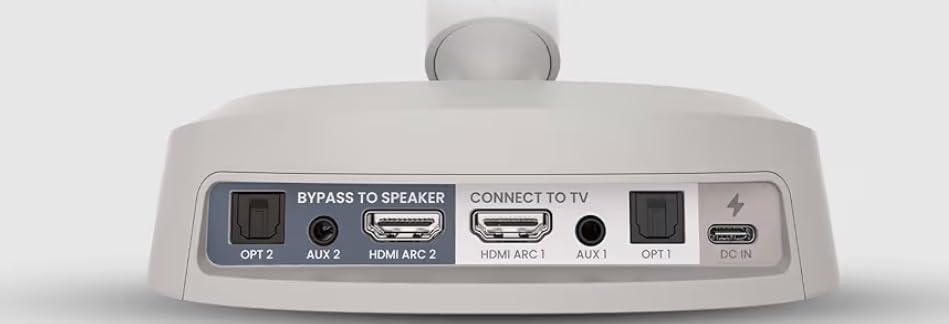
Output level and Voice Clear tuning
Output reaches up to 115.8 dB, with Voice Clear tuning and personalised compensation on top, and the sound boost mode is aimed specifically at severely hard-of-hearing listeners. Latency is under 75 milliseconds, higher than the RF sets here but still well inside the range where sync is not distracting.
Active noise cancelling is included, which is unusual on a television set, and this is the one model where the latency figure is worth weighing against your tolerance. If sync bugs you, turn ANC off and the number improves.
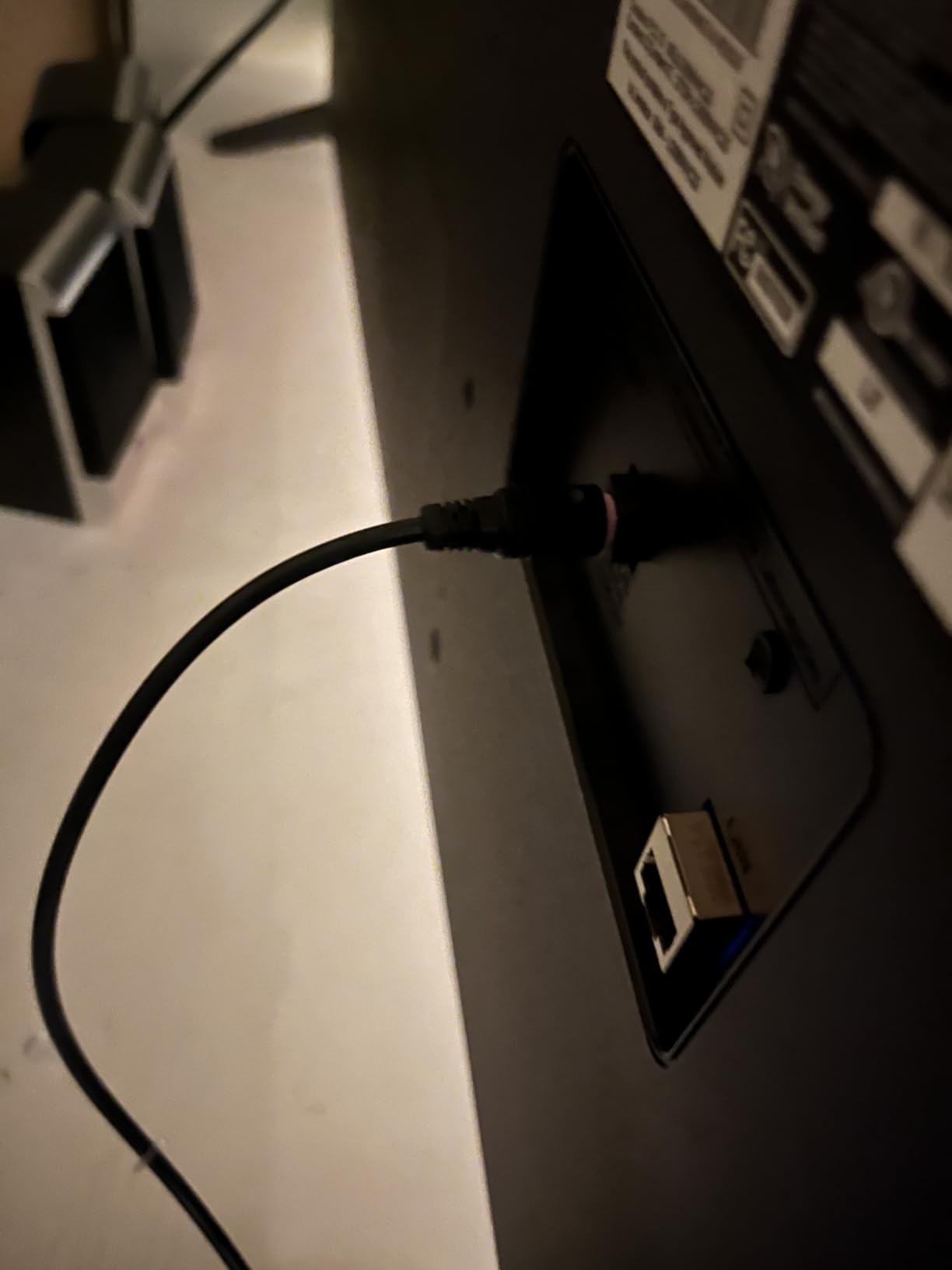
HDMI ARC passthrough solves the soundbar conflict
Passthrough covers HDMI ARC, optical and AUX, so the headset can share audio with a soundbar rather than replacing it. That matters in homes where the television’s speakers are switched off whenever a soundbar is on, and it is the compatibility feature this set offers that most RF rivals do not.
Range runs up to 100 feet or 30 meters, and the design is serviceable, with a replaceable battery, ear pads and headband pad. For a set likely to be bought for a parent and kept for years, that is a meaningful consideration.
Battery life and who should skip it
You get up to 60 hours with ANC off and 45 with it on, and the headphones dock and power on and off automatically, so there are no buttons to hunt for. Setup involves more wiring options than a simpler transmitter set, the over-ear band may not sit well over hair rollers, and the app plus voice prompts are English only.
Skip it if you want zero setup effort, if English-only software is a problem, or if you would rather have a much larger review base behind the product. Anyone buying it should expect some fiddling at the start and a real payoff afterwards.
How to Choose Wireless TV Headphones Without Waking the Household
RF, Bluetooth or aptX Low Latency: pick your delay budget
These three labels describe how the audio travels from your television to your ears, and the difference is not marketing. A 2.4GHz RF system uses a dedicated transmitter and needs no pairing, so it starts instantly and holds steady through walls. Bluetooth is more flexible because the headphones double as everyday headphones, but the delay depends entirely on the codec in use. aptX Low Latency is the specific Bluetooth codec that closes the gap for video, and the MEE Audio Connect T1CMA is the set here that uses it.
The practical rule I use: if the headset is for a television in one room, choose RF or aptX Low Latency. If you also want to wear the headphones on a walk or a flight, choose Bluetooth and accept a small premium for the flexibility. Premium active noise cancelling over-ear headphones are the wrong tool for this job, because their processing adds delay precisely when you cannot afford any.
Latency in milliseconds: the number that decides everything
Anything under roughly 40 milliseconds is effectively invisible, because human perception of audio lag becomes distracting somewhere around 80 to 100 milliseconds. This roundup spans 30 milliseconds on the Avantree Duet up to under 75 milliseconds on the Avantree Crescendo Me, with most sets sitting at or below 40. That is the entire difference between a set you forget you are wearing and one you keep adjusting.
Also weigh range against the same ruler. The Sennheiser RS 5200 reaches 229.7 feet, the ANSTEN and Swiitech sets reach 100 feet, and the Bluetooth options quote a much shorter usable figure. If anyone will move between rooms while watching, range matters more than any tuning feature.
How to connect wireless headphones to your TV
Step one is checking what your television actually outputs, and this is where most setups go wrong. Look for an optical or TOSLINK port labelled digital audio out, or a 3.5mm headphone socket. Most sets from the last decade have one or the other, and having both is ideal.
Step two is plugging the transmitter into that output. Optical is the best option where available because it carries the full digital signal, and on some televisions you must change the digital audio output format from Dolby or bitstream to PCM before audio reaches the transmitter at all. Step three is powering the headphones, which on RF and pre-paired Bluetooth systems connect on their own. Step four is setting volume on the device, not the television, because a mismatched level is a common source of distortion complaints.
If your television offers only HDMI ARC, you need a converter, and that is a purchase, not a workaround. If it is a Bluetooth smart TV, some sets here can connect directly with the transmitter switched off, which is the cleanest setup available if your model allows it. I have covered related audio and setup topics in our TV stand buying guide, since cable routing and transmitter placement are part of the same problem.
Fit and clamping force over a four-hour film
Fit is raised more often than any spec in forums, and it deserves equal weight. The ANSTEN set at 8.6 ounces and the Swiitech CH-211 with soft breathable cups are the two I would put on for a long evening without thinking about it. The Sennheiser RS 5200 and SIMOLIO SM-823D Pro are in-ear or stethoscope style, and both carry repeated comments about the fit becoming uncomfortable over long sessions.
If you wear glasses, note that an earbud style can work better than an over-ear cup because it does not fight the frame arms. If you dislike anything in your ear, the over-ear options are the only sensible direction. Our guide to the best podcasting headphones covers the long-session comfort question in more depth if you are worried about weight and clamping force.
Hard-of-hearing features: profiles, tone control and output level
Volume is the least useful control for someone with hearing loss, because the problem is rarely overall level. Look instead for per-ear profiles, a tone control, a balance control between channels, and a mono switch. The SIMOLIO SM-823D Pro has all four on physical buttons, the Avantree Crescendo Me builds profiles automatically through an app hearing test, and the MEE Audio Connect T1CMA offers CinemaEAR dialogue enhancement.
Output level also matters in the other direction. The Crescendo Me is rated to 115.8 dB, which is the highest figure in this roundup, and that headroom is what allows a personalised profile to lift a specific ear without making the rest unbearable.
Open-back or closed-back for television
This is the question that appeared in the top result on Reddit, and it deserves a straight answer. For television in a shared home, choose closed-back. Open-back designs leak sound by design, which defeats the entire purpose of wireless TV headphones, which is to watch without disturbing anyone else. The only case for open-back is a private room where isolation genuinely does not matter, and even then the soundstage gain is modest for speech and film.
That is also why a home theatre setup matters for the same reason. If you want the sound without the shared-room problem, our best wireless microphones guide covers a different route to a quiet room.
Frequently Asked Questions
Can I use wireless headphones to watch TV?
Yes. Most televisions send sound to wireless headphones through either a 2.4GHz RF transmitter or Bluetooth. The catch is delay: ordinary Bluetooth can add 100 to 300 milliseconds, which you see as dialogue arriving after the actors’ lips move. RF dock systems and codecs such as aptX Low Latency cut that to roughly 40 milliseconds or less, which most viewers never notice.
Which is better for TV, RF or Bluetooth headphones?
RF is better for television in a single room. A 2.4GHz RF transmitter needs no pairing, starts instantly, holds its signal through walls and adds almost no delay. Bluetooth is better if you also want to wear the headphones away from the television, but only with a low latency codec. Premium noise cancelling Bluetooth over-ears are usually the wrong choice for video because their processing adds lag.
How do I connect wireless headphones to a TV without a headphone jack?
Use the audio output the television already has. Plug the transmitter into the optical or TOSLINK socket, or the 3.5mm output, using the included cable. On many televisions you must set the digital audio output format to PCM first. If your set offers only HDMI ARC, you need an ARC converter, and if it is a Bluetooth smart TV you may be able to pair directly and skip the transmitter.
Why do my wireless headphones lag behind the TV?
Lag almost always comes from Bluetooth buffering, from active noise cancelling processing, or from a TV applying its own audio delay. Check three things: turn off any soundbar or TV lip sync adjustment, disable noise cancelling if the headphones have it, and use the low latency codec if the set supports one. Switching to an RF dock system removes the cause entirely.
What are the best wireless headphones for seniors who are hard of hearing?
Look past volume and toward compensation features. The SIMOLIO SM-823D Pro offers tone adjustment, channel balance and a mono switch on physical buttons, the MEE Audio Connect T1CMA adds CinemaEAR dialogue enhancement, and the Avantree Crescendo Me builds separate left and right profiles through a guided app hearing test. All three use RF or low latency Bluetooth, so dialogue stays in sync with the picture.
Which Wireless TV Headphones Should You Buy?
If you want one set that handles almost any television and any household, the Avantree HT41899 is my pick. It runs two headsets with independent volume, connects over optical, AUX or a Bluetooth smart TV, and holds sync at 40 milliseconds across nearly 4,800 ratings. If you need more range and a longer reach than a Bluetooth link allows, the ANSTEN ADH300NEW gives you 100 feet of RF coverage and an 8.6 ounce fit you will forget you are wearing.
For a hard-of-hearing parent, start with the SIMOLIO SM-823D Pro if you want physical tone and balance controls, or the Avantree Crescendo Me if you are comfortable setting up an app hearing test and want output level with genuine headroom. The MEE Audio Connect T1CMA sits between them, pairing aptX Low Latency with dialogue enhancement and arriving pre-paired.
Whichever route you take, check your television’s audio output before you buy, because compatibility, not sound quality, is what decides whether a set works in your room. Our testing wrapped up in 2026, and every recommendation above reflects the data and the owner feedback available at that point.
Leave a Reply