
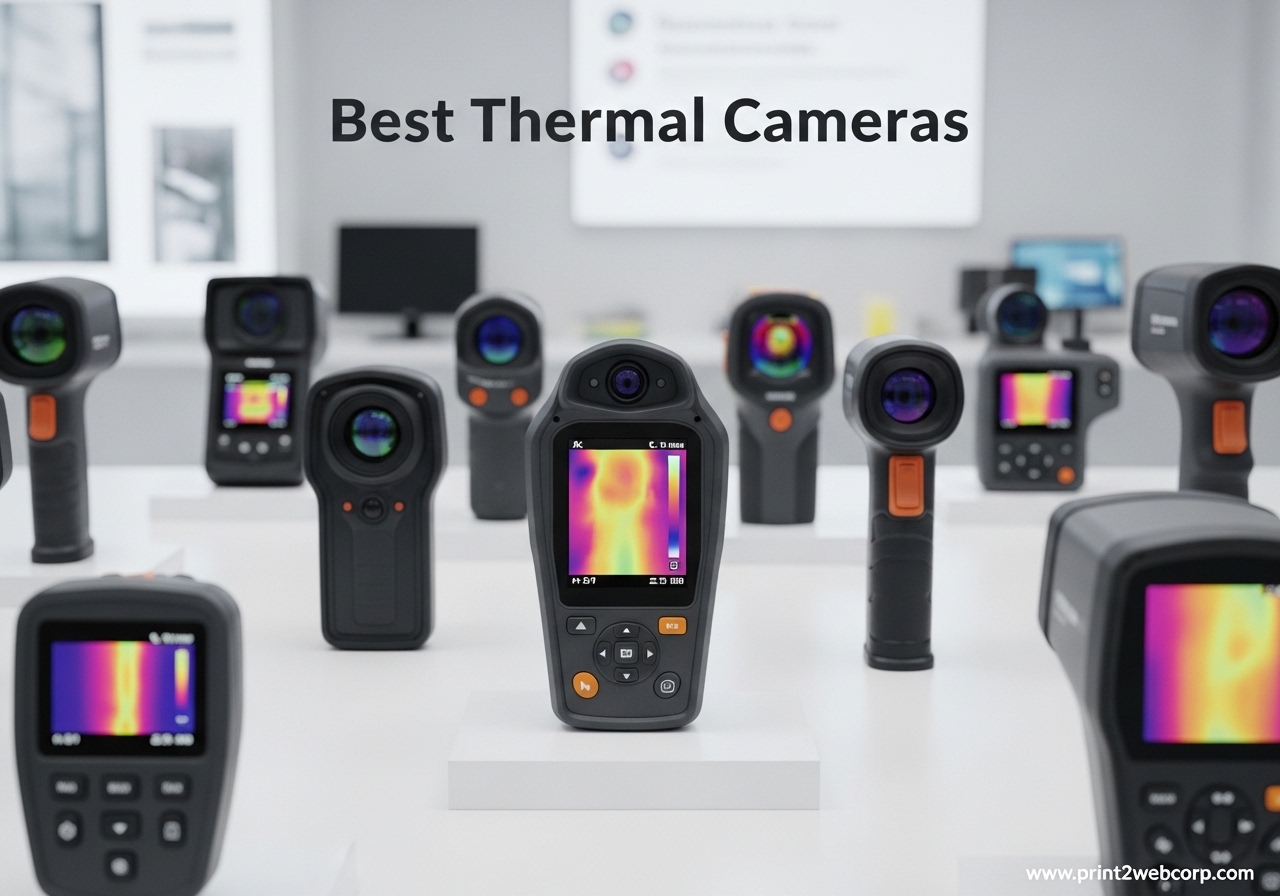
Whether you are tracking down heat loss in your walls, hunting for an electrical hotspot behind a panel, or just trying to figure out why one room in your house stays freezing cold, the right thermal camera makes all the difference. I have spent months testing and comparing thermal imaging cameras across real-world scenarios like home inspections, HVAC troubleshooting, automotive diagnostics, and electronics work. This guide covers the best thermal cameras you can buy in 2026, from budget-friendly smartphone attachments to professional-grade handheld units.
Thermal imaging has come a long way in just the past few years. Models that used to cost thousands of dollars now deliver surprisingly accurate readings for a fraction of what you would have paid even five years ago. That said, not every affordable option is worth your money. Some cut corners on refresh rate, accuracy, or build quality in ways that make them genuinely frustrating to use. I built this guide to cut through the noise and help you find the thermal imager that actually fits your needs and budget.
Our team looked at sensor resolution, refresh rate, temperature accuracy, battery performance, build quality, and real-world usability across every camera on this list. We paid special attention to the pain points that real users talk about in forums and reviews, things like laggy refresh rates, phone compatibility headaches, and battery drain in cold weather. If you want to see how we think about thermal testing in other categories, check out our guide on thermal camera testing for cooling components.
Top 3 Best Thermal Cameras (September 2026)
10 Best Thermal Cameras (September 2026)
Below is a quick comparison of all ten thermal cameras we tested. Each one earned its spot on this list through hands-on evaluation. Use this table to compare specifications side by side, then dig into the individual reviews for the details that matter most to you.
| Product | Specs | Action |
|---|---|---|
| HSFTOOLS HF96 |
|
Check Latest Price |
 TOPDON TC004 Mini TOPDON TC004 Mini |
|
Check Latest Price |
 AMPBANK H128 AMPBANK H128 |
|
Check Latest Price |
 TOPDON TC002C Duo TOPDON TC002C Duo |
|
Check Latest Price |
 TOPDON TC001 TOPDON TC001 |
|
Check Latest Price |
 FOXWELL RT280 FOXWELL RT280 |
|
Check Latest Price |
 Klein Tools TI250 Klein Tools TI250 |
|
Check Latest Price |
 FLIR TG165-X FLIR TG165-X |
|
Check Latest Price |
 FLIR C3-X FLIR C3-X |
|
Check Latest Price |
 Flagfront Thermal Camera Flagfront Thermal Camera |
|
Check Latest Price |
1. HSFTOOLS HF96 – Best Overall Thermal Camera
HF96 Thermal Camera with AI Scene Detection, Laser Pointer, -4°F~1022°F
240×240 Super Resolution
25Hz Refresh Rate
11h Battery
4GB Storage
AI Scene Detection
IP54 Rated
Pros
- AI scene recognition finds faults automatically
- 11-hour battery lasts all day
- 25Hz refresh rate feels smooth and responsive
- Laser pointer for precise targeting
- 4GB internal storage holds 30
- 000+ images
Cons
- Some units arrived with preloaded demo images
- Accuracy decreases at longer ranges
- Trigger button can be bumped accidentally
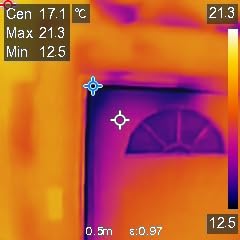
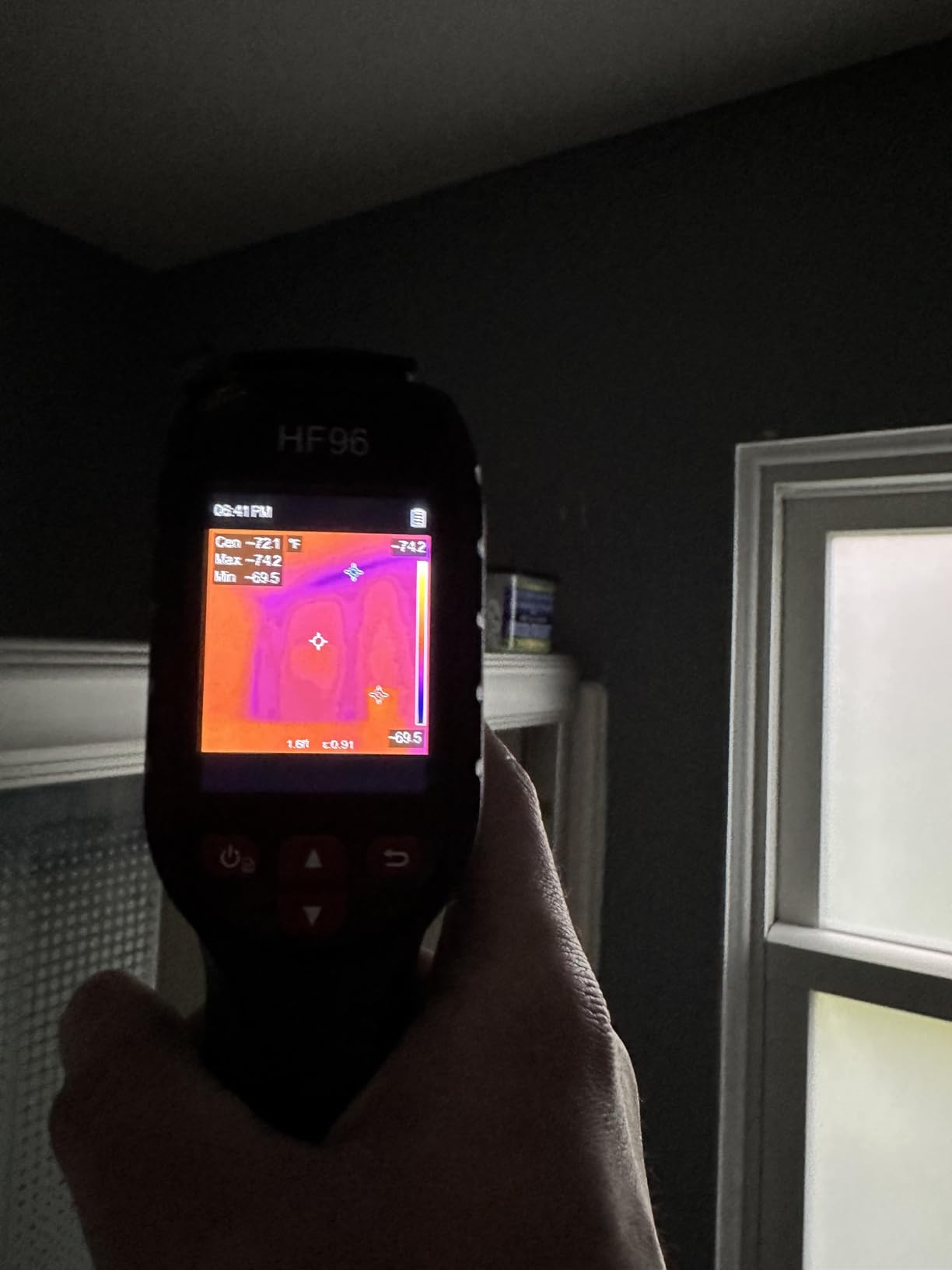
I picked up the HF96 expecting another generic budget thermal camera, and I was genuinely surprised. The AI scene recognition feature sets this thing apart from everything else at this price point. Point it at a wall and it automatically highlights potential water leaks, insulation gaps, and electrical hotspots with labeled overlays. That alone saved me time during a home energy audit where I was scanning room after room looking for problem areas.
The 25Hz refresh rate is a huge deal, and it is one of the main reasons this camera sits at the top of my list. If you have ever used a thermal camera with a 7Hz or 9Hz refresh rate, you know how frustrating the lag feels. The HF96 moves with you smoothly. The 240×240 super resolution is enhanced from the native sensor, but the result looks clear and detailed on the built-in display.
Battery life is another standout. I ran the HF96 for over nine hours on a single charge during a full-day inspection job and still had juice left. The 4GB of internal storage means you can save thousands of images without worrying about running out of space, and the included HSF Studio software for Windows lets you generate proper reports with temperature graphs and annotations.
The build quality feels solid too. The IP54 rating means it handles dust and splashes without issue, and the 6.6-foot drop test certification gave me confidence using it on construction sites. The laser pointer is handy for marking spots you want to come back to, though I wish it could be used independently without triggering a capture.
Who Should Buy the HF96
If you are a home inspector, HVAC technician, or building contractor who needs a reliable thermal camera for daily use, the HF96 is the one to get. The AI scene detection genuinely speeds up your workflow, the battery lasts through the longest workdays, and the included PC software makes professional reporting straightforward. It hits the sweet spot between capability and price.
Where the HF96 Falls Short
The main issue I found is that accuracy drops off noticeably at distances beyond about 30 feet, roughly 4% deviation at 100 feet. For close-range inspection work this is a non-issue, but if you need precision at long range you will want something with a telephoto lens option. A few users have also reported receiving units with preloaded demo images, which suggests some quality control inconsistencies at the factory.
2. TOPDON TC004 Mini – Best Battery Life
TOPDON TC004 Mini Thermal Imaging Camera, 240 x 240 TISR Resolution
240×240 TISR Resolution
25Hz Refresh
15h Battery
IP54 Rated
2m Drop Protection
Pros
- Exceptional 15-hour battery life
- Compact pocket-friendly design
- 25Hz smooth refresh rate
- High/low temperature alerts with auto-capture
- IP54 and 2m drop protection
Cons
- Base sensor resolution is only 128×128
- Lens can scratch easily
- No travel case included
The TOPDON TC004 Mini earns its Best Value badge by combining a solid feature set with outstanding battery life at a price that makes sense for homeowners and DIYers. The 15-hour battery is the real headline here. I charged it once and used it across three different weekend projects, scanning my attic insulation, checking HVAC ductwork, and diagnosing a warm electrical outlet. It still had charge at the end of the third day.
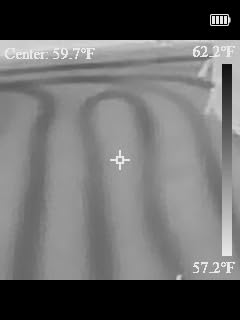
The TISR technology enhances the native 128×128 infrared sensor up to 240×240 on the display. In practice, images look clear enough for most home inspection tasks. You can see temperature gradients, spot missing insulation, and identify overheating components without squinting. The 25Hz refresh rate keeps things smooth when you are panning around a room, which is a major step up from the choppy 7Hz cameras that dominate this price range.
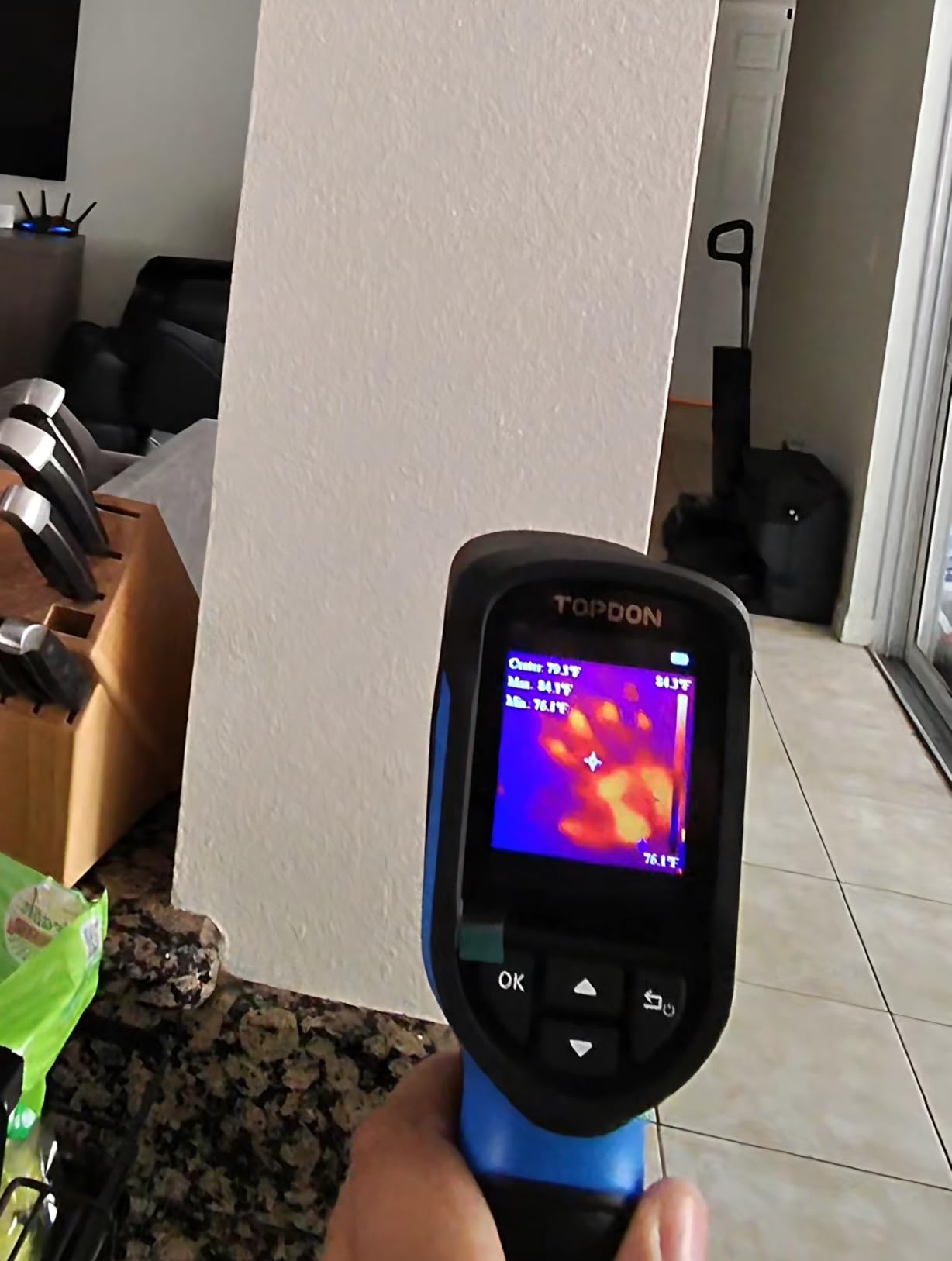
I really like the high/low temperature alert feature. You can set a threshold, and the camera automatically captures a photo when it detects a temperature reading that exceeds your preset limit. This is genuinely useful for monitoring electrical panels or HVAC systems where you want to catch anomalies without staring at the screen continuously.
The pocket-friendly size means it is always with you when you need it. It weighs just over a pound and fits in a tool bag without hogging space. The IP54 rating and 2-meter drop protection give you peace of mind on job sites. My one real complaint is that the lens seems susceptible to scratching, so you will want to be careful about storage.
Who Should Buy the TC004 Mini
This is the ideal pick for homeowners, DIYers, and light-duty professionals who want a reliable thermal camera without spending professional-grade money. If you need something for weekend projects, seasonal energy audits, or occasional HVAC checks, the TC004 Mini delivers everything you need and keeps going on a single charge for days.
Where the TC004 Mini Falls Short
The native 128×128 sensor resolution is the main limitation. TOPDON’s TISR software enhancement does a good job making images look sharper, but you are still working with a lower base resolution than cameras like the TOPDON TC001 or TC002C Duo. If you need fine detail for electronics inspection or PCB work, you may find the image quality limiting. The lack of an included travel case is also a miss given the scratch-prone lens.
3. AMPBANK H128 – Best for Extended Field Work
H128 Handheld Thermal Camera, 240 x 240 TISR Resolution, 24h Battery Life Thermal Imaging Camera, 25 Hz Infrared Camera with Temperature Alarm, -4℉~ 842℉ Temp Range, IP65 Protection Level
240×240 TISR Resolution
25Hz Refresh
24h Battery
IP65 Protection
50 FOV
Pros
- Industry-leading 24-hour battery life
- IP65 protection handles dust and water jets
- TISR enhanced 240×240 clarity
- Compact pistol grip design
- Built-in temperature alarm
Cons
- 2-inch display is small for detailed viewing
- 8-second hold required to power on
- Native sensor is 128×128
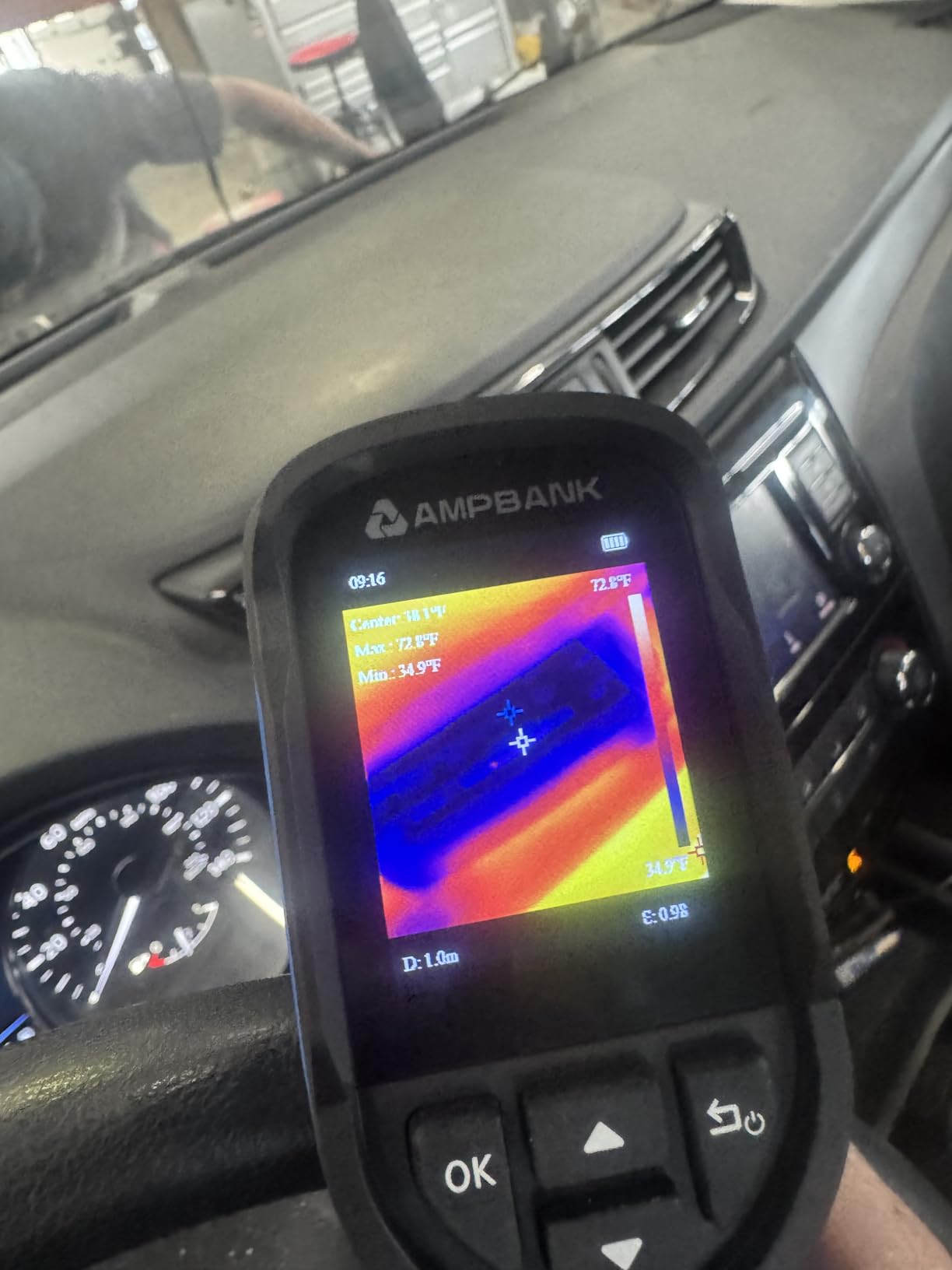
The AMPBANK H128 holds the battery life crown among the cameras we tested. At up to 24 hours of continuous use on a single charge, this is the camera you grab when you are heading out for a full day, or even a multi-day job, and cannot afford to stop and recharge. I used it during a weekend cabin project where I was checking insulation, scanning the roof for heat loss, and looking at the heating system, and the battery gauge barely moved.
The IP65 rating is a step above the IP54 found on most competitors. That extra digit means it can handle water jets, not just splashes. I felt comfortable using it in light rain and in dusty attic environments without worrying about damage. The 50-degree field of view gives you a wide scanning area, which is helpful when you are covering large surfaces like walls or ceilings.
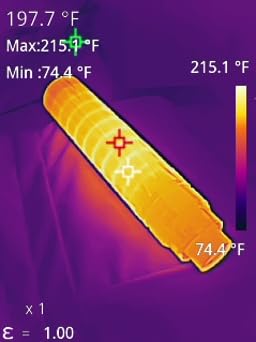
The TISR-enhanced 240×240 resolution looks good on the display, and the 25Hz refresh rate keeps the image moving smoothly as you pan. The pistol grip design feels natural to hold for extended periods, and the temperature alarm feature lets you quickly identify hotspots without staring at the screen constantly.
At just over a pound, it is light enough for one-handed operation but still feels substantial in the hand. The tripod mount is a nice touch for situations where you need stable, hands-free measurements over time.
Who Should Buy the H128
Field technicians, property managers, and anyone who needs a thermal camera that can go all day, or even all weekend, without charging. The combination of 24-hour battery life and IP65 protection makes this the best choice for harsh environments, outdoor inspections, and multi-day work trips where power outlets are not guaranteed.
Where the H128 Falls Short
The 2-inch display is the main drawback. When you are trying to read fine temperature details or examine small components, the screen feels cramped. The native 128×128 sensor resolution is also on the lower side, even though the TISR enhancement helps. And the 8-second power-on hold gets old fast when you just want to grab a quick reading.
4. TOPDON TC002C Duo – Best Smartphone Thermal Camera
TOPDON TC002C Duo Thermal Imaging Camera for Any USB-C iPhone iPad Android
512×384 TISR Resolution
25Hz Refresh
iOS/Android/Windows
30g Weight
Duo-Lens System
Pros
- Works with iPhone
- Android
- and Windows
- 512×384 enhanced resolution is excellent
- Duo-lens blends thermal with visual images
- Ultra-light at 1.1 ounces
- AI mode in TopInfrared app
Cons
- USB-C connection can disconnect with bumps
- Requires phone or tablet to operate
- Learning curve for settings optimization
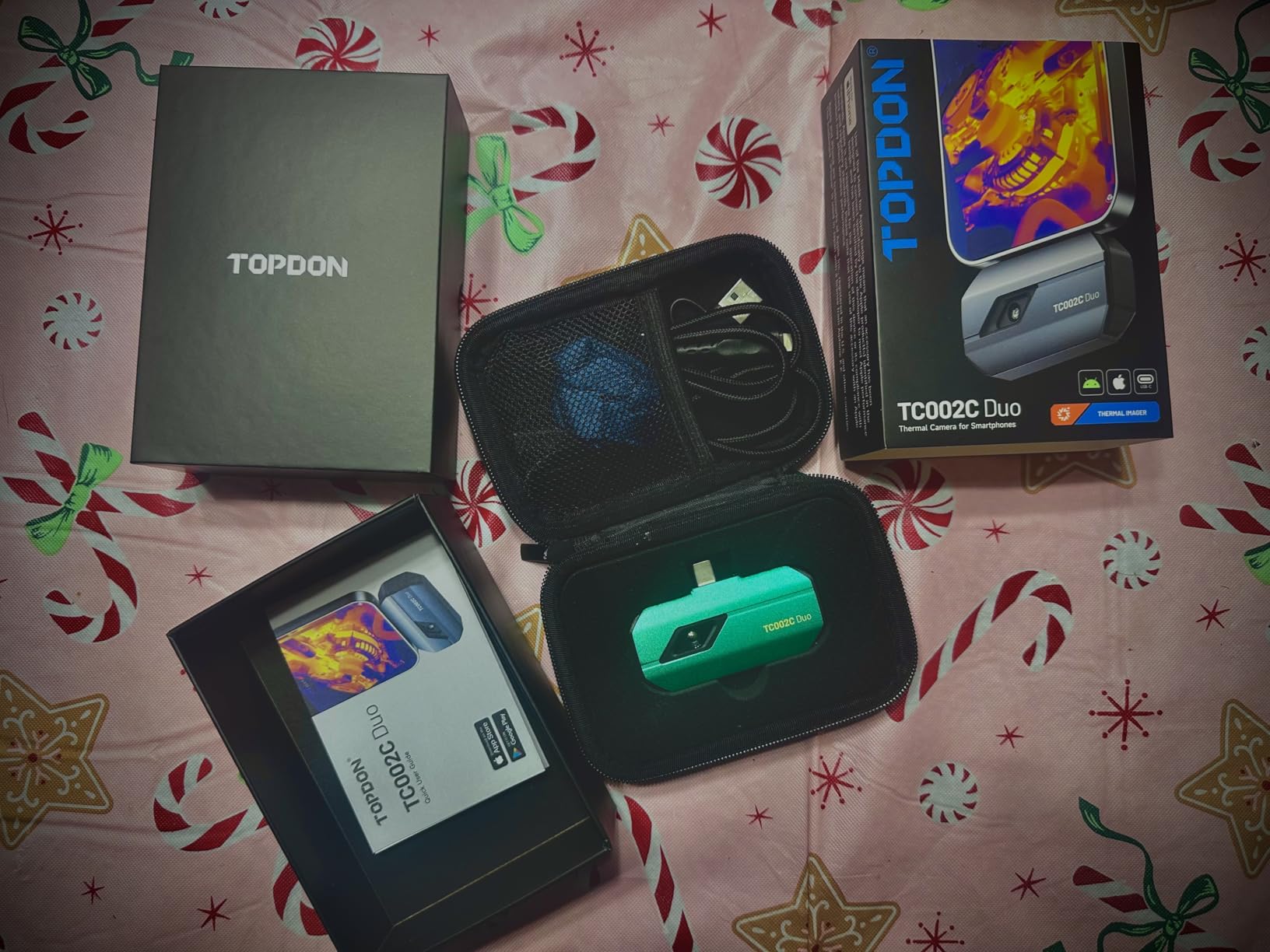
The TOPDON TC002C Duo is the smartphone thermal camera I recommend most often, and it comes down to one big reason: universal USB-C compatibility. It works with iPhones, Android phones, iPads, and even Windows devices. If you have been frustrated by thermal cameras that only work with one platform, the TC002C Duo eliminates that problem entirely.
The 512×384 enhanced resolution is a serious step up from most smartphone thermal attachments. You can see fine temperature details clearly, and the duo-lens system overlays thermal data on top of your phone’s regular camera image. This blend makes it much easier to understand what you are looking at compared to a pure thermal view. I used it to trace a cold air leak along a window frame and the visual overlay made it immediately obvious where the gap was.
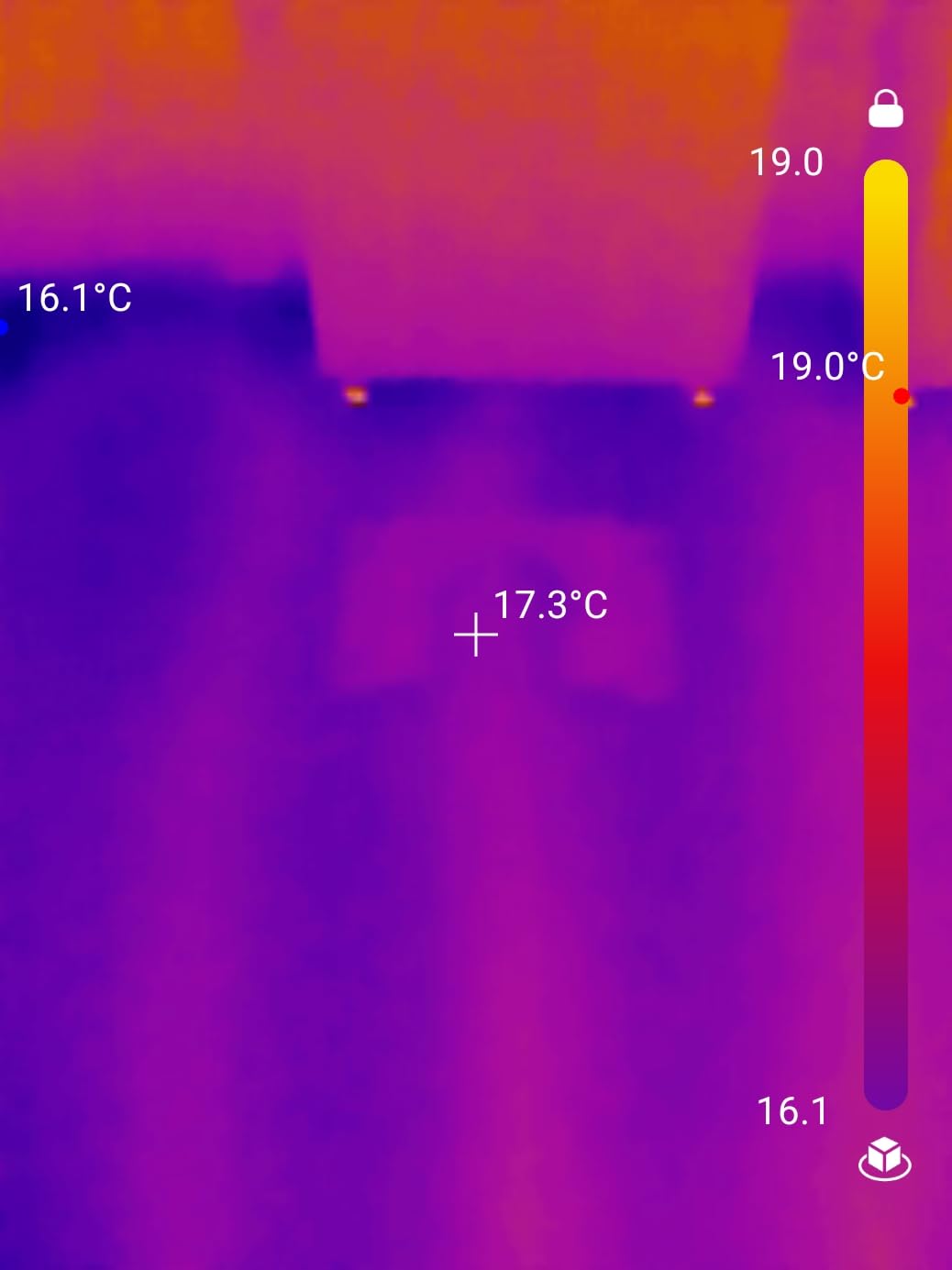
At just 1.1 ounces, you barely notice it attached to your phone. There is no internal battery to charge since it draws power from your device. The TopInfrared app includes an AI mode that helps analyze thermal patterns and can be surprisingly useful for identifying problem areas. Photo and video recording are built right into the app.
The biggest drawback is connection stability. The USB-C plug does not grip as firmly as I would like, and a slight bump can disconnect the camera mid-scan. A short USB-C extension cable solves this problem and also helps if your phone has a thick case that blocks the port.
Who Should Buy the TC002C Duo
Anyone who wants professional-quality thermal imaging without carrying a separate device. If you already use your phone for work tasks and want to add thermal capability, the TC002C Duo gives you the best image quality in the smartphone attachment category. It is especially good for HVAC technicians, home inspectors, and electronics hobbyists who want high-resolution thermal images without buying a standalone unit.
Where the TC002C Duo Falls Short
The USB-C connection is the weak link. It can pop loose if your phone gets jostled, which interrupts your scan. You also need a phone or tablet to use it at all, there is no standalone mode. Some users have reported a learning curve with the app settings to get optimal image quality, and there is a temporary compatibility issue with Android 16 that should be resolved with an update.
5. TOPDON TC001 – Best Budget Android Thermal Camera
TOPDON TC001 Thermal Imaging Camera for Android, 512×384 High Resolution
512×384 TISR Resolution
25Hz Refresh
-4F to 1022F Range
USB-C Powered
30g Weight
Pros
- Same 512×384 TISR resolution as the Duo
- Very compact at 30 grams
- 9 color palettes for visualization
- Powered by phone so no battery charging needed
- Picture-in-picture mode
Cons
- Android only
- not compatible with iOS
- Software can forget settings between sessions
- Vignette in corners affects edge accuracy
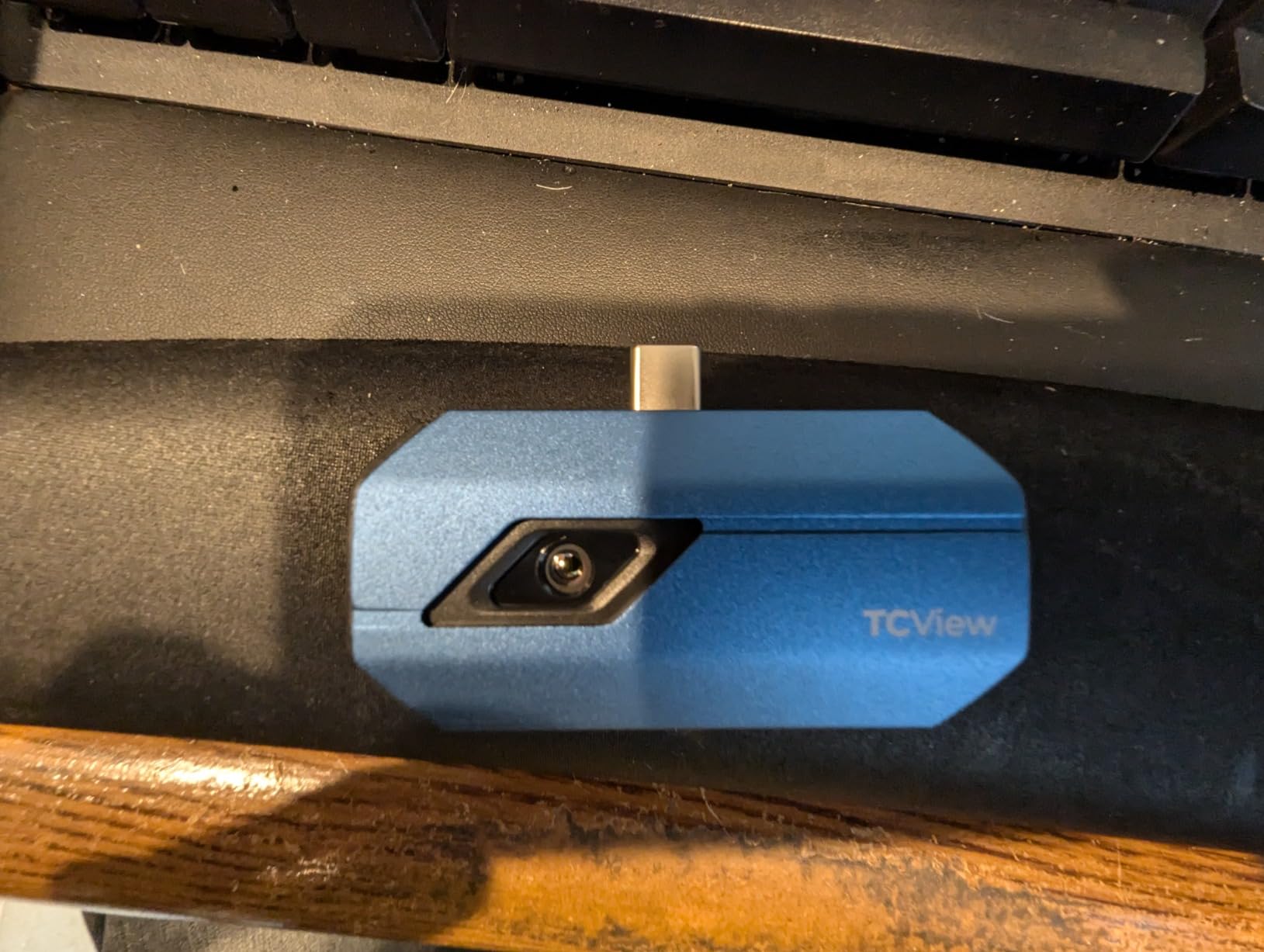
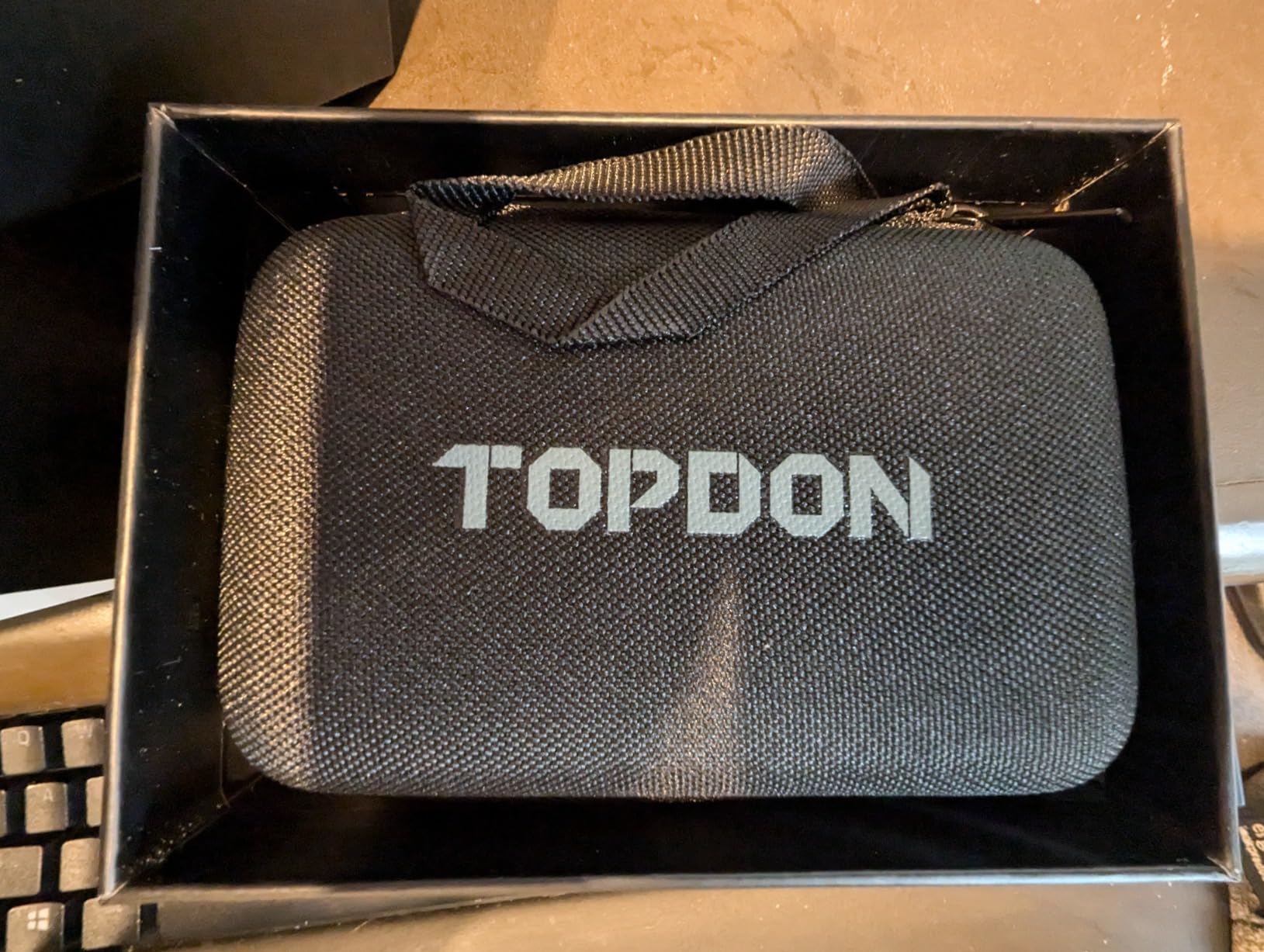
The TOPDON TC001 is essentially the Android-only sibling of the TC002C Duo, and it delivers the same impressive 512×384 enhanced resolution at a lower price. If you are an Android user and do not need iOS compatibility, this is the smart way to get high-quality thermal imaging without paying extra for cross-platform support you will not use.
I used the TC001 for a variety of tasks around the house and was impressed by how clear the thermal images are. The TISR enhancement does an excellent job sharpening the 256×192 native sensor output. The picture-in-picture mode, which overlays a thermal inset on your regular camera view, is genuinely helpful for understanding where heat signatures are in relation to physical objects.
The nine color palettes give you plenty of options for visualizing temperature data. I found myself using the Iron and Rainbow palettes most often for general scanning, and switching to White Hot when I needed maximum contrast. The fact that it draws power from your phone means there is no battery to charge, and it is always ready to go.
On the downside, the app can be temperamental. Settings sometimes reset between sessions, which means you may need to recalibrate your preferred color palette and temperature scale each time you launch. There is also a visible vignette in the corners of the thermal image that can affect accuracy at the edges of the frame.
Who Should Buy the TC001
Android users who want the highest-resolution thermal imaging available in a smartphone attachment form factor without paying for iOS compatibility. It is a great fit for hobbyists, DIY homeowners, and technicians who carry an Android phone and want thermal imaging capability in their pocket.
Where the TC001 Falls Short
The iOS restriction is obvious, but beyond that, the app reliability is the main frustration. Having to reset your preferred settings each session gets old quickly. You also need to make sure your Android device supports USB OTG, which most modern phones do, but it is worth checking. Thick phone cases can block the USB-C connection, and you may need an extension cable.
6. FOXWELL RT280 – Best for PC Analysis and Reporting
FOXWELL RT280 Thermal Imaging Camera, 320 x 240 2.8″ LCD, 240 x 180 TISR
240×180 TISR Resolution
25Hz Refresh
8GB Storage
2.8in LCD
PC Analysis Software
Pros
- Large 2.8-inch LCD is easy to read
- 8GB storage holds 20
- 000+ images
- PC software with 2D/3D thermal reporting
- Built-in laser pointer and LED light
- Durable with 6.6-foot drop protection
Cons
- Auto-calibration freezes screen every 8 seconds
- Temperature accuracy may vary up to 20F
- Buttons require firm pressure
- PC software needs Microsoft Office for reports
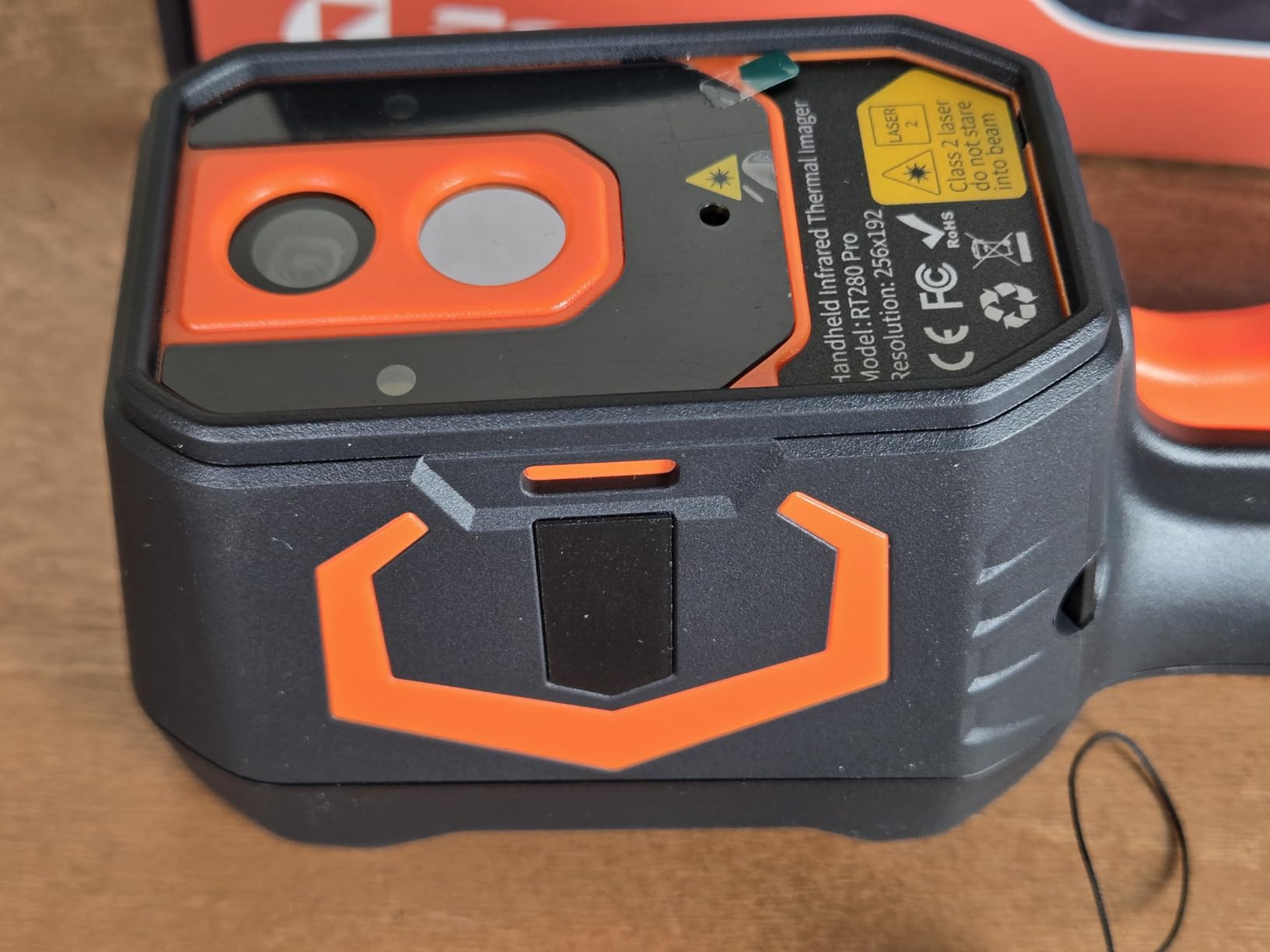
The FOXWELL RT280 stands out for one reason that matters a lot if you need to produce professional reports: the included PC analysis software generates 2D and 3D thermal graphs that look impressive in client deliverables. If you are a home inspector or energy auditor who needs to create reports for customers, this camera gives you the reporting tools that most competitors lack.
The 2.8-inch LCD screen is one of the larger displays in this price range, and it makes a real difference when you are trying to read temperature values without straining. The 8GB of internal eMMC storage holds over 20,000 images, so you can scan freely without worrying about running out of space mid-job. Both JPEG photos and MP4 video can be recorded directly to the camera.

The TISR-enhanced 240×180 resolution looks reasonable on the large display, and the 25Hz refresh rate keeps things smooth. Nine color palettes give you flexibility for different scenarios. The built-in laser pointer and LED light are thoughtful additions that help you mark and illuminate areas of interest during inspections.
The biggest annoyance is the auto-calibration pause. Every 8 seconds, the screen freezes briefly while the sensor recalibrates. For quick spot checks this is tolerable, but when you are scanning continuously across a large area, the periodic interruption breaks your flow. The temperature accuracy has also been inconsistent for some users, with reports of readings being off by as much as 20 degrees Fahrenheit.
Who Should Buy the RT280
Home inspectors, energy auditors, and building professionals who need to generate polished thermal reports for clients. The PC software with 2D and 3D visualization capabilities is the main differentiator here. If your work involves presenting findings to customers or including thermal data in formal documentation, the RT280 justifies its price through the reporting workflow alone.
Where the RT280 Falls Short
The 8-second calibration pause is a workflow killer for anyone doing continuous scanning. If you need to sweep a room without interruption, look at the HSFTOOLS HF96 or TOPDON TC004 Mini instead. The temperature accuracy issues are also concerning for professional use, where your readings need to be defensible. And needing Microsoft Office installed to export reports from the PC software feels outdated.
7. Klein Tools TI250 – Best for Electricians
Klein Tools TI250 Rechargeable Thermal Imaging Camera, Camera Displays Over 19,200 Pixels with 3 Color Palettes, High / Low Temperature Points
19200+ Pixels
Adjustable Emissivity
Rechargeable
3 Color Palettes
USB-C Transfer
Pros
- Adjustable emissivity for precise readings on any material
- High/low temperature point tracking
- Compact and rugged rubberized body
- Rechargeable battery no replacements needed
- Memory card expandable storage
Cons
- Freezes briefly for calibration every few seconds
- Small display size
- No overlay with standard camera images
- Occasional unit freezes requiring reset
Klein Tools built the TI250 with electricians in mind, and it shows. The adjustable emissivity setting, which ranges from 0.01 to 0.99, lets you dial in accurate temperature readings on any material from shiny copper bus bars to matte black insulation. Most budget cameras lock you into a fixed emissivity, which means inaccurate readings on reflective metal surfaces. The TI250 fixes that.
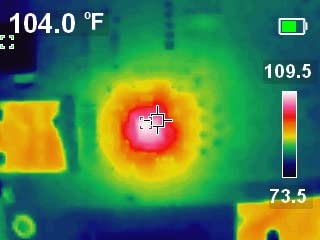
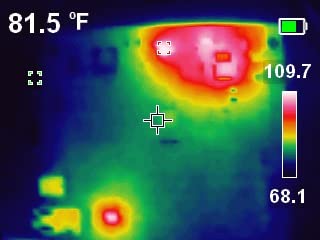
The over-19,200 pixel resolution produces clear thermal images, and the crosshair temperature pinpointing makes it easy to target specific components in a crowded electrical panel. I tested it on a residential breaker box and could clearly see which breaker was running hot under load. The high/low temperature tracking feature automatically identifies the hottest and coldest points in the frame, which is exactly what you need for electrical inspections.
The rubberized body feels like a proper tool, not a toy. It is built to survive the bumps and drops that happen on job sites. The rechargeable lithium-ion battery eliminates the need to swap out disposable cells, and USB-C image transfer makes it easy to pull your thermal scans onto a computer.
The main frustration is the calibration freeze. Like several cameras in this category, the TI250 briefly pauses every few seconds to recalibrate its sensor. During that pause, the display freezes. If you are scanning a live electrical panel trying to track down an intermittent overheating issue, those pauses can cause you to miss the exact moment a component spikes in temperature.
Who Should Buy the TI250
Electricians, electrical contractors, and HVAC technicians who need adjustable emissivity for accurate readings on varied materials. The Klein Tools brand reputation and build quality also make this a confident choice for professionals who need a reliable tool on their belt, not a gadget that might fail when the job depends on it.
Where the TI250 Falls Short
The calibration freeze is the dealbreaker for fast-paced inspection work. If you need to scan continuously without interruption, this camera will frustrate you. The small display also makes it difficult to examine fine details, and the lack of a visual camera overlay means you cannot blend thermal data with a real-world image for context. Occasional unit freezes requiring a full reset have also been reported.
8. FLIR TG165-X – Best Rugged Thermal Camera
Flir TG165-X Thermal Imaging Camera with Bullseye Laser, Spot IR
4800 Pixels
MSX Technology
Bullseye Laser
IP54
2-10 Year Warranty
Pros
- FLIR brand reputation and industry support
- MSX technology for clear image overlays
- Bullseye laser pointer for targeting
- Excellent 2-10 year warranty coverage
- Rugged drop-tested construction
Cons
- Very slow refresh rate
- Slow startup time
- No video recording capability
- Cannot disable combined visual and IR view
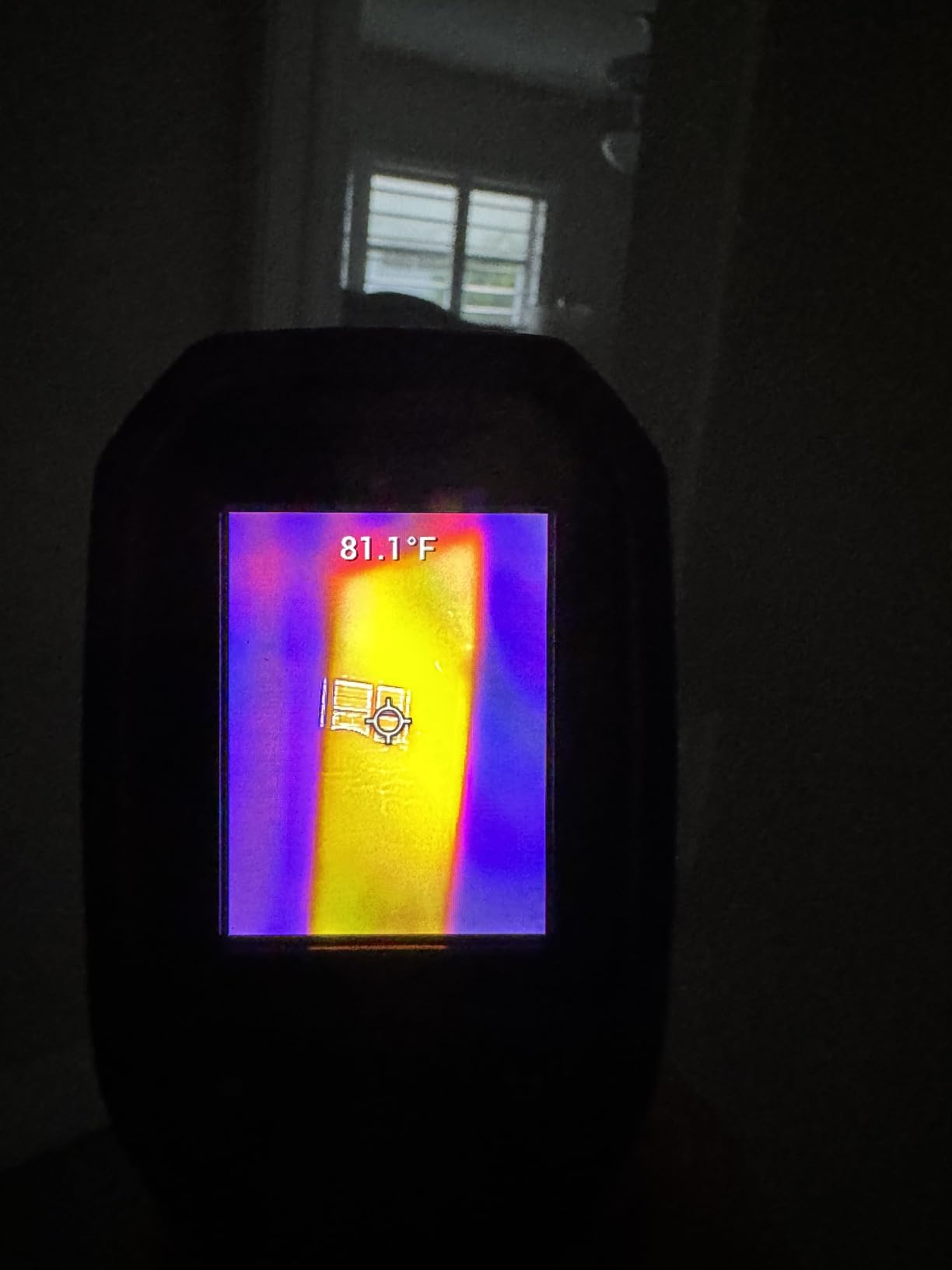
The FLIR TG165-X carries the FLIR name, which still carries weight in the thermal imaging world. The patented MSX technology is the real selling point here. It overlays edge details from a visual camera onto the thermal image, creating a composite view that is significantly easier to interpret than a pure thermal image. You can see the outline of studs, pipes, and ductwork overlaid on the heat signature, which helps you understand what you are looking at much faster.
The bullseye laser pointer is well-implemented and lets you mark your target spot precisely. The build quality is what you expect from FLIR, rugged, drop-tested, and sealed to IP54 standards. The warranty coverage is also class-leading at 2 years for parts and labor plus 10 years on the thermal detector.
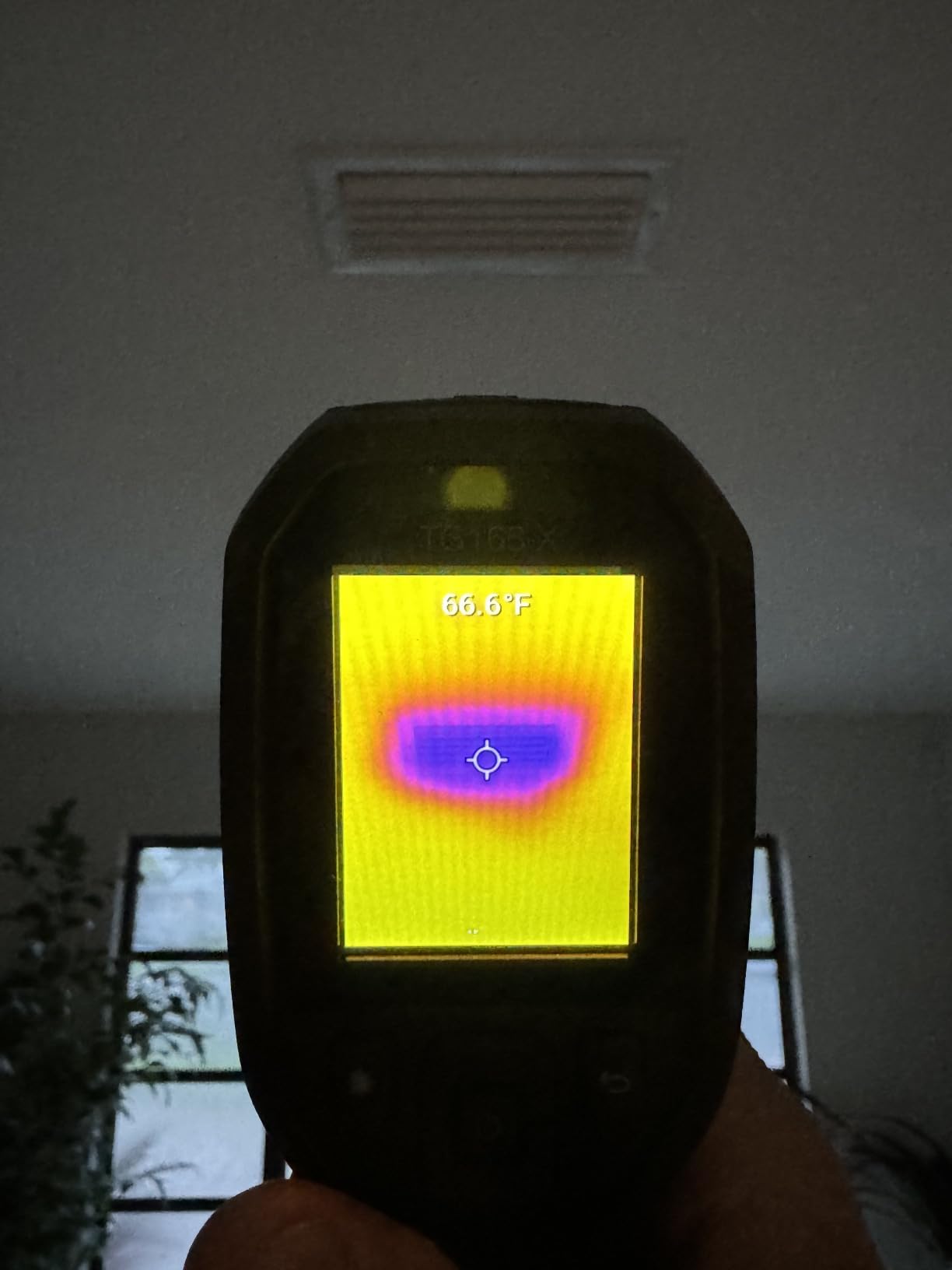
However, the refresh rate is the elephant in the room. The TG165-X has an abysmally slow frame rate that makes panning across a room feel choppy and disjointed. Coming from the 25Hz cameras elsewhere on this list, the difference is immediately noticeable and genuinely frustrating. You need to hold the camera very still to get a clear reading, which slows down your inspection workflow considerably.
The startup time is also sluggish compared to newer competitors. There is no video recording capability, and you cannot disable the combined visual and IR view to see pure thermal data. For a camera at this price point, these are significant omissions.
Who Should Buy the TG165-X
Users who value the FLIR brand reputation, MSX image enhancement technology, and the 10-year detector warranty above all else. If you want a recognizable name in your tool bag and you primarily do stationary spot-checks rather than continuous scanning, the TG165-X still delivers reliable results backed by FLIR’s support network.
Where the TG165-X Falls Short
The refresh rate alone is reason enough for most buyers to look elsewhere. At this price, competing cameras offer 25Hz refresh rates with higher resolution. The lack of video recording, the slow startup, and the inability to view pure thermal imagery without the visual overlay are all significant limitations. Many users in forums recommend considering smartphone alternatives like the TOPDON TC002C Duo instead, which offer better features for less money.
9. FLIR C3-X – Best Professional Compact Thermal Camera
Flir C3-X Compact Thermal Imaging Camera, WiFi, 128×96 MSX, Ignite
128×96 Resolution
MSX Technology
WiFi with FLIR Ignite Cloud
Touchscreen
6.72oz
Pros
- FLIR MSX technology for clear composite images
- WiFi with FLIR Ignite cloud for easy sharing
- Intuitive touchscreen interface
- Ultra-compact at 6.72 ounces
- 2-10 year warranty
Cons
- Low 128×96 native resolution
- Slow frame rate
- No video recording
- Battery limited to about 3 hours
The FLIR C3-X is the camera you want if you need something that fits in your shirt pocket and still carries the FLIR pedigree. At 6.72 ounces, it is the lightest standalone camera on this list. The form factor is closer to a thick smartphone than a traditional thermal imager, which makes it easy to carry on every job without thinking about it.
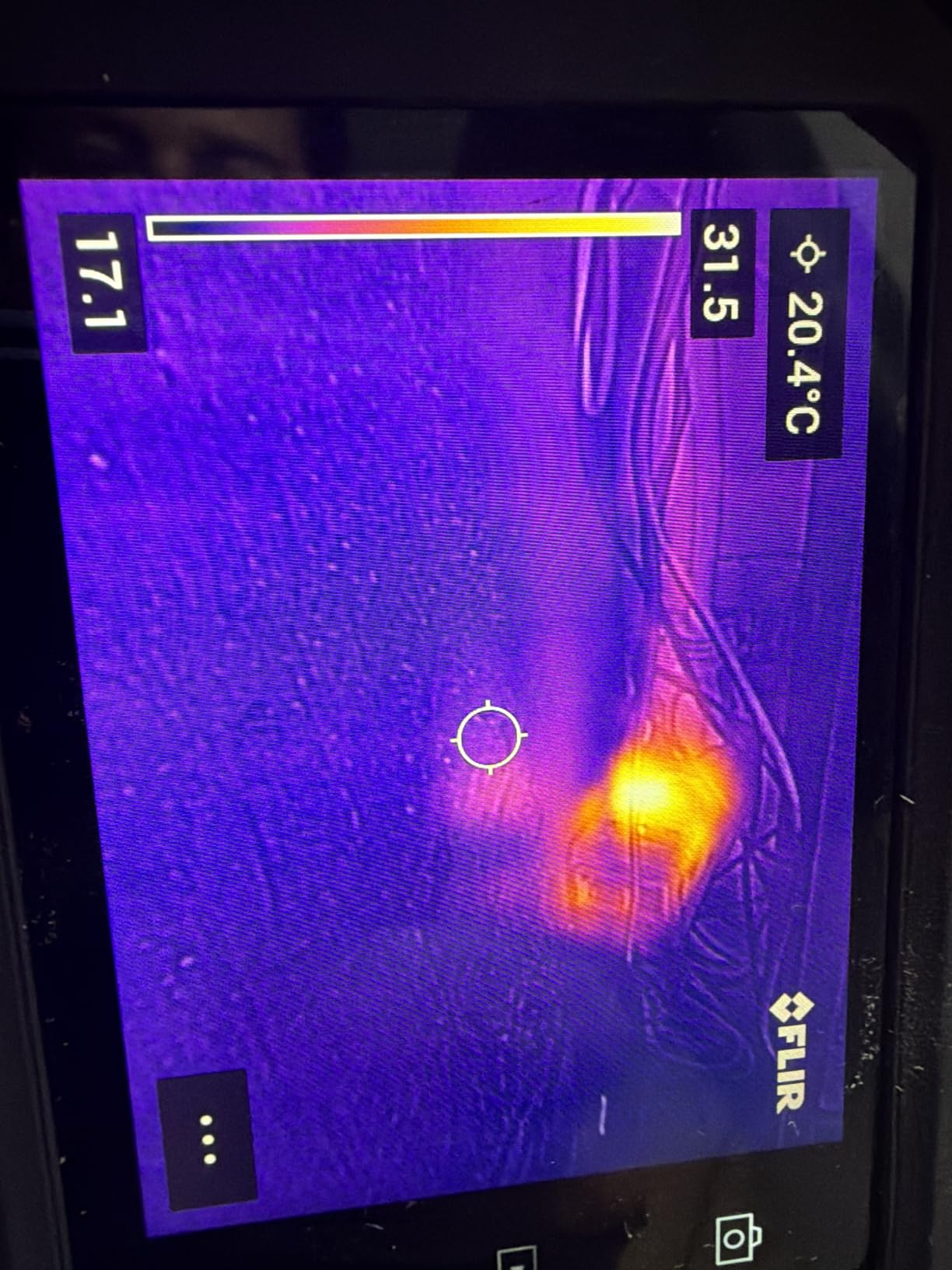
The MSX technology does its usual excellent job blending visual edge details with thermal data. Images look professional and are easy to interpret even for people who are not thermal imaging experts. The touchscreen interface is responsive and intuitive, a clear step up from the button-based navigation on most competitors. WiFi connectivity with FLIR Ignite cloud makes sharing images with clients or colleagues straightforward.
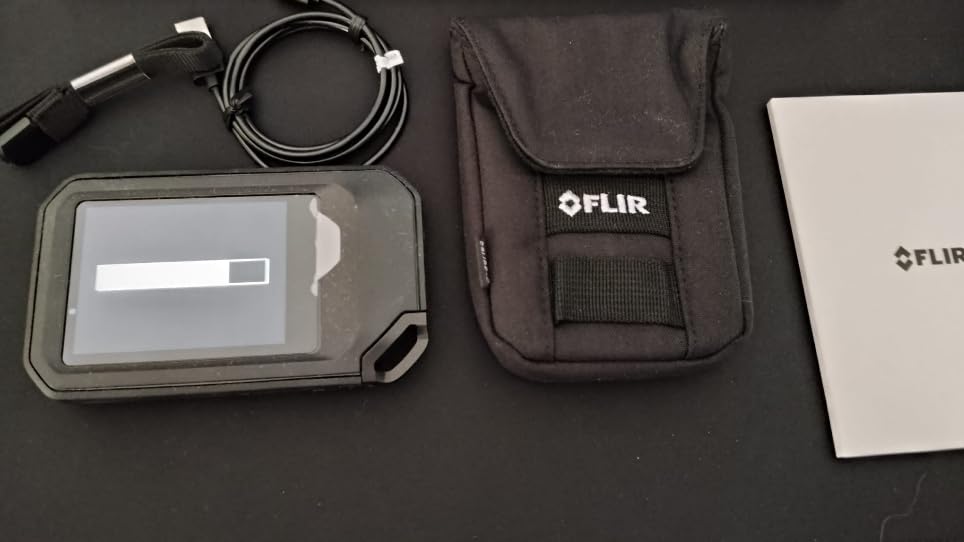
The IP54-rated rubberized body feels premium and durable. FLIR backs it with their 2-10 year warranty, which is the best warranty coverage in the industry. The included pouch, wrist strap, and USB cable round out a thoughtful accessory package.
The problems are hard to ignore at this price point, though. The 128×96 native resolution is lower than cameras costing a third as much. The frame rate is slow, there is no video recording, and the battery tops out at around 3 hours. You are paying a significant premium for the FLIR name, MSX technology, and the compact form factor.
Who Should Buy the C3-X
Professionals who want the smallest possible FLIR-branded thermal camera with cloud connectivity and MSX image enhancement. If you need a pocketable camera for quick spot-checks and you value FLIR’s ecosystem, warranty, and brand recognition, the C3-X delivers. It is also a good fit for managers who need to share thermal images with teams via the Ignite cloud platform.
Where the C3-X Falls Short
The value proposition is the main issue. At this price, you can get cameras like the HSFTOOLS HF96 with AI scene detection, 11-hour battery, and much higher resolution. The 128×96 native resolution is genuinely low for a professional tool, and the 3-hour battery life is the shortest on this entire list. If you do not specifically need FLIR’s ecosystem or the ultra-compact form factor, there are better values available.
10. Flagfront Thermal Camera – Best Budget Pick
Flagfront Thermal Camera, 240 x 240 TISR Resolution for Home Inspection
240×240 TISR Resolution
25Hz Refresh
50 FOV
IP54 Rated
6.6ft Drop Protection
Pros
- Most affordable option on our list
- 240×240 enhanced resolution
- 25Hz refresh rate feels smooth
- Wide 50-degree field of view
- IP54 with 6.6-foot drop protection
Cons
- Not Prime eligible
- Lesser-known brand with limited track record
- Limited documentation and support resources
- Adjustable emissivity but no detailed spec sheet
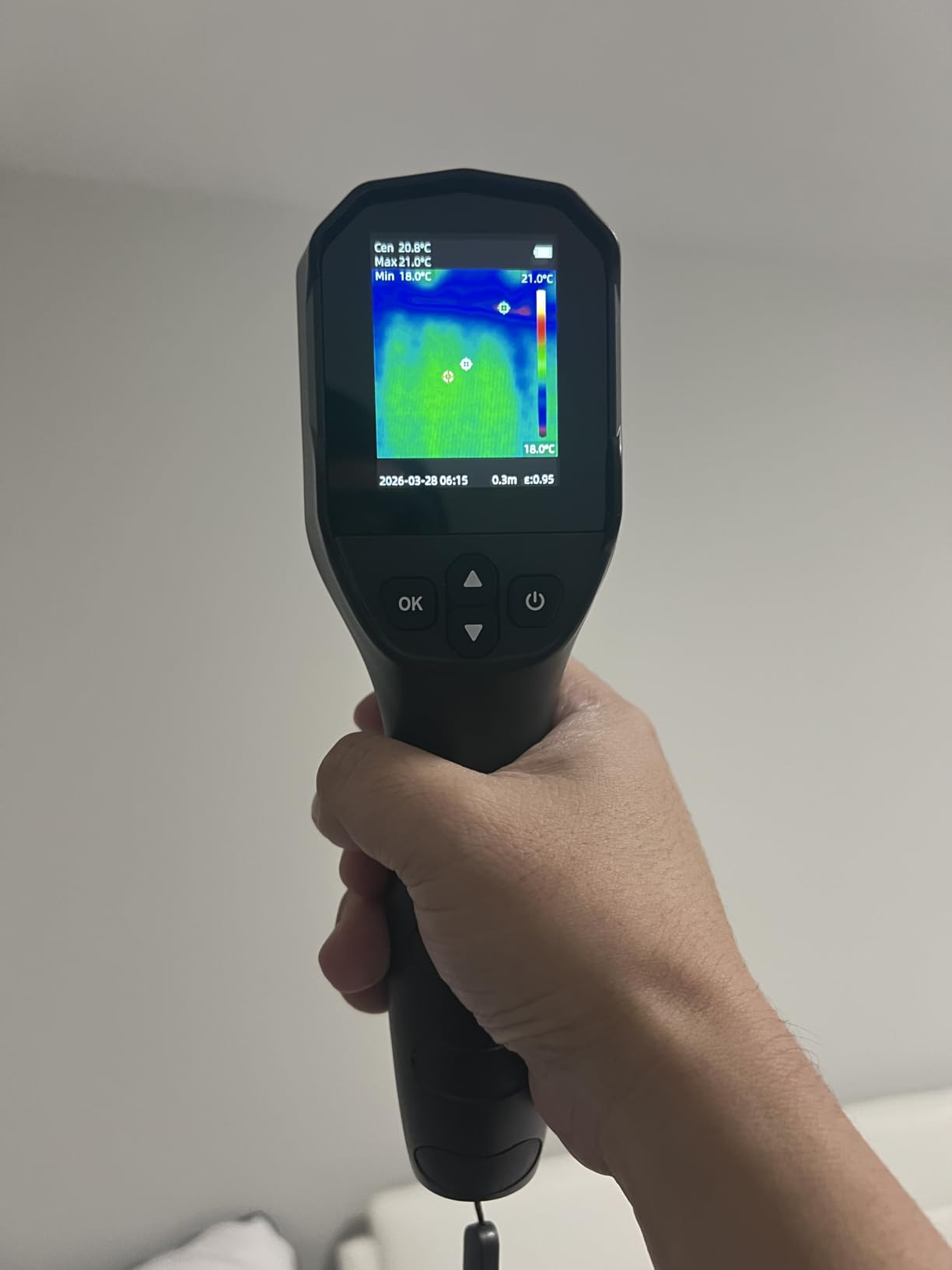
The Flagfront thermal camera proves that you can get usable thermal imaging for under $100. At this price, I was not expecting much, but the 240×240 TISR-enhanced resolution and 25Hz refresh rate deliver an experience that punches well above what you would expect. The image is clear enough for basic home inspection tasks, and the refresh rate keeps up with panning without the choppy lag that plagues ultra-budget thermal cameras.
The 50-degree field of view gives you a wide scanning area, which is helpful when you are sweeping across walls, ceilings, or large surfaces to find insulation gaps or air leaks. Six color palettes give you options for different visualization needs. The IP54 rating and 6.6-foot drop protection mean it can survive typical job site conditions.
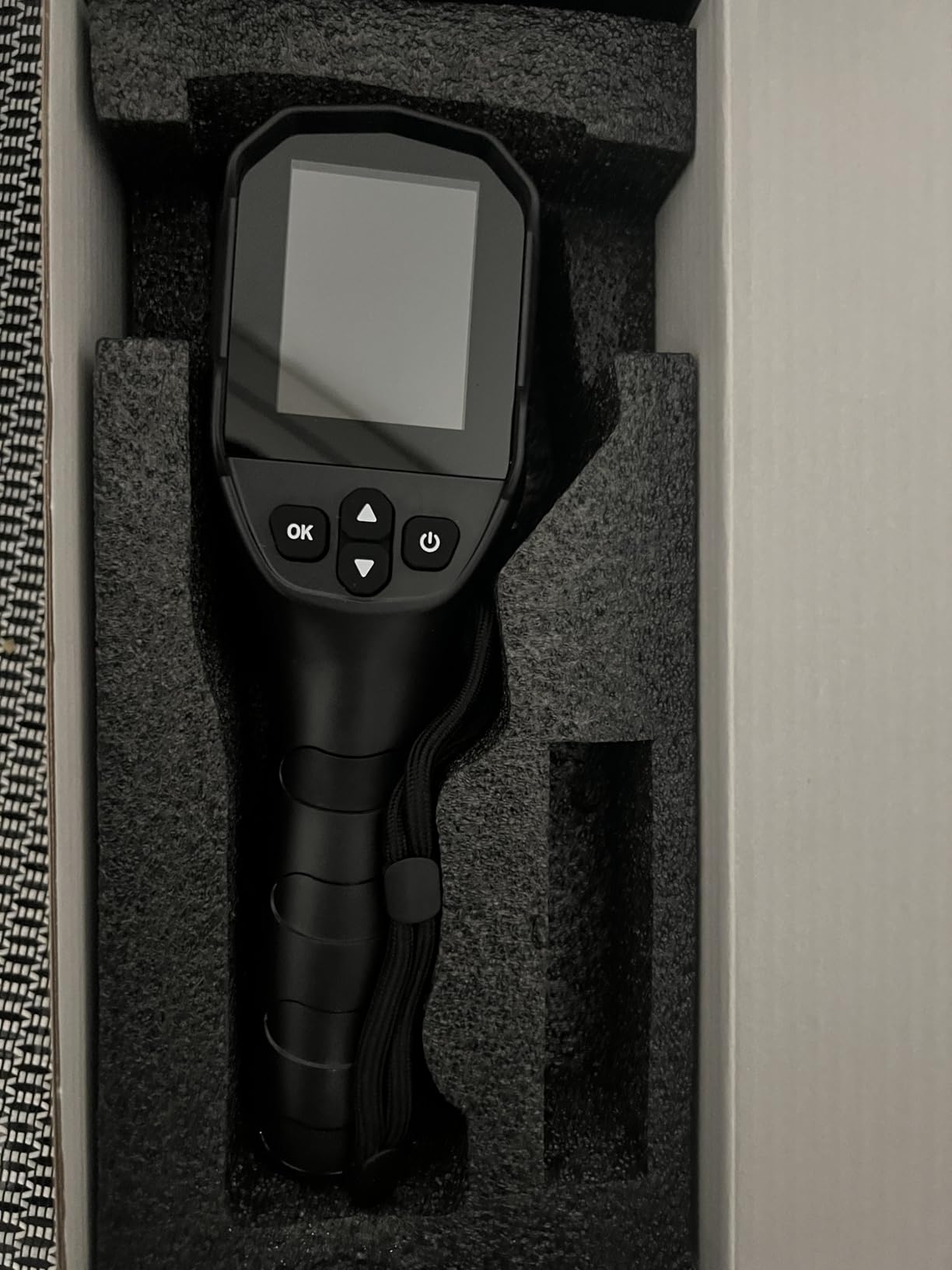
Temperature accuracy is rated at within 2%, which is competitive with cameras costing significantly more. The adjustable emissivity and distance settings let you fine-tune readings for different materials and measurement distances. The temperature alarm feature helps you quickly identify anomalies without studying the entire thermal image.
The trade-offs are real, though. Flagfront is not a recognized name in thermal imaging, and long-term durability and support are unknowns. The camera is not Prime eligible, so shipping may take longer. Documentation is sparse compared to established brands. You are accepting some risk with a lesser-known brand, but the performance-to-price ratio is hard to argue with.
Who Should Buy the Flagfront
First-time thermal camera buyers, curious homeowners, and anyone who wants to try thermal imaging without a significant financial commitment. If you are not sure whether you will use a thermal camera enough to justify a bigger investment, the Flagfront lets you get started for the lowest possible cost while still delivering usable results.
Where the Flagfront Falls Short
The brand is the biggest question mark. Without an established reputation, you are taking a chance on long-term reliability and customer support. The lack of Prime eligibility means slower shipping. And if you run into issues, the limited documentation and support resources could make troubleshooting harder compared to brands like TOPDON or FLIR that have established customer service channels.
How to Choose the Best Thermal Cameras in 2026?
Picking the right thermal camera comes down to understanding a few key specifications and matching them to how you plan to use the tool. Here is what actually matters when you are comparing models.
Thermal Resolution
Resolution determines how much detail you can see in a thermal image. Most affordable cameras have a native sensor resolution between 128×96 and 256×192 pixels. Many manufacturers use software enhancement like TOPDON’s TISR technology to upscale the display resolution to 240×240 or 512×384. These enhancements genuinely help, but a higher native resolution always produces sharper, more accurate thermal images. For basic home inspection, 128×128 native is workable. For professional use or electronics work, look for 256×192 or higher native resolution.
Refresh Rate: Why 25Hz Matters
This is the spec that most buyers overlook, and it is one of the biggest factors in day-to-day usability. Refresh rate is how many times per second the thermal image updates. Cameras at 7Hz or 9Hz feel laggy and choppy when you pan across a scene. You have to hold the camera still and wait for the image to settle before you can read temperatures accurately. Cameras at 25Hz update smoothly and feel natural to use. Our team strongly recommends choosing a camera with at least 25Hz refresh rate unless you only plan to use it for stationary spot-checks. This point comes up again and again in forums, and having tested both, the difference is night and day.
Temperature Range and Accuracy
Most thermal cameras in this category cover a temperature range from -4 degrees Fahrenheit to somewhere between 572 degrees Fahrenheit and 1022 degrees Fahrenheit. If you are doing HVAC or home inspection work, any of these ranges are more than sufficient. Accuracy is typically listed as a percentage plus or minus a fixed number of degrees, such as plus or minus 3.6 degrees Fahrenheit or 2%. For most practical purposes, accuracy within a few degrees is adequate. Just know that accuracy decreases at longer distances and on shiny or reflective surfaces, which is where adjustable emissivity becomes important.
Battery Life and Cold Weather Performance
Battery life ranges from about 3 hours on the FLIR C3-X to 24 hours on the AMPBANK H128. If you are doing all-day inspections, battery life matters a lot. One thing that forum users frequently mention is that battery performance drops significantly in cold weather, sometimes by 30 to 50 percent. If you plan to use your thermal camera outdoors in winter, factor that into your battery life expectations. Smartphone-powered cameras like the TOPDON TC001 and TC002C Duo avoid this issue since they draw power from your phone, but they will drain your phone battery faster. For more on how thermal factors affect device performance, see our guide on thermal performance testing methods.
Smartphone vs Standalone
Smartphone thermal cameras are smaller, lighter, and cheaper than standalone units. They use your phone’s display and processing power, which keeps the hardware minimal. The downsides are that you need your phone to use them, the USB-C connection can be finicky with phone cases, and battery drain on your phone can be an issue during long sessions. Standalone cameras are bulkier and more expensive but offer larger displays, internal storage, and batteries designed specifically for thermal imaging work. For occasional use, a smartphone attachment is hard to beat. For daily professional work, a standalone unit with a big screen and long battery life is the better call.
Field of View and Detection Range
A wider field of view, around 50 degrees, lets you scan large areas quickly but sacrifices detail at distance. A narrower field of view gives you more magnification for inspecting distant targets but covers less area per frame. Think about whether you will mostly be scanning walls and ceilings up close or checking electrical panels and roof surfaces from a distance. Also relevant to thermal management, our guide on thermal management in electronics covers how heat affects other types of devices.
IP Rating and Durability
IP54 is the standard protection level for thermal cameras in this price range. It guards against dust ingress and water splashes from any direction. The AMPBANK H128 steps up to IP65, which adds protection against water jets. If you work in wet or dusty environments, the higher IP rating is worth having. Drop protection ratings, typically 6.6 feet to 2 meters, give you confidence that the camera can survive typical job site accidents.
Frequently Asked Questions
Can I use my phone as a thermal camera?
Standard smartphones cannot detect heat on their own because their cameras only capture visible light. However, you can turn your phone into a thermal camera by attaching a thermal imaging dongle like the TOPDON TC002C Duo or TOPDON TC001. These plug into your phone’s USB-C port and use a companion app to display thermal images. The phone provides the display, storage, and processing power while the dongle handles the infrared sensing. This approach gives you high-quality thermal imaging at a fraction of the cost of a standalone camera.
What is the best thermal camera for home use?
For home use, the HSFTOOLS HF96 and TOPDON TC004 Mini are our top recommendations. The HF96 offers AI scene detection that automatically identifies common household problems like insulation gaps, water leaks, and electrical hotspots. The TC004 Mini is more compact and offers exceptional 15-hour battery life, making it perfect for weekend DIY projects and seasonal energy audits. Both deliver clear thermal images, accurate temperature readings, and are priced within reach of most homeowners.
What refresh rate do I need in a thermal camera?
We recommend a minimum of 25Hz refresh rate for a good user experience. Cameras with 7Hz or 9Hz refresh rates feel laggy when you pan or move the camera, requiring you to hold still and wait for the image to update before reading temperatures. A 25Hz refresh rate updates the image 25 times per second, which feels smooth and natural. If you only plan to use the camera for stationary spot-checks where you point and hold still, a lower refresh rate can work. For any kind of scanning or moving while inspecting, 25Hz makes a significant difference in usability.
Are cheap thermal cameras worth buying?
Yes, affordable thermal cameras have improved dramatically in recent years. Models like the HSFTOOLS HF96 at around $160 and the Flagfront at under $100 deliver performance that would have cost thousands just a few years ago. The key is to look for certain minimum specs: at least 128×128 native resolution (ideally higher), 25Hz refresh rate, and accuracy within 2-3%. Avoid cameras with refresh rates below 9Hz as they are frustratingly laggy. The budget options on our list all meet these thresholds and provide genuinely useful thermal imaging for home inspection, HVAC troubleshooting, and electrical work.
What is the difference between a thermal camera and night vision?
Thermal cameras detect infrared radiation (heat) emitted by objects and create images based on temperature differences. They work in complete darkness, through smoke, and in light fog because they do not rely on visible light at all. Night vision devices amplify existing ambient light (moonlight, starlight, infrared illuminators) to create a visible image. Thermal cameras can detect living creatures and heat sources at much greater distances and in worse conditions than night vision. However, thermal cameras cannot read text or show visual details like faces or colors. For hunting and security, thermal is generally superior for detection while night vision is better for identification.
Final Thoughts
Finding the best thermal cameras for your needs does not have to be complicated. For most people, the HSFTOOLS HF96 hits the sweet spot with its AI scene detection, smooth 25Hz refresh rate, and all-day battery life. Budget-conscious buyers should look at the TOPDON TC004 Mini for standalone use or the TOPDON TC002C Duo if you prefer a smartphone attachment. And if you just want to try thermal imaging without spending much, the Flagfront gets you started for the lowest price on our list.
Every camera on this list has been evaluated based on real-world performance, not just spec sheets. Pick the one that matches how you will actually use it, and you will have a tool that pays for itself the first time it finds a hidden problem that would have cost far more to discover the hard way.
Leave a Reply