
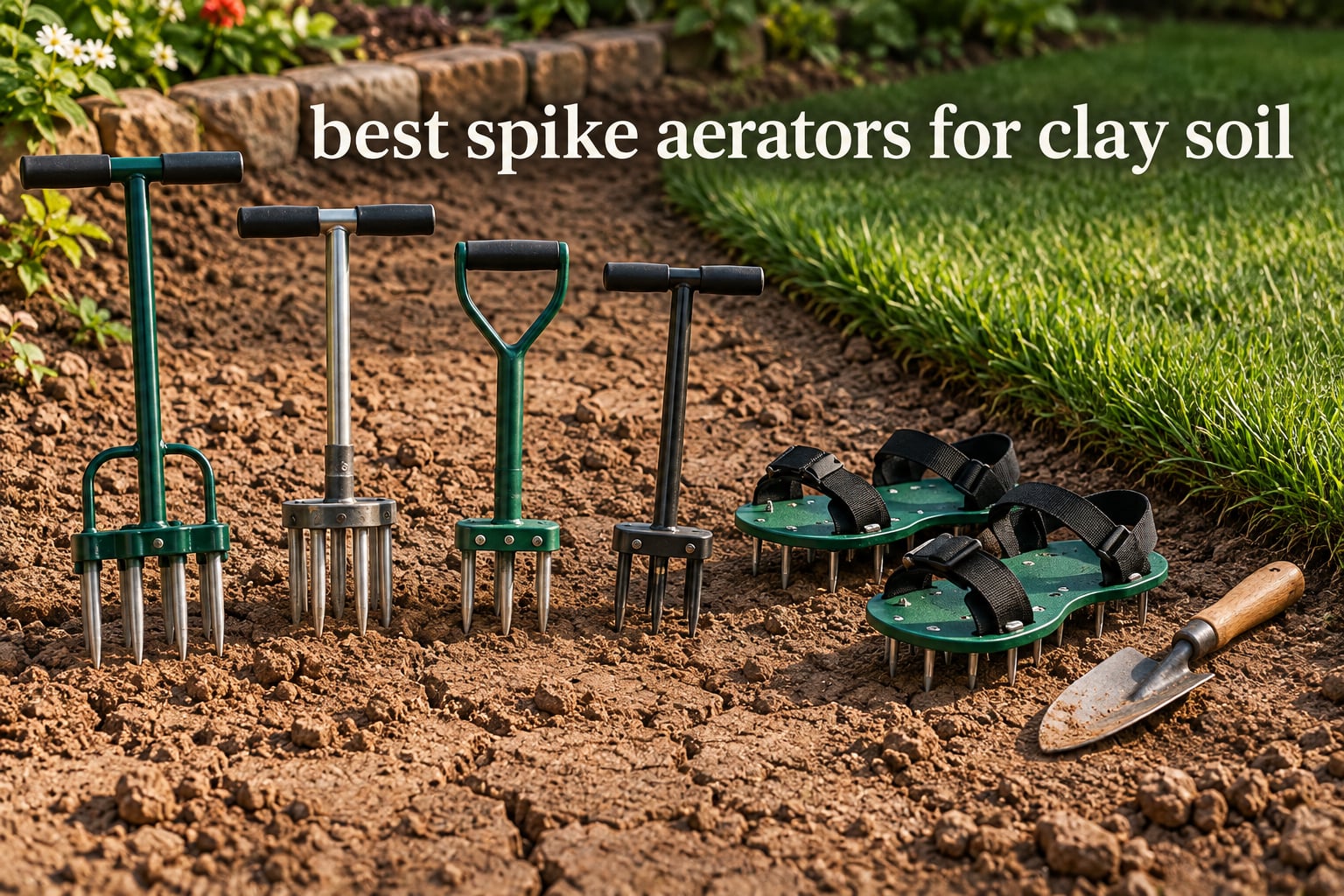
If your lawn sits on heavy clay, you have probably already stood on the lawn with a screwdriver and pushed until your knuckles went white, just to find out whether anything is wrong down there. That test is the fastest way to know whether you need a spike aerator at all, and the honest answer surprises a lot of people: for genuinely compacted clay, a hollow-tine core aerator beats a spike tool almost every time. That is why the best spike aerators for clay soil list below leads with the one product in the set that actually removes soil instead of just displacing it.
I have spent the last few seasons comparing spike length, spike geometry, foot plate width, ballast capacity, and the failure modes owners actually report after a season of clay work. My method is simple: read the specifications closely, then weight them against what buyers say after real use, especially the complaints about loosening fasteners, tines that bend on stones, and springs that stop returning. Nothing in this guide is rated on appearance or marketing copy alone.
Quick answer: Spike aerators suit small lawns under roughly 3,000 square feet, seed beds that need firming, and lightly compacted ground. They are the wrong primary tool for hard clay, because a solid spike pushes soil sideways and packs the hole walls tighter. On serious clay, rent a hollow-tine core aerator or buy a hollow-tine hand tool like the LawnVigor below, and use a spike tool for the edges and tight corners it cannot reach.
Two things shape everything that follows. First, spike tools have a genuinely useful job, and it is not aerating dead-hard clay. Second, the gap between a spike tool that punches holes and a core tool that pulls plugs is the single most important distinction in this whole category, so I cover it before any product recommendation.
Our Top 3 Spike Aerators for Clay Soil in 2026
These three cover the realistic buying decisions. The LawnVigor is the pick if your soil is truly clay and you want holes that stay open. The Walensee is the pick if you want the most ground covered per push for a small yard. The Colwelt is the pick if your problem is a few feet of near-concrete ground that everything else bounces off.

LawnVigor Hollow Tine Core…
- Three heat-treated hollow tines
- Removeable soil plugs
- Non-slip T-handle

Walensee 4-Row Spike Aerator
- 20 steel spikes at 2.8 inches
- Four-row foot plate
- Powder-coated steel

Colwelt C082 Spike Aerator
- Four 3.5-inch thick spikes
- 38-inch cushioned handle
- 6-inch foot plate
Comparing 10 Spike Aerators Side by Side in 2026
Every tool below is a manual spike or spike-adjacent aerator for lawn use. Spike count and spike length are the two numbers that decide whether a tool suits your ground, so I have kept those in the table rather than burying them in prose.
| Product | Specs | Action |
|---|---|---|
| LawnVigor Manual Lawn Core Aerator |
|
Check Latest Price |
| Walensee 4-Row Lawn Aerator |
|
Check Latest Price |
 Jardineer 36-Inch Lawn Aerator Jardineer 36-Inch Lawn Aerator |
|
Check Latest Price |
| Colwelt C082 Lawn Aerator |
|
Check Latest Price |
 Saker Manual Lawn Aerator Saker Manual Lawn Aerator |
|
Check Latest Price |
 Onadak 15 Steel Spike Aerator Onadak 15 Steel Spike Aerator |
|
Check Latest Price |
 Leweio Lawn Aerator Shoes Leweio Lawn Aerator Shoes |
|
Check Latest Price |
 RIFPOD Manual Lawn Aerator RIFPOD Manual Lawn Aerator |
|
Check Latest Price |
 Bluesea 16-Spike Lawn Aerator Bluesea 16-Spike Lawn Aerator |
|
Check Latest Price |
 Seeutek 23-Inch Rolling Aerator Seeutek 23-Inch Rolling Aerator |
|
Check Latest Price |
Should You Even Use a Spike Aerator on Clay Soil?
You can use a spike aerator on clay soil, but on hard clay it is usually the wrong tool. A solid spike displaces soil downward and sideways rather than lifting it out, so the ground around each hole can end up denser than it started. On loose or only lightly compacted ground that displacement is harmless. On cemented clay it works against you.
That is not a marketing opinion. It is the standard position in cooperative extension turf and soil guidance, and it is the reason nearly every serious lawn reference recommends hollow-tine coring on heavy soils. The spike tool did not become a bad tool. It became the wrong tool for a specific soil condition.
So where does spiking genuinely earn its place? Two situations come up constantly in lawn forums. The first is seed contact after overseeding, where you want shallow holes and firm soil pressed around new seed rather than loose cores thrown on top. The second is spot work on worn paths and traffic lanes in an otherwise decent lawn, where the compaction is shallow and the surrounding soil is not clay at all.
There is also a practical hybrid that experienced owners use. Core the open lawn, then spike the corners, along fences, and around tree roots where the core tool cannot reach. Several reviewers pair a hollow-tine hand tool with a lighter spike tool for exactly this split, using the spike for the tight spots it cannot cover quickly.
One more honest note about expectations. Spike holes are shallow by design and they close. If your goal is a visible change next spring, no spike tool on any soil will deliver that. If your goal is getting water and air into a small area cheaply, they are fine.
Waterlogged ground deserves a separate look, and our guide to pond aerators covers circulation in standing water, which is a different problem from lawn compaction on saturated clay.
Do You Actually Have Clay Soil and Compacted Ground?
Test before you buy. Buying a spike tool for loose soil wastes your time, and buying any manual tool for a large hard-clay lawn wastes your weekend.
The ribbon test for clay content
Take a moist handful from 4 inches down and roll it between your thumb and finger. A clay soil forms a ribbon that holds together and can be bent into a ring without snapping. Loam crumbles. Sand falls apart before it ever gets going.
If the ribbon breaks at about half an inch, you have a clay loam, which is the easiest soil in this category to work. If it holds a long unbroken ribbon, you are dealing with heavy clay and should plan on a core aerator rather than a spike tool.
The screwdriver test for compaction
Push a standard flat-head screwdriver into the lawn in a few spots, including a healthy-looking area for comparison. In uncompacted soil it goes in with light hand pressure. In compacted ground you will need to lean on it with both hands, and in severely compacted clay it barely enters.
Do this before and after rain. If the screwdriver only meets resistance in dry weather and sinks easily two days after watering, your problem is that the soil is simply hard and dry, not that it is compacted. Watering solves that, and no tool is required.
Watching for drainage and root symptoms
Puddles that linger long after rain, thin grass in high-traffic lanes, a spongy feel underfoot in spring, and roots that stay in the top inch or two of soil all point the same direction. Those are the symptoms where aeration of any kind pays off, and they are also the symptoms where the spike-versus-core decision matters most.
Spike vs Core Aerator: The Honest Comparison
A core aerator pulls a cylinder of soil out of the ground and lays it on the surface. A spike aerator pushes a solid shaft into the ground and leaves a hole. That one mechanical difference decides which tool belongs on your soil, and it is why a spike tool on heavy clay can leave you worse off than doing nothing.
Here is the comparison across the factors that actually matter on clay ground.
Soil removed. Core removes a plug, typically a few inches deep. Spike removes nothing. The spike compresses everything it displaces into the surrounding soil.
Depth. Core tools reliably reach 2 to 4 inches, depending on soil moisture and weight. Spike tools typically penetrate 1.7 to 3.5 inches, and they reach depth because the spikes are long, not because the soil opened for them.
Effect on hard clay. Core relieves compaction and leaves open macropores that hold air and water. Spike creates a puncture that may be narrower than the surrounding pore structure and can re-compact the rim.
What it leaves behind. Core leaves visible plugs that should be left on the lawn. Spike leaves nothing to break down.
How long the result lasts. Core holes stay open for weeks to months depending on clay content. Spike holes close in a matter of weeks, especially in clay.
Effort and access. Spike tools are far cheaper and reach corners, beds, and confined spaces. Core tools need weight, power, or repeated body weight to work at all.
Best use. Spike for seed contact, light surface compaction, and tight areas. Core for hardpan, puddling, worn traffic lanes, and anything genuinely clay.
Why a spike can make clay worse
When a solid spike enters dense ground, the soil it meets has to go somewhere. It moves down and sideways into the pore space immediately around the hole. On a soft, organic, or sandy soil there is room for that soil to shift. On clay there is barely any pore space to begin with, so the displaced material packs into a tighter ring around every hole. Repeat that across a lawn and you have made the surface denser in a regular grid pattern.
This is why the honest recommendation is not never use spikes. It is never use spikes as your primary treatment for clay. Use them for the jobs they are genuinely good at, and get a hollow-tine tool for the ground itself.
Where spiking is still the right call
Overseeding is the clearest case. After broadcasting seed, walking the lawn in spike shoes or stepping a spike aerator across it presses seed into firm contact with damp soil, which is exactly what germination needs. Sowing onto loose, open soil and hoping for rain is a worse plan.
The second case is thin, worn ground that is not clay underneath. If a traffic path has packed down the top inch or two over good soil beneath, a spike tool relieves that surface compaction cheaply and quickly, and the holes do not need to last a season.
1. LawnVigor Manual Lawn Core Aerator – The Hollow Tine Pick That Earns Its Place on Clay
Manual Lawn Core Aerator for Compacted Soil with Non-Clogging Hollow Tines
Three heat-treated hollow tines
Removes soil plugs
15 x 10 x 2.8 inches
Pros
- Hollow tines pull real soil cores on dense clay
- Replaceable heat-treated tines
- Spikes and fixings included for fast assembly
- Handles included
- Non-slip grip holds up over long sessions
Cons
- Only three tines means very slow coverage on large lawns
- Handle grip sleeves can spin loose and blister
- Grass and small roots collect around the tine gaps
This is the one I recommend for clay, and it is on the list precisely because it is not really a spike aerator. It uses three hollow tines that cut a core and push it up through the shaft, so soil leaves the ground instead of being shoved aside. On heavy clay that is the whole difference between making progress and rearranging the problem.
Owners with clay ground consistently report quarter-sized plugs coming out clean without the tool jamming, and the heat-treated steel holds its edge against clay and small roots. At 4.5 stars across 255 reviews, the feedback cluster is unusually consistent for a tool in this category.
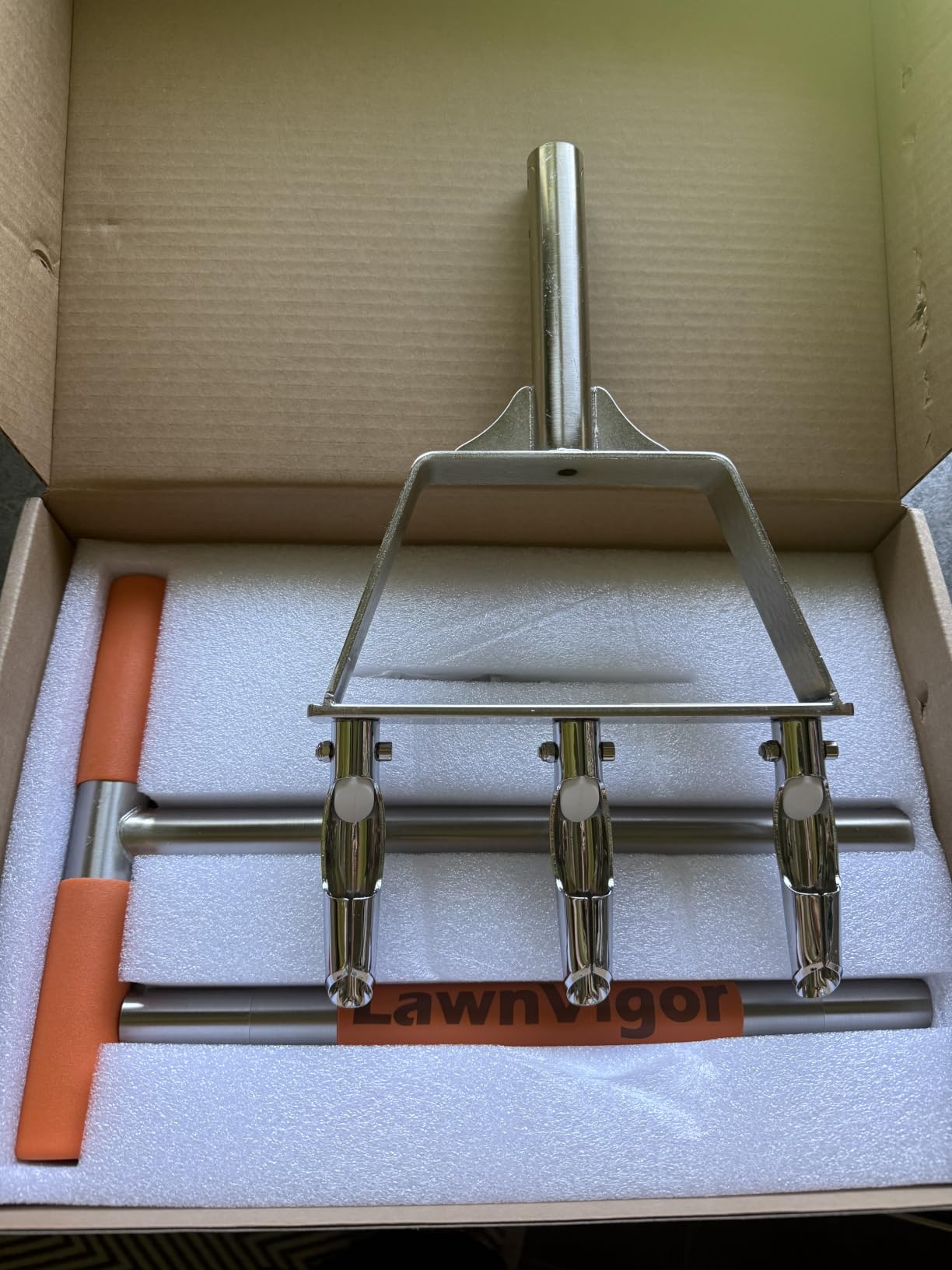
Hollow tines and how deep they actually go
Three hollow tines sound unambitious until you understand that the tool works on pressure alone. With moist soil, one owner covered roughly 2,000 square feet in about an hour with no back pain the following day. On hard clay you will be slower, and the manufacturer is explicit that the soil must be watered first or the tines will simply skate.
The white plastic inserts inside the tines matter more than they look. They release the soil plug as you lift, and pulling them out defeats the self-ejecting action that owners credit with never jamming in repeated use.
Build, hardware, and the small complaints
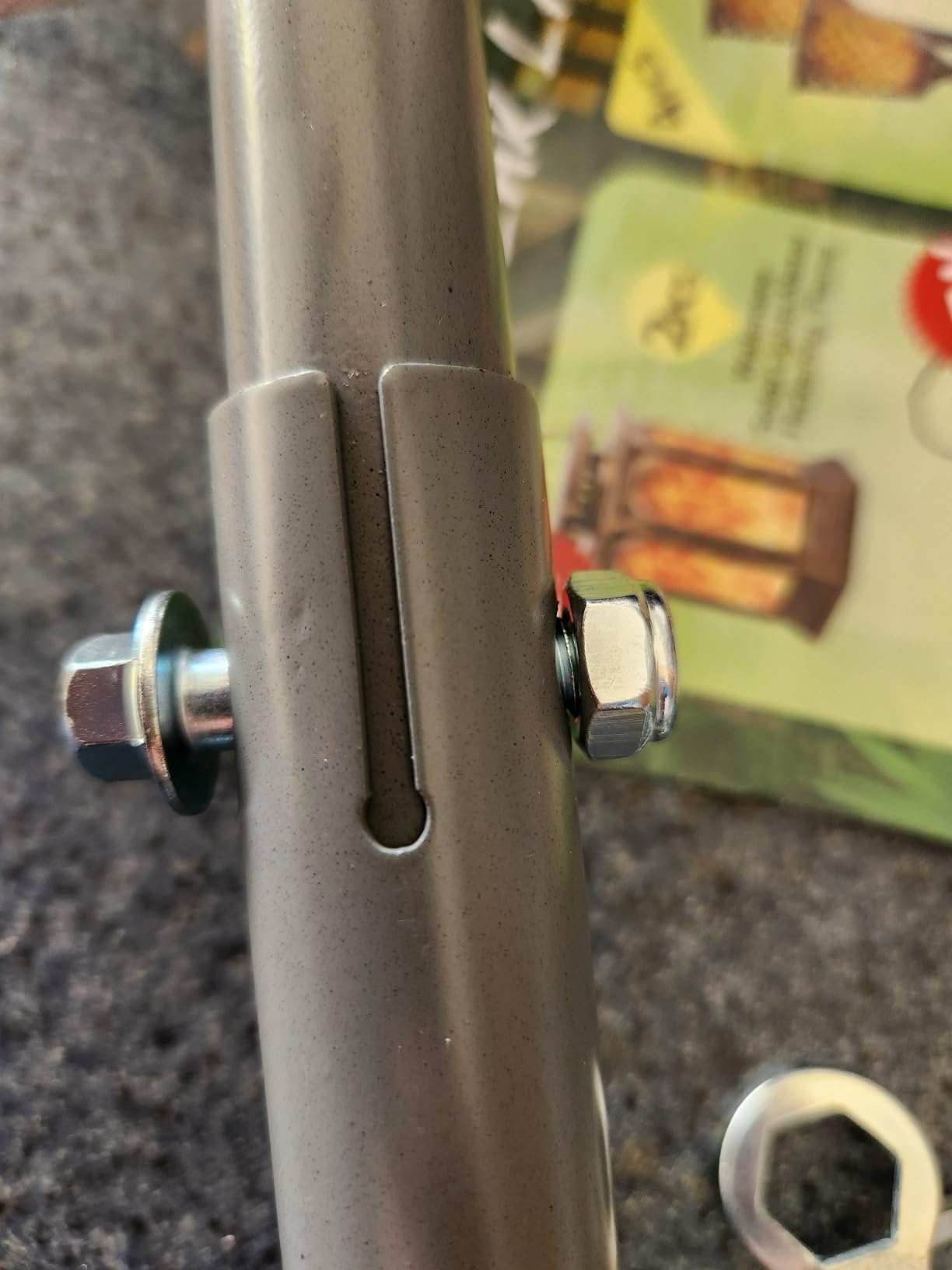
The build is what reviewers single out: quality hex hardware, wrenches included, and replaceable spike tips so a bent tine is not a dead tool. The grip sleeves are the most common complaint, with owners reporting they can rotate during use and cause blisters on a long session.
Grass and small roots lodge in the gaps around the tines, which means a screwdriver comes out with you. That is a five-second nuisance per few hundred feet, not a defect, but it is worth knowing before a large yard.
Who should buy it, and who should not
Buy this if your soil is genuinely clay, your lawn is small to medium, and you are willing to water first and work slowly. It is also the tool to pair with a wider spike aerator: core the open lawn, then use a spike tool for the edges.
Skip it if you have more than a few thousand square feet of hard clay and no patience for a slow pace. Three tines covers a very small area per foot push, and no amount of enthusiasm changes that arithmetic.
Handling clay that is dry and rock-hard
The honest limit is that this tool needs body weight and moisture. Owners working bone-hard dry clay report needing real effort, and the manufacturer advises against rocking or twisting the tool in the ground, which can bend a hollow tine. If your ground has not absorbed water in the day or two before you start, water it and come back.
2. Walensee 4-Row Lawn Aerator – Twenty Spikes and the Best Coverage Per Push
Walensee 4-Row Lawn Aerator Tool with 20 Steel Spikes for Small Yards
20 steel spikes at 2.8 inches
Four-row 9.2 x 5.5 inch foot plate
34.6-inch overall length
Pros
- Widest spike count for the money
- Well-built steel expected to last many seasons
- Quick assembly with all fixings included
- 2.8-inch holes on moist ground
- Lightweight enough to use without heavy fatigue
Cons
- Plain steel spikes rust quickly if left damp
- Slow on large yards
- Solid spike holes close over quickly
- No protective cover included
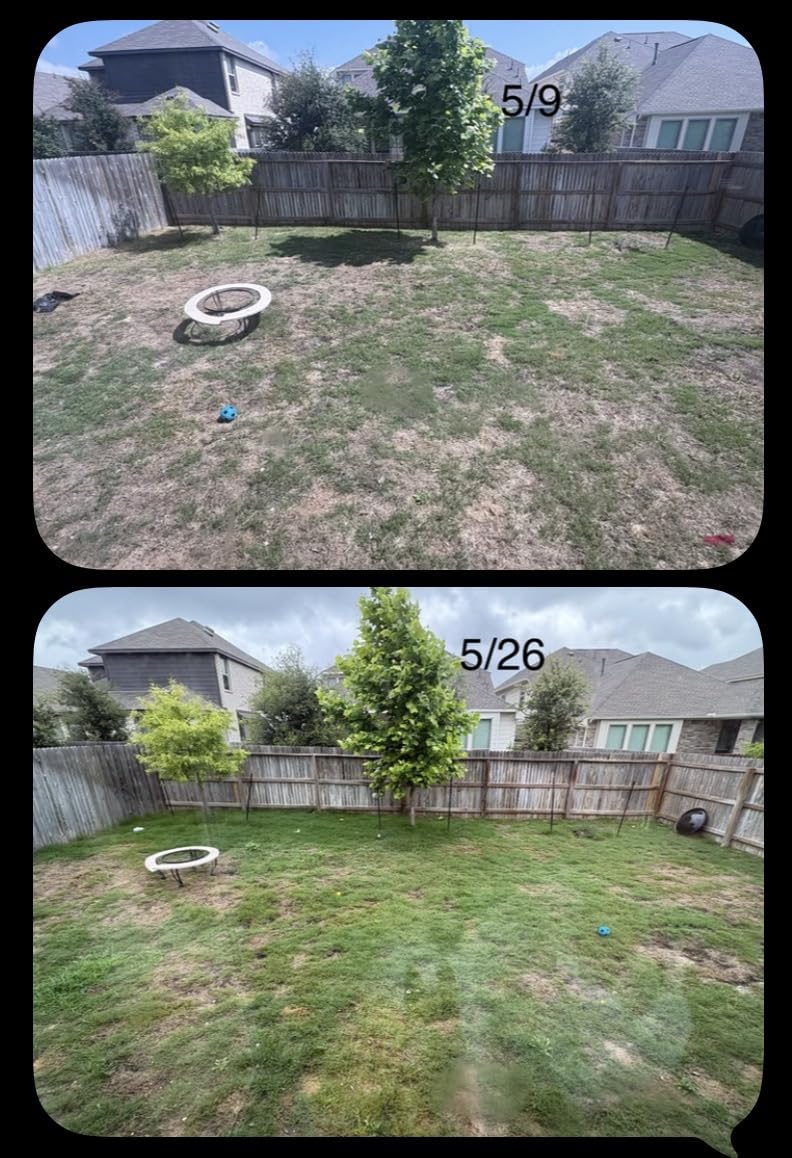
With 2,787 reviews at 4.3 stars, the Walensee is the most owner-tested spike aerator in this roundup by a wide margin, and that volume of feedback is what makes it useful. The consensus is a sturdy, well-made spike tool that does its job on small lawns, edges, and reseeding patches, with many buyers reporting greener, thicker grass after a season.
The 20 spikes across four rows is what separates it from the four-tine tools. You get roughly five times the holes per press, which is the difference between finishing a small yard in an afternoon and finishing it in several evenings.
Spike geometry and the four-row foot plate
The spikes measure 2.8 inches with a 9.2 by 5.5 inch foot plate, and the overall length of 34.6 inches keeps your back reasonably straight. That plate is wide enough to stand on with confidence and put your full weight straight down, which is how you get depth out of a manual spike tool.
Owners report the spikes enter moist ground easily and produce meaningful 2.8-inch holes. The manufacturer is candid that this is a tool for firm but workable soil, and advises caution on extremely hard dry ground or loose sand.
Corrosion is the top complaint
The spikes are plain steel, and buyers repeatedly note that they rust if left damp or outdoors through winter. Once a spike corrodes it can drag rather than slide, and that is the most common reason owners retire this tool between seasons.
Dry it off after use and store it somewhere dry, and it will outlast several lighter competitors. A light coat of spray oil at the end of the season costs nothing and covers the problem entirely.
Where the time cost shows up
The second most repeated complaint is speed on larger yards. The footprint is generous for a foot tool, but it is still a foot tool. Several European reviewers add a technical point worth knowing: solid spikes close over fairly quickly compared with hollow-tine designs, which is a real limitation on clay.
Replacement spikes are included, which is a nice touch given the rust issue, and the tool is also offered in a three-row configuration if your space is tight.
Best use and worst use
This is my pick for small lawns, lawn edges, garden borders, and spot aeration before reseeding. It is a strong choice if you want the most ground covered per push without moving up to a heavy roller.
It is a poor choice for a large property, and it will not help much on truly hard clay where you need plugs rather than punctures. Pair it with the LawnVigor above and you cover both cases well.
3. Jardineer 36-Inch Lawn Aerator – Pre-Assembled Steel for Mid-Size Yards
Jardineer Lawn Aerator Tool, Updated 36″ Spike Aerator Lawn Tool with Longer Spikes, Pre-Assembled Manual Grass Aerator for Lawn Aeration, Soil Aerating
12 heat-treated spikes at 2.75 inches
36-inch back-saving frame
Powder-coated thick foot plate
Pros
- Twelve spikes work at once for solid coverage
- Thick foot plate takes full body weight
- Pre-assembled and detaches for storage
- Powder-coated steel resists damp lawn wear
- 36-inch height reduces bending
Cons
- Twelve spikes cover less than four-row designs
- Rubber grip wears down on long sessions
- Solid spikes compact rather than core
- Assembly still needs tube alignment
The Jardineer sits in the middle of this list on price, weight, and capability, which is exactly why it works for a lot of yards. At 5.1 pounds and 546 reviews, it is a dependable mid-size spike aerator with a powder-coated steel frame and a foot plate that accepts full body weight without complaint.
It ships pre-assembled with a wrench and manual, and it detaches for storage. That matters more than it sounds if you have a garage already occupied by a mower, a tiller, and somebody’s boat.
Twelve spikes at 2.75 inches
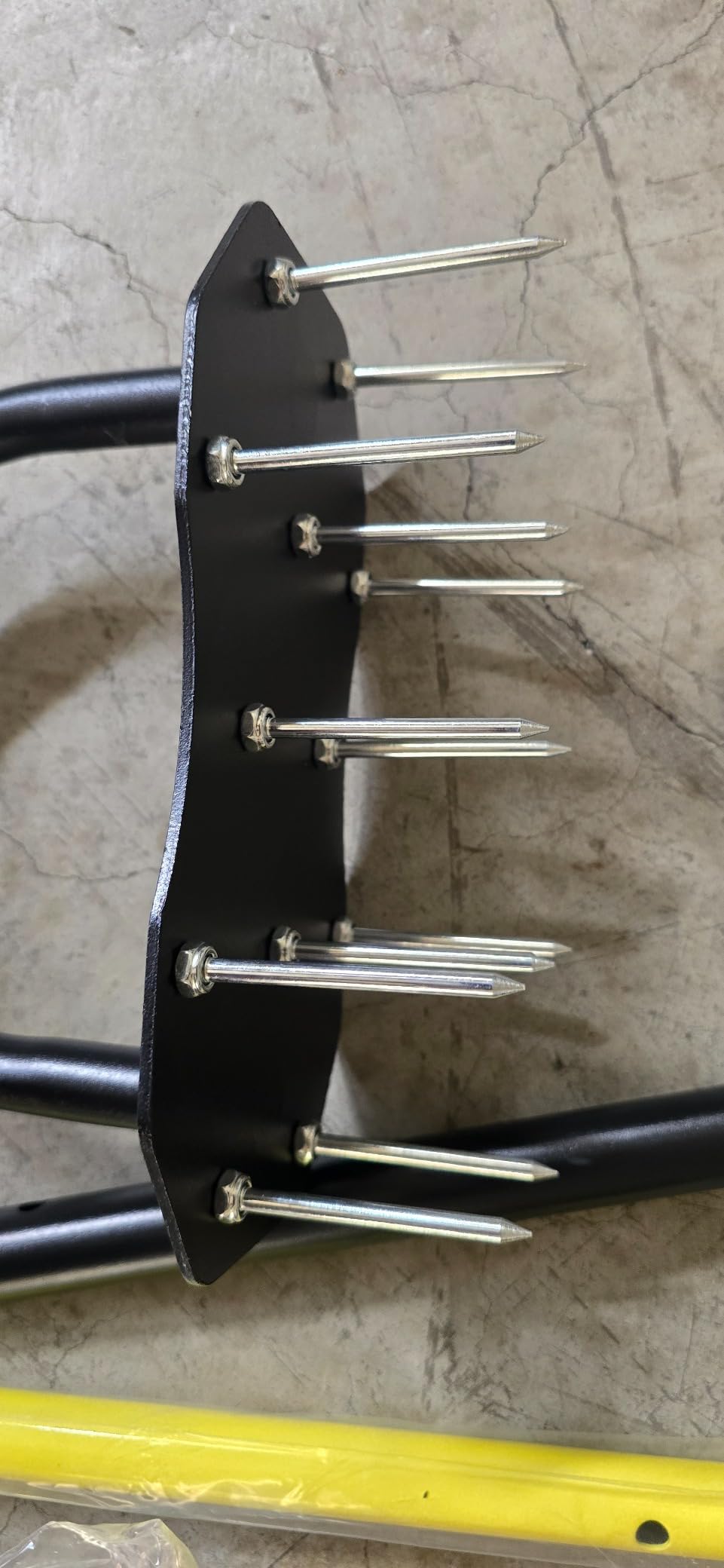
The spikes are heat-treated and measure 2.75 inches, working simultaneously as you step. That is deeper than most tools in this price range and comparable to the Walensee, though with fewer of them. You cover less ground per press and go about as deep.
The 36-inch frame is tall enough that you work with a slight bend rather than a full stoop, and the rubber grip is adequate rather than luxurious. The manufacturer recommends keeping the soil moist by sprinkling water first or aerating after rain, and owners confirm this makes a large difference on hard ground.
Why the 4.2-star average is fair
There is a meaningful cluster of three-star reviews, and they come from predictable places. Users who expected faster coverage on bigger lawns are disappointed by the twelve-spike footprint. People working a whole afternoon find the grip less comfortable than they hoped.
That split is honest and worth stating plainly: this is a good tool bought for the wrong size yard, or used for eight hours at a stretch. It is not a durability problem. Reviewers describe the foot plate standing up to full body weight and the powder coat holding up in damp lawn conditions.
Assembly, storage, and clay behaviour
Pre-assembled does not mean zero assembly. You still align tube sections and tighten bolts, but it is minutes rather than an afternoon. The detachable design means it goes back in a corner of the garage rather than leaning against a wall all season.
On clay, owners specifically report that watering beforehand makes the tines enter hard soil far more easily. Unwatered, the same tool that handles firm ground will simply slide across the surface.
Where it fits against the others
Choose the Jardineer when your yard is bigger than a corner treatment but smaller than a project, and you want something sturdy that stores compactly. Skip it if your main goal is speed, in which case the Walensee four-row or the Bluesea sixteen-spike grid will get you around the lawn sooner.
Its solid spikes compact rather than core, so on hard clay this is a surface-relief tool, not a fix. Treat it as such and it performs well.
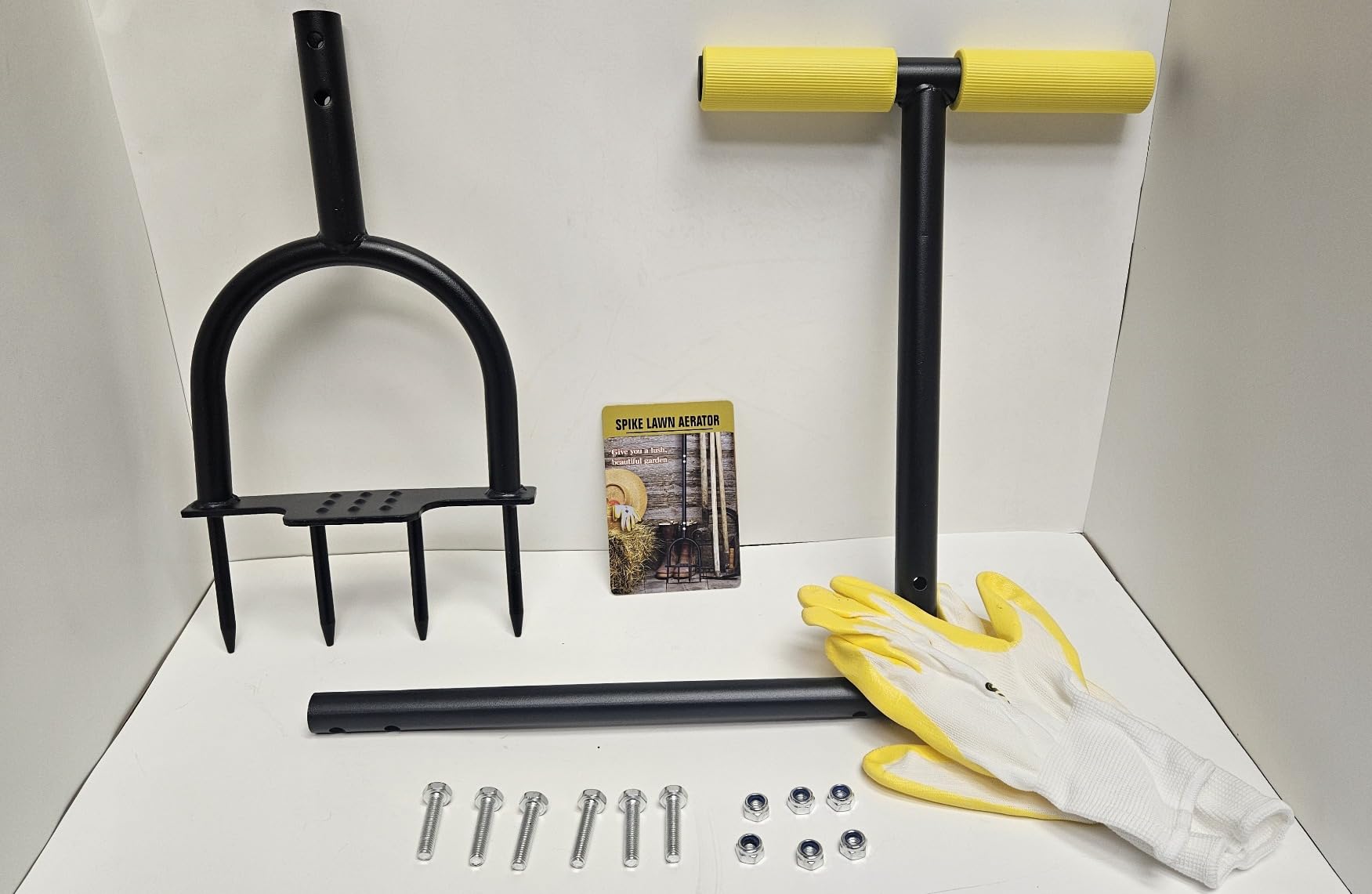
4. Colwelt C082 Lawn Aerator – The Longest Spikes for Hard Clay
Colwelt Aerator Lawn Tool, Manual Lawn Grass Aerator with Rugged Wide Spike
Four 3.5-inch spikes at 2/5-inch diameter
38-inch cushioned handle
6-inch anti-slip foot plate
Pros
- Longest and thickest spikes in this set
- Big holes in compacted clay
- Quick 90-second assembly
- Gloves and tools included
- Spikes survive contact with rocks and roots
Cons
- Only four spikes means slow coverage
- Play in the tube joints can slip
- Demanding physical effort
- Foot pad is small for some users
At 4.5 stars from 230 reviews, the Colwelt has the highest rating in this set alongside the LawnVigor, and the reason is specific rather than general: spike geometry. The spikes measure 3.5 inches long and 2/5 inch in diameter, against a typical 2.3-inch, 1/5-inch spike on competing tools.
That is a genuinely different tool for hard clay. Longer and thicker means bigger holes, more penetration per press, and far more resistance to bending when you hit something unexpected underground.
Why 3.5-inch spikes change the outcome on clay
Owners consistently single out the spike geometry as the reason for the rating. On compacted clay, a longer spike reaches below the layer that a standard tool barely scratches, and the thicker diameter opens a hole with real volume instead of a puncture.
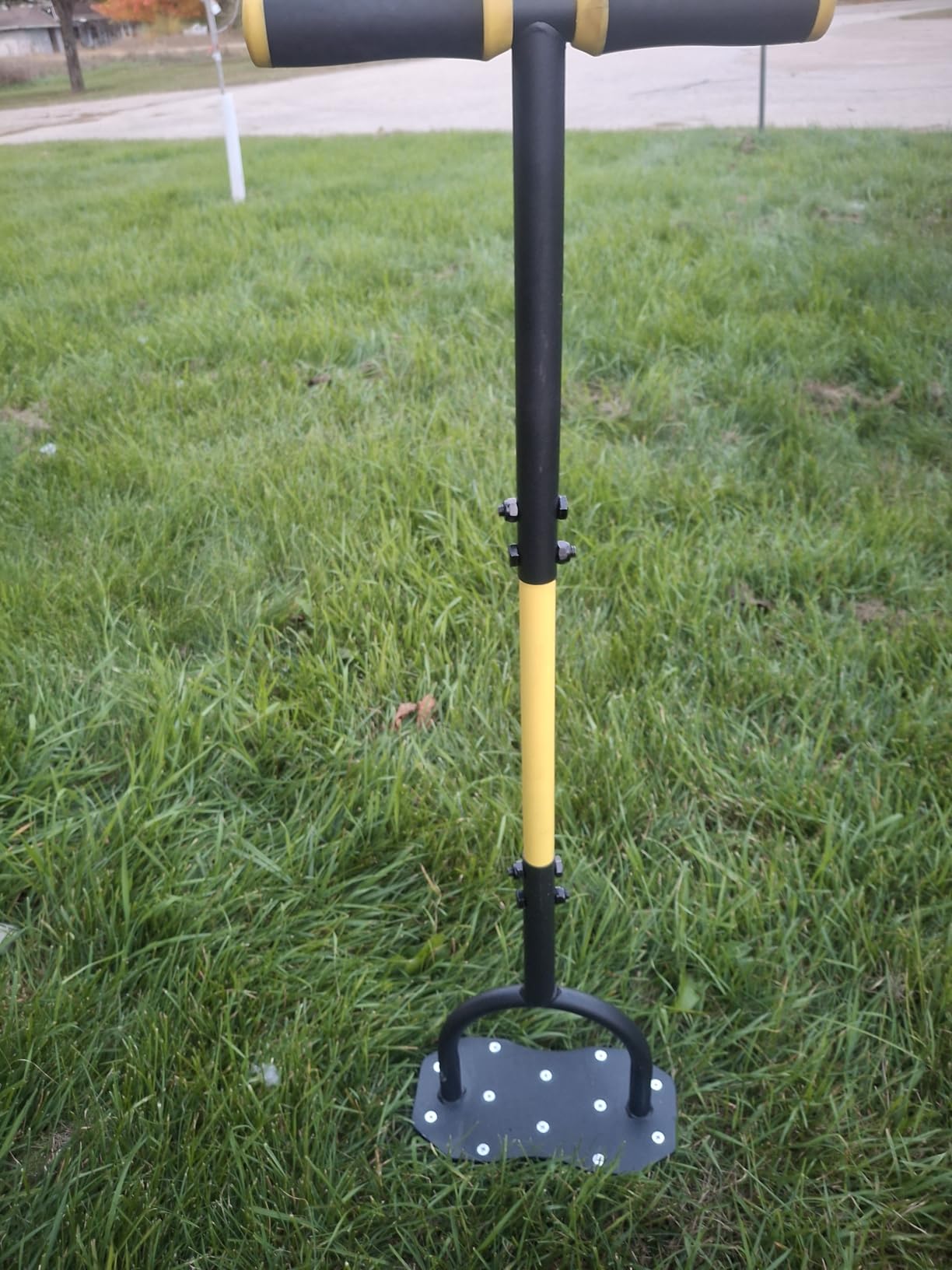
The 38-inch overall height reduces back strain compared with shorter tools, and the cushioned T-handle adds comfort on top of that. The foot plate measures 6 inches wide and 5.5 inches high, wide enough to accept larger feet and work boots, and owners say it stays stable and gives real control over depth.
Durability on rocky, stony clay
Several reviewers document spikes surviving repeated contact with large rocks and tree roots without breaking, which is the failure mode that ends most cheap spike tools in clay. If your ground has stones in it, this is the one to consider.
Assembly takes about 90 seconds with hardware and wrenches in the box, and work gloves are included, which is a small courtesy that saves you finding a pair before you start.
The four-tine trade-off, stated plainly
Four spikes is the entire limitation. Multiple owners say it is fine for small lawns and tight areas but far too slow for full-yard aeration, and that is an accurate summary. There is no way around the arithmetic with a foot tool of this size.
Two smaller complaints come up repeatedly. There is play in the tube sections that reduces grip unless the joint is dressed with tape, and the foot pad is on the small side for people with larger feet. Expect to work hard and sweat for visible results; several owners describe it as exactly that.
The case for owning two tools
This is the tool I would pair with a hollow-tine aerator. Core the open lawn where speed and plug depth matter, then bring the Colwelt to the corners, edges, and stubborn spots where the core tool cannot fit and the ground is at its hardest.
If you only want one spike tool and your soil is the hard kind, this is the one. The spike length is the whole argument.
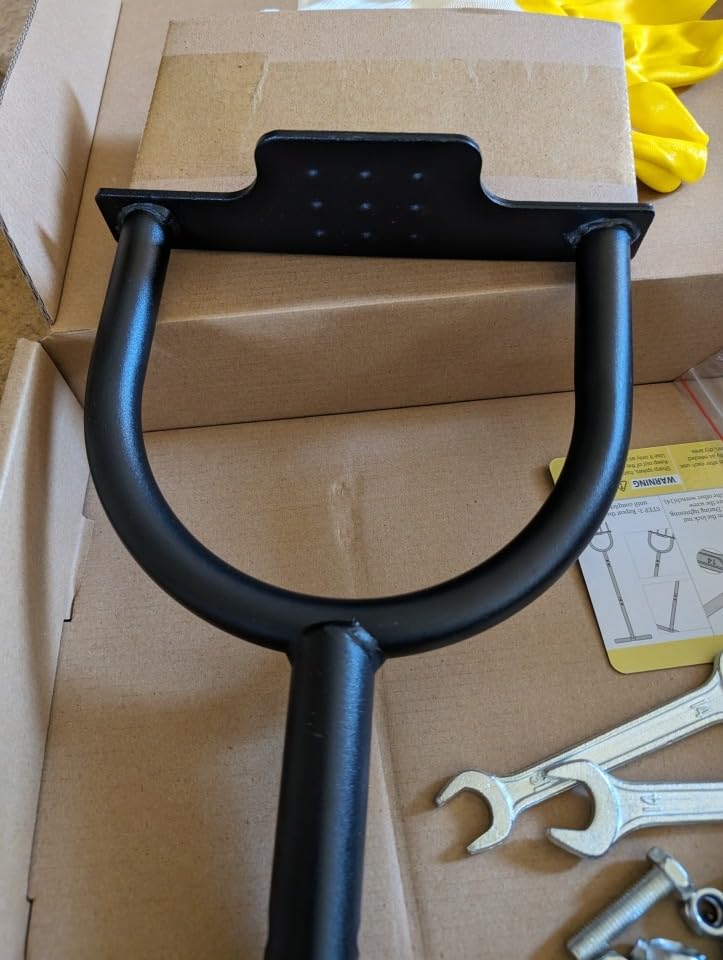
5. Saker Manual Lawn Aerator – The Self-Cleaning Spring Design
Saker Manual Lawn Aerator Tool with 15 Iron Spikes Black
15 iron spikes at 2.3 inches
Double-layer soil-ejecting spring
Height adjustable 32.2 to 35.4 inches
Pros
- Self-cleaning spring ejects soil and debris
- 15 spikes give good coverage per press
- Screw-fastened foot pedal beats a welded joint
- Adjustable height suits different users
- Thickened iron with rust-resistant coating
Cons
- 2.3-inch spikes are short for deeply compacted clay
- Spring adds resistance and effort
- Rating spread includes effort complaints
- Colour variants differ between listings
Clogging is the single most repeated complaint about spike aerators on wet clay, and the Saker is designed directly against it. The built-in double-layer spring ejects soil and debris during use, which owners credit with meaning the spikes rarely clog even in wet ground.
That is a real and specific advantage, not a marketing line. Most competing tools need a screwdriver and a pause every few dozen feet once wet clay starts packing the tines.
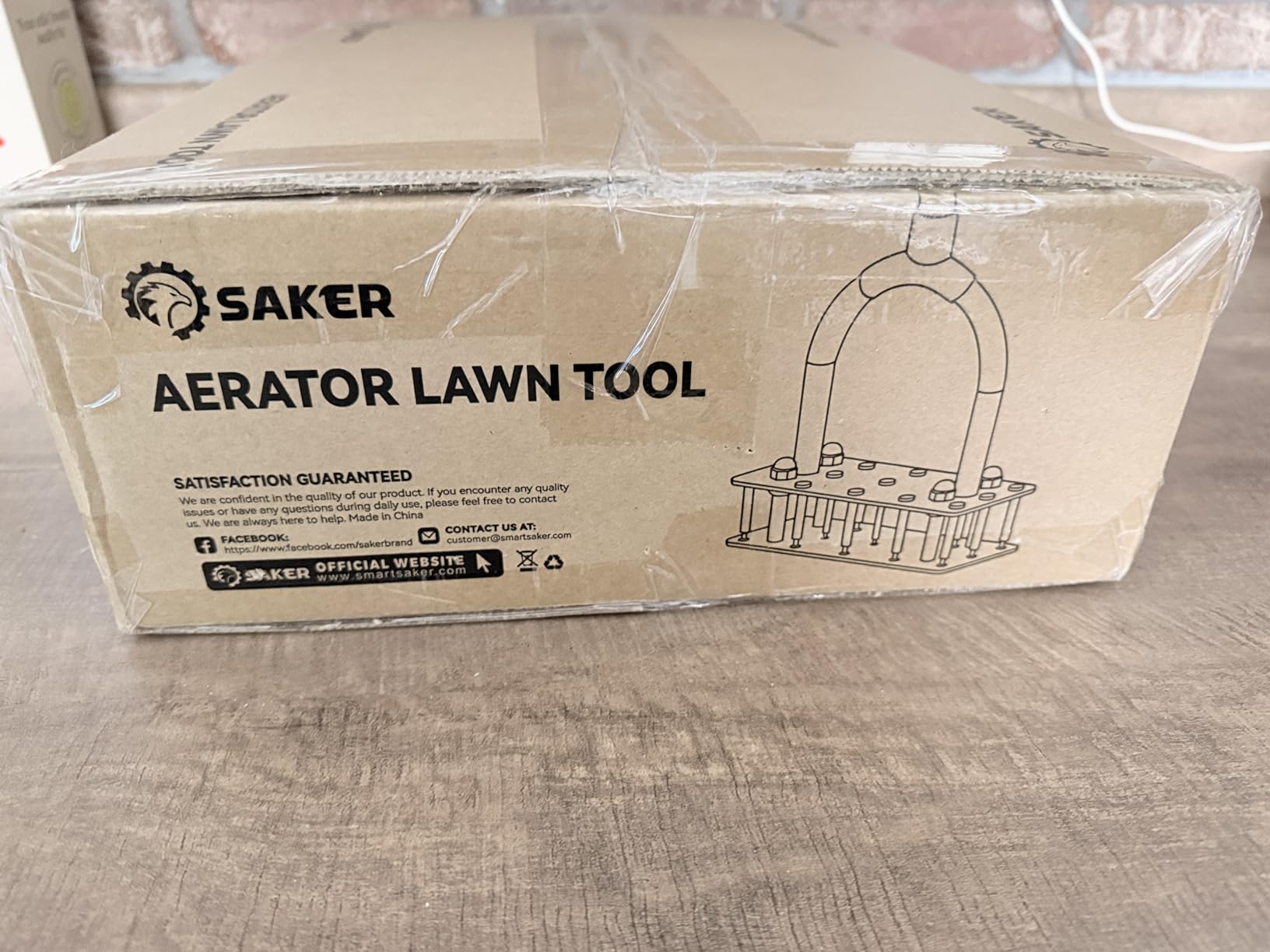
Spring mechanism and what it costs you
The trade-off is resistance. The spring assembly makes the tool noticeably heavier and more effortful to work than a plain spike plate, and several reviewers describe the extra effort as the main reason their results seemed modest.
At 6.53 pounds this is one of the heavier foot tools in the roundup, and that weight works against you over a full lawn. If you already have back or knee issues, look at the Leweio shoes further down instead.
Screw connections instead of welds
The foot pedal uses high-strength screw connections rather than welding, which gives it higher load capacity under body weight. On a spike tool that is a meaningful detail, because the foot pedal joint is the highest-stress point and welded joints are where these tools typically fail.
The spikes are 2.3 inches, which is shorter than several competitors here, and that limits how deep it reaches in deeply compacted clay. On lighter, merely compacted ground the 15 spikes make this an efficient tool.
Adjustability and build quality
Height adjusts from 32.2 to 35.4 inches, which suits different users and cuts fatigue. Construction is thickened iron with a rust-resistant coating, and reviewers consistently describe it as feeling solid in the hand.
Protective gloves are included. The 4.1-star average reflects a spread of three- and two-star reviews citing effort and modest results, which tells you the build satisfies people while the aeration depth less so.
Who this suits
Choose the Saker if you work in wet clay, if you hate stopping mid-pass to clear mud, and if your compaction is moderate rather than severe. The self-cleaning action is the reason, and it is a reason you will feel every pass.
Pass on it if your problem is genuinely hard clay, because 2.3-inch spikes are not the tool for that. The Colwelt with 3.5-inch spikes or the Bluesea with 3.5 inches in a wider grid will serve you better.
6. Onadak 15 Steel Spike Aerator – Spring Assist Makes Clay Workable
Onadak 15 Steel Spikes Lawn Aerator with Spring Assist for Yard Garden
15 sharp 3-inch steel spikes
Internal spring assist mechanism
10.6-inch wide, 0.8-inch footplate
Pros
- Spring assist pops the plate out of hard soil
- Spikes stay sharp and aligned over sessions
- 15 holes per press at good depth
- Padded T-handle reduces blisters
- Owners report better drainage in problem patches
Cons
- Handle can feel wobbly at the tube joint
- Supplied spanner is undersized
- Styrofoam packaging breaks into the grease
- Still tiring on larger lawns
The Onadak solves a specific problem the other tools ignore: getting the spike plate back out of the ground. When you step down, an internal spring compresses and then helps the plate pop back up, so you are not hauling 5 pounds of steel and clay out by hand on every press.
On hard clay that difference is night and day. Owners value the spring assistance above everything else, because it is what turns repeated step-press-lift from a punishing chore into a workable rhythm.
Three-inch spikes on a wide footplate
The spikes measure 3 inches and work as a set of 15 per step, which gives good depth from normal body weight with no jumping required. The footplate is 10.6 inches wide and 0.8 inch thick, wide enough to carry your full weight and stable enough that reviewers do not describe it as tippy.
Owners report that the heavy-duty spikes stay sharp and aligned after repeated sessions on compacted clay, and that drainage improved noticeably in problem patches with thinner grass.
Build details that need attention
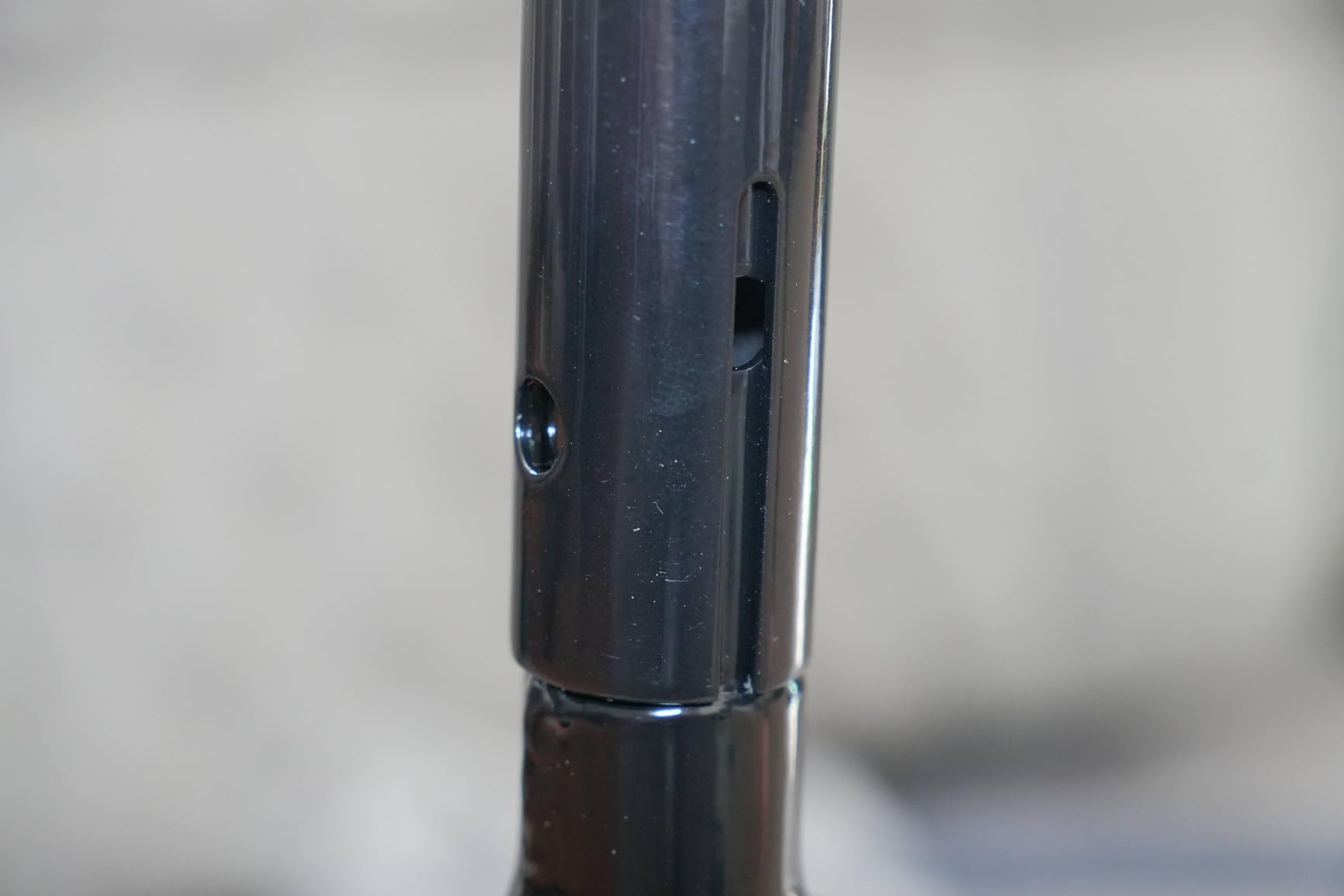
The complaints here are build details rather than performance. Owners report the handle feeling slightly wobbly at the tube joint because one tube section is a little narrower than the other, and several note that the supplied spanner is too small to fit the nuts properly. Bring your own wrench.
The polystyrene packaging breaks down into bits that stick to the grease on the tool, which is an annoying manufacturing detail rather than a fault in the product itself. Wipe it down before first use.
Ergonomics across a long session
The 38-inch overall height with a padded non-slip T-handle keeps the back straight and avoids blisters, which matters on a tool designed for repetition. Construction is durable iron with a baked enamel finish that resists rust, and it works across clay, sandy, or loamy soils.
Assembly takes a few minutes, and the tool disassembles for storage, which is why it is easier to keep in a small garage than some competitors.
Where it beats its rivals
Choose the Onadak when your soil is hard enough that extraction is the bottleneck rather than penetration. It combines 3-inch spikes with spring assist, which no other foot tool in this roundup does.
It is not the fastest tool here and the wobbly joint is a genuine annoyance, but for someone with back concerns working stubborn ground, the spring assist is worth more than another two spikes.
7. Leweio Lawn Aerator Shoes – Walk It Instead of Swing It
Pre-Assembled Lawn Aerator Shoes with Secure Adjustable Strap for Clay Soil
2-inch heat-treated spikes with lock nuts
3mm thickened metal sole
Adjustable hook-and-loop straps
Pros
- Walking beats swinging for back and arm strain
- Thickened metal sole is far sturdier than plastic
- 2-inch spikes enter compacted clay readily
- Arrives fully assembled
- Walkable design covers ground naturally
Cons
- Hook-and-loop straps can work loose and fall off
- Dry ground resists penetration and strains legs
- Spikes punch holes rather than pull cores
- Suit small and medium areas
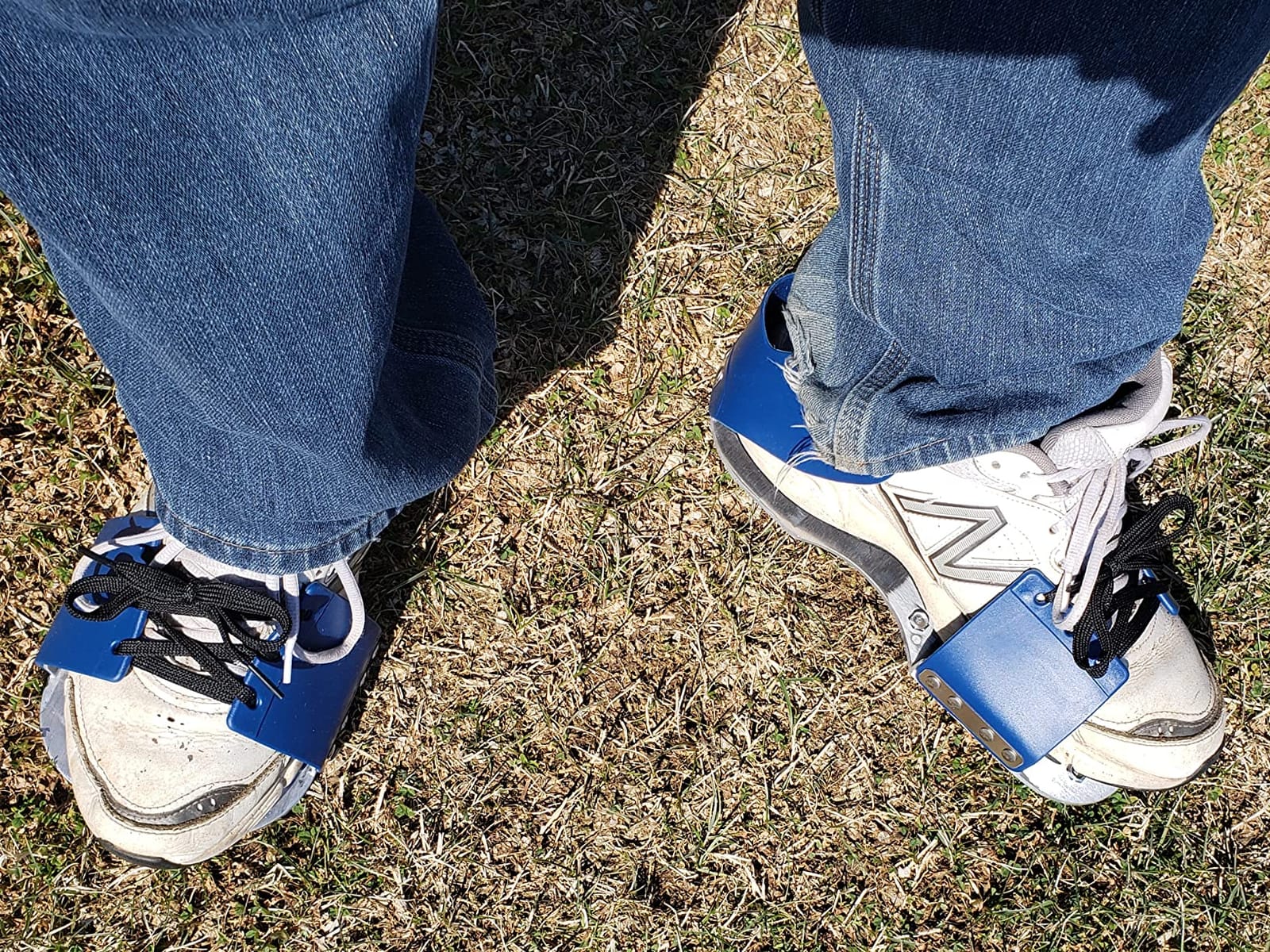
The Leweio shoes are the odd one out in this roundup, and for anyone whose back has had enough of handle tools they may be the smartest purchase here. You strap them to your feet and walk the lawn. No swinging, no loading your spine with a lever, and coverage comes naturally from walking.
At 4.4 stars from 182 reviews, the ergonomic argument lands clearly: owners describe the difference against handle tools as substantial, and the thickened metal sole is the part that makes them work.
Metal sole versus plastic spike shoes
Most spike shoes in this category use plastic, and the complaints about them are all the same: they flex, they crack, and they transfer less of your weight to the spikes. This model uses a 3mm thickened metal sole plate, which reviewers consistently describe as far sturdier and non-flexing.
That stiffness is what converts body weight into penetration. The 2-inch heat-treated spikes with lock nuts go into compacted clay with what owners describe as easy, stable pressure, and the lock nuts address the loosening problem that plagues cheaper tools.
The strap problem, and how owners solve it
This is the standout criticism and the source of most two-star reviews. The hook-and-loop straps can work loose and fall off during use, and a significant number of owners replace them with their own Velcro or add secondary straps.
That is an easy fix but worth doing before you start rather than halfway across the lawn. It is also the single reason this tool sits outside my top three despite the strong rating.
What the shoes cannot do
Spikes do not remove soil cores, so these cannot replace a core aerator on clay. That distinction matters more here than with any other tool, because the walking motion feels so productive that it is easy to assume you are getting more than you are.
They also suit small and medium areas rather than whole large yards, and very dry ground resists penetration while putting more strain on your legs. Water the lawn first.
Best use and honest verdict
Buy these if back strain is your main concern, if you want seed-to-soil contact after overseeding, or if you simply want to walk your lawn rather than work it. They arrive fully assembled, which means you can strap them on and go.
For decompacting a clay lawn, use the LawnVigor. For walking a lawn without wrecking your back, use these.
8. RIFPOD Lawn Aerator – The Small Tool for Beds and Tight Spots
RIFPOD Lawn Aerator, Automatic Dirt and Leaf Clean Design, Heavy Duty Manual Lawn Aerator Tool with 15 Iron Spikes, Height Adjustable, Yard Grass Aerator for Lawn(Black)
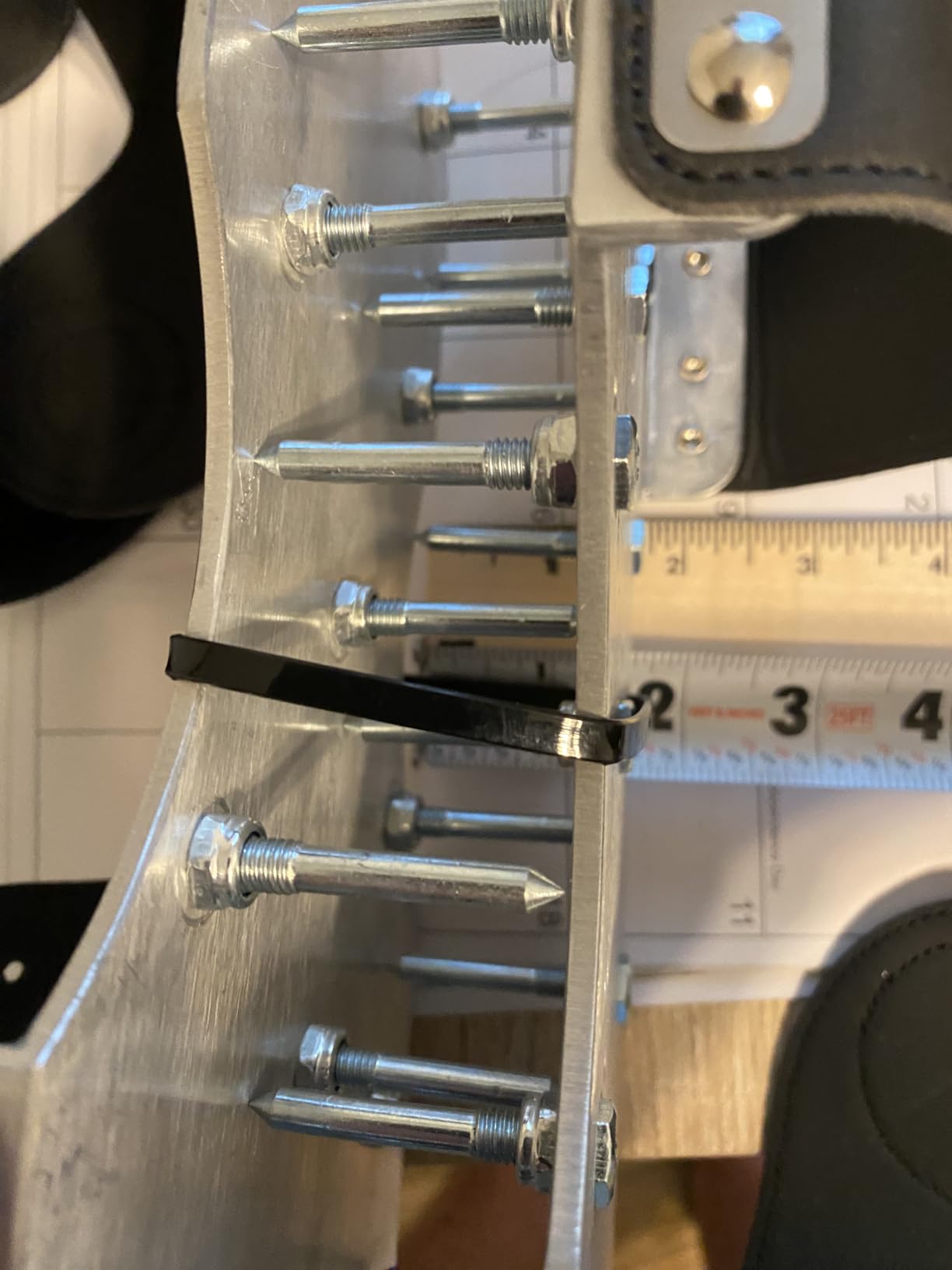
15 iron spikes at 1.74 inches
Patent-pending dual-layer spring
Adjustable 32 to 35 inches
Pros
- Dual-layer spring releases soil and leaves automatically
- Thickened arc-welded iron holds up in hard clay
- Adjustable 32-35 inch handle reduces back strain
- Assembles in minutes with a small wrench
- Owners use it across lawn and flower beds
Cons
- 1.74-inch spikes are the shortest here and make small holes
- Solid spikes remove no soil
- Requires serious physical effort
- Some buyers say the holes are too small to count as aeration
The RIFPOD is the compact one, and its patent-pending dual-layer spring handles the automatic release of soil and dried leaves after aeration. Owners working hard clay lawns report it working across the yard and in flower beds alike, which tells you the format suits confined work as well as open grass.
Be clear-eyed about the spike length though, because this is where the tool’s limits are. At 1.74 inches, these are the shortest spikes in the roundup and they make visibly smaller holes than the marketing images suggest.
The automatic release spring
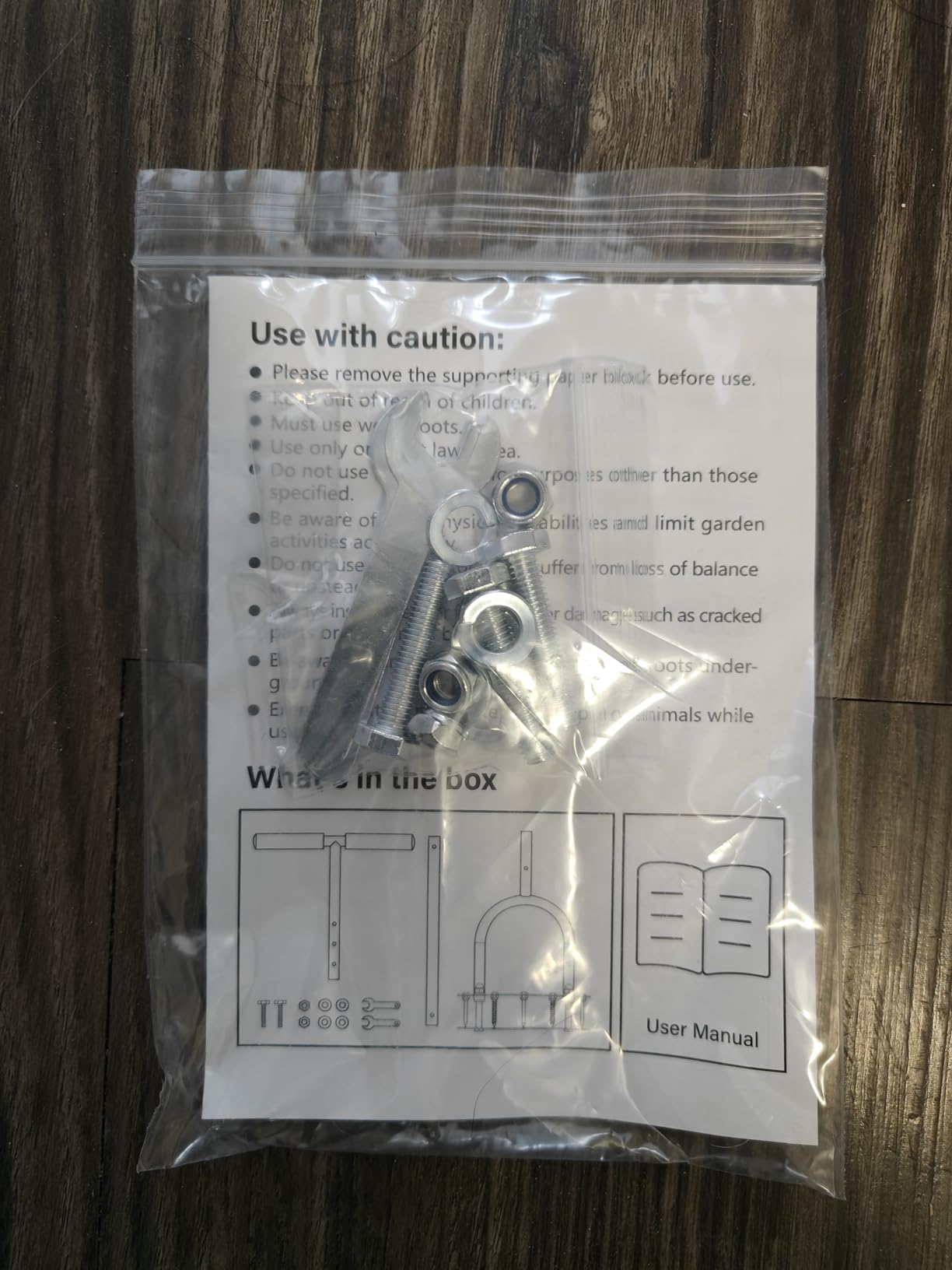
The dual-layer spring is credited with handling the nuisance of manually removing soil and dried leaves after aeration, loosening smoothly without compromising the soil around the holes. In practice this means fewer stops mid-pass, which is the most common complaint about cheaper spike plates.
Construction is thickened iron with precision spraying and arc welding for durability and rust resistance, and the reinforced casing is what owners credit for holding up in hard clay.
Why the 1.74-inch spike length matters
Short spikes make small holes. Critical reviewers focus on exactly this, and a handful of one- and two-star reviews argue the holes are too small to count as genuine aeration. That is a fair reading of the specification, and the split between satisfied practical users and disappointed spec-checkers is what holds the average at 4.2.
For compaction that lives in the top inch or two, small holes are enough. For hardpan and clay at depth, they are not, and no amount of effort will make a short spike reach further.
Comfort, assembly, and effort
The 32 to 35 inch adjustable height suits different users and reduces the risk of knee and lower back injury. Assembly needs only screws, washers, and a small wrench, and takes minutes.
Effort is the other repeated theme. Several reviewers describe this as a workout, which makes sense given the low spike count against a heavy frame. If you already have joint issues, look at the Leweio shoes.
Where it earns its place
Use this tool for flower beds, small lawn areas, and spot work where you need to get in close. It is a good companion to a hollow-tine aerator for the parts of the garden the bigger tool cannot reach.
Do not choose it as your primary clay lawn aerator. Buy a longer-spiked tool for that.
9. Bluesea 16-Spike Lawn Aerator – Widest Footprint on a Press
Bluesea Lawn Aerator with 16 Iron Spikes & Ergonomic T-Handle, Orange
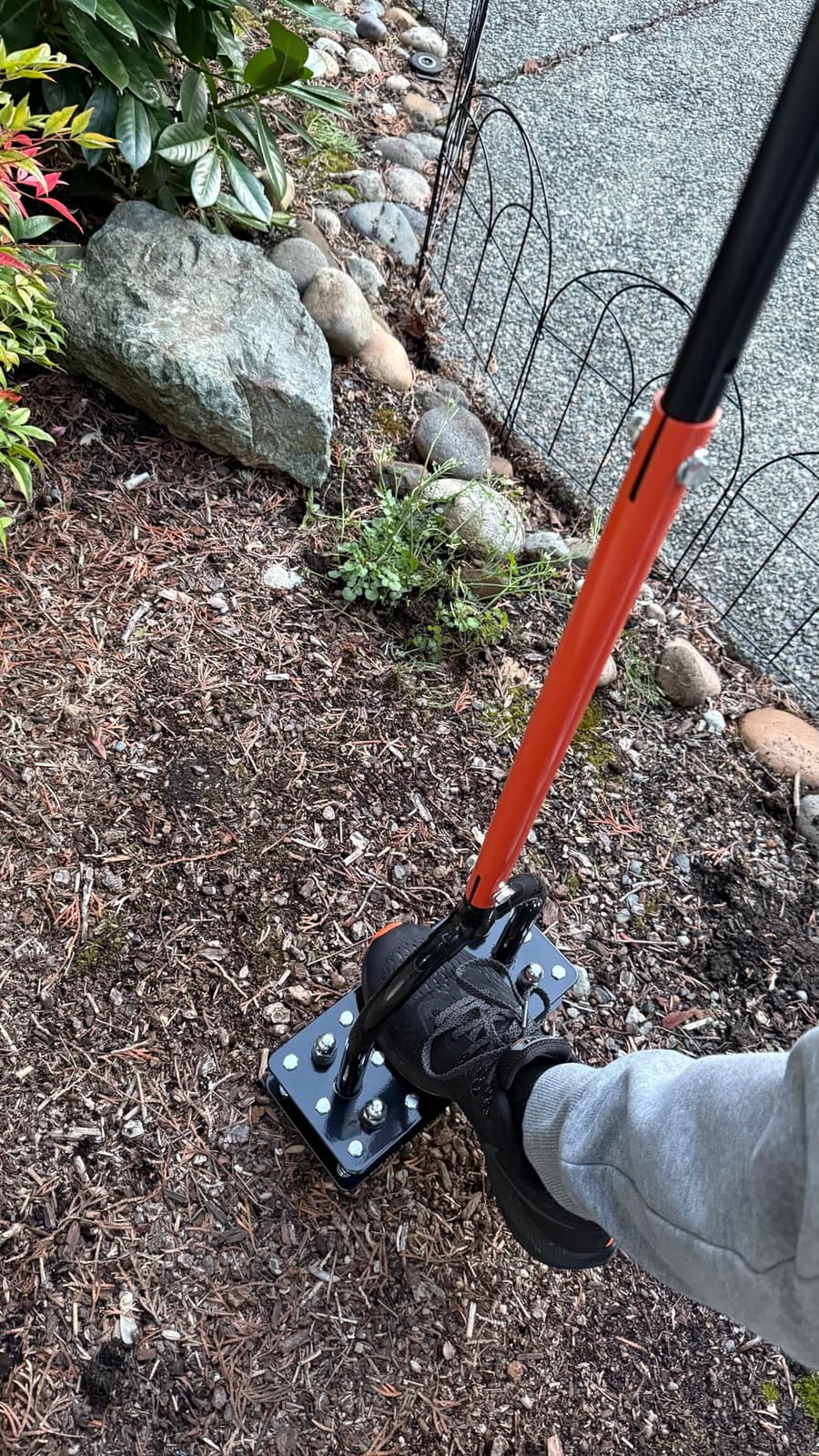
16 sharp 3.5-inch spikes in 4×4 grid
2mm reinforced steel plate
Double-layer spring auto dirt removal
Pros
- 16 spikes at 3.5 inches give deep holes and broad coverage per press
- Double-layer spring reduces jamming
- 2mm argon arc welded frame feels rigid
- Anti-corrosion coating helps in damp soil
- Spikes and spring arrive pre-installed
Cons
- Heavy at 2.83 kg
- which adds fatigue over a full lawn
- Lowest 4.0-star average with a 12 percent one-star share
- Solid spikes leave openings that close over
- Feels unbalanced in hard clay until the soil is moist
The Bluesea pairs the two numbers that matter most for speed on a spike tool: 16 spikes at 3.5 inches arranged in a 4 by 4 grid on a wide plate. Those two facts explain most of the positive reviews.
It also carries a 4.0-star average, the lowest in the roundup, so let me be straight about why. Owners with larger lawns rate it highly for the coverage, while the complaints concentrate on the 2.83 kg weight feeling punishing and on build durability over time.
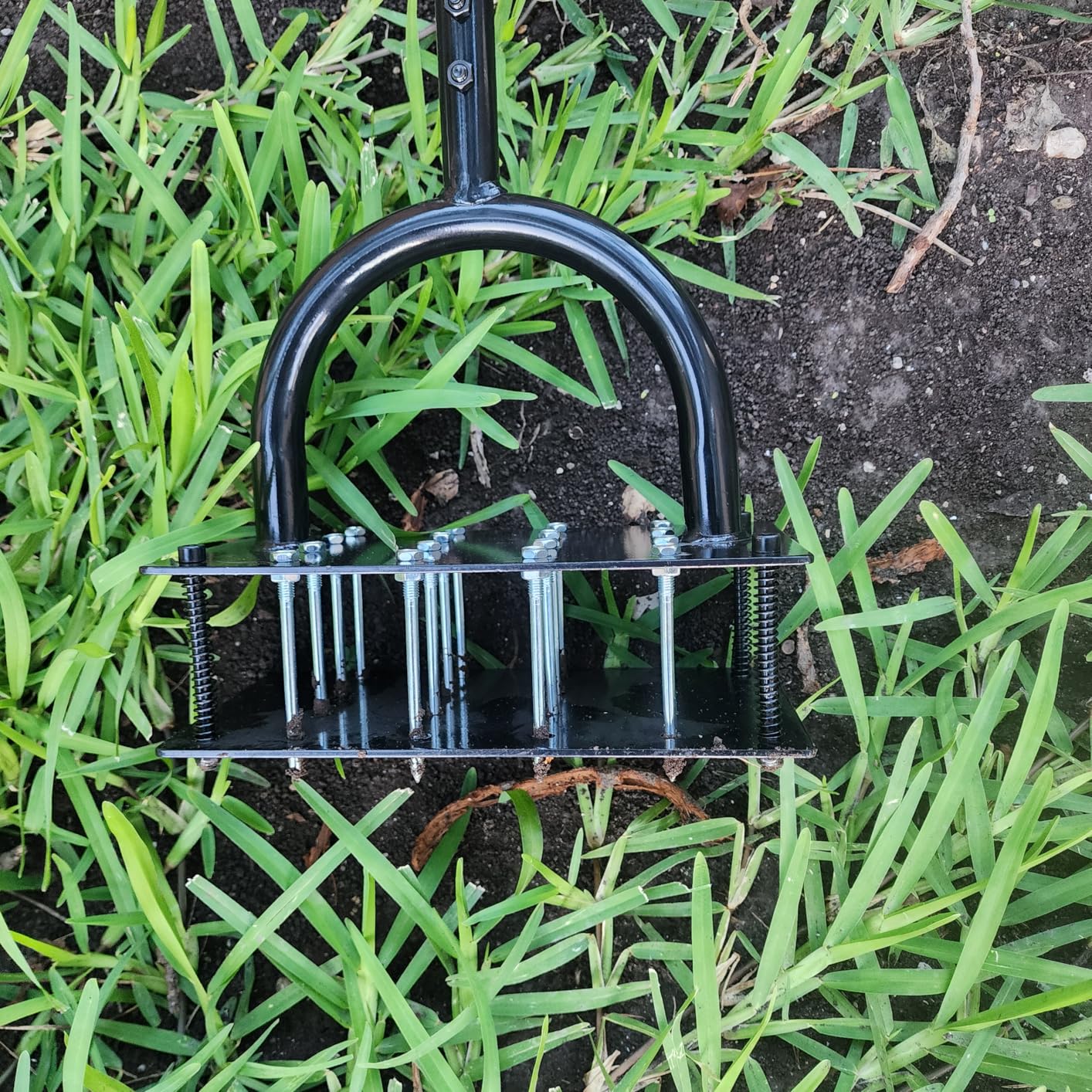
4×4 grid coverage and what it saves
Sixteen holes per press is roughly eighty percent more than a twelve-spike tool and four times a four-tine tool. If you are covering a lawn rather than spot treating it, that is the difference between a manageable afternoon and a project you abandon.
The 3.5-inch spike length means those holes are deep, and owners who have used shorter tools notice the difference immediately on compacted ground. Combine the two and you get the fastest spike aeration here.
Frame construction and finish
The tool uses 2mm reinforced steel plates joined by precision argon arc welding, with an electrostatically applied anti-corrosion coating. Owners describe the frame as noticeably rigid, and the coating is a genuine advantage in damp clay where plain steel corrodes.
Spikes and spring arrive pre-installed, so assembly is only attaching the steel tube and tightening the screws. There is no 90-minute build and no missing hardware.
The weight problem, honestly assessed
At 2.83 kg this is the heaviest foot tool in the roundup, and that weight is where the one-star reviews come from. Over a full lawn the fatigue adds up, and several owners report feeling it in their knees and lower back.
There is also a balance point that owners mention: in hard, dry clay the narrow plate can feel awkward until the soil is moist. The manufacturer’s own guidance is to water one to two days ahead when the ground is dry and compacted, and buyers repeat that advice as essential.
Who should buy it
Choose the Bluesea if you have a medium lawn and want to finish in one session, and if 3.5-inch depth matters to you. It pairs the depth of the Colwelt with far better coverage per press.
Pass on it if you have back or knee problems, or if durability over many seasons is your top priority. For the latter, the Walensee four-row with its large review history is the safer bet.
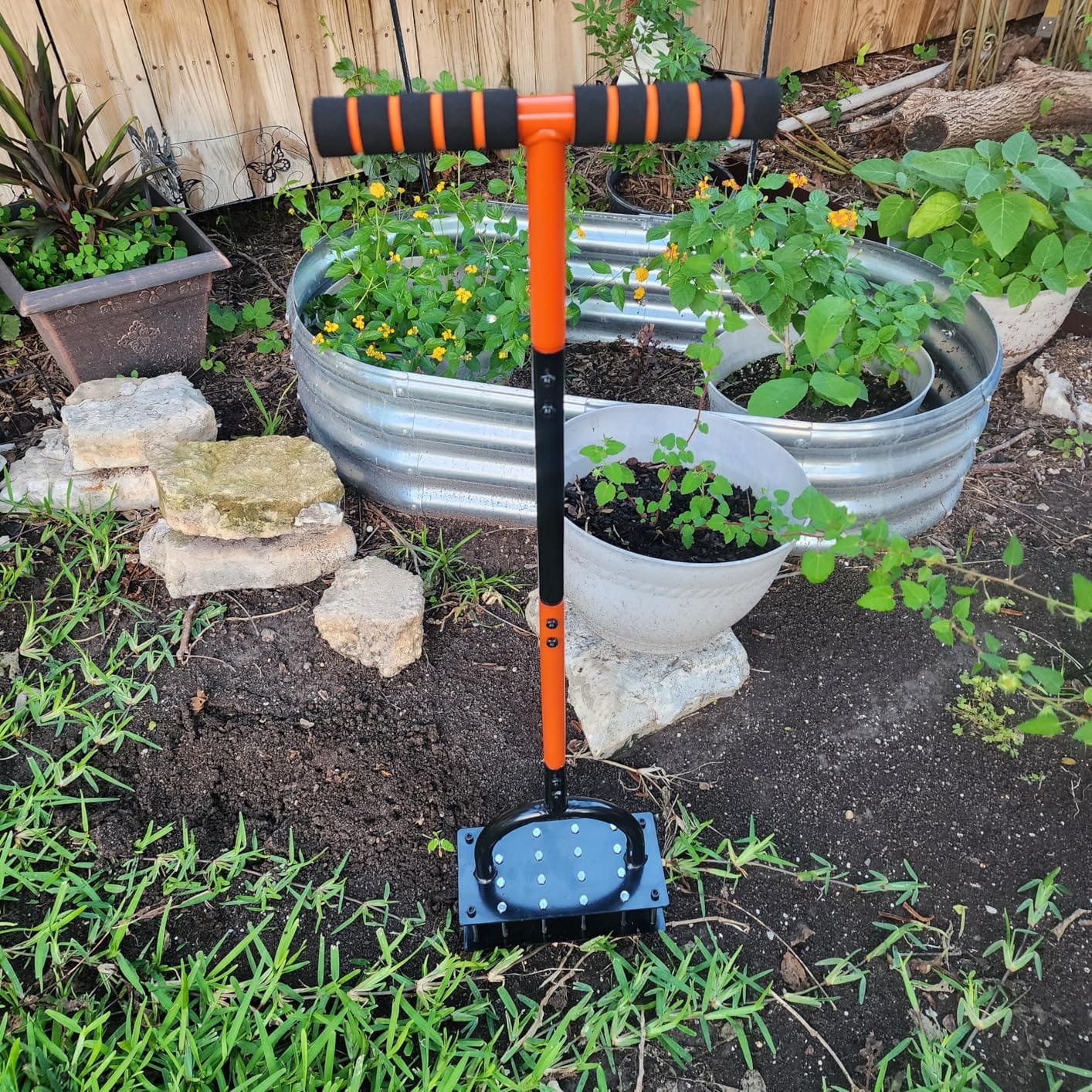
10. Seeutek 23-Inch Rolling Aerator – The Answer to Large Clay Lawns
Seeutek 23Inch Rolling Lawn Aerator – Upgraded Heavy Duty Aerators
23-inch roller with 2-inch star spikes
Fillable body for water or sand
Three height adjustments with padded T-bar
Pros
- Roller covers far more lawn per minute than foot tools
- Fillable body adds weight for deeper penetration
- Three height settings suit different users
- Thickened alloy wall resists bending
- Laser welding means almost no assembly
Cons
- 24-pound weight is awkward to move and store
- 12 percent one-star share on durability
- Star spikes puncture rather than core so holes close
- Bulkier and costly for tight areas
Everything else in this roundup requires you to stand still and work. The Seeutek rolls. That single design change lets you cover far more lawn per minute than any foot tool here, which is why buyers with larger lawns treat it as the only realistic option.
It is also the most expensive tool in the list, and the 4.0-star average reflects a clear split: people who need to cover ground love it, and people who expected lightness or long-term durability do not.
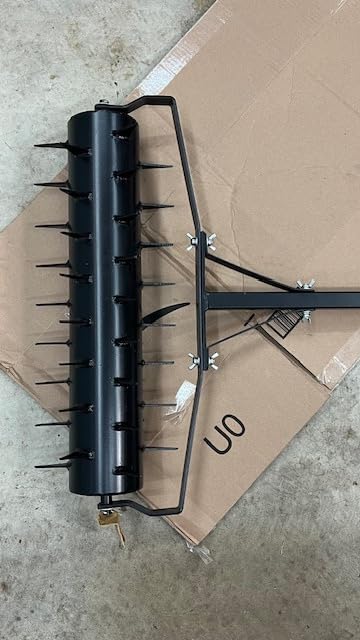
Star-shaped spikes on a 23-inch drum
The 23-inch roller carries 2-inch star-shaped spikes that are laser welded to the drum. Star shapes make small punctures rather than cores, so be clear about what this does and does not do: it relieves surface compaction quickly, it does not remove soil.
That makes the Seeutek a compaction-relief tool rather than a core aerator, and on clay the holes it leaves will close faster than a hollow-tine hole would. Owners generally accept this trade because the speed gain is so large.
Filling the roller for deeper penetration
The drum has a 2.5 cm side fill port that accepts water or sand, and adding weight is what pushes the star spikes further into hard ground. This is the ballast mechanism every other tool in the roundup lacks, because every other tool relies on your body weight instead.
If your clay resists the spikes, fill the drum. Reviewers who did this report noticeably better penetration, and it costs you a trip to the tap rather than a trip to the hardware store.
Height adjustment and stability
Three height adjustments with a padded T-bar let users of different sizes work without bending, and the tripod connection between handle and roller keeps it steady when you push. Construction is high-density alloy with a thickened inner wall and a rust-resistant painted surface, which helps the drum resist bending under load.
Assembly takes a few minutes with instructions and all fixings included. There is no long build, which is unusual for anything in this price range.
The weight and the durability doubts
At 24 pounds the tool is genuinely awkward to move across a lawn and to store, and that is the most common complaint from people who bought it for a small yard. It is also bulky around tight planting areas, where a foot tool fits easily and this does not.
The 12 percent one-star share sits mostly on durability over time. If you want a tool you expect to keep for a decade, the Walensee with thousands of reviews offers more evidence of longevity.
Large lawns only
Buy the Seeutek if your lawn is big enough that foot tools would take a full weekend, and if you have accepted that you are relieving compaction rather than removing plugs. Fill the drum before you start.
For a small yard it is the wrong shape of tool entirely, and no amount of adjusting fixes that.
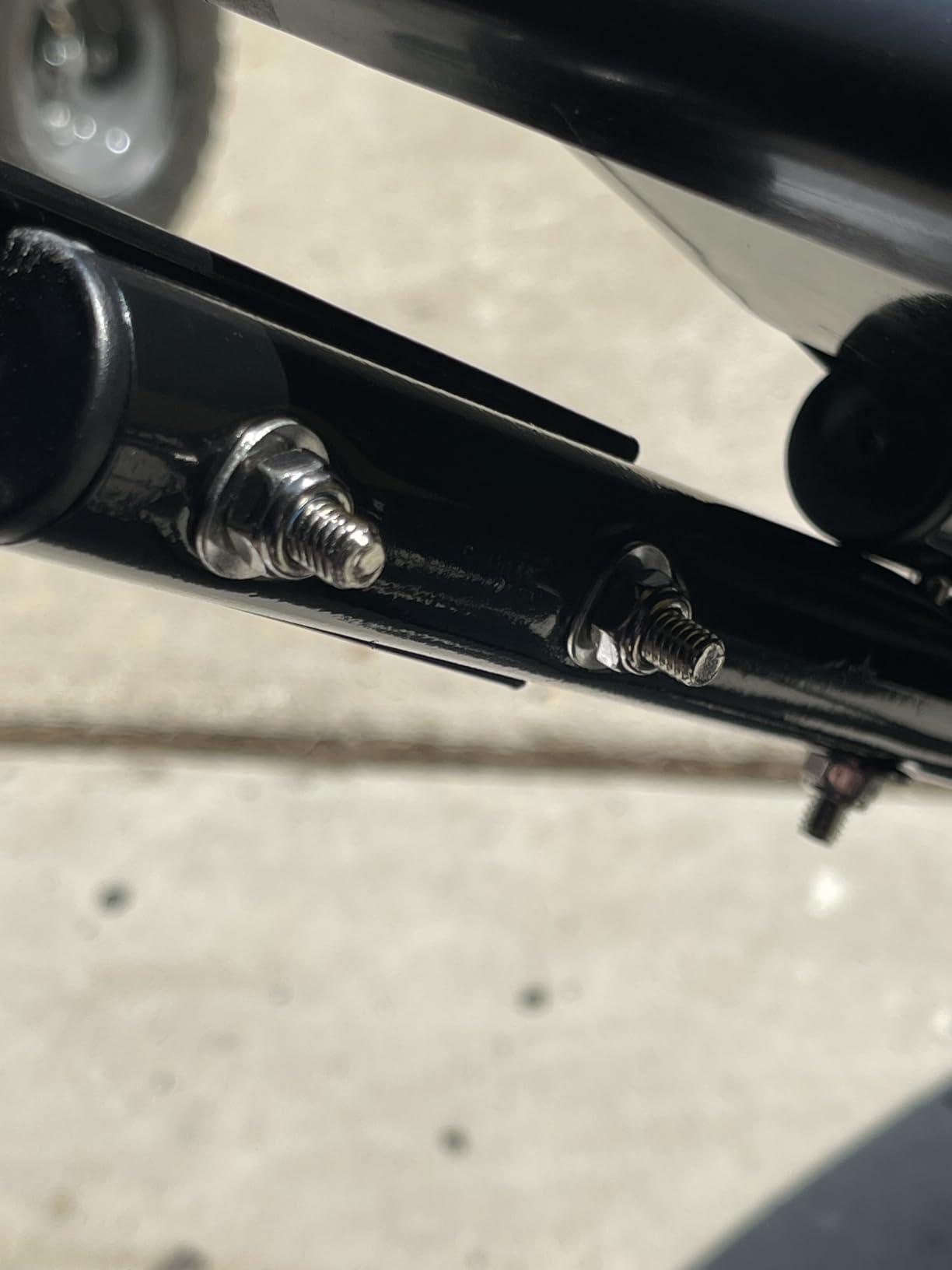
How to Spike Aerate Clay Soil the Right Way
Technique matters more than the tool, particularly on clay where conditions can turn a good tool into a useless one. Seven steps, and skipping the watering step is the single most common reason people declare spike aerators a failure.
1. Mow first. Cut the lawn to a normal height and remove the clippings. A tall canopy snags the spikes and drags the foot plate, and mown ground gives you an unobstructed view of what you are doing.
2. Water 24 to 48 hours ahead. This is the step people skip. Moist soil lets spikes penetrate; dry soil makes them skate or bend. Every manufacturer in this roundup repeats the instruction, and buyers confirm that watering beforehand makes hard ground dramatically easier to enter.
3. Check the moisture before you start. The soil should be moist enough to give but not wet enough to smear. Press a handful together: if it forms a weak ball that breaks apart easily, you are in the window. If it forms a slick ball, wait a day. If it crumbles dry, water again.
4. Add ballast where your tool allows it. On the rolling tool, fill the drum with water or sand. On foot tools there is no ballast, which is the fundamental limitation of the whole category. Body weight is your only downward force, so if you have to lean on the handle, you are doing it correctly.
5. Make overlapping passes. Work in straight lines like mowing, keeping each pass just inside the previous one so the rows touch. On hard clay, two perpendicular passes are worth far more than four in the same direction, because the second direction reaches the compaction lanes the first one compacted.
6. Pay attention to the diagnosis. Spikes penetrate easily in healthy soil and fight you in compacted lanes. When the tool suddenly resists, that is information. Slow down, add water if needed, and concentrate your effort where the ground is worst rather than treating uniformly.
7. Clean up and store dry. Brush soil off the spikes and dry the tool before putting it away. Corrosion complaints on plain steel spike tools almost all trace back to tools stored damp, and the spring mechanisms will seize if you leave clay packed in them.
Timing by grass type
For cool-season lawns such as fescue, Kentucky bluegrass, and perennial ryegrass, early fall is the best window. The grass is still growing, the soil is warm enough for root growth, and moisture is usually adequate. Late spring is the second option.
For warm-season lawns such as Bermuda, Zoysia, and St. Augustine, aerate in early summer as growth ramps up. Avoid both extremes of the season, when recovery is slowest.
Do not aerate a lawn that is drought-stressed, frozen, or saturated and soft. Each of those conditions damages the grass more than the compaction is helping.
How to De-Clog Tines in Wet Clay Mid-Pass
Wet clay packs into tine gaps and turns a productive afternoon into a frustrating one. This is the most repeated complaint in lawn forums and no competitor guide addresses it, so here is what actually works.
1. Stop before you force it. The moment a tine starts dragging instead of punching, lift the tool and stop working that spot. Forcing a clogged tool through clay grinds soil into the shaft and can bend the spike, which ends its usefulness.
2. Clear it with a screwdriver or the tool’s own hardware. Grass and small roots collect in the gaps around the tines and around the foot plate. A flat screwdriver or a stiff wire brush clears most of it in a few seconds. This is a five-second nuisance, not a failure.
3. Pick the tool that does this for you. If you work in wet clay regularly, the Saker and the Bluesea both use a double-layer spring that ejects soil and debris automatically during use. Owners credit those mechanisms with meaning they rarely clog at all, which is worth more than any clearing technique.
Then address the cause. If your clay is wet enough to clog tines every pass, either let the lawn dry slightly longer before working or switch to a hollow-tine tool, where the plug is ejected by design instead of being scraped off a solid spike.
How to Choose a Spike Aerator: Buying Criteria
Spike length matters more than spike count
Depth is what determines whether you reach the compacted layer or just scratch the surface. In this roundup the spikes range from 1.74 inches on the RIFPOD to 3.5 inches on the Colwelt and Bluesea, and that difference is more consequential than any feature listed on the box.
For clay specifically, look for 3 inches or more. Under 2 inches and you are working the top layer of a problem that lives deeper. Note that advertised length is the spike itself, and how much of it actually enters depends on soil moisture and the force you can put through the foot plate.
Spike count and coverage rate
Four spikes cover a small area per press. Twenty spikes cover roughly five times as much. This is the main reason a larger tool feels faster even when the spike depth is identical.
Work out your coverage before you buy. A manual step tool realistically covers a few thousand square feet in an afternoon, and considerably less on hard clay. If your lawn is an acre or more, a manual spike aerator is the wrong category entirely, whether or not you like the tools.
Weight and ballast
Weight is penetration. A spike tool has no other mechanism for getting into hard ground, so the heavier options and the fillable rollers have a genuine advantage on clay specifically.
The Seeutek is the only tool here with a designed ballast port that accepts water or sand. Everything else depends on your body weight, which means the 24-pound roller and the 2.83 kg Bluesea will beat a light tool on hard clay and lose to it everywhere else.
Build material and rust resistance
Plain steel spikes rust, and a rusty spike drags instead of sliding. Coatings vary considerably across this list: the Bluesea uses an electrostatically applied anti-corrosion coating, the Saker uses rust-resistant coating on thickened iron, the Onadak uses baked enamel, and the Walensee is powder-coated but its spikes are described as plain steel.
Whatever you buy, dry it after use. A powder coat slows corrosion; it does not prevent it.
Spike geometry and self-cleaning mechanisms
Three designs appear here. Plain solid spikes are cheapest and simplest. Spring-assisted mechanisms help the plate pop back out of the ground and reduce the effort per press. Self-cleaning double-layer springs eject soil and debris automatically, which is the feature that matters most in wet clay.
Star-shaped spikes, found on the rolling drum, spread puncture over a wider area than a round spike but never remove a core. Round spikes concentrate the force.
Ergonomics
Handle height between about 32 and 38 inches keeps you working with a slight bend rather than stooping, which compounds over an afternoon. Padded T-handles and included gloves help more than they sound like they would.
If you have any back or knee history, take the shoe format seriously. Walking your lawn with spike shoes removes the lever action and the load entirely, and the Leweio is the tool in this roundup built for that.
Rent versus buy
Renters regularly report that a tow-behind core aerator is quick, easy, and that four hours is typically more than enough time. For a large clay lawn done once a year, renting a proper core machine is frequently the sensible economic choice, and it does the job a spike tool cannot.
Buying makes sense if you have a small lawn you will work several times a season, if you want a spike tool for seed contact and edge work, or if renting is inconvenient. Spend your buying budget on the smallest tool that covers your actual lawn, and prefer spike length over spike count when your soil is hard.
After You Aerate: What to Do Next
The aeration job is roughly a third of the outcome. What you do in the following two weeks decides whether the effort shows up in the grass or not.
Leave the plugs where they fall. This is the most common mistake and the easiest one to avoid. Core plugs scattered on the lawn break down and return organic matter and nutrients to the root zone. Raking them all up throws away the best thing the core aerator produced.
Topdress with compost. A thin layer of screened compost over the open lawn gives the holes something to draw in. Core aeration followed by topdressing is the combination lawn owners on forums describe most often as the recipe that works on clay.
Consider gypsum if your clay is sodium-heavy. Gypsum displaces sodium on sodium-affected clay and improves structure over time. It does not fix compaction on its own, and it is only worth applying when a soil test indicates sodium is part of the problem.
Overseed immediately while the ground is open. This is the point where a spike tool earns its place. The holes you just made give seed a place to sit and firm contact, and walking the lawn in spike shoes after sowing presses seed down properly.
Water consistently for two weeks. Keep the soil moist, not saturated, while new roots establish. Standing water in the holes you just made will undo the work. If you still have puddling after heavy rain, that is a drainage problem rather than a compaction one, and standing water in turf needs a different approach.
Frequently Asked Questions
Can I use an aerator on clay soil?
Yes, but pick the right one. Clay responds best to hollow-tine core aeration, which pulls soil plugs and leaves open macropores that hold air and water. A solid spike tool on hard clay displaces soil sideways and can compact the rim of every hole, which is why cooperative extension guidance recommends coring heavy soils instead of spiking them.
What is better, a plug or spike aerator?
A plug or core aerator is better on clay. It removes a cylinder of soil, reaches roughly 2 to 4 inches deep, and leaves holes that stay open for weeks to months. A spike aerator removes nothing, typically penetrates only 1.7 to 3.5 inches, and its holes close quickly in clay. Spikes win on price, corners, beds, and pressing seed into firm contact.
What is the best aerator for clay soil?
For a small lawn, a hollow-tine hand core aerator such as the LawnVigor with three replaceable heat-treated tines is the most effective manual option, because it actually pulls plugs. For a large clay property, rent a tow-behind hollow-tine core aerator rather than buying a manual tool. Reserve spike aerators for edges, beds, and post-overseed seed contact.
How often should you aerate a clay soil lawn?
Once a year for most clay lawns, twice per year if the ground is heavily trafficked or the lawn is a high-traffic family area. Early fall is best for cool-season grasses such as fescue and bluegrass, and early summer for warm-season grasses such as Bermuda and Zoysia. Aerating more often rarely helps and stresses the grass during recovery.
Should I water my clay lawn before aerating?
Yes, and this is the step people most often skip. Water 24 to 48 hours ahead so the top few inches are moist enough to give but not saturated. Moist soil lets spikes penetrate cleanly, while dry clay makes them skate across the surface or bend. The soil should hold together as a weak ball that breaks apart easily when squeezed.
How many passes with a tow-behind aerator are needed for clay?
Two perpendicular passes are the practical minimum on hard clay. Work in straight overlapping lines like mowing, keeping each pass just inside the last, then run a second set at right angles. The second direction matters because it reaches the compaction lanes the first pass created. Adding more passes in the same direction adds very little.
How do I know if my lawn is compacted?
Push a flat-head screwdriver into the lawn in several spots. In healthy soil it enters with light hand pressure. In compacted ground you will need both hands, and in severe compaction it barely goes in. Compare before and after rain, because soil that only resists when dry is simply hard rather than compacted. Thin grass in traffic lanes and lingering puddles are supporting signs.
Do spike aerators pull plugs?
No. Every spike aerator in this roundup uses solid spikes or star-shaped points that punch holes without removing soil, which is exactly why they are a poor primary tool for clay. Tools described as hollow-tine or core aerators, including the LawnVigor model above, are the ones that pull plugs and leave a cylinder of soil on the surface.
Should I rake up the soil plugs after core aerating?
No, leave them on the lawn. The plugs are the most valuable thing the machine produced, and leaving them lets them break down and return nutrients and organic matter directly to the root zone. Raking everything up wastes that benefit. If the lawn looks untidy, mow over the plugs once they dry rather than removing them.
The Verdict: Which Spike Aerator Should You Buy?
If you have hard clay and a small lawn, buy the LawnVigor hollow-tine core aerator, because it is the only tool in this roundup that removes soil instead of relocating it. If you have a large clay property, do not buy a manual tool at all; rent a tow-behind core aerator and save your weekend.
If you want a genuine spike aerator, match it to the job. The Colwelt with its 3.5-inch spikes is the one for ground nothing else will penetrate. The Walensee four-row gives you the most coverage per push for a small yard. The Bluesea combines deep spikes with a wide footprint if you want speed and depth together. The Seeutek rolling drum is the only answer to a lawn too large to walk.
And if your back has had enough, wear the Leweio shoes and walk the lawn instead.
Whatever you choose, water the ground first, work while it is moist rather than wet, and topdress with compost afterwards. Those three habits matter more than any model on this list, and they are what turns a few hours of work into a lawn that actually changes by next season. Check the latest details on any of these tools before you order, and pick the one that fits your lawn rather than the one that looks the most impressive in the box.
Leave a Reply