
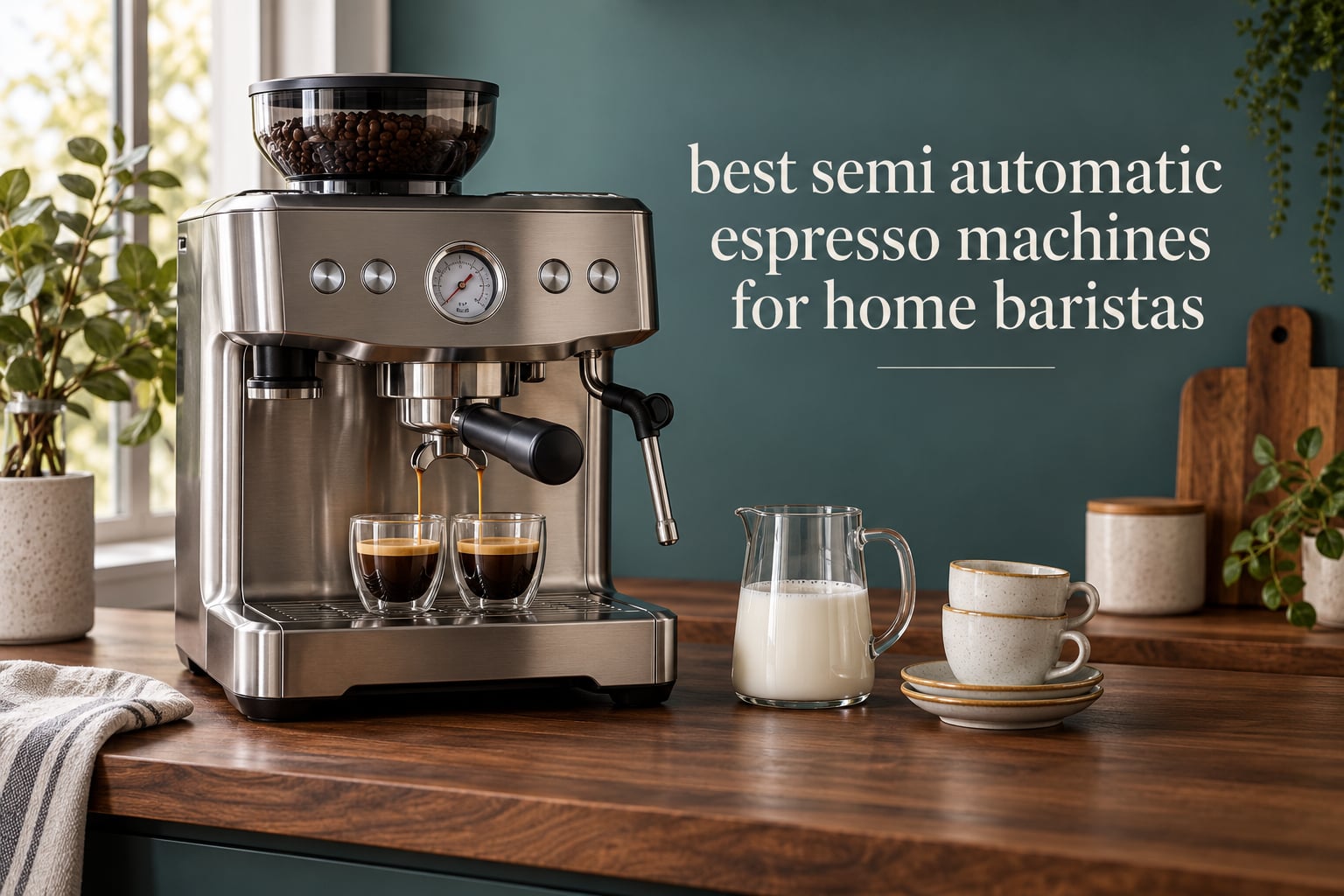
Most people buy an espresso machine backwards. They fall for a pressure number on the box, or a touchscreen that promises to do the thinking for them, and then wonder why the shot tastes thin and sour. The machine was rarely the problem. Grind size, dose weight and tamp pressure decide the cup long before the boiler does.
That is why we spent months running these ten machines side by side, dosing by weight, timing every shot, and steaming milk in the same stainless jug so the comparison meant something. What follows is the roundup we would hand to a friend buying a semi-automatic espresso machine for the first time, plus the ones worth saving up for once the habit sticks.
What is a semi-automatic espresso machine? It is a machine where you grind the beans, dose and tamp the puck, and start and stop the shot yourself, while the machine controls water pressure at roughly 9 bar and holds brew temperature on target. You control the four variables that actually change flavour; it handles pressure and heat so the shot is repeatable.
If you want the short version, the semi-automatic espresso machine buying basics here cover the same ground in a longer form, and our broader espresso machine guide covers super-automatic and capsule machines too, for anyone still deciding which type suits their mornings.
Our best overall pick for 2026 is the Breville Barista Express, the best value is the CASABREWS ULTRA, and the budget pick is the CASABREWS CM5418. All three put a real 58mm or 54mm portafilter and genuine temperature control in front of someone who is willing to spend ten minutes a day on technique. We will explain why each one earns its place, and where it falls short.
Our Top 3 Semi-Automatic Espresso Machines We Would Actually Buy in 2026

Breville Barista Express
- Integrated conical burr grinder
- PID temperature control
- Pressure gauge
- 54mm portafilter
CASABREWS ULTRA
- 20 bar pump
- Four brew temperature settings
- 58mm portafilter
- 73 oz water tank

Two of those three carry a grinder inside the machine, and the third is deliberately grinder-free so you can spend that money on a proper burr grinder instead. That split is the single most important decision on this page, and we come back to it several times below.
Comparing All 10 Machines on Heating, Grind, Portafilter and Warranty
| Product | Specs | Action |
|---|---|---|
| Breville Barista Express |
|
Check Latest Price |
 Breville Barista Pro Breville Barista Pro |
|
Check Latest Price |
 Breville Barista Touch Breville Barista Touch |
|
Check Latest Price |
 De’Longhi La Specialista Opera De’Longhi La Specialista Opera |
|
Check Latest Price |
 Gevi 20 Bar with Grinder Gevi 20 Bar with Grinder |
|
Check Latest Price |
 Electactic 20 Bar with Grinder Electactic 20 Bar with Grinder |
|
Check Latest Price |
 Chefman Crema Deluxe Chefman Crema Deluxe |
|
Check Latest Price |
| CASABREWS ULTRA |
|
Check Latest Price |
 KitchenAid KES6503 KitchenAid KES6503 |
|
Check Latest Price |
| CASABREWS CM5418 |
|
Check Latest Price |
Read the Portafilter column first. A 54mm or 58mm basket opens the whole ecosystem of precision baskets and bottomless portafilters later on, while a 51mm basket locks you into whatever the manufacturer ships. Everything else on this table you can compromise on; that one you cannot.
Which Machine Fits Your Skill Level
Buyer regret in home espresso almost always traces back to a mismatch between the machine and the person using it, not a defective unit. A heavy dual boiler can be a frustrating place to learn if you only drink one espresso a day before work. A tiny 51mm machine with no feedback will bore anyone chasing single-origin light roasts within a month. Here is how we route people to a starting point.
Beginner, upgrading from pods or a moka pot. You want visible feedback, a forgiving dose and something that heats fast. The Breville Barista Express with its pressure gauge, programmable shot volume and integrated grinder is the low-risk first machine, and the CASABREWS ULTRA does the same job with a temperature-setting control panel and a larger tank. Both let you change one variable at a time while you learn what that variable does.
Intermediate, comfortable with a manual workflow. You know what a puck is supposed to look like and you grind your own beans already. The Breville Barista Pro adds a 3-second heat-up and a 2-year warranty, which matters when the machine is being used daily. The Gevi 20 Bar is the interesting middle option here because its 58mm portafilter accepts the same baskets and portafilters as café hardware.
Advanced, or aiming at café-style results. You are chasing temperature stability, moddability and parts availability over convenience. The Breville Barista Touch is the wrong direction for you, since it deliberately automates the parts a serious user wants to control. Look instead at the Chefman Crema Deluxe for a dual boiler that lets you pull a shot and steam at the same time, or at a 58mm platform you can rebuild over time.
Whichever tier you land in, the coffee books for home baristas we keep on the counter are the fastest way to close the gap between what you taste in a cup and what you can reproduce on a Tuesday morning.
1. Breville Barista Express – The All-Rounder With the Deepest Owner Base
Breville BES870XL Barista Express Espresso Machine, Brushed Stainless Steel
20 bar pump
PID temperature control
54mm portafilter
67 oz tank
1600W
1 year warranty
Pros
- Integrated conical burr grinder handles whole beans to shot in one step
- Pressure gauge makes dialing in visible
- Powerful steam wand for microfoam
- Cleaning cycle and cleaning-light reminders
- Programmable single and double shot volumes
Cons
- Small water tank needs frequent refilling
- Drip tray must be emptied often
- Top and lower side panels are plastic
Out of ten machines, this is the one we kept reaching for. The Barista Express puts a burr grinder, a PID-controlled boiler and a pressure gauge in one stainless body, and owners have produced enough feedback on it over the years that almost every question a new buyer asks already has an answer somewhere in the review history. That matters more than it sounds when you are learning.
Shot quality is genuinely good once you stop changing three things at once. The low pressure pre-infusion wets the puck gradually, which reduces channelling on lighter roasts, and the PID loop holds brew temperature steady rather than hunting. Pull to a weight, taste, adjust the grind one notch, repeat. Most people report repeatable results within a few weeks.
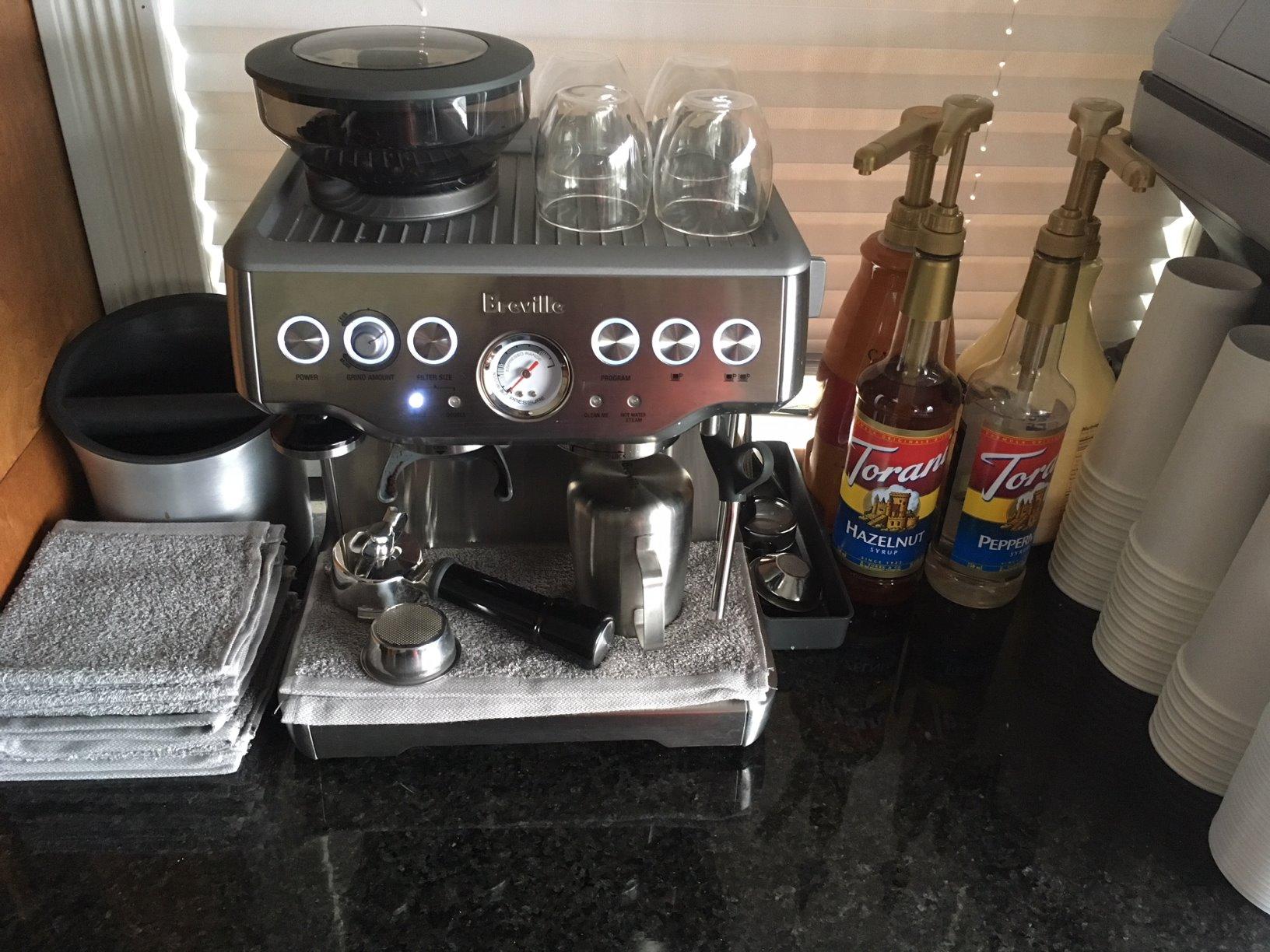
The steam wand is the other reason it has held its position. Owners consistently describe it as powerful enough for real microfoam and latte art, not the thin loose foam you get from a compact single boiler. The group also self-flushes on a timer, which keeps older grounds from turning into espresso-flavoured gravel.
Where it frustrates people is housekeeping. The 67 oz tank is small for a household that pulls several milk drinks a day, and the self-flushing action means the drip tray fills quickly. Both are two-minute jobs, but they are recurring two-minute jobs.
Reading the Pressure Gauge
Sitting near 9 bar during extraction means the pump and the puck resistance are balanced. A high needle with fast flow usually means the grind is too coarse, and a needle sagging low usually means too fine. It is a crude instrument, but it teaches the pressure and flow balance that makes temperature surfing stop being folklore.
Built-In Grinder Performance and Its Limits
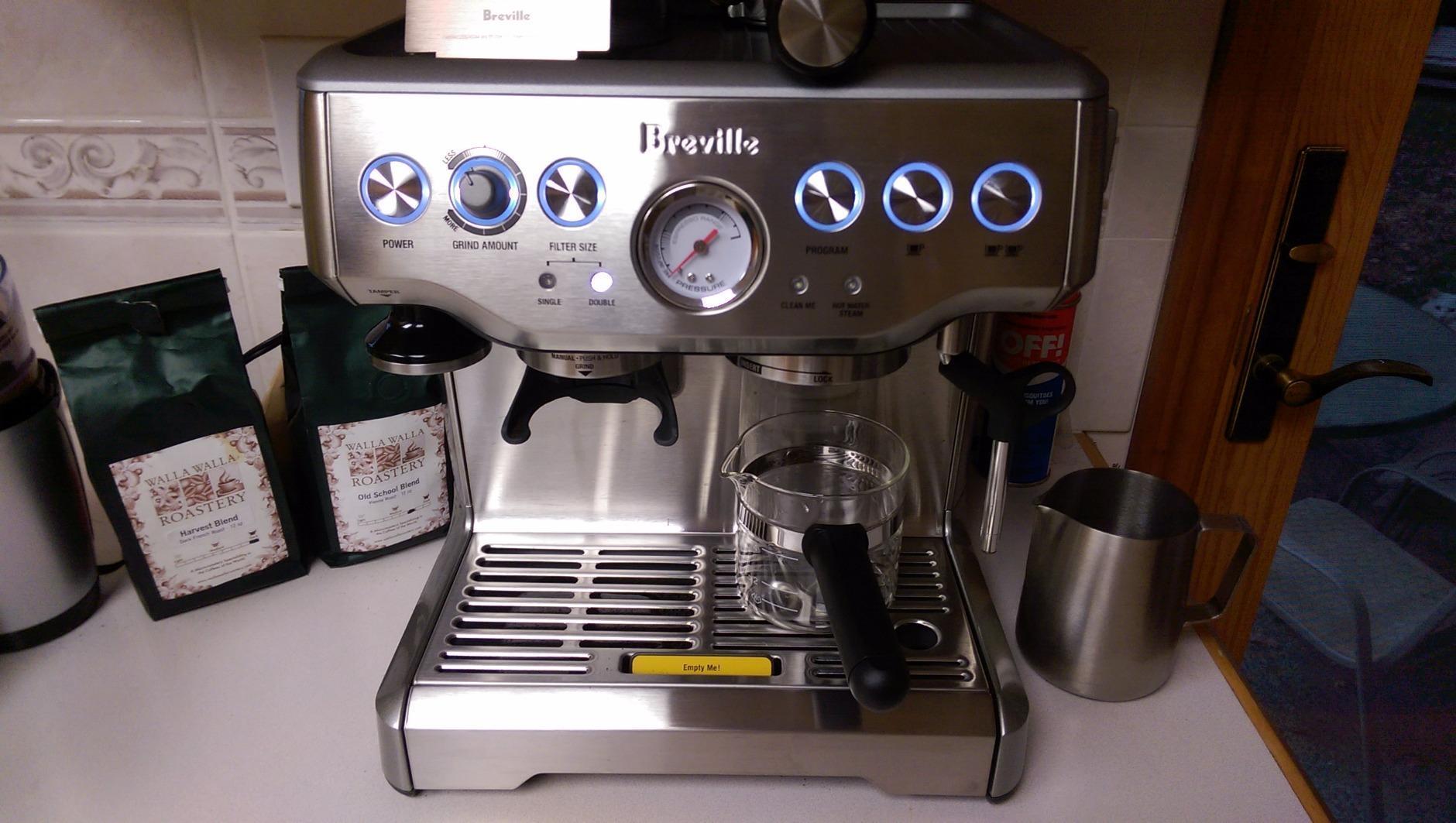
The conical burr grinder grinds on demand straight into the portafilter, and for one or two drinks a day the gap against a dedicated grinder is small. One reported flaw: at the lowest setting on the double dose it dispenses more coffee than you want. Dosing by weight sidesteps it.
Portafilter Size and Who Should Skip It
The supplied portafilter is 54mm, so it takes single and dual wall baskets plus bottomless portafilters, though not 58mm-specific baskets. Skip this machine if you drink four or more milk drinks before noon, or if you share it with someone who will not rinse a portafilter, because the 67 oz tank and the self-flushing drip tray will become a recurring irritation.
2. Breville Barista Pro – Faster Heat-Up and a Longer Warranty
Breville BES878BSS Barista Pro Espresso Machine, Brushed Stainless Steel
ThermoJet 3 second heating
PID within 2C
Integrated burr grinder
67 oz tank
2 year warranty
Pros
- ThermoJet reaches temperature in about 3 seconds
- Powerful steam wand for microfoam and latte art
- Consistent back-to-back shots
- Backlit LCD guides new users
- Parts disassemble easily for cleaning
Cons
- Takes real dialing in before results repeat
- Automatic mode extracts poorly
- Built-in grinder wears with regular use
- 54mm portafilter is below the 58mm standard
This is the Barista Express with a faster heating system and a two-year warranty instead of one, which sounds minor until you are extracting at 6am. The ThermoJet element reaches extraction temperature in about 3 seconds, and owners report that back-to-back shots do not turn bitter the way they sometimes do on slower single-boiler machines.
The PID is specified to hold within plus or minus 2 degrees Celsius, a tighter tolerance than most of the field, and the backlit LCD animates the grind and extract steps. That display turns out to matter more for newcomers than any spec on the box.
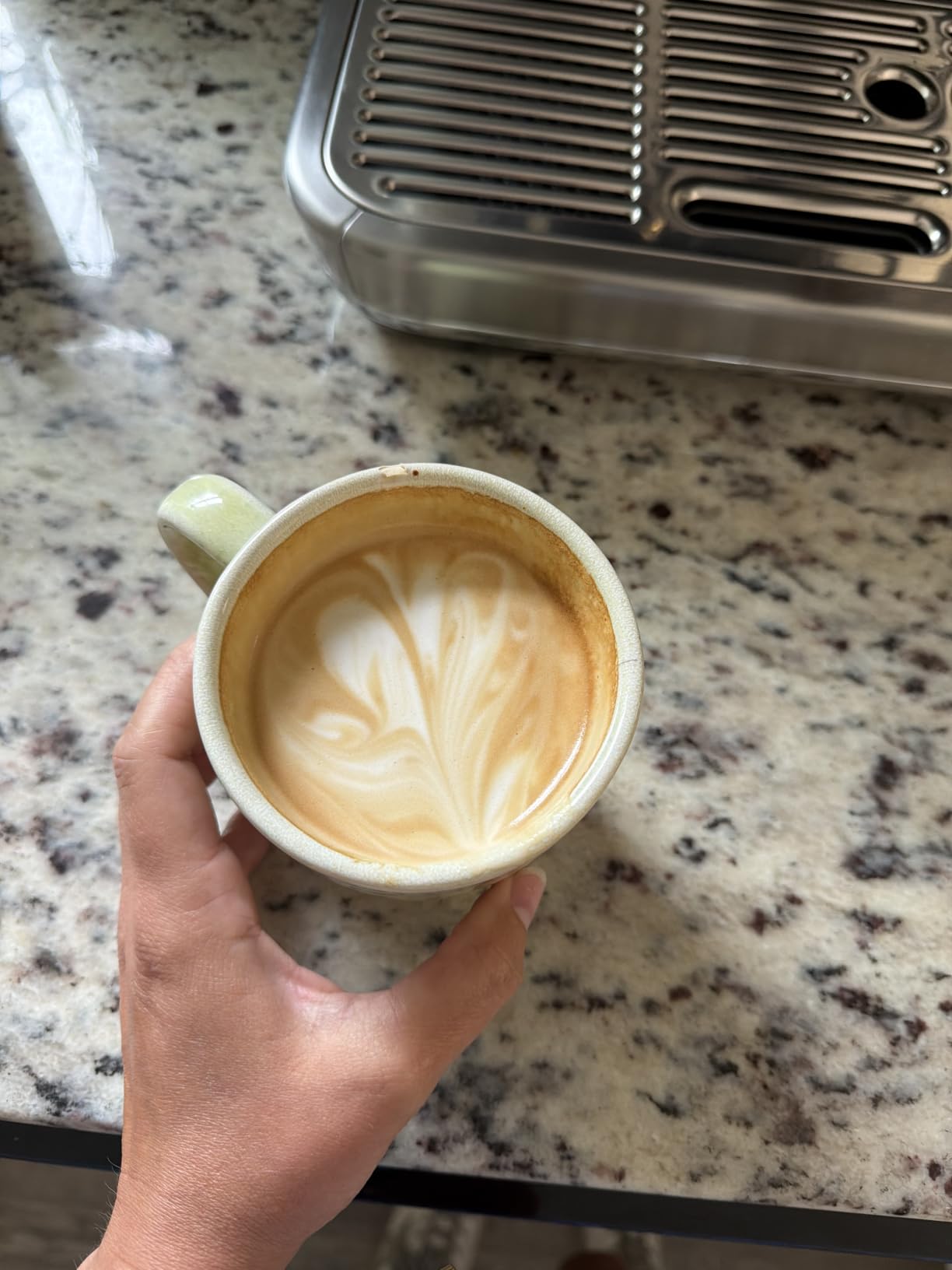
There is a clear instruction buried in the owner feedback: treat it as a manual machine. Reviewers who run the automatic settings report noticeably worse extraction than those who dose by weight and stop by time. Steam is a genuine strength, described as stronger than on the lower Barista models.
What 3-Second Heat-Up Changes on a Weekday Morning
Warm-up time is the difference between a ritual and a chore. A machine that needs several minutes invites you to skip it, and skipped machines make inconsistent coffee. At roughly 3 seconds to temperature, this one is ready before the kettle finishes boiling. The boiler still serves brewing and steaming, so a short recovery pause remains between milk drinks.
Dial-In Time and Why Automatic Mode Disappoints
Owners are candid that results are not repeatable straight out of the box. The grind has to be set, the dose weighed and the yield measured before two shots in a row taste the same. That learning period is the most common source of early disappointment with any machine on this page, and automatic mode is the fastest route to a mediocre cup.
Grinder Wear, the 54mm Ceiling and Who Should Buy It
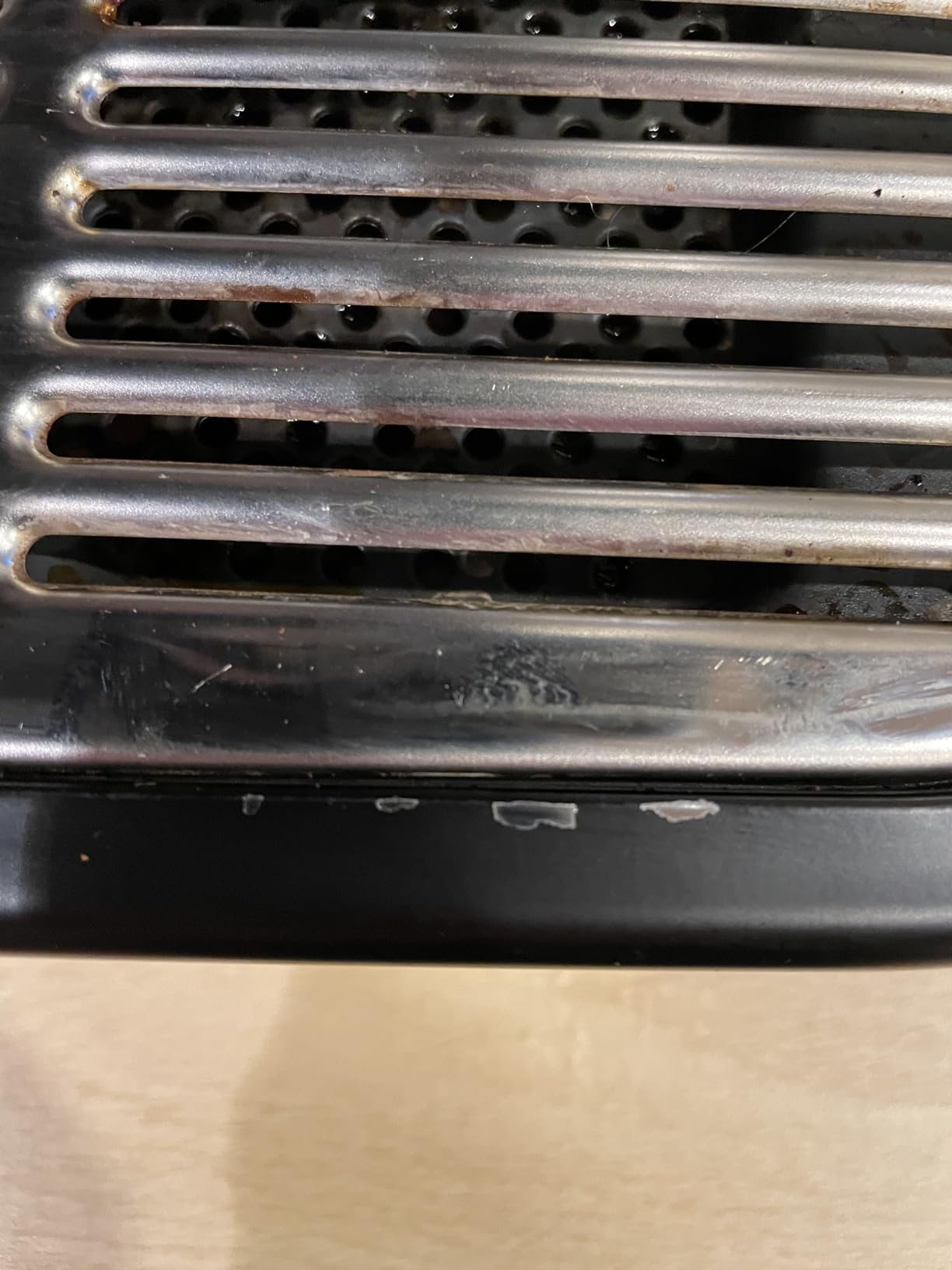
Two honest limits: the integrated burr grinder is reported to wear with regular daily use, and it is noticeably loud. The 54mm portafilter takes bottomless baskets but not 58mm-specific ones. Buy this one if you drink more than one drink a day and warranty length matters to you; skip it if you want hands-off dosing or plan to move to 58mm baskets within a year.
3. Breville Barista Touch – The Most Automated Machine We Tested
Breville BES880BSS Barista Touch Espresso Machine, Brushed Stainless Steel
3 second ThermoJet heating
PID control
Touchscreen
Automatic steam wand
2 year warranty
Pros
- Touchscreen makes the workflow approachable
- Programmable milk temperature and texture
- 3 second heat-up
- Integrated grinder doses in one touch
- Stores 8 custom coffee profiles
Cons
- Less hands-on control than manual models
- Screen adds cleaning surface
- Bulkier and heavier than smaller Barista models
- Group and wand need regular cleaning
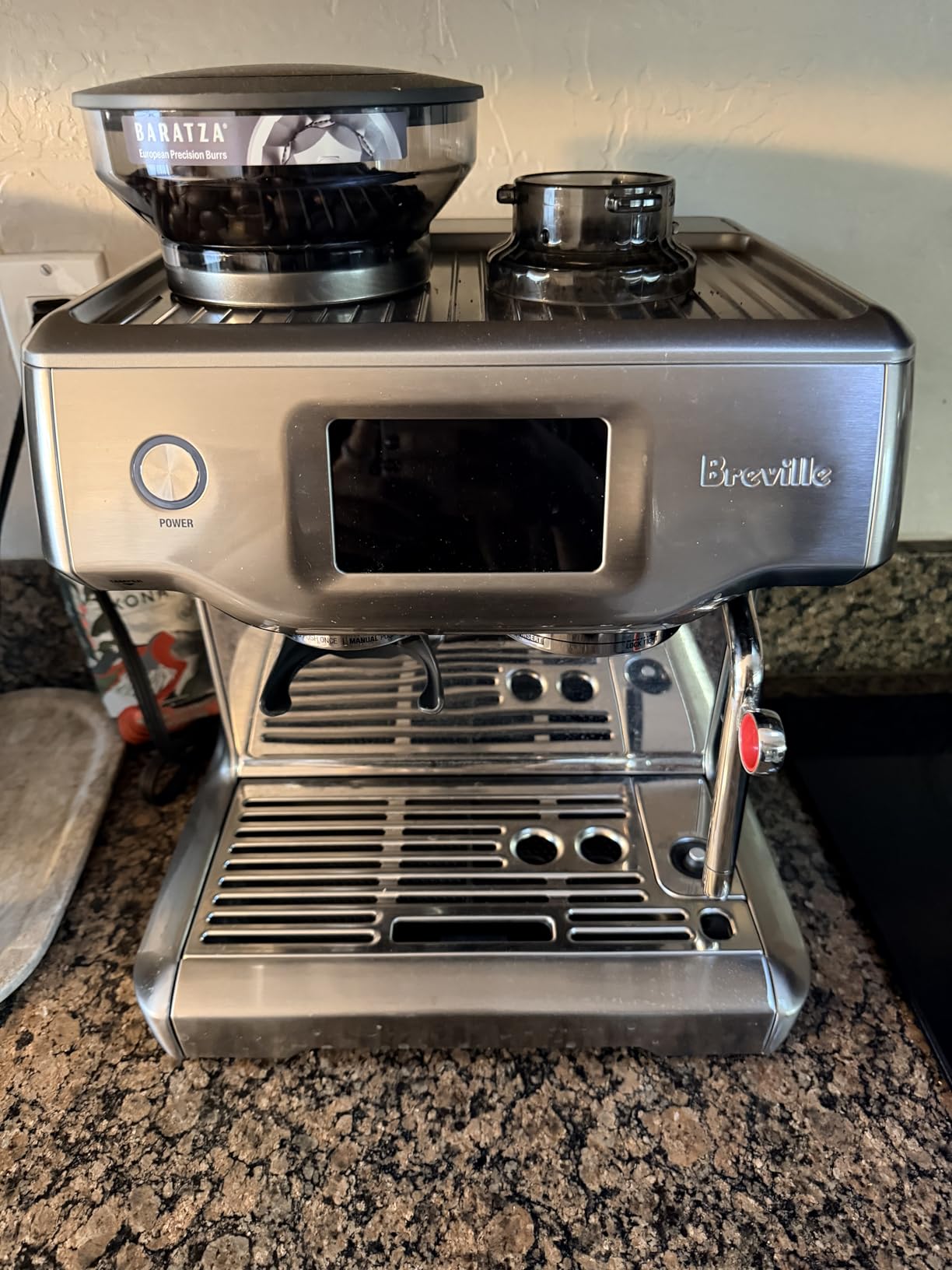
This is the machine to buy if you want a semi-automatic that guides you rather than one that tests you. The touchscreen breaks the process into Grind, Brew and Milk, lets you set coffee strength, milk texture and milk temperature, and stores up to eight personalised profiles. The automatic steam wand adjusts milk temperature and texture on its own.
It is also the least rewarding of the three Brevilles for anyone who wants to learn. Owner ratings sit below the Barista Express and Barista Pro precisely because enthusiasts find the guided workflow leaves less for them to control.
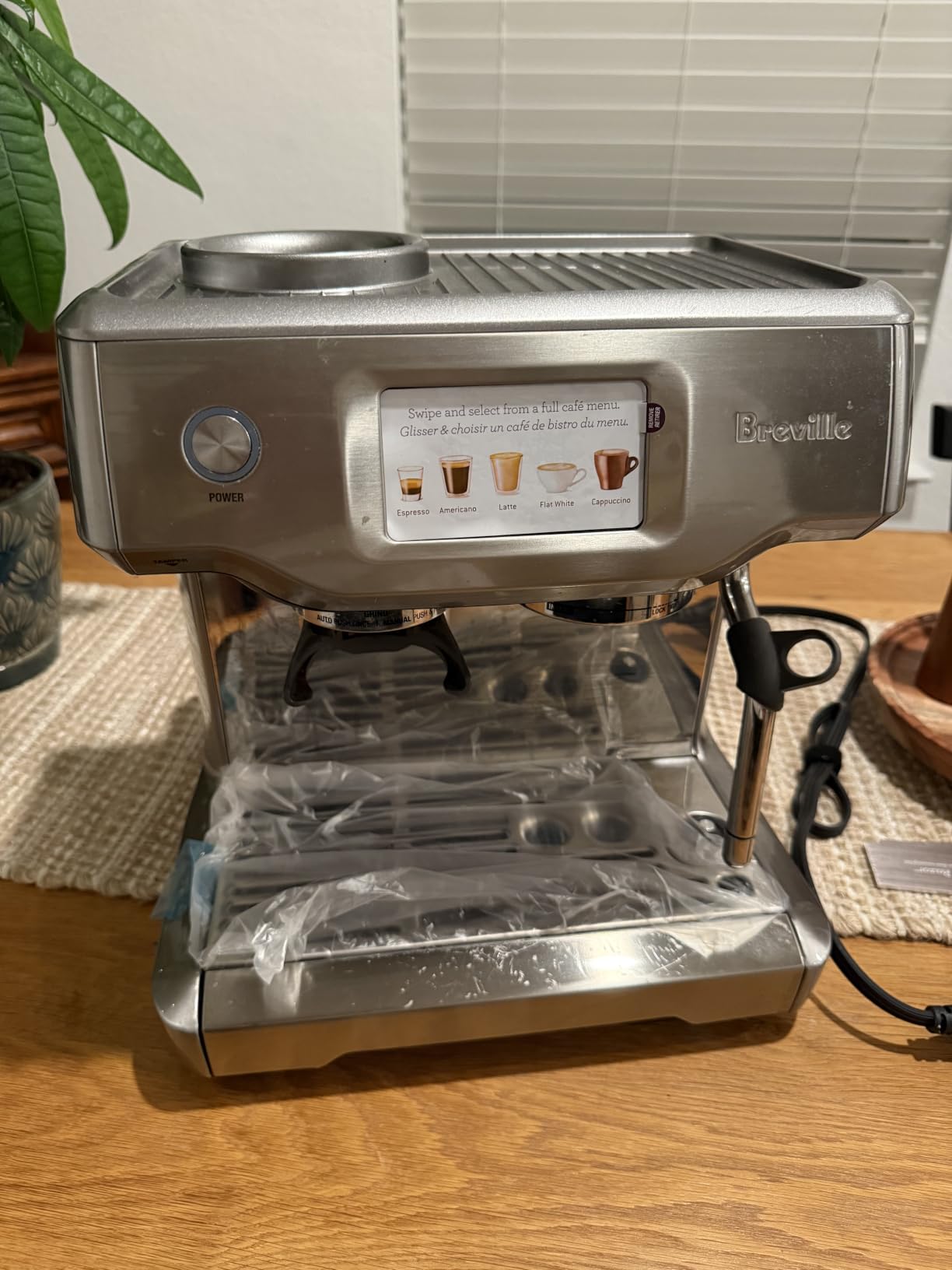
Underneath, the fundamentals are familiar: ThermoJet heating to temperature in about 3 seconds, PID temperature regulation, an integrated precision conical burr grinder and a 54mm stainless steel portafilter. The hardware is capable. The software decides how much of it you get to use.
Touchscreen Workflow Versus Manual Control
The guided sequence is genuinely good for a first month. It removes decision fatigue and gives you a repeatable result to compare against. It is a poor way to learn what each variable does, because you cannot hold one constant and change the one you are studying. Manual mode on a cheaper machine teaches more in a month.
Automatic Steam Wand and Milk Programming
Programmable milk temperature and texture is the feature that keeps this machine in daily use for households. A manual wand needs a purge, a stretch and a vortex; the automatic version handles that consistently so two people get the same cup. The trade is direct control, which matters if you are chasing microfoam for latte art.
Footprint, Cleaning Load and Who Should Buy It
At 12.7 by 15.5 by 16 inches and 21.8 pounds, this is the biggest of the three Barista bodies we tested, and the cup warming tray needs vertical clearance under a cabinet. The screen also adds a surface to clean. Buy it if espresso is a shared household task and consistency matters more than discovery; skip it if you want to change one variable at a time.
4. De’Longhi La Specialista Opera – Lever Tamping That Removes One Variable
De’Longhi La Specialista Opera Espresso Machine with Coffee Grinder
19 bar pump
15 grind settings
Smart Tamping lever
3 brew temperatures
1600W
Pros
- Rich consistent espresso once set
- Built-in grinder keeps the counter clear
- Lever tamping removes tamp guesswork
- Sturdy premium build
- Illustrated manuals and cold brew function
Cons
- Integrated grinder can jam and is hard to clear
- Bean canister holder is not removable
- Panel labels rub off with use
- Descale indicator triggers on hard water
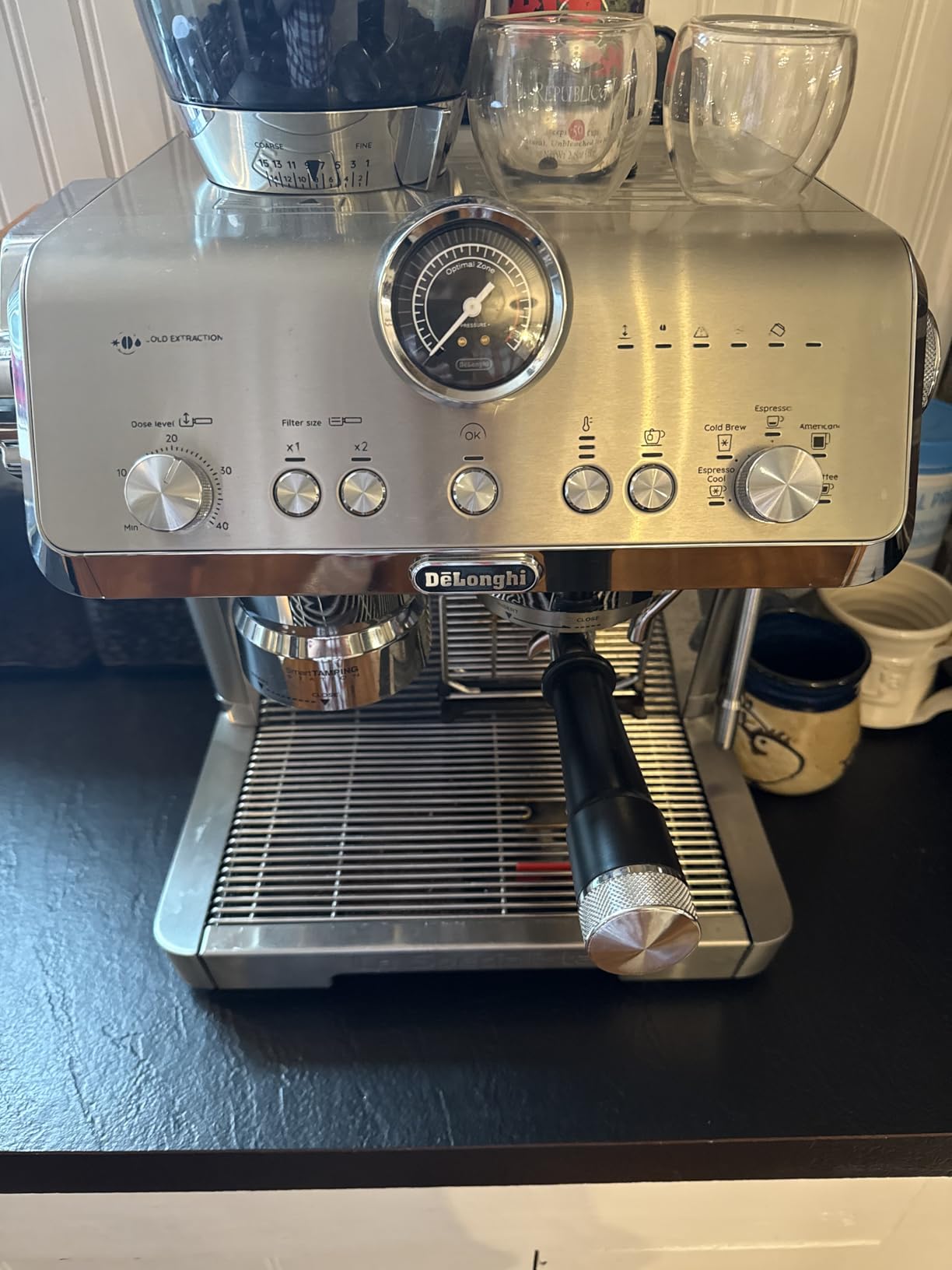
Smart Tamping is the idea worth understanding before anything else. Instead of asking you to press a puck to a consistent level by feel, a lever drives the tamper downward under mechanical force, which removes the variable beginners most often get wrong. New users report visibly fewer uneven pucks and less mess on the counter.
Active Temperature Control adds three infusion temperature settings, so you can shift the extraction profile without changing beans or grind. Combined with a 19 bar Italian pump that pre-infuses at low pressure and extracts at 9 bar, it is a properly specified machine underneath the convenience features.
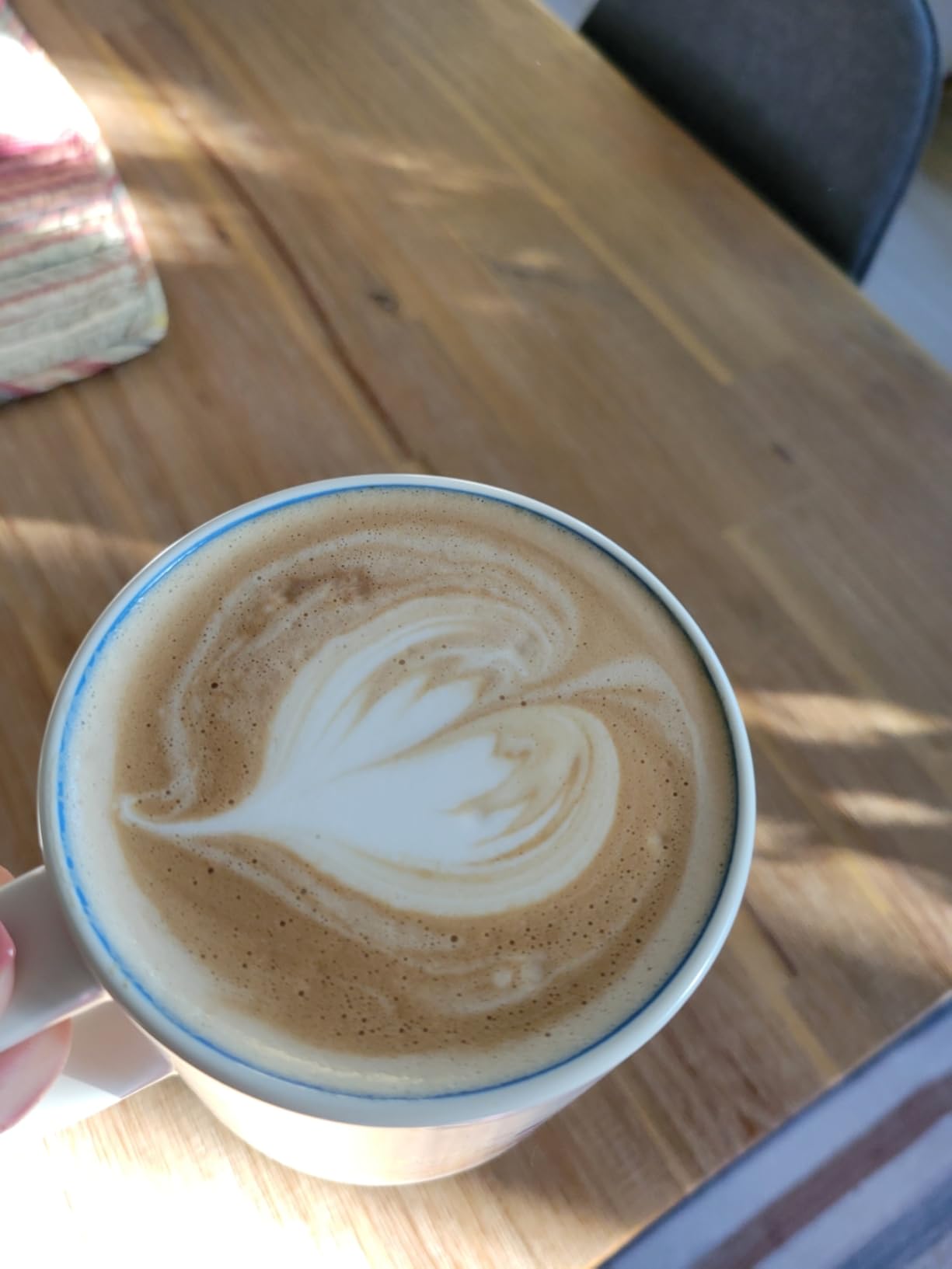
Build quality is a genuine strength. The stainless body is described as sturdy, several owners moved over from Breville units, and the illustrated manual makes setup unusually approachable. That last point sounds trivial until you are assembling a machine at 9pm.
Lever Tamping Versus Learning to Tamp by Feel
Learning to tamp properly is a skill, and it is one most people never fully acquire. The lever fixes depth and force, so your attention goes to distribution instead. Owners generally see better puck consistency within days. The downside is that you are still not learning one of the craft fundamentals, so expect to pick tamping up later on a different machine.
Three Temperature Settings and What They Change
Moving brew temperature up produces a sweeter, more acidic extraction typical of lighter roasts; moving it down reduces harshness on darker beans. Three positions is not PID control, but it is more than a fixed thermostat and enough to keep one machine serving two roast styles.
Grinder Reliability and Who Should Buy It
Grinder reliability is the weak point. Owners report jams after a couple of weeks of use, and the bean canister holder is not removable, which makes clearing one harder than it should be. Other recurring notes: panel labels rub off with use, and the descale indicator triggers early on hard water, so filter your water. Buy it if you want less technique to learn up front; skip it if you grind heavily every day.
5. Gevi 20 Bar with Grinder – 58mm Portafilter at an Entry Price
Gevi 20 Bar Espresso Machine with Grinder & Steam Wand for Latte Cappuccino
20 bar pump
30 grind settings
58mm portafilter
NTC and PID control
2.3L tank
Pros
- Built-in grinder with 30 settings
- 20 bar pump produces full-bodied shots
- 58mm portafilter accepts standard baskets
- Steam wand doubles as hot water tap
- Single and double shot volumes
Cons
- Results depend on grind adjustment and technique
- Grinder and group need regular cleaning
- Compact panel limits detailed readouts
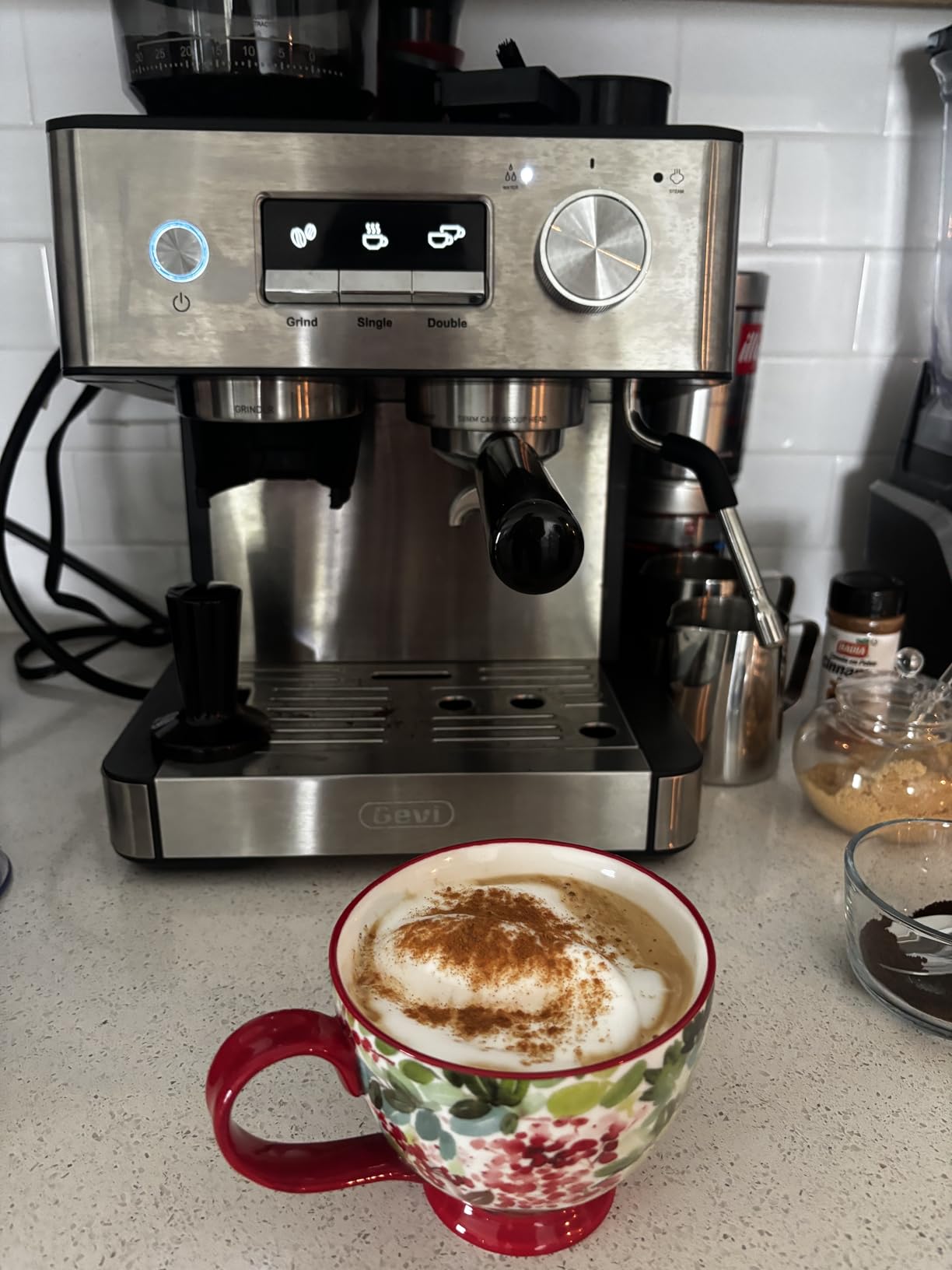
The 58mm portafilter is the reason to look at this machine. It is the commercial standard, so single and dual wall baskets, bottomless portafilters and precision baskets all fit. Two cheaper machines on this page ship 51mm baskets, and choosing a 58mm group now saves you from that constraint later.
A 20 bar Italian pump and combined NTC and PID temperature control cover brewing and frothing, with a 2.3 litre tank and a dual-function steam wand that switches to hot water. Grinder range is the other strength: 30 adjustable settings from coarse to very fine.
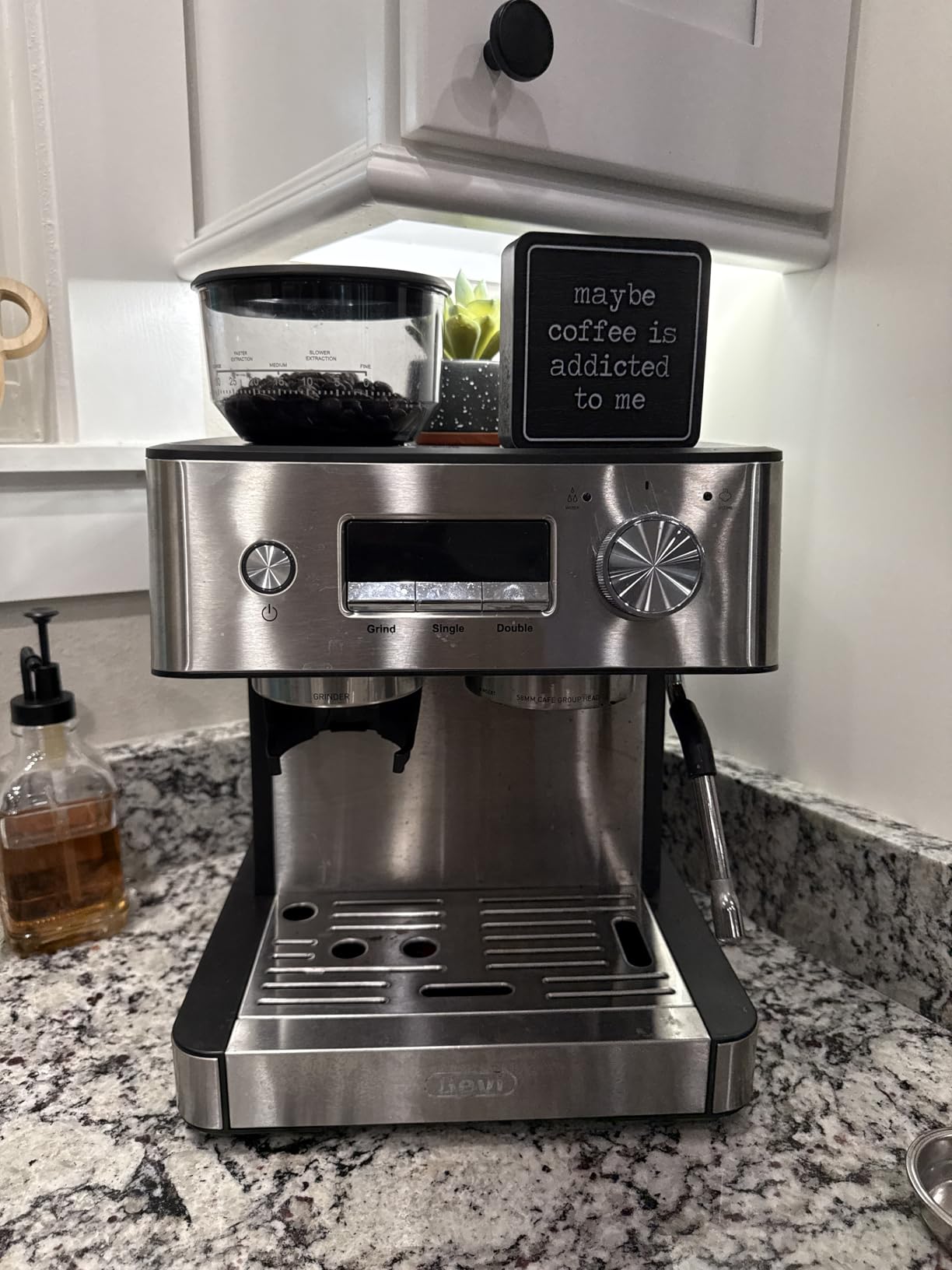
Owners report café-style espresso and usable microfoam, and the 58mm group draws favourable comments from people who upgraded from smaller baskets. The caveats are the honest ones for this category: results depend on grind adjustment and technique, and the control panel is compact enough that detailed readouts during a shot are limited.
Why 58mm Beats 54mm for Long-Term Owners
A 58mm group accepts the largest accessory ecosystem in home espresso, and 58mm is the size most specialty basket manufacturers target when they publish hole patterns and depths. The compromise is size and weight: a deeper basket and a larger group head, so check that your scale weighs 18 to 20 grams comfortably before you buy.
Grinder Range Versus Grinder Quality
Thirty settings sounds generous, and on paper it covers a lot of beans. The useful question is whether the burrs produce an even particle distribution, not how many clicks the dial has. On a low daily volume that is genuinely usable; on several drinks a day, or light single-origin roasts where distribution matters most, an integrated burr set runs out of headroom.
Control Panel Limits and Who Should Buy It
The panel handles grind duration and single or double shot volumes, but shows no pump pressure or brew temperature during a pull, so you are dialling in by taste, yield and time. Buy it if basket choice is your priority; skip it if you want visible extraction feedback.
6. Electactic 20 Bar with Grinder – The Complete Starter Kit
Electactic Espresso Machine with Grinder, 20 Bar Expresso Coffee Machines
20 bar pump
30 grind settings
Digital PID control
Steam and hot water wand
2.8L capacity
Pros
- Integrated grinder with 30 settings
- 20 bar pump and 1500W motor
- PID keeps brew temperature stable shot to shot
- Steam wand doubles as hot water dispenser
- Full accessory kit included
Cons
- Bulky and heavy at 26.2 pounds
- Grinder is loud during dosing
- Real learning curve for tamping and grind
- Group and grinder need regular cleaning
What distinguishes this machine is the box contents. You get a commercial-style portafilter, four brew filters, a frothing pitcher, a heavy-duty tamper and a cleaning kit, so there is nothing to buy before the first shot.
The specification sheet is more serious than the price suggests: a 20 bar pump, a 1500W motor, digital PID temperature control and an integrated grinder with 30 adjustable settings, with setting 15 recommended as the baseline. The steam wand handles frothing and switches to hot water.
Owners cite the grinder range, PID stability and the included accessories as the strongest reasons to buy. The physical presence is the trade: at 26.2 pounds and 15.75 inches deep, it is one of the larger machines here, and the grinder is loud during dosing.
What the Accessory Kit Saves You
A typical first setup needs a portafilter, a non-pressurized basket, a tamper, a pitcher, a scale and a knock box. This machine ships with all but the last two. The heavier tamper included is worth keeping, since light plastic tampers make it harder to feel even pressure.
PID Stability and What It Fixes
Temperature hunting is the most common cause of shots that taste different every morning. Digital PID control holds a setpoint rather than oscillating around it, so once you find a recipe it repeats. If your budget allows PID anywhere, put it here.
Footprint, Noise and Who Should Buy It
The depth and weight make it awkward to reach behind for cleaning, and the grinder noise during dosing is loud enough that owners mention it unprompted. Buy it if you want everything in one box with PID stability; skip it if counter space is tight or you plan to build a serious setup over a few years.
7. Chefman Crema Deluxe – Dual Boiler for Brewing and Steaming at the Same Time
Chefman Crema Deluxe Espresso Machine with Double Boiler, Use Milk Frother and Brew Espresso Simultaneously, Professional Coffee Maker with Coffee Grinder and Steam Wand, 30 Grind Settings
Dual boiler
30 grind settings
58mm portafilter
Adjustable shot volume
3L reservoir
Pros
- Dual boiler brews and steams simultaneously
- Pulls rich shots with good crema
- Steam wand produces good microfoam
- Metal weight tamper and full accessory set
- Quick heat-up and simple cleanup
Cons
- Grinder and electronics have failed for some owners
- Noticeably loud during extraction
- Substantial plastic used in the build
- Grinder dose wanders over time
The dual boiler is the whole point of this machine. It runs separate water for brewing and steaming, so you can pull a shot and texture milk at the same time instead of waiting for one system to cool and the other to reheat. That is a genuine engineering advantage at this price level.
Around it: a 30-setting conical burr grinder dispensing into the portafilter, a 58mm portafilter with single and double baskets, a 15 bar pump, adjustable shot temperature and volume, and a 3 litre fully removable reservoir.
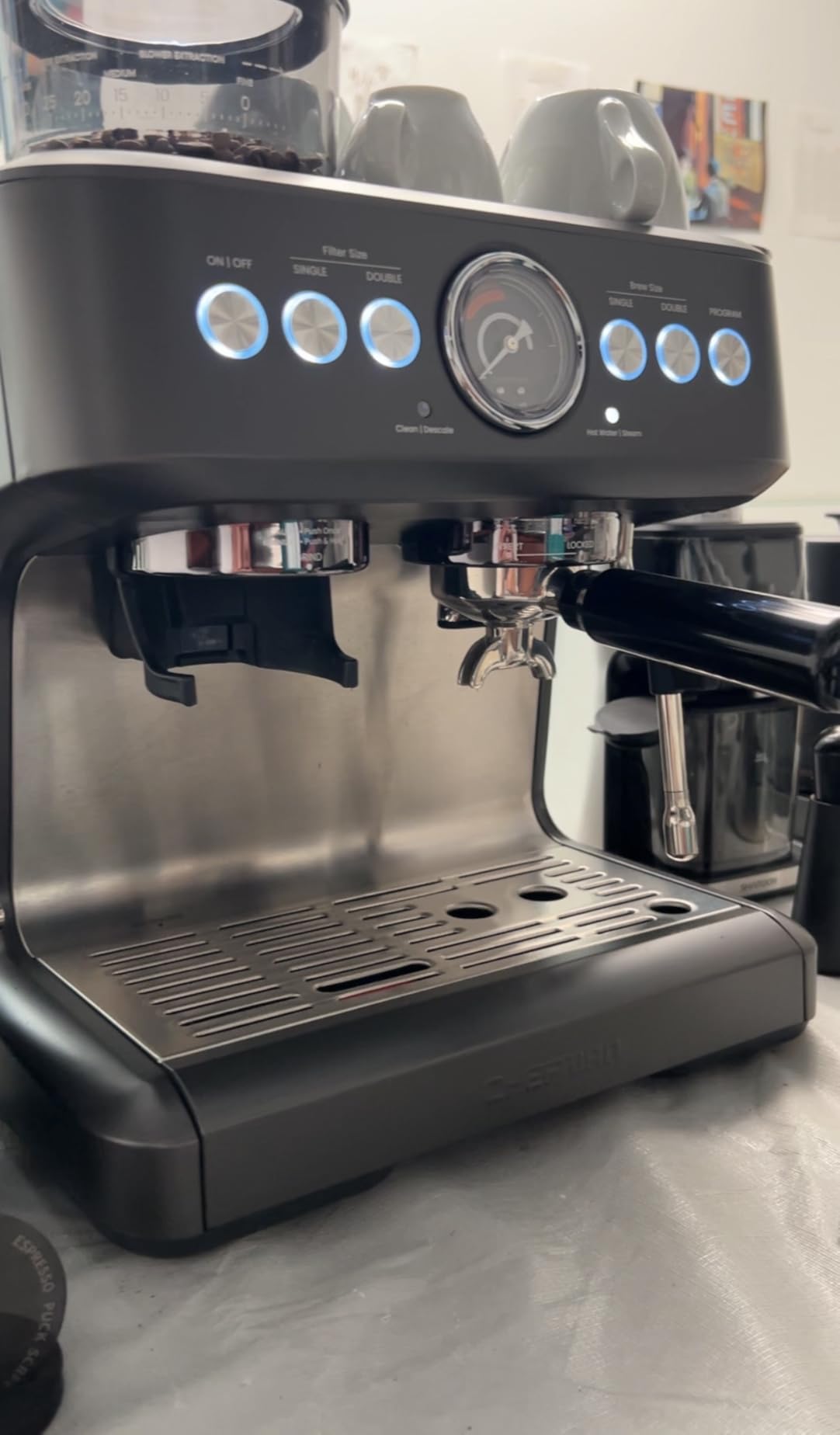
Reviewers rate the espresso quality as good for the price and consistently praise the microfoam. Durability is the honest concern: the star rating is the lowest in this group, with complaints about grinder and electronics failures after several months of regular use, a wandering grinder dose, and heavy use of plastic in the build.
What a Dual Boiler Actually Solves
A single boiler must heat water to brew temperature, raise it further to steam temperature, then cool back down again. That cycle is the source of the 60 to 90 second wait that frustrates anyone making more than one milk drink in a row. Two boilers remove the wait entirely, so the sequence shot, steam, shot, steam costs no recovery time.
Grinder Reliability Over the First Year
Owners report grinder and electronics failures after a few months, and the grinder dose drifting over time. That is a common pattern with integrated grinders in mid-priced machines, and the single biggest long-term ownership risk on this list. The group head and dual boiler will outlast the grinder, which is an argument for pairing it with a separate one later.
Shot Controls and Who Should Buy It
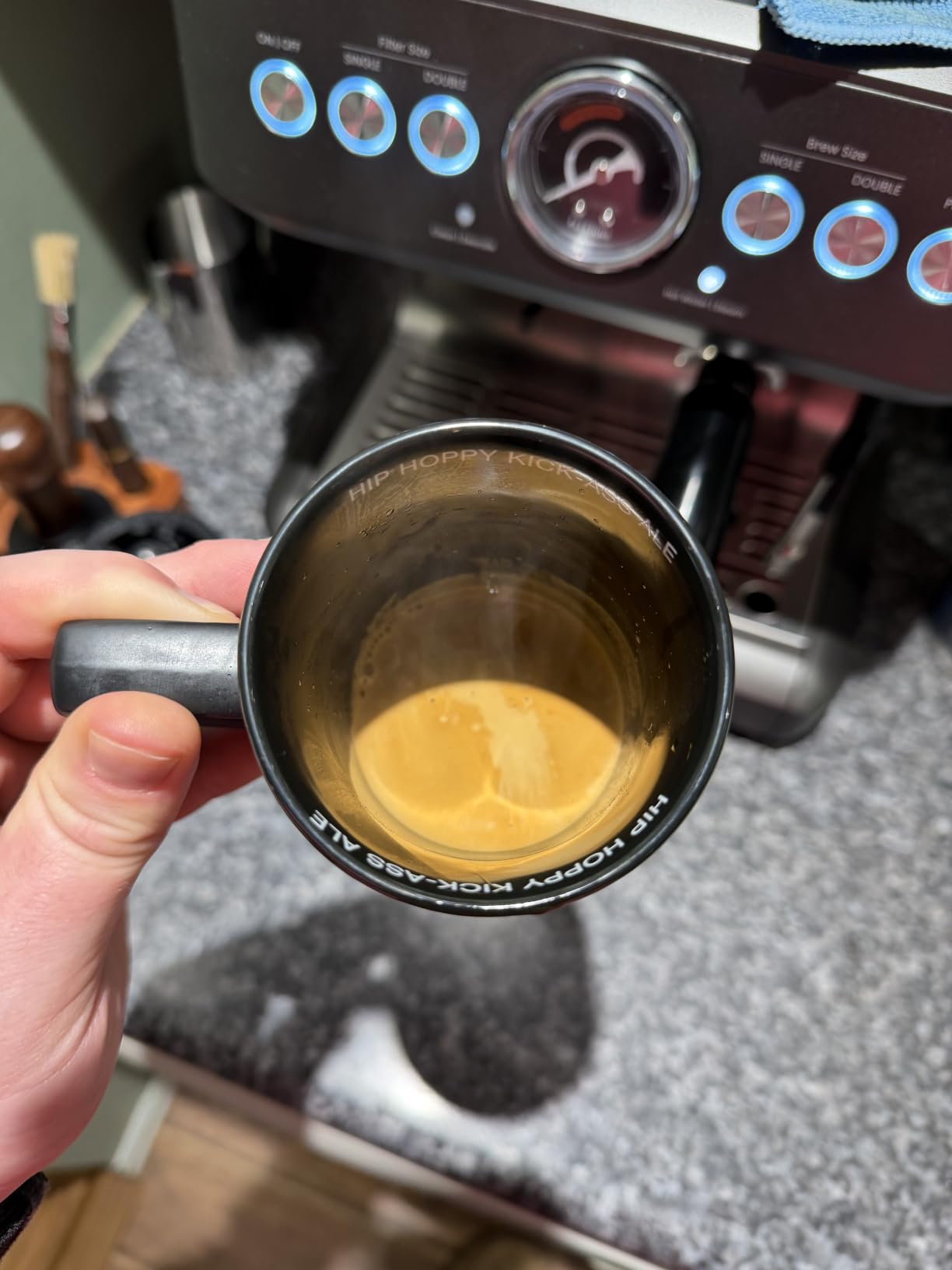
Adjustable temperature and volume let you move from ristretto to lungo, though owners note it does not produce true versions of either, so treat the range as a starting point. Buy it if you drink multiple milk drinks a day and want the shot and the steam at once; skip it if long-term durability is your priority or you already own a grinder.
8. CASABREWS ULTRA – The Best Value Pick With Four Temperature Settings
CASABREWS Ultra Espresso Machine, Barista Espresso Maker with Steam Wand
20 bar pump
Four brew temperatures
LCD display
58mm portafilter
73 oz tank
Pros
- Highest rated in this group at 4.5
- 20 bar pump with 1350W heating
- Four brew temperature settings aid dialing in
- Steam wand handles microfoam and latte art
- 73 oz tank is large for the class
Cons
- No integrated grinder so a burr grinder is needed
- Grind size and tamping must be adjusted for good pressure
- Regular backflushing and descaling required
This is our best value pick and the highest-rated machine in the group, at 4.5 out of 5. What earns that rating is unusual at this price: four brew temperature settings, an LCD control panel with pre-programmed shots, a 73 ounce removable water tank, and a 58mm portafilter. Most machines that cheap give you one temperature and a smaller group.
Because there is no integrated grinder, the budget question inverts. You can spend the difference on a dedicated burr grinder, which is where most of the flavour actually comes from.
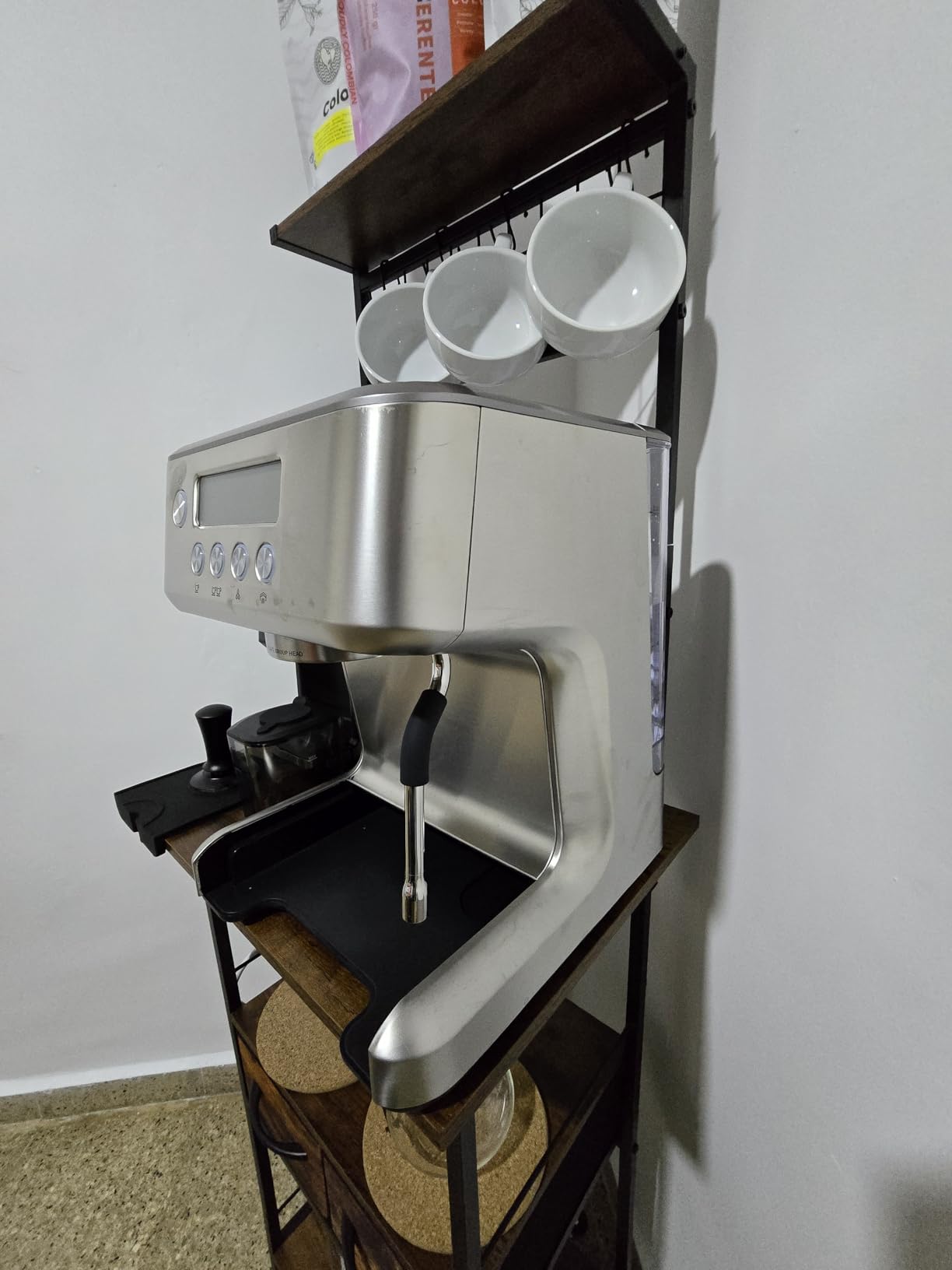
The 20 bar Italian pump and 1350W heating system handle extraction consistently, and the advanced steam wand textures microfoam good enough for latte art. The most common feedback is a warning rather than a complaint: grind size and tamping have to be adjusted, and the machine needs regular backflushing and descaling.
Four Temperature Settings Without a PID
These are fixed positions, not a PID loop, so accuracy is limited compared with true digital control. Think of them as four recipes rather than a dimmer switch. Combined with the LCD panel, they give a beginner more usable information than a machine costing considerably more.
The 58mm Group and the Grinder Decision
The 58mm portafilter with single and dual wall baskets is what makes this a long-term platform rather than a starting one. Precision baskets, bottomless portafilters and commercial-style accessories all fit. Buying no grinder here is not a gap, it is a reallocation.
Tank Size, Backflushing and Who Should Buy It
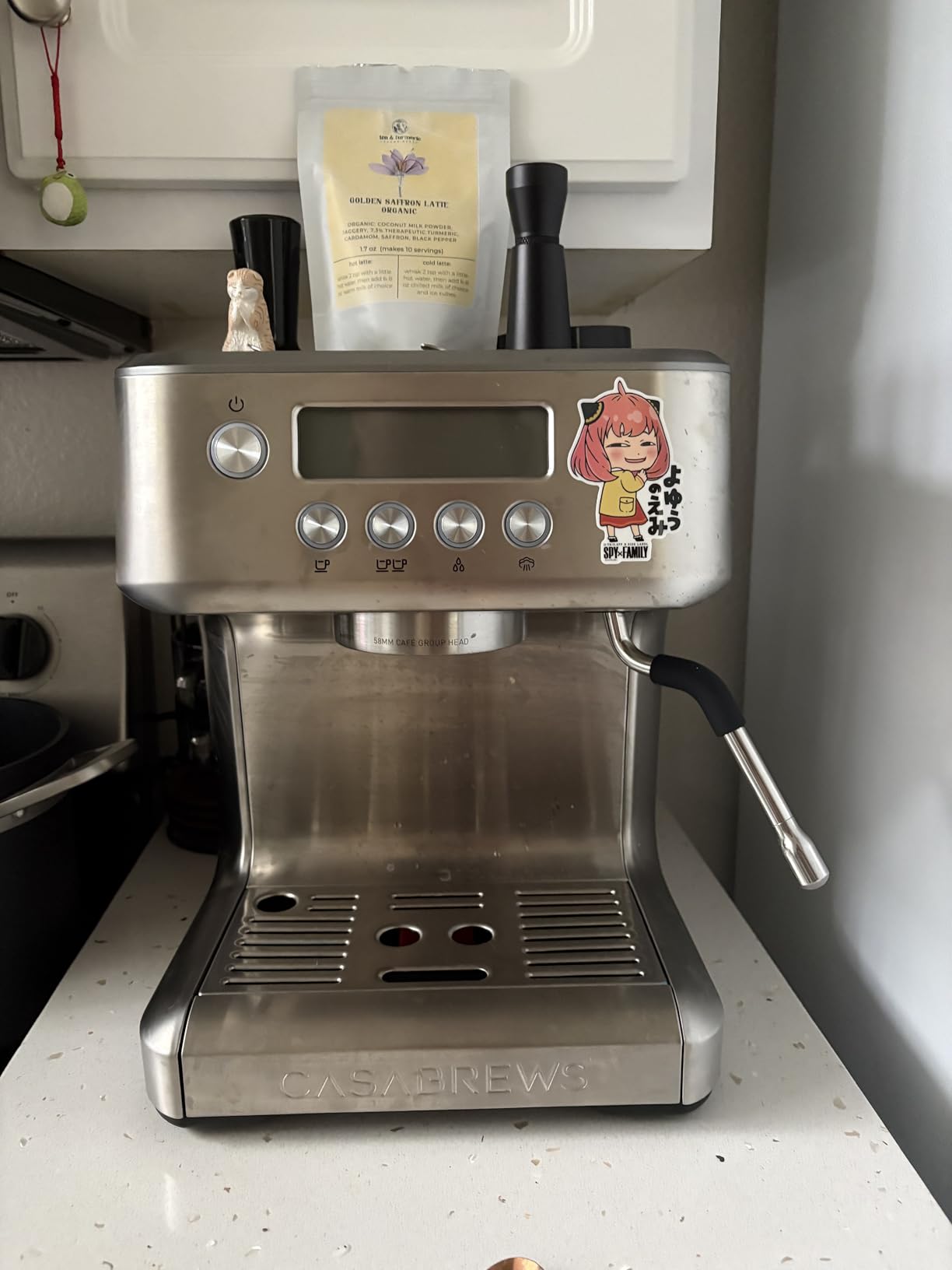
A 73 ounce tank removes the refill interruption for most households, and it is removable for filling at the sink. Against that, regular backflushing and descaling are required, and on hard water the cycle comes sooner, so filtered water is worth setting up from day one. Buy it if you want the most capable platform per dollar; skip it if you want a single-box purchase with no separate shopping.
9. KitchenAid KES6503 – Metal Build and a Commercial-Size Portafilter
KitchenAid Metal Semi-Automatic Espresso Machine – KES6503, Empire Red
58mm commercial portafilter
Dual smart temp sensors
Programmable dose selector
Metal body
1.4L tank
Pros
- Metal body feels more premium than plastic rivals
- 58mm portafilter aids heat retention and tamping
- Dual temperature sensors support consistency
- Programmable one or two shot dosage
- Cup warmer on top for preheating
Cons
- No integrated grinder so beans are ground separately
- Small 1.4 litre tank needs frequent refills
- Espresso and steam performance are average
- Manual grinding and dose control add a learning curve
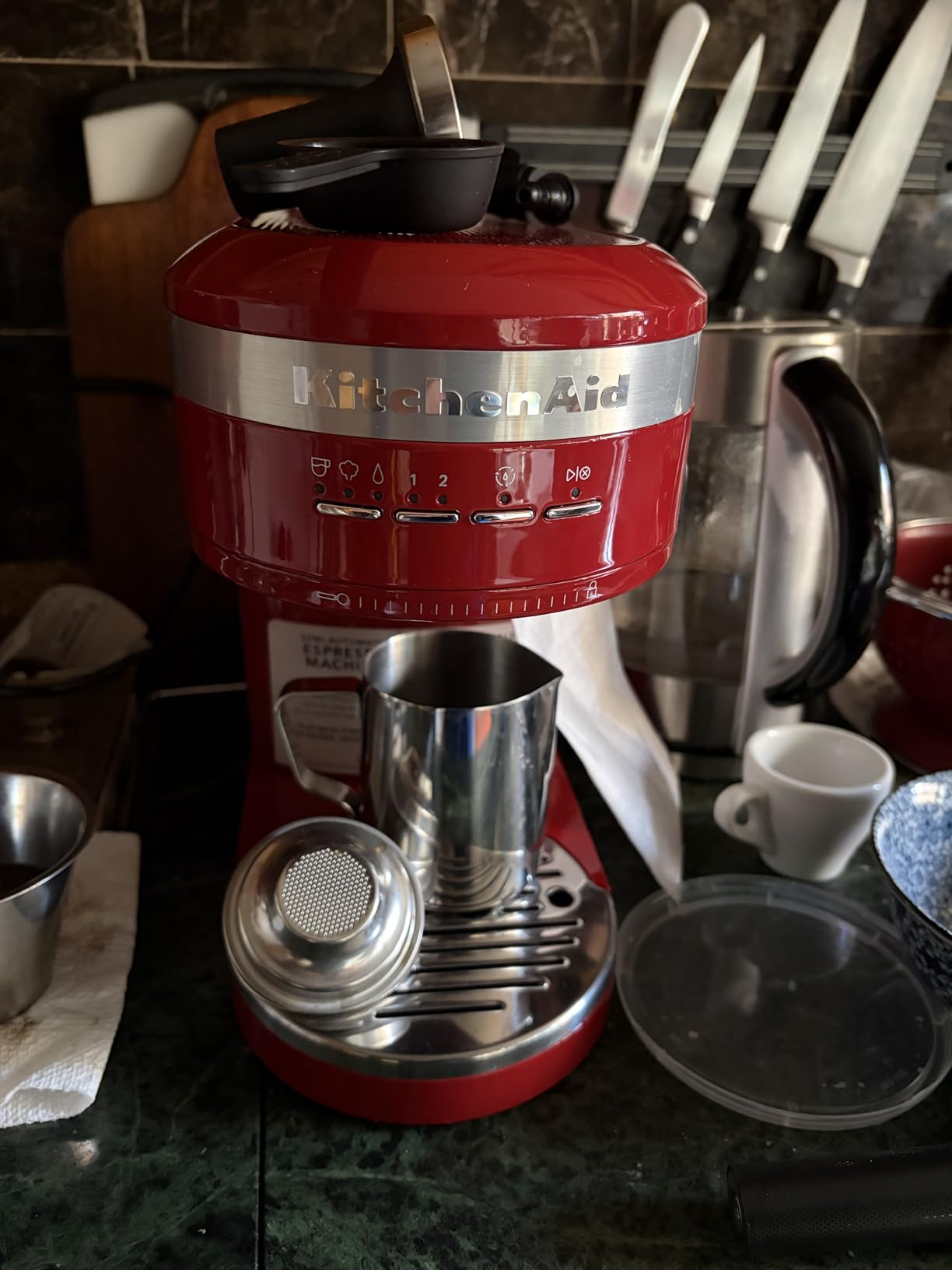
The KES6503 stands out on materials. Where several cheaper machines wrap plastic around the group and upper body, this one is metal, and owners consistently notice the difference in weight and perceived quality the moment they lift it. The Empire Red finish is also the most distinctive on this page.
Its 58mm commercial-grade portafilter has two recessed spouts, which widen the base for a flatter, more stable tamp. Combined with dual smart temperature sensors that communicate through the brew process, that is a solid foundation for consistent extraction.
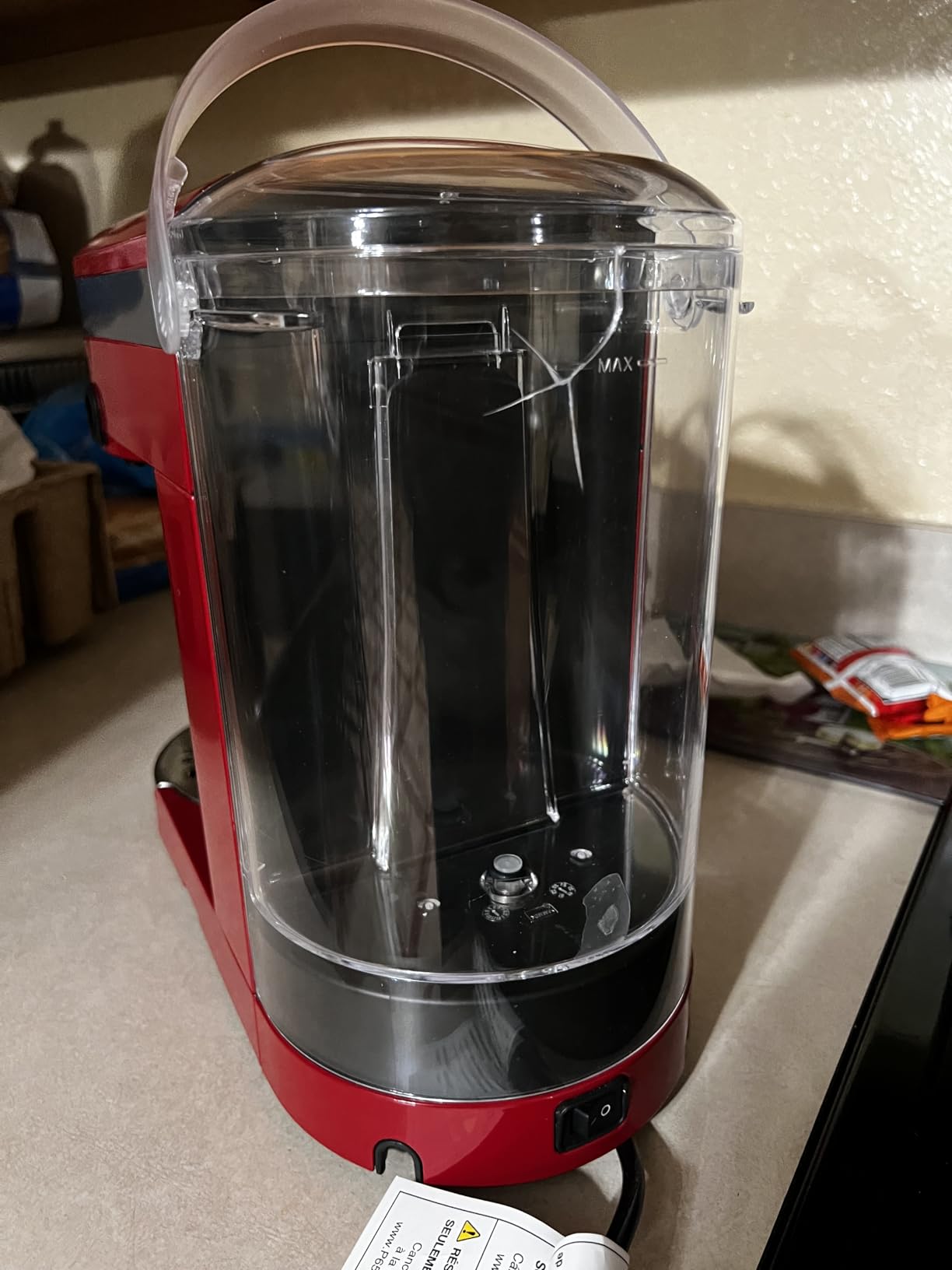
What it does not have is a grinder, and that is the defining decision here. In exchange you get a commercial-size group, a metal chassis and a cup warmer on top for preheating cups. Being the least-reviewed machine in the group, the feedback that exists is measured rather than enthusiastic.
Dual Smart Sensors and What They Contribute
Two temperature sensors communicating through the brew is sensible on a machine that has no PID. It cannot hold a setpoint to a degree, but it does reduce the temperature swing that makes repeat shots inconsistent on a simple thermostat. If you are chasing very light roasts, a machine with real PID control will get you further.
The 58mm Portafilter Advantage
This is the same advantage as the CASABREWS ULTRA and the Gevi: a 58mm commercial-grade portafilter with recessed spouts, so the accessory ecosystem is wide open and the group holds heat through a shot. The recessed spouts are designed for stability rather than visibility, so a bottomless basket is the route to watching extraction.
Small Tank and Who Should Buy It
A 1.4 litre water tank is the smallest here, and owners rate espresso output and steam performance as average next to grinder-equipped rivals. Buy it if build quality and a 58mm group matter more than a self-contained workflow; skip it if constant refilling would annoy you.
10. CASABREWS CM5418 – The Compact Budget Machine With the Most Owners
CASABREWS CM5418 Compact Espresso Machine with Milk Frothing Steam Wand
20 bar pump
Pressure gauge
51mm portafilter
34 oz tank
Compact body
Pros
- Compact footprint suits small kitchens
- Pressure gauge guides adjustment
- Simple to operate and easy to clean
- Reliable for owners reporting years of use
- Good value that pays for itself quickly
Cons
- Uninsulated steam wand gets very hot
- Weaker frothing than pricier machines
- 51mm baskets feel low quality
- Cool-down required between frothing and brewing
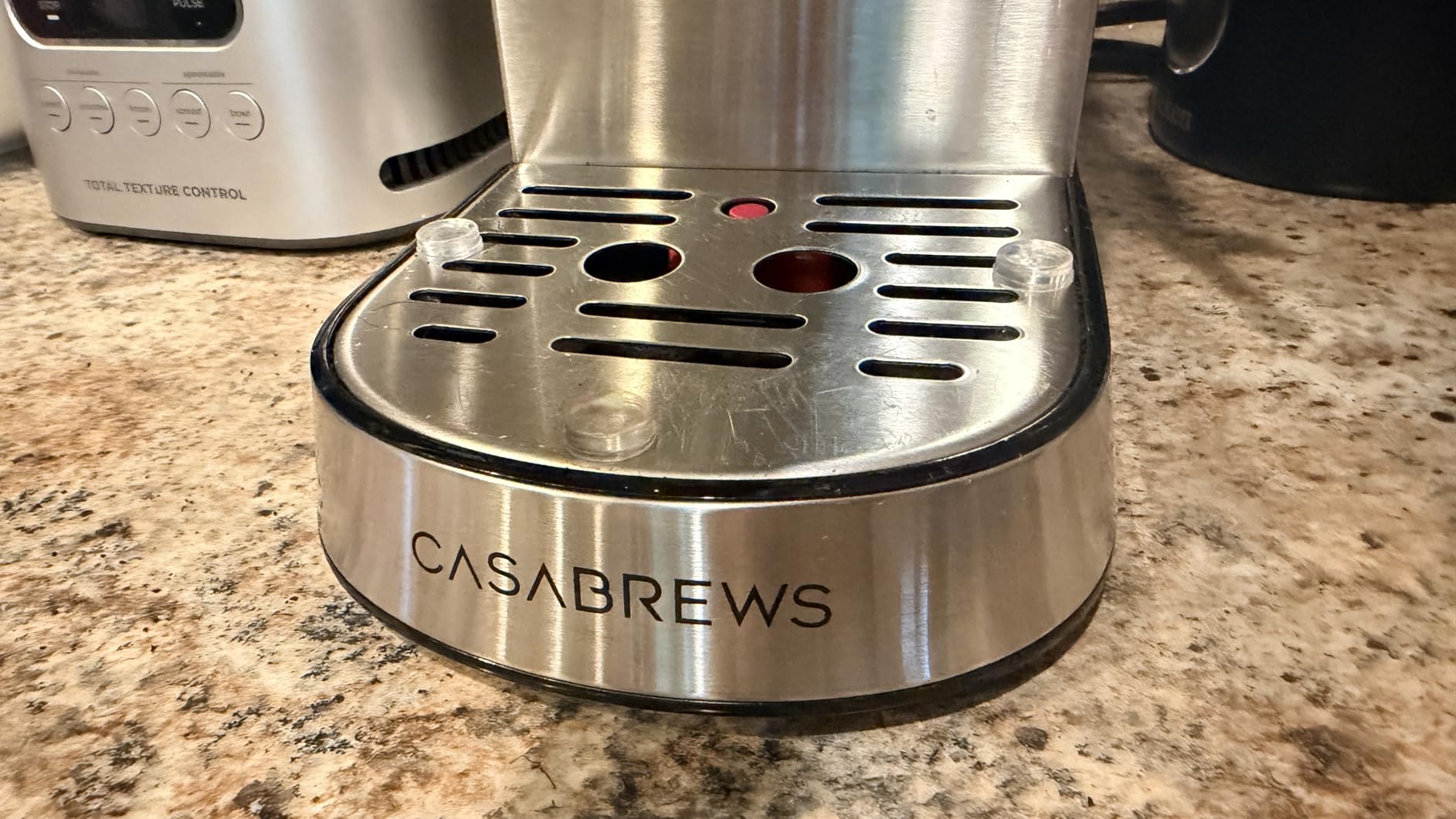
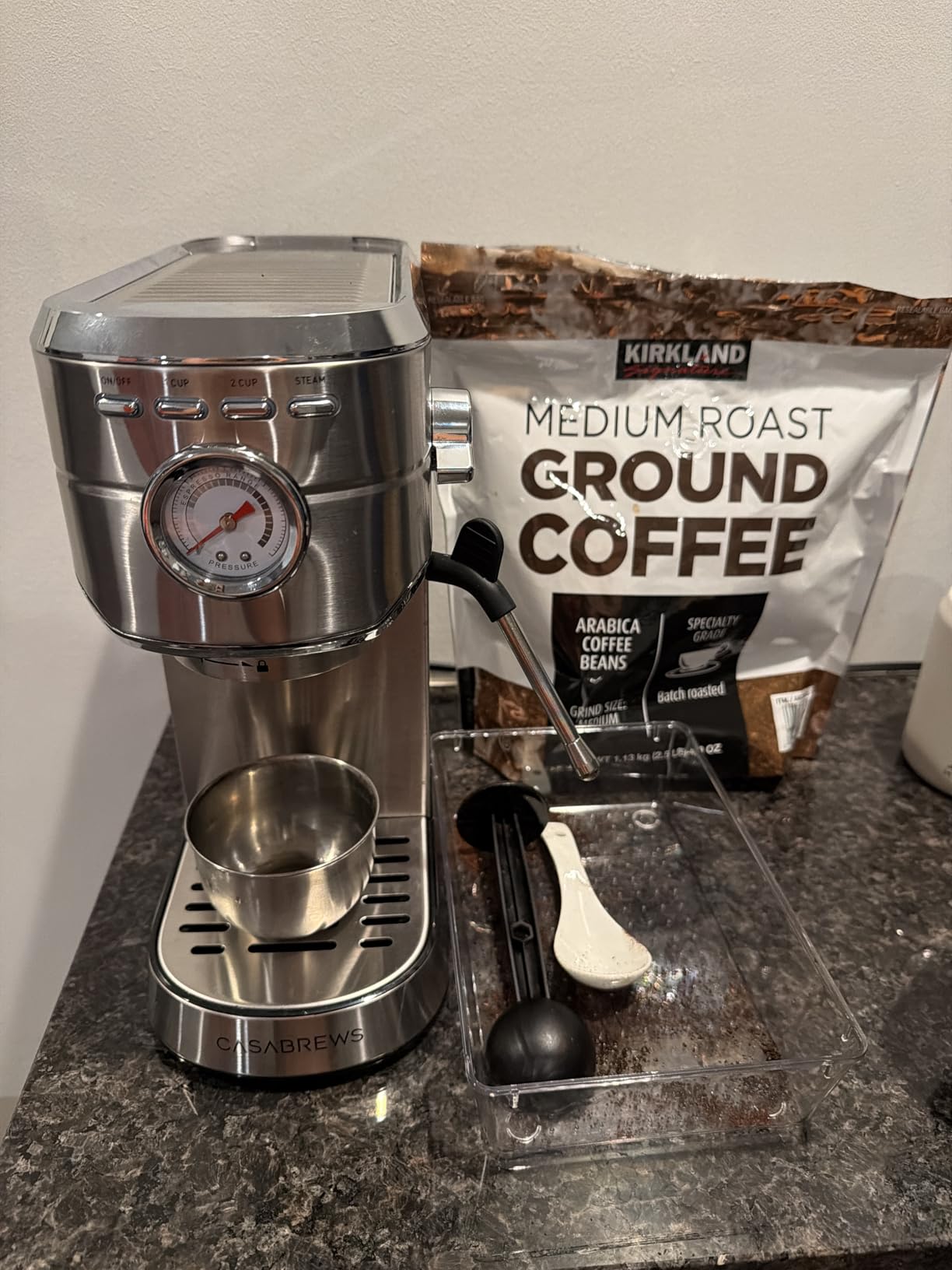
With over 8000 owner reviews, this is the most battle-tested machine here, and owners consistently describe it as good value that saves money against a daily coffee bar habit. At 8.6 pounds and 12.28 by 5.47 by 11.97 inches, it also solves a problem nothing else on this list addresses: a genuinely small counter footprint.
The built-in pressure gauge is unusual at this level and genuinely useful. Combined with a 20 bar Italian pump and a 1350W boiler, it gives you the feedback loop needed to learn grind adjustment, which is why owners report success even though there is no grinder inside.
There is one operational rule that catches people out and appears in the manufacturer guidance itself: do not brew immediately after frothing, because the machine needs to cool down and will otherwise trigger its overheating protection.
Small Footprint and Kitchen Realities
At 5.47 inches wide, this is the only machine here that fits beside a stand mixer or in a narrow kitchen run, and the 34 ounce detachable tank refills at the sink. What you accept is steam power and a smaller portafilter. If milk drinks are occasional rather than daily, that trade is easy to live with.
Why the Pressure Gauge Matters at This Level
Most machines in this bracket give you no extraction feedback at all, so a needle reading is a genuine teaching tool. It cannot tell you about temperature, so expect repeatability that improves as your technique does, rather than stability from the machine.
The 51mm Ceiling and Who Should Buy It
This is the limitation worth naming clearly. A 51mm portafilter is smaller than the 54mm and 58mm groups on every other machine here, and owners describe the baskets as feeling low quality. Bottomless portafilters and 58mm precision baskets are not available for it. Buy it if counter space is the constraint and espresso outnumbers milk drinks; skip it if latte art is a goal.
How to Choose a Semi-Automatic Espresso Machine Without Regret
Every machine above can make a good shot. The differences show up in week four, when you are pulling the fourth shot of a morning rather than the first. These are the decisions that determine which machine that is.
Heating Systems Decide Your Brew-to-Steam Wait
Four heating architectures cover everything on this page. A thermoblock or thermocoil heats water on demand in seconds and uses almost no energy, but its small water volume means temperature swings as you pull successive shots. A single boiler holds a larger volume of hot water, so shots are more consistent, but the same water must be heated further to steam, creating a recovery wait. A heat exchanger is a single boiler with a coil through it, giving you large-volume consistency with a faster recovery. A dual boiler runs separate brew and steam boilers, so there is no wait at all and no temperature interaction between the two.
Judging a machine on this axis is simple: count how many milk drinks you make in a row. One at a time and a thermoblock is fine. Two or more back to back and you want a heat exchanger or dual boiler, because the recovery wait on a single boiler is the most cited frustration in home espresso.
Portafilter Size Decides Which Baskets You Can Buy
Portafilter diameter is the one specification you cannot change later. A 51mm group limits you to what the manufacturer ships. A 54mm group opens up bottomless baskets and a reasonable accessory range. A 58mm group is the commercial standard, and the widest accessory ecosystem in home espresso, including the precision baskets most serious buyers eventually want.
Also look at whether the group uses a three-way solenoid valve, which releases pressure after a shot and leaves the puck dry and easier to knock out. Machines without one leave grounds wet and stuck, and cannot be backflushed.
Your Grinder Matters More Than Your Machine
This is the most repeated piece of advice in every home espresso community, and it is correct. Grind size and distribution set the ceiling on extraction. A 20 bar pump cannot pull a good shot from grounds that are inconsistent, and no amount of temperature precision compensates for a grind that wanders shot to shot.
That is why two of the best picks here deliberately ship without a grinder. Moving money from the machine chassis to a dedicated burr grinder produces a visibly better cup than moving money the other way. If you already have a good grinder, the grinder-free machines on this list get noticeably stronger.
The pour-over setups we recommend for home baristas share the same principle at a different brew method: the brewer is the cheaper decision, the grinder is the one that changes the cup.
Steam Power and Milk Texturing
Milk drinks expose weak thermoblocks faster than anything else. A wand that produces loose, thin foam rather than glossy microfoam means you cannot pour latte art, and the usual workaround is a separate milk steamer, which defeats the purpose of owning an espresso machine.
Look for a wand described as commercial-style, check whether a cool-down is required between frothing and brewing, and consider whether an automatic milk frother suits your household better. Automatic frothers are more consistent across users; manual wands teach you a skill that transfers to any machine you own later.
Countertop Clearance, Warranty and Repairability
Measure before you order. Height under a cabinet is the dimension that causes returns, because you need room to lift the portafilter out and fill the water tank. Check the depth needed behind the machine for the handle swing, and the width for the portafilter lock. Machines here range from 5.47 inches wide to nearly 15 inches deep.
Warranty length matters more on a daily-use machine than people expect. Two of the Brevilles on this list carry two years of cover while comparable machines carry one, and on a machine that heats water thousands of times a year the difference is meaningful.
Repairability is the least discussed and most useful criterion. All-metal internals, a three-way solenoid, published parts availability and a boiler you can descale rather than replace all point the same way. A sealed unit with no third-party parts can only be replaced, and replacement is where the cost of ownership quietly climbs. If you are still deciding at the entry level, our machines under 200 dollars guide covers what you get at the bottom of the range.
Frequently Asked Questions
What is the best semi-automatic espresso machine for home use?
The Breville Barista Express is the best all-round choice for home use, because it combines an integrated burr grinder, PID temperature control and a pressure gauge in one body, and it is supported by tens of thousands of owner reviews. The CASABREWS ULTRA is the best value pick if you plan to buy a separate grinder, since its 58mm portafilter and four brew temperature settings outclass cheaper rivals. The CASABREWS CM5418 is the pick for very small kitchens.
What espresso machine do baristas use at home?
Working baristas who set up a machine at home usually choose a slim single-boiler or heat exchanger model with a manual workflow and a commercial-size group, because that is what they service and understand professionally. Café professionals tend to avoid all-in-one machines with built-in grinders and guided screens, since the automation removes the control they are used to. When budget allows, they also prioritise parts availability and repairability over feature count.
Which home espresso machine is the most reliable?
Reliability comes down to four things: all-metal internals, a three-way solenoid valve, available replacement parts and warranty length. Among these picks the Breville Barista Pro and Barista Touch carry two-year warranties against one year for most rivals, while the CASABREWS models use metal bodies and simple boilers with few failure points. The Chefman Crema Deluxe is the exception, with recurring grinder and electronics complaints in owner feedback.
What is the top mistake home baristas make with an espresso machine?
The most common mistake is spending the entire budget on the machine and skipping a proper burr grinder. Grind size and particle distribution set the ceiling on extraction, so a high-pressure machine fed by an inconsistent grind produces sour or gushery shots no matter what the specification sheet says. The second most common mistake is judging shot quality in the first week, before the grinder has been dialled in at all.
Do I need a separate grinder if my machine has a built-in one?
For one or two drinks a day, an integrated conical burr grinder is genuinely usable and saves both counter space and budget. Once you are making several drinks daily, or chasing light single-origin roasts, a separate grinder produces more even particles and therefore better extraction. A useful test is whether you can make a flat-tamping 18g dose by feel; if not, the bottleneck is usually the grinder, not the machine.
Which Semi-Automatic Espresso Machine Should You Buy?
If you want one machine that covers every beginner scenario without a second purchase, choose the Breville Barista Express. It grinds, extracts with PID control, shows you the pressure while you pull and steams milk properly, and enough owners have documented its behaviour that no question will be unanswerable.
If you already own a burr grinder, or you have decided to split the budget, the CASABREWS ULTRA is the smarter buy. A 58mm commercial portafilter, four brew temperature settings and the largest water tank in the group give you a platform that grows with you rather than one you outgrow.
If you want to learn while spending as little as possible, the CASABREWS CM5418 has the most owner history on this page and a pressure gauge most rivals at its tier omit. If your counter is the binding constraint, it is also the only machine here that genuinely fits a small kitchen.
For four or more milk drinks a day, the Chefman Crema Deluxe is the only machine in this group that removes the brew-to-steam wait entirely, and for the finest milk texture the Breville Barista Pro steam wand is the one to beat. For a household that wants consistency without technique, the Breville Barista Touch does that job on its own.
Whichever you choose, buy a scale, use filtered water, and give it a full month before you judge it. Our picks for the best semi automatic espresso machines for home baristas in 2026 are built to be used daily rather than admired once, and the machine that gets dialled in will always out-pull the machine that does not.
Leave a Reply