
If you are trying to pick between a dust collector and a dust extractor for a small shop, the distinction is the whole decision. A dust collector is a wheeled, self-contained unit that pulls wood chips, shavings and sawdust off a benchtop machine through a hose and drops the debris into a bag, drum or canister. A dust extractor is a smaller HEPA-filtered vacuum built to trap the fine airborne dust thrown off by sanding, routing and grinding. Most compact workshops own one of each.
We have run the best portable dust collectors for benchtop tools through a 10 by 22 foot garage setup over the past several months, moving units between a jointer, a planer, a router table and a track saw, and we scored every one on the same four axes: airflow at the port and across a real hose run, portability, noise, and build quality with maintenance in mind. That framework is the one serious small-shop buyers use, and it is the one that separates a genuinely good collector from a large number on a spec sheet.
Seven units made the final cut. Everything below carries only specs and observations we can back up with the manufacturer data or with what owners report after living with the machine, and we name the failure modes too, because the cheapest collectors in this category are also the ones that generate the most complaints. Updated for 2026, and relevant whether you are building out a basement shop, a maker space bench or a garage corner.
Related reading if you are still outfitting the space: our guide to the best dust collectors covers the fixed-drum end of the market, and the best benchtop planers are the machines most likely to overwhelm a small collector.
Our Top 3 Picks for Benchtop Dust Collection in 2026
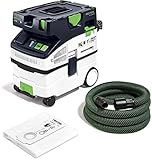
Festool CT Midi I HEPA
- 130 CFM suction
- 3.9 gal canister
- Bluetooth auto-start
- HEPA cartridge filter

POWERTEC DC5372 1 HP 560 CFM
- 1 HP induction motor
- 560 CFM airflow
- 4-inch inlet port
- 1-micron reusable bag
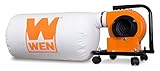
WEN DC3401 660 CFM
- 5.7-amp brushed motor
- 660 CFM airflow
- 12-gallon bag
- lockable swivel casters
Comparing the Best Portable Dust Collectors Side by Side
| Product | Specs | Action |
|---|---|---|
| Festool CT Midi I HEPA Bluetooth Dust Extractor |
|
Check Latest Price |
| WEN DC3401 660 CFM 12-Gallon Collector |
|
Check Latest Price |
 PSI Woodworking DC725 Tabletop Collector PSI Woodworking DC725 Tabletop Collector |
|
Check Latest Price |
| POWERTEC DC5372 1 HP 560 CFM Collector |
|
Check Latest Price |
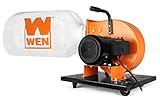 WEN DC3474 7.4-Amp 15-Gallon Collector WEN DC3474 7.4-Amp 15-Gallon Collector |
|
Check Latest Price |
 Abestorm Tabletop Collector with Timer Abestorm Tabletop Collector with Timer |
|
Check Latest Price |
 Festool CT 15 HEPA Dust Extractor Festool CT 15 HEPA Dust Extractor |
|
Check Latest Price |
1. Festool CT Midi I HEPA – The Best All-Round Portable Dust Collection Machine
Festool 574837 Ct Midi I Hepa Bluetooth Dust Extractor
130 CFM
3.9 gal canister
HEPA cartridge
24.9 lb
Bluetooth auto-start
Pros
- Very high suction and near dust-free sanding results
- Bluetooth auto-start removes the chance of running a tool without extraction
- Conical anti-static hose does not catch on workpiece edges
- Seven-second self-cleaning filter cycle
- Quiet and far more compact than a rigid shop vac
Cons
- High purchase price against conventional collectors
- Accessories are expensive and largely proprietary
- 27 mm hose connection suits some users less than an upgrade
- No hose boom arm compatibility found on the larger models
The CT Midi is the unit we reach for when the job is fine dust rather than chips. At 130 CFM it will not out-pull a 560 or 660 CFM collector at the port, but the way it holds suction through a narrow hose is what matters on a track saw or a random orbit sander, and owners describe results as close to dust-free.
What sets it apart is the Bluetooth auto-start. The extractor wakes when a Bluetooth battery pack or remote triggers the tool and shuts itself down on a timer, so you physically cannot cut a board with the machine running and no extraction. On a benchtop workflow where you are constantly moving between tools, that removes a whole category of mistakes.
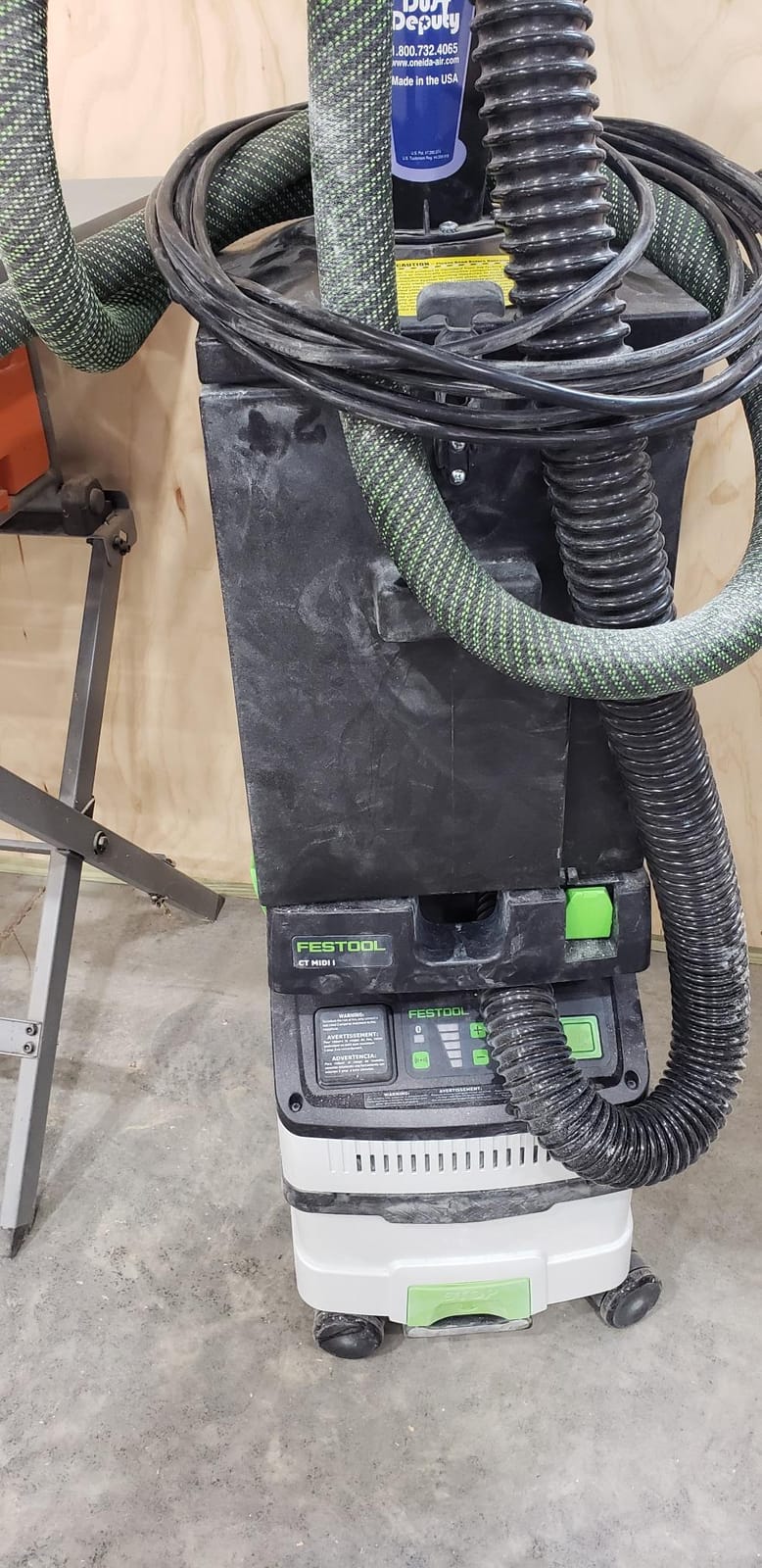
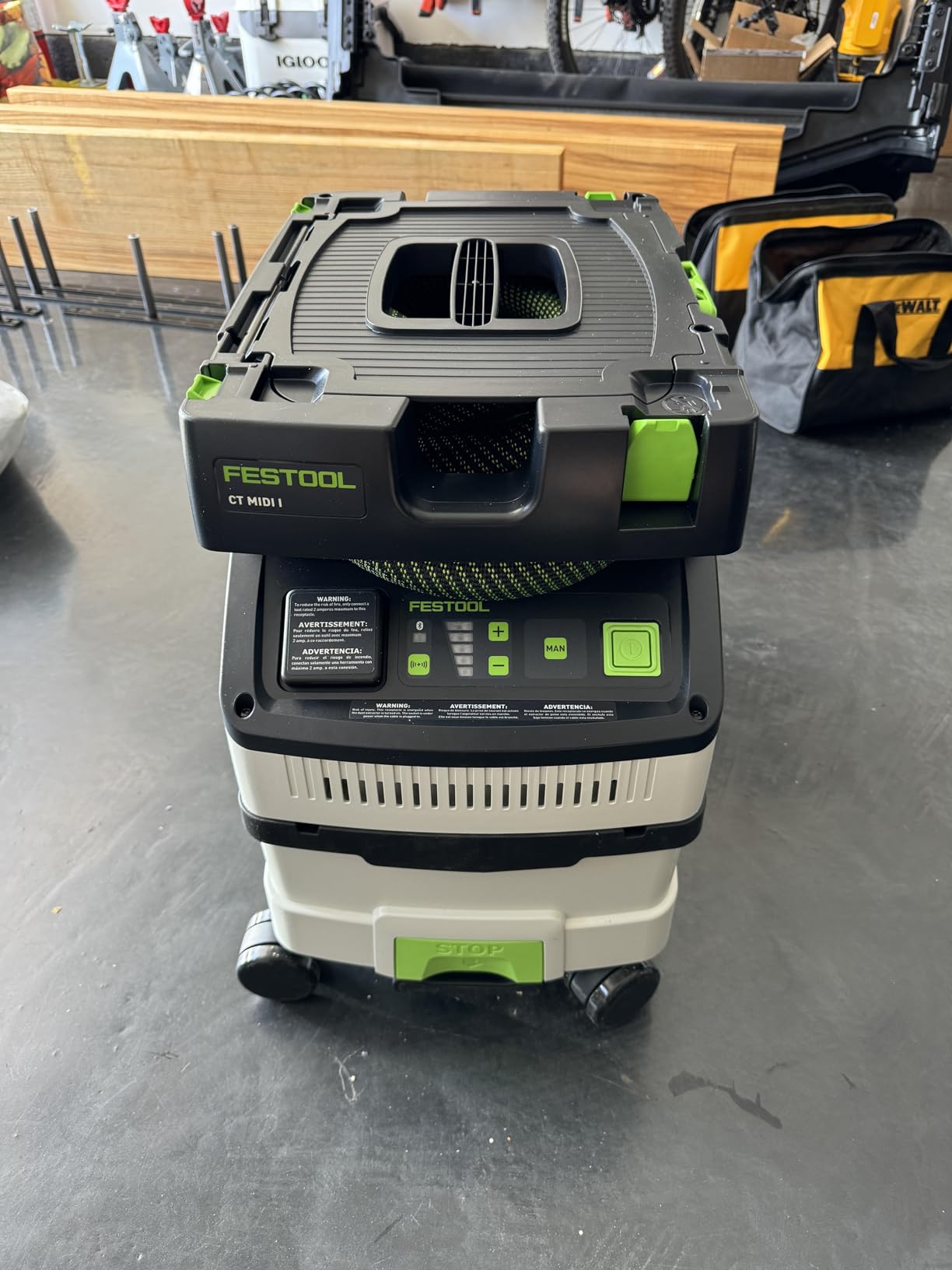
The physical design deserves credit too. The conical hose stores inside the chassis, the Sys-Dock accepts a systainer on top, and 24.9 pounds means you can carry it up a flight of stairs without recruiting help. For an apartment or condo shop, that weight and footprint are the deciding factor more than the CFM figure.
HEPA Filtration and the 3.9-Gallon Canister
The cartridge filter is the reason this machine captures sanding dust that a bag collector would simply recirculate. Owners running a drum sander or a benchtop belt sander report the fine particulate never reaches the room, and the self-clean cycle runs in roughly seven seconds, which is short enough to do between passes rather than at the end of a session.
The 3.9 gallon container is small against a 12 or 15 gallon bag, so you will empty it more often. In practice that has not been a complaint because fine sanding dust packs the canister slowly compared with the volume of chips a planer throws.
Portability, Docking and Workshop Fit
Compare the 20 by 32 by 26 inch footprint with the 43 inch length of the 15-gallon WEN and the gap is stark. This is a machine you can park on a shelf above the bench when it is not in use, and the hose wraps around the body rather than trailing across the floor.
Where It Falls Short
Cost is the honest objection, and reviewers who waited years before buying frequently say exactly that. The accessory ecosystem is proprietary as well, so working with non-Festool tools means buying adapters, and some owners report the 27 mm connection is not what they expected for maximum suction.
It is also the wrong tool for a jointer or a planer. There is no bag and no drum, so the canister fills with chips and shavings rather than with fine dust. Use it for your sanders, your track saw and your handheld tools, and let a bag collector handle the heavy chip producers.
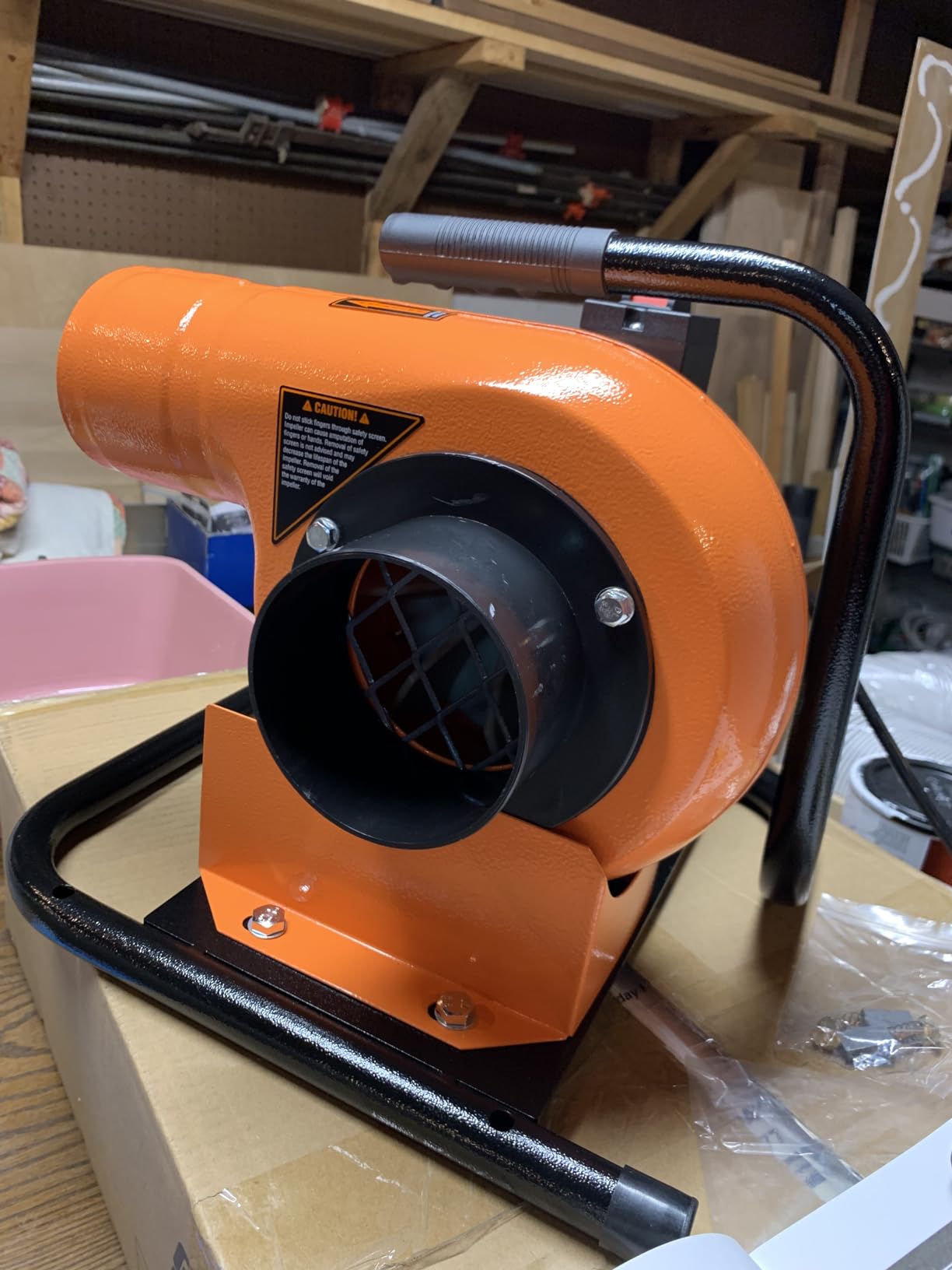
2. WEN DC3401 660 CFM – The Best Low-Cost Rolling Collector for Light Benchtop Work
WEN Woodworking Dust Collector, 5.7-Amp Motor with 12-Gallon Bag, Mobile Base, and Optional Wall Mount (DC3401)
660 CFM airflow
5.7-amp brushed motor
4-inch port
12-gallon bag
17 lb
Pros
- Moves far more air than a typical shop vac
- Compact footprint that works well wall mounted
- Bag accepts aftermarket 1-micron options
- Lockable swivel casters and a carrying handle
- Suitable for light planer work when the inlet screen is managed
Cons
- Suction drops sharply on small-diameter sander hoses
- Inlet screen clogs with heavy planer or jointer shavings
- Noticeably loud for its size and audible through walls
- Carbon bushings reportedly need replacement around 250 hours
- Impeller nut can loosen and throw itself on first start
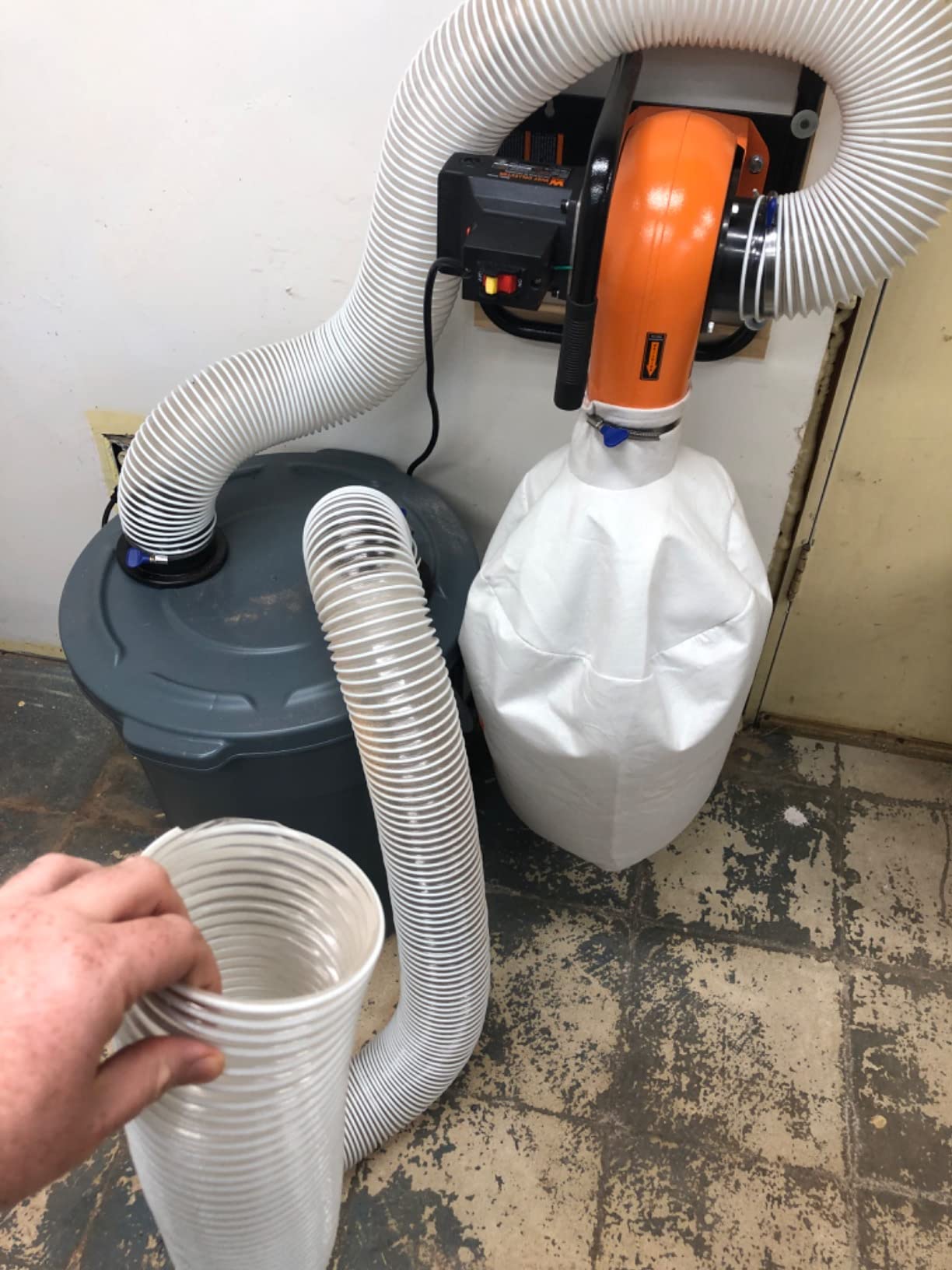
This is the collector most first-time buyers end up with, and the reason is simple: at 17 pounds with lockable casters and an onboard handle, it is the easiest machine here to move between stations. The 660 CFM figure from the 5.7-amp brushed motor and 6-inch impeller is genuinely far more air than a shop vac moves, and owners consistently treat it as that step up rather than as a suction upgrade.
Where it earns its place is a router table, a small bandsaw, a drum sander or a track saw. Pair it with a hose splitter and owners report running two lighter tools at once, which stretches a single collector across a small shop. The 4-inch dust port matches most benchtop machine outlets without a reducer.
Blower, Bag and Filter Behavior
The included bag is a 12-gallon 5-micron zippered model, and the practical tip that shows up again and again is to swap in an aftermarket 1-micron bag with a clear window. That gives you visibility into how full it is and stops fine dust from escaping a thin fabric bag.
The recurring operational problem is the inlet screen. With a planer or a jointer pushing long shavings into a 4-inch port, the screen clogs within minutes, and airflow drops with it. Removing the screen or adding a cyclone separator upstream solves it, which is why a fair number of owners end up running this collector into a drum.
Noise and Reliability Over Time
Owners debate the noise level. Some describe it as a comfortable hum; others report it carries through a wall. The brushed motor is the source, and the carbon bushings inside it are a known wear item that some owners report needing replaced at roughly 250 hours of run time.
There is also a documented pattern of impeller hardware loosening, where the retaining nut works free and the impeller throws itself on the first start. It is not universal, but it accounts for a large share of the one-star reviews, alongside slow warranty response.
Who This One Fits
If your shop is 10 by 20 feet, your machines are benchtop scale, and you want the lowest barrier to entry, this is the right pick. If you plan to run a jointer-planer or a wide belt sander as the primary machine, look at the induction-motor units instead and budget for a cyclone.
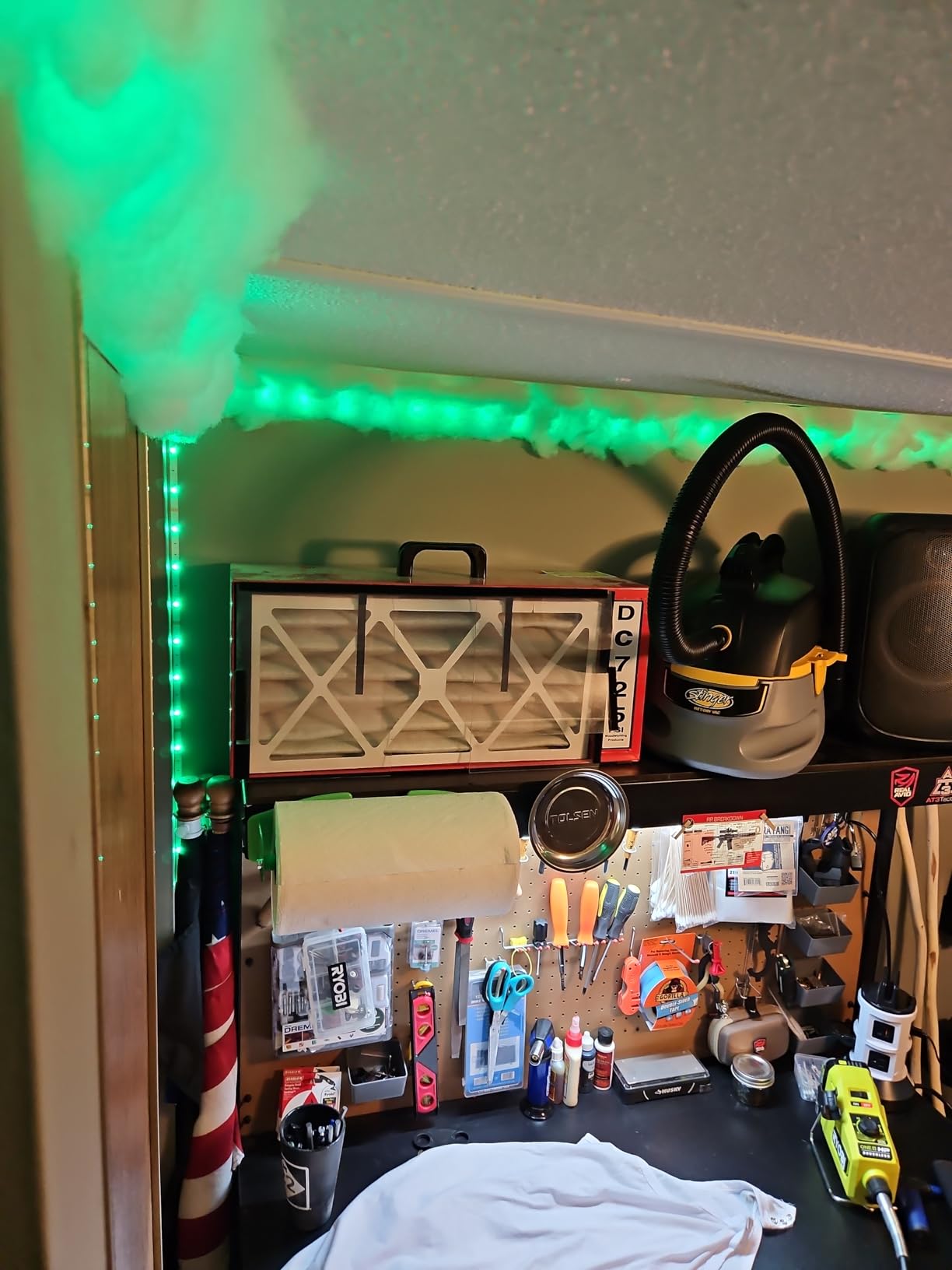
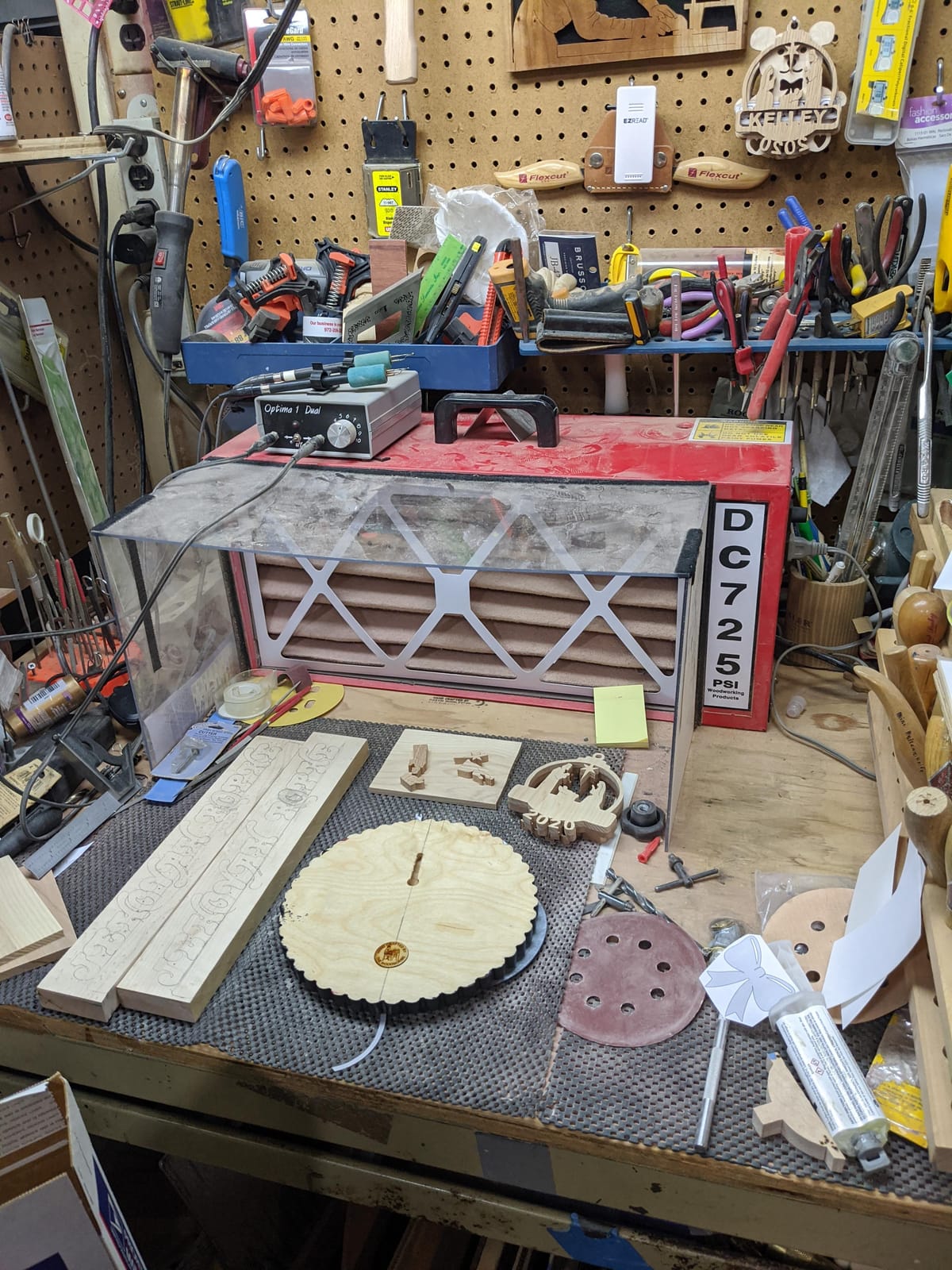
3. PSI Woodworking DC725 – The Best Tabletop Collector for Carving, Turning and Detail Work
PSI Woodworking DC725 Portable Tabletop Dust Collector
725 CFM maximum
variable speed
23 by 8 inch footprint
25.4 lb
1.29 A draw
Pros
- Very high airflow for a tabletop footprint
- Genuinely portable at 25.4 lb with a top carrying handle
- Variable speed control matches output to the tool
- Dual grounded 115V side outlets power two tools
- Built for carving
- sanding
- grinding and woodturning
Cons
- Only one filter is included and replacements cost extra
- Filter media suits fine dust rather than heavy chips
- Small footprint leaves little room for long duct runs
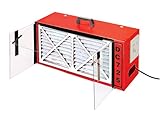
The DC725 is the odd one out in this list, and that is exactly why it works. Instead of one motor and a big impeller, three computer-grade maintenance-free fans sit side by side under a clear polycarbonate hood, and the operator can adjust the hood and open the side doors to steer airflow toward whatever is being cut.
That makes it a detail-work machine. Carvers, turners, woodburners and grinding setups put a small, continuous stream of fine dust into a port, and 725 CFM of maximum airflow with a variable speed knob handles that without the bulk of a floor unit. At 25.4 pounds with a top handle, you pick it up and set it on the bench next to the work.
Two grounded 115V outlets on the side panel are a small detail that matters in a compact shop, because they let you power a small tool and the collector from one wall receptacle.
Filtration and What It Is Built For
Dust is captured by a 2 by 10 by 20 inch filter, and only one is included. Budget for spares before you start, because this is the single most common caveat in the reviews and it is a recurring cost, not a one-time purchase.
Be clear about the limits. The filter is sized for fine dust, so a jointer or a planer will overwhelm it quickly. This is a collector for a pencil grinder, a rotary tool, a small lathe, a scroll saw or a detail sander, and it handles those better than anything else at this size.
Footprint, Power Draw and Shop Placement
The 23 by 8 inch footprint and 10.5 inch height are the smallest working area of any collector here, which means it fits on a bench rather than beside one. Total running current of 1.29 amps means it can share a circuit with a light duty machine without drama.
Because the fans are separate and quiet, buyers report being able to talk over it. That is a real advantage in an apartment-level shop where a 660 CFM brushed unit would be constant background roar.
What to Know Before Buying
Two limitations deserve a clear mention. The compact chassis has little room for a long duct or hose run, so plan your machine layout around short connections. And the fine-dust filter means this unit will not substitute for a chip collector in a growing shop.
That said, for the specific jobs it targets, the review base is strong, with 90 percent of ratings at four stars or better and very few one-star entries. It is a specialist tool that does one thing very well.
4. POWERTEC DC5372 1 HP 560 CFM – The Best Value Portable Dust Collector for a One-Tool-at-a-Time Shop
POWERTEC 1 HP, 560 CFM Portable Dust Collector with 1 Micron Dust Collector Bags, Dust Collectors for Woodworking Dust Collection System (DC5372)
1 HP induction motor
560 CFM
dual 120V/240V
43.6 lb
1-micron bag
Pros
- All-metal construction with a solid metal impeller
- Reported around 62 dB against 74 dB for a shop vac
- Large reusable 1-micron bag with a window and disposal zipper
- Dual voltage lets you run a 240V circuit at half the amperage
- Conversion hardware and wire nut included
- Casters included and a wall-mounting plate compatible
Cons
- Suction falls off fast when the run drops to 2.5-inch hose
- Intake grate clogs with long planer or jointer shavings
- Included mounting hardware is flimsy and the unit can walk
- The 1-micron bag fabric grabs chips and is hard to clean
This is the unit we recommend to most people buying their first serious collector. A 1 HP induction motor running at 3450 RPM moves 560 CFM, and the induction design is the meaningful upgrade over a brushed motor of similar airflow: it runs cooler, pulls far less power, and is measurably calmer in a small shop.
The operating consensus that emerges from hundreds of reviews is simple. Keep the hose at 4 inches, avoid long step-downs to 2.5 inch, and stay on one machine at a time. The instant suction drops is the moment this collector stops feeling like a step up, and the 4-inch inlet port is the reason so many owners are happy with it.
Dual voltage is the sleeper feature. At 240V it draws 6 amps instead of 12, so a small shop can dedicate a proper circuit and stop worrying about shared circuits with a saw or a planer. The wiring diagram in the switch is confusing, but the hardware and the wire nut for the conversion ship in the box.
The Vortex Base and the 1-Micron Bag
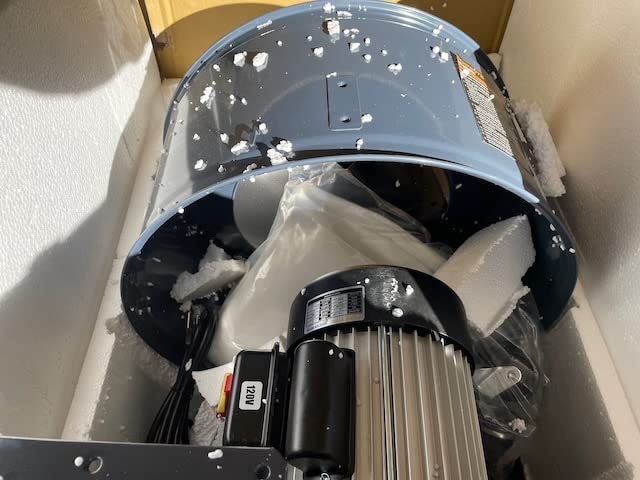
The base is a vortex design that guides incoming air in a controlled path to cut turbulence, and the manufacturer claims up to 10 percent better efficiency from it. Whether or not you can measure that, the practical effect owners describe is steadier suction and less rattling at the inlet.
The reusable 1-micron bag has a viewing window and a dust-disposal zipper, so you can see when it needs emptying and empty it without pulling the bag off the machine. The trade-off is fabric: 1-micron material grips chips and shavings, and owners report that cleaning it out is a messy job rather than a quick brush-down.
Noise, Build Quality and the Intake Grate
Noise opinions split. Reviewers comparing directly against a shop vac put this unit around 62 dB against 74 dB, and call it a genuine improvement in a small shop. Others describe it as loud on par with a table saw once a planer is running. The build itself is not in dispute, with an all-metal chassis and impeller the standard refrain.
The one maintenance item you should build into your routine is the intake grate. It exists to stop a large piece of scrap from reaching the impeller, and with long shavings from a straight-knife jointer it needs checking and clearing regularly. The wall-mount plate is a genuine option, but the included hardware draws complaints, and several owners report the unit walking off the wall at startup.
Who Should Buy This One
Buy it if you run one chip-producing machine at a time in a garage or basement and want metal construction and a real induction motor. Skip it if you need to run a jointer and a planer simultaneously, because one portable unit cannot serve both regardless of horsepower.
One note on branding worth knowing: this same hardware appears in different colors under the Grizzly and Shop Fox names. The motor, impeller and bag design are the same, so compare the specification sheet rather than the badge.
5. WEN DC3474 7.4-Amp 15-Gallon – The Best Collector for Jointer and Planer Work
WEN Woodworking Dust Collector, 7.4-Amp Induction Motor with 15-Gallon Bag, Mobile Base, and Optional Wall Mount (DC3474)
7.4-amp induction motor
600 CFM
9-inch impeller
15-gallon bag
41.1 lb
Pros
- Induction motor is quieter and more efficient than a brushed unit
- Holds suction through a reasonably long 4-inch hose run
- Handles a jointer
- bandsaw
- table saw and CNC router without clogging
- Wall mount frees the floor while casters stay attached
- Comfortable on a 13A extension reel with a small planer
Cons
- Included bag is thin
- leaks fine dust and the zipper seam can fail
- Suction guard clogs with long jointer shavings
- Can struggle with heavy sanding material
- Casters are not locking and the unit can roll at switch-on
- Handle flexes on thin sheet metal
Where the 5.7-amp brushed unit stalls, the 7.4-amp induction motor with a 9-inch impeller keeps pulling. At 600 CFM it is the strongest airflow-per-dollar option for chip-heavy machines, and owners report it running a jointer, a bandsaw, a table saw or a CNC router without the clogging that stops smaller units.
The induction motor is the reason. Reviewers consistently describe it as quieter, cooler and far more efficient than the brushed alternative, drawing noticeably less power than the shop vac it replaced while moving several times the air. That combination matters when you are running it off a single circuit.
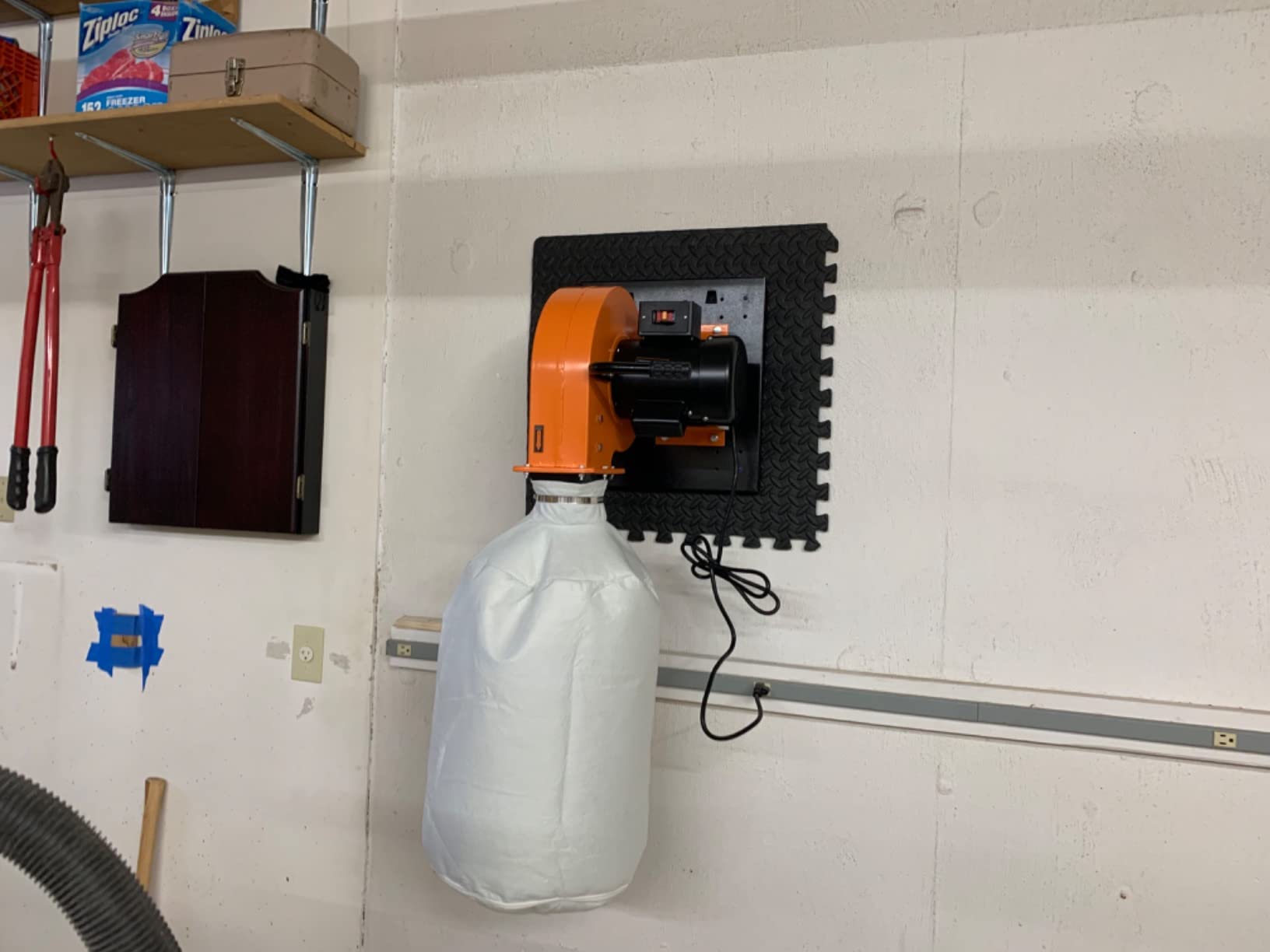
At 43.3 inches long with a 15-gallon bag, this is the largest portable unit here, and that size is the point. The bag capacity means fewer stops during a long planing session, and the wall mount with casters still attached frees the floor when the unit is parked.
The Bag Is the Weak Link
The single most common complaint is the supplied 5-micron bag. Multiple owners report visible fine dust leakage and a zipper seam that eventually fails, and the standard fix is a thicker aftermarket bag or a canister filter with an adapter. Once upgraded, the leakage complaint largely disappears.
So budget for a second bag before the first session rather than discovering the problem mid-project. The 15-gallon capacity is a genuine advantage over the 12-gallon bag on the smaller WEN, but only if the fabric actually holds.
Suction Guard, Casters and Layout
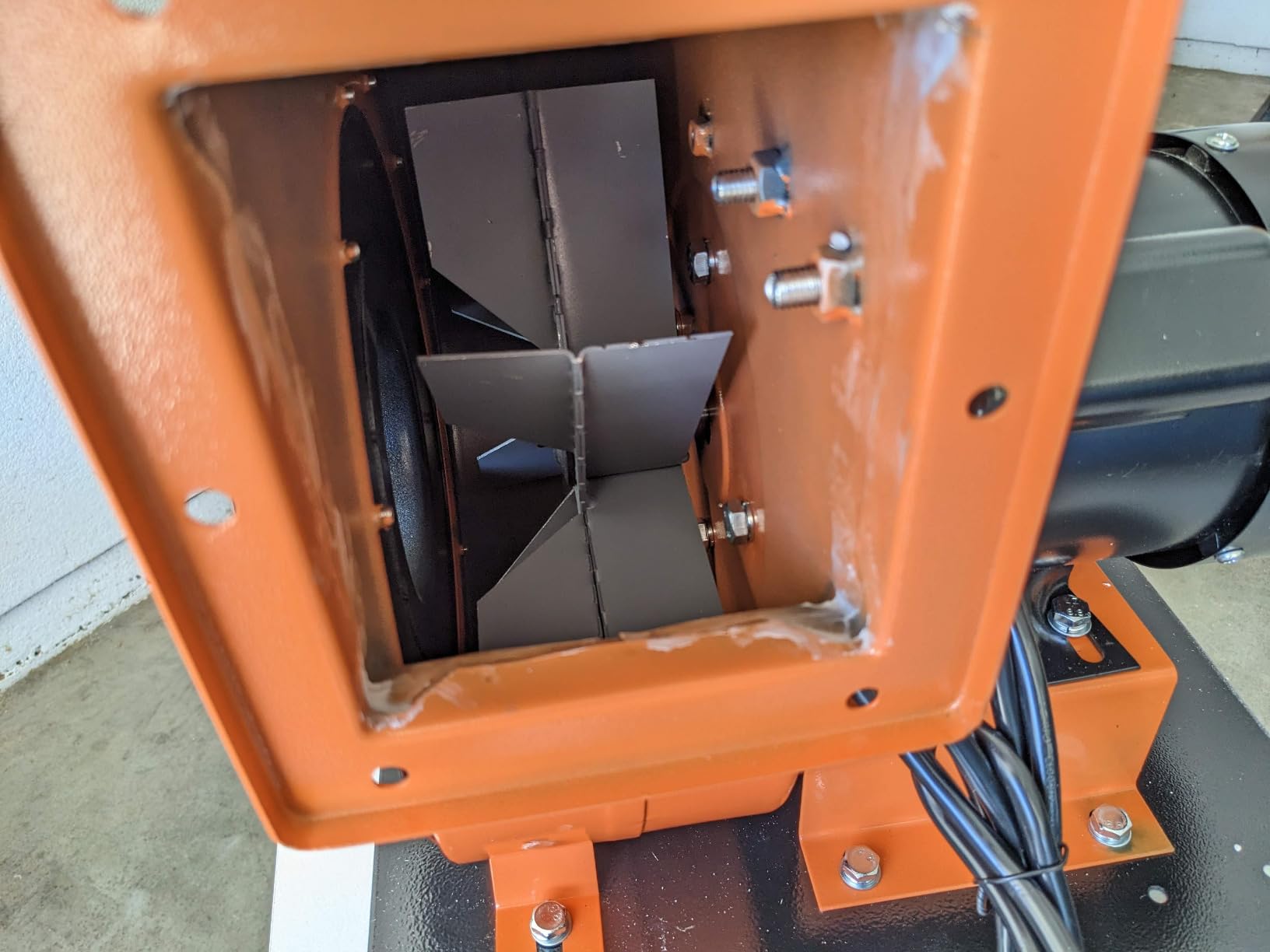
The suction guard sits upstream of the impeller and does its job, but with long shavings from a straight-knife jointer it clogs and needs regular attention. Plan for it, and check it at the start of every session rather than at the end.
Two smaller issues come up repeatedly. The casters are swivel but not locking, so the unit can roll when the switch is thrown, and the carrying handle flexes noticeably because it mounts to thin sheet metal. Neither is dangerous, but both are the kind of detail that tells you where the cost was held down.
The product photos are mirrored, showing discharge to both sides, while the actual discharge direction is fixed. Worth knowing before you plan the hose route.
Where This One Fits
If your biggest chip producer is a jointer or a planer and you can only hook up one machine at a time, this is the right collector. If you need simultaneous collection from two machines, a portable unit of any size is the wrong architecture, and you should read our general dust collector guide before buying.
It pairs well with a small planer on a 13A extension reel per owner reports, which is a practical benchmark if you are wiring the shop yourself.
6. Abestorm Tabletop Collector – The Best Choice When Bench Space Is the Constraint
Abestorm Tabletop Dust Collector with Timer for Woodworking Shops
580 and 780 CFM
19.96 lb
MERV-13 filter
120-minute timer
14.57 in wide
Pros
- Compact metal housing with a sturdy carry handle
- Piano key switch with no learning curve
- Timer runs up to 120 minutes for sanding and carving
- Air discharges to the side instead of straight through
- Quiet enough to talk over and inexpensive for its class
Cons
- Ships with a MERV-13 filter only and users want coarser options
- Replacement filters are small and expensive
- Filters clog quickly with drywall dust and cannot be vacuumed clean
- Fan noise is audible though it does not drown out conversation
This is the smallest collector in the roundup and the easiest to ignore on a shop floor, which is exactly its argument. At 19.96 pounds and 14.57 inches wide, it sits on a bench, a shelf or a rolling cart, and the two speed settings give you 580 CFM or 780 CFM from a 100-watt draw.
The 120-minute timer is more useful than it sounds. Set it, start a carving, sanding or renovation session, and the unit shuts itself down when you stop, so you are not running it all evening after the work is finished. A built-in circuit breaker protects the motor if current climbs out of range.
Air discharge to the side rather than straight back is a small courtesy in a tight space, because the exhaust does not blow dust across the wall you are working against. An auxiliary outlet on the control panel lets you chain a second Abestorm collector under the same switch.
Filter Choice and Replacement Cost
The criticism that dominates the reviews is the filter, not the machine. The unit ships with a MERV-13 filter rated for about six months, and owners doing drywall or paint work report that it clogs permanently and cannot be restored with a vacuum. Several people cut their own filter media and attached it with hook-and-loop to save money.
Because the MERV-13 media is fine, it also restricts more than some users want for larger particles. If your work is coarse chips rather than fine dust, a coarser filter would serve you better, and this unit does not ship with one.
Where It Fits and Where It Does Not
Buyers describe it as well-built and good value for carving, lathe, bandsaw and hobby work, with a fast out-of-the-box setup. It is a sensible first machine for a student, a renter or anyone working in a shared space where floor space is scarce.
It is the wrong choice for a jointer, a planer or a wide belt sander. The fine filter and the modest impeller will simply fill, and the noise, while conversational, is still a steady fan hum. Sixty-eight percent of buyers rate it five stars, so the value case holds up well within its limits.
7. Festool CT 15 HEPA – The Best HEPA-Filtered Option for Fine Sanding Dust
Festool 578441 CT 15 Dust Extractor – HEPA Filter, Automatic Tool Start, High-Power Suction & AutoClean System
HEPA certified
3.96 gal container
24 lb
tool auto-start
AutoClean bag
Pros
- Suction compares well with the larger CT 26
- Automatic start and stop leaves essentially no dust in the room
- Blower function is effective for general cleanup
- 24 lb means it moves easily between floors
- Quiet operation with a durable hose
- Three year comprehensive warranty
Cons
- No systainer dock so it cannot carry Festool boxes
- Haptic touch power button is fiddly and needs a wet finger
- Basic feature set against the Bluetooth-equipped models
- No Bluetooth remote or auto-start battery button on this model
The CT 15 answers a different question from a dust collector. It is built to capture the fine particulate that a sander puts into the air, HEPA certified, with an adjustable high-performance turbine and a self-cleaning filter bag. Buyers frequently report that suction matches a CT 26 despite the smaller body.
Automatic tool start and a timed shut-off mean you connect a sander, work, disconnect, and the extractor stops on its own. Owners running a benchtop orbital sander say essentially zero dust reaches the room, which in a shared space or an apartment is the difference between sanding indoors and sanding outside.
At 24 pounds it is easy to carry up and down stairs, the crevice and upholstery nozzles store inside the unit on a flat top deck, and the three year comprehensive warranty includes wear and tear. The blower function is a bonus owners did not expect to use much and now rely on for cleanup.
Where It Differs From the CT Midi
Read this section before you choose between the two Festool extractors, because the CT 15 omits features the CT Midi has. There is no Bluetooth, so no remote or battery-button auto-start, only the tool-triggered version. There is no systainer dock, so you cannot stack a Festool box on top.
What you gain is a lower entry point into the range and a body that is otherwise comparable in output. Owners describe the haptic touch power button as the one genuinely annoying detail, since it needs a wet finger to respond reliably.
Who This One Is For
Buy the CT 15 if fine sanding dust is your primary concern and you want HEPA certification without moving up to a larger extractor. If you want tool-triggered auto-start across a wider range of handheld tools and plan to expand, the CT Midi is the better long-term buy despite the higher outlay.
Neither is a chip collector. Neither has a bag for shavings. Pair either one with a bag collector like the POWERTEC or the 15-gallon WEN and you have a complete small-shop dust system.
How to Choose a Portable Dust Collector for Benchtop Tools
1. Size the machine first, not the collector
Match the collector to the biggest chip producer you own, not to the shop. A track saw, a router table, a small bandsaw and a benchtop sander are all handled comfortably by units in this roundup. A jointer, a planer or a wide belt sander generates far more material per minute and needs a larger impeller and a bigger collection container.
Then decide how many machines run at once. A portable collector serves one machine at a time. If you need a table saw and a planer running simultaneously, no amount of horsepower in a wheeled unit solves it, and a fixed drum or cyclone is the correct architecture.
2. Understand what CFM loses over a hose run
The number printed on the box is measured at the inlet with nothing attached. Add hose and the picture changes, and this is the single most misunderstood spec in the category. Every foot of flex hose adds friction, and the penalty compounds when you step the diameter down from 4 inch to 2.5 inch to 2 inch.
The practical rule that emerges from owner experience: run 4-inch hose as close to the machine port as you can, keep total runs short, and treat a step-down from 4 inch to 2.5 inch as a real drop in suction rather than a convenience. This is why a 560 CFM unit with a 4-inch inlet often outperforms a higher-CFM unit on a long narrow run.
Advertised CFM also says nothing about static pressure, which is the resistance a machine creates when it is actually cutting. Two units with the same airflow figure can behave very differently on a loaded cutter.
3. Match port diameter to your tools
Port size is where many purchases go wrong. Small track saws and many handheld tools use narrow 1.5 inch or 1.75 inch outlets. Router tables typically run 2.25 inch to 4 inch. Planers, jointers and cabinet table saws use 4 inch ports, and some industrial machines use 5 inch or 6 inch.
Buy the 4-inch collector and use reducers down to the tool. Never force a narrow hose onto a large port hoping for performance, because the restriction at the tool end defeats the entire system. Our combination sanders roundup covers the machines that generate the most fine dust in a compact shop.
4. Pick your separation and filter strategy
Coarse wood collection is a bag, drum or cyclone problem. Fine airborne dust is a filter problem. Units with a reusable 1-micron cloth bag give you a fine capture level and a large capacity, while MERV-13 cartridge filters are compact and good for a benchtop unit. HEPA certification matters when the dust is genuinely fine and the air is shared with the rest of your living space.
For coarse wood dust specifically, a room air cleaner with MERV 14 media does a great deal of the work that a HEPA collector would otherwise have to do, because the airborne fraction of coarse chips is coarse. A full-face respirator for the sanding and grinding steps completes the picture, and plenty of small-shop owners run all three together.
5. Check noise, footprint and the mount
Measure the space before you buy. The 43-inch WEN needs a wall or a dedicated corner, the 15-inch Abestorm fits on a bench, and the 32-inch Festool can be shelved. Casters that lock matter, because a non-locking unit rolls when the switch is thrown, and a handle that does not flex matters if you are carrying it upstairs.
Noise is the constraint nobody quotes until it becomes one. Brushed motors are louder than induction motors at the same airflow, so if you are in an apartment or a shared building, prefer an induction unit or a small collector with quiet fans. Also check whether the wall mount hardware is included and whether the unit can be hung with its casters still attached.
Finally, think about the consumables before the purchase. Spare filters and spare bags are a recurring cost that buyers mention as often as the machine itself, and a unit with only one filter included deserves a line in your budget from day one.
Frequently Asked Questions
What is the difference between a dust collector and a dust extractor?
A dust collector captures bulky wood debris such as chips, shavings and sawdust in a bag, drum or canister, and it is sized in CFM and horsepower. A dust extractor is a smaller HEPA-filtered vacuum built to trap the fine airborne dust thrown off by sanding, routing and grinding. Most small shops own one of each: a collector for the machines, an extractor for the handheld tools and sanders.
How much CFM do I need for dust collection?
For a track saw, router table or benchtop sander, 400 to 600 CFM is comfortable. A jointer or a planer pushing heavy shavings wants 600 CFM or more with a 4-inch port. The number on the box is measured at the inlet, and airflow falls with every foot of flex hose, so prioritize a large inlet port and short hose runs over a headline CFM figure.
What is the best portable dust collector for a small shop?
For most small shops the answer is a wheeled unit with a 4-inch inlet port and an induction motor, running one machine at a time. The POWERTEC DC5372 at 1 HP and 560 CFM and the WEN DC3474 at 7.4 amps and 600 CFM both fit that pattern. Add a dust extractor for handheld tools and fine sanding dust, because one machine does both jobs poorly.
Are cheaper high-CFM dust collectors worth it?
A large airflow number on an inexpensive unit is not the same as useful suction at your machine. The inexpensive 660 CFM WEN moves plenty of air but its brushed motor is loud, its suction falls off sharply on small-diameter hose, and owners report carbon bushing and impeller hardware wear. The same hardware sold under different brand names is common in this category, so compare the specification sheet rather than the badge.
Is anything under 3 HP useless for a small shop?
No. The 3 HP figure comes from shops running a table saw and a jointer at the same time, which is a different problem. A single-machine small shop that connects one tool at a time gets more than enough airflow from a 1 HP induction unit over short 4-inch hose, and a cyclone separation stage often helps more than extra horsepower would.
What is the best shop vac for dust collection?
A shop vacuum is a reasonable answer when your work is handheld tools, a track saw and a small sander, and your priority is fine dust rather than chips. It is the wrong answer once you connect a jointer, planer or wide belt sander, because those need sustained high-volume airflow and a large collection container. A portable collector also holds suction across a long hose run far better than a typical shop vac.
Which Portable Dust Collector Should You Buy?
If you want one machine to do the most jobs well, the Festool CT Midi is our pick. It has the highest rating in this roundup at 4.8 across more than 500 reviews, 130 CFM that holds through narrow hose, HEPA filtration, and auto-start that removes the chance of cutting without extraction. If you are starting out and want the lowest barrier, the WEN DC3401 gives you 660 CFM on casters for less, with a short list of reliability caveats.
If your work is coarse chips from a planer or jointer, take the induction motor and the bigger container, which means the POWERTEC DC5372 or the WEN DC3474. If your bench space is the problem, the Abestorm is small, light and cheap. If you work on a carver or a pen-turning lathe, the PSI DC725 handles fine detail dust better than anything else here at that size. And if fine sanding dust in a shared space is the concern, the Festool CT 15 is the HEPA-certified option at the lower entry point.
Whichever you choose, keep the hose short, stay at 4 inch where the machine allows it, and plan on spare filters from the first month. That is where most of the satisfaction with these machines comes from or goes. If you are still building out the shop, our guide to the best DeWalt tools covers the machines most often paired with a collector this size.
Leave a Reply