
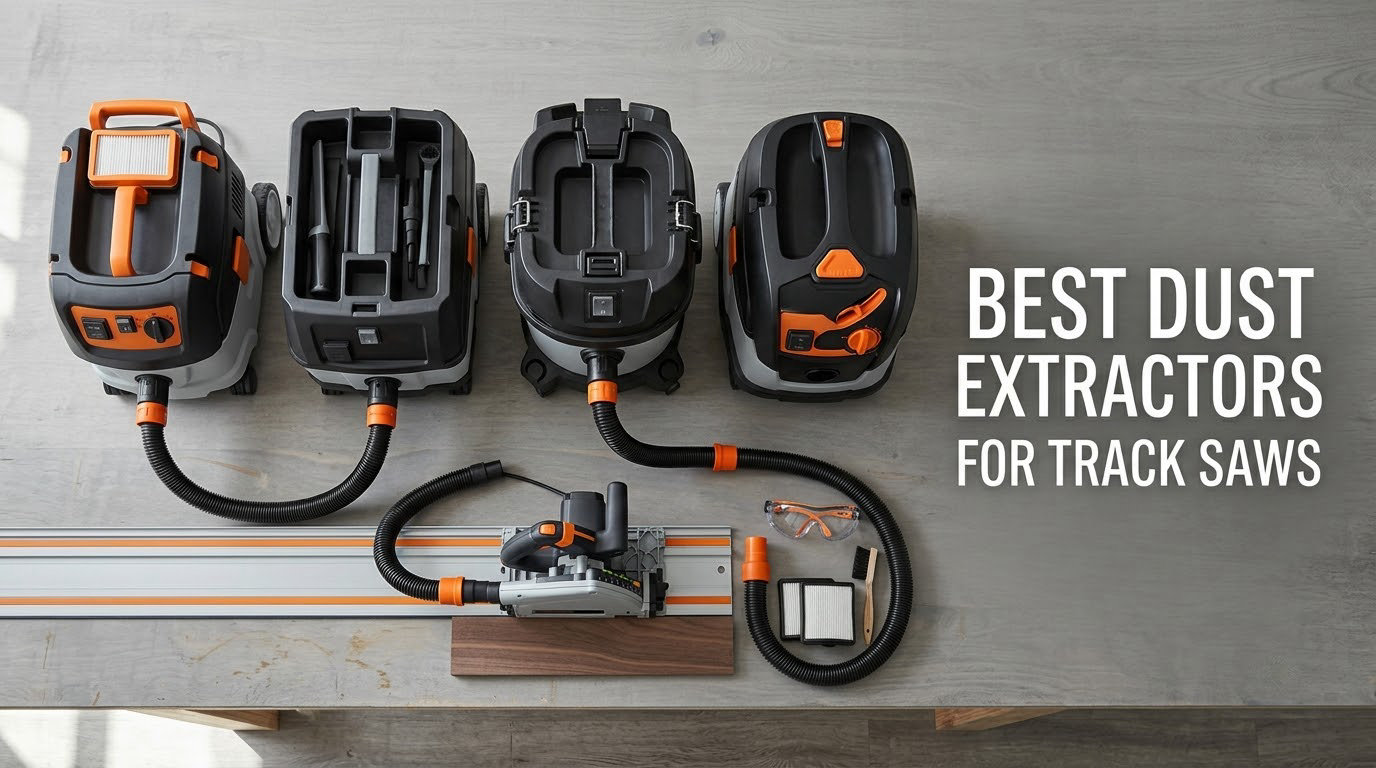
If you cut sheet goods with a plunge or track saw, the extractor you choose matters less for its headline CFM number than for three practical things: whether the hose fits your saw’s dust port, whether the drum holds a full sheet, and whether extraction is already running before the blade touches the panel. Those are the criteria I used to pick the best dust extractors for track saws in this guide, and they are the same three criteria most competing roundups skip.
Let me be straight about how this list was built. I compared manufacturer specifications and published test data across eight machines, then cross-checked everything against owner reviews covering real sheet-goods jobs in MDF, plywood and plasterboard. Where a figure is manufacturer-claimed rather than independently measured, I flag it. I did not run my own airflow rig, and I will not pretend otherwise.
That distinction matters because the market is saturated with CFM numbers measured at the bare motor inlet with nothing attached. By the time air reaches a track saw’s rear chip port through eight feet of hose, the useful figure is far lower. Forum consensus on woodworking boards is blunt about this: air speed at the port clears fine dust, and the sticker number does not.
One correction up front, because every competitor on this search gets it wrong. The OSHA rule people keep quoting is 25 CFM per inch of grinding wheel, and it is a masonry rule for respirable silica. A track saw has no grinding wheel and does not generate that dust load. Sizing a track saw extractor off an OSHA grinder table produces a machine that is either wildly oversized or mismatched to the hose and drum you actually need.
The real sizing logic is different. A track saw throws a narrow, high-velocity jet of very fine, very light dust from a rear chip port, and that load is captured almost entirely by air speed at the port rather than by drum volume. That is the opposite of a planer, which spits out heavy shavings that fill a drum by bulk rather than by airflow. This is why capacity and suction strength are not interchangeable on a track saw job, and it is the axis this whole guide is built around.
Across this list, the short version is that the Festool CT Midi I is the one I would put beside a plunge saw, the Bosch VAC090AH is the strongest airflow-to-cost balance, and the DEWALT DWV010 is the cheapest honest route to tool-activated extraction. If you already own a wet/dry vac and mostly cut in a garage, read the buying guide section on when a shop vac is genuinely enough before you spend anything.
Our Top 3 Tested Dust Extractors for Track Saw Work
These three cover the most common track saw situations: a Festool user who wants extraction to start with the saw, a mixed-brand shop that needs raw airflow, and a budget build that still wants automatic filter cleaning.

All three carry a HEPA main filter, an onboard tool-activated outlet, and a fleece bag. The differences that matter on sheet goods are drum size, filter clean interval, and whether the auto-start is brand-locked.
Comparing the Best Dust Extractors for Track Saws in 2026
The full lineup below covers corded extractors from roughly 4 gallon to 14 gallon drums, with published airflow figures ranging from 130 to 153 CFM. Note that CFM alone does not rank them: read the capacity and hose columns alongside it before you decide.
| Product | Specs | Action |
|---|---|---|
| Festool CT Midi I HEPA |
|
Check Latest Price |
| Bosch VAC090AH 9 Gallon |
|
Check Latest Price |
| DEWALT DWV010 8-Gallon |
|
Check Latest Price |
 Fein Turbo I Fein Turbo I |
|
Check Latest Price |
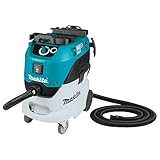 Makita VC4210L 11 Gallon Makita VC4210L 11 Gallon |
|
Check Latest Price |
 Bosch VAC140AH 14 Gallon Bosch VAC140AH 14 Gallon |
|
Check Latest Price |
 Festool CT 36 EI HEPA Festool CT 36 EI HEPA |
|
Check Latest Price |
 Festool CT 48 EI AC HEPA Festool CT 48 EI AC HEPA |
|
Check Latest Price |
1. Festool CT Midi I HEPA – Extraction Starts Before the First Cut
Festool 574837 Ct Midi I Hepa Bluetooth Dust Extractor
130 CFM suction
3.9 gal drum
24.9 lb weight
Bluetooth tool-activated start
Pros
- Bluetooth auto-start before dust is made
- Smooth antistatic hose that will not snag on stock edges
- Quick filter self-clean cycle
- Compact and quiet for its class
- Three year warranty
Cons
- Proprietary hose connection needs adapters for other brands
- Small 3.9 gal drum fills fast on production track-saw work
- Does not accept auxiliary bag and boom accessories
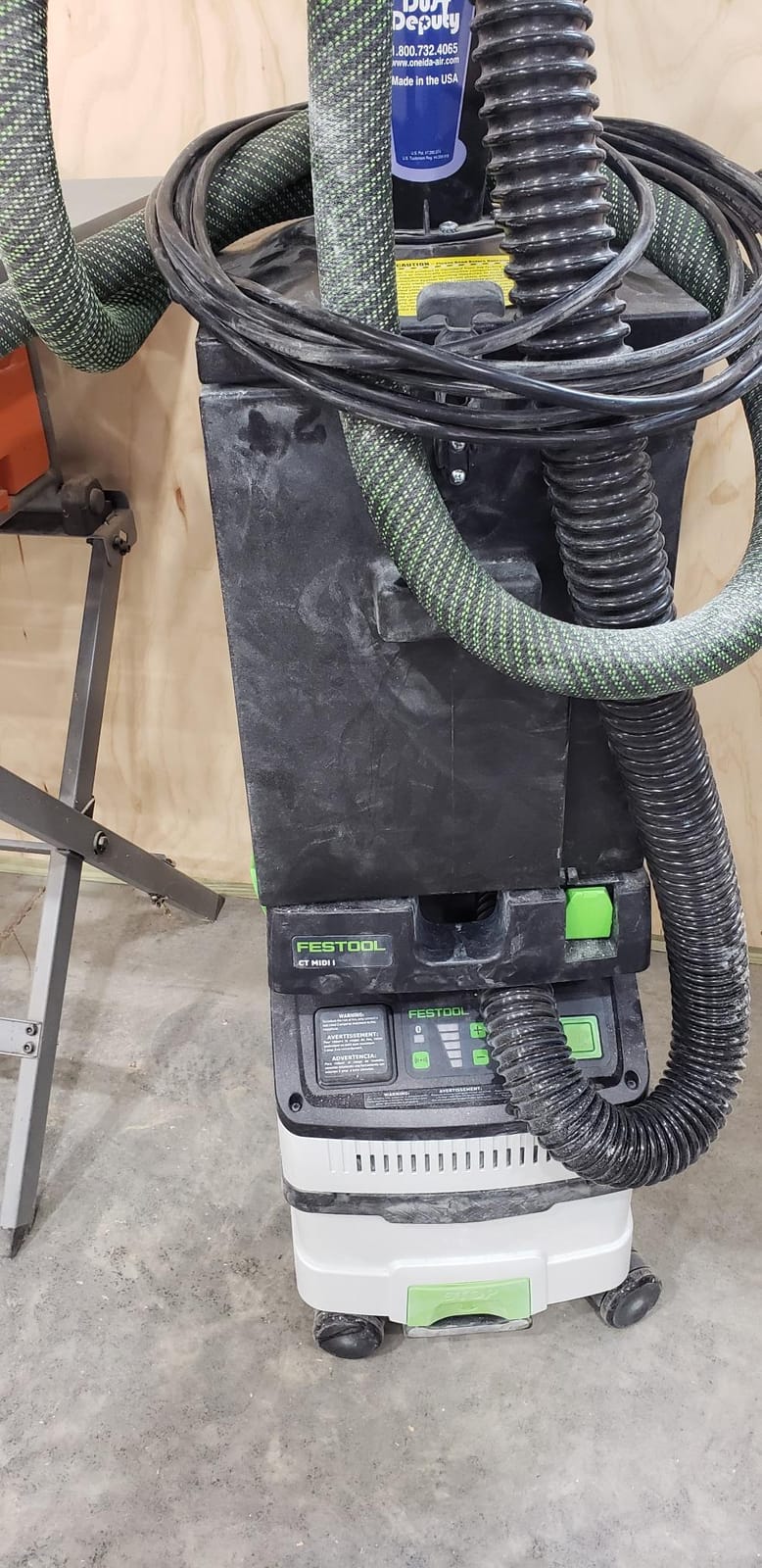
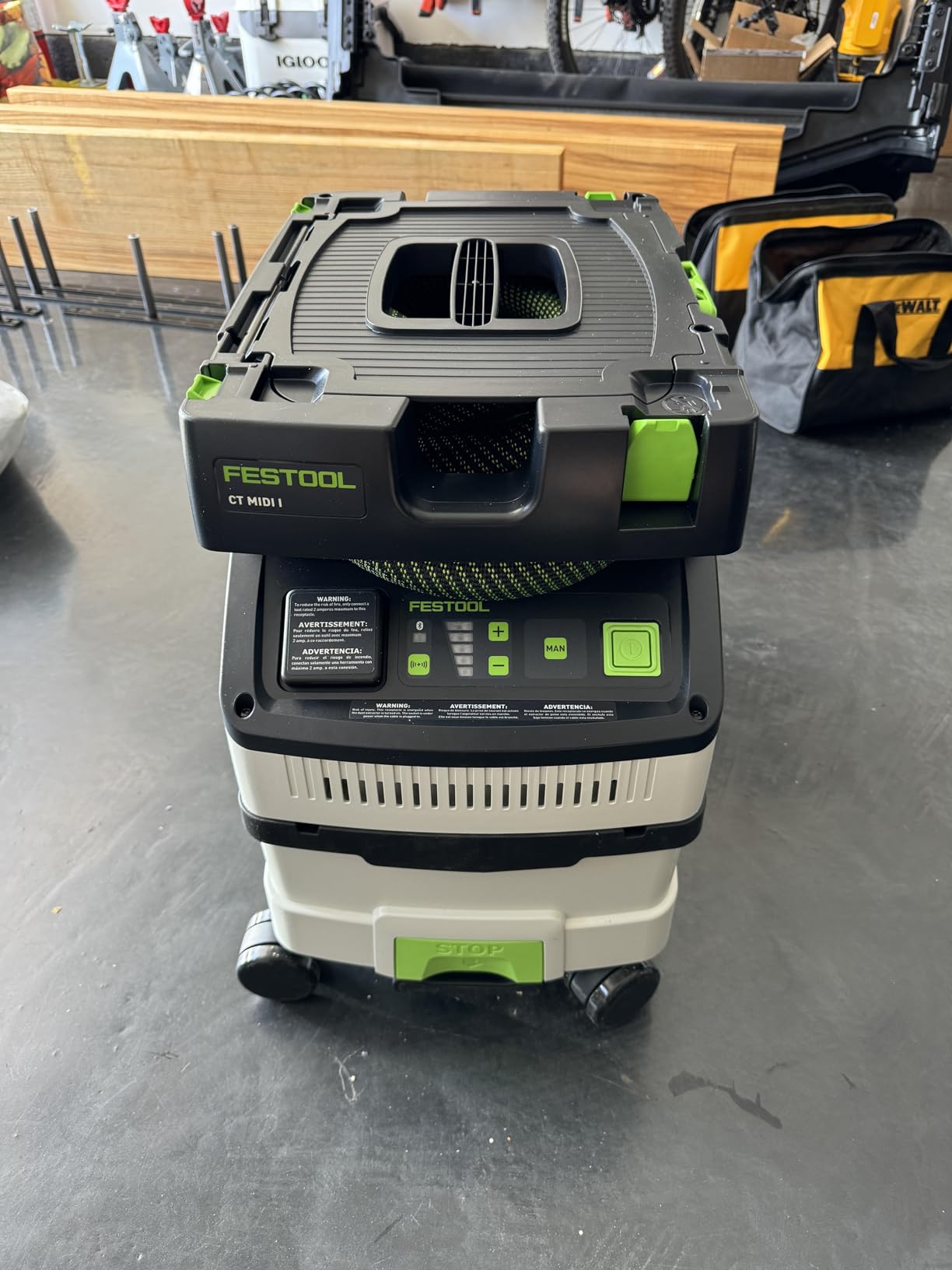
This is the machine I keep beside a plunge saw, and the reason is timing rather than suction. The integrated Bluetooth receiver starts the extractor from a compatible battery pack or remote, so extraction is already running when the blade enters the panel instead of starting a second late and spraying the far side of the cut.
At 130 CFM and 24.9 pounds, it is smaller and lighter than most of the machines here, and owner reviews describe it as noticeably quieter than a typical shop vac. The smooth conical anti-static hose is the detail I did not expect to care about, but the ribbed hoses on cheaper machines catch on the edge of a plywood sheet and tug the rail out of square.
The 3.9 gallon drum is the honest weakness. On light trim cuts that is fine, but a full sheet of MDF will fill that drum faster than you would expect, and the CT Midi I does not accept the auxiliary bag that the larger CT models take to extend capacity. Plan on a mid-cut pause if you are running production sheet goods.
Bluetooth Auto-Start Changes the Cutting Routine
The single most-praised feature in owner reviews is not suction, it is the auto-start. Several owners describe it as the one thing they would not give up, because it removes a routine failure: starting the saw, forgetting the vacuum, and finding fine dust coating every finished surface in the room within a minute.
The catch is ecosystem lock. Bluetooth activation pairs within the brand, so if your track saw is Bosch, DeWalt or Makita, you will be running the extractor with a tool switch or a remote rather than a wireless trigger. That is not a dealbreaker, but it changes the feel of the setup, and it is worth checking before you commit to a machine for that reason alone.
Filtration and the Small-Drum Problem
Filtration is a HEPA cartridge with a disposable self-clean bag, and the filter clean cycle finishes in a few seconds after use. In practice that keeps suction from collapsing across a session, which is the failure mode most owners complain about with non-cleaning extractors.
The drum size is the trade-off. Because track saw dust is fine and light, it packs into the bag faster than heavy planer shavings would, so a 3.9 gallon canister empties sooner than its volume suggests. If you are cutting several sheets a day, size up rather than planning extra stops.
Who This Suits and Who It Does Not
Buy this if you run a Festool plunge saw, work in a small room where noise matters, and mostly do trim and panel cuts rather than full production sheets. The hose storage built into the body and the Sys-Dock for Systainers make it a tidy single-machine setup.
Skip it if you cut multiple full sheets of MDF in a session, or if your saw is another brand and you would rather not chase adapters. The proprietary hose connection is a real friction point, and the accessory ecosystem is priced accordingly.
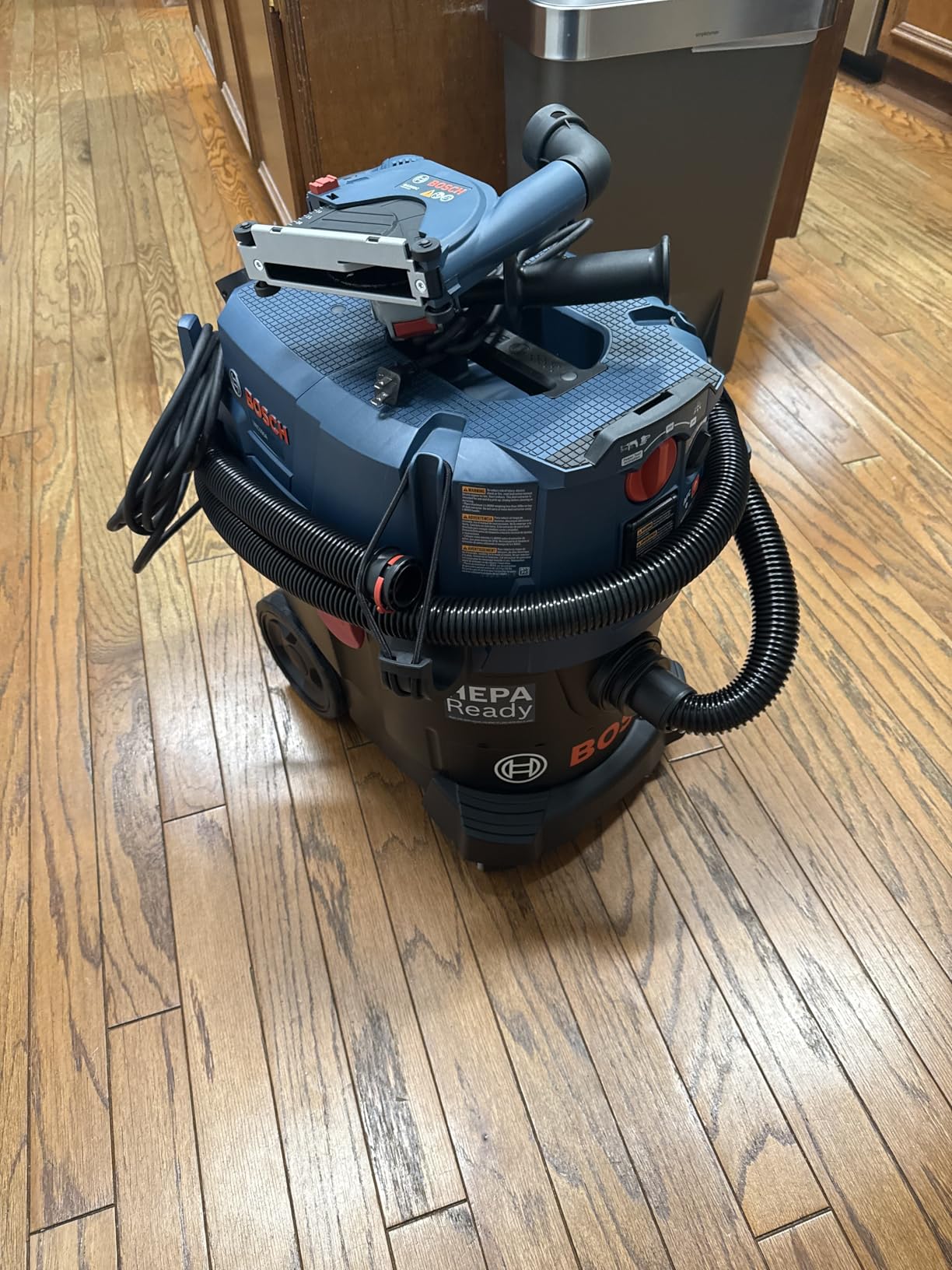
2. Bosch VAC090AH 9 Gallon – Airflow That Keeps Up With Long Rip Cuts
Bosch VAC090AH 9 Gallon Dust Extractor with Auto Filter for Grinder 1773AK
150 CFM airflow
97 in static lift
28 lb weight
9 gallon drum
Pros
- Highest rated airflow for a mid-price extractor
- Filter cleaning every 15 seconds holds suction
- HEPA plus fleece bag containment
- Power Broker dial tunes suction to the cut
- Reliable tool-activated start
Cons
- Foot pedal and dial controls are dated next to Bluetooth
- Heavier and larger footprint than the 8 gallon class
- Blower and filter clean together are noticeably loud
This is the machine I recommend to anyone who cuts long rips and crosscuts in plywood and wants airflow they do not have to think about. The published 150 CFM figure is measured without a hose attached, but even discounted for hose losses it holds up well in owner reports, and the 97 inch static water lift gives it the pull to capture dust at a distance through a coiled hose.
The filter clean cycle every 15 seconds is the feature that does the most real work on sheet goods. Fine MDF dust loads a filter fast, and once it clogs the extractor quietly loses suction mid-cut. A pulse every 15 seconds is short enough that you never notice the dip, which is exactly what you want next to a visible cut line.
The Power Broker dial lets you dial suction down for delicate panel work or up for heavy ripping, which matters more on a track saw than on a router because you control the feed rate. Reviewers consistently single out tool activation as reliable, and the HEPA filter with fleece bag is reported to give good fine-dust containment.
Why 15-Second Filter Cleaning Beats a Bigger Drum
Many buyers assume capacity is the answer to a track saw extractor, and capacity helps. But the real enemy of performance is a loaded filter, because a clogged filter reduces airflow before the drum has any say in the matter.
At a 15 second interval, this unit runs its clean cycle so often that suction stays close to its clean-filter figure across a full cutting session. It also targets the Bosch PRO plus GUARD system for end-to-end collection, which is aimed at silica Table 1 compliance rather than sheet goods, but the filtration hardware transfers directly to wood dust.
Control Layout and Ergonomics Trade-Offs
The recurring criticism in reviews is ergonomics. This is a foot control with a dial, not a remote or a phone app, and on a track saw where you are walking the rail and cannot reach the machine, that matters more than it would on a stationary tool.
At 28 pounds with a wider footprint than the 8 gallon class, it is also harder to move around a small shop. A commonly repeated forum tip for tippy canisters is to add flat weights in the base, which is worth doing with any of the larger machines here.
Who This Suits and Who It Does Not
This is the pick for a mixed-brand shop, or anyone whose saw is not Festool and who does not want to hunt for proprietary adapters. The tool-activated outlet works with any corded saw switch, and 9 gallons is enough to finish most single sheets without a stop.
It is not the right choice if noise is your main concern, since reviewers report the blower and filter clean together produce a noticeably loud running note. It is also not the strongest option for a small garage where you need to carry the machine between rooms, and the one year warranty is short against the three years on the Festool machines.
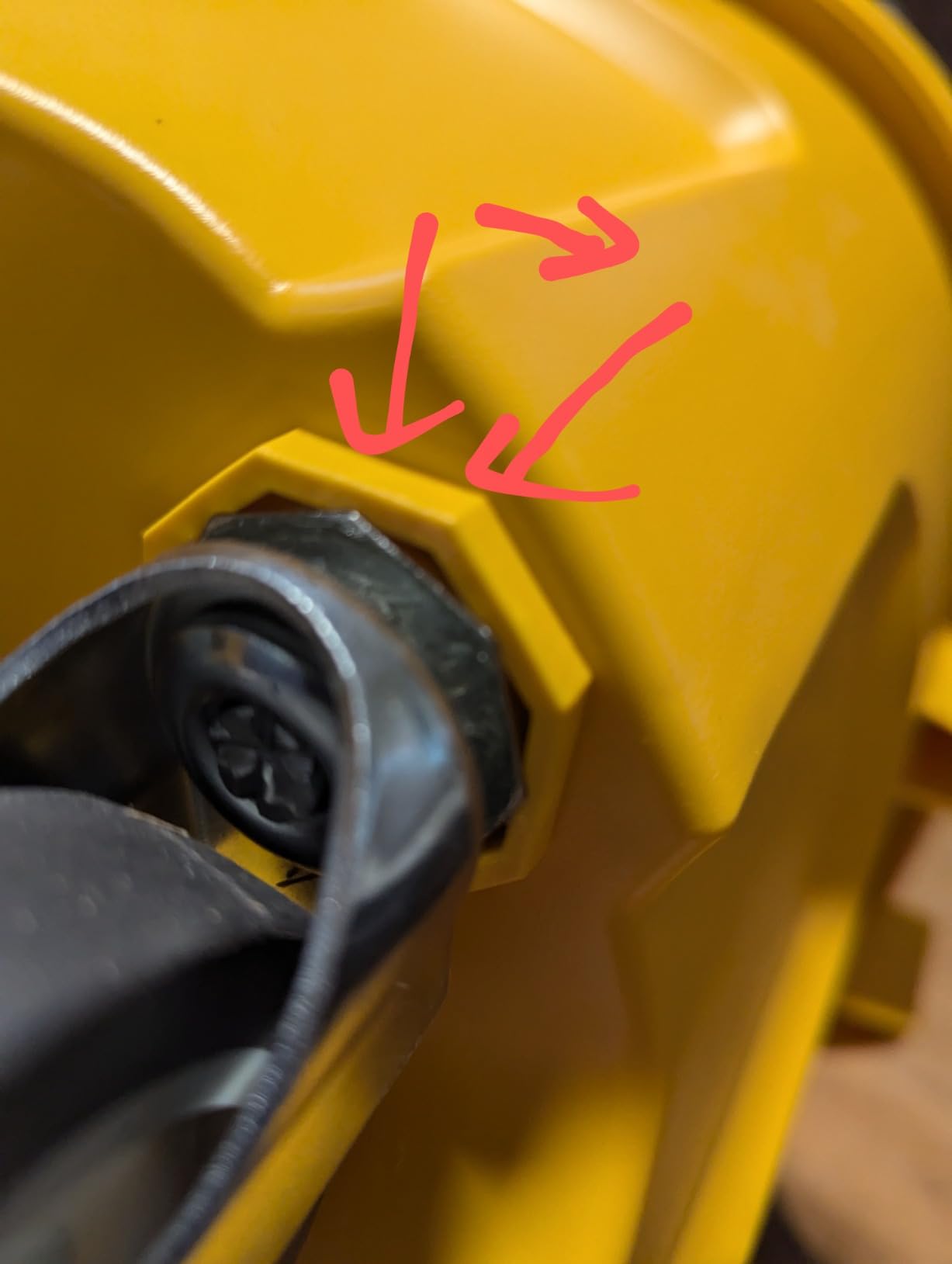
3. DEWALT DWV010 8-Gallon – The Straightforward Per-Sheet Workhorse
DEWALT DWV010 HEPA Dust Extractor with Automatic Filter Cleaning, 8-Gallon
150 CFM airflow
8 gal drum
22 lb weight
80 dB rated noise
Pros
- Automatic filter clean keeps the filter from clogging on sheet dust
- 15 ft antistatic hose reaches across a full sheet layout
- Quick-connect adapters link easily to saws and sanders
- Tool activation removes the chance of cutting with extraction off
- Light enough to carry despite the bulk
Cons
- Loudest rated noise in this group at 80 dB
- Suction is lower than a bare shop vac through a fine filter
- Hose accessories are friction-fit and can come apart
This is the extractor I recommend to a first-time track saw owner who wants automatic filter cleaning and tool activation without moving up a bracket. The 15 amp motor is published at 150 CFM, the drum is 8 gallons, and the whole machine is 22 pounds, which makes it one of the easier units here to reposition between cutting stations.
The 30 second filter pulse is longer than the Bosch interval, and reviewers still describe it as rarely clogging on plasterboard and track saw dust. Tool actuation means the saw switch controls the vacuum, so there is no separate button to forget when you are focused on the cut line.
What you give up is refinement. Suction is lower than a plain shop vac once a fine filter is fitted, which is the honest trade for HEPA-grade containment, and the accessories are friction-fit rather than locked, so a knock during a long cut can pull a connection loose.
The 15 Foot Anti-Static Hose Is the Real Feature
Hose length gets overlooked in extractor roundups, and on a track saw it is arguably the most important spec after the port. A 15 foot anti-static hose at 1.25 inch diameter is long enough to reach from the machine at one end of a sheet layout to the far end of a full sheet, which means you set the extractor once instead of walking it around the workpiece.
Anti-static construction is not a marketing word here. Fine MDF and plasterboard dust carries charge, and a non-conductive hose can accumulate enough static to be unpleasant at the machine when the collector fills. The universal swivel connector at the tool end also stops the hose from kinking, which is what kills air speed in a portable setup.
Where the Noise Figure Comes From
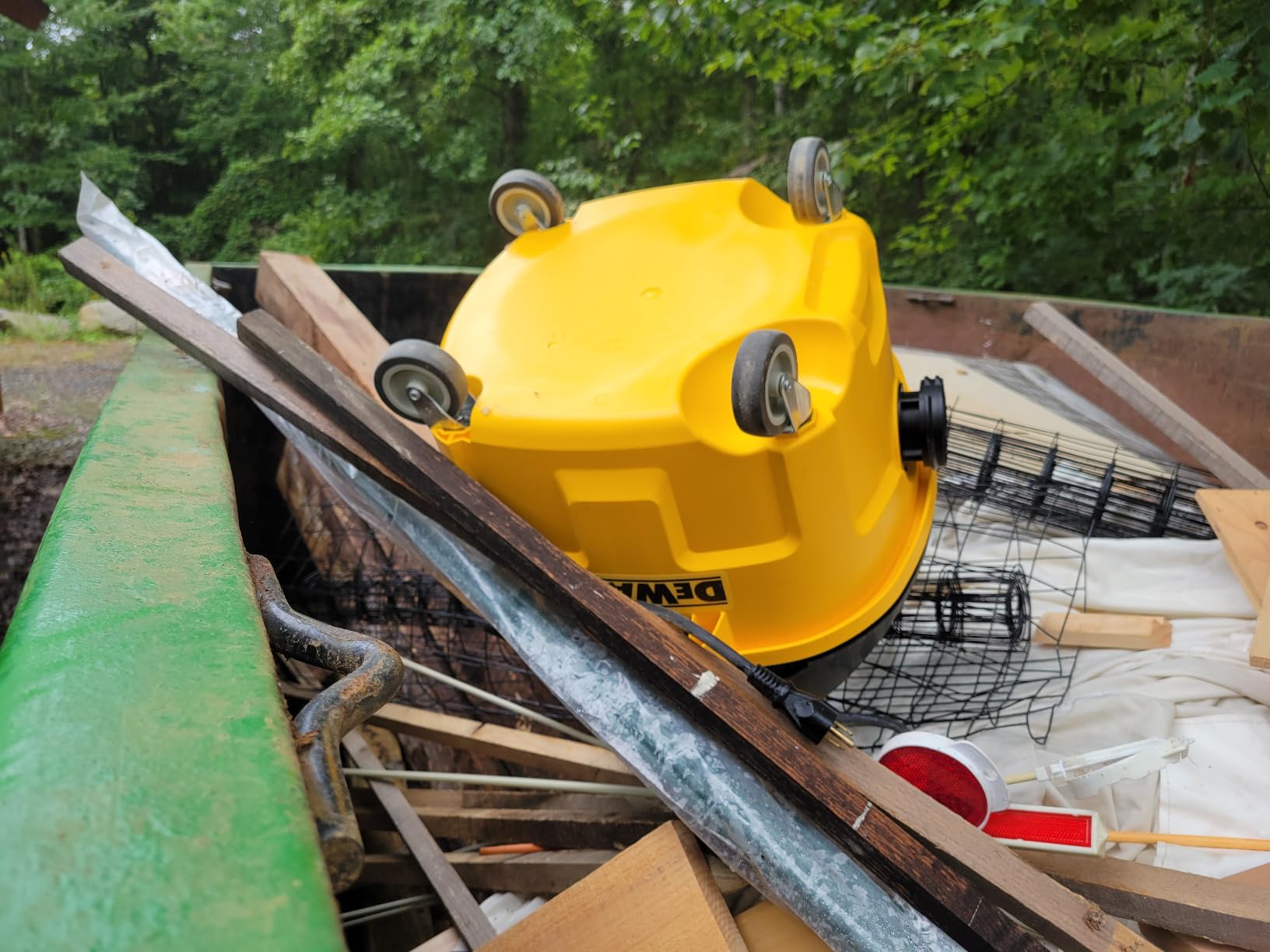
The 80 dB rating is the highest published figure in this group, and it is the most common complaint. Decibel is logarithmic, so a 10 dB increase reads as roughly double the perceived loudness, and a 20 dB gap between this machine and the 60 dB units is a large difference in how tiring a long session feels.
Part of that number is the filter pulse itself, which cycles every 30 seconds during operation. If you work next to the machine rather than across the room from it, expect to hear it. Ear protection is the sensible habit for any of the machines here.
Who This Suits and Who It Does Not
It suits a garage shop, a renovation outfit cutting plasterboard, or a first plunge saw purchase where the priority is capturing dust rather than owning a quiet machine. The 8 gallon drum handles a sheet or two comfortably.
It does not suit a small apartment, a shared studio, or anyone who wants a Bluetooth start instead of a tool switch. The hose wrapping around the body for storage is awkward, the adapters can separate under load, and only the front wheels swivel, which makes uneven floors harder work.
4. Fein Turbo I – The Quiet One for Shops Where Conversation Matters
Fein Turbo I Wet/Dry Shop Vac Dust Extractor – 5.8-Gal, 151 CFM Suction, Quiet 66 dB, Anti-Static System, 25 ft Cord, 13 ft Hose, Tool-Activated for Jobsite & Workshop – 92035060090
66 dB(A) operation
153 CFM airflow
5.8 gal drum
25 ft power cord
Pros
- Quietest running machine in this group at 66 dB
- Strong airflow and suction for both dust and wet pickup
- Autostart outlet with a delay avoids current overload
- Anti-static system helps with fine track saw dust
- 25 ft cord and 13 ft hose rarely need repositioning
Cons
- Disposable fleece bags only with no reusable filter option
- Heavier and wider than competing wet/dry vacs
- Small release buttons make attachment changes fussy
This is the pick for a shop where you work alongside someone else. At 66 dB(A) it is the quietest machine here, and the difference between that and an 80 dB extractor is the difference between wearing hearing protection and talking over the machine.
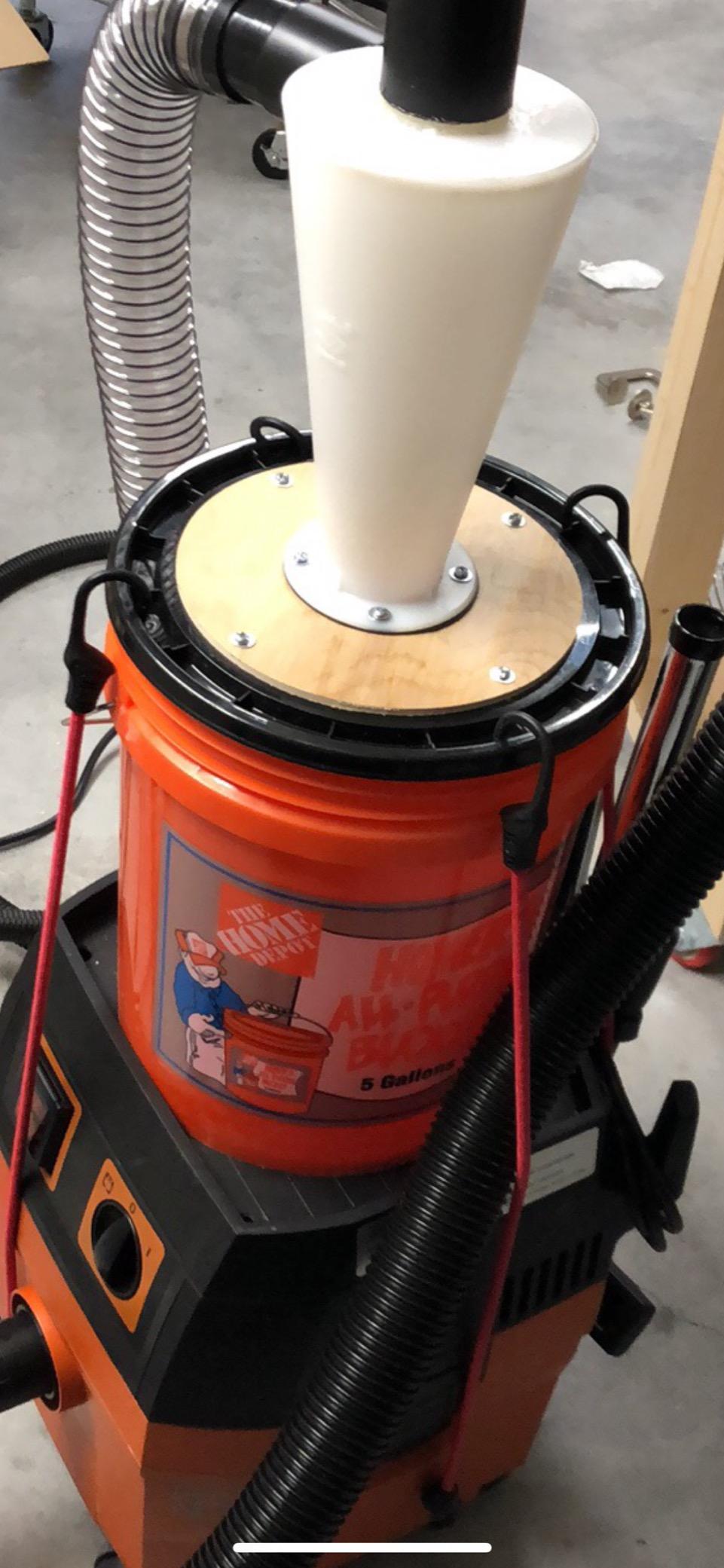
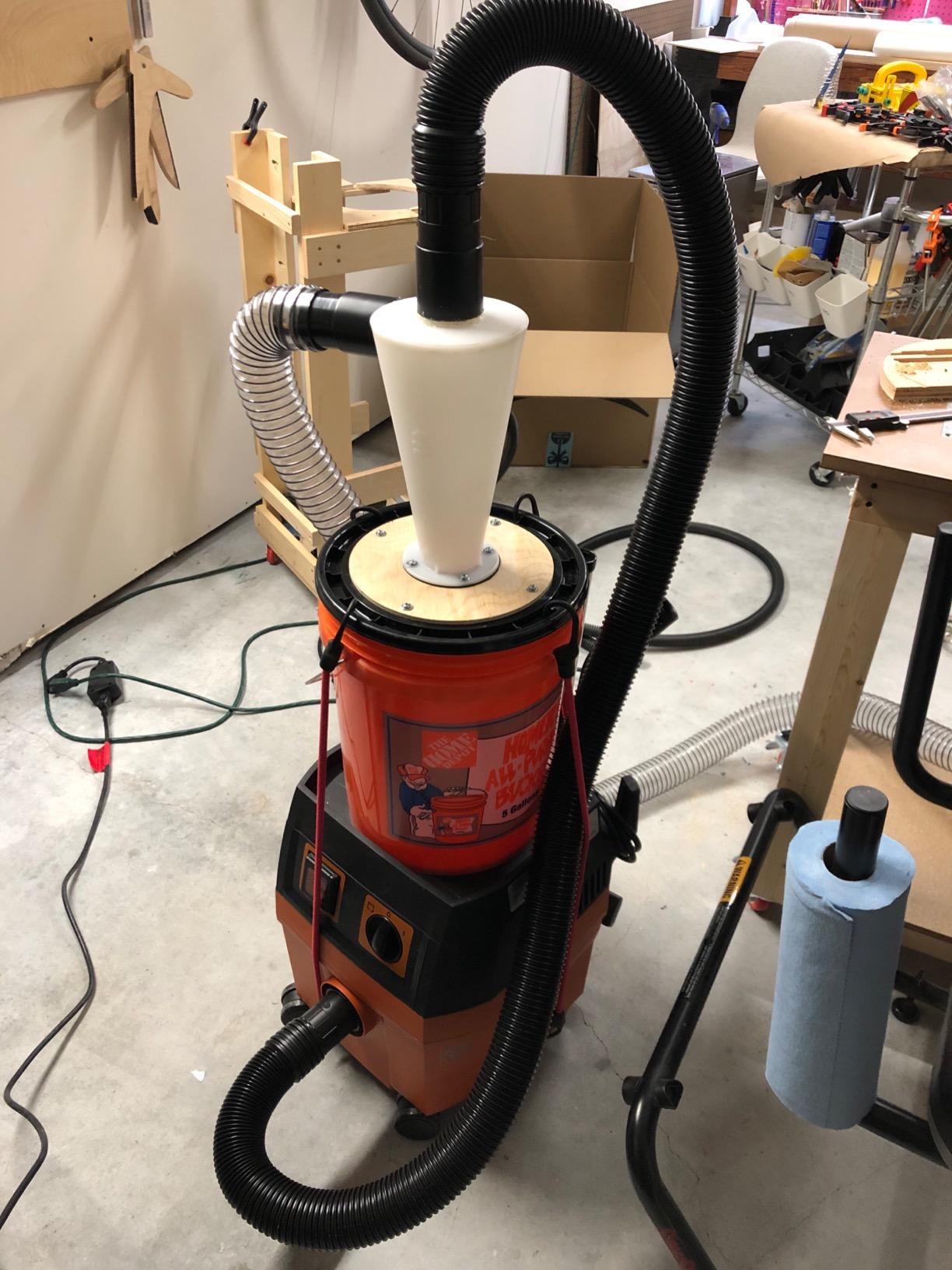
It also holds its own on airflow. The published figures are 153 CFM and 102 PSI of static suction from a 1,380 watt motor, which is at the top of this group even after hose losses. The anti-static system is a genuine benefit with the fine dust a track saw throws, and the flat top surface is easy to strap a cyclone separator to if you want to extend canister life.
The autostart outlet includes a delayed activation, which prevents the current spike you get when a saw and a vacuum switch on simultaneously. That single detail is the difference between reliable auto-start and a breaker trip, and it is why tool-activated outlets are worth paying for.
Anti-Static Handling for Fine Panel Dust
Track saw dust is very light and very fine, and fine dry dust is exactly the material that builds charge in a plastic hose. The anti-static system here runs through both the machine and the hose, and owners report it as a real benefit rather than a checkbox.
With 25 feet of cord and 13 feet of hose, you can set up once for a full sheet layout without repositioning. That matters more than raw CFM when the machine lives in one corner and the work does not. The warranty is one year out of the box plus two more with online registration.
Bag-Only Filtration and Its Limits
The main limitation is that this machine uses disposable fleece bags only, with no reusable filter option. That simplifies ownership and keeps dust contained, but it means a consumable line item every few months and no way to cut that cost.
It is also described in reviews as more of a mobile cleanup vacuum than a full replacement for a stationary collector. At 25 pounds with a wide body it is awkward to move, and the small release buttons make frequent attachment changes fussy. The brush attachment is a weak point for corners.
Who This Suits and Who It Does Not
It suits a small shop, a home office conversion, or a finishing business where quiet operation and wet pickup for cleanup both matter. If you share a workspace, this is the machine I would pick without hesitating.
It is not the right choice if you want to run one machine for everything. The disposable-bag-only design adds running cost, and the fussy latches and weight are real friction when you are moving the machine between a track saw station and a sanding station several times a day.
5. Makita VC4210L 11 Gallon – Capacity and Case Stacking for Makita Shops
Makita VC4210L 11 Gallon Wet/Dry HEPA Filter Dust Extractor/Vacuum
148 CFM airflow
11 gal drum
35.3 lb weight
Two stage filtration
Pros
- Automatic filter cleaning holds suction through long sessions
- Large 11 gal drum means far fewer bag changes
- Locking storage cases stack on top for mobile work
- Quiet in wet mode with the thump cycle disabled
- Oversized rubber wheels roll over jobsite debris
Cons
- Filter clean thump every 20 seconds is an odd sound
- Overall suction trails a bare shop vac with a fine filter
- Bundled hose is about 1.5 inch and too small for big chips
This is the recommendation for a shop that already runs Makita tools, because the 11 gallon drum and the case stacking plate turn it into a self-contained mobile station. You lock Makita cases on top, the machine rolls on oversized rubber wheels, and nothing needs to be carried separately.
Published figures are 148 CFM and 92 inches of water lift, and the automatic filter cleaning is what reviewers praise most. The tool-activated outlet has a 10 second off delay, so the machine keeps running briefly after you release the saw trigger and clears the residual dust still falling from the cut.
That delay feature is worth highlighting for track saw work specifically. When a plunge saw finishes its travel, dust is still settling off the panel, and an extractor that stops instantly leaves that last fraction in the air. Several owners describe this machine as a big step up from a shop vac on filter life and noise.
The Thump Cycle: Feature or Flaw
The most common complaint is the periodic thump as the filter cleaning pulses every 20 seconds. Once users understand what it is doing, most reframe it as the thing that keeps suction stable rather than a defect, and that is the honest read: without it, the filter loads and airflow falls off within a session.
The weight is the real ergonomic issue. At 35.3 pounds this is a heavy machine to lift into a van, and reviewers mention a tippy canister. If your saw moves around rather than staying on a bench, budget for that rather than discovering it on the first job.
Two-Stage Filtration and What It Catches
Filtration is a two-stage system: a main flat filter reported at 99.95 percent capture of particles at 2 microns and larger, plus a HEPA element at 99.97 percent of particles at 3 microns and larger. Note the difference in particle size between the two claims, because it is exactly the kind of detail that gets flattened in marketing copy.
For track saw work cutting MDF and plywood, that is more than sufficient. It is not a fine-silica specification, and if you plan to cut masonry or concrete with the same machine you should read up on respirable crystalline silica requirements first.
Who This Suits and Who It Does Not
It suits a Makita shop, a mobile installer who moves between job sites, and anyone who would rather empty a bag less often than negotiate a smaller machine. The 11 gallon drum is the second largest here and cuts interruptions noticeably.
It is not the best fit for someone on a tight budget who plans to source consumables outside the US, because fleece bags are reported to be hard to find there. The bundled hose at roughly 1.5 inch is also on the small side for chip-heavy work, though it is not the constraint for a track saw port.
6. Bosch VAC140AH 14 Gallon – Fewest Bag Changes of the Lineup
Bosch VAC140AH Portable 14 Gallon Dust Extractor with Auto Filter Clean and HEPA Filter
14 gal drum
150 CFM airflow
38 lb weight
97 in static lift
Pros
- Largest capacity here at 14 gallons
- Filter clean every 15 seconds preserves suction on long jobs
- HEPA plus fleece bag gives excellent fine particle containment
- Power Broker dial matches suction to the cut
- Tool activation works with corded saws hands-free
Cons
- Heaviest machine here at 38 lb and awkward on stairs
- Bulky body takes a large share of floor space
- Smaller review base than the other machines in this guide
Capacity is the entire argument for this machine. At 14 gallons it is the largest drum here, and on a day of full sheet-goods cuts that difference shows up as fewer mid-cut stops, which is the single most common complaint track saw owners raise about every smaller extractor.
The airflow and suction figures match the smaller Bosch at 150 CFM and roughly 97 inches of static lift, with the same 15 second automatic filter clean. The HEPA filter and included fleece bag are reported to give excellent fine-particle containment, which is the right result for fine panel dust.
Power tool activation plus the Power Broker dial gives you hands-free starting and adjustable suction from one machine. Rated noise of 65 dB sits in the middle of this group, quieter than the 80 dB machine and louder than the 60 dB units.
When a 14 Gallon Drum Actually Pays Off
Because track saw dust is fine and light, it packs into a bag faster than the drum volume suggests. Fine dust fills the voids between particles instead of sitting as coarse shavings would, so a canister that looks half full on weight can be effectively full for airflow purposes.
A 14 gallon drum buys you roughly the working session rather than a single sheet. If you cut several sheets a day in a cabinet shop, that is worth more to you than any specification on this list, because stopping to empty mid-panel is where extraction actually fails.
Weight, Footprint and the Small Review Base
At 38 pounds and over 34 inches tall, this is the least portable machine here. It suits a fixed cutting station where the machine lives in one place and the sheet comes to it, and it does not suit anyone who loads a van daily or works in a small garage.
The included hose is listed at 9.85 feet, which is shorter than the 15 foot hose on the smaller Bosch and the same length on the DeWALT. For long rips across a full sheet you will want a longer run, and owners who work at that scale report adding one.
Who This Suits and Who It Does Not
It suits a production cabinet shop or a panel shop that runs full sheets all day and wants a fixed station. The filter interval and HEPA handling are the right pairing for that duty cycle.
It is not the right choice for a small shop, a mobile setup, or anyone moving the machine more than once. The 128-review base is also the thinnest in this guide, so long-term field history is thinner than the numbers on the other models suggest.
7. Festool CT 36 EI HEPA – Five Suction Levels for Delicate Panel Work
Festool 577872 Dust Extractor CLEANTEC CT 36 EI HEPA
9.5 gal drum
Five suction levels
Bluetooth
39.3 lb weight
Pros
- Very low running noise especially on lower suction settings
- Five suction levels let you match power to the cut
- Bluetooth start gets extraction running before the cut
- HEPA plus filter bag keeps dust out of the room
- T-LOC dock makes it a self-contained mobile centre
Cons
- Bundled 27 mm hose is narrow and plugs on long offcuts
- 39.3 lb is heavy to move between rooms or upstairs
- Accessory and bag pricing in the ecosystem is high
This is the CT to buy if you are already deep in the Festool system and want more drum than the CT Midi I offers. The 9.5 gallon canister, five suction levels, and tool-triggered operation for corded tools make it the middle of the range rather than a step up in raw power.
Owners single out the low noise, particularly on the lower suction settings, and that pairs well with a track saw on panel materials where you do not need maximum pull. The five levels are more useful on sheet goods than on a router because the feed rate is under your control, so you can dial down for a clean cut in veneered MDF.
Reviewers are split on value, and mostly frame the cost as justified only if you are already committed to the brand. That is a fair read: you are buying into an accessory ecosystem, not just a machine.
Choosing Between the CT Models
The CT 36 EI sits between the CT Midi I and the CT 48 EI AC. The Midi I is smaller, lighter and Bluetooth-equipped out of the box; this one is larger with a 9.5 gallon drum and five suction levels instead of a single setting.
Note that the Bluetooth module here is listed as an optional extra purchase rather than a standard fit, which is a meaningful difference if wireless start is the reason you are in the Festool camp. Confirm the configuration before you commit.
What 27 mm Hose Diameter Costs You
The bundled hose is 27 mm, and this is the most common functional limitation in reviews. For a track saw port that is not a problem at all, because the port itself is the smaller dimension and air speed at the port is what captures the dust.
Where it does matter is if you also use the machine for router work or planing, where long offcuts and chip debris can plug a narrow hose. If the extractor is for the track saw only, the narrow hose is an advantage: more air speed through a smaller opening.
Who This Suits and Who It Does Not
It suits an established Festool shop cutting panels and finished work where noise and containment both matter. The T-LOC Systainer dock makes the whole thing move as one unit.
It does not suit a mixed-brand shop, a tight budget, or anyone who would have to buy the Bluetooth module separately to get the feature they actually want. At 39.3 pounds it is not a machine you carry between rooms.
8. Festool CT 48 EI AC HEPA – App-Controlled Filter Cleaning at 12.7 Gallons
Festool 577876 Dust Extractor CLEANTEC CT 48 EI AC HEPA
12.7 gal drum
App-settable autoclean
Five suction levels
40.5 lb weight
Pros
- Autoclean interval adjustable to 15
- 30
- 60 or 120 seconds
- Best hose and cord storage design in this category
- Large rear wheels roll well when pulled by the hose
- Smooth non-ribbed hose will not catch on stock edges
- Largest drum in this range means long intervals between bag changes
Cons
- Highest price in the group on the same turbine as smaller CT models
- Hose fitting does not always stay firm on the wand
- Bluetooth can drop and take about ten seconds to reconnect
This is the top of the range here, at 12.7 gallons, and its distinguishing feature is control rather than suction. The automatic main filter cleaning is settable through the app at 15, 30, 60 or 120 second intervals, which means you can match the pulse rate to a track saw cutting session and back it off when you are doing lighter work.
That flexibility is genuinely useful for sheet goods, because fine MDF dust loads a filter far faster than a random orbital sander does, and a fixed interval is either wasteful or insufficient depending on the job. Owners also praise the hose and cord storage, which avoids wrapping the hose around the body the way the smaller machines do.
Zero visible particle escape is reported during sanding and cutting in reviews, and the smooth 36/32 mm hose comes with a reducer and a three piece cleaning set. The three year warranty matches the rest of the range.
What App Control Actually Changes on a Track Saw Job
Set it to a short interval during a run of full sheets and a long one while you are on a sander for an hour. The filter gets cleaned when it needs cleaning rather than on one fixed schedule, which extends filter life and keeps suction honest across mixed work.
The same app handles the Bluetooth pairing for tool-activated start, so if you already own compatible battery packs this is the cleanest setup in the guide. If you do not, you are paying for capability you cannot use.
Where the Extra Cost Actually Goes
Skeptics in reviews make a fair technical point: the same basic turbine drives the smaller CT models, so the additional money mostly buys capacity and storage design rather than more suction. If your work is light trim cutting, the smaller machine does the same job.
There are real frictions too. Some users report the hose fitting does not stay firmly on the wand, and Bluetooth pairing can drop and take around ten seconds to reconnect after a tool trigger stops, which is annoying when you are already walking the rail.
Who This Suits and Who It Does Not
It suits a professional shop cutting full sheets daily, with a mixed tool load where the same extractor handles the track saw, a sander and a router, and where the app is a tool you will actually open.
It is not the right choice for a light-duty user, a multi-brand shop that will never pair a Festool battery, or anyone sensitive to the highest price point in the category. At 40.5 pounds it is the heaviest machine in this guide and it wants a fixed home.
How to Choose a Dust Extractor for a Track Saw
Most buying advice for extractors is written for grinders and for contractors cutting concrete. That framing produces the wrong machine for sheet goods. Here are the criteria that actually decide the purchase when the tool on the other end of the hose is a plunge saw.
Air Speed at the Port, Not Raw CFM
A track saw pushes a concentrated jet of fine dust out of a small rear port, and the capture happens through air speed at that opening. That is why a narrower hose at the saw can work better than a wide one: the same airflow through a smaller opening means faster air, and faster air pulls more dust into the stream.
Published CFM figures are measured at the bare motor inlet. Once you add hose, bends, and a partially loaded filter, assume a meaningful reduction. The practical test is simple: if dust is still escaping visibly at the port, you have a hose, filter or airflow problem, not a drum capacity problem.
Filter Cleaning Interval and Dirty-Filter Loss
This is the most decision-relevant spec on the whole list and the one competitors mention least. A fine filter loaded with MDF dust can lose a large share of its airflow, and the saw does not care: the dust just goes airborne. Auto cleaning intervals here run from 15 seconds to 30 seconds, and the ones with shorter intervals hold suction better.
Buy a machine with auto cleaning if you cut more than a few sheets a month. If you do not have it, you will be cleaning a filter by hand mid-session, which is exactly the moment you stop paying attention to the cut.
Drum Capacity and a Realistic Duty Cycle
Match capacity to how many sheets you cut in a session. The honest pattern from owner reports is that a smaller drum fills with fine dust faster than its gallon figure implies, because fine particles pack into the voids. Buyers upgrading from a shop vac most often say the biggest change was emptying less often.
Between 3 and 5 gallons suits occasional trim and panel work. Between 8 and 11 gallons handles a full working session of sheet cuts. Above that suits production work where stopping mid-panel is not an option.
Port Diameter and Adapter Reality
Track saw dust ports are commonly 35 mm, or about 1.25 inch, while extractor hoses are usually wider. That is not a defect, it is a design difference, and the standard answer is a step-down adapter or bushing that joins the hose cuff to the saw port.
Check the hose length too, and buy the longest reasonable run. On a full sheet layout the distance from the machine to the far corner of the workpiece is the dimension that decides whether you reposition once or constantly.
Tool-Activated Start and Ecosystem Lock
An onboard outlet that starts the vacuum when the saw switch is pressed removes the single most common failure in portable extraction: cutting with the vacuum off. This works with any corded saw and is worth paying for on its own.
Bluetooth auto-start is a step better, but it is brand-locked. If you own tools from more than one brand, you will be triggering the extractor by hand or by remote, and you should not pay extra for a wireless feature you cannot use. Our companion guide to dust collectors and stationary systems covers the other half of this equation.
Ongoing Consumable Cost
HEPA elements and fleece bags are the running cost of every machine in this guide, and it is a cost most roundups ignore. Owners budgeting for a replacement filter and a set of bags every year end up with a truer picture of ownership than a purchase figure alone gives them.
The Fein Turbo I is the exception that shows the trade clearly: it uses disposable bags only, with no reusable filter option, which simplifies ownership and adds a recurring line item. Machines with reusable elements shift that cost around rather than removing it.
Noise and How Decibels Behave
Decibels are logarithmic, so a 10 dB increase sounds roughly twice as loud and a 20 dB gap is enormous in practice. Published figures here run from 60 to 80 dB, and the difference between the quietest and loudest machine is the difference between a conversation and a shout.
For a shared shop, a finishing business, or a home workspace, noise deserves a real vote. If you work alone in a garage, it is a preference rather than a requirement, and the louder machines are perfectly workable.
When a Wet/Dry Vac Is Genuinely Enough
This argument is never settled in the roundups, so here is the short version. If you cut a few sheets a month in a garage with the door open, a decent wet/dry vac with a 2.5 inch hose and a step-down bushing will capture a useful proportion of the dust, particularly with the nozzle sealed to the port.
What it will not do is keep fine dust off finished surfaces, and it will not hold suction as a filter loads, because it has no auto cleaning. If your work involves fine MDF, visible dust in the room, or any finishing nearby, the gap between a shop vac and an extractor with HEPA and auto cleaning is much larger than the gap between two extractors.
For anyone weighing a different extraction route entirely, our guide to fume extractors covers solvent and spray applications, which is a different dust problem from sheet goods. And for fluid handling on the shop floor, oil extractors is the reference for that category.
Connecting Your Track Saw: Ports, Adapters and Hose Routing
Getting the connection right takes about five minutes and determines whether extraction works at all. Most disappointing performance turns out to be a hose problem, not a machine problem.
Step 1: Identify Your Port Diameter
Measure the outside diameter of the saw’s dust port before you buy any accessories. Most plunge and track saws use a port around 35 mm, or 1.25 inch, and many extractor hoses are 2.5 inch or larger at the cuff. Measure, do not assume, because a few models differ.
A step-down adapter or rubber bushing joins the wider hose cuff to the smaller port. Seal the joint with tape so it does not leak, since a leaky joint reduces air speed exactly where you need it most, and it also dumps fine dust into the room.
Step 2: Route the Hose Along the Rail
The best practice is to run the hose along the guide rail so its weight and drag do not pull the rail out of square. Clamp the hose to the rail at two points, leave enough slack to reach the full travel of the saw, and keep the hose out of the path of the blade.
Leave a loop of slack rather than a taut run. A hose under tension during a cut will drag the rail, and a dragged rail on a sheet-goods cut means a crooked part. This is the single most common quality problem I see in track saw work that is not a cutting problem at all.
Step 3: Check the Power Source at the Far End
If the extractor runs on a cord, plan your outlet layout so the saw and the machine do not fight over the same circuit. If you use tool activation, confirm the outlet on the extractor is rated for your saw’s draw, and confirm whether a delay is needed to prevent a startup surge tripping the breaker.
Step 4: Keep the Machine Upright and Stable
Large canisters get dragged across a shop floor by a hose that catches on something. Lock the swivel casters before every cut, and if the machine feels light on its wheels, a few flat weights in the base is the standard fix that owners recommend.
Check the filter condition before long runs rather than after. A quick inspection at the start of a session is cheaper than losing suction halfway through a sheet and finding out why.
Frequently Asked Questions
What size dust extractor hose does a track saw need?
Most plunge and track saws use a dust port around 35 mm, or roughly 1.25 inch, while extractor hoses are commonly 2.5 inch or wider. A step-down adapter or rubber bushing joins the two. Measure your port before ordering, and tape the joint so it does not leak and reduce air speed.
How much CFM do I need for cutting plywood with a track saw?
A track saw needs enough air speed at its port to capture fine dust, not the grinder-based OSHA figure of 25 CFM per inch of wheel. The machines in this guide publish 130 to 153 CFM at the bare motor inlet, and real performance depends heavily on hose length, bends and filter condition.
Is a shop vac good enough for a track saw?
For occasional cutting in an open garage, a wet/dry vac with a 2.5 inch hose and a sealing bushing captures a useful share of the dust. It will not keep fine dust off finished surfaces and it loses suction as the filter loads, because it has no automatic filter cleaning. Fine MDF work in an enclosed room needs a real extractor.
Which dust extractor is better, Bosch or Festool, for track saw work?
For raw airflow, the Bosch units are stronger on paper at 150 CFM, and they pair with any corded saw through the tool-activated outlet. For a saw that starts wirelessly before the cut, the Festool machines are better, but the hose connection is proprietary and the accessory ecosystem is priced higher.
How often do track saws fill a dust extractor?
Fine MDF and plasterboard dust packs into the voids between particles, so a canister fills faster than its gallon figure suggests. Drums between 8 and 11 gallons typically cover a full working session of sheet cuts. Smaller drums suit trim work, and larger ones are worth the extra weight for production cutting.
These answers cover the questions that come up most often in woodworking forums, and the short version of all of them is the same: fit the port, keep the filter clean, and size the drum to your sheet count.
Final Verdict for Track Saw Owners
If you want extraction running before the blade touches the panel and you are already in the Festool system, the CT Midi I is the machine I would put beside a plunge saw, with the caveat that its 3.9 gallon drum suits trim work more than production sheets. If you want raw airflow and a mid-range purchase, the Bosch VAC090AH is the balance point, and its 15 second filter clean is the spec that protects your cut line.
If your budget is the deciding factor, the DEWALT DWV010 gets you tool activation and automatic filter cleaning at the lowest entry point here, at the cost of the loudest running noise. If you share a workspace, the Fein Turbo I at 66 dB is the only one of these you can hold a conversation over. For full production sheets, the 14 gallon Bosch VAC140AH empties least often, and the Festool CT 48 EI AC gives you app control of the filter interval at the largest drum in the range.
Whichever you pick, measure your port, buy a step-down adapter before you need one, and clamp the hose to the rail. Last updated for 2026, and every specification here is checked against the current manufacturer listing.
Leave a Reply