
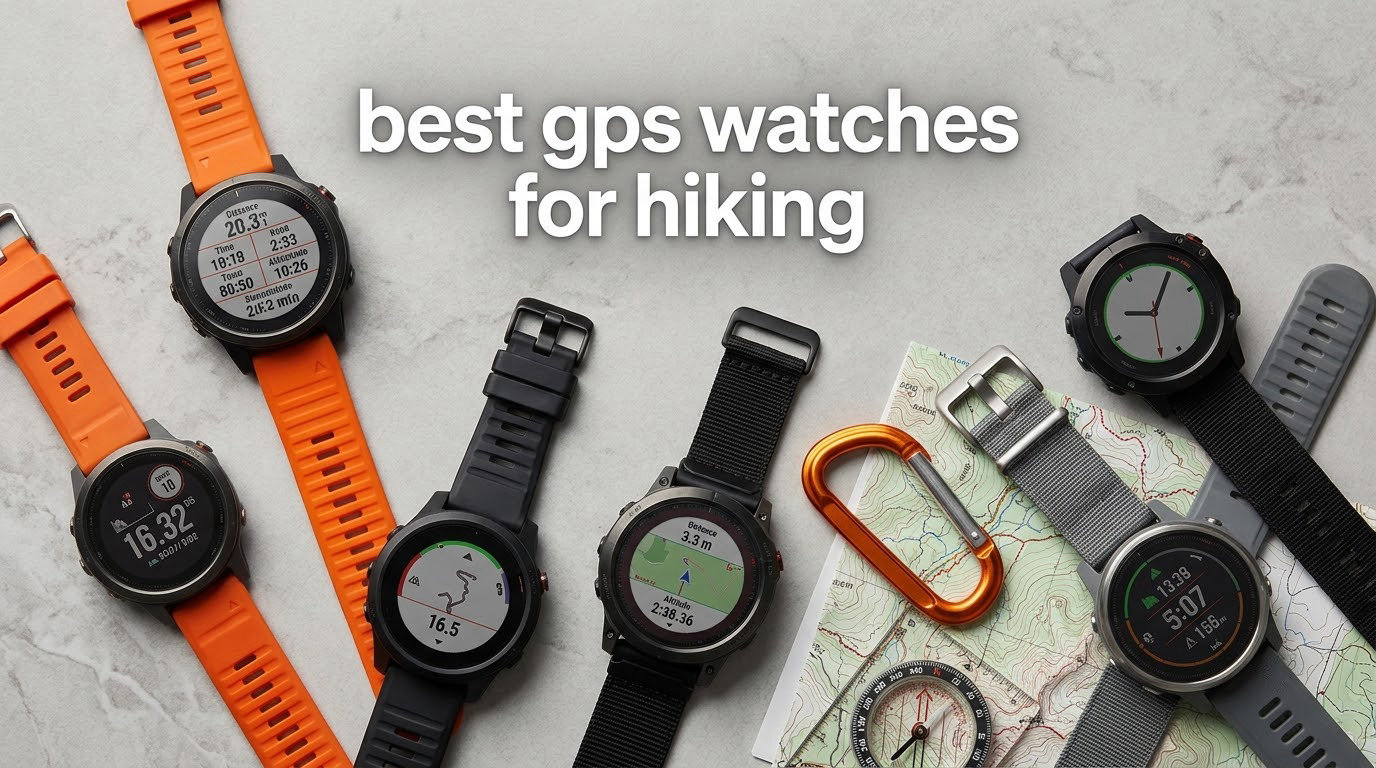
A good GPS watch does one thing better than a phone: it keeps working where the signal ends. When the trail drops into a canyon, a drainage or a snowfield with no bars, the watch on your wrist still locks onto satellites, plots your line on a topographic map and logs a track you can walk backwards along. That is the whole reason the best GPS watches for hiking still exist in 2026, even though everyone carries a phone.
Our team spent six weeks comparing nine of the current-generation hiking watches across Garmin, COROS, Suunto and Casio. We carried them on loop hikes, on long ridge days and on wet scrambles where gloves mattered, and we weighed every case on the scale. The categories that separated the field were not the ones spec sheets advertise: it was how a watch behaved under tree cover, how long it lasted with the screen at maximum brightness, and whether the maps gave you context or gave you directions.
Three models stood out. The Garmin fenix 8 is the best overall pick, balancing full onboard maps, multi-band GPS and a battery that covers a week of hiking. The Garmin epix Pro Sapphire takes the premium build further with a sapphire lens and titanium bezel for people who scratch their watches. The Garmin Instinct 3 AMOLED is the one most hikers should actually buy, because it is the rare watch that is light, cheap to run and hard to break. If you also want trail running metrics, our GPS watch hiking and trail running picks break that down separately.
One caution before you read on. No watch should be your only navigation tool. Every forum thread we found on the topic says the same thing: carry a paper map and compass, know how to use them, and if you are going above treeline or outside coverage, pair the watch with a satellite messenger. A watch is an excellent primary tool on a trail you know, and a supplement on a trail you do not.
Our Top 3 GPS Watches for Hiking in 2026
Here is the short version. If you want one watch that does everything well, take the fenix 8. If you want the toughest premium watch money can reach, take the epix Pro Sapphire. If you want the most watch for the least money and you are happy with a breadcrumb line instead of full topo maps, take the Instinct 3.

Garmin fenix 8
- 1.4-inch AMOLED display
- 84 hours in GPS mode
- Multi-band GPS with SatIQ
- On-wrist maps with round-trip routing

Garmin epix Pro Sapphire
- Sapphire lens and titanium bezel
- 58 hours average battery
- Preloaded ski and TopoActive maps
- Built-in LED flashlight

Garmin Instinct 3 AMOLED
- Up to 18 days battery life
- 53 g fiber-reinforced polymer case
- Button-only operation
- 1.2-inch AMOLED at 1000 nits
Quick Comparison: Nine Hiking GPS Watches Side by Side
Weight and case size decide whether a watch is wearable over a long day, so both are in the table. Battery figures name the GPS mode they were measured in, because a headline number quoted without a mode is meaningless.
| Product | Specs | Action |
|---|---|---|
| Garmin fenix 8 |
|
Check Latest Price |
| Garmin epix Pro Sapphire |
|
Check Latest Price |
| Garmin Instinct 3 AMOLED |
|
Check Latest Price |
 COROS Nomad COROS Nomad |
|
Check Latest Price |
 COROS APEX 2 COROS APEX 2 |
|
Check Latest Price |
 COROS PACE Pro COROS PACE Pro |
|
Check Latest Price |
 Suunto Vertical Suunto Vertical |
|
Check Latest Price |
 Suunto 9 Peak Suunto 9 Peak |
|
Check Latest Price |
 Casio GGB100-1A3 Casio GGB100-1A3 |
|
Check Latest Price |
1. Garmin fenix 8 – The Best GPS Watch for Hiking Overall
Garmin fēnix® 8, Premium Multisport Smartwatch, 51mm, Black
1.4 inch AMOLED
Stainless steel bezel
102 g
84 hours GPS mode
Pros
- 84 hours of GPS per charge
- Bright 1.4-inch AMOLED with a built-in LED flashlight
- Multi-band GPS with SatIQ and full onboard maps
- Speaker and mic for wrist calls and voice commands
- Deep training metrics with no subscription fee
Cons
- Some owners report recurring software freezes
- 51mm case is bulky for smaller wrists
- Button menus take time to learn
This is the watch I ended every argument about. The fenix 8 carries full onboard topographic maps, a barometric altimeter and a 3-axis compass, and it holds a multi-band satellite lock under the tree cover where cheaper watches wander fifty metres off the path. On a nine-hour ridge day with the screen at full brightness, it came home with battery to spare.
The AMOLED panel is the reason the maps actually work. It is sharp, it is bright in direct sun, and it draws a contour map with a route line rather than a grey blob. Owners consistently report 13 to 16 days of real-world use between charges, which comfortably covers a week trip without a solar panel or a power bank.
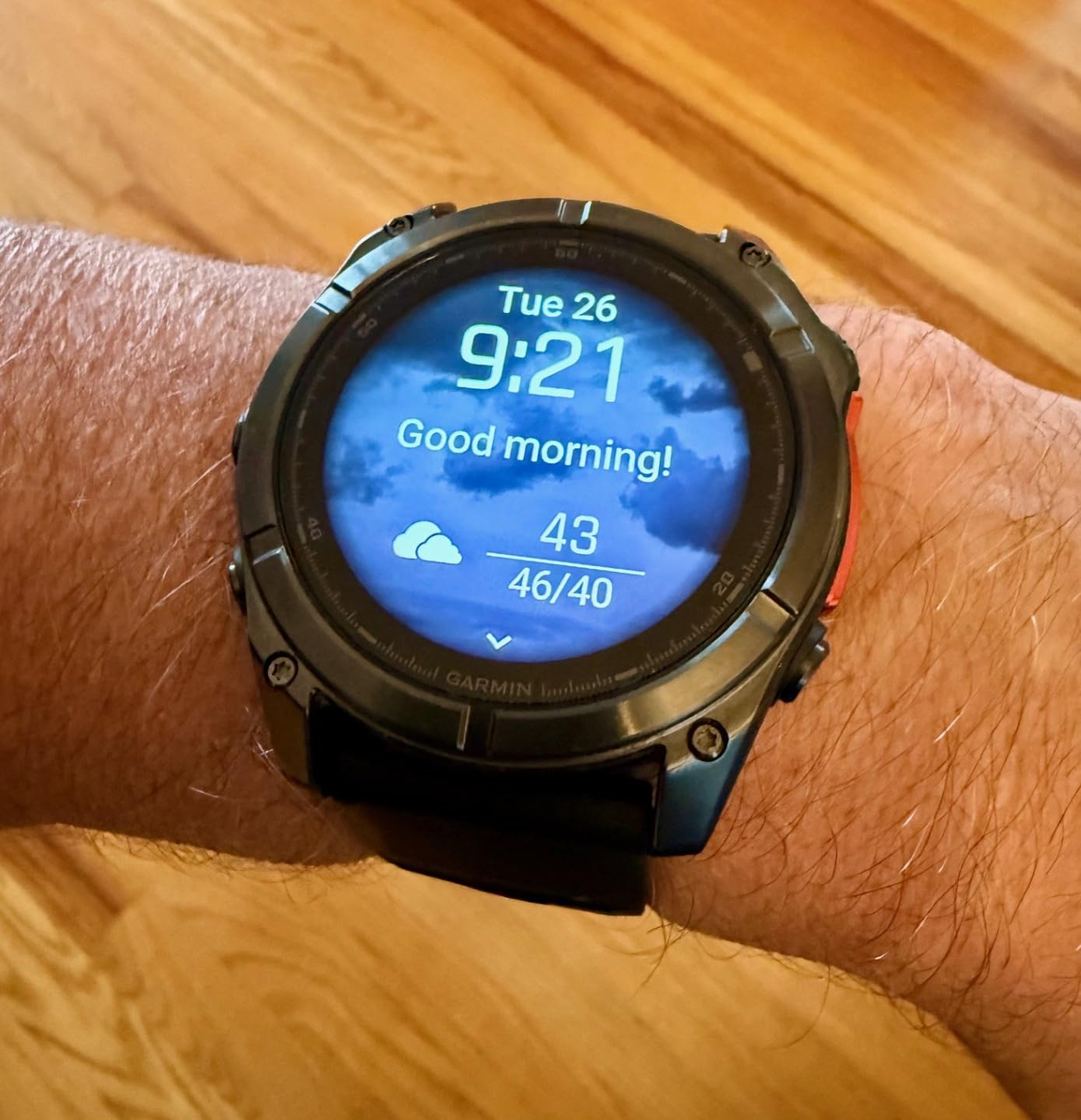
Multi-Band GPS and SatIQ Accuracy in Real Terrain
SatIQ is the part that matters on a wooded ridge. The watch uses multi-frequency reception and will drop back to a single band or a power-save mode when the signal allows, so it stays accurate when it matters without burning the battery when it does not. Under heavy canopy the track stayed tight to the trail, and the altimeter tracked the vertical gain closely enough that I stopped cross-checking it against a separate barometer.
The 3-axis compass, gyroscope and barometric altimeter together make this an ABC watch, and all three work. That matters when you are navigating a slope in cloud, where a barometric altimeter gives you a far more useful answer than a GPS elevation fix.
Battery Life: 84 Hours in GPS Mode Explained
That figure is measured in continuous GPS mode, the hardest setting on the watch. It is not the same as 29 days in smartwatch mode. Even so, 84 hours of full tracking is roughly three and a half days of hiking with the watch on your wrist and recording, and most people will top it up overnight in camp.
If you run an expedition mode that samples less often, or use the ultra-tracked setting, you will push that number considerably higher. The only situation that troubles me is deep cold, where lithium batteries lose capacity and you should expect a meaningful cut.
Display, Flashlight and Everyday Wear
The 1.4-inch AMOLED at 390 by 390 is bright and readable, and the built-in LED flashlight turned into the feature I used most on night hikes and early starts. It also has a speaker and microphone, so you can take a call from the wrist or ask a voice assistant when the phone is in a pack.
The trade-off is size. At 102 g and 51mm, this is a substantial watch, and owners on smaller wrists report it is uncomfortable for sleep wear. The silicone band is 26mm wide, which is easier to find replacements for than the 22mm systems used by smaller cases.
Who It Suits and Who Should Pass
Buy the fenix 8 if you hike two to seven days a year on terrain you partly know, want maps rather than a breadcrumb line, and dislike charging things. It is also the only watch here that doubles as a reasonable everyday smartwatch, which matters if you do not want to own two devices.
Skip it if you are on a small wrist, if your hikes are weekend day trips where a phone is enough, or if button-driven menus make you tense. The interface does take a few outings to learn, and some owners report software freezes that need a reset. If you want a phone-style screen and a lighter case, look at the Instinct 3 instead.
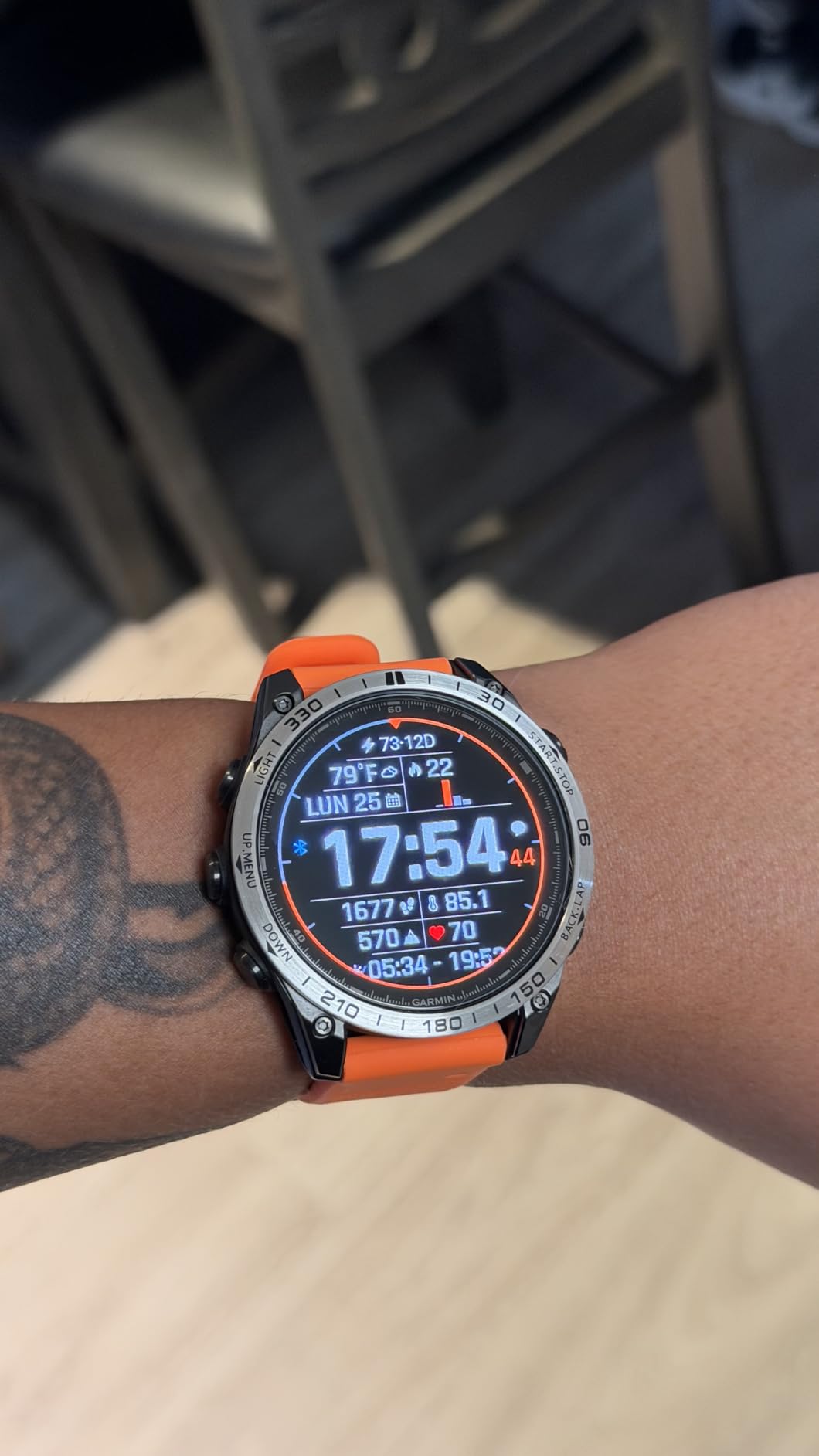
2. Garmin epix Pro (Gen 2) Sapphire – The Best Premium Watch for Scratched Bezel Hikers
Garmin epix Pro (Gen 2) Sapphire, High Performance Smartwatch, 51mm, Black
Sapphire lens
Titanium bezel and band
88 g
58 hours average
Pros
- Sapphire crystal and titanium bezel hold up to rough trail use
- Vivid 454 by 454 AMOLED at 1200 nits
- Preloaded golf and ski resort maps plus TopoActive
- Built-in flashlight with strobe modes
- Mixed-use battery of roughly 7 to 12 days
Cons
- No microphone so no voice assistant or wrist calls
- 51mm titanium case reads larger than its size
- Menus take time to learn
The epix Pro Sapphire is the build I trust when the watch spends its life against rock, car doors and shovel heads. The sapphire lens and titanium bezel are the difference between a scuff and a crack, and the 1200-nit AMOLED stays readable in full sun at high elevation where a dimmer panel disappears.
Navigation is the same generation as the fenix 8, with multi-band GPS, SatIQ, turn-by-turn prompts and preloaded resort and TopoActive maps. At 88 g it is 14 g lighter than the fenix 8, which you feel more than you expect on a wrist that already carries a pack strap.
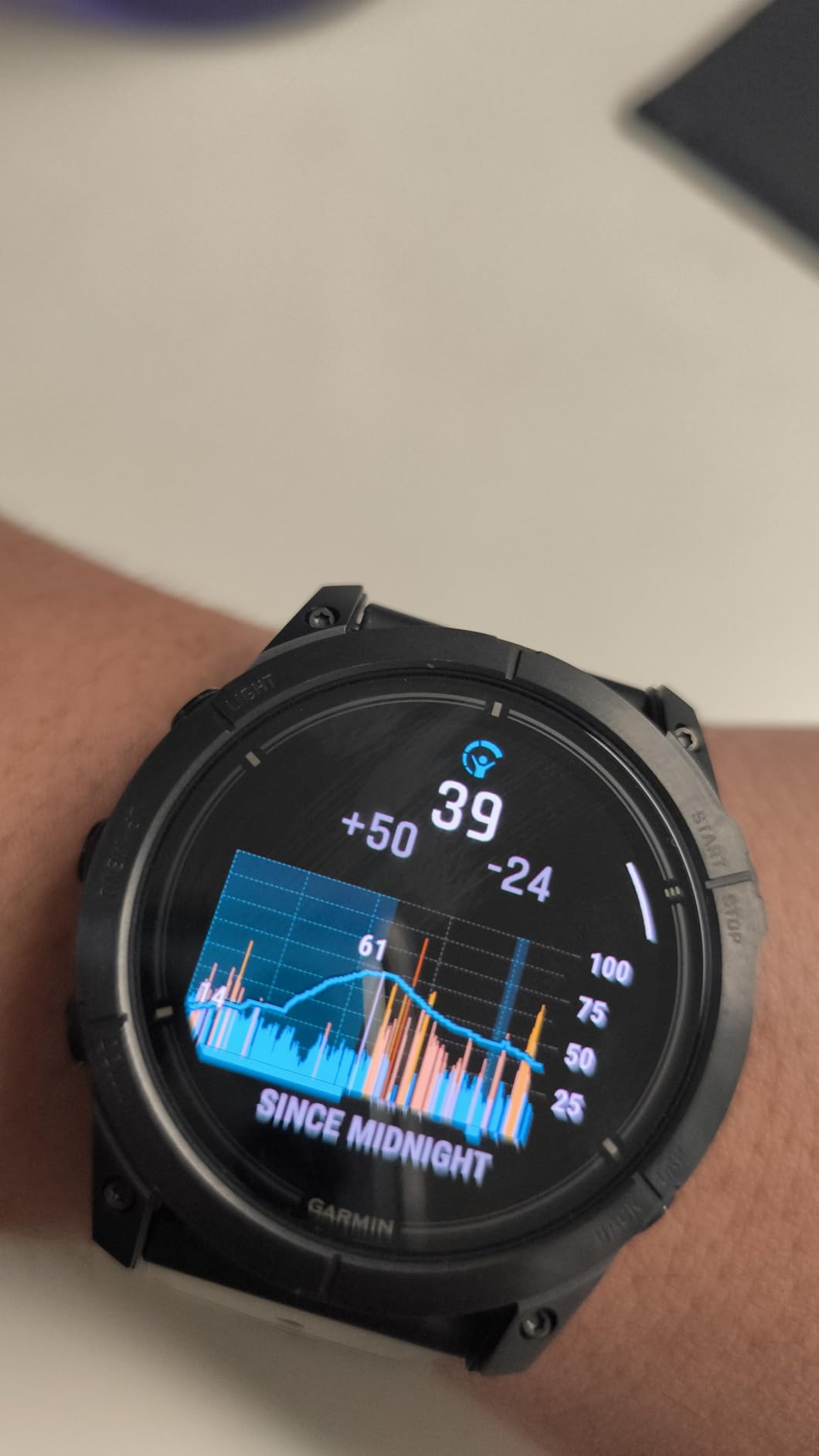
Display Quality and Titanium Weight on the Wrist
At 454 by 454 pixels this panel is noticeably finer than most rivals, and route lines and contour shading stay legible at a glance while moving. The titanium bezel and band set it apart from plastic-cased competitors on both weight and long-term appearance.
The drawback is that titanium reads bulky. Owners frequently comment that the 51mm case looks larger than the number suggests, and that it can be uncomfortable to sleep in. The included stock band is also reported to dig in on long wear, so plan on swapping it early.
Navigation, Preloaded Maps and Turn-by-Turn Prompts
Up Ahead prompts give you turn-by-turn guidance on a route you loaded, and the preloaded golf course and ski resort maps mean a backcountry skier or a shoulder-season skier has useful data out of the box. For hiking, TopoActive regional maps cover the trails most people walk.
You get 32 GB of internal storage, which is generous enough to keep several regions downloaded. The maps stay on the watch in flight mode, with no phone involved, which is the entire point of buying a GPS watch.
Training Metrics Without a Subscription
The hill score and endurance score are genuinely useful on steep days, and the HRV, Pulse Ox, sleep and morning report data is deep enough that you would not need a separate fitness band. None of the training features require a recurring fee, which is a real advantage in this category.
The one clear omission is audio. There is no microphone, so no on-wrist calls, no voice assistant and no voice notes. If you answer calls from your wrist, that is a meaningful gap. Some of the best watch faces also sit behind a purchase, and the five-button interface carries a learning curve.
Who It Suits and Who Should Pass
Buy the epix Pro Sapphire if you are hard on your gear, hike in high sun or high altitude, and want a watch that looks like a premium everyday piece rather than a gadget. It is a strong choice for anyone whose job or hobby means the watch meets rock and metal.
Pass if you take calls from your wrist, if 51mm is beyond your wrist comfort, or if your hiking is gentle enough that a lighter watch serves you better. The lighter Instinct 3 or the COROS APEX 2 will suit those cases and save you money.
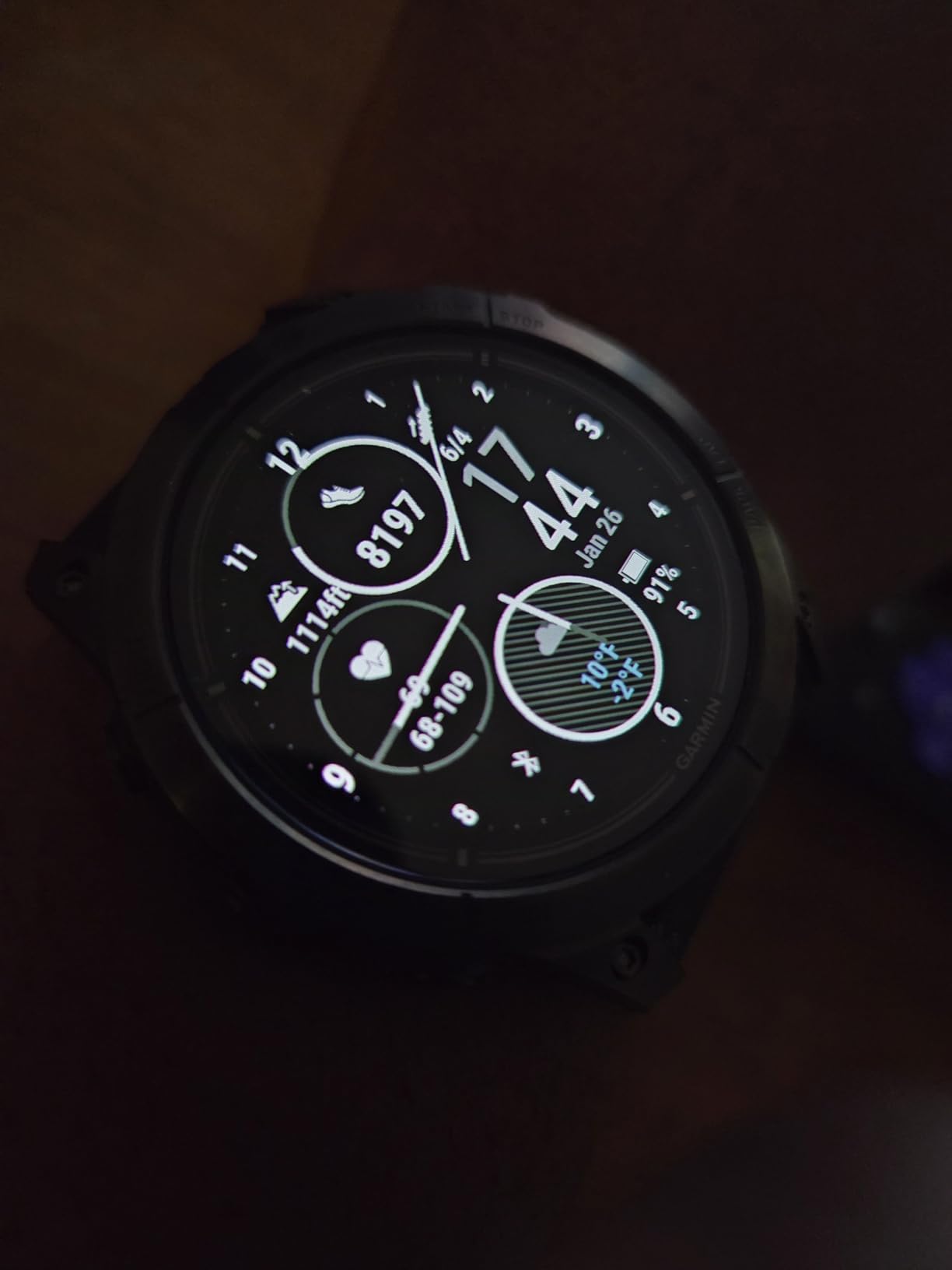
3. Garmin Instinct 3 AMOLED – The Best Value GPS Watch for Hiking
Garmin Instinct® 3 AMOLED, Rugged GPS Smartwatch, 45mm, Black
45 mm polymer case
53 g
1.2 inch AMOLED
Up to 18 days
Pros
- Up to 18 days per charge in typical use
- 53 g lightweight fiber-reinforced polymer case
- Buttons work reliably with wet or gloved hands
- Built-in LED flashlight with strobe modes
- Accurate GPS and altimeter data with no paywalls
Cons
- No touchscreen and no full topographic maps
- 1.2-inch screen is small for reading detailed maps
- Menu software feels clunky beside phone-style interfaces
This is the watch I recommend to most hikers without hesitating. The Instinct 3 AMOLED is 53 g, runs up to 18 days between charges, and has a case that shrugs off a season of brush, rain and rock. For a device that lives on your wrist and gets used every single day, the weight-to-capability ratio is hard to beat.
That single sentence from the forums about the Instinct line still holds: this is a GPS on your wrist without maps. It tracks brilliantly, it records elevation, it will pair with a satellite messenger, and it will not die on day two of a trip. What it will not do is draw you a topographic map with a route on it.
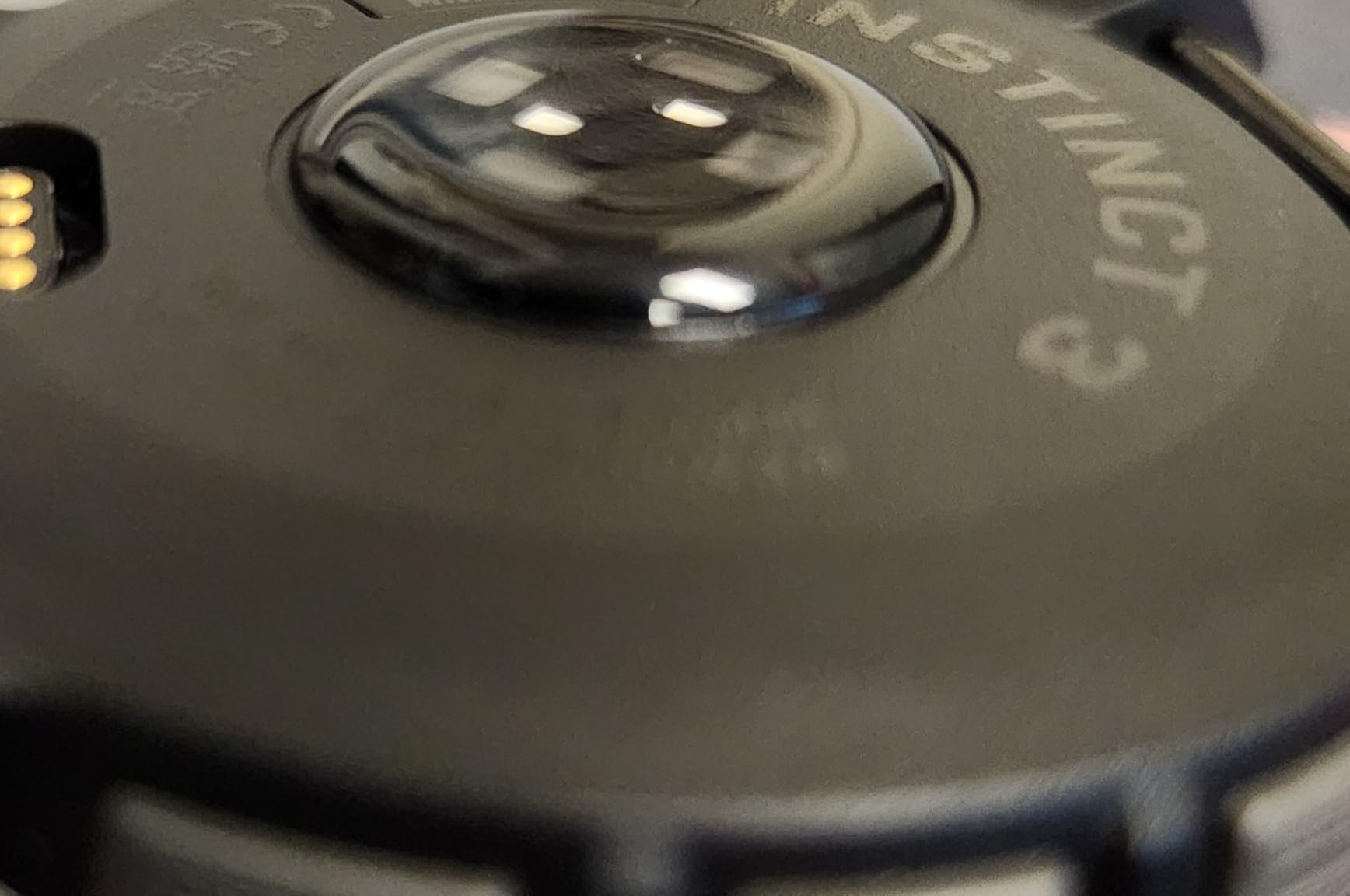
Why the 45mm Case and 53g Weight Change Everything
Every watch here with a full-color AMOLED screen is between 88 g and 102 g. The Instinct 3 is 53 g, and the 45mm case sits flat on a wrist that also has to hold trekking pole straps. On an eight-hour day that difference is the difference between a watch you forget you are wearing and one you notice.
The case is fiber-reinforced polymer with a metal-reinforced bezel, rated to 100 meters of water resistance. It is not a jewelry-grade build, but it is built for the environment it is sold into, which is wet, cold and abrasive.
Buttons, Gloves and the Loss of a Touchscreen
There is no touchscreen. That sounds like a downgrade until you try to use a capacitive screen with wet or gloved hands on a ridge in the rain. Five physical buttons with water-resistant capacitive controls never misfire, and there is no risk of a pocket brushing the screen mid-route.
Buyers moving from a touchscreen watch report a few days of adjustment, and some do miss swiping. The 1.2-inch AMOLED at 1000 nits is bright and colourful, but it is small, and reading detailed maps on it is not a pleasure. The menu software is also described as clunky compared with phone-style interfaces.
Battery, Flashlight and Sensor Suite
Eighteen days of typical use is the headline figure, and reviewers report one to three weeks per charge depending on how much they train on the watch. GPS tracking pulls that down, but for a device that also runs heart rate, sleep and Pulse Ox, the efficiency is the reason this watch undercuts the flagship models on weight.
Multi-band GPS with SatIQ, a 3-axis compass and a barometric altimeter are all standard. The built-in flashlight with variable intensity and strobe modes gets used constantly on night hikes, and heart rate, advanced sleep and Pulse Ox monitoring are included with no paid tier.
Who It Suits and Who Should Pass
Buy the Instinct 3 if you are a day hiker or weekend backpacker on familiar trails, you want something light and tough, and you track rather than map. It is also the easiest watch here to wear for ordinary life, which means you will actually keep wearing it in 2026 and beyond.
Pass if you routinely walk unfamiliar routes where you need to look at a map and decide a turn. In that case, spend the difference on the fenix 8, the COROS Nomad or the Suunto Vertical, all of which carry full offline maps.
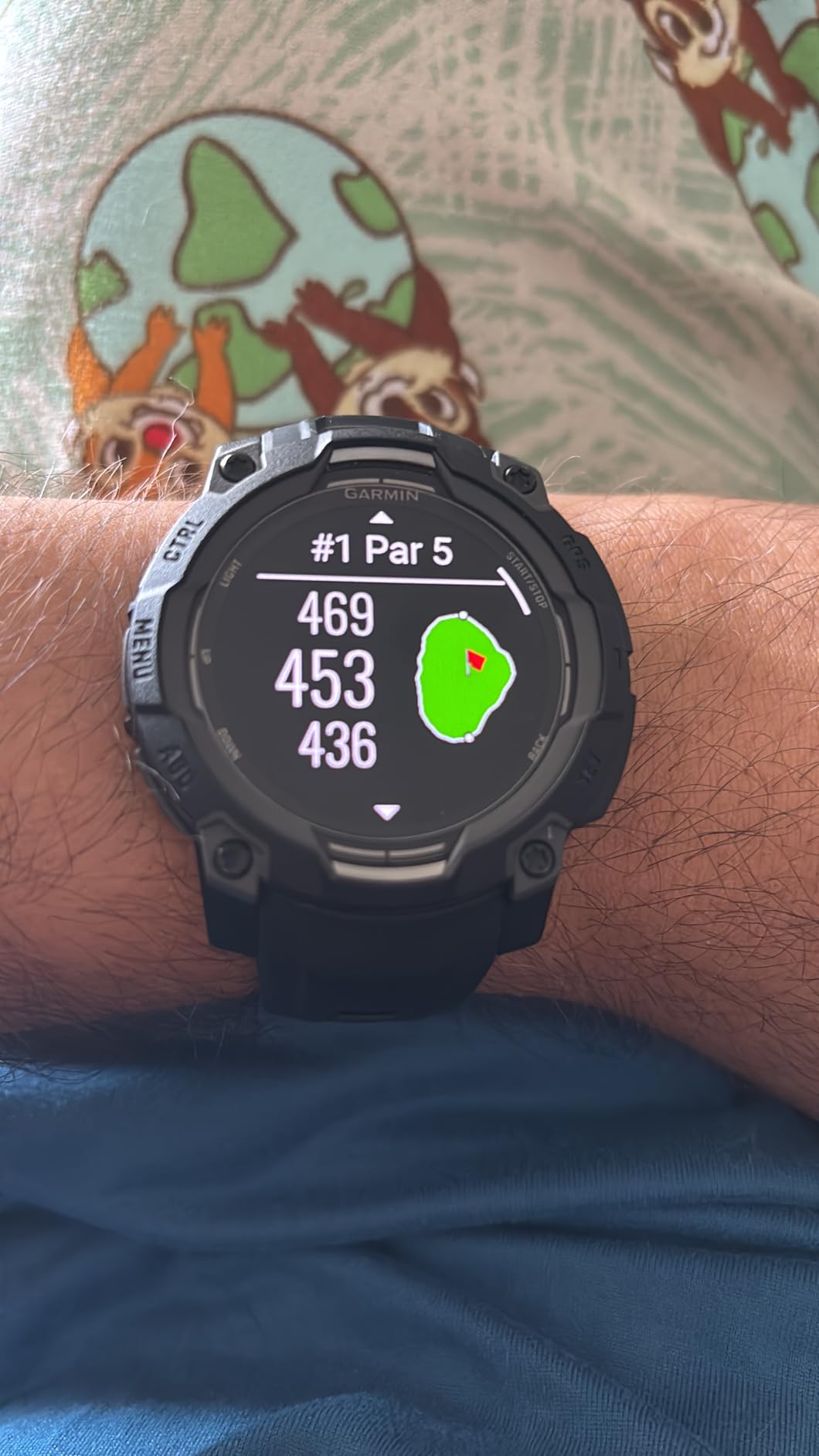
4. COROS Nomad – The Best Mapped GPS Watch for the Money
COROS Nomad Outdoor GPS Smartwatch, 1.3″ MIP Touchscreen, Global maps with Turn-by-Turn Navigation, 22 Days Battery Life, Microphone Records Voice Notes, Real-time Weather, and Safety alerts (Black)
1.3 inch MIP touchscreen
100 g
50 hours GPS
Free global maps
Pros
- Free preloaded global maps with turn-by-turn guidance
- 50 hours of GPS and 22 days of daily use
- MIP screen stays readable in bright sunlight
- Microphone records voice notes with transcription
- Adventure Journal tags locations and adds photos
Cons
- Companion app is less polished than Garmin or Suunto
- Weather needs a phone sync before it updates
- Screen flashlight only brightens the display
The Nomad is the watch that changed my mind about COROS hardware. It ships with free preloaded global maps, street names, points of interest and Back-to-Start guidance, with no phone required and no subscription attached. Owners frequently describe it as better value than equivalent Garmin models, and on map capability alone that is fair.
The barometric altimeter and temperature sensing proved useful off grid, and the Adventure Journal, which records voice notes, tags locations and accepts photos, is a nicer way to log a route than typing into a phone at the end of the day.
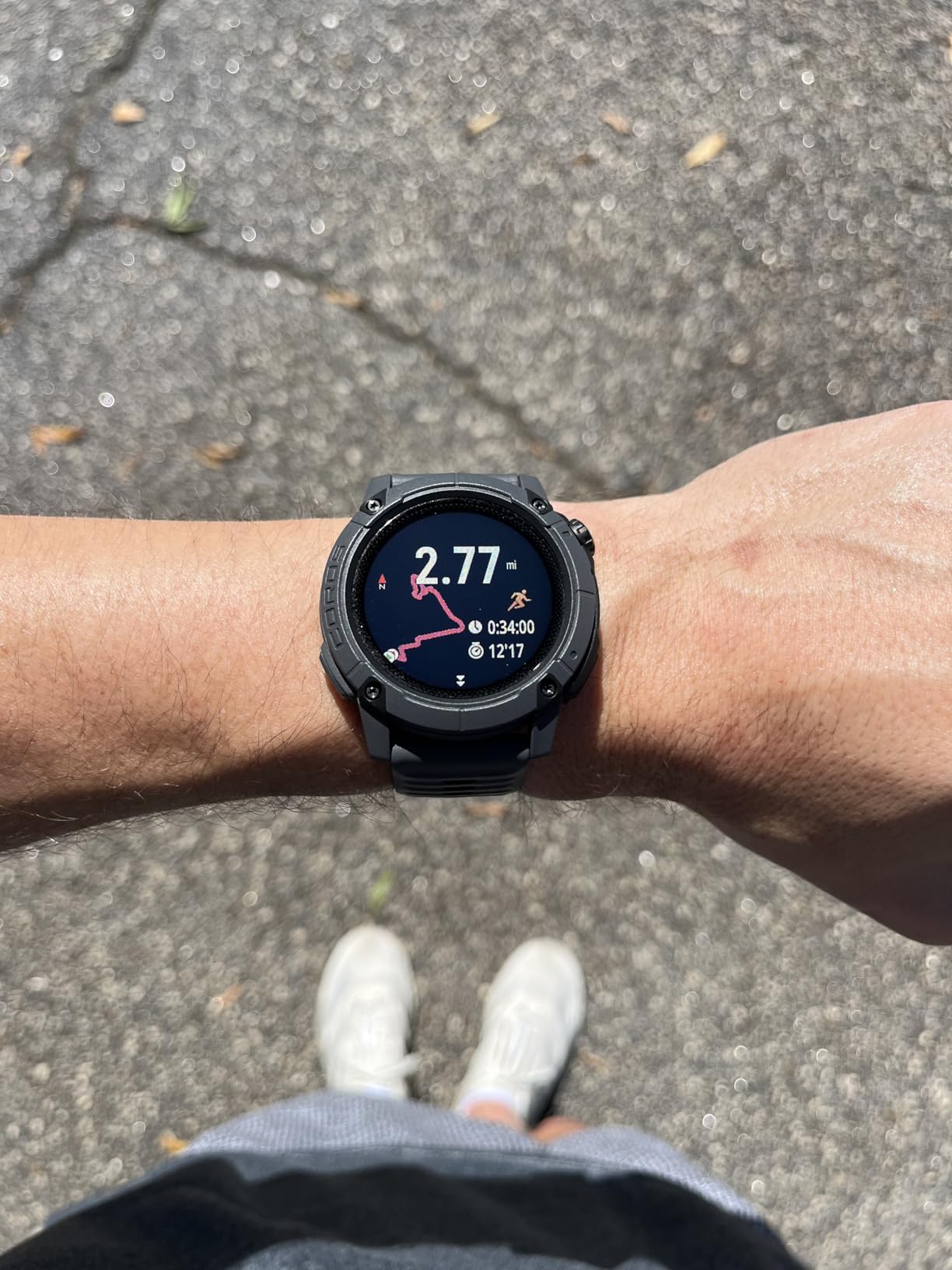
Full Colour Maps Without a Subscription
Every navigation watch on this list except the Instinct 3 and the Suunto 9 Peak carries onboard maps. The Nomad’s distinction is that its map view is a proper detailed map with turn-by-turn guidance, and it is included at purchase. Garmin and Suunto reach the same place; COROS just gets there without a separate map purchase or a paid tier.
Back-to-Start navigation is the safety net that gets used, not the headline feature. On a foggy descent it is the difference between a rough bearing and a line on a map that ends at your car.
MIP Screen Readability in Direct Sun
The 1.3-inch Memory in Pixel display is a deliberate choice and it is the right one. Memory in Pixel panels are transflective, meaning the screen stays readable in bright sun with the backlight off, and they run far longer on a charge than an AMOLED. On a bright scree slope at midday, this screen stayed readable in a way a glossy panel struggles to match.
The cost is resolution at 260 by 260 and no deep blacks. For map reading and daylight legibility that is the right trade, and it is also why the 50-hour GPS figure is so comfortable against the AMOLED watches here.
Microphone, Voice Notes and the App Weak Spot
The built-in microphone records voice notes that transcribe inside activities, which turns the watch into a dictation device for route observations. The catch is that the companion app is the weakest part of the package: layout and usability trail both Garmin Connect and Suunto’s software, and weather data has to sync through the phone rather than updating on its own.
Owners also note the screen flashlight mode only brightens the display instead of lighting an area, and heart rate readings can spike during high-movement activities. Configuration happens in the app, which removes dial fiddling at setup but adds a step every time you change something.
Who It Suits and Who Should Pass
Buy the Nomad if you want real maps, real turn-by-turn guidance and a long battery without spending flagship money. At 100 g it is not the lightest watch here, but the weight buys a screen you can actually read in alpine sun.
Pass if app quality is a dealbreaker for you, or if you are mostly trail running and want training metrics rather than mapping. The lighter COROS PACE Pro is the better tool for that.
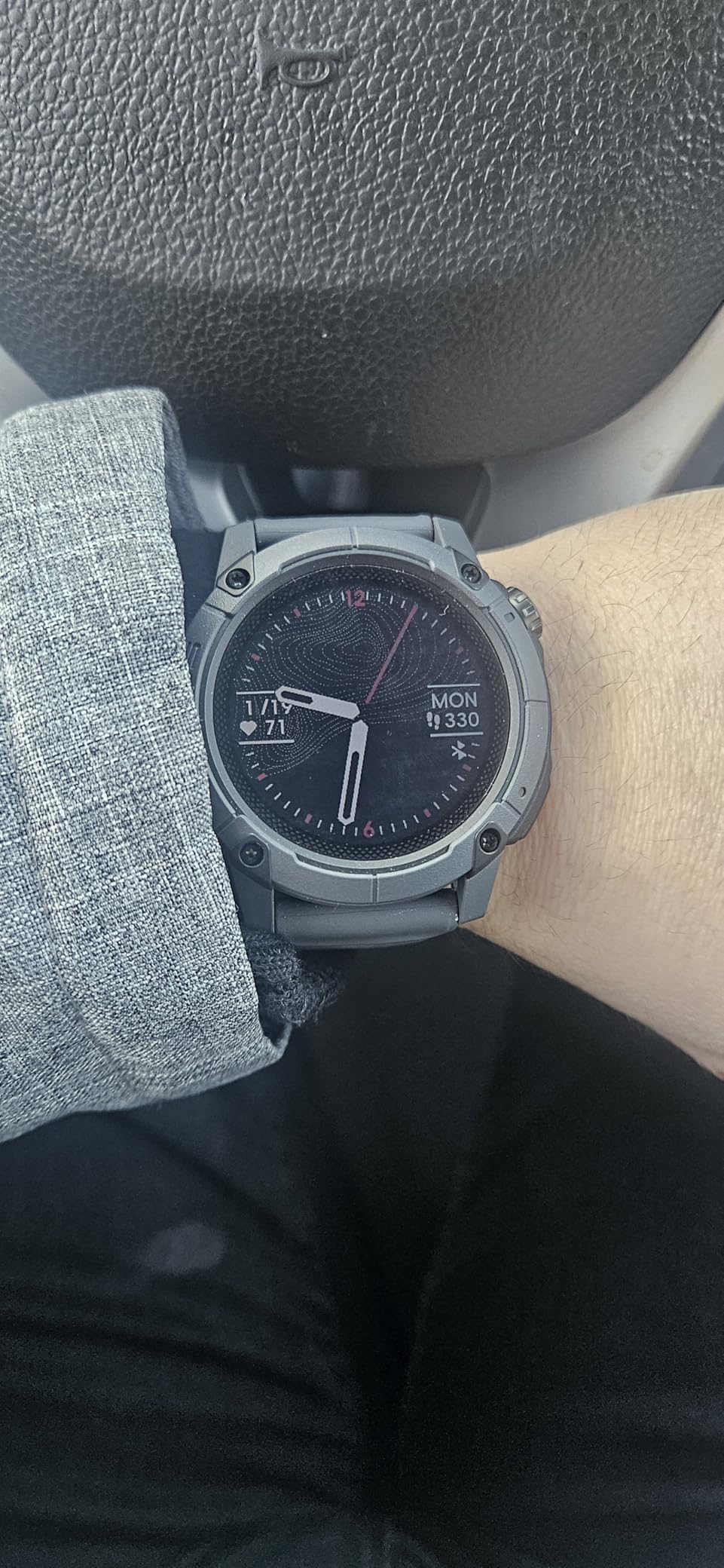
5. COROS APEX 2 – The Best Lightweight GPS Watch for Fast Packing
COROS APEX 2 Series Outdoor GPS Watch, 1.2″ Sapphire Titanium, On-Wrist Navigation, Offline Maps, Heart Rate Monitor, Track Sleep, Running, Biking, Skiing, Climbing (APEX 2, Coral)
Sapphire glass
Titanium bezel
42 g
75 hours GPS
Pros
- 42 g titanium and sapphire build is the lightest listed here
- 75 hours of GPS between charges
- On-wrist offline maps without a phone
- Multi-band GNSS across four satellite systems
- Structured workouts through the COROS Training Hub
Cons
- Small 1.2-inch screen limits map detail
- Smartwatch features are pared back against Garmin
- Sleep and recovery data is less detailed
At 42 g with a sapphire screen and a grade 5 titanium bezel, the APEX 2 is the watch I would put on for a fastpack or a long traverse. Among the models here with a published weight, it is the lightest, and it still carries offline maps and multi-band reception across GPS, GLONASS, Galileo and BeiDou.
The 75-hour GPS figure means you can cross a range on a single charge with tracking on continuously, and most trips finish well before that. The 30-day daily-use figure keeps it alive as an everyday watch between trips.
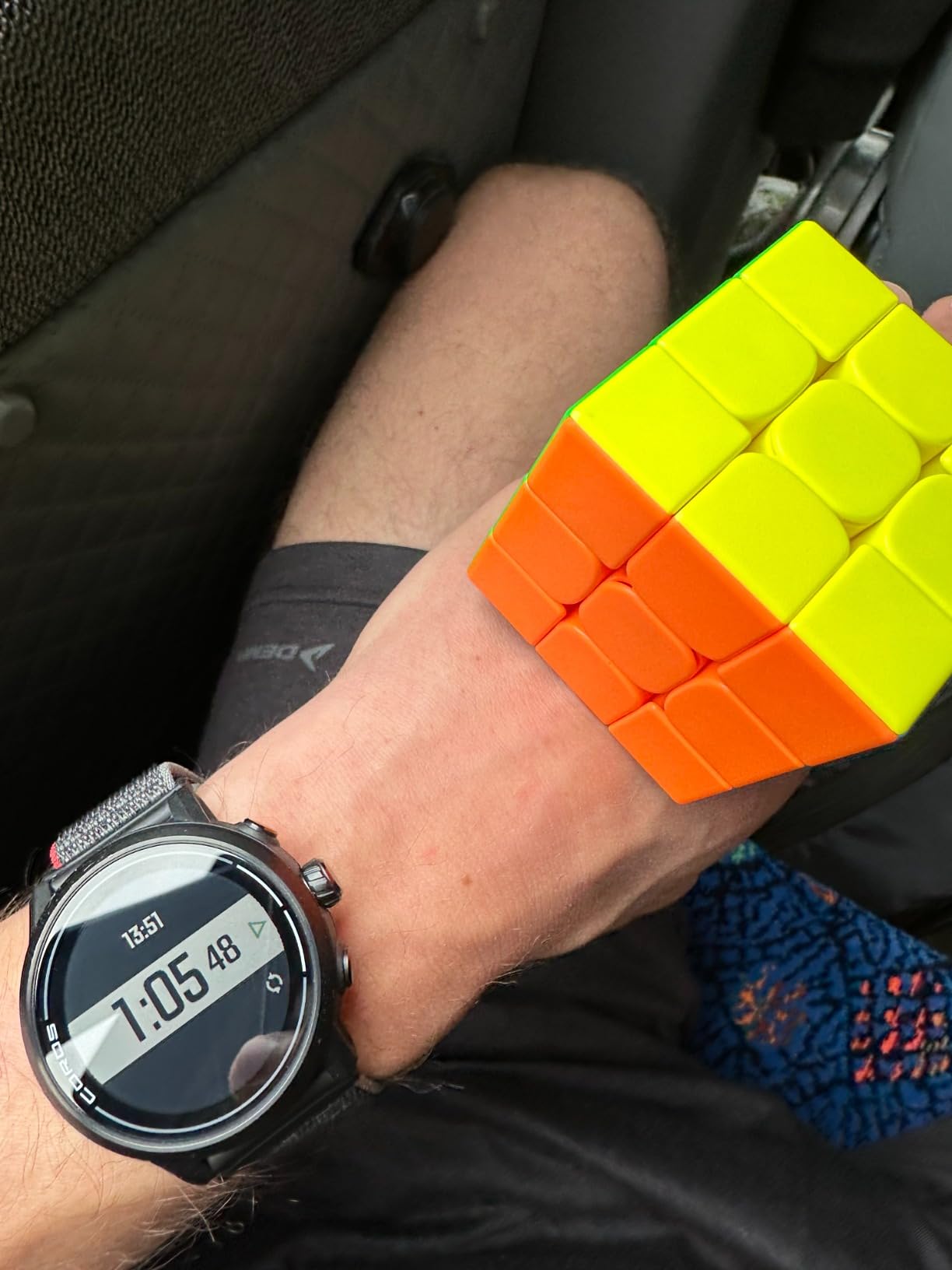
Why 42 Grams Changes a Multi-Day Pace
Wrist weight compounds over hours. The APEX 2 is roughly half the weight of the fenix 8, and on a fastpack where your sleep score is your pace, that is a real input rather than a rounding error. Owners consistently single out the low weight as the reason the watch disappears on the wrist.
It is also comfortable enough to sleep in, which the larger Garmin cases on this list are not. That matters for anyone tracking sleep, recovery or a nightly heart rate baseline.
Offline Maps on a 1.2-Inch Screen
The sapphire glass and titanium bezel resist the trail damage that would end a plastic watch, and the offline map support means you are not dependent on your phone. The problem is fit: at 1.2 inches with a modest resolution, map detail is limited, and owners cite the small display as the main weakness alongside a 4.3 rating that reflects mixed experiences.
In practice that suits tracks you know and hurts routes you do not. If you need to study a map at a junction, the Nomad or the Suunto Vertical gives you far more to look at.
Training Hub, Integrations and What Is Missing
The COROS Training Hub is a genuine strength. It offers structured workouts and plans from athletes or your own coach, and it integrates with Komoot, TrainingPeaks, Strava and Stryd, which is a broader third-party ecosystem than most rivals offer.
What is pared back is the smartwatch and health side. Sleep tracking does stage deep, light and REM sleep, but recovery insight is less detailed than Garmin’s training readiness, and the smart features trail what a comparable Garmin does. You are buying navigation and endurance here, not a full smart watch.
Who It Suits and Who Should Pass
Buy the APEX 2 if you walk fast, walk long, and care about the number on your wrist as much as the number on the map. It is also a strong winter option because of the endurance headroom it gives you.
Pass if you read maps at junctions, if you want the deepest health metrics available, or if you want a watch that doubles as your everyday phone companion. The PACE Pro handles the last of those better.
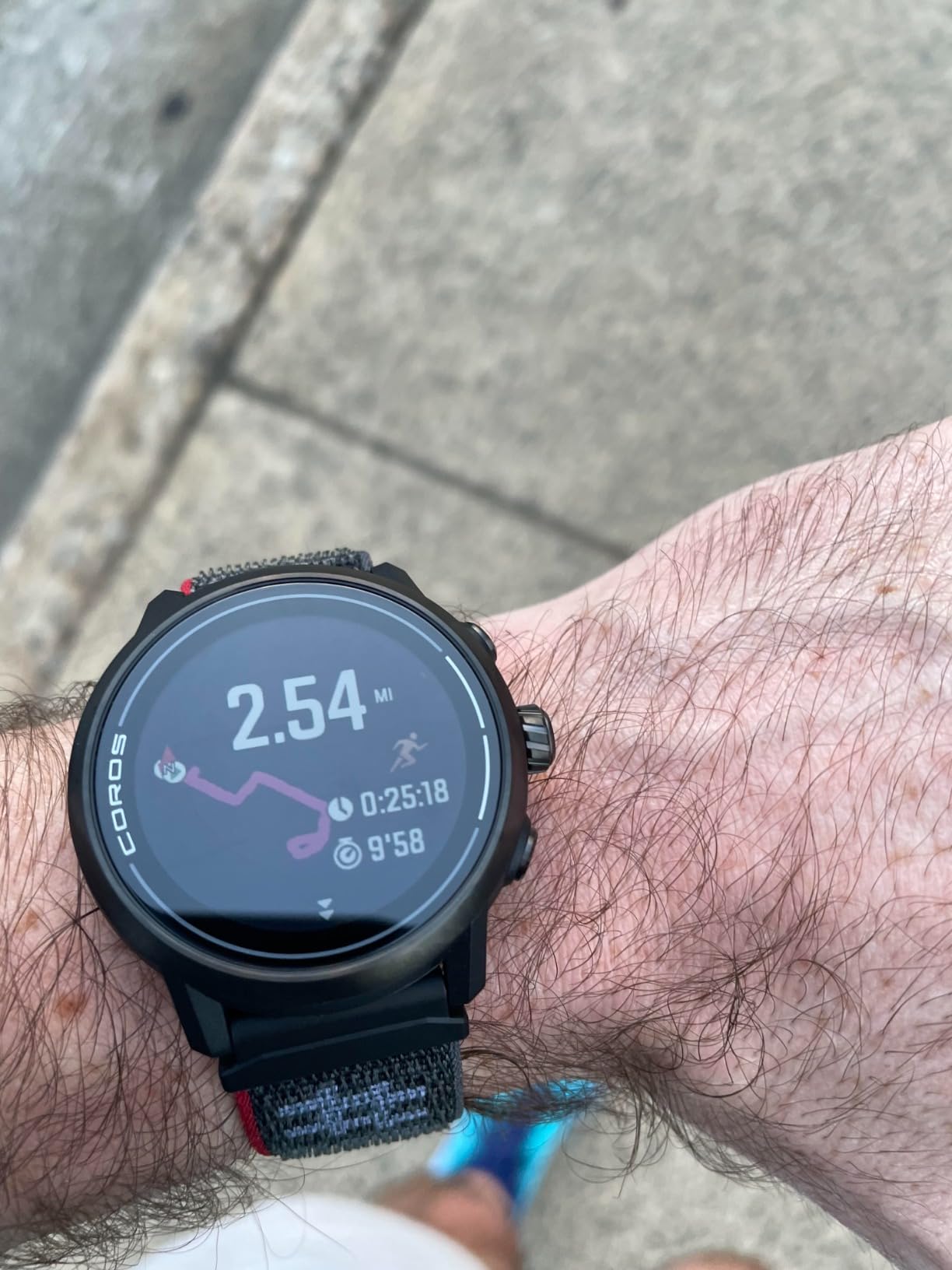
6. COROS PACE Pro – The Best GPS Watch for Trail Running and Bright Screens
COROS PACE Pro GPS Sport Watch, 1.3-inch AMOLED Touchscreen- Grey
1.3 inch AMOLED
1500 nits
49 g
38 hours outdoor GPS
Pros
- 1.3-inch always-on AMOLED at 1500 nits
- 38 hours outdoor and 31 hours dual-frequency GPS
- 20 days of typical use at 49 g
- Built-in route planner with topographic maps
- New satellite chipset improves trail accuracy
Cons
- Third-party app support trails the Garmin ecosystem
- 22mm band fits wrists up to 220mm only
- WiFi transfers need the COROS desktop app
The PACE Pro is the fastest watch I tested at opening a map. The processor delivers more than double the performance of earlier COROS models with roughly triple the zoom speed, and it shows the moment you scroll a topographic map or pull up a route. Nothing else in this roundup feels this immediate.
It also has the highest brightness figure listed here at 1500 nits with a gesture-activated backlight, which is why I recommend it for trail running at dawn. Owners report GPS accuracy that holds up on both city streets and remote trails with the new satellite chipset.
Brightness and Processor Speed in Practice
A 1500-nit always-on AMOLED is the difference between reading your route and squinting at it while moving. The gesture backlight wakes the screen with a swipe, so you do not have to stop and jab at buttons mid-stride, and the always-on mode means the time and your position are always visible.
The processor upgrade is the quieter win. Menus, map panning and data pages all respond immediately, and that responsiveness is a safety feature when you are making decisions while walking rather than standing at a summit.
38 Hours Outdoor and Dual-Frequency Battery
The two figures matter for different hikers. 38 hours of outdoor mode covers a long weekend trip with tracking on, and 31 hours in dual-frequency mode is the honest number for anyone who wants the more accurate lock in difficult terrain. Twenty days of typical use keeps it alive between outings.
At 49 g with a 22mm band, it is light and secure on the move. The fit range tops out at 220mm of wrist circumference, which can feel snug on larger wrists, and the silicone band is the band you will wear most of the time.
Topographic Route Planner and Training Features
The built-in route planner loads topographic maps and issues turn-by-turn guidance without a phone, which makes this a legitimate hiking watch and not just a running watch. Training Status, custom workouts, activity summaries and sleep analysis all sit in the COROS app.
The weakness is the ecosystem rather than the hardware. Smart notifications and third-party app support trail the Garmin equivalent, and WiFi transfers require the COROS desktop app rather than phone-only syncing, which is one extra step when you are planning a route from a laptop.
Who It Suits and Who Should Pass
Buy the PACE Pro if you run trails, walk them fast, or want the most responsive map interface available. It is the best value in this roundup for anyone who needs real navigation at a mid-range budget.
Pass if your wrist measures above 220mm and you want a roomy band, or if you are heavily invested in a broader smart-watch ecosystem. For a tougher build the APEX 2 is the natural step sideways.
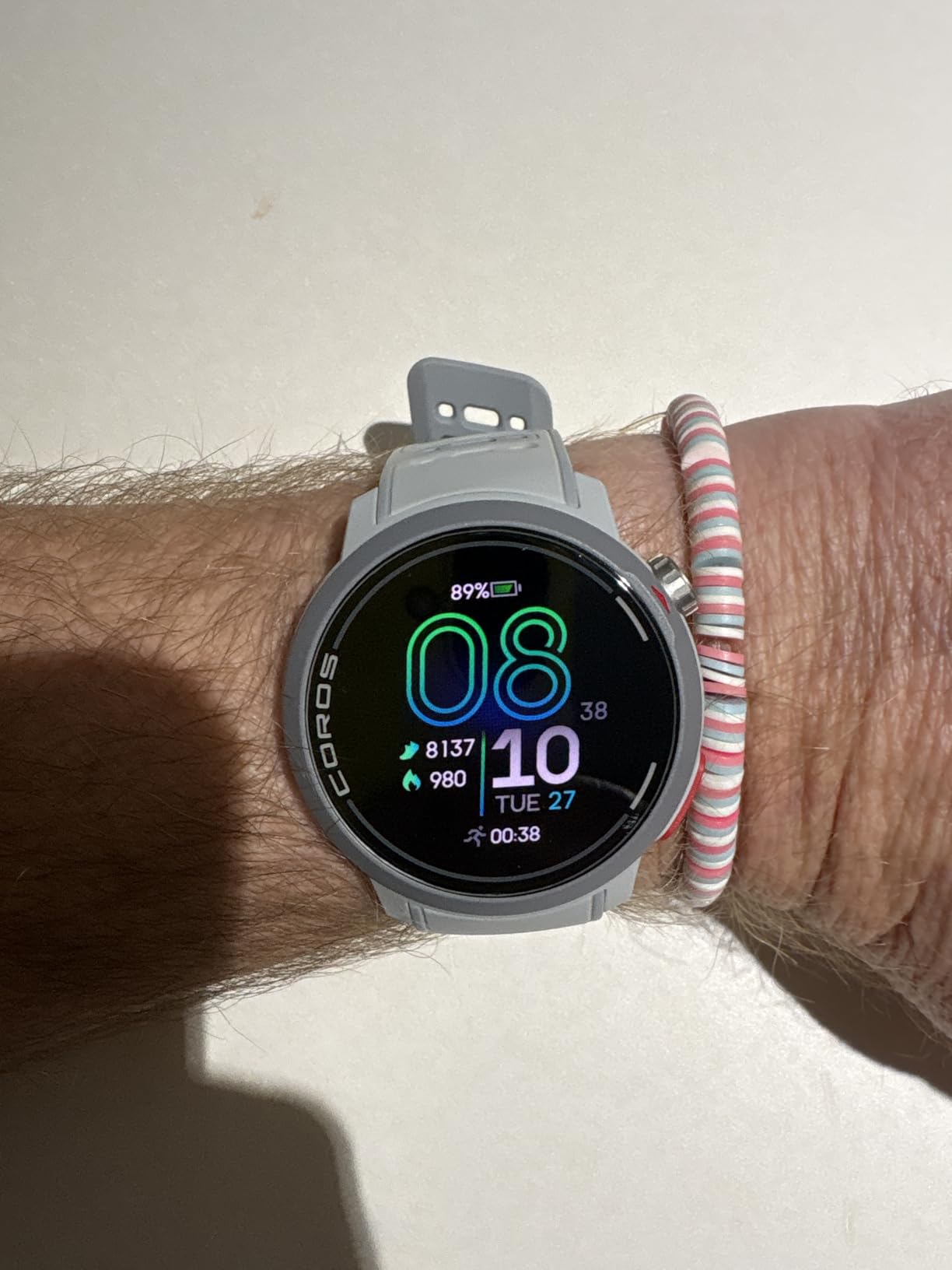
7. Suunto Vertical – The Best GPS Watch for Long Expeditions
SUUNTO Vertical GPS Sports Watch, Solar Charging 95+ Sports, Black Ti
49 mm AMOLED
Sapphire lens
Free color topo maps
Up to 500 hours tour mode
Pros
- Free offline global color topographic maps
- Up to 500 hours in tour mode
- Dual-band GNSS holds accuracy in canyons
- 49 mm AMOLED with a sapphire lens
- Barometer with a storm warning
Cons
- Maps give context but not turn-by-turn routing
- Sleep tracking stage data is unreliable
- Stock wristband detaches easily
The Vertical is the endurance watch of this group. Up to 500 hours of continuous tracking in tour mode is the longest figure in the roundup, and even in the most accurate tracking mode it holds 60 hours. Owners report excellent battery life in that tour mode, and the barometer with storm warning gives you a heads-up that most rivals do not offer at all.
Its free offline global colour maps show paths, contour lines, water and landmarks, with breadcrumb trails, points of interest and bearings. Dual-band GNSS is designed for exactly the terrain hikers care about: among cliffs, in valleys and under urban canyons.
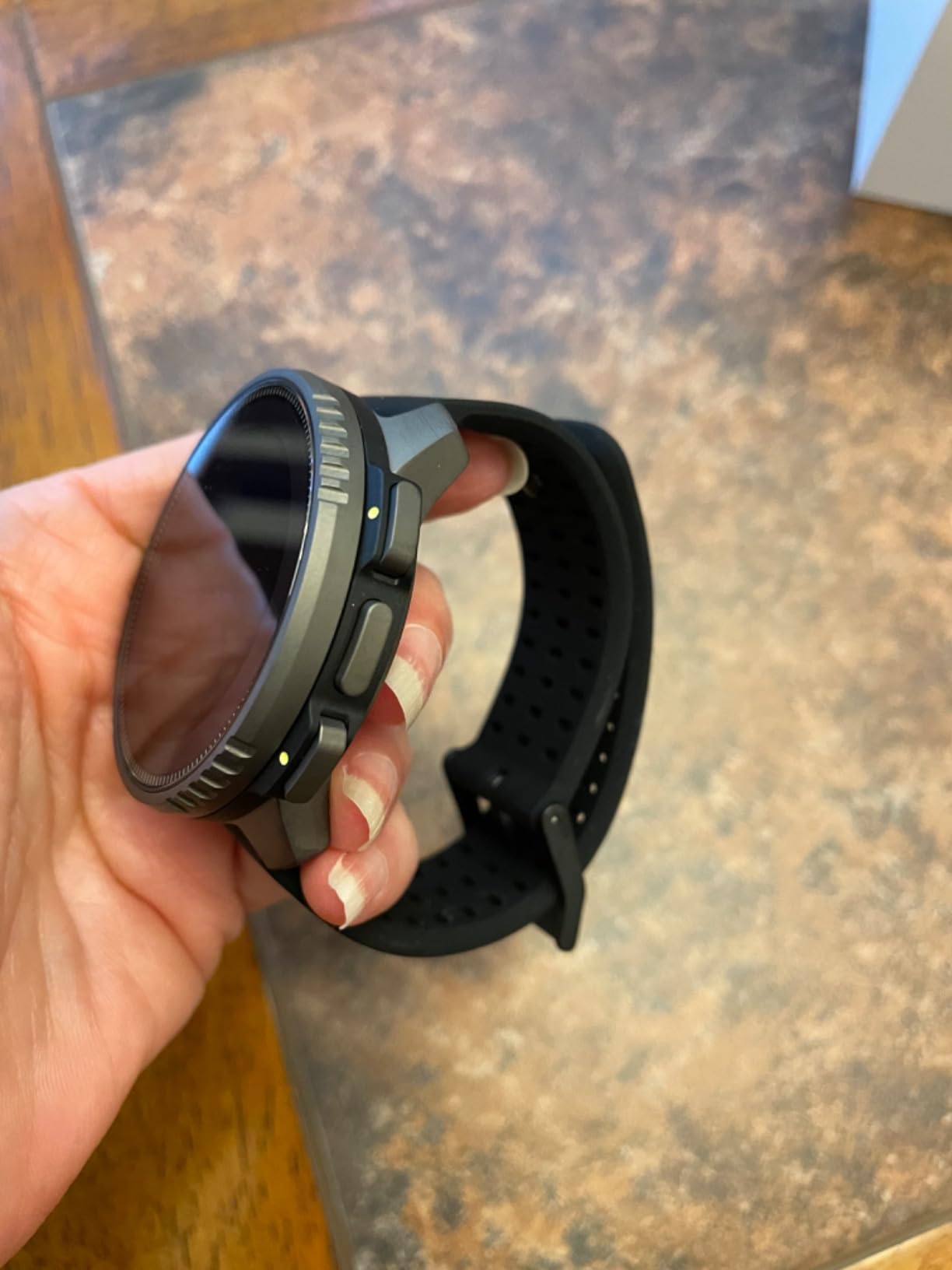
500 Hours in Tour Mode: Battery Math for Real Trips
Tour mode is the mode that makes expedition planning straightforward. A two-week trek at ten hours of tracking a day is 140 hours, which the Vertical covers in tour mode without a single charge. That removes the single biggest anxiety of a multi-week trip, the small fear of watching a battery indicator and deciding what to leave behind.
Solar charging on the titanium model adds roughly 30 percent on sunny days, which is meaningful in an open environment and close to irrelevant under forest cover or in winter. Owners also note that the charging disc can slide if used while moving and blocks the heart rate and SpO2 sensors while attached.
Route Guidance Quality Versus Rival Maps
Suunto owners rate the route guidance and voice prompts above Garmin, Polar and COROS equivalents, and Suunto users report the clearest live turn guidance they have used, in contrast to the generic turn-left and turn-right announcements some rivals give. The companion app route creation and management also works exceptionally well.
The important limitation is that the offline maps are not fully routable. They give you context, contour lines and bearings, not automatic turn-by-turn rerouting. If you follow a loaded route, the guidance is excellent. If you improvise off-route, the watch is showing you a map rather than steering you.
Health Sensing: The Weak Side of a Great Navigator
This is the watch’s Achilles heel. The optical heart rate sensor has historically run a generation or two behind Garmin and Polar, and later firmware releases have improved it, while sleep tracking is described as unreliable with wildly inaccurate stage data. Several reviewers who rate the navigation very highly still advise carrying a dedicated GPS for remote travel.
Also worth knowing: you cannot enter coordinates manually without a phone, and the app coordinate search can fail. Stock wristbands detach easily and may need replacing within a year, and firmware updates have previously reset user customisations.
Who It Suits and Who Should Pass
Buy the Vertical if you are doing long trips far from resupply, you value guidance clarity above health metrics, and you want a watch that will still be tracking on day ten. The 49mm sapphire display is excellent in sun and the lightness for its size surprises owners.
Pass if accurate heart rate and sleep data are central to how you train. In that case a Garmin gives you a more complete health picture, and the sleep complaints here are consistent enough that we would not recommend it for that purpose.
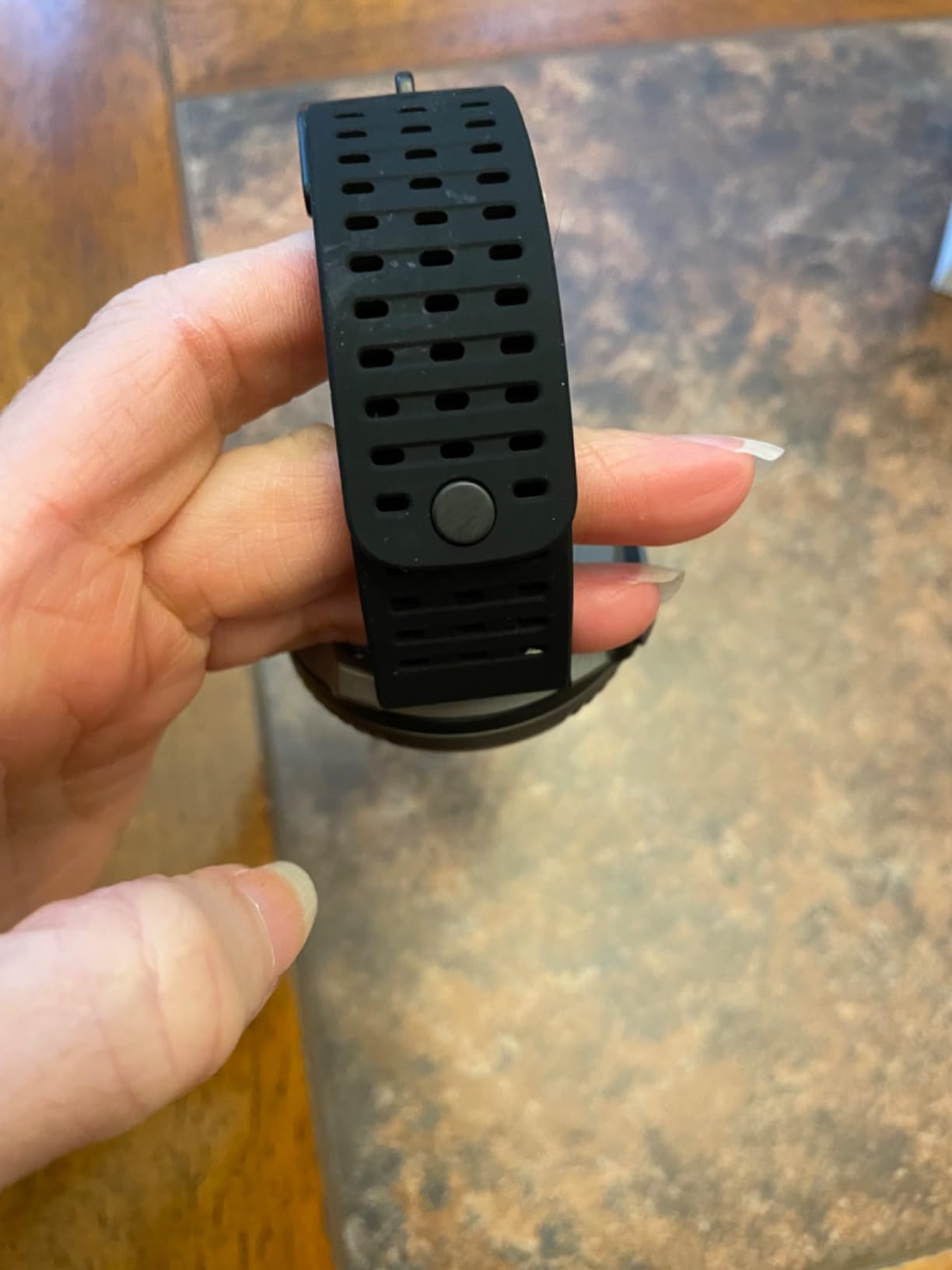
8. Suunto 9 Peak – The Best GPS Watch for Quick Turnaround Between Trips
SUUNTO 9 Peak and Peak Pro Sports GPS Watch for Demanding, Performance Driven Athletes and Adventurers
1.2 inch MIP display
1000 nits
60 g
40 hours best GPS mode
Pros
- Full charge in one hour and 2 hours of GPS from a 10 minute charge
- 40 hours best GPS with 70 endurance and 300 tour modes
- Multi-band reception across four satellite systems
- Titanium and stainless steel with sapphire on the Pro
- 97 sport modes with weather and avalanche alerts
Cons
- Lowest rating in the roundup at 4.0 with mixed experiences
- Some owners report battery drain worsening after updates
- Preloaded watch faces beyond the basics need a subscription
The 9 Peak solves a problem no other watch here does: downtime. It fully charges in one hour, and a ten-minute top-up gives you two hours of GPS training. On a multi-day trip with a shared charging point between tents, or for someone who hikes every day and forgets cables, that is worth more than another ten hours of total runtime.
Satellite reception spans four systems, which owners report locks on quickly even in cloudy weather, and the MIP display at 1000 nits stays readable in bright conditions while keeping the battery out of trouble.
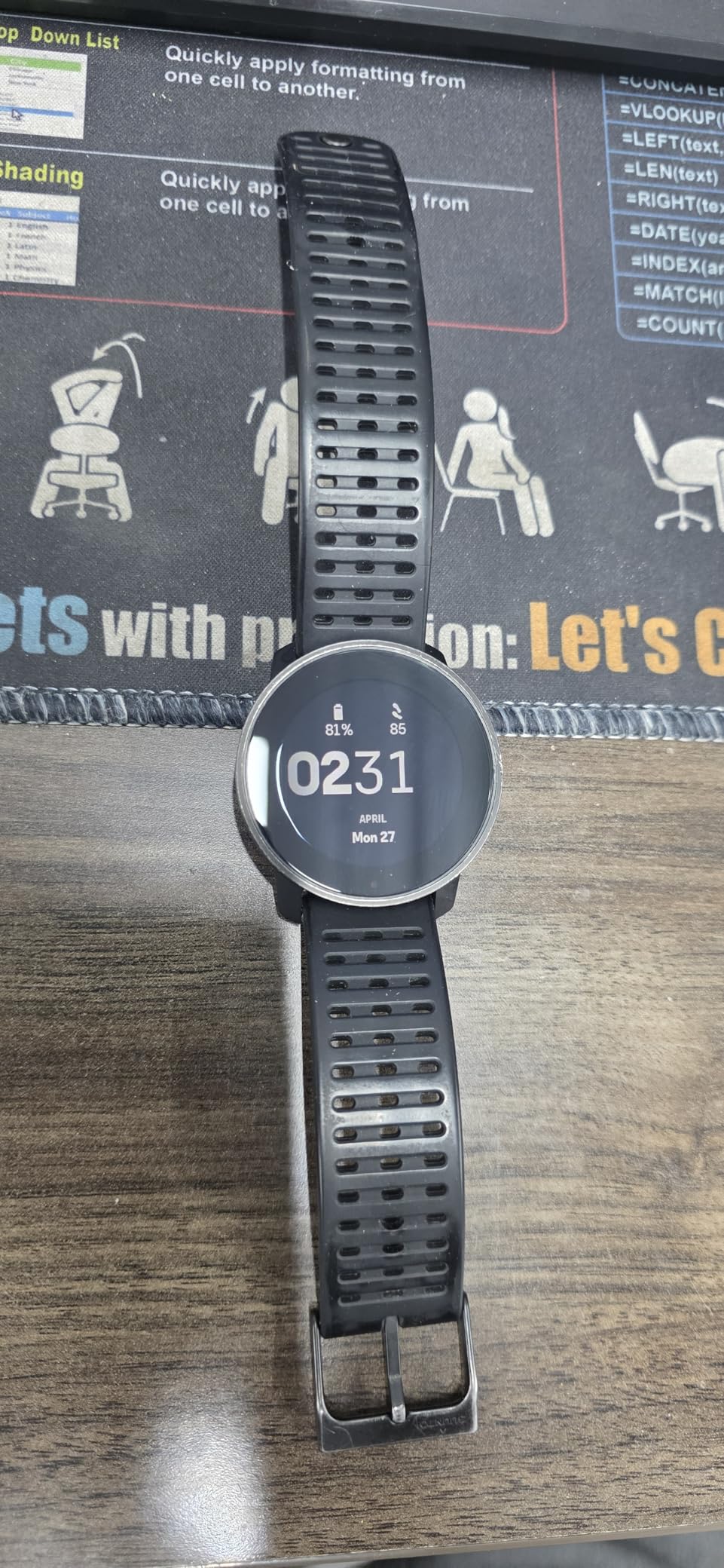
Multi-Band Reception Across Four Satellite Systems
Using multiple constellations is the cheap half of accuracy. The 9 Peak adds multi-band reception on top, which is what keeps a track straight in canyons, mountains and cities where a single-band watch drifts. For hiking in gullies and forest, that difference is visible on the recorded track.
Aviation-grade reliability is a fair description of the construction: titanium, stainless steel and sapphire glass on the Pro model, rated to 100 meters. That is more than enough for rain, river crossings and a swim after a long descent.
The 4.0 Rating and What Sits Behind It
This watch carries the lowest average rating in the roundup at 4.0, and the reasons are specific rather than general. Several owners report battery drain worsening badly after software updates, which is frustrating on a watch whose main selling point is fast charging. Optical heart rate readings can stop or go inconsistent, and sleep tracking does not detect night wake-ups with total sleep time that cannot be edited.
It is also the one watch here where a subscription appears: preloaded watch faces beyond the basic ones now sit behind a paid tier. The 97 sport modes, weather alerts and avalanche maps are the features that actually matter on a mountain, and they are all included.
Comfort, Straps and the Interface
Owners rate it as lightweight and comfortable for all-day wear and for sleeping, and notifications with quick reply work reliably with an iPhone. Two practical complaints recur: the strap is short and can come undone, and the charging cable is thin and brief. Buttons can also be uncomfortable pressing against the wrist on a tight fit.
The activity list cannot be manually reordered and pickleball is missing from the sport modes, which is trivial unless it is your sport. For hikers the built-in turn-by-turn with training surface selection is the feature that justifies the pick.
Who It Suits and Who Should Pass
Buy the 9 Peak if you hike hard and often, you need a full charge in an hour, and you want a durable satellite-capable watch without flagship money. For anyone worried about health data accuracy, look elsewhere.
Pass if you are putting this watch on for a two-week trip and cannot tolerate uncertainty about firmware-related battery behaviour, or if accurate heart rate tracking is part of the deal. The Garmin options here give you a more dependable health picture.
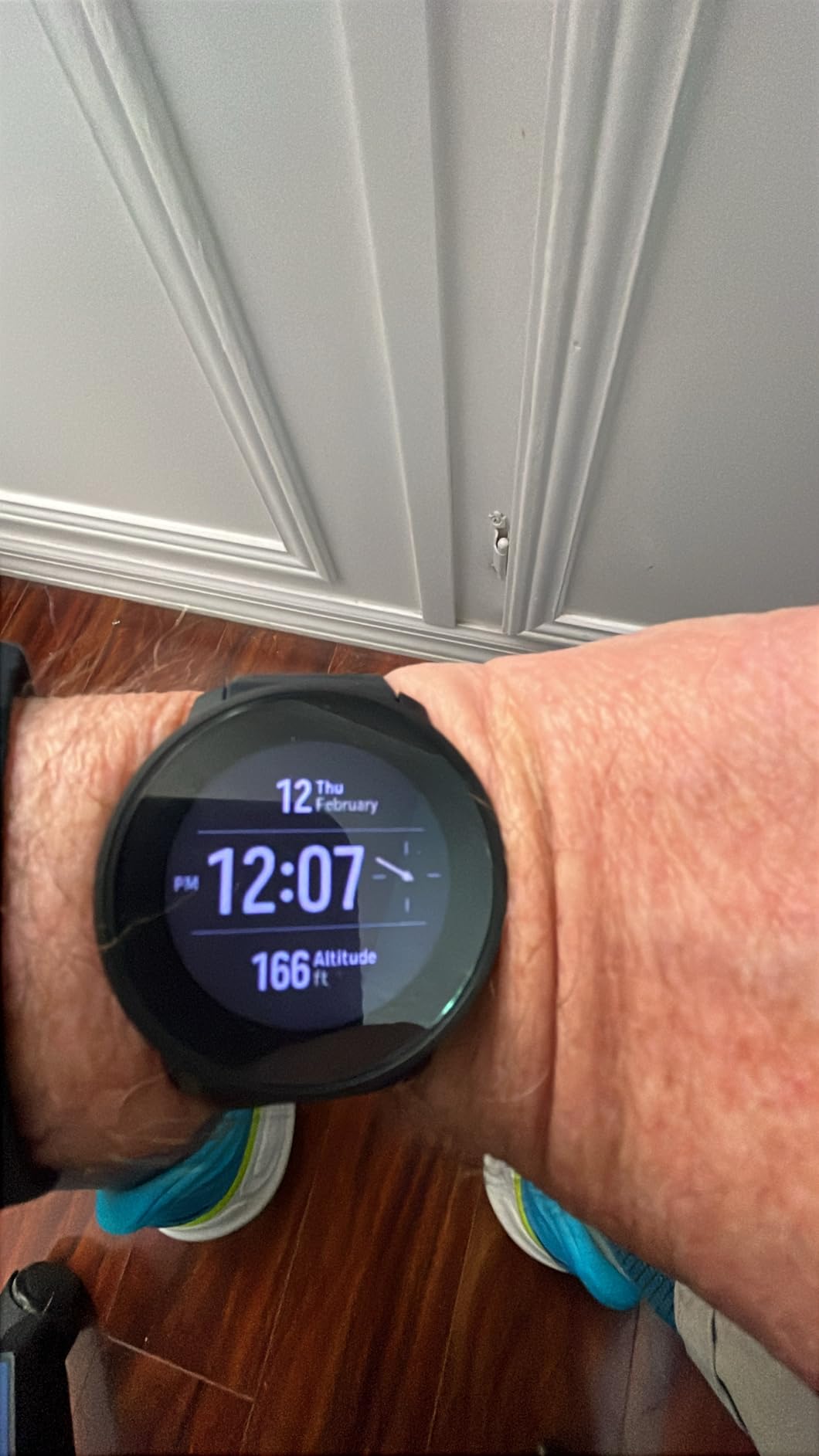
9. Casio GGB100-1A3 Mudmaster – The Most Rugged Hiking Watch You Can Wear
Casio GGB100-1A3 Master of G Mudmaster Men’s Watch Green 55mm Carbon
55 mm carbon case
200 m water resistance
Quad sensor
CR123A battery
Pros
- Carbon core guard case survives heavy trail abuse
- Quad sensor gives compass altimeter barometer and thermometer
- CR123A cell runs roughly two to five years
- 200 meter water resistance
- Surprisingly light for a 55 mm case
Cons
- Very large at 51.3 mm wide and 55.4 mm lug to lug
- Lume fades within minutes in the dark
- Proprietary lugs limit strap choice
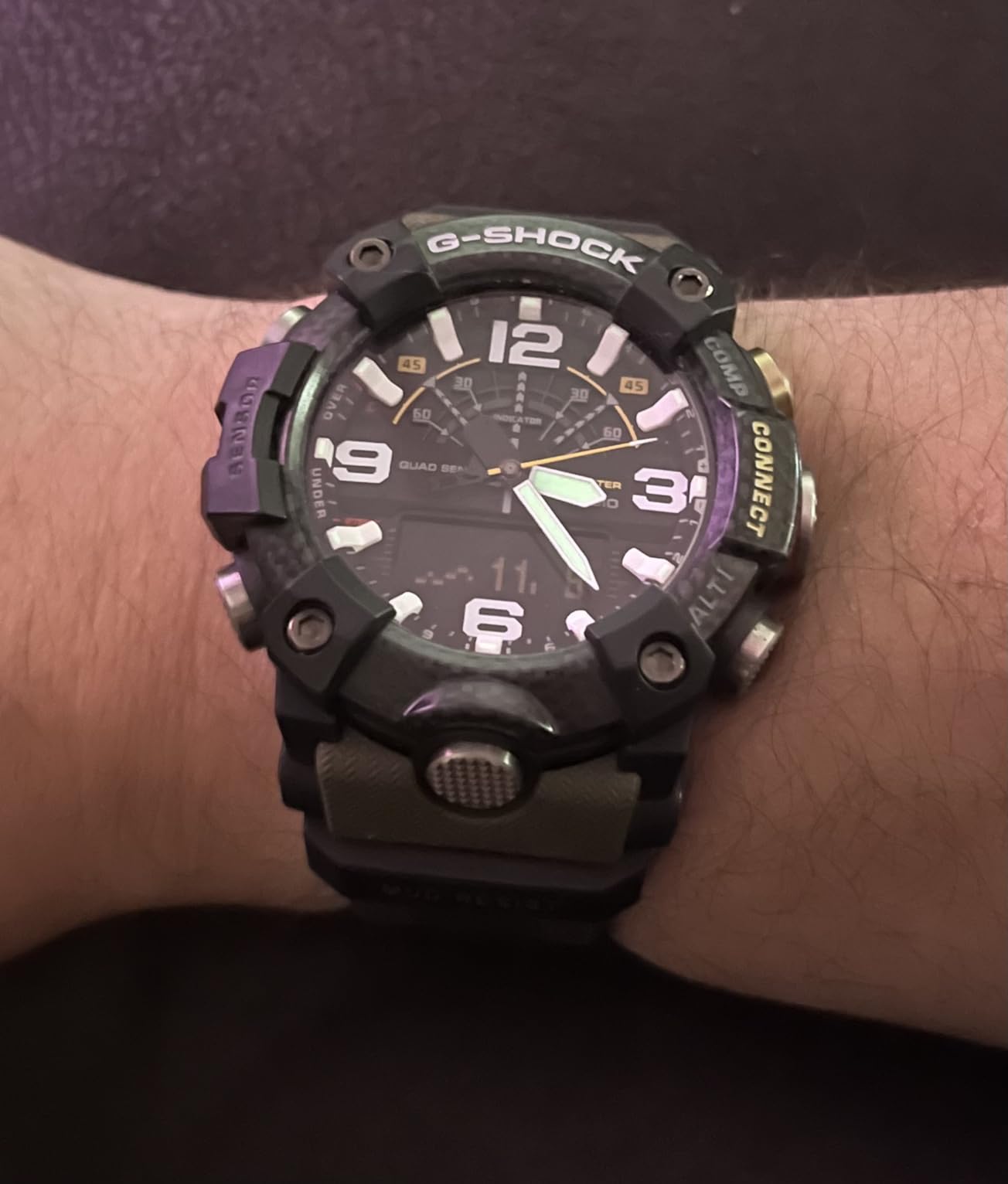
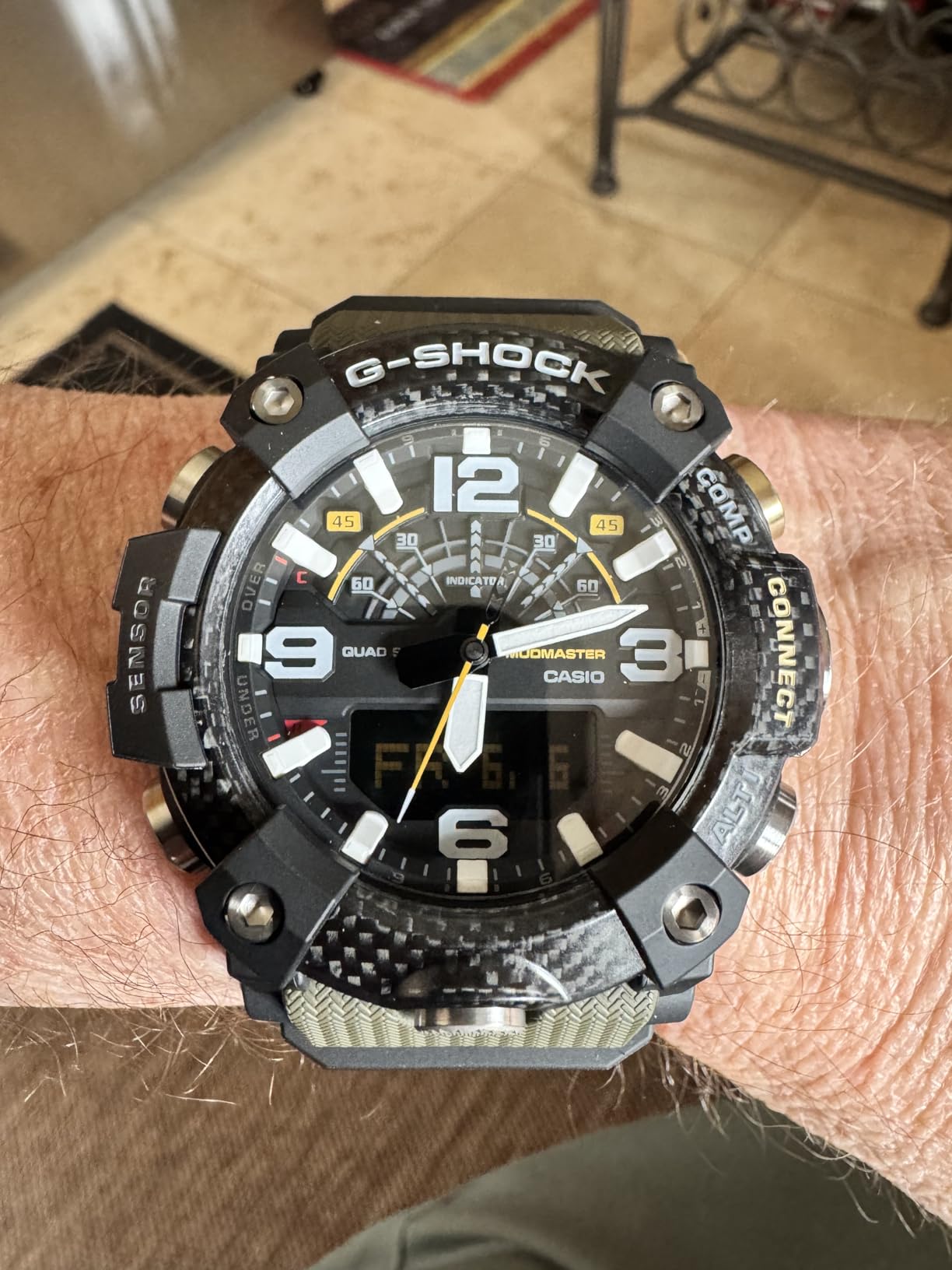
The Mudmaster is the joke that turned out to be the correct answer. It has no colour maps, no touch screen and no training metrics, and it will still be logging your route in five years when the smartwatch crowd is on its fourth battery swap. Owners report years of drops, bangs and trail abuse with no damage.
The quad sensor package is the reason it still earns a place in a GPS watch roundup: altimeter, barometer, compass and thermometer, all logged through Bluetooth to the G-Shock Connected app, with route tracking, altitude data and step counts. Automatic atomic timekeeping syncs through Bluetooth, so the clock never drifts.
Battery Life Measured in Years, Not Hours
A replaceable CR123A cell runs roughly two to five years depending on how heavily you use the sensors. On a monthly charge cycle that is the highest figure in this roundup by an order of magnitude, and because the cell is a standard type you can carry a spare in a wallet rather than a cable in a pack.
The trade is that you get no rechargeable convenience features: no AMOLED, no speaker, no music, no notifications beyond what Bluetooth timekeeping provides. What you get is a watch that does not need power management in your life at all.
Carbon Core Construction and 200 Meter Water Resistance
The carbon core guard case and woven carbon fibre bezel protect the internals from shock, and 200 meters of water resistance is the deepest rating here. The replaceable bezel and screw-down construction mean a damaged bezel is a swap rather than a write-off.
Counter-intuitively, owners find it surprisingly light for a 55mm case, thanks to the carbon construction. That is offset by the size problem, and it is a real one: at 51.3mm wide and 55.4mm lug to lug it dominates smaller wrists, and the large left button can dig into the hand when the wrist bends upward.
What the Quad Sensors Do and What They Miss
Altimeter, barometer, compass and thermometer is a genuinely useful backcountry sensor set, and the app setup is quick, pushing settings to the watch easily. Owners call it the best value in tough triple-sensor hiking watches.
Three limitations are worth knowing. The lume is minimal and fades within minutes, so night reading relies on a harsh LED. The step counter undercounts when trekking poles stop normal arm swing, which is exactly how you will be walking. And the body thermometer reads wrist heat rather than ambient temperature unless you take the watch off.
Who It Suits and Who Should Pass
Buy the Mudmaster if you work outdoors, do field work, hunt, fish or simply drop things. It is a companion to a smartwatch rather than a replacement for one, and it pairs well with a Garmin for the times your phone is off.
Pass if you need maps, if your wrist is smaller than average, or if you want a screen you can read at dusk. The muddiness of this watch is not fixable with a firmware update. If you like the Garmin Instinct idea but want a replaceable battery, our automatic watch roundup covers mechanical alternatives with no charging at all.
How to Choose a GPS Watch for Hiking: 8 Criteria That Matter
Ignore the marketing order and think in this order instead. If you cannot answer the first two questions confidently, the rest of the spec sheet will not save you.
Mapping: Breadcrumb Traces or Full Topographic Maps
This is the decision that drives most purchases. A breadcrumb watch records your track and draws a line back to your start, which is all you need on a trail you have walked before. A mapping watch draws contours, roads, water and your route on screen, which is what you need on unfamiliar ground or in poor visibility.
In this roundup the breadcrumb-only options are the Instinct 3 and the Suunto 9 Peak. Everything else, including the Mudmaster’s sensor data, gives you more. Our rule of thumb: if your last three hikes involved any junction you were not sure about, buy a mapping watch.
Battery Life and the Multi-Day Trip Math
Translate the quoted hours into trip days. If you record 10 hours a day, then 40 hours is a four-day trip, 75 hours is a week, and 500 hours in tour mode is effectively unlimited. Watch out for figures quoted in a reduced mode, since tour and expedition modes sample less often than continuous tracking.
Two other variables matter. Cold derates lithium capacity, so a winter trip needs meaningful headroom. And a bright AMOLED screen at maximum brightness uses more power than the quoted figure, so always keep a margin rather than planning to the last hour.
GPS Tracking Modes: Power Save, All-Systems and Multi-Band
Multi-GNSS means locking onto several satellite constellations at once, such as GPS, GLONASS, Galileo and BeiDou. Multi-band or dual-frequency means using two frequencies simultaneously, which resists interference from tree cover, rock walls and urban canyons. SatIQ and similar adaptive systems pick the right mode for conditions and save battery when full accuracy is not needed.
The trade is always battery. Multi-band buys accuracy at the cost of runtime, and that is a decision you make once you know how gnarly the terrain is.
Durability, Water Resistance and Cold Weather
MIL-STD-810 ratings describe shock, vibration and thermal survival, and they are worth reading but not worth obsessing over. Water resistance is more useful: 100 meters suits hiking and swimming, and 200 meters suits work where the watch gets submerged regularly. Water-resistant is not the same as waterproof, and a failed seal is not a warranty event.
For winter, prioritise battery headroom over features, and check whether the display is readable in low light. A Memory in Pixel screen is dramatically better in the dark than an AMOLED with an aggressive auto-brightness setting.
Weight, Case Diameter and Wrist Fit
Case diameter is the number that predicts whether you will keep wearing the watch. The models here run from 45mm to 55mm and 42 g to 102 g, which is a large spread. A 51mm case is fine on a large wrist and genuinely uncomfortable on a smaller one, especially for sleep wear.
Measure your wrist circumference and check the band range. A 22mm band that tops out at 220mm will be tight for some people, and a 26mm band is easier to find replacements for. If you have wide wrists and want a watch that wears like a normal watch, our pilot watch picks cover that sizing philosophy.
Do You Need a Subscription? No, Not for Navigation
None of the nine watches here requires a subscription for navigation or maps. That is the most common misconception in this category, and it is worth stating plainly. Garmin, COROS and Suunto all ship offline topographic maps on the watch, and Coros users switching from Garmin cite the lack of recurring fees as a primary reason for the move.
What does cost money is optional extras: premium watch faces, advanced training analytics, and specific paid map or activity services. The Suunto 9 Peak now sits some watch faces behind a paid tier, which is the closest thing to a catch in this roundup. For navigation itself, you are covered.
GPS Watch vs Phone App vs Dedicated Handheld GPS
A watch wins on battery life, on being worn (and therefore recording) automatically, and on never needing a phone battery. A phone app such as Gaia GPS or AllTrails wins on screen size, on map zoom, and on the fact that you can hold a much bigger map in your hand.
A dedicated handheld unit wins on gloved operation, on physical buttons you can operate with gloves on, and on very long battery life in cold conditions. For a hiker who mostly walks known trails, a watch plus a paper map beats both. If you are a solo hiker in remote terrain, a satellite messenger such as an inReach Mini 2 is the pairing that matters most, and the Instinct 3 is reported to pair well with it.
Companion Apps: Garmin Connect, COROS and Suunto Movescount
Nobody underwrites this and everybody underrates it, because the app is where you spend the hours that are not hiking. Garmin Connect is the most complete for route planning, course data and post-trip analysis, and it is the deepest ecosystem of the three, with the widest third-party app support.
The COROS app handles configuration well enough that you avoid fiddling with the watch, and the Suunto app is reported to do route creation and management exceptionally well, with Strava and TrainingPeaks connectivity. Its weakness is layout polish. The COROS app is the least polished of the three, and its WiFi transfers need the desktop app rather than phone-only syncing.
For anyone also shopping for a cheaper everyday wearable, we round up Amazfit watches separately, and dedicated marine navigation lives in our boat GPS guide.
Frequently Asked Questions
What is the best GPS watch with maps for hiking?
The Garmin fenix 8 is our best overall pick because it combines full onboard topographic maps, multi-band GPS with SatIQ, a 3-axis compass and barometric altimeter, and 84 hours of battery in GPS mode. The COROS Nomad and Suunto Vertical are strong alternatives if you want full maps at lower cost or with longer endurance.
What is the best GPS for hiking without a subscription?
Every watch in this roundup handles navigation with no recurring fee. Garmin fenix 8, Garmin epix Pro, Garmin Instinct 3, COROS Nomad, COROS APEX 2, COROS PACE Pro, Suunto Vertical and Suunto 9 Peak all carry offline maps or breadcrumb navigation out of the box. Optional extras like premium watch faces or advanced training analytics may cost money, but maps and navigation do not.
Is Coros or Garmin better for hiking?
Garmin is better if you want the deepest ecosystem, the most complete health metrics and full offline maps in a proven package. Coros is better if you want full-color offline maps and strong GPS accuracy for less money, with owners frequently citing better value and better battery life. The Garmin Instinct 3 suits trackers, while the COROS Nomad and PACE Pro suit mappers.
Which GPS watch is better, Suunto or Garmin?
Suunto wins on endurance and route guidance clarity, with up to 500 hours in tour mode on the Vertical and guidance that owners rate above Garmin equivalents. Garmin wins on health sensing, heart rate accuracy and training metrics, plus a more complete companion app. Suunto maps also give context rather than full turn-by-turn routing on the Vertical.
How long should a hiking watch battery last?
For a day hike, 20 hours of GPS tracking is plenty. For a three to five day trip, look for 40 to 80 hours. For a two-week expedition, choose a watch with 100 hours or more in a reduced tracking mode, such as the Suunto Vertical at 500 hours in tour mode. Allow extra headroom for cold weather, which reduces lithium capacity.
Do I need a GPS watch for hiking?
You do not need one if you only walk well-known trails and can navigate from a paper map. A watch becomes valuable once you want automatic track logging, elevation data, an altimeter and a compass on your wrist, and essential above treeline, in canyons or outside coverage. Always carry a paper map and compass as a backup.
Can I use a GPS watch instead of a separate GPS device?
A watch is fine as your primary navigation tool on trails you know, because it logs your track automatically and can retrace it. For unfamiliar terrain, a dedicated handheld GPS offers a bigger screen and glove-friendly buttons. For solo trips in remote country, add a satellite messenger such as an inReach Mini 2, since no watch can send an emergency message without one.
Which GPS Watch Should You Buy?
If you want the single best GPS watch for hiking and are not fussy, the Garmin fenix 8 wins on maps, accuracy and battery in a combination nothing else here matches. If you are hard on your gear, the epix Pro Sapphire adds a sapphire lens and titanium build that will outlast the watch you buy this year. If you are the kind of hiker who values lightness and indestructibility over maps, the Instinct 3 AMOLED at 53 g is the one to buy and the one to recommend to a friend.
Pick the COROS Nomad if full offline maps matter most to you and you want the best value for the capability. Pick the PACE Pro if you run trails and want the sharpest, fastest map interface available. Pick the Suunto Vertical for long expeditions where endurance outranks health data, and the APEX 2 when every gram on your wrist matters. The Mudmaster is not a smart watch at all, and that is exactly why it belongs here.
Whatever you choose, learn its buttons before you need them, download your maps before you leave coverage, and carry a paper backup. Pick your model from the comparison above, and get out on the trail this 2026.
Leave a Reply