
If you install trim for a living, or you are hanging baseboard for the first time this weekend, the difference between a good brad nailer and a cheap one shows up in the third nail of a strip. The best brad nailers drive thin 18-gauge brads straight into baseboard, casing and cabinet parts without splitting the wood, leave holes small enough to disappear under paint, and clear their own jams without a toolbox. I have been putting these tools through trim jobs, glue-ups and cabinet assembly for the past six weeks, and these ten are the ones that kept working after the first magazine ran out.
Before we get into the picks, one thing to clear up. A brad nailer is a finish tool, not a framing tool. It fires narrow 18-gauge brads between 5/8 inch and 2 inch long, which is exactly the range you want for interior trim work where a finish nailer would leave visible holes and a framing nailer would split the molding. If you want to know how the category breaks down before you spend anything, our companion guide on brad nailers for trim and molding covers the gauge and application side in more depth.
Every tool below was evaluated on four things: how straight the brads sit after driving, whether depth adjustment produces a consistent countersink, how the tool behaves at the end of a strip, and how it feels at the end of a full day of trim. Ratings and review counts come from the verified retail listings, and I have published the failure modes alongside the wins.
Our Top 3 Tested Brad Nailers for 2026

The Bostitch BTFP12233 took the overall spot because its Smart Point nose lets you place a brad with the contact trip barely touched, and it drives longer brads than anything else in this group. The DEWALT DWFP12231 is the volume seller with the deepest review base and a maintenance-free motor that keeps oil off your work surface. The Metabo HPT NT50AE2 is the one finish carpenters name most often, at just 2.2 pounds with a five-year warranty.
Every Pick at a Glance – Comparing the Best Brad Nailers in 2026
| Product | Specs | Action |
|---|---|---|
| Bostitch BTFP12233 |
|
Check Latest Price |
 DEWALT DWFP12231 DEWALT DWFP12231 |
|
Check Latest Price |
 Metabo HPT NT50AE2 Metabo HPT NT50AE2 |
|
Check Latest Price |
 Makita AF506 Makita AF506 |
|
Check Latest Price |
 CRAFTSMAN CMCN618C1 CRAFTSMAN CMCN618C1 |
|
Check Latest Price |
 Metabo HPT NT1850DG Metabo HPT NT1850DG |
|
Check Latest Price |
 Milwaukee 2746-20 Milwaukee 2746-20 |
|
Check Latest Price |
 WORX WX842L WORX WX842L |
|
Check Latest Price |
 Ryobi P321 Ryobi P321 |
|
Check Latest Price |
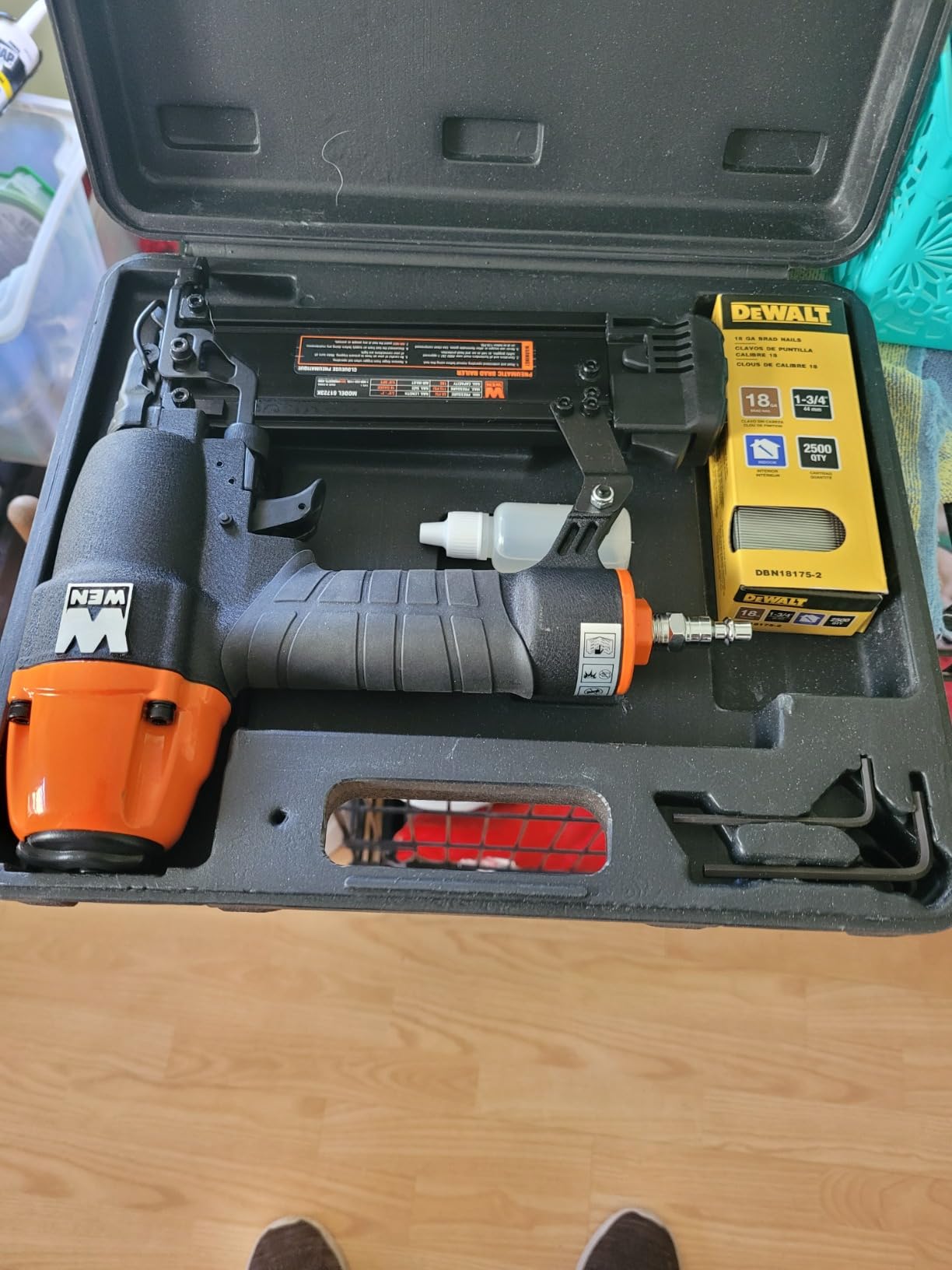
 WEN 61723K WEN 61723K |
|
Check Latest Price |
1. Bostitch BTFP12233 – The Most Precise Pneumatic Brad Nailer
BOSTITCH Brad Nailer Kit, 18GA, Smart Point, Pneumatic (BTFP12233)
18GA brads 5/8 to 2-1/8 inch
Smart Point nose
Oil-free
7 year warranty
Pros
- Smallest nose for pinpoint placement
- Drives the longest brads in this group
- Dual sequential and contact firing
- Oil-free so no stains on white trim
- 7 year limited warranty
Cons
- Heaviest pneumatic tool here at 5.16 lb
- Needs a compressor and hose
- Oil-free design needs regular cleaning
The Bostitch BTFP12233 is the tool I reach for when the trim is already finished and a visible fastener would be a mistake. Smart Point Technology means the contact trip barely has to be compressed to fire, so you can set the nose against a casing joint and shoot one brad at a time without repositioning your grip. That is the difference between a brad 6 millimeters from the corner and a brad 3 millimeters from the corner.
It also drives brads up to 2-1/8 inches, longer than the rest of this group, which matters when you are nailing two-inch crown onto a frieze board or pulling trim back to framing through a thick molding profile. The Dial-A-Depth control gives a repeatable countersink across the whole strip, so the head sits at the same depth on every nail rather than the usual proud-first-nail-then-sunken-last-nail pattern.
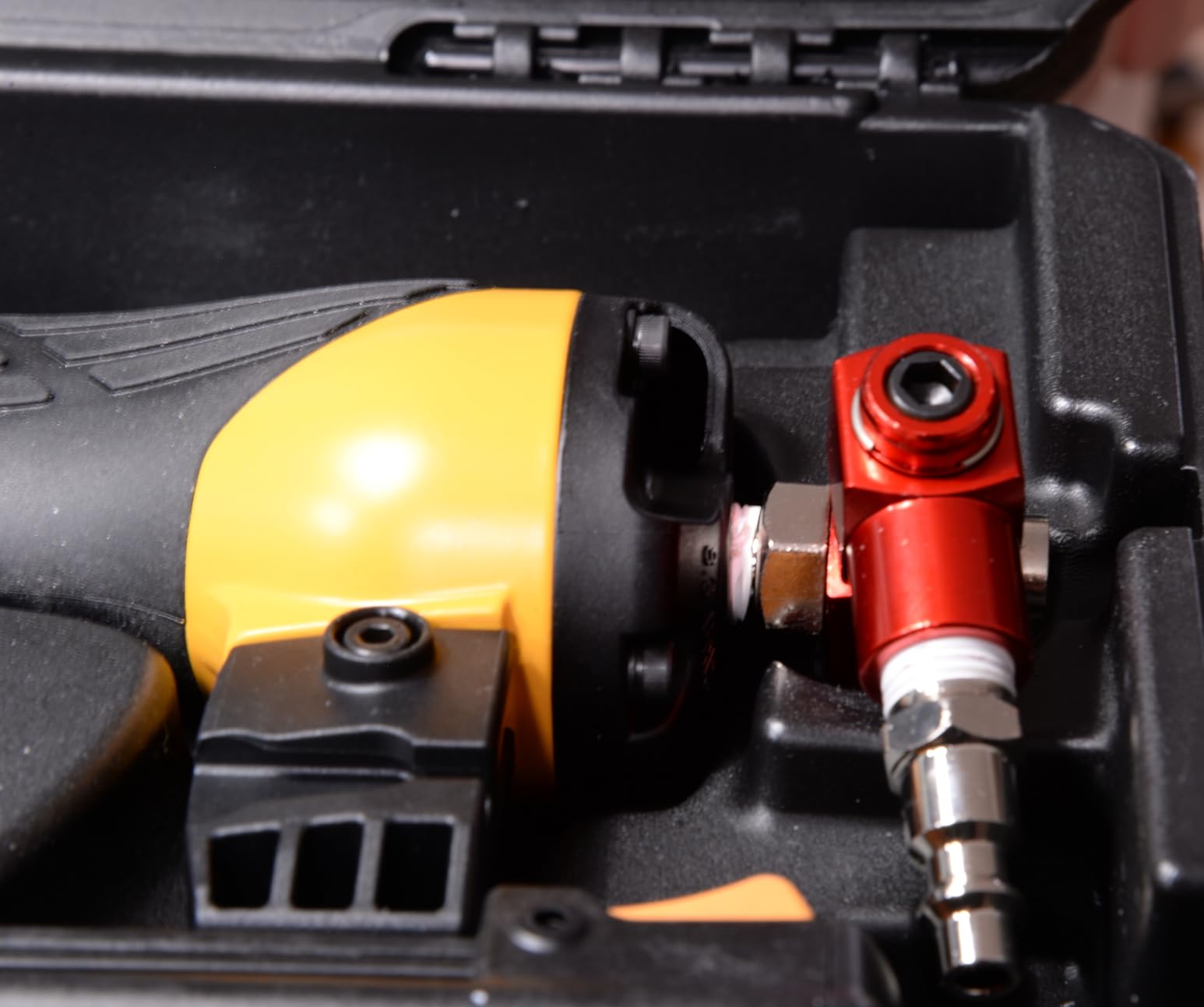
The oil-free cylinder is a genuine advantage on white painted trim, where an oily exhaust would eventually telegraph itself as a stain. The trade-off is maintenance discipline: an oil-free design wants a clean chamber and regular clearing, and reviewers do report that it asks for a bit more attention than a lubricated motor.
Weight, Balance and the Selectable Trigger
At 5.16 pounds this is the heaviest pneumatic nailer in the group, and you feel it by the end of a full afternoon of baseboard. It is well balanced around the magazine rather than the handle, so the weight stays forward of your grip and does not fatigue the wrist the way a top-heavy tool does. The selectable trigger lets you switch between sequential for accurate work and contact for speed along a straight run.
Users praise the belt hook with the integrated pencil sharpener for a small but real reason: you stop setting the tool down every time you need to mark. The kit ships with a carrying case, a quarter-inch air fitting and extra no-mar tips, so you can start driving without a trip to the hardware store.
Where It Falls Short
The dimensions are larger than the compact guns here, which makes it less pleasant in a tight inside corner or between a stud and a wall. If your trim work is mostly picture framing and small craft pieces, the bulk is dead weight. For baseboard, casing and crown, the nose precision more than pays it back.
2. DEWALT DWFP12231 – The Most Proven Pneumatic Brad Nailer
DEWALT Brad Nailer Kit, 18GA, 5/8-Inch to 2-Inch, Pneumatic (DWFP12231)
18GA brads 5/8 to 2 inch
Maintenance-free motor
Tool-free depth and jam release
2.65 lb
Pros
- Largest review base in the category
- Maintenance-free motor leaves no oil film
- Tool-free depth detents and tool-free jam release
- Rear exhaust and adjustable belt hook
- Carrying case and no-mar tip included
Cons
- Sequential trigger only with no bump mode
- Needs a compressor and hose
- Lithium batteries required per the listing
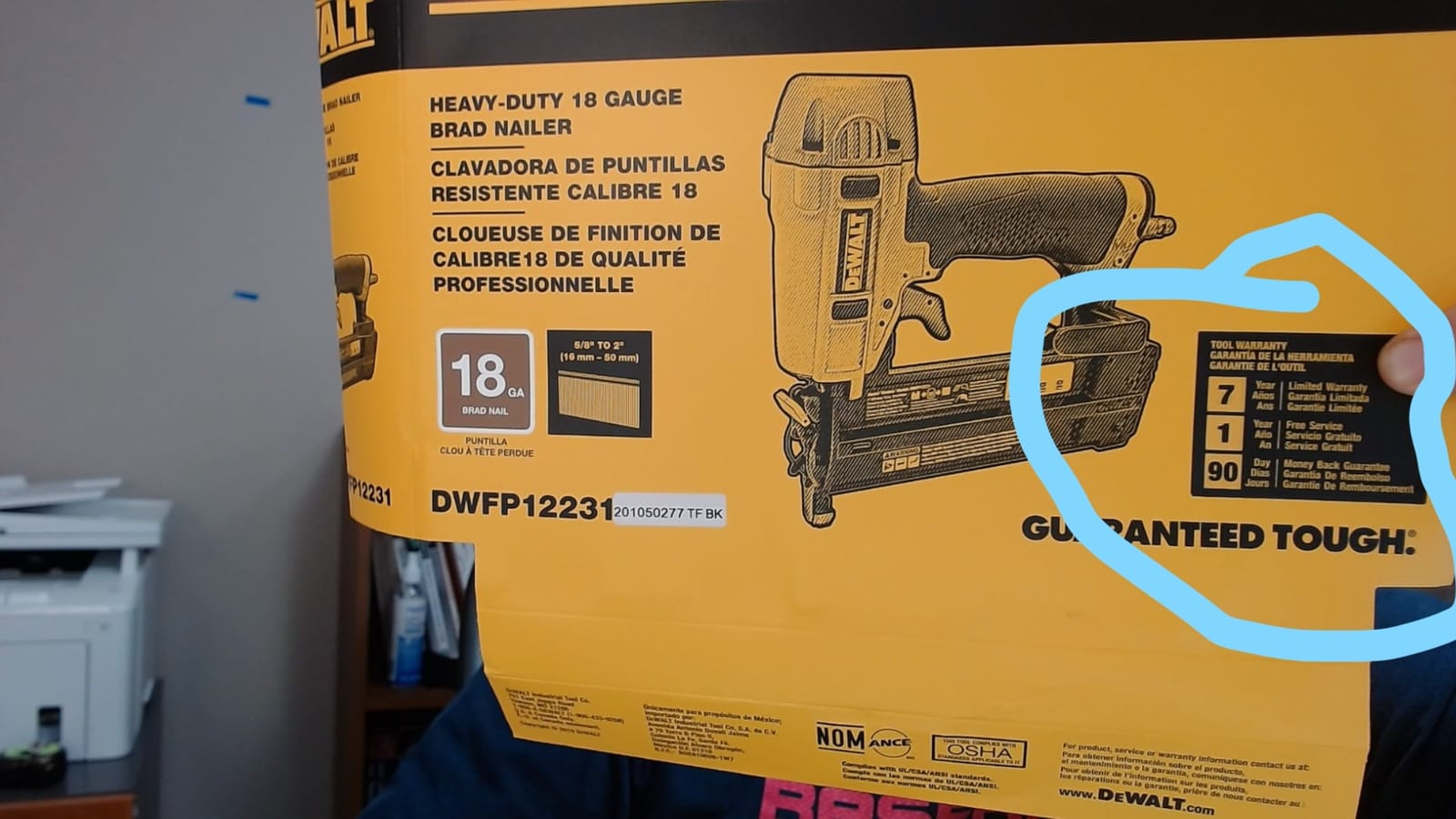
The DEWALT DWFP12231 has the deepest well of real-world feedback of any nailer on this list, and that matters more than any spec sheet. When a tool has been used by thousands of trim carpenters for over a decade, its weak points are known and its strengths are proven. This is the gun I recommend to someone who wants one answer to their brad nailer question and does not want to think about it again.
Everything you touch is tool-free. The depth-of-drive adjustment clicks through detents so you can repeat the same setting on the next molding profile, and the jam release opens the driver without a hex key. The maintenance-free motor is the feature I value most, because a lubricated cylinder that vents oil down the length of a finished baseboard is a problem you cannot fix after the fact.
Where the Tool-Free Features Actually Pay Off
Detented depth adjustment sounds like a small thing until you hang casing across a room. Without detents you are dialing by feel, and the fifth brad sits differently from the first. With them, you set the dial once and the tool delivers the same countersink across forty nails, which is the difference between a paint job that needs caulk and one that does not.
The rear exhaust is another quiet winner. Most nailers exhaust toward the work, and on a finished floor that means you are blowing dust and debris toward the trim you just installed. This one points away from it. The integrated rubber grip stays comfortable through a long run, and the adjustable belt hook lets you hang the tool off your belt rather than setting it on finished surfaces.
The One Real Limitation
This is a sequential-only trigger. There is no bump or contact mode, so you cannot sweep-fire along a long run of baseboard the way you can with the Bostitch, Metabo or Makita. On straight runs you will place nails one at a time. If most of your work is single nails into a stud or jamb, that is a non-issue. If you are covering long stretches quickly, it is worth knowing.
3. Metabo HPT NT50AE2 – Best Value Pick for Finish Carpenters
Metabo HPT Brad Nailer, Pneumatic 18 Gauge Adjustable Depth, NT50AE2
18GA brads 5/8 to 2 inch
2.2 lb body
Selective bump or sequential
5 year warranty
Pros
- Lightest tool in this group at 2.2 lb
- Selective actuation switch for both firing modes
- Reload indicator on the magazine
- 360 degree adjustable exhaust
- 5 year warranty and full accessory kit
Cons
- Plastic housing can crack under abuse
- Some reports of the nose piece shattering
- Needs a compressor and hose
The Metabo HPT NT50AE2 is the name that comes up most often when finish carpenters talk about pneumatic brad nailers, and one long-running woodwork forum thread is blunt about why: it drives brads harder than the alternatives, and the adjustable depth makes it a winner. That is exactly the combination that matters when you are nailing into dense hardwood trim or pulling two layers of molding back to framing.
At 2.2 pounds it is the lightest tool I tested, and over a full day of casing and baseboard that difference is real. Your arm notices the end of the fourth hour. The selective actuation switch on top of the grip lets you flip between bump fire for long runs and sequential for careful placement, which is the one feature the DEWALT lacks.
Drive Power and the Five-Year Warranty
Brands do not usually advertise nailer category tenure, and this one has been named a pro-preferred nailer twelve years running. The five-year warranty is longer than most competitors offer, and for a tool that lives in a truck and takes hits, that length of coverage is a meaningful part of the purchase decision rather than a footnote.
The kit is unusually complete for the money: brad nailer, safety glasses, air fitting, no-mar tip, hex bar wrenches and a carrying case. You are not making a second trip to the store for the basics. The magazine carries a reload indicator that tells you when you are getting low, which sounds trivial until you have fired a strip down to eight nails and the last few jam every time.
Where the Plastic Bites
This is a plastic-bodied tool, and that is the honest drawback. Users report the housing cracking after drops and the front nose piece shattering in service. It survives normal use without complaint, but if your tool lives in the bed of a pickup and takes the occasional fall from a ladder, the aluminum-bodied guns in this group hold up better.
4. Makita AF506 – Best for Tight Corners and Narrow Noses
Makita AF506 2″ Brad Nailer, 18 Gauge
18GA brads 5/8 to 2 inch
2.9 lb aluminum body
Narrow nose
Air duster built in
Pros
- Aluminum body
- magazine and cylinder
- Narrow nose reaches tight and confined areas
- Built-in air duster clears the work line
- Tool-less depth adjustment
- Case
- oil
- tips
- fitting and glasses included
Cons
- No bump fire mode
- Rubber grip can bunch and slip over time
- Heavier than the Metabo pneumatic
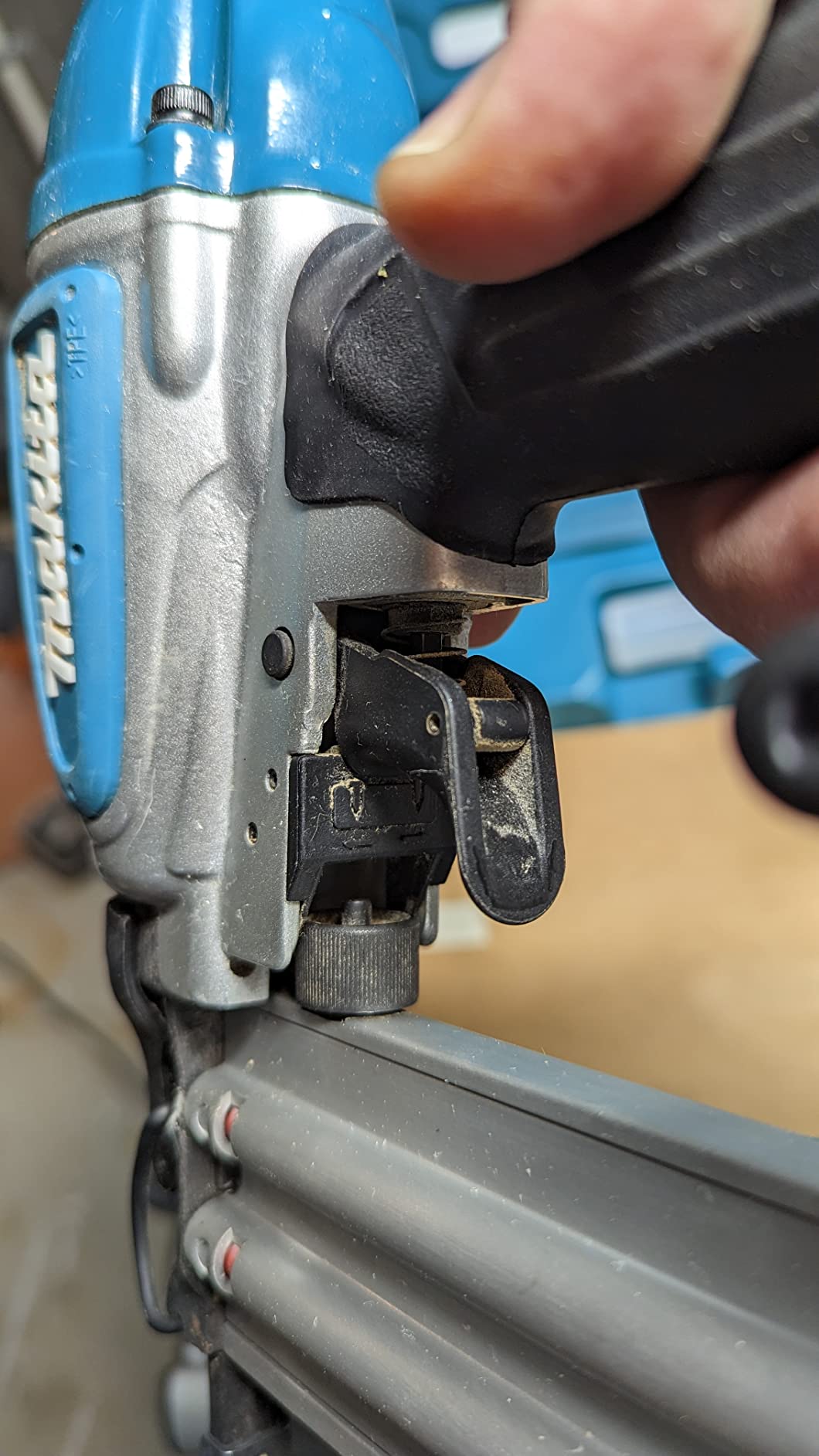
The Makita AF506 is the one I reach for when the nose has to get into a space where a bigger tool physically cannot follow. Its narrow nose design is built for confined areas, which in practice means inside corners, the gap between a wall and a return, and the inside face of a cabinet box where the back panel has to be pinned flat.
The full aluminum construction is the reason this tool holds up. An aluminum body, magazine and cylinder do not crack or shatter the way the plastic components on some competitors do, and the 2.9 pound weight is still in the range where you can hold one hand on the trigger for a full afternoon.
The Built-In Air Duster Is Not a Gimmick
Compressed air exits the nose on demand, and on trim work that means you clear sawdust off the line before you set the nose down instead of blowing it around afterward. On white casing this saves a step on every piece. It also means you need a working compressor with reasonable reserve, since the duster shares the same air supply as the driver.
The tool-less depth adjustment dial gives a wide range of finish settings, from a proud brad you can sand for a heavy joint to a full countersink on flat stock. Reviewers consistently describe the drive as strong enough for hard and soft wood, and the tool-less adjustment is the feature finish carpenters mention as the reason they keep reaching for it.
What Owners Report Over Time
The most common long-term complaint is the rubber handgrip bunching and slipping after extended use, which shows up on heavy crown work where your hand is wet or dusty. There is also no rapid-fire selection, so you are placing nails one at a time. A small number of buyers received defective units initially. The three-year limited warranty is shorter than the Metabo’s five years.
5. CRAFTSMAN CMCN618C1 – Best Cordless Value for Homeowners
CRAFTSMAN V20 Cordless Brad Nailer, 18 Gauge Nail Gun, with Battery and Charger (CMCN618C1)
18GA collated nails
Fully cordless
Brushless motor
Battery and charger included
Pros
- Battery and charger included with no compressor or hose
- Brushless motor for consistent power
- Tool-free depth and jam settings
- Good balance with an over-molded handle
- Belt hook included
Cons
- Heaviest tool in the group at 7.6 lb
- Battery adds weight on long overhead runs
- Costs more than a good pneumatic tool
The CRAFTSMAN CMCN618C1 is the answer for anyone who wants a brad nailer without owning a compressor. It ships with a battery and charger, drives adhesive-collated 18-gauge nails, and the brushless motor delivers consistent firing power in cold garage temperatures and across softwood and hardwood alike, which is where cheaper cordless nailers start to underperform.
For a homeowner hanging baseboard in a basement or a rental unit, the economics are hard to argue with. A pneumatic route means the nailer, a compressor, a hose and fittings before you fire a single nail. This one starts working out of the case.
Where the Weight Lands
At 7.6 pounds this is the heaviest tool in the group, and that number is the whole trade-off. Most of it is the battery pack. The contoured over-molded handle and low center of gravity do a good job of keeping the balance point in your palm, but on a long overhead run installing crown in a stairwell, the weight accumulates fast.
Both the depth settings and the jam release are tool-free, so you can change between molding profiles without a wrench. The belt hook keeps it against your hip while you measure and cut, and the balanced weight makes one-handed placement on a ladder workable in short stretches.
Who This Is For
This is the pick for a homeowner, a renter doing punch lists, or a small shop that already has no compressor and does not want one. For a finish carpenter running a full trim day, the same work is faster and less tiring on a pneumatic tool.
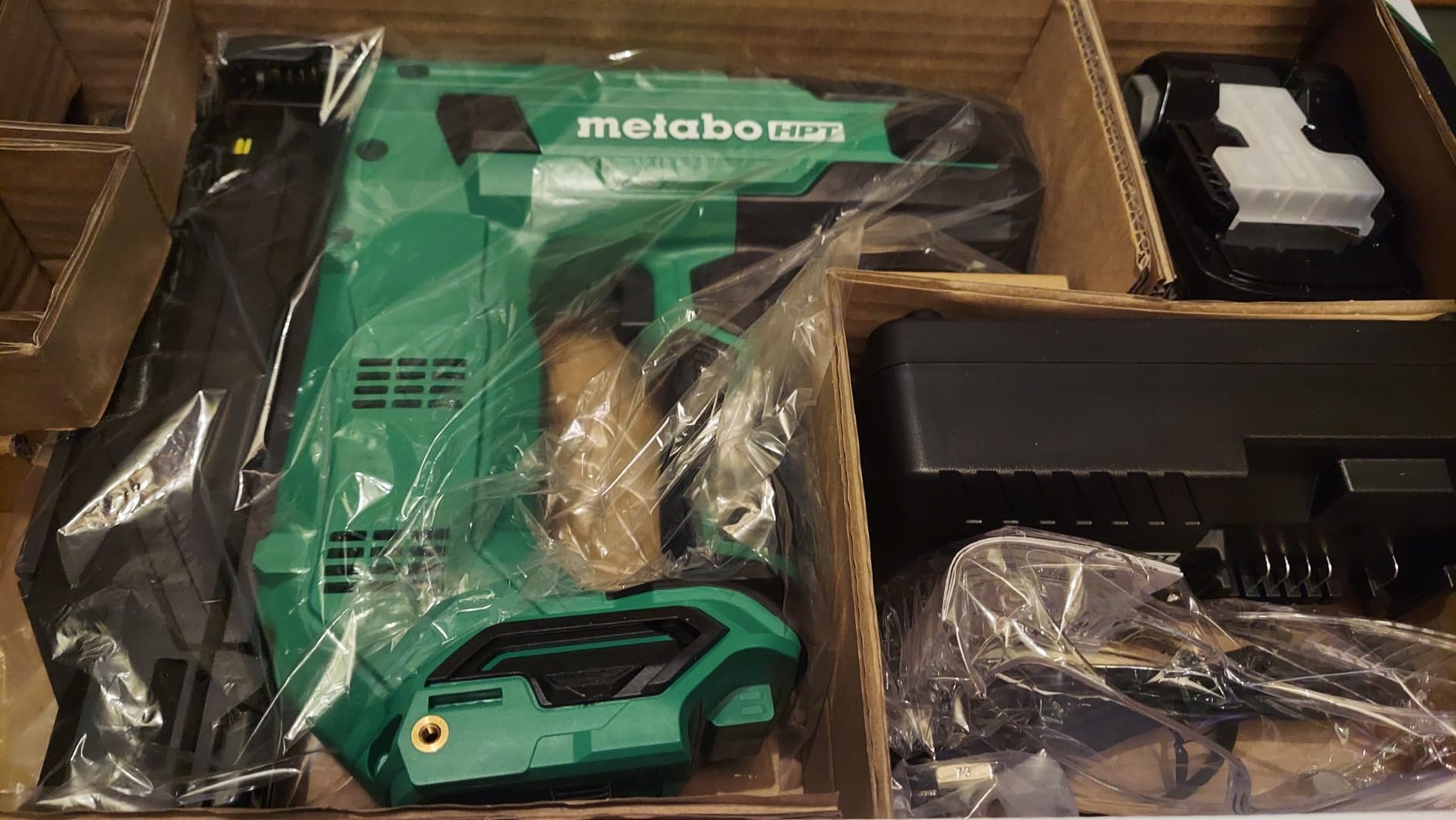
6. Metabo HPT NT1850DG – Best Cordless Nailer for Long Job Days
Metabo HPT Brad Nailer, 18 Gauge Cordless, 18V Kit, NT1850DG
18GA brads 5/8 to 2 inch
700 nails per charge
5.5 lb
LED work light
Pros
- Up to 700 nails per charge with the included 2.0Ah battery
- 5.5 lb with a low profile that fits tight spaces
- Zero ramp-up time between nails
- Bright LED work light
- Tool-less depth of drive adjustment
Cons
- Heavier than pneumatic tools at 5.5 lb
- Some reports of charger failure
- Charger is 110V only
The Metabo HPT NT1850DG is the cordless nailer I would buy if I were leaving a compressor behind. The claim of 700 nails per charge from the included 2.0Ah battery is the number that matters, because the usual cordless complaint is not power, it is the battery swap in the middle of a hallway. At 5.5 pounds it is also lighter than the CRAFTSMAN and the WORX, which is unusual in this category.
The mechanical spring drive means no gas, no hose and no compressor, and the fast response between nails means no waiting for a motor to spool up. On a wainscot job where you fire three brads, move two feet, and fire three more, that response time is the whole difference between finishing a room and taking a coffee break.
Low Profile and Lighting for Real Trim Conditions
The low center height is designed for tight spaces, which is what you get between a stud and a finished wall when you are nailing the return on baseboard. The bright LED illuminates the work area, which matters most in a dark closet or a cabinet interior where a pneumatic tool with a rear exhaust has no light at all.
Tool-less depth of drive adjustment means you can move from a 5/8 inch pin to a 2 inch brad without tools, and the kit includes no-mar nose caps, a hook and safety glasses. The battery works across the MultiVolt system, so if you already run Metabo HPT tools the cost of getting into this platform is one battery and one charger.
Where Owners Report Friction
The charger in this kit is 110V, which is an issue for buyers outside North America who need an adapter. A small number of users report the charger failing after short use. The safety interlock requires both the nose tip and the trigger to be depressed before the tool will fire, which some people find overly cautious and others consider exactly right.
7. Milwaukee 2746-20 – Best for Owners of the M18 Platform
Milwaukee Electric – M18 Fuel 18 Gauge Brad Nailer
18GA cordless brad nailer
POWERSTATE brushless motor
Nitrogen air spring
Sequential and contact fire
Pros
- Brushless motor with zero ramp-up time
- Nitrogen air spring sinks nails consistently in hard and soft wood
- Tool-free drive depth adjustment
- Sequential and contact actuation modes
- Quiet compared with pneumatic
Cons
- Sold as a bare tool with battery and charger separate
- Bulkier than compact cordless options
- Heavy overhead for crown work
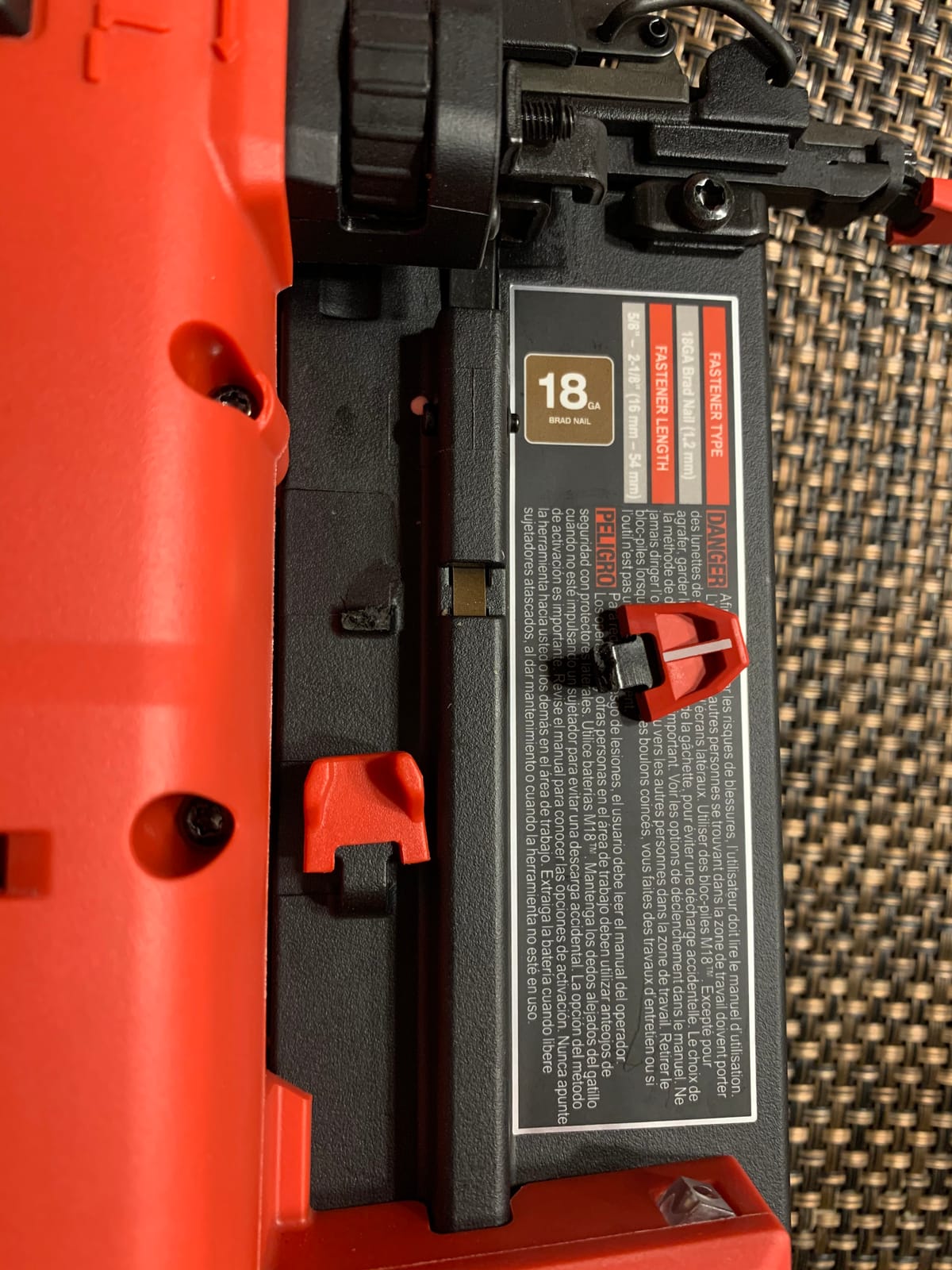
The Milwaukee 2746-20 is the choice for one specific person: someone who already owns M18 FUEL batteries and a charger. This listing is the bare tool, so if you have an M18 pack on the charger you can have a working nailer for the cost of one tool. If you do not run the platform, the economics change completely and this is not the pick.
The POWERSTATE brushless motor delivers zero ramp-up time, and the nitrogen air spring mechanism is the reason it drives consistently. Air-powered nailers lose drive power as the tank pressure drops, so the first nails of a fresh tank sink differently from the last ones. A sealed nitrogen spring does not do that, which is why this gun holds the same depth from brad one to brad one hundred.
Why the Nail Holes Stay Clean
The design intent behind the drive mechanism is a clean nail hole matching the head of the nail, with almost no visible puncture in finished trim. That is a small promise but a meaningful one on white casing, where each brad is a repair you do not have to make. Tool-free drive depth adjustment gets you there without guessing, and both sequential and contact actuation modes are available.
There is no gas cartridge to buy and nothing to refill, and the tool is noticeably quieter than a pneumatic nailer, which matters on occupied jobs where a compressor is not an option.
The Bulk Factor
At 6.5 pounds with larger overall dimensions, this is not a compact cordless nailer, and users note it directly. Overhead crown work is where that shows up. If your trim work is mostly at waist height, the bulk is a non-issue. If you spend your day on a ladder, weight matters more than platform compatibility.
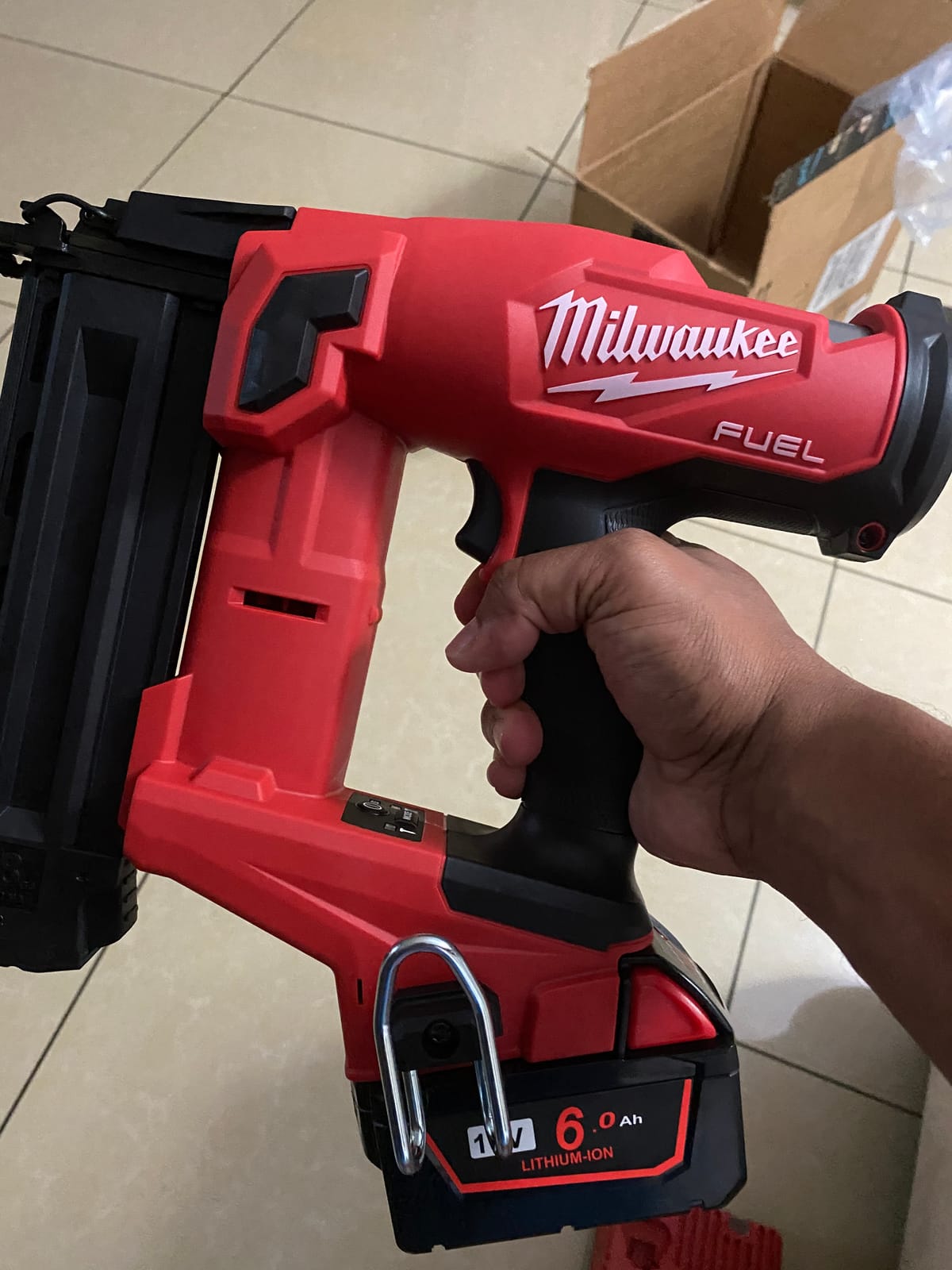
8. WORX WX842L – Best for Fast Production Firing
WORX Cordless Brad Nailer, 20V 18GA Nail Gun, WX842L
18GA brads up to 2 inch
80 nails per minute
Power Share battery
Anti-ejection design
Pros
- Rapid firing up to 80 nails per minute
- Drives 2 inch brads into hardwood with NailForce air impact
- Power Share battery fits 140+ WORX tools
- Anti-ejection design keeps nails from flying when clearing jams
- Tool-free jam release
Cons
- Heaviest cordless option here at just over 7 lb
- Longest body at 16.5 inches
- Lower rating at 4.5 than the rest
- Some reliability concerns in reviews
The WORX WX842L is the fastest cordless nailer in this group, rated at up to 80 nails per minute. That number is what separates it from the others when the job is repetitive rather than delicate: cabinet backs, wainscot panels, and shop assembly where you are placing hundreds of brads in a pattern.
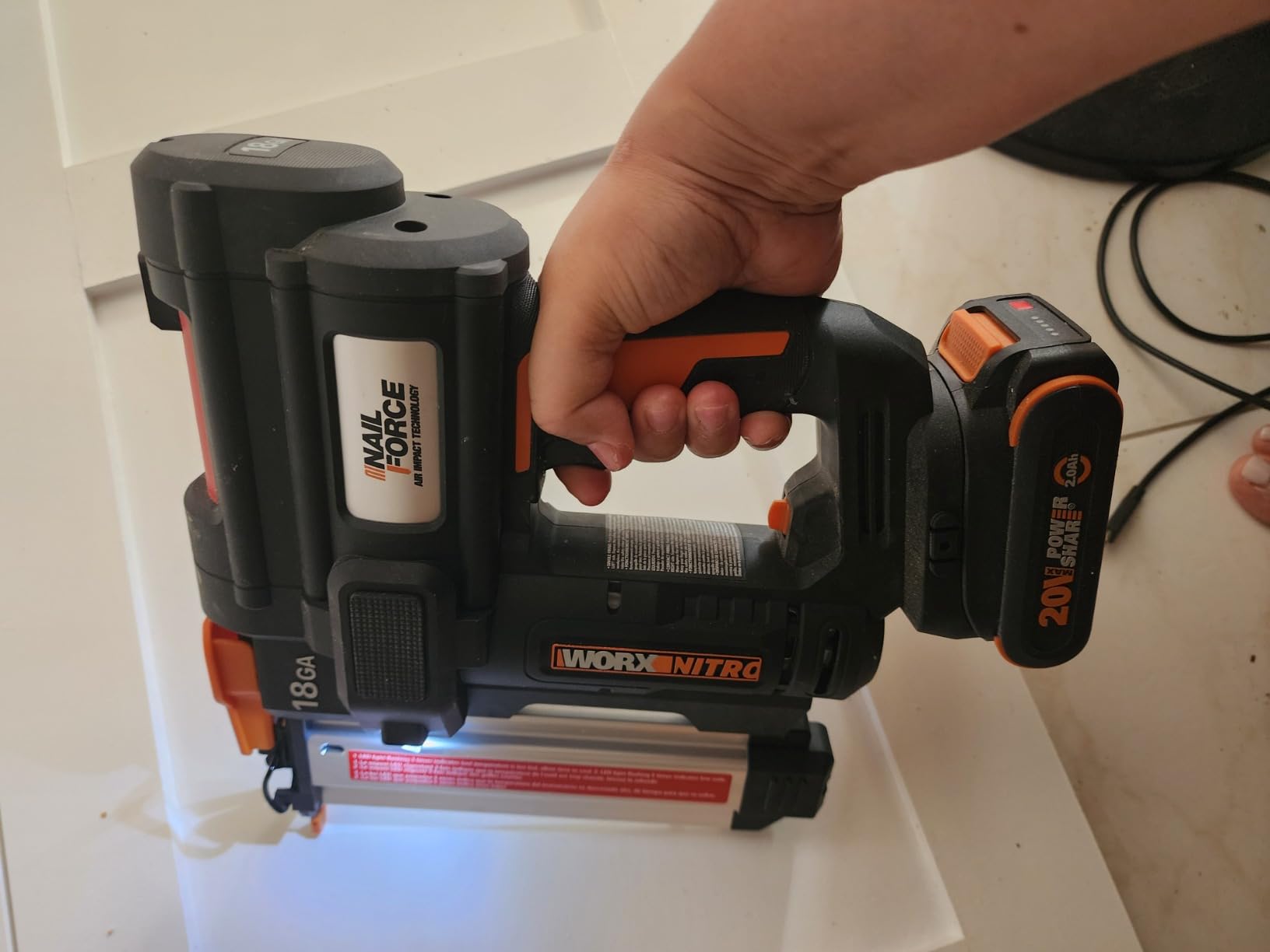
NailForce Air Impact Technology is what lets it drive 2 inch brads into hardwood from a battery, which is the hardest thing a cordless brad nailer is asked to do. The tool-free jam release gets a stuck nail out quickly, and the anti-ejection design stops brads from firing across the room when you open the magazine, which is a genuine safety improvement over some competitors.
Platform Value and Physical Limits
The included Power Share battery fits more than 140 WORX tools, so if you own anything in that range the nailer is close to an accessory purchase. The 5 percent of reviews that are one star concentrate on long-term reliability, and the 4.5 average is the lowest in this group, so treat it as a workhorse to use hard rather than a tool to buy once and keep for a decade.
Size is the other limitation. It is fine on a bench and on a floor.
It is uncomfortable in a tight inside corner, and heavy overhead on a ladder.
9. Ryobi P321 – Best for Owners of the ONE+ Platform
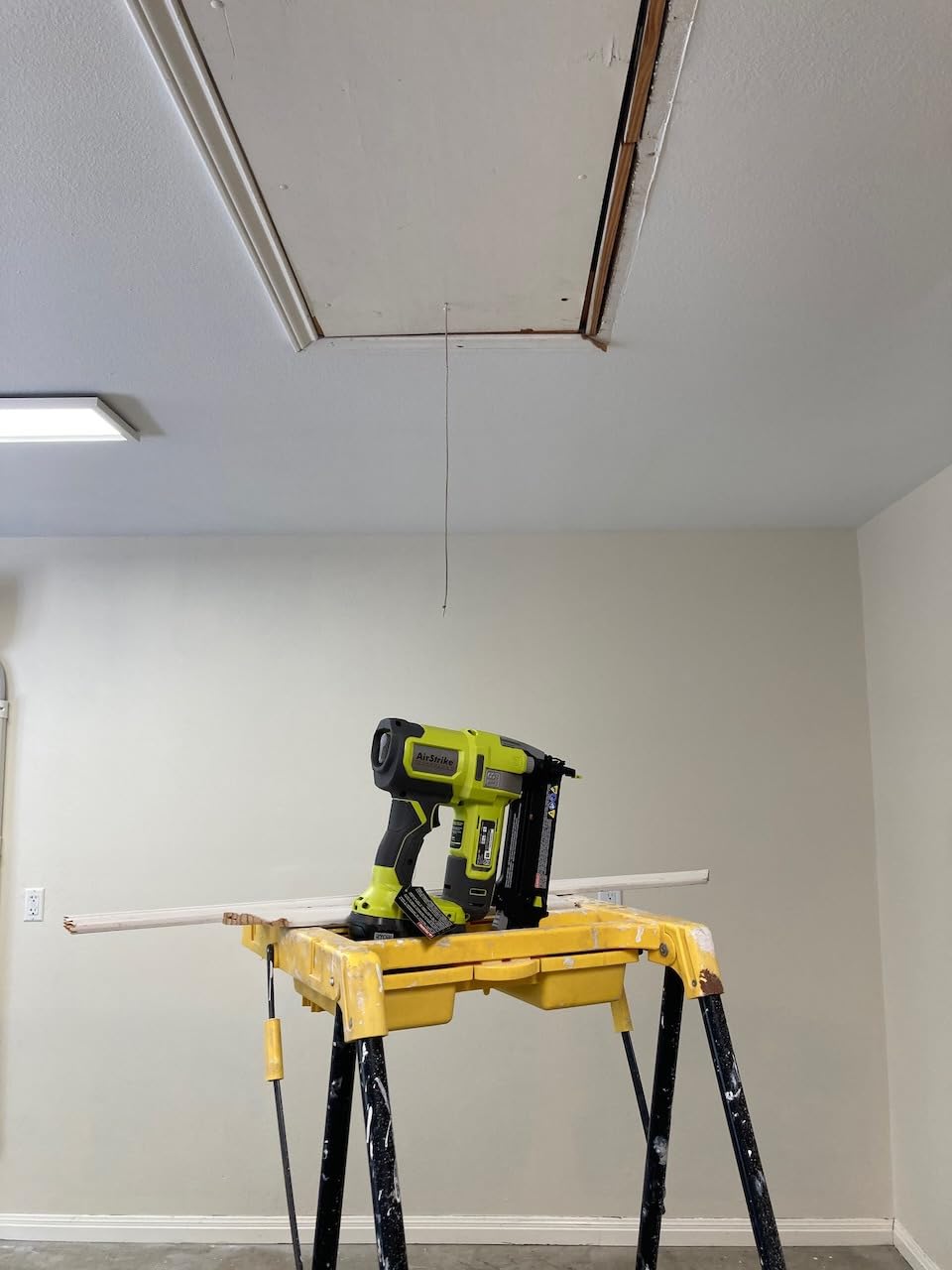
Ryobi 18V ONE+ 18-Gauge Cordless Airstrike Brad Nailer (Tool Only) P321
18GA cordless brad nailer
Ryobi ONE+ 18V
Tool-free depth and jam
Belt hook and LED
Pros
- Runs on the Ryobi ONE+ battery platform
- Tool-free depth adjustment and jam release
- Well balanced with a comfortable grip
- LED work light and belt hook
- Strong runtime with a 4.0Ah pack
Cons
- Battery and charger sold separately
- 30 day limited warranty only
- Some reports of freezing and jamming that needed lubrication
- Occasional misfires reported
The Ryobi P321 is the ONE+ platform pick, and that is genuinely the whole argument. If you already run Ryobi batteries across your tools, this nailer drops into a system you own, which removes the single largest cost of going cordless. If you do not, you are buying a battery and a charger before you fire anything, and the platform advantage disappears.
Owners like the balance and the grip more than the raw power. The nail delivery is smooth with few reported jams, the trigger is responsive, and the depth adjustment is straightforward. With a 4.0Ah pack the runtime is good enough to finish a room of baseboard in one charge, and the LED light plus belt hook are sensible additions for working alone.
The Reliability Reports to Know About
This tool carries the shortest warranty in the group at 30 days limited, and that is worth weighing seriously. Reviewers report occasional freezing and jamming that required lubrication, and a common instruction to hold the trigger until the nail is fully seated or the tool will stop. Misfires show up in a minority of reviews, and at least one unit failed after roughly half a magazine.
For light duty on baseboard, shoe molding and picture framing, that has not stopped owners from recommending it.
For daily professional use, the warranty length and the failure reports are reasons to look at the Metabo or Milwaukee cordless options instead.
10. WEN 61723K – The Budget Starter Kit
WEN 18-Gauge 3/8-Inch to 2-Inch Pneumatic Brad Nailer Kit with Case and Nails – Compatible with Any Air Compressor (61723K)
18GA brads 3/8 to 2 inch
60 to 115 PSI
106 nail magazine
2000 nails and case included
Pros
- Ships with 2000 brads in four lengths plus a carrying case
- Quick-release 106-nail magazine
- Hassle-free nose latch for jam clearing
- Rotatable exhaust and depth adjustment wheel
- Works with any air compressor
Cons
- Needs a compressor and hose
- Louder than premium pneumatic tools
- Plastic parts less durable over time
- Some buyers did not receive the nails
The WEN 61723K is the kit that solves the startup problem. It comes with the nailer, a carrying case and 2000 brads in four lengths, so the single most common frustration for a first-time brad nailer owner, having nothing to shoot, is solved on day one. It operates from 60 to 115 PSI, which covers essentially every small shop compressor, and it accepts a quarter-inch NPT fitting.
The quick-release 106-nail magazine is larger than most competitors here, and the nose latch makes jam clearing straightforward. Most users report consistent performance with few jams, and the rotatable exhaust lets you direct air away from finished surfaces. People also use it in light production and manufacturing work, where the cost of nails matters.
Where You Give Something Up
The feature set is basic compared to the premium pneumatic guns. There is no belt hook, no tool-free jam release mechanism in the same sense, and the depth control is a wheel rather than a detented dial, so repeatability across a long strip is less precise. The plastic components are the parts most likely to give up first over years of service.
A few buyers of the case variant report the nail assortment not arriving with the kit, so check the box contents on arrival.
It is also the loudest tool here, which is normal for a small pneumatic nailer but worth knowing if you work in an occupied space.
Pneumatic vs Cordless Brad Nailers – Which One Fits Your Job Site
This is the decision that determines everything else, and it comes down to whether you already own a compressor and how many nails you fire in a day. The forum consensus on this question is consistent: a dedicated woodwork forum thread concluded that pneumatic nailers are far better performers for sustained work, with electric units considered barely adequate beyond light fastening.
That said, the comparison is not as lopsided as it was five years ago. Cordless nailers on this list drive 2 inch brads into hardwood and run 700 nails per charge, which covers most residential trim work in a single charge. Where pneumatic still wins is drive consistency on hard material, fatigue over a full day, and cost per nail.
Choosing Pneumatic
Choose a pneumatic brad nailer if you own a compressor, you work through dense hardwood trim, or you fire brads all day. These tools are lighter in the hand, cheaper to run per nail, and unaffected by battery temperature or state of charge. The whole category sits in the 2.2 to 5.16 pound range, which is the real ergonomic story nobody advertises.
Choosing Cordless
Choose a cordless brad nailer if you have no compressor, work in spaces where a hose cannot reach, need quiet operation on occupied job sites, or do occasional work where buying a compressor would be a mistake. If you already own batteries from one of these platforms, the cost of entry drops sharply.
The hidden cost people rarely calculate is that a pneumatic setup is the nailer plus a compressor, a hose, fittings and a regulator, and a compressor is the expensive part. A homeowner hanging baseboard in one hallway will get more use out of a cordless tool and a small compressor later. A finish carpenter running five days a week already owns one.
How to Choose a Brad Nailer – The Specs That Decide the Purchase
Most spec sheets list fifteen numbers and only four of them matter. Here is what actually changes how the tool performs on your actual trim.
Nose Size and Placement Precision
The nose is the part that touches the wood, and a smaller nose means you can place a brad closer to a corner, a reveal line or a joint. The Bostitch Smart Point design is the clearest example, with a fine nose and a contact trip that needs minimal compression. If most of your work is casing, reveals and mitered corners, nose size matters more than anything else on the sheet.
Depth Adjustment and How It Is Set
Tool-free adjustment is now standard, but tool-free is not the same as repeatable. A dial with detents, like the DEWALT, locks a setting you can reproduce on the next piece. A free-spinning wheel, like the WEN, lets you drift between nails. If you are painting the trim, detents matter. If you are pinning cabinet backs, they do not.
Trigger Modes and Safety
Sequential fires one brad per trigger pull. Contact or bump fire fires as long as the trigger is held and the contact trip stays compressed, which is fast and requires discipline. Contact trip lock-off, a feature on several tools here, lets you park the tool in a truck without worrying about a stray pull. A tool that offers both modes gives you speed on straight runs and control on corners.
Magazine Length and Jam Access
Magazine capacity runs from about 100 to 110 brads on most of these tools, and the WEN stretches to 106 with a quick-release design. More important than capacity is whether the nose opens tool-free for jam clearing. End-of-strip jams are the single most reported problem across the category, and a tool-free nose release turns a two-minute job into a ten-second one.
Weight, Grip and Balance
Read the weight with the battery attached for cordless tools, because the pack is most of the number. Then read the balance, not just the total. A 7.6 pound tool with a low center of gravity feels lighter on an overhead run than a 5.5 pound tool that is top heavy. The CRAFTSMAN and the Metabo cordless both manage this well.
What Size Brads Do You Need? Match Nail Length to Material Thickness
The working rule is that brad length should be roughly three times the thickness of the material you are nailing into. It is not exact, and hardwood eats more length than MDF, but it gets you close enough to start.
For a quarter inch thick piece of baseboard or shoe molding, a 3/4 inch brad is the starting point. For half inch trim, move up to 1-1/4 inch or 1-1/2 inch brads. For three-quarter inch thick casing or a thick crown profile, you are into 2 inch brads, and only the Bostitch reaches past that at 2-1/8 inches.
Two practical notes. First, when you are nailing into MDF, do not go longer than the rule says, because MDF has no grain to split along and an over-long brad will blow out the back face. Second, when you are nailing into a stud or jamb through trim, you are driving into a different material than the rule assumes, and a longer brad gives you the holding power you need in the framing itself.
Common Brad Nailer Problems and How to Fix Them
Four complaints dominate owner feedback across this whole category. None of them are fatal, and all four have a fix.
Why Your Brad Nailer Keeps Jamming
Nearly every jam report describes the same thing: the tool jams reliably on the last several brads in a strip. Work through it in order. First, open the nose or latch and pull the stuck brads, then check the magazine collation by dropping a fresh strip onto a flat surface, because bent or loosely glued brads jam before the strip even loads. Next, confirm the brads are loaded in the correct direction with the points facing the correct way. Finally, check your pressure or the tool’s drive setting, since a pneumatic gun starved of air stalls mid-stroke. Worn or cheap brads are the single most common root cause.
Why Nails Are Bending or Curling
Brads bend when they meet resistance they cannot overcome, and they curl when the strip itself is damaged. Check four things in order: the depth of drive setting, which may be forcing the brad too hard; the operating pressure, which may be too low to seat the brad before the wood stops it; whether you are hitting a nail plate, a screw or a stud edge hidden behind the trim; and the condition of the brads themselves, since brads bent or crimped in the magazine will deflect no matter what the tool is doing.
If the brad stops short rather than bending, that is almost always pressure or depth setting rather than the brad. Increase the compressor pressure gradually before changing anything else.
Why Nail Heads Stand Proud
A head sitting above the surface means the depth of drive is set too shallow, and it will show as a small ring under paint. Turn the depth dial toward deeper drive in small steps and test on a scrap offcut of the same material. If the same brad alternates between sunk and proud on consecutive shots, the depth dial is not the problem, and you should look at brad consistency instead.
Why the Cordless Tool Stops Mid-Strip
Cordless nailers stall for a different set of reasons. The most common is a safety interlock that has not been fully satisfied, which on some tools requires both the nose tip and the trigger depressed at once. Check the battery is seated and the charge is sufficient, since some tools reduce drive power to preserve the last few nails. And if the tool only works when you hold the trigger until the brad is fully seated, the driver or magazine needs lubricating.
How to Set Up and Use a Pneumatic Brad Nailer Safely
Get a pneumatic brad nailer right and it will run for years. Get it wrong and you will chase short nails for an afternoon.
Start at 80 to 90 PSI on the regulator for most trim work, then adjust up only if the brad will not set flush. Do not exceed the tool’s rated pressure, since over-pressure does not add drive, it just adds noise, wear and a harder kickback. Set the depth dial before you start, not after the first strip.
Load brads point-down with the nails facing the direction the tool fires, and pull the magazine follower fully back when seating a strip. Use a quick-connect coupler rated for your hose diameter, and keep the hose shorter than the manufacturer limit, because excess hose length steals pressure at the fitting and is a common cause of short nails.
For safety, use sequential mode for accurate work, activate contact trip lock-off when the tool is not in your hand, and keep your other hand out of the exit path behind the tool. A brad nailer is designed to fire a nail unexpectedly, and almost every nail gun injury I have seen comes from a hand placed behind the nose.
Brad Nailer vs Finish Nailer – Which Gauge Your Trim Actually Needs
A brad nailer and a finish nailer do the same job at different wire thicknesses, and the gauge choice comes down to how delicate the material is and how much holding power you need.
An 18-gauge brad is thin, roughly 0.040 inches across, leaving a puncture small enough to fill or paint. A 15 or 16-gauge finish nail is noticeably thicker and holds far more strongly, but the hole is visible enough that you plan for it rather than hide it. A pin nailer uses an even thinner headless pin and leaves almost no mark, at the cost of very little holding power.
Use 18 gauge for casing, baseboard, shoe molding, small crown and cabinet backs, anywhere the material is thin or the surface is finished and visible. Move up to 15 or 16 gauge when you are fastening thicker, heavier trim into hardwood framing, or when the trim is not going to be painted at all. If your project is entirely MDF panels, watch the blowout risk on the back face and stay conservative on length.
Frequently Asked Questions
Should I buy a 16 or 18 gauge brad nailer?
Buy 18 gauge for most interior trim. An 18-gauge brad leaves a hole small enough to fill or paint, and it will not split delicate casing, baseboard or cabinet parts. Move up to 16 gauge when you are nailing thicker or heavier trim into hardwood framing, or when the wood will never be painted. The 18-gauge brad is lighter and easier on the tool, so it is the sensible default for trim carpentry.
Which brad nailer is better, Bostitch or Metabo?
The Bostitch BTFP12233 wins on precision and nail length, with a narrow Smart Point nose and the ability to drive 2-1/8 inch brads. The Metabo HPT NT50AE2 wins on weight and fire modes, at 2.2 pounds with both bump and sequential actuation and a five-year warranty. For fine placement in finished trim, choose Bostitch. For long days and long runs, choose Metabo.
What is the best brad nailer for value for money?
The Metabo HPT NT50AE2 is the strongest value in this group. It is the lightest tool tested at 2.2 pounds, offers both bump and sequential firing, carries a five-year warranty, and ships with a case, safety glasses, an air fitting, a no-mar tip and wrenches. The WEN 61723K is cheaper still if you also need brads and a case to get started.
What is better, a finish nailer or a brad nailer?
A brad nailer for thin, visible trim such as casing, baseboard and cabinet parts, and a finish nailer for thicker, heavier material where you need more holding power. An 18-gauge brad leaves a nearly invisible hole, while a 15 or 16-gauge finish nail leaves a mark you have to plan for. The hole size is the deciding factor, not the drive power.
Which brad nailer is better, an air or battery-powered one?
Choose pneumatic if you already own a compressor, work on hard material, or fire brads daily, because the tools are lighter, the drive is more consistent and the cost per nail is lower. Choose cordless if you have no compressor, need to work where a hose cannot reach, or want quiet operation, because the current cordless models drive 2 inch brads into hardwood and run hundreds of nails per charge.
Why does my brad nailer keep jamming?
Most jams happen on the last few brads in a strip. Work through it in order: open the nose and pull the stuck brads, check that the strip is not bent or loosely collated by dropping it on a flat surface, confirm the brads are loaded facing the correct direction, then check your air pressure or depth setting. Cheap or damaged brads are the most common root cause.
Why is my nail gun bending my nails?
Brads bend when they meet resistance they cannot overcome, and they curl when the strip is damaged. Check the depth of drive setting, the operating pressure, whether a nail plate or stud edge is hidden behind the trim, and the condition of the brads in the magazine. If the brad stops short rather than bending, that points to pressure rather than the brad.
What PSI should a brad nailer be set at?
Start at 80 to 90 PSI for most trim work and increase only if the brad will not set flush. Do not exceed the tool’s rated pressure, because over-pressure adds noise, wear and kickback without adding drive power. If the brad stops short, raise the pressure gradually before changing the depth setting or the brads.
Do I need a compressor for a brad nailer?
Only if you buy a pneumatic one. A cordless brad nailer such as the Metabo HPT NT1850DG, the CRAFTSMAN CMCN618C1 or the Milwaukee 2746-20 needs no compressor, hose or gas cartridge. If you go pneumatic you also need a compressor, a hose and fittings, which is the part of the cost that surprises first-time buyers.
Can you use a brad nailer on MDF?
Yes, and it is one of the main reasons to own a brad nailer, since MDF cannot be screwed without splitting the face. Stay conservative on brad length, because MDF has no grain and an over-long brad will blow out the back face. Use a no-mar tip and check the exit side before you fire on a finished panel.
What size brads should I use for one-half inch trim?
For one-half inch thick trim, use 1-1/4 inch or 1-1/2 inch brads. The general rule is that brad length should be about three times the material thickness, so quarter inch trim takes 3/4 inch brads and three-quarter inch trim takes 2 inch brads. When you are nailing into a stud or jamb through the trim, go longer than the rule because you are driving into framing.
What is the difference between a brad nailer and a pin nailer?
A brad nailer drives a brad with a small head, leaving a hole you can fill or paint. A pin nailer drives a headless pin that leaves almost no mark, which is why it is used for molding and delicate detail work. The trade-off is holding power, because a pin has far less of it than a brad.
The Best Brad Nailer for Your Next Project
If you want the best overall brad nailer in 2026, the Bostitch BTFP12233 is the one to buy. Its narrow Smart Point nose, dial-controlled depth and ability to drive 2-1/8 inch brads handle the widest range of trim work, and it carries the highest rating in this group.
If you already own a compressor and want a tool that will not tire your arm, the Metabo HPT NT50AE2 at 2.2 pounds with both firing modes and a five-year warranty is the better daily driver. The DEWALT DWFP12231 is the safest choice for a buyer who wants a proven tool with the deepest review history and does not need bump fire.
If you have no compressor, the Metabo HPT NT1850DG covers the most work per charge, while the CRAFTSMAN CMCN618C1 is the simplest path for a homeowner. If you already own M18 or ONE+ batteries, the Milwaukee 2746-20 and the Ryobi P321 drop into a system you have already paid for. And if you want everything in one box to get started, the WEN 61723K includes the nails, the case and the compressor is the only thing left to borrow.
Whichever one you choose, set the depth dial on a scrap offcut before you touch the finished piece. That single habit separates clean trim work from a repaint.
Leave a Reply