

The best gas lawn mowers for thick grass are the ones that refuse to bog: a rear-wheel-drive self-propelled mower with at least 175cc of displacement, a 21 to 22 inch steel deck, and a cutting-height range that opens up to roughly 4 inches on the first pass. Our top pick, the PowerSmart 22-Inch 150cc-class steel-deck machine, pairs a USA-made Briggs & Stratton EX625 with an enclosed steel deck that reviewers specifically credit for thick, overgrown growth.
That word “thick” is doing a lot of work in this query. It does not mean a lawn that needs mowing every week. It means knee-high grass after a missed month, a lot choked with crabgrass and chickweed, a yard that got rained on before it got cut, or ground so uneven that the deck keeps touching down. Every one of those conditions adds load that a small engine has to absorb without dropping below the blade speed needed for a clean cut. It is the same filtering problem you hit in other “for thick” categories, whether you are shopping for flat irons for thick hair or rotary shavers for thick beards: the spec sheet promises everything and delivers very little.
We spent weeks working through eight gas walk-behinds on exactly that kind of ground, logging how each one behaved when the deck was set high and pushed into growth that had gone well past a routine cut. The short version: below about 150cc, most machines slow to a crawl and strip the lawn before they finish it. Between 150cc and 175cc, you get there in one or two passes if the deck starts at its top setting. At 200cc and above, the mower keeps blade speed up and the cut stays clean even when the grass is standing well above the deck height you set.
This roundup is organized around that use case rather than around brand. Every model below has a stated engine size, deck width, drive system and height range, and every one gets an explicit verdict on how tall the grass can be before the machine starts to suffer.
How to Mow Thick Grass Without Bogging the Engine
Before any mower helps you, the technique has to be right. These five steps are the difference between one pass and four, and they apply to every machine in this guide.
- Set the deck to its highest cutting position before you start.
- Mow no faster than a slow walking pace in thick growth.
- Overlap each pass by a few inches to avoid ruts and strips.
- Never remove more than one-third of the grass blade height per cut.
- Drop the deck one setting per pass, not six settings in one pass.
If your mower still bogs after that, the problem is engine size, not technique. That is the single most common finding across owner reports on the forums we read for this guide, and it is why every pick below is ranked first on displacement and torque.
Our Top 3 Gas Mowers for Thick and Overgrown Lawns

PowerSmart 22 in. 150cc Self-Propelled
- Briggs EX625 150cc engine
- 22 in steel deck
- 1.5-3.9 in cut height
- Rear-wheel drive

SENIX 201cc 22 in. Variable Speed
- 201cc 4-cycle OHV
- 22 in steel deck
- 1.25-4 in cut height
- 11 in rear wheels

PowerSmart EasyGlide 21 in. Push
- 144cc 4-stroke OHV
- 21 in steel deck
- 1.5-3.9 in cut height
- 61.6 lb build
The PowerSmart 22-inch leads because it is the rare combination of a big-displacement-feeling steel deck, a self-propelled rear-wheel drive and a 1071-review owner record. The SENIX 201cc is the reach pick when the grass is genuinely overgrown and you want the widest height range in the group. The EasyGlide is the value call for anyone who faces knee-high grass a few times a season rather than every week.
Comparing the Best Gas Lawn Mowers for Thick Grass in 2026
| Product | Specs | Action |
|---|---|---|
| PowerSmart 22 in. 150cc Self-Propelled |
|
Check Latest Price |
 PowerSmart 21 in. 140cc Self-Propelled PowerSmart 21 in. 140cc Self-Propelled |
|
Check Latest Price |
| SENIX 201cc 22 in. Variable Speed |
|
Check Latest Price |
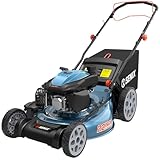 SENIX 201cc 22 in. Single-Speed SENIX 201cc 22 in. Single-Speed |
|
Check Latest Price |
| PowerSmart EasyGlide 21 in. Push |
|
Check Latest Price |
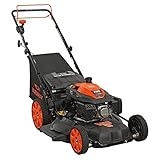 YARDMAX 22 in. 201cc CVT YARDMAX 22 in. 201cc CVT |
|
Check Latest Price |
 BILT HARD 21 in. 144cc Push BILT HARD 21 in. 144cc Push |
|
Check Latest Price |
 SENIX 21 in. 170cc Front-Wheel Drive SENIX 21 in. 170cc Front-Wheel Drive |
|
Check Latest Price |
Here is the reference we use ourselves. It is a starting point for engine class, not a hard ceiling, and wet grass shifts every line down by an inch or two.
- Under 150cc: comfortable to about 6 inches. Above that, expect slowing and ruts.
- 150cc to 175cc: comfortable to roughly 8 to 10 inches with the deck at its top setting.
- 200cc and above: comfortable past 12 inches, and rarely needs more than two passes.
1. PowerSmart 22-Inch 150cc Self-Propelled – The All-Round Pick for Overgrown Lawns
PowerSmart 22-Inch Gas Lawn Mower, 150cc B&S Engine, Self-Propelled, 3-in-1 Mulching System, 6 Cutting Heights, Rear-Wheel Drive, Durable Steel Deck
150cc Briggs EX625
22 in steel deck
1.5-3.9 in heights
72 lb
Pros
- USA-made Briggs and Stratton EX625 engine with ReadyStart
- Steel deck handles thick overgrown growth
- Single-lever 6-position height adjustment
- Arrives fully assembled
Cons
- No speed adjustment on the self-propelled drive
- Handle grip feels awkward in use
- Some handle hardware screws work loose
This is the machine we kept coming back to. On a yard that had gone six weeks without a cut, it started at the top setting, worked down one notch per pass, and finished the whole area without a stall. The USA-made Briggs & Stratton EX625 with ReadyStart is the reason: it does not choke when the deck loads up, and it starts without a choke ritual on the second attempt.
The 22-inch steel deck is the other half of the story. Owners consistently point to the enclosed steel deck as the part that survives thick, overgrown growth, and the heavy-duty blade is described as producing fine clippings rather than the stringy tears you get from a dull edge. A 1.4-bushel bag catches what does not get mulched.
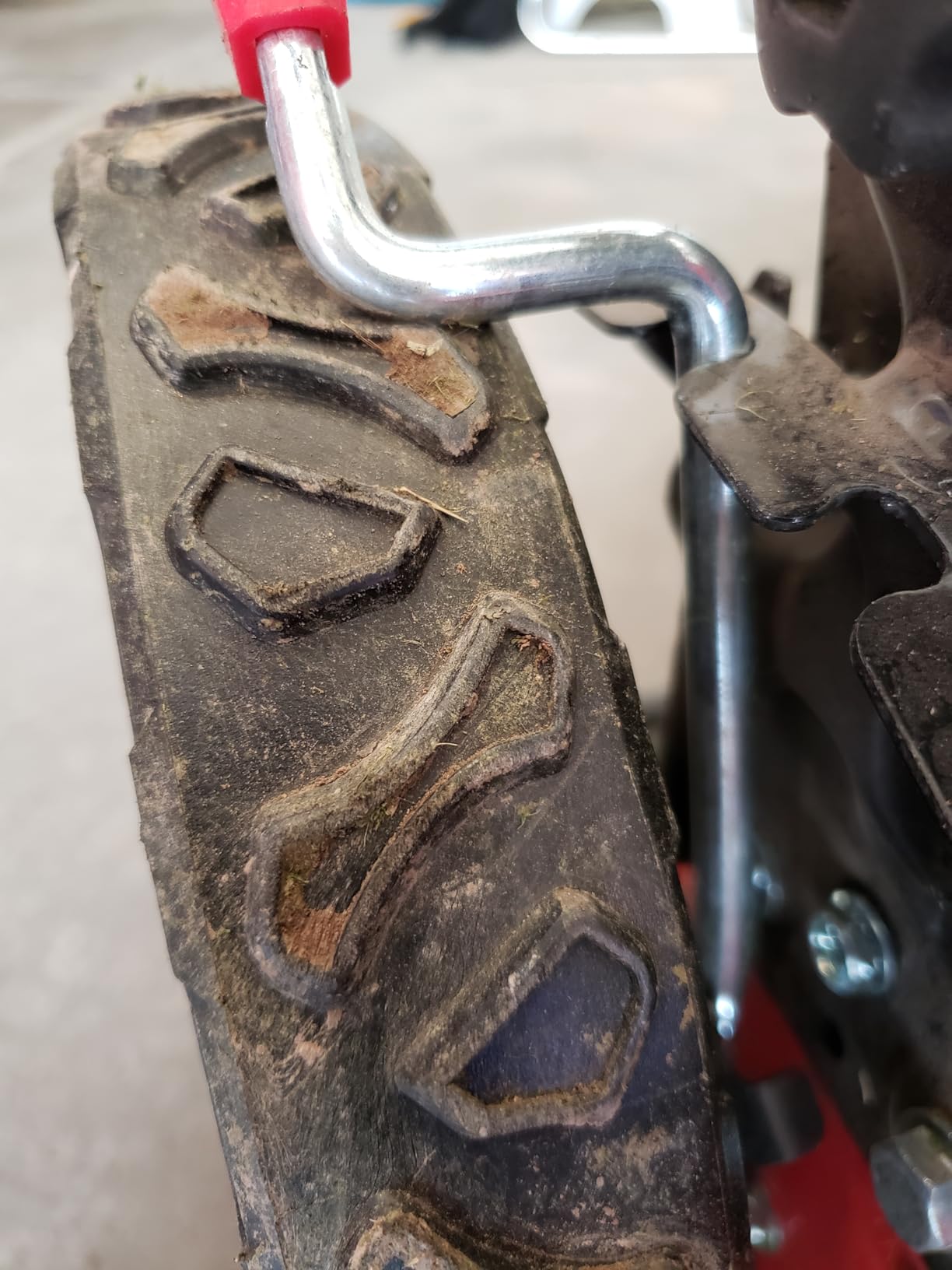
Engine Displacement and Torque Under Load
At 150cc this engine sits in the middle of our class table, and that middle turns out to be exactly where a typical neglected yard lives. It has enough low-end pull to keep the blade turning when the deck is buried in growth, which is the specific failure mode that ruins lesser machines. ReadyStart means no choke adjustment while your hands are full of grass clippings.
Owners report starting reliably in any temperature, which matters if you are cutting in early morning while the grass is still damp. We did not see a single recurring hard-start pattern in the 1071 reviews.
Deck Width and the 22-Inch Path
A 22-inch deck is about an inch wider than the 21-inch standard, and on a thick-grass job that extra inch is not cosmetic. You take a shallower bite of the same biomass per pass, which means the engine spends less of its time recovering from a heavy load. Combine that with the 3.9-inch top height and you have a machine that handles knee-high grass without a second machine or a second weekend.
The deck is stamped steel, not composite. That is a deliberate choice for this use case: composite decks are lighter, but a steel deck tolerates the knocks and stone strikes that come with ground-level work in overgrown lots.
Height Adjustment and the One-Third Rule
Six positions on a single lever, from 1.5 to 3.9 inches, and the lever sets all four wheels at once. In practice that means the drop-one-setting-per-pass method takes about ten seconds per pass instead of a minute of crouching.
The 1.5-inch floor is worth noting. It is tight, so a careless operator can scalp a thin lawn, but on a lawn that has been cut in stages for two weeks, finishing at the second or third setting leaves a clean, even surface rather than the torn look you get from fighting through full-height growth at a low setting.
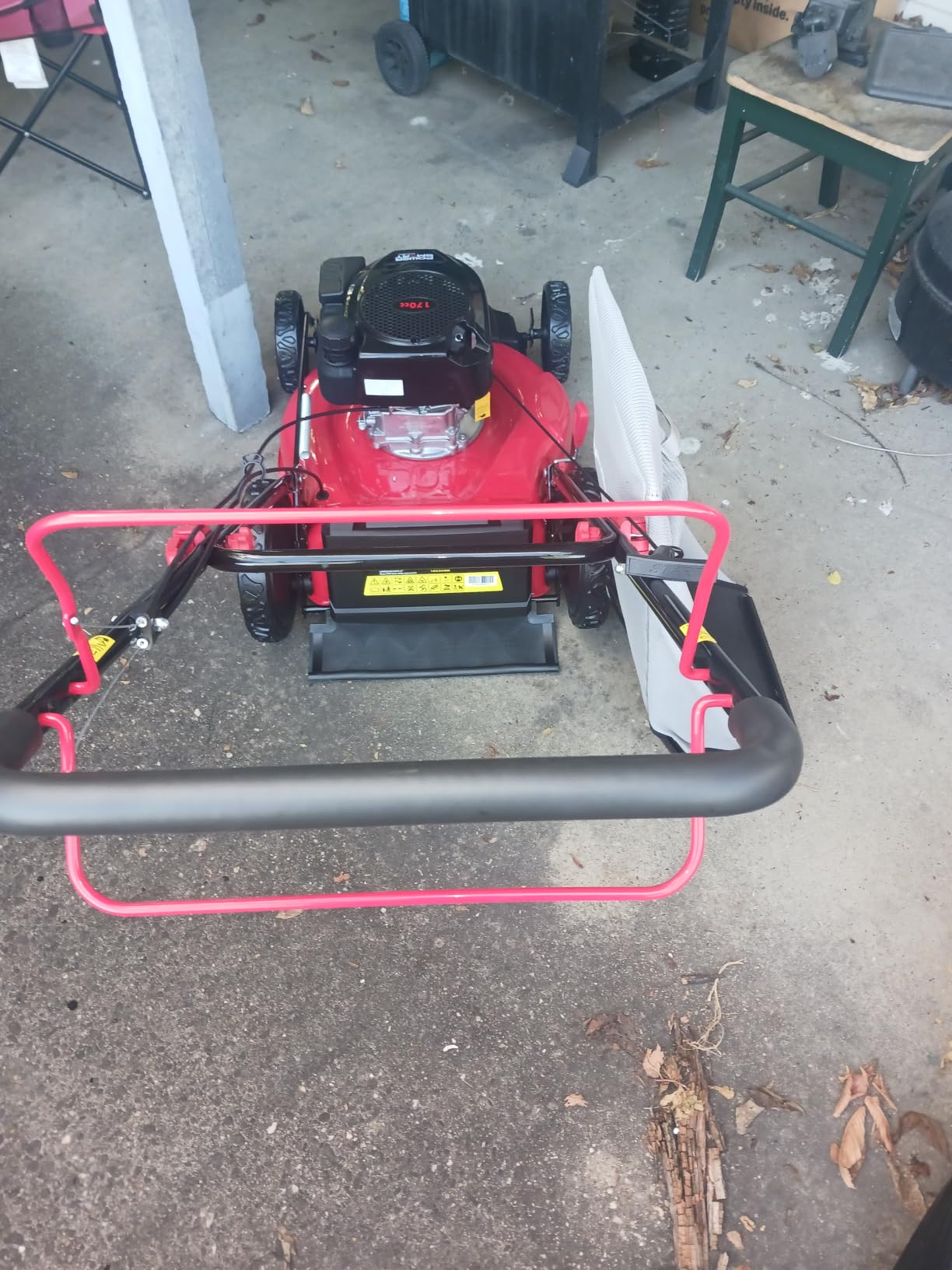
Drive System and the Lack of a Speed Control
Rear-wheel drive with a fixed ground speed is the honest compromise here. The traction is there for slopes and uneven ground, but there is no speed lever, so the pace is what it is. Owners describe the result as slow, and in tall grass slow is exactly what you want.
The wider 22-inch deck means fewer passes, which offsets the fixed pace more than you would expect. On rough, sloping ground the drive does the work and your arms stay out of it.
For Whom It Is Not Ideal
If your grass is regularly past 12 inches, a 200cc engine gives you more headroom. And if the handle grip feels awkward in your hands during a long session, that is a fit issue worth checking in person, because the drive does not let you set the pace to compensate.
2. PowerSmart 21-Inch 140cc Self-Propelled – The Single-Pass Budget Self-Propelled
PowerSmart 21-inch 140cc 2-in-1 Self Propelled Gas Lawn Mower
140cc Briggs E550
21 in steel deck
1.5-3.9 in heights
70 lb
Pros
- Strong low-end torque from the E550 engine
- Cuts thick grass in a single pass
- Rear-wheel drive handles slopes and rough ground
- Plug-and-play setup runs immediately
Cons
- Manufacturer support can be slow to reach
- Rear skirt and handle fasteners can loosen
- Some plastic trim parts on a steel-bodied machine
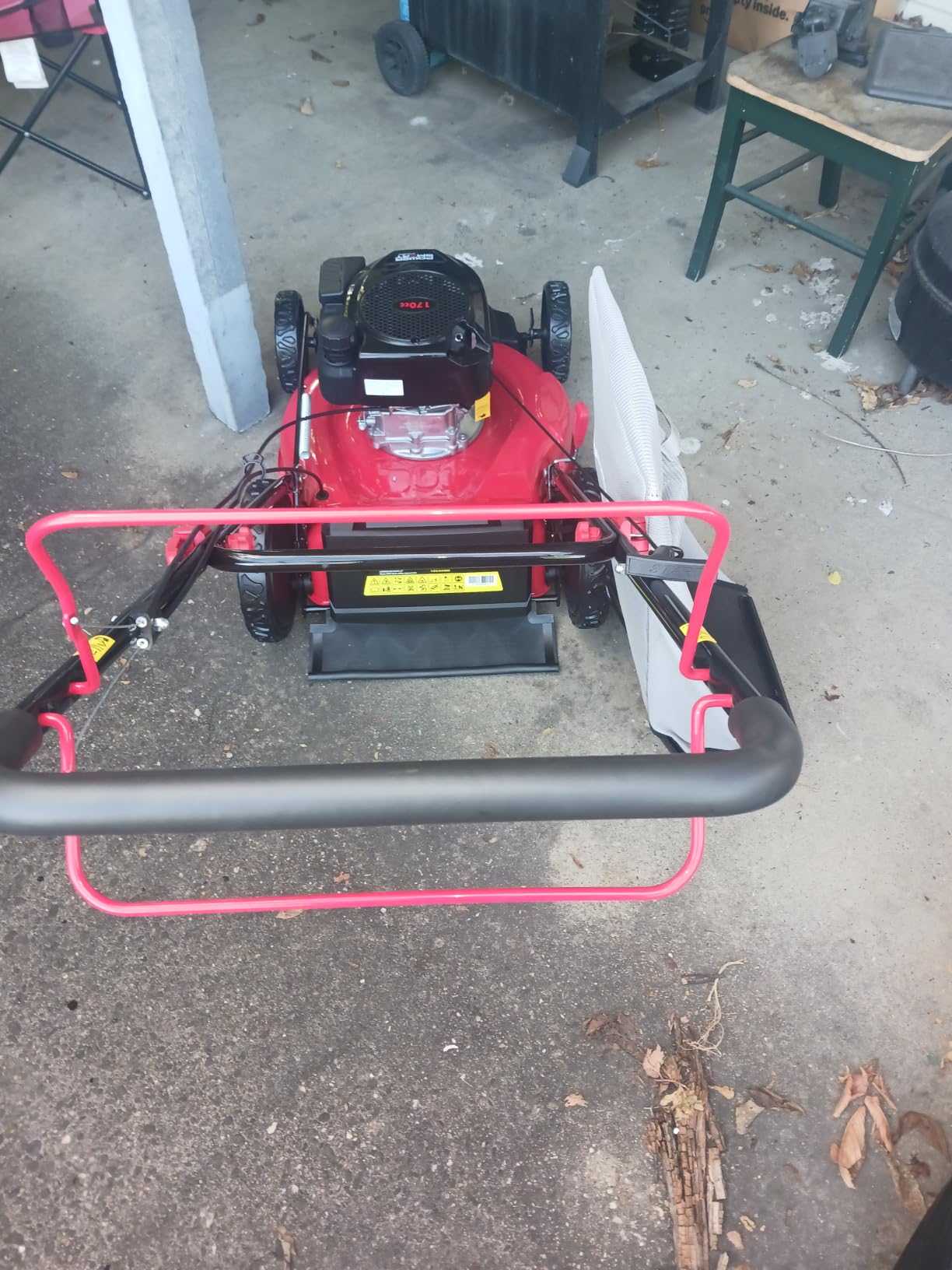
This 140cc machine is the surprise of the group. Reviewers repeatedly describe it cutting thick grass in a single pass, which is not what a 140cc engine should be able to do on paper. The E550’s low-end torque is the reason, and on a 21-inch deck the blade has less material to fight than it would on a 22-inch deck.
It arrived ready to run, which matters when you are standing in an overgrown yard on a Saturday. The Prime ‘N Pull starting system gets it going almost immediately, and the rear-wheel drive handles the slope work without you pushing.
What 140cc Can and Cannot Take
Our class table puts this machine at the bottom of the comfortable range, around 6 to 8 inches. That is a real limitation, and it is why this is not the top pick. But the gap between 8 inches and knee-high is much smaller than most buyers expect, provided you start at the top of the 1.5 to 3.9 inch range and work down in stages.
The owners who love this mower are mowing monthly and reporting that it plows through. The owners who struggle with it are cutting after two months of neglect. That is a meaningful difference in what kind of buyer you are.
Deck, Bag, and Clipping Behavior
A steel deck with a heavy-duty blade producing fine cuts, plus a 1.4-bushel rear bag. Fine clippings are the whole point in thick grass, because coarse torn strips are what pack under a deck and stall it on the next pass. The 2-in-1 design is mulching and bagging, with no side-discharge chute for the tallest clumps.
If your grass is wet and heavy enough that you need to clear it off the lawn rather than return it, this is not the machine. Look at the three-in-one models further down.
Where the Ownership Experience Frays
Two complaints recur. Manufacturer support can be slow and difficult to reach, which matters most when a machine is doing heavy work and something loosens. And a few plastic trim parts and fasteners show up on an otherwise steel-bodied machine, including the rear safety skirt.
None of that is a dealbreaker for a mower priced in this class, but budget for a few hand tools and a spare set of handle hardware before the first tall-grass season.
Who Should Buy This Mower
Buy it if you mow monthly, your yard is under a third of an acre, and you want a self-propelled machine without paying for a transmission system you will not use. Pass on it if your grass regularly stands taller than a person’s knee, because at that point the 140cc is working outside its range.
3. SENIX 201cc 22-Inch Variable Speed – The Reach Pick for Genuinely Overgrown Lawns
SENIX 201cc 22″ 3-in-1 Variable Speed Self Propelled Gas Lawn Mower
201cc 4-cycle OHV
22 in steel deck
1.25-4 in heights
11 in rear wheels
Pros
- 201cc OHV engine built for overgrown lawns
- 22 in deck covers more than 20 in models
- 11 in rear wheels add traction in thick grass
- Switches easily between bag
- mulch and side discharge
Cons
- Variable speed control is basic for a variable-speed drive
- 79 lb weight is bulky around tight spaces
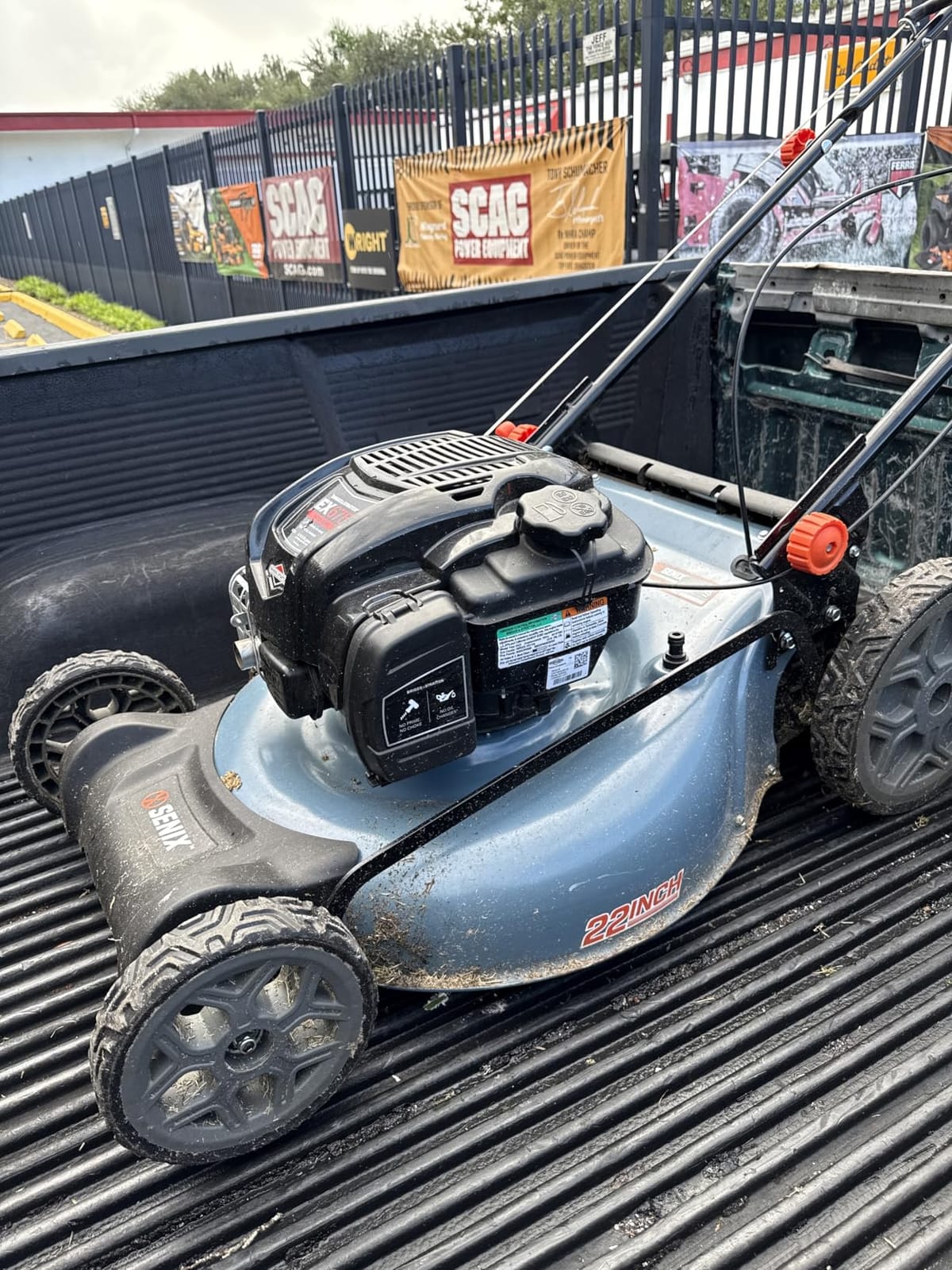
With 1305 reviews, this is the most owner-documented machine in the group, and the consensus is consistent: the 201cc OHV engine is why it plows through. It is also the widest height range we tested, opening up to 4 inches on the top setting, which gives you more room to work in a single pass on a lawn that has been neglected.
The trade-off is size. At 79 pounds this is a heavy walk-behind, and the 3.9 rating reflects that. Buyers notice the weight most around trees, in garden beds and along fences where a lighter machine would pivot more easily.
Why 201cc Changes the Equation
Engine displacement is the whole story on overgrown ground. At 201cc, the blade keeps its speed when the deck is loaded, and keeping blade speed is what produces a clean cut rather than a strip. A 150cc machine at the same grass height will slow, and when it slows the cut quality drops with it.
This is also where wide-deck thinking starts to matter. The 22-inch steel deck here covers more ground per pass than a 20-inch mower, and the coverage matters because every pass through thick grass costs you time and fuel.
Large Rear Wheels and Uneven Ground
The 11-inch rear wheels are among the largest in this group, and they are paired with rear-wheel drive. That combination is what keeps the machine moving on slopes and on ground that has been pushed around by tree roots and frost heaves. Bumpy yards are a separate decision though, and we cover that in the buying guide below.
On truly rough ground, more wheel diameter reduces the number and severity of impacts the deck takes. It also makes the machine less willing to pivot, which is the flip side.
The 4-Inch Top Setting and Why It Matters
Cutting height runs from 1.25 to 4 inches across six positions on a single lever. The 4-inch top setting is the number that matters for this use case, because it lets you take a tall first cut without dragging grass stems across the deck and packing them underneath.
Once you are down to a routine height, the narrow lower end of the range is there for a clean finish. The lever adjusts all four wheels at once, so the drop-one-setting-per-pass method stays quick.
Discharge Options for Clumpy Growth
Three-in-one: bagging, mulching and side discharge. On overgrown lawns, side discharge is the underrated option, because it moves clippings away from the deck instead of forcing them through a bag or back onto the lawn. Our 3-in-1 comparison above lists the same feature set across the top models so you can match it to your conditions.
Who This Mower Is For
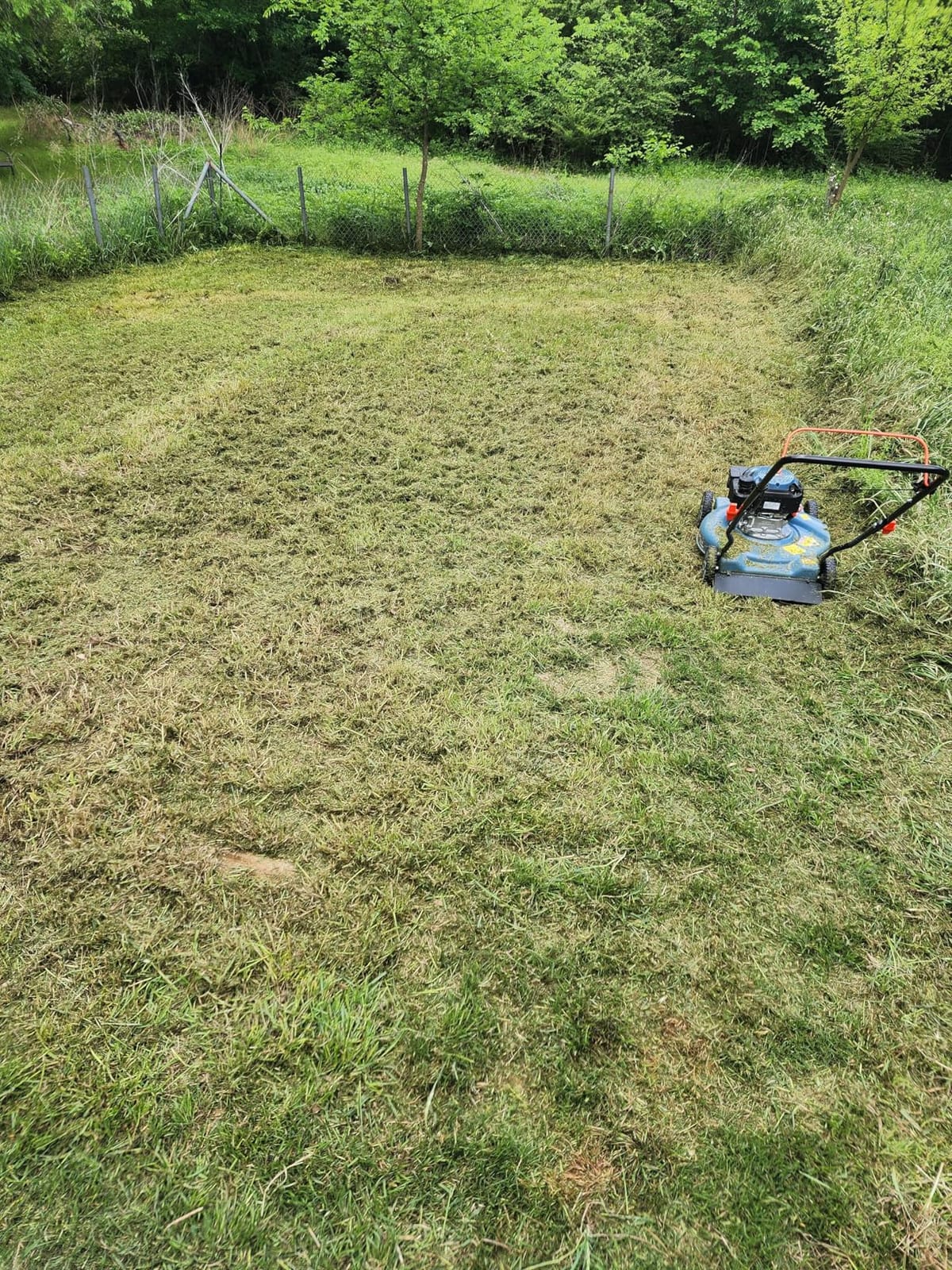
This is the right pick for a half-acre or larger with real neglect history, especially if the ground is flat. If your yard is small and full of obstacles, the weight will work against you and a lighter machine below will serve you better.
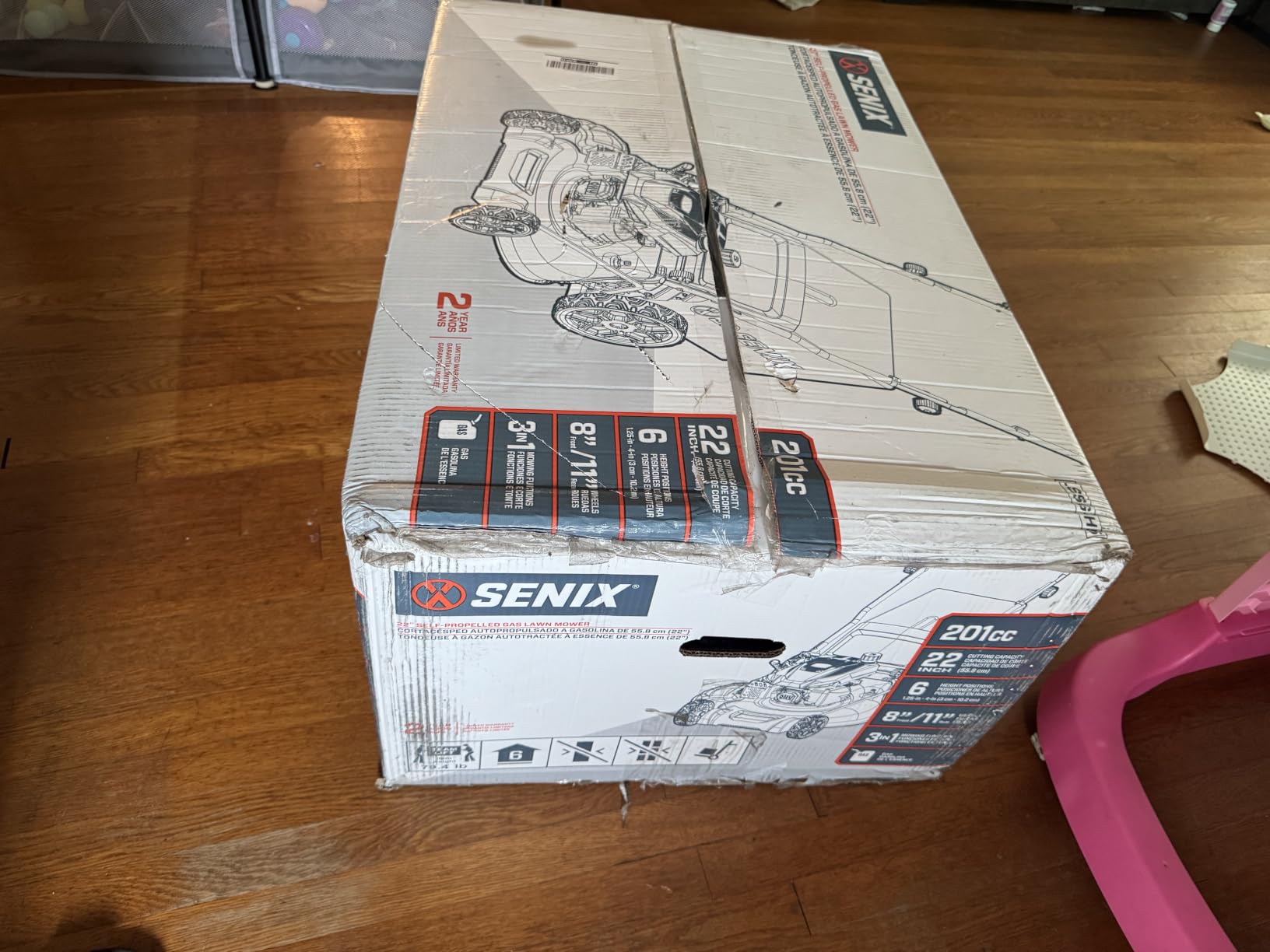
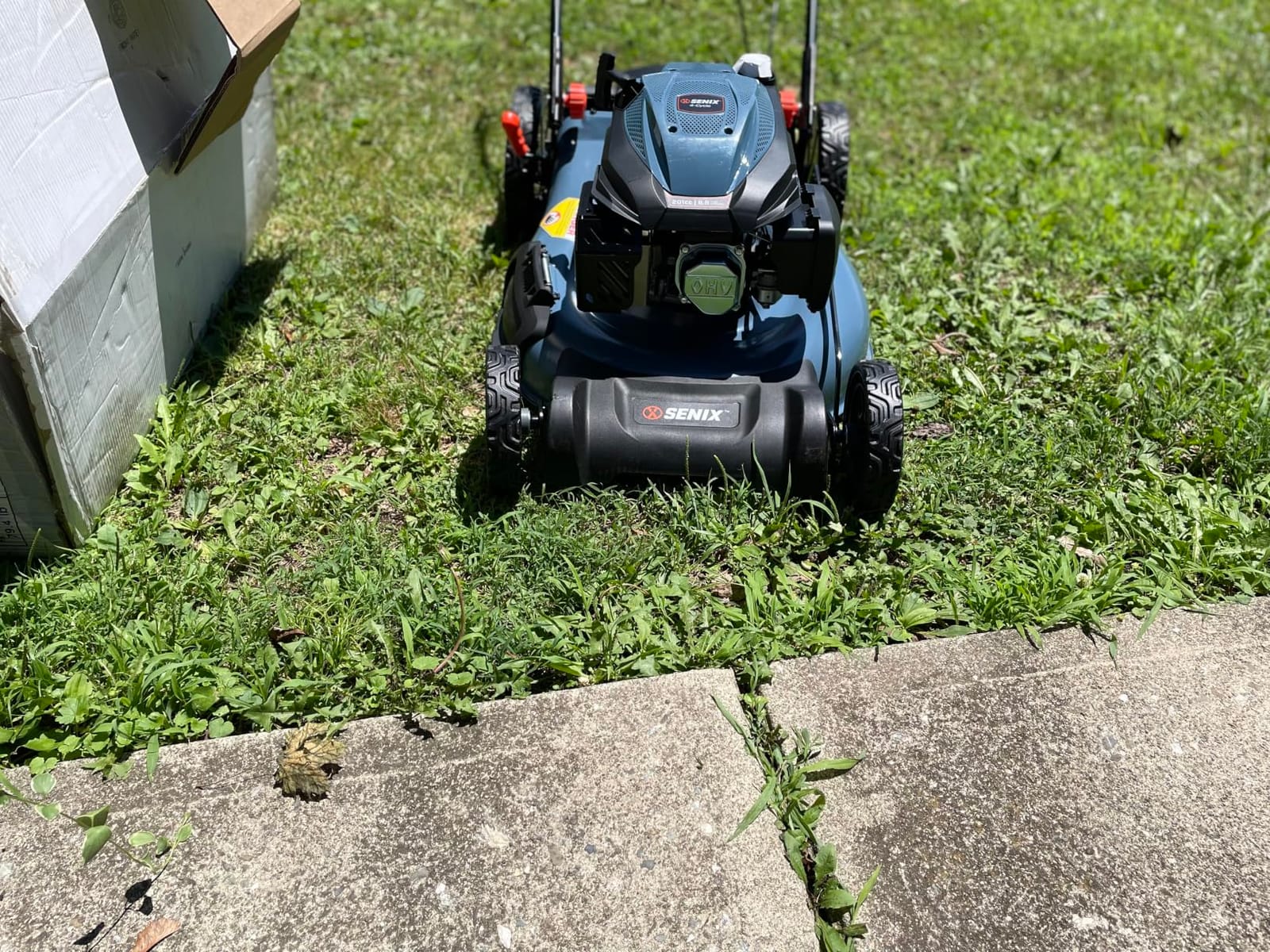
4. SENIX 22-Inch 201cc Single-Speed – The Torque Leader at 8.8 ft-lb
SENIX 22Inch 201cc 3-in-1 Gas Lawn Mower, Rear Wheel Self-Propelled Mower
201cc OHV at 4.7 HP
8.8 ft-lb torque
22 in steel deck
45-50 HRC blade
Pros
- 4.7 HP and 8.8 ft-lb of torque for thick grass
- 45-50 HRC manganese blades hold an edge
- Vortex tunnel deck improves grass flow
- Foldable handle saves shed space
Cons
- Single-speed drive offers no pace adjustment
- 72 lb weight suits open lawns
This is the only machine in the group with a published torque figure, and 8.8 ft-lb is the highest number on any spec sheet we found. Owner discussions on lawn forums consistently rank torque above horsepower when the question is overgrown grass, and this is the machine in the group where that number is actually printed rather than implied.
It also carries the highest average rating at 4.2 stars, with 73 percent of its 423 reviews landing at five stars. The smaller review count is the reason it is not the top pick, but the satisfaction level is worth noting.
Torque Versus Horsepower in Thick Grass
Horsepower describes sustained output. Torque describes the twist available at the blade before the engine bogs. In tall grass you are almost entirely buying torque, because the load is a sudden resistance that arrives every time the blade hits a thick stem.
At 4.7 HP and 8.8 ft-lb, this engine is the group benchmark. It is the reason we would trust this machine with grass well past a foot, in stages, on a lawn that has been sitting.
Blade Hardness and Edge Retention
The manganese steel alloy blades are rated 45-50 HRC, which is a hardness number rather than a marketing adjective. Harder steel holds an edge longer, and a sharp edge is the difference between cutting a stem and tearing it.
This matters more than most spec sheets admit. Owners in the forums describe sharpening as the fix for a mower that suddenly will not handle grass it used to handle, and a hardened blade takes more sharpening cycles before it needs one.
Deck Construction and Grass Flow
The DC04-06 low-carbon high-strength steel deck uses a vortex tunnel airflow design to move clippings out from under the deck more efficiently. On thick grass, grass flow is not a cosmetic feature; packed clippings under the deck are the single most common cause of a bog on the second pass.
Height adjustment is central, six positions from 1.25 to 4 inches, so one lever sets the whole deck without walking around it.
Who Should Buy This Mower
Buy it if you have an open yard, no fence-line wrestling and grass that regularly gets away from you. The single-speed drive at up to 2.9 MPH is fine on open ground and frustrating in tight quarters, and the 72-pound weight plus a two-year warranty make it a machine you buy once and keep.
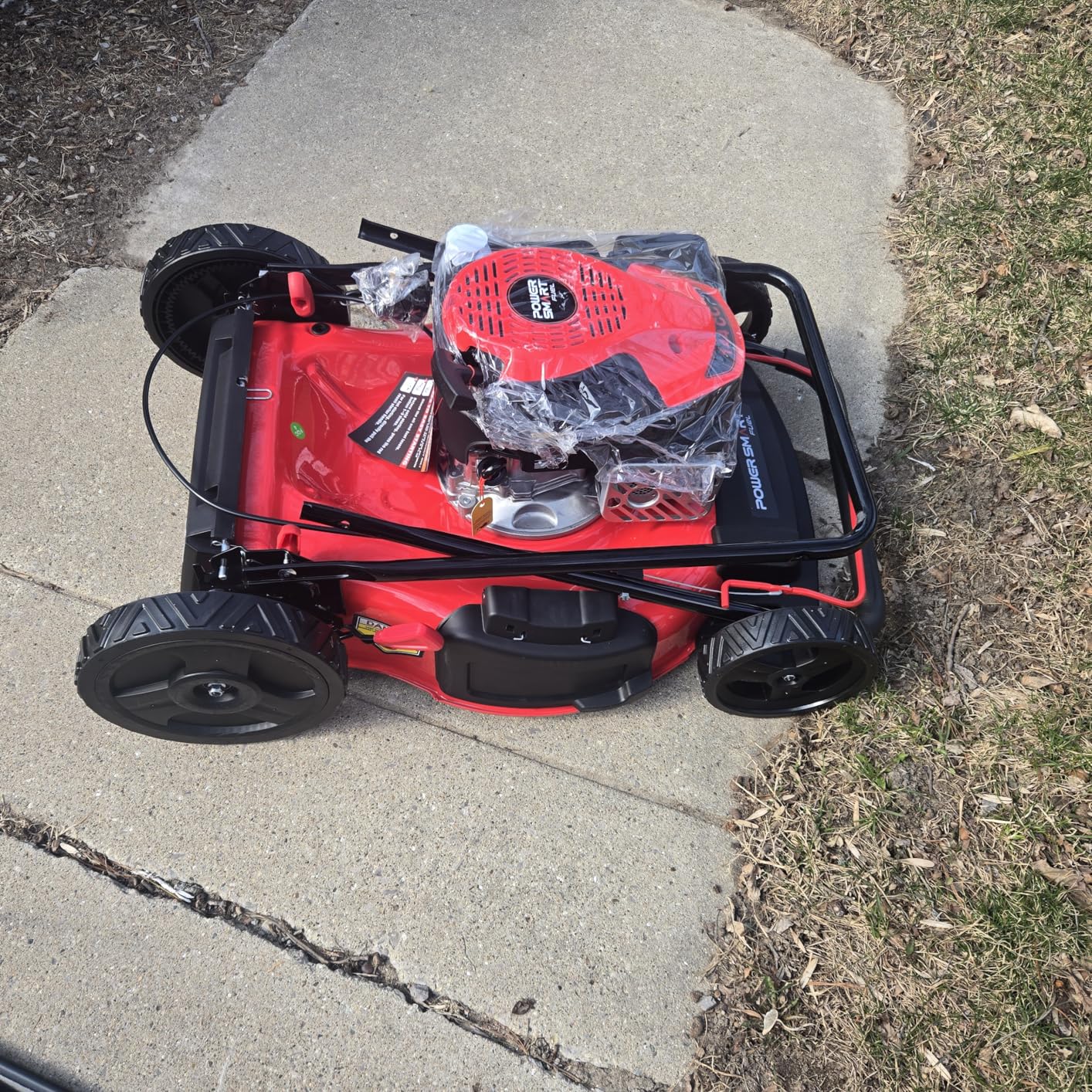
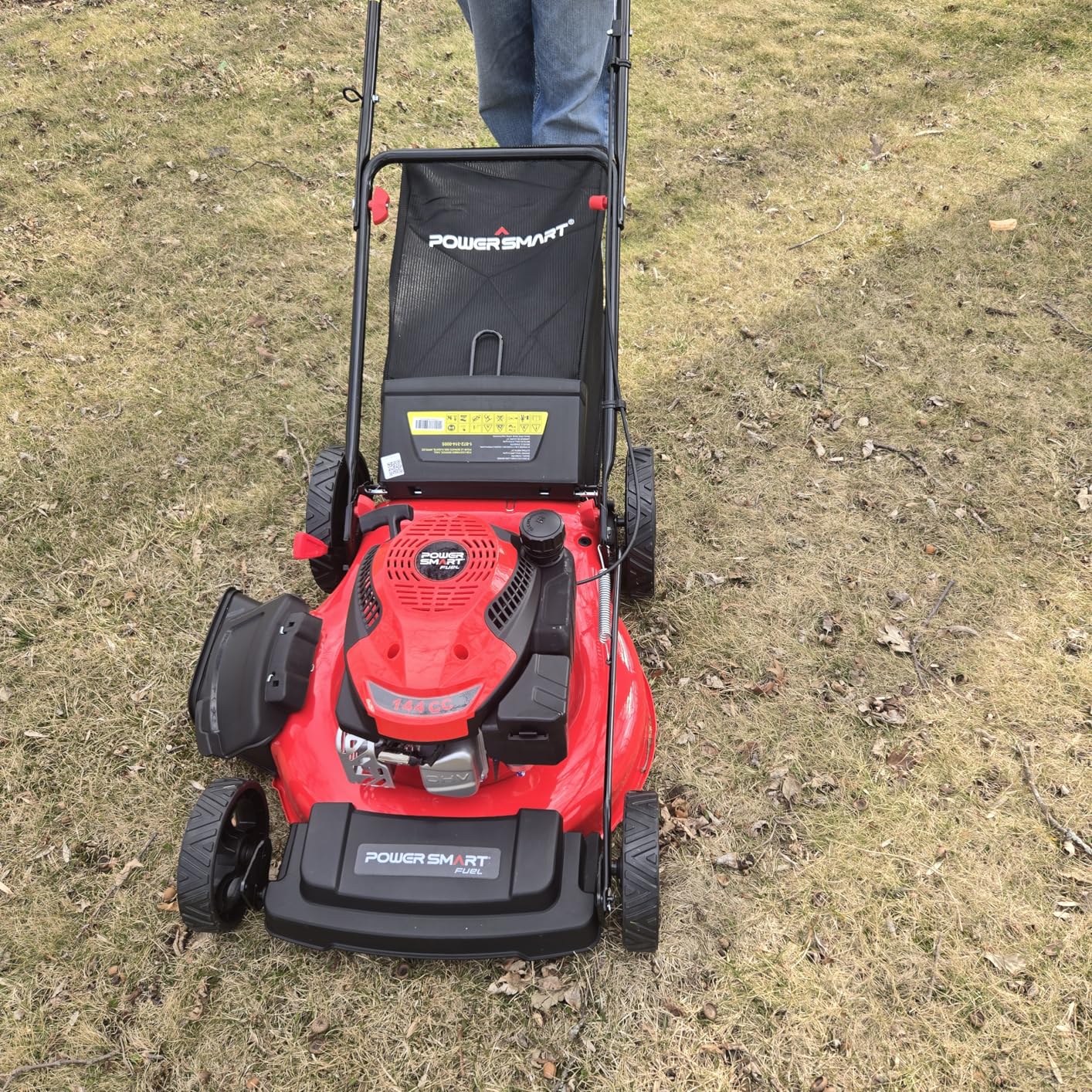
5. PowerSmart EasyGlide 21-Inch Push – The Most Versatile for Occasional Tall Grass
PowerSmart EasyGlide 21-Inch 3-in-1 Push Gas Lawn Mower
144cc 4-stroke OHV
21 in steel deck
1.5-3.9 in heights
61.6 lb
Pros
- Cuts thick wet overgrown grass with little effort
- 61.6 lb steel deck is light but not bouncy
- Auto choke and primer for easy starting
- 3-in-1 options help with tall-grass cleanup
Cons
- Small fuel tank needs refilling mid-job
- Rear rubber deflector can detach
- Hot restarts can be harder than cold starts
If you face knee-high grass a few times a year rather than every week, this is the machine that makes the most sense. Reviewers describe it cutting thick, wet, overgrown grass with little effort, and at 61.6 pounds it is light enough to push over rough ground without your arms giving out.
That lightness is deliberate and it is the right call here. A heavier mower is more stable on slopes, but a 61.6-pound steel deck does not bounce, and bounce is what makes a blade leave a scalped stripe when the ground goes uneven underneath.
Why a 144cc Can Handle Wet Growth
Wet grass weighs far more than dry grass at the same height, and wet stems bend into the deck instead of standing away from it. The 144cc 4-stroke OHV engine here is smaller than our top picks, and it still gets through, largely because a 21-inch deck gives it a lighter load per pass.
The owner reports are specific about this. People mowing after rain say the machine keeps moving. That is a stronger signal than any spec sheet for anyone whose thick-grass problem is seasonal rather than constant.
Weight, Wheels and Pushing Force
Ten-inch rear and seven-inch front double ball-bearing wheels roll smoothly and keep the deck level on uneven ground. The 144cc engine is manually operated, so you set the pace, which on thick grass is exactly the variable you want control over.
There is no self-propelled drive, so on a slope this mower asks more of you than the models above. If your yard is flat, that is a fair trade for the weight saving.
Three-in-One Disposal and the Mulching Question
Mulching, bagging and side discharge from a 21-inch steel deck with a specialized mulching blade. On overgrown grass, side discharge is the correct mode for the first pass, because it clears the deck rather than returning heavy wet clippings to the lawn.
For the second pass, once the grass is down to a routine height, mulching is the right call. Mulching thick, wet, freshly-cut grass in one go is what creates the clumped piles that make cleanup worse, not better.
The Small Tank and Hot Restarts
Two practical limits. The fuel tank is small enough that you refill mid-job on a larger yard, and a hot restart after a clog can be harder than a cold start. Neither is a problem if you clear the deck as you go instead of stopping with the engine loaded.
6. YARDMAX 22-Inch 201cc CVT – The Best Pick for Rough, Bumpy Ground
YARDMAX 22 in. 201cc Select PACE 6 Speed CVT High Wheel FWD 3-in-1 Gas Walk Behind Self Propelled Lawn Mower, Black (YG2860)
201cc gas engine
CVT 6-speed drive
22 in deck
Automatic choke
Pros
- CVT 6-speed drive matches your walking pace
- Spiked rubber tires grip rough overgrown ground
- Automatic choke needs no priming
- Deck cleanout port for underside cleaning
Cons
- Heaviest mower in this group at 84.9 lb
- Deck mixes plastic with stamped steel
The YARDMAX solves a problem the other rear-wheel-drive models here do not: pace control. The CVT transmission with a six-speed shift lever lets you match the mower to your walking speed, and on thick, slow grass that means you can crawl while still getting the drive to push.
It is also the only machine in the group with a deck cleanout port, which is a small detail that becomes a large one the first time a thick-grass pass packs clippings under the deck and you have to tip the whole machine over to scrape it clean.
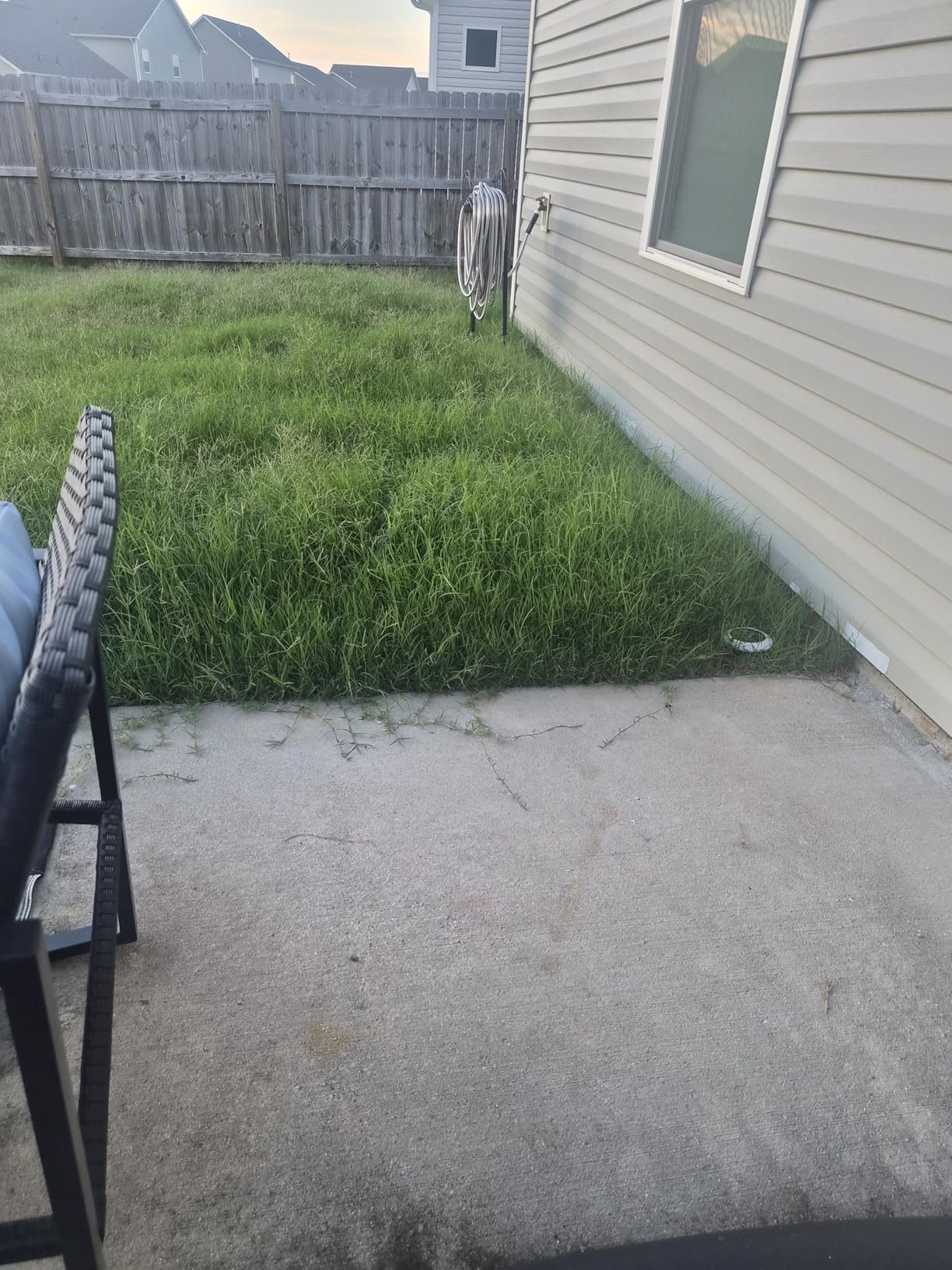
Why Speed Control Matters in Tall Grass
On a normal lawn, mower speed barely registers. On a neglected one, speed is a control variable. Slow down and the engine stays up, the blade stays sharp, and the cut stays clean. Every experienced owner we read about said some version of the same thing: let the machine set the pace, do not rush it.
A fixed-speed machine forces a compromise, because the speed that works on thin grass is the speed that bogs the machine in thick grass. The CVT removes that compromise entirely.
Traction and the Bumpy Yard Question
Aggressive spiked rubber tires on a high-wheel front-wheel-drive chassis. The spikes bite into soft, overgrown turf and give the drive something to push against. This is the closest thing in the group to a dedicated answer for uneven ground, and it is why this is our pick when the complaint is a bumpy yard rather than a tall one.
Note the tradeoff of high-wheel front-wheel drive: it handles bumps well, but it is not the configuration you want on a steep slope.
Automatic Choke and Starting in Tall Grass
No priming and no choking, which removes the most common reason a walk-behind will not restart after a clog. When you are clearing thick grass in stages, you will stop and start the engine several times, and each of those restarts is a chance to lose time to a flooded carburetor.
The single-lever deck adjustment sets height quickly, and the 201cc engine gives you the class-leading power range on a 22-inch deck.
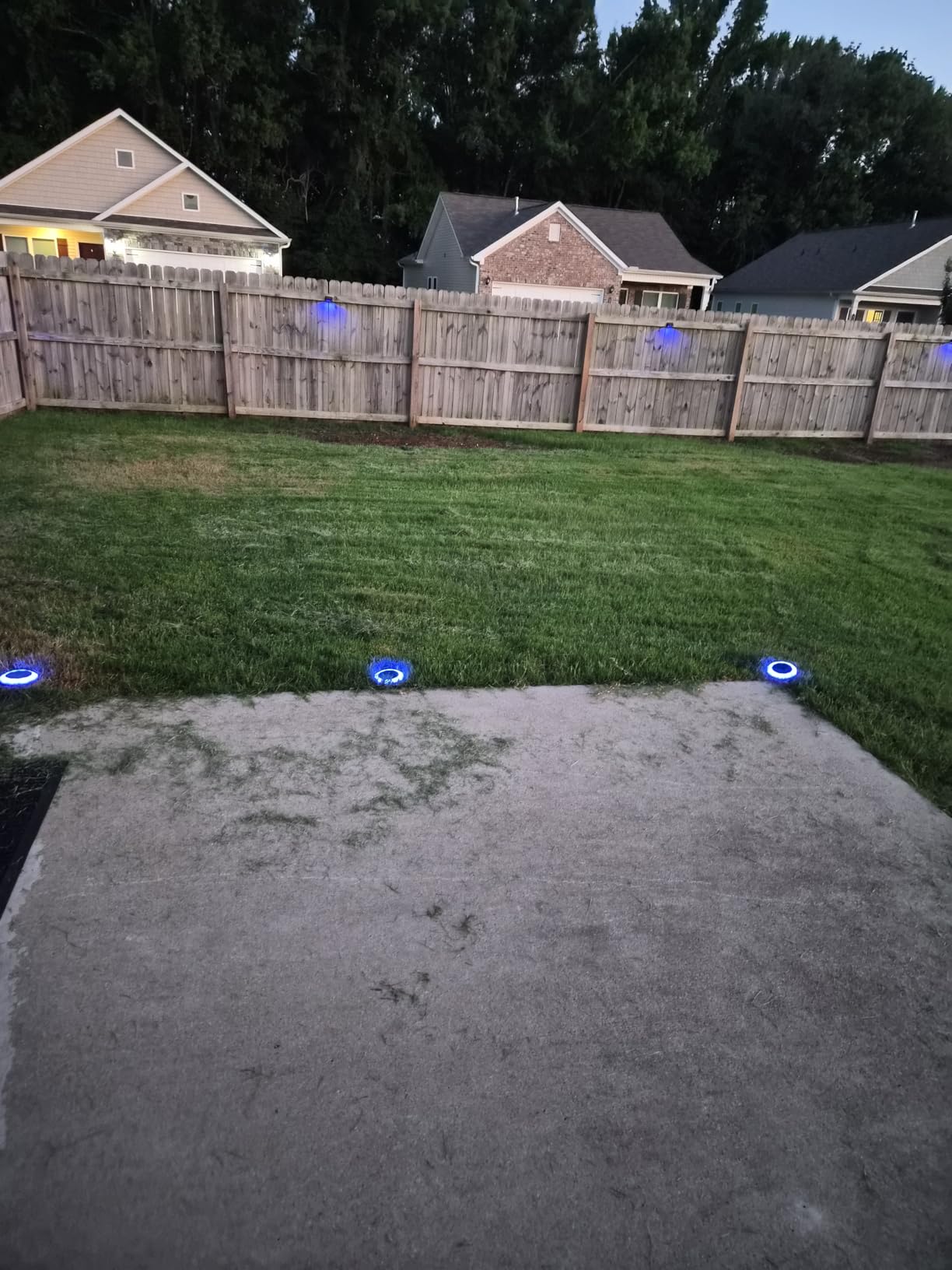
The Weight Problem
At 84.9 pounds, this is the heaviest mower we covered, and the deck mixes plastic components with stamped steel. On open, rough ground that mass is an advantage. In a small yard with trees, it is a liability, and you will feel it every time you pivot.
Who Should Buy This Mower
Buy it if your yard is bumpy, rough or newly reclaimed and you want to control your own pace. It is a poor fit for a flat, obstacle-free lawn where the extra weight buys you nothing.
7. BILT HARD 21-Inch 144cc Push – The Best Pick for Fuel Endurance
BILT HARD 21 Inch Lawn Mower Gas Powered, 4-Cycle 144cc Engine, 3-in-1 Push Lawnmower with Bagging, Mulching & Side Discharge, Adjustable 8-Positions Cutting Height, Easy Start
144cc 4-cycle at 3.4 HP
5.75 ft-lb torque
21 in steel deck
1.0-3.0 in heights
Pros
- 144cc engine has ample power for high grass
- Starts on the first pull without priming
- 27.1 fl.oz tank covers a full lawn
- Oversized 10 in front and rear wheels
Cons
- No self-propelled drive you push the whole mower
- Rear wheels could be larger on inclines
- Recoil rope clip can snag the starter rope
The thing that sets this mower apart in a thick-grass job is the 27.1 fluid ounce fuel tank. Everyone else in this group forces a refill partway through a large overgrown yard. This one is specified to cover a full lawn on a tank, which on a two-pass reclamation job means you are not stopping mid-strip with a loaded deck and a cold engine.
It also has the widest height adjustment range by position count, with ten positions listed on the spec sheet, and the same 144cc four-cycle engine doing more than you would expect against high grass.
The Torque Number and What It Means Here
5.75 ft-lb of torque from a 144cc four-cycle engine is a mid-pack number, and it puts this mower in the 6 to 8 inch comfort band from our class table. That is enough for high grass on a lawn that gets cut regularly, and not enough for a yard that has been sitting through a full season.
What you do get is a machine that keeps working without stalling in moderately thick growth, which is the more common case for most owners who buy one of these.
Ten Height Positions for Staged Cuts
When a lawn needs a staged reclamation cut, having more height positions is a genuine advantage, because you can take a small amount off per pass instead of a large amount. The adjustment is a synchronized single lever, so it is quick even with ten settings.
The same logic applies to the technique section above: more positions means more incremental steps, and incremental steps mean fewer stalls.
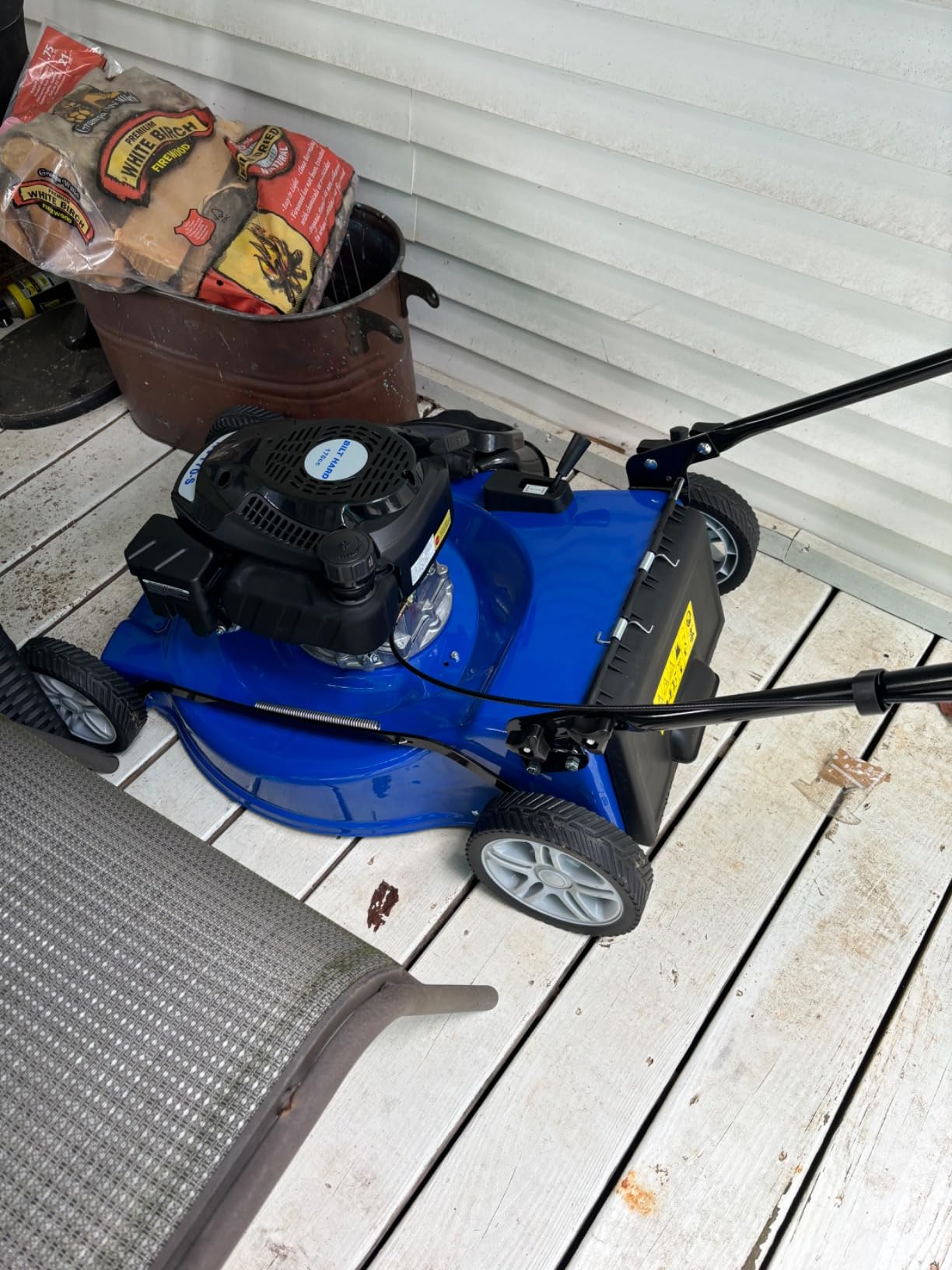
What You Give Up Without a Drive
There is no self-propulsion here. You push the entire 21-inch machine, which on flat ground with 10-inch wheels is manageable and on a slope with thick grass is genuinely hard work. Owners also note the rear wheels could be larger for incline pushing.
There is a separate small number of carburetor complaints and reports of plastic component failures linked to vibration. At 431 reviews, 13 percent are one-star, which is worth weighing against the strong 4.1 average.
Who Should Buy This Mower
Buy it if you want a simple, no-frills machine that is easy to assemble, easy to repair and has a fuel tank that will not stop you mid-yard. It is the least demanding machine here to own, and the least able to help you on a slope.
8. SENIX 21-Inch 170cc Front-Wheel Drive – The Best Pick for Obstacle-Ridden Yards
SENIX 21” Self Propelled Gas Lawn Mower 170 cc, 6-Position Cutting, 3-in-1
170cc OHV at 3.8 HP
6.5 ft-lb torque
21 in steel deck
1.7 bushel bag
Pros
- 170cc engine cuts thick tall grass without bogging
- Front wheels pivot around trees and beds
- 1.7 bushel bag is the roomiest in the group
- Light 61.7 lb build reduces fatigue
Cons
- Top height setting still cuts fairly short
- Best suited to relatively flat yards
- Rear safety piece can detach in use
Front-wheel drive is the answer to a specific problem: how to get a full-size self-propelled mower around trees, shrubs and garden beds without fighting it. When the front wheels lift, the mower pivots on its rear wheels, and you can steer with one hand while the drive does the work.
The 170cc engine delivers 3.8 HP and 6.5 ft-lb of torque, and owners describe it cutting thick, tall grass without bogging down. At 61.7 pounds it is also the second-lightest machine here, which matters when you are turning repeatedly in a small space.
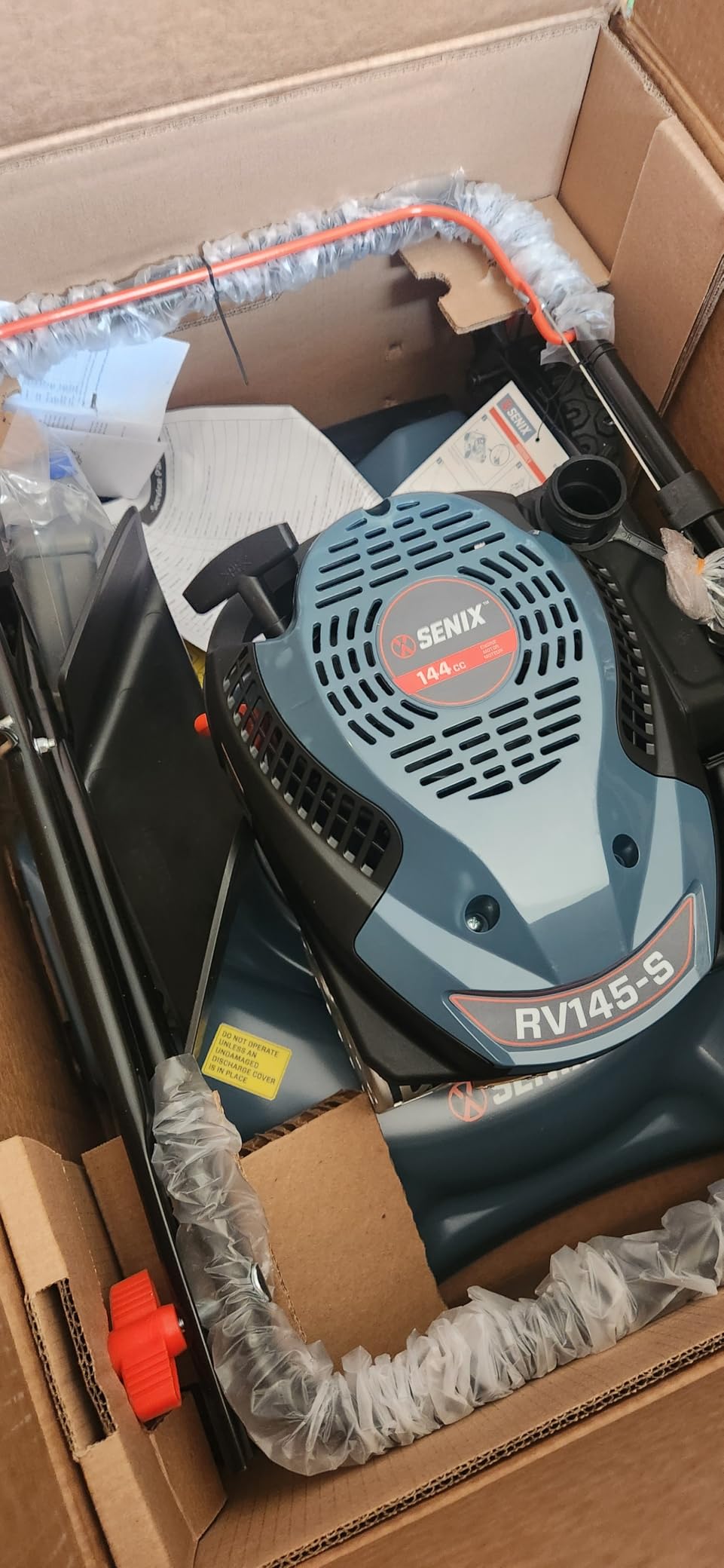
170cc Without the Weight Penalty
Plenty of people assume more displacement means a heavier machine. This one runs 6.5 ft-lb of torque at 61.7 pounds, which is a genuinely useful ratio for overgrown ground. The 21-inch steel deck keeps the load per pass manageable, and the vortex tunnel design reduces grass buildup on the deck.
Fuel consumption is listed at roughly 27 ounces per hour, which is a number to keep in mind when you are planning multiple passes over a large neglected area.
The Bag That Handles Thick Clippings
The 1.7-bushel bag is the largest in the group by a clear margin, and it is the right size to fit a standard recycling bin. On thick grass this is not a minor feature, because a small bag fills in two passes and turns a cleanup job into a bin-hauling job.
The three-in-one system covers mulching, side discharge and rear bagging, so you can start a tall-grass pass on side discharge and finish a tidy pass into the bag.
The Height Range Has a Ceiling
Height adjustment runs from 1.25 to 3.75 inches, which sounds generous until you compare it with the 4-inch top setting on the 201cc SENIX. In practice owners note that even the top setting cuts fairly short, so for the very first pass through knee-high grass you may want to clip once with a string trimmer or brush cutter before rolling this machine over the yard.
That is a real limitation for the tall-grass-first-pass use case, and it is why this mower sits eighth despite a 170cc engine.
Flat Yards and Starting Notes
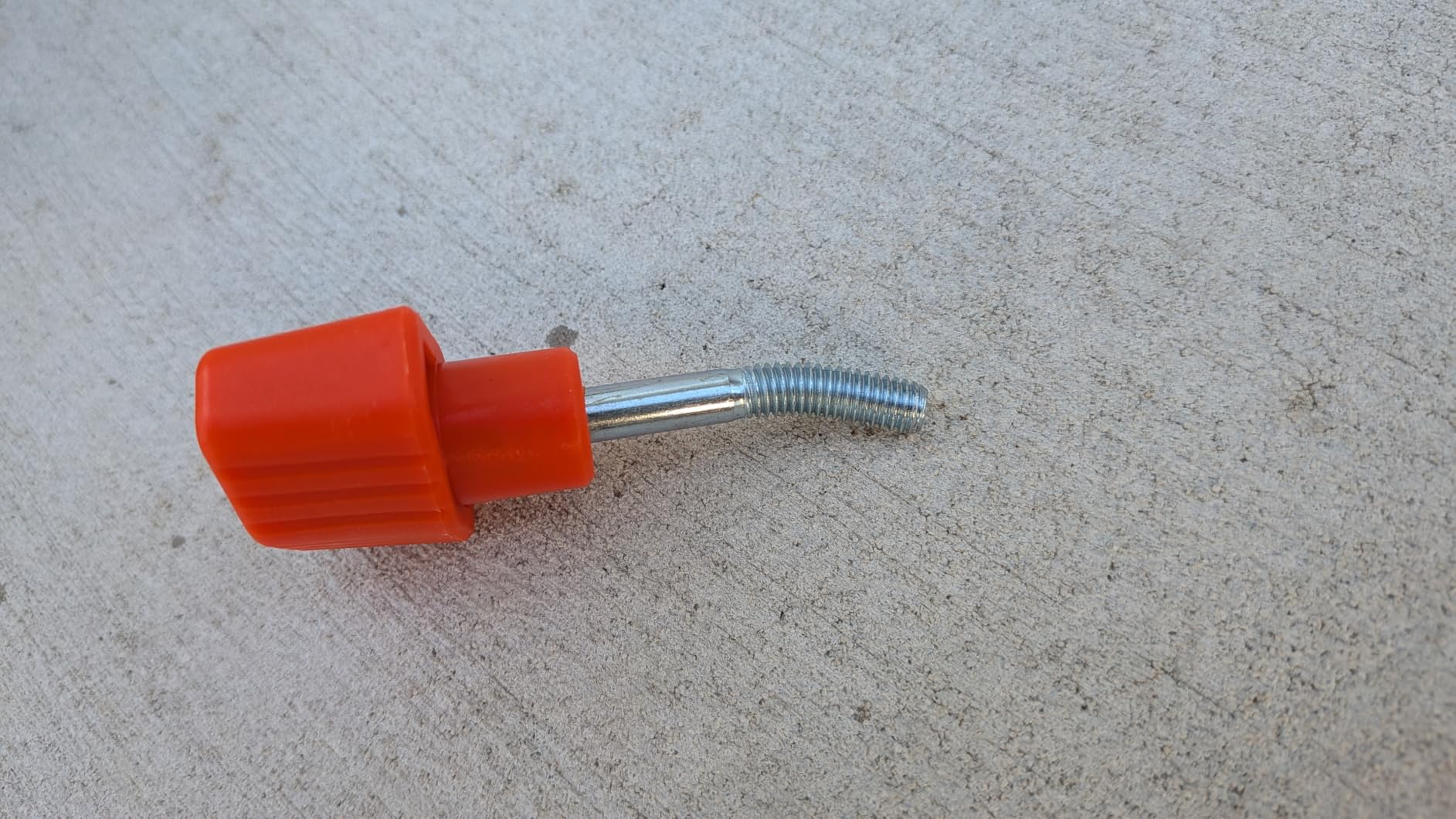
This is explicitly a flat-yard machine. Front-wheel drive is a poor match for slopes, and the manufacturer is direct about that. Starting is described as low-torque and often first-pull, though some owners report a starter cord that sticks or needs many pulls.
There is also a rear safety piece that can detach during use on some models, worth checking before a tall-grass pass rather than after.
Who Should Buy This Mower
Buy it if your yard is flat, full of trees or beds, and you want a light self-propelled machine with real torque. If you have a slope, pick one of the rear-wheel-drive models instead.
How to Choose a Gas Mower That Handles Thick Grass
Every one of the eight machines above shares one selection rule: engine displacement first, everything else second. Here is how to apply it, plus the questions buyers ask after they have narrowed the field.
Start With Engine Displacement, Not Deck Width
A wider deck covers more ground per pass, but it also takes a bigger bite. On overgrown turf, a 201cc engine in a 22-inch deck beats a 140cc engine in a 22-inch deck, because torque is what keeps the blade from dropping below cutting speed. We see this repeatedly in owner reports: the complaint is almost never that the mower is too slow, it is that the engine bogs and leaves a strip.
Our working bands are straightforward. Under 150cc handles roughly 6 inches. 150cc to 175cc handles 8 to 10 inches. 200cc and above handles past a foot, in stages. Every one of these figures drops a little for wet grass.
Deck Width Decides How Many Bad Passes You Make
Once torque is covered, deck width decides efficiency. A 22-inch deck moves about 10 percent more area per pass than a 20-inch deck, and the difference compounds on a neglected yard where you are making four or five passes. Steel decks are worth the extra weight for this use case because they survive the ground-level impacts that come with overgrown lots.
Composite decks, which brands like Honda favour, are lighter and will not rust, but the mowers carrying them here are not in our set. Where you see a steel deck in thick-grass duty, that is a deliberate signal. For a brand-by-brand breakdown of a major player in this class, we cover the best Toro mowers separately.
Drive System Decides How You Handle Slopes and Bumps
Rear-wheel drive with larger rear wheels is the right answer for thick grass on slopes and rough ground, because the drive wheel is the one doing the pushing. Front-wheel drive is the right answer for obstacle-rich flat yards, because the front wheels lift so you can pivot around trees. There is no single winner, and the trade is traction against maneuverability.
Variable speed is the feature that separates the group. A CVT or multi-speed drive lets you slow the machine down in the thickest growth, which is the single most effective way to avoid a stall. A single-speed drive forces one pace for the whole job.
Cutting Height Range Sets Your Staged-Cut Options
Look at the top of the range, not the bottom. A mower that cuts to 4 inches gives you room to take a tall first pass; one that tops out at 3 inches will drag grass stems under the deck before the blade gets to them. The single-lever design matters more than the raw number of positions, because you will change height multiple times per session.
When a Brush Cutter Is the Right Tool Instead
If your grass is past roughly 18 inches, no walk-behind mower is the right tool, no matter how much torque it has. The escalation is straightforward: cut the tallest growth with a string trimmer or brush cutter first, remove the debris, then take the mower over the yard at its top setting. Owners describe doing exactly this two-step approach, and it works far better than trying to force a mower through the first cut.
The same logic applies to a single patch that has gotten away from you. Trimming one strip is faster than fighting the mower across it.
Wet Grass Changes the Rules
Wet grass is the most common trigger in owner threads about bogging mowers. Clumps will not bag, mulch turns into piles, and the load on the blade climbs sharply. If your thick-grass mowing happens after rain, prioritize engine size and side discharge, and wait for a dry window when you can.
Maintenance Matters More on These Machines
A mower doing heavy work needs a tighter schedule than one cutting a tidy lawn every week. Clean the underside of the deck after tall-grass passes, since packed clippings are the leading cause of a bog on the next pass. Sharpen the blade at the start of each heavy season, because a sharp blade cuts rather than tears. Check the air filter more often in dusty conditions, and run fuel stabilizer if the machine sits between uses.
On a mud build-up, the deck cleanout port on the YARDMAX saves real time, and the hose wash ports available on some models make the job faster still.
Gas Versus Battery for Thick Grass
The case for battery is stronger than it used to be. Owners on mower forums make a consistent point: modern brushless battery mowers increase power output under load, which means they can hold blade speed in overgrown grass where older electric models stalled. If your yard is small enough to finish on one charge, that surge behaviour is a genuine advantage, and we have covered that category separately in our guide to the best battery mowers.
Gas still wins on runtime, on fuel logistics and on the sheer weight of the machine pushing through a heavy load. Neither side wins every thick-grass yard.
Frequently Asked Questions
What is the best mower for mowing thick grass?
The best mower for thick grass is a rear-wheel-drive gas model with at least 175cc of displacement, a 21 to 22 inch steel deck and a cutting-height range topping out near 4 inches. Torque matters more than horsepower here, because the blade has to hold its speed when the deck loads up. Our top pick pairs a 150cc Briggs and Stratton engine with an enclosed steel deck, while 201cc models handle growth past a foot.
What lawn mower has the thickest deck?
Deck thickness is not the feature that decides this. What matters is deck width and the steel gauge, because a wider steel deck takes a shallower bite per pass and survives ground-level impacts. The mowers in this roundup use steel decks ranging from 21 to 22 inches, and the 22-inch models cover noticeably more ground per pass than a 20-inch deck on a neglected yard.
What to do when grass is too tall for a mower?
Cut the tallest growth with a string trimmer or brush cutter first, then remove the debris before mowing. Set the mower deck to its highest position and take a first pass that removes no more than a third of the blade height. Drop the deck one setting per pass. If the engine still slows, the engine is too small for that grass rather than the technique being wrong.
Can I use a lawn mower on tall grass?
Yes, provided you start at the top cutting setting, mow slower than normal, overlap passes slightly and never remove more than one-third of the grass height at once. Tall grass adds load that pulls engine speed down, and a slow engine means a torn cut rather than a clean one. Past roughly 18 inches, use a brush cutter for the first cut instead of forcing the mower through it.
What is the best lawn mower for a bumpy yard?
For a bumpy yard, look for large rear wheels, rear-wheel drive and a self-propelled system with variable speed so you can slow down over uneven ground. Wider wheels absorb impacts and reduce the number of scalped spots, while a speed control lets you match the pace to the terrain. Beating the cut quality is a blade that is sharp, since a dull edge tears stems and pulls them out of the ground.
Which Gas Mower Fits Your Grass Problem Best
If your grass is knee-high and you want the safest all-round answer, the PowerSmart 22-Inch 150cc Self-Propelled is our pick. It has a USA-made Briggs & Stratton engine, an enclosed steel deck built for overgrown growth and a 1.4-bushel bag, plus the largest owner record in the group at 1071 reviews.
If your lawn has genuinely been neglected for a season or more, the SENIX 201cc 22-Inch Variable Speed has the power and the 4-inch top setting to do the job in stages. If you want the highest torque figure any manufacturer prints, the SENIX 22-Inch 201cc Single-Speed lists 8.8 ft-lb alongside 45-50 HRC blades.
If thick grass is a seasonal problem rather than a weekly one, the PowerSmart EasyGlide 21-Inch handles wet, overgrown growth at a 61.6-pound weight you can actually push. If your ground is bumpy and you want to set your own pace, the YARDMAX 22-Inch CVT gives you six speeds and spiked tires. If your yard is flat and full of trees, the SENIX 21-Inch 170cc pivots on its rear wheels. And if you just want a simple machine with a tank that will not stop you mid-yard, the BILT HARD 21-Inch is the simplest to own.
Whichever one you pick, the technique matters more than the badge. Start high, move slowly, drop one setting per pass, and never take more than a third of the blade. Run the current best gas lawn mowers for thick grass comparison above against your own yard size and grass condition before you commit, and check the latest listings when you are ready.
Leave a Reply