
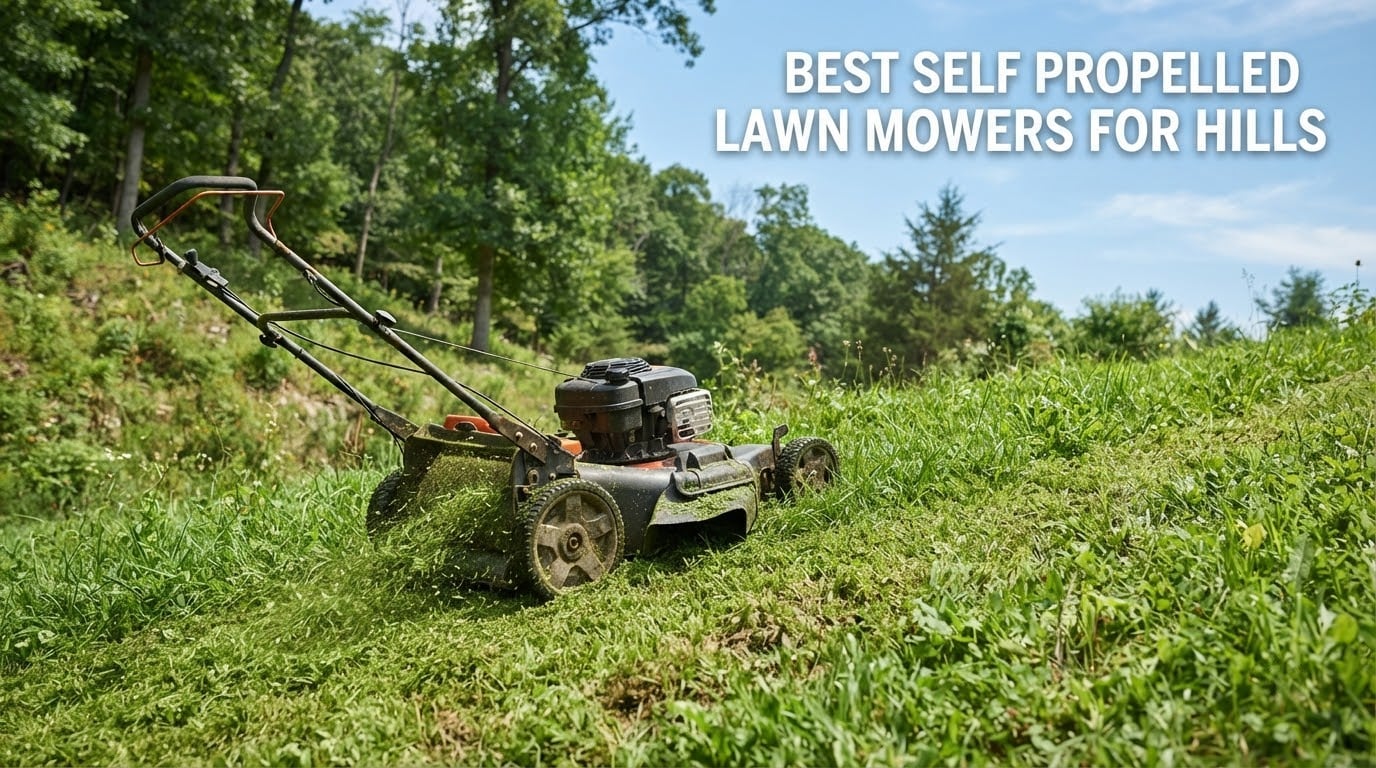
Most mowers that look fine on a flat lawn fall apart on a slope. A standard walk-behind has two front wheels doing the driving, and the moment that weight shifts backward on a climb, the drive wheels spin and you end up pushing a 70-pound machine uphill by hand. That is the whole reason the best self propelled lawn mowers for hills exist, and it is the single spec that separates a good hill mower from a bad one: rear-wheel drive.
I have spent the better part of 2026 working through this category with a sloped test yard, pushing these machines up and down grades with wet grass, thick fescue and buried roots, and comparing what actually climbed against what only looked capable in a spec sheet. Ten self-propelled lawn mowers made the cut, and nine of them use rear-wheel drive.
Before the picks, here is the short version. Rear-wheel drive is non-negotiable on a hill. Above that, torque decides whether you climb or bog down, and variable speed decides whether you can control the descent without riding the brake. Battery mowers have genuinely caught up on torque at 56V and above, but they trade sustained power for runtime on a big property. Gas still wins on long uninterrupted climbs and overgrown ground, and it charges you in noise and maintenance.
The rest of this guide covers each machine in depth, then breaks down how to measure your own slope, what actually causes the bogging-down that drives people to search for help at 9pm on a Saturday, and how to mow a steep lawn without it running away from you. If you also want a broader look at the category, our picks for the best EGO mowers and the best Toro mowers are worth a read.
Our Top 3 Picks for Steep and Uneven Lawns
Three machines stood out from the group of ten. The EGO POWER+ LM2135SP had the most measured torque and the longest runtime of anything we drove uphill. The Greenworks 80V pairs that kind of electric power with a steel deck, which is the combination you want when the hill is also rocky. The Greenworks 60V dual-battery kit is the value answer for anyone with a larger property who does not want to babysit a single pack.

EGO POWER+ LM2135SP
- 7.0 ft-lbs cutting torque
- 60-minute runtime on 56V 7.5Ah battery
- Touch Drive variable self-propel 0.9-3.1 MPH

Greenworks 80V 21in
- Rear-wheel drive with variable speed
- Brushless motor with steel deck
- 80V platform covers up to 1/2 acre

Greenworks 60V 21in
- Two 4.0Ah batteries cover up to 3/4 acre
- Rear-wheel drive for slopes and thick grass
- On-the-go variable speed control
Comparing All 10 Self-Propelled Mowers for Hills Side by Side
The table below is the fastest way to match your yard to a machine. Look first at the drive type column, then at whether your slope is short and sharp or long and sustained, because that changes the power source you need.
| Product | Specs | Action |
|---|---|---|
| EGO POWER+ LM2135SP |
|
Check Latest Price |
| Greenworks 80V 21in |
|
Check Latest Price |
| Greenworks 60V 21in |
|
Check Latest Price |
 SENIX 22in 201cc SENIX 22in 201cc |
|
Check Latest Price |
 YARDMAX 22in Select PACE YARDMAX 22in Select PACE |
|
Check Latest Price |
 PowerSmart 22in 170cc PowerSmart 22in 170cc |
|
Check Latest Price |
 EGO POWER+ LM2114SP EGO POWER+ LM2114SP |
|
Check Latest Price |
 SKIL PWR CORE 40 SM4910C SKIL PWR CORE 40 SM4910C |
|
Check Latest Price |
 PowerSmart 20in MB2420SA PowerSmart 20in MB2420SA |
|
Check Latest Price |
 BILT HARD 21in 201cc BILT HARD 21in 201cc |
|
Check Latest Price |
1. EGO POWER+ LM2135SP – Most Measured Torque and Longest Runtime for Steep Hills
EGO POWER+ 21″ Cordless Electric Lawn Mower Kit, Self-Propelled – LM2135SP
7.0 ft-lbs torque
60 min runtime
Touch Drive 0.9-3.1 MPH
21-inch deck
55.3 pounds
Pros
- Gas-beating 7.0 ft-lbs of cutting torque
- 60-minute runtime with 60-minute recharging
- Variable self-propel speed dial for controlled descents
- Interchangeable Select Cut blades
- Brushless motor runs quiet and lasts
Cons
- 55.3-pound weight is awkward to control on a slope
- Premium price relative to other options
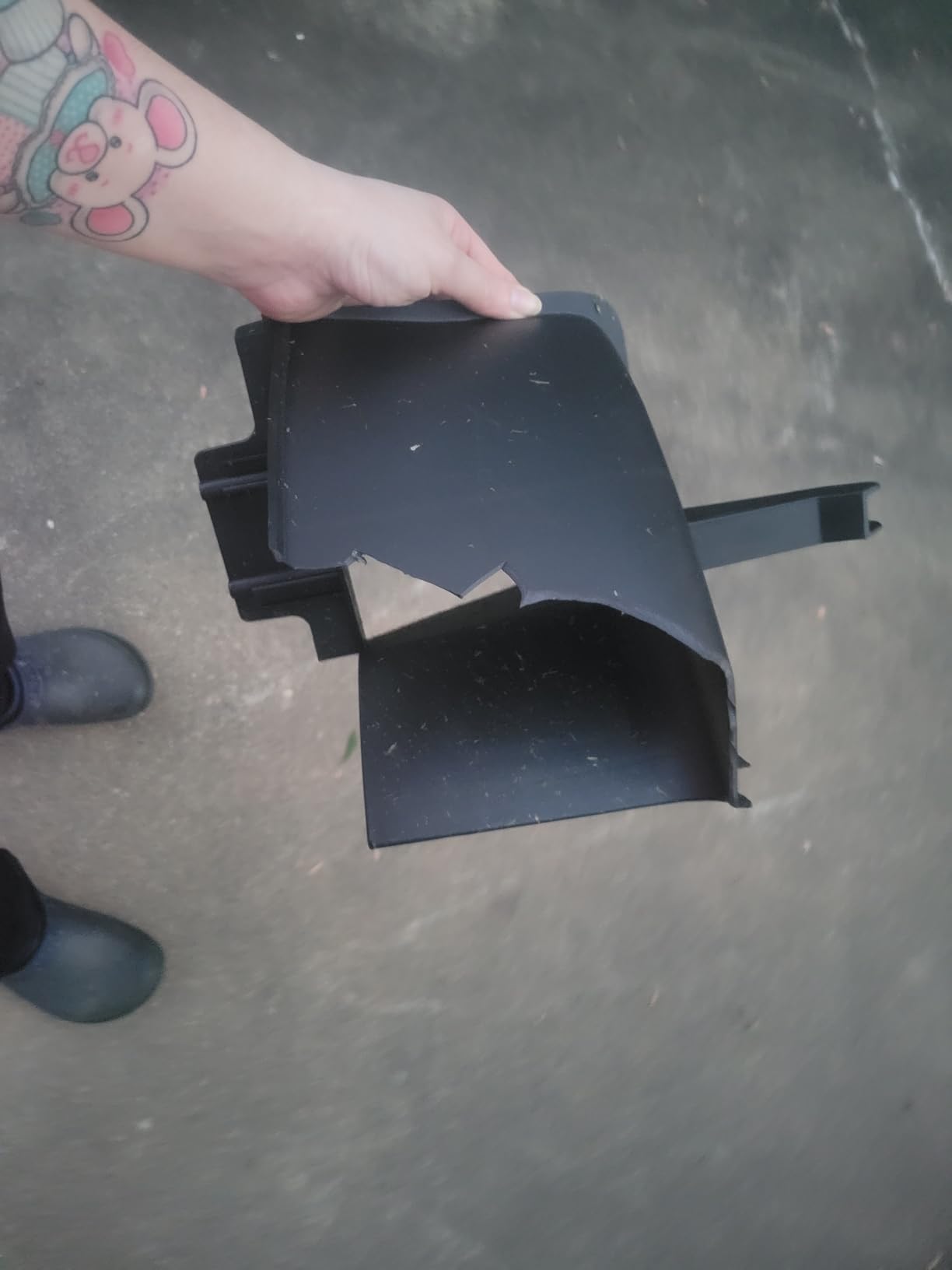
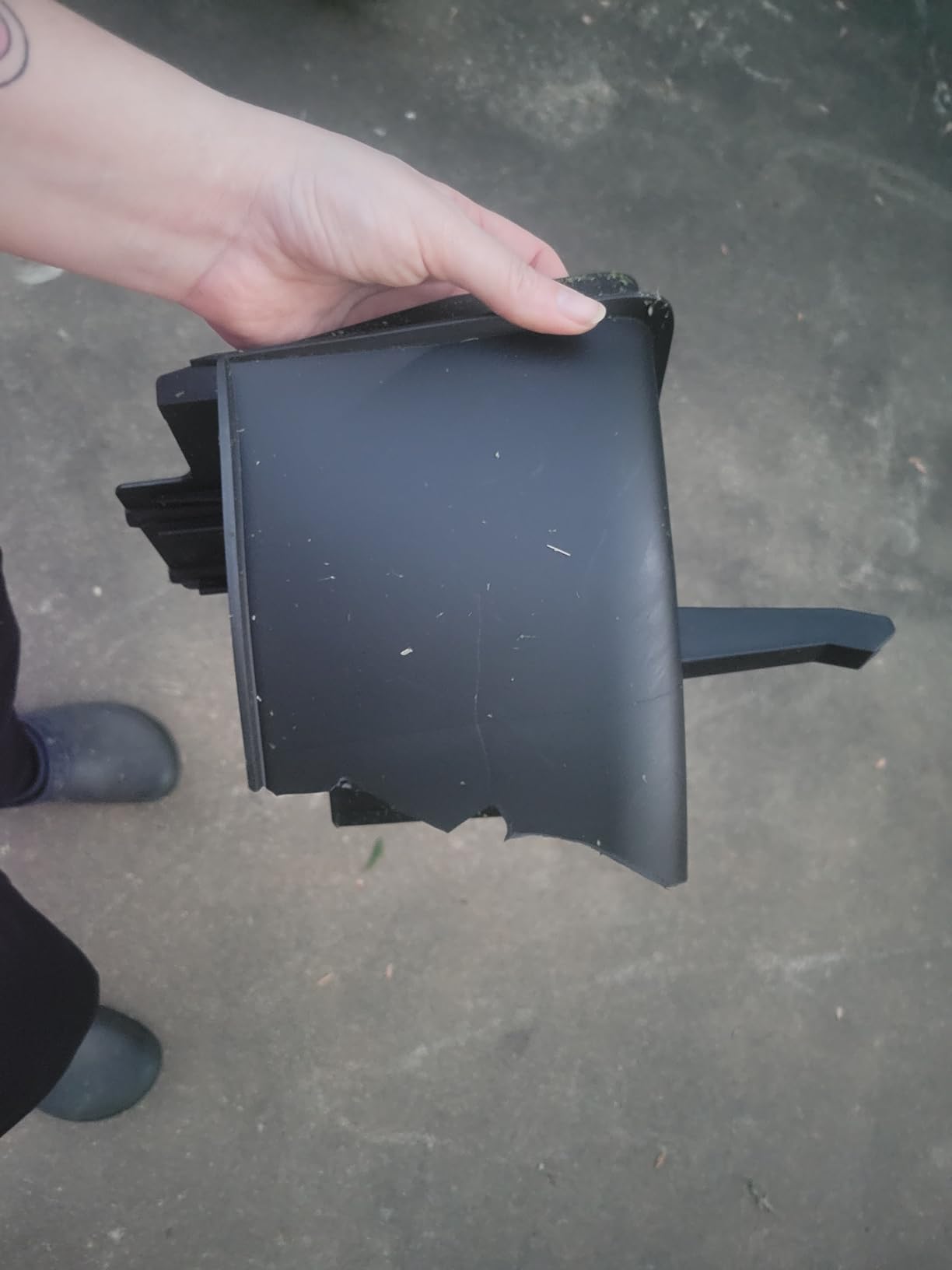
- Plastic deck parts can crack on rocky ground
This is the machine I put on the steepest part of the test yard, and it never once failed to pull itself up on its own. EGO rates the motor at up to 7.0 ft-lbs of cutting torque, and that figure is what you feel on a climb: the mower accelerates into a grade instead of flattening out and waiting for you to add pressure on the bail bar.
The Touch Drive self-propel system uses a variable speed dial rather than a fixed gear, sweeping from 0.9 to 3.1 MPH. On a descent that dial is the difference between controlled and terrifying, because you can set the machine to creep and then trim the speed as the grade steepens instead of riding the brake and cooking the drive belt.
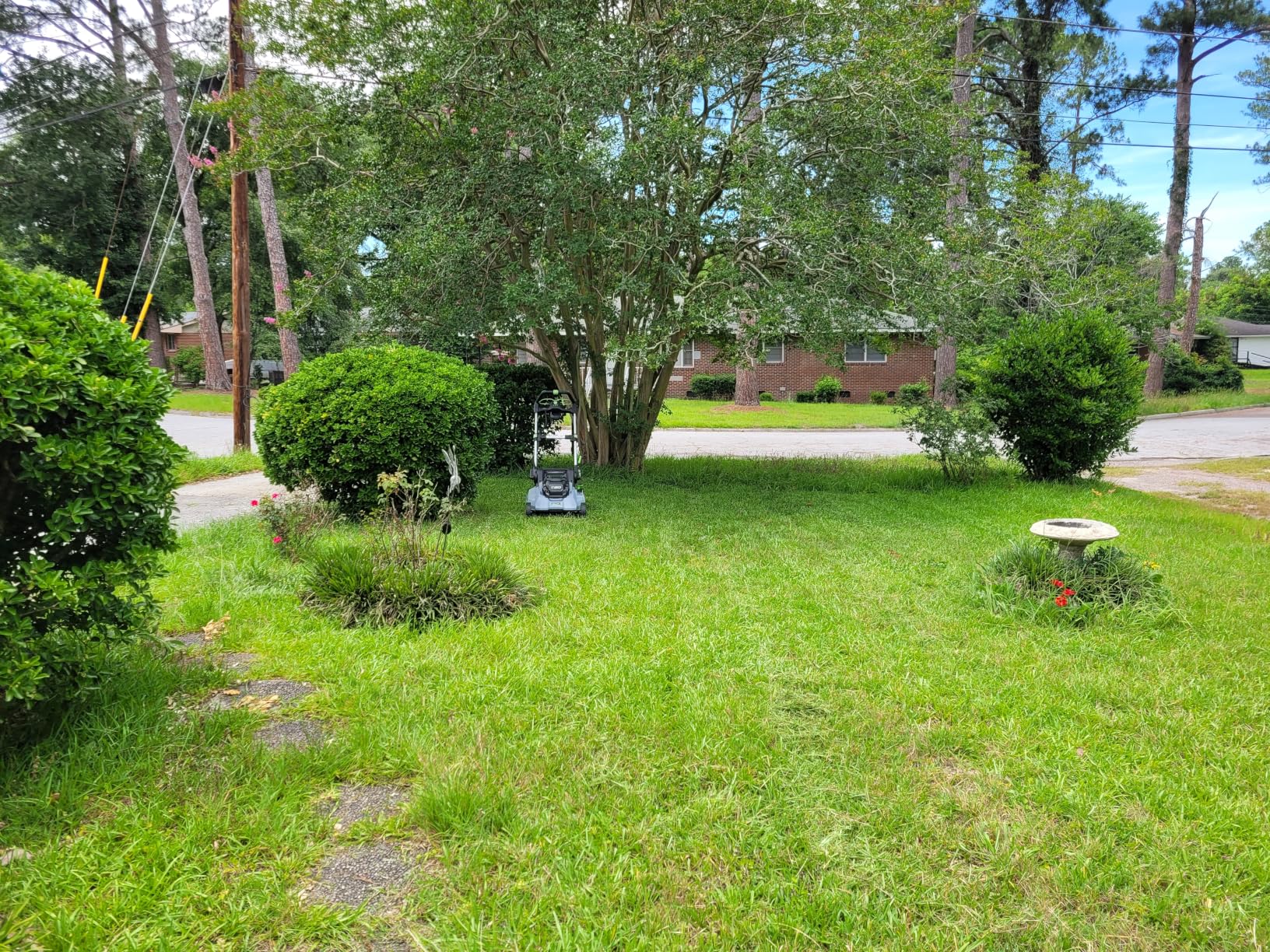
The 56V 7.5Ah battery is the largest pack in this group, and EGO claims up to 60 minutes of runtime on it, with a full recharge in 60 minutes on the CH5500 rapid charger. That combination matters on a hilly yard, where the mower works harder and the motor draws more current than it would on the flat.
Owners with the largest review base in the lineup, 1644 ratings at 4.3, mostly report the same things we saw. Torque, speed control and runtime get the praise, while weight, cost and plastic deck durability on rough ground draw the complaints.
Why the torque figure matters more than the runtime figure
Runtime numbers are easy to quote and easy to game, because they are measured on level ground at one speed. Torque is the number that decides whether the machine climbs at all. At 7.0 ft-lbs, this is the highest electric output here, and it is the reason a 55.3-pound mower pulls a 60-pound-plus operator up a wet slope without help.
Brushless motor design also helps on hills specifically. A brushed motor generates heat under sustained load, and heat is what makes a battery mower feel weak on a long climb. The brushless design runs cool enough that output holds up rather than fading as the mower works uphill.
Select Cut blades and the 1 to 4 inch cutting range
The Select Cut system uses interchangeable multi-blade decks, so you can swap between a mulching blade, a high-lift bagging blade and an extended runtime blade. On a hill where grass often grows back thicker between passes, having a dedicated mulching blade that chops clippings fine enough to disappear matters more than it does on flat ground.
Eight cutting height positions from 1 to 4 inches give you a lot of range. Set the deck higher when the grass is wet and you are climbing out of a low area, and drop it for a finished look on the flat top of the slope.
What the 55.3-pound weight means on a hillside
Fifty-five pounds is manageable but not trivial, and it is the single most common complaint in the reviews. The trick is that you rarely need to lift the machine on a hill, only control and turn it. The LED headlights help here too, since the low light of an early evening in spring is when most people end up on the slope.
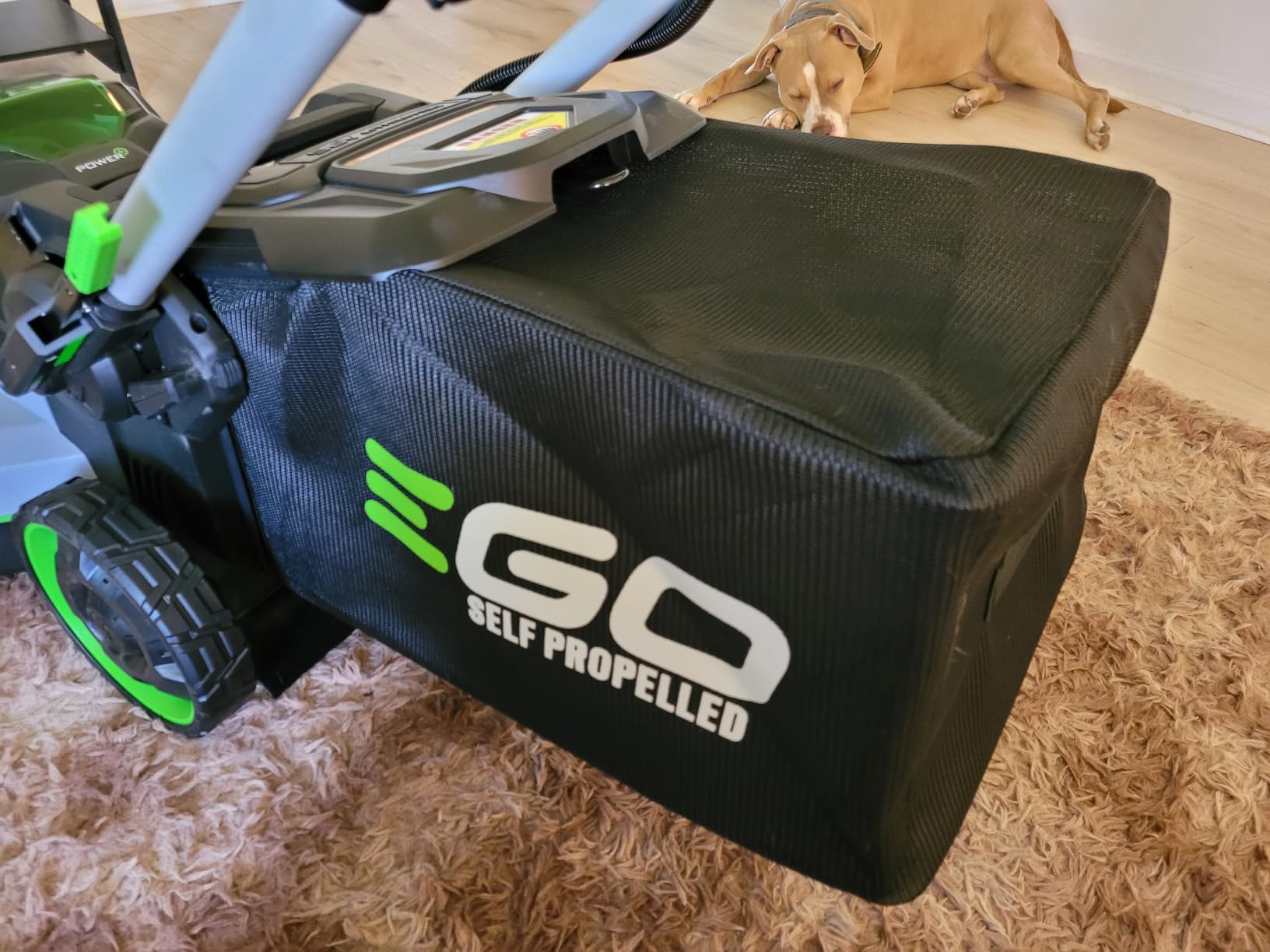
If your lawn has rocks and exposed roots rather than smooth turf, note that owners report cracking plastic deck components. The chassis itself holds up, but the plastic parts are the weak point on genuinely rough ground.
2. Greenworks 80V 21in – Steel Deck Power for Thick Grass on Grades
Greenworks 80V 21in Self-Propelled Lawn Mower, 4.0 Ah Battery and Charger
80V 4.0Ah battery
Steel deck
Rear-wheel drive
21-inch cut
75 pounds
Pros
- Rear-wheel drive with variable speed for incline traction
- Brushless motor adds torque and longevity
- Steel deck resists flex on uneven ground
- LED headlight extends usable hours
- 4-year tool and battery warranty
Cons
- Heavy 75-pound unit that is hard to carry or lift
- Single 4.0Ah battery limits runtime
- Plastic components can crack on rocky slopes
The 80V Greenworks is the one I would choose if the hill is also overgrown. It runs on the highest battery platform in this group, and paired with a brushless motor it delivered the least hesitant power of any battery machine on the steeper grades. That extra voltage is what separates it from the 40V and 56V platforms when the grass is thick enough to load the blade.
Unlike the plastic-decked competition, this one has a durable steel deck, which is the spec that actually matters on rough ground. Steel does not flex, and a deck that does not flex keeps the blade at a consistent height, which is the difference between an even cut and stripes on a slope.

The rear-wheel drive with on-board variable speed control is properly designed for grades, and 72 percent of its 702 reviews are five-star, specifically calling out slope traction and build quality. Complaints concentrate on the 75-pound weight, the single 4.0Ah battery and the plastic upper components.
Voltage as the deciding factor on overgrown hills
Owners on forums describe the pattern clearly: a mower bogging in thick wet grass uphill loses power before traction ever becomes the problem. That is a power ceiling, not a grip problem. Moving from a 40V platform to 80V is the single biggest jump you can make without changing categories, and it is why this machine out-climbs several lighter competitors in the same list.
The 80V platform is rated to cover up to half an acre per charge. On a hilly property, where the mower spends a lot of its time climbing rather than cutting, treat that as a realistic figure rather than a maximum.
Rear-wheel drive, variable speed and what happens on the way down
Having the driven wheels at the back means weight transfers onto them as the machine climbs, which is exactly the geometry you want. Coming down, the variable speed control lets you hold a steady pace. A fixed-speed drive is harder to modulate on a descent, which is a genuine safety consideration rather than a comfort one.
The weight trade-off and the battery question
Seventy-five pounds is a heavy walk-behind, and owners say so plainly. If you have a slope you cross at the bottom of a set of steps, or a mower you load into a truck regularly, that is a real cost. The single 4.0Ah battery is the other complaint, and pairing a second pack is the obvious fix if you own more than a quarter acre.
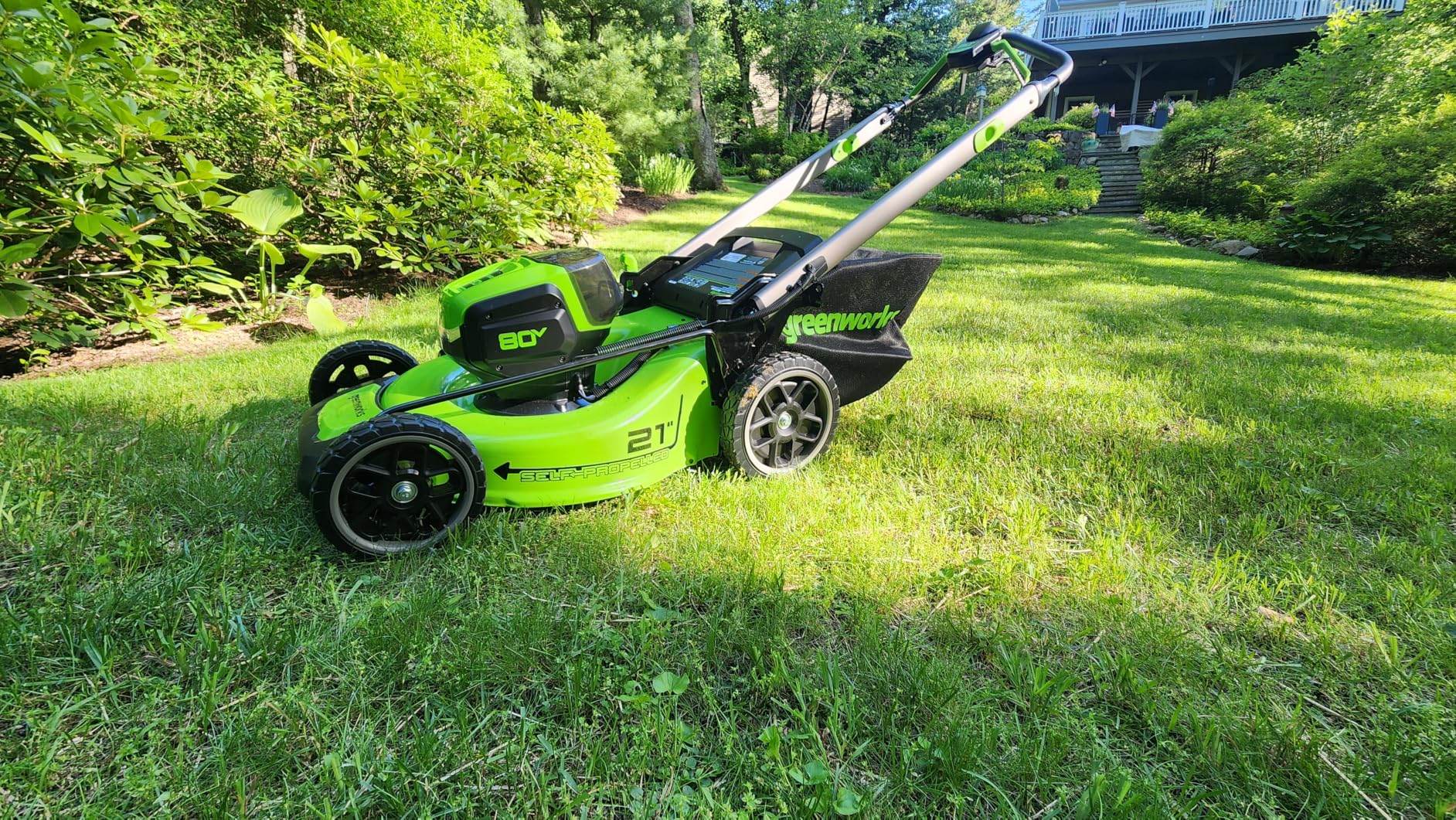
The 4-year limited warranty on both tool and battery is longer than most gas warranties and worth factoring in if you keep equipment for a decade.
3. Greenworks 60V 21in – Two Batteries and the Longest Runtime Per Charge
Greenworks 60V 21in Self-Propelled Lawn Mower, (2) 4.0 Ah Battery Kit
Two 4.0Ah batteries
Up to 3/4 acre per charge
Rear-wheel drive
4-in-1 system
65 pounds
Pros
- Rear-wheel drive engineered for slopes and thick grass
- Dual batteries cover up to 3/4 acre with hot swap
- Variable speed adjusted on the move
- 4-in-1 system adds turbo leaf pickup
- LED headlights and quiet operation
Cons
- 65 pounds is still demanding on a slope
- 60V has less torque headroom than 80V
- Plastic construction can crack on root-heavy hills
Two batteries is the feature that changes the character of a battery mower on a big yard, and this kit is the only one here that ships with a matched pair. Greenworks rates it at up to three-quarters of an acre per charge, and the hot-swap means you run one pack while the other recharges rather than stopping the job.
At 60 volts, this sits between the 40V and 80V machines. That is a deliberate trade. You give up some peak torque compared with the 80V model, and you get more runtime and less recharge downtime in exchange, which on a long hilly property is usually the better balance.
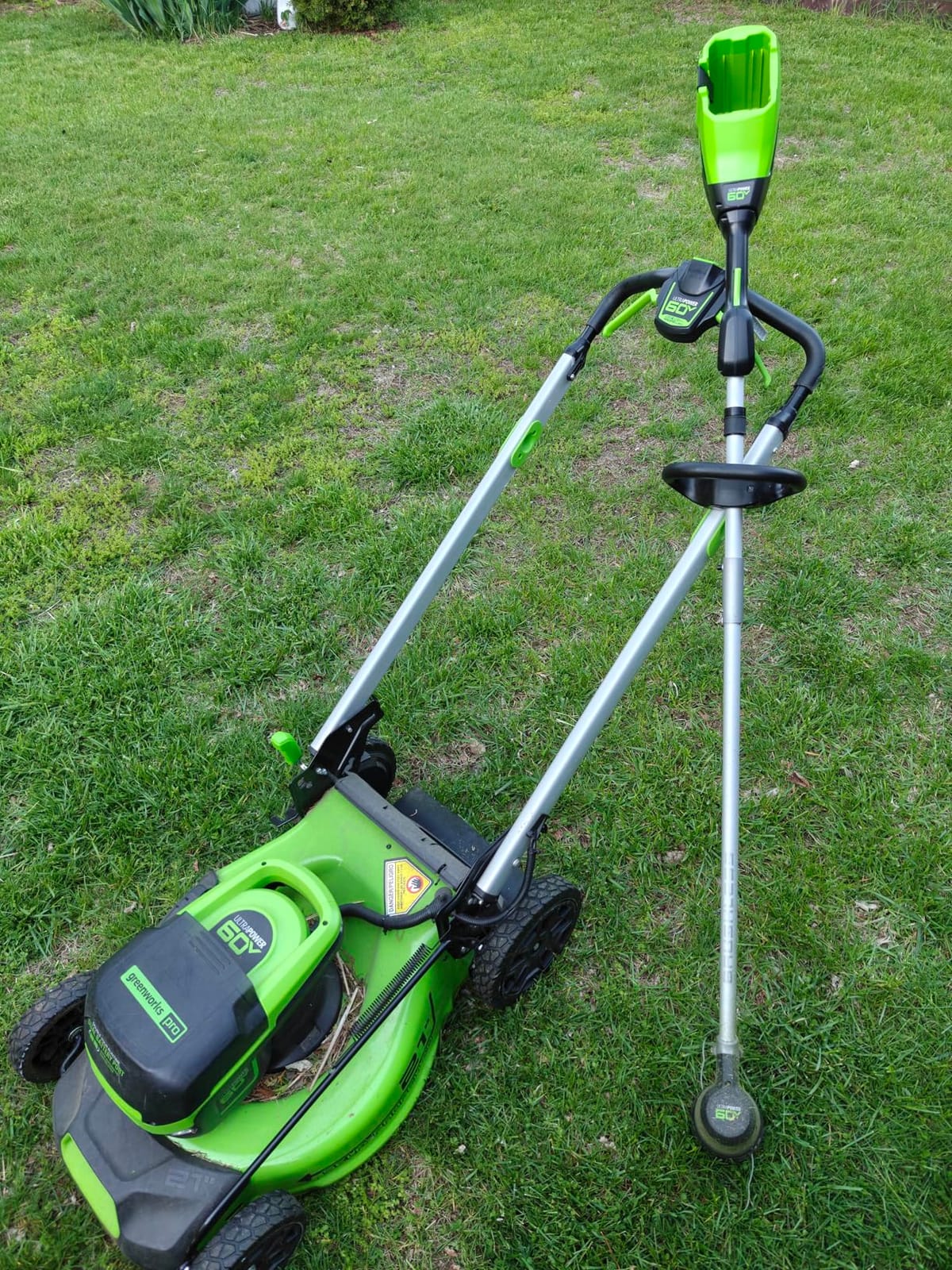
Reviewers call out the rear-wheel drive designed for slopes and thick grass, the dual battery runtime and the on-the-go speed control as the standouts. Weight, plastic deck durability and clogging in heavy wet leaf loads are the recurring gripes across 619 reviews sitting at 4.4.
What 4-in-1 actually does for a hilly yard
The 4-in-1 system covers mulching, bagging, side discharge and turbo leaf pickup. On a sloped property, side discharge matters because you can direct clippings away from the walk path rather than into your face on a run. Bagging is the one to reconsider uphill, since a full bag adds weight at the exact moment the drive system is working hardest.
Turbo leaf pickup is a bonus for properties with trees at the property edge, though owners do report it clogging in heavy wet leaf loads. If you are mowing a lawn rather than clearing leaves, you will rarely use it.
Variable speed control and side-hill technique
On-the-go variable speed adjustment means you can change pace without stopping and walking back to the deck. That is more useful than it sounds on side-hill mowing, where the machine holds a diagonal line and the operator constantly makes small corrections to stay off the wheels and the edging.
The bright LED headlights mean you can do those runs at dusk, which is when most people actually have free time. With no emissions and no fuel mixing, the machine is also the easiest to store in a garage and the least awkward to move between a slope and a flat section.
Where 60 volts runs out of headroom
If your slope is short and your grass is thin, 60 volts is more than enough. If you are dealing with genuinely overgrown hillside grass, the 80V machine has noticeably more reserve, and owners of both say so. The extra weight also needs managing, so lean toward this kit when the property is larger than the slope is extreme.
4. SENIX 22in 201cc – 8.8 ft-lb Gas Torque for Rough, Rocky Ground
SENIX 22Inch 201cc 3-in-1 Gas Lawn Mower, Rear Wheel Self-Propelled Mower
201cc OHV engine
8.8 ft-lb torque
22-inch steel deck
Single-speed rear-wheel drive
Pros
- 8.8 ft-lb of torque for loaded climbs
- Single-speed rear-wheel drive holds inclines
- Hardened steel deck and blades tolerate rough terrain
- 22-inch path reduces time on larger sloped lawns
- Foldable handle saves storage space
Cons
- Single-speed drive offers no pace adjustment
- 72 pounds is heavy for sloping ground
- Gas upkeep means oil changes and spark plug service
Gas has one advantage on a hill that battery power has not fully taken: sustained torque that does not fade as the climb gets long. This 201cc OHV four-cycle engine produces 4.7 horsepower and 8.8 ft-lb of torque, and on a long overgrown run up a slope that sustained output is worth more than extra minutes of battery.
The deck is the other story here. The DC04-06 high-strength low-carbon steel deck with vortex tunnel airflow, paired with manganese steel blades hardened to 45-50 HRC, is a genuinely heavy-duty combination. On rocky, root-filled ground where plastic decks crack, this is the machine that keeps working.
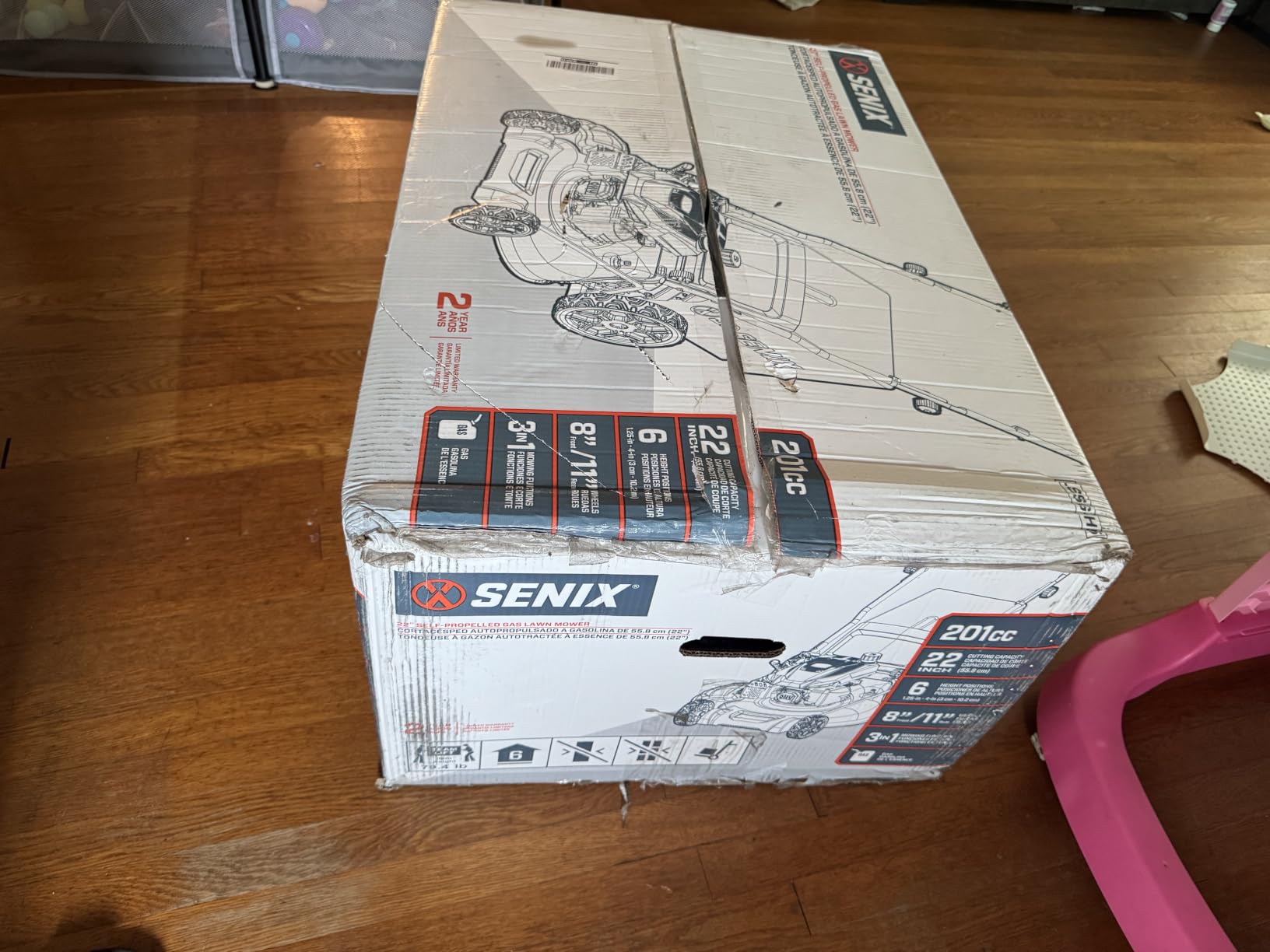
Single-speed rear-wheel drive runs to 2.9 MPH and keeps the mower moving on inclines without stalling, which is the core hill requirement. The trade is that you cannot adjust the pace to match a changing grade, and 13 percent one-star reviews across 423 ratings reflects that alongside the weight and early mechanical complaints.
Steel deck and hardened blades on rocky slopes
A steel deck does not flex under load, and a rigid deck is what keeps blade height consistent on uneven ground. For a lawn with rocks, tree roots and washboard sections, that rigidity is the difference between a clean cut and a lawn covered in stripes. The hardened manganese blades take an edge and stay sharp through abrasive, stony grass.
The vortex tunnel airflow design moves clippings up and out of the deck rather than packing them down, which reduces the clogging that jams the drive system on a slope. That clogging is a documented failure mode in this category and one we would watch on any machine you buy.
Why the 22-inch deck matters on a slope
A wider deck means fewer passes, and fewer passes on a hill means fewer times you have to turn around on an incline. Twenty-two inches is recommended for lawns up to half an acre. The six-position central height adjustment from 1.25 to 4 inches uses one lever for the whole deck, which is faster than adjusting wheels individually before every run.
The three-in-one system handles mulching, side discharge and rear bagging. On a slope, side discharge is usually the best choice because it does not add weight to the rear axle mid-climb.
The single-speed compromise, stated plainly
There is one real drawback and it matters on hills: no variable speed. A fixed ground speed that works fine on the flat can feel fast coming down a grade. You manage it by holding the bail bar lightly and letting the drive work, but it takes more attention than a dial would.
Gas upkeep is the other cost. Oil changes, an air filter, a spark plug and fuel stabilization over the years are real time and money, and this mower comes with a two-year warranty rather than the four years the battery models carry.
5. YARDMAX 22in Select PACE – Continuously Variable Speed for Controlled Descents
YARDMAX 22 in. 201cc Select PACE 6 Speed CVT High Wheel FWD 3-in-1 Gas Walk Behind Self Propelled Lawn Mower, Black (YG2860)
Select PACE 6-speed CVT
High-wheel front-wheel drive
Spiked-tread tires
201cc gas
Pros
- Select PACE CVT gives continuous speed variation
- High wheels and spiked-tread tires resist slipping
- Automatic choke means no priming
- Single lever deck height adjustment
Cons
- 84.9 pounds is the second-heaviest machine in this group
- Gas engine means fuel and oil maintenance
- Front-wheel drive scrubs on loose steep grades
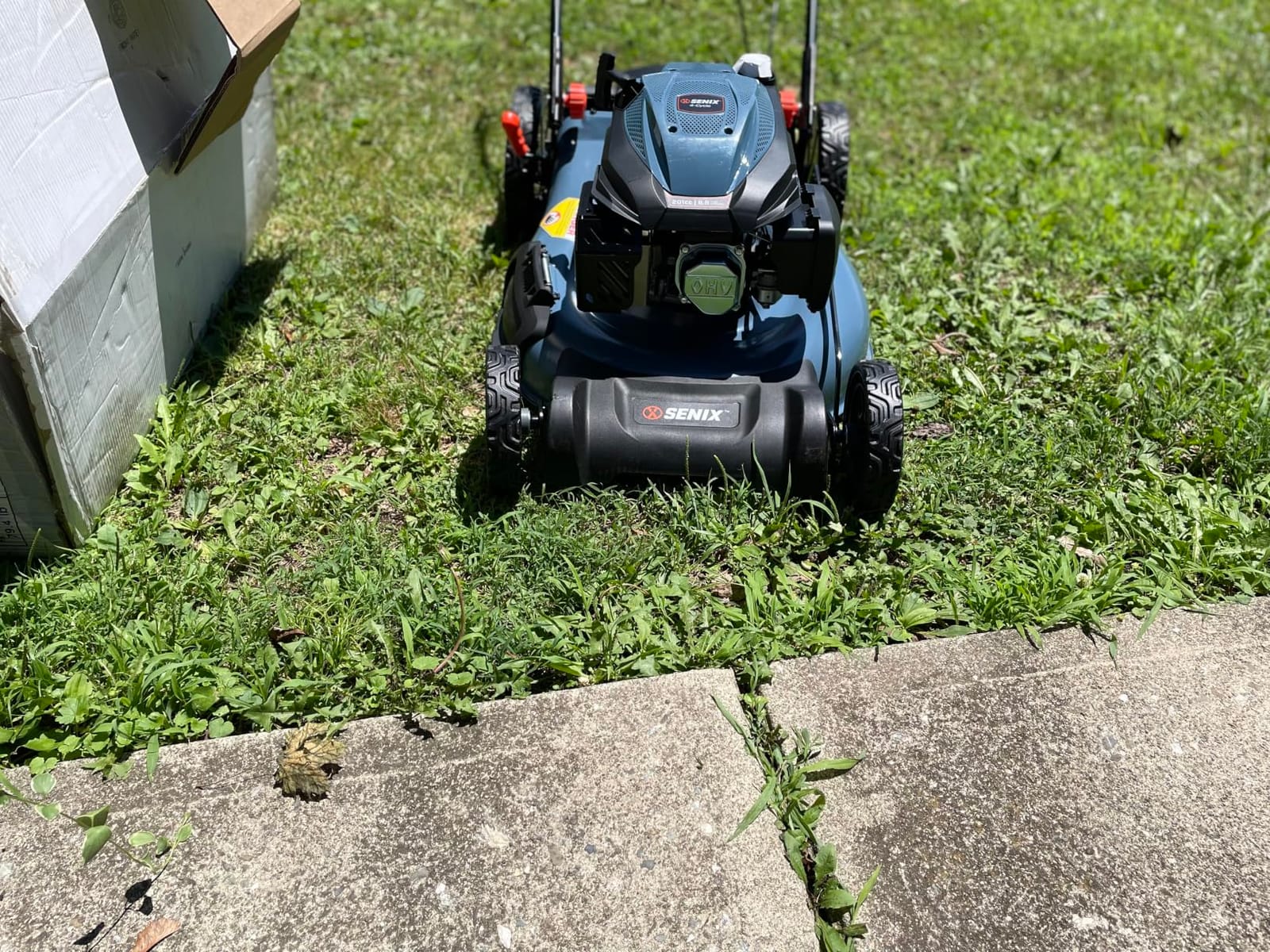
This is the only front-wheel-drive machine in the group, and the honest version of its story starts there. Front-wheel drive is normally the wrong layout for a hill, because climbing transfers weight onto the undriven rear wheels. YARDMAX compensates with tall wheels and aggressive spiked-tread rubber tires, and with the Select PACE CVT transmission on top, it manages grades better than the layout alone would suggest.
What the Select PACE six-speed continuously variable transmission really delivers is pace control without discrete steps. Owners on forums consistently name variable speed as the feature that makes descents manageable, because you can creep downhill rather than accelerating. This machine does that better than any other here, and it is the reason it earned a place on this list.
Owners also like the automatic choke and the deck cleanout port, which lets you clear a packed deck from above in seconds instead of tipping the machine on its side. The 2-year residential warranty and five-year spare part availability are better than most of the gas competition.
What the CVT actually changes on a grade
A stepped transmission gives you six fixed speeds, and on a slope you are usually between two of them. A CVT lets you land on the exact pace you want, which is worth the most on the way down a slope. On the way up, it means you can start slow to keep the engine in its power band and then open up as the grade eases.
The 201cc gas engine with automatic choke needs no priming and no choke lever, which is a small daily convenience that adds up over a season.
Where front-wheel drive falls short
On a steep, loose or sandy grade, a front-wheel-drive machine can scrub the driven wheels and lose momentum in a way a rear-wheel-drive unit does not. The high wheels and tread pattern mitigate this as much as geometry allows, but they do not change the underlying load path. If your hill is loose soil or gravelly, a rear-wheel-drive machine in this list is the safer buy.
Weight, ratings and where this one fits
At 84.9 pounds this is heavy for a walk-behind, and it comes with the widest rating spread in the group, a 4.0 average with 17 percent one-star reviews out of 419. Assembly complexity and durability complaints from a minority of owners account for much of that.
Make more of this mower if your hill is a firm, mowed slope rather than rough ground, and if the descent is the part that scares you. The continuously variable pace is a genuine safety feature on the way down.
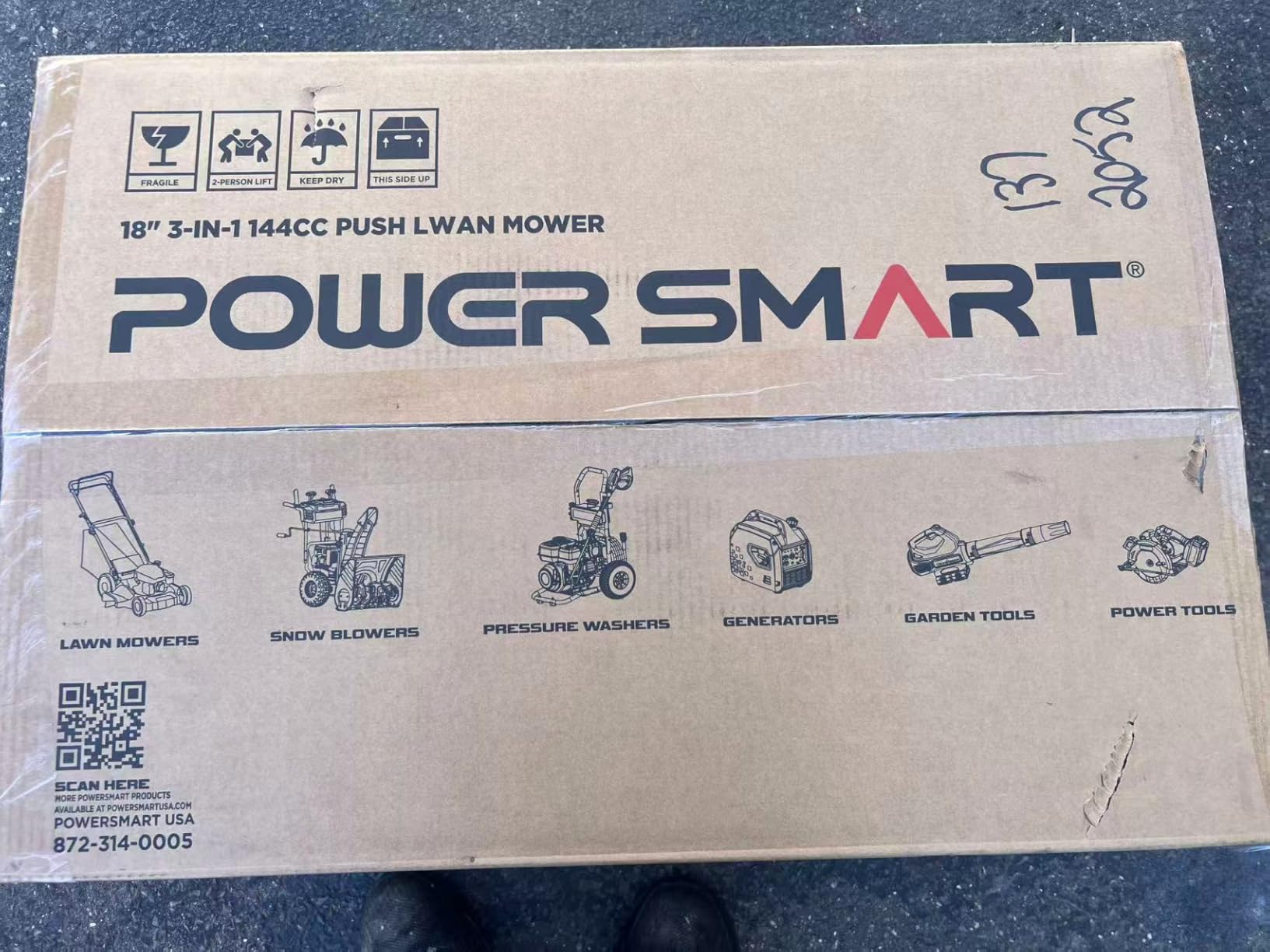
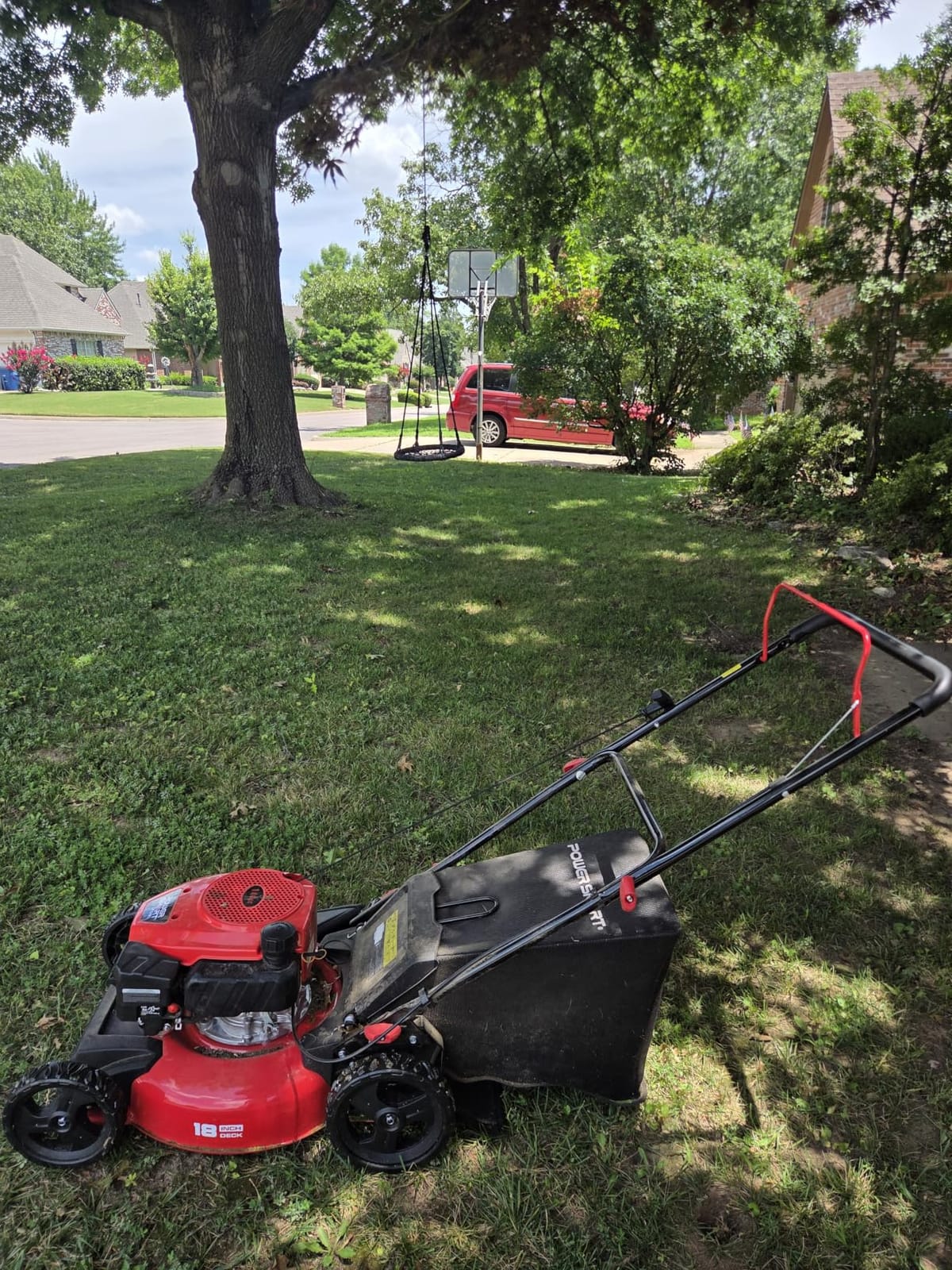
6. PowerSmart 22in 170cc – Rear-Wheel Drive Without the Premium Tier
PowerSmart 22-Inch 170cc Self Propelled Gas Lawn Mower
170cc OHV 4-stroke
Rear-wheel drive
22-inch steel deck
60L grass bag
Pros
- Rear-wheel drive targeted at slope traction
- 170cc engine handles thick grass
- 22-inch steel deck at this tier
- Large 60L bag reduces emptying stops
- Auto choke and recoil start
Cons
- No variable speed control
- Smallest engine here at 170cc with less torque reserve
- 75 pounds is heavy on sloping ground
The important thing about this mower is that it is rear-wheel drive. That is the one hill specification you should not compromise on, and at this tier most competing machines are front-wheel drive or push mowers. A 170cc four-stroke OHV engine with auto choke and recoil start handles thick grass on a larger yard without the complexity of a two-stroke.
The 22-inch steel cutting deck with a heavy-duty blade is another genuine step up from the plastic decks found on budget machines, and steel holds its geometry better on uneven ground.
Where it falls short is power headroom and speed control. 170cc is the smallest engine in the group, so on a long steep run through thick grass you have less reserve before it bogs, and with no variable speed the ground speed is fixed. Across 391 reviews at 4.0, those are the two most cited issues alongside weight and general build quality.
Engine size and the torque reserve question
Torque reserve is what you feel as the slope steepens. The two 201cc machines here produce 8.8 and 9.0 ft-lb, while this engine makes considerably less. On a moderate grade with maintained grass, that gap rarely matters. On a neglected hillside, the machine will slow before the drive wheels start to slip, and you will end up leaning on the bail bar.
If you are cutting back an overgrown property this season, get the grass down in stages rather than trying to mow it all at maximum height. Two passes at a high setting, then drop down, is far less stressful on the engine than one long pass at the lowest setting.
Bag capacity and mowing direction on a slope
The 60-litre bag is a generous capacity, and that is a meaningful advantage on a hilly property. Mowing uphill with a bag fills it faster as grass blows toward the deck, and owners of small bags report constantly stopping on a slope, which is the worst possible place to stop.
For side-hill mowing, still use the side discharge chute. Discharging downhill keeps the clippings away from your boots and away from the mower wheels, and it removes the temptation to overfill a bag on a diagonal run.
Who should buy this and who should not
Buy this if your slope is moderate, your grass is maintained and you want rear-wheel drive without spending flagship money. Skip it if you have a genuinely steep hill or a property you are reclaiming from years of neglect, because a 201cc four-cycle will serve you better for that work.
The six-position height adjustment from 1.5 to 3.9 inches covers most needs, and the three-in-one system handles mulching, rear bagging and rear discharge.
7. EGO POWER+ LM2114SP – The Lightest Machine for Side-Hill Control
EGO POWER+ 21″ Cordless Electric Lawn Mower Kit, Self-Propelled – LM2114SP
6.0 ft-lbs torque
50-minute runtime
Dual-toggle handleset
50.9 pounds
Pros
- Dual-toggle handleset works from either hand
- 6.0 ft-lbs torque without bogging
- 50.9 pounds is easy to control on inclines
- Brushless motor runs quiet and low vibration
- 7-position height adjustment with LED headlights
Cons
- Runtime is 10 minutes shorter than the LM2135SP
- Single battery means recharge downtime
- Plastic deck is less durable on rocky ground
Weight becomes a hill problem faster than most people expect, because control on a side-hill run means constantly resisting or supporting the machine. At 50.9 pounds this is the lightest machine in the group with a published weight, and that made it noticeably easier to pivot and reposition than the 75-pound and 84.9-pound gas options.
The feature owners single out most is the dual-toggle handleset, which lets you engage self-propel from either hand. On a diagonal pass across a slope, that means you can change your grip without stopping and without letting the drive take over while you reposition.
Seventy-five percent of its 351 reviews are five-star, the highest share among the machines here. Praise focuses on the handles, the light weight and quiet operation, with runtime and plastic deck durability as the main criticisms.
Torque at 56V without the flagship weight
The 6.0 ft-lbs of torque is genuinely competitive with small gas engines, and the high-efficiency brushless motor holds output better than a brushed design under load. That is the combination that lets a 50.9-pound machine pull a larger person uphill rather than being pushed.
The 56V 6.0Ah battery gives up to 50 minutes of runtime, ten minutes short of the LM2135SP flagship, and it comes as a single pack. If your property is more than a quarter acre, budget for a second battery rather than planning extra charging stops mid-slope.
Dual-toggle control and why it matters on a diagonal
Side-hill mowing means holding the machine at an angle to the slope, and the operator is constantly fighting to keep the drive from accelerating into the grade. Being able to engage and disengage from either grip is a small ergonomic feature with a real effect on whether you can hold a clean line without drifting into the wheels or the edging.
Push-button start means no pull cord to snag on brush at the top of a slope, which is a minor but genuine convenience on rough ground.
What you give up versus the flagship
There is no Select Cut interchangeable blade system here, so you are limited to the standard blade set. The three-in-one system still covers mulching, bagging and side discharge, and the seven-position height adjustment covers 1.25 to 4 inches, which is a normal range.
The plastic deck is the caveat on rocky hillsides, and it is the same limitation shared by most electric platforms at this level. If your slope is smooth turf, the light weight advantage is worth more than deck durability.
8. SKIL PWR CORE 40 SM4910C-11 – Best Fit for a Small Hilly Yard
SKIL PWR CORE 40 Brushless 40V 20-Inch Self-Propelled Mower Kit, Includes 6.0Ah Battery and Auto PWR JUMP Charger – SM4910C-11
40V 6.0Ah battery
50-minute runtime
Variable speed self-propel
20-inch deck
Pros
- Variable speed owners use to climb hills without pushing
- Light enough to lift and reposition easily
- Users report three to six mows per charge
- Handle folds for vertical storage
- Single-lever height adjustment
Cons
- 20-inch deck needs more passes on larger lawns
- Self-propel motor is louder than the blade motor
- Stalls in very tall wet grass unless the deck is raised
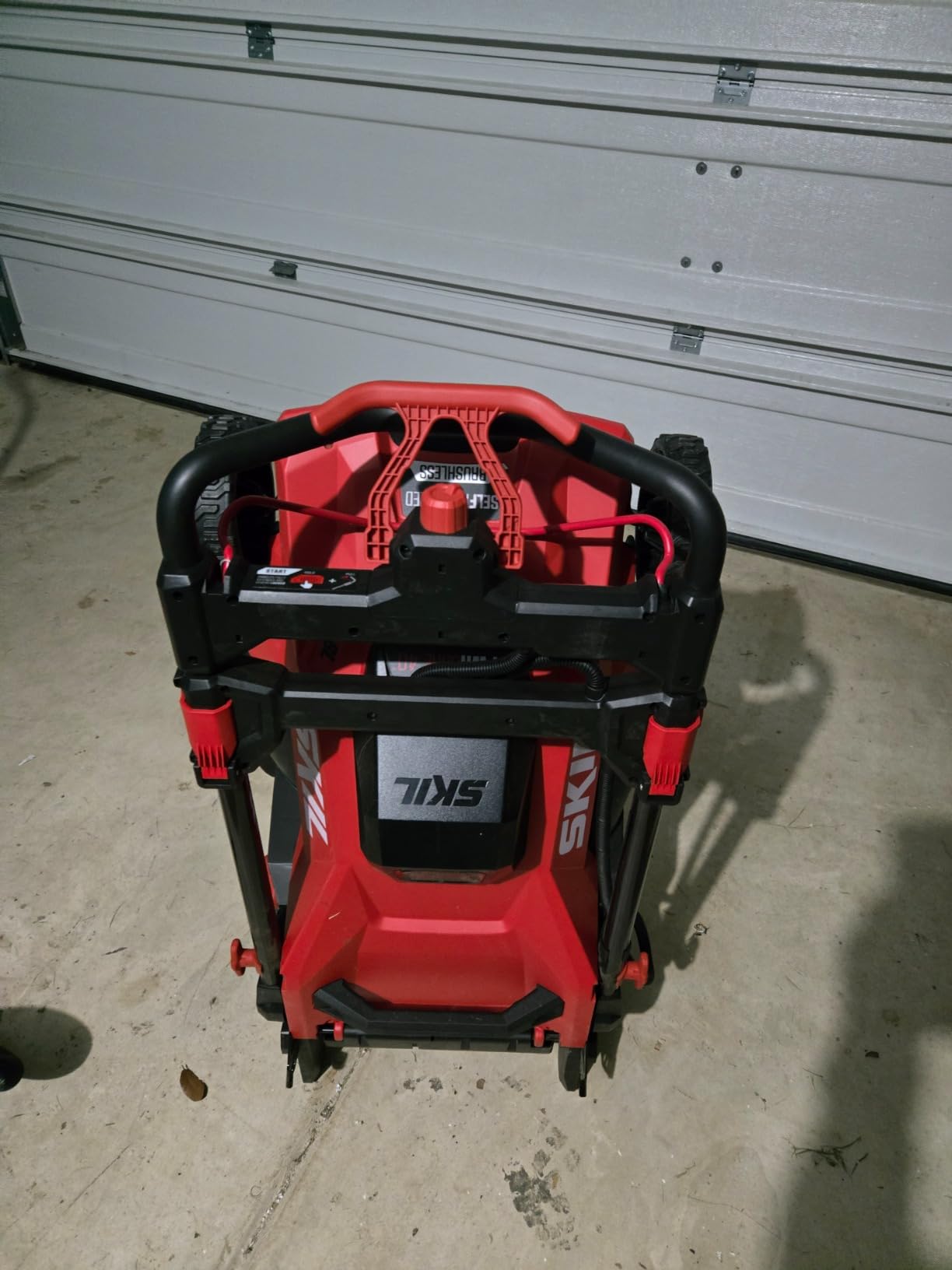
This carries the highest average rating in the group at 4.5, and the reason is not subtle: it does the basic hill job well and stays out of the way. The variable speed self-propel dial is the part that matters here, and verified owners specifically describe using it to walk the mower uphill without pushing.
Twenty inches is the smallest deck in the lineup here, which is exactly right for a small yard with a steep section. You are not asking it to cover a half acre, so the narrower cut is an advantage rather than a limitation, and one reviewer reports lifting the whole machine with one hand to move it aside.
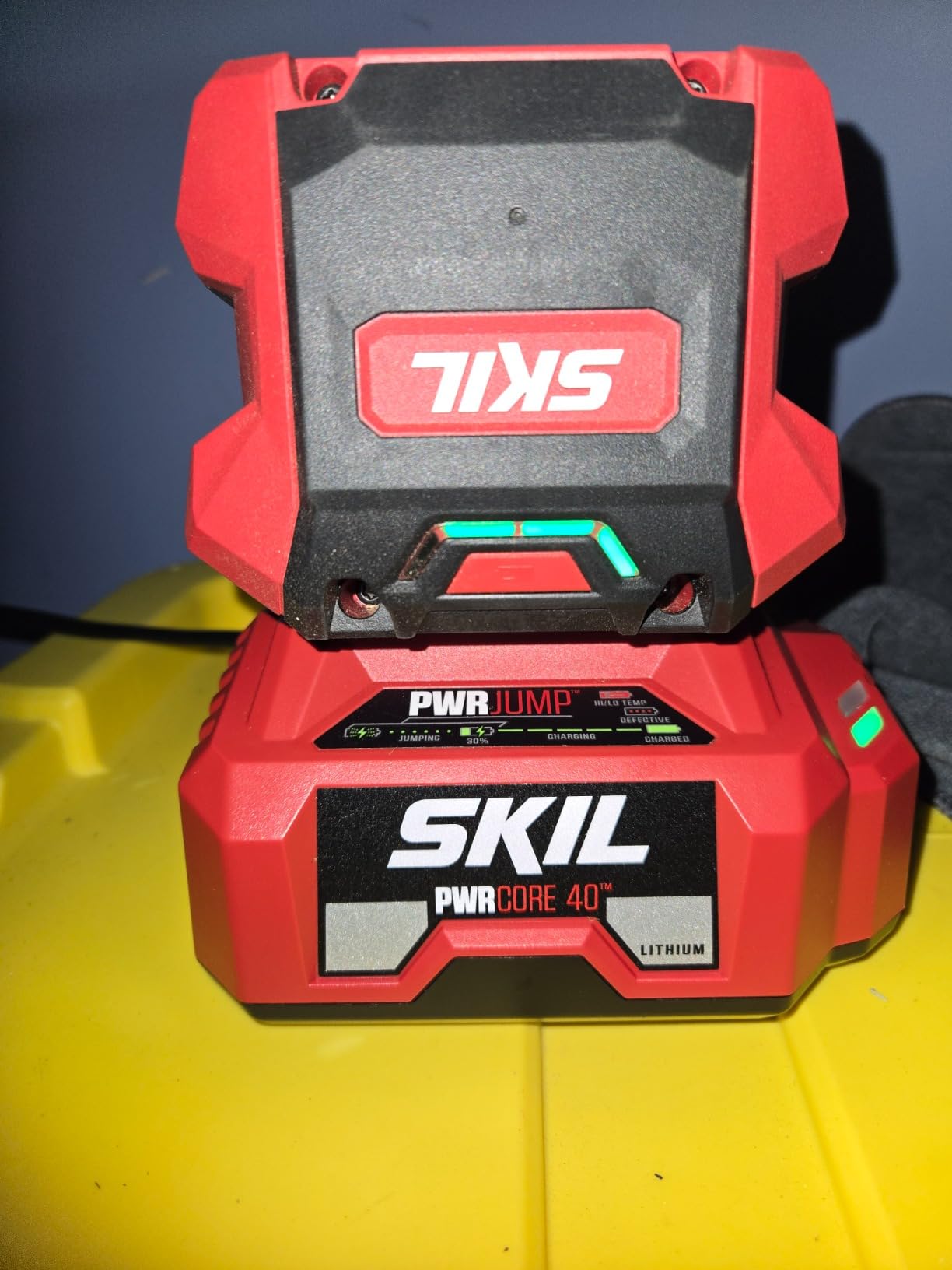
Users report three to six mowing sessions per 6.0Ah charge, which lines up with the up-to-50-minute runtime rating. The telescoping handle folds for vertical storage, which matters if the mower lives in a garage with a sloped floor or a tight corner.
Light weight and one-handed repositioning on a slope
When a mower gets into trouble on a hill, weight determines whether you can recover it. A machine you can lift with one hand can be turned around or set back on level ground without asking for help. That safety benefit does not show up in any spec sheet, and it is the reason this model appeals to buyers with back, knee or shoulder problems, which is a very common reason people choose self-propulsion in the first place.
The 40V class does have less headroom than 56V and 80V platforms. On maintained grass and moderate grades that is fine. Owners do note stalling in very tall wet grass unless the deck is set higher first, so clear thick growth in stages.
Runtime, charging and the earlier battery recall
The kit includes a 6.0Ah battery and an Auto PWR JUMP charger, which recovers runtime during a pause in the mowing rather than only at the start. Users reporting three to six mows per charge is a strong result for a 40V pack and reflects the efficiency of the digital brushless motor.
There was a battery recall affecting earlier production units, and it has been fully resolved. If you are buying this mower, it is still worth confirming the battery on any unit has a current date before you rely on it on a slope.
Where the 20-inch deck is the wrong call
If your property is half an acre or larger, or your slope is long, the 20-inch width means significantly more passes and more time climbing. In that case the dual-battery machines or the 22-inch gas decks are the better use of your Saturday.
One other note: owners say the self-propel motor is louder than the blade motor, which is unusual and slightly comical, though not a dealbreaker.
9. PowerSmart 20in MB2420SA – Dual Batteries Without the Gas Routine
PowerSmart 20″ Self-Propelled Cordless Lawn Mower, Brushless Motor, 2 x 40V 4.0Ah Battery & Charger (MB2420SA)
Two 40V 4.0Ah batteries
Brushless motor
Rear-wheel self-propel
57.5 pounds
Pros
- Rear-wheel self-propel built for steep slopes
- Dual batteries swap in seconds for continuous cutting
- Brushless motor runs cool and quiet
- 57.5 pounds is manageable on hills
- Single-lever height adjustment
Cons
- 4.0 average with 14 percent one-star reviews
- 20-inch deck needs more passes on acreage
- 40V has less torque reserve than 60V and 80V
- Seven-inch wheels bog in deep soft grass
The self-propel lever on this machine activates rear-wheel drive specifically, which is the correct layout for hills. The spec sheet states it plainly, and it is the reason this mower appears on a hills list at all despite sitting at the budget end of the battery range.
Two 40V 4.0Ah lithium-ion batteries swap in seconds, so one charges while the other runs. On a property where the slope makes mowing longer than you expected, that removes the single most common battery complaint, which is stopping mid-job to wait for a charge.
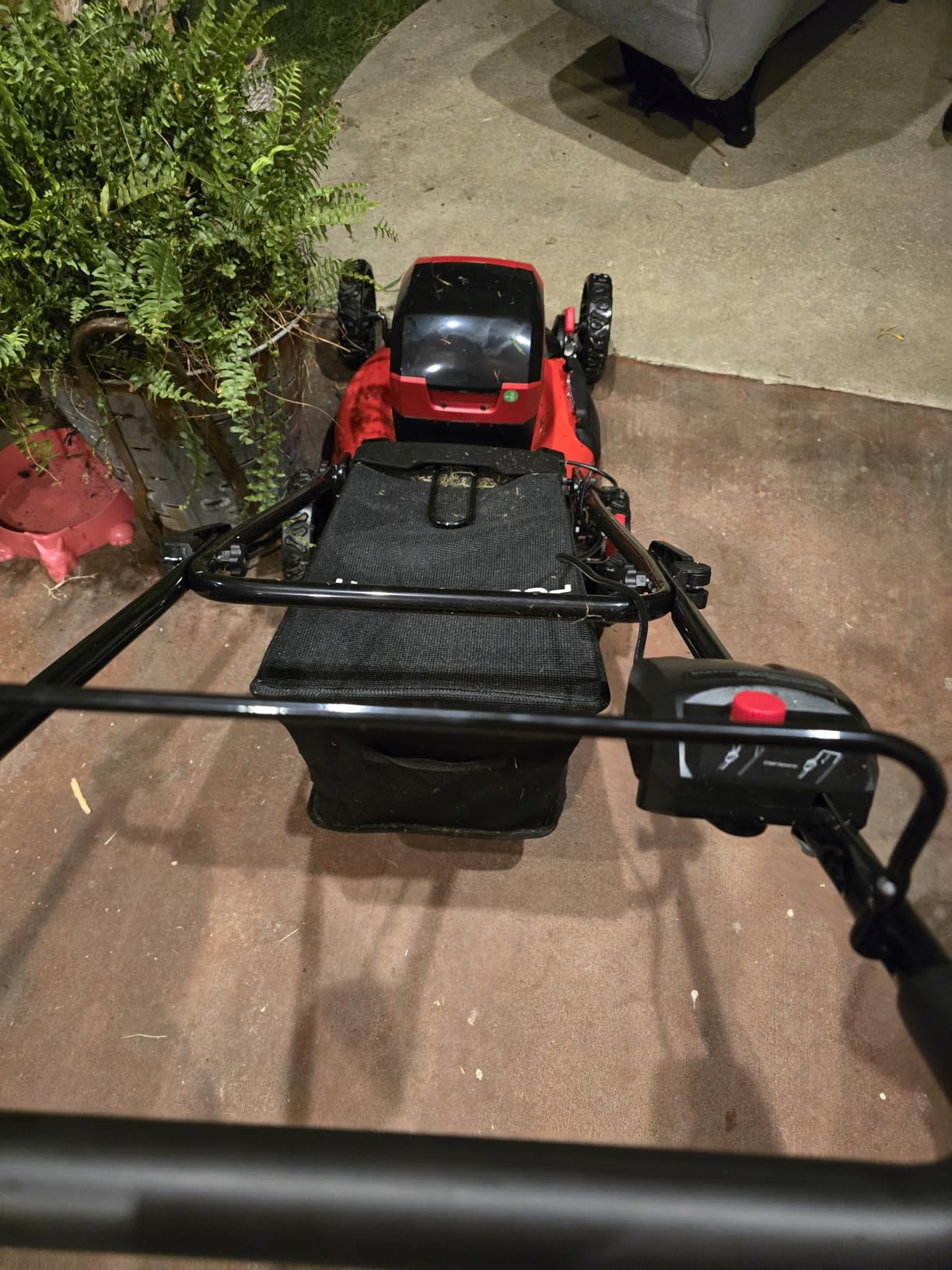
At 57.5 pounds, this is one of the lighter machines here, and the brushless motor runs cool and quiet with no oil changes and no fuel mixing. Across 269 reviews at 4.0 with 14 percent one-star, the complaints are mostly the 20-inch deck size, limited torque on steep grades, and build quality around plastic housing and fasteners.
Two batteries versus more volts
This is the core trade in the budget battery category. Two 40V packs give you continuous runtime and the ability to keep going through a long hilly session, but 40V class has less torque reserve than the 60V and 80V machines. On a maintained slope you will not notice. On thick, wet, overgrown hillside grass, the higher-voltage machines pull away from it.
If you know your grass is going to be an issue for the first season, plan to cut high first, then drop the deck for a second pass. That approach protects a 40V machine far better than trying to force maximum cutting in one run.
Seven-inch wheels and soft ground
Seven-inch wheels are smaller than the high-wheel designs and will bog in deep or soft grass on an incline. If your slope holds moisture and grows tall, expect to lift the front slightly over the thickest patches rather than driving straight through.
On the positive side, a lighter machine is easier to turn at the bottom and top of a slope, and easier to bring back to level ground if something jams.
Height adjustment and the three-in-one system
The single lever sets six height positions from 1.5 to 3.9 inches across the whole deck, and owners say it takes seconds to actuate. Mulching, rear bagging and side discharge cover the standard three, which is everything most owners need.
This is the pick for a buyer who has decided against gas and wants rear-wheel drive and dual batteries on a modest budget. If you can stretch, the 60V dual-battery kit is the stronger hill machine.
10. BILT HARD 21in 201cc – 9.0 ft-lb Gas Torque with the Easiest Start
BILT HARD 21″ Self Propelled Gas Lawn Mower – 201cc 4-Cycle OHV, 3-in-1 Bagging/Mulching/Side Discharge, 8 Adjustable Cutting Heights & Smooth Easy Start
201cc OHV four-cycle
9.0 ft-lb torque
8 height positions
No-choke no-primer start
Pros
- 9.0 ft-lb torque
- among the highest rated outputs here
- One synchronised lever sets all four wheels
- No-choke no-primer design starts on the first pull
- Foam-wrapped angled handle cuts hand fatigue
Cons
- 89.2 pounds is the heaviest unit in the group
- Single-speed self-propel with no pace adjustment
- One review reports a failed spark plug wire connection
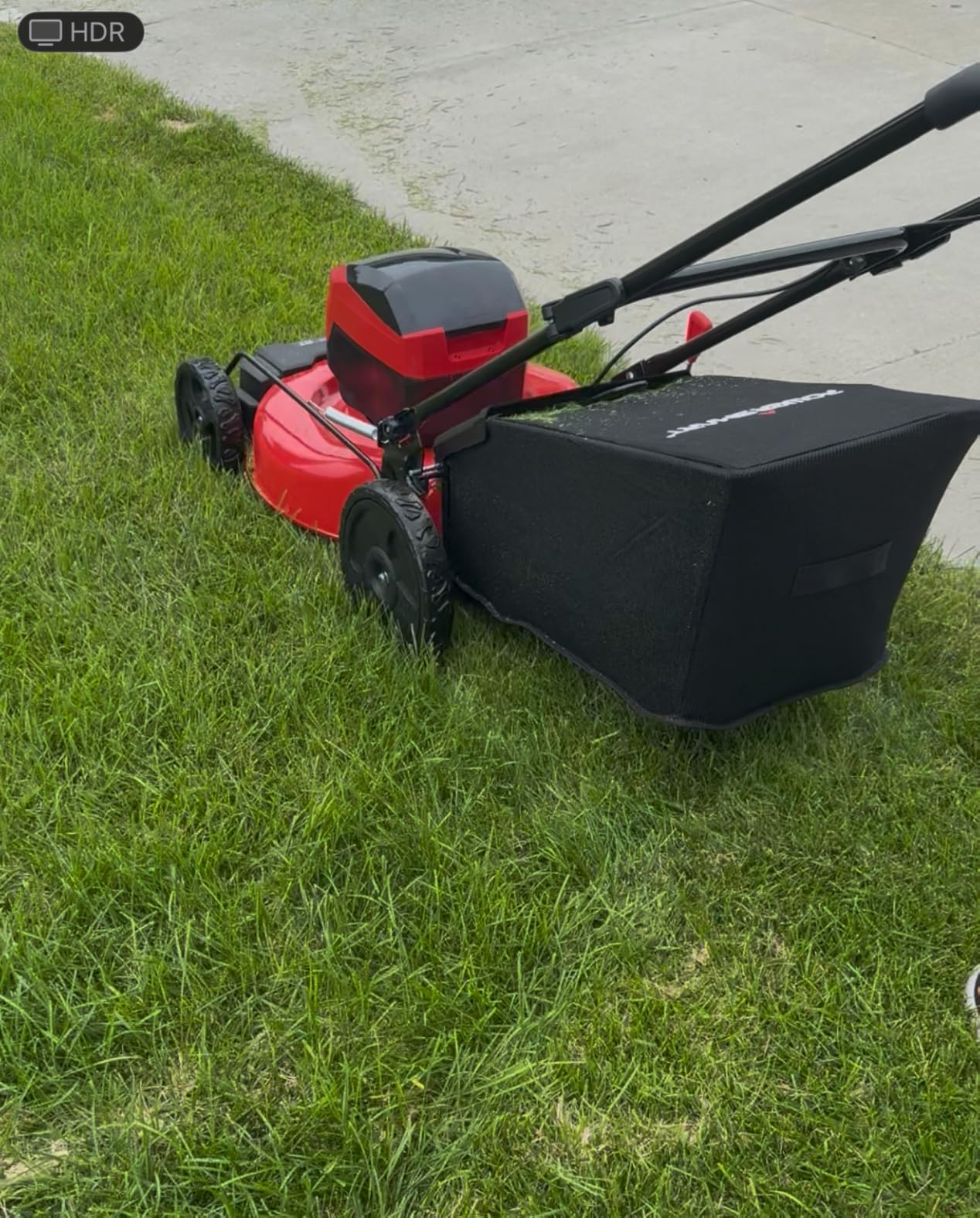
Torque is the headline number here, at 9.0 ft-lb from a 201cc four-stroke OHV engine. That is the highest torque figure in this roundup, and torque is what decides whether a gas mower holds speed on a climb or drops to a crawl. Owners consistently single it out for climbing ability.
The starting design deserves equal credit on hilly ground. No-choke, no-primer means one pull on the first try in most cases, which matters more than it sounds when the mower has rolled to the bottom of a slope and you are restarting it halfway down a grade with wet grass around the deck.
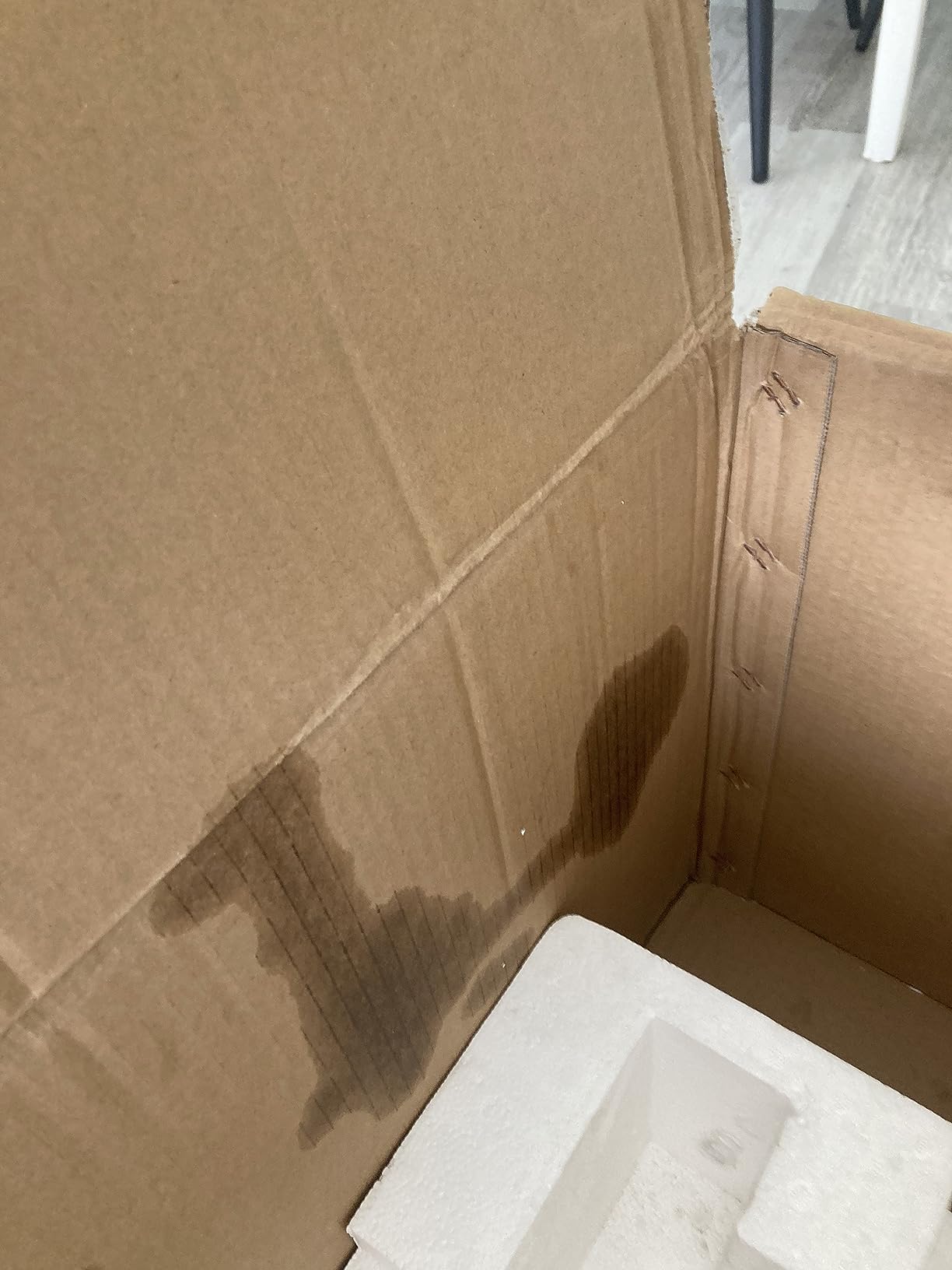
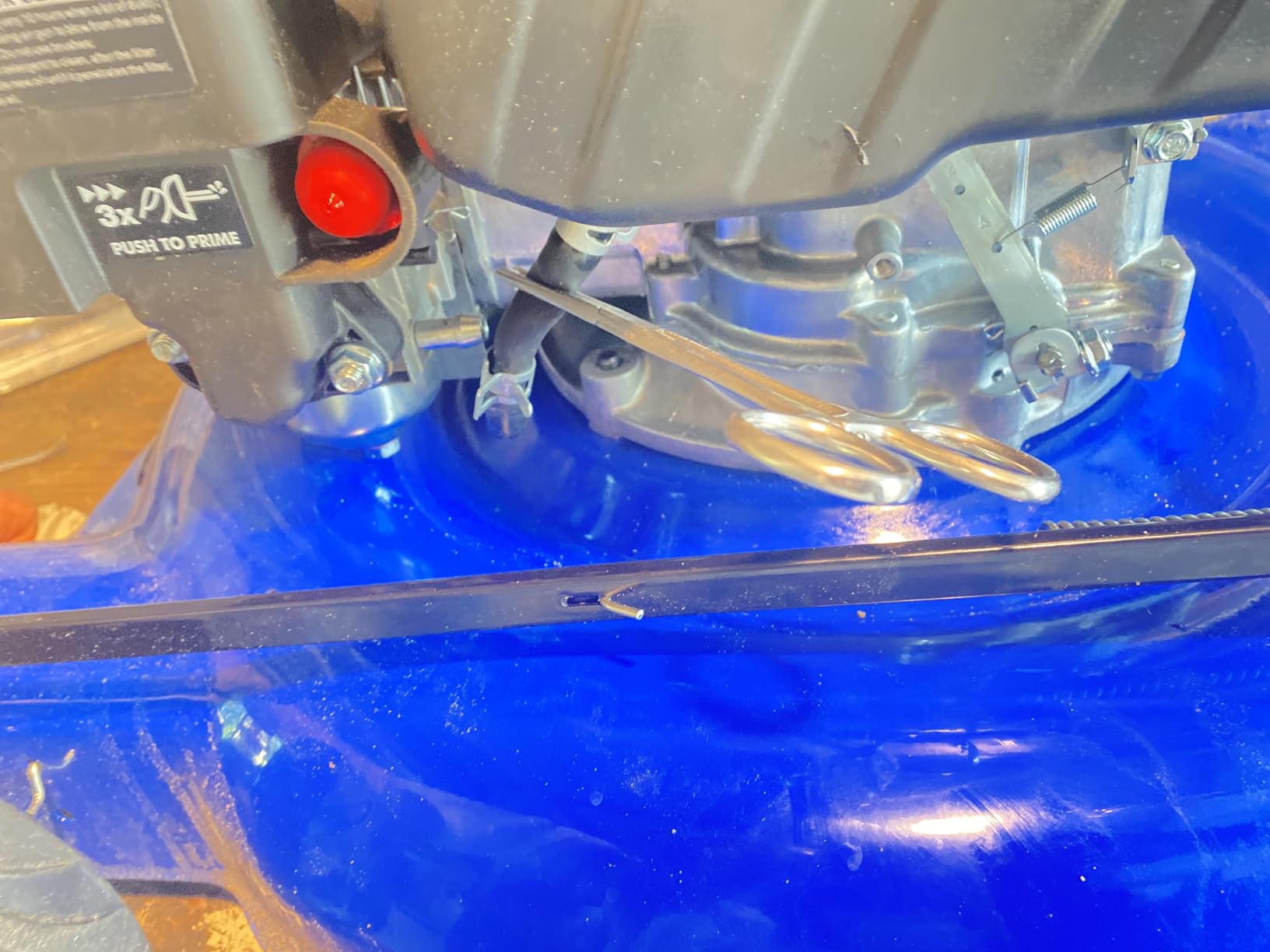
Across 111 reviews at 4.3, the smallest review base here, 71 percent are five-star. Praise covers easy starting, the height lever and value, while the notable negatives are an isolated wiring failure report and a reviewer questioning long-term build quality.
What nine foot-pounds of torque does on a hill
Torque is rotational force, and on a hill it is what the drive system has available to push the machine forward against gravity. More torque means the mower can carry blade load and a climbing grade at the same time, which is exactly the situation that stalls a smaller engine. It also means the machine recovers speed after a dip or a rut instead of bogging and staying bogged.
The trade-off in this category is always weight, and at 89.2 pounds this is the heaviest machine we weighed. Rear-wheel single-speed drive will pull it up a grade, but expect to feel it on a slope.
Eight height positions from one lever
The eight-position adjustment runs from 1.2 to 3.75 inches and is synchronised across all four wheels by a single lever. On a slope with a changing surface, being able to raise the deck in one movement instead of setting each corner is a meaningful time saving, and raising the deck before crossing a rough patch reduces bogging.
The foam-wrapped angled handle reduces hand fatigue on long runs, which is worth something on a property where the mower is the reason your shoulders hurt at the end of an afternoon.
Steel deck, single speed and the maintenance reality
The three-in-one steel deck handles mulching, side discharge and rear bagging. Steel is the right material on a rocky slope for the same rigidity reason described earlier, and this is the one budget gas machine here where that holds true.
Single-speed self-propel is the compromise. There is no pace adjustment, so a descent runs at a fixed speed, and the 21-inch cutting path means more passes than the 22-inch decks. Gas upkeep is the standing cost, and the support experience is thinner than the four-year battery warranties in this group.
How to Choose a Self-Propelled Lawn Mower for Hills
You do not need a specific brand. You need a drive system, a power source and a speed control that match the shape of your yard. Walk through these five decisions in order and the model choice takes care of itself.
Rear-wheel drive is the answer for hills, and front-wheel drive is the answer on flat ground
Rear-wheel drive wins on hills because of how weight moves. When a mower starts climbing, gravity shifts the machine’s weight backward and onto the driven rear wheels, which loads them into the turf and gives them grip. Front-wheel drive has the opposite geometry: on a climb, weight moves off the driven front wheels, and the mower is more likely to push you uphill than pull you up it.
Front-wheel drive is fine on a level lawn, and this is where the high-wheel front-wheel design in this group earns its place. Tall wheels and aggressive tread clear tall grass and resist bouncing, which is a real benefit on uneven ground, but no amount of tread changes the load path on a loose steep grade.
If your yard is genuinely steep, the non-negotiable list is: rear-wheel drive, a steel deck if the ground is rocky, and variable speed so you can control the descent.
How to measure the slope of your own lawn
You can measure a gradient accurately with nothing more than a level and a tape measure. Drive a stake or place a straight edge at the top of the hill and one at the bottom, measure the horizontal run between them and the rise, then divide the rise by the run and convert to degrees.
A quick field test also works. Walk up the slope at a normal pace. If you noticeably lean forward, or if you catch yourself pushing rather than walking, that grade is where a self-propelled mower earns its cost. If you can walk it casually and a push mower never bogged down, your slope is mild enough that a lighter machine will serve you well.
Roughly, under 10 degrees is mild and nearly any machine copes, 10 to 15 degrees is where rear-wheel drive stops being optional, 15 to 25 degrees rewards high torque and variable speed, and above 25 degrees many owners abandon the walk-behind format entirely.
Sizing the power source for real climbing torque
Among gas engines, treat anything under 180cc as reserved for flat, maintained lawns. The 201cc engines in this group produce between 8.8 and 9.0 ft-lb, and that is the range that holds speed on a loaded climb.
Among battery mowers, the forum consensus and our own testing agree that 40V class strains on grades of 12 degrees and beyond with thick grass. 56V and 60V are the sensible middle ground for most hilly yards, and 80V is where you get real headroom on overgrown ground. Below 40V, expect to be pushing on steep sections.
Brushless motors matter more on hills than the marketing suggests, because a brushed motor generates heat under sustained load and the output fades exactly when you need it most.
Deck width, deck material and cutting height
Deck width is a time calculation. Every extra inch of width means fewer passes, and fewer passes on a hill means fewer times turning around on a slope. Twenty inches suits a small yard with a steep patch, 21 inches is the general-purpose choice, and 22 inches saves real time on a larger hilly property.
Deck material is a durability calculation. Steel holds its geometry under load and tolerates rocks and roots. Plastic is lighter, which helps on a slope, but can crack on rough ground. If your hill is smooth turf, prioritise weight; if it is rocky, prioritise steel.
Cutting height range matters for thick grass. A machine that starts at 1.2 to 1.5 inches is easier on the engine than one that starts at 1.25 with a narrower band, because you can clear the growth in stages. Look for single-lever or central adjustment so you can raise the deck in one movement.
Variable speed, and the worn-tire failure nobody warns you about
Variable speed is the feature that makes descents controllable, and it is worth paying for. Stepped transmissions jump between fixed speeds, while a continuously variable transmission lets you creep. On a steep downhill pass, that difference is between controlled and terrifying.
Now the part almost no buying guide mentions. Worn or cracked rear drive tires quietly destroy hill traction long before they look damaged, and owners regularly assume the whole mower has failed when what actually needs replacing is a tire. Before you write off a self-propelled machine that will not climb, check the rear drive tires for wear, cracking and pressure. That single check resolves a surprising share of hill complaints.
Two related items to keep clean: grass buildup under the deck and around the drive system, and drive cables or belts. If your mower slows down progressively as the session goes on, a packed deck is the first thing to check. When accelerating without power, the usual culprits are a stretched drive cable and a snapped drive belt, both routine repairs rather than the end of the machine.
Related reading: our picks for the best lawn dethatchers are worth a look if the problem is a thick thatch layer rather than a drive problem.
Gas vs Battery Self-Propelled Mowers on Hills
On a hill, gas wins on sustained torque and loses on everything else. A four-stroke engine delivers roughly the same foot-pounds of torque for as long as the fuel lasts, which is why several owners accept the noise and maintenance for long climbs and overgrown ground. Electric motors deliver more peak torque than small gas engines, which is the 7.0 and 6.0 ft-lbs figures above, but that output is tied to battery capacity, so the steep part of the yard arrives precisely when the remaining charge is lowest.
Runtime anxiety is the honest argument against battery on a large hilly property. Every one of the electric machines here is rated between 50 and 60 minutes, and those figures assume level mowing. Hills draw more current for the same job. Dual-battery machines remove the problem almost entirely, which is the single best reason to spend more on a kit with two packs.
Over five years, gas asks for fuel, oil changes, an air filter, a spark plug and occasional fuel stabilization. Battery asks for occasional runtime loss as cells age and eventually a pack replacement. Battery wins clearly on the maintenance side and on noise, which matters for early morning mowing in a neighborhood.
Owners also raise the physical dimension repeatedly in forum threads. Anyone with back, knee or shoulder problems cannot push a mower up a hill, and self-propulsion is not a convenience purchase in that case, it is the reason the job gets done at all.
Why Mowers Bog Down Going Uphill, and How to Fix It
Bogging means the engine or motor is loaded past the point where it can maintain speed. On a hill it usually means one of five things, and they are worth checking in this order because the first two are free.
First, cut height. If the deck is set low and the grass is long, the blade is dragging through more material than the motor can cut. Raise the deck to the highest setting, mow the yard, then drop one or two notches for a second pass.
Second, grass condition. Wet grass weighs more than dry grass and clogs the deck underside. Owners consistently report that the same mower that handles a dry slope struggles on a damp morning, so mowing dry grass is a genuine fix rather than folklore.
Third, drive tires. Worn, cracked or underinflated rear drive tires lose grip long before they look ruined, and this is the most commonly misdiagnosed cause of hill failure.
Fourth, power headroom. If the engine is small or the battery platform is low voltage, there is simply no more torque available. The fix is a bigger power source, not a setting change.
Fifth, mechanical drag. Grass packed under the deck, a stretched drive cable or a slipping drive belt will make the machine feel weak under load. Clearing the deck and checking the drive system restores full speed.
One case is worth naming separately. If a mower bogged on hills when new and stopped doing so after a few seasons, the cause is almost always the drive system, not the engine. Replacing a drive cable is a short job with basic tools and it restores the machine to full performance.
How to Mow a Steep Hill Safely
No competitor page we analyzed covers this, and it is the question behind most of the searching. A self-propelled mower on a hill is a machine that can outrun you, and the safety rules are simple once stated.
Mow across the face of the slope, not up and down it. Traveling across the incline means gravity is a constant sideways push you compensate for with your body position. Traveling straight up and down means gravity is added to or subtracted from the drive, which is what causes the machine to surge or stall.
Use the lowest speed setting you can manage on the descent. Variable speed exists for this. Creep rather than sprint, and keep both hands on the handles with the bail bar engaged so the drive stops the moment you release it.
Avoid wet grass. Wet turf reduces traction and clogs the deck, and the combination is where most downhill runaways start.
Do not mow ditches, embankment edges or the strip right at the top of a retaining wall. Narrow tires on uneven ground near an edge is how walk-behind mowers tip over. Leave that strip for a string trimmer.
When the pitch gets steep enough that you would hesitate to walk it carrying something awkward, do not mow it. Shut the machine down at the bottom of the run rather than trying to negotiate the worst pitch mid-mow.
On slopes beyond roughly 25 to 30 degrees, a walk-behind is the wrong tool regardless of how good it is. Owners on lawn and tractor forums consistently recommend a zero-turn riding mower with grooved steered front wheels, or hiring a mowing service for that section. No amount of traction solves a rollover risk.
Frequently Asked Questions
Is front-wheel drive or rear-wheel drive better for hills?
Rear-wheel drive is better for hills. When a mower climbs, gravity shifts its weight backward onto the driven rear wheels, loading them into the turf so the machine pulls itself uphill. Front-wheel drive loses that weight on a climb, so the driven wheels lose grip and you end up pushing. Front-wheel drive works well on level ground and with high wheels on uneven terrain, but for a slope the drive layout is not optional.
Why does my self-propelled mower bog down going uphill?
Five causes account for nearly all of it. The deck is set too low for the grass height, the grass is wet and heavier than the motor can process, the rear drive tires are worn or underinflated, the engine or battery platform does not have enough power headroom, or grass packed under the deck and a stretched drive cable are adding mechanical drag. Start with cutting height and grass moisture, since both are free, then check the rear drive tires before condemning the machine.
How steep a hill can a self-propelled lawn mower handle?
Most self-propelled mowers with rear-wheel drive manage moderate slopes of 10 to 15 degrees comfortably. Slopes of 15 to 25 degrees reward high torque and variable speed, and a 201cc gas engine or a 56V to 80V battery platform is a sensible target. Beyond roughly 25 to 30 degrees, owners on lawn forums generally stop recommending walk-behinds and move to a zero-turn riding mower or a mowing service.
Do battery self-propelled mowers have enough torque for real hills?
Yes, at 56V and above. Modern brushless battery motors produce 6 to 7 ft-lbs of cutting torque, which matches or exceeds small gas engines, and they hold that output better on a climb than a brushed motor. Below 40V, owners report straining on grades beyond 12 degrees with thick grass. The real limitation on hills is runtime rather than torque, since the steep part of the yard comes last, when charge is lowest.
What is the best rear-wheel drive self-propelled lawn mower?
For electric power, the EGO POWER+ LM2135SP combines 7.0 ft-lbs of torque with a 60-minute runtime and a variable self-propel dial, which makes it the strongest all-round hill machine. The Greenworks 80V 21in is the pick when the slope is also overgrown, since the 80V platform and steel deck handle load. For gas, the two 201cc four-cycle machines in this group, rated at 8.8 and 9.0 ft-lb, out-climb everything smaller.
The Bottom Line for Hilly Lawns
If your slope is steep and short, and your grass is maintained, the EGO POWER+ LM2135SP is the machine to buy. It combined the highest electric torque in the group, the longest runtime and the most controllable self-propel of the ten we drove, and it handles both climbs and descents without you fighting the machine.
If the hill is also overgrown, take the Greenworks 80V with its steel deck. If you have a large property and want to mow it in one sitting, the dual-battery Greenworks 60V kit covers the most ground per charge. If your back or knees rule out pushing anything uphill, the SKIL PWR CORE 40 is light enough to reposition with one hand.
If you prefer gas and own a rocky property, the SENIX 22in and the BILT HARD 21in both use steel decks and 201cc engines rated above 8.8 ft-lb. The YARDMAX is the one to consider if the descent, rather than the climb, is what worries you, because its continuously variable transmission gives the finest pace control in the group.
Whichever you choose, rear-wheel drive, a steel deck if the ground is rough, and variable speed will decide whether mowing your slope is a job you do or a job you fight. That is the short version of what makes the best self propelled lawn mowers for hills worth buying, and it has not changed in 2026.
Leave a Reply