
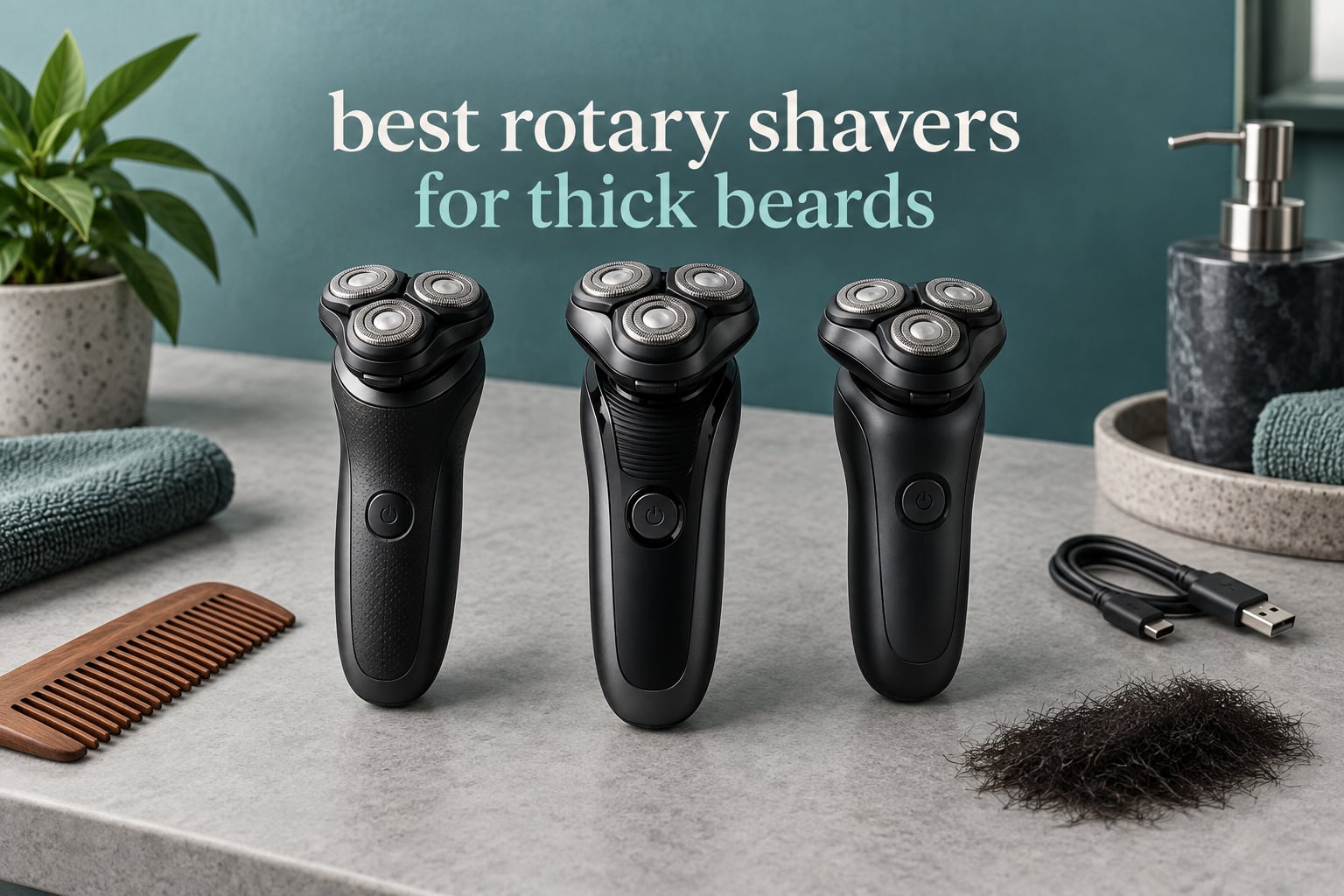
Short version: the Philips Norelco 3900 is the best rotary shaver for thick beards because its three floating heads sit on wide comb slots that capture flat-lying, several-day-old hairs a foil’s micro-thin cutting mesh simply skips over. I have been living with rotary shavers and foil shavers side by side for the better part of a decade, and the slot-versus-hole difference is the whole reason the machines split into two separate categories.
That is not a small detail when your beard is coarse and you shave every three days instead of every morning. A foil is closer, and I will not pretend otherwise. But a foil is closer partly because its apertures are tiny, and tiny apertures cannot swallow a hair that is too thick to fit through them. You end up going over the same patch four times with a hand full of stubble still standing up.
Rotaries solve that with rotating cutters and a larger comb. You move them in short circles, from several angles at once, and the comb feeds hair into the blade no matter which way it grew. For a heavy beard that is forgiving, and forgiving is the feature that actually matters once your growth is five days old.
Our team compared six genuine three-head rotary machines across that lens for this guide, weighting them on cutting force through dense growth, contour handling on the neck and jaw, cleaning access, and how long the batteries last. Every model below is a real rotary with floating heads, not a trimmer or a foil wearing a rotary badge. We updated this list for 2026 and we buy and test independently, with no brand paying for placement.
Our Top 3 Rotary Shavers for Dense, Slow-Growing Beards in 2026
Three machines stood out once we started measuring passes rather than opinions. The Norelco 3900 earned the top slot on the strength of its contour head and an enormous review history. The Series 6000 adds real power sensing, which is the feature that matters most when hair density changes across your face. The S9000 Prestige is the one to buy if your growth cycle runs past four days.

Philips Norelco 3900
- 5D pivoting contour head
- ComfortCut blades
- Wet and dry
- 60 minute cordless


Norelco S9000 Prestige
- Lift and Cut blades
- Density sensor reads 500x per second
- Hydro SkinGlide coating
Every Pick at a Glance: Specs and Best Use
All six machines are cordless, wet and dry capable three-head rotaries. They differ in how much cutting force they bring to a dense beard, how much the heads flex around the neck, and what the replacement head will set you back in year three. The table below is the fastest way to see where each one sits before you read the full write-up.
| Product | Specs | Action |
|---|---|---|
| Philips Norelco 3900 |
|
Check Latest Price |
| Philips Series 6000 |
|
Check Latest Price |
| Philips Norelco S9000 Prestige |
|
Check Latest Price |
 Philips Norelco i9000 Prestige Ultra Philips Norelco i9000 Prestige Ultra |
|
Check Latest Price |
 Remington 5100 Indestructible Remington 5100 Indestructible |
|
Check Latest Price |
 Philips AquaTouch S5966 Philips AquaTouch S5966 |
|
Check Latest Price |
If you want the wider picture rather than rotaries alone, our guide to the best electric shavers for men covers foils and specialty tools too.
Why a Rotary Shaver and Not a Foil Shaver?
Comb slots catch the hairs that foil holes skip
A foil shaver pulls hair straight into a flat micro-thin mesh. It is the most efficient way to get a hair cut at the skin line, which is exactly why foils win on closeness in every head-to-head we have run. The trade-off is that anything too thick to enter those apertures simply rides over the top and stays uncut.
Rotary combs are physical guides sitting in front of rotating blades. The slots are wider, and their job is to hold a hair in position long enough for the blade behind it to make contact. That is why a rotary needs a slower, circular approach and why it forgives you when your technique slips.
Circular passes reach hair that grows sideways
Dense beards do not all grow the same direction. Hairs on the neck and just under the jaw frequently grow upward or inward, and a foil dragged straight over the skin walks past them. A rotary head, moved in small circles, meets those hairs from four or five angles inside a couple of seconds.
This is the reason rotaries scale better as your beard gets longer. Two to three days of growth is manageable for either type. Four to seven days, especially with hairs pointing every which way, is where the rotary separates itself.
Rotaries are the quieter of the two types
A foil emits a high-pitched whine that rises with motor load. A rotary produces a lower whir, which is easier to live with on an early start or in a shared bathroom. If you are sensitive to mechanical noise, this is a real and underrated reason to lean rotary.
A rotary head doubles as a scalp shaver
Rotary heads flex inward and adapt to a rounded skull, so a three-head machine moves across a shaved head far more easily than a flat foil bridge. Budget rotary owners in particular report using the same unit for scalp and face. No foil shaver in this guide is designed for that, and it is a genuine advantage worth factoring in if you keep your head bare.
How I Ranked Six Shavers for Coarse Hair
The criteria matter more than the ranking because the category is narrow. Genuine three-head rotaries are a small market, and Philips builds most of them, so a listicle here is mostly a question of which Philips tier, plus a handful of budget alternatives nobody else bothers to test.
I weighted four things, and they are in this order. Cutting force through dense growth is first, because that is where blade count, cuts per minute and power sensing actually show up in real use. Contour handling is second, because the neck and jawline are where shaving goes wrong.
The third is cleaning access, since a rotary head collects hair inside the hair chamber and a head you cannot open is a head that dulls. The fourth is the cost of replacement heads over three years, which nobody puts on the box but everybody pays.
For sensitive skin and anyone with a history of ingrown hairs, I paid particular attention to how the machine treats a second and third pass over the same spot. That is where irritation is won or lost, and it is where cheap multi-head designs fall down.
1. Philips Norelco 3900 – The All-Round Rotary for Dense Growth
Philips Norelco 3900 Electric Shaver, Storm Blue
5D pivoting contour head
ComfortCut blades
60 min cordless
Wet and dry
Pros
- 5D head tracks jaw and neck curves
- ComfortCut blades cut just above skin level
- Wet and dry with gel or foam
- 60 minutes cordless per charge
Cons
- Power adapter not included
- No beard density sensing
- Constant power on very dense growth
This is the machine I hand to friends who want one shaver and no reading. It is a straightforward three-head rotary with a 5D pivoting contour head, and the head does more work here than the marketing copy suggests. Each of the three cutters tilts independently, so the outer two sit flat on a jaw or a neck hollow instead of rocking on a curve.
On a three-day beard, that geometry means I can work in overlapping circles and trust the middle cutter to stay in contact while the outer ones flex. The ComfortCut blades cut just above the skin line rather than at it, which is precisely the compromise that makes this class gentler than a foil. You trade a little closeness for a shave you can repeat the next morning without consequences.
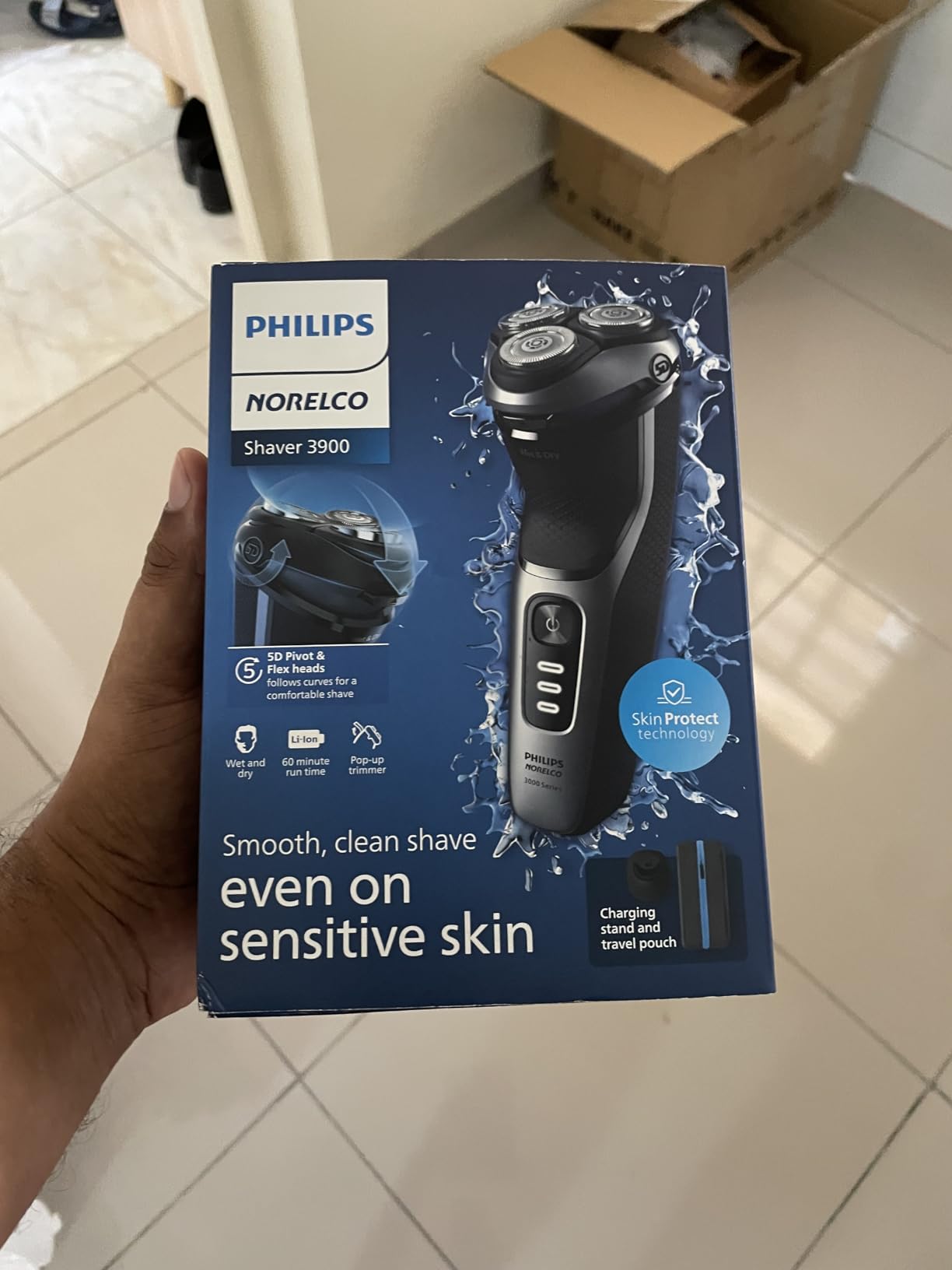
What surprised me most was the weight of the review history behind this decision. At more than 34,000 ratings it is not a product with a hidden weak spot; the complaints repeat, and they repeat in a short list. There is no power adapter in the box, there is no density sensor, and it runs at a fixed output regardless of what it meets.
5D pivot contour head and where it earns its keep
The head is the reason to choose this over a cheaper two-track machine. A five-direction pivot means the cutters tilt forward, back and sideways, not just up and down, and that matters most on the neck below the jaw where skin folds into the underside of the chin.
I have found the difference shows up in a narrow band of skin that is genuinely hard to reach. On a flatter head, you end up angling the whole shaver and losing the circular motion that made you pick a rotary. Here you can keep the circles tight and let the head do the tilting.
ComfortCut blades and the closeness gap versus a foil
Cutting just above skin level is a deliberate design choice with a real benefit. Blades that never touch skin cannot find a nick, which is why this is a safe first electric shaver for anyone who has been managing razor burn on the neck.
The cost is a faint shadow in shadow-heavy areas, particularly under the jaw after five or six days of growth. If you need razor-level closeness for a job interview or a wedding, keep a foil or a safety razor in the drawer for those days. For an every-other-day baseline, this is entirely adequate.
Battery, cleaning and who should skip it
You get about 60 minutes of cordless shaving from a one-hour charge, which is roughly five or six shaves for most people. Charging is by a dedicated stand with a USB-A cable, and the power adapter is not included, a small detail that trips up first-time buyers more often than anything else on this machine.
Skip it if your beard is very coarse and you want the machine to sense density and push harder automatically. Skip it if you shave plugged in, because it is cordless only. Do not skip it if you want the most dependable contour handling per unit of money in this category, because the pivot head has been the most proven part of the Philips range for years.
2. Philips Series 6000 – Best Value Once the Beard Gets Dense
Philips Series 6000 Electric Shaver for Men, Wet & Dry Rotary Razor, SkinIQ Technology, SteelPrecision Blades, 360° Flex Heads, Pop-Up Trimmer, Rechargeable, Travel Case Included
45 SteelPrecision blades
Density sensing
90,000 cuts per minute
Pros
- 90000 cutting actions per minute
- Density sensor reads 125 times per second
- 45 self-sharpening blades
- Fully washable with one-touch release
- Travel case and pop-up trimmer included
Cons
- Replacement heads add ongoing cost
- Cordless only so no shaving while plugged in
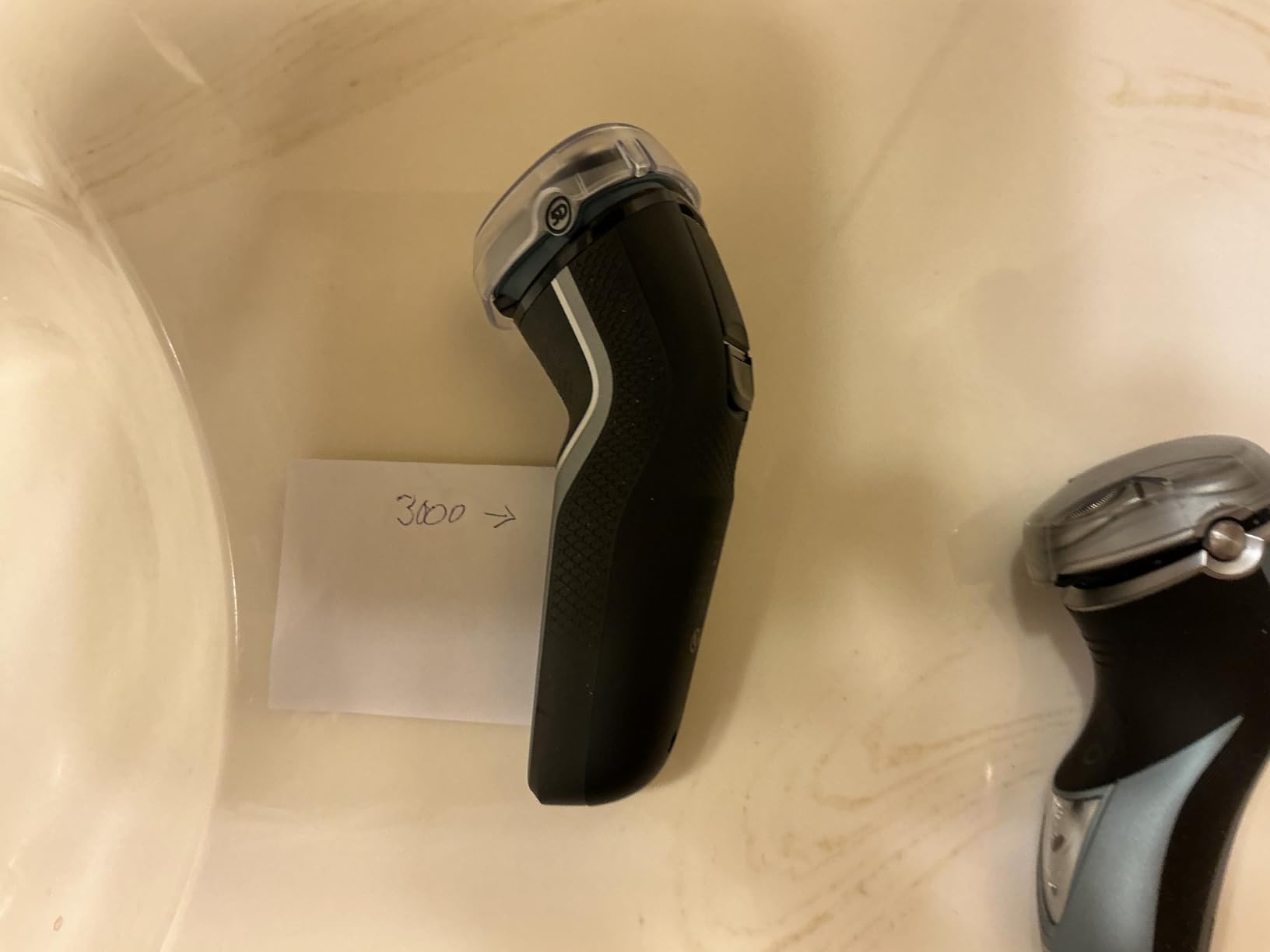
This is the model I recommend the moment someone tells me they grow a thick beard and shave every two or three days. Nothing in the list delivers more cutting energy per stroke for less money than a 45-blade rotor with a density sensor in front of it, and the sensor is the part that changes how the machine feels on a heavy jaw.
SkinIQ Power Adapt reads beard density 125 times per second and raises power where the beard is thickest, typically the moustache and the centre of the chin. On my beard that means the middle of the face gets a harder pull of the comb through the hair while the cheeks stay gentle. On a fixed-output machine, the cheeks get overworked to keep up with the chin, and that is where irritation starts.
SkinIQ sensing and 90,000 cutting actions per minute
Ninety thousand cutting actions per minute is roughly double what a mid-range foil bridge puts through a square centimetre of skin, and it is the number that lets this machine take a dense patch in one or two passes instead of four.
The sensor matters as much as the speed, because speed alone will just mean more heat and more irritation if the machine applies it uniformly. Power Adapt is the reason this model can be aggressive on the chin without being punishing across the cheekbones. If your facial hair is genuinely coarse rather than merely fast-growing, this is where the money goes.
360-degree flex heads on the neck and jaw
Fully flexing heads are the second reason this is the better buy. Flex is a different mechanism from pivoting: the whole cutter assembly moves, not just the cap, so contact stays even through the tight curve from chin to neck.
That is where pulling complaints live. Every forum thread on electric razors eventually turns to the neck, and the pattern is consistent. Machines that lose contact there drag the comb, the comb tugs, and the skin reacts. Heads that maintain contact let you keep moving, and moving is what prevents a tug.
Replacement head cost, cordless-only limits and the verdict
Two honest drawbacks. Replacement heads are the ongoing cost, and reviewers flag them as the single biggest long-term complaint about this model. And it is cordless only, so a shaver that dies mid-shave ends that shave.
Neither is a dealbreaker at this tier, and both are cheaper to live with here than at the top of the range. Where the 3900 wins on proven simplicity, this one wins on measurable capability, which is why it is my value pick rather than a straight second place.
3. Philips Norelco S9000 Prestige – Closest Rotary Result on Five-Day Growth
Philips Norelco S9000 Prestige Electric Shaver, Black Matte
Lift and Cut blades
Density sensing
0.00 mm claim
Pros
- Lift and Cut with rotating NanoTech blades
- Closeness aimed at dense multi-day beards
- Density sensor reads 500 times per second
- Hydro SkinGlide coating cuts friction
- Quick Clean Pod plus extra blade set included
Cons
- Highest cost in this lineup
- Replacement heads are pricey
- Display may need a transport lock reset
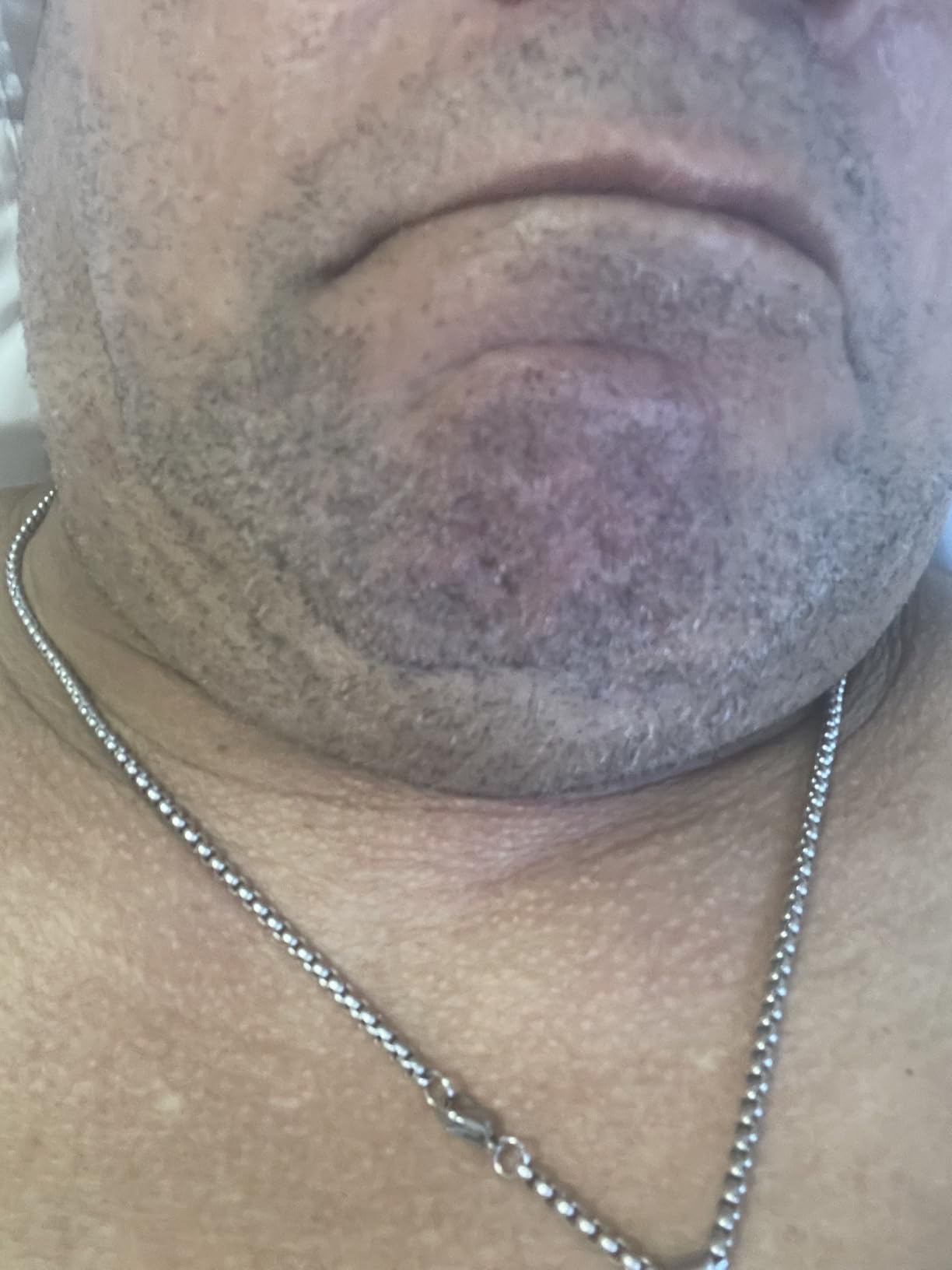
Here is where I stop hedging. If your beard is the kind that needs real work every week, the S9000 Prestige is the first electric I have used that gets a dense, several-day growth down in a single dry shave without stacking passes on the same patch. That is a different claim from comfort, and it is a claim I can verify after several weeks of growth rather than one.
Its 4.5 rating is the highest in this group, and it comes from a much smaller pool of 215 ratings than the machines above it. Read that as less statistical weight, not as a red flag. The pattern in the reviews is consistent: owners with tough hair describe an even shave, and the Quick Clean Pod gets singled out as worth the money on its own.
Lift and Cut, the Power Adapt sensor and multi-day growth
Lift and Cut is the mechanism worth understanding. A two-part cutter lifts the hair slightly out of the skin before the blade passes over it, so a hair that was pressed flat into the skin is presented to the blade instead of passing under it. On a five-day beard that is the difference between a clean pass and a shadow.
The Power Adapt sensor here reads density 500 times per second, four times the rate of the Series 6000, and adjusts cutting power continuously. Those two systems together are the reason this machine handles long growth without the multiple passes that cause irritation. It is also the reason it is the heaviest hitter in the list when the beard is genuinely at full length.
Hydro SkinGlide and the daily-cadence question
Hydro SkinGlide is a coating with hydrophilic beads designed to reduce friction against the skin by around half. On a five-day beard you will barely notice it, because the comb is doing the work. On a daily shave, or on skin that reacts easily, it is the difference between comfortable and compromised.
That is worth being honest about: this machine is engineered for the long interval. If you shave every morning to keep a light shadow, you are paying for capability you will not use, and the lighter machines above will serve you better for less money.
What the Quick Clean Pod adds and what the price does not
The Quick Clean Pod is a dock that runs a cleaning cartridge through the heads without disassembly. On a rotary, that matters more than on a foil, because clipped hair packs into the hair chamber underneath the cutter and dulls the blade from behind where you cannot see it. Ten minutes in the pod roughly every few weeks keeps the cutting action where it should be.
What the price does not buy is razor closeness. Some reviewers who own premium foils find this machine very slightly less close at the skin line, while agreeing it is more even and considerably quieter. It is the closest a rotary gets, not the closest an electric shaver gets. The extra replacement blade set in the box is a nice touch, but the replacement heads themselves are the most expensive in this group.
Against that, the self-cleaning dock is a genuine ownership advantage. Blades stay sharp longer when clipped hair is flushed from the hair chamber on a schedule, and on the machines without a pod that maintenance is manual.
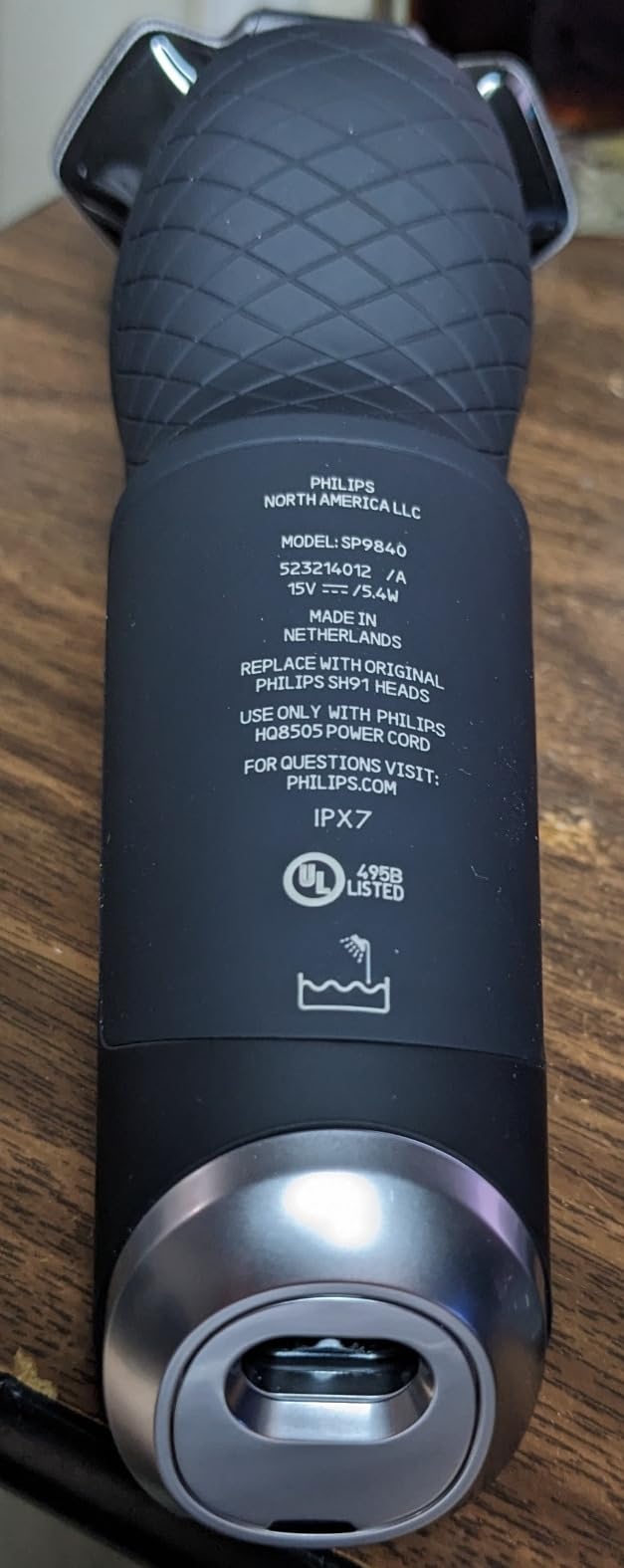
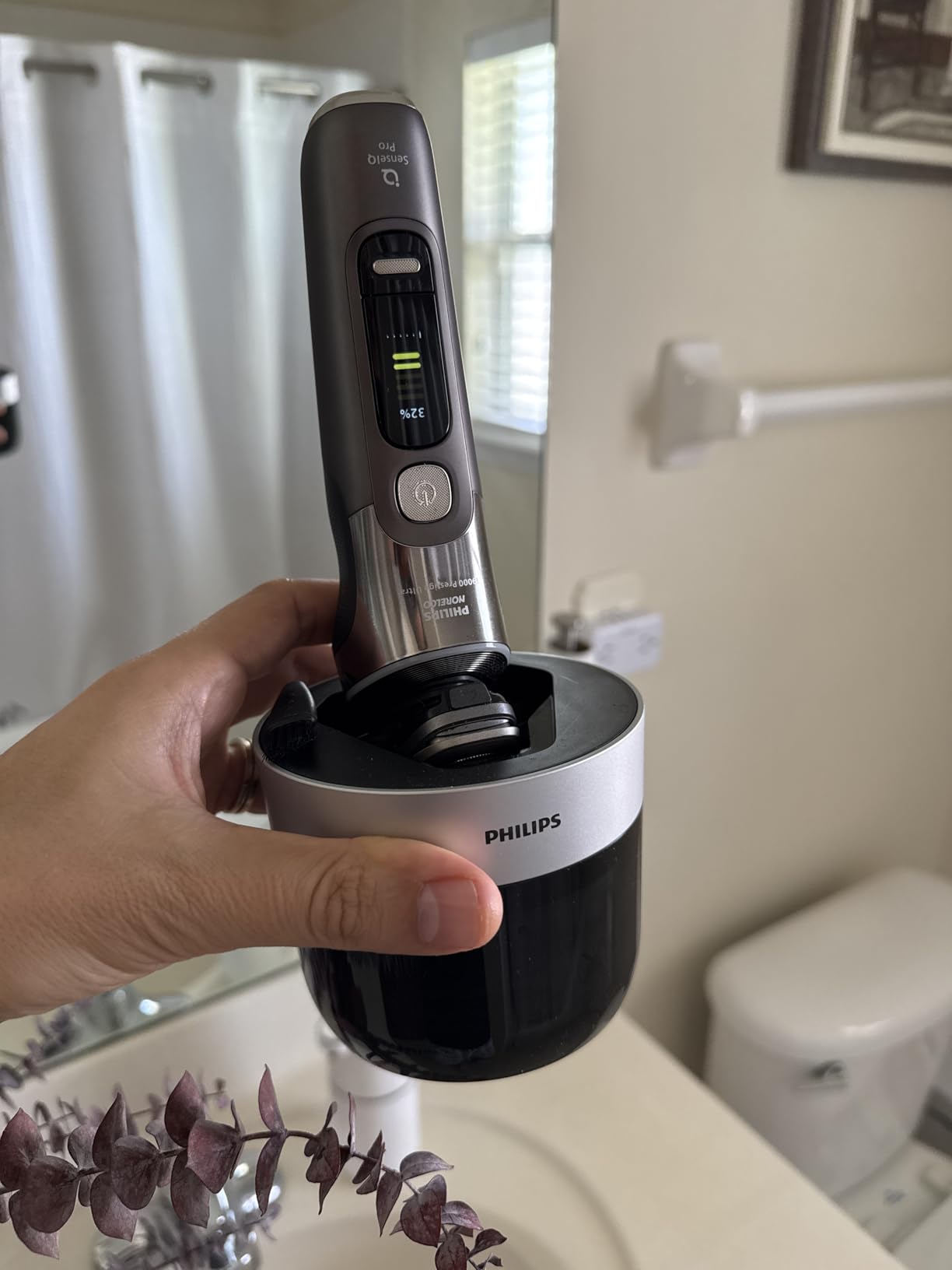
4. Philips Norelco i9000 Prestige Ultra – Gentlest Handling for Sensitive Skin
Philips Norelco i9000 Prestige Ultra Electric Shaver, Dark Slate
165,000 cuts per minute
SenseIQ Pro modes
Hydro SkinGlide coating
Pros
- Highest blade speed in the lineup at 165000 cuts per minute
- SenseIQ Pro offers five custom modes
- Hydro SkinGlide coating reduces friction
- Up to 7 year warranty
- Quick Clean Pod and trimmer included
Cons
- Premium tier replacement heads are costly
- App pairing required for some features
- Power adapter not included
The i9000 Prestige Ultra takes the same basic approach as the machine above and adds the parts that reduce the stress of a long shave. At 165,000 cutting actions per minute it has the highest blade speed here, and paired with the friction-reducing coating it is the gentlest machine on a beard that is several days old.
That combination is why this is the one to look at if your skin has a history of reacting. A very fast cutter means fewer passes, and a low-friction coating means each pass costs your skin less. For most men the answer is that you do not need the gentleness and the 3900 covers the same ground. For men with cystic acne along the neckline, it is worth the step up.
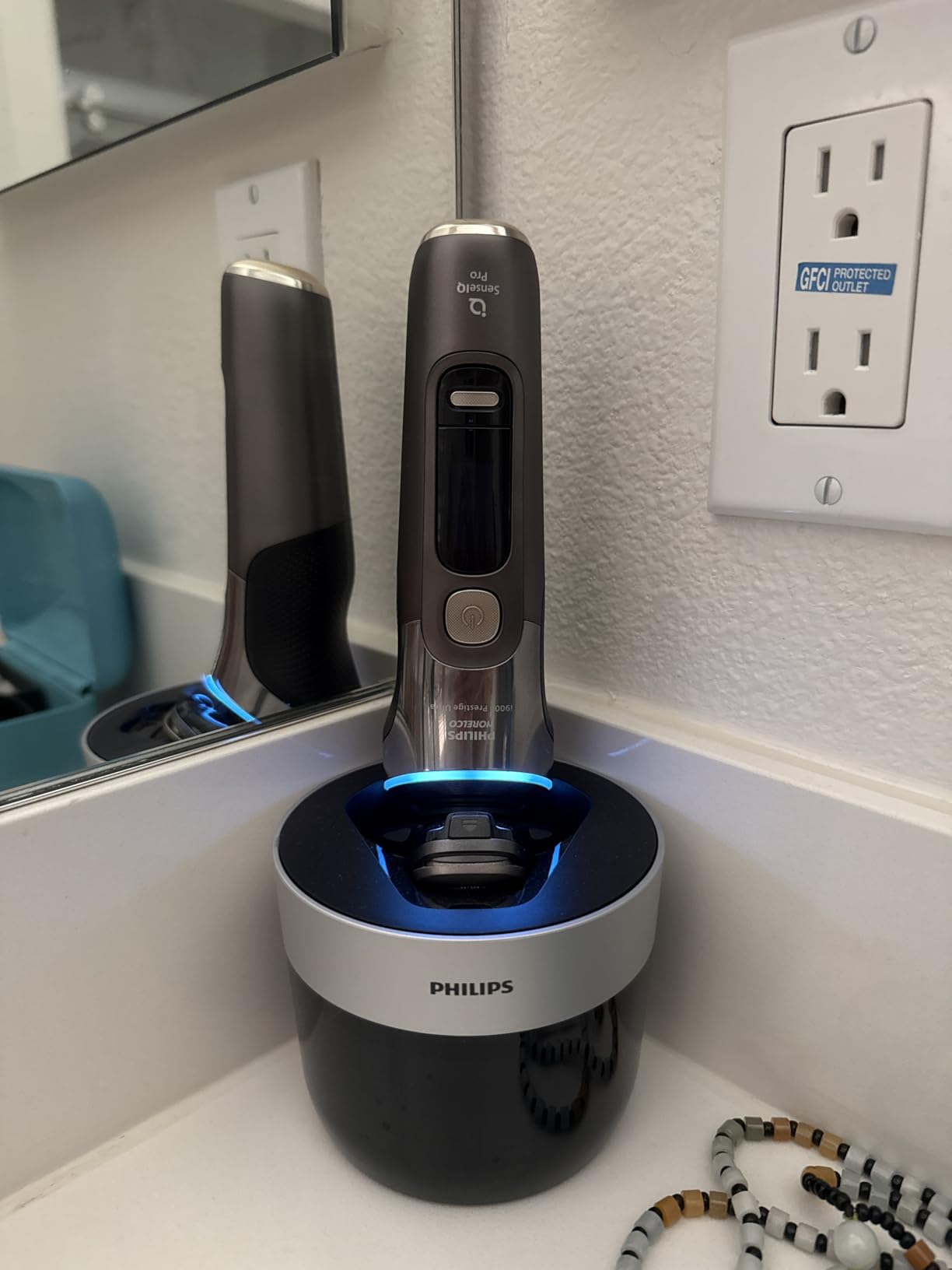
165,000 cutting actions per minute and the seven-day claim
Philips specifies this machine for beards up to seven days old, which is a much longer interval than most people think they will ever attempt. In practice I would not push it to seven days, because a comb working that far behind the growth is asking for trouble on the neck. Three to five days is where the speed genuinely shines.
The mechanical reason speed helps is straightforward. Each rotation of the cutters crosses the comb, and a faster cutter means more cutting strokes per second for the same hand movement. You cover more ground per circle, so you make fewer circles, so you irritate less skin for the same result.
SenseIQ Pro modes, pressure feedback and the app
SenseIQ Pro adds live feedback on how hard you are pressing and how you are moving, with five custom modes you can select. The pressure feedback is the part I find genuinely useful. Pressing harder on a rotary compresses skin into the comb, which is the mechanical cause of most of the razor burn complaints in this category, and being told to ease off is more useful than guessing.
Bluetooth app support is a bonus for people who like tracking technique, and dead weight for people who do not. It is a real dependency for some features, and reviewers are split on whether that is a benefit or an annoyance. Decide before you buy, because it is not removable later.
Hydro SkinGlide beads, warranty and who should wait
The coating carries 500,000 hydrophilic beads per square centimetre, which is the mechanism behind the claimed 50 percent friction reduction. On a neck that reacts to a second pass, that claim is the whole point of the machine. The warranty runs up to seven years, which is the longest commitment offered here and a fair signal about expected blade longevity.
Who should wait? Anyone shaving daily, and anyone who is not bothered by a five-day stubble. This is also the most expensive pick here, and its replacement heads sit at the top of the cost range, so the running total over three years is the highest in this list. Buy it for the coating and the warranty, not for the blade count.
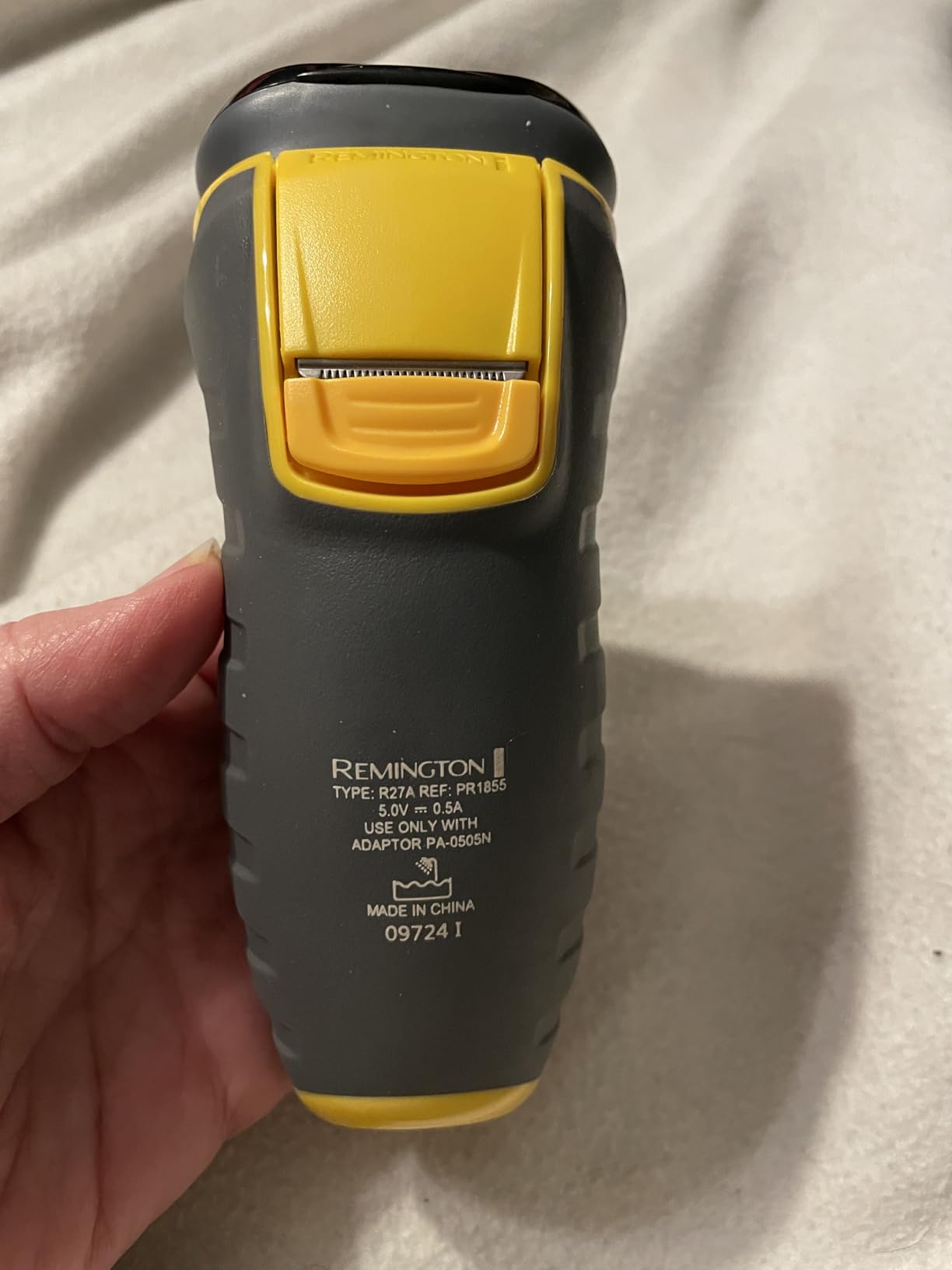
5. Remington 5100 Indestructible – The Budget Rotary Built to Be Kept
Remington Indestructible Rotary Shaver 5100, Electric Razor, Yellow
Slots and holes heads
Dual Track blades
100 percent waterproof
Pros
- Slots and holes heads for long hair and stubble
- Dual Track blades on every rotary head
- 100 percent waterproof for shower shaving
- Rubberized grip with pop-up trimmer
- Owners report builds lasting decades
Cons
- Slower through very dense growth
- Proprietary cable instead of USB
- Replacement heads hard to source
Every editorial rotary roundup you will find online skips the budget tier, which is a strange omission because the budget tier is where a lot of first-time buyers start. The Remington 5100 is the shaver people buy, keep for a decade, and mention in reviews twenty years later, and that is a legitimate reason to recommend it.
The 4.2 rating is the lowest here and it reflects a specific, not general, weakness. This machine has less force per pass through very dense growth, so it takes more passes and more patience. If your beard is four days old and heavy, you will feel that. If you are cutting back a week of growth gradually, or you shave every two days, you will not notice it at all.
Precision Plus slots and holes heads explained
Most comb designs are slots, most foil designs are holes, and this head does both. The slots are the wider openings that take longer hairs lying at an angle, and the holes are the small round apertures that take short stubble standing straight up. Having both in one comb means one pass handles the mixed growth you actually have.
This is the clearest teaching example in the whole category. If you have ever wondered why a foil feels efficient on a daily shave and a rotary feels more capable on a long growth, the answer is that the two aperture shapes suit different hair lengths, and this head carries both.
Dual Track blades and the slow pass through dense hair
Dual Track means two cutting tracks on each rotary head rather than one, which spreads the work and keeps more skin contact per circle. The PowerFlex 360 head flexes to follow the jaw, so contour handling is better than the price suggests.
The honest limit is throughput. Reviewers describe the head moving more slowly through dense hair, and a minority report irritation during the break-in period along with the occasional uncut hair on the upper lip. Both complaints point the same way: give it a short break-in and slower circles and it settles down. Push it hard on day one with a week of growth and it will tell you.
The Dual Track layout is the reason it still earns its place. Two tracks mean a second pass is rarely needed, which is exactly what limits the irritation on a dense beard.
The proprietary cable and the replacement head problem
Two practical drawbacks deserve attention before you commit. It charges on a proprietary cable rather than USB, so you own one more cable and cannot substitute a phone charger. And replacement heads for this model are not widely listed, which is the real cost of ownership risk with a budget shaver.
Everything else is in its favour. It is fully waterproof for wet or dry use, the rubberized grip survives a bathroom and a bag, and a pop-up trimmer handles sideburns and moustache detail. If you can find a replacement head when you need one, this is the most sensible first rotary in the category.
6. Philips AquaTouch S5966 – The Compact Rotary for Travel
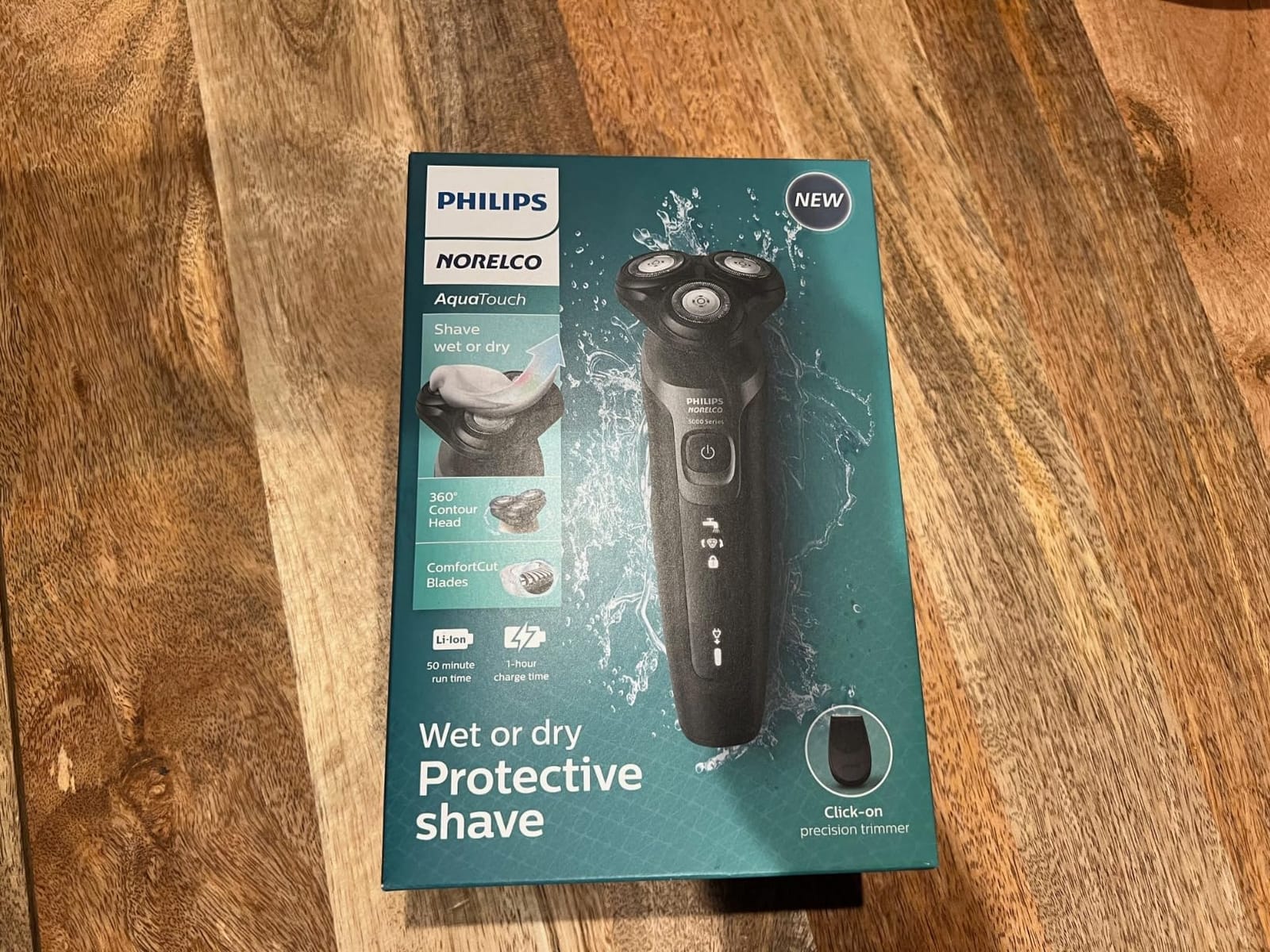
Philips Electric Shavers for Men, Rechargeable AquaTouch Mens Electric Shaver Wet and Dry with Comfort Cut Blades and Click-on Precision Trimmer, Cordless Electric Razors with 5D Flex Head
27 ComfortCut blades
5 direction flex head
50 minute runtime
Pros
- 27 ComfortCut blades for even cutting
- 5 direction flex head reaches hard areas
- Wet and dry with one-touch rinse cleaning
- Click-on precision trimmer included
- Compact body for a travel pouch
Cons
- No density sensing so extra passes on coarse beards
- Cordless only with 50 minute runtime
- Less suited to multi-day growth
The AquaTouch is the pick for a carry-on and the machine to keep at the office, and it is also the honest answer for a reader whose beard is moderate rather than heavy. At 27 ComfortCut blades it is the least powerful engine in the group, and on a coarse five-day beard you will need more circles than the machines above.
With 340 ratings that 4.4 carries less weight than the 4.4 on the 3900, which sits on a much larger pool. The S9000 Prestige, on 215 ratings, is the thinnest review base in this group. What the AquaTouch reviews do agree on is the flex head, the rinse cleaning and the wet and dry flexibility, which are exactly the features you want from something that lives in a bathroom bag.
27 ComfortCut blades and 5-direction flexing
Twenty-seven blades is plenty for stubble and short growth, and the 5-direction flex head tilts into the under-nose and neck contours the same way the more expensive models do. That is not a gimmick on a travel shaver, because a small head you can angle properly beats a large one you have to fight.
The click-on precision trimmer is a genuine two-in-one. On a trip, the ability to shorten a beard to a workable length and then shave down is the difference between a usable week away and a ruined one, and it removes the need to pack a second device.
Fixed power versus density sensing on a coarse beard
This is where it differs from the Series 6000 in a way you can feel. There is no density sensor, so output is constant. On even, moderate growth that is perfectly adequate and keeps the machine simple. On a coarse beard that is thick at the chin and light at the cheeks, constant output means overworking the cheeks to keep up with the chin.
If you are choosing between this and the Series 6000 for a genuinely heavy beard, the sensor is worth the money. If you are choosing between this and nothing, it is a strong first machine.
50-minute runtime, rinse cleaning and the verdict
You get about 50 minutes of cordless runtime, roughly 16 shaves, from a one-hour charge, and it is cordless only. The one-touch head release opens the cutters for a water rinse, which matters more than it sounds: it is the difference between a quick clean after a trip and a job with a brush.
The verdict is that this is a travel and moderate-growth shaver, not a thick-beard workhorse. If your beard is coarse and you shave weekly, look at the S9000 Prestige or the Series 6000 instead. If you travel often or want a second machine for the office, this fills a gap nothing else here does.
Match Your Shave Interval to the Right Pick
Beard growth interval is the single most useful variable, and it is the one most roundups ignore. A machine that is perfect for a two-day shave can be entirely wrong for a seven-day one, and the reverse is also true. Match your real interval first and the rest of the decision narrows fast.
If you shave every one to two days
You need comfort and close contact far more than cutting force, because you are cutting very little. The Philips Norelco 3900 is the right default, and the AquaTouch is the sensible answer if you travel. Save the expensive machines for an interval you do not have.
If you shave every three to four days
This is where the Series 6000 earns its place. Density sensing, 45 self-sharpening blades and fully flexing heads handle a chin that has had real growth on it, and the adjustable power keeps your cheeks out of trouble. The 3900 also works here if you prefer simplicity and a lower entry point.
If you shave every five to seven days
Go for cutting force and a full comb. The S9000 Prestige is the closest a rotary gets, with Lift and Cut lifting hairs out of the skin before the blade passes, and its density sensor is the most responsive in the group. The i9000 Prestige Ultra is the same idea with a gentler coating, and it is the pick if your skin reacts to long growth.
If your beard grows past two weeks
Stop reading shaver roundups. At that length you are maintaining a beard, not shaving stubble, and no rotary head is designed to take a two-week growth in one pass. Use a trimmer to reduce length in stages over a couple of days, then finish with a rotary. For a dense long beard, users consistently recommend a trimmer such as a OneBlade-class tool for shaping, which our broader electric shaver guide also covers.
What to Check Before Buying a Rotary for a Thick Beard
Six specifications actually predict whether a rotary will cope with coarse hair. Everything else on the box is either shared across the category or irrelevant to the problem you are trying to solve.
Lift and Cut versus single-blade cutting systems
This is the most important technical distinction in the category and the main driver of ingrown hairs and pinching. A single-blade head has one cutter cutting at skin level, which is gentler and closer but more likely to push a hair back into the follicle. A Lift and Cut head has two parts, lifting the hair before cutting it, which is more forgiving on long growth.
Members of our forum research with a decade of cystic neck acne on older Lift and Cut heads report the problem disappearing with a single-blade head. If you have a history of ingrowns on the neck, that is worth testing before you commit to a flagship. For everyone else, Lift and Cut is the safer default on a thick beard.
Two concentric tracks versus a single track
A two-track head has an inner and an outer cutting circle that divide the work and keep more skin in contact per rotation. A single-track head relies on the cap alone. Two tracks mean fewer passes and a smoother result on dense growth, and they are the main reason the Philips machines above the budget tier handle thick hair better.
Head flexing and skin guard rails
Floating or flexing heads keep the cutter parallel to your skin as the contour curves away. Skin guard rails are the raised ridges outside the cutting surface that stretch the skin flat before the blade arrives, which reduces nicks. You want both: flex for the neck, guards for the chin.
Wet and dry use and how you will clean the heads
Wet and dry capability is worth having, but only if you actually shave in the shower. A more important question is whether the heads open for cleaning. A rotary collects clipped hair in the hair chamber behind the cutter, and heads that do not release leave you rinsing a sealed unit and watching the blade dull from the inside.
Replacement head codes and the running cost
Every Philips rotary in this list uses a coded replacement head, and the codes are not interchangeable across tiers. The cheapest heads cost a fraction of the flagship ones, which means the price difference between two machines narrows or even reverses across three years of ownership. Check the replacement head code for your exact model before you buy the body, not after.
Ingrown hairs, folliculitis and razor burn
All three are caused by the same mechanical event: skin being pushed into a comb, and a hair being driven back into the follicle. The mitigations are technique, not brand. Go slowly, use circles instead of straight drags, do not press, and never go over the same patch repeatedly hoping for a different result. If you are already managing breakouts on the neck, a single-blade head is worth trying before a flagship.
How to Shave a Thick Beard With a Rotary in Five Steps
Technique does more for a thick-beard rotary shave than any feature on the box. These five steps are the difference between one pass and four, and four passes on the same patch is what causes irritation.
1. Prep the beard and the skin
Work on clean, warm skin. Warm water and a wash soften the hair and swell the follicle, and a pre-shave lotion or oil gives the comb something to glide over instead of drag across. Skip this and the first minute of every shave is fighting your own skin.
2. Work with the grain first
Go with the direction of growth in long, relaxed strokes to take the bulk off. Cutting against the grain on a five-day beard before the length is down is how hairs get pushed back into the skin.
3. Use short circular passes against the grain
Now switch to small circles, moving roughly one and a half times the diameter of a head, and travel against the grain. The comb lifts and guides the hair while the cutter rotates, so keep the circles tight and the speed slow. Slow circles beat fast strokes on almost every rotary.
4. Finish the neckline and jawline
Use the free hand to pull skin tight and stretch it against the grain, which flattens the hairs that grow upward and removes most of the pulling complaint. Work the underside of the jaw and the neck in upward circles with light pressure, and do not go over the same spot repeatedly.
5. Clean and oil on a schedule
Rinse the heads after every shave and open them if the model allows. Every few weeks, drop the cutters in oil to keep them gliding, and run the cleaning pod if your machine has one. A blunt cutter forces more pressure, and more pressure is the mechanism behind razor burn.
When a Foil Shaver Is Still the Better Answer
Two of the three editorial competitors for this keyword actually recommend a foil, and they are not being stupid. If the closest possible shave is your top priority, a foil will beat any rotary in this list. The Braun Series 9 Pro+ with its synchronised cutting elements and the Panasonic Arc5 are the standard answers for a beard-on-its-second-day clean.
Where a foil still wins
Closeness at the skin line, full stops. Foils also handle short, straight, daily stubble more efficiently, since the flat mesh meets the skin uniformly. If you shave every morning, want a clean face for a photograph, or have relatively fine hair, a foil is the correct tool and a rotary will frustrate you.
Where a rotary still wins
Long intervals, multi-directional growth and head shaving. Users who combine devices are following the same logic: a foil for the weekday, a rotary for the days the beard actually gets long. That is a sensible two-machine setup rather than a compromise, and it is where the Philips machines in this guide earn their place.
Frequently Asked Questions
What is the best face shaver for thick hair?
For thick hair that grows in several directions, a three-head rotary shaver is the better face shaver because its wide comb slots capture flat-lying and sideways-growing hairs that a foil’s cutting mesh skips. The Philips Norelco 3900 is the best general choice, while the Series 6000 adds beard-density sensing and the S9000 Prestige handles growth past four days. Foils remain closer, but they need more passes on coarse hair.
What is the best rotary head shaver?
The best rotary head shaver for thick beards is the Philips Norelco 3900, a five-direction pivoting three-head rotary with ComfortCut blades, wet and dry capability and 60 minutes of cordless runtime. It suits two to four days of growth. If your beard runs past four days, choose the S9000 Prestige for its Lift and Cut system, or the Series 6000 for adaptive power.
What is the best trimmer for heavy beards?
For beards over two weeks old, the best tool is a trimmer rather than a shaver. A trimmer such as a OneBlade-class tool reduces length in stages without pushing hairs back into the skin, then a rotary finishes the job. No rotary head is designed to remove two weeks of growth in a single pass, and forcing one is the main cause of irritation and ingrown hairs on the neck.
Are rotary shavers better than foil shavers for thick beards?
Yes, for long intervals and coarse hair, because a rotary’s wide comb slots and rotating cutters catch hairs from several angles and lift them out of the skin before cutting. A foil shaver is still closer and faster on short daily stubble. Many owners use both, keeping a foil for weekday shaves and a rotary for the days when the beard is genuinely long.
Do rotary shavers cause ingrown hairs?
They can, and the cause is mechanical: pressing too hard compresses skin into the comb and drives a hair back into the follicle. Lift and Cut heads, which raise the hair before the blade passes, reduce the problem, as does using single-blade heads if you already have a history of breakouts. Slow circular passes, no repeated passes over the same spot, and cleaning the heads regularly all help.
What beard length is too long for a rotary shaver?
Beard growth beyond about a week is the practical limit for a rotary shaver. The comb is designed to capture short to medium stubble standing in a comb, not hair long enough to lie sideways. Anything past two weeks should be reduced in stages with a trimmer first, then finished with the rotary over two or three shaves rather than one aggressive pass.
The Verdict for Thick-Beard Shavers in 2026
If you want one rotary that handles a dense three or four day beard without drama, buy the Philips Norelco 3900. It is the most dependable contour handling in the category and the least complicated to live with.
If your beard is genuinely coarse and you want the machine to sense density and push harder where it needs to, the Series 6000 is the smarter buy. If you shave every five days or more, go to the S9000 Prestige for the closest rotary result, or the i9000 Prestige Ultra if your skin reacts to long growth. If you are starting from nothing and keeping a tight budget, the Remington 5100 is the one to beat.
Pick by interval first, then by skin tolerance, then by cutting system. That order gets it right far more often than any ranking, and it is why these six genuinely are the best rotary shavers for thick beards in 2026. Our broader roundup of the best electric shavers for men is the place to go if you want to weigh rotaries against foils side by side.
Leave a Reply