
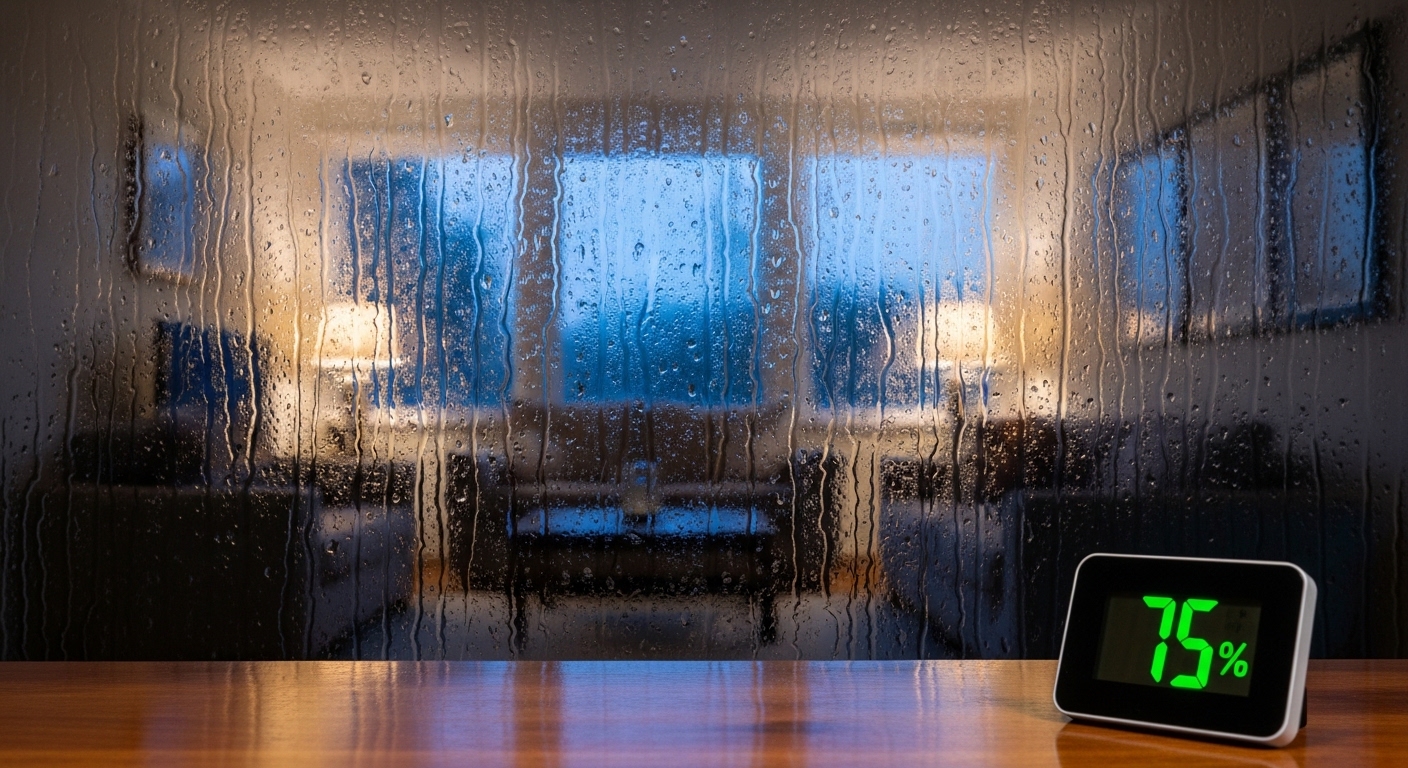
Walking into your home should feel comfortable, but when the air feels heavy and sticky, something is off. If you’ve been wondering why is my house so humid, you’re not alone. This is one of the most common complaints we hear from homeowners, especially during warmer months. The good news is that understanding the root causes of high indoor humidity is the first step toward fixing it.
In this guide, I’ll walk you through everything you need to know about excess moisture in your home. We’ll cover what counts as high humidity, why it happens, the warning signs to watch for, and most importantly, how to bring those humidity levels back down to a comfortable range. By the end, you’ll have a clear action plan for making your home feel like itself again.
What Is Considered High Indoor Humidity?
Before we dive into causes, let’s talk numbers. Indoor humidity is measured as relative humidity, which expresses how much moisture the air is holding compared to the maximum it could hold at that temperature. Health experts and building scientists generally agree that indoor humidity between 30% and 50% is ideal for most homes.
When relative humidity climbs above 60%, you enter problematic territory. At these levels, you’re in the sweet spot for mold growth, dust mite infestations, and that perpetually clammy feeling. Many homeowners we hear from report humidity readings of 70% or higher, which is genuinely concerning from both a health and a structural standpoint.
The tricky part is that humidity doesn’t stay constant. It fluctuates based on outdoor conditions, what you’re doing inside your home, and how well your ventilation system is working. A reading that’s fine in the morning might spike to uncomfortable levels by evening, especially if you’ve been cooking or showering without proper ventilation.
Common Causes of High Humidity in Your House
Understanding why your house is humid requires thinking about where moisture comes from and how it moves. Every time you breathe, cook, or wash dishes, you’re adding moisture to the air. The challenge arises when that moisture accumulates faster than your home can vent it outside. Let’s break down the most common culprits.
1. Poor Ventilation and Air Circulation
This is the number one cause of high indoor humidity that we see in practice. When air can’t circulate properly, moisture from daily activities gets trapped inside. Bathrooms without exhaust fans, kitchens without range hoods, and closed-off rooms all contribute to moisture buildup. Many newer homes are built tight for energy efficiency, but if that tightness isn’t paired with proper mechanical ventilation, you’re essentially trapping humidity inside.
2. HVAC Short-Cycling and Sizing Issues
Your air conditioner does more than cool your home; it’s also your primary dehumidification tool. When an AC unit is oversized for the space, it cools the air so quickly that it shuts off before much moisture is removed. This is called short-cycling, and it’s one of the most common reasons a house feels humid even with the AC running constantly. The unit never runs long enough to draw out that excess moisture.
Related to this, if you notice your window air conditioner leaking water, that actually indicates your AC is removing some humidity properly. The problem arises when units can’t run long enough to make a real dent in moisture levels.
3. Daily Activities Adding Moisture
Cooking dinner for a family of four can add over two gallons of water vapor to your home’s air. Every shower releases steam, every load of laundry dried indoors adds moisture, and even dishwashing contributes. When we looked at real experiences from homeowners, many were shocked to learn how much their everyday habits were affecting humidity levels. Running the bathroom exhaust fan during showers and for 20 minutes after, using range hoods while cooking, and venting clothes dryers outside all make a significant difference.
4. Plumbing Leaks and Water Damage
Sometimes the source of excess humidity isn’t obvious until it becomes a major problem. Slow plumbing leaks, especially under slabs or inside walls, can continuously feed moisture into your home’s air. Foundation cracks can allow groundwater to seep in, and basement water damage that wasn’t properly dried creates ongoing humidity issues. If your humidity is persistently high with no obvious cause, checking for hidden leaks becomes important.
5. Outdoor Climate and Foundation Issues
In humid regions, outdoor air constantly tries to equalize with your indoor air. During rainy seasons or periods of high outdoor humidity, moisture can seep through foundations, crawl spaces, and even the walls themselves. If your home has a damp or wet crawl space without proper vapor barriers, you’re essentially lifting humidity into your living areas from below.
6. Excess Houseplants and Aquariums
Here’s one that surprises many people. Each houseplant you water contributes to indoor humidity through transpiration. Large collections of plants, especially in smaller spaces, can meaningfully raise humidity levels. Aquariums are another hidden source. A 30-gallon tank loses several ounces of water daily through evaporation, and that moisture has to go somewhere. If you’re dealing with high humidity and you love your greenery, this could be a contributing factor.
Signs Your Home Has Excessive Humidity
Beyond checking a hygrometer reading, there are clear visual and sensory signals that your home has too much moisture. Learning to recognize these can help you catch humidity problems early, before they lead to mold growth or structural damage.
Condensation on windows is often the first thing people notice. When you see water droplets or fogging on window panes, especially on the interior glass, that’s a direct sign that surface temperature has dropped below the dew point for the current humidity level. While some condensation during extreme temperature swings is normal, persistent daytime condensation indicates a humidity problem.
Musty odors are another telltale indicator. That distinctive smell that hits you when you walk into a basement or closed-off room is the scent of mold and mildew growing in hidden areas. Even if you can’t see the mold, if you can smell it, you likely have a humidity issue that needs addressing. Peeling paint, warped hardwood floors, and water stains on walls or ceilings are also common signs of chronic moisture problems.
For a comprehensive list of symptoms and their likely causes, a symptom-cause comparison can help you pinpoint exactly where your humidity problems are coming from. This is especially useful if you’re trying to decide whether to focus on ventilation improvements, HVAC fixes, or moisture source control.
Health Effects of High Indoor Humidity
Excess humidity isn’t just uncomfortable; it can have real impacts on your health and wellbeing. When indoor humidity stays above 60%, it creates ideal conditions for biological allergens that can affect your entire household.
Dust mites thrive in humid environments. These microscopic creatures feed on dead skin cells and their droppings are one of the most common triggers for allergies and asthma. Keeping humidity below 50% significantly reduces dust mite populations, making a measurable difference for allergy sufferers. Similarly, mold spores that are always present in indoor air can take root and grow when surfaces stay consistently damp, releasing allergens and irritants that cause sneezing, coughing, and respiratory distress.
For people with chronic respiratory conditions like COPD, humidity control becomes even more critical. High humidity makes the air feel warmer, which can increase breathing difficulty. The EPA recommends keeping indoor humidity between 30% and 50% to minimize these health risks. For those with eczema and skin conditions, excessively dry air can also be problematic, which is why many dermatologists recommend maintaining that middle range rather than swinging to either extreme.
Beyond respiratory effects, high humidity disrupts your body’s ability to regulate temperature. When sweat can’t evaporate efficiently, you feel hotter and more fatigued, even at moderate temperatures. This is why a 75-degree home can feel unbearable when humidity is elevated, while the same temperature feels perfectly comfortable at lower humidity levels.
How to Reduce Humidity in Your House?
Now for the part you’ve been waiting for: solutions. The approach you take depends on the severity of your humidity problem and the specific causes in your home. Let’s walk through both quick fixes and longer-term strategies.
Quick-Fix Solutions
For immediate relief, start with behavioral changes. Run bathroom exhaust fans during and after every shower, and run kitchen range hoods while cooking. Open windows when outdoor humidity is lower, typically during cooler morning hours. If you’re drying clothes indoors, consider moving that to a well-ventilated area or using a dryer that vents outside. These changes alone can reduce humidity by 5-10% in many homes.
Portable dehumidifiers can provide faster results for specific problem areas. A unit placed in a chronically damp basement or a bathroom with no exhaust fan can make a noticeable difference within hours. For whole-house solutions, you might want to browse our full dehumidifier reviews to find the best dehumidifiers for your home setup and space size.
Long-Term Solutions
Addressing the root causes requires more investment but yields lasting results. Start with air sealing gaps and cracks in your home’s thermal envelope. Weather stripping around doors and windows, sealing penetrations in walls and foundations, and adding insulation where needed all help control moisture migration. Many homeowners find that their humidity problems decreased significantly after air sealing improvements.
If your AC is short-cycling, having a professional evaluate your system sizing and ductwork becomes important. Sometimes adding zoning, adjusting fan settings, or replacing an oversized unit with properly sized equipment resolves chronic humidity issues that no amount of behavioral change can fix. An HVAC professional can also check refrigerant levels and ensure your system is working as designed for dehumidification.
For persistent humidity problems, whole-home dehumidification integrated with your HVAC system might be the answer. These systems work alongside your existing heating and cooling to actively manage moisture levels year-round, regardless of outdoor conditions. While the upfront cost is higher than portable units, the convenience and effectiveness make sense for many homeowners in humid climates.
Room-by-Room Humidity Sources
Different areas of your home face different humidity challenges. Understanding these room-specific issues helps you target your fixes where they’ll have the most impact.
Bathrooms generate the most concentrated humidity in most homes. A single 10-minute shower can add half a gallon of water vapor to the air. Without proper exhaust ventilation, this moisture condensates on walls, mirrors, and eventually feeds into mold growth in grout lines and behind tiles. Making sure bathroom fans vent directly outside (not into attics or crawl spaces) is critical.
Kitchens produce humidity through cooking processes, and it’s not just from boiling water. Every meal preparation releases steam and water vapor into your kitchen air. Range hoods that vent outside are the most effective solution, but if you have a recirculating hood, consider the limitations. Running a fan in the kitchen while cooking and for 30 minutes afterward makes a real difference.
Basements and crawl spaces present unique challenges because they’re often cooler and can easily become damp. If your basement feels perpetually musty, the issue is likely moisture coming up through the foundation or from inadequate ventilation. Sealing foundation cracks, adding or improving sump pumps, and using basement-specific dehumidification can transform these problem areas.
Attics can harbor surprising humidity issues, especially in older homes with inadequate ventilation. During summer, hot air trapped in attics can hold moisture that eventually leads to roof deck damage and reduced insulation effectiveness. Proper attic ventilation that allows hot, humid air to escape is essential for maintaining healthy moisture levels throughout your entire home.
When to Call a Professional?
Some humidity problems can be solved with DIY fixes and behavioral changes, but others require professional intervention. Knowing when to call in an expert saves you time and money in the long run.
If you’ve tried the quick fixes and humidity still stays above 60% for extended periods, it’s time for a professional assessment. An HVAC technician can evaluate your cooling system for sizing issues, refrigerant problems, and airflow restrictions that might be limiting dehumidification performance. They can also check for duct leaks that might be pushing conditioned air into unconditioned spaces.
For persistent musty odors with no identifiable source, a home inspector or mold specialist can help track down hidden moisture problems. This might involve moisture meters, thermal imaging cameras, and careful inspection of plumbing fixtures, foundation areas, and building envelope details that aren’t visible during a casual walkthrough.
If you’re experiencing health symptoms that you suspect are humidity-related, especially respiratory issues or allergy flare-ups, consulting with your doctor about environmental factors while simultaneously working to improve your home’s humidity control creates the best outcomes.
Why does my house have 70% humidity?
House humidity reaches 70% when excess moisture accumulates faster than your home can vent it outside. Common causes include poor ventilation, HVAC short-cycling, daily activities like cooking and showering without exhaust fans, hidden plumbing leaks, and humid outdoor air seeping through foundations. An oversized AC unit that shuts off before removing sufficient moisture is a frequent culprit.
How do you get rid of humidity in a house?
Reduce humidity through a combination of approaches: run exhaust fans during and after cooking and showering, open windows when outdoor humidity is lower, seal air leaks in your building envelope, ensure your HVAC system runs long enough to dehumidify properly, and use dehumidifiers in problem areas. For persistent issues, have an HVAC professional evaluate your system sizing and consider whole-home dehumidification solutions.
What humidity level is bad for COPD?
The EPA recommends keeping indoor humidity between 30% and 50% for general health. For people with COPD and other respiratory conditions, humidity above 60% can worsen symptoms by making the air feel warmer and creating ideal conditions for dust mites and mold allergens. High humidity also makes breathing feel more labored even at moderate temperatures.
What is the best humidity for eczema?
Dermatologists generally recommend maintaining indoor humidity in the 30-50% range for people with eczema and other skin conditions. Too much humidity can trigger sweating and skin irritation, while too little can cause dry, cracked skin. The middle range helps maintain skin hydration without promoting the dust mite growth that can worsen eczema symptoms.
Conclusion
High indoor humidity is uncomfortable and can lead to serious health and structural problems if left unchecked. The key causes include poor ventilation, HVAC short-cycling, daily activities generating moisture, hidden leaks, outdoor climate influence, and even common household items like plants and aquariums. Recognizing the signs early and addressing them with both quick fixes and long-term solutions keeps your home comfortable and protected.
Whether you need simple behavioral changes, portable dehumidifiers for problem areas, or a full HVAC system evaluation, taking action on humidity problems pays off in better air quality and a more comfortable home. If you’re ready to tackle excess humidity, start by getting an accurate humidity reading with a hygrometer, then work through the solutions that match your specific situation.
Leave a Reply