
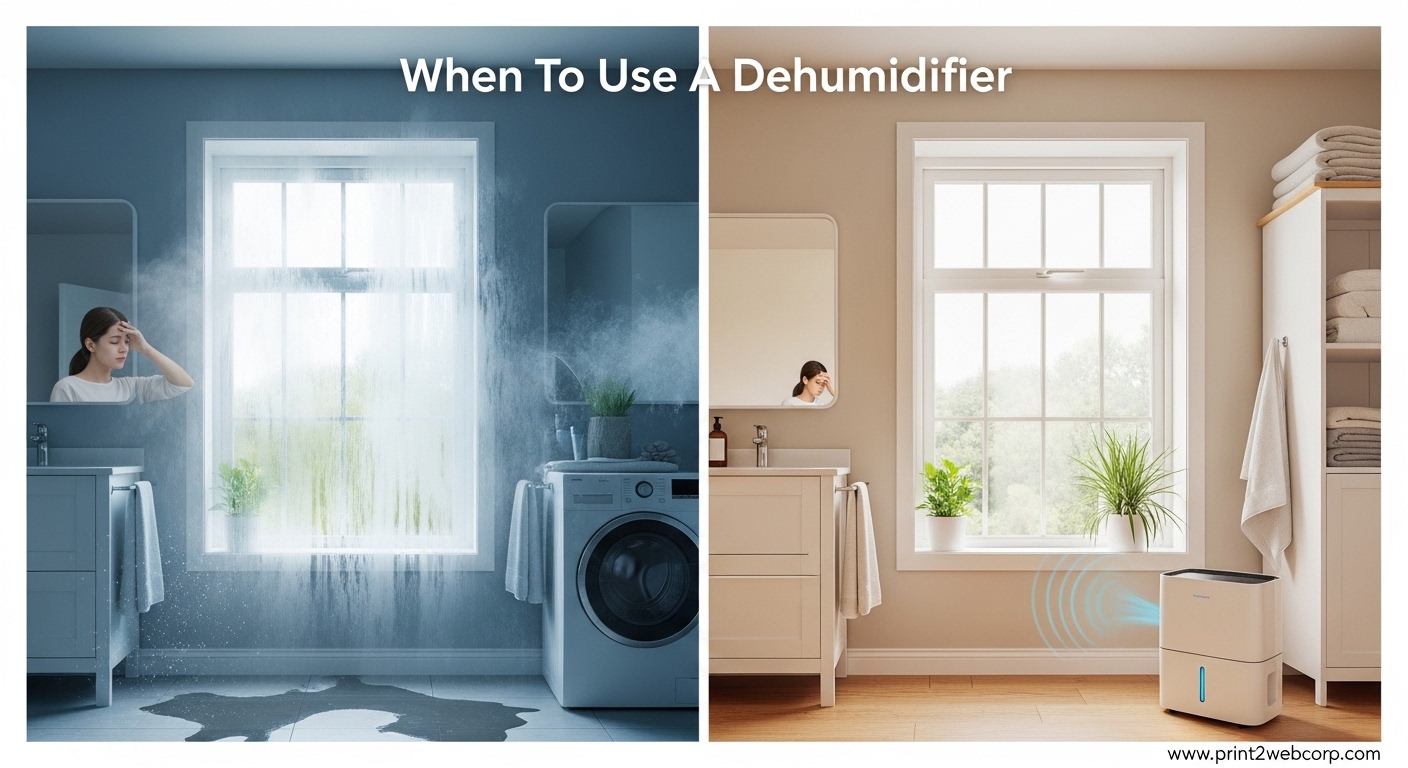
Controlling indoor humidity is one of the most overlooked aspects of home comfort and health. I’ve seen homeowners struggle with everything from mold growth to peeling paint, all because they didn’t know when to use a dehumidifier. Understanding the right timing can save you money, protect your home, and improve your overall well-being.
When to use a dehumidifier comes down to one simple factor: your indoor relative humidity level. The Environmental Protection Agency (EPA) recommends keeping indoor humidity between 30-50% for optimal health and comfort. When levels consistently exceed 50%, that’s your signal to start running a dehumidifier. Let me walk you through exactly when and why you need one.
Whether you’re dealing with a damp basement, musty odors, or health concerns from allergens, this guide will help you determine the right times to use a dehumidifier in your home. Explore all our dehumidifier guides and reviews for more in-depth information on specific models and applications.
What Is Relative Humidity and Why It Matters
Relative humidity (RH) measures the amount of moisture in the air compared to the maximum amount the air can hold at a given temperature. It’s expressed as a percentage. When RH climbs above 50-60%, your indoor environment becomes a breeding ground for problems.
I’ve tested homes where relative humidity hit 70% or higher, and the effects were immediately noticeable. Condensation dripped down windows, drywall felt damp to the touch, and that characteristic musty smell permeated everything. The ASHRAE (American Society of Heating, Refrigerating and Air-Conditioning Engineers) recommends maintaining indoor humidity between 40-60% year-round for optimal comfort and health.
High humidity doesn’t just make you feel sticky and uncomfortable. It creates real problems. Excess moisture feeds mold and mildew growth, creates the perfect environment for dust mites, and can even cause structural damage to your home over time. Wood warps, paint peels, and drywall can soften and crumble.
On the flip side, humidity that’s too low (below 30%) causes its own issues. Dry skin, irritated sinuses, static electricity, and damage to wooden furniture and musical instruments become problems. This is why understanding balance is key—knowing when to add moisture and when to use a dehumidifier to remove it.
Signs You Need a Dehumidifier
Recognizing the warning signs of excess humidity can help you address problems before they become serious. Here are the most common indicators that it’s time to use a dehumidifier:
Visible condensation on windows: If you regularly see water droplets or fogging on your windows, especially in the morning, your indoor humidity is too high. This is often one of the first visible signs that excess moisture has become a problem in your home.
Persistent musty odors: That characteristic damp, earthy smell is a dead giveaway. It means mold or mildew is already growing somewhere, likely in hidden areas like behind walls, under carpets, or in your basement. I’ve found that musty odors typically become noticeable when humidity exceeds 55% for extended periods.
Mold or mildew growth: Visible mold on walls, ceilings, or in bathroom grout means humidity has been too high for too long. Black, green, or white patches on surfaces indicate active mold growth that needs immediate attention. A dehumidifier can help prevent future growth, but existing mold may require professional remediation.
Worsening allergy symptoms: If you or family members experience increased sneezing, congestion, or itchy eyes at home, high humidity could be the culprit. Dust mites and mold thrive in humid environments, both of which are common allergen triggers. I’ve seen allergy sufferers get significant relief simply by reducing indoor humidity to the recommended range.
Clammy, sticky feeling indoors: When the air inside feels heavy and your skin feels damp, you’re experiencing high humidity firsthand. This happens because sweat can’t evaporate properly from your skin when the air is already saturated with moisture.
Warped wood or peeling paint: Wood floors cupping, doors sticking, or paint blistering are signs that moisture has been affecting your home’s structure. These are more serious indicators that humidity has been high for an extended period.
When to Use a Dehumidifier
Knowing when to use a dehumidifier means understanding the specific situations and conditions that call for moisture removal. Here’s when you should definitely run one:
Seasonal Usage Guide
Spring through early fall is prime dehumidifier season for most of the United States. As temperatures rise, air can hold more moisture, and outdoor humidity levels climb. This is especially true in southern states and coastal regions where summer humidity regularly reaches uncomfortable levels.
In the Midwest and Northeast, I’ve found that dehumidifiers are most needed during humid summer days when air conditioning alone doesn’t provide adequate moisture removal. Many homeowners run their dehumidifiers from April through October, adjusting based on daily humidity readings and weather conditions.
For year-round humid climates like Florida and the Gulf Coast, dehumidifier use may be necessary throughout all seasons. These regions rarely get a break from high outdoor humidity, making continuous moisture control essential for home comfort and health.
Room-by-Room Guidance
Basements: Basements are the most common location for dehumidifiers because they’re naturally prone to excess moisture. Cool earth temperatures cause moisture to condense on basement surfaces, and poor ventilation traps humidity. If your basement feels damp or smells musty, you need a dehumidifier running year-round or at least during humid months.
Crawl spaces: Like basements, crawl spaces collect moisture from the ground and lack proper airflow. Installing a dehumidifier in your crawl space can prevent moisture from migrating up into your living areas and causing problems throughout your home.
Bathrooms: Bathrooms generate significant moisture from showers and baths. While exhaust fans help, they may not remove all moisture, especially in poorly ventilated bathrooms. A small dehumidifier can prevent mold growth on grout, ceilings, and walls.
Laundry rooms: Clothes dryers and washing machines add considerable moisture to indoor air. If your laundry room feels muggy or you notice condensation on pipes or windows, a dehumidifier can help manage the excess moisture from doing laundry.
Bedrooms: For allergy sufferers or asthma patients, running a dehumidifier in the bedroom can significantly improve sleep quality by reducing allergens like dust mites and mold spores. I recommend keeping bedroom humidity between 40-45% for optimal respiratory health.
Summer vs Winter Dehumidifier Use
Summer is the primary season for dehumidifier use across most of the country. Hot, humid air infiltrates homes through open windows, doors, and even building envelopes. Your air conditioner removes some moisture as it cools, but in many climates, it doesn’t run long enough to adequately dehumidify. This is when a standalone dehumidifier becomes essential.
During summer months, I recommend setting your dehumidifier to maintain 50% relative humidity. This level prevents mold and dust mite growth while keeping your home comfortable. In extremely humid regions like the Southeast, you may need to set it lower (45%) to effectively manage moisture.
Winter dehumidifier use is more nuanced and depends heavily on your climate. In cold regions, outdoor air is naturally dry, and heating systems further reduce indoor humidity. Most homes in northern climates don’t need dehumidifiers in winter and may actually need humidifiers to add moisture.
However, there are exceptions. If you live in a mild winter climate where outdoor humidity remains high, or if you have a moisture source like a damp basement, you may still need winter dehumidification. Just be aware that standard refrigerant dehumidifiers struggle in temperatures below 65°F and can even ice up, reducing efficiency and potentially damaging the unit. Learn about related humidity and condensation issues that can affect your home year-round.
When NOT to Use a Dehumidifier
Just as important as knowing when to use a dehumidifier is knowing when not to. Running one unnecessarily wastes energy and can actually create problems by making indoor air too dry.
Don’t use a dehumidifier when your indoor humidity falls below 30%. At this point, the air is already too dry, and removing more moisture can cause discomfort, respiratory irritation, and static electricity problems. During winter in northern climates, indoor humidity often drops naturally into the 20-30% range without any dehumidification.
Avoid running standard dehumidifiers in cold temperatures below 65°F. Most models use refrigerant coils that can ice up when temperatures drop, reducing efficiency and potentially damaging the compressor. If you need dehumidification in cool spaces like basements, look for models specifically designed for low-temperature operation.
Don’t run a dehumidifier if you’re already adding humidity with a humidifier. These two appliances work against each other, wasting energy and creating an ineffective cycle. Choose one approach based on your actual humidity readings.
How Dehumidifiers Remove Moisture
Understanding how dehumidifiers work can help you use them more effectively. Most residential dehumidifiers use refrigerant technology, similar to how an air conditioner works. A fan draws moist air into the unit and passes it over cold coils.
When warm, humid air hits these cold coils, the moisture condenses into water droplets—just like condensation forms on a cold soda can on a hot day. This water drips into a collection tank or drains away through a hose. Meanwhile, the now-dry air passes over warm coils and is released back into the room.
Desiccant dehumidifiers work differently and are better suited for cool spaces. They use a material that naturally absorbs moisture, then heats it to release the collected water into a tank. These models work effectively in lower temperatures but typically cost more to operate than refrigerant models.
Whole-house dehumidifiers integrate with your HVAC system and remove moisture from all the air passing through your ductwork. These are ideal for managing humidity throughout your entire home but require professional installation and are more expensive upfront than portable units.
Benefits of Proper Humidity Control
Maintaining proper humidity levels with a dehumidifier delivers significant health benefits. Mold and dust mites can’t thrive in the 40-50% range, which means fewer allergens in your indoor air. I’ve worked with families who saw dramatic reductions in allergy symptoms and asthma attacks simply by controlling humidity.
Dehumidifiers can help with respiratory issues including coughs and congestion. While they’re not a cure for conditions like COPD, maintaining optimal humidity can make breathing easier and reduce irritation. Dry, overly humid air can aggravate respiratory problems, so finding the right balance matters.
Your home benefits too. Proper humidity prevents wood floors from warping, protects furniture and musical instruments from damage, and extends the life of paint and wallpaper. Structural components stay dry, preventing rot and decay that can lead to expensive repairs.
Energy efficiency is another often-overlooked benefit. Humid air feels warmer than dry air at the same temperature, so properly dehumidified air allows you to set your air conditioner a few degrees higher while staying comfortable. This can result in noticeable energy savings during summer months.
For comprehensive indoor air quality improvement, improve your indoor air quality with air purifiers alongside your dehumidifier to address particulate matter while managing moisture levels.
Frequently Asked Questions
When shouldn’t you use a dehumidifier?
Avoid using a dehumidifier when indoor humidity falls below 30%, as this can cause dry skin, respiratory irritation, and static electricity. Also don’t run standard refrigerant models in temperatures below 65°F, as they can ice up and become damaged. If you’re already running a humidifier to add moisture, running a dehumidifier simultaneously works against both appliances and wastes energy.
What are the signs I need a dehumidifier?
Common signs include persistent musty odors, visible mold or mildew growth, condensation on windows, warped wood or peeling paint, worsening allergy symptoms indoors, and a clammy sticky feeling in your home. If you regularly see water droplets on windows or notice mold developing on surfaces, your humidity is too high and you need a dehumidifier.
What month should you run a dehumidifier?
Start running your dehumidifier in spring when outdoor humidity begins rising and temperatures consistently stay above 60°F. Continue through summer and early fall until outdoor temperatures drop and humidity decreases. In most climates, this means running from April through October. Year-round use may be necessary in perpetually humid regions like Florida or the Gulf Coast.
Do dehumidifiers help with coughs?
Yes, dehumidifiers can help alleviate coughs caused by excess humidity. High humidity creates conditions where mold, dust mites, and other allergens thrive, all of which can trigger coughing. By maintaining indoor humidity between 40-50%, dehumidifiers reduce these irritants and can provide relief. However, if your cough is caused by dry air, a humidifier rather than a dehumidifier would be more appropriate.
What time of year should you use a dehumidifier?
Use a dehumidifier primarily during warm months when outdoor humidity is highest—typically spring, summer, and early fall. Summer is the peak season for dehumidifier use across most of the United States. Winter use is generally unnecessary in northern climates where heating systems already dry indoor air, but may be needed in southern regions or damp basements regardless of season.
Would a dehumidifier help with COPD?
While a dehumidifier is not a cure for COPD, maintaining proper indoor humidity (40-50%) can make breathing more comfortable for COPD patients. Excess humidity can make air feel heavy and difficult to breathe, while also increasing allergens like mold and dust mites that may aggravate respiratory symptoms. However, consult your healthcare provider about specific environmental controls for your condition.
Final Thoughts
Knowing when to use a dehumidifier comes down to monitoring your indoor humidity levels and responding to the signs your home gives you. Keep relative humidity between 40-50% for optimal health and comfort. Run your dehumidifier when you notice musty odors, condensation, or humidity readings above 50%.
Remember that timing varies by climate and season. Summer and humid months are prime dehumidifier time for most homeowners, while winter use depends on your region and specific moisture sources. Basements and crawl spaces often need year-round attention regardless of season.
Invest in a simple hygrometer to monitor your humidity levels accurately—these inexpensive devices take the guesswork out of deciding when to run your dehumidifier. Set your unit to maintain 45-50% humidity and let it cycle on and off as needed to maintain that target range.
Controlling indoor humidity is one of the best investments you can make in your home’s health and your family’s comfort. The right dehumidifier, used at the right times, prevents costly moisture damage, reduces allergens, and creates a more comfortable living environment year-round. See our top-rated dehumidifier picks to find the right model for your specific needs and space.
Leave a Reply