
That sticky, muggy feeling in your basement during summer isn’t just uncomfortable. It’s a sign that excess moisture is creating the perfect environment for mold, dust mites, and structural damage to your home. A dehumidifier is your first line of defense against these problems, working quietly in the background to pull water vapor right out of the air you breathe.
Understanding how these machines work helps you choose the right one for your space and use it effectively. Whether you’re dealing with a damp crawlspace, a humid bathroom, or whole-house moisture issues, the science behind dehumidification is fascinating and surprisingly simple. Check out our dehumidifier category for more in-depth guides on selecting the right unit for your needs.
In this guide, I’ll explain exactly how a dehumidifier works, break down each component, compare the different types available, and help you understand whether you need one in your home. We’ll cover everything from basic condensation principles to the complete refrigeration cycle that makes modern dehumidifiers so effective.
What is Humidity and Why Does It Matter?
Humidity is simply the amount of water vapor present in the air. Warm air can hold more moisture than cold air, which is why humid days feel so oppressive in summer and why condensation forms on cold surfaces. Relative humidity measures how much moisture the air currently holds compared to its maximum capacity at that temperature.
The ideal indoor humidity level falls between 30% and 50%. Below 30%, air becomes too dry, causing irritated sinuses, static electricity, and damage to wooden furniture. Above 50%, you create a breeding ground for biological growth. Dust mites thrive above 50% humidity, while mold spores begin colonizing surfaces when humidity exceeds 60%.
The dew point is another critical concept. This is the temperature at which air becomes saturated and can no longer hold all its moisture as vapor. When air cools to its dew point, water vapor condenses into liquid. This is exactly why your cold soda can “sweats” on a hot day, and it’s the same principle that makes dehumidifiers possible.
Excess humidity affects more than just comfort. It damages drywall, warps wood floors, causes paint to peel, and creates musty odors that permeate furnishings. Understanding these problems helps explain why dehumidifiers are essential in many homes, particularly in basements, coastal areas, and regions with naturally high humidity.
The Basic Principle: Condensation
Think about that cold soda can sitting outside on a hot summer day. Within minutes, water droplets form on the outside of the can. Did the water leak through the aluminum? Of course not. This is condensation in action, and it’s the exact same principle that powers your dehumidifier.
Here’s what’s happening: warm, moist air contacts the cold surface of the can. When this air cools down, it can’t hold as much moisture as it could when warm. The excess water vapor condenses into liquid water on the can’s surface. Gravity pulls these droplets down, forming that familiar ring of water on your table.
A dehumidifier recreates this scenario intentionally and continuously. Instead of a cold soda can, it uses cold metal coils. Instead of waiting for water to drip onto your table, it captures that water in a reservoir. By maintaining a temperature difference between the air and the coils, the dehumidifier continuously extracts moisture from the air passing through it.
The beauty of this system is its simplicity. No chemicals are added, nothing is consumed, and the process can run indefinitely as long as the unit has power. The refrigeration system maintains those cold coils, the fan keeps air moving across them, and moisture keeps condensing out of the air.
How Does A Dehumidifier Work: Step by Step
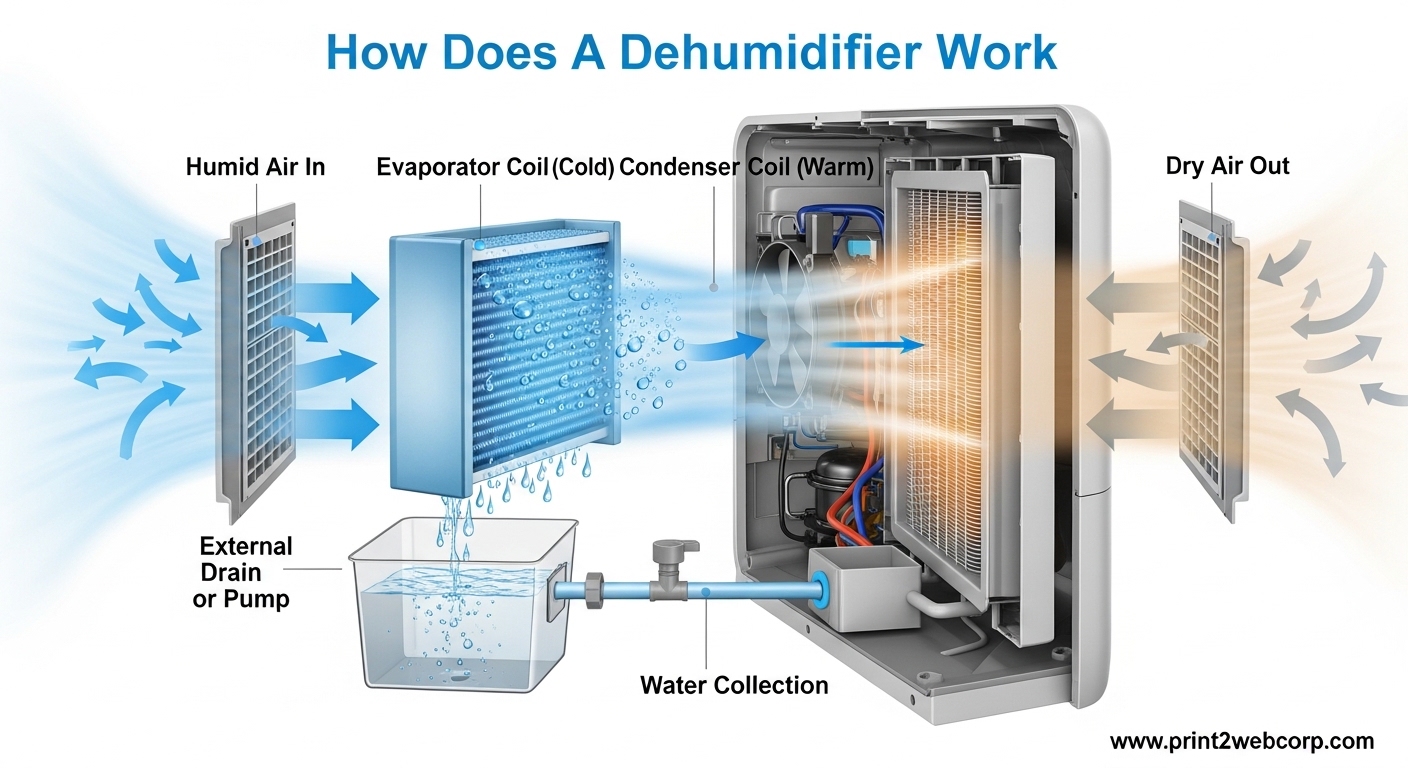
Now let’s walk through the complete process of how a refrigerant dehumidifier operates. Modern units use a sophisticated refrigeration cycle, but the concept remains straightforward. Here’s the step-by-step breakdown of what happens from the moment you turn on your dehumidifier:
Step 1: Air Intake
A powerful fan pulls moist air from your room into the dehumidifier through intake vents. This air contains invisible water vapor that makes your space feel clammy and encourages mold growth.
Step 2: Filtration
Before the air reaches the cooling system, it passes through a washable filter that captures dust, pet hair, and other large particles. This protects the internal components and actually improves your air quality slightly in the process.
Step 3: Cold Coil Contact
The filtered air then flows over the evaporator coils. These coils are filled with cold refrigerant, making them much colder than the surrounding air. When warm, moist air hits these cold coils, the temperature drops rapidly.
Step 4: Condensation
As the air cools below its dew point, it can’t hold as much moisture. Water vapor condenses into liquid droplets on the cold coil surfaces, just like on that cold soda can. This is where the actual dehumidification happens.
Step 5: Water Collection
Gravity pulls the condensed water droplets off the coils. They drip into a collection tray or directly into the water bucket below. A typical dehumidifier can extract 30-50 pints of water per day this way.
Step 6: Air Reheating
After leaving the cold coils, the air is now dry but also cold. This cold air passes over the condenser coils, which are hot from the refrigeration cycle. The air warms back up to near room temperature.
Step 7: Air Discharge
The fan pushes this warm, dry air back into your room through outlet vents. You might notice this air feels slightly warmer than room temperature, which is actually beneficial in damp basements.
Step 8: Humidity Monitoring
A built-in humidistat continuously measures the humidity level of your room air. When humidity reaches your set target (usually 35-50%), the dehumidifier automatically cycles off to save energy.
Step 9: Continuous Operation
As long as humidity remains above your set point, the dehumidifier repeats this cycle. Some advanced units even adjust their operation based on conditions, running more aggressively in very humid conditions and scaling back when moisture levels are closer to target.
Key Components Inside Your Dehumidifier
Understanding the individual components helps you troubleshoot problems and appreciate the engineering that goes into these appliances. Each part plays a specific role in the moisture removal process.
The Fan and Airflow System
The fan is the workhorse that moves air through the unit. A powerful, well-designed fan ensures adequate air circulation across the coils, which directly affects moisture removal capacity. Units with multiple fan speeds let you balance noise level against dehumidification power.
Evaporator Coils
These are the cold coils where condensation happens. Refrigerant flowing through these coils absorbs heat from the air, causing the temperature to drop below the dew point. The coils are designed with maximum surface area to encourage efficient heat transfer and condensation.
Condenser Coils
Located after the evaporator in the airflow path, these coils release the heat that was absorbed from the air. This reheats the now-dry air before it returns to your room, preventing your space from becoming uncomfortably cold.
The Compressor
The compressor pressurizes the refrigerant and circulates it through the system. It’s essentially the heart of the refrigeration cycle, creating the pressure difference that allows the refrigerant to absorb and release heat at different points in the system.
Refrigerant
This specialized fluid circulates through the sealed system, changing from liquid to gas and back again as it absorbs and releases heat. Modern units use environmentally friendly refrigerants that are much safer than older formulations.
Water Reservoir
Also called the bucket or tank, this collects the condensed water. Most portable units hold 1-5 gallons, with automatic shut-off when full. Higher-end models include options for continuous drainage via a hose.
Humidistat
This sensor measures humidity levels and tells the unit when to run and when to shut off. Quality humidistats are accurate within 3-5 percentage points, which helps maintain consistent humidity without excessive energy use.
Two Main Types of Dehumidifiers
Not all dehumidifiers work the same way. The two primary technologies each have advantages depending on your climate and specific needs. Understanding the difference helps you choose the right type for your situation.
Refrigerant Dehumidifiers
Also called compressor dehumidifiers, these use the refrigeration cycle described above. They’re most effective in warm, humid conditions (above 65°F). These units extract more moisture in high humidity and actually warm the air slightly as a byproduct of their operation. They’re the most common type for residential use and typically offer the best moisture removal capacity for their size. However, they become less efficient in cooler temperatures and can frost up in cold conditions.
Desiccant Dehumidifiers
These units use a different approach entirely. Instead of cooling air to condense moisture, they pass air through a wheel coated with a moisture-absorbing material like silica gel. As air passes through, the desiccant material absorbs water vapor. The wheel then rotates into a regeneration chamber where heat drives off the collected moisture, which is vented outside. These units work exceptionally well in cooler temperatures and can achieve much lower humidity levels than refrigerant models. They’re also typically quieter and lighter. However, they consume more energy for the same amount of moisture removal in typical conditions and produce warm exhaust air.
| Feature | Refrigerant Type | Desiccant Type |
|---|---|---|
| Best Temperature Range | Above 65°F | Any temperature |
| Energy Efficiency (warm) | More efficient | Less efficient |
| Energy Efficiency (cold) | Less efficient | More efficient |
| Noise Level | Medium to loud | Quieter |
| Maintenance | Coil cleaning, filter changes | Desiccant wheel replacement |
| Ideal For | Basements, warm climates | Cold spaces, very low humidity targets |
Why Use a Dehumidifier?
The benefits of controlling humidity extend far beyond comfort. Proper humidity levels protect your health, your home, and your belongings. Here are the most compelling reasons to invest in a quality dehumidifier.
Mold Prevention
Mold needs moisture to grow. By keeping humidity below 60%, you make it nearly impossible for mold to colonize surfaces. This protects your walls, ceilings, carpets, and furnishings from unsightly and potentially toxic growth. Once mold establishes itself, remediation is expensive and difficult. Prevention through humidity control is far more cost-effective.
Allergy and Asthma Relief
Dust mites, one of the most common allergens, thrive in humid conditions. These microscopic creatures live in bedding, carpets, and upholstery, causing year-round misery for allergy sufferers. By maintaining humidity below 50%, you create an environment where dust mites cannot survive. Many asthma sufferers also report fewer symptoms when humidity is controlled, as moist air can irritate airways.
Home Protection
Excess moisture damages your home in multiple ways. Wood floors warp, drywall deteriorates, paint peels, and structural framing can rot over time. Metal components rust and corrode faster in humid conditions. A dehumidifier protects your investment by preventing this slow, cumulative damage that can cost thousands to repair.
Comfort Improvement
High humidity makes air feel heavier and warmer than it actually is. By removing moisture, you’ll feel more comfortable at higher thermostat settings, potentially saving on cooling costs. That sticky, oppressive feeling disappears, and your home feels fresher and more pleasant.
Odor Reduction
Musty odors come from biological growth thriving in damp conditions. By controlling moisture, you eliminate the source of these smells rather than just covering them up with air fresheners. Many users report their basements and bathrooms smell noticeably better after just a few days of dehumidifier operation.
If you’re ready to experience these benefits, explore our guide to the best dehumidifier models tested and compared for performance, reliability, and value.
Important Considerations
While dehumidifiers offer significant benefits, there are some factors to consider before purchasing and operating one in your home.
Energy Costs
Dehumidifiers consume electricity continuously while running. A typical unit uses 300-700 watts, costing between $20 and $50 per month depending on your electricity rates and how often it runs. Energy Star certified models are 15-30% more efficient than standard units, which adds up to significant savings over the life of the appliance. Look for units with adjustable humidistats and fan speeds to optimize energy use.
Noise Level
Refrigerant dehumidifiers make noise from both the fan and compressor. Units typically produce 45-55 decibels on low setting, comparable to a refrigerator. On high, they can reach 60+ decibels, similar to normal conversation. If noise is a concern for your location, consider desiccant models or look for units specifically designed for quiet operation.
Maintenance Requirements
Your dehumidifier needs regular attention to perform optimally. Clean or replace the air filter every 2-4 weeks during heavy use. Wipe down the coils annually to remove dust buildup. Empty the water bucket regularly unless using continuous drainage. Some units require periodic cleaning of the water reservoir to prevent bacterial growth. Factor this maintenance into your decision.
Temperature Limitations
Standard refrigerant dehumidifiers struggle below 65°F and may ice up completely. If you need to dehumidify a cold space like an unheated garage or crawlspace, look for units with low-temperature operation features or consider a desiccant model. Some specialty units are designed specifically for cold environments.
Dealing with moisture issues extends beyond just dehumidifiers. You might also experience related moisture issues with other appliances that require understanding.
Frequently Asked Questions
What are the downsides of a dehumidifier?
Dehumidifiers consume electricity continuously, adding $20-50 monthly to your energy bill. They generate noise (45-60 decibels) from the fan and compressor. The water bucket requires regular emptying unless you set up continuous drainage. They also require maintenance like filter cleaning and coil wiping. In cold temperatures below 65°F, refrigerant models become less efficient and may ice up.
How long does a dehumidifier take to dry a room?
Initial drying typically takes 12-24 hours for a moderately damp room, depending on size, humidity level, and unit capacity. A 30-pint unit can reduce humidity by 10-15% in 4-6 hours in a 500 sq ft space. Severely damp rooms may require 2-3 days of continuous operation. Ongoing maintenance runs cycle on and off to maintain target humidity, running only when humidity rises above your set point.
Would a dehumidifier help with COPD?
Yes, dehumidifiers can help COPD sufferers. High humidity makes air feel heavier and harder to breathe, increasing respiratory discomfort. By maintaining 40-50% humidity, air feels lighter and easier to breathe. Dehumidifiers also reduce mold and dust mites, which can trigger COPD exacerbations. However, consult your doctor about specific environmental controls for your condition.
Is it healthy to sleep in a room with a dehumidifier?
Yes, sleeping with a dehumidifier running is healthy and recommended for most people. Maintaining 40-50% humidity while sleeping reduces allergens like dust mites, prevents mold growth, and can improve sleep quality by making the air feel more comfortable. The white noise from the unit may help some people sleep better. Just ensure the unit has adequate clearance around it and the water bucket won’t overflow overnight.
Can I use dehumidifier water for plants?
Dehumidifier water is technically distilled and safe for most plants. It lacks minerals found in tap water, which is beneficial for sensitive plants. However, the water may contain dust, bacteria, or mold spores collected from air passing through the unit. For edible plants, it’s safer to use filtered or tap water. For ornamental plants, dehumidifier water works fine, but consider boiling it first if you have concerns about bacterial contamination.
Conclusion
Understanding how a dehumidifier work reveals why these appliances are so effective at controlling moisture. By harnessing the simple principle of condensation, they continuously extract water vapor from your air, creating an environment where mold, dust mites, and other moisture-related problems cannot thrive.
The key to getting the most from your dehumidifier is choosing the right type for your climate and space, maintaining it properly, and setting appropriate humidity targets. Refrigerant models excel in warm, humid conditions, while desiccant units perform better in cooler spaces. Either type will significantly improve your indoor air quality when used correctly.
Whether you’re dealing with a damp basement, protecting your home from moisture damage, or seeking relief from allergies, a properly sized and operated dehumidifier is an investment that pays dividends in comfort, health, and home protection. Now that you understand the mechanics behind moisture removal, you can make an informed decision about whether and how to use one in your own home.
Leave a Reply