
Every time you enter your card details online, you are placing enormous trust in a chain of invisible security measures. Payment security is the backbone of digital commerce, yet most consumers rarely think about it until something goes wrong. In 2026, with global digital transactions projected to exceed $15 trillion, understanding how your financial data stays protected has never been more urgent.
The threat landscape has shifted dramatically over the past two years. According to the Association of Financial Professionals, 79% of organizations were targeted by payment fraud attempts in 2024, up from previous years. IBM’s annual Cost of a Data Breach Report put the average global breach cost at $4.4 million per incident, with U.S. businesses facing an even steeper average of $9.48 million. These numbers paint a sobering picture of what happens when payment security falls short.
This guide breaks down everything you need to know about payment security, whether you are a consumer shopping online or a business owner processing transactions. We will explore how encryption, tokenization, fraud detection, and emerging authentication protocols work together to keep your money safe. You will also learn about the latest threats shaping the 2026 landscape and practical steps you can take today to protect yourself.
What Is Payment Security?
Payment security refers to the set of protocols, technologies, and practices designed to protect financial transaction data from unauthorized access, fraud, and data breaches throughout the entire payment lifecycle. It encompasses encryption, tokenization, authentication, fraud detection systems, regulatory compliance, and network security measures that work together to safeguard sensitive cardholder information during every online and in-person transaction.
For a deeper understanding of how websites implement these protections, our guide on website fundamentals explains the infrastructure that makes secure online payments possible.
Understanding the Importance of Online Payment Security
The scale of payment fraud today is staggering. Javelin Strategy reported over 1.5 million fraud cases in just a six-month period, and 59% of businesses say fraudulent activity has increased year over year. For consumers, the consequences range from drained bank accounts to months of identity recovery work. For businesses, a single breach can destroy customer trust that took years to build.
Payment security matters because every digital transaction passes through multiple touchpoints, from your browser to a payment gateway, then to a card network, and finally to the issuing bank. At each step, your sensitive data is vulnerable to interception. Strong payment security ensures that even if attackers breach one layer, additional protections prevent them from accessing usable financial information.
Why Strong Payment Security Matters More Than Ever
Strong payment security does more than prevent financial losses. It preserves the fundamental trust that makes digital commerce possible. When customers feel confident their card details are protected, they spend more freely, shop more frequently, and recommend businesses to others. This trust translates directly into revenue for merchants and peace of mind for shoppers.
For businesses, the cost of inadequate security extends far beyond stolen funds. Regulatory fines for non-compliance with PCI DSS can reach $5,000 to $100,000 per month. Add to that the cost of forensic investigations, customer notification requirements, credit monitoring services, and legal settlements, and the financial impact of a single breach can be catastrophic for small and mid-sized companies.
Beyond immediate costs, businesses face reputational damage that can linger for years. Studies show that 60% of small companies go out of business within six months of a significant data breach. The businesses that survive often spend years rebuilding customer confidence, during which competitors with stronger security reputations capture market share.
Risks of Insufficient Payment Security: Real-World Breach Examples
The 2024 to 2025 period saw some of the largest data breaches in history, each demonstrating what happens when payment security measures fail to keep pace with evolving threats.
- AT&T (March 2024): 73 million customer records were leaked on the dark web, including Social Security numbers and account information dating back to 2019. The breach exposed how legacy data storage practices create long-term vulnerability.
- Ticketmaster (May 2024): 560 million records were compromised in a massive attack linked to the Snowflake cloud breach, affecting payment details and personal information across Live Nation’s entire customer base.
- Dell (May 2024): 49 million customer accounts were accessed through a brute force attack targeting the company’s portal, exposing names, physical addresses, and order information that could enable targeted phishing campaigns.
- Bank of America via McCamish Systems (2024): A third-party vendor breach exposed sensitive data of over 57,000 Bank of America customers, highlighting how vendor and partner security directly affects your payment information.
These incidents illustrate three critical lessons. First, no organization is too large or too small to be targeted. Second, third-party vendor vulnerabilities can compromise even the most secure internal systems. Third, when payment security measures flag suspicious activity, you may encounter errors like payment revision needed on Amazon and similar platforms, which serve as early warnings that something may be wrong with your transaction.
For consumers, the risks of insufficient payment security include direct financial losses, identity theft, damaged credit scores, and the emotional stress of recovering from fraud. Identity theft cases reported to the FTC exceeded 1 million annually, with payment card fraud being the most common entry point for criminals.
Also Read: Start a Car Wash Business: Your Easy 10-Step Guide
Exploring Types of Online Payment Security Measures
Modern payment security relies on multiple layers of defense working in concert. No single measure can stop every type of attack, so businesses and consumers alike benefit from understanding how each technology contributes to overall protection. The comparison table below summarizes the major payment security measures and their roles.
Comparison of Key Payment Security Measures
| Security Measure | What It Does | Best For | Key Limitation |
|---|---|---|---|
| Encryption (SSL/TLS) | Scrambles data into unreadable code during transmission | All online transactions | Cannot protect data once stored on servers |
| Tokenization | Replaces card numbers with useless tokens | Recurring payments, stored cards | Token vault must itself be secured |
| 3D Secure (3DS) | Adds cardholder identity verification at checkout | Card-not-present ecommerce transactions | Can add friction to checkout flow |
| Machine Learning Fraud Detection | Analyzes patterns in real-time to flag suspicious activity | High-volume merchants, payment gateways | May produce false positives requiring manual review |
| Biometric Authentication | Uses fingerprints or facial recognition to verify identity | Mobile payments, app-based banking | Requires compatible hardware |
| Firewall and Network Security | Blocks unauthorized access to internal systems | Merchant servers, payment infrastructure | Must be continuously updated against new threats |
| PCI DSS Compliance | Sets industry standards for secure payment handling | All businesses accepting card payments | Compliance does not guarantee immunity from breaches |
Encryption and Secure Socket Layer (SSL) / Transport Layer Security (TLS)
Encryption is the foundation of all online payment security. It transforms readable data into an unreadable cipher that can only be decoded with the correct cryptographic key. When you see “HTTPS” and a padlock icon in your browser address bar, SSL and its successor TLS are actively encrypting the connection between your device and the website’s server.
Modern payment systems use two main types of encryption. Symmetric encryption uses a single key to both encrypt and decrypt data, making it fast and efficient for large transaction volumes. Asymmetric encryption, also called public key encryption, uses a pair of keys (one public, one private) and provides stronger security for initial handshake protocols where keys are exchanged.
TLS has largely replaced SSL in modern implementations, offering stronger cipher suites and improved handshake protocols. TLS 1.3, the current standard, removes support for older vulnerable algorithms and reduces connection setup time. Every website that processes payments should enforce TLS 1.2 or higher, and browsers now flag sites still using older protocols as insecure.
Tokenization in Payment Security
Tokenization replaces your actual card number with a unique, randomized string of characters called a token. The real card data is stored in a heavily secured token vault, while only the token travels through the payment network. Even if attackers intercept the token during transmission, it is useless outside that specific transaction context.
This technology powers some of the most common payment features consumers use daily. When your smartphone stores your credit card for Apple Pay or Google Pay, it does not keep the actual card number on the device. Instead, a device-specific token called a Device Account Number handles all transactions. This is why digital wallets can offer strong protection even if your phone is lost or stolen.
For businesses, tokenization also reduces PCI DSS compliance scope. Because the merchant never stores actual card numbers, the amount of sensitive data requiring protection shrinks dramatically. Many payment gateways offer tokenization as a built-in service, allowing merchants to process recurring subscriptions and saved-card checkouts without shouldering the full burden of card data storage.
3D Secure, CVV/CVC Checks, and Strong Customer Authentication
3D Secure (3DS) is an authentication protocol that adds a verification step during online checkout. If you have ever been redirected to your bank’s page to enter a one-time password (OTP) or confirm a transaction through your banking app, you have used 3D Secure. The current version, 3DS 2.0, works behind the scenes to analyze transaction data and only prompts for additional verification when risk is detected, reducing friction for low-risk purchases.
CVV and CVC checks require the three- or four-digit security code printed on your card, proving the person making the purchase physically possesses it. Since merchants are prohibited from storing CVV codes after authorization, this check provides an additional layer that stolen card databases often lack.
In the European Union, Strong Customer Authentication (SCA) mandates that electronic payments use at least two of three authentication factors: something you know (password or PIN), something you have (phone or hardware token), and something you are (fingerprint or face scan). While SCA is a regulatory requirement in Europe under PSD2, similar multi-factor requirements are becoming standard practice globally as payment networks push for stronger verification.
Two-Factor and Multifactor Authentication
Two-factor authentication (2FA) and the broader multifactor authentication (MFA) require users to verify their identity using multiple independent credentials. A password alone counts as one factor. Adding a one-time code from an authenticator app, a fingerprint scan, or a hardware security key creates additional barriers that stop attackers even if they obtain your password through phishing or a data breach.
Many consumers now encounter MFA through SMS codes sent to their phones. While SMS-based verification is better than nothing, it is vulnerable to SIM-swapping attacks where criminals convince your mobile carrier to transfer your number to their device. Authenticator apps like Google Authenticator or Authy generate codes locally on your device, making them significantly harder to intercept.
For maximum security, hardware security keys like YubiKey or Google Titan provide phishing-resistant authentication. These physical devices use public key cryptography and will only respond to requests from legitimate websites, making them the gold standard for protecting high-value payment accounts.
Biometric Authentication
Biometric authentication uses unique physical characteristics like fingerprints, facial geometry, or iris patterns to verify identity. Unlike passwords, your biometric data cannot be guessed, shared, or stolen through traditional hacking methods. Most modern smartphones now include biometric sensors specifically designed for secure payment authentication.
Apple Face ID and Touch ID, along with Android equivalents, store biometric data in dedicated secure enclaves within the device hardware. This data never leaves your phone and is never transmitted to payment processors. When you approve a payment with your fingerprint or face, the device sends only a cryptographic confirmation, keeping your actual biometric data private. Many financial security apps now incorporate these biometric features alongside PIN access for layered protection.
Fraud Detection and Prevention Systems
Fraud detection represents one of the most rapidly evolving areas of payment security. Modern systems use machine learning algorithms to analyze thousands of data points in milliseconds, evaluating each transaction for suspicious patterns before it is approved or declined.
Behavior analysis tracks how each user typically shops, including device type, location, purchase timing, and spending patterns. When a transaction deviates significantly from established behavior, the system can require additional verification or block the transaction outright. For example, if your card is used for a purchase in another country hours after you made a local purchase, the fraud detection system flags the anomaly and may freeze the transaction until you confirm it.
Risk scoring assigns each transaction a numerical risk score based on factors like transaction amount, merchant category, device fingerprinting, IP address reputation, and velocity checks. Transactions exceeding a risk threshold trigger automatic responses ranging from stepped-up authentication to outright decline. Leading payment processors like Stripe Radar and PayPal’s fraud engine process millions of transactions daily, constantly refining their models as new fraud patterns emerge.
Additional fraud prevention tools include IP and proxy detection to identify transactions originating from known VPN or TOR exit nodes used by criminals, card testing protection that detects and blocks rapid-fire attempts to validate stolen card numbers, and velocity checks that monitor for unusual transaction frequency from a single card or IP address.
Firewall and Network Security
While encryption and authentication protect data in transit, firewalls and network security measures protect the servers and databases where payment information is stored. This layer of defense is typically invisible to consumers but is critical for businesses processing payments.
Network segmentation divides internal networks into isolated zones, ensuring that payment processing systems are separated from general corporate networks. Even if an attacker compromises an employee’s email account, segmentation prevents lateral movement toward payment infrastructure.
Intrusion Detection and Prevention Systems (IDPS) monitor network traffic in real time, flagging or blocking suspicious activity patterns. These systems use both signature-based detection (matching known attack patterns) and anomaly-based detection (identifying unusual traffic that may indicate a new type of attack).
Role-based access control (RBAC) ensures that employees can only access the systems and data necessary for their specific job functions. A customer service representative does not need the same access to payment databases as a system administrator. Implementing RBAC limits the damage an individual compromised account can cause.
Virtual Private Networks (VPNs)
Using public Wi-Fi networks for online shopping remains risky because other users on the same network can potentially intercept unencrypted data. A VPN creates an encrypted tunnel between your device and a secure server, hiding your activity from anyone monitoring the local network.
While modern HTTPS-encrypted websites already protect most transaction data, a VPN adds an extra privacy layer by masking your IP address and preventing your internet service provider or network administrator from seeing which sites you visit. For business travelers and remote workers handling company payments, a reputable VPN is an essential security tool when connecting through hotel, airport, or coffee shop networks.
Secure Payment Gateways
A payment gateway is the digital equivalent of a point-of-sale terminal in a physical store. It securely transmits transaction data between the merchant’s website, the card network, and the issuing bank for authorization. Secure gateways enforce encryption, tokenization, and fraud screening at every step of this process.
Leading payment gateways like Stripe, PayPal, Adyen, and Braintree invest heavily in security infrastructure that would be prohibitively expensive for individual merchants to build. By routing payments through these established gateways, businesses of any size can access enterprise-grade fraud detection, encryption, and compliance tools without managing the technical complexity themselves.
Also Read: Unleash Growth with the Ultimate Amazon Aggregator Solution
Going Through Best Practices for Ensuring Online Payment Security

Understanding payment security technologies is only half the equation. Putting best practices into action is what actually keeps your data safe. The following guidelines apply whether you are an individual consumer, a small business owner, or managing enterprise payment infrastructure.
SSL and TLS: Securing Private Information Transmission
Always verify that any website where you enter payment information uses HTTPS encryption. The padlock icon in your browser’s address bar confirms an active SSL or TLS connection. Never enter card details on a page that shows “Not Secure” warnings or uses plain HTTP, as your data would travel in readable plaintext that anyone on the network can intercept.
For business owners, enforce TLS 1.2 or higher across your entire website, not just checkout pages. Configure your server to automatically redirect all HTTP requests to HTTPS, and use HSTS (HTTP Strict Transport Security) headers to prevent downgrade attacks. Regularly test your SSL configuration using free tools like SSL Labs to identify weak cipher suites or certificate issues.
PCI DSS 4.0 Compliance: A Standard Measure for Safe Payments
The Payment Card Industry Data Security Standard (PCI DSS) is the mandatory security framework for any business that accepts card payments. PCI DSS 4.0, which became fully effective in March 2024, introduced significant updates reflecting the modern threat landscape, including new requirements for multi-factor authentication across all systems in the cardholder data environment, enhanced logging and monitoring, and stronger password policies.
Key changes in PCI DSS 4.0 include customized risk assessments rather than one-size-fits-all controls, requirements for targeted risk analysis for each control, and new obligations around e-commerce security. Businesses must now monitor their payment pages for unauthorized script changes, protecting against Magecart-style attacks that inject malicious code into checkout pages to skim card data.
Compliance involves maintaining firewalls, encrypting stored cardholder data, implementing strong access controls, conducting regular vulnerability scans, and undergoing penetration testing. While the complexity of PCI DSS compliance can be daunting, with approximately 30% of businesses citing it as challenging, the cost of non-compliance through fines and breach liability is far greater.
Tokenization: Making Online Payments More Secure
If you run a business that stores customer cards for recurring billing or repeat purchases, tokenization is one of the most effective measures you can implement. By replacing stored card numbers with tokens, you eliminate the risk of a database breach exposing real payment data.
Most modern payment gateways offer tokenization as a standard feature. When a customer saves their card for future use, the gateway returns a token that your system stores instead of the actual card number. To process future payments, you send the token back to the gateway, which maps it to the real card details within its secure vault.
Multifactor Authentication: Strengthening Account Access
Enable multifactor authentication on every account related to your financial activity. This includes banking portals, payment processor dashboards, email accounts (which can be used to reset payment passwords), and any platform storing your card information. For business accounts, MFA should be mandatory for all employees with access to payment systems.
Choose authenticator apps or hardware keys over SMS-based codes whenever possible. SMS interception through SIM-swapping has become a common attack vector, and determined criminals can convince mobile carriers to transfer your number. Authenticator apps generate codes locally and are not vulnerable to this attack.
Also Read: Start a Car Wash Business: Your Easy 10-Step Guide
Emerging Payment Security Threats in 2026
Payment security is an arms race, with attackers constantly developing new techniques to bypass established defenses. Understanding the threats shaping the current landscape helps you anticipate where to focus your protection efforts.
Zero-Day Malware and Advanced Attack Tools
Zero-day malware exploits previously unknown software vulnerabilities before developers can release patches. These attacks are particularly dangerous because traditional signature-based antivirus systems cannot detect them. Cybercriminals increasingly purchase ready-made exploit kits on the dark web, lowering the technical barrier to launching sophisticated attacks.
Statistics show that 42% of attacks exploit known software vulnerabilities that simply have not been patched. This means many breaches are preventable through timely patch management. Businesses that delay installing security updates create windows of opportunity that attackers actively scan for and exploit.
Weak Authentication and Stolen Credentials
Despite growing awareness of multifactor authentication, weak passwords remain a primary attack vector. Phishing campaigns have become sophisticated enough to fool even security-conscious users, with fake login pages that look identical to legitimate banking sites. Once criminals obtain valid credentials, they can bypass many security measures that focus on external threats.
Credential stuffing attacks use username and password combinations stolen from one breach to attempt logins across dozens of other services. If you reuse passwords across accounts, a single breach can cascade into compromise of your payment accounts. Password managers that generate and store unique passwords for each service are one of the most effective defenses against this threat.
Poor Patch Management
Research indicates that approximately 70% of businesses struggle with consistent security patching. Attackers know this and actively scan for systems running outdated software with known vulnerabilities. The gap between a security patch release and its deployment is the most dangerous period for any payment system.
Businesses should implement formal patch management policies that prioritize updates affecting payment infrastructure. Automated patch deployment tools can help, but every update should be tested in a staging environment before going live to prevent service disruptions. For consumers, enabling automatic updates on your devices and apps is one of the simplest yet most impactful security habits you can adopt.
Social Engineering and Phishing
Phishing remains the most common initial attack vector for payment fraud. Criminals craft convincing emails, text messages, or phone calls impersonating banks, payment processors, or even colleagues. Business Email Compromise (BEC) attacks, where criminals impersonate executives to authorize fraudulent wire transfers, cost organizations billions annually.
AI-powered phishing tools can now generate convincing messages in any language, personalizing each lure using data from social media and previous breaches. The most effective defense is verifying any payment-related communication through a separate, trusted channel before taking action. If you receive a text claiming to be from your bank, call the number on the back of your card rather than any number in the message.
Digital Wallets and Contactless Payment Security
Digital wallets like Apple Pay, Google Pay, and Samsung Pay have transformed how consumers pay, offering both convenience and security advantages over traditional card payments. Many users wonder whether tapping or using a phone is actually safer than inserting a chip card.
The answer is generally yes. Digital wallets never transmit your actual card number during a transaction. Instead, they use device-specific tokens combined with a dynamic transaction-specific cryptogram for each purchase. This means even if someone intercepts the payment data from a contactless transaction, it cannot be reused for future purchases. Contactless and chip-based transactions both offer significantly stronger protection than magnetic stripe cards.
Contactless card payments using NFC (Near Field Communication) technology also employ dynamic cryptograms that change with each transaction. The common concern about electronic pickpocketing with NFC cards is largely overstated, as the range is limited to a few centimeters and the dynamic security codes prevent captured data from being useful. For consumers asking whether tapping is safer than inserting, both methods use similar EMV chip technology, and the security difference is negligible for everyday use.
Payment Security Regulations Beyond PCI DSS
PCI DSS is the most widely recognized payment security standard, but it is far from the only regulatory framework businesses must consider. Several other regulations impose additional security and privacy requirements on organizations handling payment data.
GDPR (General Data Protection Regulation) applies to any business processing personal data of EU residents, including payment information. GDPR requires data minimization, purpose limitation, and breach notification within 72 hours. Fines can reach 4% of annual global revenue or EUR 20 million, whichever is greater.
CCPA (California Consumer Privacy Act) and its expansion under CPRA give California residents rights over their personal information, including payment data. Consumers can request disclosure of what data is collected, demand deletion, and opt out of data sales. Similar laws have been enacted in Virginia, Colorado, Connecticut, and other states.
Other relevant regulations include the PSD2 directive in Europe mandating Strong Customer Authentication, SOX (Sarbanes-Oxley) for publicly traded companies, GLBA (Gramm-Leach-Bliley Act) for financial institutions, and various state-level data breach notification laws. Businesses operating internationally must navigate overlapping and sometimes conflicting compliance requirements.
Payment Security Strategy Framework
Whether you are securing payment infrastructure for a business or protecting your personal transactions, a structured approach produces far better results than ad hoc measures. The following framework provides a step-by-step path to comprehensive payment security.
- Assess your risk profile: Identify what payment data you collect, where it is stored, who has access, and what regulations apply to your business. Conduct regular vulnerability scans and penetration testing to find weaknesses before attackers do.
- Minimize data collection: Only collect and store the payment information you absolutely need. Every piece of data you hold is a liability. Use tokenization to eliminate stored card numbers whenever possible.
- Implement layered defenses: Combine encryption, authentication, fraud detection, and network security so that a failure in one layer does not compromise everything. Defense in depth is the guiding principle.
- Enforce access controls: Apply role-based access control so employees can only reach systems and data essential to their work. Require multifactor authentication for all payment system access.
- Monitor and respond: Deploy real-time monitoring tools to detect suspicious activity. Establish clear escalation procedures so that alerts lead to swift investigation and containment.
- Plan for incidents: Develop and regularly test an incident response plan so your team knows exactly what to do when a breach occurs. Speed and preparedness significantly reduce breach impact.
- Educate continuously: Train employees on current threats like phishing and social engineering. Human error remains the most common cause of payment security breaches, and regular awareness training dramatically reduces risk.
How to Choose a Secure Payment Provider
Selecting the right payment processor or gateway is one of the most consequential security decisions a business can make. The provider you choose handles your customers’ most sensitive data, and their security practices directly affect your liability.
Start by verifying that any provider is PCI DSS certified at the appropriate level for your transaction volume. Ask for their Attestation of Compliance (AoC) document as proof. Legitimate providers will supply this without hesitation. Be wary of vendors who claim strong security but cannot produce independent audit documentation.
Look for providers that offer built-in tokenization, 3D Secure support, fraud detection tools, and encryption at rest and in transit. Ask about their incident response history, breach notification policies, and how quickly they deploy security patches. Evaluate their compliance certifications beyond PCI DSS, such as SOC 2 Type II, ISO 27001, or FedRAMP if applicable to your industry.
Finally, review the provider’s contractual terms around liability. Understand who bears responsibility in the event of a breach and what insurance coverage is available. Transparency in pricing, terms, and security practices is a strong trust signal, while vague answers or reluctance to discuss security should be treated as red flags.
Incident Response Planning: What to Do When a Breach Occurs
No security measure is perfect, and every business needs a plan for what happens when a breach is detected. A well-prepared incident response can mean the difference between a contained incident and a catastrophic data exposure.
Your incident response plan should define clear roles and responsibilities, escalation procedures, and communication protocols. When a breach is suspected, the first step is containment: isolating affected systems to prevent further data loss. Next comes investigation: determining what data was accessed, how the breach occurred, and which customers are affected.
Notification is a legal requirement in most jurisdictions. PCI DSS, GDPR, state breach notification laws, and card network agreements all have specific timelines for informing affected parties. Failing to notify promptly can result in significantly higher penalties than the breach itself. Work with legal counsel and forensic investigators to ensure compliance with all applicable requirements.
After the immediate crisis is handled, conduct a post-incident review to identify what went wrong and how to prevent similar incidents. Update security controls, revise procedures, and incorporate lessons learned into future training. A breach is painful, but the lessons it provides can transform your security posture if properly applied.
Building Trust Through Secure Digital Payments
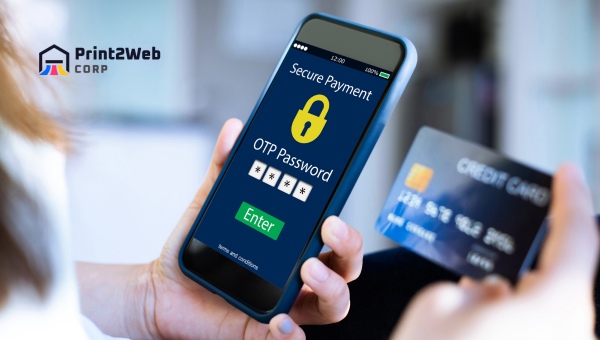
For businesses, communicating your payment security practices to customers is not just about compliance. It is a competitive advantage. Studies consistently show that consumers abandon carts when they do not trust a website’s security, with cart abandonment rates spiking on sites lacking visible trust signals.
Display trust seals from recognized security providers like Norton, McAfee, or TRUSTe on your checkout pages. Show accepted payment method logos prominently. Use clear, jargon-free language to explain how customer data is protected. When customers understand that you use encryption, tokenization, and fraud monitoring, they feel confident completing their purchase.
Transparency about your security practices builds long-term loyalty. Publish your privacy policy in accessible language, explain what data you collect and why, and give customers control over their information. When security updates or new features are implemented, communicate these improvements through email or website announcements. Customers who see you actively investing in their protection reward you with repeat business and positive reviews.
Dispute and chargeback management is another area where transparent security practices pay dividends. When customers know you have robust fraud detection, they are less likely to file chargebacks for legitimate transactions. Clear billing descriptors, order confirmation emails, and easy-to-find contact information all reduce disputes that cost businesses time and money.
Frequently Asked Questions
What should I do if I suspect fraudulent activity on my online payment account?
Contact your bank or card issuer immediately using the number on the back of your card. Request that they freeze the account, dispute any unauthorized charges, and issue a replacement card. Then change passwords on any accounts that may be compromised, enable multifactor authentication, and monitor your credit report for signs of identity theft.
Are mobile payment apps secure for online transactions?
Yes, most mobile payment apps are secure because they use strong encryption and tokenization. Apple Pay and Google Pay never transmit your actual card number during transactions. However, you should only download official apps from trusted stores, keep them updated, enable biometric authentication, and avoid making payments over public Wi-Fi.
How can I protect my online payment information when using public Wi-Fi networks?
Use a VPN to encrypt your connection, ensure websites use HTTPS before entering payment details, and avoid accessing banking or payment apps on public networks whenever possible. Even with a VPN, it is safer to use your mobile data connection for sensitive transactions when public Wi-Fi is the only alternative.
How can I ensure the security of my online payments?
Use strong, unique passwords managed by a password manager, enable multifactor authentication on all financial accounts, only shop on HTTPS-encrypted websites, avoid saving card details on unfamiliar sites, monitor your statements regularly for unauthorized charges, and keep your devices updated with the latest security patches.
What do you mean by payment security?
Payment security refers to the comprehensive set of protocols, technologies, and practices that protect financial transaction data from unauthorized access, fraud, and data breaches. This includes encryption, tokenization, authentication measures, fraud detection systems, and regulatory compliance standards like PCI DSS that work together to safeguard sensitive payment information throughout every transaction.
Is tapping your card safer than inserting?
Both tapping (contactless NFC) and inserting (EMV chip) use dynamic transaction codes that make stolen data unusable for future purchases. Neither method transmits your actual card number, so the security difference is negligible. Both are significantly safer than swiping a magnetic stripe, which uses static data that can be copied and reused by criminals.
What is payment security on a credit card?
Payment security on a credit card includes the technologies and protocols built into the card itself and the transaction process. This includes EMV chip encryption, CVV verification codes, 3D Secure authentication for online purchases, tokenization for digital wallets, and real-time fraud monitoring by the card issuer. Some card issuers also offer optional payment protection programs that may cancel balances in cases of hardship, though these are separate from technical security measures.
Is payment security worth it?
Yes, payment security is absolutely worth it. The average data breach costs organizations $4.4 million globally and $9.48 million in the United States. For consumers, card fraud can lead to drained accounts, damaged credit, and months of recovery work. The investment in security measures, whether through choosing secure payment providers or using multifactor authentication, is minimal compared to the financial and emotional cost of fraud.
Conclusion
Payment security is no longer optional in a world where digital transactions dominate commerce. The 2026 threat landscape, shaped by AI-powered fraud tools, zero-day exploits, and increasingly sophisticated phishing campaigns, demands that both consumers and businesses take protection seriously. The staggering statistics speak for themselves: 79% of organizations faced payment fraud attempts, the average data breach costs $4.4 million, and major incidents at companies like AT&T, Ticketmaster, and Dell exposed hundreds of millions of records.
For consumers, the path forward is clear. Use strong, unique passwords with a password manager, enable multifactor authentication on every financial account, shop only on HTTPS-encrypted websites, and leverage digital wallets that use tokenization. Monitor your statements regularly, be skeptical of unsolicited messages about your accounts, and never enter payment details over unsecured public Wi-Fi.
For businesses, payment security must be treated as an ongoing investment rather than a one-time compliance checkbox. PCI DSS 4.0 compliance is the baseline, not the finish line. Layer your defenses with encryption, tokenization, fraud detection, firewalls, and access controls. Train your employees, maintain an incident response plan, choose payment partners with proven security track records, and stay ahead of emerging threats through continuous monitoring and improvement.
The technologies protecting your payments are stronger than they have ever been, from machine learning fraud detection that evaluates thousands of data points per second to 3D Secure protocols that verify identity without adding unnecessary friction. But technology alone is not enough. Security requires awareness, diligence, and the willingness to invest in protection before a breach forces the issue. Stay informed, stay vigilant, and make payment security a priority in every transaction you make.
Leave a Reply