
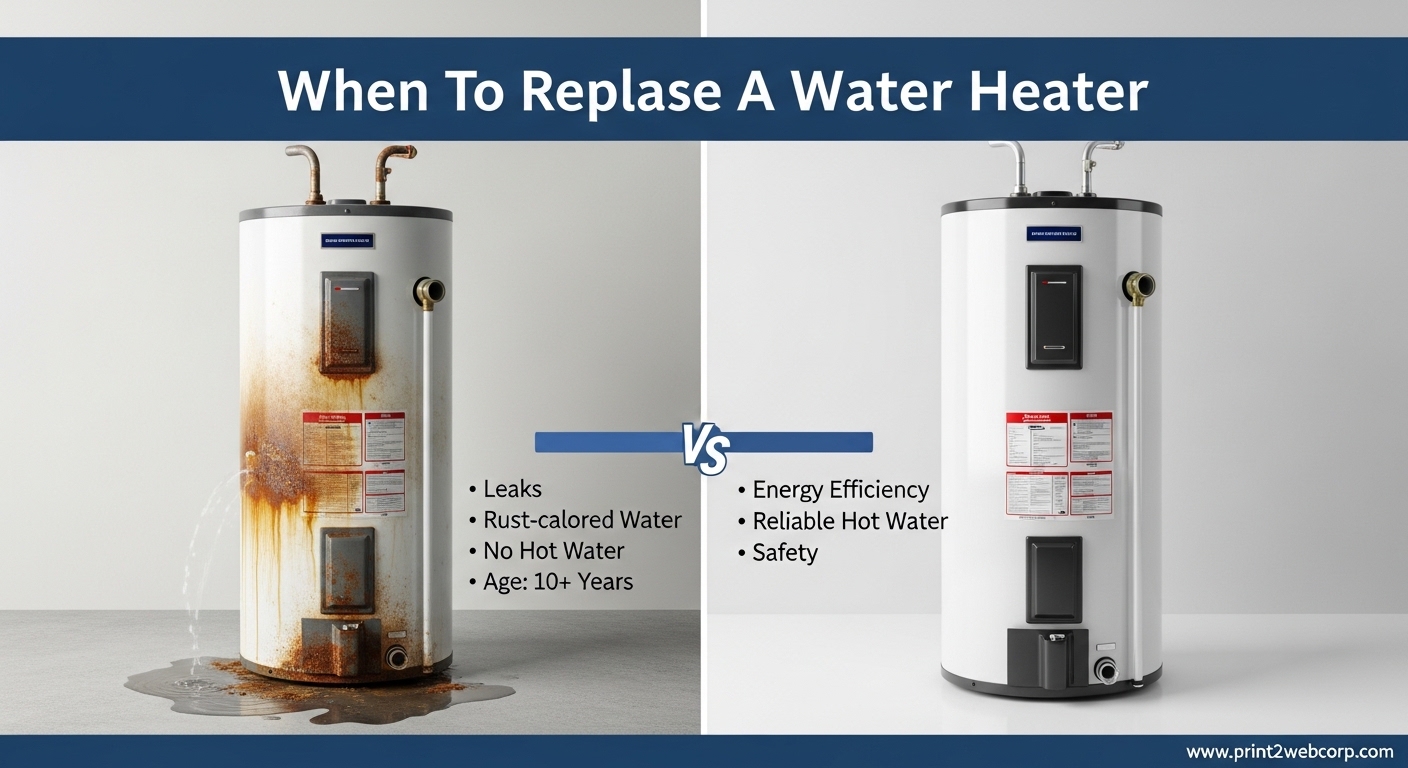
Most water heaters should be replaced when they reach 10-12 years of age or show clear signs of failure like rust-colored water, visible leaks, or strange rumbling noises. Replacing your water heater before it fails completely can prevent costly water damage and ensure your family always has reliable hot water.
Understanding when to replace a water heater isn’t always straightforward. Some units last 15 years while others fail at year eight. The key is knowing the warning signs and having a replacement plan before an emergency strikes. I’ve seen homeowners wait until their basement floods at 2 AM, and I’ve seen others replace perfectly functional units too early. The sweet spot lies somewhere in between.
This guide covers everything you need to know about when to replace a water heater, from decoding your unit’s age to recognizing the seven critical signs that replacement is imminent. We’ll also help you decide between repairing versus replacing based on costs, and explain why your water heater’s location matters more than you might think.
Water Heater Lifespan: How Long Do They Last
The average water heater lasts between 8 to 12 years, with proper maintenance extending this to 15 years in some cases. Traditional tank water heaters typically reach the end of their service life around the decade mark, while tankless models can last 20 years or more with annual professional maintenance.
Several factors affect how long your water heater will last. Water quality plays a major role, with hard water accelerating sediment buildup and corrosion. Installation quality matters too, as proper sizing and correct pipe connections reduce stress on the unit. Usage patterns impact longevity as well, with larger households naturally putting more wear on their water heaters.
Gas water heaters generally outlast electric models by 2-3 years on average, thanks to fewer heating element failures. However, gas units require more maintenance to reach their full lifespan potential. Regardless of fuel type, once your water heater passes the 10-year mark, you should start monitoring it closely for failure signs.
How to Determine Your Water Heater’s Age
Finding your water heater’s age starts with locating the manufacturer’s label and serial number. This information is typically found on a sticker or plate attached to the side of the tank, near the bottom or on the front panel. If the label is faded or missing, don’t worry, there are other ways to estimate the age.
The serial number contains the manufacturing date in a coded format that varies by manufacturer. For most brands, the first letter or digit represents the month, and the next two digits indicate the year. For example, a serial number starting with “C15” would mean March 2015. Some manufacturers use different codes, so you may need to search online for your specific brand’s decoding system.
If you’re the original homeowner, check your purchase records or home inspection report from when you bought the house. Previous owners may have left documentation, or you can often find installation permit information through your local building department. When all else fails, a professional plumber can estimate the age based on the unit’s appearance, model number, and manufacturing codes.
When To Replace A Water Heater: 7 Clear Signs
Rusty or Discolored Water
Rust-colored or brownish water coming from your hot water taps is one of the most obvious signs your water heater is failing. This occurs when the interior lining of the tank has corroded, allowing rust to mix with your water supply. While rusty water can sometimes result from old galvanized pipes, if the discoloration only appears with hot water and not cold, your water heater is likely the culprit.
Sediment buildup can also cause cloudy or sandy-looking water, especially if your unit hasn’t been flushed regularly. While flushing might help temporarily, persistent discoloration typically means the tank lining has deteriorated beyond repair. At this point, replacement is the only reliable solution to ensure clean, safe water for your family.
Water Leaking from the Tank
Any visible water pooling around your water heater demands immediate attention. Small leaks from fittings or valves might be repairable, but water leaking from the tank itself means the unit has failed. Internal corrosion eventually creates microscopic holes that grow larger over time, leading to the dreaded flood scenario.
Before condemning your unit, check that the leak isn’t coming from a loose connection or faulty pressure relief valve. Tighten fittings where possible and monitor the situation. However, if water continues dripping from the tank body itself, replacement is inevitable. The longer you wait, the greater the risk of catastrophic tank failure and significant water damage.
Strange Noises Coming from the Tank
Rumbling, popping, or banging sounds from your water heater indicate serious sediment buildup. As minerals accumulate at the bottom of the tank, they harden and trap water underneath. When the burner fires, this trapped water boils violently, creating the rumbling noise you hear. Flushing the tank might provide temporary relief, but severe sediment buildup often signals a unit nearing the end of its life.
High-pitched whining or screeching sounds typically point to failing heating elements or scale buildup on electric models. Gas units might make hissing noises when the burner assembly becomes clogged with sediment. While some noises can be addressed through maintenance, persistent unusual sounds usually mean the internal components have degraded beyond practical repair.
Insufficient Hot Water
Running out of hot water faster than normal often indicates a failing water heater. Sediment accumulation reduces the tank’s effective capacity, while failing heating elements can’t keep up with demand. If you notice your showers getting shorter or the water temperature fluctuating unpredictably, your unit may be struggling to maintain proper heating performance.
Before assuming replacement is needed, check that the thermostat is set correctly and hasn’t been accidentally adjusted. Electric water heaters should have both heating elements tested, as a failed lower element can significantly reduce hot water output. However, if your unit is over 10 years old and consistently failing to meet your hot water needs, upgrading to a newer, more efficient model often makes more sense than repeated repairs.
Rising Energy Bills
A sudden increase in your energy bills without a corresponding change in usage patterns can indicate a declining water heater. As units age, sediment buildup acts as insulation between the burner and the water, forcing the system to work harder and longer to achieve the same temperature. Failed or inefficient heating elements also waste energy by cycling on more frequently without effectively heating the water.
Compare your current utility bills to the same period from previous years to identify unusual spikes. While energy rates naturally increase over time, a disproportionate jump in gas or electric usage specifically during heating seasons often points to water heater inefficiency. Newer models are significantly more energy-efficient, so the savings from replacement can offset the installation cost within a few years.
Frequent Repairs Needed
If you’ve called a plumber for water heater issues multiple times in the past year, replacement is likely more cost-effective than continued repairs. Common repair needs include replacing heating elements, fixing thermostats, addressing pressure relief valve problems, or clearing sediment buildup. While individual repairs might seem reasonable, they quickly add up in both cost and inconvenience.
Track your repair costs over time and compare them to the price of a new unit. Most professionals recommend replacing your water heater if repair expenses exceed 50% of replacement cost within a single year. Additionally, frequent breakdowns create stress and uncertainty, as you never know when the next failure might leave you without hot water or cause water damage.
Visible Corrosion or Damage
External inspection often reveals internal problems before catastrophic failure occurs. Look for rust spots on the tank body, especially around seams and connections. Corrosion on the inlet and outlet pipes suggests the same degradation is happening inside the tank. Bulging or distortion of the tank shape indicates pressure problems that precede rupture.
Check the area around the base of the unit for water stains, rust, or mineral deposits that suggest slow, long-term leakage. Examine the combustion chamber on gas models for rust or corrosion, which can create dangerous carbon monoxide issues. Any visible external corrosion or structural damage means the unit has reached the end of its safe service life and should be replaced promptly.
Repair vs Replace: The $450 Rule
Deciding between repair and replacement comes down to a simple calculation that plumbers call the 50% rule. If the cost of repairing your water heater exceeds 50% of the price for a new unit, replacement makes more financial sense. With most standard water heater replacements costing between $900 and $1,200 installed, this means any repair quote over $450 should trigger serious consideration of replacement.
The age of your unit should factor heavily into this decision. A $300 repair on a 12-year-old water heater rarely makes sense, as other components will likely fail soon anyway. However, the same repair on a 5-year-old unit might be worthwhile, potentially adding years of additional service life. Always get the repair quote in writing and compare it to replacement costs from multiple sources.
Consider the warranty implications as well. Professional repairs on newer units might extend warranty coverage or be partially covered. Older units with expired warranties offer no such protection, making every repair a pure expense. When in doubt, consult with a trusted plumber who can assess the overall condition and provide an honest recommendation rather than just pushing for the more expensive option.
Proactive vs Reactive Replacement: Location Matters
Your water heater’s location should significantly influence your replacement strategy. Units installed in attics, finished basements, or above living spaces represent high-risk installations that warrant proactive replacement before failure occurs. The potential water damage from a catastrophic tank failure in these locations can easily exceed $10,000, far more than the cost of planned replacement.
Conversely, water heaters located in unfinished basements with concrete floors or in dedicated utility areas with floor drains pose much lower risk. In these scenarios, waiting for clear failure signs before replacing makes more financial sense for many homeowners. The key is having a plan in place and monitoring the unit closely once it passes the 10-year mark.
Consider your personal tolerance for risk and disruption as well. Emergency replacement on a weekend or holiday typically costs 50-100% more than scheduled replacement during normal business hours. If you’re planning a vacation or have important events coming up, proactively replacing an aging unit beforehand provides peace of mind and prevents potential disasters at inconvenient times.
Replacement Options: Tank vs Tankless
When replacing your water heater, consider upgrading to a tankless model if your budget allows. Tankless water heaters heat water on-demand rather than storing hot water in a tank, providing endless hot water and significantly lower energy costs. While tankless units cost 2-3 times more upfront, their 20+ year lifespan and 30% energy savings often make them more economical over the long term.
Traditional tank water heaters remain popular due to their lower upfront cost and simpler installation. Modern tank units are much more energy-efficient than models from 10-15 years ago, so even staying with tank technology provides meaningful efficiency gains. Hybrid heat pump water heaters offer another option, using ambient heat to warm water and reducing energy consumption by up to 60% compared to standard electric models.
Consider your household’s hot water usage patterns when choosing between options. Large families with simultaneous hot water needs might benefit from tankless technology’s unlimited supply. Smaller households with modest usage might find the upfront cost of tankless difficult to justify. A qualified plumber can assess your specific situation and recommend the most appropriate replacement type.
Maintenance Tips to Extend Water Heater Life
Proper maintenance can significantly extend your water heater’s lifespan and delay replacement. The most important maintenance task is annual flushing to remove sediment buildup. This simple procedure involves draining several gallons of water through the drain valve to flush out accumulated minerals that reduce efficiency and accelerate corrosion.
Check the anode rod every 2-3 years and replace it when significantly corroded. The anode rod sacrificially corrodes to protect the tank lining, and replacing this $20-50 component can add years to your water heater’s life. Many homeowners are unaware this component exists, yet it’s the single most important factor in tank longevity.
Test the temperature and pressure relief valve annually by lifting the test lever and ensuring water flows freely. This safety device prevents dangerous pressure buildup, and a stuck valve can lead to tank rupture. For gas water heaters, have the burner assembly cleaned and inspected annually by a professional to ensure proper combustion and safe operation.
Checking Your Warranty
Before replacing your water heater, verify whether it’s still under warranty. Most water heaters come with warranties ranging from 6 to 12 years on the tank, with separate coverage for components. The warranty information is typically found on the original warranty card, your sales receipt, or available through the manufacturer’s website using your model and serial number.
Warranty coverage often prorates based on the unit’s age, meaning you might receive partial credit toward a replacement even if the full warranty period has expired. Keep in mind that warranties typically require professional installation and may require proof of annual maintenance. Some warranties also cover only the tank itself, not labor or related components, so read the fine carefully before assuming coverage.
If your water heater is still under warranty, contact the manufacturer or installer before proceeding with replacement. They may offer a discounted replacement unit or cover certain repair costs. Even expired warranty information can be useful when negotiating with plumbers or selecting your replacement model, as longer warranties often indicate better build quality.
Frequently Asked Questions
How do you know when a water heater needs to be replaced?
Replace your water heater when it reaches 10-12 years of age, shows rust-colored water, develops visible leaks, makes rumbling noises from sediment buildup, stops providing sufficient hot water, causes rising energy bills, needs frequent repairs, or shows visible corrosion. These signs indicate internal failure that typically cannot be repaired cost-effectively.
What is the average life of a 40 gallon water heater?
The average 40-gallon water heater lasts 8-12 years with proper maintenance. Tank models typically fail around the 10-year mark, while tankless units can last 20 years or more. Factors like water quality, usage patterns, and maintenance frequency significantly impact actual lifespan. Hard water areas often see shorter lifespans due to accelerated mineral buildup.
Is a 6 year old water heater still good?
Yes, a 6-year-old water heater is typically in the middle of its expected service life and should still provide reliable service for several more years. At this age, focus on maintenance like flushing the tank and checking the anode rod to maximize remaining lifespan. Replacement isn’t usually necessary unless specific problems develop.
What is the average cost to replace a 30 gallon water heater?
The average cost to replace a 30-gallon water heater ranges from $800 to $1,500, including the new unit and professional installation. Smaller units like 30-gallon models cost less than standard 40-50 gallon sizes. Tankless models cost significantly more upfront at $1,500-$3,000 but offer longer lifespan and lower operating costs. Emergency replacement typically costs 50-100% more than scheduled installation.
Conclusion
Knowing when to replace a water heater prevents emergency floods, ensures reliable hot water, and can reduce your energy bills. The 10-12 year lifespan rule provides a general guideline, but paying attention to the seven warning signs listed above helps you make the right decision at the right time. Remember the $450 repair threshold and consider your unit’s location when weighing replacement timing.
If your water heater is approaching or has passed the decade mark, schedule a professional inspection to assess its condition. A qualified plumber can identify problems you might miss and provide an honest assessment of whether repair or replacement makes the most sense. Proactive replacement before failure always costs less than emergency water damage restoration.
Don’t wait until you’re taking cold showers or mopping up a flooded basement. Use this guide to evaluate your current water heater and create a replacement plan before problems arise. Your future self will thank you for planning ahead and avoiding the stress and expense of catastrophic water heater failure.
Leave a Reply