
The U.S. landscaping industry has grown into a $176.5 billion market, expanding at an 11.5% compound annual growth rate that shows no signs of slowing down. The average American household now spends roughly $500 per year on lawn and garden care, creating consistent demand for skilled operators who can deliver quality results. For aspiring entrepreneurs, launching a landscaping business represents one of the most accessible entry points into business ownership, with startup costs ranging from a few thousand dollars for basic residential maintenance to $85,000 or more for fully equipped commercial operations.
This guide walks through every phase of building a landscaping business in 2026, from selecting your service model and writing a business plan to handling legal requirements, securing insurance, pricing your work, and scaling beyond your first season. Whether you are starting as a side hustle with a borrowed mower or planning a full-scale landscape company with multiple crews, the steps below provide the framework you need to build a profitable operation.
Unlike many industries that require specialized degrees or extensive capital, landscaping rewards practical skill, reliability, and smart planning. Experienced operators on forums like Reddit’s r/landscaping consistently emphasize that success comes down to pricing correctly, keeping routes tight, and selling monthly maintenance contracts rather than chasing one-off jobs. The guidance that follows incorporates those real-world lessons alongside current industry data so you can avoid the common mistakes that sink new entrants.
What this guide covers:
- Choosing the right landscaping business model and services
- Writing a business plan with SMART goals and financial projections
- Handling registrations, licenses, and certifications
- Setting up banking, insurance, and bookkeeping systems
- Pricing your services competitively for sustainable profit margins
- Marketing strategies including Google Business Profile and local SEO
- Scaling your operation with the right team and technology
Deciding on Your Landscaping Business Model
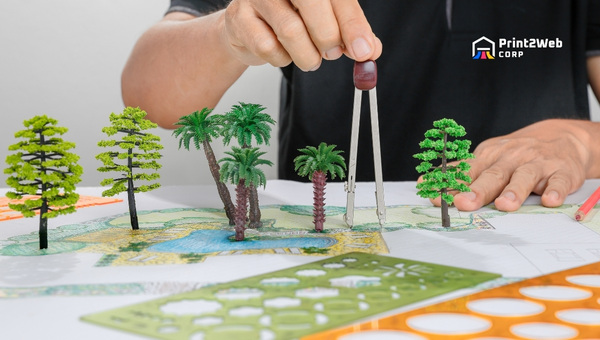
Every successful landscaping business starts with a clearly defined service model. The choices you make here determine your equipment needs, startup costs, target clients, and revenue ceiling. Some operators build thriving companies around basic lawn maintenance, while others specialize in high-margin design-build projects or hardscaping installations. Understanding the landscape of available services helps you carve out a profitable niche instead of competing on price alone.
Core Services and Specializations
Most landscaping businesses fall into one of several categories, each with different revenue potential and skill requirements. The residential landscaping sector focuses on homeowners and typically involves recurring maintenance contracts that provide predictable income. Commercial landscaping serves businesses, property managers, and HOAs with larger contracts but stricter service level requirements. Within these sectors, you can specialize further based on your interests and local market demand.
- Softscaping services: Lawn mowing, mulching, pruning, garden bed installation, flower bed maintenance, tree and shrub care, and seasonal cleanups. These services require moderate equipment investment and generate steady recurring revenue through maintenance contracts.
- Hardscaping services: Patio installation, retaining walls, walkway construction, outdoor lighting, fire pits, and drainage solutions. Hardscaping commands higher per-project margins but demands specialized skills and heavier equipment.
- Lawn care and maintenance: Regular mowing, edging, fertilization, aeration, and weed control. This is the most common entry point for new operators because the barrier to entry is low and recurring weekly or biweekly visits build dependable revenue.
- Seasonal services: Spring cleanup, fall leaf removal, and snow removal in winter months. Offering seasonal services keeps revenue flowing year-round and reduces the off-season cash flow gaps that plague many operators.
- Emerging specializations: Sustainable landscaping and eco-friendly landscaping are growing segments as homeowners seek drought-tolerant landscaping, xeriscaping with native plants, and smart irrigation systems with automated controllers. These services appeal to environmentally conscious clients and often command premium rates.
Reddit operators with years of experience strongly recommend starting with maintenance and lawn care before expanding into installations. Maintenance builds a recurring client base that funds equipment upgrades and skill development. Once you have steady revenue, you can layer in higher-margin services like hardscaping or irrigation installation. Attempting to offer everything from day one typically spreads resources too thin and leads to underbidding.
Buying vs Renting vs Leasing Equipment
Equipment represents your largest startup expense, and the decision to buy, rent, or lease shapes your cash flow for years. Outright purchase turns equipment into a business asset that depreciates but is available whenever needed. Leasing spreads costs over time and may include maintenance agreements. Renting works well for specialized tools you only need occasionally without committing capital.
Industry data shows that equipping a new landscaping business typically costs between $12,000 and $85,000 depending on service scope. A basic residential mowing operation needs a commercial zero turn mower, string trimmer, leaf blower, hand tools, and a truck with a trailer. Full-service companies adding hardscaping and irrigation require additional equipment like plate compactors, skid steers, and specialized hand tools.
- Purchasing outright: Best for core equipment you use daily. Used equipment from Facebook Marketplace or dealer trade-ins can cut costs by 40 to 60 percent compared to new. Experienced operators on Reddit consistently advise starting with quality used gear rather than financing brand-new machines.
- Leasing: Spreads equipment costs into manageable monthly payments and may offer tax advantages. Leasing makes sense for expensive items like skid steers or trucks that would strain startup capital.
- Renting: Ideal for specialized tools needed occasionally, such as aerators, power washers, or stump grinders. Renting from Home Depot or local rental yards avoids storage and maintenance costs for infrequent-use equipment.
For your primary mower, investing in a quality commercial unit pays dividends in reliability and cut quality. Check out our roundup of the best commercial zero turn mowers to compare models suited for professional landscaping work. Similarly, a dependable leaf blower is essential for fall cleanups and daily debris management.
Essential Equipment Checklist
Having the right tools from day one prevents delays and keeps your crew productive. The following checklist covers the minimum equipment most new landscaping businesses need to operate professionally:
- Primary mower: A commercial walk-behind or zero turn mower sized for the properties you service
- String trimmer and edger: For clean edges along sidewalks, driveways, and flower beds
- Leaf blower: Backpack or handheld model for debris cleanup
- Hand tools: Shovels, rakes, pruners, loppers, hedge shears, wheelbarrow, and spades
- Truck and trailer: A reliable truck with an enclosed or open trailer for transporting equipment
- Personal protective equipment (PPE): Safety glasses, hearing protection, steel-toe boots, gloves, and high-visibility clothing
- Irrigation and installation tools: Trenching shovel, pipe cutter, and compactors if offering installation services
Safety gear is not optional. Compliance with PPE standards protects you and any employees from injuries that could derail your business. Insurance providers also require documented safety practices, and failing to enforce PPE use can void coverage if an accident occurs.
Building a Strong Foundation: Your Business Plan
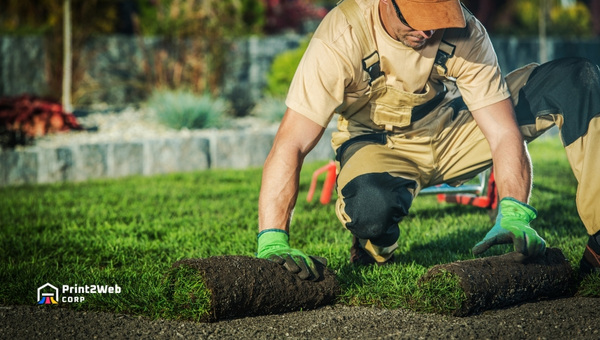
A written business plan transforms a vague idea into an actionable roadmap. For a landscaping business, this document should define your target market, outline services and pricing, project startup costs and monthly overhead, and establish measurable goals using the SMART framework. Specific, Measurable, Achievable, Relevant, and Time-bound objectives keep you focused and give you benchmarks to evaluate progress each quarter.
Why a Written Business Plan Matters
- Strategic clarity: A plan forces you to define exactly what services you offer, who your ideal clients are, and how you will reach them. Without this clarity, new operators tend to take any job that comes along, often at rates that erode profitability.
- Financial projection: Mapping out startup costs, monthly overhead, and expected revenue lets you calculate your break-even point. Knowing this number tells you exactly how many clients or contracts you need before the business sustains itself.
- Competitor analysis: Researching three to five local competitors reveals gaps in service offerings and helps you position your company where demand is underserved.
- Investor and lender readiness: If you plan to seek financing for equipment or expansion, banks and investors require a business plan with clear financial projections and a path to repayment.
- Risk identification: The planning process surfaces potential risks like seasonal revenue dips, equipment failures, or client concentration and lets you prepare mitigation strategies in advance.
Financial Planning and Startup Cost Breakdown
Understanding your numbers before launching prevents the cash flow crises that sink many new landscaping businesses. Startup costs vary dramatically based on whether you are running a solo residential operation or building a multi-crew company. The categories below give you a framework for estimating your initial investment.
- Equipment ($12,000 to $85,000): Your mower, trimmer, blower, hand tools, truck, and trailer represent the bulk of startup spending. Used equipment can reduce this figure significantly.
- Insurance ($1,500 to $5,000 annually): General liability insurance, commercial auto insurance, and workers compensation if you have employees.
- Licensing and permits ($100 to $1,000): Business licenses, contractor registrations, and pesticide applicator certification fees vary by state and municipality.
- Marketing budget ($500 to $3,000): Website development, Google Business Profile setup, vehicle branding, and initial advertising.
- Operating reserve (three to six months of overhead): A contingency fund that covers fuel, insurance, wages, and personal living expenses during slow periods.
If you are considering the franchise route instead of building independently, total investment typically ranges from $74,570 to $224,770 depending on the brand and territory. Franchises offer established brand recognition, marketing support, and buying power through networks like ProTradeNet, but they require ongoing royalty payments and limit your operational flexibility. Weighing franchise versus independent startup depends on your capital, experience level, and long-term goals.
Regardless of which path you choose, set up a bookkeeping system from day one. Tools like QuickBooks let you track income and expenses, categorize transactions for tax preparation, and generate profit and loss statements that show whether your pricing is actually generating sustainable margins.
Handling Registrations, Licenses, and Certifications

Proper registration and licensing protect your business legally and build trust with clients who want proof they are hiring a legitimate operation. Requirements vary by state and municipality, so always check with your local government offices. However, several steps apply universally across most jurisdictions.
Choosing Your Business Structure
Your business structure determines your tax obligations, personal liability exposure, and ability to raise capital. Each option carries trade-offs that affect everything from paperwork requirements to how much of your personal assets are at risk if the business faces legal trouble.
- Sole proprietorship: The simplest structure with minimal paperwork. You report business income on your personal tax return, but your personal assets are fully exposed to business liabilities. Suitable for testing the waters as a side hustle.
- Partnership: Shared ownership between two or more people. Profits pass through to partners’ personal returns, but each partner is personally liable for business debts.
- Limited Liability Company (LLC): The most popular structure for landscaping businesses because it separates personal assets from business liabilities. If the company faces a lawsuit or debt, your home and savings are generally protected.
- Corporation: Offers the strongest liability protection and is designed for companies planning to seek outside investors. Involves more complex governance and tax filing requirements.
Most new landscaping business owners choose an LLC because it balances liability protection with manageable administrative requirements. If you operate under a name different from your legal entity name, you will also need to file a DBA (Doing Business As) registration with your state or county.
Required Licenses, Permits, and Certifications
- General business license: Required by most cities and counties to legally operate. Fees and renewal schedules vary by jurisdiction.
- Employer Identification Number (EIN): A free tax ID number from the IRS needed to open a business bank account, hire employees, and file business tax returns.
- Contractor license: Some states require a specific landscaping or specialty contractor license, particularly if you perform hardscaping, grading, or irrigation installation work above a certain dollar threshold.
- Pesticide applicator license: If you apply fertilizers, herbicides, or pesticides, most states require a Commercial Pesticide Applicator’s License. This typically involves passing an exam and paying annual renewal fees.
- Local permits: Some municipalities require permits for tree removal, grading, drainage work, or operating a commercial vehicle from a residential address.
Do not skip or delay these requirements. Operating without proper licensing can result in fines, forced shutdown, and personal liability for any damages. Clients increasingly verify licensing and insurance before hiring, so having your paperwork in order becomes a competitive advantage.
Setting Up the Financial Infrastructure
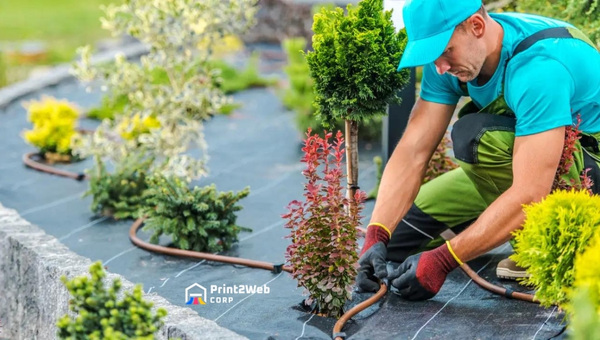
Sound financial infrastructure keeps your landscaping business organized, compliant, and protected. This means separating personal and business finances, carrying adequate insurance, and maintaining accurate records for tax purposes. Setting up these systems early prevents costly mistakes that compound as you grow.
Opening a Dedicated Business Bank Account
- Transaction separation: A dedicated account keeps business income and expenses distinct from personal finances, which is essential for clean bookkeeping and tax preparation. Commingling funds can also pierce the liability protection of an LLC.
- Professional credibility: Clients paying invoices to a business account rather than a personal one perceive your operation as established and trustworthy. This matters particularly when bidding on commercial contracts.
- Simplified accounting: With all business transactions flowing through one account, tools like QuickBooks can automatically categorize expenses and generate financial reports with minimal manual data entry.
- Loan and credit readiness: Business bank statements are the first document lenders request when you apply for equipment financing or a business line of credit.
Insurance Coverage for Landscaping Businesses
Landscaping involves physical labor, heavy equipment, and work on other people’s property, which creates real liability exposure. Carrying the right insurance protects your business from devastating financial losses and is often required by commercial clients before they will sign a contract.
- General liability insurance: Covers property damage or bodily injury caused by your work. If a thrown rock from your trimmer breaks a client’s window, this policy pays for the repair.
- Business Owners Policy (BOP): A bundled package combining general liability and commercial property insurance. BOP insurance is typically more affordable than buying each policy separately and covers your equipment, office, and liability in one plan.
- Commercial auto insurance: Required for any vehicle used for business purposes. Personal auto policies generally exclude commercial use, meaning an accident in your work truck could leave you uninsured without a commercial policy.
- Inland marine insurance: Covers tools and equipment while in transit or at a job site. If your trailer is stolen from a client’s driveway, this coverage replaces the equipment.
- Workers compensation insurance: Legally required in most states once you have employees. Covers medical costs and lost wages if a worker is injured on the job.
- Professional liability insurance: Covers errors in design or consulting work. Important if you offer landscape design services where mistakes could lead to costly rework.
Budget between $1,500 and $5,000 annually for insurance depending on your coverage levels, crew size, and service offerings. While this feels expensive for a new business, a single uncovered incident can cost tens of thousands and potentially bankrupt an unprotected operation.
Analyzing Market Trends to Set Competitive Rates
Pricing your services correctly is one of the most consequential decisions you will make as a landscaping business owner. Underpricing leads to burnout and thin margins while overpricing drives clients to competitors. The goal is finding the sweet spot where your rates reflect the value you provide, cover all costs, and deliver a healthy profit margin.
Industry research shows that landscaping businesses typically generate net profit margins between 5% and 15%. A company earning $700,000 in annual revenue at a 10% net profit retains $70,000 after all expenses. Well-run operations with tight cost control and recurring maintenance contracts can push margins toward 15% to 20%, which is a realistic target for committed operators.
Pricing Strategies and Rate Benchmarks
- Hourly pricing: Standard residential landscaping rates range from $25 to $75 per hour depending on your market, service type, and skill level. Premium services or specialized work can command $100 per hour or more. Experienced Reddit operators stress that $60 per hour is the absolute floor for sustainable operations once you account for fuel, equipment wear, insurance, and non-billable admin time.
- Per-project pricing: Bidding jobs at a flat rate based on estimated time and materials works well for installations and one-time services. The key is accurately estimating how long a job will take and factoring in all material costs plus a profit margin.
- Maintenance contracts: Monthly or seasonal contracts provide predictable recurring revenue and are the single most important pricing strategy for long-term stability. Reddit’s top advice for new operators is to always sell monthly contracts because they smooth out seasonal revenue fluctuations and reduce the time spent on client acquisition.
- Minimum service charge: Setting a minimum charge for mowing visits prevents unprofitable small jobs from clogging your schedule. Many successful operators enforce a $40 to $60 minimum per visit regardless of lawn size.
Research at least three to five competitors in your area to understand the local rate landscape. Call for quotes, check their websites, and read reviews to see what clients say about value. Position yourself at market rate when starting, then gradually raise prices as you build reputation and add services. Never compete on being the cheapest, because the cheapest operator in any market is usually the one going out of business.
Marketing Strategies for Your Landscaping Business
Even the best landscaper cannot build a business without clients. For local service businesses, the most effective marketing channels are often free or low-cost. The strategies below prioritize approaches that deliver the highest return for new operators working with limited budgets.
Google Business Profile and Local SEO
Setting up a Google Business Profile is the single highest-impact marketing action for any local landscaping business. This free listing appears in Google Maps results and the local pack when potential clients search for landscapers in your area. A complete profile with photos, services, hours, and customer reviews dramatically increases your visibility to nearby homeowners actively searching for landscaping services.
- Claim and verify your listing through Google Business Profile
- Add high-quality before-and-after photos of your work
- List all services with accurate descriptions
- Request reviews from every satisfied client to build social proof
- Post regular updates about seasonal services and availability
Optimizing your website for local SEO ensures that when someone searches “landscaping business near me,” your company appears in results. Include your city and service area in page titles, meta descriptions, and content. Registering with your local Chamber of Commerce also builds local citations that boost search rankings.
Getting Your First 10 Clients
Landing your first clients is the number one challenge new operators face. Forum discussions consistently show that word of mouth and neighborhood presence drive the majority of early business. Focus your initial efforts on channels where homeowners are already looking for services.
- Nextdoor and Facebook groups: Join neighborhood groups where residents ask for service recommendations. A professional post with photos of your work can generate several inquiries from nearby homeowners.
- Branded truck and trailer: Your vehicle is a mobile billboard. Clean, professional vehicle signage builds awareness every time you drive through a neighborhood or park at a job site.
- Door hangers and direct outreach: Target neighborhoods where you already have a client. Neighbors see your truck and crew, making them warm leads for door hangers offering a first-visit discount.
- Property managers and realtors: Commercial relationships with property management companies and real estate agents can provide steady work. One property manager with multiple accounts can fill a significant portion of your schedule.
- Referral incentives: Offer existing clients a discount or free service for referring new customers. Referrals convert at higher rates and tend to stay longer than leads from advertising.
Building Your Online Presence
- Professional website: A simple, mobile-friendly site showcasing your services, service area, and portfolio builds credibility. Include clear contact information and a quote request form.
- Instagram and social media: Use Instagram as a visual portfolio. Before-and-after photos, time-lapse videos of projects, and seasonal tips keep your brand visible and demonstrate expertise.
- Google Ads and Meta ads: Paid advertising targeting your service area can accelerate client acquisition, especially in competitive markets. Start with a small budget and track which campaigns produce actual leads.
- Email marketing: Build an opt-in email list from website visitors and clients. Send seasonal reminders about services like spring cleanup, summer fertilization, and fall leaf removal. Never purchase email lists, as this damages deliverability and violates anti-spam regulations.
Start with two or three marketing channels and execute them consistently rather than spreading yourself thin across every platform. As revenue grows, reinvest in additional channels and consider hiring a part-time marketer to manage your online presence.
Scaling Up Your Landscaping Business
Once your landscaping business has steady clients and positive cash flow, the next challenge is scaling without sacrificing quality. Growth brings complexity in team management, operational logistics, and technology. Expanding deliberately and maintaining service standards protects the reputation you worked hard to build.
Building Your Team: W-2 Employees vs 1099 Contractors
Adding crew members lets you take on more clients and larger projects, but the hiring decision carries significant legal and tax implications. Understanding the difference between W-2 employees and 1099 independent contractors is essential before making your first hire.
- W-2 employees: You control their schedule, provide equipment, and direct their work. You are responsible for payroll taxes, workers compensation insurance, and labor law compliance. W-2 workers provide more control and consistency but cost 20% to 30% more than their base wage after taxes and benefits.
- 1099 independent contractors: Contractors set their own hours and use their own equipment. You pay them a flat rate without payroll tax obligations. However, the IRS applies strict tests to determine classification, and misclassifying employees as contractors triggers severe penalties.
- Subcontractors for specialty work: Many successful operators subcontract specialized tasks like sprinkler installation, masonry, and concrete work rather than attempting them in-house. This strategy delivers professional results without the overhead of maintaining specialized skills on payroll.
The Reddit consensus on hiring is clear: hire slowly and fire fast. Take time finding the right people, provide proper training, and document expectations. A bad hire costs far more than the delay of waiting for the right candidate.
Office and Storage Facility
As your operation grows beyond a truck and trailer, you need a dedicated location for storing equipment, handling administrative work, and sheltering assets from weather and theft. A secure storage facility protects your equipment investment and presents a professional image for client meetings and vendor relationships.
Look for a location with adequate parking for trucks and trailers, secured storage for expensive equipment, and a small office area for administrative tasks. Many operators start with a rented storage unit or garage and upgrade to a commercial property once revenue justifies the expense.
Leveraging Landscaping Software and Technology
- Job scheduling and routing: Project management software optimizes daily routes, reducing drive time between clients. Tight routes are one of the biggest profit levers for landscaping businesses, and experienced operators stress this repeatedly.
- Customer relationship management: Track client details, service history, contract terms, and communication in one system. This prevents missed visits and helps with renewal conversations.
- Invoicing and payment processing: Software like Jobber, Service Autopilot, or Real Green Systems handles estimates, invoices, and online payments, reducing administrative time and accelerating cash collection.
- QuickBooks for accounting: Syncing with QuickBooks provides real-time financial reporting, simplifies tax preparation, and shows exactly where your money goes each month.
- Crew tracking mobile apps: GPS tracking and mobile check-in systems let you monitor crew locations and job progress in real time, improving accountability and route efficiency.
Adopting technology requires upfront investment in software subscriptions and training, but the productivity gains compound quickly. Most growing landscaping businesses recoup their software costs within the first season through improved routing, faster invoicing, and reduced administrative overhead.
Landscaping Business FAQs
Building a landscaping business in 2026 requires careful planning, disciplined financial management, and a commitment to delivering quality work. The $176.5 billion market offers substantial opportunity for operators who choose the right services, price them profitably, and market effectively to their local community. Whether you start with a used mower and a handful of neighborhood clients or invest in a full equipment package from day one, the principles remain the same: understand your costs, sell recurring contracts, and never underbid your worth.
Take action one step at a time. Register your business, secure proper licensing and insurance, invest in quality equipment, and set up your Google Business Profile before your first job. Build relationships with local nurseries, property managers, and neighborhood groups. Most importantly, price your services to reflect the true value you deliver, because sustainable profit margins are what separate a business from an expensive hobby.
The landscaping businesses that thrive are not necessarily the ones with the fanciest trucks or the lowest prices. They are the ones run by operators who treat every client relationship as an investment, keep their routes tight, and reinvest profits into better equipment and systems. With the framework in this guide and consistent execution, your landscaping business can grow from a side hustle into a profitable enterprise that serves your community for years to come.
Leave a Reply